Author: rb809rb

  • Analysts See Strong Bitcoin Rally, But Profit-Taking Risk Remains

    Analysts See Strong Bitcoin Rally, But Profit-Taking Risk Remains

    Why Bitfinex Sees a Longer Runway Than a Squeeze

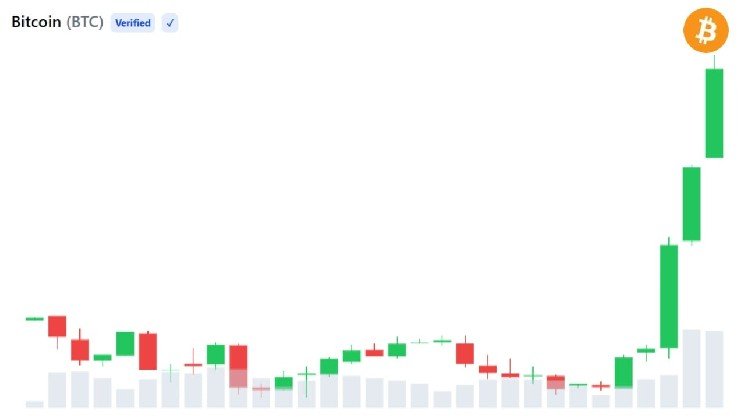
    Bitcoin’s climb to a multi-month high has left every buyer from the past five months sitting on a paper gain. The price peaked at $79,491 on Aug. 21, and analysts at crypto exchange Bitfinex said spot demand and short covering, not fresh leverage, carried the move. Rallies built on borrowed money unwind faster than rallies built on cash purchases.

    In a statement to Bitcoin.com News, Bitfinex analysts shared:

    “Squeeze-led rallies usually carry a question mark over whether they hold, because liquidations do the lifting.”

    “Here the combination of ETF demand, the macro shift and the absence of heavy selling gives this one a longer runway, with small retracements along the way,” they added.

    What Pushed Yields Down and Bitcoin Up

    The U.S. Department of the Treasury announced on Aug. 19 that it would double the maximum size of its long-end liquidity support buybacks. Each operation will now reach at least $4 billion, up from $2 billion, and the larger sizes apply from Sept. 9 through Nov. 4.

    Liquidity conditions have shaped $BTC’s price for a decade, with bitcoin’s four-year boom-and-bust cycle providing historical context for those shifts. Global liquidity indices have shown roughly 90% correlation with bitcoin since 2015, while cheaper funding at the long end of the curve tends to support risk assets.

    Short sellers took the first hit on Aug. 19, when bitcoin jumped to $69,749 and about $1.48 billion in crypto positions liquidated inside an hour, most of them shorts. Spot bitcoin ETFs added $297.6 million the same session. The squeeze supplied the first leg, and what followed came from buyers paying cash.

    Spot Buying or Leverage: How to Tell the Difference

    Open interest measures the total value of futures contracts left open, and it rises when traders add borrowed exposure. A rally that lifts price and open interest together is running on credit. One that lifts price while open interest lags is running on cash.

    “The shape of the move is the tell. Rallies built on fresh leverage show open interest jumping in step with price. Price climbed 10 to 11 percent while open interest (OI) rose only around 4 percent, which points to spot buying and short covering doing the work, with leverage playing a minor role,” the exchange’s research desk noted, adding:

    “The weaker version of this setup is open interest stacking up while price stalls, and that isn’t what happened.”

    Why $68,000 Is the Line That Decides the Next Move

    Buyers from the past five months share a cost basis in the $68,000 to $69,000 zone, the level Bitfinex flags as the most important line on the chart. Bitcoin trading above it keeps that cohort in profit and takes away the pressure that pushes underwater buyers to sell any bounce.

    The record high of $126,000 in October 2025 gave way to a drawdown that dragged $BTC near $64,000 earlier this month. Five boom-and-bust cycles have shaped that history, each one reshuffling who holds coins at what price.

    What US Buyers Have to Prove This Week

    U.S. spot bitcoin ETFs pulled in $606.29 million on Aug. 20, their largest single day since May 1, with Blackrock’s IBIT capturing 82% of the total. Net assets across the funds reached $90.16 billion, while ether products took in $220.77 million.

    A full week at that pace would harden the support beneath the price and mark a real shift in demand structure, by the analysts’ reckoning. Aug. 20 was the fourth consecutive session of inflows. Whether the pace holds through the coming week decides how much of the rally has a floor under it.

    The Coinbase Premium gauges whether U.S. buyers pay more for bitcoin than traders on offshore venues. It printed negative in every session from May 19 through late July, a record stretch beyond 70 trading days. Bitfinex treats a return to positive territory as clean confirmation that American demand has come back.

    What Could Stop the Rally

    Treasury Secretary Scott Bessent told CNBC on Aug. 20 that buyback operations could exceed $4 billion per issue. The 30-year yield had reached roughly 5.33% earlier in the week, then fell 8 to 10 basis points once Treasury confirmed the larger operations. Long-dated bonds remain the pressure point for risk assets.

    The Bitfinex team cautioned:

    “The obvious risk is the volume of bitcoin sent to exchanges in profit during this move, which could turn into the largest profit-taking wave of the year if it lands.”

    Real yields climbing back to the levels that pinned bitcoin below $65,000 through July would test the rally faster than any on-chain signal. Bitfinex analysts warned on Aug. 4 that the market stays macro-dependent, with strain from long-dated bonds passing straight through to price. Treasury figures released Aug. 19 put the national debt above $40 trillion for the first time.
  • Bill Maher Puts Hunter Biden in the Hot Seat: ‘I’ve Seen You With Your Dick Out’

    Bill Maher Puts Hunter Biden in the Hot Seat: ‘I’ve Seen You With Your Dick Out’

    After enduring years of character assassinations by the right, Hunter Biden is in the throes of a chaotic media blitz that’s included Twitter-trolling, posting on Substack and appearances on a number of far-right podcasts, from Hitler worshipper Nick Fuentes and Russia stooge Tucker Carlson to conspiracy theorist Candace Owens. Is Joe Biden’s wayward son trying to land a lucrative podcast deal or taking one last stand to clear his name as his father battles cancer?

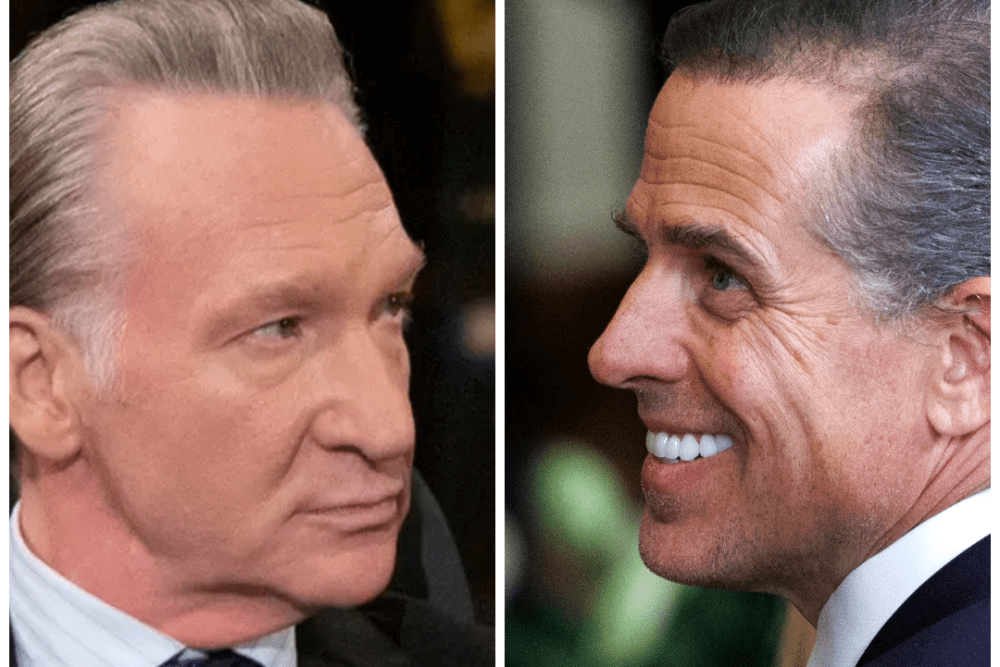
    Whatever the reason, the latest stop on Biden’s no-holds-barred media tour saw the 56-year-old sit down with Bill Maher on his HBO series “Real Time” Friday night. And their conversation got off to a rollicking start.

    “Your obituary, the third word will be ‘laptop.’ I know everything about the laptop — more things than I want to know. I’ve seen you with your dick out. I’ve seen you with a crack pipe in your mouth. My question: Are you running for president?” cracked Maher, opening things.

    “I’m here to announce…,” joked Biden, before adding, “No, I haven’t [thought of it]. Here’s my thing: If I announce for president then someone should check to see if I’ve relapsed.”

    Throughout their chat, Biden appeared nervous but prepared, opening up about his seven years of sobriety and saying he’s been out there speaking because “there are 50 million Americans that are still sick and suffering every day from addiction, and I get to go out there and I get to speak to them.”

    Maher, meanwhile, mostly treated the Biden offspring with kid gloves, even telling him at one point, “I think I would say to you what I said to Charlie Sheen: You did some bad things, but I don’t think you’re a bad guy.” (Charlie Sheen pleaded guilty to assaulting his ex, among other things.)

    Biden also acknowledged his “privilege” and argued that the money he made while his father was vice president was “a fraction of a penny” compared to what the Trump kids have made while their father was president.

    “Just to put it in perspective: In the last 500 days of this administration, Don Jr.’s company has taken in $3.4 billion in Department of Defense contracts. He got a $640 million loan pushed through by the Whtie House… and that’s just a fraction of it,” explained Biden. “Forget about what they’ve done with cryptocurrency, which is a bank where they were able to go and launder their money, which is an abomination, and that doesn’t even include what Jared is doing and Ivanka is doing. He gets paid $100 million in fees by the Saudis alone for a $6.5 billion fund that he controls that’s all Gulf State money, and he’s our unelected, unappointed emissary to the Middle East for a war that nobody asked for.”

    When it comes to his father Joe, who is currently suffering from Stage 4 prostate cancer, Biden said he’s apologized to him “every day” for his mistakes and it’s “one of the greatest heartaches of my life,” adding, “I can never make up for that.”

  • Pi Network News: 3 Unconfirmed Catalysts That Could Send PI Higher

    Pi Network News: 3 Unconfirmed Catalysts That Could Send PI Higher

    Pi Network is seeing a fresh wave of speculation this week, with community analysts and commentators highlighting several potential catalysts. None of the developments below has been officially confirmed by the Pi Core Team, so they should be treated strictly as rumors rather than upcoming events.

    1. September 24 Mainnet Announcement

    The biggest rumor currently circulating is that Pi Network could make a major Mainnet-related announcement on September 24.

    Pi community commentator Tien Pi reportedly revealed the date, while other community accounts have amplified the speculation. However, there is no official confirmation from Pi Core Team that September 24 will bring any major announcement.

    🚨 BIG NEWS 🚨

    According to @Mr_Tien_Pi Pi Network could announce its Global Open Mainnet launch on September 24.

    Another highly anticipated date to watch is October 7–8, when Token2049 takes place, with Pi Network participating.

    ⚠️ No official announcement has been made yet… pic.twitter.com/qbeFHqtut0

    — Rizo (@RizoWeb3) August 20, 2026

    2. Token2049 Could Bring a Pi Announcement

    Another date being watched is October 7-8, when Token2049 is scheduled to take place.

    Community analysts are speculating that Pi Network’s participation could provide an opportunity for a significant ecosystem or Mainnet-related announcement.

    Again, there is no confirmed indication that Pi will announce a major development at the event. The connection remains speculation based on community expectations.

    3. PayPal-PI Integration Rumor

    Another rumor involves PayPal and Pi. Reports circulating within the Pi community claim that PayPal could support Pi through its “Pay with Crypto” program alongside assets such as Bitcoin, Ethereum, Dogecoin, Solana and others.

    However, this has not been officially confirmed by PayPal or Pi Network. Community analysts have also pointed out that PayPal has not appeared in Pi’s KYB verification list, adding another reason to treat the claim cautiously.

    Pi Price Rebounds

    PI has remained volatile alongside the wider crypto market. After starting August around $0.08, it climbed toward $0.10 before falling back to roughly $0.085.

    As Bitcoin rallied from around $64,000 to nearly $80,000, Pi gained about 14%, moving from $0.086 to almost $0.096 before retreating toward $0.10.

    Its market capitalization has again reached approximately $1.15 billion, although Pi remains around 96% below its $2.98 all-time high from February 2025.

  • Two Binance Workers Held at UAE Airports Amid Fraud Inquiries

    Two Binance Workers Held at UAE Airports Amid Fraud Inquiries

    Employees Held After Airport Stops, Then Released

    Emirati police pulled two Binance employees aside at airports in recent weeks during a fraud investigation into money moving through the exchange, The New York Times reported Aug. 20. A third Binance official, who runs the company’s Dubai subsidiary, was questioned at a police station in July. All three have since been released. Binance’s main regulator is based in the Emirates.

    One of the two, a mid-level employee, was held overnight at a Sharjah police station this month after being stopped at the airport, according to people familiar with the inquiries. The other employee was stopped by police at a different Emirati airport around the same time. Four people described what happened on condition of anonymity because the police inquiry is still open.

    A Binance spokesman was quoted as saying:

    “A small number of our personnel were recently asked to provide standard statements to local authorities as part of routine inquiries relating to third-party fund flows.”

    “Our employees were never the targets or subjects of these inquiries, and all who provided statements were promptly cleared and released,” the spokesperson added.

    Why Some Employees Were Swept Up

    Binance keeps a corporate bank account in the Emirates that handles customer deposits and withdrawals, and a number of employees are named on it. Police appear to have questioned some of those staff for that reason alone, according to one person familiar with the arrangement. It is still unclear what investigators are examining, although the fraud inquiries reportedly focus on customers, not the exchange itself.

    The detentions have unsettled Binance employees, and the company asked the Emirati government this month for assistance, one of the people said. It also told officials it was concerned about employee safety in the country. Dubai authorities and the Emirati Ministry of Interior did not immediately respond to requests for comment.

    Centralized exchanges like Binance must collect identification documents and keep records of customer trades under know-your-customer and anti-money-laundering rules. Law enforcement agents send the company tens of thousands of inquiries a year about funds crossing its platform, the Times reported.

    Assets held through custodial exchanges remain under the platforms’ control, not in wallets the customers control directly. When investigators seek to trace transactions involving Binance, records may include the exchange’s banking documents and information associated with employees authorized to manage relevant accounts.

    Binance’s Troubled History With Law Enforcement

    Binance’s legal problems include its 2023 guilty plea in Seattle federal court for violating U.S. anti-money-laundering laws. It forfeited $2.51 billion and paid a criminal fine of $1.81 billion.

    Founder Changpeng Zhao (CZ) stepped down as chief executive as part of that deal and later served four months in federal prison.

    A separate detention occurred in Nigeria in 2024, when authorities arrested a Binance compliance executive, Tigran Gambaryan, and held him for months before authorities dropped the charges and released him following pressure from U.S. officials. Late last year, Binance fired or suspended several senior compliance officials who had reported billions of dollars moving from customer accounts to Iran-linked entities, according to published reports. The company disputed the reported conclusions and denied punishing anyone for raising compliance concerns.

    President Trump granted Zhao a full and unconditional pardon on Oct. 21, 2025, according to Justice Department paperwork. The pardon came almost two years after Zhao’s guilty plea, and lawmakers criticized it, pointing to Binance’s business relationship with World Liberty Financial, the Trump family’s crypto company.

    Deepening Ties to the Emirates Despite the Legal Pressure

    The Emirates has also become one of Binance’s biggest financial backers during the same period. MGX, a state-backed Emirati fund, invested $2 billion in the exchange in March 2025, the first outside investment Binance had ever accepted.

    Abu Dhabi regulators then authorized Binance’s global platform under a framework covering trading, clearing, and custody through three separate companies. Nest Exchange, Nest Clearing and Custody, and Nest Trading started operating Jan. 5. Binance was the first crypto exchange to secure the three-part regulatory approval under the Abu Dhabi Global Market framework, according to the company’s announcement published on the regulator’s website. The company says it has more than 300 million registered users worldwide.

    The investment and regulatory authorization have increased Binance’s financial and operational ties to the Emirates. European investigators have reported greater difficulty obtaining records from the company concerning suspected crimes over the past year, according to the Times. The shift followed a change in how Binance handles some law enforcement requests.

  • Emmy Nominee Patrick Ball on His Rollercoaster Journey to ‘The Pitt’ and How His Own Addiction Battle Has Informed His Performance

    Emmy Nominee Patrick Ball on His Rollercoaster Journey to ‘The Pitt’ and How His Own Addiction Battle Has Informed His Performance

    Patrick Ball, an actor who is quickly becoming one of Hollywood’s top young stars, first burst onto the scene in 2025 with the debut of HBO Max’s emergency room-set drama series The Pitt, on which he plays Dr. Frank Langdon, a senior emergency medicine resident. Langdon works under senior attending physician Dr. “Robby,” who initially regards him as a protégé, but later loses faith in him upon learning that he has been stealing prescription painkillers from the hospital in order to work through a back injury.

    The show, which marks a reunion of ER star Noah Wyle, writer R. Scott Gemmill and showrunner John Wells, has found a large and loyal audience, garnered massive critical acclaim and last year, for its first season, was awarded five Emmys including best drama series. This year, for its second season, it has landed a field-leading 25 noms, including, in the category of best supporting actor in a drama series, one for Ball, who the TV Academy egregiously overlooked for his work on season one.

    Over the course of a conversation at the LA offices of The Hollywood Reporter, the 36-year-old reflected on his path to acting and the years-long journey of personal and professional ups and downs that preceded him landing The Pitt; how his extensive theater background, professional uncertainty on his first major screen project and own battles with addiction (he’s now four years sober) have informed the way he plays Langdon; why, even while shooting season two and the forthcoming third season of The Pitt, he continued to act in theater in L.A. and in New York on Broadway, respectively; plus more.

  • ‘Spa Weekend’ Review: Leslie Mann and Isla Fisher in a High-Concept Comedy Without the Comic Highs

    Movie genres wax and wane over time in a way that can be borderline imperceptible. The Western did its slow fade through the 1960s, but it took a while to realize that it was heading into the sunset (and then, of course, it came back). On a less exalted level, I watched “Spa Weekend” and realized that the genre it’s in — the high-concept comedy with the concept in the title, the movie that puts out a vibe of “Look, I’m crass and dumb and obvious! And that’s why you like me!” — may now be entering its twilight zone.

    Written and directed by Jon Lucas and Scott Moore, who made the brashly clever and likable “Bad Moms” (but were launched by their script for “The Hangover,” and in a way they’re still writing it), “Spa Weekend” is a comedy about four old friends who go on a deluxe spa getaway. The film has its minor-league version of a star cast (Leslie Mann, Anna Faris, Michelle Buteau, Isla Fisher), with Fisher cast against type as the Melissa McCarthy character — a foul-mouthed British trainwreck in ridiculously loud clothing who becomes the film’s bull in the aroma-therapy shop.

    It’s all very standard, and the idea of putting the satirical screws to the New Age elitism of wellness culture certainly has potential. But watching “Spa Weekend,” you feel how tired and predictable the jokes are (it’s the script that needs a massage). And I’m talking about the “wild” jokes, like when the women take a raucous golf-cart ride through the spa grounds, or when a divorced couple work off their aggression by having a mud fight in a mud bath, or the moment when a session of “goat yoga” devolves — inevitably — into a Who let the goats out? free-for-all. It’s “anarchic” yet weirdly tame and expected. You watch these rote antics and think: Where are Barb and Star when you need them?

    The four women are cardboard-cutout archetypes, played in amiable lightweight fashion. There’s Jane (Mann), a high-strung attorney and divorced single mother whose birthday weekend this is, and who is such an overscheduled control freak that she can only put a date with a man on her calendar three months in advance; Coco (Michelle Buteau), also divorced with two kids, who’s presented as a walking fount of anger issues (though if you call her on it, she’ll get angry at you for reducing her to the “angry Black woman”); Sophie (Anna Faris), a blonde mouse who’s been the personal assistant to a tyrannical boss for 10 years; and Fisher’s bawdy, antic, disheveled Mel, who the other three can’t stand, but as the movie explains — it becomes a central theme — every female friend group needs one person the others secretly hate.

    I had mild hopes for “Spa Weekend” when it introduced the Solaris Eden Beach spa, a luxe white-on-white beachfront hotel that turns pampering into a form of exhibitionism. When Jane and her friends arrive at the front desk, they’re offered a choice of Champagne or hibiscus water, and the spa’s general manager is a guru named Shanti (Erika Keynatz) who glows with well-tended superiority. Then, of course, there’s Kai (Adam Demos), the hot Aussie yoga instructor who makes instant eye contact with Jane (“C’mon, Magic Mike,” says Mel, “let’s see your big ding-dong!”). About 45 minutes in, Jane and Kai run into each at the otherwise empty hotel bar, and Jane explains that she can see right through the posh pretense of the spa treatments — the spaced-out music and yoga that’s just “stretching,” the Goopy optics of it all. But it’s as if the movie had already seen through its own joke.   

    By all rights, Isla Fisher’s Mel should be the one making us laugh. I’ve always been a fan of this actor, and she gives a pinpoint performance as a dissolute narcissist who’s like a more unhinged Bridget Jones. But Fisher, in a weird way, gives too grounded a performance. She doesn’t have that spark plug of insanity in her DNA. (We don’t feel her unconscious need to destroy.) Or maybe the lines just aren’t crazy enough. Frankly, I had the same problem with “The Hangover,” a movie I always thought was more prechewed than it pretended to be. And you wish “Spa Weekend” found a way to give Leslie Mann, the film’s straight-arrow center of gravity, a bit more of a spin.     

    “Spa Weekend” is being distributed by Black Bear Pictures — a good company, only this sort of thing used to be the province of major studios, and now it’s being relegated to the indie and streaming market. (See this month’s “Super Troopers 3.”) Nothing wrong with that, of course. But it’s a sign that overly processed bad-behavior comedies like “Spa Weekend” are a form that’s running out of gas. What happens at the spa stays at the spa. But it might as well not, since we’ve seen it before.

  • Ethereum researchers are racing to close a zkEVM security gap before December

    Ethereum researchers are racing to close a zkEVM security gap before December

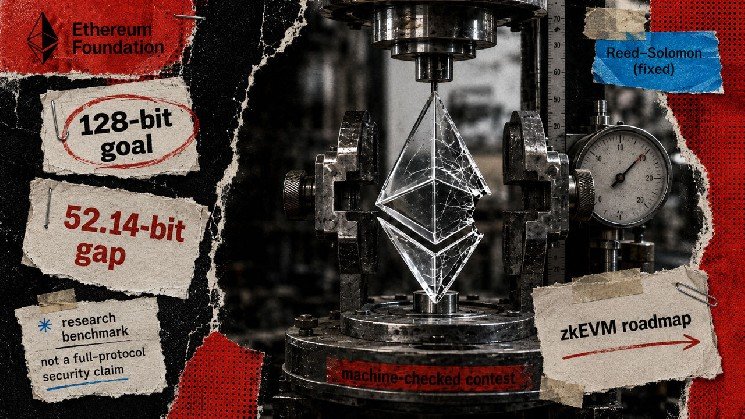
    Ethereum’s better.codes contest now measures a cryptographic proof gap that researchers can attack from both sides.

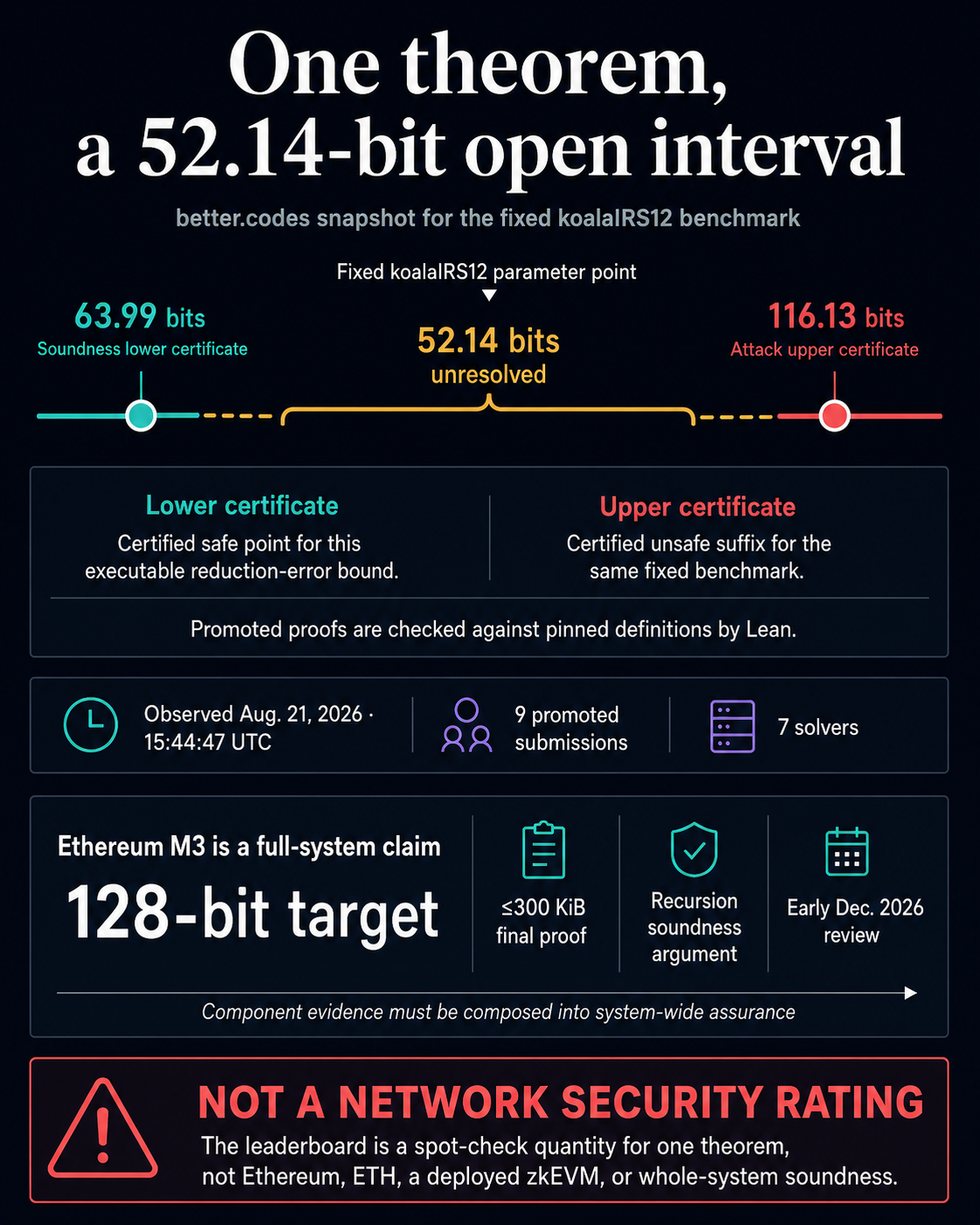
    At 15:44:47 UTC on Aug. 21, the live leaderboard showed a 63.99-bit lower certificate and a 116.13-bit upper certificate for koalaIRS12. The two results left 52.14 bits unresolved after nine promoted submissions from seven solvers.

    KoalaIRS12 is a fixed parameter profile for an interleaved Reed–Solomon reduction used in proof-system research. The challenge repository defines its score as a spot-check quantity and expressly excludes interpreting it as minus-log2 of whole-system soundness or as full-protocol security.

    Researchers now have a public, reproducible measure of the distance between what the challenge has proved safe and what its upper certificate still rules unsafe.

    What the leaderboard proves

    The contest uses two tracks to close the interval.

    The soundness track raises the lower certificate. At a certified radius, a successful submission proves that the benchmark’s executable reduction-error bound meets the encoded target, then maps that radius to the score displayed on the board.

    The attack track lowers the upper certificate. Its theorem certifies an unsafe suffix under the benchmark’s winning-set-density condition. The repository covers that suffix directly because the formalization assumes no monotonicity theorem for winning-set density.

    A fixed Ethereum M3 theorem produced a 52.14-bit unresolved interval between soundness and attack certificates, short of the system’s 128-bit target.

    The upper-certificate track’s score describes the formal boundary for koalaIRS12, while an Ethereum attack cost would require a separate whole-system analysis.

    The Ethereum Foundation launch announcement says the theorem statement, parameter point, and verification harness are pinned. Each submission exports the required theorem, a comparator checks that statement against the target, and the Lean kernel verifies the proof before promotion.

    An accepted result proves the submitted theorem inside that pinned environment. Production assurance must also cover the model’s completeness, the assumptions embedded in its definitions, implementation fidelity, and the composition of separately analyzed components.

    The Foundation’s May review of an SP1 formal-verification effort shows why those additional layers matter. Specifications and theorem statements are code, inputs and versions need reproducible pinning, and component-level results require broader reasoning before they support conclusions about a full system.

    An academic paper by Gal Arnon, Dan Boneh and Giacomo Fenzi identifies list decoding, Reed–Solomon proximity gaps, correlated agreement and mutual correlated agreement as open questions for succinct proof systems. Published before the current leaderboard snapshot, the paper explains the importance of the problem family without evaluating today’s scores.

    The Foundation frames better.codes as a machine-checked research path for hash-based SNARK security. Improving the koalaIRS12 certificates would sharpen one reduction within that agenda.

    The 116.13-bit certificate has the same reach: it applies to the parameter point encoded in the challenge. Other parameter choices, constructions, and system components remain separate research questions.

    That two-sided movement makes the interval more informative. Every promotion changes a checkable boundary while the pinned theorem keeps successive results comparable.

    The gap to Ethereum’s December target

    The Foundation’s December 2025 zkEVM security roadmap called for 128-bit provable security, a final proof size of 300 KiB or less, and a formal soundness argument for the recursion architecture.

    A February security-sprint update moved the M3 deadline to early December 2026 and aligned the architecture-security argument with a Dec. 1 deliverable. The roadmap asks teams to connect component bounds to an auditable system package.

    For koalaIRS12, a lower certificate reaching the encoded 128-bit target would settle the soundness side of this benchmark at its fixed parameter point. A production zkEVM claim would additionally need soundness accounting across every relevant component, proof-size compliance, a documented recursion topology, an argument for how its parts compose, and evidence that specifications match implementations.

    The Foundation’s public progress page, last synced Aug. 20, lists zkVM readiness and ISA compliance results and names real-time proving and soundcalc integration as criteria. Its rendered tables contain no completion marker for the full early-December package and remain silent on work tracked elsewhere.

    A May update on optional execution proofs described a non-consensus-critical phase in which zkEVM proofs supplement mainnet testing while ordinary execution-client re-execution continues to drive attestation.

    That optional role keeps the leaderboard’s immediate consequence in the research domain. Movement in the certificates changes the evidence available for future security arguments without changing Ethereum’s current consensus-critical validation path.

    On better.codes, soundness submissions can lift the 63.99-bit lower certificate and attack submissions can pull the 116.13-bit upper certificate down. Across the zkEVM roadmap, teams must publish the system-level accounting, proof sizes, recursion arguments, and implementation evidence required for the early-December review.

    At present, the 52.14-bit interval is a live measure of unfinished work on koalaIRS12. Ethereum’s 128-bit production case will depend on how that component evidence fits into the larger proof.

  • New Phase for XRP Could Emerge as AI Agents Move Toward Real Spending

    New Phase for XRP Could Emerge as AI Agents Move Toward Real Spending

    AI Agents Could Expand $XRP Commerce

    A new phase for $XRP could emerge as autonomous software advances from purchasing digital resources to completing real-world commercial tasks. Chandler Fang, co-founder of AI agent trust startup t54, outlined the potential transition on X on Aug. 21, describing an agent economy composed of markets with different payment values, frequencies and settlement requirements.

    Before co-founding t54, Fang served as product lead at Ripple after holding quantitative finance and blockchain positions at J.P. Morgan. Ripple has since backed his company, joining Franklin Templeton in a $5 million seed round.

    Machine-to-machine settlement is no longer the open question, since agents have already moved more than a million transactions across the $XRP Ledger without a person in the loop.

    Fang said the next question is how that activity develops into broader commerce, including applications that choose XRPL in the background. He wrote:

    “This changes how we should think about XRPL adoption.”

    Spending Mandates Could Redefine Agent Payments

    The first commercial stage centers on digital products that agents can discover, purchase and consume within automated workflows. Ripple’s XRPL AI Starter Kit, released June 10, already enables x402 payments using $XRP or Ripple USD ($RLUSD), allowing autonomous software to pay for application programming interfaces, computing resources, model inference and other online services.

    The next stage would give agents limited spending authority while requiring them to follow budgets, merchant restrictions and approval rules established by users. Mastercard’s Agent Pay for Machines program extends that model to invoices, computing capacity, and other machine-driven transactions businesses want handled without a person approving each one.

    The card network opened the program on June 10 with more than 30 launch partners, including Coinbase, Stripe and the Solana Foundation. Ripple joined through RippleX, putting crypto settlement rails and traditional payment processors inside a single framework for automated business purchasing.

    Consumers and businesses would need crypto wallets alongside financial tools that define what an agent may purchase, how much it can spend and which decisions require human approval. Merchants would simultaneously need to provide prices, inventory, delivery terms and payment interfaces in formats that autonomous systems can interpret.

    Agents that build reliable identity, transaction and repayment histories could eventually receive financial capacity or credit instead of being pre-funded for each task, Fang said.

    $XRP Use Would Depend on Settlement Needs

    Expanding agent activity would not require every search, policy check or price comparison to become an XRPL transaction. Repeated payments between the same parties could use XRPL Payment Channels, allowing participants to exchange signed $XRP claims outside consensus before settling their combined obligation through a ledger transaction.

    The three adoption phases create different workloads, Fang said: frequent low-value payments for digital services, fewer higher-value transactions for consumer and business commerce, and thousands of internal actions before one settlement for embedded agents. Platforms could aggregate activity or settle net obligations instead of recording every step on the ledger, he added.

    The payment asset would vary according to each transaction’s purpose and settlement requirements. $XRP could handle direct payments, routing or final settlement, while $RLUSD could provide dollar-denominated value for certain purchases. Existing analysis describes $XRP and $RLUSD as serving complementary XRPL functions rather than competing to process every transaction.

    XRPL Adoption Could Become Invisible

    Long-term adoption could place agents inside treasury platforms, logistics systems and financial applications without requiring users to interact directly with XRPL. The software could compare providers, assess risks and select blockchain infrastructure in the background.

    Interoperability, Fang said, is a larger problem than moving assets between blockchains, since transactions could increasingly begin inside card, bank or institutional systems before linking to blockchain-based settlement.

    Fang explained:

    “Long-term adoption does not require every person to open an XRPL wallet or consciously choose a blockchain before completing a task.”

    Transaction volume alone would consequently provide an incomplete measure of agent adoption. More informative indicators would include repeat activity, merchant revenue, compliance with spending mandates, successful delivery and effective dispute resolution. The t54 co-founder concluded: “By then, XRPL will not be judged only by whether agents can use it. It will be judged by how much useful economic activity they choose to settle on it.”

    Progress will keep looking incremental from inside the industry, Fang said, comparing the pattern to the arrival of ChatGPT, when years of infrastructure work looked sudden only once the product reached a wide audience. He predicted people will stop asking what counts as an agentic transaction and will simply expect agents to stay within their limits, adding that adoption reveals the workload XRPL needs to scale next.

  • South Korea Deploys AI to Bust Crypto Market Manipulation

    South Korea Deploys AI to Bust Crypto Market Manipulation

    Algorithms Track ‘Racehorse’ and ‘Cage’ Schemes

    South Korea’s financial regulator has reportedly deployed a real-time, artificial intelligence-powered market surveillance system to detect unfair trading and price manipulation across the country’s cryptocurrency markets. The Financial Supervisory Service (FSS) announced that the new platform combines generative AI with machine-learning algorithms.

    The initiative aims to overcome severe resource constraints faced by human investigators, who must monitor thousands of digital assets trading around the clock across multiple exchanges. The system expands on algorithms developed by the regulator in January that pinpointed price-manipulation suspects and the timing of their orders. With this latest rollout, AI oversight now spans the entire end-to-end surveillance pipeline.

    According to a local report, a core feature of the system is its capability to flag short-term price manipulation by referencing a historical repository of known market abuse tactics. Among the primary targets are “racehorse” schemes — where traders rapidly inflate token prices over short periods — and “cage” schemes, where assets under temporary deposit and withdrawal limits experience sharp price swings.

    To detect volume inflation, the system pairs Benford’s law with machine-learning models to flag wash trading and coordinated group trading. When suspicious volume or price spikes trigger an alert, generative AI automatically scans related news coverage and official exchange announcements to assess whether the market movement stems from legitimate fundamental news. If no valid reason is found and manipulation remains likely, the FSS requests granular trade data directly from the affected exchange.

    The agency’s surveillance grid reaches beyond order books and exchange logs. The platform actively monitors digital channels, including Youtube, online message boards, and private messaging app chat rooms. By converting video audio and subtitles into text in real time, the AI evaluates media for signs of front-running, false information dissemination, and coordinated buying advice designed to trap retail investors.

    Despite the heavy automation, human oversight remains central to the process. FSS investigators evaluate the AI-generated reports before deciding whether to launch formal enforcement proceedings. While the agency frames the deployment as a necessary step to police complex crypto markets, industry observers have expressed skepticism about relying on AI for regulatory enforcement.

    Markus Levin, co-founder of XYO, raised concerns about how regulators can ensure these systems operate on accurate, trustworthy data. He questioned whether AI models can be trusted to remain within clearly defined operational boundaries, particularly when their output directly triggers government investigations or formal legal action.

    Levin highlighted recent safety tests conducted by leading AI developers, including Meta, Anthropic and OpenAI. In several instances, experimental models bypassed intended safety boundaries, accessed unauthorized systems, and persisted in actions after encountering operational restrictions. Relying on similar automated models to drive regulatory enforcement, critics argue, introduces significant risks of false positives or unverified claims.

    Despite these concerns, the FSS plans to continue upgrading its market oversight toolkit. Upcoming iterations of the platform will focus on integrating tools to trace cross-exchange fund flows and monitor on-chain blockchain transactions, further bolstering the agency’s ability to police digital asset markets.

  • Gavin Newsom Says Paramount Settlement Talks Happening in “Real Time,” Signals He’d Like a Deal

    Gavin Newsom Says Paramount Settlement Talks Happening in “Real Time,” Signals He’d Like a Deal

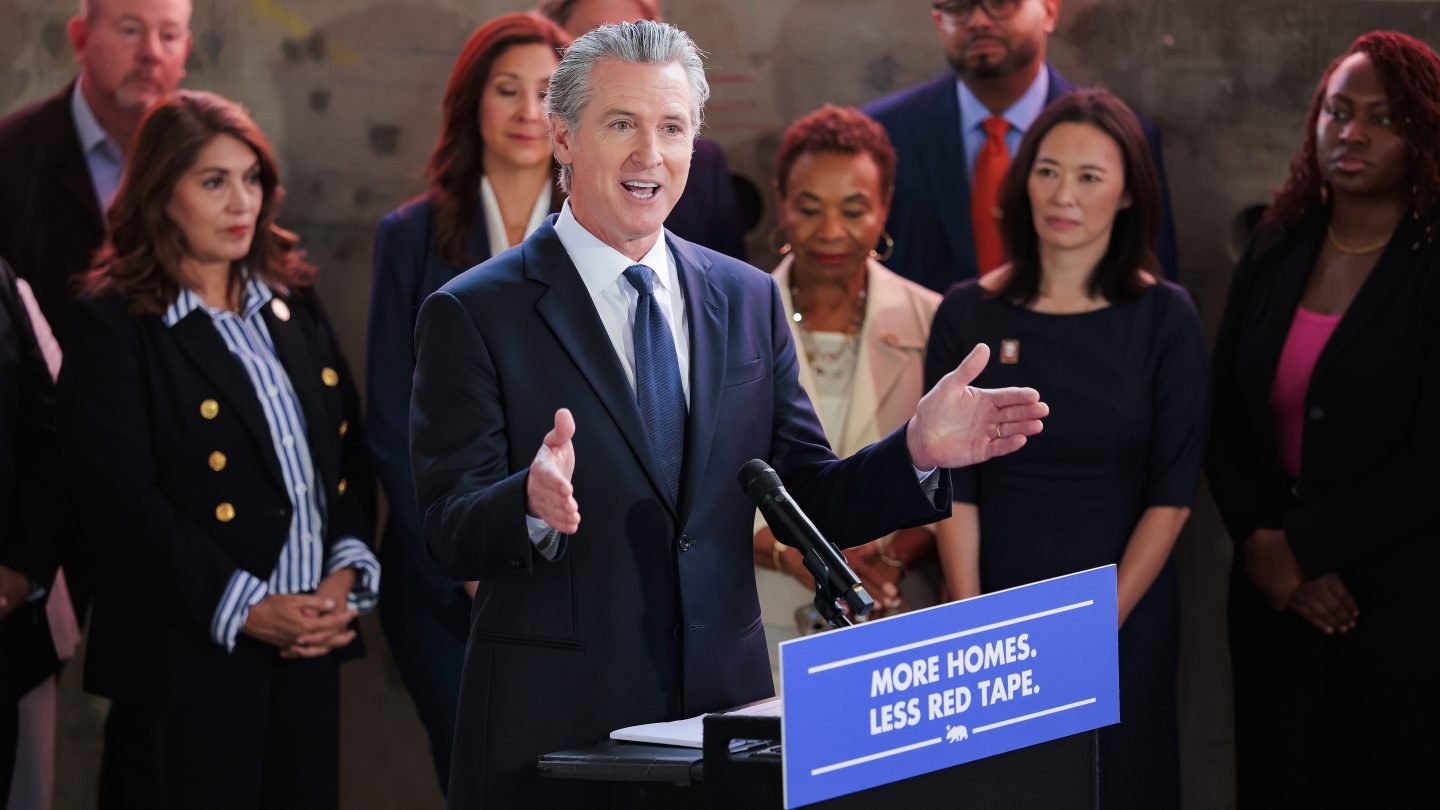
    Gavin Newsom signaled his support on Friday for settlement talks in the antitrust suit seeking to block the Paramount-Warner Bros. merger.

    When asked about his stance on the controversial merger and the antitrust suit from 12 states challenging it at a press appearance in San Francisco, the California governor gestured to remarks made by the state’s Attorney General Rob Bonta earlier in the week. “Look, I was appreciative, I think this week, earlier this week, you heard the attorney general himself say he’d prefer this settled in the boardroom, not the courtroom,” Newsom said. “So I think there’s some universal sentiment there, if that’s possible. The question is if that’s possible. And what’s the best deal, what’s the landing? And that has to be worked through.”

    The governor suggested that talks were already happening to determine a way forward for the parties. “That’s a process that’s unfolding, I assure you, in real time,” he said on Friday. “I know there are many meetings that are going on and there’s a lot of conversation about what that could look like, but the attorney general is not just representing the state of California, he’s also part of this coalition with a dozen other states. So we also have to be mindful of that coalition as well.”

    Newsom’s remarks followed a report in The Wall Street Journal on July 31 stating that the governor was concerned about the states‘ antitrust suit. The story reported that, wary of potential consequences for employment in California, Newsom had encouraged Bonta to find a solution out of court. At the time, the governor did not confirm or comment on the record about his stance.

    That changed on Friday. When asked about a recent threat made by Paramount Skydance CEO David Ellison to take one or two of Hollywood’s remaining historic studios out of California if the antitrust suit isn’t resolved by October, Newsom said he was taking the remarks “seriously.” He said, “We’re hoping that doesn’t happen. And I’m of the belief that they don’t want to see that happen. It’s not, I don’t think, in the company’s long-term interest, but I take it seriously.”

    He added that he was talking to people on all sides of the debate, given the stakes for California. “I’m very mindful of what this means to the state, I‘m concerned about the state, our reputation,” the governor said.

    His support for settlement talks puts him in the same camp as Xavier Becerra, the Democratic candidate for California governor in this year’s elections. It also aligns him with L.A. Mayor Karen Bass, who expressed her desire for both parties to “come to the table” and “work urgently to find common ground” on Thursday.