Author: rb809rb

  • ‘Skintown’ Review: A Breezy, Loved-Up, Drugged-Up Guide to Getting Into Trouble in The Troubles

    ‘Skintown’ Review: A Breezy, Loved-Up, Drugged-Up Guide to Getting Into Trouble in The Troubles

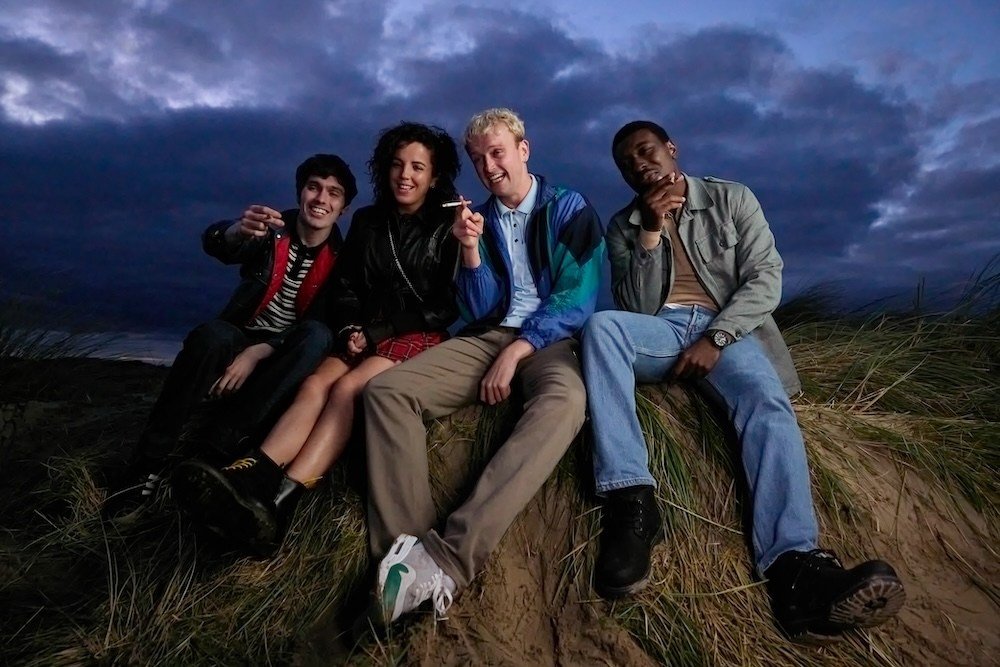
    Nostalgia, like ecstasy, is a hell of a drug and Kieron J. Walsh’s warm-hearted, hot-headed “Skintown” is buzzing on both. A more polite brother to the “Kneecap” boys and a more cautious cousin to those “Derry Girls” still, the Fermanagh-set friendship comedy sends fizzy, sweetly chemical energy coursing through a rave-romanticizing riff on the coming-of-age formula. The story may not be exactly new, but its bittersweet life lessons are delivered with such retroactive affection and such eagerness by the appealing cast, that if you’re of a mind to complain, well, in the parlance of the movie, would you ever give over, catch yourself on and wise up. 

    It is 1994, in Enniskillen, unflatteringly dubbed “Skintown” by its denizens and famous for “a lake, an old castle and an IRA bomb that killed 11 civilians in 1987.” Vinny (Jack Rowan) wants nothing more than to get the hell out. Partly, that’s due to the omnipresent dangers of an intractable conflict that has been ongoing since before he was born. (Vinny is 23, though his characterization here skews younger.) But really his disillusion with Skintown is an independence struggle of a more personal kind — one recognisable to anybody who remembers their jaundiced familiarity with their childhood hometown starting to curdle into contempt as adulthood beckoned. When Vinny strikes up an unlikely friendship with Wilson (Hope Ipoku Jr.) a Black squaddie from Manchester who’s been deployed to serve in the universally despised British military patrols, they bond when he realises that for Wilson, joining the army was his escape from the place he grew up in.

    Still, as soon as Vinny gets the money together, he’s resolved to leave, although there are things he’ll miss: his supportive, hardworking paramedic mum (Roisin Gallagher); his peppy unrequited crush Eileen (Jamie Lee O’Donnell); and most of all, his best mate Jonty (Chris Walley), a shell-suited, high-spirited raver just out to have a good time. Vinny and Jonty are as thick as the thieves they eventually, inadvertently become when they’re pressganged into a caper involving a load of ecstasy stolen from the UVF (a loyalist paramilitary group).

    On the bright side, though — and DP Ruairi O’Brien’s pleasant images make most everything bright even when, among sparse crowds and street scenes that feel rigidly dressed to the camera, the limits of the budget show — if they manage to sell the drugs and survive, they stand to make quite a bit of cash. More, anyway, than they could hope to score from their part-time jobs at the neighborhood pizzeria, whose oleaginous owner, splendidly named Tony Pepperoni (Michael Smiley), insists on serving his pizzas with a side of Peking ribs because, he contends, “the Irish aren’t ready for pizza on its own. They need a wee side of ribs to wean them off the Chinese.”

    That kind of authentically eccentric observation feels lifted directly from experience, and the pacy screenplay, adapted by Enniskillen native Ciarán McMenamin from his 2018 novel, abounds in such flourishes. As a ritual, the whole pub greets the TV newsreader (modelled on BBC institution Moira Stuart) like an old friend every time she begins her report with “Good evening.” “Body of Christ,” blasphemes Jonty benignly, handing out pills at a rave like they’re communion wafers. And, it being marching season, everyone is used to maneuvering around the Orangemen who take to parading down the main street at the drop of a bowler hat. “They’d want to get a move on if they’re planning on stopping outside every Catholic pub,” sighs barmaid Chalky (Tara Lynn O’Neill) resignedly.

    Ah yes, the Catholics. The Protestants. The Republicans. The Unionists. The IRA, the UVF, the UDA, the INLA, the RUC, the Brits and the Battle of the Boyne — Vinny’s rather unnecessary voiceover namechecks them all, with more or less equal disparagement. While he and his mates are from a Catholic/Republican background, “Skintown” is careful not to overtly assign blame to one side and virtue to the other. Instead, most of its rancor is directed without sectarian bias, at the politician class. The brief, incredulous euphoria that follows the fateful announcement of an IRA ceasefire, is immediately dampened by one barfly (Belfast-born icon Lalor Roddy) observing drily, “If there’s any conceivable way to fuck this up, those politicians will find it.”

    This careful avoidance of any alienating perspective, and its streak of sentimentality make “Skintown” a more timid proposition than, say, “Kneecap,” even as it ramps up to an inevitable tragedy to undercut the bursts of MDMA-infused idealism elsewhere. But it also serves up a gently pointed reminder that for all the region was internationally synonymous with terrorism, reprisal and violent death, most of its inhabitants were ordinary people just going about the humdrum business of everyday life. And being Northern Irish, they did it with an indomitable sense of humor. So don’t come to “Skintown” for trenchant political commentary; come for the slangy jokes, the ’90s kitsch and the precise evocation of the love/hate relationship so many of us Irish have with the place that, however begrudgingly, we call home.

  • ‘Spa Weekend’ Review: Leslie Mann and Isla Fisher Go Underserved in a Lukewarm Bath of a Comedy

    ‘Spa Weekend’ Review: Leslie Mann and Isla Fisher Go Underserved in a Lukewarm Bath of a Comedy

    Have you ever had the experience of booking a trip that promised to be a blissful getaway, only to find once there that you’re having…not the worst time, but definitely a disappointing one? That the food that looked so pretty online tastes bland in person, that the overstuffed pillows give you neck pains, that — come to think of it — there’s not really that much to do at this resort beyond linger beside a lukewarm pool?

    If so, the aura of letdown surrounding Spa Weekend, the latest outing from writer-directors Jon Lucas and Scott Moore, ought to feel familiar. On paper, it’s a variation on the “R-rated hijinks plus heartfelt emotion plus beloved cast” equation that’s worked so well for Bridesmaids and Girls Trip and Lucas and Moore’s own commercially successful though creatively uninspired Bad Moms. In execution, the hijinks feel awfully tame, the emotion shallow, the stars underserved.

    Spa Weekend

    The Bottom Line

    A likable cast let down by uninteresting hijinks.

    Release date: Friday, Aug. 21
    Cast: Leslie Mann, Isla Fisher, Michelle Buteau, Anna Faris, Adam Demos, Dominic Ona-Ariki, Erika Heynatz
    Director-screenwriters: Jon Lucas, Scott Moore

    Rated R,
    1 hour 37 minutes

    The premise is the title, not much more and not much less. On the occasion of her she’s-not-saying-which birthday, overworked Los Angeles lawyer Jane (Leslie Mann) books a two-night stay at a wellness retreat seemingly around Malibu, though the Australia-shot production avoids getting too geographically specific. (Wherever it is, the sunsets are very pretty.)

    Along with her for the ride are her two childhood besties — sweet-natured Sophie (Anna Faris), who’s withering under a boss so spoiled he can’t even buy his own Skittles, and hot-tempered Coco (Michelle Buteau), who’s working through a painful divorce while stubbornly not working through the anger management issues that led to it.

    The trip promises to be precisely the break all three of them desperately need but cannot ever seem to take, because as working moms pulled every which way by ailing parents, needy kids and demanding jobs, these women cannot imagine planning so much as a date night less than three months in advance. They could certainly never do something so self-indulgent as book a whole trip on a whim — except that that’s exactly what we’ve just seen them do, within five minutes of Coco floating the idea over brunch.

    I presume the whiplash-inducing speed with which the trio go from “Oh, I couldn’t possibly” to “We’ve booked the room” is meant to be aspirational: Here are women finally saying “screw it” to a society that demands they put everyone else first, and taking care of themselves for once! But it has the condescending effect of suggesting that their struggles were never real to begin with. The only thing ever actually holding them back, apparently, was their own lack of willpower.

    Well, that and, in some roundabout way, their lack of appreciation for the unwanted fourth member of their circle. Mel (Isla Fisher), who’s only scored a last-minute pity invite thanks to Sophie’s guilty conscience, is “the one woman all the others secretly cannot stand” — you know, that thing Spa Weekend assures us every female friend group always has. If you can’t identify who that might be in your own girl gang, maybe that’s because it’s you. Or maybe it’s because Spa Weekend has a habit of treating all its characters’ problems as universal and therefore inherently relatable and interesting. You can practically hear the “Am I right, ladies?” after every such observation.

    In fairness to Jane, Coco and Sophie, their distaste initially proves warranted. From the moment Mel bursts onto the property — boobs spilling out of her pushup bra, dildos spilling out of her suitcase, inappropriate language spilling out of her mouth — she brings nothing but chaos. When she’s around, a guided meditation session devolves into a shouting match, a chill evening into a cocaine-fueled rager, a short walk between spa treatments into, somehow, a wild golf cart chase. None of it is anything you haven’t seen before, and in Lucas and Scott’s ineffectual hands, none of it gets as nasty or raunchy or destructive as those descriptions suggest.

    What’s more, Mel can’t seem to stop meddling in her friends’ live. She swipes Sophie’s phone to scream at her shitty boss. She tricks Coco’s ex (Dominic Ora-Ariki’s Roger) into rushing to her side. She baldly propositions Adam Demos’ hot yoga instructor on Jane’s behalf (“Obviously she’s on the older side, but she’s got a porno body!”). Her behavior is upsetting and mortifying and potentially life-destroying to all her friends until it’s not, as Spa Weekend slowly but predictably gets around to the argument that the world needs Mels — the hot messes who force everyone else out of their miserable but societally approved ruts.

    It would be a very nice message, if not for the fact that the script undercuts it by keeping all its characters too vague and one-dimensional to care much about in any direction; I couldn’t even tell you what Coco does for a living or why Jane’s raising her kids alone. To the extent that there are any genuine chuckles or warm fuzzies to be found in Spa Weekend, it’s thanks to skills this talented core cast have deployed more effectively elsewhere.

    A pretty funny scene in which Jane tries very hard to pretend she’s not extremely turned on by Demos’ Kai giving her a hand massage called to my mind the even funnier ones of Mann smiling through her tears in Blockers. Coco’s smooth, sexy chemistry with Roger made me want to revisit Buteau’s winsome turn as a heartbroken stylist in Netflix’s Survival of the Thickest. Fisher earns most of the film’s few real laughs by channeling the upbeat yet unhinged energy that’s served her so well since her breakout in Wedding Crashers. Even Faris’ miscast turn as awkward, mousy Sophie served to remind me how much more delightful she is when she gets to go weird and messy, as in The House Bunny or Smiley Face.

    But the ability to occasionally evoke other, better projects does not a good film make. Spa Weekend has nothing fresh or insightful or even all that amusing to add to the familiar formula it’s borrowing — and for all its apparent good intentions, nothing much more meaningful to offer the overworked, overstressed moms of the world than the suggestion that maybe they could, like, try taking a vacation sometime. If this is what a big relaxing escape looks like, you’re better off saving the money and chilling at home.

  • ‘National Treasure 3’ Is “Finally Real” and “We Have a Script,” Director Says

    ‘National Treasure 3’ Is “Finally Real” and “We Have a Script,” Director Says

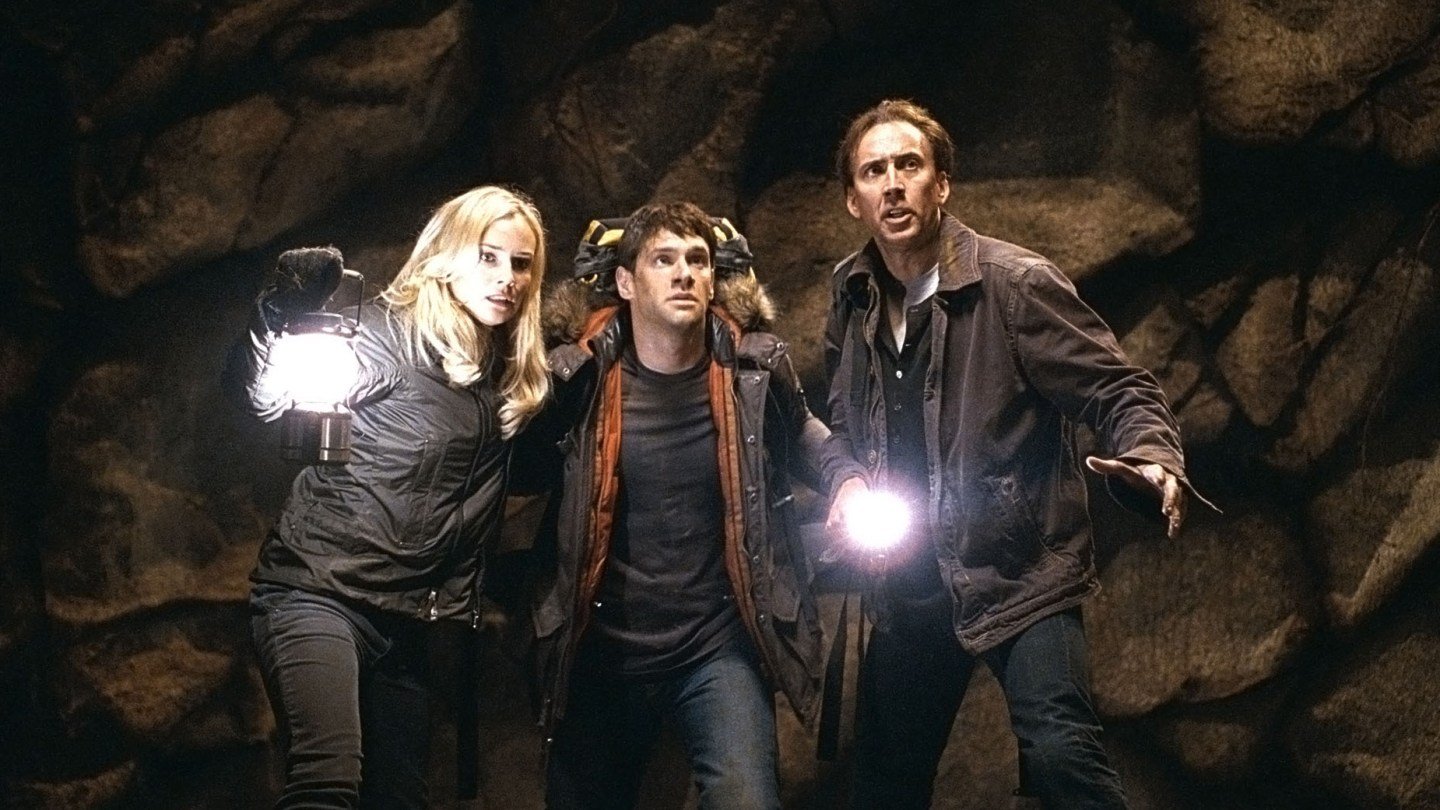
    Get ready for another treasure hunt: A third National Treasure movie is happening, according to director Jon Turteltaub.

    Speaking at a live taping of the National Treasure Hunt podcast Friday night in Philadelphia, Turteltaub said, “It’s happening. You’re the first people I’ve said this out loud to. I have not said anything before this, but you deserve to have the scoop. It’s finally real. Now, it’s ‘Hollywood real,’ meaning things could happen. Nic [Cage] gets hit by a bus, there’s no National Treasure 3. If I get hit by a bus, there’s probably a National Treasure 3. Welcome to Hollywood.”

    “We finally have a script that I like,” he said before adding before revealing that Disney said, “OK, this sounds like a movie we can make.”

    The Hollywood Reporter reached out to Disney for comment and they declined.

    The first National Treasure film was released in 2004 and followed Cage as historian Ben Gates, who steals the Declaration of Independence to find a map to an ancient, rumored treasure before anyone else can get to it. Harvey Keitel, Jon Voight, Diane Kruger, Sean Bean, Justin Bartha and Christopher Plummer also starred in the film, which grossed $347 million at the global box office.

    The 2007 follow-up, National Treasure: The Book of Secrets, earned $459 million worldwide and added Helen Mirren, Ed Harris, Bruce Greenwood and Ty Burrell to the cast.

    The franchise later expanded to television with National Treasure: Edge of History, which premiered on Disney+ in 2022 but was canceled after one season. Catherine Zeta-Jones joined the cast, while Bartha and Keitel reprised their roles.

    As for the third feature, no casting has been announced. THR reached out to Cage’s representative for comment.

  • Taylor Sheridan Accused of Stealing ‘Yellowstone’ Idea From TV Writer’s Pitch

    Taylor Sheridan Accused of Stealing ‘Yellowstone’ Idea From TV Writer’s Pitch

    Taylor Sheridan, Paramount and NBC Universal are all being sued by a writer who says Sheridan stole her idea for a TV show and used it to create Yellowstone.

    In the suit, filed in the U.S. District Court for the Central District of California on Friday, TV writer and entertainment journalist Lauren J. Salkin claims she submitted a pilot script, show bible and pitch deck for a show called Sovereign Nation to Sheridan’s reps at his management company, Elevate Entertainment, which is also named as a defendant in the suit, in late 2016 and early 2017.

    Sovereign Nation, which Salkin spent more than 10 years developing, is described in the complaint, which was viewed by The Hollywood Reporter, as a “dramatic television series centered on tribal governance, casino-driven economic power and a modern war over land and development.”

    Salkin alleges that she received a response from Elevate on Feb. 1, 2017 saying that Sheridan was “unavailable for TV projects.”

    “Within months, Paramount greenlit Sheridan’s Yellowstone,” the complaint states.

    The show premiered on the Paramount Network on June 20, 2018 and later began streaming on Peacock.

    The suit says Yellowstone featured “specific expressive choices already embodied in Salkin’s materials” including “a tribal casino functioning as the institutional center of political and development power; a signature confrontation staged in the tribal chairman’s casino office over expansion beyond reservation boundaries; the use of trust land, the absence of zoning restrictions and a 99-year lease structure as the concrete mechanism for that expansion; and recurring master-plan imagery deployed to dramatize the struggle for territorial control.” Salkin also argues that Yellowstone followed several of her proposed casting recommendations for key roles in Sovereign Nation.

    “Copyright law does not protect the abstract idea of a Western, a land dispute, an Indian casino or a powerful family — and that is not Plaintiff’s claim,” the complaint states. “The infringement alleged here lies in the copying of Salkin’s particular expressive choices and their coordinated selection and arrangement.”

    The suit also notes that a senior HBO scripted TV executive who had reviewed materials for Sovereign Nation later told her he recognized similarities in Yellowstone.

    Salkin argues that the hit Kevin Costner-led series, which has spawned numerous spinoffs, “has generated billions of dollars” for the defendants, of which she “has received nothing.”

    Salkin is seeking damages and profits tied to alleged copyright infringement and injunctive relief preventing future infringement.

    “This is a classic David-versus-Goliath situation,” Salkin’s attorney Paul B. Lackey told THR. “She spent years putting together the specific and multi-layered framework for a story that has become the biggest streaming success of all time. She has watched the vast commercial success of this story that was stolen from her and decided that enough was enough.  We will do everything in our power to get her justice.”

    Reps for Sheridan, Paramount, Elevate and NBCUniversal have not yet responded to THR‘s request for comment.

  • HBO Max Is Free Right Now For 7 Days With This Prime Video Promo

    HBO Max Is Free Right Now For 7 Days With This Prime Video Promo

    If you purchase an independently reviewed product or service through a link on our website, Variety may receive an affiliate commission.

    Despite HBO Max hiking prices again last fall, the streamer is hoping to win over some new customers, with a 7-day free trial through Prime Video, just in time for the buzzy premiere of “Lanterns” and awards season pushes for critically-acclaimed shows like “Hacks” and “The Pitt.”

    While Amazon usually saves its streaming deals for Prime Day, this HBO Max offer is live on the site now and open to all Prime members with no promo code or contract required. In order to access the free trial, you’ll have to sign up for an Amazon Prime account (which also offers a 30-day free trial) and navigate to the Prime Channels hub. From there, find the HBO Max landing page and select the free trial offer.

    If you already have a Prime account, you can just sign in and add an HBO Max account free of charge. Once the week-long trial ends, the ad-supported HBO Max subscription will resume at its regular price of $10.99/month.

    There’s never been a better time to add an HBO Max subscription (formerly “Max”) to your Prime Video streaming arsenal. HBO Max has had an exciting lineup of can’t-miss new releases for 2026, including “DTF St. Louis,” the return of Lisa Kudrow’s “The Comeback” and the “Big Bang Theory” spin-off, “Stuart Fails to Save the Universe.”

    Returning favorites this year also included the third season of “The White Lotus” and the final season of “Euphoria.”

    HBO Max also has hundreds of new films on its roster, including “Marty Supreme,” “The Drama,” “Wuthering Heights,” “We Live in Time,” “Dune: Part Two” and “Joker Folie à Deux,” in addition to beloved shows such as “The Sopranos,” “The Wire” and “Curb Your Enthusiasm.”

    HBO Max doesn’t offer a free trial on its own site, so the Prime Video deal is one of the only ways to get the streaming service for free. Worth noting: Amazon has removed this offer from its Prime streaming hub in the past without warning, so we recommend taking advantage of the free trial while it’s still live.

    You can also get HBO Max for free through DirecTV, which offers a free subscription when you sign-up for the streamer’s MyEntertainment Genre Pack. Plans start at $42.99/month and get you 60+ live TV channels plus HBO Max, Disney+ and Hulu for free. See the DirecTV deal here.

  • Bitcoin’s ECX Fork Is Coming: When It Hits and Who Gets Free Coins

    Bitcoin’s ECX Fork Is Coming: When It Hits and Who Gets Free Coins

    The launch comes from Layertwo Labs, founded and led by longtime Bitcoin developer Paul Sztorc, also known as Truthcoin. The play is not to rewrite Bitcoin itself. Instead, ECX will become a separate network that copies Bitcoin’s transaction ledger at designated snapshots and hands most bitcoin holders an equal number of coins on the new chain. Someone holding 1 $BTC in a wallet they control at the snapshot will receive 1 ECX on the new network, while the original $BTC stays exactly where it was.

    That distinction is critical. A hard fork creates a separate version of a blockchain after sharing the same historical record. ECX will take Bitcoin’s existing ledger as its starting point, but it will run its own software settings, mining difficulty, nodes, and economic activity. Bitcoin users do not have to participate, and their $BTC is not converted, locked, or moved. The fork simply creates another asset attached to the same wallet addresses at the snapshot.

    ECX Will Leverage a 3-Phase Launch

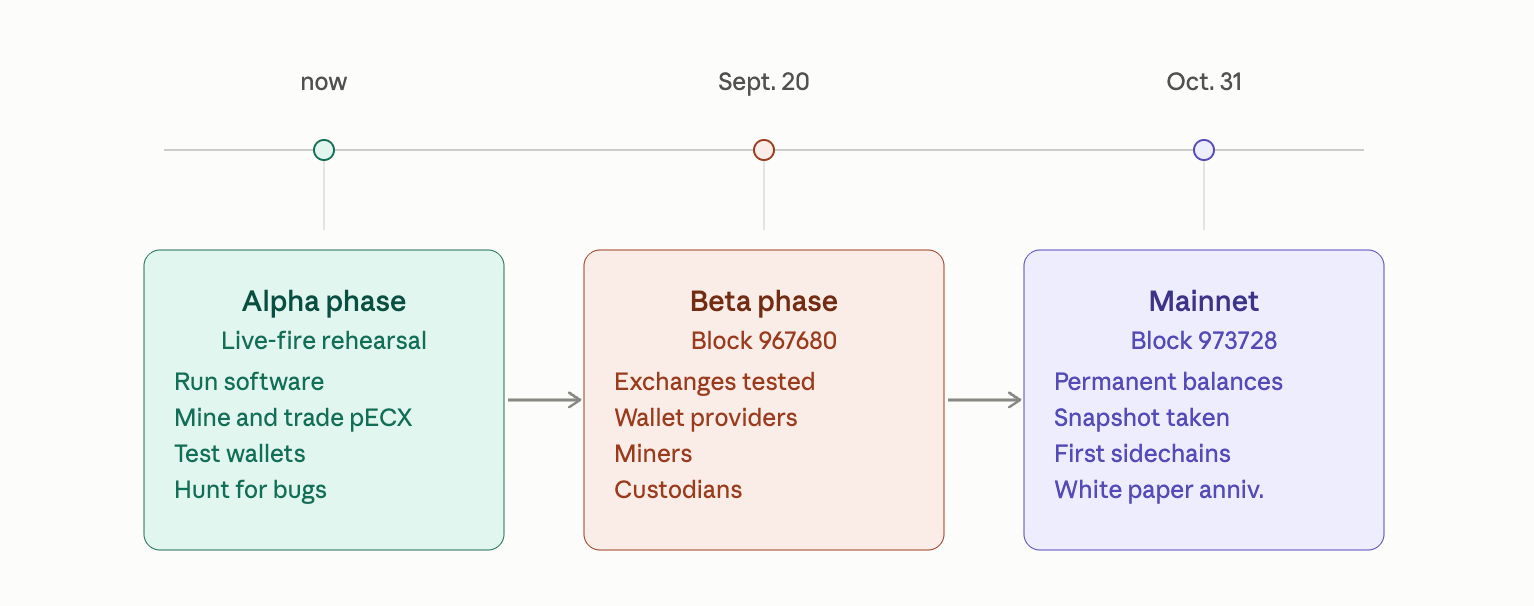
    According to Sztorc, the alpha phase is designed as a live-fire rehearsal. Participants can run software, mine, trade practice coins, test wallets, and hunt for cracks in the system. The practice coins, called pECX or alpha ECX, are not permanent.

    A beta phase is scheduled around Sept. 20 at Bitcoin block height 967680. That round is expected to lean harder on exchanges, wallet providers, miners, and custodians, the companies that safeguard assets for others.

    A visual perspective of Paul Sztorc’s upcoming fork and its phases.

    The permanent mainnet is scheduled for Oct. 31, near Bitcoin block 973728. That lands on the 18th anniversary of Satoshi’s Bitcoin white paper. At that snapshot, permanent ECX balances will be created, and the project expects its first batch of specialized sidechains to become available. The drawn-out rollout gives developers and infrastructure providers room to expose bugs, gauge mining conditions, and install safeguards before the permanent chain goes live.

    Drivechains Are the Main Bet

    Sztorc has spent more than a decade pushing Drivechains, a proposed way to let Bitcoin support optional sidechains without rewriting the rules for every user. A sidechain is a separate network with different features that can connect to a main blockchain. In practice, users could choose a sidechain for privacy, faster payments, or other functions while leaving the base network relatively conservative.

    The proposed technology surfaced in BIP 300 and BIP 301, technical proposals Sztorc developed in 2017 and 2019. BIP 300 lays out a mechanism for moving assets between a main chain and sidechains. BIP 301 describes blind merged mining, which would let miners collect sidechain fees without running all of the software for every sidechain.

    Those proposals never gathered enough support to activate on Bitcoin through a soft fork, a backward-compatible rules change. Bitcoin’s most recent major soft fork, Taproot, was activated in 2021. Layertwo Labs ultimately decided its Drivechain vision had a better shot as a separate hard fork than another campaign to win consensus from Bitcoin developers, miners, and node operators.

    ECX plans to launch with seven specialized sidechains, including Thunder for high-throughput payments, Zside for shielded transactions, Bitnames for decentralized identity, Bitassets for token issuance, Photon for quantum-resistant signatures, Truthcoin for prediction markets, and Coinshift for cross-chain trading. The wager is that users can pick features without forcing every bitcoin user to swallow new base-layer rules.

    Bitcoin Will Remain Unchanged

    The project uses the same SHA-256d mining algorithm as Bitcoin and keeps its base layer close to Bitcoin Core, the dominant Bitcoin software. However, it will run its own network identifier and ports, keeping ECX nodes from mistakenly connecting to Bitcoin. The chain will reset mining difficulty to the minimum at launch before returning to normal adjustments, a setup likely to make early mining conditions fairly volatile.

    One unique rule from the outset involves roughly 1.1 million early Bitcoin coins associated with Satoshi Nakamoto through the “Patoshi pattern,” a method researchers use to identify likely early-mined blocks. About 600,000 ECX will remain assigned to those addresses, while roughly 500,000 ECX will be redirected through special transactions to early investors and development funding. Supporters frame that as financing a new network without an initial coin offering. The move does not touch Satoshi’s $BTC on Bitcoin.

    The project also stands far apart from the recent BIP-110 episode, an attempted temporary soft fork aimed at restricting some non-financial blockchain data. BIP-110 backers failed to attract meaningful miner support, node support, and infrastructure backing in any meaningful way, and the resulting minority chain stalled after a small handful of blocks. ECX is not trying to force rules onto Bitcoin. It is a separate experiment built to fight for users, miners, and capital while the Bitcoin network runs normally.

    Self-Custody and Claiming Free Coins

    For individual holders, the crucial question is who controls the private keys at each snapshot. A private key is the secret credential proving control of a Bitcoin address. People holding $BTC in self-custody, meaning in a wallet where they control those keys, should be able to access their corresponding ECX directly. People keeping $BTC at exchanges or other custodians are stuck waiting to see whether those companies support the fork and distribute the new asset.

    The ECX snapshot credits coins straight to bitcoin ($BTC) addresses, meaning whoever holds the private keys controls the matching ECX. If $BTC sits on an exchange, the exchange holds those keys and effectively controls the forked ECX, leaving customers at its mercy for distribution. Self-custody cuts out that middleman, putting the keys in the holder’s hands and giving them direct control over the corresponding ECX. Image source: ecash.com.

    There is no established market price for permanent ECX because mainnet has not launched. During testing, some future-backed ECX trading could emerge, and even if exchanges list ECX, expect wildly speculative price discovery. The bigger question is whether ecash (ECX) gets warmer treatment than the recent BIP-110 fiasco. There is an ECX wallet for Apple (Testflight) and Android, while project docs also spotlight Bitwindow, an alternative Bitcoin Core frontend with native drivechain support.

    The real fight starts after Oct. 31. ECX will need working sidechains, stable software, willing exchanges and enough miner participation to show that its combined fee model actually works. Bitcoin holders seeking direct access should track the snapshot heights, maintain control of their keys and stick with official guidance. They should also remember that ECX has nothing to do with XEC, the separate cryptocurrency that uses the same ecash name.

  • ‘One Battle After Another’ and ‘Marty Supreme’ Take Top Honors at Location Managers Guild International Awards

    ‘One Battle After Another’ and ‘Marty Supreme’ Take Top Honors at Location Managers Guild International Awards

    “One Battle After Another” and “Marty Supreme” took top honors at the Location Managers Guild International (LMGI) LMGI Awarda.

    The LGMI Awards were handed out on Saturday night and honor the use of filming locations across motion pictures, television, commercials, film commissions, and special achievement categories. 

    Paul Thomas Anderson’s “One Battle After Another” won outstanding locations in a contemporary feature film. It was shot across California’s Humboldt County, Sacramento, Stockton, Eureka, Arcata, San Diego and El Paso, Texas. Josh Safdie’s “Marty Supreme” won outstanding locations in a period feature film for its work across New York City, greater New York, the Hudson Valley, New Jersey and Tokyo.

    “Pluribus,” “Fallout” and “Black Rabbit” were the television winners. “Pluribus” was filmed in Albuquerque, New Mexico, Montana, Nevada, and Spain, and won outstanding locations in a contemporary television series. “Fallout,” shot in California’s Dumont Dunes, Mojave Desert, Antelope Valley and Santa Clarita,” won outstanding locations in a period television series. Filmed around New York City, including Brooklyn and Manhattan, “Black Rabbit” won outstanding locations in a tv anthology, movie or limited series. 

    Four-time Emmy-winning director and writer Vince Gilliga received the Eva Monley Award for his dedication to storytelling through location over his career and his most recent work on “Pluribus.”

    Mike Fantasia, location manager of films including “Top Gun: Maverick,” “Killers of the Flower Moon” and “Spider-Man: Homecoming” was presented the Lifetime Achievement Award. 

    “Celebrating our LMGI winners was a truly remarkable experience,” Nancy Haecker, LMGI Awards Chair, said. “The ceremony was a powerful celebration of achievement, filled with inspiring moments and well-deserved recognition, beautifully capped by the genius of Vince Gilligan. Each of this year’s winners is incredibly deserving, and it was a distinct privilege to honor their talent, dedication, and outstanding contributions to our industry.”

    Winners list below.

    OUTSTANDING LOCATIONS IN A CONTEMPORARY FEATURE FILM

    “One Battle After Another” (Warner Bros. Pictures)

    Michael Glaser / LMGI, Michael Wesley / LMGI, Rich Heichel / LMGI

    OUTSTANDING LOCATIONS IN A PERIOD FEATURE FILM

    “Marty Supreme” (A24)

    Matthew Kania, Ross Brodar / LMGI

    OUTSTANDING LOCATIONS IN A CONTEMPORARY TELEVISION SERIES

    “Pluribus” (Apple TV+)

    Christian Diaz de Bedoya / LMGI, John O’Connor, Priscila Calero, Jorge Noguerales,

    Yanira De Armas, Will Brewster

    OUTSTANDING LOCATIONS IN A PERIOD TELEVISION SERIES

    “Fallout” – Season 2 (Amazon Prime Video)

    Mandi Dillin / LMGI, David Park / LMGI

    OUTSTANDING LOCATIONS IN A TV ANTHOLOGY, MOVIE OR LIMITED SERIES

    “Black Rabbit” (Netflix)

    Paul Eskenazi, Joel McGlumphy

    OUTSTANDING FILM COMMISSION/ OFFICE

    Humboldt-Del Norte Film Commission: “One Battle After Another” (Warner Bros. Pictures)

    Cassandra Hesseltine

    OUTSTANDING LOCATIONS IN A COMMERCIAL

    TOYOTA TRUCKS: “They Don’t Read Reviews”

    Alexandra Gibson / LMGI, Christina Conway / LMGI

  • LayerZero to axe 14 low-activity chains after KelpDAO exploit – Details

    LayerZero to axe 14 low-activity chains after KelpDAO exploit – Details

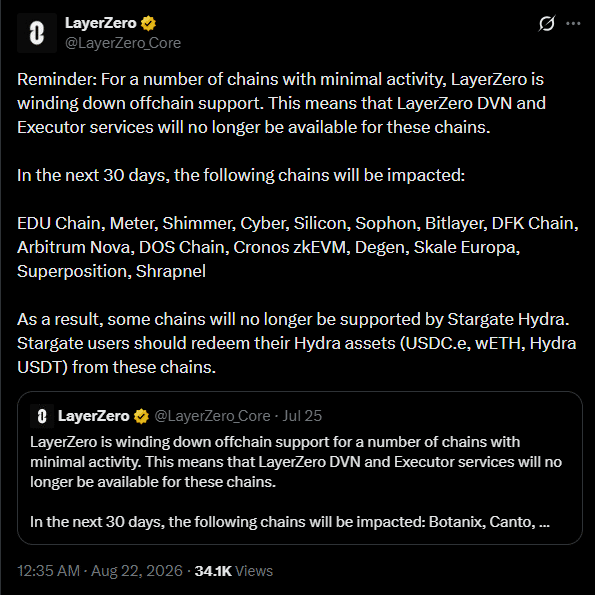
    Cross-chain interoperability provider LayerZero will withdraw off-chain support for 14 low-activity chains, including Arbitrum Nova.

    In its latest statement, the firm said that its DVN (decentralized verifier network) and Executors, collectively responsible for off-chain communication between different chains, will be deprecated for the 14 chains.

    The affected networks include Cronos zkEVM, Degen, Skale Europa, Superposition, Shrapnel, and more. As a result, some assets, including stablecoins (USDT and USDC) across these chains, could be stranded if not moved before the full shutdown.

    According to LayerZero, the off-chain support will be axed in 30 days (by September).

    Source: X

    Since July, LayerZero has flagged over 30 chains with low activity, including the recently shut BounceBit. Although the move is positioned as operational efficiency, security risk and competition seem to be key reasons behind the aggressive shift.

    Chainlink CCIP traction threatens LayerZero

    LayerZero has massive financial backing, including top-tier VC firms such as Sequoia Capital, a16z (Andreessen Horowitz), Binance Labs, and Coinbase Ventures.

    And the bet was simple: bridge the fragmented liquidity across various blockchains. But the KelpDAO’s $292M hack, one of the largest DeFi exploits in 2026, triggered a massive fallout.

    The exploit stemmed from LayerZero’s recommended “1-of-1” DVN setup, which doesn’t give enough verification before large minting or fund transfers are approved. Since the same loophole can be used with low-adopted reserve assets, Aave has stopped supporting most of them, including ghost chains.

    In fact, several projects have since migrated from LayerZero to rival Chainlink CCIP (Cross-Chain Interoperability Protocol). Notably, the Wyoming state government, BitGo (WBTC), and Nethermind have migrated from LayerZero to CCIP.

    Chainlink’s Zach Rynes estimated that a total of $15B has been migrated from LayerZero, underscoring the expensive lesson for LayerZero for the KelpDAO fallout.

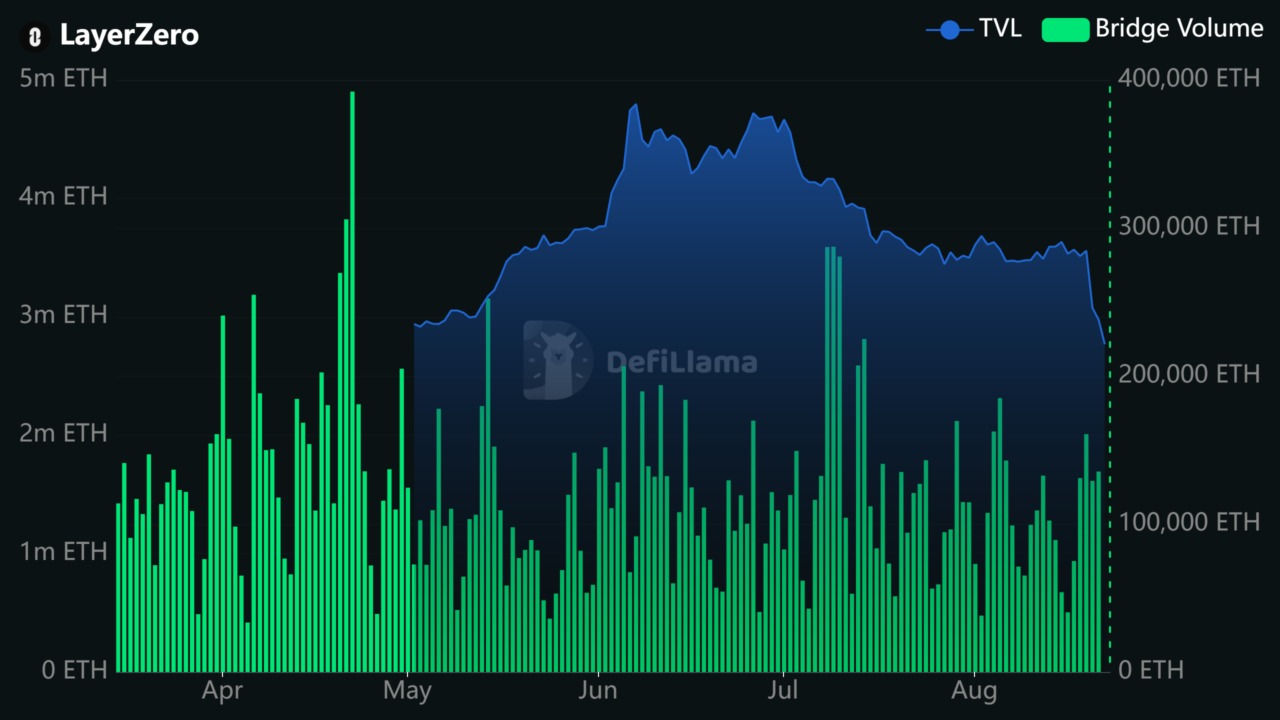
    Notably, after the exploit, LayerZero bridged volume dropped 4x from nearly 400K $ETH to about 100K $ETH.

    Source: DeFiLlama

    As such, LayerZero’s aggressive move to wind down support for over 30 chains may be viewed as a strategic play to reduce its security risk exposure. By extension, it’s meant to counter Chainlink CCIP’s growing competition after the KelpDAO exploit.

    But whether that’s enough to stop its top projects from migrating to Chainlink remains to be seen.


    Final Summary

    • LayerZero to withdraw support for 14 chains by September.
    • Chainlink CCIP has attracted over $15B in assets migrating from LayerZero since the KelpDAO hack.
  • Coldcard now requires 65 key presses after seed exploit, while exposed funds still must move

    Coldcard now requires 65 key presses after seed exploit, while exposed funds still must move

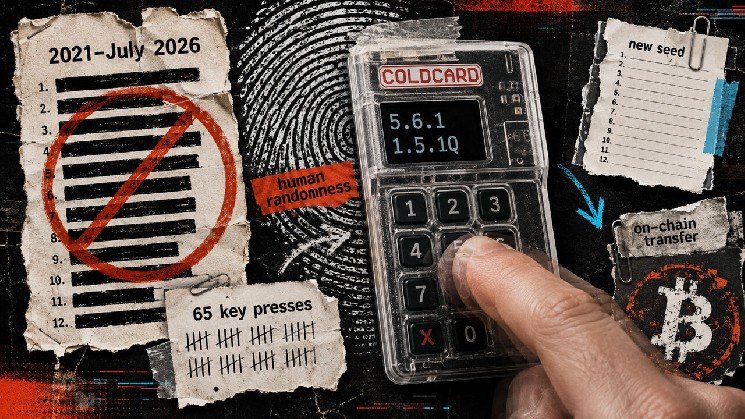
    Coinkite, the maker of the Coldcard Bitcoin hardware wallet, released new standard firmware on Aug. 20 that forces users to add physical randomness whenever they generate a seed.

    Owners who generate a seed after installing the current fixed release can use the hardened process. Owners still relying on a seed produced by affected firmware must generate another seed and transfer the funds unless that wallet meets the dice-roll exception.

    During standard seed creation, every seed combines fresh device entropy with one required human input source: at least 65 key presses made at unpredictable intervals, 50 rolls of a physical six-sided die, or 128 physical coin flips. The requirement reduces reliance on the wallet’s random-number generator alone.

    Coldcard’s current security status recommends version 5.6.1 for Mk4 and Mk5 devices and 1.5.1Q for Q devices. The advisory’s exposure list is wider and track-specific. Coinkite’s official migration guidance covers Mk2 and Mk3 firmware 4.0.1 through 4.1.9; Mk4 and Mk5 standard firmware before 5.6.0 and Edge firmware before 6.6.0X; and Q standard firmware before 1.5.0Q and Edge firmware before 6.6.0QX.

    Block’s independent technical analysis uses a broader Mk2 and Mk3 boundary that includes version 4.0.0. Owners of that release should not treat the vendor boundary as proof of safety.

    Installing fixed firmware does not change an old seed. Unless the advisory’s dice exception applies, Coinkite’s migration guide tells affected users to generate a genuinely new seed, verify its backup and wallet fingerprint, confirm a receiving address on the device, send a small test transaction, and then transfer every balance tied to the old seed. Cloning or restoring the wallet does not create a new seed.

    Migration is not required for this RNG flaw when the user added at least 50 fair, independent and private physical die rolls through the affected workflow and never recorded or exposed the sequence. Fewer rolls, or uncertainty about those conditions, means the user should migrate.

    Block traced the original defect to code that could route requests to a deterministic MicroPython fallback because a feature flag defined as zero was treated as present. Mandatory human input adds outside entropy to new standard seeds, limiting damage if device randomness fails again. It cannot retroactively add entropy to a seed that already exists.

    Coldcard treats the mixed flow differently from the advanced Dice Rolls Only option. That mode excludes hardware randomness and requires 50 rolls for a 12-word seed or 99 for a 24-word seed.

    The firmware package reaches signing and data paths too. It binds USB review to a staged PSBT checksum, rechecks transaction bytes before signing, blocks SIGHASH_SINGLE modes by default, restricts USB downloads to the current encrypted-session result, and validates firmware file length. It adds persistent RNG-fault stops, a boot-time hardware-RNG linkage check, more Delta Mode isolation, and active-wallet backup behavior.

    The status page lists targeted source review, a real-device RNG-path test, and a reproducible build and dice-path trace, but Coldcard says they do not amount to a full audit of every fixed binary. Coinkite says some customers suffered severe losses and law enforcement is investigating, but it has not published a verified victim count or loss total.

  • ‘You just can’t trust Trump’: Canadian premiers fire back in trade war

    ‘You just can’t trust Trump’: Canadian premiers fire back in trade war

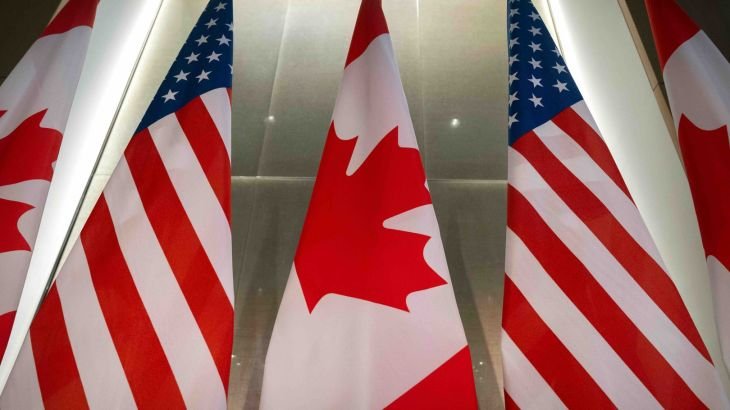
    Provincial premiers have joined Canada’s Prime Minister Mark Carney, firing back after US President Donald Trump imposed 50% tariffs on about $20bn of Canadian goods. British Columbia Premier David Eby said Trump can’t be trusted.