Tag: Entertainment – Variety

  • BBC Boss Says He Watched a ‘Pretty Good’ AI-Generated Episode of ‘Doctor Who’: ‘Everyone’s a Creator, Not All the Creativity Is Bad’

    BBC boss Matt Brittin says he was recently sent a fully AI-generated episode of “Doctor Who,” which he deemed “pretty good” – although he was quick to add it was “not going to replace humans.”

    “Everyone’s got the ability in their hands — or six billion people have — to create content at the standard of a Hollywood studio,” said Brittin, who was speaking at the Royal Television Society conference in London, U.K.

    “Somebody sent me a 50-minute episode of ‘Doctor Who’ that was AI-generated the other day. It’s pretty good,” he continued. “I mean, it’s not going to replace humans, and we’ll come on to that. So everyone’s a creator. Not all the creativity is bad.”

    He didn’t give any more details about what the episode contained — for example using existing actors or generating entirely new ones — or who made it.

    Brittin joined the BBC as director-general earlier this year after an eighteen-year stint at Google. He confessed at the conference, where he was in conversation with Kirsty Young, that he first turned down the job when he was approached. “They called me, and I said, ‘I can’t do the job, I’m not a program maker. I’m not a journalist.’”

    “And actually, I was persuaded that being an outsider, I might be able to do the job, but only with all of you,” he said, gesturing to the audience, which was made up of senior television producers, commissioners and executives.

    AI has been the dominant topic of conversation at the convention, which is this year hosted by Amazon and themed “United in change, if not now when?”

    At the opening of the convention, Prime Video international boss Kelly Day also urged the industry to embrace AI, saying “AI doesn’t replace imagination, it amplifies it.”

  • Rome MIA Market Launches European Investment Hub, With CAA’s Roeg Sutherland and Raj Singh of Media Capital Technologies Set to Attend (EXCLUSIVE)

    Rome’s MIA Market is launching a new initiative called European Investment Hub, which aims to help European industry professionals navigate the wide range of financial tools — in both the soft money and equity financing spheres — that are currently at their disposal.

    MIA (which stands for Mercato Internazionale Audiovisivo or International Audiovisual Market) will run Oct. 19-23. Roeg Sutherland, who is co-head of CAA’s media finance department and its international film group, and U.S. specialty finance company Media Capital Technologies principals Raj Singh and Christopher Woodrow are expected to make the trek to the Eternal City to attend this new MIA strand.

    The Rome market’s new project — which is conceived in collaboration with the European Commission, the European Investment Fund (EIF), the CineRegio network of regional film funds in Europe and pan-European fund Eurimages, along with leading private equity players — will unfold during the event’s first two days. There will be panels, roundtables and advisory one-to-one meetings dedicated to stimulating dialogue between producers and the myriad funding sources available to them just as the amount of private equity money they can tap into is on the rise.

    MIA’s European Investment Hub will focus on exploring and explaining financial tools such as European co-production funds, equity funds dedicated to content creation and completion bonds and risk-mitigation mechanisms, including those developed in synergy with European and national institutions.

    “The idea is to foster direct contact between producers and representatives from these various entities who can provide guidance,” MIA chief Gaia Tridente tells Variety.

    “I am truly pleased that this new edition of MIA is opening with such an in-depth focus spanning two days on the subject of investments and financial tools tailored to companies in our sector,” Alessandro Usai, head of Italy’s motion picture association ANICA, said in a statement.

    “In recent years, it has become clear to everyone that access to finance is the true game-changer for the industry, and that we must work together to remove remaining barriers and obstacles, better understand best practices and implement new ones,” Usai added. “In particular, delving into public-private partnerships, guarantee systems and the interplay between national, European and international tools is crucial for the growth of the entire sector— and not just in Italy.”

    Commented Chiara Sbarigia, head of Italian TV producers’ association APA: “There was a need for a new space dedicated to audiovisual financing to address the challenges faced by producers, particularly small and medium-sized ones.”

    “A few months ago, APA presented a proposal to the relevant institutions for a public-private fund, which we will showcase to industry professionals during the market. MIA will provide domestic and international players with a clear overview of available tools through a practical approach: while competing in international markets certainly requires ideas, talent, and production capacity, understanding where to invest in development — and how and where to secure resources — remains crucial,” Sbarigia went on to point out.

    Dedicated panels will comprise “Unlocking Italy’s Potential,” during which Raj Singh, Roeg Sutherland and prominent U.S. entertainment lawyer Steve Saltzman, head of the International Entertainment Group at London-based law firm Fieldfisher, will delve into the range of opportunities the Italian industry ecosystem has to offer.

    Singh, during a separate session, will launch a new venture that aims to expand content creation financing opportunities.

    Christopher Woodrow, founder and chairman of Media Capital Technologies (MCT); Celine Dornier, content executive at Finland-U.K. based film investment fund IPR.VC; and Alexandra Lebret, who is a partner in Together Fund that was recently launched in partnership with Paris-based investment firm Axio Capital, will be among participants in a panel titled “Equity and Growth Capital: Investing in Creativity, IP and Long-Term Value.”

    “Clearly, there will be funds supporting very high-budget films or series — projects on a massive scale —alongside others that operate within the indie circuit, dedicated to auteur cinema, or more modestly scaled serial productions,” Tridente said.

    “We are talking about funds accessible to projects with budgets of €50 million and up, as well as others with lower budgets that are more typical for European cinema and television,” she added.

    Teps from 35 European co-production funds will be making the trek to Rome to explain their various national mechanisms. For instance, Spain will be repped by three different funds, “ensuring that those at the table can understand exactly how to access specific tax credits or funding within the Spanish or French systems,” the MIA market chief specified.

    The 12th edition of MIA will run Oct. 19-23 in the Eternal City.

  • Madrid Audiovisual Cluster Dives Deeper Into New Business Models, AI and Emerging Technologies at Iberseries & Platino Industria

    The Madrid Audiovisual Cluster (MAC), an economic interest group comprising close to 100 Madrid-based companies, has put together a two-day industry networking and peer-learning program at the Iberseries & Platino confab, taking place over Sept. 29 – Oct. 2 in the Spanish capital.

    AI takes center stage again but the program will attempt to delve deeper into the hot-button topic this year, presenting eight industry case studies examining innovation across the audiovisual value chain.

    “While AI is a common thread running through the projects, the session takes a broader view of innovation, covering new business models, emerging technologies and evolving production and creative workflows,” said Teresa Azcona, managing director of the Madrid Audiovisual Cluster.

    “Together, they show how innovation is transforming the industry and opening up new opportunities across the value chain.”

    But as Iberseries & Platino Industria co-Director Samuel Castro pointed out: “The ability to create stories should always be based on a fully human, author-driven concept and development. AI should be used as a tool, not as an end in itself.”

    Under the banner Innovation ‘Case Studies in the Audiovisual Industry: New Business Models, AI and Emerging Technologies,’ the eight case studies will illustrate how companies are applying technology to address practical challenges across the industry. Running from 12:00 noon to 2:00 p.m. on Sept. 29, the workshop will feature eight case-study presentations, with approximately 12 minutes allocated to each.

    The next day, Sept. 30, takes in a conversation between producer Rosa Bosch and Tanja Meissner, Director of Berlinale Pro, which encompasses major industry platforms including the European Film Market, Co-Production Market, Berlinale Talents and World Cinema Fund.

    Case Studies:

    1. PLIA: Applying PLIA Technology to Script Breakdown, Pre-Production Planning and Production Tracking on “Playback”

    PLIA, an AI-powered production platform for film and audiovisual projects, has developed an integrated production-management solution designed to bring the information generated across the creative and production process into a single platform.

    The company will present its application on the feature film “Playback,” covering script breakdown, pre-production planning and production tracking. The platform brings together scripts, notes, budgets, location photography and production breakdowns, with the aim of streamlining information management across the production workflow.

    Presenting: Jose Velasco — CEO, PLIA

    2. TBS (Telefónica Broadcast Services) Tech Brand Stories: From the Physical Studio to the Virtual Production Environment: Virtual Production, AR, Motion Graphics and AI

    TBS – Tech Brand Stories, formerly Telefónica Broadcast Services, is the Telefónica Group’s creative production company and audiovisual agency. The company operates across live production, broadcast services, branded content and entertainment, combining creative and technical capabilities. Its team of more than 450 professionals works across major sporting and live events as well as non-fiction, entertainment, documentary and current-affairs programming.

    The case study will examine the convergence of virtual production, augmented reality, motion graphics and AI, and how these technologies are being integrated into contemporary production environments.

    Alberto Gonzalo — Graphics Supervisor
    Luis Miguel Boedo — Technical Coordinator

    3. Hark Media – Go Global: When AI Learns to Move Us: Hybrid Dubbing for Global Distribution

    Go Global specializes in localization for the entertainment industry, providing translation, subtitling, dubbing and voice-over services to streaming platforms and production companies.

    The company will look at the emerging role of AI in dubbing and how hybrid workflows combining technology and human expertise could support the localization of content for international markets.

    Paula Ferrari — Founder & CEO

    4. Xpost Studios – Secuoya Content Group: Innovation in VFX and Post-Production Workflows

    Xpost Studios, part of Secuoya Content Group, is a Madrid-based post-production and VFX facility operating from Madrid Content City. Its infrastructure includes facilities for editing, color grading, sound post-production, VFX and digital workflows.

    The session will focus on the application of new technologies to VFX and post-production workflows, examining how innovation is changing the way content is processed and delivered.

    Marcos Requena — Post-Production Manager

    5. Story Pitcher: Connecting Audiovisual Creators and Producers Through a Digital Platform

    Story Pitcher has developed a digital platform designed to connect screenwriters, directors and other audiovisual creators with production companies and content platforms.

    Its model combines AI-powered matching with legal-protection tools, with the aim of facilitating more direct connections between creative talent and industry decision-makers.

    Frank Belyeu — CEO, Story Pitcher

    6. Mercedes Santalla: From Talent to Market: Strategy and Business for Creative and Technology Projects

    Creative strategist and talent manager Mercedes Santalla works with projects and talent operating at the intersection of creative practice and technology. Her session will examine the commercial and strategic considerations involved in taking creative and technology-led projects from development to market, alongside the evolving relationship between talent, technology and business.

    Mercedes Santalla — Creative Strategist & Talent Manager

    7. Scoutters – Scout & Film: A Digital Platform for Location Scouting and Production

    Scoutters is a digital location-search and management platform developed by Spanish company Scout & Film. Built on Scout & Film’s experience managing locations for film and advertising productions, the platform connects location scouts, agencies, production companies and film commissions with locations suited to their production requirements.

    The case study will explore how digital tools are changing the traditionally location-based process of sourcing, managing and presenting filming locations.

    Rubén Souto — Co-Founder, Scout & Film
    Jose Díaz — Co-Founder, Scout & Film

    8. HaMo – Paramotion Films: HaMo Real-Time Animation System: Digital Puppetry and Next Lab R&D

    Developed by Paramotion Films through the Next Lab Generation R&D initiative, HaMo is a real-time motion-capture system designed for 3D animation and digital puppetry.

    The system uses inertial sensors to capture an operator’s physical movements and Unreal Engine to transfer them in real time to a CGI character. The technology enables virtual characters to perform live alongside human presenters and audiences, with potential applications across studios, live events and social media.

    This case study will look at the development and practical application of the system as an example of R&D moving from prototype to production technology.

    Jose Luis Farias — CEO, HaMo
    Alfonso Fulgencio — CTO, HaMo
  • ‘The Platform’ Co-Producer David Matamoros of Doce Entertainment Spain Boards Matías Rojas’ ‘Dog Legs’ (EXCLUSIVE)

    In one of the later deals pacted at the San Sebastian Festival, Spain’s David Matamoros of Doce Entertainment boarded Matías Rojas’s adaptation of Chilean cult novel “Dog Legs” (“Patas de perro”), joining four other producers from Chile, France, Germany and Colombia.

    With this, “Dog Paws” enters the final phase of its financing and is expected to shoot in Valdivia, Chile during the second half of next year. Chile’s ever popular Alfredo Castro (Pablo Larraín’s “The Count,” “The Club”) is attached to star.

    “Spain’s involvement decisively strengthens the project and puts us in a very strong position to complete its financing,” said Federico Durán, the film’s Colombian producer through his new company El Sol Ermitaño. Durán, who has produced such notable films as “The Squad” and “Alias María,” just won a major post production award for his WIP project “Lovers Go Home!” at San Sebastián.

    “’Dog Legs’ is an ambitious project, both technically and artistically, but it also aims to reach a broad audience,” he told Variety.

    Matamoros, whose credits include “The Platform” and “The Virgin of the Quarry,” was also a producer at Zentropa Spain, the company founded by Lars von Trier.

    Chile’s A Simple Vista, led by Tomás Gerlach, first began developing “Dog Legs” some four years ago. This year, Reality Films, the production arm of French distributor Epicentre Films, which distributes Colombia’s Cannes-winning film “A Poet” and submission to the 98th Academy Awards international feature category, came on board at the 76th Berlinale, joining German company Klinker Films, a co-producer of “A Place Called Dignity,” Rojas’ previous film.

    Visual effects will be handled by French company MPC, whose credits include Thomas Cailley’s “The Animal Kingdom,” winner of Best VFX at the 2023 Sitges Film Festival and the French César Awards.

    Rojas’s ties to San Sebastian run deep. He premiered his debut feature, “Root,” at the festival 13 years ago. He later returned to its Europe-Latin America Co-Production Forum with his second fiction feature, “A Place Called Dignity.”

    Throughout his career, he has presented his films and projects at major international festivals including Cannes’ Directors’ Fortnight, the Berlinale and the Tallinn Black Nights Film Festival (PÖFF).

    Published in 1965, “Dog Legs “is a landmark of Chilean literature…radical, powerful, and still deeply unsettling. Six decades later, its themes of exclusion, abuse and violence remain strikingly relevant. The story follows Bobi, a 12-year-old boy born with literal dog’s paws, hidden away by his family until Carlos, a lonely, childless man, takes him in. His act of compassion turns the town against them, casting Carlos as a madman and Bobi as a monster and setting them on a devastating path toward violence.

  • Durban FilmMart Head on Why This Year’s Event Is ‘Looking Inward’ as African Screen Industries Strive to ‘Create Solutions’ on Their Own Terms

    The Durban FilmMart returns for its 17th edition with a full slate of conversations and events looking to build on the legacy of innovation, disruption and industry-defining discussions at what is arguably the most influential film market on the continent.

    Running from Oct. 9 – 12, this year’s event is organized around the theme “Shifting Worlds, Turning Toward Ourselves,” a focus that Durban FilmMart Institute director Magdalene Reddy says was inspired by the pioneering Senegalese filmmaker Ousmane Sembène’s memorable assertion: “Why be a sunflower and turn towards the sun? I myself am the sun.”

    “We are very much looking inward [at this year’s edition],” Reddy tells Variety. “In a world where…everything is shifting, we find that, at this time, it’s important for us as the African cinema community to look at what we need to create systems that will work for us. How can we consolidate? How can we create solutions?”

    The four-day event features a wide range of panel discussions, masterclasses, one-on-one meetings and mentorship sessions designed to capitalize on a moment of unprecedented visibility — and unparalleled disruption — for the African screen industries.

    In a departure from previous editions, which ran parallel to the Durban Intl. Film Festival, this year’s DFM will open with a screening, of Rwandan debutante Marie-Clémentine Dusabejambo’s Cannes Caméra d’Or winner “Ben’Imana.” The film, an alumnus of DFM’s influential pitching and finance forum, was selected to highlight the event’s outsized impact on the African filmmaking community.

    “This was a DFM project. It was pitched at DFM two years ago, and they were able to win two awards at Cannes [including the FIPRESCI prize],” says Reddy. “For us, the celebration of hosting a screening at the market — which we’ve not done previously — is based on the fact that we want to show our local content in our local context.”

    A crucial pillar of every DFM is its influential Think Tank strand, whose conversations and conclusions often “become a blueprint for the next DFM and the direction which the industry is going,” according to Reddy.

    Central this year will be a closed-door session gathering key distributors, financiers and industry leaders looking to tackle some of the vexing challenges of film distribution on the African continent, which has been hit especially hard by successive waves of corporate consolidation in the global industry. Another session will focus on audience development, “trying to see how we can connect better with our local [audiences],” Reddy says.

    A backbone of this year’s event will be a spotlight on equitable co-production, with a series of sessions organized in collaboration with the European Audiovisual Entrepreneurs network (EAVE). Tackling knotty issues such as how to best incorporate inclusivity into financing, development and production, the conversations will address the systemic imbalances that face African producers when partnering with outside co-producers, “even when they are coming with the stories, coming with the IP,” says Reddy.

    “How can they go in as an equal partner? How can they sit confidently at the table, so they are engaging in a way that will benefit them? Engaging in a way where finances can still come back to Africa?” she asks.

    Collaboration is a theme across the Durban FilmMart’s various strands, with the event forging a wide range of partnerships with industry bodies such as EAVE; the Nature, Environment and Wildlife Filmmakers (NEWF); the Cape Town Intl. Animation Festival (CTIAF); Documentary Africa; The StoryBoard Collective; and the Ladima Foundation, which supports African women working in the film and television industries, and will launch an initiative to push for greater gender equity at African film festivals.

    “Collaboration is something that has underpinned all the work that DFM has been doing over the years,” says Reddy. “In order for the industry to survive, we need to be working together.”

    This year’s Durban FilmMart unfolds at a turbulent time for the host nation, whose screen industries have been “struggling,” according to Reddy, particularly with ongoing uncertainty around South Africa’s 25% cash rebate.

    To that end, leading South African policymakers are expected to be on hand at DFM, which will host a closed session for local industry to meet one-on-one with representatives of the influential Dept. of Trade, Industry and Competition, which manages the country’s rebate policy; the National Film and Video Foundation; and various local and regional film commissions.

    “For us as DFM, the platform that we create is a platform for filmmakers not just to create a community for the filmmaking industry on the continent, but also a space for filmmakers to connect with policymakers,” says Reddy. “A space for policymakers to understand what are the challenges, what are the issues our filmmakers are facing. We try to bridge that gap between industry and policymakers so we can create a conducive environment and ecosystem for our filmmakers.”

    That mandate, she adds, extends to DFM’s broader engagement with the African continent as a whole. “Last year’s theme was creating bridges, and that’s what we continue to do. Even though it’s challenging within the continent to work with each other, we are trying to find ways to do that.”

  • Mayor Zohran Mamdani Refuses Jimmy Kimmel’s Request to Text Trump a Selfie of Them

    “Jimmy Kimmel Live” is back in Brooklyn.

    The late-night show has returned to the New York City borough for a week of shows at the Brooklyn Academy of Music. It’s Kimmel’s eighth time filming “Live” in Brooklyn, the place he was born and spent his early years, and the comic is welcoming a number of heavy-hitting guests to his couch, from Howard Stern and Billy Crystal to Paul McCartney and Sen. Bernie Sanders (D-VT). He said the show received over 150,000 ticket requests, and kicked off his Brooklyn week with guests Pete Davidson and Mayor Zohran Mamdani, as well as a musical performance by TV on the Radio, celebrating the 20th anniversary of their celebrated album “Return to Cookie Mountain.”

    While there weren’t any stories involving an Oscar-winning actor exposing himself to Kimmel in a bathroom, the host was heckled by Matt Damon in a Boston Red Sox cap — on the eve of the Yankees/Red Sox AL Wild Card Series — who was joined by Kimmel’s mother and sister, and Jon Hamm, cosplaying as an angry New York City construction worker. After his sit-down interview with Davidson, who was promoting his Netflix video podcast “The Pete Davidson Show” and upcoming film “How to Rob a Bank,” Kimmel welcomed Mayor Mamdani to the stage. He prefaced his arrival with a montage of clips of Fox News talking heads predicting that New York City would become “terrifying” under Mamdani and crime would go “through the roof.” That proved to be wrong, as murders and shootings in the city hit record lows in Mamdani’s first seven months.

    “Another thing that is very unexpected is this relationship that you have with President Trump, which seems to be a very friendly relationship,” Kimmel said, adding, “Did you guys hit it off immediately or is it something that you really went into thinking, ‘OK, I need to have a relationship with the president of the United States, and I think the best way to do it is to charm him.’ How did you do that, and can you help me?”

    Mamdani laughed. “Sorry brother,” he replied. “The president and I have many disagreements. One thing we do agree on is this city, how much we love this city, so from that first meeting in November of last year, I was just thinking of how we can make this meeting not about us, but about New Yorkers. How can we spend that time talking about the things that can make life in the city a little bit easier.”

    Kimmel then threw to a video clip of Mamdani standing next to Trump at Gracie Mansion as the president gave a rambling speech, with the camera pressing in on Mamdani as he stood there stone-faced. “I mean, it is remarkable,” offered Kimmel. “I watch that, and I go, ‘OK, this is not a guy I’d want to play poker with.’” Mamdani said that while Trump is speaking, he’s only focused on getting federal approval for his proposed Sunnyside Yard project, a development in Queens that would feature an estimated 12,000 new homes and create approximately 30,000 jobs.

    “You text with the president, I’ve read?” Kimmel pressed further.

    “From time to time we’re in communication, and it’s about Sunnyside Yard, and it’s about how we can deliver for the city,” replied Mamdani. “One of the other things the president mentioned that we spoke about, that I care very deeply about, is Haitian New Yorkers. They’ve had their Protected Status ended, and I really believe we need to do whatever we can so they have stability. They’re part of the fabric of this city.”

    Kimmel then asked if they could text Trump “a selfie of us right now,” only to have Mamdani shut him down: “Jimmy, I love you, but I love housing more.”

  • Madrid Audiovisual Cluster Dives Deeper into New Business Models, AI and Emerging Technologies at Iberseries & Platino Industria

    The Madrid Audiovisual Cluster (MAC), an economic interest group comprising close to 100 Madrid-based companies, has put together a two-day industry networking and peer-learning program at the Iberseries & Platino confab, taking place over Sept. 29 – Oct. 2 in the Spanish capital.

    AI takes center stage again but the program will attempt to delve deeper into the hot-button topic this year, presenting eight industry case studies examining innovation across the audiovisual value chain.

    “While AI is a common thread running through the projects, the session takes a broader view of innovation, covering new business models, emerging technologies and evolving production and creative workflows,” said Teresa Azcona, managing director of the Madrid Audiovisual Cluster.

    “Together, they show how innovation is transforming the industry and opening up new opportunities across the value chain.”

    But as Iberseries & Platino Industria co-Director Samuel Castro pointed out: “The ability to create stories should always be based on a fully human, author-driven concept and development. AI should be used as a tool, not as an end in itself.”

    Under the banner Innovation ‘Case Studies in the Audiovisual Industry: New Business Models, AI and Emerging Technologies,’ the eight case studies will illustrate how companies are applying technology to address practical challenges across the industry. Running from 12:00 noon to 2:00 p.m. on Sept. 29, the workshop will feature eight case-study presentations, with approximately 12 minutes allocated to each.

    The next day, Sept. 30, takes in a conversation between producer Rosa Bosch and Tanja Meissner, Director of Berlinale Pro, which encompasses major industry platforms including the European Film Market, Co-Production Market, Berlinale Talents and World Cinema Fund.

    Case Studies:

    1. PLIA: Applying PLIA Technology to Script Breakdown, Pre-Production Planning and Production Tracking on “Playback”

    PLIA, an AI-powered production platform for film and audiovisual projects, has developed an integrated production-management solution designed to bring the information generated across the creative and production process into a single platform.

    The company will present its application on the feature film “Playback,” covering script breakdown, pre-production planning and production tracking. The platform brings together scripts, notes, budgets, location photography and production breakdowns, with the aim of streamlining information management across the production workflow.

    Presenting: Jose Velasco — CEO, PLIA

    2. TBS (Telefónica Broadcast Services) Tech Brand Stories: From the Physical Studio to the Virtual Production Environment: Virtual Production, AR, Motion Graphics and AI

    TBS – Tech Brand Stories, formerly Telefónica Broadcast Services, is the Telefónica Group’s creative production company and audiovisual agency. The company operates across live production, broadcast services, branded content and entertainment, combining creative and technical capabilities. Its team of more than 450 professionals works across major sporting and live events as well as non-fiction, entertainment, documentary and current-affairs programming.

    The case study will examine the convergence of virtual production, augmented reality, motion graphics and AI, and how these technologies are being integrated into contemporary production environments.

    Alberto Gonzalo — Graphics Supervisor
    Luis Miguel Boedo — Technical Coordinator

    3. Hark Media – Go Global: When AI Learns to Move Us: Hybrid Dubbing for Global Distribution

    Go Global specializes in localization for the entertainment industry, providing translation, subtitling, dubbing and voice-over services to streaming platforms and production companies.

    The company will look at the emerging role of AI in dubbing and how hybrid workflows combining technology and human expertise could support the localization of content for international markets.

    Paula Ferrari — Founder & CEO

    4. Xpost Studios – Secuoya Content Group: Innovation in VFX and Post-Production Workflows

    Xpost Studios, part of Secuoya Content Group, is a Madrid-based post-production and VFX facility operating from Madrid Content City. Its infrastructure includes facilities for editing, color grading, sound post-production, VFX and digital workflows.

    The session will focus on the application of new technologies to VFX and post-production workflows, examining how innovation is changing the way content is processed and delivered.

    Marcos Requena — Post-Production Manager

    5. Story Pitcher: Connecting Audiovisual Creators and Producers Through a Digital Platform

    Story Pitcher has developed a digital platform designed to connect screenwriters, directors and other audiovisual creators with production companies and content platforms.

    Its model combines AI-powered matching with legal-protection tools, with the aim of facilitating more direct connections between creative talent and industry decision-makers.

    Frank Belyeu — CEO, Story Pitcher

    6. Mercedes Santalla: From Talent to Market: Strategy and Business for Creative and Technology Projects

    Creative strategist and talent manager Mercedes Santalla works with projects and talent operating at the intersection of creative practice and technology. Her session will examine the commercial and strategic considerations involved in taking creative and technology-led projects from development to market, alongside the evolving relationship between talent, technology and business.

    Mercedes Santalla — Creative Strategist & Talent Manager

    7. Scoutters – Scout & Film: A Digital Platform for Location Scouting and Production

    Scoutters is a digital location-search and management platform developed by Spanish company Scout & Film. Built on Scout & Film’s experience managing locations for film and advertising productions, the platform connects location scouts, agencies, production companies and film commissions with locations suited to their production requirements.

    The case study will explore how digital tools are changing the traditionally location-based process of sourcing, managing and presenting filming locations.

    Rubén Souto — Co-Founder, Scout & Film
    Jose Díaz — Co-Founder, Scout & Film

    8. HaMo – Paramotion Films: HaMo Real-Time Animation System: Digital Puppetry and Next Lab R&D

    Developed by Paramotion Films through the Next Lab Generation R&D initiative, HaMo is a real-time motion-capture system designed for 3D animation and digital puppetry.

    The system uses inertial sensors to capture an operator’s physical movements and Unreal Engine to transfer them in real time to a CGI character. The technology enables virtual characters to perform live alongside human presenters and audiences, with potential applications across studios, live events and social media.

    This case study will look at the development and practical application of the system as an example of R&D moving from prototype to production technology.

    Jose Luis Farias — CEO, HaMo
    Alfonso Fulgencio — CTO, HaMo

  • Dennis Haskins, ‘Saved by the Bell’ Star, Dies at 75

    Dennis Haskins, the actor best known for portraying Principal Richard Belding on “Saved by the Bell,” has died. He was 75.

    Haskins’ longtime agent, Jay Schachter, confirmed the news to Variety. A cause of death and further details have not been released at this time.

    “It’s a tragic loss,” said Haskins in a statement. “Everyone loved Mr. Belding and those of us who got to know Dennis loved him even more. He was a great person, and he loved, I mean absolutely LOVED his fans. He always had time for them, no matter what. He was my client and dear friend for over 20 years, and I will miss him terribly. I’m heartbroken.”

    Haskins played the iconic principal in the long-running series from start to end. The show ran from 1989 to 1992, and Haskins appeared in nearly 90 episodes. He also played the role in “Saved by the Bell: The New Class,” the TV movie “Saved by the Bell: Hawaiian Style” and the precursor to the main series, “Good Morning, Miss Bliss.”

    His character famously used the catchphrase, “Hey, hey, hey, what is going on here?” when trying to discipline students Zack Morris, A.C. Slater and Screech Powers. He starred alongside Mark-Paul Gosselaar, Dustin Diamond, Lark Voorhies, Dennis Haskins, Tiffani-Amber Thiessen, Elizabeth Berkley and Mario Lopez.

    Haskins also appeared in a number of other films and television shows, including “Abstruse,” “A Million Ways to Die in the West,” “A Bennett Song Holiday,” “Trailer Park Shark,” “Jennifer Falls” and more.

    Dimples Karaoke, a bar in Burbank, Calif., shared a tribute on Instagram to the actor, who was a regular at the establishment.

    The caption reads: “Dennis was a staple at Dimples. A lot of people thought he owned it, but he didn’t. He just loved the place and its people. He enjoyed singing for people, meeting them, and taking selfies with his fans. Dimples closed down about 11 years ago, and people still associate him with his beloved ‘second home.’ He was known to most as Mr. Belding from Saved by the Bell, but to us, he was much more than that.”

    “Late last night, that journey ended for him. He is now at peace and is probably entertaining the people in the sky. Just know that if you tried to reach out to him in the last few years, I did read your messages to him, and you were heard.”

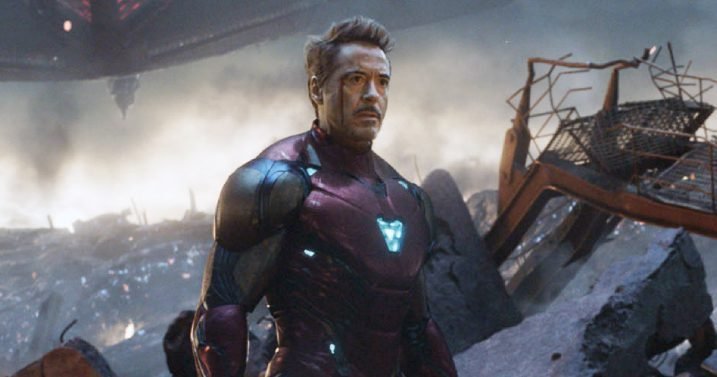
  • ‘Avengers: Endgame Encore’ Tops U.K., Ireland Box Office

    ‘Avengers: Endgame Encore’ Tops U.K., Ireland Box Office

    Disney’s “Avengers: Endgame Encore” dominated the U.K. and Ireland box office, debuting in first place with £4.1 million ($5.5 million) across its opening frame.

    “Resident Evil,” distributed by Sony, moved to second position in its sophomore frame, collecting $3 million to elevate its running total to $11.6 million. Paramount’s action thriller “Heart of the Beast,” starring Brad Pitt and J.K. Simmons, bowed in third place with an opening haul of $2.8 million.

    Universal’s “Sense and Sensibility” opened in fourth position, generating $2 million in its debut frame. Studiocanal’s animated release “Shaun the Sheep: The Beast of Mossy Bottom” took fifth place in its second weekend, adding $1.1 million to push its cume to $3.4 million.

    Warner Bros.’ “Practical Magic 2” placed sixth in its third frame with $1 million, advancing its gross to $9.5 million. Studiocanal’s “Pressure” held seventh spot in its third week, adding $780,739 for a running total of $7.6 million.

    Universal’s “The Odyssey” followed in eighth place taking $494,831 to lift its total to $117.1 million. Sony’s “Spider-Man: Brand New Day” landed in ninth position in its ninth frame with $422,187, lifting its total to $134.6 million. Prathyangira Cinemas rounded out the top 10 with Indian title “The Paradise,” which banked $358,942 in its opening session.

    Looking ahead to the upcoming theatrical frame,rollouts began on Monday with Underground Slate launching Matt Leutwyler’s sports drama “Fight Like a Girl” across 25+ locations. Mid-week event programming on Wednesday features Altitude’s documentary “Knife: The Attempted Murder of Salman Rushdie” and Trafalgar Releasing’s music title “Linkin Park: Unshatter”. Thursday includes Zee Studios International’s Indian release “Baththa”.

    Wide and saturation debuts on Friday across 300+ locations are led by Warner Bros.’ Tom Cruise drama “Digger.” Sony will also launch the Colleen Hoover psychological thriller adaptation “Verity,” starring Anne Hathaway, Dakota Johnson, and Josh Hartnett, alongside Universal’s “Girls Like Girls,” directed by Hayley Kiyoko across 100+ screens.

    Specialized, limited, and international offerings arriving Friday include Vertigo Releasing’s sci-fi title “April X” across 25+ locations and comedy “Extra Geography” across 25+ sites; MetFilm Distribution’s drama “The Weight,” starring Ethan Hawke and Russell Crowe; Avelina Prat’s “The Portuguese House” via AX1 Films; TAPE Collective’s “Cotton Queen” across 25+ screens; Cyrus Neshvad’s “Child” across 25+ locations; and Dartmouth Films’ “Derek vs Derek” across 25+ sites. Additional specialized titles include Tull Stories’ ocean documentary “How Deep Is Your Love” across 25+ screens, Journeyman Pictures’ “Kikuyu Land” across 25+ locations, Dreamz Entertainment’s “The Trouble”, MVD’s “Don’t Trouble The Trouble”, and Zee Studios International’s “Drishyam: The Conclusion.”

    Archival and event screenings are highlighted by BFI Distribution’s 4K restoration of Madness feature “Take It or Leave It” across 25+ locations. The weekend continues on Saturday with Trafalgar Releasing’s event broadcast of the Metropolitan Opera’s “Cosi Fan Tutte”, before Park Circus re-releases the 20th anniversary restoration of “Casino Royale,” starring Daniel Craig, across 100+ locations on Monday.

  • Jon Stewart Takes Aim at Trump’s Meeting With Chinese President: ‘How Does America Even Stay on the Map?’

    On Monday night’s episode of “The Daily Show,” Jon Stewart gave audiences a comedic rundown of the recent developments in the relationship between Donald Trump and Chinese President Xi Jinping following Trump’s hosting of Jinping in Washington, D.C., for what was called a “reciprocal state visit” by the White House.

    Stewart kicked off his monologue by introducing the two and setting the scene of their time together.

    “Last week, a young man by the name of Donald Trump picked up a young man by the name of Xi Jinping, Chinese president, at the airport for a pivotal three-day visit to Washington. Now, as with any monumental meeting of superpowers, with profound repercussions for global safety and stability, it began with ‘House Tour,’” sang Stewart, before cutting to news videos of Trump pointing at a number of different areas.

    “Trump spent most of Xi’s White House visit just pointing at shit, while Xi did his best effort to pretend to be impressed. Although I’m sure they talked about issues of national importance,” said Stewart, then alternating to news clips of Trump speaking to the press: “We had a great meeting, and he has great interest in granite,” he said.

    “Does he? Does he love good granite?” asked Stewart. “Is that his ‘I love good granite face?’ Because it looks like his ‘I’d rather be standing in front of a tank in a square face… Like President Trump, I’m sure you’re proud of your new circular granite helicopter parking spot, but just so you know, this is Shenzhen, China. They’ve got a fully autonomous magnetic levitation train. Pretty sure he’s not blown away by carved rock in the shape of a circle.”

    Stewart continued, pointing out that Trump must understand “the seriousness of the competition between our two nations” and would not undermine America’s national security. “I mean, national security is the whole reason we’re paying $600 million for this ballroom, right? So you’ll keep that behind the curtain, yeah?” Not quite — Trump invited the couple “through that beautiful curtain,” making them the first people to set foot in it. “Maybe Trump’s just trying to sell Xi Jinping on renting the ballroom out for his next big function,” joked Stewart.

    He then brought up recent developments in China-U.S. relations, playing news clips explaining that China had been sending Iran weapons. And not only did this topic not appear to come up between the two presidents, but it seemed as though Trump offered to sell American weapons to China.

    “How does America even stay on the map sometimes? I don’t even. How do we not just slide into the sea? All right, I had to have misheard that. I got to hear it from the president himself.” The show then cut to a clip of Trump denying this, saying that China probably would like to buy weapons from the U.S., though, “because we do make better equipment.”

    Check out the entire monologue below.