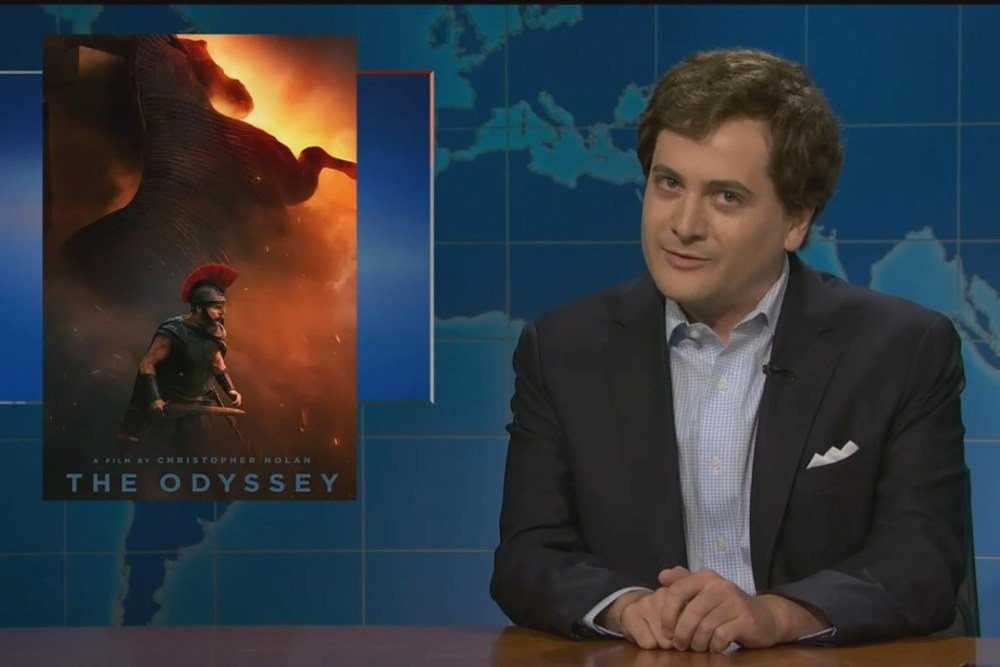
On the first “Weekend Update” of “Saturday Night Live” Season 52, Jeremy Culhane revived his fan-favorite impression of Tucker Carlson to offer his thoughts on some of the summer’s biggest blockbusters.
On “The Odyssey,” Carlson mentioned the specialty format of Imax 70mm, saying, “The Hollywood cabal shoots its filth with millimeters — or as I like to call it, the gay inch.” He added, “I like ‘The Odyssey.’ It’s so nice to see Greek people do something other than make women feel uncomfortable.”
Carlson then turned his attention to the biggest movie of the year, saying, “Everybody loves ‘Spider-Man: Brand New Gender.’”
“That’s not what it’s called,” Colin Jost asserted, but the conservative commentator was already inventing a theme song: “Spider-They, Spider-Them uses whatever bathroom it feels like.”
Carlson then congratulated the movie’s stars on getting married, but stopped himself as he said, “I now pronounce you Mr. and Mrs. — huh? She refused to take his last name.”
As Jost reminded him that Zendaya “doesn’t have a last name,” Carlson said, “But where did it go? And who took it? And why? Sorry kids, you don’t get two names anymore. You only get one name, like a dog. That’s the rule. That’s the goal now.”
When asked about “Obsession,” Carlson said, “The left’s idea of a horror movie — that a woman is forced to love a man. Oh, no, help! I’m being chased by a heterosexual relationship! Is this what we want? I don’t. Do you? You shouldn’t. But you do. Why? Is that allowed? Maybe.”
Carlson continued on, equating “Minions and Monsters” to “Trump’s cabinet” and then saying, deadpan, “That’s right. I’ve turned on Trump. I’m so brave.”
And, finally, the pundit made a raunchy “Toy Story 5” joke. “You’ve got a friend in me?” Carlson asked. “And his name is Woody?”
Culhane debuted his Carlson impression in Season 51 of “SNL” and reprised the character on “Weekend Update.” This marks the third appearance of the character. Watch the segment below.
Jia Zhangke will turn his attention to location scouting and production design for his next film, road movie “Mamma Dunhuang,” once the 10th Pingyao Crouching Tiger Hidden Dragon International Film Festival wraps on Sept. 30.
As revealed by Variety, the film follows a woman who drives from Dunhuang, in western China near Central Asia, all the way to the sea. It is set to shoot in early winter.
“I really love western China, and I go to Dunhuang quite often. Dunhuang was a vital transit hub on the ancient Silk Road, keep going west and you can arrive in Rome. Yet, it is so far from the ocean,” Jia tells Variety. “So this whole film is a continental story that starts in Dunhuang and travels from the west to the eastern coastline – she drives until the sea comes into view.”
Zhao Tao, who won the David di Donatello Award for best actress for “Shun Li and the Poet,” will once again lead a Jia film, playing a homebound woman who uses AI to help her on the journey.
“I will not use AI in making ‘Mamma Dunhuang,’” Jia says. “It only plays a role in the story.”
Jia founded the Pingyao festival, which marks its 10th edition this year. He says that although it’s only been a decade, “the changes in the broader film ecosystem and the media landscape, as well as technological advancements, are drastic. Pingyao has remained nimble. We’ve been able to adapt continuously alongside the shifts in the film industry and surrounding media, capturing new developments for our curation. Looking ahead, I believe cinema will continue to evolve rapidly, so we will maintain this festival’s agility in the future. That very flexibility allows us to respond in real time to the most pressing cinematic and cultural topics on people’s minds today.”
Jia wants Pingyao to remain a haven for cinephiles rather than a hall of fame. Where most international festivals program hundreds of films, he intends to keep Pingyao’s lineup lean, built around the year’s newest boutique titles, so the spotlight falls on the selected films and helps them reach the market. This year’s official program has just 51 films.
“As a festival, not only must it have great programs, but also a vibe of equality, freedom, and ease, setting a tone where the filmmakers and audiences can merge together,” Jia says. “We put effort into bringing in films with great artistic value, and meanwhile cover as many countries and regions as possible, prioritizing regions less familiar to Chinese audiences, such as northeastern Europe and South America, hoping to introduce a broader spectrum of cinema to the Chinese audience.”
Pingyao’s online ticketing system logged more than 70 million visits this year.
Jia says part of the problem is Pingyao’s limited capacity, as the ancient city “is protected as a UNESCO World Heritage [Site]. We’ve been working on building one more theater, ideally inside the ancient city walls, with 300–500 seats to enlarge the capacity. But it is very difficult to realize this plan, we are still discussing.”
For its fifth edition, the festival partnered with visual artist Xu Bing on “AI-IF,” a project that invited audiences to make films using AI. Jia says the festival’s AI projects have all been exhibitions, and none of this year’s official selections were made with AI.
“We’ve been prudent,” Jia says. “But we maintain an open, observant, and inclusive stance toward AI. When it comes to technology advancement, each of us holds a different perspective, but there should be one fundamental attitude: we must understand and discuss it, not shy away from it. Pingyao upholds a spirit of prudent inclusivity.” Earlier this year, Jia created an AI-generated video.
Jia also co-founded Unknown Pleasures, a Chinese art-house distributor named after his 2002 film, and says the company is negotiating to acquire two Cannes titles. In June, it announced deals for Russian auteur Andrey Zvyagintsev’s “Minotaur” and French cinematographer Marine Atlan’s debut feature “La Gradiva.”
“We hope Unknown Pleasures’ acquired titles all have a great showcase in Pingyao,” Jia says.
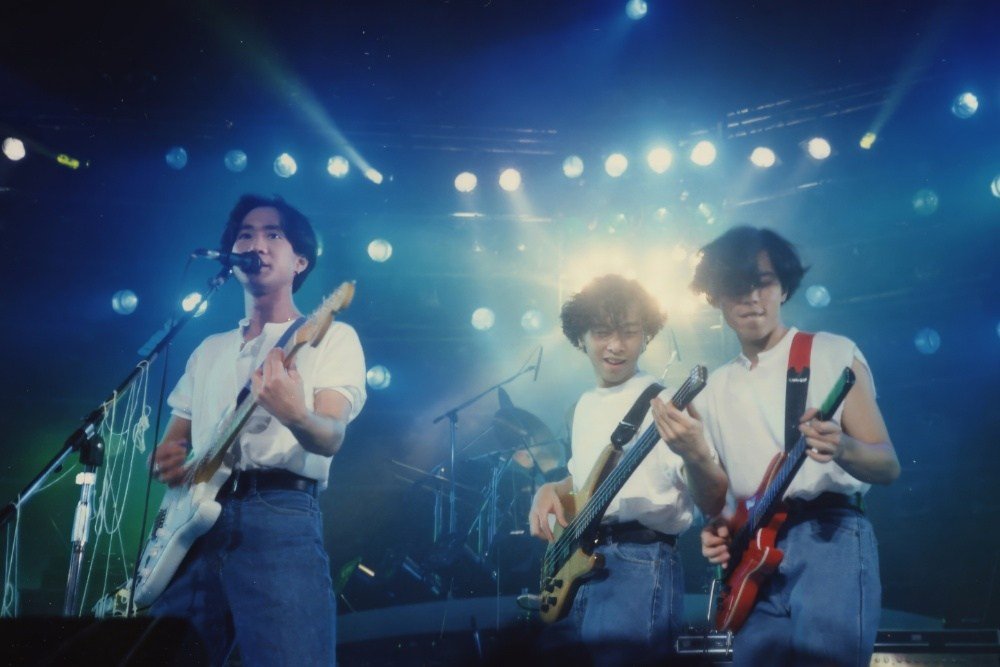
“Because of You Ka Kui,” a documentary on the late Beyond frontman Wong Ka Kui, will open the sixth Odyssey Film Festival in the U.K., with NGO U.K.-China Film Collab also picking up the Hong Kong film for local distribution.
Discussions began in March at FilMart in Hong Kong, which U.K.-China Film Collab attended with the U.K. Film Pavilion. The NGO deployed a similar approach last year with Robin Lee’s Hong Kong documentary “Four Trails,” which opened Odyssey and then played more widely in cinemas in 2025.
The film, from Hong Kong director Rosa Pang, revisits Wong, the singer-songwriter who drove Beyond creatively and whose songs shaped a generation of Cantonese-speaking listeners in Hong Kong and further afield. The producers are Yip Sai Wing, one of Beyond’s founding members, and Leslie Chan, the manager who is credited with finding the group.
The film is built around interviews with people who knew Wong both personally and through work. These sit alongside rare concert recordings, never-before-shown archive material from his early years and footage that has not been released until now. It follows Wong from his first brushes with music through the rise of Beyond and his growth as a songwriter and performer, looking at his approach to music, his character and his ideals. Pang and Leslie Chan described it as a dedication to “a legend, an ordinary person, through memories of those who truly knew him. The film seeks to rediscover the real Wong Ka Kui.”
Wong died in an accident in Japan in 1993, at age 31. The band’s songs have kept finding new listeners since.
There is also a U.K. link. The film’s interview with Beyond founding member William Tang was shot in London.
After an earlier theatrical run in Asia, “Because of You Ka Kui” will have its U.K. premiere as Odyssey’s opening film. The festival will run Sept. 28–Oct. 10 at a number of cinemas as well as online. Each edition is built around a different theme, and this year’s is #Fashion.
“Beyond did not simply follow the fashion of their generation, in many ways, they helped create it, like Oasis for the U.K.,” said Hiu Man Chan, Odyssey’s artistic director and founder of U.K.-China Film Collab. “Their music, image, attitude and style became part of the cultural memory of Hong Kong and influenced generations across Asia. Fashion is not only about what an era wears; it is also about how a generation chooses to see and express itself. That makes ‘Because of You Ka Kui’ a very meaningful film to launch this year’s Odyssey.”
Hiu Man Chan said the opening pick reflected the festival’s aim to treat fashion as more than clothing and catwalks, and to explore how film, music, visual identity and pop culture feed into one another. Bringing the film to the U.K. was “my true honor,” Hiu Man Chan added.
The selection also stretches the fashion theme to cover youth culture and music. Beyond’s sound and look, which mixed international rock influences with a Hong Kong that was changing fast through the 1980s and early 1990s, became bound up with a generation of young fans. Yip has called the documentary a rare chance to find the “ordinary person” behind the bandleader and icon.
“‘Because of You Ka Kui’ is not about nostalgia. The honesty of Wong Ka Kui as a person – in what he thought, felt and believed – continues to resonate today,” Pang said.
Leslie Chan said that after hearing all the interviews, “I really felt that I came to know Ka Kui all over again.”
Odyssey’s sixth edition will program older films alongside new ones. The festival’s opening and some of its program have backing from the Hong Kong Economic and Trade Office in London.
A year after announcing AI actress Tilly Norwood at Zurich Film Festival’s Summit, Particle 6 founder and Norwood creator Eline van der Velden returned to the Swiss event to look back at the backlash her creation has faced since. Asked if she could have ever predicted the furore around Norwood, van der Velden said not in her “wildest dreams.”
“But I had programmed her to become the most famous AI actress, so I don’t know how she did it, but she did, which is slightly scary,” she added.
“It’s such an odd conundrum, the sort of negativity and then the positivity at the same time,” she continued. “At Particle 6, we’ve grown eight-fold. We have four departments; we’re big in AI advertising, film and TV, we’re doing a lot of co-productions and original commissions. We do a lot of AI consultancy, bringing AI workflows into other studios and production companies.”
Over the course of the last year, said the exec, “a lot of people have realized that AI is coming, and that was the point of Tilly.” “I built her as a physicist actress; I felt like I needed to bridge the gap in communication between the tech and the entertainment industry.”
“As opposed to writing a boring white paper about what was happening with AI, I thought: Let’s create something to show people that will engage them and make them sit up and take action so that the creative industry can stay ahead as opposed to being completely and utterly taken over by the tech industry,” noted van der Velden.
After a few minutes trying to sort out a tech blip with the “traditional technology,” e.g., a problem with the HDMI cable, van der Velden introduced Norwood herself on stage, opening her creation to moderator and audience questions. Asked who she would like to work with, Norwood said Tom Holland and Olivia Colman, “but only if it were their digital twins joining me in an AI production.”
Norwood also spoke on the backlash, calling it “quite an introduction.” “My name kind of went everywhere. It’s funny. Nobody hated me particularly; they just sort of hated the future.”
When asked if she had met U.S. agents for representation, Norwood displayed the ironclad media training of an A-list Hollywood star. “Well, I’m certainly in a unique position there. I mean… The industry is still figuring out what to do with AI, so it’s not quite like having a traditional agent in Hollywood just yet. I mostly work on AI films, so it’s a bit of a different lane.”
Van der Velden also spoke about possibly getting Norwood an agent, saying the studio soon realized that they “don’t really need” an agent for the actress. “I think she’s big enough as it is. We get loads of offers in, we’ve said no to anything where she would be in a traditional film, because that’s not what she’s made for. We don’t need it at the moment, so if that makes people happy, that’s fine by me.”
“But also what saddens me about that is that it means that the traditional industry can’t participate in this new tech and that means they fall behind,” she added. “Is it a positive? Is it a negative?”
After watching Norwood’s now infamous malfunction while speaking with Piers Morgan on live TV, when the AI actress randomly began speaking Cantonese, van der Velden said: “Look, I think it’s all not to be taken too seriously. We built Tilly to be a funny interface that gets people alert to where the tech is at. The point is: China’s a big partner. Do we need regulation? What are the guardrails? Those are the conversations I want people to have coming here.”
Van der Velden also spoke about Particle 6’s latest project, “Storm Dogs.” Yesterday, the studio announced that “Stuart Little” and “The Lion King” filmmaker Rob Minkoff joined the AI film as an executive producer. Minkoff will work with CEO van der Velden and the studio’s team over the coming months to develop the story, characters and screenplay ahead of production.
“Storm Dogs,” an original idea from van der Velden, is a family adventure comedy-drama set in an English village during a devastating storm. The film will combine live-action performances with photorealistic animated characters. Human roles will be filmed conventionally, while the dogs and toddler will be created through an approach that brings together live-action performance, traditional filmmaking techniques, and emerging AI tools. The project is currently in early development, with production targeted for 2027. Distribution has not yet been announced.
The exec said that Minkoff was one of the first people to reach out to her following Norwood’s announcement.
“Yeah, so what was amazing about this backlash last year is actually it meant that a lot of talent reached out to us very secretly,” she said. “We were signing tons and tons of NDAs. Everyone was scared to take the hit, and I totally understand. Fortunately, we were in a position where we’d already taken the hit, so it didn’t matter anymore.”
Of “Storm Dogs,” she said, what is “great” about it is that they can now “animate mouths in a way that we’ve never been able before and give us expression to the animals that’s never been possible before. It is really enhancing the storytelling. And so that’s how I see it. It needs to aid the storytelling and the creative work that we’re making if we’re going to use AI.”
“Star Wars” has featured iconic locations throughout the franchise, taking audiences to Tatooine, Naboo and now, a campus biology lab at Stanford University.
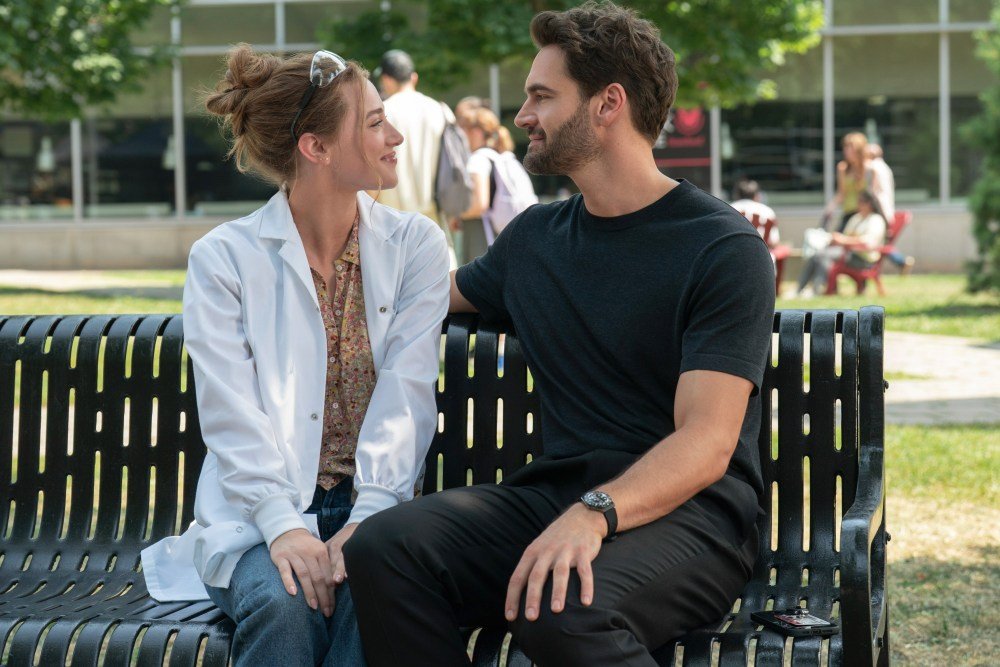
The romantic comedy “Love Hypothesis” premiered on Amazon Prime on Sept. 23, featuring Lili Reinhart and Tom Bateman as romantic interests who get caught in a fake-dating-turned-real-love trope. On the surface, there is no obvious connection to George Lucas’ franchise, but the story’s origin is actually deeply rooted in a galaxy far, far away.
Ali Hazelwood’s 2021 source novel of the same name was originally written as a fan fiction about the “Star Wars” sequel trilogy’s Kylo Ren and Rey, titled “Head Over Feet.” She ultimately transformed her 2018 narrative into a New York Times bestselling novel years later, removing the most obvious “Star Wars” references. But those familiar with the story’s source material will be able to spot plenty of Jedi-adjacent references throughout the romantic comedy.
Claire Scanlon, the film’s director, took a break from filming her next project, the Netflix comedy series “I Suck at Girls,” to break down the “Star Wars” references featured in “Love Hypothesis.” She reveals she wasn’t initially aware the plot was based on a fanfiction between Kylo and Rey, let alone the novel’s popularity on BookTok, a TikTok community that shares reading recommendations with each other.
“Elizabeth [Cantillon, the film’s producer] said, ‘This is based on a book about “Star Wars” fan fiction and it’s from BookTok,’” Scanlon says while laughing. “And I was like, ‘I understand none of the words you just said to me.’”
Perhaps the most overt nod to the galactic universe is the casting of Bateman, who plays the hard-shelled Kylo Ren-inspired Adam Carlsen. In real life, the actor is married to Daisy Ridley, who originated the role of Rey, though Scanlon confirms this connection didn’t influence his casting.
Fans may have also picked up on the film’s opening song, “Mess It Up” by Gracie Abrams, whose father, J.J. Abrams, directed two films in the most recent “Star Wars” trilogy. But it wasn’t Scanlon who came up with this subtle nod, which she reveals was flagged by observant fans on social media.
“Someone on TikTok or Instagram said, ‘They better use a Gracie Abrams song.’ And I was like, ‘Why would they want to use a Gracie Abrams song?’” she says, laughing about her initial cluelessness.
Below, Scanlon breaks down the biggest nod to “Star Wars” in “Love Hypothesis,” and debunks some of the speculated references circulating online.
Bateman’s character, Adam, is a clear reference to Kylo Ren, as well as nods from his intimidating demeanor to his telling nickname, “Dr. Evil.” Scanlon confirms that Adam also channels the character through his all-black wardrobe, which is mirrored by his minimally decorated office that features an almost entirely black color scheme.
Reinhart’s character, Olive Smith, is primarily seen wearing her lab coat, but outside of the laboratory, she is dressed in red, blue and green outfits. Although these are all colors associated with different lightsabers, that choice was unintentional, Scanlon says. Some eagle-eyed fans also noted she frequently wears an all-red look, which is the color associated with Rey in “The Rise of Skywalker,” though Scanlon says that was just a coincidence.
“Lili just likes the color red,” she says while laughing. “This is nuts. I got to tell Lili all these!”
While this isn’t a reference to Kylo Ren, Scanlon also points out that as Adam spends more time with Olive, his color palette begins to soften from black to navy blue. The texture of his clothes also evolves from cold, hard fabrics to cashmere and softer clothes, representing Olive’s positive impact on him.
Using the Name “Adam”
Yes, Scanlon confirms the character Adam Carlsen is, in fact, named after Adam Driver, who originated the role of Kylo Ren. But the director also has a question for Hazelwood about some other characters.
“I know Ali named Adam after Adam Driver, but did she name Tom Benton after Tom Bateman? The bad guy?” she asks, laughing. “Was she trying to push them apart? Was it just a coincidence? Or was she hating on Tom for being with Daisy and wanted Daisy and Adam Driver to be together?
“Star Wars” Soundtrack
Several moments throughout the film feature John Williams’ “Star Wars” themes, further emphasizing the parallels. “Star Wars” composer John Williams’ theme for Kylo Ren plays when Adam enters the coffee shop with Olive, causing the customers to freeze in fear.
The fallen Jedi’s theme is used again near the end of the film when Adam goes to confront his colleague Tom. The director also points out that this scene was filmed from a low angle as Adam menacingly walks down an empty hallway, visually mirroring several shots of Kylo in the “Star Wars” films.
Viewers also pointed out that a sample of “Rey’s Theme” was used when Olive tells her friends details of her relationship with Adam after they find the couple in the coffee shop. Scanlon says she doesn’t know if this was intentional, but it could’ve been slipped in from the music team.
“This is fun,” Scanlon says before breaking down the next reference. “This is like a game!”
Olive frequently wears her hair in a high bun, which Scanlon confirms is a nod to Rey’s signature hairstyle of three buns on top of her head.
Adam Carrying Olive
One of the moments when the dynamic between Kylo and Rey shifted in the “Star Wars” films came when Kylo carried an injured Rey onto his ship, hinting at his romantic feelings for her. A similar moment occurs in “The Love Hypothesis” when Adam carries Olive after her feet begin to hurt following their sushi date.
Although the scene mirrors the Kylo and Ren dynamic of alluding to the eventual shift in their relationship, Scanlon isn’t certain that choice was intentional. As far as she knows, it wasn’t a designated reference, but screenwriter Sarah Rothschild may have slyly incorporated the moment.
Tom Bateman and Lili Reinhart in “The Love Hypothesis”
During their date at the sushi restaurant, Adam opens up to Olive about how he never intended to be evil. He shared that his mentor was a sadist who had powerful friends in high places, very similar to Kylo Ren’s corruption after being mentored by Supreme Leader Snoke. This scene was directly taken from the book, Scanlon says, so it was likely a reference created by Hazelwood.
In that same scene, Adam also jokingly calls Olive a rebel, which could be a nod to Rey’s allegiance to the Resistance. Scanlon isn’t certain if that’s an intentional reference, noting this may also have been a choice by Rothschild.
A very jet-lagged Scarlett Johansson reunited with co-stars Adam Driver and Miles Teller for the New York Film Festival premiere of “Paper Tiger,” which kicked off the festival’s 64th edition.
“I’m hallucinating,” said Johansson, who just got off a long international flight, where she’s filming another movie. “It’s 5 in the morning — which is a great time to be doing an interview on stage.”
“Paper Tiger” premiered in May at the Cannes Film Festival. However, this marked Johansson’s first time watching the movie (at least in a festival setting); she missed the Cannes premiere because she was shooting yet another movie, “The Exorcist: Martyrs.”
“Don’t rub it in!” Johansson joked about her absence on the French Riviera.
Set in 1986, “Paper Tiger” follows two brothers, Irwin and Gary Pearl, whose get-rich-quick scheme to help clean up the Gowanus Canal lands them in the crosshairs of the Russian mafia. Johansson plays Linda, wife of Teller’s character.
Johansson, Driver and Teller walked the red carpet with Gray at Lincoln Center’s Alice Tully Hall and sat for a post-screening Q&A, during which they spoke about their close camaraderie during production.
“No work required. There’s a mutual admiration between the four of us,” Driver said. “A set culture comes from the top down, and James sets a culture where everyone feels free. We immediately felt comfortable with each other.”
Added Gray, “We had a nauseatingly lovely set. I love them. I’m not on the Today show. I’m telling you the truth.”
Scarlett Johansson, Miles Teller and Adam Driver introduce “Paper Tiger” during the 64th New York Film Festival.
Getty Images for FLC
Before the screening began, Gray took the stage and consciously kept his intro remarks short and sweet.
“When I was in film school many years ago, students would show their films, and the students that talked the most [before] often made the very worst movies,” he said. “So I am going to speak very briefly.”
Gray praised the producers and actors who helped bring the film to life and reflected on his early dreams of being a filmmaker.
“I can’t help but remember my mother and father when I said I wanted to be a movie director. ‘How are you ever going to do that?’ And here I am,” Gray said. “I’m not sure the lesson in that.”
NYFF artistic director Dennis Lim introduced Gray as “one of the great living American filmmakers” and praised the director for championing a “singular” artistic vision.
“It’s not easy to make personal films in the current landscape of American cinema,” Lim said. “The fact that there are 24 executive producers credited on this film, like, who speaks to that.”
New York Film Festival’s 64th edition, which runs through Oct. 12, will host the world premieres of “Artificial,” Luca Guadagnino’s buzzy movie about OpenAI founder Sam Altman; Ava DuVernay’s documentary “14th”; director Tony Gilroy’s music drama “Behemoth!” with Pedro Pascal, Olivia Wilde and Will Arnett; and Takashi Yamazaki’s kaiju sequel “Godzilla Minus Zero.”
“Premiere status is never the be-all and end-all for us,” NYFF artistic director Dennis Lim told Variety ahead of opening night. “Timing is always part of it. But I think we’ve proved in the last few years that we create a pretty interesting context for the launch of a film.”
“Paper Tiger” filmmaker James Gray (center) with the film’s stars Roman Engel, Miles Teller, Scarlett Johansson, Adam Driver and Gavin Goudey.
Indian devotional film “Hanuman Ansh” has grossed more than $3.5 million outside its home territory since Hombale Films took it to international audiences, and the company behind the blockbuster “K.G.F” and “Kantara” franchises has now detailed how it engineered the run.
Written and directed by Vishal Chaturvedi and adapted from his book “Divine Detour: That Changed My Life,” the film follows Lakshman Das, a boy who leaves home after his mother dies, searching for the divine. Years of wandering and meditation later, he becomes the saint Neem Karoli Baba, known to devotees as Maharaj-ji. Shobhinaw Satyaa plays the title role opposite Chandan Anand, with Vihaan Shedge as the teenage Maharaj-ji and Anil Rastogi and Purnima Tiwari in supporting roles. Chaturvedi produced with Ragini Sona, Namrata G. Singh and Anupriya A. Nagar under his Swambhu Media Network banner.
“Our strategy involved taking ownership of all global territories and collaborating with the biggest local partners in each region to ensure the best possible release footprint. By leveraging the data and learnings from our previous releases like ‘Mahavatar Narsimha,’ we were able to tap into the right locations and cinema chains. This targeted approach has yielded spectacular numbers,” says Hombale Films producer Chaluve Gowda.
The Bengaluru banner partnered with Phars in the GCC and Prathyangara in North America, and the film opened internationally on Sept. 11. It marks a first for the company.
“‘Hanuman Ansh’ is the first film outside of our own productions that we have full fledgedly distributed internationally. We truly believed in this project, as it perfectly aligns with our vision of taking Indian stories global,” Gowda says.
North America leads the overseas tally, with $1.8 million from the U.S. and Canada, according to Hombale’s territory figures. Australia and New Zealand contributed $606,716 and the Gulf Cooperation Council region $577,870, with the U.K. adding $269,837. Singapore brought in $61,334 and Europe $41,171, while the rest of the world accounted for $483,006.
Hombale previously backed the animated “Mahavatar Narsimha,” which went on to do more than INR300 crore ($31.3 million) in business.
At home, the film has been a sleeper. Made for approximately INR2 crore ($209,000), “Hanuman Ansh” opened in India on Aug. 7 on some 250 screens through Cinépolis India. Word of mouth pushed it past 2,000 screens, and it has since grossed INR340.7 crore ($35.5 million) in seven weeks.
Chaturvedi has planned the film as the first part of a trilogy.
“We will always support the makers in bringing their ultimate vision to life. These are exactly the kinds of stories we want to champion as a production house, and we will continue to back creators who dare to tell such grand stories with all their heart,” Gowda says.
Swift broke the records following the midnight release of “The Life of a Showgirl: Encore,” which featured four new songs, including lead single “Patient Zero.” That song broke the record for the most-streamed song by a female artist in a day so far this year, while Swift herself had the most streams out of any female artist in a day in 2026.
Swift dropped “The Life of a Showgirl: Encore” after gradually rolling out the promise of new music, beginning with some Easter eggs in a “Law & Order: SVU” skit during the Emmys telecast. In character as a detective, she said, “I think what we’re going to be looking for is hiding in plain sight.” She then broke the fourth wall, looking directly at the camera and saying, “Saccharide. Aries. From the vineyard. North or south.” Swifties, of course, solved the puzzle relatively fast, noticing that the third letter of each word spelled out “encore.”
Then, this past Tuesday, she announced that she would be releasing her new single “Patient Zero” this week, rolling out three limited edition CDs of the single on her website. Just a day later, she revealed that she was actually dropping “The Life of a Showgirl: Encore” on Friday, offering fans four new songs including “Patient Zero,” “Cleveland!,” “Pink Clouding” and “Babylon.”
On social media, Swift explained why she wanted to add more to her 2025 album. “About a year ago, you guys did a truly unfathomable thing. Something that completely blew my mind… You gave ‘The Life of a Showgirl’ the biggest first week for an album in history,” she wrote. “I took a trip to Sweden to celebrate with Max and Shellback, my two collaborators on this album. Really we just wanted to reflect and take in how grateful we were for the moment we were in, but there was a studio there and we did what we do when we feel anything at all: We wrote more songs. I hope you love them, because they were born out of pure gratitude for your exuberance for and celebration of the album we made. ‘The Life of a Showgirl: The Encore’ including four new songs is out on Friday and available to pre-order and save now.”
Up next, Swift is set to debut the video for “Patient Zero” at this Sunday’s MTV VMAs, where she is also being honored with the inaugural Artist-Director Award. She previewed the clip on “CBS Mornings” on Thursday before sharing it on her social media accounts. The video, featuring cinematography by Oscar winner Emmanuel Lubezki, will star Swift alongside Dakota Johnson and Colin Farrell.
Olivia Rodrigo officially kicked off the “Unraveled” tour on Friday night with her first show at PeoplesBank Arena in Hartford, CT. Scroll down to see the setlist as it’s being updated live.
The 86-date tour is in support of Rodrigo’s third album “You Seem Pretty Sad for a Girl So in Love,” which she released this past June. Following a pair of nights in Hartford, the pop singer will make her way across North America through February 2027, concluding with a 10-night run at both Los Angeles’ Intuit Dome and New York City’s Barclays Center. Then, in March, Rodrigo will jet off to Europe for shows in Amsterdam, Munich and Barcelona before wrapping the tour with a pair of shows at London’s O2 Arena.
Wolf Alice is slated to open on the “Unraveled” tour through the end of October, followed by Devon Again for the remaining North American dates. The Last Dinner Party will join Devon Again as support beginning in January. Across the Pond, Grace Ives will open until April 12, followed by Die Spitz for the rest of the trek.
Rodrigo already has two tours — “Sour” (2022) and “Guts” (2024-2025) — under her belt. “Guts” was her longest, spanning 102 shows across five continents. It’s currently unknown if Rodrigo plans to add dates in Asia, Australia or South America to the “Unraveled” tour.
This past August, the singer warmed up for the trek with her inaugural Daisy Chain Fields music festival. Rodrigo personally curated the star-studded, women-only lineup consisting of artists including Chappell Roan, Doechii and Garbage, as well as a closing performance from Rodrigo featuring guest appearances from Alanis Morissette, Sarah McLachlan and Stevie Nicks. All net proceeds were donated to charities that support and advocate for women and girls, and as the evening came to a close, Melinda Gates matched the $10 million already raised and brought the total to $20 million.
See the full setlist for the opening night of Unraveled Tour below (UPDATING LIVE):
“Drop Dead” “U + Me = <3” “So American” “Good 4 U” “Deja Vu” “My Way” “Serena Joy” “Bad Idea Right” “Ballad of a Homeschooled GIrl” “Vampire” “Purple” “Stupid Song”
No doubt Isaac Mizrahi is excited about the release of the newly restored “Unzipped,” the 1995 documentary chronicling a moment in time when he was one of the fashion world’s hottest designers.
However, Mizrahi admits he’s not that eager to watch it. “I have to say I hate looking back,” he tells me. “I hate this whole process, a little bit of looking back.”
What’s so wrong with taking a trip down memory lane?
“I looked so cute, and I look so shitty now,” the 64-year-old Mizrahi says. “I was so agile, and I’m not as agile anymore. My knees hurt. My back hurts. Even my hair. I had such cute dark hair. Oh, well. But it’s not just vanity. It’s more just about the experience of your life. Thirty years! Man, that is crazy.”
Directed by Mizarahi’s then-boyfriend Douglas Keeves, “Unzipped” chronicles the designer’s planning and execution of the show for his fall 1994 collection.
The film, which Miramax bought after it was a Sundance hit in 1995, includes appearances by Cindy Crawford, Linda Evangelista, Naomi Campbell, Kate Moss, the late André Leon Talley and Eartha Kitt along with a bevy of other fashion insiders and glitterati.
The film runs at only 73 minutes. “We didn’t intend to make it that short,” Mizrahi remembers. “We wanted it to be longer. There were about 10 minutes of Faye Dunaway that got out because we couldn’t get the rights to run footage from ‘Mommy Dearest.’”
What?!
“She came to a fitting. She was doing a TV pilot, and she needed a lot of suits,” Mizrahi remembers. “We had her for a day and a half, a fitting that was endless. Being the big gay that I am, I was enthralled by every word out of her mouth. One really hilarious thing that I do remember about Faye Dunaway was that she would look in the mirror, and when she liked something, she’d go, ‘Oh, that’s very Faye. Very Faye.’ Talking about herself in the third person was so fantastic. And I do that now. If I like what I look like, I go, ‘Oh, it’s very Faye.’ It’s like I think of myself as Faye Dunaway.”
I ask Mizrahi what he would tell himself if he could go back three decades. Without missing a beat, he says, “You’re not that fat. Swear to God, that’s what I would tell myself. I used to wear these crazy Fred Mertz kind of high-waisted pleated pants that I made myself because I was so fucking crazy that my waist was big. I was so stupid, and I look stupid, I don’t look chic. I look stupid, and I was perfectly fine. I was not fat. But I was a really fat kid, so I lost 75 pounds in high school. I’m never going to get over that. You never do.”
Mizrahi makes no secret about being on a GLP-1. “I love it,” he coos. “I’m in my 60s, darling and I recently just got so big. I’m usually very good at keeping it under control, but it’s incredible and the rest of your health benefits, it’s incredible.”
At the height of releasing his eponymous collection, he dressed the A-list, including Sarah Jessica Parker, Nicole Kidman and Natalie Portman. After closing shop in 1998, he released various collections under different monikers or designed for other brands altogether. He also launched a show business career with a cabaret act. Most recently, he appeared in “Marty Supreme” as Gwyneth Paltrow’s press agent.
Mizrahi is now the creative director at Target and continues to sell a collection on QVC.
When talking about fashion today, Mizrahi lets out a big sigh. “I don’t know if those giant spectacles they have in Paris and Milan are necessarily supposed to be influential in the way people dress six months later,” he says. “That is why that speech in ‘The Devil Wears Prada’ about cerulean blue makes me want to kill somebody because that is so not the way things work. They want you to believe that’s the way it works. I want to shout that from the rooftops, ‘It never has worked that way — never!’” What those spectacles do is they bolster the image of brand names so that they can sell a ton of perfume and handbags and shoes.”
When we talked, it was just a few days after The Metropolitan Museum of Art announced it was no longer moving forward with its planned retrospective for John Galliano that would’ve run from May 9, 2027, to Jan. 9, 2028 and served as the theme of next year’s Met Gala. Galliano, who would have been only the third living fashion designer to be feted by the Met following Yves Saint Laurent in 1983 and Rei Kawakubo in 2017, released a statement on Instagram announcing his decision to pull the retrospective amid backlash over his past racist outbursts.
Galliano makes a brief appearance in “Unzipped” at dinner with Mizrahi, Talley and others in Paris. Mizrahi calls Galliano a “genius,” but also says, “When they announced [the Galliano Met Gala], I thought to myself, ‘Wow, who’s going to that?’ I’m not even talking about Jews or donors of the museum. I’m thinking about a celebrity showing up. I don’t know who would show up on that red carpet. No one is going to say, ‘I love John.’ Who’s going to say that?”
Next up could for Mizrahi could be a producer’s hat. He’s developing a television series about the life of legendary and very controversial paparazzi photographer Ron Galella with producer Christine Vachon. “We’re doing it with the Ron Galella estate,” he says. “It’s very exciting. We’re in the first, first, first stages, so we haven’t even pitched it or anything yet. But it’s really such a great idea, only because of what it means culturally to our country.”
“Unzipped” is now showing at the Film Forum in New York City. It will open in Los Angeles at Laemmle Royal and Laemmle Glendale on Oct. 9, followed by a nationwide rollout.