The network is 100 years old. The commercials, however, are new.
NBCUniversal is trying to expand the sponsorship model it used for the 50th anniversary of “Saturday Night Live” in 2025 and customize it for its coming celebration of a century of its flagship broadcast network. If sponsors like it, the company will have a tested system of garnering ad support that it can tap as it continues to seek out tentpole events, including, potentially, the Los Angeles Olympics in 2028, and the 75th anniversary of “The Tonight Show” in 2029, to win the big audiences advertisers continue to demand from broadcast, even in the streaming era.
“Clients are not asking for more places to put their messaging,” says Alison Levin, a president at NBCUniversal’s ad sales and partnerships unit, during a recent interview. “They are looking for meaningful ways to show up when audiences are engaged.”
Allstate, Capital One, Purina Dog Chow, Smucker’s, Volkswagen and Xfinity have all signed up to sponsor the event, which will air as a three-hour special on December 10 and feature a litany of celebrities and famous figures, all at the Dolby Theater in Los Angeles.
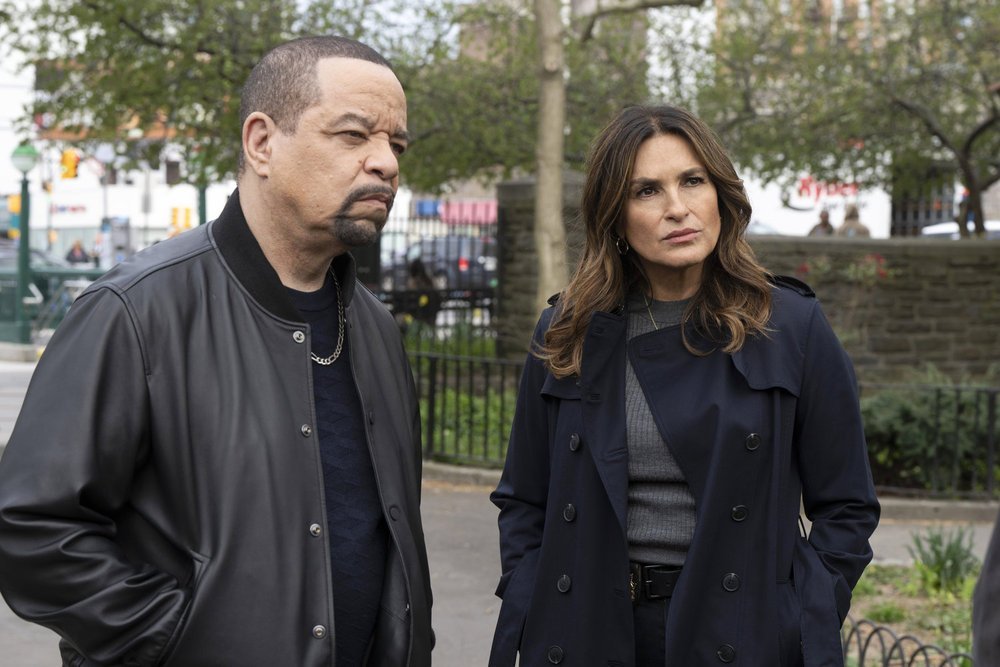
The sponsors don’t have to wait to get noticed. Already, Capital One has launched a commercial that features Mariska Hargitay and Ice-T in their roles as Olivia Benson and Fin Tutuola from “Law & Order: SVU.” Benson even turns to the camera at the end of the spot and utters the financial-services company’s famous slogan, “What’s in your wallet?”
“One of the things that we seek in general is just opportunities to participate in cultural moments that we think people are going to care about,” says Marcy Brye, a senior director at Capital One who works on media partnerships. What’s more, she says, “the opportunity with NBC 100 is so rare.” A case in point: Capital One’s new ad appeared during NBC’s recent Emmys telecast, right after a pre-taped sketch in which Taylor Swift made a cameo during an “SVU” spoof that featured many of the series major cast members. “We knew our ad placement was scheduled right after a special segment, though we didn’t know the specifics in advance,” says Brye.
Indeed, because the 100th anniversary special won’t be duplicated, like an annual awards program, or last for weeks, like a soccer tournament, advertisers likely feel assured their backing of the extravaganza will get noticed. The goal, says Levin, is to create “bespoke, high-touch moments” that can be seeded across top NBCU programing ranging from live sports telecasts to popular programs such as “Love Island” or “The Traitors.”
Some of the sponsors must have liked what they experienced when they supported the “SNL” 50th anniversary. Allstate and Volkswagen took part in the advertising around that program, with Allstate backing a commercial vignette that paired its popular advertising character Mayhem (played by actor Dean Winters) with the Please Don’t Destroy comedy trio that became popular though taped vignettes on “SNL.” Volkswagen, meanwhile, ran a commercial that had “SNL” veterans like Fred Armisen, Bill Hader and Kristen Wiig repirse their characters from the show’s popular “Californians” sketch.
“That work performed so well for us,” says Rachael Zaluzec, chief marketing officer and executive vice president of consumer experience for Volkswagen of American. “It gave us so much visibility.” The automaker will launch a new commercial tying it to the anniversary in November, she says, and recreate sets from NBC programs at the L.A. Auto Show in that same month.
These collaborations often take months to forge, and NBC first announced it would seek bigger sponsorships tied to the anniversary in January of this year. The company may be following the steps it took previously. For the SNL 50th anniversary, NBCU started discussions months ahead of schedule. In March of 2023, “SNL” executive producer Lorne Michaels made a presentation in Studio 8H, the program’s longtime home at NBC’s New York headquarters, to around 100 advertisers about what to expect from the anniversary. At the time, NBC, sketched out plans for a series of retrospectives around “SNL” as well as at least one documentary about the program.
Comcast’s Xfinity service is attaching itself to a countdown clock that shows up during important NBC moments that lead up to the special. Look for the timer to turn up during NBC ‘s coverage of the Thanksgiving Day Parade as well as ahead of the actual extravaganza, says Julie Scelzo, chief creative officer for Xfinity and Comcast, which is also the parent of NBCU. The countdown graphics help to “build the anticipation,” she says. “It gives the audience something to pay attention to.”
Long-running Australian soap opera “Neighbours” is being recut into short-form vertical video by RoseBerry Media for its Epis (stylized as “epis”) platform — and it’s starting with episodes starring Margot Robbie.
Robbie starred as Donna Freedman on the series from 2008 to 2011 before becoming a globally recognized film star. For Epis’ microdrama launch of “Neighbours,” two storylines featuring Robbie as Donna will be edited down into vertical micro-episodes that will add up to around 150 minutes of content.
The transformation of the “Neighbours” series into short-form episodes will be done via RedSnapper, RoseBerry’s proprietary production workflow that utilizes AI to turn TV and film libraries into vertical series.
RoseBerry was set to announce the vertical series edits of “Neighbours” on Monday along with series producer Fremantle. In the case of “Neighbours,” RoseBerry will have plenty of material to work with: The Australian soap, which premiered in 1985 and ended in 2025, ultimately ran for around 9,363 episodes. Besides Robbie, well-known alums of the show include Guy Pearce, Kylie Minogue, Jason Donovan and Jesse Spencer.
“’Neighbours’ is an iconic piece of television history and exactly the kind of premium entertainment IP we believe can thrive in the vertical format,” Guy Hameiri, co-founder and CEO of RoseBerry Media, said in a statement. “This is the first time we’ve had the opportunity to apply RedSnapper to a long-running soap with such a rich library of characters, storylines and cultural moments, and Fremantle has been a fantastic partner in helping bring that vision to life.”
Added Fremantle commercial and international CEO Jens Richter, also in a statement: “’Neighbours’ has an extraordinary legacy, with decades of memorable characters, stories and talent. Working with RoseBerry allows us to explore incredible archive in an entirely new way, bringing much-loved IP to new audiences while demonstrating how established television libraries can continue to evolve, find new relevance and importantly create new commercial opportunities. It’s an exciting example of how technology and creative thinking can unlock new value from our diverse catalog and content library.”
RoseBerry has deals with Banijay Rights, All3Media International, A+E Global Media and Cineflix Rights, along with Fremantle, to explore ways to adapt their IP for mobile and other technology. Hameiri said the “Neighbours” deal is just the beginning of finding ways to reimagine existing programming for different distribution.
“For RoseBerry, this is a powerful proof point for the infrastructure we are building to support the future of premium vertical television,” Hameiri said. “We believe premium vertical television will become a significant new entertainment category, and partnerships like this demonstrate how iconic IP can find new audiences, new relevance and new value in that future ecosystem.”
While much of the focus on the growing vertical video/microseries category has focused on the creation of original, low-budget content, there also has been a marketplace for pre-existing fare that is edited down into micro-sized bites. Other companies in the space include Snips, which has a deal with Banijay Rights and BIG Media to adapt some of their series and movies into minute-long episodes.
Here’s a look at how “Neighbours” with Margot Robbie has been recut for vertical:
And here’s a first look at the key art for the arrival of “Neighbours” on Epis:
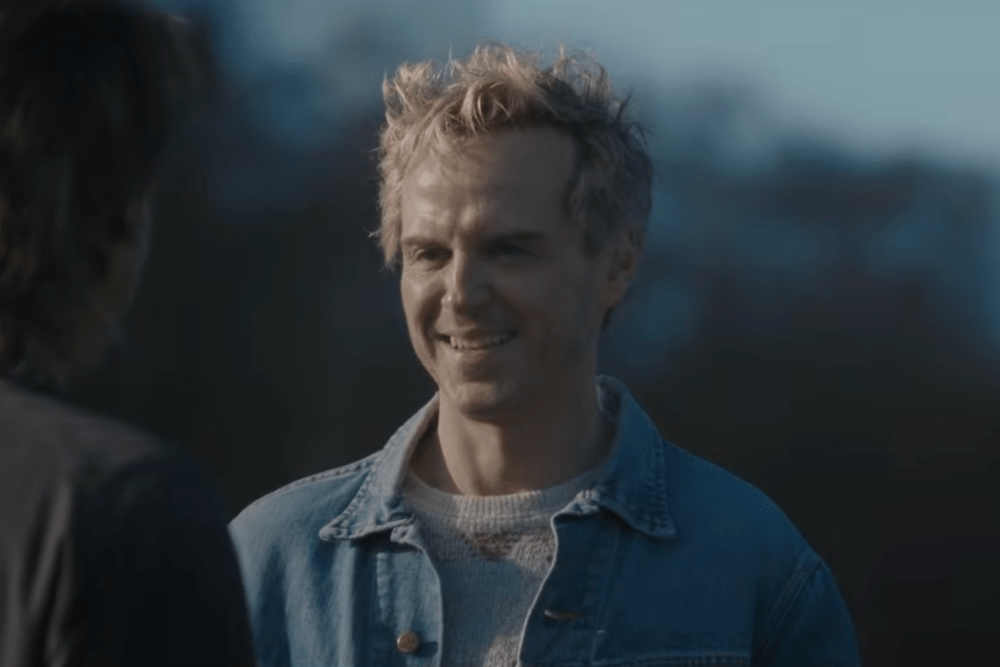
Focus Features has released the trailer for “Elsinore,” the Andrew Scott-led drama from director Simon Stone. The film will be released in theaters on Nov. 20.
Written by Stephen Beresford, “Elsinore” is the “deeply emotional and inspirational true story of Ian Charleson, a gifted actor whose greatest challenge becomes his greatest triumph,” per the official synopsis. “Facing his own mortality with unflinching honesty, wit, and grace, Charleson delivers a courageous performance that becomes a source of healing and inspiration for those around him.”
The star of “Chariots of Fire,” Charleson had the chance of a lifetime to replace Daniel Day-Lewis as Hamlet in the play at London’s National Theatre when Day-Lewis stopped cold during a performance and walked offstage, never to return to the production. At the time, despite receiving rave reviews, the Scottish actor was succumbing to complications from AIDS. He died seven weeks after bowing out.
“Elsinore” first debuted at the Telluride Film Festival before playing at the Toronto International Film Festival earlier this month, where it won the International People’s Choice Award. Variety’s Owen Gleiberman wrote in his review that Scott makes the film “an indelible journey” and “gives an astonishingly layered and moving performance.”
“Make no mistake, this is the role of Scott’s career and it lands him toward the forefront of a best actor conversation he has been circling for years,” added Variety’s Clayton Davis.
In addition to Scott, the cast includes Olivia Colman, Billie Piper, Johnny Flynn, Luke Thompson, David Dawson, Matthew Beard, Joe Locke, Monica Dolan, Georgie Glen, Sadie Soverall, Adeel Akhtar, Dickie Beau, Kadiff Kirwan, Juliet Stevenson and Peter Mullan.
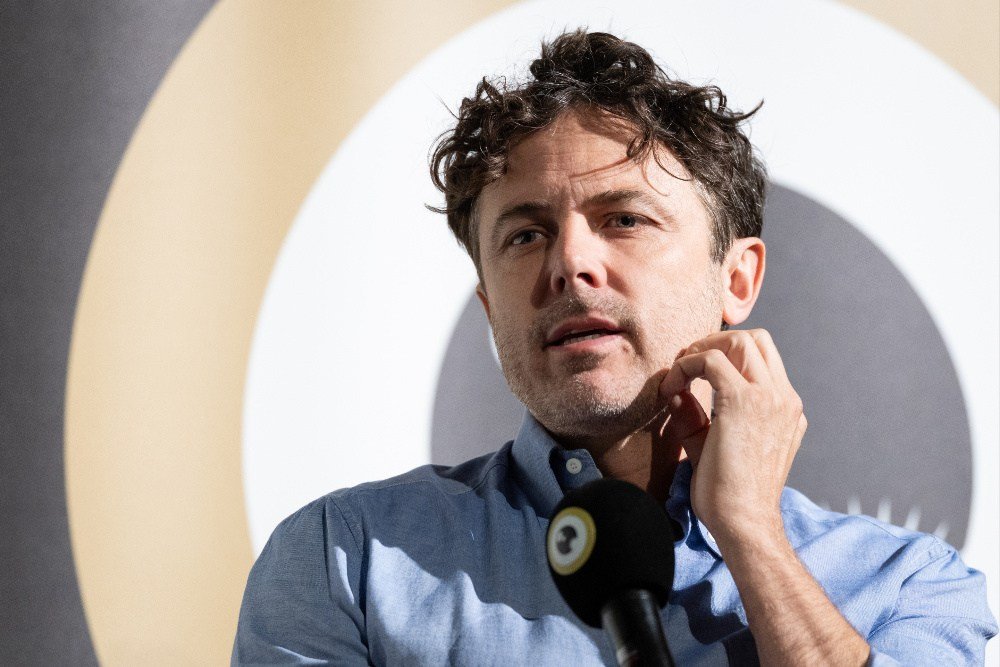
Don’t bother calling Christopher Nolan to ask about his films – Casey Affleck already has, and “it was probably a mistake,” he told the audience during an onstage interview at the Zurich Film Festival on Monday.
“I was driving back from school with my son. We were talking about ‘Tenet’ and disagreeing. I said: ‘Let’s settle that,’” said Affleck. He worked with Nolan on “Oppenheimer” and “Interstellar.”
“We got him on the phone and asked him something that we could have easily looked up on Reddit. Once he said it, it sounded so obvious I felt embarrassed. That was it. I haven’t called him again, and he hasn’t called me.”
“Maybe he will call now and ask me about my movie [‘Company’]: ‘What were you thinking’?!”
Working with Nolan was special, he said. “It was an honor, really. Everyone feels that way. When you are on his set, it’s different from other movies. He’s inclusive, and gives minimal but brilliant directions. He elevates everyone around him.”
Affleck has now directed three films and appreciates Nolan’s approach to work.
“I don’t have a careerist orientation to my thinking, which is not a humble brag. I just wouldn’t know where to start. Nolan is a great example of that. He makes these gigantic, hugely popular, successful movies, but I don’t think he makes things just to please other people. I don’t want to put words in his mouth, but he makes things that interest him.”
“If I can do that, I’d be lucky,” he added.
His brother, Ben Affleck, is another example of “someone who has been very smart about the movies he chooses.”
“Ben’s smart about making his films successful, but he’s not pandering. I know it because I’m there when he says: ‘I have an idea, but I’m not sure if I’m going to like it.’ It’s not: ‘I have an idea, but I am not sure I’ll be able to sell it.’”
It wasn’t the only time Affleck discussed his loved ones during the discussion. His recent anthology, “Company,” stars his mother, partner and sons.
“Neither one of them really wanted to be in it,” he laughed. “Then my son Atticus said: ‘It’s during my spring break, so if you want me to do it, I’ll do it.’ Like he was doing me a favor. Strangely, he took all my directions without arguing, which is not the nature of our relationship.”
Sadly, Affleck’s parents didn’t get to see the film before they passed away. He still dedicated it to them, though.
“I would rather just work with the people I love. I highly recommend it. For many years, I would leave them, shoot the film and miss them. Now, I plan on including my friends and my family as much as possible.”
“Company” also stars Nick Nolte, Ben Mendelsohn, Adelaide Clemens and Scoot McNairy.
“As far as I can tell, Nick is 130 years old. Not because he’s old, but because I don’t remember a time when he wasn’t in movies. He’s still completely committed. We have so many actors in their 20s, 30s and 40s. It’s really nice to see someone portray, so vulnerably, someone at the top end of life.”
Despite its world premiere in Venice, “Company” isn’t finished just yet.
“I thought: Maybe a film festival can be a place where people share their work with the community, get feedback and then finish it? As a director, it’s scary to bring a movie I’m still working on, but there are things I want to change.”
Despite his successes as an actor, Affleck has always been seen as “the outsider.” He was labeled this way in a 2016 Variety cover story as well.
“I remember that. It made me mad,” he said.
“I thought: I will forever be thought of as an outsider, no matter what I do. The public thinks of people one way, and it takes a lot to change that perception. And then I went: Am I crazy? I love that. I don’t want to be ‘an insider’ in Hollywood. It’s not a great culture. I don’t love the films made there or the system.”
He won an Academy Award for Kenneth Lonergan’s “Manchester by the Sea,” but Oscars night itself was a scary experience.
“I was expecting Denzel Washington to win [for ‘Fences’]. It was a terrifying moment to have to stand on that stage. I can’t remember anything I said. But I do remember that I didn’t thank all the people you are supposed to thank. I didn’t thank Kenneth, didn’t thank my kids who encouraged me to make the movie and supported me the whole time. It was mildly traumatic,” he recalled.
“I remember walking off the stage and seeing Leonardo DiCaprio standing in the wings. I was still stuck in a moment of terror and disorientation, and he was just laughing and gave me a big hug. Then I felt better.”
He said: “There’s an illusion of choosing the path you want to be on. The path is choosing you.”
“You have to find your way and make all these mistakes. Make bad movies, take chances and give bad performances, not get the jobs that you wanted and watch other people get jobs that you wanted. The thing about being an actor is that you can take all your hard feelings with you and make something with it. It’s the best part of the job.”
The Netflix series adaptation of “Icebreaker” has found its two leads.
Variety has learned exclusively that Daisy Jelley and Connor Simos will star in the series take on the Hannah Grace novel of the same name in the roles of Anastasia “Stassie” Allen and Nate Hawkins, respectively. The show was originally announced at Netflix back in June.
The logline for the show states, “She’s the transfer gunning for Olympic gold. He’s the campus star chasing the NHL. But when an accident forces their teams to share one rink, Anastasia Allen and Nate Hawkins collide—and discipline gives way to obsession, because the only thing more dangerous than wanting to win is wanting each other.”
Jelley previously appeared in the Netflix series “Geek Girl,” which was itself based on the YA novel of the same name, while she will also star in the upcoming original series “Poser” at the streamer. In film, she has been in features like “How to Have Sex.” “Icebreaker” will mark Simos’ first credited TV role. He will next be seen in the thriller film “Subversion,” which stars Chris Hemsworth and Lily James.
Jelley is repped by Olivia Bell Management, Strand Entertainment, and Yorn Levine Barnes. Simos is repped by Echo Lake Entertainment.
Amanda Lasher and Jade Halley Bartlett are both attached to write and executive produce the adaptation, with Bartlett credited as the creator and Lasher set to serve as showrunner. Alex Cooper, Matt Kaplan, and Mina Lefevre will executive produce via Unwell Productions, with Grace also executive producing.
“Icebreaker” is the first of three novels that Grace has published in the Maple Hills series, which are set at the fictional University of California, Maple Hills. “Icebreaker” spent 70 consecutive weeks on the New York Times bestseller list. It was originally published in 2022 with a wide release in 2023. The book has sold nearly 5 million copies worldwide.
The series comes as audiences have become more and more enamored with romances set at the skating rink. “Heated Rivalry,” about two pro hockey players engaged in a secret love affair, took the world by storm when it was released in late 2025. Amazon also recently released the series “Off Campus,” the first season of which follows a star college hockey player and his relationship with a music student at the same school. Both shows are based off of book series.
Netflix has also found great success with adapations of popular novels, like “Bridgerton,” “The Queen’s Gambit,” and “To All The Boys I’ve Loved Before.”
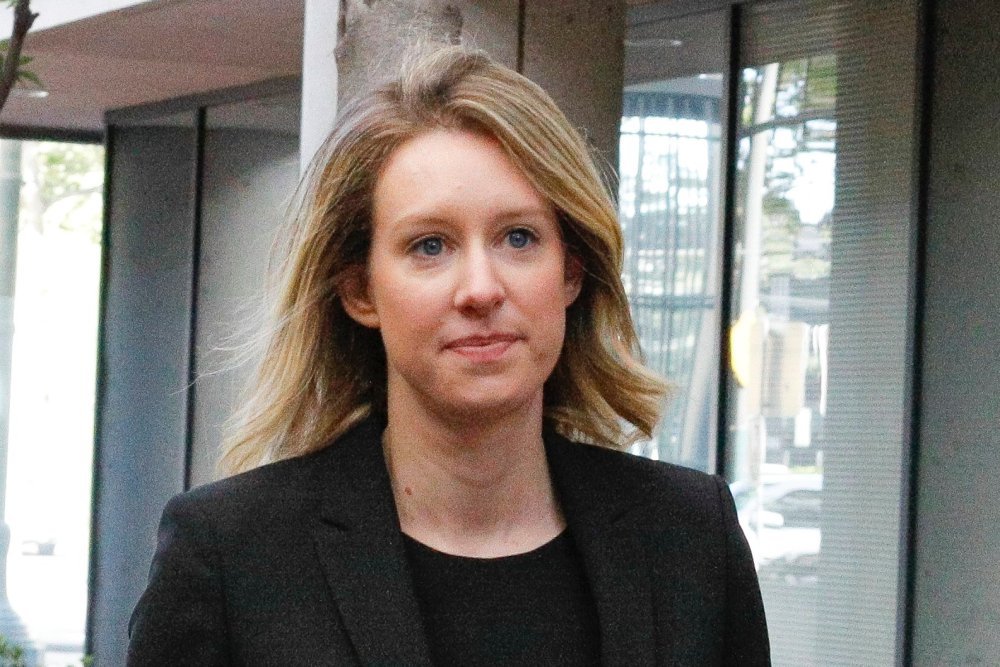
Theranos founder Elizabeth Holmes, who’s been serving an 11-year prison sentence for fraud, posted a mysterious message on X ahead of moving to a halfway house and the release of a new documentary about her, “You Can See Everything,” from Nathan Fielder and Lance Oppenheim.
Holmes has still been active on X since her 2022 sentencing thanks to her social media team; her bio says “mostly my words, posted by others.” Now, it seems the businesswoman, fraudster and documentary subject will be posting her some of her messages herself.
“I was silenced for a long time. And then imprisoned. I am fighting to prove my innocence and come home to my babies and the love of my life. I have now been imprisoned for 1,216 endless days and nights. During that time, as we fight for freedom, my loved ones have helped manage my account. Billy is one of the people carrying that responsibility for me. He fights fiercely for me and our family. I love him beyond space and time. Starting now, all posts in my own words will be marked -EAH. Posts without that signature are from the team managing this account.”
I was silenced for a long time. And then imprisoned. I am fighting to prove my innocence and come home to my babies and the love of my life.
I have now been imprisoned for 1,216 endless days and nights. During that time, as we fight for freedom, my loved ones have helped manage… pic.twitter.com/o9FsePYlaZ
Holmes, who signed the post with her initials “-EAH,” shared a photo of herself and her partner Billy Evans, with whom she has two children. In “You Can See Everything,” she and Evans invited Fielder and Oppenheim into their home ahead of Holmes’ prison sentence to document their lives. The A24 film releases on Oct. 16, but it’s already drawn huge buzz after its surprise debut at this month’s Telluride Film Festival. It will screen at the New York Film Festival this week.
Holmes’ post also comes on the heels of her announced move to a halfway house next summer. Last week, a judge approved Holmes’ transfer too the Austin Transitional Center, a halfway house in Del Valle, Texas, on August 23, 2027. She’s been staying at the Federal Prison Camp, Bryan, a minimum-security facility in Bryan, Texas, and is scheduled to be released on Feb. 22, 2030, roughly four years early due to good behavior.
“I am profoundly grateful for the support we receive as we fight to expose the truth and challenge deeply entrenched perceptions,” Holmes wrote. “Opening letters from my supporters at the end of unforgiving days constantly ignites the fire in my heart. ‘The truth will set you free.’ John 8:32.”
Harnessing its might with a merged All3 Media for the first time at a market, Banijay Entertainment hits Mipcom 2026 with the biggest presence of any company in the world, with its stand in front of the steps of the Palais des Festivals now rebaptized Banijay House, and a formidable combined lineup.
One example of that: Banijay’s format franchises now offer “The Traitors,” “Survivor,” “Fear Factor” and “The Circle” under one roof. Former All3Media titles impact every sales category from “Maya” in premium scripted to a bevy of Studio Lambert titles, “Midsomer Murders” and “The Assassin” in returning favorites, two Lion TV docs in factual and its “Legends” in Netflix shows.
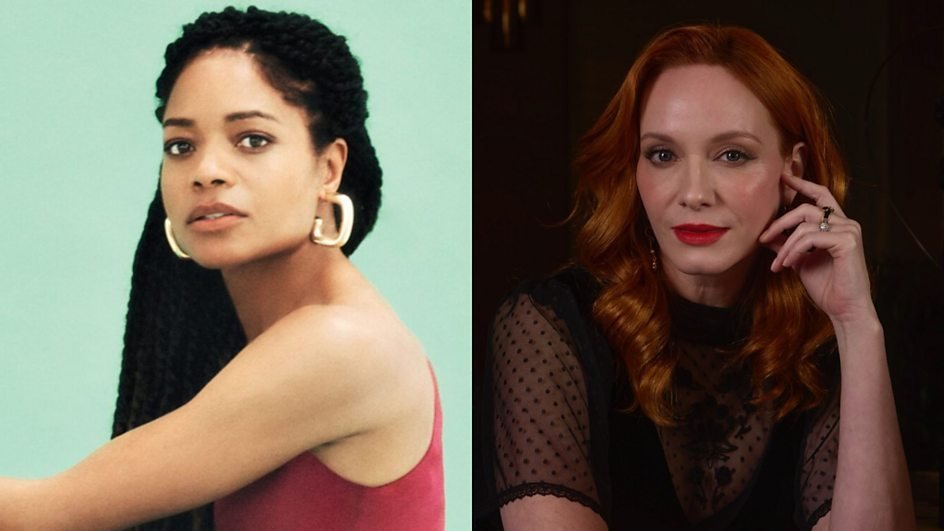
In other developments, Banijay will present what it describes as “highly anticipated premium scripted staples and versatile next-gen formats,” the first led by BBC One legal thriller “Reputation,” starring Naomie Harris and Christina Hendricks, and U.K. high-stakes thriller” “Maya” also headed by Tobias Menzies (“Outlander”) and marking one of the latest incursions by Starz into U.K. drama.
According to Plum Research, a stunning 90% of views and 75% of titles viewed on streaming services takes place on the long tail. Potential evergreens from Banijay to be shopped at Mipcom include “Rogue Heroes,” “A Remarkable Place to Die,” “A Woman of Substance,” “Bergerac,” “Midsomer Murders,” “The Assassin” and more.
Underscoring Banijay Entertainment’s position as the world’s leading provider for streamers, the company argues, upcoming Netflix releases include “Beat Luke Littler” from Workerbee, Netflix, “Will You Marry Me?” co-produced by Workerbee and Initial, “Simon Says” from Bunim/Murray Productions and Studio Lambert’s “Monopoly.”
Further Netflix launches take in returning scripted hits House of Guinness from Kudos and Legends co-produced by Tannadice Pictures and Lion Television.
“Mipcom 2026 marks a major milestone for Banijay Entertainment – our first distribution showcase as a combined group, and the first opportunity to unite the full force of our creative talent, standout catalogue and exceptional pipeline of new IP,” said Cathy Payne, CEO Banijay Rights.
“Bold, distinctive and built to travel, our offering reflects our expanded strength across English-language and premium content, and position as a go-to for buyers for every genre, every screen and every platform,” she noted.
“As an expert franchise-builder with a world-leading catalogue of culture-defining brands, we are harnessing the collective strength of our global creative community to develop and roll out the next wave of standout IP and cross-platform originals,” added Banijay Entertainment’s James Townley, Chief Content Officer, Development and Lucas Green, Chief Content Officer, Operations.
“We’re talking fresh ideas with cut-through potential, iconic brands reimagined for new audiences and entertainment designed to travel across screens, platforms and generations. This is Banijay Entertainment: greater in scale, bolder in ambition, and built to create the hits of tomorrow,” they went on.
A drill-down on some of Banijay’s biggest drama plays at Mipcom and a selection of factual shows and formats:
Premium Scripted
“Reputation”
A pedigree package bound for BBC One and BBC iPlayer and sourced from Banijay U.K. scripted powerhouse The Forge Entertainment (“A Woman of Substance,” “Falling”). Billed as a gripping legal drama, it stars Naomie Harris (“Skyfall”) as a hot-shot lawyer hired to represent international pop star Davina Knight (“Mad Men” leading light Christina Hendricks) in the celebrity case of the decade. Anya Reiss (“Becoming Elizabeth”) writes and exec produces.
“Maya”
From “Fleabag” producer Two Brothers Pictures for Channel 4 and Starz and sparking good word of mouth when teased at February’s London TV Screenings, “Maya” led by Ramsey and Daisy Haggard, weighs in as a witness protection thriller billed as “darkly comedic” and “atmospheric” written and created by BAFTA and International Emmy nominee Haggard (“Back To Life,” “Breeders”). She also co-directs the series from Two Brothers Pictures (“The Tourist,” “Fleabag,” “Boat Story”) alongside Jamie Donoughue (“Doctor Who,” “The Last Kingdom”).
‘Maya’
Bella Ramsay and Daisy Haggard Courtesy of All3Media Intl.
“Open Water”
Commissioned by the BBC, an adaptation of Caleb Azumah Nelson’s multi award-winning debut novel of the same title from Mam Tor Productions, behind “Half Man,” and B-Side Productions. An ode to early love adapted by Azumah, tracking the increasingly deep relationship between budding photographer Marcus and dance student Effie. “Deeply romantic,” Banijay promises.
“Wallander”
A modern-day Swedish-language reboot, here Gustaf Skarsgård (“Oppenheimer,” “Vikings”) plays the iconic sleuth across three 90-minute films as he life seems to unravel: 42, divorced and estranged from his daughter, his father is also slipping away, Adding further key cast earlier this year, produced by Jarowskij/Yellow Bird, Swedish network TV4 and Banijay Rights and written by Antonia Pyk (“Beartown”), Josefin Johansson (“Top Dog”) and Jörgen Bergmark (“Huss”) Molly Hartleb (“Top Dog”) directs.
“Counsels”
Co-created by Bryan Elsley, creator of the landmark “Skins,” a BBC One multi-strand young legal hotshots drama tracking five fellow trainee lawyers in Glasgow. now hitting their disparate first jobs. Made in association with All3Media International, a play for a younger crowd co-produced by Germany’s ZDFneo, its Millennial/Gen Z targeting channel. A standout at Series Mania’s Buyers Upfront in March and part of the BBC’s recent investment in drama in Scotland.
Further Banijay Hulu titles take in “The Mob” from Studio Lambert and Primal Media and for Prime Video is “The Grand Tour· from Studio Lambert, “The Crouches” from Workerbee, Pokeepsie Film’s “Drawn Together,” a hit staring Ester Expósito (“Elite”) and LOL: Last One Laughing, produced by Banijay Entertainment labels in 11 territories.
Third party shows include reality series “Werewolves,” from Studiocanal, a hit on Canal+, and obstacle-course-set physical process competition “Ninja Warrior” from Tokyo Broadcasting System (TBS), whch joins Banijay’s superbrands.
The title underscores Banijay’s push into sportainment, with, for example, licensed non-live sports programming on the six global streamers growing from around 5,000 hours second quarter, 2022 to 12,000 hours Q4 2025, according to Ampere Analysis.
Banijay Rights brings to the table titles such as “Counsels,” “Careless” from Synchronicity Films and Easy Tiger for Stan and Channel 4; “The Northumbria Mysteries” from Lonesome Pine for the BBC; “Monarch of the Glen” from Ecosse Films for Channel 5 and PBS Masterpiece, alongside hits “All Creatures Great and Small,” “Black Snow,” “Maigret” and “Trigger Point” among others.
Formats
“Date Knight”
A new flagship dating reality addition to Banijay’s Mipcom slate, “Date Knight” invites singles via roleplay to become knights, elves, witches and warriors, “forging connections and taking chances on love in ways they might never dare to in real life.” But can love survive when participants return to their real-life personas? From Denmark’s Nordisk Film TV, a Banijay company, “visually ambitious, emotionally engaging,” says Townley. A distinctive show touching on universal relationship issues.
‘Date Knight’
“100 Knives”
Billed as the “largest cooking show in history,” “100 Knives” is backed by two Banijay companies, Mastiff Sweden (“Love is Blind”) and Bunim/Murray Productions (“Keeping Up With The Kardashians”), as well as Smart Dog Media (“The Masked Singer”). Made for Sweden’s TV4 it weighs in as a high-pressure culinary smackdown where 100 chefs, from food truck owners to fine dining apprentices, split into brigades as they face escalating challenges. Following TV4’s Swedish commission, a Danish adaptation has been confirmed with Metronome, part of Banijay Nordic, for TV 2.
“Last One Standing”
Co-developed by RTL Creative Unit, a co-producer on “The Traitors,” Banijay’s SimpelZodiak for Videoland, and part of Banijay’s drive into “sportainment” formats such as soccer survival series “Football Island,”Townley has noted. That title, moreover, is cruelly literal. Set against a desert-like backdrop, celebrities live take on elite-level trials thought up by top athletes until they drop or beg out.
“The Million Dollar Idea”
A brand new format announced this July, created by Endemol Shine Germany, behind “Staying Alive,” for SAT.1 everyday inventors transform brilliant idea into market-ready products. Or attempt to. “Everyone can relate to the excitement of having a great idea and imagining what it could become. ‘The Million Dollar Idea’ taps into that universal ambition and turns it into uplifting entertainment,” Townley has said.
Factual
“One Born Every Minute”
Capturing the drama of birth in a hospital labor ward, the revival of the observational doc series which ran for 11 seasons on Channel 4 over 2010-18, scoring a BAFTA for Best Factual Series, and hitting a its height five million viewers. Dragonfly once more produces the 12-episode return for the U.K.’s Channel 4 and E4, a series renewal which will highlight evolving family dynamics, advances in maternity care, and the real-life challenges faced by NHS staff in 2026, say E4 and Dragonfly, a Banijay company.
“A Beautiful Obsession”
Oscar-winning director Kevin Macdonald (“One Day in September”) charts the human drama of Pep Guardiola’s tumultuous two final seasons at soccer club Manchester City made for Prime Video, Brad Pitt’s Plan B, Workerbee,a Banijay company, and City Studios, part of the soccer club, but with a development deal with Sony Pictures Television. “Pep playing himself is a bit like having Robert De Niro play a football coach,” McDonald told Deadline.
Pep Guardiola in ‘A Beautiful Obsession’
“Meet the Owens”
One of England’s best young soccer player in history before injury, Michael Owen is now battling to turn his owning horses – 140 – into a business. “Meet the Owens” catches up with Owen, a self-described “boring prick,” wife Louise, and four children, including “Love Island” star Gemma, mostly at Manor House, a Cheshire stables owned by the family. Produced by Whisper “Sven,” “Built in Birmingham: Brady & The Blues”) for Prime Video UK.
“Riddled With Plastic” (w/t)
Presented by biologist Liz Bonnin, behind 2018’s “Drowning in Plastic,” this doc feature for BBC Two and BBC iPlayer which follows a world first experiment at the University of Lincoln and Brighton and Sussex Medical School, where scientists dissect a human body to better understand how much microplastic is in it, and where it is.
“The Epstein Files” (w/t)
Another title from Lion TV, now a Banijay company, for Channel 4, presented by Emily Mathis who famously interviewed Prince Andrew about his links to Epstein in 2019. The docuseries includes firsthand testimony from survivors and what is described as forensic analysis of the documents, networks and powerful individuals connected to Epstein.
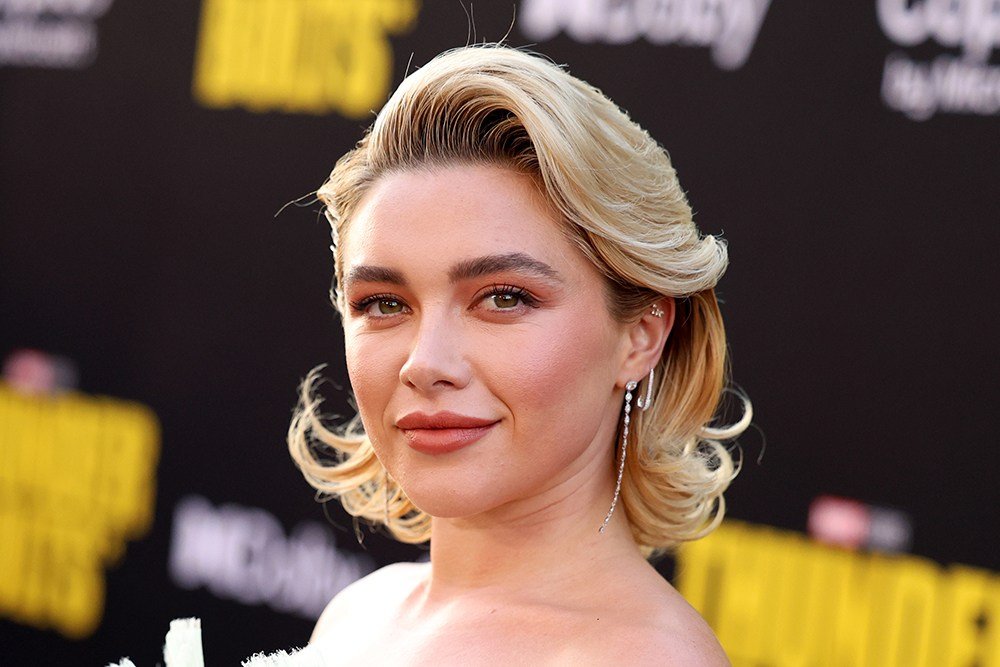
Florence Pugh has posted a lengthy statement on social media in response to a controversy that has erupted at Cornell University over an alleged sexual assault incident that took place two years ago.
Last week, news broke that a former Cornell student had accused seven men of raping and drugging her at a frat house party in October 2024, allegations that were only made public after she filed a lawsuit against the college. According to her attorney, after an investigation at the university, two of the accused were expelled with the remaining students received lesser sanctions, such as temporary suspensions, workshops or essay-writing assignments. Nobody was arrested.
The former student — identified as Jane Doe and 20 at the time — is now suing the school and the fraternity members, claiming they failed to protect her and prevent the alleged assault.
In a post on Instagram on Sunday, Pugh described described the incident as an “horrific act,” adding that she knew “this has happened before, and I hate the idea of it happening again.” She also urged men to speak out and to be “leading conversations about how we change the allowance and complicity of this behaviour as much as we are.” She concluded: “Be angry for us. Please.”
The statement from Pugh comes just days after she outlined her long-standing support for Palestine, telling Vanity Fair that she didn’t know “why it took so long for people to start talking and for people to actually feel sympathy.”
Read the full Instagram post from Pugh below:
After reading about the young woman who was gang raped at her college by her friend and school peers, I’m feeling uneasy and sick and anxious. I’m processing quietly and watching everything and everyone and every man. I have a few thoughts on this horrific act that happened at Cornell College in 2024. I know this has happened before, and I hate the idea of it happening again.
This is really the moment where we need our men to be as horrified and as sickened as us. You need to be leading conversations about how we change the allowance and complicity of this behaviour as much as we are. How can you expect us to trust that it’s “not all men” when in moments like this, many of you stay quiet?
A drugged gang rape takes action and conversations. It immediately makes me wonder- had it been in the works for a while? Was the damage of this poor woman’s body thought about over and over before? Every single person who knew or heard about this happening, should be looked at with serious concern. They are as evil as those planning it. To know that a torture as violent as rape is about to happen ‘upstairs’ and not do ANYTHING ABOUT IT, is sick, cowardly and cold.
The thing that makes me most heartbroken, is it’s a want to kill a soul. This is a killing of a soul. Destroying of a body and killing of a soul. And they’ve been let off? All it takes is write a quick ‘I’m so sorry I raped a girl while she was drugged with my friends, we thought it would be fine?’ essay and you’re good to go! This is unacceptable.
We are not hard enough on those that want to damage human lives. I salute all those at the college that are fighting for that girl, exposing those boys and making life unbearably impossible to find joy during their terms. They should not be allowed to walk freely like the rest of us who treasure and care for souls.
Colleges/schools/universities repeatedly fail women around the world. You build men that get taught through time and time again that they can do extreme harm and that they won’t be harmed in return.
I’m no longer tired – I’m enraged by schools protecting boys, in fear of their futures being wrecked. What about the life that those girls then have to endure, with the knowledge that his reputation is more precious than her truth? Or to feel that no one with the power to do something cares that you were abused. It’s further soul-destroying.
Those that protect and lightly sentence men that rape and destroy, should be punished and watched closely. Why are you protecting someone that fiercely?
There is no equality until you respect our bodies. There is no equality until you stop damaging our souls. There is no equality until you let us live. There is no equality until we can say we feel safe. We are the life force of this earth, start ****ing protecting us. Be angry for us. Please.
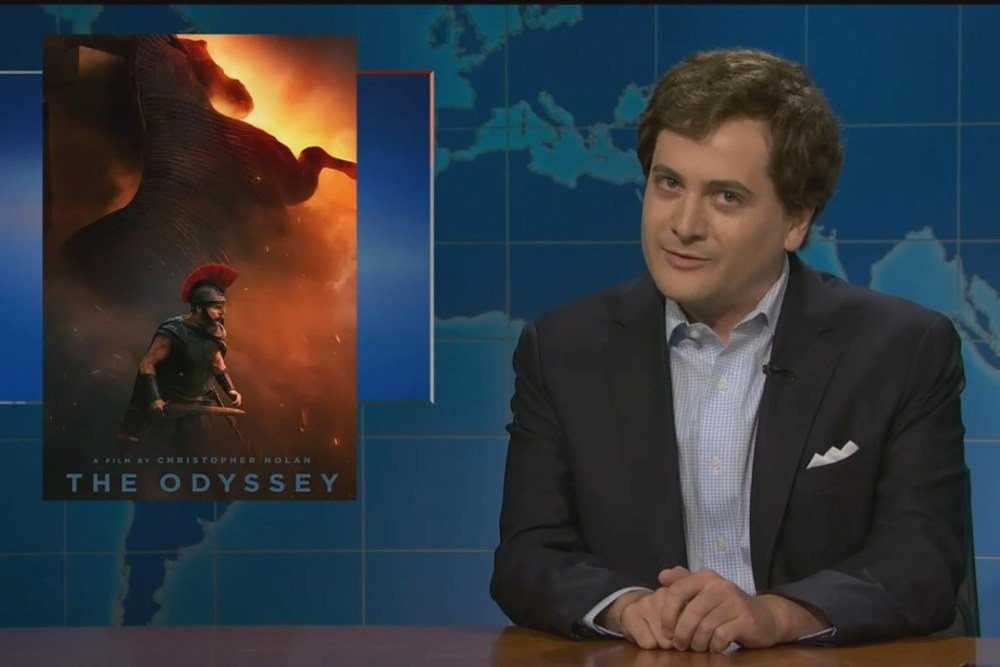
On the first “Weekend Update” of “Saturday Night Live” Season 52, Jeremy Culhane revived his fan-favorite impression of Tucker Carlson to offer his thoughts on some of the summer’s biggest blockbusters.
On “The Odyssey,” Carlson mentioned the specialty format of Imax 70mm, saying, “The Hollywood cabal shoots its filth with millimeters — or as I like to call it, the gay inch.” He added, “I like ‘The Odyssey.’ It’s so nice to see Greek people do something other than make women feel uncomfortable.”
Carlson then turned his attention to the biggest movie of the year, saying, “Everybody loves ‘Spider-Man: Brand New Gender.’”
“That’s not what it’s called,” Colin Jost asserted, but the conservative commentator was already inventing a theme song: “Spider-They, Spider-Them uses whatever bathroom it feels like.”
Carlson then congratulated the movie’s stars on getting married, but stopped himself as he said, “I now pronounce you Mr. and Mrs. — huh? She refused to take his last name.”
As Jost reminded him that Zendaya “doesn’t have a last name,” Carlson said, “But where did it go? And who took it? And why? Sorry kids, you don’t get two names anymore. You only get one name, like a dog. That’s the rule. That’s the goal now.”
When asked about “Obsession,” Carlson said, “The left’s idea of a horror movie — that a woman is forced to love a man. Oh, no, help! I’m being chased by a heterosexual relationship! Is this what we want? I don’t. Do you? You shouldn’t. But you do. Why? Is that allowed? Maybe.”
Carlson continued on, equating “Minions and Monsters” to “Trump’s cabinet” and then saying, deadpan, “That’s right. I’ve turned on Trump. I’m so brave.”
And, finally, the pundit made a raunchy “Toy Story 5” joke. “You’ve got a friend in me?” Carlson asked. “And his name is Woody?”
Culhane debuted his Carlson impression in Season 51 of “SNL” and reprised the character on “Weekend Update.” This marks the third appearance of the character. Watch the segment below.
Jia Zhangke will turn his attention to location scouting and production design for his next film, road movie “Mamma Dunhuang,” once the 10th Pingyao Crouching Tiger Hidden Dragon International Film Festival wraps on Sept. 30.
As revealed by Variety, the film follows a woman who drives from Dunhuang, in western China near Central Asia, all the way to the sea. It is set to shoot in early winter.
“I really love western China, and I go to Dunhuang quite often. Dunhuang was a vital transit hub on the ancient Silk Road, keep going west and you can arrive in Rome. Yet, it is so far from the ocean,” Jia tells Variety. “So this whole film is a continental story that starts in Dunhuang and travels from the west to the eastern coastline – she drives until the sea comes into view.”
Zhao Tao, who won the David di Donatello Award for best actress for “Shun Li and the Poet,” will once again lead a Jia film, playing a homebound woman who uses AI to help her on the journey.
“I will not use AI in making ‘Mamma Dunhuang,’” Jia says. “It only plays a role in the story.”
Jia founded the Pingyao festival, which marks its 10th edition this year. He says that although it’s only been a decade, “the changes in the broader film ecosystem and the media landscape, as well as technological advancements, are drastic. Pingyao has remained nimble. We’ve been able to adapt continuously alongside the shifts in the film industry and surrounding media, capturing new developments for our curation. Looking ahead, I believe cinema will continue to evolve rapidly, so we will maintain this festival’s agility in the future. That very flexibility allows us to respond in real time to the most pressing cinematic and cultural topics on people’s minds today.”
Jia wants Pingyao to remain a haven for cinephiles rather than a hall of fame. Where most international festivals program hundreds of films, he intends to keep Pingyao’s lineup lean, built around the year’s newest boutique titles, so the spotlight falls on the selected films and helps them reach the market. This year’s official program has just 51 films.
“As a festival, not only must it have great programs, but also a vibe of equality, freedom, and ease, setting a tone where the filmmakers and audiences can merge together,” Jia says. “We put effort into bringing in films with great artistic value, and meanwhile cover as many countries and regions as possible, prioritizing regions less familiar to Chinese audiences, such as northeastern Europe and South America, hoping to introduce a broader spectrum of cinema to the Chinese audience.”
Pingyao’s online ticketing system logged more than 70 million visits this year.
Jia says part of the problem is Pingyao’s limited capacity, as the ancient city “is protected as a UNESCO World Heritage [Site]. We’ve been working on building one more theater, ideally inside the ancient city walls, with 300–500 seats to enlarge the capacity. But it is very difficult to realize this plan, we are still discussing.”
For its fifth edition, the festival partnered with visual artist Xu Bing on “AI-IF,” a project that invited audiences to make films using AI. Jia says the festival’s AI projects have all been exhibitions, and none of this year’s official selections were made with AI.
“We’ve been prudent,” Jia says. “But we maintain an open, observant, and inclusive stance toward AI. When it comes to technology advancement, each of us holds a different perspective, but there should be one fundamental attitude: we must understand and discuss it, not shy away from it. Pingyao upholds a spirit of prudent inclusivity.” Earlier this year, Jia created an AI-generated video.
Jia also co-founded Unknown Pleasures, a Chinese art-house distributor named after his 2002 film, and says the company is negotiating to acquire two Cannes titles. In June, it announced deals for Russian auteur Andrey Zvyagintsev’s “Minotaur” and French cinematographer Marine Atlan’s debut feature “La Gradiva.”
“We hope Unknown Pleasures’ acquired titles all have a great showcase in Pingyao,” Jia says.