Tag: Entertainment – Variety

  • Karla Sofía Gascon, Itziar Ituño Set for Political Fantasy Satire ‘When Devils Rule’ from Spain’s Atlantika Films (EXCLUSIVE)

    Karla Sofía Gascon, Itziar Ituño Set for Political Fantasy Satire ‘When Devils Rule’ from Spain’s Atlantika Films (EXCLUSIVE)

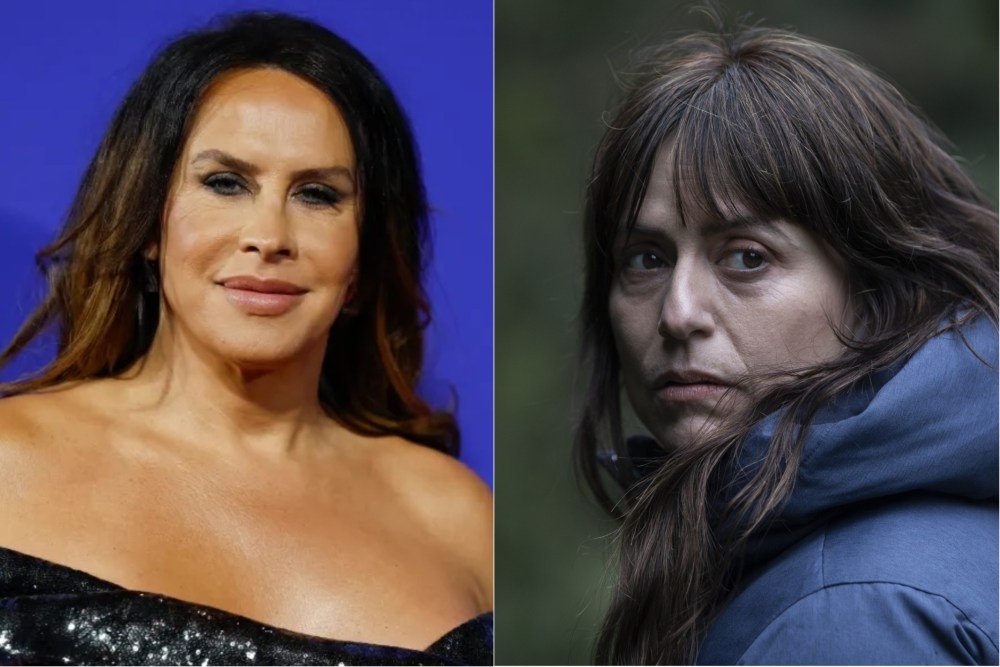
    Karla Sofía Gascón, Oscar-nominated for “Emila Perez,” and Itziar Ituño of “Money Heist” have committed to star in the good vs. evil Spanish TV show “When Devils Rule” (“Los demones mandan”), to be pitched at Tallinn’s TV Beats Co-Financing Market running Nov. 16-17.

    The six-parter, currently in development, will reunite Ituño with helmer Rodrigo Susarte (“Hidden Island,” “Gen Mishina”) and production banner Atlantika Films, behind the anticipated Movistar Plus Original “Patagonia,” set to premiere in January 2027.

    Created and produced by Atlantika founder Nano Arrieta — long-time collaborator of Oscar-winner Fernando Trueba — and Claudia Ruíz, it’s a contemporary thriller spiced with supernatural, fantasy, folklore and satire, in which “demons hide in plain sight, manipulating the powerful and pulling the strings of a world sliding into chaos,” states the logline.

    Arrieta — who’s currently drafting the pilot script with Basque screenwriter Ibai Ariztegi — said the storyline is loosely based on prominent Argentine author Manuel Mujica Lainez’s novel “The Journey of the Seven Demons.”

    The project is using William-Adolphe Bouguereau’s painting ‘Dante and Virgil’ as promotional material.

    Courtesy of Industry@Tallinn & Baltic Event

    “In the book, the demons are basically settled in Hell because they have already done their job, and the Devil sends them back out into the world to collect souls. But looking at the world we live in today, our feeling was: the demons are already here. You only have to look at genocide, the rise of fascism, political extremism and everything that is happening around us,” he told Variety.

    Rather than doing a literal adaptation, the creators kept the book’s DNA and tweaked the ideas of evil, temptation and power with a contemporary twist.

    However, as Arrieta stressed, the series is fundamentally built around four heroines. “Those women come from a very ordinary, working-class environment, but whose jobs actually represent some of the pillars that keep society functioning. One works in care, another in education, another in healthcare and another in journalism,” Arrieta explained.

    Gascón will play Manuela, a teacher in an elite school, and Ituño the the role of Evita, the personal secretary to the prime minister of the series’ fictional country.

    Connected through a community center, the women are helping neighbors and migrants, stepping in where institutions fail. They will try to unmask and chase away the demons in human disguise, embedded within society.

    Commenting on the casting of Gascón, Arrieta said: “I have known Karla for some time, and she has always been extremely generous with us. We had been looking for the right project to work on together because it needed to be something ambitious, something with real quality and something that genuinely made sense for her. And it feels like this may be that project.”

    About Ituño, with whom he just collaborated on the forthcoming eco-thriller “Patagonia,” Arrieta said, “Working with her is genuinely a joy. She is incredibly intelligent, generous and instinctive as an actress, and on a personal level she has also become a very good friend.”

    “Having both of them together is obviously incredibly exciting because they are two very powerful actresses, but they also have very strong personalities and voices beyond the screen, which feels completely aligned with what the series wants to talk about,” he argued.

    The remaining key cast is in negotiation.

    Financially, Arrieta said around 60% of the Spanish production costs would be covered by Spain’s Basque region tax incentive. He is now actively looking for “platforms, broadcasters, financiers, creative or production partners who want to come on board at the development stage and help us build the strongest, highest quality version of the series possible.”

    At Tallinn’s TV Beats, the series strand of the Black Nights Film Festival’s Industry@Tallinn & Baltic Event sidebar, “When Devils Rule” will vie for the €50,000) ($56,000) Council of Europe Series Co-Production Development Award.

    Atlantika Films’ “Patagonia” is repped at Mipcom by ZDF Studios.

  • YouTube’s Virtues, Industry Consolidation, Christie Brinkley and ‘Baywatch’: Trends and Themes From a Busy Mipcom

    YouTube’s Virtues, Industry Consolidation, Christie Brinkley and ‘Baywatch’: Trends and Themes From a Busy Mipcom

    A new virtuous circle is emerging for media and entertainment giants that promises to harness the advantages of disparate platforms, digital and linear, powered by the connective tissue of YouTube.

    This was one of the dominant themes that emerged in four whirlwind days of panel sessions, closed door meetings, networking and schmoozing events up and down the Croisette as top industry players from Europe and beyond gathered in Cannes for the annual Mipcom content market and conference.

    The growing muscle that YouTube flexes as the video crossroads of the world was a near-constant subject of conversation. Google’s streaming behemoth is becoming ever more integral to media development, distribution and marketing plans for most contenders in media, from the biggest Hollywood studios to indie startups.

    Evan Shapiro, the respected industry analyst who is often billed as a “media cartographer,” gave a well-attended presentation on Wednesday morning that drew together threads probed in various tracks of the conference. Shapiro’s session offered sobering stats about the changing nature of viewing audiences. The older contingent of media and entertainment leaders have to come to grips with the fact that the world’s population is getting younger. That means they need to cater to consumers who have come of age with technology in their pockets and a very different worldview on how, when and why they consume media in across different mediums and platforms.

    At the same time, Shapiro pointed to hope on the horizon for legacy media outlets.

    “We believed television would be replaced by streaming 1 for 1 — that didn’t happen,” he said. Streaming and social video have augmented viewing time and even more important, they help deepen fan connection to their favorite shows. Shapiro emphasized more than once that media giants courting audiences need to think in terms of generations and affinity groups, not the age and gender demos of yore.

    “Now consumers have an infinite number of channels. Every human with a phone is a channel,” Shapiro said. It’s the age of “personalized television through a combination of your phone and your television set.”

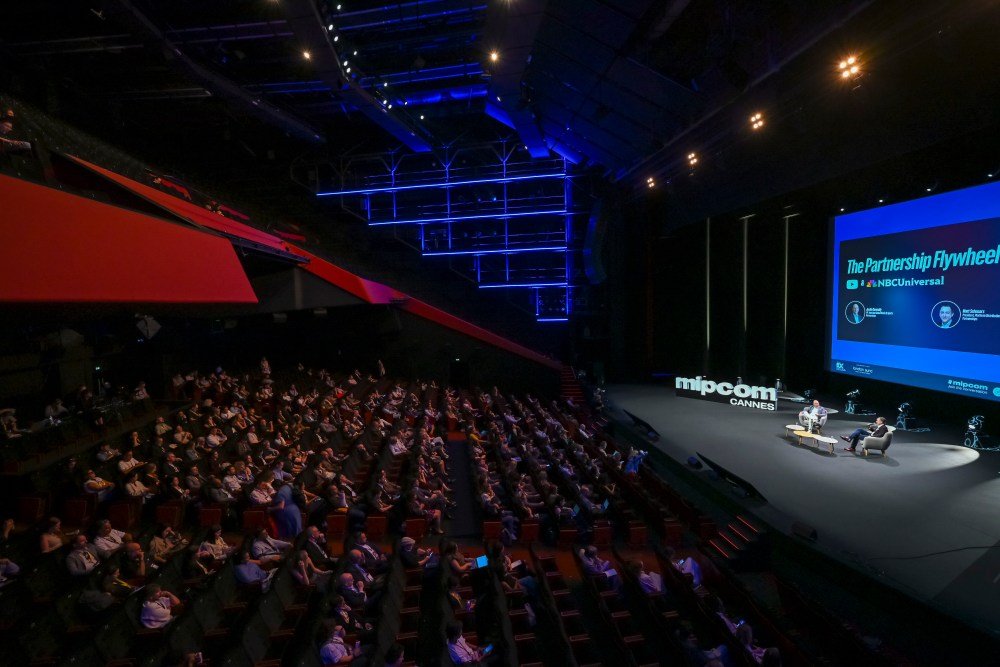
    Matt Schnaars, president of platform distribution and partnerships for NBCUniversal, reinforced Shapiro’s observations in a separate session.

    “The embracing of social media platforms, starting with YouTube, to drive people back to live viewing, we see that in results. We see that in audiences,” Schnaars said. “When we look at YouTube … [they] are an example of somebody who’s in really every business that we’re in, but not in a way that’s competitive. It’s accretive and incremental. And so we get excited.”

    NBCUniversal is windowing some of its most prized, fan-favorite content – college football – on YouTube. The Peacock streaming platform shares its weekly exclusive games on YouTube. In the old days, that would have been unheard of. Today, it’s about reaching fans where they live. Peacock earlier this year struck an innovative distribution pact to be bundled as part of a YouTube TV premium tier.

    “It can build habituation, and then ultimately, hopefully, a purchase of Peacock or going to YouTube TV even to go experience the full slate,” Schnaars said.

    Like NBCU, the BBC sees enormous potential in the Beeb’s experiments to date with the FAST channels that are fast becoming a new form of syndication.

    “YouTube for me is exciting because it’s where a lot of the audience are now,” said Kate Phillips, chief content officer at BBC Studios. She noted that the Beeb now has 34channels on YouTube, increasing to 50 by the end of 2028.

    Leaders from Germany’s RTL Deutschland unpacked their partnership with YouTube at a Mipcom session. Executives said the free streaming platform has given new life to its long-running action series “Cobra 11.” After uploading more than 200 episodes, RTL generated 30 million views on YouTube, helping drive a 123% increase in first video views for the series on RTL+ and a 26% rise in subscriptions linked to the show. ITV has also partnered with YouTube, while France’s TF1, M6 and France Télévisions have struck distribution deals with global streaming giants, including Netflix and Amazon.

    Justin Connolly, YouTube’s global head of media and sports, stressed that YouTube is prospering as it becomes more intertwined in the pay-TV eco system through YouTube TV. And YouTube (as well as TikTok) is essential to most of the creator-led content ventures that are proliferating.

    “We only win when our partners win,” Connolly said.

    In addition to exploring the new nexus of streaming and linear, Mipcom delivered some classic moments. Christie Brinkley, the 1980s supermodel, was here to pitch her docu-series “Uptown Girl: The Christie Brinkley Story” for Fox Global Distribution. The revival of “Baywatch” made a splash on the Cote d’Azur with the photo call featuring Stephen Amell and his shapely costar Brooks Nader.

    Here are other trends and themes that emerged from this year’s conference:

    Consolidation

    As Hollywood grapples with consolidation, cost-cutting and a slowdown in production, French entertainment giants are seizing the opportunity to expand their footprint in the U.S., either through acquisitions or by exploring new investments.

    Fresh off its merger with British powerhouse All3Media, Banijay Entertainment is eyeing an expansion into the U.S. scripted market. Speaking at Mipcom, CEO Marco Bassetti and chairman Jeff Zucker said the newly enlarged group had the financial firepower to pursue opportunities in Hollywood, where it has yet to establish a major scripted production business.

    Mediawan, meanwhile, is already making moves. After acquiring Peter Chernin’s North Road Company earlier this year, the Paris-based group has teamed with Reese Witherspoon to buy Hello Sunshine from Blackstone-backed Candle Media at a steep discount to its $900 million valuation in 2021. The deal further expands Mediawan’s Hollywood portfolio, which also includes Brad Pitt’s Plan B.

    Latin America’s Growth Spurt

    Beyond microdramas, where on earth can growth come from in the current TV landscape? With a swing to far-right populism, local production is being put through a political grinder, first in Javier Milei’s Argentina who decimated public-sector subsidies. Now Brazilian cinema is at risk. As a market, however, Latin America paints a different picture. The region is forecast to grow by 15.4% to $62 billion in revenues, exceeding the U.S. growth rate of 10.2%, Omdia’s María Rua Aguete, announced at Mipcom, presenting research and calling Latin America “one of the most exciting growth opportunities in global media and entertainment.” The driver?: online video, led by Netflix. The challenge? Connectivity.

    Global Political Peril

    For all the talk of consolidation and streaming at Mipcom, another major concern was looming over the television industry: the changing political landscape and the rise of far-right parties that are challenging public broadcasters across Europe.

    In France, Marine Le Pen’s far-right National Rally is leading presidential polls ahead of the 2027 election and has called for a sweeping overhaul of public broadcasting, including privatization. In Germany, the far-right Alternative for Germany (AfD) is also gaining ground and wants to abolish the license fee that finances public broadcasters ARD and ZDF. Meanwhile, Brazil is heading into a fiercely contested presidential runoff between Luiz Inácio Lula da Silva and far-right candidate Flávio Bolsonaro.

    Against this backdrop, public broadcasters are stepping up efforts to defend their relevance, reach younger audiences and strengthen their presence on digital platforms, where a growing share of voters get their news.

    France Télévisions has forged a major partnership with YouTube, where its franceinfo news channel generated 110 million views in September, eight times its audience a year earlier. In Germany, ARD’s Tagesschau and ZDF’s ZDFheute are also distributing news on YouTube and developing formats aimed at younger viewers.

    The stakes go well beyond audience figures. At a time of growing political polarization and disinformation, public broadcasters are seeking to reinforce their role as trusted, independent sources of news — while ensuring they remain relevant to the next generation.

    Creators Gonna Create

    Prolific creator Dhar Mann – who has more than 170 million followers across all social platforms – spoke about his vision for Creator City in Los Angeles, which will open in February when L.A. hosts the NFL’s Super Bowl at SoFi Stadium. The four-acre campus will house nine sound stages. “We’re going to have about 175 sets. It’s going to be able to have about 15 concurrent productions happening at the same time,” he explained. “All the sets are actual brands. So, when you see content being created, it’s not just a random coffee shop – it could be a Starbucks. It’s not just a random retail store – it could be a Target.”

    True Crime is Killing it

    In “Killing a Bear,” a true-facts based murder mystery at Mipcom, the victim is a Pyrenean brown bear whose death sparks the first criminal investigation in Spain for an animal’s suspected slaughter. Crime repped 27% of scripted TV orders globally, first half 2026 – the single most commissioned TV genre, estimates Ampere Analysis, and a whopping 61% of the No 1 series at Mipcom from many of the world’s biggest players. Whether “Cupertino’s” “whip-smart tour of AI insanity” or John Hannah as a crimebuster in sunny but shady Benidorm, some shows at least aim to stand out from the crowd.
  • What’s Driving Spanish TV? Spanish Drama Originals on Platforms, Renewals and Crossover Genres

    What’s Driving Spanish TV? Spanish Drama Originals on Platforms, Renewals and Crossover Genres

    What’s trending in Spanish drama series and how the sector fares abroad and at home were some of the points briefly outlined by Gloria Saló from Spanish consultancy firm GECA on Tuesday during a Mipcom presentation sponsored by Audiovisual from Spain.

    The report “Spanish Fiction 2026, Between New Stories and New Seasons,” which covers data from Jan. 1 through June 2026, confirms the strong position of Spanish fiction worldwide — seventh among top 10 global fiction premieres — plus the Spanish appetite for dramas, comedies, trending genre crossovers and the consolidation of platforms that are sustaining the fiction series boom.

    “At a time when Spanish fiction is thriving both creatively and structurally, and reaching out to the rest of the world, it’s hugely important for us to investigate new trends,” Saló told Variety at the Mip Creative Hub.

    The data analyst pointed out three factors behind the success of Spanish drama which saw Spanish fiction premieres jump 83% between 2021-2025: risk-taking creators, a willing to challenge genre boundaries and themes, the creative use of strong IPs “reinvented to the upmost efficiency and performing extremely well at home” and scripted shows with returning potential. “All this contributes to a highly dynamic drama sector, crucial for the entire audiovisual ecosystem,” she said.

    Four takeaways from the GECA research:

    Spain No. 7 in a Top 10 of Global Premieres
    In a highly concentrated market where three countries — the U.S., Japan and South Korea accounted for 55% of the 857 fiction premieres during the first semester 2026; Spain ranked seventh with a 5.2% share from 30 new titles released domestically. The U.S. took the top spot with a 31.8% share from 177 titles.

    Sustained Spanish Boom
    Spanish premieres at home jumped a record 83% between 2021-2025, from 40 to 73 local fiction premieres. The output for H1 2026 remained relatively stable with 30 new titles versus 33 the same period 2025. Another 24 new releases are lined up for the rest of the year; most of them originals (20) followed by new seasons (3) and a saga.

    Hottest genres in Spain
    As in the rest of the world, dramas – across a wide spectrum of crime, suspense and fantasy to family drama – proved the hottest genre, weighing in as half the premieres during that period (15 titles). Titles ranged from Atresplayer’s “33 Days” created by renowned true-crime investigative journalist Carles Porta and Netflix’ mystery thriller “Oasis” to SkyShowtime’s thriller “The Tribute” (“El homenaje”) and Prime Video thriller “Day One,” about new technology threats.

    Next up were comedies and dramedies with eight and four new releases (26.7% and 13.3% of premieres respectively), followed by mini-series (two or 6.7%) and animation with one title. Reflecting the breath and variety of narratives, attractive premieres took in Prime Video’s “Naughty Business” (“Cochinas”), a comedy in which a woman starts a porn business after her husband’s death. Disney + offered comedy through the thriller lens with “If It’s Tuesday, It’s Murder” (“Si es martes, es asesinato”), Prime Video the sketch comedy “Vida Perra” created by Rafel Barceló and Enric Pardo, and Movistar Plus+ the comedy drama “I Always Sometimes” (“Yo sempre a veces”) which bagged best screenplay at Canneseries.

    Worth highlighting says the report is the value of returnable potential to maintain the production output. As many as nine renewals were released in Spain in the first half of 2026, such as Seasons 4-5 of Netflix’s “Alfa Males” (“Machos Alfa”). Several new seasons posted new storylines for familiar characters, such as the latest instalment of “Berlin and the Lady with an Ermine” (“Berlin y la dama de armiño”) from Netflix, Movistar Plus+’s mob thriller “El Inmortal,” and “Marbella: Expediente judicial.”

    Drama for Streaming
    Proof of streamers’ leading position for drama content in Spain, 27 out of 30 premieres launched digitally (90%) and only three on linear TV. SVOD players accounted for two-third of the titles and a mix of U.S. and leading Spanish streamers released most shows, with four each: Atresmedia’s Atresplayer, Movistar Plus+, Netflix and Prime Video.

    The free VOD service Primeran from Basque pubcaster EITB launched three shows, Telecinco 2, and 10 local and global players, including Disney +HBO Max premiered only one new title. “The absence of a clear market leader and the limited weight of linear television reflect a market geared towards on-demand consumption,” said the GECA study.

  • Kirti Kulhari’s Production Debut ‘Kinaare’ to Premiere at Dharamshala, Rima Das’ ‘Not a Hero’ to Open Festival

    Kirti Kulhari’s Production Debut ‘Kinaare’ to Premiere at Dharamshala, Rima Das’ ‘Not a Hero’ to Open Festival

    Kirti Kulhari’s first feature as a producer, “Kinaare” (“Shores”), will premiere at the 15th Dharamshala International Film Festival (DIFF), which will open with Rima Das’ Berlin-awarded “Not a Hero.”

    The festival will run Oct. 29–Nov. 1 at the Tibetan Children’s Village in Upper Dharamshala, with an online edition to follow Nov. 2–9.

    Written and directed by brothers Akbar Quadri and Azam Quadri, “Kinaare” stars Kulhari as Amina, a single woman in a village near Delhi who spends her days looking after her elderly parents and the family home. Her cousin, played by Azam Quadri, turns up without warning after 15 years away, and his visit brings back the events that once split the family. By the time he leaves, Amina has made her peace with the past. Rajeev Siddhartha, Alka Amin and Ravi Taneja complete the cast.

    Kulhari produced the film through her banner Kintsukuroi Films, with Abhishek Koka and Maansi Guptey as co-producers.

    “It’s a script that really resonated with me. It’s a simple, heartwarming, and subtle film. I find all these adjectives in Iranian films – which I’ve always really loved – so when something like this came to me, I knew I had to make it,” Kulhari said. “This is exactly how I wanted to make this film: independently, make it the way I see it, the way we all see it collectively.”

    Siddhartha said every actor hopes for a script that values the written word and also pushes them to explore the spaces between the words. “And with ‘Kinaare,’ I got to do that as an actor. I feel ‘Kinaare’ has such a universal theme that everybody who sees it will definitely be touched, be moved and be slightly changed from within after the experience,” he said.

    The film’s crew includes cinematographer Arjun Sundaram, composer Mohan Kannan, editor Bakul Matiyani and sound designer Sanjay Chaturvedi.

    “Not a Hero,” an India-Singapore co-production, will have its South Asia premiere as the festival’s opening night film. It debuted at the Berlinale earlier this year, where it took a Crystal Bear Special Mention in the Generation Kplus strand, and later won best indie film at the Indian Film Festival of Melbourne. It has also played Zlín, Zurich and Busan.

    The film centers on a boy packed off from the city to his family’s ancestral village. There he meets a distant aunt, makes friends with a horse and falls in with a pack of local children, finding both a life away from screens and a courage he did not know he had.

    Das is known for “Village Rockstars,” “Bulbul Can Sing,” “Tora’s Husband” and “Village Rockstars 2.” Her films have screened at more than 150 festivals and collected over 75 awards.

    The latest additions to the DIFF lineup also include Don Palathara’s “The Uncertainty Principle,” set among young people in Kochi chasing careers in cinema, and “Cool Ladies Club,” a documentary co-directed by Shilpi Gulati and 10 women from Mumbai’s eastern suburbs who made the film together over 18 months.

    Also on the slate are Tanushree Das and Saumyananda Sahi’s Kolkata-set Berlin-debuting family drama “Shadowbox,” Rafael Kapelinski’s Poland-Hungary title “Budapest Diaries” and Eimi Imanishi’s Western Sahara-set “Nomad Shadow.”

    They join titles from the festival’s initial lineup, among them Gurvinder Singh’s Locarno title, India-France co-production “Rehmat,” which weaves together three stories set in present-day Punjab; “Termite,” a short set in 1990s Old Delhi that marks the first fiction film from Oscar-nominated documentarian Shaunak Sen; and Oliver Laxe’s Cannes-winning “Sirāt.”

    The first wave also includes Sompot Chidgasornpongse’s Cannes-debuting Thai family pilgrimage drama “9 Temples to Heaven,” Sara Dosa’s Iceland-set “Time and Water,” R. Gowtham’s Berlin-bowing grief drama “Members of the Problematic Family” and Dennis Harvey and Lars Lovén’s Irish folk music documentary “Celtic Utopia.” Samreen Farooqui and Shabani Hassanwalia’s documentary “The Ordinary Star” follows Nawazuddin Siddiqui as he studies the real-life occupant of the room he would use while shooting “Star,” Dibakar Banerjee’s segment in the 2013 anthology “Bombay Talkies.”

    DIFF was founded by filmmakers Ritu Sarin and Tenzing Sonam. This year’s edition will also run its fellowship program, with seven fellows mentored by Bhutanese director Dechen Roder and Indian independent filmmakers Umesh Kulkarni and Dominic Sangma.

  • Gersh Launches Victoria House, Expanding Into Scripted Films, True Crime and International Co-Productions (EXCLUSIVE)

    Gersh Launches Victoria House, Expanding Into Scripted Films, True Crime and International Co-Productions (EXCLUSIVE)

    Gersh is stepping up its international content ambitions with the launch of Victoria House, the new identity of Emmy-winning Spanish production outfit You First Originals, as the U.S. talent agency completes the integration of You First under its global brand on Oct. 15.

    The move gives Victoria House access to Gersh’s international talent network and opportunities to explore new financing and co-production partnerships, while preserving the Spanish company’s creative independence.

    The rebranding follows Gersh’s 2024 acquisition of Madrid-based You First, a move into global sports representation that doubled the agency’s workforce to more than 600 employees and extended its reach to 22 offices across 14 countries.

    “It’s not easy to find a production company with access to an international talent network as powerful as Gersh’s,” Victoria House managing director Javier Martínez told Variety. “At the same time, we have the creative freedom to develop original stories and work with talent, creators and IP from any source.”

    Martínez continues to lead the company alongside Luis Miguel Calvo, head of content at Gersh International. Both oversee the creative direction and serve as executive producers on Victoria House projects. Joanna Pardos, with the company since 2022, heads projects and content development, having directed “It’s All Over,” “Alexia” and the upcoming “Criminopatía.”

    Lucía Alemany directs ‘Alexia’ Courtesy of Victoria House

    Scripted fiction is a key growth driver, with Victoria House co-producing Lucía Alemany’s “Alexia,” inspired by the early life of Spanish soccer star Alexia Putellas, alongside LaZona, LaCima Producciones and Odessa Films. Backed by Movistar Plus and 3Cat, the film is slated for theatrical release in 2027. Victoria House previously produced Prime Video’s International Emmy-nominated docuseries “Alexia: Labor Omnia Vincit.”

    Looking ahead to 2028 and 2029, Victoria House is developing two further scripted features, including what Martínez describes as “a kind of Spanish ‘Billy Elliot,’” inspired by an extraordinary true story with strong emotional and social dimensions.

    “We want to diversify into fiction, documentaries and entertainment while staying true to our DNA: talent-driven stories with social relevance and the ability to reach broad audiences,” Martínez said.

    The company is also expanding its true-crime business, following HBO Max’s “11 Tiros.” Set for 2027, its Netflix documentary series “Criminopatía” adapts Clara Tiscar’s successful true-crime podcast, bringing an established IP with a loyal following to television. Further investigative projects are being developed around exclusive access to compelling real-life stories.

    The new slate builds on five years of production for Netflix, Prime Video and HBO Max under the You First Originals banner, during which the company earned two International Emmy nominations and won the 2025 International Emmy for Best Sports Documentary with “It’s All Over: The Kiss That Changed Spanish Football.”

    The newly rebranded producer will operate within Gersh International’s content division, alongside its podcast, YouTube and branded entertainment businesses.

  • Netflix’s ‘Victorious’ Spinoff ‘Hollywood Arts’ Is a Bland Copy of Shows From a Past Era: TV Review

    Thirteen years after Nickelodeon’s “Victorious” did its final curtain call, Netflix is returning to the Los Angeles-based performing arts school with a brand-new spinoff, “Hollywood Arts.” Created by Jake Farrow and Samantha Martin, the series follows Trina Vega (Daniella Monet reprising her role) as a struggling actress stuck in the shadow of her superstar sister, Tori (Victoria Justice). With zero acting gigs on the horizon and weary of taking handouts from Tori, Trina returns to Hollywood Arts for a substitute teaching position. Though she is in no way qualified for the job, Trina realizes she can inspire a new class of performers using her eccentric lessons and ideas. Hokey, over-the-top and full of garbled dialogue, “Hollywood Arts” is a near-carbon copy of its predecessor. Still, if Gen Alpha has similar tastes to Gen Z, the show will win over a new generation of kids while offering a Lisa Frank-esque idea of what high school could be.

    The 12-episode first season opens amid Mr. Sikowitz’s (Eric Lane reprising his role) abrupt retirement. Blindsided, Principal Helen (Yvette Nicole Brown) comes in to tell his class she’s found a temporary instructor. Wearing impractical stilettos and clutching a massive Stanley cup, Trina is introduced to her new pupils. Qwest (Peyton Jackson) is a musician who has lied to his parents about being at Hollywood Arts on a basketball scholarship. There’s Oscar (Martin Kamm), the school’s biggest star, and his sister Emmy (Alyssa Miles), nicknamed Techie, who works solely behind the scenes as a stage manager and runs the school’s social media accounts. Finally, frenemies Jen (Erika Swayze) and Pepper (Emmy Liu-Wang) are constantly in competition with one another.

    The teens are excited to get the deets on Trina’s sister, Tori, but they quickly realize that Trina has no real insight into the entertainment industry overall. The rest of the season is full of hijinks, crushes and the typical fare found in tween-targeted sitcoms. The series is light-hearted and unserious, just like the rest of the shows that were Nickelodeon and Disney Channel’s crown jewels in the early 2000s.

    “Hollywood Arts” won’t gain many viewers with fully formed frontal lobes. Yet, Farrow, Martin and Vega nail the distinctiveness of being a millennial. Unlike previous kid-centered shows where the adults appear as frumpy old folks who bask in rigidity or live on a different planet, Trina is a thirtysomething who doesn’t have her life together, yet is stylish, upbeat and continuously striving to achieve her dreams. “Hollywood Arts” isn’t realistic, but depicting a young woman navigating the ups and downs of a life she couldn’t have predicted is a strong underlying trope rarely seen in children’s television programming. Like her students — specifically Emmy, who realizes her talent might be better served center stage — Trina is just trying to figure it all out.

    Despite its over-the-top performances, the “Hollywood Arts” cast is talented. Belting out random songs while delivering high-level physical comedy and acting takes skill. Liu-Wang, specifically, has an incredible singing voice, and the ensemble works together like a well-oiled machine.

    “Hollywood Arts” isn’t innovative, yet it fills a void for preteens who aren’t quite mature enough to watch YA series like Prime Video’s “Sterling Point” or Netflix’s “Crew Girl.” Recycling an old playbook (this time without the involvement of disgraced creator/producer Dan Schneider), Farrow and Martin deliver a silly, stylish, idealized version of high school to a new era of kiddos. But by centering Trina, they also present a version of adulthood that looks much more realistic than audiences may expect.

    “Hollywood Arts” is now streaming on Netflix.

  • Sylvester Stallone Has ‘Millions of Regrets’ About Doing His Own Stunts: ‘I’m An Idiot for Doing That’

    Sylvester Stallone Has ‘Millions of Regrets’ About Doing His Own Stunts: ‘I’m An Idiot for Doing That’

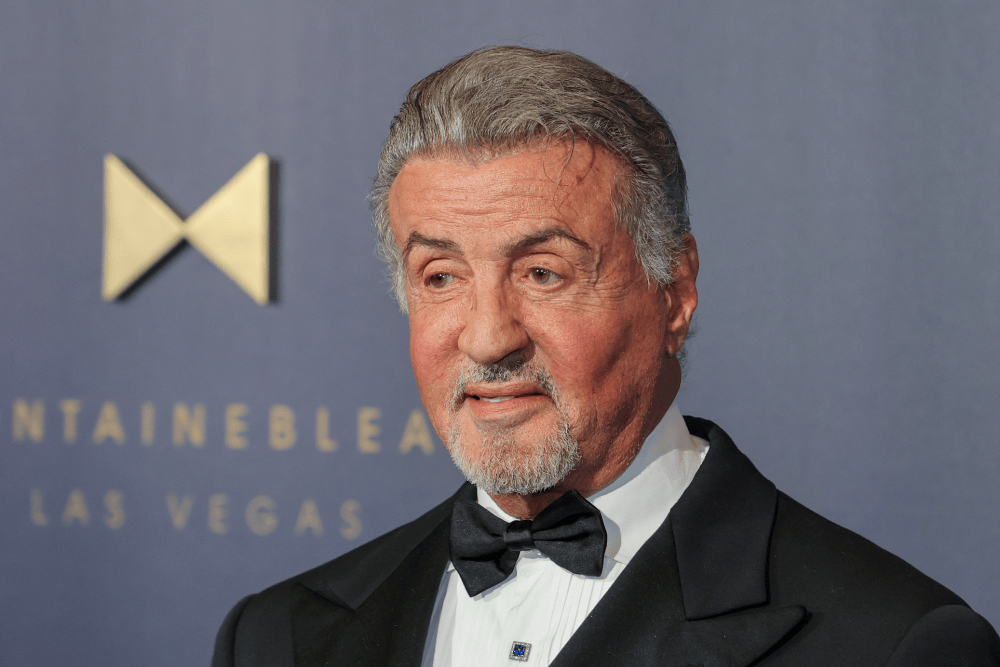
    Sylvester Stallone is opening up about how decades of daredevilry have affected him—and why he considers himself an “idiot” for continuing to do his own stunts year after year.

    In a recent interview with Fox News Digital, the “Rocky” actor said he has “millions, millions of regrets” about his action career. “I could literally spend a half hour talking about injuries, the amount, not even like one, I’m talking about 30 hours, 30 minutes of just individual ones, because it becomes compounded. I have been injured many, many times, but after ‘Expendables,’ I ended up with nine back operations, three neck fusions. Both shoulders ripped out, eye, you know, all kinds of lens put … it’s been brutal,” he said, adding that he’s never been “quite the same” since the surgeries.

    Stallone starred in — and also directed — the action thriller “The Expendables” in 2010 alongside Jason Statham, Mickey Rourke and more. While filming a scene where Stallone got tackled by WWE legend Steve Austin, the stunt went wrong and left Stallone with dislocated shoulders and a fractured neck that required more than seven back surgeries. The “Rambo” actor needed a metal plate inserted into his neck and spinal fusions.

    Stallone’s moral of the story is to “let other people do their job.” “Don’t be a stage hawk, or whatever you call it, a showboat. I know a lot of people are thinking about doing stunts … don’t. Don’t. Let the pro do it,” Stallone said. “You cannot beat gravity; when you hit the ground, you lose, and it’s going to come back.”

    He continued, “I mean, just ask every football player in the world. So yeah, and people go, ‘Aren’t you proud of them?’ No. I think I’m an idiot for doing that. I’m proud that I broke myself in pieces. Like, duh, no.”

    The actor shared a similar piece of advice ahead of the release of his memoir, “The Steps,” last month; Stallone told The New York Times that treating his body in the “masochistic” ways he did came “at a terrible price.” “If I could do it over again, I would say, ‘Let someone else carry the banner and don’t do your own stunts.”

  • ‘To Be Ordinary’ Review: A Compassionate, Even-Handed Taiwanese Family Melodrama

    ‘To Be Ordinary’ Review: A Compassionate, Even-Handed Taiwanese Family Melodrama

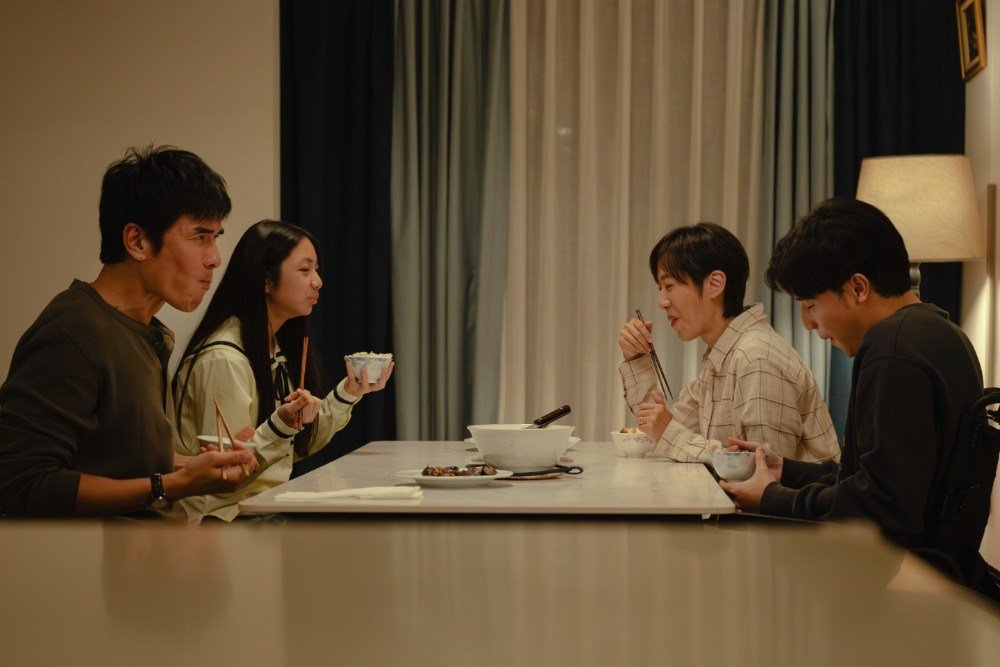
    A high-speed traffic accident leaves a college student in a wheelchair for life, but that’s merely the starting point of the narrative in “To Be Ordinary,” a sensitive, slowly enveloping film with scant interest in disability-drama cliché — instead offering an expansive portrait of how the young man’s entire family is affected by his accident over the course of more than a decade. Spanning marital strife, economic upheaval, coming-of-age pains and moral crisis, Taiwanese writer-director Lee Yun Chan‘s fourth feature — her first since 2010’s “Dancing Without You” — has a lot of story to wrangle, but does so with a mostly delicate, empathetic touch, with a script that treats all individuals in this unhappy scenario with equal care and interest.

    Since her last film, Lee has done mostly small-screen work — directing, among other things, the 2022 Disney+ series “Women in Taipei” — and if a certain televisual strain of melodrama occasional creeps into “To Be Ordinary,” the film’s sturdy formal restraint and expansive story scope should still serve it well in cinemas. Following its premiere as the only Taiwanese production in Busan’s main competition, the film will play at the Tokyo Film Festival later this month, opening theatrically in Taiwan in mid-November. Further festival play is likely, particularly in Asian-focused programs, and the film is accessible and moving enough for limited global distribution, though specialist streaming platforms may be its best bet.

    Lee, who co-wrote the screenplay with “Women in Taipei” scribe Ginger Wang, wastes little time setting the story into motion, opening on a lovely, gliding nighttime tracking shot of 22-year-old Yu-jie (Junior Hsieh) on his moped, cruising the rain-slicked roads of suburban Taipei, as the grandiose strings of Cicada’s score conjure a false feeling of serenity. DP Ming Lee’s camera will certainly never be this free again; the reverie stops short when, at an intersection, Yu-jie is struck by a car, driven by the wealthy, elderly Mr Ma (Hsiu Shen Liang), who’s immediately beset with irremediable guilt.

    Yu-jie survives the accident but soon learns, in hospital, that he’ll never walk again; a college student who has already started his own web design business, he accepts the bad news with remarkable stoicism, quickly adapting to life in a wheelchair and seeking ways to live the most normal, productive life possible — which includes a budding relationship with young hospital physiotherapist Yi-Han (Phoebe Chu).

    If anything, the rest of his family has a harder time adjusting. His mother (Chang Shih Ying) and father (Weber Yang) were already at a fraught point in their marriage, and their son’s plight only drives them further apart, the situation exacerbated by Dad’s longtime unemployment. Meanwhile, Yu-jie’s younger sister Yu-ching (Pin Hsuan Chen), already facing the hormonal turmoil of early adolescence, feels sidelined by the tragedy — pressured to look after herself while, as her mother puts it, “there’s enough going on at home” — and begins to lash out.

    At a pragmatic level, the family is aided by Mr Ma’s crushing conscience: In addition to the required legal settlement, he transfers ownership of his entire house to Yu-jie, and continues to contribute generously toward his medical bills and living expenses. But such generosity can itself become a burden of sorts to the benefactor, particularly as Mr Ma retreats into old age and ill health; avoiding drawing its characters along victims-and-villains lines, “To Be Ordinary” reserves compassion for all in this wretched turn of events, which gives it welcome dramatic complexity and maturity, particularly as the story spans 11 years of evolving consequences.

    Thoughtful, closely-knit ensemble playing keeps the family dynamic believable even when the script takes a few convenient short cuts: Chen is especially affecting and volatile as a young woman growing up both as a kind of afterthought, and as a support system to her flailing parents. Lee directs proceedings with a handsome sobriety that befits the material, though between the persistently overcast visuals and the solemnly emotive writing, “To Be Ordinary” could stand an occasional injection of tonal surprise — an acknowledgement of the absurdity, hilarity or small domestic joys that sometimes disrupt hard times. Still, the film is never glib or unconsidered. There’s unassuming beauty in its even-handed, fair-minded worldview, and the space it gives its characters to reckon with sorrow, and find their own way out of it.

  • Anthony Edwards Names Justin Bieber ‘White Boy of the Year’ in Satirical Believe That Awards (EXCLUSIVE)

    Anthony Edwards Names Justin Bieber ‘White Boy of the Year’ in Satirical Believe That Awards (EXCLUSIVE)

    Move over, Chalamet — there’s a new white boy of the year.

    Minnesota Timberwolves player Anthony Edwards has brought back his satirical Believe That Awards, which went viral in 2025 — reaching 150 million cross-platform views — for crowning Timothée Chalamet white boy of the year. In the 2026 edition, that honorific went to Justin Bieber, who beat out fellow nominees Tom Holland, Erling Haaland, Robert Pattinson and Travis Kelce. Bieber made an appearance in the awards special alongside fellow winners Michael B. Jordan, Druski, Coco Gauff, 50 Cent and more.

    The Believe That Awards, now live on Edwards’ YouTube channel and social media profiles and presented by PrizePicks, are produced by Edwards through his Three Fifths Media banner alongside Wheelhouse and Portal A. The special is meant to “celebrates standout moments, cultural disruptors and iconic achievements across sports and entertainment, filtered through the unapologetic and uncensored lens of Edwards.”

    The second annual Believe That Awards starring Anthony Edwards

    “We’re back, and we raised the bar across the board this year,” Edwards said in a statement. “You know me, which means you know we have the same unfiltered, totally unpredictable energy that is always built for and aimed directly at the culture. We brought together the biggest names in the game to chop it up, have fun and celebrate real greatness on our own terms. You’re not getting this vibe anywhere else.”

    “From day one, our mission at Three Fifths Media has been to create content that remains fiercely authentic to Anthony and the community that moves with him,” said Justin Holland, who is Edwards’ business manager and co-founder of Three Fifths Media. “The Believe That Awards sits at the true epicenter of sports, entertainment and culture. Year 2 proves that when you give creators and athletes the room to be themselves, audiences show up in a massive way.”

    See the full winners list below.

    • White Boy of the Year – Justin Bieber
    • Iconic Performance of the Year – Michael B. Jordan
    • Main Character of the Year – Druski
    • Creator of the Year – IShowSpeed
    • Stood on Bidness Award – Jaden McDaniels
    • Bring Ya Ass Award – LaMelo Ball
    • Beauty and The Beast Award (Outstanding On/Off Field Performance) – Coco Gauff
    • Lifetime Achievement Award – 50 Cent
  • ‘The Lowdown’ Creator Sterlin Harjo on the Films That Inspired Season 2, and What Convinced Tommy Lee Jones to Join the Show

    ‘The Lowdown’ Creator Sterlin Harjo on the Films That Inspired Season 2, and What Convinced Tommy Lee Jones to Join the Show

    As “The Lowdown” Season 2 opens, citizen journalist (or “truthstorian”) Lee Raybon (Ethan Hawke) is in a completely uncomfortable position: success. He’s about accept a local media award for a piece he wrote about the death of Dale Washberg (as detailed in Season 1 of the series), but isn’t happy about it.

    Rather than accept his acclaim, a boozy Lee gets on stage and immediately tears into the crowd for being sellouts. It doesn’t go well. Series creator Sterlin Harjo admits to Variety that Lee’s inability to deal with a bit of acclaim comes directly from his own experience after the launch of his previous FX series, “Reservation Dogs.”

    “I was living in a studio loft in downtown Tulsa, and all of a sudden I had a TV show,” he says. “I had been a kind of quiet independent filmmaker hoping to get some attention from anyone in this industry with my films. But then, ‘Reservation Dogs’ Season 1 truly changed my whole life. And I didn’t handle it well at first. You don’t know what to do. All of a sudden, there’s articles, and there’s all this stuff and you’re very exposed. It was fun thinking of that as Lee Raybon, because how does he handle the little recognition that he got? I bet he handles it really wrong, and I bet that there is a knee-jerk reaction to reject it.”

    The theme of Season 2, Harjo says, is to figure out how to love yourself — and how that love will extend to everyone else in your life. After that initial shock of his “Reservation Dogs” success, Harjo is getting there. It helps that he has another critically acclaimed series on his hands.

    Conceivably, “The Lowdown” could go on forever, given that there’s no shortage of story fodder about the amount of profligacy that exists in the world. After Season 1, “I wasn’t finished telling the story,” he says. “There was more of the corruption that I could tell.”

    As Season 2 premieres on Oct. 14 on FX, Lee is soon recruited by public defender Ginger (Betty Gilpin) to investigate a new mystery: the disappearance of her client inside the Oklahoma prison system.

    This time out, Harjo says he was inspired by the 1972 Lee Marvin/Gene Hackman film “Prime Cut,” 1981’s “Cutter’s Way” and the 1949 noir “The Third Man” to come up with the underlying concept.

    “This idea of a missing man, I was like, how do we amp this up a little bit?” he says. “Well, it’s really hard to go missing in prison. There’s a sign-in sheet. How do you go missing from prison? That was such an intriguing question.”

    Harjo says he, fellow exec producer Duffy Boudreau and Hawke began brainstorming the idea while doing their press tour for Season 1 of “The Lowdown.”

    “That’s when we came up with kind of the bones of the plot,” he says. “Through lots of influences, and also just Oklahoma.”

    Harjo says they also got to know Hawke’s cousin, a public defender in Ft. Worth, who shared stories about her experiences. “And I grew up in a town with a prison, and I saw how that affects a town,” he adds. “You really saw this shift in the town, and not a positive one. Because you have drugs, you have trafficking, you have drug trafficking of guards and prisoners.”

    For inspiration, Harjo also remembers visiting his uncle as a kid in a McAlester, Oklahoma, prison, where he was doing time for repeat alcohol offenses. “The Lowdown” wound up shooting in that very same institution this season.

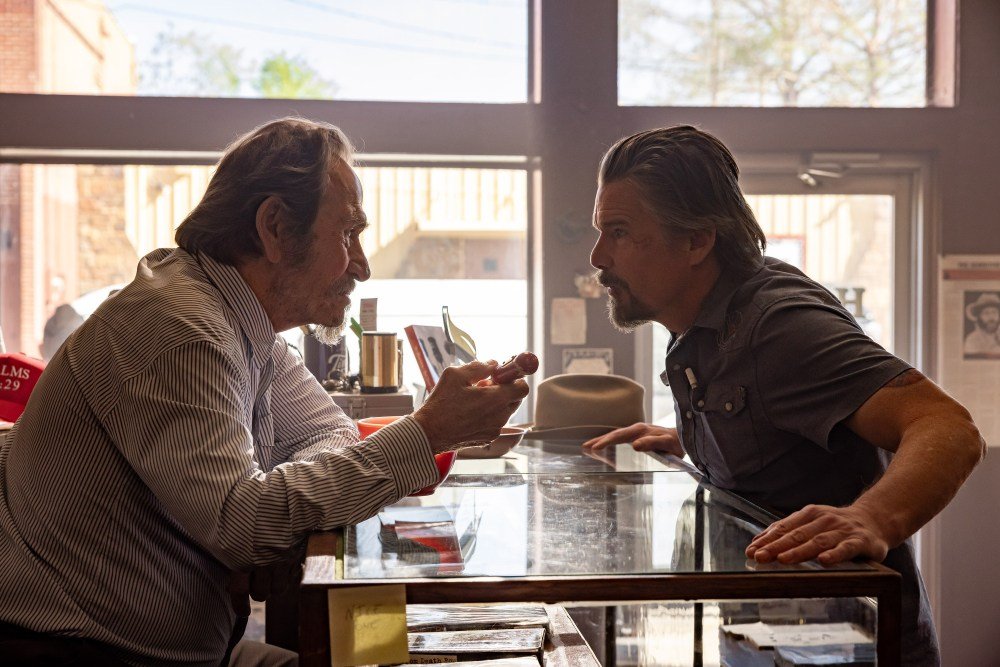
    But that’s just one half of Season 2. The show’s other bombshell comes at the end of the opening episode: Tommy Lee Jones shows up as Lee’s estranged father.

    “We talked a lot about being a father in Season 1. What’s it like being a son? And how do you forgive your father or a parent?” Harjo says. But just as Lee Sr. neglected his son growing up, Lee Jr. continues to mess things up with his own daughter, Francis (Ryan Kiera Armstrong).

    “He’s trying to not make bad decisions [like his father],” Harjo says. “And at the same time, he’s neglecting his daughter, which is a bad decision. And then, his father, who was a bad father, is connecting with his granddaughter.”

    “The more complicated you can make all that stuff, the better, because you’ve got to fight your way out of it as a writer,” Harjo says. “It was a very painful writing experience, more painful than anything, because I had written myself into so many corners. There was stuff that I was writing, there was episodes being written deep into production. I hope I never have to do that again!”

    After writing the first episode of Season 2, Harjo immediately thought of Jones for the part as Lee’s father. Both he and Jones are both represented by CAA — and once Jones read it, the actor wanted in. Jones had already watched Season 1 — and told Harjo that he specifically loved the bookstore security guards Waylon (Cody Lightning) and Cousin Henry (Jude Barnett), who provide some comic relief.

    “He wanted to be with them, which that told me everything I needed to know,” Harjo says. “If you love the security guards, you love me and the show and the vibe. Because those characters wouldn’t necessarily be on a lot of shows. You would cut that. After the premiere the other day, [Jones] says, ‘Thanks for paying attention to the character Waylon, because most people wouldn’t. It’s characters and storylines like that I think make the show what it is.’”

    Harjo also excitedly notes that Jones started watching “Reservation Dogs” while shooting “The Lowdown.”

    “There was something amazing about every day coming to work and having Tommy Lee Jones describe an episode of the show that I created,” he says. “He’d be talking to Ethan or me about it, and it was nice that he appreciated it so much. ‘Reservation Dogs’ is the type of show that you might think someone like Tommy Lee Jones could miss and not get it, but he’s a sophisticated, really smart artist and he loved it. It was amazing every day.”

    As for the character of Ginger, she’s clearly a love interest for Lee — a tough character who can go toe-to-toe with him, but has a humor to her as well. Once Gilpin came on board, Harjo says she helped redefine who Ginger could be.

    “Lee can be a bit wild, and I needed someone to match that energy,” Harjo says. “Betty can do anything, and I already knew that she was great. And then she came, and it was like another level. All of a sudden she’s doing things in the first scene that I’m filming with her, and there’s things happening that I did not write. From that day forward, I’m trying to write toward her voice and what she’s bringing to that character.”

    Harjo says he aimed to make Season 2 “go harder and faster with everything that we have established. It’s kind of like ‘Reservation Dog’ Season 2 as well. I’ve established the world. I feel like people that like the show will come with me. I have a meter of what feels real and what doesn’t, so I always sort of adhere to that. Let’s make ‘Empire Strikes Back,’ where it’s great and it stands on its own, but you also want more by the end. Gods of TV willing, we’ll be making a Season 3 of this show.”

    The first two episodes of “The Lowdown” Season 2 premiere on FX and Hulu on Oct. 14 at 9 p.m. ET, with remaining episodes airing weekly on Wednesdays