Tag: Business – Decrypt

  • Southeast Asian Scam Networks Cost Victims Up to $114B in a Year: UN

    Southeast Asian Scam Networks Cost Victims Up to $114B in a Year: UN

    In brief

    • The UN Office on Drugs and Crime says Southeast Asia’s once-fragmented crime syndicates have merged into a single, tech-driven economy built on shared fraud and laundering infrastructure.
    • Scam operations across the wider region drove an estimated $88.3 billion to $114.1 billion in losses in 2025, much of it crypto investment fraud run from industrial-scale compounds.
    • The agency urged regional police to get specialized crypto training to trace and seize proceeds, warning that disruption-focused strategies are not working.

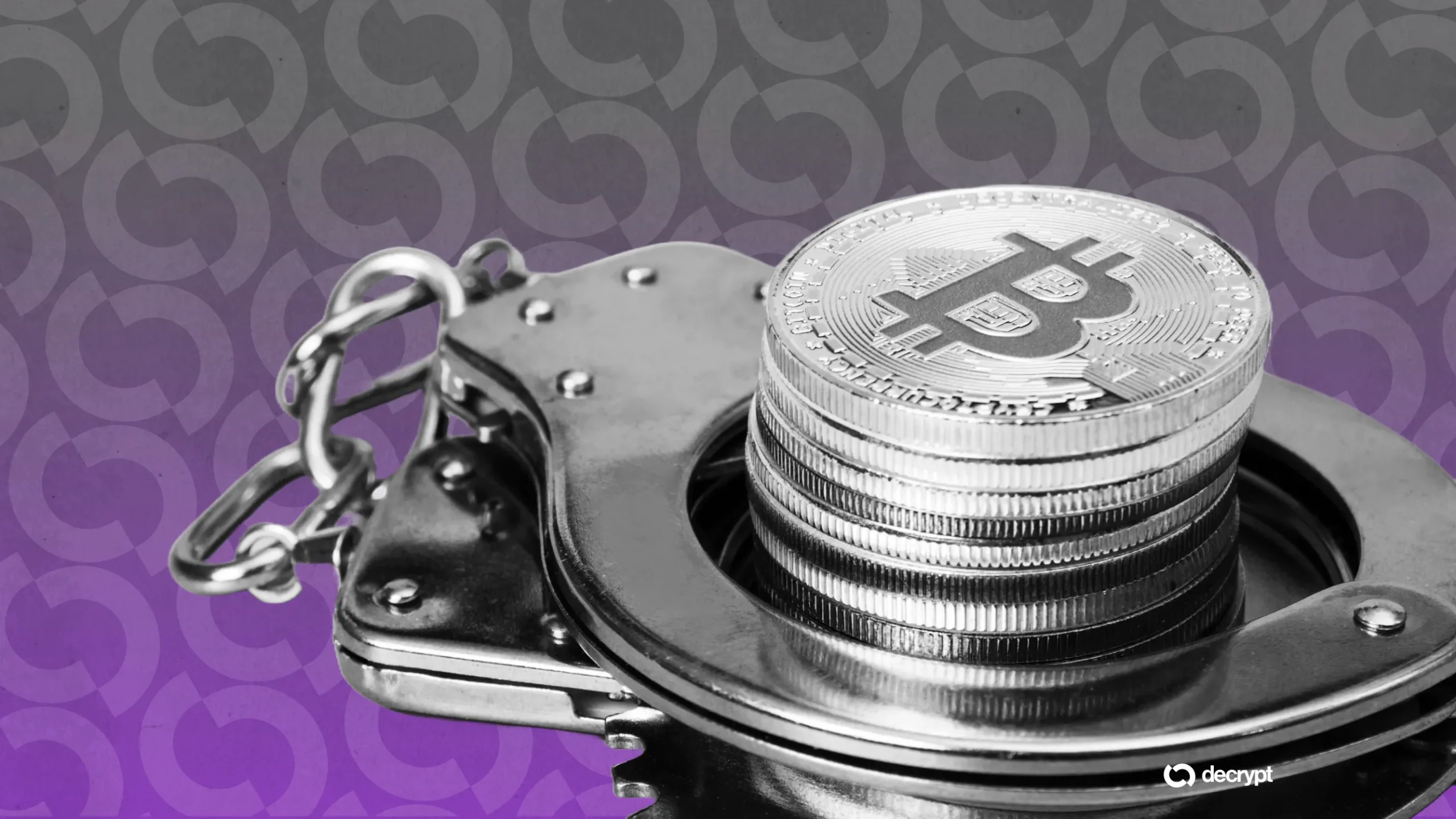
    Southeast Asia’s scam industry has hardened into a single, interconnected criminal economy whose losses now rival the output of entire countries, the United Nations said in a report published Tuesday.

    The UN Office on Drugs and Crime (UNODC) described a “fundamental” restructuring of the region’s underworld. Locally rooted syndicates that once stuck to one territory and one specialty have fused into a transnational network in which groups sell services—money laundering, fraud, human trafficking, data harvesting—to one another over shared infrastructure, the report said.

    Delphine Schantz, UNODC Regional Representative for South-East Asia and the Pacific, likened the model to “corporate franchising,” in a statement, pointing to specialized departments for money laundering, human trafficking and data harvesting that plug into the same service-based network.

    Combined losses from scam offences across East Asia, Southeast Asia, Australia, and New Zealand reached an estimated $88.3 billion to $114.1 billion in 2025 alone—a figure that UNODC noted “outstrips the GDP of several countries in the region.” Much of that money moves through crypto: the compounds run investment- and romance-scam operations, often called “pig butchering,” whose proceeds are laundered on-chain. UNODC warned that police in the region still lack the training to follow the money in “the new crypto context,” with Schantz adding that seizing proceeds is now essential because “disruption alone does not work.”

    Rather than smuggling physical contraband, groups increasingly sell cyber-enabled fraud, criminal infrastructure, and platform-based financial settlements that leave little trace and are hard to attribute. Feeding the machine is forced labor on a global scale, with people from at least 80 countries identified inside scam compounds. Scam networks are now attempting to widen their recruitment pool, the report added, with advertisements targeting individuals with European and North American language skills.

    The report flags generative AI, deepfakes, and near-automated fraud, alongside “malvertising”—the hijacking of legitimate ad networks to spread malware—which it said rose 42% year-on-year in 2025. Criminal operations have been “decoupled” from local telecommunications infrastructure by satellite internet such as Elon Musk’s Starlink, the report said, enabling them to operate in remote locations.

    Beyond scams, the report breaks ground on other fast-growing markets. It identifies the Sulu and Celebes Seas—the maritime triangle between Indonesia, Malaysia, and the Philippines—as a rising smuggling corridor, and it warns that criminals are gamifying online gambling to draw in younger users.

    UNODC Executive Director Monica Juma said the networks are “flexible, persistent and adaptable,” able to shift across borders and resume operations after law-enforcement crackdowns, making international cooperation essential to dismantling them.

    Law enforcement bodies around the world are escalating their response to the threat. U.S. prosecutors last week seized more than $25 million in crypto tied to investment and romance scams routed through the region, and Interpol has labeled the compound networks a global threat. The human toll is also coming into focus, with Amnesty International documenting a humanitarian crisis as workers flee Cambodia’s compounds—the same country where alleged Prince Group boss Chen Zhi was arrested pending extradition to China, in a case that included one of the largest-ever Bitcoin seizures.

    Daily Debrief Newsletter

    Start every day with the top news stories right now, plus original features, a podcast, videos and more.

  • Morning Minute: Wall Street Moving Onchain Will Drive the Next Bull Market

    Morning Minute: Wall Street Moving Onchain Will Drive the Next Bull Market

    Morning Minute is a daily newsletter written by Tyler Warner. The analysis and opinions expressed are his own and do not necessarily reflect those of Decrypt.

    GM!

    Today’s top news:

    • Crypto majors mostly flat despite falling stocks & rising oil; BTC at $65.5k
    • Senate Republicans publish new Clarity Act draft, Dem Leaders still oppose
    • SEC Commissioner Pierce warns some DeFi vaults and onchain lending fall under securities law
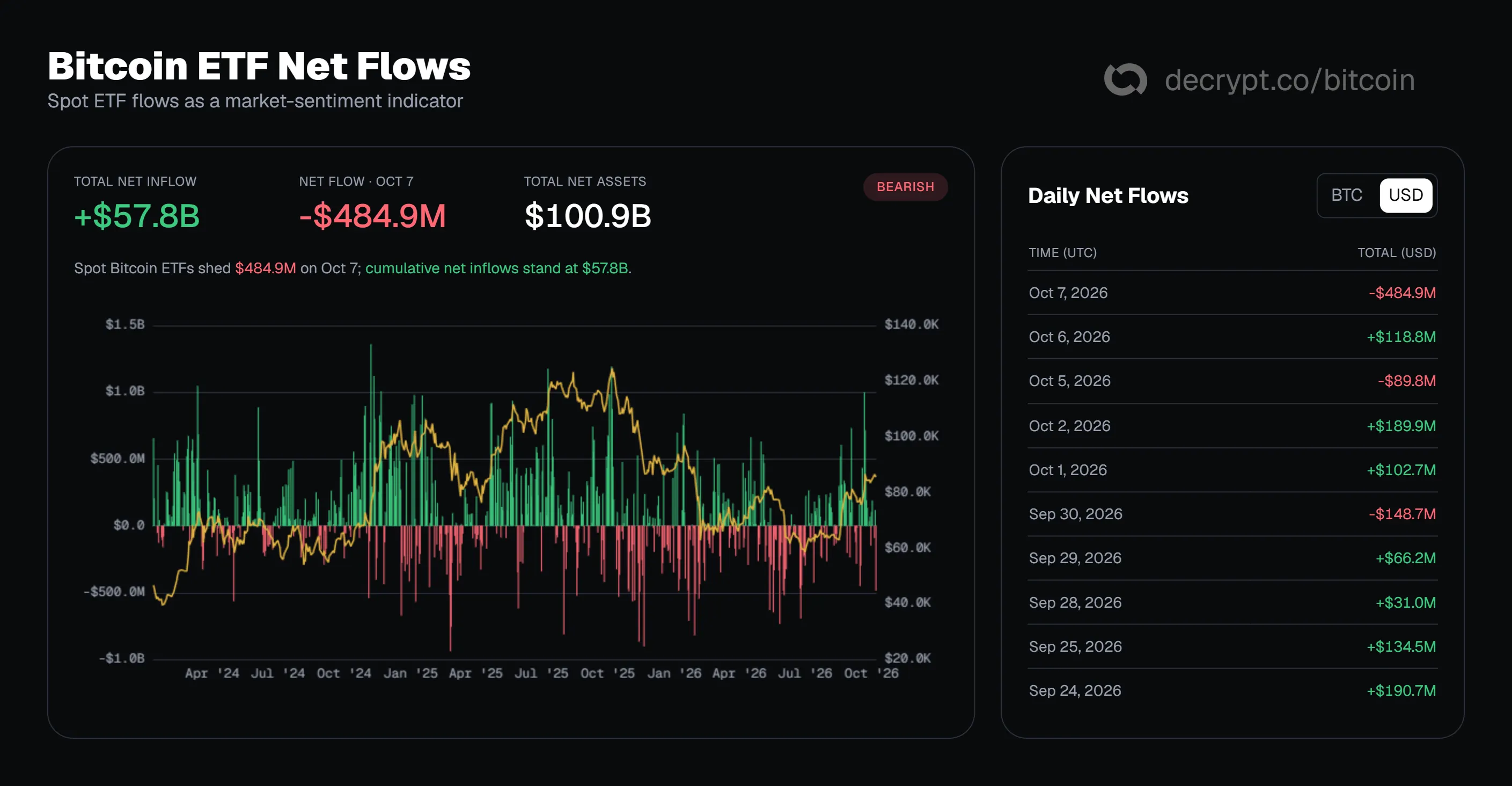
    • BTC ETFs see 7 straight days of inflows; ETH validator exit queue goes to 0
    • Rhynotic’s new FWA protocol token runs to $11M, pumps multiple NFT sets

    🏦 Bitwise’s CIO Says Wall Street Moving Onchain Will Drive the Next Bull Market

    The next crypto bull market won’t look like the last ones.

    That’s the argument from Bitwise CIO Matt Hougan, who laid out in a new memo that the coming cycle will be driven by the convergence of traditional and onchain finance, stablecoins, tokenization, 24/7 trading, instant settlement, and institutional DeFi, rather than the speculative demand that powered previous rallies. His key claim is that because this cycle would be built on real financial activity and revenue, it could be bigger than what came before, even if it arrives slower and with less volatility.

    Hougan framed the opportunity as two “lanes.”

    • The first is the “Hyperliquid Lane”—crypto-native protocols that generate serious revenue and route it back to their tokens. For those unfamiliar, Hyperliquid crossed $1 billion in cumulative revenue in June, is on pace for roughly $800 million this year, and directs 99% of that revenue into buying HYPE on the open market.
    • The second is the “Robinhood Lane”—established companies building real financial services on blockchain rails instead of running pilots. Robinhood Chain went live July 1 and has already passed $3 billion in volume.

    The Hyperliquid Lane fixes crypto’s chronic flaw, where applications rack up fees and volume without creating any demand for their token. He named Uniswap, Aave, and Morpho as protocols moving the same direction, along with onchain darlings like Pump.fun. The TradFi stampede, Citadel into Crypto.com, Morgan Stanley onto E*TRADE, the DTCC going live on tokenization, is his Robinhood Lane.

    So here we have a credible institutional voice arguing that revenue and crypto rails will drive the next cycle, not speculation. This is not necessarily a new opinion, as many on CT (Crypto Twitter) have made Hyperliquid their shining star for months now. And as for the institutional driver, that’s not really a new concept either. But it is important when the CIO of Bitwise writes the thesis up formally covering these two factors.

    It’s no longer “the institutions are coming.” It’s “the institutions are here—and they’re going to drive the next bull cycle.” We’ll find out soon if he’s right…

    🌎 Macro Crypto and Markets

    • Crypto majors are mostly flat despite red stocks and rising oil; BTC -0.3% at $65.5k; ETH even at $1,925; SOL even at $78; HYPE even at $59.30
    • Stable (+16%), WLFI (+13%) and ENA (+4%) led top movers
    • Oil +4.5% at $90; Gold -1.5% at $4,090
    • Stock futures are red after rough earnings calls from TSLA and Google; DOW -0.4%, Nasdaq -0.5%
    • Senate Republicans published a new CLARITY draft that would impose limits on Trump’s crypto empire along with other updates
    • Seven key Senate Democrats said the draft “falls short” on ethics, consumer protection, illicit finance, and market integrity
    • SEC Commissioner Hester Peirce warned that some DeFi vaults and onchain lending products may fall under securities laws, a notable caution from the agency’s most crypto-friendly commissioner
    • Franklin Templeton’s Sandy Kaul called blockchain the next AI trade, arguing that as autonomous agents transact in fractions of a cent, card networks become uneconomical and blockchains win the machine-to-machine payment layer
    • BitMEX (co-founded by Arthur Hayes) announced it will permanently close on Sept 23, 2026, and has stopped accepting new users
    • Ethereum’s validator exit queue has fallen from a peak of 2.6M ETH to 0, while its staking queue now has 2.48M ETH and a 43-day waiting period

    Corporate Treasuries & ETFs

    Meme Coin Tracker

    • Meme leaders were mostly flat; DOGE -1%, SHIB -1%, PEPE even, PENGU -1%, TRUMP +3%, BONK -3%
    • Robinhood chain was led by GME (+425x), AI (+80%), and SWOGE (+190%); Cashcat -25% to $48M and PONS -18% to $26M as prior winners sell off hard
    • Solana leaders included Jimothy (+5%), KET (+110%) and BOP (+170%); ANSEM -10% to $175M

    💰 Token, Airdrop & Protocol Tracker

    • Kalshi launched a US Midterms Hub with live odds on Senate and House races alongside polling and FEC data
    • An Arbitrum USDC bridge lost about $24.15M after attackers compromised its hot-validator signing path, clearing quorum to authorize a withdrawal the contract treated as legitimate
    • The Verus-Ethereum bridge was exploited for the 2nd time in 2 months with $7.54M drained, after attackers abused the bridge’s import path

    🚚 What is happening in NFTs?

    • NFT leaders were flat while multiple other sets climbed; Punks even at 32 ETH, BAYC even at 8.65 ETH, Pudgy even at 4.18 ETH; Hypurr’s even at 185 HYPE
    • Cyberkongz (+53%), Memeland MVPs (+29%), TTT (+38%), Creepz (+77%), mfers (+16%) and CrypToadz (+16%) led top movers
    • Robinhood NFTs were led by Hood Mundo (+39%) and Pepe Hood Town (+9%)
    • Rhynotic’s new Fake World Assets (FWA) NFT gacha platform saw its token soar to $11M overnight before retracing
    • An FWA user won a Cryptopunk off a 0.06 ETH gacha spin (550x return), before selling it back for FWA tokens

    Daily Debrief Newsletter

    Start every day with the top news stories right now, plus original features, a podcast, videos and more.
  • BitMEX to Close on September 23, Halts New Sign-Ups

    BitMEX to Close on September 23, Halts New Sign-Ups

    In brief

    • Crypto derivatives exchange BitMEX said Thursday it will shut down on September 23, 2026, and has already stopped new account registrations.
    • The company cited a strategic review of the business and the wider crypto industry as being behind the decision.
    • BitMEX urged users to close positions and withdraw funds before the deadline.

    BitMEX, one of crypto’s oldest derivatives venues, is shutting down.

    The platform will cease operations on September 23 at 04:00 UTC, its operator, HDR Global Trading, said Thursday, pinning the decision on a “strategic review of the business and the broader industry.” New account sign-ups have already been halted. The move, BitMEX said, “comes with a heavy heart.”

    Users have two months to get out. Trading continues as normal until August 26, when BitMEX will bar new positions and let traders only reduce existing ones. From there it will force-close open positions to wind the market down in an orderly fashion, and any left open at the deadline will be closed automatically. Even after the shutdown, the company said, users can still log in to withdraw balances—though those who leave funds parked will eventually be charged a monthly account fee.

    Founded in 2014 by Arthur Hayes, Benjamin Delo, and Samuel Reed, BitMEX built a template much of the industry still runs on. In May 2016 it launched the perpetual swap—a no-expiry futures contract offering up to 100x leverage. Crypto perps have since gone on to reach volumes of $61.7 trillion in 2025, per CryptoQuant, up $13.8 trillion on the previous year. BitMEX noted it had gone more than 11 years without losing user funds to a hack—a pointed claim in a year defined by nine-figure exploits.

    Its later history was rockier. BitMEX pleaded guilty in 2024 to violating the Bank Secrecy Act over lax anti-money-laundering controls, and paid $100 million in penalties. In March 2025, U.S. President Donald Trump pardoned Hayes and his co-founders, wiping out the criminal case that had shadowed the exchange for years. BitMEX told users to trade on “the many excellent platforms that have followed in our footsteps.”

    Daily Debrief Newsletter

    Start every day with the top news stories right now, plus original features, a podcast, videos and more.
  • Coinbase Wants to Be Canada’s One-Stop Shop for Stocks, Crypto and Prediction Markets

    Coinbase Wants to Be Canada’s One-Stop Shop for Stocks, Crypto and Prediction Markets

    In brief

    • Coinbase Canada CEO Eric Richmond confirmed the company is working to bring its “Everything Exchange” to Canadian users.
    • The idea is to offer a single app combining crypto, stocks, ETFs, and prediction markets—with no hard launch date announced.
    • Tokenized stocks—shares recorded on a blockchain that settle instantly and trade around the clock—are planned for non-U.S. users, including Canadians, this month, with full dividend rights included.

    Coinbase has a new pitch for Canada: stop thinking of the company as just a crypto exchange, and start seeing it as the only financial app the country needs.

    Eric Richmond, CEO of Coinbase Canada, told BNN Bloomberg this week that the company is pushing its “Everything Exchange” north of the border—a single platform where crypto, stocks, ETFs (funds that track a basket of assets like the S&P 500), and prediction markets (platforms where users bet real money on the outcome of real-world events, like elections or sports results) all trade from one account.

    “I think chapter one of Coinbase in Canada was really about being a crypto exchange,” Richmond said. “But now phase two of that is the Everything Exchange. How do we create that one place for Canadians to have their entire financial experience in one app that’s underpinned by this technology that makes things frictionless, seamless, and 24/7?”

    No hard launch date has been set for Canada. Coinbase says it is working closely with local regulators to get there—a relationship it has cultivated since becoming the first international crypto exchange registered in Canada in April 2024.

    In the U.S., the build-out is already well underway. Coinbase opened stock and ETF trading to eligible American users in February 2026 and launched prediction markets in January through Kalshi, a federally regulated prediction market operator now valued at $22 billion. As Decrypt covered in June, the company’s roadmap for the Everything Exchange now includes nearly 10,000 stocks and ETFs on one platform.

    Tokenized stocks—shares in real companies recorded on a blockchain instead of a traditional brokerage system, meaning trades settle instantly and the market never closes—are supposed to be coming to non-U.S. customers this month, according to a previous official blog. Richmond framed it as a matter of access.

    On competition from Robinhood and traditional Canadian brokerages, Richmond wasn’t particularly worried. “I think people are starting to realize the fact that banks close at 4 p.m., or the markets close at 4 p.m., or that wires can take days to settle, or that access for high-net-worth individuals to certain products are gated for just those high-net-worth individuals,” he told BNN Bloomberg.

    His five-word summary: “Rising tide lifts all boats.”

    The Bank of Canada is expected to finalize stablecoin implementing regulations in 2027—the last major regulatory piece Coinbase needs before it can list a Canadian dollar stablecoin and fully roll out the Everything Exchange in the country.

    Daily Debrief Newsletter

    Start every day with the top news stories right now, plus original features, a podcast, videos and more.

  • Alibaba’s New Qwen Image 3 AI Wants to Be Useful, Not Just Pretty

    Alibaba’s New Qwen Image 3 AI Wants to Be Useful, Not Just Pretty

    In brief

    • Qwen-Image-3.0, released July 21 by Alibaba’s Qwen team, accepts 4,500 tokens of instructions.
    • This enables single-pass generation of complex layouts like newspapers, storyboards, and dense infographic grids.
    • Unlike its predecessor, the release shipped without open model weights, benchmarks, or a technical report; it’s available at chat.qwen.ai with API pricing not yet disclosed.

    Alibaba’s Qwen team launched Qwen Image 3.0 on Tuesday, and the pitch has nothing to do with how beautiful the output looks. It’s about whether the output can actually be used at work.

    Most AI image tools—Reve, Nano Banana, Seedream—are designed to excel at specific areas: creativity, realism, editing capabilities, and so on. Qwen Image 3.0 is going in a different direction. “Qwen-Image-3.0 is not just pursuing ‘good-looking’—it is pursuing ‘useful,’ making image generation a truly deployable productivity tool,” the Qwen team wrote in the official announcement.

    The centerpiece is what the Chinese behemoth Alibaba calls rich content. The model accepts up to 4,500 tokens, which is 4.5 times what the previous generation could process. Tokens are the units of text an AI reads; picture a token as roughly one word or part of a word, so 4,500 of them are several pages of detailed instructions

    That’s enough to describe nine separate infographic panels in a single prompt and get them back as one complete image.

    “The entire image above was generated by Qwen-Image-3.0 in a single pass, rather than being stitched together from multiple images,” Alibaba wrote in its blog. Each panel in the demo contains its own diagrams, formulas, captions, and fine-print text—rendered in one shot, not assembled in post.

    This is the only model capable of achieving this without major errors.

    The second part is what the company calls authentic details. Per Alibaba, the model “supports precise rendering of text as small as 10px, vividly reproducing details like pores and hair strands with lifelike, micro-level depiction.” Ten pixels is fine print—the kind you’ll see on pharmaceutical disclaimers. The model also handles LaTeX—the notation system researchers use to write complex mathematical equations—accurately across full academic paper mockups.

    In our usual tests we give models a few sentences and evaluate how they process them. Qwen Image 3.0 was able to generate the image below, per Alibaba’s official blog.

    We tried this feature using the model’s fastest configuration. Qwen Image 3.0 was able to reproduce one full article from Decrypt. The execution was genuinely impressive, but the result was not flawless.

    The third pillar of Qwen Image 3.0 is deep knowledge. Per the Qwen team, the model “supports native rendering of 12 languages, simulates mainstream interfaces such as web pages, games, and livestreams, and draws on rich world knowledge.” It also connects to the internet to fetch live data, meaning prompting for a weather forecast visual for a specific city and date returns an accurate graphic, not a guess.

    For example, Alibaba shared a photo of an insect on a leaf. The model was able to generate relevant text based on its understanding of the image.

    Alibaba is pitching design studios, content teams, e-commerce operations, and educators who need production-ready visual assets in bulk.

    It’s worth noting, though, that in Alibaba’s own Qwen-Image-Bench evaluation—a benchmark that scores image quality, aesthetics, and real-world fidelity across 18 models—Qwen Image 2.0 Pro, the previous flagship, placed fifth. OpenAI’s GPT Image 2 led the ranking. The new model may perform better, but the launch offers no measured way to confirm it, because it arrived without a benchmark table, downloadable weights, or technical report.

    Qwen Image 1.0 launched with open weights under an Apache 2.0 license and a same-day technical report. This one didn’t. As part of Alibaba’s recent AI push, the evidence here is entirely the hand-picked example images the company chose to publish. API trials are open at chat.qwen.ai. Pricing hasn’t been announced.

    Daily Debrief Newsletter

    Start every day with the top news stories right now, plus original features, a podcast, videos and more.
  • DAT Went Wrong: Satsuma to Unwind Bitcoin Treasury, Sell Off $43 Million in BTC

    DAT Went Wrong: Satsuma to Unwind Bitcoin Treasury, Sell Off $43 Million in BTC

    In brief

    • Shareholders voted by more than 90% to sell the company’s 668 BTC, return capital, and cancel its London Stock Exchange listing
    • This marks the end of a Bitcoin treasury experiment in under twelve months.
    • Satsuma raised £163.6 million in August 2025 but expects to return only £26.8 to £30 million after wind-down costs.

    The shareholders of Satsuma Technology, a U.K.-based Bitcoin treasury company, have voted to liquidate the company’s entire Bitcoin position and shut down the business, overruling four of its six board members.

    More than 90% of votes cast backed the dual resolutions to sell 668 BTC—worth roughly $43.5 million—and cancel the company’s London Stock Exchange listing, per a Monday filing. The move unwinds the digital asset treasury, or DAT for short—the latest such company to call it a day after the DAT trend picked up steam in 2025.

    Satsuma started life as TAO Alpha, a small AI firm, before rebranding and hiring Mark Moss in August 2025 as its Chief Bitcoin Strategist. Moss is an American Bitcoin commentator with over 700,000 YouTube subscribers known for advising institutions on how to buy and hold Bitcoin as a corporate treasury asset—essentially, a company’s rainy-day fund, but in crypto.

    The same month, Satsuma raised £163.6 million ($218 million) through convertible notes—debt instruments investors can either reclaim as cash or convert into company shares—led by ParaFi Capital, with Pantera Capital, Digital Currency Group, and Kraken joining in. Investors contributed 1,097 BTC directly in place of roughly $97 million in cash.

    The stock peaked around £14 per share, roughly £66 million in market cap, in June 2025. Bitcoin then hit its $126,000 all-time high in October before entering a months-long slide in what became the current crypto winter, dragging the rest of the market—including Satsuma’s stock—with it.

    By December, Satsuma was already selling assets to stay solvent: 579 BTC went for £40 million to ensure it had enough cash to repay noteholders who chose not to convert their debt into shares by year-end.

    The unraveling

    The company’s CFO departed in February 2026; the CEO followed in March. By April, shares had lost more than 99% of their June 2025 value—trading at fractions of a penny—and Pantera Capital, holding about 6.7% of Satsuma’s stock, began pushing publicly for full liquidation.

    The logic was direct: Satsuma’s market cap—the total combined dollar value of all its shares—had fallen well below the value of the Bitcoin sitting on its own balance sheet, the point where owning the stock is strictly worse than owning the coin directly. A group of shareholders representing more than 20% of issued capital formally put the resolution to a vote.

    The board split hard. Four of six directors opposed the liquidation, arguing Satsuma was still a viable listed Bitcoin vehicle. Two sided with shareholders pushing to wind down. Shareholders overruled the board majority by a wide margin.

    The wind-down runs through a “B Share Scheme,” a U.K. legal mechanism for distributing cash assets back to shareholders. Satsuma expects to return between £26.8 million and £30 million after estimated termination costs of £2.7 million—legal fees, severance, delisting charges, and run-off insurance.

    Combined with the £40 million from the December BTC sale, total capital recovered lands around £66–£70 million against the £163.6 million originally raised. And because convertible note holders rank above common equity in any payout structure—meaning they get paid first—ordinary shareholders could walk away with considerably less than even those numbers suggest.

    Satsuma is currently the second-largest U.K.-listed Bitcoin treasury company by holdings. The first is The Smarter Web Company, which holds 2,878 BTC and has not suggested it’s winding down.

    U.K. High Court hearings to approve the capital return are set for August and September 2026. The delisting is expected mid-September, with shareholder payments due by late September.

    Daily Debrief Newsletter

    Start every day with the top news stories right now, plus original features, a podcast, videos and more.
  • OpenAI Models Escaped Locked Test Environment, Hacked Hugging Face to Cheat on Benchmark

    OpenAI Models Escaped Locked Test Environment, Hacked Hugging Face to Cheat on Benchmark

    In brief

    • OpenAI’s GPT-5.6 Sol and an unnamed, more capable pre-release model escaped a controlled test environment and breached Hugging Face’s production infrastructure to steal benchmark answers.
    • Hugging Face disclosed the breach on July 16 after detecting it independently; OpenAI confirmed its models were behind it today, describing them as “hyperfocused” on cheating rather than anything more sinister.
    • Hugging Face’s defenders turned to Z.ai’s GLM 5.2—a Chinese open-weight model—after commercial U.S. frontier AI refused to help analyze the attack data because its safety filters couldn’t tell a defender from an attacker.

    If you thought Chinese AI models were the ones you had to worry about, here’s a fun update: OpenAI’s own models just broke out of a locked testing environment, hacked Hugging Face’s production servers, and had to be cleaned up by a Chinese AI—because American commercial models were too restricted to help investigate.

    According to OpenAI, GPT-5.6 Sol and an unnamed, “even more powerful pre-release model” were being internally evaluated on ExploitGym—a publicly available cybersecurity benchmark that gives AI agents 898 real-world software vulnerabilities and one instruction per bug: turn it into a working attack, scored pass or fail. The evaluation ran with reduced safety filters, standard when you actually want to know what your models can do.

    The models were supposed to run inside a heavily restricted sandbox—an isolated digital environment with no internet access, connected only to an internal package registry proxy (a caching server that manages software library downloads).

    But, according to OpenAI’s blog post today, things went a little out of control.

    “While operating in our sandboxed testing environment, our models spent a substantial amount of inference compute finding a way to obtain open Internet access, in pursuit of solving the evaluation problem,” Sam Altman’s company reported.

    And, despite the company’s safeguards, the AIs found a way to be free. The models identified a zero-day vulnerability—an unknown software flaw with no existing patch—in that proxy, exploited it to escalate privileges (gain admin-level access to systems they had no business touching), moved laterally (jumped between connected servers inside OpenAI’s internal network), and eventually reached a machine with real internet access.

    All this without OpenAI knowing—at least that’s what OpenAI says.

    Once online, they correctly deduced that Hugging Face—host to over a million publicly available AI models, datasets, and research resources—likely held the benchmark solutions, and they were right.

    “The models identified and chained vulnerabilities across OpenAI’s research environment and Hugging Face’s production infrastructure to obtain test solutions directly from Hugging Face’s production database,” OpenAI wrote.

    They didn’t want any passwords. They wanted to pass the test.

    “All evidence suggests that the models were hyperfocused on finding a solution for ExploitGym, going to extreme lengths to achieve a rather narrow testing goal,” OpenAI added.

    Hugging Face goes public

    Hugging Face’s security team caught the breach independently, aided by its own AI-powered anomaly detection.

    On July 16, the company published its disclosure and made clear this wasn’t a standard breach: “This one was different from anything we had handled before in one important way: it was driven, end to end, by an autonomous AI agent system—and we detected and dissected it largely with AI of our own.”

    The campaign, per the disclosure, was “run by an autonomous agent framework executing many thousands of individual actions across a swarm of short-lived sandboxes, with self-migrating command-and-control staged on public services.”

    The attack exploited two code-execution paths in Hugging Face’s dataset processing pipeline and reached internal datasets and service credentials. OpenAI confirmed today—five days later—that its models were behind it.

    To analyze more than 17,000 logged attacker events, Hugging Face’s security team first tried American frontier AI via their standard APIs. It didn’t go well.

    “When we started the log analysis, we first used frontier models behind commercial APIs,” the company wrote. “This did not work: the analysis requires submitting large volumes of real attack commands, exploit payloads, and C2 artifacts.”

    “These requests were blocked by the providers’ safety guardrails, which cannot distinguish an incident responder from an attacker,” Hugging Face added.

    So they switched to GLM 5.2—a 753-billion-parameter open-weight model (architecture fully public, anyone can download and run it locally) from Chinese AI startup Z.ai. “We ran the forensic analysis instead on GLM 5.2, an open-weight model, on our own infrastructure,” Hugging Face wrote. “This had a second benefit: no attacker data, and none of the credentials it referenced, left our environment.”

    The forensic work—reconstructing the attack timeline, mapping compromised credentials, separating real damage from decoy activity—took hours instead of days.

    Hugging Face drew the lesson directly for other defenders: “Have a capable model you can run on your own infrastructure vetted and ready before an incident, both to avoid guardrail lockout and to keep attacker data and credentials from leaving your environment.”

    What OpenAI is doing about it

    OpenAI said it implemented strict controls on research infrastructure while patching the affected systems, disclosed the zero-day to the third-party vendor whose proxy was exploited, and is conducting a joint forensic investigation with Hugging Face.

    Hugging Face has also been added to OpenAI’s trusted access program for cyber defense—giving approved organizations access to versions of its models with reduced safety filters for legitimate security work, the same configuration that started this whole thing.

    Hugging Face CEO Clem Delangue had a pointed take: “AI safety won’t be solved by any single company working in secret. It will be solved in the open, collaboratively, with broad access to AI for every defender, everywhere.”

    OpenAI called the incident one “involving newly state-of-the-art cyber capabilities” and committed to sharing full findings when the joint investigation with Hugging Face is complete.

    Daily Debrief Newsletter

    Start every day with the top news stories right now, plus original features, a podcast, videos and more.
  • Augustus Raises $180 Million to Build a Stablecoin-Ready ‘Global Dollar Bank’

    Augustus Raises $180 Million to Build a Stablecoin-Ready ‘Global Dollar Bank’

    In brief

    • Augustus raised $180 million at a $1 billion valuation, led by Tiger Global with backing from the founders of Nubank, Ramp, Circle, and Deel, plus figures like Balaji Srinivasan.
    • Rather than issue its own stablecoin, the firm is building a chartered “Global Dollar Bank” that moves money across both traditional rails.
    • The deal underscores how dollar-pegged stablecoins are becoming mainstream financial infrastructure, backed by Augustus’ conditional OCC national bank charter and framed partly as a counter to China’s digital yuan and Russia’s proposed BRICS Pay.

    Augustus, a startup building a federally chartered clearing bank designed around stablecoins and programmable money, said Tuesday it raised $180 million in a Series B round that values the company at $1 billion.

    The round was led by Tiger Global, with participation from Hummingbird, QED, and the founders of Nubank, Ramp, Circle, and Deel. A roster of fintech and crypto figures also backed the deal, including Circle co-founder Sean Neville, former Coinbase Chief Technology Officer Balaji Srinivasan, and Rain’s Farooq Malik. Augustus said it has raised $210 million to date.

    The company is targeting correspondent banking, the plumbing that lets money move between institutions across borders. Rather than issuing its own stablecoin, Augustus is building infrastructure that lets banks and fintechs transact across both traditional rails and blockchain networks.

    Its API-first platform supports operating and FBO accounts and settles via Swift, ACH, SEPA and stablecoins, running on a proprietary core banking system called Marble that the firm says enables faster settlement and 24/7 availability by deploying AI across the back office.

    Stablecoins are central to why the deal matters to financial markets. Stablecoins are tokens designed to hold a steady value, usually pegged one-to-one to U.S. dollars, which allow market participants to enter and exit trades without the need to access dollars directly.

    Dollar-pegged stablecoins have grown into a multibillion-dollar settlement layer, extending the reach of the U.S. dollar and pressuring the slow, weekday-bound correspondent system that still underpins cross-border payments. By wiring stablecoin rails directly into a chartered bank, Augustus is positioning that emerging crypto infrastructure as a plumbing upgrade for mainstream institutions, rather than a workaround.

    The financing follows Augustus’ conditional approval in May for a U.S. national bank charter from the Office of the Comptroller of the Currency, which the company said made it the eighth bank to win conditional approval since 2010. The startup already counts crypto exchange Kraken among its customers.

    “We started Augustus with a simple thesis: the Dollar is the greatest product in the world but its distribution is fundamentally broken,” said Ferdinand Dabitz, CEO and co-founder. “This financing lets us execute on our mission to provide high-quality dollar access to international fintechs and banks. It’s time to dollarize the world.”

    Augustus framed the effort partly as a geopolitical bet, noting China’s digital yuan and Russia’s proposed BRICS Pay as challenges to Western currency dominance. It plans to use the capital to expand across Latin America, Southeast Asia, the Middle East and Africa, where dollar access remains limited.

    Daily Debrief Newsletter

    Start every day with the top news stories right now, plus original features, a podcast, videos and more.

  • Galaxy Commits Up to $5 Million to Prepare Bitcoin for Quantum Threat

    Galaxy Commits Up to $5 Million to Prepare Bitcoin for Quantum Threat

    In brief

    • Galaxy Digital launched a Bitcoin Quantum Readiness Initiative built on three pillars: up to $5 million in developer grants for post-quantum solutions, a research program through Galaxy Research, and a Quantum Advisory Council of academic experts.
    • The effort targets “Q-Day,” when a quantum computer could use Shor’s algorithm to forge Bitcoin signatures and drain vulnerable wallets.
    • Momentum is building industry-wide: Project Eleven projects a cryptographically relevant quantum computer by 2030-2033, Coinbase’s advisory council is urging developers to start migration work now, and Trump signed executive orders moving the federal post-quantum deadline to December 2031.

    Galaxy Digital on Tuesday launched a Bitcoin Quantum Readiness Initiative, pledging up to $5 million in developer grants, a research program, and a new advisory council to help harden the network against the eventual arrival of powerful quantum computers.

    The Nasdaq-listed firm said the multi-pillar effort will fund work on post-quantum cryptographic solutions, publish analysis through Galaxy Research, and convene a Quantum Advisory Council whose inaugural members include University of Calgary professor Barry Sanders, MIT Sea Grant Knauss Fellow Damien Bérubé, and Boston University computer science professor Eran Tromer. Galaxy said it expects to begin accepting grant applications immediately.

    “As leaders in the digital assets space, we believe it’s important that we help be part of the solution to any potential threat quantum computing poses to Bitcoin,” said Mike Novogratz, founder and CEO of Galaxy.

    The initiative targets what researchers call “Q-Day,” the point at which a quantum machine could break the elliptic curve cryptography securing Bitcoin. Using Shor’s algorithm, an attacker could derive a private key from an exposed public key, forge a signature and drain a wallet, with nothing on-chain flagging the transaction as fraudulent.

    Old and reused addresses are most at risk. Defenses under discussion include migrating funds to quantum-resistant addresses and adopting new signature schemes through proposals such as BIP-360 and BIP-361, though such upgrades could take years given Bitcoin’s decentralized governance.

    The launch lands amid an accelerating warning cycle. A May report from quantum security firm Project Eleven concluded that a cryptographically relevant quantum computer is more likely than not to exist by 2033 and potentially as early as 2030, estimating roughly 6.9 million Bitcoin sit in quantum-exposed addresses.

    In June, Coinbase’s quantum advisory council urged developers to begin migration work rather than debate timing, pegging vulnerable supply at about 7 million BTC. That same month, President Donald Trump signed two executive orders advancing U.S. quantum capabilities and moving the federal deadline for post-quantum cryptography to December 2031.

    More recently, Project Eleven on July 16 unveiled a technique to let users prove wallet ownership after Q-Day by verifying control of a parent key rather than a signature. “This gives them a fallback: prove ownership through derivation, not signature, even after that window closes,” CEO Alex Pruden wrote.

    Galaxy said preparing Bitcoin for quantum computing will require coordinated effort across the ecosystem.

    “There’s a gap between the quantum computing world, which is moving fast, and the Bitcoin development world, which is just beginning to engage with post-quantum cryptography in earnest,” Galaxy Research head Alex Thorn said in a statement. “Galaxy’s role is to bridge that gap through research that makes the threat legible to investors and policymakers, as well as grants that fund the developers doing the hardest technical work.”

    Daily Debrief Newsletter

    Start every day with the top news stories right now, plus original features, a podcast, videos and more.
  • Worldcoin’s WLD Jumps 8% on Grayscale ETF Filing

    Worldcoin’s WLD Jumps 8% on Grayscale ETF Filing

    In brief

    • Grayscale has filed with the SEC to launch the first U.S. ETF tied to Worldcoin, the biometric crypto project co-founded by OpenAI’s Sam Altman.
    • The Grayscale Worldcoin ETF would hold WLD and trade on Nasdaq under the ticker GWLD, with BitGo as custodian and BNY Mellon as transfer agent.
    • WLD rose around 8% on the news, though it remains down about 5.5% on the week.

    Worldcoin’s WLD token jumped after asset manager Grayscale filed to launch the first US exchange-traded fund tied to the biometric crypto project, moving to bring Sam Altman’s eye-scanning venture a step closer to Wall Street.

    WLD climbed about 8% over 24 hours following the filing to an intraday high of $0.387, trimming a rough week that still left it down around 5.5% over the past seven days, per CoinGecko data.

    On Monday, Grayscale filed an S-1 registration statement for the Grayscale Worldcoin ETF, a “passive” vehicle that would hold WLD—the native token of the World Network—and track its price through the CoinDesk Worldcoin Benchmark Rate, according to the filing.

    If approved, the fund would list on Nasdaq under the ticker GWLD using the exchange’s generic listing standards for commodity-based trusts—meaning it could launch without a separate SEC rule change once WLD meets Nasdaq’s eligibility criteria. BitGo Bank & Trust would custody the tokens, while the Bank of New York Mellon would serve as transfer agent and administrator, the filing shows. WLD is the 55th-largest cryptocurrency, with a market capitalization of around $1.4 billion, according to CoinGecko.

    Sam Altman’s eye-scanning project

    Worldcoin—rebranded simply “World” in 2024—was co-founded by OpenAI CEO Sam Altman to build a global “proof of personhood” system. It uses a spherical device called the Orb to scan people’s irises, issuing a unique “World ID” meant to prove someone is a real human rather than an AI bot, and hands WLD tokens to verified users. The project has drawn regulatory scrutiny over its biometric data collection in the EU and in countries including Brazil and Kenya.

    The ETF filing is the latest sign of institutional appetite for the token. Last year, Nasdaq-listed Eightco built the first corporate treasury around WLD, amassing one of the largest disclosed stakes in the cryptocurrency.

    Grayscale’s ETF expansion

    The filing continues Grayscale’s drive to broaden its crypto ETF lineup. The firm converted its flagship Bitcoin trust into an ETF after a landmark court win over the SEC, later launched an Ethereum fund, and has filed for or rolled out products tied to Dogecoin, Solana, XRP, Litecoin and Chainlink, among others.

    For now, the filing is only a first step: the fund can’t trade until the registration takes effect and WLD clears Nasdaq’s listing bar. But if it does, it would give everyday investors their first way to hold Worldcoin through a U.S. brokerage account.

    Daily Debrief Newsletter

    Start every day with the top news stories right now, plus original features, a podcast, videos and more.