Tag: Business – Decrypt

  • Bank of Korea Scales Up CBDC Pilot With Half a Million Users

    Bank of Korea Scales Up CBDC Pilot With Half a Million Users

    In brief

    • The Bank of Korea will launch Phase 2 of its CBDC pilot in September, expanding to nine banks and a cap of 500,000 users for live deposit token testing.
    • Phase 1 (April–June 2025) processed 114,880 transactions across 81,000 wallets.
    • Phase 2 adds biometric payments, person-to-person transfers, and real government subsidy disbursements.

    South Korea’s Bank of Korea ran a central bank digital currency, or CBDC, pilot for three months last year. Eighty-one thousand people opened wallets, but only 42% actually spent anything.

    The next phase of its CBDC push starts in September—with nine banks involved, up to 500,000 users spending the tokens, and real government money on the line this time.

    The central bank announced the expansion of Project Hangang—its CBDC (a government-issued, blockchain-based version of the paper won) initiative—on Monday, per a Yonhap News Agency report. “From the second phase, we will lay the groundwork for commercialization,” a Bank of Korea official told Yonhap.

    Phase 1 ran from April to June 2025 with seven banks and 12,000 merchants producing 114,880 transactions. According to a review by the HRF CBDC tracker, banks had collectively put up around 30–35 billion won building the infrastructure for that result.

    Phase 2 addresses the engagement problem with functionality that resembles actual banking. New features include biometric fingerprint approvals, person-to-person wallet transfers, automatic top-ups (your linked bank account converts funds into deposit tokens automatically when the balance runs low), recurring auto-payments, cash receipt generation, and interest payments.

    For the first time, the pilot will also test government subsidy disbursements using programmable tokens.

    The Bank of Korea issues a wholesale CBDC—a digital currency used only between financial institutions to settle transactions behind the scenes, not something ordinary people hold directly. Commercial banks then create deposit tokens (a blockchain-based version of the money already in your bank account) that consumers and merchants use for actual payments. Kim Dong-seop, head of the bank’s Digital Currency Planning Team, called the design “a middle ground between a CBDC and a stablecoin.”

    For regular users, that architecture could eventually mean receiving government benefits directly into a digital wallet instead of waiting for a voucher or a check. For small businesses and retailers, the test will measure whether deposit token payments can undercut the interchange fees that card networks charge on every transaction—a cost that compounds quickly for high-volume merchants.

    Phase 2 will run programmable deposit tokens with spending rules baked in: funds locked to permitted purposes, vendors, and time windows, replacing the paper trail of manual audits and cutting fraud at the point of disbursement.

    In other words, this implementation gives the Bank of Korea broader control into how citizens spend money given by the government for a specific purpose.

    Joining the original seven banks—KB Kookmin, Shinhan, Hana, Woori, Nonghyup, Industrial Bank of Korea, and BNK Busan—are Gyeongnam Bank and iM Bank. The pilot will run open-ended rather than with a fixed close date.

    South Korea’s new Bank of Korea Governor, Shin Hyun-song, made Project Hangang a centerpiece of his first policy address after taking office in April 2026. Hana Bank, meanwhile, has started designing systems for a won-backed stablecoin—a privately issued digital token pegged 1:1 to the Korean won—ahead of legislation that has been at the center of a stablecoin debate in Seoul since mid-2025. The Ministry of Economy and Finance has also announced plans to update a 76-year-old national asset law to classify cryptocurrencies as national assets.

    CBDCs, however, are not without controversy. The same programmability that makes deposit tokens attractive to regulators is exactly what worries critics. Rules that lock government funds to specific vendors can just as easily be extended beyond subsidies—expiring balances, spending category restrictions, or wallet freezes without a court order. Unlike cash, every CBDC transaction is logged on a ledger the central bank and its partners can read.

    Civil liberties organizations have flagged this as a structural problem with CBDCs as a category, not just South Korea’s version. China’s digital yuan has already been rolled out with expiry dates on certain stimulus payments—Beijing frames it as anti-hoarding policy, critics call it financial coercion. Researchers at Lawfare have warned the e-CNY could set a global precedent for state-controlled financial surveillance. The concern is the same regardless of who’s running the system: programmable money is money with conditions attached, and those conditions can always be expanded.

    Meanwhile, the United States is heading the other direction. The four-year ban on CBDC issuance became law on July 11—the 21st Century ROAD to Housing Act took effect without President Donald Trump’s signature when the constitutional 10-day window expired, after Trump declined to sign it over unrelated demands on voting legislation.

    Daily Debrief Newsletter

    Start every day with the top news stories right now, plus original features, a podcast, videos and more.


  • Cardano Triggers Hard Fork With First Community-Voted Upgrade

    Cardano Triggers Hard Fork With First Community-Voted Upgrade

    In brief

    • Cardano activated the Van Rossem hard fork on July 18, reaching protocol version 11 with zero downtime.
    • It’s the network’s first major upgrade ratified entirely through on-chain community governance, without any centralized company directing the process.
    • The fork lowers Plutus smart contract execution costs and bundles five technical improvements, including new cryptographic tools and a security fix requiring every stake pool to use a unique cryptographic key.

    Cardano has hard forked, implementing the Van Rossem upgrade over the weekend and transitioning the network to protocol version 11.

    It’s not the first time Cardano has executed a hard fork—but it is the first time it’s done so without the intervention of the blockchain’s founding development company, Input Output. That makes how it happened at least as important as what the upgrade does.

    A hard fork—a permanent, mandatory update to a blockchain’s core rules, applied simultaneously across every computer running the network—is a pretty serious deal. Throughout Cardano’s history, it’s been Input Output that’s decided on these kinds of network changes.

    Van Rossem, which sets the stage for improved scalability and lower costs on the network, is the first major Cardano upgrade ratified entirely through on-chain governance, meaning elected community members, server operators, and an oversight committee voted it live.

    The fork carries the name of Max van Rossem, a Dutch Cardano contributor who passed away in October 2025. A developer, elected representative, node operator, and constitutional delegate, Van Rossem helped design the very governance system that just activated this upgrade.

    Three separate bodies signed off. Delegated representatives known as “DReps”—community members elected to vote on behalf of Cardano holders, similar to elected delegates in a parliament—approved it at 77.63%, clearing the 60% threshold. Stake pool operators—the companies and individuals running the servers that keep Cardano running—backed it at 52.7%, just above the required 51%.

    The Constitutional Committee, a seven-member board that verifies upgrades comply with Cardano’s founding document, also approved the proposal. Cardano has been building toward this governance model since the Chang hard fork in 2024, which first introduced on-chain voting, followed by the Plomin hard fork in early 2025, which gave token holders real decision-making power.

    What the upgrade actually does

    Van Rossem is an intra-era upgrade—a targeted improvement that doesn’t rebuild Cardano’s core structure. Its main goal is lowering Plutus execution costs. Plutus is Cardano’s smart contract programming language—the code engine behind every DeFi app, NFT marketplace, and on-chain payment tool built on the network.

    Cheaper execution means developers can run more complex apps for less.

    The upgrade bundles different technical proposals, including new cryptographic tools for verifying digital signatures faster and a security fix requiring every stake pool to use a unique cryptographic key—closing a known attack path.

    For everyday users, nothing changes today.

    Last week, Input Output (the firm that built Cardano’s core codebase) announced it would hand off development to outside specialist teams starting in August. Van Rossem is the first upgrade executed under that transition.

    The next target is Ouroboros Leios—Cardano’s planned overhaul of how it processes transactions, targeting 30 to 65 times current throughput with a stated goal of exceeding 1,000 transactions per second. Van Rossem is a technical prerequisite.

    Cardano (ADA) price: Flat but not falling

    As exciting as this news may be for Cardano fans, the markets don’t seem to think the hard fork provides enough hopium to move the needle just yet.

    Cardano, which trades as ADA ,has been essentially flat for three days, hovering around the $0.1662 mark at a $6 billion market capitalization. Bulls are pushing, but the overall weight is still bearish—the hard fork announcement appears to have steadied prices and prevented a retest of deeper support.

    The 50-day exponential moving average (a trend-tracking line weighted toward recent price action) sits below the 200-day, a classic bearish configuration. RSI—a momentum score from 0 to 100, where above 70 signals overbought and below 30 means oversold—reads 48.8, which is considered neutral. ADX, which measures trend strength, sits at 16.1, weak, though its directional component has shifted from bearish to bullish—an early signal traders watch for potential turning points.

    Whales holding between 100,000 and 100 million ADA tokens pushed their balances to the highest level since 2023, per Santiment data. Smaller holders reduced exposure.

    Charlies Hoskinson, Cardano’s founder, expects Leios to reach mainnet before the end of 2026, and the public testnet (dubbed Musashi Dojo) launched June 23.

    Daily Debrief Newsletter

    Start every day with the top news stories right now, plus original features, a podcast, videos and more.
  • Tom Lee’s Bitmine Taps the Brakes on ETH Buys, Pivots $86M Into Stock Buyback

    Tom Lee’s Bitmine Taps the Brakes on ETH Buys, Pivots $86M Into Stock Buyback

    Ethereum treasury company Bitmine barely moved the needle on its ETH stack last week, adding just 7,430 ETH—about $14 million—as it steered capital toward buying back its own shares instead.

    This week’s buy pushed Bitmine’s holdings to about 5.78 million ETH tokens, or nearly 4.8% of Ethereum’s circulating supply, according to the company. That leaves the firm inching toward its stated goal of cornering 5% of the token’s supply. Bitmine, which trades as BMNR, is currently trading for $16.61, up almost 6% on the day.

    Bitmine now holds roughly $11 billion worth of Ethereum, making it the largest corporate holder of ETH in the world. It’s also one of the biggest digital asset treasuries, second only to Michael Saylor’s Strategy, which itself holds roughly $54 billion in Bitcoin.

    Still, for Bitmine, this latest purchase marks one of the company’s thinnest weekly additions since it kicked off its Ethereum treasury strategy in June 2025. The contrast is stark: Bitmine scooped up more than 111,000 ETH in a single week back in May.

    Bitmine Chairman Tom Lee pinned the slowdown on a share repurchase, telling shareholders the firm bought back roughly 5.5 million common shares at an average price of $15.62 under its $4 billion buyback authorization. (Disclosure: Tom Lee is an investor in Dastan, Decrypt’s parent company.)

    “The reduced pace of buys reflects that Bitmine repurchased 5.5 million common shares,” Lee said. He noted the company has bought ETH every week since launching the strategy just over a year ago.

    Apart from its ETH holdings, the company also today reported a stash of 207 Bitcoin, $385 million in cash and securities, a $180 million stake in Beast Industries and a $58 million position in Eightco Holdings.

    The company also said it has staked 4.92 million ETH—about 85% of its holdings—for projected annualized revenue near $247 million via its MAVAN validator platform.

    Daily Debrief Newsletter

    Start every day with the top news stories right now, plus original features, a podcast, videos and more.
  • ECB Warns Stablecoins May Drain Bank Deposits—Here’s What That Means

    ECB Warns Stablecoins May Drain Bank Deposits—Here’s What That Means

    In brief

    • ECB board member Cipollone warned Friday that stablecoin growth could strip European banks of retail deposits, on top of the fees and transaction data they’re already losing to mobile payment platforms.
    • Two-thirds of card payments in the euro area route through non-European schemes, and 13 of 21 eurozone countries have no national card scheme of their own.
    • The ECB named 36 payment service providers for a digital euro pilot starting in the second half of 2027, days after the European Parliament voted 416 to 169 to begin formal legislative negotiations.

    European banks are losing the payments war in installments. First came mobile apps, which took their fees and transaction data, then digital payments and startups took even more control. Now the ECB is warning that stablecoins could take the thing that really hurts: their deposits.

    Piero Cipollone, an executive board member of the European Central Bank, delivered that message Friday at a banking conference in Rome, and framed the digital euro as the structural answer.

    “Even traditional debit card payments are becoming less popular. In fact, mobile payments are on the rise and they already exceed one in ten point-of-sale transactions in Ireland, the Netherlands and Finland,” he said.

    “When their customers use mobile payments, banks typically pay higher fees than those associated with debit cards and often do not receive any information about the payment, so they lose both fees and data,” Cipollone added. “If the use of stablecoins increases in the future, banks will also lose retail deposits.”

    He was speaking to Italian cooperative bank executives who have their own reasons to be nervous: Half of Italy’s cooperative bank branches serve towns with fewer than 10,000 people, where the loss of payment data could hollow out the local lending business.

    Stablecoins add a new layer to that problem. They’re privately issued crypto tokens pegged 1:1 to a fiat currency—almost always the dollar—that let users hold and move money entirely outside the banking system. Think of them as a digital dollar you keep in an app rather than a bank account. Even fintechs like PayPal, Stripe, and others rely on the traditional banking system one way or another.

    The global stablecoin market sits at roughly $300 billion, per DefiLlama data, and is almost entirely dollar-denominated.

    Cipollone is worried that the massification of stablecoin adoption may render cash deposits irrelevant. Mobile payments cost banks fees and data; stablecoins could cost them the deposit base they rely on to make loans.

    Deposits aren’t just a number in a ledger. They’re the raw material banks use to extend credit to businesses and homebuyers. Fewer deposits means less lending—and for small cooperative banks with thin margins and local customer bases, that’s an existential problem, not a spreadsheet one.

    The ECB’s proposed fix is, ironically, a digital euro: a government-issued, electronic form of cash distributed through—not instead of—commercial banks. Under the current design, banks keep customer accounts, earn interchange fees, and retain transaction data. The ECB has already named 36 payment providers—including Deutsche Bank, UniCredit, and Revolut—for a 12-month pilot starting in the second half of 2027.

    The obvious objection is that a risk-free, government-backed digital wallet could drain deposits just as surely as a stablecoin. The ECB has guardrails in mind: the digital euro will pay no interest, removing the incentive to park large sums in it, and holding limits will cap how much anyone can keep in a digital euro account. The bank’s own financial stability analysis concluded the design poses no material risk to bank liquidity.

    Critics haven’t been fully convinced, and the ECB’s repeated stablecoin warnings haven’t visibly slowed the market. But the legislative machinery is now moving.

    Per Cipollone, negotiations on the digital euro are already underway being approved on July 9, with the first session held four days later. Lawmakers are targeting a deal by the end of 2026. First issuance is eyed for 2029.

    Daily Debrief Newsletter

    Start every day with the top news stories right now, plus original features, a podcast, videos and more.
  • Leaks Reveal Suno Fed Thousands of Hours of Deezer, YouTube and Pond5 Data Into Its AI

    Leaks Reveal Suno Fed Thousands of Hours of Deezer, YouTube and Pond5 Data Into Its AI

    In brief

    • A hacker using the Shai-Hulud worm breached Suno in 2025 and leaked source code showing the platform scraped over 113,000 hours from YouTube Music, 62,000 from stock library Pond5, and 12,000 from Deezer, among other sources.
    • The same intrusion reached customer emails, phone numbers, and Stripe payment data for what the hacker describes as hundreds of thousands of users.
    • Suno’s own California compliance disclosure had already acknowledged that its training data may include music “subject to intellectual property protection”

    A hacker broke into AI music platform Suno and walked out with source code that documents, in precise detail, exactly where the company’s training data came from.

    The breach was first reported by 404 Media, which reviewed the leaked files. It confirms what the music industry had been saying in courts since 2024.

    The intruder claims to have used a piece of malware called the Shai-Hulud worm—named after the enormous sandworms in Frank Herbert’s Dune. Suno, one of the largest AI music generators online, lets users type a text description and receive a full song in seconds; building that capability required a substantial training dataset—a collection of audio files used to teach the model what different genres and styles sound like.

    The leaked material consists of scraping instructions and internal logs from 2023 and 2024, offering a rare look at how those pipelines are actually assembled.

    The dataset breakdown is specific. According to internal file comments reviewed by 404 Media, the training library included 113,879 hours of YouTube Music, 152,162 hours of tagged YouTube tracks, 62,117 hours from stock music library Pond5, 12,287 hours from Deezer, and 17,615 hours in a dataset labeled genius_hq, associated with material collected through Genius. The code also documented plans to download roughly 1 million hours of podcast audio via RSS feeds.

    One internal file tracking YouTube Music ingestion alone logged 2,013,545 music clips. That’s millions of recordings covering decades of audio—and the appetite wasn’t limited to music.

    The hacker claimed to have accessed records associated with hundreds of thousands of customers, including emails, phone numbers, and Stripe-related information. Suno disputes that sensitive personal information was compromised.

    The company says it identified the incident in November 2025 and called it “limited.” Suno determined the exposure primarily involved outdated source code no longer in use and concluded that individual customer notifications weren’t required under applicable privacy laws. Users are only finding that out now, through news coverage.

    Here’s the thing: Suno had already told anyone willing to read its own website that something like this was happening. Under California’s AB 2013 law—which requires AI companies to disclose their training practices—the company publicly acknowledged that its training data may include music “subject to intellectual property protection,” and listed the corpus at tens of millions of publicly available music audio files. What the hack adds is specificity: The legal filing was vague by design, and the leaked code is not.

    The scope of AI music training was already becoming clear before anyone breached anything. In June 2026, The Atlantic published four searchable databases documenting music used to train AI models—one containing 12 million tracks, another with 9 million, and two more with around 100,000 each. You could look up your favorite artist before a hacker handed anyone source code.

    The Recording Industry Association of America had alleged in a 2025 amendment to its original 2024 lawsuit against Suno that the company was ripping songs directly from YouTube—an accusation Suno contested under a fair use defense. The suit sought $150,000 per infringement incident. The hacked source code corroborates the RIAA’s central allegation.

    Udio, which was targeted in a parallel lawsuit filed by the same major-label coalition, settled with Warner Music in November 2025 and is now transitioning to a licensed platform. Suno’s case with Sony and UMG remains active in federal court; the company’s valuation sits at $5.4 billion with around 100 million users on the platform.

    Suno did not immediately respond to a request for comment by Decrypt.

    Daily Debrief Newsletter

    Start every day with the top news stories right now, plus original features, a podcast, videos and more.
  • Morning Minute: Base Hands Its App Over to Cobie

    Morning Minute: Base Hands Its App Over to Cobie

    Morning Minute is a daily newsletter written by Tyler Warner. The analysis and opinions expressed are his own and do not necessarily reflect those of Decrypt. And check out our new daily news show covering all of the top stories in 5 minutes, downloadable on Apple Pod or Spotify.

    GM!

    Today’s top news:

    • Crypto majors fall after early week rally; BTC at $64.2k, ETH steady at $1,885
    • ETFs see more inflows with $108M for BTC and $54M for ETH
    • Jesse Pollak hands Base App over to Cobie, says he was wrong about content coins
    • Ostium exploited for $18M in DeFi’s latest attack
    • Trump expected to meet with Senator today to talk Clarity Act ethics provisions

    🔵 Base Hands Its App to Cobie as Jesse Pollak Admits “I Was Wrong” on Social

    Jesse Pollak, the Coinbase executive who has been running the Base blockchain, handed the consumer Base app back to Coinbase and gave it to the infamous trader Cobie. Cobie joined Coinbase after it acquired his onchain fundraising platform Echo, and Pollak says he’s now focused on the Base chain itself rather than the app.

    In his announcement post, Pollak said his 2024-2025 strategy rested on two bets: that builders would drive adoption and that growth would come from onchain social. While he stands by the first, he flatly admitted the second was wrong. The social corner he championed, Farcaster, Zora, miniapps, and creator coins, has in his words “disintegrated completely,” leaving Base trailing rivals in perps, prediction markets, tokenization, and payments. He closed with a public apology: “hopefully we can shut up about content coins now. i was wrong and i’m sorry.” That apology echoes Brian Armstrong’s comments from earlier this week when he said Base “messed up” on content coins.

    Pollak now wants to build Base into “the blockchain for global finance,” arguing that the combination of crypto, stablecoins, perps, prediction markets, and tokenization can bring a billion people onchain. He set trading, payments, and agents as Base’s three priorities for 2026.

    As for Cobie, he will be responsible for trading products at Coinbase (CB app / Pro / Baseapp). And he’s got his work cut out for him. He faces competition on multiple fronts: 1) CEXs like Kraken, which are hungry for growth ahead of potential IPO, 2) memecoin apps like Pump Fun and Fomo who have hundreds of thousands of users, 3) Robinhood itself, which offers competing products and made a major splash onchain this past week, and 4) Kalshi, which is growing its prediction market into the perps space. He’s facing an uphill battle to say the least. But if anyone in crypto is capable, Cobie might be the single best bet…

    🌎 Macro Crypto and Markets

    • Crypto majors are mostly red in midweek pullback; BTC -1% at $64.2k; ETH +1% at $1,885; SOL -2% at $76; HYPE -3% at $65.85
    • ONDO (+16%), NIGHT (+4%) and UNI (+4%) led top movers
    • Oil even at $80; Gold even at $4,035
    • Stock futures are mixed; DOW +0.2%, Nasdaq -0.7%
    • Stripe bid $53 billion to acquire PayPal alongside Advent, a deal that would merge Stripe’s Bridge and Tempo stablecoin rails with PayPal’s PYUSD
    • Strategy’s CEO said the company feels “very secure” until Bitcoin hits $8,000-$10,000
    • Trump is expected to attend a White House meeting later today to hash out the CLARITY Act’s contested ethics section
    • Cantor Fitzgerald and Securitize are collaborating on blockchain-based IPOs, pushing tokenization from secondary trading into primary issuance
    • South Korea will modify a 76-year-old law to classify crypto as national assets, a foundational step toward integrating it into the financial system
    • Japan reclassified crypto as a financial asset, paving the way for a flat 20% capital-gains rate
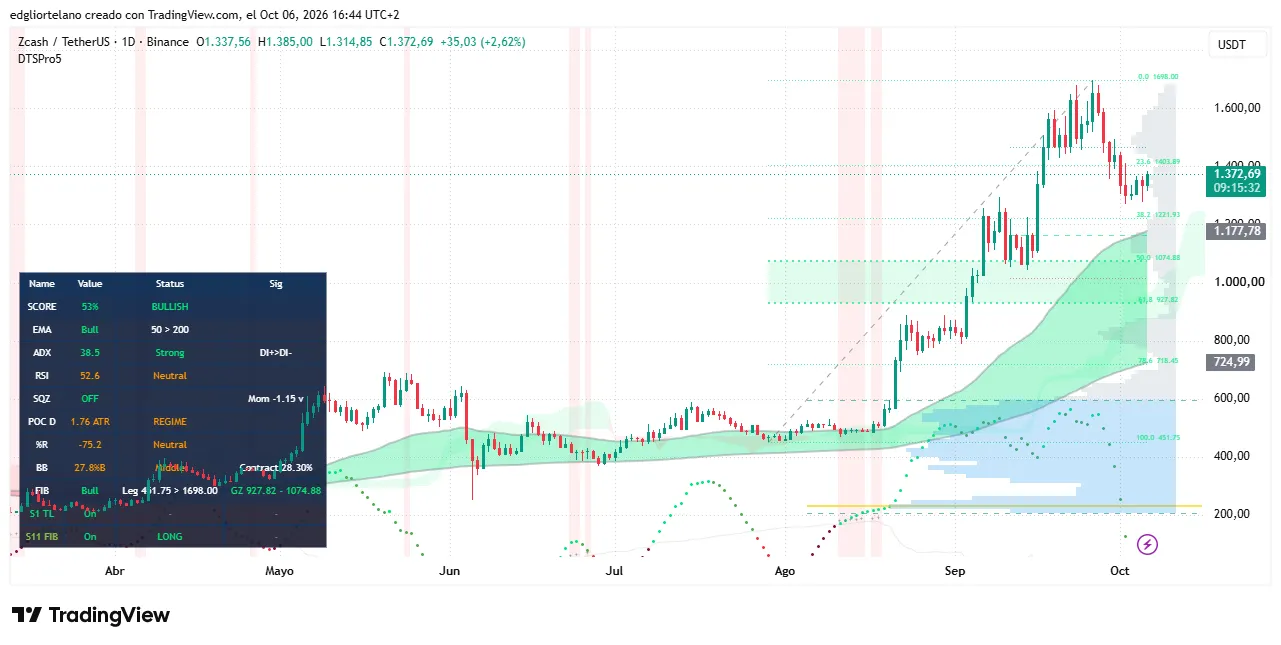
    • Chamath published a 73-page report on crypto privacy, evaluating the models of Monero and ZCash amongst others

    Corporate Treasuries & ETFs

    Meme Coin Tracker

    • Meme leaders were mostly red; DOGE -1%, SHIB -2%, PEPE -2%, PENGU +1%, TRUMP even, BONK -5%
    • Robinhood chain tokens were led by Tendies (+400%) and Index (+20%) while Cashcat fell another 20% and Pons fell 35%
    • Solana leaders included HBULL (+55%) and SOLdiers (+48x); ANSEM fell 25% to $170M

    💰 Token, Airdrop & Protocol Tracker

    🚚 What is happening in NFTs?

    • NFT leaders were mostly flat; Punks even at 32.4 ETH, BAYC -1% at 8.9 ETH, Pudgy +1% at 4.42 ETH; Hypurr’s +8% at 188 HYPE
    • Invisible Friends (+50%) and Mocaverse (+26%) led top movers; nameless dread (+30%) and beef brothko (+44%) big movers for diewithmostlikes following his auctions

    Daily Debrief Newsletter

    Start every day with the top news stories right now, plus original features, a podcast, videos and more.

  • Why Analysts Aren’t Worried About Coinbase’s 30% Drop

    Why Analysts Aren’t Worried About Coinbase’s 30% Drop

    In brief

    • William Blair cut its 2026 and 2027 EBITDA estimates for Coinbase by 34% and reduced revenue forecasts by 12–13%, yet maintained an outperform rating, saying earnings should trough by year-end before a 2027 rebound.
    • Coinbase and Circle shares rose roughly 3–4% each on Wednesday after William Blair said key risks are already priced in and both stocks carry strong upside exposure to a Bitcoin recovery; COIN has fallen nearly 30% this year, CRCL about 20%.
    • John Bollinger, creator of the Bollinger Bands volatility indicator, flagged a fractal “W” double-bottom on Bitcoin’s daily chart—calling a completed pattern “a confirmation of a change in trend.”

    The numbers got worse. The stocks went up.

    Coinbase (COIN) and Circle (CRCL) each rose roughly 3–4% on Wednesday after William Blair—a Chicago-based investment bank founded in 1935 that most equity investors know from tech and growth coverage—released a note slashing its revenue and earnings forecasts for Coinbase while keeping its “outperform” rating.

    The read in TLDR terms is that the pain is already in the price. “We think investors should stay involved in Coinbase,” the firm said.

    The firm cut 2026 revenue estimates for Coinbase by 12% and 2027 estimates by 13%, and gutted adjusted EBITDA projections by 34% in both years. Analysts Andrew Jeffrey and Adib Choudhury said earnings are set to trough in the second half of 2026 before recovering in 2027, and that investors should stay the course as spot crypto volume bottoms alongside Bitcoin.

    William Blair expects Coinbase’s total trading volume to fall roughly 44% this year to $669 billion before rebounding more than 32% in 2027.

    The firm sees this cycle as structurally different from 2022: There are now spot Bitcoin ETFs, institutional flows have grown, and the regulatory environment has matured in ways that didn’t exist four years ago.

    The firm also highlighted Coinbase’s Base layer-2 network as a potential major earnings driver, with retail derivatives and prediction markets rounding out a revenue base that extends well beyond spot trading—retail derivatives alone crossed $200 million annualized in the first quarter.

    Not everyone was as constructive in the near term. Piper Sandler analyst Patrick Moley cut his price target to $155 from $170, keeping a “neutral” rating. He flagged prediction markets and perpetual futures as the defining story of Q2—the World Cup drove massive growth in prediction market activity—and warned of “significant investor attention on the perpetual future threat” heading into Q3.

    Coinbase has fallen nearly 30% this year, alongside a roughly 26% decline in Bitcoin. Circle, which debuted in a splashy June 2025 NYSE IPO at $31 per share, has dropped about 20% since January.

    The “W” Pattern: Why John Bollinger says Bitcoin is ready to explode

    The same directional read is also appearing among technical analysts. John Bollinger—the veteran technical analyst who created Bollinger Bands, volatility envelopes plotted above and below a moving average that traders use worldwide to spot compression and potential breakouts—has been flagging a developing pattern on Bitcoin’s daily chart since early July.

    On July 2, Bollinger posted his analysis on X, identifying a “W” double-bottom taking shape. A double-bottom is a reversal formation defined by two swing lows with a rebound in between; it turns bullish once price clears the resistance at the apex between the troughs.

    He called the setup “perfectly fractal”—smaller versions of the same shape nest inside the larger structure, and the pattern is also visible on the weekly chart. He was upfront about the uncertainty: previous bullish setups had been invalidated by selling pressure throughout this cycle.

    In a more recent post, Bollinger mentioned that If this “W” completes, he would see it as “a confirmation of a change in trend.” That’s his clearest public signal yet that the trend may be turning rather than pausing.

    Bollinger disclosed a long Bitcoin position through his investment vehicle earlier this year, so his analysis and his book are pointing the same direction. In terms of technical analysis, the price of Bitcoin remains bearish, but that trend is losing strength.

    Bitcoin bottom is in?

    According to Glassnode’s latest weekly analysis, long-term holder capitulation—the main source of selling pressure all year—set its cycle peak two weeks ago and has turned down. The metric that measures what long-term holders actually surrender each day, adjusted to exclude internal transfers, reached a peak and is now falling for the first time this cycle.

    Buyers showed up at the June lows. Glassnode documented a broad wave of accumulation across wallets of all sizes during that period. Bitcoin’s inverse relationship with the dollar has deepened while its correlation with U.S. equities has loosened, and its sensitivity to good macro news has returned: Tuesday’s soft inflation print moved Bitcoin more sharply than any major equity index.

    The sticking point is the same for on-chain analysts and Wall Street alike—no sustained spot-driven buying has confirmed the recovery yet.

    Derivative positions are unwinding, long-term sellers are thinning, and the fear premium in the options market is easing. But the capital hasn’t fully arrived. William Blair puts the inflection point at 2027, projecting a 32% rebound in Coinbase trading volume after this year’s expected 44% decline.

    Daily Debrief Newsletter

    Start every day with the top news stories right now, plus original features, a podcast, videos and more.
  • Morning Minute: Crypto Rips on Cool CPI

    Morning Minute: Crypto Rips on Cool CPI

    Morning Minute is a daily newsletter written by Tyler Warner. The analysis and opinions expressed are his own and do not necessarily reflect those of Decrypt. And check out our new daily news show covering all of the top stories in 5 minutes, downloadable on Apple Pod or Spotify.

    GM!

    Today’s top news:

    • Crypto majors are up 3-6% after a cold CPI print; BTC at $64.6k
    • HYPE jumps 7% to $68 as SEC Crypto Task Force meets with HPC team
    • Mizuho downgrades Circle to $50 target, cites OpenUSD competition
    • Pump.fun hits first major unlock as $86M in PUMP hits market (PUMP +15%)
    • Robinhood Chain sees major rotation from memes to protocols

    📈 Crypto Rips on Cool CPI, but Warsh Won’t Call It a Win

    The soft inflation print crypto was waiting for finally landed.

    June CPI fell 0.4% month over month, the biggest monthly decline since April 2020, dropping the annual rate to 3.5% from May’s 4.2% and coming in under the 3.8% expected. Core CPI cooled to 2.6%, below forecasts, and was flat on the month.

    Crypto squeezed higher within minutes. Bitcoin jumped from around $62,000 to reclaim $64,900, ETH surged 7% to $1,884, and roughly $300 million in short positions were liquidated as bears got run over.

    Notably, this was the last major inflation read before the Fed’s July 28-29 meeting, and it undercuts the rate-hike case that’s been capping the market all summer. The odds of a July rate cut fell from 35% on Polymarket to just 6% in the wake of CPI + Warsh’s commentary. Though odds of at least 1 hike are still ~80% by end of year (down from 90%).

    Within hours of the CPI print, Fed Chair Kevin Warsh testified to Congress, his first appearance since taking over from Powell. The major takeaway from his testimony was his comment that if the Fed gets policy right, the inflation surge of the last five years “will be a thing of the past.” He leaned hard into the AI story too, calling business investment the most striking feature of the economy and predicting that what’s now called “AI investment” will soon just be called “investment,” a view that AI is fundamentally disinflationary.

    That said, when asked directly about the morning’s CPI data, he pushed back on the optimism, saying some might look at it and declare “mission accomplished,” and then adding flatly, “that is not my view.” He gave no forward guidance, no signal on the next move, and reminded lawmakers the committee has “no tolerance” for elevated inflation. Some (myself included) may interpret that as a bit hawkish, and it does still feel like a rate hike may very well come in 2026.

    Perhaps we will learn more at FOMC in 2 weeks. Until then, enjoy the pump…

    🌎 Macro Crypto and Markets

    • Crypto majors are very green after a cold CPI print; BTC +3% at $64.6k; ETH +5% at $1,880; SOL +3% at $77; HYPE +7% at $68
    • PI (+15%), PUMP (+14%) and ZEC (+13%) led top movers
    • Oil -1% at $80; Gold -1% at $4,035
    • Stock futures are slightly green; DOW flat, Nasdaq +0.4%
    • The SEC Crypto Task Force met with Hyperliquid’s Policy Center on Tuesday to discuss crypto regulation and how Hyperliquid fits in
    • Several Senate Democrats came out against the CLARITY Actcalling it a “corrupt bill” at a press conference, escalating opposition over its failure to bar Trump and his family from profiting off crypto
    • The CFTC moved to stop Kalshi from canceling trades as ordered by a Michigan court, siding with the prediction-market platform in a jurisdictional clash between the federal regulator and the state
    • The US and UK moved to align rules for tokenized financelinking the world’s two largest financial markets in a coordinated push to set shared standards as tokenization scales
    • JPMorgan said Hyperliquid’s rise threatens Circle’s USDC economicscreating a “prisoner’s dilemma” that pits Circle and Coinbase against each other for distribution
    • Mizuho downgraded Circle to underperform and cut its price target to $50 on the Open USD threat, warning the 140-backer consortium endangers USDC’s core reserve-yield economics
    • Meanwhile, Circle signed an MOU with JCB, Japan’s largest card networkto explore stablecoin payments across roughly 40 million merchants
    • Coinbase’s Head of Platform said that 95-100% of its code is now written by AI or AI-assisted

    Corporate Treasuries & ETFs

    • The Bitcoin ETFs saw $181M in net inflows on Tuesday; the ETH ETFs saw $58M in inflows
    • Tom Lee’s Bitmine generated $45M from ETH staking in Q2 according to their latest filing

    Meme Coin Tracker

    • Meme leaders were mostly green up 2-3%; DOGE +2%, SHIB +3%, PEPE +2%, PENGU +7%, TRUMP +2%, BONK -3%
    • Robinhood chain memes had a volatile day as previous leaders sold off with Cashcat -30%, Juggernaut -38% and Hoodrat -47%, while new launchpad PONS jumped 13x and new RWA protocol INDEX jumped 400%
    • No notable action on Solana

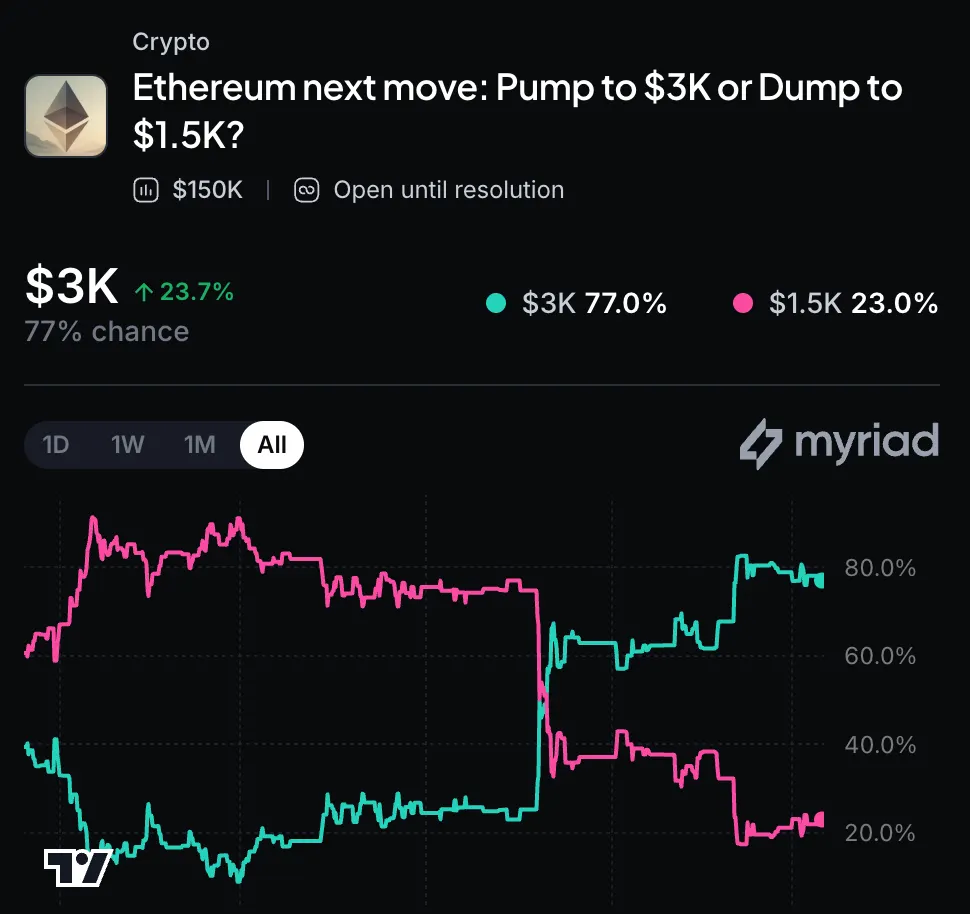
    📈 Myriad Market of the Day

    💰 Token, Airdrop & Protocol Tracker

    • Pump.fun completed its first major unlock at the 1-year mark, with $86M in team and investor PUMP tokens hitting the market
    • Binance is betting on becoming a crypto “super-app” as stablecoins reshape its growth, expanding beyond trading into payments and financial services.

    🚚 What is happening in NFTs?

    • NFT leaders were mostly flat; Punks even at 32.4 ETH, BAYC +1% at 8.94 ETH, Pudgy +1% at 4.37 ETH; Hypurr’s -2% at 175 HYPE
    • Cryptoadz (+22%) and Trolls (+26%) led top movers
    • New Robinhood NFT sets jumped including RDEGEN Hood (+450%) and Post Mortem (+60%)

    Daily Debrief Newsletter

    Start every day with the top news stories right now, plus original features, a podcast, videos and more.
  • US, UK Outline Recommendations to Align Stablecoin and Tokenization Rules

    US, UK Outline Recommendations to Align Stablecoin and Tokenization Rules

    In brief

    • The U.S. and UK Treasuries have published 10 joint recommendations to align their regulation of stablecoins, tokenized assets, and capital markets, five of them focused on digital assets.
    • The recommendations, from a taskforce set up during President Trump’s 2025 UK state visit, add no binding rules but set a shared direction, including a private-sector group to test cross-border tokenization and a joint statement backing stablecoins.
    • Coinbase welcomed the plan, calling the recommendations a “critical moment for transatlantic cooperation.”

    The U.S. and UK have laid out a joint roadmap for aligning how they regulate stablecoins, tokenized assets, and digital money, a coordinated push by two of the world’s largest financial centres to let blockchain-based finance move more easily across the Atlantic.

    The 10 recommendations, published Tuesday by HM Treasury and the U.S. Treasury, come from the Transatlantic Taskforce for Markets of the Future, which Chancellor Rachel Reeves and Treasury Secretary Scott Bessent set up during President Trump’s UK state visit in September 2025.

    Five cover digital assets and the rest address traditional capital markets, though none are binding rules, leaving each country to complete its own regulatory processes under a shared direction.

    Stablecoins and tokenization

    On the digital-assets side, the taskforce wants regulators, the Bank of England, the FCA, the SEC, and the CFTC, to find common approaches to tokenized assets, including how tokenized securities reach settlement finality and whether stablecoins and tokenized money market funds can serve as collateral at clearing houses. It calls for a private sector-led group to spend a year testing cross-border tokenization use cases, and for a “multi-money ecosystem” in which stablecoins, tokenized bank deposits, and other digital money coexist.

    Alongside the recommendations, the two governments are developing a joint statement on stablecoins, backing a dynamic cross-border market and saying payment stablecoins should be fully backed on at least a one-to-one basis by high-quality liquid assets. Those principles echo the U.S. GENIUS Act, the federal stablecoin law signed last year. A fifth recommendation asks both sides to push for a technology-neutral review of how the Basel Committee treats banks’ crypto exposures.

    The alignment effort lands as both countries build out their own regimes. The U.S. is implementing the GENIUS Act ahead of a 2027 effective date, while the UK’s own cryptoasset regime is due to take effect in October 2027. Both are moving to catch the European Union, whose MiCA rules have been fully in force since the end of 2024 and is set to be revised in 2027. The recommendations stop short of mutual recognition, with a stablecoin licensed in one country still having to clear the other’s rules to operate there.

    Industry reaction

    Crypto firms welcomed the direction. Katie Harries, Coinbase’s head of policy for Europe, called the recommendations a “critical moment for transatlantic cooperation,” highlighting the opportunity for the two financial centres to “reimagine global capital markets through tokenisation.”

    For the UK, the recommendations build on an ambition to “minimize frictions” between the two countries, as outlined by Economic Secretary to the Treasury Lucy Rigby in May, when she suggested that it “may well take the form of some forms of recognition or alignment.”

    At the time, Rigby said that digital assets carry the potential for a “complete transformation” of the country’s markets, as the government advances stablecoin rules, an FCA-run stablecoin sandbox, and a consultation on a single framework for traditional and tokenized payments.

    Daily Debrief Newsletter

    Start every day with the top news stories right now, plus original features, a podcast, videos and more.
  • DeepMind CEO Says AGI Will Be Bigger Than Electricity or Fire

    DeepMind CEO Says AGI Will Be Bigger Than Electricity or Fire

    In brief

    • Demis Hassabis says AGI is likely only a few years away.
    • He wants a new U.S. standards body to evaluate frontier AI models before deployment.
    • The proposal calls for pre-release testing that could eventually become mandatory for the most capable systems.

    For the second time this year, Demis Hassabis predicted that artificial general intelligence would arrive before the end of the decade. This time, however, he said it won’t simply be another technological breakthrough—it will rival the discovery of electricity or fire.

    In a blog post published Tuesday on X, the Google DeepMind CEO said AGI is “probably only a few short years away,” describing it as a technology that could reshape human civilization.

    “When we look back on this time in the decades to come, I think we will realise we were standing in the foothills of the singularity–nothing less than the dawning of a new age for humanity.”

    According to Hassabis, AGI, the point when computers can understand, learn, and perform a wide range of tasks as well as or better than humans, should not be compared with advances such as the internet or mobile computing because its impact could be even greater.

    “It is much more akin to the discovery of electricity or fire,” he wrote. “If you stop to think about it, we’ve essentially found a way to make sand think. It’s miraculous.”

    Despite that optimism, Hassabis warned that AI capabilities are advancing faster than society’s ability to understand and manage the risks, pointing to cybersecurity threats that already exist with today’s frontier models, adding that future systems could introduce biological, nuclear, and other national security risks.

    As AI becomes more agentic and capable of self-improvement, he argued, stronger technical safeguards will be needed to ensure humans remain in control.

    “On the horizon, we will need robust safeguards to maintain control of increasingly agentic, recursively self-improving systems–and tackle unknown issues that will only become clearer over time.”

    The news comes as AI leaders have spent much of the past year since the public launch of ChatGPT in 2022 warning that AGI could arrive sooner than expected. In January 2026, Anthropic CEO Dario Amodei said human-level AI could emerge within one to five years and warned governments were underestimating the pace of development. Then, in June, Hassabis predicted AGI would arrive by 2030 and warned society had “not long to prepare.”

    To address those concerns, Hassabis proposed creating a U.S. Frontier AI Standards Body modeled after the Financial Industry Regulatory Authority, or FINRA, a private organization that oversees U.S. brokerage firms. The federally supervised public-private partnership would be funded primarily by the AI industry and staffed by independent technical experts and open-source representatives to evaluate frontier AI models.

    “The rapid progress we’re seeing in AI requires a new approach to testing frontier AI model capabilities that is dynamic, adaptable, and rigorous,” he wrote. “The US is well positioned, given its economic and technical standing, to take the first step in developing such a framework.”

    The proposal follows similar calls made by the prominent members of the industry to establish oversight for advanced AI.

    In May 2023, during a hearing before the U.S. Senate Committee on the Judiciary, OpenAI CEO Sam Altman called for a federal agency to license powerful AI systems and require independent safety audits. More recently, last month, President Donald Trump signed an executive order creating a voluntary framework for reviewing advanced AI models before their release. That same month, Anthropic CEO Dario Amodei warned that AI is getting too powerful and safety rules akin to the Federal Aviation Administration (FAA) are needed.

    Despite the push to regulate AI development, Hassabis said the world has only a limited window to establish common standards before AGI arrives.

    “The future is not yet written, we must use this precious window before AGI arrives to shape this technology for the benefit of all humanity,” he wrote. “What we collectively do now will determine how the next phase of civilisation unfolds. By safely stewarding AGI into the world, we can enter a new golden age of scientific discovery and progress, and usher in a bright future of incredible human flourishing.”

    Daily Debrief Newsletter

    Start every day with the top news stories right now, plus original features, a podcast, videos and more.