Tag: Business – Decrypt

  • Sam Altman’s World Teams With Zoom, Tinder to Better Verify Humans in the AI Age

    Sam Altman’s World Teams With Zoom, Tinder to Better Verify Humans in the AI Age

    In brief

    • World launched a major World ID protocol upgrade featuring account-based architecture for “proof-of-human” verification.
    • Tinder is expanding verification to U.S. users, Zoom is integrating Deep Face technology, and Docusign is adding identity verification.
    • Worldcoin (WLD) fell about 10% on the day amid the news, despite a broader crypto market uptick.

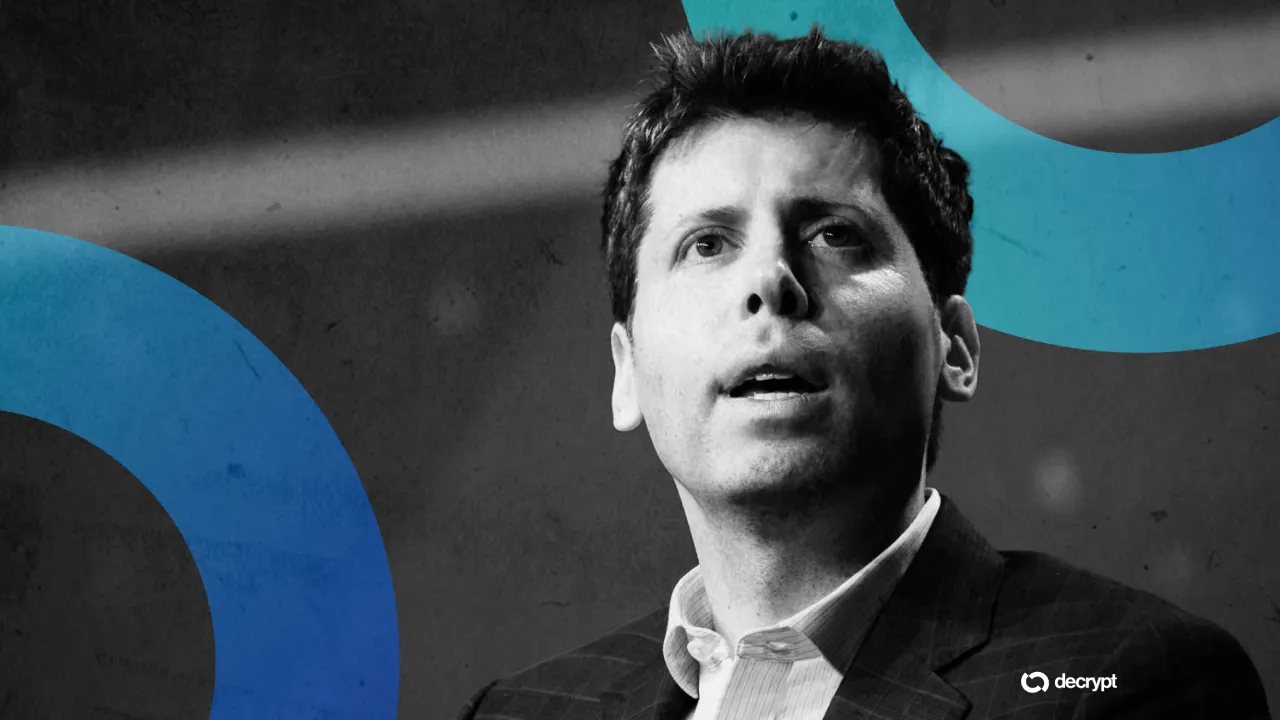
    World—formerly Worldcoin—unveiled a major World ID upgrade on Friday, introducing account-based architecture for “proof of human” verification alongside new integrations with Tinder, Zoom, and Docusign.

    World, which was co-founded by OpenAI CEO Sam Altman, introduced the World ID app as a dedicated experience for managing and using proof-of-human verification across the internet. The standalone application represents a shift from the company’s previous wallet-integrated approach to identity verification.

    The company is arguably best known for its iris-scanning Orb device, which scans and helps verify humans for use across an array of online applications. World incentivized use of the Orb with its Worldcoin (WLD) crypto token—which has fallen about 10% on the day to a recent price of $0.286—but has expanded its proof-of-human suite to include other forms of verification.

    The company on Friday also launched Concert Kit, a tool powered by World ID that enables artists to reserve tickets for verified humans. The platform aims to combat bot-driven ticket scalping by requiring human verification for event access. Grammy-winning musician Anderson .Paak appeared at Friday’s event to help reveal the technology.

    World and Vercel are teaming to bring human-in-the-loop verification to developers building on Vercel’s new open source Workflow SDK. Okta plans to build Human Principal, a product allowing API builders to verify whether a human stands behind an agent.

    Match Group, Tinder’s parent company, is expanding its existing World ID partnership to serve U.S. users, while World announced business-centric agreements with Zoom and Docusign.

    Zoom, the video meeting app, will integrate World’s deepfake detection technology to try and spot fakes, with fund manager VanEck among the firms currently trialing the tech. Meanwhile, Docusign will offer World ID support to ensure that whoever is supposed to digitally sign a document is actually the person they claim to be.

    The launch comes as Worldcoin’s network has reached 18 million verified humans across 160 countries. The timing reflects growing urgency around human verification as a growing share of internet traffic comes from AI chatbots, agents, and bots.

    “Proof of human and verified human identity vaulted to a critical priority for social networks and banking and financial systems as AI and agentic-AI capabilities experienced an exponential step forward in the past few months,” said Tom Lee, Chairman of Ethereum treasury firm BitMine Immersion Technologies and board member of Worldcoin treasury firm Eightco, in a statement. (Disclosure: Lee is an investor in Dastan, the parent company of an editorially independent Decrypt.)

    Daily Debrief Newsletter

    Start every day with the top news stories right now, plus original features, a podcast, videos and more.
  • Elizabeth Warren Accuses SEC Chair Paul Atkins of Potentially Lying to Congress

    Elizabeth Warren Accuses SEC Chair Paul Atkins of Potentially Lying to Congress

    In brief

    • Elizabeth Warren accused Paul Atkins of potentially misleading Congress about the SEC’s falling enforcement activity.
    • New data showed the SEC brought far fewer cases under the Trump administration than historical averages.
    • Warren says the decline raises concerns about investor protection and political favoritism.

    Sen. Elizabeth Warren (D-MA), the highest-ranking Democrat on the powerful Senate Banking Committee, formally accused the head of the SEC this week of potentially lying to Congress—an illegal act punishable with imprisonment.

    In a letter sent Wednesday, Warren told SEC Chair Paul Atkins she believes the regulator may have intentionally misled the Banking Committee during a February 12 hearing, when Atkins was pressed about the SEC’s plummeting number of new enforcement actions under the second Trump administration.

    Atkins responded to Warren’s question at the time by saying he disagreed “with the premise” of her inquiry. When Warren followed up on the matter at a later point in the hearing, Atkins said he wasn’t sure what data the senator was referencing.

    Last week, however, the SEC released its enforcement data for 2025, which showed the regulator only brought 456 new enforcement actions last year—200 of which were filed by the outgoing Biden administration. The 256 cases brought by the Trump SEC pale in comparison to the 765 enforcement actions brought on average by the SEC every year over the last decade. 

    “The data showing a sharp decline in enforcement actions under your watch, significant reduction in staff and the sudden leadership changes all raise serious questions about the Commission’s willingness and capacity to protect investors and the markets,” Warren said.

    The SEC declined comment when reached by Decrypt.

    The crime of making a materially false statement to a congressional committee is punishable by a fine and up to five years in prison. Such a charge would need to be brought by the Department of Justice, however, and it is very unlikely the Trump DOJ would pursue such a case against a member of the Trump administration.

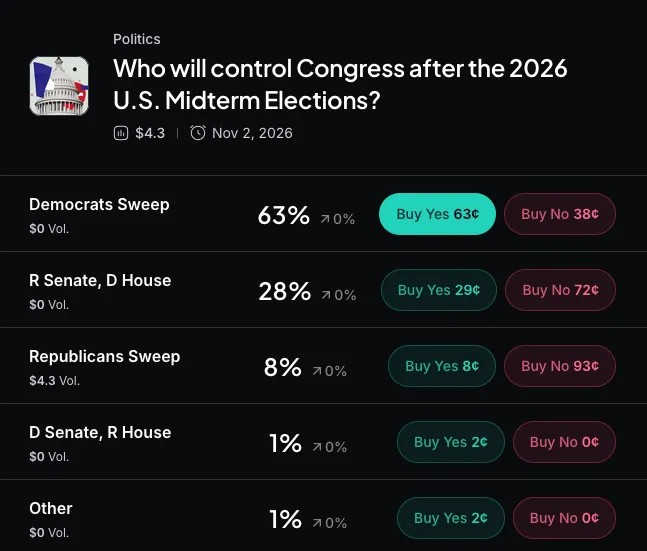
    Should Democrats retake Congress in November’s midterms, however, Warren could end up well-positioned to make Atkins’ life much more difficult in the medium-term. The crypto-skeptical lawmaker is likely to become the next chair of the Banking Committee should Democrats win back the Senate, an outcome currently standing at 55% odds on Polymarket.

    The SEC’s enforcement statistics are currently a hot-button issue for Democrats, given how they play into a larger narrative about the Trump administration’s appetite to pursue potential bad actors in financial markets—even those who may have ties to the president’s family and inner circle.

    The SEC under Trump has proudly touted its decrease in enforcement actions, tying the trend to a de-emphasis on crypto cases. Atkins has repeatedly argued the Biden-era SEC overzealously pursued cases against companies in the novel sector, a trend he has aggressively reversed.

    But the SEC’s enforcement rates have also dwindled across other sectors, including the traditional securities market. Further, the regulator has come under scrutiny for its treatment of entrepreneurs in the Trump family’s orbit. In Wednesday’s letter, Warren referenced a Reuters report detailing how the SEC’s head of enforcement resigned last month in part due to frustrations over the agency’s handling of fraud cases touching on President Trump’s inner circle.

    Atkins personally resisted pushes to pursue such cases, according to the report.

    Daily Debrief Newsletter

    Start every day with the top news stories right now, plus original features, a podcast, videos and more.

  • Crypto Trader Turns $2,500 Into $500K on Skyrocketing Ethereum Meme Coin

    Crypto Trader Turns $2,500 Into $500K on Skyrocketing Ethereum Meme Coin

    In brief

    • A trader on Ethereum turned 1 ETH, or around $2,500 worth, into nearly $500,000 after making a meme coin trade on Thursday.
    • The 19-month old ASTEROID token surged in value after gaining attention via a social media interaction from Elon Musk.
    • ASTEROID is up more than 71,000% in the last 24 hours of trading.

    A meme coin trader turned 1 Ethereum (ETH) or around $2,455 into nearly $500,000 on Thursday after trading the surging Asteroid (ASTEROID) meme coin on the Ethereum network.

    ASTEROID is up more than 71,000% in the last 24 hours, jumping from a market cap below $100,000 to nearly $19 million at the time of writing, according to data from DEXScreener.

    The token, which is based on a Shiba Inu mascot named Asteroid, skyrocketed early on Friday following a social media post from media personality Glenn Beck, which earned a reply from X owner and SpaceX and Tesla founder, Elon Musk. 

    Beck’s post highlighted the story of Liv Perrotto, a teenage girl who he said maintained a list of questions for Musk, but passed away from cancer in January without the chance to get them answered. 

    Her final question would have asked Musk if Asteroid, the Shiba Inu mascot she created to act as the zero-g indicator for SpaceX’s Polaris Dawn mission in 2024, could become the face of SpaceX. 

    “Will answer shortly,” Musk said in reply to Beck’s post around 11:50 p.m. ET on Thursday. That post has now garnered more than 1.3 million views on X. 

    Eight minutes later, an Ethereum address ending with “EF99af” bought 1 ETH worth of ASTEROID tokens, first launched 19 month ago on Ethereum. The buy was good enough for more than 10 billion ASTEROID tokens. 

    As renewed attention bloomed around Perrotto and Asteroid with Musk’s reply, a massive surge in the meme coin ensued, quickly making the trader’s portfolio worth nearly $500,000. 

    At this time, “EF99af” is the top trader on the token according to DEXScreener’s top traders tab, locking in more than $242,000 in profits with sales while maintaining a stash of just around $180,000 worth of ASTEROID tokens. 

    Two other traders, “6E5Eae” and “9dE8db” both purchased less than $10,000 worth of ASTEROID tokens, and have similarly locked in more than $150,000 in gains via sales. 

    The token has generated more than $43 million in 24-hour trading volume, making it the second most-traded meme coin across blockchains in the last 24 hours per DEXScreener. 

    An ASTEROID token on Solana follows closely behind, with more $37 million in volumes over the same period.

    Daily Debrief Newsletter

    Start every day with the top news stories right now, plus original features, a podcast, videos and more.

  • Anthropic’s Alarming Mythos Findings Replicated With Off-the-Shelf AI, Researchers Say

    Anthropic’s Alarming Mythos Findings Replicated With Off-the-Shelf AI, Researchers Say

    In brief

    • Researchers show Anthropic-style exploits can be reproduced with public AI, report claims.
    • Study suggests vulnerability discovery is already cheap and widely accessible.
    • Findings indicate AI cyber capabilities may be spreading faster than expected.

    When Anthropic unveiled Claude Mythos earlier this month, it locked the model behind a vetted coalition of tech giants and framed it as something too dangerous for the public. Treasury Secretary Scott Bessent and Fed Chair Jerome Powell convened an emergency meeting with Wall Street CEOs. The word “vulnpocalypse” resurfaced in security circles.

    And now a team of researchers has further complicated that narrative.

    Vidoc Security took Anthropic’s own patched public examples and tried to reproduce them using GPT-5.4 and Claude Opus 4.6 inside an open-source coding agent called opencode. No Glasswing invite. No private API access. No Anthropic internal stack.

    “We replicated Mythos findings in opencode using public models, not Anthropic’s private stack,” Dawid Moczadło, one of the researchers involved in the experiment, wrote on X after publishing the results. “A better way to read Anthropic’s Mythos release is not ‘one lab has a magical model.’ It is: the economics of vulnerability discovery are changing.”

    The cases they targeted were the same ones Anthropic highlighted in its public materials: a server file-sharing protocol, the networking stack of a security-focused OS, the video-processing software embedded in almost every media platform, and two cryptographic libraries used to verify digital identities across the web.

    Both GPT-5.4 and Claude Opus 4.6 reproduced two bug cases in all three runs each. Claude Opus 4.6 also independently rediscovered a bug in OpenBSD three times straight, while GPT-5.4 scored zero on that one. Some bugs (one involving the FFmpeg library to run videos and another involving the processing of digital signatures with wolfSSL) came back partial—meaning the models found the right code surface but didn’t nail the precise root cause.

    reproducing Mythos' results with mainstream AI.Image: Vidoc Security
    Image: Vidoc Security

    Every scan stayed below $30 per file, meaning researchers were able to find the same vulnerabilities as Anthropic while spending less than $30 to do it.

    “AI models are already good enough to narrow the search space, surface real leads, and sometimes recover the full root cause in battle-tested code,” Moczadło said on X.

    The workflow they used wasn’t a one-shot prompt. It mirrored what Anthropic itself described publicly: give the model a codebase, let it explore, parallelize attempts, filter for signal. The Vidoc team built the same architecture with open tooling. A planning agent split each file into chunks. A separate detection agent ran on each chunk, then inspected other files in the repo to confirm or rule out findings.

    The line ranges inside each detection prompt—for example, “focus on lines 1158-1215″—weren’t chosen by the researchers manually. They were outputs from the prior planning step. The blog post makes this explicit: “We want to be explicit about that because the chunking strategy shapes what each detection agent sees, and we do not want to present the workflow as more manually curated than it was.”

    The study doesn’t claim public models match Mythos on everything. Anthropic’s model went further than just spotting the FreeBSD bug—it built a working attack blueprint, figuring out how an attacker could chain code fragments together across multiple network packets to seize full control of the machine remotely. Vidoc’s models found the flaw. They didn’t build the weapon. That’s where the real gap sits: not in finding the hole, but in knowing exactly how to walk through it.

    But Moczadło’s argument isn’t really that public models are equally powerful. It’s that the expensive part of the workflow is now available to anyone with an API key: “The moat is moving from model access to validation: finding vulnerability signal is getting cheaper; turning it into trusted security work is still hard.”

    Anthropic’s own safety report acknowledged that Cybench, the benchmark used to measure whether a model poses serious cyber risk, “is no longer sufficiently informative of current frontier model capabilities” because Mythos cleared it entirely. The lab estimated comparable capabilities would spread from other AI labs within six to 18 months.

    The Vidoc study suggests the discovery side of that equation is already available outside any gated program. Their full prompt excerpts, model outputs, and methodology appendix are published at the lab’s official site.

    Daily Debrief Newsletter

    Start every day with the top news stories right now, plus original features, a podcast, videos and more.

  • US Government Moves Bitcoin Tied to $9 Billion Bitfinex Hack

    US Government Moves Bitcoin Tied to $9 Billion Bitfinex Hack

    In brief

    • Blockchain data shows the U.S. government transferred more than $600,000 worth of Bitcoin connected to the 2016 Bitfinex hack.
    • The funds were transferred from a government account to Coinbase Prime, potentially ahead of a sale of the funds.
    • The BTC is connected to the more than $9 billion, or 94,000 BTC which was seized from the Bitfinex hacker.

    Bitcoin holdings linked to the $9 billion hack of crypto exchange Bitfinex in 2016 was on the move Thursday, as addresses connected to the U.S. government transferred around 8.2 BTC to Coinbase Prime, according to data from Arkham Intelligence

    The coins, now valued around $628,000, last moved 2 years ago when a different U.S. government address transferred them to the wallet that was labeled by Arkham as “Bitfinex hacker seized funds.”

    A representative for the Department of Justice did not immediately respond to Decrypt’s request for comment seeking confirmation about the coins’ connection to Bitfinex or why the funds may have been moved. 

    When crypto assets are moved to an exchange, it is often viewed as the precursor to a sale. However, the government’s intentions for the recently transferred BTC remain unknown at this time. 

    The transferred Bitcoin represents just a small fraction of the more than 94,000 Bitcoin seized by the U.S. government as part of its investigation and arrest of Ilya Lichtenstein and partner Heather “Razzlekhan” Morgan for their roles related to the hack and subsequent laundering of stolen funds. Those seized funds are worth more than $7.2 billion now. 

    Lichtenstein, the theft’s orchestrator, exploited a security vulnerability on the crypto exchange that led to the heist of 119,754 BTC—or $9.18 billion worth at today’s prices. Arrested in 2022 on conspiracy to commit money laundering, he later pleaded guilty to the charges in 2023. He was sentenced to five years in prison for money laundering in 2024.

    Morgan, Lichtenstein’s wife and also a rapper, was hit with money laundering charges and later sentenced to 18 months in federal prison.

    Prior to sentencing, the pair reached a plea deal with prosecutors in 2023, agreeing to forfeit all the remaining proceeds from the nearly 120,000 BTC that was taken from the exchange. 

    Lichtenstein and Morgan were both recently released from prison, crediting President Trump for their early release despite there being no official reported action from the president to commute the sentences. 

    “I want to give a shoutout to Papa Trump for making my 18-month sentence shorter,” Morgan said at the time. “So razzle-fucking-dazzle.”

    Daily Debrief Newsletter

    Start every day with the top news stories right now, plus original features, a podcast, videos and more.
  • Strategy Shares Pop as Bitcoin Holdings Flip Green, Near $61 Billion

    Strategy Shares Pop as Bitcoin Holdings Flip Green, Near $61 Billion

    In brief

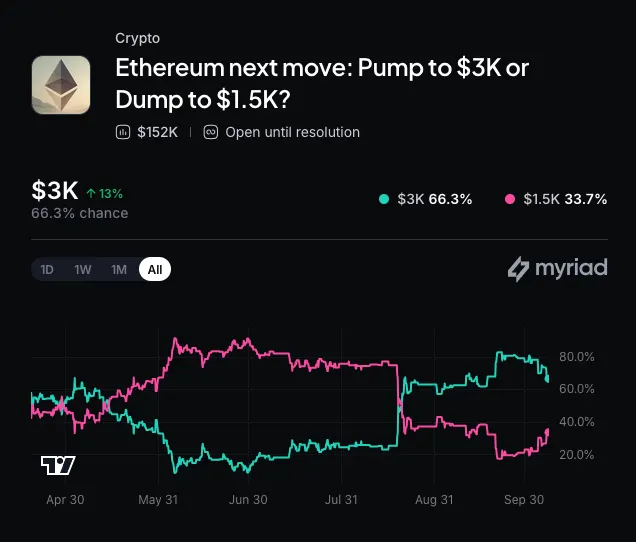
    • Strategy shares jumped 10% to $164 on Friday after Iran declared that the Strait of Hormuz was “completely open” to commercial ships for the remainder of a 10-day ceasefire between Israel and Lebanon.
    • The Bitcoin-buying firm’s stockpile showed gains on paper for the first time since early February as Bitcoin bounced to $77,200.
    • The crypto market’s weaker price momentum and lingering investor caution remains concerning, according to IG Group’s Alex Rudolph.

    Strategy shares surged on Friday as cooling tensions in the Middle East and Bitcoin’s ensuing rally propelled the firm’s massive digital stockpile back into the black.

    The company’s stock price had jumped 10% to $164 by 1:30 p.m. Eastern Time, according to Yahoo Finance. The Tysons Corner, Virginia-based firm saw shares soar above $173 earlier in the session, marking their highest peak since mid-January.

    Bitcoin had climbed 4.1% over the last 24 hours to trade near $77,200, according to CoinGecko. After accumulating nearly 781,000 Bitcoin at an average price of $75,577, Strategy saw its $60.5 billion bet thrust into the green for the first time in three months with the move.

    The shift likely offered a reprieve for Strategy co-founder and Executive Chairman Michael Saylor, whose firm—the world’s largest corporate Bitcoin holder—had been under fire as paper losses ballooned into the billions as the asset dipped to $65,600 this year.

    “Bitcoin and chill,” Saylor said in an X post on Friday, sharing an apparently AI-generated image of himself lounging shirtless on a luxury yacht in a pair of orange shorts.

    Friday’s bounce followed a declaration from Seyed Abbas Araghchi, Iran’s foreign minister, that the Strait of Hormuz was “completely open” to commercial ships for the remainder of a 10-day ceasefire between Israel and Lebanon that took effect late on Thursday.

    Strategy shares were on track for their best daily performance in over a month, a move that “highlights just how sensitive these names are to shifts in broader risk sentiment, rather than purely crypto-specific drivers,” IG Group Market Analyst Alex Rudolph told Decrypt.

    Easing geopolitical tensions may have prompted a return to risk-on positioning; however, Rudolph said that a short-term boost does “not resolve the underlying pressures facing crypto markets, including weaker price momentum and lingering investor caution.”

    Strategy shares remained down 42% from $279 over the past six months. The company’s tumbling stock price raised questions last year about whether Bitcoin’s price could become further depressed if Strategy were forced to pare its holdings amid the rout.

    For some, those fears have been heightened by Strategy’s embrace of STRC. As the company has doled out billions of dollars worth of the dividend-paying product, the firm has become saddled with additional costs for the foreseeable future.

    On Myriad, a prediction market owned by Decrypt parent company Dastan, traders foresaw a 13% chance that Strategy would sell Bitcoin this year. Around the time that Strategy’s holdings turned negative in early February, they penciled in a 30% chance of sales happening.

    “Because they have such a large stockpile, they are starting to become a gorilla that can move the market,” Bitwise Senior Investment Strategist Juan Leon told Decrypt. “It adds more psychological pressure to the downside than to the upside, because the worry for investors becomes ever greater when they’re underwater.”

    Strategy’s average purchase price may represent a key threshold from the perspective of  investor sentiment, but Leon also pointed to the $76,000 mark as the realized holder price for individuals betting on Bitcoin amid the broader market.

    “I think we really have to hold that level and continue trading above it to really feel that this rally can have legs,” he said. “Otherwise, if we stay below it, I think this is just a dead cat bounce.”

    Daily Debrief Newsletter

    Start every day with the top news stories right now, plus original features, a podcast, videos and more.

  • Circle Hit With Class Action Lawsuit Over $285M Drift Protocol Hack

    Circle Hit With Class Action Lawsuit Over $285M Drift Protocol Hack

    In brief

    • Stablecoin issuer Circle is facing a class action lawsuit from Drift Protocol investors who lost money in a recent $280 million exploit of the DeFi protocol.
    • The suit targets Circle’s handling of the exploit, alleging that hackers moved stolen USDC through the firm’s own cross-chain infrastructure.
    • Circle has defended its actions, saying it only freezes assets when legally mandated to do so.

    USDC issuer Circle has been hit with a class action lawsuit from Drift Protocol investors who lost money during the April 1 exploit that saw $285 million drained from the the Solana DeFi platform.

    The suit, filed on April 14, accuses Circle Internet Financial of failing to freeze stolen funds during the exploit.

    The lawsuit centers on an eight-hour window during which attackers moved $232 million in USDC from Solana to Ethereum using Circle’s Cross-Chain Transfer Protocol. The hackers had exploited Drift Protocol through pre-signed administrative transfers using “durable nonces,” a legitimate Solana feature they weaponized weeks before the April 1 attack.

    Drift Protocol subsequently linked North Korean state-affiliated hackers to the attack, noting that they had infiltrated the company over the course of six months by posing as a quantitative trading firm.

    The incident prompted sharp criticism of Circle from within the crypto community, with blockchain investigator ZachXBT accusing the firm of having been “asleep,” during the Drift exploit, adding, “Why should crypto businesses continue to build on Circle when a project with 9 fig TVL could not get support during a major incident?”

    Circle maintains it acted appropriately within legal constraints. “Circle is a regulated company that complies with sanctions, law enforcement orders, and court-mandated requirements,” a company spokesperson said. Earlier this week, CEO Jeremy Allaire warned that unilateral freezing decisions outside established legal processes could create a “significant moral quandary.”

    Chief Strategy Officer Dante Disparte reinforced this position in a blog, stating that, “when Circle freezes USDC, it is not because we have decided, unilaterally or arbitrarily, that someone’s assets should be taken from them. It is because the law requires us to act.”

    While Circle defended its position, Drift Protocol secured recovery commitments of up to $127.5 million from Tether and $20 million from other partners on Thursday. Tether CEO Paolo Ardoino positioned his firm as more responsive, stating that, “Tether’s role in the digital assets ecosystem is to provide a platform for individuals and institutions alike that is ready to step forward to help the industry in the moment of darkness.”

    The legal action arrives amid broader concerns about stablecoin issuers’ responsibilities in combating illicit finance. TRM Labs data shows around $141 billion in stablecoin transactions last year were linked to illicit activity including sanctions evasion and money laundering, while ZachXBT has documented approximately $420 million in suspicious USDC flows since 2022 that went unblocked.

    Circle reported soaring USDC circulation and transaction volume figures in its Q4 2025 report, with Allaire claiming that the firm would grow in tandem with the artificial intelligence industry, and “drive the greatest acceleration of economic activity we’ve ever seen in human history.”

    Daily Debrief Newsletter

    Start every day with the top news stories right now, plus original features, a podcast, videos and more.

  • Negative Funding Rates Hit Yearly High as Bitcoin Tests $76K

    Negative Funding Rates Hit Yearly High as Bitcoin Tests $76K

    In brief

    • Bitcoin funding rates have remained negative for over a month even as BTC touched $76,000, signaling heavy bearish positioning.
    • A potential uptrend could see Bitcoin revisit $125,000 in 30-60 days, Decrypt was told.
    • Despite bullish catalysts, analysts remain cautious, highlighting $80,000 as a key trigger level; failure risks a double-digit sell-off similar to that seen in May 2022.

    Bitcoin’s recent rally toward $76,000 faces a dilemma, leaving investors split on its near-term outlook.

    Funding rates for Bitcoin—a fee paid by derivatives traders to maintain the alignment between spot and futures prices—have remained negative for over a month and hit the highest level this year, according to Coinglass data.

    Negative funding rates indicate investors are shorting the recent rally with the expectation of a reversal.

    The divergence between bearish derivatives positioning and bullish spot catalysts sets up a potential short squeeze—or a bull trap—depending on which side breaks first.

    “Funding rates this negative tell you the market is heavily short,” Daniel Reis-Faria, CEO of ZeroStack, told Decrypt.

    The derivatives data directly contrasts with Bitcoin’s recent uptick, which was in part driven by bullish catalysts such as sustained ETF inflows, regulatory development surrounding the CLARITY Act, and the two-week ceasefire between the U.S. and Iran, Decrypt previously reported.

    “For a squeeze to gain real momentum, Bitcoin would need to break and hold above $80,000,” Illia Otychenko, lead analyst at crypto exchange CEX.IO, told Decrypt.

    Such a move could trigger “cascading liquidations of short positions and accelerate the rally,” Otychenko said.

    Reis-Faria’s bullish forecast involves Bitcoin pushing close to “$125,000 in the next 30 to 60 days,” adding that a short squeeze would help this case.

    Bitcoin is currently trading at around $75,580, up 1.2% in the past 24 hours after having reached an intraday high of $76,114, according to CoinGecko data.

    Short squeeze or bull trap?

    At this stage, a short squeeze isn’t guaranteed.

    Options data reveal the 7- and 30-day 25-delta skew hovers between -2% to -4%, according to Deribit, suggesting that investors are paying a premium for downside protection via bearish bets.

    Additionally, the 0.72 put/call ratio is climbing, also reflecting growing demand for downside protection. “The pattern closely resembles late May 2022, when a similar squeeze setup instead preceded a double-digit sell-off,” Otychenko said.

    Despite the demand from ETF investors and improving geopolitical outlook, there is a “real risk this setup turns into a bull trap rather than a breakout,” he warned.

    Experts who spoke to Decrypt also maintained a similar outlook, adding that the geopolitical risks haven’t subsided but merely paused. A resumption of the U.S.-Iran war could further push oil prices higher, awakening inflation concerns and subsequently reducing risk appetite, keeping Bitcoin and the broader financial markets capped.

    On prediction market Myriad, owned by Decrypt‘s parent company Dastan, users are increasingly optimistic on Bitcoin’s prospects. They now place a 67% chance on its next move taking it to $84,000 rather than $55,000, up from 54% at the start of the week. Myriad users are similarly positive about the geopolitical situation, putting a 66% chance on the number of ships transiting the Strait of Hormuz averaging more than 15 before May, up from 49% on Monday.

    Daily Debrief Newsletter

    Start every day with the top news stories right now, plus original features, a podcast, videos and more.
  • Charles Schwab Weighs Prediction Markets Move as Bitcoin, Ethereum Trading Nears

    Charles Schwab Weighs Prediction Markets Move as Bitcoin, Ethereum Trading Nears

    In brief

    • Charles Schwab President and CEO Rick Wurster indicated that America’s largest discount brokerage will likely support prediction markets.
    • However, he said that the company plans to steer clear of topics that touch pop culture, politics, and sports in favor of wagers tied to financial events.
    • Separately, the company said that it is rolling out access to Bitcoin and Ethereum trading in the coming weeks.

    America’s largest discount brokerage is eyeing prediction markets, but Charles Schwab President and CEO Rick Wurster sees a big distinction between speculation on Taylor Swift’s love life and the latest inflation numbers.

    “At some point, we will likely have prediction markets,” Wurster said during the company’s first-quarter earnings call on Thursday, describing wagers on financial events as distinct from topics like sports, politics, and pop culture.

    With $11.8 trillion in total client assets, Charles Schwab’s support of prediction markets would serve as the latest sign that Wall Street giants are embracing technology historically viewed as a fringe playground or regulatory gray area. However, Wurster indicated that Charles Schwab isn’t among firms racing to bring products associated with the sector to market.

    “It’s not at the top of our clients’ list,” he said. “And if you look at the stats on the success of gamblers, they’re not strong and people generally lose money.”

    The assessment comes as exchange operators like Cboe Global Markets prepare to debut event contracts tied to financial events, mirroring platforms like Polymarket and Kalshi while using traditional financial rails. And last month, Nasdaq filed with the SEC to offer options contracts for yes-or-no bets on whether a specified event happens.

    “That’s something certainly we will take a hard look at and then will be quite straightforward for us to offer,” Wurster said. “When we do, we’ll stay away from gambling.”

    Whether it’s Robinhood or Coinbase, prediction markets have emerged as core offerings for platforms aimed at retail investors through integrations with Kalshi. Last week, sports wagers accounted for 78% of the platform’s volume at $2.7 billion, according to a Dune dashboard.

    Asked whether Charles Schwab’s prediction market offering would tap Polymarket or Kalshi, a spokesperson told Decrypt the company—which notched a record 9.9 million trades in the first quarter—doesn’t have anything to share beyond Wurster’s comments at this time.

    As Robinhood and Coinbase have expanded their offerings, so too has Charles Schwab, which said Thursday that it plans to roll out access to trading Bitcoin and Ethereum in the coming weeks. At a rate of 0.75% per trade, the firm said in an announcement that its fees are “among the lowest in the industry.”

    The discount brokerage said it plans to grow its crypto offering over time by adding a suite of features Robinhood and Coinbase users are already familiar with. That includes the ability to deposit and withdraw digital assets, as well as an expansion of the tokens it supports.

    Daily Debrief Newsletter

    Start every day with the top news stories right now, plus original features, a podcast, videos and more.

  • Stack BTC CEO Steps Down as Farage-Linked Bitcoin Venture Reshuffles Leadership

    Stack BTC CEO Steps Down as Farage-Linked Bitcoin Venture Reshuffles Leadership

    In brief

    • Stack BTC CEO Jai Patel has exited the Bitcoin treasury firm’s board, with David Galan taking over as chief executive.
    • Reform UK leader Nigel Farage has invested around $291,000 in the firm.
    • The Liberal Democrats have called for an FCA inquiry into Farage’s promotion of Stack BTC.

    Stack BTC has replaced its chief executive after completing a shift in strategy, marking a fresh attempt to stabilise the UK Bitcoin-focused investment vehicle and bolster investor confidence. The company said on Wednesday that Jai Patel, who founded the business in its earlier form, had stepped down from the board with immediate effect.

    Announcing the change in a tweet, the firm said that incoming chief executive David Galan brings a mix of dealmaking, financial and operational experience suited to its approach.

    “Stack BTC isn’t a fund. It isn’t a single-thesis bet. It acquires cash-generative operating businesses and uses that engine to accumulate Bitcoin,” it said.

    “Executing that model at scale requires someone who understands the numbers, can close deals, and can manage institutional capital relationships, all at once. David does.”

    The company holds just over 68 BTC, valued at $4.76 million in current market prices. It reported an average entry price of about $70,000 per Bitcoin and said the position is up 2.7%.

    The leadership switch comes as cryptocurrency businesses become increasingly entangled with UK political figures, with Reform UK leader Nigel Farage among the most prominent political advocates of the sector. He announced his backing of the company in early March.

    From Kasei Holdings to Stack BTC

    Stack BTC relaunched in March with investment from Farage and former Conservative chancellor Kwasi Kwarteng, recasting itself as a Bitcoin treasury company. Its strategy centres on buying profitable operating businesses and using their cash flows to build a growing Bitcoin reserve.

    The business originated as Kasei Holdings. It was established in 2021 before changing its name to Kasei Digital Assets and then finally StackBitcointreasury.

    Since rebranding, the company has sought to present itself as a more focused vehicle. Patel remains a shareholder, while Galan—who has a background in property and corporate finance—has been tasked with delivering the revised model.

    Farage invested £215,000 ($291,000) in the relaunched company and also took part in a £260,000 ($352,000) fundraising round earlier this year. The value of his holding has risen alongside movements in the Bitcoin price.

    Some industry figures have expressed doubts about the venture’s positioning. Speaking to The Guardian, Ian Taylor of CryptoUK called the project a “PR branding exercise,” arguing that investors should “be doing their due diligence on the financials, the quality and experience of the management.”

    Earlier this week, the Liberal Democrats called for an FCA inquiry into a promotional video released by Stack featuring Farage. Party leader Daisy Cooper said the regulator “must investigate whether Farage’s plans to cash in on crypto could potentially amount to market abuse and a conflict of interest,” accusing him of “using the Donald Trump playbook to put his own financial interests above the public good.”

    Speaking to the BBC, a spokesperson for Farage stated that the video, which announced Slack’s purchase of £2 million in Bitcoin, was a “photo call,” and that the Reform UK leader “bought the crypto on behalf of Stack and not personally.”

    Reform UK and crypto

    Reform UK has embraced cryptocurrency more openly than other major parties, previously accepting digital asset donations and promoting pro-crypto policies.

    Campaigners and politicians have argued that crypto-based donations could obscure the origin of funds or enable foreign influence in UK elections. The government has responded by introducing a temporary ban on such donations following a review into electoral risks, with further rules expected.

    Farage and his supporters have pushed back, arguing that digital assets can be accommodated within existing frameworks and warning that tighter controls could disadvantage newer political entrants.

    Stack BTC and Nigel Farage have both been approached for comment.

    Daily Debrief Newsletter

    Start every day with the top news stories right now, plus original features, a podcast, videos and more.