Tag: Business – Decrypt

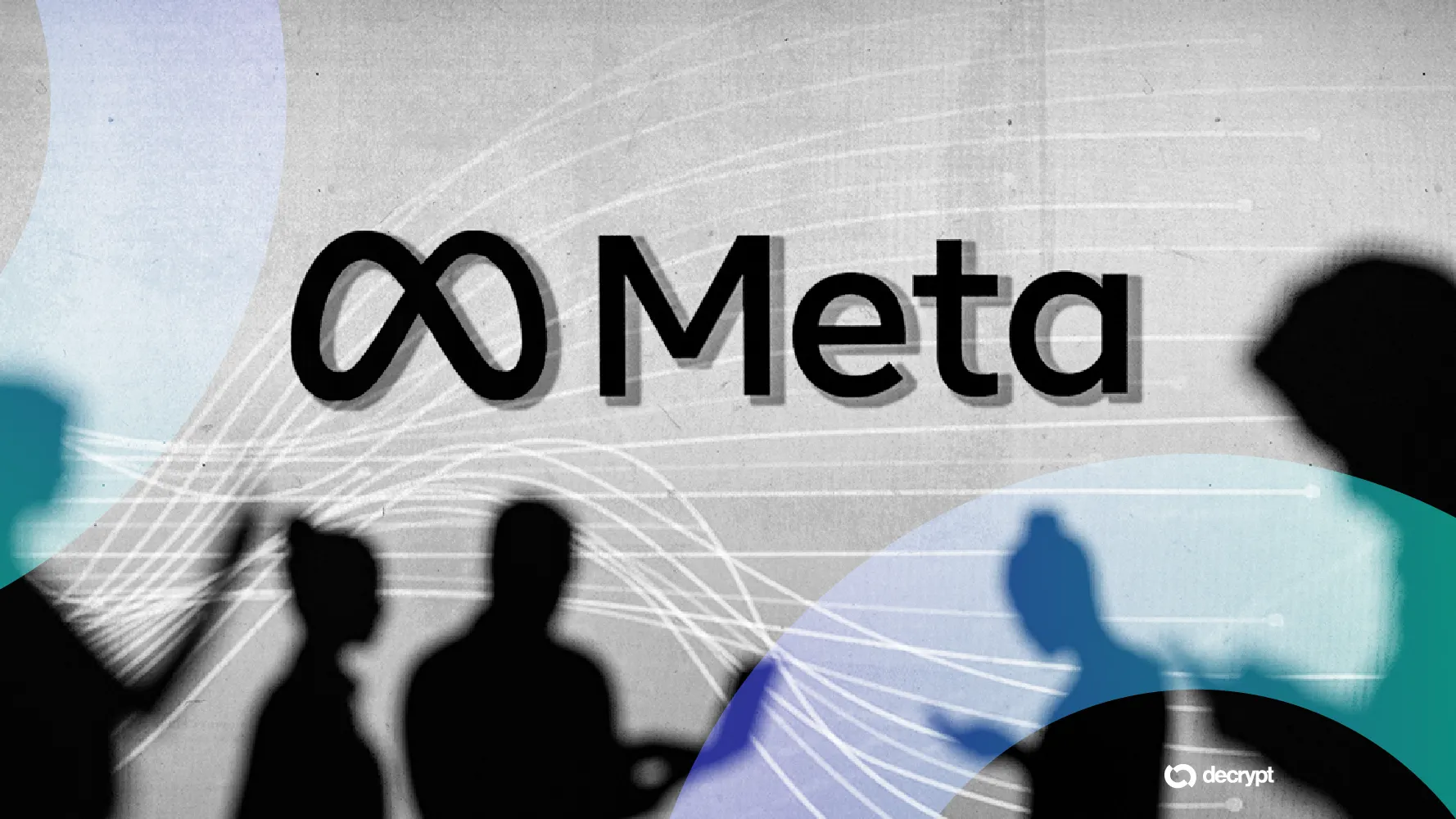
  • Forget the Dead-Eyed Cartoon—Meta Is Building a Photorealistic AI Clone of Zuckerberg

    Forget the Dead-Eyed Cartoon—Meta Is Building a Photorealistic AI Clone of Zuckerberg

    In brief

    • Meta is building a photorealistic AI clone of Zuckerberg, according to the FT.
    • The goal is scalable, always-available “leadership” for employees.
    • The move points to a sharp pivot from metaverse room meetings to AI-driven internal control.

    In August 2022, Mark Zuckerberg posted what was supposed to be a triumphant selfie. His Horizon Worlds avatar—a blocky, legless, dead-eyed cartoon that Kotaku memorably described as “a legless knock-off of a Nintendo Mii with the eyes of a corpse”—standing before a tiny Eiffel Tower. The internet buried him in memes. Even Meta’s own employees reportedly refused to use Horizon Worlds.

    That was then.

    Now, according to a Financial Times report, Meta is building a photorealistic, AI-powered 3D version of its CEO designed to hold real conversations with employees on his behalf. Zuckerberg is personally training and testing the system, four people familiar with the matter told FT.

    The character is being fed his mannerisms, vocal patterns, public statements, and recent thoughts on company strategy. The stated goal: make employees “feel more connected to the founder” through an AI that talks like him, thinks like him, and never has to cancel a one-on-one meeting.

    It’s a long way from the metaverse era’s plastic nightmares.

    The project is being led by Meta’s newly formed Superintelligence Labs. Scaling the tech has proven difficult—it requires enormous computing power to keep interactions realistic and lag-free. Meta last year acquired two voice companies, PlayAI and WaveForms, as part of that push. The company’s projected capital expenditure for 2026 sits between $115 billion and $135 billion, nearly double last year’s figure.

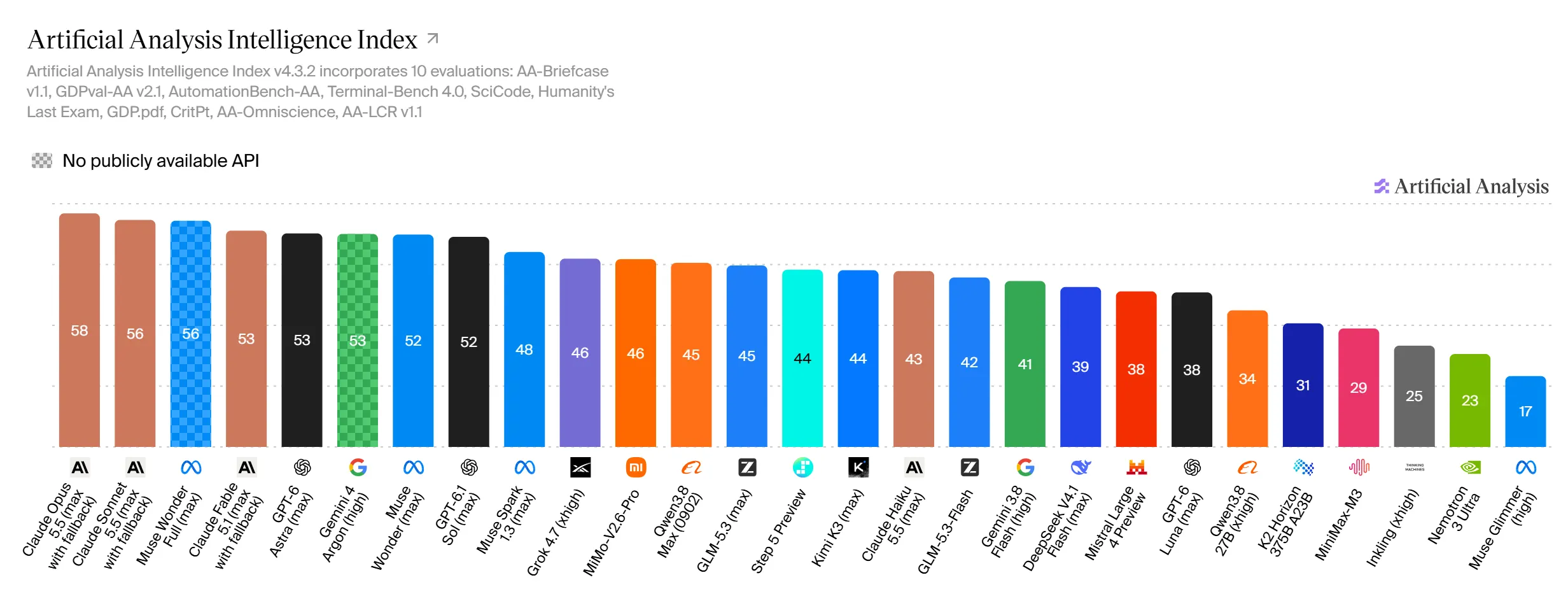
    Last week, Meta released Muse Spark, the first model from its Superintelligence Labs—a compact, purpose-built system with capabilities in health reasoning and visual understanding. Shares jumped 7% on the announcement.

    Inside the company, employees are being pushed to embrace AI tools and build their own agents using open-source software called OpenClaw. Product managers have been handed a “skills baseline exercise” that includes system design tests and, yes, “vibe coding.”

    The contrast with the metaverse era is stark. As Decrypt reported in 2022, Horizon Worlds was in a self-declared “quality lockdown” while its own team was barely logging in. Reality Labs burned through billions every quarter—$10.2 billion in 2021 alone—before Zuckerberg quietly pivoted. The cartoon avatar became the defining image of that failure.

    Now the bet is on something that looks and sounds like the real thing—to either make employees feel more connected to leadership, or just more supervised by it.

    Daily Debrief Newsletter

    Start every day with the top news stories right now, plus original features, a podcast, videos and more.
  • This ‘Space Invaders’ Clone Game Pays Real Bitcoin—If You’re Skilled, Lucky or Rich

    This ‘Space Invaders’ Clone Game Pays Real Bitcoin—If You’re Skilled, Lucky or Rich

    In brief

    • A new game based on the arcade classic Space Invaders will let one person earn a real Bitcoin reward.
    • To claim the reward ,they must destroy 10,000 BTC worth of transactions that mirror actual activity on the blockchain.
    • The winner will earn a 10,000 sats bounty, valued around $7.30 at the time of writing.

    A new free-to-play Bitcoin game will pay someone a BTC bounty if they’re skilled at old-school arcade games, lucky enough to play while lots of Bitcoin is being transacted on the blockchain, or willing to move a ton of BTC to help grease the wheels.

    In the web game Mempool Space Invaders, first spotted by Protos, players are challenged to shoot down Bitcoin “whales” that fall through the screen towards their ship. Each whale represents a real transaction on the Bitcoin blockchain, and upon being blasted by the player, it adds the quantity of BTC from each transaction to the player’s score.

    Fail to destroy the whale and your shields will slowly deteriorate until you’ve lost the game. You can choose to start over for free—or pay 1,000 sats (about $0.73 worth of Bitcoin; each sat is 1/100,000,000 BTC) to continue your previous run.

    Ultimately, the first player to destroy 10,000 BTC in the game—representing some $730 million worth of real Bitcoin transactions—will earn a bounty of 10,000 sats, or about $7.30 in BTC from pseudonymous developer Jasonb, per a Stacker News post from the creator. 

    Taking home the bounty though will require serious skill and luck. Players must shoot down all the whales, many of which fall simultaneously, making it difficult to stay alive for long. If you’re lucky enough, though, you might play while large Bitcoin transactions are taking place on the blockchain, allowing you to destroy larger whales and stack bigger quantities of BTC in a short period of time. 

    But there is another way to win, according to the pseudonymous developer—though it’ll require the ability to move a massive amount of crypto.

    “The people’s approach,” said the developer in a post outlining the game, is to “throw up a 10,000 Bitcoin transaction to yourself and wait for it to show up.” 

    “Then blast it out of the water—er—space,” they explained. “Just make sure not to spend too much in fees, or you’ll eat up all your winnings.”

    Of course, not everyone has $730 million in Bitcoin laying around to win the game. As an alternative, the developer cheekily suggested trying “two 5,000 Bitcoin transactions.”

    “Just make sure that they are broadcast close enough together that you can shoot both of them in the same game,” they added in the footnotes. 

    If you don’t want to risk sending $730 million on the blockchain, you can try to play it out like some in the Stacker News comments, where one user said they were able to destroy a “paltry 70 BTC,” and another only 30 BTC after 20 minutes of trying. That won’t cut it.

    Anyone that actually completes the initiative will need to share a screenshot of their “game over” screen to unlock the bounty. If they put in the “effort to fake that,” the sats reward is “deserved,” the game’s author wrote.

    Other free-to-play games have offered users a risk-free way to stack BTC, but often the reward is not worth the time or effort. Most Bitcoin-backed games only offer pennies’ worth of BTC for each hour of play, and even then, you’ll have to endure loads of video ads to earn that pittance.

    Bitcoin is up 1.3% in the last 24 hours, slightly increasing the game’s bounty in the process as it trades around $73,198. The top crypto asset has jumped more than 9.5% in the last week, but still sits 42% below its all-time high of $126,080.

    Daily Debrief Newsletter

    Start every day with the top news stories right now, plus original features, a podcast, videos and more.

  • Economists Said AI Wouldn’t Take Jobs—Some Now Admit They Got It Wrong

    Economists Said AI Wouldn’t Take Jobs—Some Now Admit They Got It Wrong

    In brief

    • A major multi-university study finds faster AI means fewer people working.
    • Economists now see real job losses alongside strong economic growth.
    • The debate has shifted to whether AI will replace the need for new jobs entirely.

    For years, economists were the professionals most likely to tell you to calm down about any fear related to technology. ATMs didn’t replace cashiers, Excel didn’t replace bookkeepers and robotic vacuums didn’t replace maids. “Augment, not replace” was the consensus.

    Well, that consensus is cracking.

    A new paper from researchers at the Federal Reserve Bank of Chicago, the Forecasting Research Institute, Yale, Stanford, and the University of Pennsylvania surveyed 69 economists, 52 AI specialists, and 38 superforecasters about how AI will reshape the U.S. economy.

    All three groups agree on one thing: Faster AI progress means lower labor force participation. That’s the polite way to say “fewer people working.”

    The numbers are staggering. Under what the researchers call the “rapid” scenario—where AI surpasses human performance across most cognitive and physical tasks by 2030—economists forecast the U.S. labor force participation rate dropping from its current 62% to 54% by 2050.

    About half of that drop, roughly 10 million lost jobs, would be directly attributable to AI rather than demographics or other trends.

    The rapid scenario isn’t science fiction. It’s the world where AI can negotiate book contracts, assist in any factory or home, and replace all freelance software engineers, paralegals, and customer service agents.

    Anthropic CEO Dario Amodei has already warned that the disruption is accelerating faster than most expect—and the study’s rapid scenario effectively validates that framing. GDP tells the other half of the story.

    Under the same rapid scenario, economists project annual GDP growth hitting 3.5% by 2045-2049—approaching post-WWII boom levels. AI experts are even more bullish, forecasting 5.3% growth. Tremendous aggregate wealth creation, concentrated at the top, with a thinner workforce to share it. The researchers flag that under rapid AI, the wealthiest 10% of households could hold 80% of total wealth by 2050—higher than pre-WWII inequality.

    But there’s a nuance that often gets lost in the AI jobs debate. The paper finds that expert disagreement isn’t mainly about whether powerful AI will arrive, but about what happens to the economy once it does. That’s a meaningful shift. The previous pro-tech arguments assumed that even transformative automation would eventually create new categories of work. The new question economists are wrestling with is whether AI, unlike ATMs, automates the task of inventing new tasks.

    For now, the aggregate employment data still looks mostly stable. A Yale and Brookings study from late 2025 found no mass unemployment signal nearly three years after ChatGPT’s launch. But research cited in the new paper documents a 13% relative employment drop among workers aged 22-25 in the most AI-exposed occupations. The macro is stable. The leading edge is not.

    On policy, economists and the general public part ways sharply. Economists favor targeted retraining programs (71.8% support) and largely reject job guarantees (13.7%) and universal basic income (37.4%). The general public is far more open to structural interventions. The paper’s authors note that optimal policy depends heavily on which scenario plays out—and right now, nobody knows which one will.

    So, the “augment, not replace” parable isn’t dead, but it’s on life support, and the economists running the numbers have enough data to be worried.

    Daily Debrief Newsletter

    Start every day with the top news stories right now, plus original features, a podcast, videos and more.
  • Elon Musk’s SpaceX Is Nearing Its $1.75 Trillion IPO—Bitget Is Offering Pre-IPO Exposure

    Elon Musk’s SpaceX Is Nearing Its $1.75 Trillion IPO—Bitget Is Offering Pre-IPO Exposure

    In brief

    • Bitget launched IPO Prime, a platform offering tokenized exposure to pre-IPO companies.
    • The first offering is preSPAX, a Republic-issued token tied to SpaceX’s post-IPO performance.
    • The token provides economic exposure without equity ownership, voting rights, or company endorsement.

    Cryptocurrency exchange Bitget launched IPO Prime on Friday, debuting the platform with preSPAX—a token that provides retail investors exposure to SpaceX’s future public market performance.

    The Republic-issued token offers economic upside tied to SpaceX’s eventual IPO or acquisition, marking a new intersection between crypto infrastructure and traditional pre-IPO investing.

    The preSPAX token mirrors potential economic gains from SpaceX upon a qualifying event like an IPO, but grants no equity, voting rights, or ownership in the company. SpaceX has not endorsed or authorized the offering, the same report notes. The subscription window will open from April 18-21, with token distribution and OTC trading scheduled to begin once it closes.

    “IPO Prime allows users to participate earlier in a company’s growth cycle, with the flexibility of continuous trading,” said Bitget CEO Gracy Chen, in a statement. “This shifts how and when investors can engage with emerging companies, which gives retailers and new investors a chance to buy in early.”

    The token launch comes as SpaceX moves toward a public listing. The company confidentially filed with the SEC on April 1, targeting a June 2026 IPO with a valuation of $1.75 trillion while seeking to raise over $75 billion. SpaceX currently trades at a $1.43 trillion valuation on the Nasdaq Private Market, a secondary venue for private company shares.

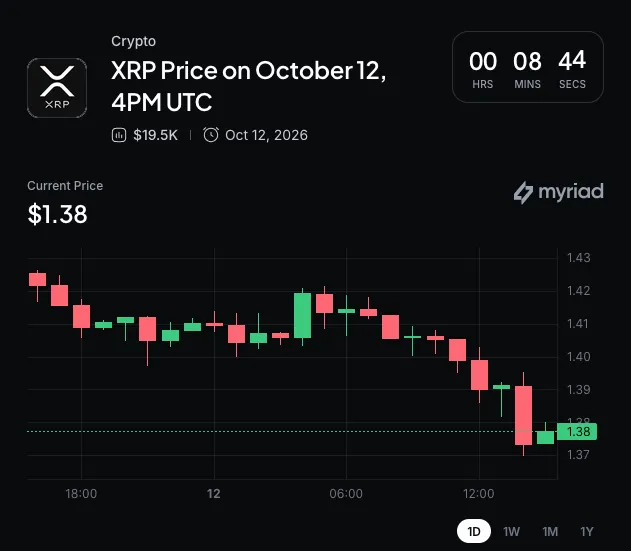
    Traders on Myriad—a prediction market platform operated by Decrypt‘s parent company, Dastan—strongly believe that SpaceX’s IPO will yield a market cap above $1.3 trillion at the end of the first day of trading, currently penciling in 88% odds.

    Bitget’s entry into tokenized pre-IPO investing reflects broader convergence between crypto and traditional markets. The Seychelles-based exchange, which claims 125 million users, already offers tokenized stocks, ETFs, commodities, and forex alongside cryptocurrencies. Republic previously launched its own rSPAX Mirror Tokens on Solana, offering similar SpaceX exposure.

    The space faces growing competition from both crypto and traditional players. Solana-based PreStocks offers comparable pre-IPO tokens, while established venues like Nasdaq Private Market and Forge Global dominate traditional secondary trading. Major exchanges are expanding their offerings, too, with Coinbase and Kraken offering stock trading options.

    Daily Debrief Newsletter

    Start every day with the top news stories right now, plus original features, a podcast, videos and more.

  • Elon Musk’s xAI Sues Colorado Over AI Law as Fight Over State Regulation Intensifies

    Elon Musk’s xAI Sues Colorado Over AI Law as Fight Over State Regulation Intensifies

    In brief

    • Elon Musk’s AI company filed a federal lawsuit seeking to block Colorado’s AI law before it takes effect on June 30.
    • The case reflects a broader conflict over whether states or the federal government should regulate artificial intelligence.
    • The company faces separate lawsuits and investigations tied to Grok’s image-generation tools.

    Elon Musk’s artificial intelligence company, xAI, has filed a federal lawsuit seeking to block Colorado from enforcing a new law regulating high-risk AI systems.

    In court documents filed on Thursday, Musk’s lawsuit targets Colorado Senate Bill 24-205, scheduled to take effect on June 30, which requires developers of AI systems to disclose risks and take steps to prevent algorithmic discrimination in areas such as employment, housing, healthcare, education, and financial services.

    According to the complaint, the company argues the measure would force developers to modify how AI systems operate and could restrict how models generate responses.

    “SB24-205 is decidedly not an anti-discrimination law. It is instead an effort to embed the State’s preferred views into the very fabric of AI systems,” attorneys for xAI wrote. “Its provisions prohibit developers of AI systems from producing speech that the State of Colorado dislikes, while compelling them to conform their speech to a State-enforced orthodoxy on controversial topics of great public concern.”

    The lawsuit asks a federal court to declare the law unconstitutional and block its enforcement, which xAI says violates the First Amendment by forcing changes to Grok’s outputs to align with the state’s views on diversity and equity. The lawsuit also argues that SB24-205 improperly regulates activity beyond Colorado, and is too vague to enforce fairly, and favors AI systems that promote “diversity” while penalizing those that do not.

    “By requiring “developers” and “deployers” to differentiate between discrimination that Colorado disfavors and discrimination that Colorado favors, SB24-205 compels Plaintiff xAI—a “developer” under the law—to alter Grok, forcing Grok’s output on certain State-selected subjects to conform to a controversial, highly politicized viewpoint,” the lawsuit said. “But the State “may not compel [xAI] to speak its own preferred messages.”

    The legal challenge comes amid a growing conflict between technology companies and government officials over how artificial intelligence should be regulated. Several states, including Colorado, New York, and California, have introduced rules addressing risks posed by generative AI tools. At the same time, the Donald Trump administration has moved to establish a national AI regulatory framework.

    The lawsuit also arrives as scrutiny of xAI’s chatbot Grok continues to increase.

    Several lawsuits filed in 2026 accuse the company of allowing Grok to generate non-consensual deepfake images. In March, a class-action complaint filed by three Tennessee minors alleged that Grok produced explicit images depicting them without consent. The city of Baltimore also sued, claiming Grok generated up to 3 million sexualized images in a matter of days, including thousands depicting minors.

    xAI did not immediately respond to a request for comment by Decrypt.

    Daily Debrief Newsletter

    Start every day with the top news stories right now, plus original features, a podcast, videos and more.
  • The CIA Let AI Write Its First Intelligence Report—And AI ‘Coworkers’ Are Up Next

    The CIA Let AI Write Its First Intelligence Report—And AI ‘Coworkers’ Are Up Next

    In brief

    • CIA Deputy Director Michael Ellis confirmed the agency produced its first-ever fully AI-generated intelligence report.
    • Ellis outlined a roadmap for AI “coworkers” in analyst workflows—and within a decade, officers managing teams of AI agents.
    • The disclosure came as the CIA distanced itself from Anthropic, whose tools the Trump administration has ordered federal agencies to phase out.

    The CIA recently used AI to generate an intelligence report without a human analyst driving it. Deputy Director Michael Ellis confirmed the milestone Thursday at a Special Competitive Studies Project event, marking a shift from quiet experimentation to a public declaration of ambition.

    Ellis said the agency ran more than 300 AI projects last year, Politico reports. Somewhere in that stack, a machine produced an intelligence product entirely on its own—a first in the agency’s history.

    The near-term roadmap is more incremental. Analysts would get AI “coworkers” embedded in agency analytics platforms to handle drafting, editing for clarity, and benchmarking outputs against tradecraft standards. Humans would still ultimately sign-off on the results. But the goal is speed—getting intelligence products out faster than a human-only pipeline allows.

    Within a decade, Ellis said, CIA officers will manage teams of AI agents operating as “autonomous mission partners,” a hybrid model that scales intelligence gathering in ways no human workforce can match alone.

    The CIA has been building toward this for years. In 2023, the intelligence agency announced its own AI chatbot to help staffers parse surveillance data. By 2024, CIA Director Bill Burns and MI6 Chief Richard Moore jointly disclosed they were actively using generative AI for content triage, analyst support, and tracking how foreign adversaries deploy the technology. Ellis’ remarks push that public timeline forward considerably.

    Earlier this year, Anthropic declined to relax restrictions barring its tools from domestic surveillance or fully autonomous weapons applications. Defense Secretary Pete Hegseth responded by designating Anthropic’s products a “supply chain risk.” President Trump then ordered every federal agency to phase out Anthropic tools. The company has legally challenged the move.

    Ellis didn’t name Anthropic, but the message landed clearly. The CIA “cannot allow the whims of a single company” to constrain its use of AI, he said, and the agency is actively diversifying across vendors to stay operationally flexible.

    Ellis also flagged that the CIA doubled its technology-focused foreign intelligence reporting, tracking how adversaries like China are deploying AI across semiconductors, cloud computing, and R&D. The agency’s Center for Cyber Intelligence was elevated to a full mission center—a move Ellis described as critical, given that “the battle of cybersecurity will be a battle of artificial intelligence.”

    Daily Debrief Newsletter

    Start every day with the top news stories right now, plus original features, a podcast, videos and more.

  • Powell, Bessent Warn Banks About Security Risks From Anthropic’s Mythos AI: Bloomberg

    Powell, Bessent Warn Banks About Security Risks From Anthropic’s Mythos AI: Bloomberg

    In brief

    • U.S. officials warned major banks about cybersecurity risks tied to Anthropic’s Mythos AI model, Bloomberg reports.
    • The system can reportedly identify and exploit vulnerabilities in operating systems and browsers.
    • Anthropic has limited access to the model while it evaluates potential security risks.

    U.S. Treasury Secretary Scott Bessent and Federal Reserve Chair Jerome Powell reportedly convened a meeting with Wall Street bank CEOs earlier this week to warn about cybersecurity risks tied to a new artificial intelligence model from Anthropic.

    According to a report by Bloomberg, the meeting included executives from Citigroup, Bank of America, Wells Fargo, Morgan Stanley, and Goldman Sachs. Officials discussed Anthropic’s new AI model Mythos, which has recently drawn broad concern over its apparent advanced cybersecurity capabilities.

    Officials convened the meeting to ensure banks understand the risks posed by systems capable of identifying and exploiting software vulnerabilities across operating systems and web browsers, and to encourage institutions to strengthen defenses against potential AI-assisted cyberattacks targeting financial infrastructure.

    Security researchers have warned that tools capable of automatically discovering vulnerabilities could accelerate both defensive security work and malicious hacking if misused.

    Anthropic’s Mythos model first surfaced online in March after draft materials about the system leaked online, revealing what the company described as its most capable AI model yet. In testing, the system reportedly found thousands of previously unknown software vulnerabilities, including zero-day flaws across major operating systems and web browsers.

    Anthropic researchers said in a report earlier this week that Mythos Preview’s vulnerability-discovery capabilities were not intentionally trained, but instead emerged from broader improvements in the model’s coding, reasoning, and autonomy.

    “The same improvements that make the model substantially more effective at patching vulnerabilities also make it substantially more effective at exploiting them,” the firm wrote.

    Because of those capabilities, Anthropic has restricted access to a small group of cybersecurity organizations.

    “Given the strength of its capabilities, we’re being deliberate about how we release it,” Anthropic said in a statement. “As is standard practice across the industry, we’re working with a small group of early access customers to test the model. We consider this model a step change and the most capable we’ve built to date.”

    To address that risk, Anthropic is testing Mythos through Project Glasswing, a collaboration with major technology and cybersecurity companies that uses the model to identify and patch vulnerabilities in critical software before attackers can exploit them.

    “Project Glasswing is a starting point. No one organization can solve these cybersecurity problems alone,” the company said in a statement. “Frontier AI developers, other software companies, security researchers, open-source maintainers, and governments across the world all have essential roles to play.”

    Anthropic did not immediately respond to Decrypt’s request for comment.

    Daily Debrief Newsletter

    Start every day with the top news stories right now, plus original features, a podcast, videos and more.
  • Exodus Rolls Out ‘Exodus Pay’ to Turn Bitcoin Wallet Into Spending App

    Exodus Rolls Out ‘Exodus Pay’ to Turn Bitcoin Wallet Into Spending App

    In brief

    • Exodus launches Exodus Pay, a feature that lets users spend crypto directly from its wallet app.
    • The rollout is limited to five U.S. states, including New York and California.
    • The company says the feature aims to reduce reliance on third-party payment platforms.

    Exodus, the publicly traded crypto wallet provider, began rolling out a new “Exodus Pay” feature on Wednesday, aiming to turn its self-custodial storage app into a tool for everyday payments. The launch is currently limited to users in five states, including New York and California.

    The Omaha-based firm listed its stock on the New York Stock Exchange in 2024 and says the new feature expands the role of its wallet beyond storage into payments. The company positions the service as an alternative to centralized payment apps.

    “Most payment apps are third parties that hold your funds for you,” Exodus co-founder and CEO JP Richardson told Decrypt. “That means they can freeze your account, reverse transactions, and decide what you’re allowed to buy.” Exodus, by contrast, can’t do that, because users remain in control of their funds at all times.

    The company says Exodus Pay works within the existing wallet app and allows users to spend USD-backed stablecoins, such as USDC, or Bitcoin at merchants that accept Visa or Apple Pay.

    “The problem with self-custody until now has been the friction. Seed phrases, complicated networks—most self-custody consumer experiences aren’t built for someone who just wants to pay for groceries or send friends money,” Richardson said.

    To encourage adoption, Exodus says it will subsidize network fees and allow transfers using phone numbers. The service remains geographically limited due to regulatory requirements. It is currently available only in Nebraska, Texas, Florida, New York, and California.

    Richardson said the company has focused on simplifying the user experience, claiming that “someone with zero crypto experience should be able to use an app intuitively.”

    Exodus joins a growing list of crypto wallet developers that let customers pay for purchases using crypto or stablecoins, including Coinbase, BitPay, and PayPal.

    After the initial launch, Richardson said the company plans to expand the service nationwide over the next several weeks.

    “By mid-April, everyone in America will have Exodus Pay in their app,” Richardson said. For existing users, the feature will appear as an automatic update rather than a new download. “If you already have Exodus, you’ll have Exodus Pay,” he added.

    Daily Debrief Newsletter

    Start every day with the top news stories right now, plus original features, a podcast, videos and more.

  • ‘Operation Atlantic’: US and UK Team With Firms to Trace, Freeze Millions in Stolen Crypto

    ‘Operation Atlantic’: US and UK Team With Firms to Trace, Freeze Millions in Stolen Crypto

    In brief

    • Crypto firms and government agencies teamed up in “Operation Atlantic,” designed to stop crypto fraud schemes and approval phishing campaigns.
    • The sprint led to $12 million in frozen funds and $45 million in total traced funds believed to be related to crypto fraud.
    • Held at the U.K.’s NCA headquarters in London, the operation had involvement from Coinbase, Binance, the Secret Service, and more.

    Crypto firms like Coinbase and Binance, alongside government agencies like the United States Secret Service and the U.K.’s National Crime Agency (NCA), have flagged $45 million in stolen crypto funds as part of fraud schemes, the parties announced on Thursday. 

    In the probe, more than 20,000 victims of approval phishing fraud were identified, and $12 million in funds were frozen in the hopes of returning funds to victims.

    “To take on approval phishing at scale, our Global Intelligence team joined forces with multiple international law enforcement agencies and other partners for a focused operational sprint held at the National Crime Agency’s headquarters in London,” Coinbase wrote. 

    “The goal was straightforward: identify victims, trace stolen funds, and disrupt the infrastructure that makes approval phishing possible—as fast as we could,” it added. 

    The investigative sprint, dubbed “Operation Atlantic,” was first revealed last month and was hosted by the NCA at its headquarters in London. In a week of focused work there, the agencies disrupted “multiple fraud networks,” and will continue to analyze intelligence gathered moving forward. Other crypto firms, like on-chain security firm Chainalysis, crypto exchange Kraken, and stablecoin issuer Tether, were included as partners. 

    “Operation Atlantic is a powerful example of what is possible when international agencies and private industry work side by side,” said National Crime Agency Deputy Director of Investigations Miles Bronfield, in a statement. “This intensive action has led to the safeguarding of thousands of victims in the UK and overseas, stopped criminals in their tracks and helped save others from losing their funds.”

    The enforcement campaign was focused on crypto investors who may have been impacted by approval phishing, when malicious actors attempt to gain access to funds via fake pop-up notifications or alerts that unsuspecting victims believe come from trusted parties. 

    More than 120 web domains used for schemes were identified during the week, according to the Secret Service. 

    “With traditional financial crimes, this kind of cross-border, multi-agency coordination would take months,” Coinbase wrote in its recap on the week. “With blockchain technology, we moved from identification to action in a single week-long sprint.” 

    The engagement report comes just over a week after alleged North Korean hackers made off with around $285 million via an exploit of Solana protocol, Drift. The exploit would represent just a fraction of the funds lost to crypto scam last year, with a recent report from the FBI indicating that more than $11.4 billion was lost to crypto scams in 2025 alone.

    Daily Debrief Newsletter

    Start every day with the top news stories right now, plus original features, a podcast, videos and more.
  • Morning Minute: Bitcoin Breaks $73K as Strategy’s STRC Bid Grows

    Morning Minute: Bitcoin Breaks $73K as Strategy’s STRC Bid Grows

    Morning Minute is a daily newsletter written by Tyler Warner. The analysis and opinions expressed are his own and do not necessarily reflect those of Decrypt. And check out our new daily news show covering all of the top stories in 5 minutes or less, downloadable on Apple Pod or Spotify.

    GM!

    Today’s top news:

    • Crypto majors up 1%; BTC at $72K
    • ZEC and MON rally 20% leading top movers; HYPE +5%
    • CZ and OKX founder Star publicly dispute, CZ calls for $1B “divorce” bet
    • Bessent and Brian Armstrong both say it’s time to pass the Clarity Act
    • WLFI falls 10% after team reveals using 5B tokens to borrow $75M

    🌎 Bitcoin breaks $73K on ceasefire hopes, STRC

    Bitcoin topped $73,000 briefly on Thursday, per data from CoinMarketCap, reversing an early sell-off after Netanyahu signaled Lebanon negotiations. It bounced off that level and is holding just above $72K this morning.

    The Bitcoin options market is even more bullish. Data shows that the $80,000 level is seeing the most volume in June expiry contracts with over $1.6B in open interest, a full 10% move from current levels.

    As for why traders are bullish—well, it could be Saylor-driven. Strategy‘s STRC had another massive day Thursday with over 3M preferred shares moved, generating capital to purchase 2,000+ Bitcoin ($144M). Wednesday’s numbers were similar, and the totals historically rise into the dividend cutoff date (next Wednesday). So expect 3 more days of increasing STRC flows.

    It’s a strong setup for Bitcoin near-term.

    Key Details:

    • Bitcoin topped $73,000 Thursday, up ~9% over the past month as crypto decouples from software stocks, which are down 12% over the same stretch
    • June $80K Bitcoin options showing $1.6B in open interest, most concentrated target
    • Saylor’s STRC moved 3M shares, enough to buy $144M in Bitcoin; on pace for well over $300M in purchases this week

    📊 Galaxy profit rockets, stock jumps

    The headline number from Galaxy’s 2025 annual report, a $241M net loss, buried the more important one: The firm’s Digital Assets segment generated $505M in adjusted gross profit.

    GLXY closed up 11.3% Thursday, second-best crypto equity on the day.

    The thesis Mike Novogratz is selling isn’t a crypto trading story anymore. It’s AI infrastructure. Galaxy’s Helios campus, once one of North America’s largest Bitcoin mines, is an 800-megawatt facility fully leased to CoreWeave that’s beginning to generate compute revenue in 2026. “The most consequential shift right now is the move from narrative to infrastructure,” he wrote.

    That pivot from BTC mining to AI is clearly paying off…

    Key Details:

    • Galaxy posted a $241M 2025 net loss driven by unrealized losses and one-time costs; core Digital Assets segment generated $505M in adjusted gross profit
    • GLXY closed up 11.3% at $21.15; total assets on platform hit $12B with $2B in net inflows during 2025
    • The Helios play: 800MW Texas facility fully leased to CoreWeave; AI compute revenue begins 2026; Galaxy is pitching itself as half crypto financial firm, half AI infrastructure company

    🦅 Gemini is on sale, but nobody wants the whole thing

    Potential buyers are circling Gemini, but not in the way the Winklevoss twins might want.

    Per CoinDesk, interested parties are evaluating an acquisition of Gemini’s shuttered EU and UK operations specifically to obtain MiCA and FCA regulatory licenses. Nobody is pursuing a full takeover.

    The backdrop is stark. Gemini IPO’d at $28 in September 2025 and now trades around $4.70, down 83%. The company cut 25% of its workforce in February, exited the EU, UK, and Australia, lost three senior executives, and faces a shareholder class-action lawsuit filed in March.

    GEMI stock jumped 11% on the acquisition reports, but has already shed some of those gains.

    Key Details:

    • Potential buyers are circling Gemini’s shuttered EU and UK operations for MiCA and FCA licenses; no full takeover interest
    • The distress context: $28 IPO September 2025, now $4.70 (down 83%); 25% workforce cut; exited EU/UK/Australia; three executives departed; class-action lawsuit filed March 2026
    • MiCA wrinkle: license doesn’t transfer in an acquisition; change of control triggers full regulatory reassessment; buyers face scrutiny equivalent to a new applicant

    ⚖️ Bessent to the Senate: Pass the Clarity Act

    Treasury Secretary Bessent made his most direct push yet Thursday, urging the Senate to pass the Clarity Act and resolve the stablecoin yield dispute still stalling the bill.

    This comes just one day after the White House Council of Economic Advisors mathematically dismantled the banking lobby’s core argument, finding a yield ban would boost lending by just $2.1B, a 0.02% increase.

    The only remaining variable is whether Senate Democrats and holdout Republicans will accept a stablecoin yield framework that Coinbase can live with.

    And we may have gotten a signal from Brian Armstrong last night, who tweeted “It’s time to pass the Clarity Act” in union with Bessent.

    Key Details:

    • Bessent urged the Senate to pass the Clarity Act, calling for resolution on stablecoin yield provisions; follows the White House CEA report that undercut the banking lobby’s deposit-flight argument
    • What’s left: Senate Banking Committee markup; stablecoin yield language is the last unlock for the full US crypto regulatory stack
    • Odds of the Clarity Act passing in 2026 rose 3% to 59% on Thursday

    🤖 Florida goes after OpenAI

    Florida AG James Uthmeier launched a formal investigation into OpenAI and ChatGPT Thursday, citing the chatbot’s alleged role in the April 2025 FSU mass shooting that killed two people, child safety concerns, and the risk of OpenAI data reaching the Chinese government.

    The quote Uthmeier posted to announce it is the week’s most ironic AI headline: “AI should advance mankind, not destroy it.”

    The investigation arrives as AI infrastructure, specifically data centers, are coming under attack. Per Bloomberg and Sightline Climate, 30-50% of the data centers planned to come online this year are facing delays or outright cancellations. Of the 12 gigawatts of capacity announced for 2026, only a third is currently under construction. Bernie Sanders and AOC introduced the AI Data Center Moratorium Act in March to stop all new construction until federal safeguards are in place. It’s not going anywhere, but it signals the political mood around AI is shifting.

    Key Details:

    • Florida AG Uthmeier launched a formal OpenAI investigation, citing ChatGPT’s alleged role in the 2025 FSU shooting, child safety, and CCP data concerns; subpoenas forthcoming; arrives as OpenAI eyes a $1T IPO
    • 30-50% of US data centers planned for 2026 are facing delays or cancellations per Sightline Climate
    • The political pressure: Sanders and AOC introduced the AI Data Center Moratorium Act in March, calling for a full construction halt until federal safeguards are in place; fringe bill, real signal

    🌎 Macro crypto and markets

    • Crypto majors are slightly green; BTC +1% at $72.1k; ETH +1% at $2,210; SOL +2% at $84; HYPE +5% at $41
    • DEXE (+30%), ZEC (+20%), and MON (+20%) led top movers
    • Oil -3% at $94; Gold even at $4,764
    • The Bitcoin options market is showing concentration at the $80,000 price level for June expiry contracts with over $1.6B in open interest
    • Treasury Secretary Bessent urged the Senate to pass the Clarity Act, pushing for resolution on stablecoin yield provisions still stalling the bill
    • The Treasury will share cybersecurity intelligence with crypto firms, giving the industry access to the same threat data distributed to traditional financial institutions
    • Former SEC official Brett Redfearn joined Securitize as president ahead of the BlackRock-backed tokenization firm’s anticipated public listing
    • Binance founder CZ got into a public dispute with OKX founder Star, escalating to the point that CZ bet Star $1B that he is “officially divorced” from Binance

    Corporate Treasuries & ETFs

    Meme Coin Tracker

    • Meme leaders were slightly green; DOGE +1%, SHIB +1%, PEPE +1%, TRUMP -2%, PENGU +4%, SPX +5%, FARTCOIN +2%
    • SBTI (25x), triplet (+102%), chillguy (+32%), and hodl (+38%) led notable onchain movers

    💰 Token, airdrop & protocol Tracker

    • Tether released its QVAC SDK, a toolkit enabling AI apps to run locally on devices without cloud servers, extending Tether’s push into AI infrastructure
    • Nunchuk released open-source tools letting AI agents interact with Bitcoin wallets via multi-sig, without giving agents unilateral control over funds
    • DeFi lender Sky is restructuring its products to pursue a formal credit rating, targeting institutional capital as DeFi protocols push further into TradFi
    • Binance enabled prediction market trading in-app via Predict.fun, giving 240M+ users direct access to event contracts as the CFTC battles states over federal jurisdiction
    • WLFI fell 10% after the team revealed that it borrowed $75M against 5B tokens

    🚚 What is happening in NFTs?

    • NFT leaders were mostly flat again; Punks -1% at 28 ETH, Pudgy -1 at 4.2 ETH, BAYC even at 6.39 ETH; Hypurr’s +!% at 392 HYPE
    • Nouns (+69%) and Kodas (+13%) led notable movers

    Daily Debrief Newsletter

    Start every day with the top news stories right now, plus original features, a podcast, videos and more.