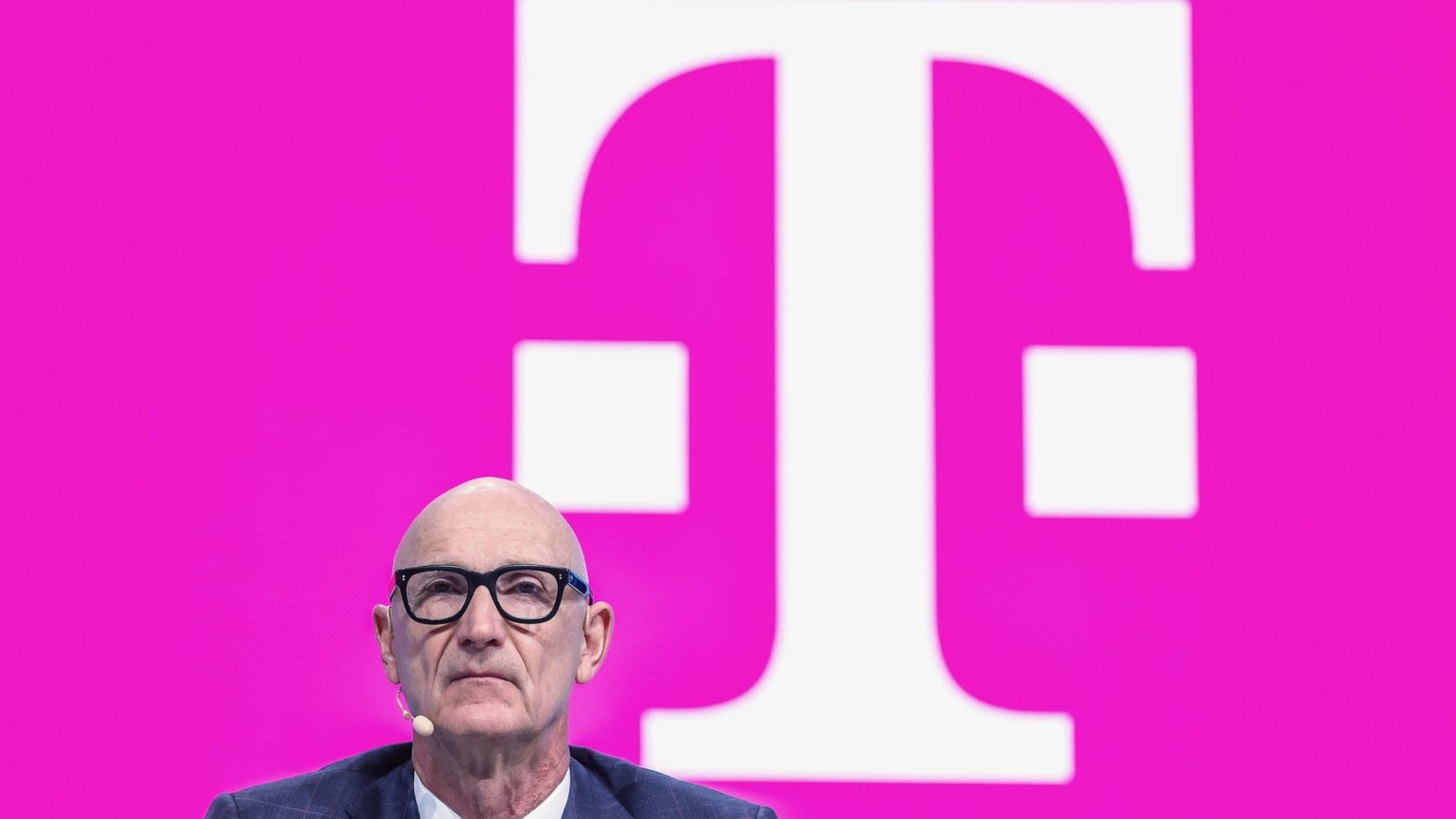
T-Mobile’s parent company, Deutsche Telekom, appears to be annoyed that SpaceX’s Starlink Mobile is hogging the attention as a potentially disruptive threat to the carrier business. Still, Deutsche Telekom admitted that Starlink Mobile could compete in innovative ways over time.
The carrier’s CEO, Timotheus Höttges, alluded to the hype surrounding Starlink Mobile while discussing the challenges facing its competitors.
“Sometimes I am a bit irritated how quickly the market thinks that everything that has been built over centuries can get disrupted within a minute. I don’t see this,” he said in an earnings call on Thursday. “We should not get totally panicking here.”
SpaceX is reportedly looking to secure as many as 80,000 cell sites in the US. The Elon Musk-led company has also reached a deal with Qualcomm to source components for “tens of thousands” of cell sites, although actual commercial service for the 5G Starlink Mobile won’t arrive until early 2028.
Starlink Mobile promises to also stand out by using a combination of next-generation satellites and small, cost-effective “femtocell” radio transmitters to offer nationwide coverage, including remote and rural areas too far from traditional cell towers. But like last month, Höttges again used the earnings call to cast doubt on the entire endeavor.
“Please don’t tell me that femtocells is the solution. This is a technology which we have tested 10 years ago, you know, and we came up with this interference problem,” he said when asked about SpaceX’s cellular ambitions.
Höttges argued that SpaceX will need to build out a large-scale, ground-based network and acquire more radio spectrum to compete with T-Mobile and other carriers. This will require heavy investment in spectrum and cell towers and the installation of all required equipment.
“Therefore, my assessment is that SpaceX, at least, if they want to play in that industry, needs at least minimum $200 billion,” he claimed, echoing a similar estimate from Verizon’s CEO, who also says Starlink Mobile will need a minimum of four to six years to build its ground network.
Despite his reservations, Höttges said his company is treating SpaceX as a serious challenger. He likened Starlink Mobile to Tesla’s electric cars and their impact on the legacy automotive industry. “SpaceX is creating a new category,” he said. That’s because it could offer a variety of capabilities through Starlink Mobile that other carriers lack. For example, SpaceX also owns the social media platform X after absorbing xAI, Musk’s challenger to OpenAI.
“[Musk] has chipsets, he has data centers, he has AI, he has satellites, he wants to go for mobile services, and he goes for handsets. He will go as well for maybe integrating social media or at least agent models into his service,” Höttges said. “So, he is creating a new way of communication services. It’s not that you can compare it with mobile and mobile. So therefore, we have now to find the right answer about this, maybe over the next five to 10 years, a new kind of business he’s going to create with a vertical integration.
Recommended by Our Editors
“And that is why I am saying, I take that super seriously,” Höttges added. “Because I was witnessing what happened to the car industry. They were ignoring it for too long, and we have to face the situation. But it’s not a free lunch.”
In another swipe at Musk, Höttges said Tesla itself has been struggling to compete against Chinese carmakers. “You know Tesla is not a very successful car company. That’s my assessment, at least, looking to the numbers and comparing that with Chinese cars, for instance. So therefore, you have possibilities to tackle this competition. You have to do it in a very intelligent and smart way.”
Ironically, T-Mobile is currently the exclusive provider of Starlink Mobile version 1 in the US. However, T-Mobile has also formed a joint venture with AT&T and Verizon to potentially foster satellite alternatives.
Deutsche Telekom also reached a deal to offer the 5G second-gen Starlink Mobile in European markets next year, but only for cellular dead zones. Last month, though, the company joined with three other European operators to explore a similar arrangement to support satellite services for phones. “These services would be offered through a model designed to foster competition, reduce market fragmentation and expand consumer choice across Europe,” the group said.
About Our Expert

Michael Kan
Principal Reporter
Experience
I’ve been a journalist for over 15 years. I got my start as a schools and cities reporter in Kansas City and joined PCMag in 2017, where I cover satellite internet services, cybersecurity, PC hardware, and more. I’m currently based in San Francisco, but previously spent over five years in China, covering the country’s technology sector.
Since 2020, I’ve covered the launch and explosive growth of SpaceX’s Starlink satellite internet service, writing 600+ stories on availability and feature launches, but also the regulatory battles over the expansion of satellite constellations, fights with rival providers like AST SpaceMobile and Amazon, and the effort to expand into satellite-based mobile service. I’ve combed through FCC filings for the latest news and driven to remote corners of California to test Starlink’s cellular service.
I also cover cyber threats, from ransomware gangs to the emergence of AI-based malware. In 2024 and 2025, the FTC forced Avast to pay consumers $16.5 million for secretly harvesting and selling their personal information to third-party clients, as revealed in my joint investigation with Motherboard.
I also cover the PC graphics card market. Pandemic-era shortages led me to camp out in front of a Best Buy to get an RTX 3000. I’m now following how the AI-driven memory shortage is impacting the entire consumer electronics market. I’m always eager to learn more, so please jump in the comments with feedback and send me tips.
Leave a Reply