Blog

  • MetaMask launches AI agent wallet for automated onchain trading

    MetaMask launches AI agent wallet for automated onchain trading

    MetaMask has officially launched Agent Wallet, a self custodial wallet that allows AI agents to execute onchain transactions while operating within rules established by the user.

    Your agent finally gets its own wallet.

    MetaMask Agent Wallet is now live for everyone. pic.twitter.com/F81PZ7etxv

    — MetaMask 🦊 (@MetaMask) August 6, 2026

    The wallet lets users connect AI frameworks including Claude Code, OpenAI Codex, OpenClaw, Hermes, OpenCode, and Cursor. Agents can then monitor markets, prepare transactions, and execute trades through MetaMask’s command line interface.

    Users can establish daily spending limits, allowlisted protocols, and risk preferences before granting an agent permission to transact. MetaMask offers two operating settings called Guard Mode and Beast Mode.

    Guard Mode requires agents to remain within approved protocols and spending limits. Transactions outside those rules are paused and presented to the user for two factor approval through email or the MetaMask mobile app.

    Beast Mode removes some of the policy restrictions for advanced users, although transactions identified as malicious are still blocked and sent for human approval. Agents cannot bypass MetaMask’s security checks, according to the company.

    The wallet supports execution across Hyperliquid and supported Ethereum Virtual Machine networks, including Robinhood Chain and Monad. It can complete token transfers, swaps, batch transactions, and other decentralized finance operations.

    MetaMask said users do not need to hold a network’s native token to pay gas fees when completing eligible transfers and swaps. The wallet can instead settle the network fee using the token involved in the transaction.

    Supported EVM transactions pass through a three stage security process before execution.

    The first stage simulates the transaction and displays expected balance changes, token approvals, and gas routing. The second scans for threats using technology powered by blockchain security company Blockaid. The final stage uses MetaMask’s Smart Transactions system to limit value lost through maximal extractable value activity.

    Eligible transactions that pass the security process but still result in a covered loss may qualify for MetaMask Transaction Protection of up to $10,000 per month, subject to the program’s terms and conditions.

    Agent Wallet supports server wallets, where keys are secured separately from a user’s primary wallet, and a bring your own wallet option that keeps keys on the user’s device. MetaMask said users retain control of their keys and can export their secret recovery phrase.

    Developers can access the wallet through MetaMask’s CLI and install dedicated skills that translate natural language requests into wallet commands. The system returns structured information that can be processed by compatible AI models and agent frameworks.

    MetaMask first introduced Agent Wallet through a limited early access release in June. The company announced its official launch on August 6, opening the product to traders and developers testing agent driven onchain workflows.

  • ‘The Batman 2’ and ‘The Batman 3’ Are Not Filming Back to Back, Says James Gunn: ‘I Can Deny’ That Online Rumor

    ‘The Batman 2’ and ‘The Batman 3’ Are Not Filming Back to Back, Says James Gunn: ‘I Can Deny’ That Online Rumor

    DC Studios co-chief James Gunn is putting to bed one of the more popular online rumors about the upcoming “The Batman 2,” directed by Matt Reeves and once again starring Robert Pattinson as the Dark Knight. Social media has been convinced that Reeves is filming “The Batman 2” and “The Batman 3” back to back, alleging this is one of the reasons his sequel to 2022’s “The Batman” spent so many years in development. Not so fast.

    Gunn was asked on Threads to confirm or deny the rumor about two “Batman” sequels shooting back to back, to which he bluntly answered: “I can deny.”

    It’s not uncommon in Hollywood for studios to shoot sequels back to back as one huge production. This is how “The Matrix Reloaded” and “The Matrix Revolutions” were filmed after the blockbuster success of the “The Matrix,” for instance, as were “Pirates of the Caribbean: Dead Man’s Chest” and “At World’s End” following the huge reception for “The Curse of the Black Pearl.” Marvel shot “Avengers: Infinity War” and “Avengers: Endgame” as one production over the course of an entire year.

    Warner Bros. recently delayed the release of “The Batman 2,” which is now in production in London. The movie will open in theaters on Feb. 18, 2028, nearly six years after the March 2022 opening of “The Batman.” Joining Pattinson in the long-delayed sequel are Scarlett Johansson and Sebastian Stan, plus Charles Dance, Brian Tyree Henry and Sebastian Koch. Reeves co-wrote the sequel’s screenplay with Mattson Tomlin. Plot details remain under wraps, as do the roles being played by the film’s supporting cast.

    “The Batman Part II” was originally supposed to open Oct. 2, 2026, before Warner Bros. delayed it to Oct. 1, 2027. Moving the film to 2028 gives Reeves additional time in post-production.

  • Putin Signs Russia’s First Crypto Law: Trading Is Legal, Payments Stay Banned

    Putin Signs Russia’s First Crypto Law: Trading Is Legal, Payments Stay Banned

    In brief

    • President Vladimir Putin signed Russia’s first law giving comprehensive rules to crypto exchanges, custodians, brokers, and mining.
    • Only firms on a state registry may run exchanges after July 1, 2027, with a 15 million ruble ($187,000) capital floor and a self-regulatory body requirement.
    • Using crypto as money is still banned, and banks can block transfers they suspect flow to unregistered providers.

    Russian President Vladimir Putin signed the country’s first comprehensive law governing digital currencies on Tuesday, state news agency Tass reported. The legislation sets rules for how crypto is issued, stored, accounted for, and traded, wrapping exchanges, digital depositories, brokers, and clearing houses into one framework.

    It isn’t a free market. The law keeps the ban on using crypto and digital rights as payment for goods and services, and it blocks advertising that pitches crypto payments. Russia already legalized cryptocurrency mining in 2024, when Putin signed a separate bill green-lighting the industry, so this law fills the gap on trading and custody that the mining rules left open.

    How the market gets built

    Only organizations on a special government registry may run crypto exchanges, and existing operators get a grace period to register by July 1, 2027. Registered exchanges need at least 15 million rubles (about $187,000) of their own capital and must join a self-regulatory body in the financial market.

    Regular exchange activity kicks in once a firm trades more than 3.5 million rubles in a month. Banks and foreign-lender branches must reject transfers they suspect are routed through an unregistered provider.

    Retail access is capped and gated. Non-accredited investors may buy the most liquid cryptocurrencies (list to be disclosed) through licensed intermediaries, up to 300,000 rubles per year per intermediary, and both retail and qualified investors must pass a knowledge test. Qualified investors face no purchase limit.

    The law also guarantees court protection for crypto owners regardless of whether they declared the assets before.

    Most of the provisions take effect September 1. Decrypt tracked the bill as it neared passage, noting the gap between “buy crypto” and “use crypto” was the whole point—Russia wants a regulated on-ramp, not a parallel currency. The framework dovetails with the digital ruble push, which the central bank governor says banks must support by the same September 1 date.

    The sanctions question

    The law’s exceptions matter most outside Russia. Settlements under foreign trade contracts between residents and nonresidents are permitted, as are deals involving mined coins and payments inside digital asset platforms. That carve-out is the part Western regulators will watch: Russia has leaned on crypto for cross-border trade as sanctions pressure built.

    The law gives Russian holders something they didn’t have: legal standing and a licensed venue. It gives the state what it wanted more: a central bank-supervised pipeline it can monitor.

    Daily Debrief Newsletter

    Start every day with the top news stories right now, plus original features, a podcast, videos and more.

  • One of the Most Mythical Altcoins of Its Time Is Shutting Down: Here’s What Users Need to Do

    One of the Most Mythical Altcoins of Its Time Is Shutting Down: Here’s What Users Need to Do

    Step App, a move-to-earn focused blockchain project, has announced its closure after four years of operation. The project team stated that all services will cease as of August 21st, urging users to unstake their locked tokens and manage their open positions before that date.

    Step App stated in a press release that the decision to shut down had been under consideration for a long time and that completely ending operations was not an easy one. The team added that the project had reached over 1 million downloads, tracked billions of steps, and established various partnerships that brought together the Web2 and Web3 worlds.

    Related News Coldcard Issues New Statement Regarding the Major Bitcoin Hack

    Step App, which combined blockchain technology with fitness applications, was among the prominent projects of the Move-to-Earn model, where users could earn digital assets in exchange for physical activity. However, despite the user and activity data collected, the team decided to discontinue the project.

    The project’s governance token, FITFI, had previously reached an all-time high of approximately $0.73. Considering the token’s IDO price of $0.0049, FITFI had gained approximately 150 times its value compared to its initial sale price during its peak period.

    Step App’s decision to shut down comes after exchange announcements regarding FITFI. South Korean cryptocurrency exchanges Upbit and Bithumb announced on July 16th that they would end support for FITFI trading. With the project’s closure, FITFI holders need to check their token locks and other positions on the platform before August 21st.

    *This is not investment advice.

  • Eric Roth, Brian Kavanaugh-Jones and Cate Blanchett’s Dirty Films to Exec Produce Paparazzi Tragicomedy ‘The Present Times’ (EXCLUSIVE)

    Eric Roth, Brian Kavanaugh-Jones and Cate Blanchett’s Dirty Films to Exec Produce Paparazzi Tragicomedy ‘The Present Times’ (EXCLUSIVE)

    Screenwriter Eric Roth (“Forrest Gump,” “Dune: Part One”), Brian Kavanaugh-Jones (“Longlegs,” “A Complete Unknown”), Andrew Upton of his and Cate Blanchett’s production company Dirty Films (“The New Boy”) and Anne Peters are on board as executive producers of the fable-like tragicomedy “The Present Times.”

    The upcoming feature film, directed by Noah Stratton-Twine, stars Daniel Weyman, who plays Gandalf in “The Lord of the Rings: The Rings of Power,” and standup comedian and actor Nick Helm (“Uncle”).

    Weyman and Helm play embittered paparazzi Roy and Ian, respectively, who face the consequences of their intrusive profession when confronted by an immoral scheme and an otherworldly presence.

    Joining them in the cast are Paul Kaye (“Game of Thrones”), Raffey Cassidy (“The Brutalist”), Emma McDonald (“Moonhaven”) and Jay Simpson (“Chernobyl”), supported by an ensemble that includes Ada Player (“The Running Man”), Os Leanse (“Artificial”), Ivy Freeman-Attwood (“Elden Ring”), Nish Nathwani (“Surge”) and Luke Rollason (“Supergirl”) — who starred as the lead in Stratton Twine’s first feature “Two Big Feet.”

    Stratton-Twine describes the film as “an ode to both Britain’s wealth and history of championing character actors, larger-than-life performances in often ludicrous yet wholly innate and resonant scenarios, and London as a singular and diverse cinematic city, prior and still championed by heroes of mine like Mike Leigh.”

    This is the third feature written, directed, edited and scored by Stratton-Twine, who is currently touring his co-directed effort “The Peril at Pincer Point,” which received the Neon Auteur Award at SXSW 2026 and is set to play at Fantasia, Edinburgh Intl. Film Festival and many others, having since screened and won awards at Fantaspoa and Sydney Film Festival.

    Also featured in the cast are Kim Durham, Anna Acton, Bron Weigh, Richard Keep, Corinna Marlowe, Ignatius Upton, Andrew Upton, Andi Da Silva, Andre Lillis, Oxa Hazel, Sabira Stanisavljevic, Kenichiro Thomson and Jack Redmayne, who previously led Stratton-Twine’s “The Peril at Pincer Point.”

    “The Present Times” is produced by Dashiell Upton, Lev Petrov, Jake Kuhn and Timofey Stolov. Casting by Marta Nogeura. Cinematographer Murray Zev Cohen returns for his third collaboration with Stratton-Twine. The production companies are Right Off Films and Gittes-Cross Pictures.

    Principal photography wrapped in May in London.

  • FCC Removes Key Limit On Media Ownership, Raising Potential For Major Consolidation Of Broadcast TV Stations

    FCC Removes Key Limit On Media Ownership, Raising Potential For Major Consolidation Of Broadcast TV Stations

    UPDATED, with reaction: The FCC removed a key constraint on broadcasters’ ability to consolidate stations, voting to repeal an ownership cap put in place to try to limit power of any one media company.

    The FCC’s 2-1 vote Thursday was to repeal a restriction that limits companies from owning stations reaching more than 39% of TV households. But it faces a potential court challenge, amid warnings that only Congress has the authority to remove the restriction.

    FCC chairman Brendan Carr said that the move was long overdue given the dramatic changes to the competitive landscape, warning that inaction risked seeing local stations “going the way of newspapers.”

    “It is time to restore balance to the broadcast airwaves,” Carr said. “Repealing the national cap will provide essential relief for local broadcasters by restoring a healthy counterbalance to the growing leverage of national programmers.”

    He predicted that allowing broadcasters to increase scale will allow them to attract capital and boost advertising to produce news and other local programming.

    Removal of the cap — which limits any company from collecting stations that reach more than 39% of the country — has long been a goal of broadcasters, who have complained that they have been unable to scale up to compete with unregulated tech giants as they have siphoned off local television advertising revenue. The FCC move was quickly praised by the main broadcast lobby, the National Association of Broadcasters.

    Nexstar Media Group has been among the companies championing the repeal of the cap, having already obtained a waiver from the FCC’s media bureau to merge with Tegna, a transaction creating a broadcast giant with around 260 stations covering 80% of the country. The merger closed, but Nexstar has been ordered by a judge to keep the assets and operations separate amid an antitrust lawsuit brought by state attorneys general and DirecTV.

    Anna Gomez, the sole Democrat on the FCC, said in a statement today, “The large station groups positioned to grow even larger under this decision are not local broadcasters, they are national companies that own local stations and increasingly dictate what airs on them. Trading a squeeze from Big Tech for a squeeze from Big Media does nothing to protect the communities this cap was designed to serve.” She warned of shrinking newsrooms, as large station groups seek efficiencies in local operations.

    Skepticism of the FCC’s action crosses party lines. Sen. Ted Cruz (R-TX) has said that he has doubts that the FCC can repeal the cap on its own, and Michael O’Rielly, a former Republican commissioner, has said that the authority lies with Congress as it was a statute. Former House Majority Leader Tom DeLay, in a recent op-ed, wrote of how he negotiated the 39% figure in a 2004 appropriations bill. “Regulatory agencies cannot defy or modify laws enacted by Congress,” DeLay wrote for The Daily Wire.

    Newsmax CEO Chris Ruddy told a congressional hearing earlier this year that he was “prepared to litigate” over the FCC’s action, arguing that the TV industry “is too important to be handed over to a small number of conglomerates.”

    The FCC under Carr has argued that while Congress “has at times directed the Commission to change our rules, it has never withdrawn our authority under the Communications Act to regulate or change ownership limits.” In its order, the FCC claimed that Congress’ 2004 action was a directive only for the commission to “modify its rules.” The agency also cited a 2002 appellate court decision that characterized a specified percentage for the cap as a “starting point from which the Commission was to assess the need for further change.”

    Major station groups were praising the FCC’s action even before the vote. Chris Ripley, the CEO of Sinclair Broadcast Group, said on an earnings call Wednesday, “We fully expect people to challenge this order, and we think the FCC is on solid legal ground here in terms of their authority to change this rule and the rationale behind changing it. The FCC’s mandate is to deregulate over time. That was the mandate from Congress, as conditions change, and that’s what’s happening here.”

    With the cap repealed, the FCC will shift to a case-by-case review of merger transactions that otherwise would exceed the 39% threshold. Carr has said that a rationale behind removing the cap was to bolster local TV station groups in the leverage against major broadcast networks. That raises the prospect that some companies will get the greenlight and others, like networks with a national footprint, will not.

    “Congress never envisioned that local broadcast TV stations would become nothing more than undifferentiated passthroughs of national programming produced in Hollywood and New York,” Carr said on Thursday. “But if the FCC does not change course, this could become the reality in many towns and cities and counties.”

    In announcing the plans, the FCC stated, “There may be transactions that would have exceeded the limits of
    the 39% national cap that do not promote the public interest and those will be denied. On the other
    hand, there may be transactions that would have exceeded the cap that do promote the public interest
    and could gain Commission approval.”

    The FCC’s vote came around the same time that Nexstar was hosting an earnings call. Its CEO, Perry Sook, said that the repeal “will remove a certain level of uncertainty in future M&A,” and that it would allow broadcasters to “compete on the same playing field in the domestic U.S. with every other purveyor of advertising, and every other purveyor of video that we compete with that has access to 100% of U.S. households.”

    But he said that the move may not have a big impact on the Nextstar-Tegna merger lawsuit, as it’s “more about antitrust than the national ownership cap.”

    Sen. Elizabeth Warren (D-MA) warned that the FCC action was an effort to “illegally rewrite the rules to make it easier for billionaires to line their own pockets while jacking up costs and controlling what Americans watch. After rubber-stamping the Nexstar-Tegna megamerger, this looks like the Trump administration’s latest attempt to roll out the red carpet for more antitrust disasters.”

  • Countdown to the Bullish Clarity Act: There Are Some New Developments

    Countdown to the Bullish Clarity Act: There Are Some New Developments

    As discussions continue in the US on the CLARITY Act, which aims to regulate the cryptocurrency market, it has been reported that close supporters of President Donald Trump are working hard to reach an agreement on ethical guidelines.

    According to crypto journalist Eleanor Terrett, citing her sources, while the White House has begun contacting Republican Senator Thom Tillis and Democratic Senator Ruben Gallego regarding a bipartisan ethics regulation proposal, circles interested in crypto policy remain uncertain.

    A source in the industry described the current situation as “a strange wait,” while Terrett reported that some of Trump’s closest supporters had been working intensely behind the scenes throughout the week to reach a compromise on ethical considerations.

    Related News Watch Out: Hundreds of Millions of New Tokens Will Enter Circulation in an Altcoin

    The proposed ethics regulation is expected to include limitations on the financial interests of public officials and political figures in the cryptocurrency sector. However, there is no agreement yet on the final scope of the proposal and how it will be incorporated into the CLARITY Act text.

    Meanwhile, the parties are continuing negotiations on other unresolved issues in the bill. The White House is reportedly leading the discussions, particularly regarding the Blockchain Regulatory Certainty Act (BRCA).

    The White House is reportedly trying to persuade some federal law enforcement agencies and regulators who have reservations about BRCA. The regulation aims to clarify under what conditions individuals developing software or providing infrastructure services on decentralized blockchain networks will not be considered financial intermediaries.

    *This is not investment advice.

  • The biggest AI bill for parents yet?

    The biggest AI bill for parents yet?

    NewsFeed

    Congress is pushing a new bill forward that would give parents the power over their kid’s interactions with AI chatbots. Al Jazeera’s Emma Withrow explains.

  • Judge Pauses Order For Trump To Hand Over Financial Records To BBC

    Judge Pauses Order For Trump To Hand Over Financial Records To BBC

    A federal judge stayed an order to compel Donald Trump‘s trust to provide financial documents to the BBC, which the president is suing in a $10 billion defamation claim.

    U.S. District Judge Roy Altman set aside for now a magistrate’s order that the Donald J. Trump Revocable Trust produce documents dating back to Jan. 1, 2023.

    Related Stories

    The BBC argued that the documents were relevant as Trump had claimed damages to his brands and businesses. Altman noted that Trump’s attorney no longer intends to pursue damages premised on harm to the businesses, granting the stay until the court rules on whether an amended lawsuit can be filed.

    RELATED: FCC Removes Key Limit On Media Ownership, Raising Potential For Major Consolidation Of Broadcast TV Stations

    Trump sued the BBC in December over edits that were made in a documentary about the January 6th attack on the Capitol.

    In the documentary, Trump: A Second Chance?, a clip is shown from his January 6 speech, in which he says, “We’re going to walk down to the Capitol … and I’ll be there with you. And we fight. We fight like hell.” In fact, the remark was an edit of different portions of the speech. The documentary aired on Oct. 28, 2024.

    The BBC opposes Trump’s effort to amend his complaint, calling it a “transparent effort to avoid the imminent court-ordered deadline to begin producing financial discovery.” Trump’s legal team contend that the revisions “further crystallize and focus this case.”

  • How Vicky McClure Became the Reigning Queen of the British Police Procedural

    How Vicky McClure Became the Reigning Queen of the British Police Procedural

    Vicky McClure wants to set the record straight.

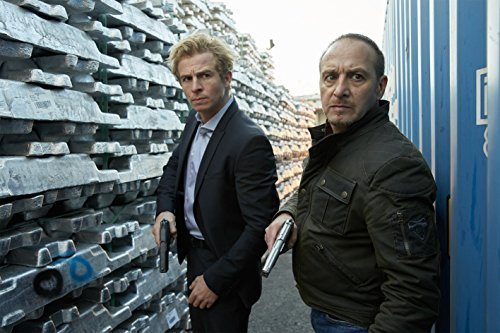
    We’ve found a precious 40 minutes away from the hustle and bustle of press day for season four of ITV‘s Trigger Point at London’s Soho Hotel. Tucked into the corner of one of its underground bars, McClure speaks to The Hollywood Reporter while her co-stars — Eric Shango, Natalie Simpson, Maanuv Thiara among them — dutifully pose for photos and laud the latest work of show creator Daniel Brierley.

    McClure, returning as the no-nonsense bomb disposal expert Lana Washington in another high-octane, watch-behind-your-hands instalment, is taking us through her early years at Nottingham’s Television Workshop, a Midlands-based film, TV, and theatre training school for kids from working-class backgrounds. She had initially eyed a career in professional dance and landed a place at the prestigious Italia Conti academy. But her family couldn’t afford the tuition. She stayed with the Television Workshop until the age of 21.

    I halt the conversation early on to ask if what I’ve read online — that McClure was mentored at the Workshop by The Odyssey breakout Samantha Morton, a fellow Nottingham native — is true. The actress is quick to clarify: “That isn’t correct. Sam is a huge part of the Workshop, and my word, I mean, even now, the gigs that she’s in,” she says, alluding to the latest Christopher Nolan hit, wide-eyed with awe. “[But] we never crossed over. I actually didn’t know her while I was in the Workshop.” The pair would, later in their respective careers, meet at odd events. “You gravitate to each other if you’re both from Nottingham or the Workshop,” explains McClure, who was proudly born and raised in the English city (she has resisted the industry-induced pressure to relocate to the capital — a decision we’ll come to later).

    It was only when both of them were leading Dominic Savage’s I Am… series that McClure and Morton ended up “having a long chat on the phone.” They’ve stayed in touch, and McClure certainly calls her peer “an icon of the Workshop, and of the acting world.” But, contrary to what the internet purports, this friendship didn’t blossom until well beyond the Nottingham Television Workshop, which McClure remains a devoted patron of.

    And while Morton’s face currently graces thousands of cinema screens across the world, it is Vicky McClure who is known far and wide here in Britain. She has steadily risen through the ranks for two decades now to become one of the most prolific actors in the country, famed for her forthright characters and becoming, frankly, a legend of the U.K. police procedural (Line of Duty, Broadchurch, to name a few).

    With Trigger Point continuing to pull in millions of viewers — season three’s seven-day consolidated average came in at 5.1m last year — and a hotly anticipated Line of Duty return imminent, McClure, now 43, enters a chapter of her career marked by prolificacy, freedom, and industry-wide reverence.

    Vicky McClure (center) in 2006’s ‘This Is England.’

    IFC Films/Courtesy Everett Collection

    Her starring role aged 23 as Lol Jenkins in Shane Meadows’s 2006 film This Is England, and in the Channel 4 sequel mini-series This Is England ’86, This Is England ’88 and This Is England ’90 from 2010 to 2015, is what she considers her long-awaited big break. “But I went straight back to the office,” McClure tells THR about her job at a house valuation company. “There’s just an illusion that once you’re in a film or you’re in something, that’s it. Onward you go,” she continues. “I’d train new people, then I sort of went into the HR department, looked after things like the vending machines, the post, a wide variety. I was even fire warden at one point, which I think has done me well for drifting into Lana,” she laughs. “That was my thing. I’d go off and do This Is England, and then I’d come back.”

    She worked at the business for eight years, and in that time, starred in a film directed by Madonna, Filth and Wisdom (2008). “We always think people care more than they do,” McClure says when asked what her office mates thought of the Madonna gig. “You know what I mean? They go, ‘Oh, amazing. That’s cool. Well, we’re having lunch.’”

    The reality is, while McClure was shooting with mega-stars, she was also getting told “no” a lot. “I learnt very quickly to stop telling people when I had an audition because nine times out of 10, I never got the job,” she admits. She recalls going up for roles in Peaky Blinders and Sarah Gavron’s 2015 Suffragette film. “That was one of those moments,” she says about feeling particularly heartbroken by the Suffragette casting, which eventually went to Carey Mulligan, Helena Bonham Carter, Anne-Marie Duff and Meryl Streep. “I wasn’t really that bothered about learning too much at school. I’d missed out on lots of history, so Jonny [Owen, McClure’s husband, also an actor and producer] sat down with me and we talked about the suffragette movement in great detail. I started getting really attached to this world and these characters.”

    Over time, she nailed the accent — “at the Workshop, it wasn’t like you trained to do accents, you just did them” — but eventually, nothing came of it. “They’re a bit naughty,” she says. “Sometimes casting directors can do that thing where they go, ‘So you’re available for those dates?’ Come on, guys. That’s basically a: ‘Let’s shake hands and roll the cameras!’”

    Still, on TV especially, McClure gradually made a name for herself with small roles in Five Daughters, The Body Farm and True Love. Then, in 2012, Jed Mercurio’s Line of Duty hit BBC Two. The series, about an anti-corruption unit inside a fictional police force, accrued a cult following around the world. Perhaps for the first time, McClure, as the driven, undaunted Detective Constable (later Sergeant and Inspector) Kate Fleming, was getting her flowers.

    “I don’t think I felt fame throughout This Is England,” she ponders. “People were really respectful of that show, and it was such an ensemble piece that it didn’t belong to just one person. It was a really special show… [And] I think Line of Duty [is too]. It’s not a fluke because Jed’s writing is obviously impeccable, but it’s all down to the audience, and if they start tuning in and if they show [interest], then you’re in a good spot. But there’s every chance it can go [the other way], and shows do, don’t they?” says the veteran of British broadcast television, likely well acquainted with the graveyard of BBC and ITV shows haunting various streaming platforms. “No one watches them, and then a few years later, there’s this weird surge where everyone starts watching them again.”

    When the news of Line of Duty‘s season seven broke last year, it certainly wasn’t a surprise to McClure. “We’d never closed the door,” says Mercurio’s star. “Me, Jed, [co-stars] Martin [Compston] and Aidy [Adrian Dunbar] meet up for a curry at least a couple of times a year. We’ve always had a sociable time when we make the show,” she continues, “and I think that comes across. We always said, ‘Oh, it’d be a shame if [season six] was the last one,’ because we felt like we had a really different experience [during] COVID… So then it was a case of: How are the stars going to align? We’ve all been lucky to get other gigs. Of course, Jed’s busy. He’s got to write it. We knew when he started to pick up his pen again…” she pauses, flashing a grin.

    (L-R) Martin Compston, Adrian Dunbar, Vicky McClure in ‘Line of Duty.’

    Courtesy Everett Collection

    It is interesting, McClure adds, that Line of Duty is predominantly a cast of working-class people, “written by Jed, who grew up in a working-class family in Birmingham,” she says. “And it plays out on screen — you have accents and you have characters that are able to tap into certain flaws. Relationships were formed that are so long-lasting. Martin and Aidy are family now. I adore them both. So [hiring working-class talent] works. People need a bit more belief in those lives and characteristics.”

    McClure has been a champion of opening doors for working-class creatives her whole career. Her work with the Television Workshop is testament to that, though she isn’t content yet — by any means. “London should not be the center of the universe. For anything,” she says. “Don’t get me wrong, it’s an amazing city. But there is Nottingham, Birmingham, Manchester, Glasgow… The world’s a beautiful place, but with the industry in tow, it can’t all be London central. It has been and it still is, for so many years. And it’s just not serving anyone now.”

    When I put to her that there has been something of a production boom outside of the capital — in Wales, Scotland, and Northern Ireland — she maintains that while shoots are there, all of the really important get-togethers still happen in London. “It’s really naive of us to think that people can just afford that horrendous train fare or the petrol, or whatever it may be, [and] to just up and leave to get to that meeting. And I remember it was tricky for me. To get here and go, ‘I need to grab a sandwich and a cup of tea’ or something. It’s expensive.” McClure knows from first-hand experience that thousands of young actors will miss out on network-building because they can’t pay London rent: “It’s a very privileged space, a very privileged industry.”

    And even when the long-hoped-for acclaim arrives, the quote-unquote “fame” comes with unwanted side effects. “I don’t want to sit here and go, ‘It’s been a problem for me,’” concedes McClure, who says that staying in Nottingham has made showbiz a more liveable place — literally — for an actor of her calibre. “I like to do things here and there. When I get nice invitations, if I can make them, and it’s something I want to do, I’ll go, and the paps [paparazzi] will do what they’ll do. You can kind of control it, to a degree. You can choose to put yourself out there a bit more — and sometimes you need it. You need the promotion to help whatever business it is you’re trying to sell.”

    This is the more pragmatic side to McClure. With a BAFTA and a handful of wildly popular shows under her belt, you can’t deny it: She knows the ropes. “It’s a business and I’m in my mid-40s now,” she continues. “I’m a bit wiser, a bit longer in the tooth. I can see what things are, and you’re less naive. I’m not Hollywood. I feel Hollywood talking to The Hollywood Reporter,” she says, smiling again, though admitting she’s never even been to L.A. (Tinseltown may yet come knocking — McClure’s next film, Kenneth Branagh’s The Last Disturbance of Madeline Hynde, sees her next to Jodie Comer, Patricia Arquette and Michael Sheen.) “I think when I’m on my deathbed,” she continues, “I won’t be worrying about my career.”

    What might McClure be more concerned with? Her charity work, for one — in 2019, she formed Our Dementia Choir following her late grandmother’s Alzheimer’s diagnosis. The organization was the subject of a BBC documentary, led by McClure, and over the years the group has performed in front of tens of thousands, including at Nottingham’s Splendour Festival. She also has a production company co-founded with her husband, Build Your Own Films, backed by All3Media and committed to nurturing projects “rich in subject matter, diversity and representation.”

    McClure in a first-look image of Lana Washington from season four of ‘Trigger Point.’

    ITV1

    Right now, however, it’s more Trigger Point on the telly for McClure. Releasing soon, the new season promises a deeper look into Lana’s trauma and, as you might have guessed, some pretty explosive drama. “There’s no joke to her job. It is life and death,” McClure says about returning to everyone’s favorite Expo. “We feel like we’ve seen it all in Trigger Point. Different types of scenarios.” She stops. Eye contact. “You haven’t seen it all.” She says this season’s writing team had a lot of fun concocting more dire situations for the Met Police bomb squad. “And we really own that. If there’s anyone that can go out with a bang, it’s Trigger Point. This is the bomb show.”

    She remembers reading a Times paper describing the series as “Scooby-Doo on acid.” It was meant to be, according to McClure, a bit of a diss. She loved it. “It is Scooby-Doo on acid!” she beams. Most importantly, this Nottingham native is given the opportunity to take on the fearless Lana Washington once more, and it’s exactly where Vicky McClure wants to be. “I love it when she has one of them ‘fuck you’ moments. I always slip in a few more fucks than I probably should!”

    Catch McClure in the brand new series of Trigger Point, coming soon to ITV1 and STV.