Blog

  • SpaceX Warns Investors Elon Musk’s Space-Based AI Data Centers May Not Pay Off

    SpaceX Warns Investors Elon Musk’s Space-Based AI Data Centers May Not Pay Off

    In brief

    • SpaceX says orbital AI data centers may not become commercially viable.
    • Elon Musk has called space-based AI computing “a no-brainer.”
    • The filing also warns that Starship delays could slow the company’s growth.

    SpaceX is warning investors that one of Elon Musk’s most ambitious artificial intelligence bets—putting data centers in orbit—may never become a viable business.

    According to a report by Reuters, in a newly disclosed section of its pre-IPO S-1 filing, SpaceX says its plans for orbital AI compute—along with broader efforts to industrialize space, the moon, and Mars—remain in early stages, involve significant technical complexity, and may not achieve commercial viability.

    “Our initiatives to develop orbital AI compute and in-orbit, lunar, and interplanetary industrialization are in early stages, involve significant technical complexity and unproven technologies, and may not achieve commercial viability,” the filing says.

    The disclosure comes as SpaceX prepares for what could be the largest IPO in history. The company is reportedly targeting a valuation of about $1.75 trillion and seeking to raise $75 billion in the coming months.

    In January, in a conversation with BlackRock CEO Larry Fink at the World Economic Forum in Davos, Musk called building AI data centers in space “a no-brainer” and said orbit could become “the lowest-cost place to put AI” within two to three years. In February, after announcing a merger between SpaceX and Musk’s AI company xAI, Musk said in a post on the SpaceX website, “space-based AI is obviously the only way to scale.”

    “Global electricity demand for AI simply cannot be met with terrestrial solutions, even in the near term, without imposing hardship on communities and the environment,” Musk wrote at the time. “In the long term, space-based AI is obviously the only way to scale. To harness even a millionth of our Sun’s energy would require over a million times more energy than our civilization currently uses.”

    While the concept appears straightforward, satellites equipped with AI chips could draw near-constant solar power in space while avoiding some of the land, energy, and cooling constraints facing Earth-based data centers. But turning that vision into reality is another matter.

    Space-based systems could offer continuous solar energy and the ability to radiate heat into space. However, the economics remain uncertain with launch costs, maintenance, radiation exposure, and space debris needing to be factored in.

    SpaceX acknowledged those risks in the filing, warning that orbital AI data centers would operate in “the harsh and unpredictable environment of space,” where systems could malfunction or fail.

    While the realities of space development offer major hurdles, SpaceX may still be better positioned than its rivals to pursue the idea, having already launched the Starlink satellite internet network into orbit, and developing Starship, the fully reusable rocket Musk says is essential to cutting launch costs enough to make large-scale orbital infrastructure possible.

    However, according to SpaceX’s filing, Starship itself includes its own risks. The rocket designed to carry much larger payloads than previous SpaceX vehicles has suffered testing failures and delays, and the company said further setbacks could limit its growth strategy.

    SpaceX did not immediately respond to Decrypt‘s request for comment.

    Daily Debrief Newsletter

    Start every day with the top news stories right now, plus original features, a podcast, videos and more.

  • Coinbase taps UK‑regulated tGBP in local‑currency stablecoin push

    Coinbase taps UK‑regulated tGBP in local‑currency stablecoin push

    Coinbase has listed FCA‑sandbox‑tested tGBP, letting users move pound‑pegged stablecoins across its app and exchange as it doubles down on local‑currency rails beyond USD.

    Coinbase is deepening its bet on non‑USD stablecoins, rolling out full support for the pound‑pegged tGBP stablecoin starting this year.

    According to the company’s announcement, users can now buy, sell, exchange, send, and receive tGBP through both the Coinbase App and Coinbase Exchange, bringing a regulated GBP token directly into the retail and institutional Coinbase stack.

    The issuer behind tGBP is BCP Technologies (also known as BCP Markets), a UK‑registered cryptoasset firm supervised by the Financial Conduct Authority.

    FCA records describe BCP as providing “the issuance and distribution of its own GBP denominated Stablecoin, tGBP, which aims to peg its value to the British Pound,” and note that the company participated in the regulator’s sandbox from 2021 through 2025 to test the product in a live environment.

    Coinspaid and other coverage of the launch emphasize that tGBP is fully backed 1:1 by reserves held in segregated accounts at a UK‑regulated financial institution, with BCP CEO Benoit Marzouk saying the token is designed to let clients “transfer pounds through blockchain technology without intermediaries and price volatility.” BCP says tGBP targets both retail and institutional users and is meant to function as a “reliable and efficient way to transact in GBP globally,” mirroring the model of dollar stablecoins but tied to sterling.

    For Coinbase, adding tGBP fits a broader push to diversify beyond USD rails. In its blog post on “GBP stablecoins unlocking the future of finance,” Coinbase argued that local‑currency stablecoins can streamline cross‑border payments, reduce FX friction, and support use cases like real‑world‑asset tokenization and programmable payouts directly in domestic currency, rather than forcing users through USD as the default bridge asset.

    The UK, meanwhile, is racing to put a formal regulatory perimeter around stablecoins, with the FCA selecting several firms to test stablecoin models in its expanded sandbox and positioning GBP tokens as future settlement instruments for both crypto‑native and traditional finance flows.

    By aligning with an FCA‑registered issuer that has already cleared a 14‑month review process and sandbox testing, Coinbase is effectively betting that tGBP — or something that looks a lot like it — will become a core building block of the UK’s on‑chain payments and trading infrastructure.

  • Here’s why CHIP crypto soared over 85% today

    $CHIP token surged over 85% on Wednesday becoming one of the best performing crypto assets of the day.

    The token shot up following its listing on Binance which introduces the token with a Seed Tag, flagging it as an early-stage, high-risk asset. The listing was accompanied by a trading campaign offering a 40 million $CHIP reward pool, which helped draw immediate attention from retail participants.

    Within the same 24-hour window, $CHIP also went live on KuCoin, BitMart, and SunCrypto, significantly expanding its availability. The rapid multi-exchange rollout injected strong liquidity into the market and made the token accessible to a wider pool of traders.

    Following these listings, $CHIP climbed to an all-time high near $0.11 before stabilizing. Trading activity surged sharply, with 24-hour volume crossing $1.4 billion. The figure stood at more than five times its market capitalization.

    The rally was further supported by the broader market’s growing interest in AI-linked crypto narratives. $CHIP is positioned within the emerging AI infrastructure segment, which has gained momentum as investors seek exposure to decentralized computing and data ecosystems.

    Despite the strong upside move, the token has shown signs of consolidation after its initial breakout, with analysts pointing to elevated volatility driven by speculative trading activity. The high volume-to-market-cap ratio suggests that short-term momentum remains the dominant force behind the price action.

    What is $CHIP crypto?

    $CHIP is the native token of the USD.AI ecosystem, a decentralized protocol focused on financing artificial intelligence infrastructure.

    The platform operates as a permissionless lending system where GPU operators can tokenize their hardware as collateral to access instant liquidity. This model allows participants to unlock capital from physical computing resources, bridging the gap between traditional hardware ownership and decentralized finance.

    The $CHIP token plays a central role within the ecosystem. It is used to facilitate lending and borrowing activities, incentivize network participants, and support the broader infrastructure needed to power AI workloads.

    By enabling hardware-backed financing and aligning incentives across participants, the protocol aims to support the growing demand for scalable and decentralized AI compute resources.

  • ‘Epic,’ Viral Musical Retelling of ‘The Odyssey,’ To Become Animated Movie Thanks to Jerry Bruckheimer (Exclusive)

    ‘Epic,’ Viral Musical Retelling of ‘The Odyssey,’ To Become Animated Movie Thanks to Jerry Bruckheimer (Exclusive)

    It began life in a college dorm room (well, technically it was 2,700 years ago, but we’ll get to that later), gained a multi-million army on TikTok, and earned a real-world record deal.

    Now Hollywood is calling.

    Epic, the musical telling of Homer’s The Odyssey, is getting the movie treatment thanks to Jerry Bruckheimer.

    Bruckheimer, the mega-producer behind the Top Gun and The Pirates of the Caribbean movies, has partnered with Jorge Rivera-Herrans, the creator, composer, songwriter, producer, and performer behind the viral sensation, and Atlantic Music Group president Kevin Weaver to produce an animated musical adaptation of the epic, no pun intended, saga. Chad Oman of Jerry Bruckheimer Films will also produce.

    The project is in the nascent stages, and is to be taken out to studios and streamers for presentations by CAA, who represents Bruckheimer, possibly as early as next week. The project would be Bruckheimer’s first foray into animation but not into the world of music. Many of his films have been musically-inclined and part of pop culture’s soundtrack, going back to 1980s classic Flashdance.

    The timing couldn’t be better as Homer has suddenly become hot in Hollywood. Christopher Nolan is prepping for a retelling of The Odyssey with his all-star live-action feature that will open July 17 and is already generating buzz that it could be one of the biggest movies of the year. Combined with the feverish following Epic has engendered, this tale is probably at the zenith of recognition not seen since the ancient Greek poet first began narrating it in his toga in the eighth century B.C.

    Rivera-Herrans began Epic as his ambitious senior thesis at University at Notre Dame. Things took off when, during the pandemic, he began posting his creative process on TikTok in 2021, then began releasing the sagas as musicals starting in 2022. The self-released EPs began hitting the no. 1 spot on iTunes and then no. 1 on the soundtrack charts, where at one point Epic occupied nine out of the top 10 listing.

    The serialized music format, re-envisioning the classic tale the war hero’s gods and monsters-filled decades-long journey home to his wife and son through a modern, immersive lens, struck a chord with millennials and Gen Zers, who fell for the influences of musicals, anime, and video games. They even got to participate in the worldwide casting process. Fans also created animatics to go with the songs, showcasing a range of styles and genres.  

    More than four billion global streams and over seven billion short-form views later, what began as viral social content evolved into a global phenomenon, redefining how music, storytelling, and audience engagement can intersect at scale.

    The music industry came calling, with every label courting him in 2023, although Rivera-Herrans rebuffed rich offers. That is, until he signed with Weaver’s Atlantic, who spent two years courting the twenty-something. Weaver, whose three-decade career at the company saw him spearhead blockbuster soundtrack projects including Barbie The Album, The Greatest Showman, and Suicide Squad: The Album, helped steer Epic from the digital sea and into the shores of the real world, with physical product and merchandizing, racking up millions of dollars from an eager fanbase.

    Bruckheimer’s boarding was eased by that fact that Weaver worked with the producer on last year’s F1 The Album, based on F1, the Brad Pitt racing movie that earned an Oscar nomination for best picture and won one for best sound. The movie grossed over $634 million worldwide.

    Rivera-Herrans is repped by Jake Phillips of Greenberg Traurig. Weaver is repped by Alan Sacks of Frankfurt Kurnit.

  • SoFi NBA Play-In Tournament viewership increases 18% for inaugural season on Prime Video

    Tyrese Maxey leads Philly to the Play-In win over Orlando, clinching the 7th seed in the East.

    The 2026 SoFi NBA Play-In Tournament generated an 18% increase among total U.S. viewers with an average of 2.79 million viewers across six exclusive broadcast windows on Prime Video, it was announced Wednesday.

    The most-watched games of the NBA Play-In Tournament were Warriors-Suns (3.65M), Warriors-Clippers (3.15M) and Magic-76ers (2.66M).

    According to Amazon’s first-party viewership data, the Play-In Tournament was viewed on 52M devices globally for over 2.5B minutes across more than 200 countries and territories. Over the six games, top-performing markets outside of the U.S. included Japan, Brazil, Mexico, Australia, Argentina, India, Spain, France, and Colombia.

  • Iran blames Trump’s blockade for diplomatic impasse as fragile truce holds

    Iran blames Trump’s blockade for diplomatic impasse as fragile truce holds

    Iranian officials have blamed the United States for the impasse in the negotiations and the continued closure of the Strait of Hormuz, stressing that Tehran will not submit to “bullying” by Washington.

    Parliament Speaker Mohammad Bagher Ghalibaf said on Wednesday that there can be no full ceasefire between the two countries if the US naval blockade on Iranian ports persists.

    Recommended Stories

    list of 3 itemsend of list

    In his first comment since President Donald Trump announced he would extend the US-Iran truce, Ghalibaf, one of Iran’s lead negotiators, suggested that Tehran will not capitulate to Washington’s demands because of the siege.

    “A complete ceasefire only makes sense if it is not violated by the maritime blockade and the hostage-taking of the world’s economy, and if the Zionist warmongering across all fronts is halted,” Ghalibaf wrote on X.

    “Reopening the Strait of Hormuz is impossible with such a flagrant breach of the ceasefire,” he added, saying that the US and Israel “did not achieve their goals through military aggression, nor will they through bullying”.

    Iranian President Masoud Pezeshkian echoed that position, stressing that diplomacy, not pressure, was necessary for peace talks.

    “The Islamic Republic of Iran has welcomed dialogue and agreement and continues to do so,” he said in a social media post, addressing the US and Israel.

    “Breach of commitments, blockade and threats are main obstacles to genuine negotiations. World sees your endless hypocritical rhetoric and contradiction between claims and actions.”

    Although both countries have said they are ready to return to war, the ceasefire has so far appeared to hold on Wednesday, the day its initial two-week period expired.

    Truce extension

    The ceasefire’s extension came only a day earlier, after it became apparent that Iranian officials would not attend talks scheduled in Pakistan in protest against the US blockade.

    Amir-Saeid Iravani, Iran’s ambassador to the United Nations, said that breaking the siege is a necessary condition for the negotiations to proceed.

    Asked whether the relative calm of the truce will continue, Iravani told reporters, “We have not initiated the military aggression. They initiated the war against us, and we are ready. If they want to sit at the table and discuss and find a political solution, they will find us ready.”

    Trump did not set a deadline for the extended ceasefire to expire, but he suggested on Tuesday that the naval siege on Iran would continue to serve as leverage for future talks.

    “People approached me four days ago, saying, ‘Sir, Iran wants to open up the Strait, immediately.’ But if we do that, there can never be a Deal with Iran, unless we blow up the rest of their Country, their leaders included,” the US president wrote in a social media post.

    On Wednesday, White House spokeswoman Karoline Leavitt dismissed media reports claiming that Trump had set a specific deadline of three to five dies for the truce, emphasising that the US president alone decides on the timetable of the war.

    Leavitt added that Trump is “satisfied” with the blockade and its effects on the Iranian economy.

    “He understands that Iran is in a very week position, and the cards are in President Trump’s hand right now,” she told reporters.

    Hours before the extension of the ceasefire on Tuesday, Trump had said that he opposed lengthening the truce, and he warned Iran that time is running out before the US launches a huge attack on its infrastructure.

    Subsequently, he agreed to hold off the strikes at the request of Pakistani mediators.

    ‘No war, no peace’

    With the blockade still in place and no new date set for the talks, there are concerns that the fighting could resume at any moment.

    Reporting from Tehran, Al Jazeera correspondent Ali Hashem said Iran is experiencing a “situation of no war, no peace”.

    “Sanctions are still there. The blockade is there. No one can plan for the next week or the week after. Businesses are just waiting to see how this war is going to end,” Hashem said.

    The US and Israel launched the war against Iran on February 28, killing hundreds of civilians and several top officials, including Supreme Leader Ali Khamenei.

    Tehran responded with missile and drone attacks against Israel and US assets across the entire region. Iran also closed the Strait of Hormuz, sending oil prices soaring.

    Iran agreed to re-open the waterway as part of the two-week truce that came into effect on April 8, but it ultimately kept the waterway closed in response to Israel’s refusal to include Lebanon in the ceasefire.

    That was a condition originally stipulated in the deal announced by Pakistan.

    After a 10-day ceasefire was announced in Lebanon last week, Iran said the Hormuz Strait would re-open, but it shut down the waterway again after Trump said the US naval blockade against the country would persist.

    The US military has seized one Iranian vessel during the siege.

    For its part, Iran’s Islamic Revolutionary Guard Corps (IRGC) captured two foreign commercial ships in the Strait of Hormuz on Wednesday, saying they violated maritime regulations.

    Trump claims Iran executions halted

    Despite the rising tensions, Trump said on Wednesday that he “appreciates” that Iran halted the execution of female dissidents at his request.

    The US president had shared photos of eight alleged detainees in Iran a day earlier, claiming that they were set to be killed.

    “I have just been informed that the eight women protestors who were going to be executed tonight in Iran will no longer be killed. Four will be released immediately, and four will be sentenced to one month in prison,” Trump wrote on his Truth Social platform on Wednesday.

    “I very much appreciate that Iran, and its leaders, respected my request, as President of the United States, and terminated the planned execution.”

    Later in the day, the White House dismissed US media reports saying that Iran still has significant military capabilities.

    “Iran’s defense industrial base was almost completely destroyed,” Leavitt wrote on the social media platform X.

    “Iran’s ability to build and stockpile ballistic missiles and long-range drones has been set back by years. The vast majority of Iran’s ballistic missiles, launcher vehicles, and long-range attack drones were destroyed.”

    Iran was able to launch missile attacks against Israel daily throughout the war.

  • ‘Scary Movie 6’ Targets Michael Jackson Child Abuse Allegations With ‘Michael’ Spoof Poster and Tagline: ‘Touching Fans Everywhere’

    ‘Scary Movie 6’ Targets Michael Jackson Child Abuse Allegations With ‘Michael’ Spoof Poster and Tagline: ‘Touching Fans Everywhere’

    The new “Scary Movie” isn’t pulling any punches when it comes to celebrity jokes, and Michael Jackson is in the crosshairs for some new promotional material.

    The franchise’s Ghostface-inspired killer is dressed up like Jackson in a just-released poster that directly parodies the “Michael” promotional material. But in this case, the two taglines are “Prepare to Hee-Hee” and “Touching Fans Everywhere,” the latter a reference to child abuse allegations that have followed Jackson for years.

    The biopic “Michael,” which debuts in theaters on Friday from Lionsgate Films, won’t explore any of the allegations.

    Per a recent New York Mag feature on “Michael” director Antoine Fuqua, the director “is not convinced that Jackson did what he is accused of doing, despite the number of accusers (five) and the fact that Jackson publicly talked about sharing his bed with boys.”

    Scary Movie 6” is set to bring back many of the central characters from the first two films in the franchise, including Marlon Wayans as Shorty Meeks, Shawn Wayans as Ray Wilkins, Anna Faris as Cindy Campbell and Regina Hall as Brenda Meeks. The Wayans brothers are back to writing and producing this movie as well, after sitting out the last three chapters.

    The “Scary Movie” team also released a short teaser trailer on April 22, which stars “Saturday Night Live” star Kenan Thompson as a very clumsy version of the King of Pop.

    “Scary Movie” heads to theaters via Paramount Pictures on June 5.

    See the full poster and a Jackson clip below.

    Courtesy of Paramount Pictures

  • Eric Trump mocks Justin Sun’s lawsuit, and his $6M banana stunt

    Eric Trump mocks Justin Sun’s lawsuit, and his $6M banana stunt

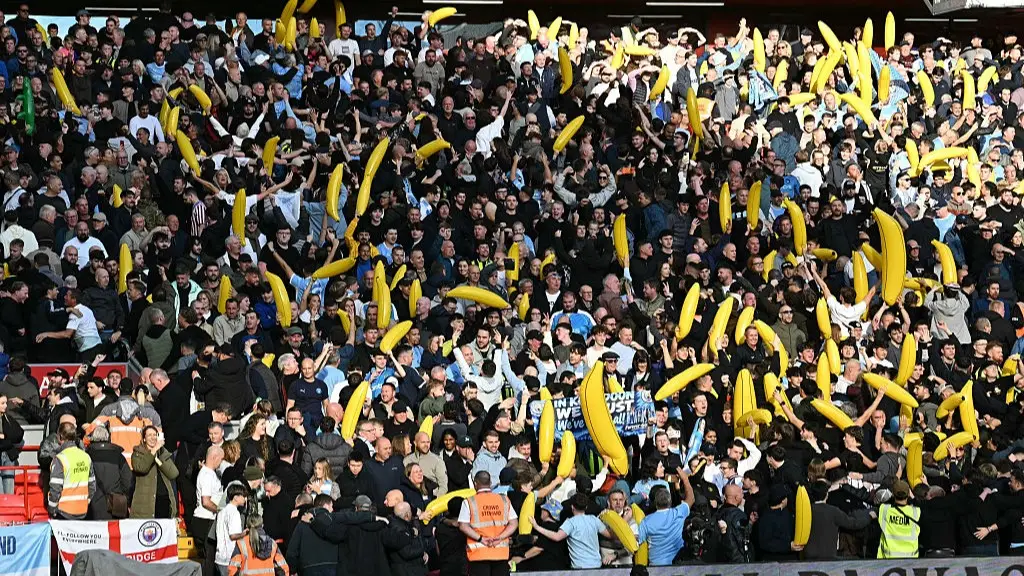
    Eric Trump said Justin Sun’s lawsuit against World Liberty Financial is “ridiculous,” but not as ridiculous as the $6 million the TRON founder once spent on Maurizio Cattelan’s banana duct-taped to a wall.

    The only thing more ridiculous than this lawsuit is spending $6 million on a banana duct-taped to a wall. We are incredibly proud of the @worldlibertyfi team… https://t.co/ahfBKvCdwN

    — Eric Trump (@EricTrump) April 22, 2026

    The Trump son, who co-founded the DeFi project that is facing backlash over its governance and a controversial $75 million loan, mocked Sun and his iconic move after the entrepreneur said he had filed a federal lawsuit against the firm.

    The suit alleges that World Liberty wrongfully froze his $WLFI tokens and stripped him of governance rights through an opaque blacklist mechanism that he says undermines decentralization and transparency.

    The two were publicly close. Trump previously called Sun “a great friend” and said he was TRON’s “biggest fan.”

    In a statement responding to Sun’s legal action, Zach Witkoff, co‑founder and CEO of World Liberty, said he expects the lawsuit to be thrown out.

    Witkoff described the case as a meritless attempt to deflect from alleged misconduct and reaffirmed that the firm’s actions were taken to protect users.

    Justin Sun’s recent lawsuit against @worldlibertyfi is a desperate attempt to deflect attention from Sun’s own misconduct. His claims are entirely meritless, and World Liberty looks forward to getting the case thrown out promptly.

    He engaged in misconduct that required World…

    — Zach Witkoff (@ZachWitkoff) April 22, 2026

    Token concentration and family earnings

    Data shows just 10 wallets control roughly 76% of $WLFI’s voting power. The Trump family holds an estimated 22.5 billion $WLFI tokens and reportedly controls about 60% ownership of the venture.

    By December 2025, the family had reportedly earned $1 billion from the project.

    Sun was $WLFI’s largest outside investor, putting $75 million into the project. The trouble started in September 2025, when the $WLFI team blacklisted his wallet and froze approximately 540 million unlocked tokens.

    The stated reason was that on-chain transfers of around $9 million in $WLFI to exchanges looked like early selling. Sun maintained the transfers were minor test transactions.

    The governance proposal

    On April 15, 2026, World Liberty published a governance proposal affecting over 62 billion tokens. Under the proposal, holders who don’t “affirmatively accept” the new terms, including mandatory burns of 10% of advisor tokens, would have their holdings locked indefinitely.

    Early purchaser tokens would face a two-year cliff followed by two years of vesting. Holders who don’t opt in would have their tokens frozen in perpetuity. Sun, whose tokens were already frozen, couldn’t even vote on it.

    $WLFI hit $0.46 in September 2025, around the time Sun’s wallet was first blacklisted. By April 2026, it had fallen to an all-time low near $0.076, a decline of more than 83%.

    The token changed hands at $0.08 at press time, per CoinGecko.

    The blacklist function

    Sun’s legal filing also points to what he calls a concealed blacklist function embedded in $WLFI’s smart contracts. This mechanism allegedly allows the project team to freeze or restrict any token holder’s assets without notifying the holder.

    The TRON founder said that undermines the project’s claims of decentralization, transparency, and fair governance, and violates the core principles of user control in DeFi systems.

    Sun, whose net worth is estimated at $10.9 billion by Bloomberg Billionaires Index, said he tried in good faith to resolve the situation without litigation.

  • UK watchdog leads first crackdown on illegal crypto trading in London

    UK watchdog leads first crackdown on illegal crypto trading in London

    The UK Financial Conduct Authority has led its first coordinated operation against illegal peer to peer crypto trading, targeting eight London premises suspected of operating without registration and issuing cease and desist letters at each site.

    The watchdog said evidence gathered during the inspections is supporting several ongoing criminal investigations.

    The FCA carried out the operation with HM Revenue & Customs and the South West Regional Organised Crime Unit under the UK’s money laundering and terrorist financing rules. The regulator said there are currently no FCA registered peer to peer crypto traders or platforms operating in the UK, meaning any such activity requires scrutiny and may be unlawful.

    Steve Smart, the FCA’s executive director of enforcement and market oversight, said unregistered peer to peer crypto traders in the UK are operating illegally and pose a financial crime risk. Police officials involved in the operation said these traders can provide a route for criminals to move, disguise, and spend illicit funds.

    In February, the FCA moved against HTX over allegedly illegal crypto promotions in the UK, marking its first enforcement action against a crypto firm for unlawful marketing under the current regime.

    The latest action also comes just a week after the FCA launched a consultation on the next phase of UK crypto regulation, including rules for trading platforms, dealing, staking, and safeguarding cryptoassets, ahead of a broader framework due to take effect in October 2027.

  • Diddy’s $100 Million Lawsuit Against NBCUniversal Over ‘Bad Boy’ Doc Dismissed By Judge

    Sean “Diddy” Combs saw his $100 million defamation lawsuit against NBC and Peacock over the 2025 documentary, Diddy: Making of a Bad Boy, dismissed by a New York judge after the network argued that the now-imprisoned rap mogul had admitted in court that he was the one responsible for ruining his career — and that damage was done well before the documentary was released.

    New York Supreme Court Judge Phaedra F. Perry-Bond ruled that the case brought by the hip-hop icon, who was indicted in September 2024 on racketeering and sex trafficking charges and is now confined to a New Jersey federal prison, should be dismissed. Combs’ 50-month federal prison sentence came three months after his lengthy trial in New York last summer ended in a split verdict and, notably for the defamation case’s verdict, over a year after a federal indictment dragged his documented domestic abuse, confirmed drug abuse, and unconventional sexual proclivities into public view. Lawyers for the network are celebrating the decision as a victory for freedom of speech.

    “This is an important ruling that protects filmmakers and journalists by dismissing this meritless complaint, as barred by New York law and the First Amendment,” Theodore J. Boutrous Jr., an attorney who represented NBC, told The Hollywood Reporter on Wednesday.

    Combs’ February 2025 complaint said that the documentary portrays him as guilty of “serial murder, sexual assault and trafficking of minors, and extortion — knowing that there is not a shred of evidence to support them.” The legal complaint also cited THR‘s interview with doc producer Ari Mark as evidence of a rush to get it on the platform; Mark had told THR that, “It’s really competitive, and I think that is why it wasn’t enough to be fast, it was also necessary to be distinct. There’s no time, and this was an extremely fast turnaround.”

    Yet it was the memorable words Combs uttered when he finally stood to speak at his dramatic October sentencing that became central to NBC’s motion to dismiss his defamation case, which hinged on damage to his reputation that he claimed was caused by the documentary’s content. Months after the split verdict was read, Combs stood up in the federal courtroom in lower Manhattan to speak for himself in front of the judge, his entire family, the press corps, and everyone in the gallery.

    “Because of my decisions, I lost my freedom,” Combs, who by that point had also become the subject of more than 25 lawsuits related to accusations of sexual misconduct, told the judge. “I lost my career. I totally destroyed my reputation.”

    NBC argued that such an admission negates the rapper’s claims that the documentary caused him irreparable reputational damage; this cannot be the case, network attorneys argued, given his own courtroom admission.

    In November, Combs’ publicist, Juda Engelmayer, said in a statement that NBC’s argument “takes a single remark out of its legal context” and that it has “no relevance to whether the documentary met basic standards of accuracy and responsibility.”

    But this week, Judge Perry-Bond agreed with the network’s assessment and granted dismissal of the defamation case, saying that Combs’ suit failed to “establish a substantial basis regarding reputational harm.” The judge also noted in her ruling that the “carefully curated and nuanced [documentary] discloses interviewees’ biases and includes counterstatements to the allegedly defamatory statements.”

    The defamation lawsuit highlighted two elements of Making of a Bad Boy that Combs stated were “deeply distressing, offensive, reckless, and malicious”: the inclusion of allusions to conspiracy theories that he was involved in the death of his ex-partner, Kim Porter, with whom he had three children, and the murder of the Notorious B.I.G., his early-career discovery whose death at 24 became a flashpoint that catapulted him to fame.

    Porter died suddenly in 2018 after days of flu-like symptoms; the coroner eventually ruled her cause of death was lobar pneumonia. Combs also adopted Quincy Brown, Porter’s son with New Jack Swing artist Al B. Sure!, who appears in the Peacock documentary in an interview, and at one point refers to Porter’s death as a “murder,” then pauses to ask, “Am I supposed to say ‘allegedly’?” Al B. Sure! has implied that he has information pointing to Combs as responsible for Porter’s death. That claim, along with a book purported to be written by Porter that briefly appeared on Amazon, fueled the conspiracy theory, which picked up steam after Combs’ indictment.

    Rumors of Combs’ involvement in the Notorious B.I.G.’s 1997 murder have clouded his reputation for decades. Most pop music fans first encountered Combs as Puff Daddy — a moniker he carried through the late ’90s and early 2000s — most notably through “I’ll Be Missing You,” his tribute duet with Faith Evans, the late rapper’s widow, which was quickly released after his murder. Combs’ complaint also says NBC’s documentary includes an interview with Combs’ former bodyguard Gene Deal, who suggested the mogul “could have” had something to do with the murder.

    “In making and broadcasting these falsehoods, among others,” the filing read, “defendants seek only to capitalize on the public’s appetite for scandal without any regard for the truth and at the expense of Mr. Combs’s right to a fair trial.”

    Engelmayer, Combs’ PR representative, told THR that the rap mogul’s team is offering no comment on the decision “at this time.”

    Combs’ legal team is currently working on the appeal of the two counts for which the jury found him guilty last summer. The federal trial resulted in him being found in violation of the Mann Act, which forbids transportation for prostitution.