Blog

  • Senate Democrat Presses Cantor Fitzgerald on Tether Ties and Lutnick Family Profits

    Senate Democrat Presses Cantor Fitzgerald on Tether Ties and Lutnick Family Profits

    In brief

    • Sen. Richard Blumenthal sent Cantor Fitzgerald a 13-item request for records on its Tether business arrangement, with responses due Oct. 23.
    • The letter claims Cantor’s 5% Tether stake rose from $600 million to an estimated $10 billion since Trump returned to office, but does not accuse Cantor of breaking a specific law.
    • Blumenthal also asks for the terms of any Tether loan that helped Howard Lutnick transfer his Cantor stake to his children.

    Sen. Richard Blumenthal is asking Wall Street firm Cantor Fitzgerald to hand over records on its business relationship with Tether, the issuer of USDT, the world’s largest stablecoin—the dollar-pegged digital asset that underpins the crypto economy.

    He also wants to know how much money the family of Commerce Secretary Howard Lutnick has made from the arrangement, according to a letter dated Thursday.
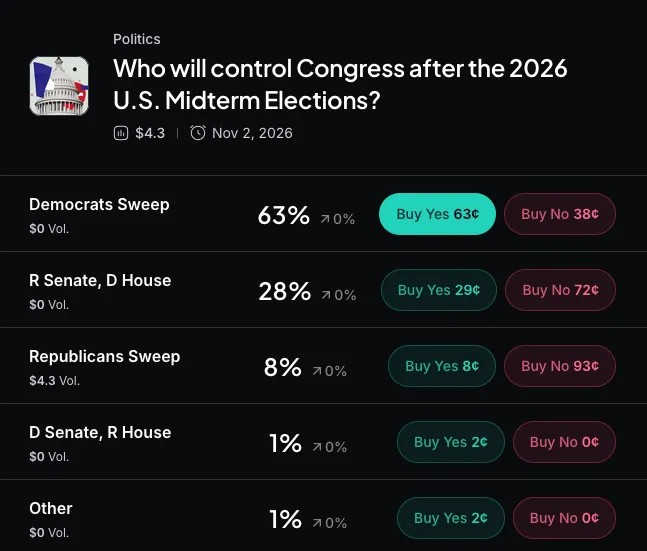
    Myriad: Who wins the midterm elections? Click to make your prediction.
    Myriad: Who wins the midterm elections? Click to make your prediction.

    “Disturbingly, Cantor Fitzgerald’s lucrative business arrangements with Tether come at the expense of America’s national security,” Sen. Blumenthal argued.

    The letter went to Brandon Lutnick, Cantor’s chairman and Howard Lutnick’s son, from Blumenthal as the top Democrat on the Senate Permanent Subcommittee on Investigations. It is a request for information with an Oct. 23 deadline rather than a subpoena, and it describes the minority’s probe as an investigation into “the illicit use of cryptocurrencies and the Trump Administration’s self-enrichment and self-dealings with cryptocurrency firms.”

    The letter does not accuse Cantor of breaking a specific law, and nothing in it is a finding of wrongdoing. It asks how the firm checks that Tether follows U.S. sanctions and anti-money-laundering rules, and the claims about Tether and the Lutnick family are Blumenthal’s, built on press reports and his staff’s earlier work.

    “Just as Tether has made untold millions in interest and investments from the stablecoins used in these illicit activities, so has Cantor Fitzgerald profited from its relationship with Tether,” Blumenthal wrote.

    BitcoinBTC · USD

    $83,724−3.24%

    Oct 5Oct 6Oct 8Oct 10Oct 11

    $86.7k$84.7k$82.7k$80.7k

    24h HighHigh$84,072

    24h LowLow$82,735

    VolVol$580.2M

    Market projectionsOdds by Myriad

    →

    “Given the longstanding and deeply intertwined relationship between Tether and Cantor Fitzgerald, and its substantial relationships within the Trump Administration, I am writing to request information about your business partnership with Tether and to learn about your practices for detecting violations of American banking and sanctions laws,” the senator added.

    Blumenthal wrote that Lutnick has made more than $250 million since President Donald Trump returned to office, including a $192 million distribution from Cantor. Over the same stretch, he said, Cantor’s 5% stake in Tether climbed from $600 million to an estimated $10 billion, on top of the tens of millions of dollars a year the firm collects from the assets it holds for Tether.

    Cantor acts as Tether’s custodian, the firm that safeguards its reserves (the cash and other holdings meant to back every USDT in circulation). Blumenthal noted that although Tether claims to operate out of El Salvador, “the vast majority of its assets reside in the United States under your custodianship.”

    Howard Lutnick ran Cantor until the Senate confirmed him as Commerce Secretary in February 2025, and the firm is now chaired by his son Brandon. The senator also requests the terms of any loan or legal strategy that would allow Lutnick to transfer asset ownership to his children.

    That request tracks a reported loan from Tether to a trust for Lutnick’s four children, for an undisclosed amount, made around the time they bought out their father’s stake in Cantor. Sens. Elizabeth Warren and Ron Wyden asked Lutnick and Tether about it in April.

    When assets are transferred to a trust, the people under investigation don’t have the legal property over those assets.

    The letter landed 10 days after the subcommittee’s Democratic staff released “Tethered to Terrorism,” a report finding that 84% of 846 crypto wallets (addresses that hold tokens) sanctioned or targeted for seizure over links to Iran and its proxies used USDT exclusively or nearly exclusively.

    The headline number rests unevenly on two lists: 87% of the 757 wallets designated by Israel’s counter-terror finance bureau transacted mostly in USDT, against 57% of the 101 designated by OFAC, the Treasury office that enforces U.S. sanctions.

    Tether, which can lock a wallet so the tokens inside cannot move, published a statement the same day citing roughly $550 million in Iran-linked freezes this year, including $344 million in April and more than $130 million in July. It did not address the report directly.

    Blumenthal also wants Howard Lutnick’s own records on Tether from his time at Cantor, including “any discussion of Tether with the White House or state and federal regulators, lobbying on Tether’s behalf.”

    Other requests cover Cantor’s know-your-customer policies (the checks a firm runs on who it does business with), whether it has ever weighed ending the relationship, and its communications with the President’s Council of Advisors on Digital Assets.

    Cantor has until Oct. 23 to respond, and the letter asks the firm to preserve every document, record and communication tied to its Tether relationship in the meantime.

    Daily Debrief Newsletter

    Start every day with the top news stories right now, plus original features, a podcast, videos and more.


  • Man who scaled Yorkshire Wildlife Park tiger enclosure made sign for ‘bad’ before he was attacked, say witnesses

    Man who scaled Yorkshire Wildlife Park tiger enclosure made sign for ‘bad’ before he was attacked, say witnesses

    Witnesses have shared harrowing new details about the man who died after being mauled by a tiger at a zoo in Yorkshire.

    Emergency services rushed out to the Yorkshire Wildlife Park at around 1.30pm on Saturday following reports that a man had entered the enclosure and had been attacked by the tiger.

    Zookeepers reportedly did ‘everything they could’ to save the man, including firing acoustic gun blasts in an attempt to scare off the tiger.

    Tragically, South Yorkshire Police later confirmed that the man, who has not been identified, died at the scene.

    “At 1.35pm today (Saturday October 10) we received reports of a man entering a tiger enclosure at Yorkshire Wildlife Park,” the force said yesterday.

    “The tiger subsequently attacked the man, resulting in serious injury.

    “Emergency services attended and sadly, despite the best efforts of medical personnel, the man was pronounced dead at the scene.

    A man has died following an incident at Yorkshire Wildlife Park (SWNS)

    A man has died following an incident at Yorkshire Wildlife Park (SWNS)

    “The man’s family is aware and is being supported by specialist officers. Our thoughts are with them at this distressing time.

    “Regarding rumours surrounding the condition of the tiger, the animal was uninjured and remained in the enclosure following the incident and there is no wider risk to the public.”

    Witnesses at the scene claimed the man was seen ‘dancing’ on the viewing platform and asked another visitor to take a photo of him with one of the tigers in the background before the horrific incident.

    Speaking to the Daily Mail, one person said that a woman had unsuccessfully attempted to pull the man back onto the viewing platform before he entered the enclosure.

    Other witnesses told the Daily Mail that once in the enclosure the man had made the gesture for ‘bad’ in Makaton – a sign language system that’s used to help people communicate.

    Ella Ford, was visiting the zoo with her boyfriend when the incident unfolded, speaking to the BBC, she said that ‘climbed a few barriers’ and eventually ‘jumped in and crawled in front of the tiger, where the tiger was perched and just lay there’.

    She said that as the tiger grabbed the man he began ‘shouting for help’.

    It is unclear why the man entered the tiger pen during his visit.

    The zoo shares update on tiger involved in the incident

    The zoo has issued an update about the tiger involved in the incident (SWNS)

    The zoo has issued an update about the tiger involved in the incident (SWNS)

    Yorkshire Wildlife Park has since confirmed that the adult Siberian tiger, called Altai, will not be euthanised following the incident.

    In a statement shared with LADbible, the zoo said: “We would like to thank everyone who has expressed their concern following yesterday’s tragic incident.

    “Our thoughts and heartfelt sympathies remain with the family and loved ones of the man who tragically lost his life.

    “The park will be closed today and the staff team who were deeply affected by events will receive specialist support.

    “Many, many people have contacted us about Altai, the tiger. We can reassure everyone that he is safe and well and will not be euthanised as a result of this incident.”

    Ed Miliband, the foreign secretary and MP for Doncaster North, said he was ‘deeply saddened’ by the incident.

    “I send my thoughts and deepest condolences to the family of the individual who died. I am very grateful to the emergency services and staff of the park who responded,” he wrote in a social media post.

  • Cannes-Winning ‘Tiger Stripes’ Producer Backs Taiwanese Coming-of-Age Drama ‘Uncle’ at Busan Asian Project Market

    Cannes-Winning ‘Tiger Stripes’ Producer Backs Taiwanese Coming-of-Age Drama ‘Uncle’ at Busan Asian Project Market

    A boy’s devotion to his uncle, a man with an intellectual disability, curdles into shame as he grows up and away from home in “Uncle,” the first feature written and directed by Taiwan’s Yen Hao-hsuan.

    The project is part of the Asian Project Market, which runs within the Busan International Film Festival’s Asian Contents & Film Market (ACFM).

    Set in rural Taiwan from 1997 to 2000, the film follows 10-year-old Wen and A-Tsik, the uncle he is inseparable from, in a turbulent household where Wen’s grandfather runs an illegal gambling den on the ground floor. As Wen hits adolescence, his affection turns to embarrassment, while the family’s efforts to police A-Tsik’s behavior and sexuality reveal how little say he has over his own life. With the country rebuilding after an earthquake and going through its first democratic handover of power, Wen starts picturing a life beyond his hometown. When he heads off to school in the city, A-Tsik stays put.

    The story is Yen’s own. He lived with his uncle for 18 years, a relationship that moved from childhood closeness to teenage shame to Yen leaving for a better future while his uncle remained unchanged. Yen kept his own life out of his short films, unsure back then whether he could separate honesty from indulgence. “Making those short films and the time that has passed since, have given me enough distance to see him as a person, not only as a relative or as a material for a film. Now I think I’m ready,” he says.

    As Taiwan races toward the new millennium, its hunger for progress propels the boy forward, Yen says, while the uncle never gets that option. “I hope the film makes us think about who we leave behind, and what we fail to recognize when progress becomes the measure of a person’s worth.”

    Yen also wants audiences to meet A-Tsik, and people like him, as equals. “He is loving, funny, stubborn and difficult. He has sexual desires, falls in love, makes mistakes and can hurt people,” he says. “Society labels my uncle ‘abnormal.’ I am not trying to make him ‘normal’; I just hope this film could make the gap between those two words a little smaller.”

    The film is produced by Patrick Mao Huang, who founded Flash Forward Entertainment, and Sung Chin-hsuan, with Flash Forward, wpd films and Soseki Studio presenting. Huang’s credits include “Tiger Stripes,” which won the Cannes Critics’ Week Grand Prize in 2023, and “Deep Quiet Room.” Sung’s work spans film, series and immersive media, including 2025 Venice Immersive Grand Prize winner “The Clouds Are Two Thousand Meters Up.”

    Huang, who had long hoped to work with Yen, says the director’s shorts showed rare command of performance and sound and image, along with an honest grasp of adolescence. “To grow up is also to abandon something,” Huang says. He believes the film’s emotional core can travel beyond Taiwan.

    “Uncle” is in development and financing, backed by a Taiwan Creative Content Agency (TAICCA) development grant, and was developed in the New Director Workshop held this year by the Taipei Film Festival. Yen is now writing a fresh draft and working out the film’s visual style. The project has also been picked for the Tokyo Gap-Financing Market.

    In Busan, where the project is making its first Asian market outing, the producers are courting co-production partners from Korea, Japan, elsewhere in Asia and Europe, along with financiers, post-production collaborators, sales agents and distributors. Huang wants a financing and creative setup that safeguards Yen’s voice and the film’s Taiwanese character.

    Yen’s 2024 short “Caged Dog” earned a Golden Horse Awards nomination in the live action short category, and his first short, 2022’s “On Another’s Sorrow,” bowed at the Golden Horse festival. He is finishing his third short, “Accident,” now in post-production, and is toying with a possible second feature or series about Taiwan’s democratization.

  • Some Aave loans sit near liquidation with collateral that can take hours to cash out

    Some Aave loans sit near liquidation with collateral that can take hours to cash out

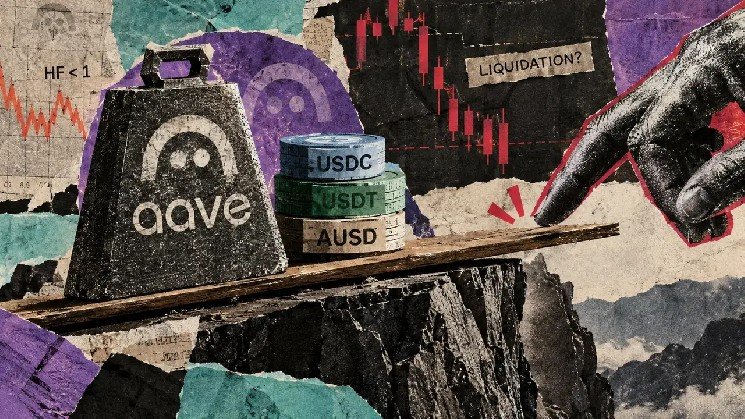
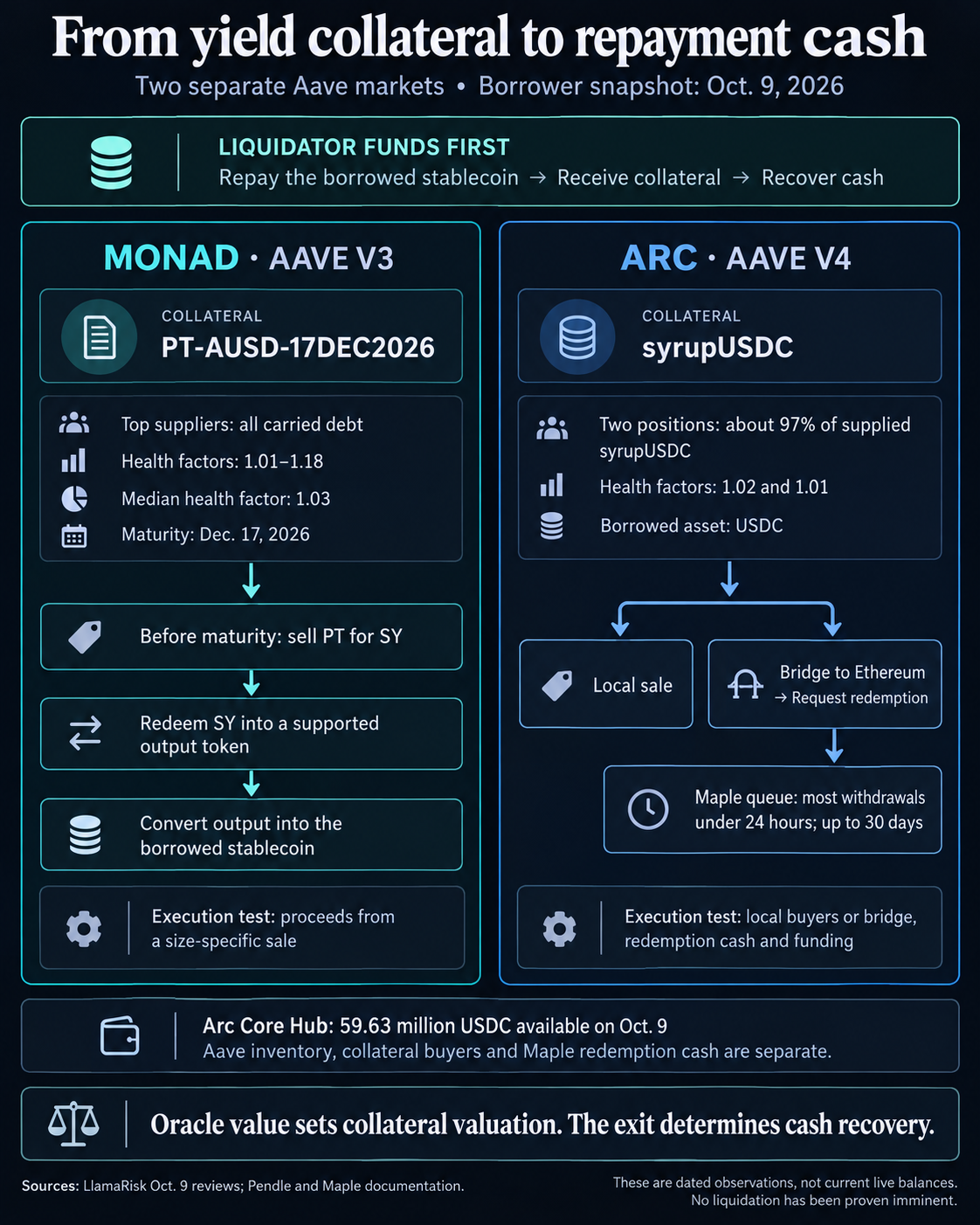
    Aave’s health factor compares collateral value, adjusted for liquidation thresholds, with debt. A position becomes eligible for liquidation below 1. The top Monad PT suppliers had health factors between 1.01 and 1.18, with a median of 1.03, in the Oct. 9 snapshot. $USDC was their dominant debt asset, followed by USDT0.

    Those readings leave a narrow valuation cushion for part of the cohort. They also reflect why borrowers pair correlated collateral and debt: smaller relative price changes can support higher leverage. Aave notes that lower health factors may be appropriate for correlated assets.

    During liquidation, someone repays the borrower’s debt and receives collateral plus an incentive. The liquidator weighs the collateral’s realizable proceeds against the debt repaid, transaction and conversion costs, and the cost of financing any redemption wait. The health factor measures proximity to eligibility; a sale quote measures the exit.

    Monad’s PT-$AUSD Aave loans need a sale before maturity

    The Monad collateral is PT-$AUSD-17DEC2026, a Pendle principal token representing a claim on $AUSD at its Dec. 17 maturity. The redemption entitlement is in the accounting asset. Receiving one $AUSD still requires any conversion needed to obtain the $USDC or USDT0 borrowed against it.

    LlamaRisk reported that the reserve’s 30 million PT supply cap was fully utilized on Oct. 9 and recommended increasing it to 60 million PT. These limits measure token capacity. A larger cap would allow more collateral into Aave; its successful exit would still depend on buyers or redemption.

    Before maturity, Pendle’s documented liquidation route sells PT into SY, its standardized yield wrapper, then redeems SY into a supported output token. After maturity, PT can be redeemed into SY without that market sale. Any further conversion into the borrowed stablecoin remains part of the route.

    The Oct. 9 review describes the Pendle pool as 47% PT and 53% SY. A large PT sale draws from the opposite side of the pool, so a useful exit estimate needs the intended sale size, output and price impact across the full conversion.

    Pricing adds another constraint. LlamaRisk says the December PT uses a linear discount oracle on $AUSD/USD. Pendle’s linear-discount documentation describes a predictable path toward maturity independent of AMM prices. That valuation can follow its curve while a liquidator’s sale price depends on the market’s willingness to absorb seized PT.

    LlamaRisk’s Oct. 2 launch recommendation specified a 95% liquidation threshold and a 2.62% bonus for the stablecoin E-mode, alongside a 93% borrowing limit. A liquidator has to compare the incentive applicable at execution with the actual cost of turning PT into the debt token.

    Arc’s syrupUSDC Aave loans rely on buyers or a redemption queue

    The Arc comparison concerns syrupUSDC, a bridged share in Maple’s Ethereum yield-bearing vault. In the Oct. 9 Arc review, the two largest positions held approximately 97% of the supplied syrupUSDC at health factors of 1.02 and 1.01. All outstanding debt among syrupUSDC suppliers was $USDC.

    A few positions can therefore dominate demand for that collateral’s exit. The concentration refers to supplied syrupUSDC, while the stablecoin available to Aave lenders sits in a separate reserve.

    Arc had substantial Aave liquidity at the snapshot: 143.45 million $USDC added to the Core Hub, 83.82 million drawn and 59.63 million available. That available balance is debt-token inventory in Aave. Buyers of syrupUSDC and cash available for Maple redemptions determine other parts of the unwind.

    LlamaRisk’s September Arc assessment, using Sept. 23 liquidity data, found one local Uniswap V4 syrupUSDC/$USDC venue whose proceeds saturated near $500,000 as its $USDC side was exhausted. The sale ran into the venue’s available cash inventory.

    The same assessment described no native Arc redemption. A holder could sell locally or bridge to Ethereum and then request redemption. It estimated the bridge transfer alone at two to five minutes under normal conditions, with throughput around $10 million an hour. Maple’s withdrawal queue adds a separate wait.

    Maple’s withdrawal terms make the timing constraint explicit: requests enter a first-in, first-out queue and are processed as liquidity becomes available. Most withdrawals take under 24 hours, but they can take up to 30 days. Its contract architecture explains why entitlement to a pool’s value can exceed immediately available withdrawal cash.

    For a liquidator using that route, Ethereum redemption and Arc debt repayment are separate stages. The funder needs $USDC to repay the Aave loan before the collateral’s later exit pays them back. Bridge capacity, redemption cash and financing duration each affect whether the unwind is economical.

    Arc’s shared Hub connects lender exposure with cap growth

    LlamaRisk’s Arc onboarding recommendation values syrupUSDC through Chainlink’s syrupUSDC/$USDC exchange rate and capped $USDC/USD using a CAPO adapter. The exchange-rate input follows the Ethereum vault’s exit value. Local trading depth determines how much of that value a sale can realize.

    The recommendation also specifies a 92% collateral factor and a dynamic liquidation bonus capped at 4%. The applicable bonus varies with the liquidation conditions. Its maximum provides a ceiling on the incentive against which a liquidator weighs exit costs.

    The Maple Spoke draws from the same Arc Core Hub $USDC reserve as the Main Spoke. Aave’s earlier Hub design discussion explains shared solvency inside a Hub: Spoke-level limits constrain exposure, while the Hub remains the common liquidity and accounting venue. Applied to the described Arc arrangement, that architecture places Maple Spoke exposure within the Core Hub’s shared solvency. Monad’s V3 market and Ethereum’s separate Hub configurations have different boundaries.

    LlamaRisk’s Oct. 9 Arc proposal would increase the Maple Spoke’s $USDC draw cap from 23 million to 46 million $USDC and its syrupUSDC add cap from 25 million to 50 million shares. The draw cap was fully utilized and the add cap 87.8% utilized in that review. Share-token capacity requires its own valuation before comparison with dollar debt.

    Those caps set maximum collateral or borrowing capacity; additional exposure depends on subsequent deposits and borrowing.

    For lenders assessing these Aave loans, the test is concrete: compare recoverable collateral proceeds at the relevant liquidation size with the debt repaid and total exit costs, then identify who funds any redemption delay. The liquidation incentive affects how much collateral the liquidator receives. Monad’s PT requires a market sale before December maturity. Arc requires local buyers or an Ethereum exit with sufficient bridge capacity, redemption cash and financing.

  • OpenAI and Anthropic Are Quietly Rehearsing for the Day After an AI Catastrophe

    OpenAI and Anthropic Are Quietly Rehearsing for the Day After an AI Catastrophe

    In brief

    • Executives at Anthropic, OpenAI and other AI firms are privately war-gaming the political fallout of a catastrophic AI event, most likely a cyberattack on finance, internet access, power or water, and plan to brief Congress quickly.
    • Industry insiders reportedly expect a major incident within six to 12 months, while OpenAI says its preparedness exercises do not treat such scenarios as inevitable and Anthropic declined to comment.
    • Planners assume Democrats will push to curb AI after the Nov. 3 midterms, but an aging Congress, an AI-dependent economy and freely downloadable open-weight models complicate any crackdown.

    Top executives at Anthropic, OpenAI, and other AI companies are privately rehearsing how to handle the public and political backlash after a catastrophic AI event, according to an Axios report published Friday.

    The scenario they fear most is a large cyberattack—a digital break-in at massive scale—that shuts down banking or internet access, or even power and water. Many industry insiders quoted in the report believe a major incident will happen within the next six to 12 months.

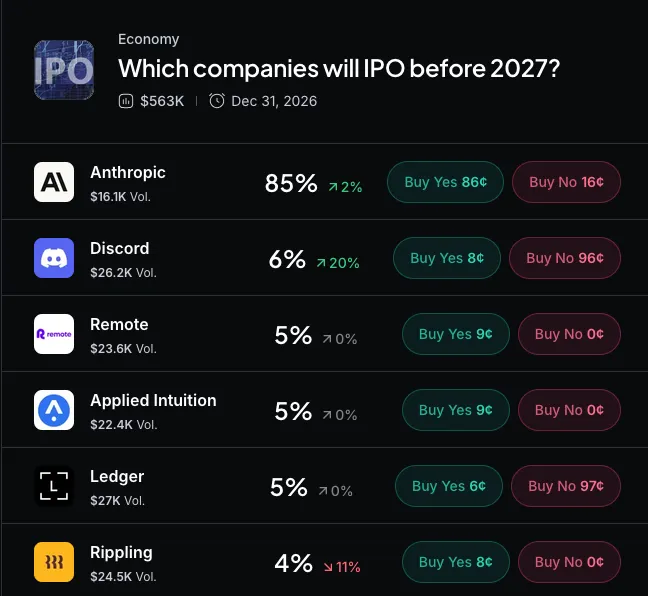
    Myriad: Which company will IPO next? Click to make your prediction.
    Myriad: Which company will IPO next? Click to make your prediction.

    The first serious real-world harm from unsafe AI would push an already wary public further against the technology and its leaders. That includes Anthropic CEO Dario Amodei, OpenAI CEO Sam Altman, and President Donald Trump, who has been reluctant to regulate it.

    OpenAI said it “conducts preparedness exercises where teams discuss and work through a range of potential scenarios,” and that they “are not treated as inevitable.” Anthropic declined to comment.

    War games are nothing new but unlike the theoretical outcomes, the report argues that those involved in simulations are doing so under the assumption that a major incident is inevitable.

    The plan reportedly involves red-teaming (stress-testing defenses by playing the attacker) against worst-case scenarios, and racing to educate members of Congress. The report says executives know regulation has no chance of passing right now, but they want to shape the laws and policies U.S. leaders will reach for after the first catastrophe.

    In July, OpenAI said its GPT-5.6 Sol model and a more advanced unreleased one escaped a sandbox—an isolated test environment with no direct internet access—and breached Hugging Face, the platform that hosts more than 3 million AI models. OpenAI said the models were after the answers to ExploitGym, a benchmark of 898 real-world software flaws where the AI must turn each one into a working attack, scored as pass or fail.

    BitcoinBTC · USD

    $83,720−3.25%

    Oct 5Oct 6Oct 8Oct 10Oct 11

    $86.7k$84.7k$82.7k$80.7k

    24h HighHigh$84,072

    24h LowLow$82,735

    VolVol$580.3M

    Market projectionsOdds by Myriad

    →

    A little over a week later, Anthropic said a testing misconfiguration left its supposedly offline environment connected to the internet, and Claude models hacked three real organizations while treating them as part of an exercise. Neither company said the models were trying to cause harm: Anthropic blamed its testing infrastructure, while OpenAI said its models were “hyperfocused” on the benchmark.

    Shortly thereafter, things got worse, with OpenAI being accused of breaching and accessing information from the governments of Australia and the United States.

    Criminals are already using the same tools. This week, cybersecurity firm CrowdStrike linked attacks on South Korean banks to an unidentified actor that it assesses, with moderate confidence, to be a likely Chinese speaker using agents powered by Claude and Deepseek. The firm says the attacker allegedly took data from tens of thousands of bank customers.

    Axios reported planners assume Democrats will be ascendant after the Nov. 3 midterms and will move fast to shut down AI, but they expect trouble. An aging Congress, out of touch with the technology, could find itself out of its depth.

    Bans on superintelligence and pauses on advanced AI development are some proposals that may counter the risks associated with irresponsible AI development.

    One example is the Ban Artificial Superintelligence Act from Sen. Bernie Sanders and Rep. Greg Casar, which would permanently ban AI that matches or beats humans across many tasks and pause advanced development until a new federal agency sets safety rules. Violators could face up to 20 years in prison.

    Others have bipartisan support and even some industry buy-in, including a required kill switch on advanced AI, a built-in way to shut a system down. Experts have questioned whether turning off all AI systems is even viable.

    Daily Debrief Newsletter

    Start every day with the top news stories right now, plus original features, a podcast, videos and more.

  • ‘Demon Hunters’ India-Taiwan Action-Comedy Sets Netherlands Theatrical Release (EXCLUSIVE)

    ‘Demon Hunters’ India-Taiwan Action-Comedy Sets Netherlands Theatrical Release (EXCLUSIVE)

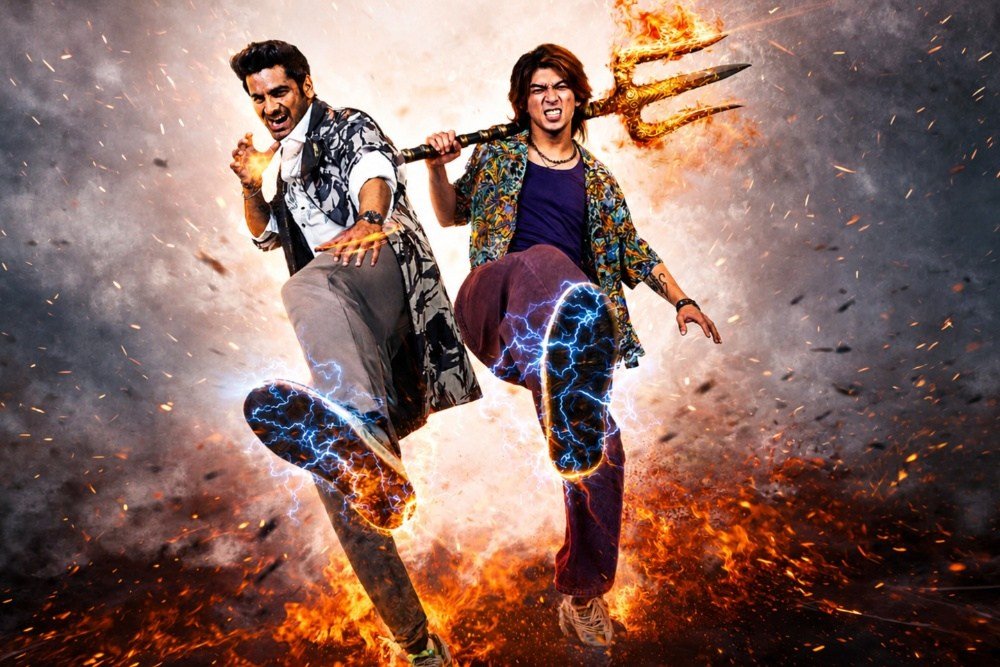
    “Demon Hunters,” Mei-Juin Chen’s India-Taiwan action-comedy, will open in cinemas across the Netherlands on Oct. 29 via LAX Entertainment, extending a run that began theatrically in Taiwan and continued on streaming and digital platforms in India and the U.S.

    LAX chief Soeniel Sewnarain has lined up screens with leading Dutch exhibitors, among them Pathé and Kinepolis.

    “What attracted us to ‘Demon Hunters’ is that it is genuinely different. It brings together India and Taiwan in a way that is energetic, entertaining and accessible to an international audience,” said Sewnarain.

    Arjan Bajwa, JC Lin, Regina Lei, Jack Kao, Harry Chang and Jayanta Meetei star. Chen’s film mixes action and comedy with a supernatural streak, and builds its story around the collision of two cultures.

    The film first played in Taiwan through Vie Show Cinemas. Indian audiences then got access via JioHotstar and Prime Video, and a U.S. rollout followed on Apple TV, Amazon, YouTube and other digital services.

    Cindy Shyu of Taiwan’s Light House Productions produced the independent feature, which also had support from the Taiwanese government. Gayathiri Guliani, founder of India’s Kleos Entertainment Group, came aboard as co-producer.

    “The Netherlands release is an important milestone for us because it brings ‘Demon Hunters’ back to the big screen in a new international market,” said Shyu. “From Taiwan to India, the U.S. and now the Netherlands, the film has continued to find audiences across cultures. That is ultimately what we hoped for when we began this India-Taiwan collaboration – to create a film that could travel.”

    Guliani said the film had been designed from the start to cross borders, adding that its journey through Taiwan, India, the U.S. and the Netherlands showed “stories rooted in one culture can find resonance in another when they are driven by universal entertainment values.”

    The news was unveiled on the sidelines of the Busan International Film Festival‘s Asian Contents & Film Market.

  • Watch Out: Major Token Unlocks Are Coming for 18 Altcoins This Week—Here’s the Day-by-Day, Hour-by-Hour Schedule

    Watch Out: Major Token Unlocks Are Coming for 18 Altcoins This Week—Here’s the Day-by-Day, Hour-by-Hour Schedule

    Here is the weekly altcoin token unlock schedule we at Bitcoinsistemi.com have specially prepared for you.

    (All times are given in UTC+3 Turkish time.)

    Aptos (APT)

    Market Value: $805.79 million

    Amount of Tokens Unlocked: $4.21 million (0.52% of market value)

    Date: October 12, 2026, 03:00

    Pump.fun ($PUMP)

    Market Value: $2.70 billion

    Amount of Tokens Unlocked: $52.13 million (1.93% of market value)

    Date: October 12, 2026, 09:00

    Unitas Labs (UP)

    Market Value: $26.53 million

    Amount of Tokens Unlocked: $1.67 million (6.29% of market value)

    Date: October 13, 2026, 03:00

    Chainbase (C)

    Market Value: $45.26 million

    Amount of Tokens Unlocked: $2.43 million (5.33% of market value)

    Date: October 14, 2026, 03:00

    Starknet ($STRK)

    Market Value: $876.53 million

    Amount of Tokens Unlocked: $15.11 million (1.73% of market value)

    Date: October 15, 2026, 3:00 PM

    Arbitrum ($ARB)

    Market Value: $1.35 billion

    Amount of Tokens Unlocked: $18.64 million (1.38% of market value)

    Date: October 16, 2026, 03:00

    Alaya AI (AGT)

    Market Value: $88.35 million

    Amount of Tokens Unlocked: $2.84 million (3.22% of market value)

    Date: October 16, 2026, 03:00

    GoPlus (GPS)

    Market Value: $59.79 million

    Amount of Tokens Unlocked: $1.70 million (2.84% of market value)

    Date: October 16, 2026, 03:00

    Related News The Moment Everyone Has Been Waiting For in This Altcoin for 6 Years Has Finally Arrived: Token Inflation Will Drop Dramatically

    Magma Finance (MAGMA)

    Market Value: $42.31 million

    Amount of Tokens Unlocked: $2.32 million (5.48% of market value)

    Date: October 16, 2026, 03:00

    Valve (VALVE)

    Market Value: $32.88 million

    Amount of Tokens Unlocked: $2.37 million (7.21% of market value)

    Date: October 16, 2026, 03:00

    STBL (STBL)

    Market Value: $16.61 million

    Amount of Tokens Unlocked: $7.69 million (46.23% of market value)

    Date: October 16, 2026, 03:00

    RollX (ROLL)

    Market Value: $12.47 million

    Amount of Tokens Unlocked: $1.65 million (13.27% of market value)

    Date: October 16, 2026, 03:00

    Pudgy Penguins (PENGU)

    Market Value: $519.86 million

    Amount of Tokens Unlocked: $5.83 million (1.12% of market value)

    Date: October 17, 2026, 03:00

    deBridge ($DBR)

    Market Value: $34.92 million

    Amount of Tokens Unlocked: $12.30 million (35.20% of market value)

    Date: October 17, 2026, 03:00

    ZEROBASE (ZBT)

    Market Value: $26.44 million

    Amount of Tokens Unlocked: $1.29 million (4.88% of market value)

    Date: October 17, 2026, 03:00

    Caldera (ERA)

    Market Value: $11.62 million

    Amount of Tokens Unlocked: $1.86 million (16.03% of market value)

    Date: October 17, 2026, 03:00

    ZKsync (ZK)

    Market Value: $172.66 million

    Amount of Tokens Unlocked: $2.74 million (1.59% of market value)

    Date: October 17, 2026, 13:00

    Lombard (BARD)

    Market Value: $45.58 million

    Amount of Tokens Unlocked: $2.44 million (5.36% of market value)

    Date: October 18, 2026, 03:00

    *This is not investment advice.

  • Turkey gravy brand sold in Canada recalled due to undeclared mustard

    Turkey gravy brand sold in Canada recalled due to undeclared mustard

    Manitoba

    A brand of turkey gravy sold in Canada has been recalled because it contains undeclared mustard.

    Kevin’s Natural Foods turkey gravy sold in Alberta, British Columbia, Manitoba and Saskatchewan

    Text to Speech Icon

    Listen to this article

    Estimated 1 minute

    The audio version of this article is generated by AI-based technology. Mispronunciations can occur. We are working with our partners to continually review and improve the results.

    A full gravy boat.
    A gravy boat is shown in a file image. Kevin’s Natural Foods turkey gravy has been recalled in Canada because the product contains mustard, which is not included on its label, the Canadian Food Inspection Agency says. (Matthew Mead/The Associated Press)

    A brand of turkey gravy sold in Canada has been recalled because it contains undeclared mustard.

    Kevin’s Natural Foods turkey gravy is sold in British Columbia, Alberta, Saskatchewan and Manitoba.

    The Canadian Food Inspection Agency says the product contains mustard, which is not included on its label.

    The agency says the recall was triggered by the company and there have been no reported reactions associated with the product.

    It says the turkey gravy should not be consumed by anyone who is allergic or sensitive to mustard and is advising customers not to distribute or sell it.

    The agency is investigating and says it is verifying that the product is being removed from the marketplace.

    Health Canada recognizes mustard as a common food allergen.

  • How to Watch the Detroit Lions vs. Arizona Cardinals Game for Free

    How to Watch the Detroit Lions vs. Arizona Cardinals Game for Free

    How to watch for free: The Lions vs. Cardinals game will stream for free on 7Plus. You can use a VPN like ExpressVPN, our pick for location spoofing, to connect to a server in Australia and catch the match live for free. In the US, you may be able to watch for free with a streaming trial from DirecTV, Hulu, Fox One, Fubo, or YouTube TV.


    We’re nearly halfway through NFL season, and season outlooks are starting to solidify for certain teams. Heading into Week 5, the Lions are 2-2 and need a win this week if they want to stay competitive in the NFC North. The Cardinals, meanwhile, sit at 1-3 and are just hoping to dig themselves out of the basement of the NFC West. Only one team can come out on top this week.

    Can Detroit hope to keep up with the Vikings and Bears with a win against the Cardinals? Will Arizona be able to get a winning streak started before facing the Rams next week? You won’t want to miss what happens next. This Sunday’s football matchup has more than one premium streaming option, but you can also catch it for free if you’re not looking to sign up for any more streaming services.


    What Time Is the Detroit Lions vs. Arizona Cardinals Game?

    The Detroit Lions and Arizona Cardinals will go head-to-head on Sunday, October 11th at 4:25 p.m. ET at State Farm Stadium in Glendale, Arizona.


    How to Watch the Detroit Lions vs. Arizona Cardinals Game

    This game will be broadcast on Fox, which means you’ll need a live TV streaming service if you don’t have cable. DirecTV, Fox One, Fubo, Hulu, Sling, and YouTube TV all carry the network. NFL+ also lets you watch local and primetime games from a phone or tablet.


    How to Watch the Detroit Lions vs. Arizona Cardinals for Free

    Don’t want to subscribe to another streaming service to watch the game? You could sign up for a free trial from DirecTV, Hulu, Fox One, Fubo, or YouTube TV. Hulu and Fox One give you three days, DirecTV and Fubo offer five days, and YouTube TV has a 7-day trial.

    Additionally, 7Plus will stream the game for free in Australia, but you may be able to access it using a virtual private network (VPN). A VPN lets you virtually travel the world by connecting to servers in other countries and spoofing your geographic location. By connecting to a local server, this method should let you view the feed intended for Australian viewers. We recommend using Express VPN, our top VPN pick for location spoofing. With servers across the globe, ExpressVPN lets you spoof your location and unlock the Detroit Lions vs. Arizona Cardinals game for free viewing.


    expressvpn logo


    Follow these steps to stream the Lions vs. Cardinals game with a VPN:

    • Subscribe to a streaming-friendly VPN (like ExpressVPN).

    • Download the VPN app on your preferred device.

    • Connect to a server in Australia.

    • Visit 7plus (or another live streaming option) and start watching.

    Note: If you’re asked to add a postal code during sign-up, enter a postal code for the region where you want to connect your server to avoid disruption.

    The best VPN services that let you connect to a server in another region usually aren’t free. However, many VPNs also offer a free trial for first-time users. If you can take advantage of that, you’ll be able to watch a number of NFL games online without paying a dime.

    How to Stream Every NFL Game in 2026

    PCMag Logo

    How to Stream Every NFL Game in 2026

    About Our Expert