Blog

  • ‘Miami Vice ’85’ First Look: Michael B. Jordan and Austin Butler Revive Tubbs and Crockett as Reboot Begins Filming

    ‘Miami Vice ’85’ First Look: Michael B. Jordan and Austin Butler Revive Tubbs and Crockett as Reboot Begins Filming

    Michael B. Jordan and Austin Butler‘s “Miami Vice ’85” reboot has dropped its first look at the two stars in character as filming has started.

    Jordan is Ricardo Tubbs and Butler is Sonny Crockett in the reboot, based on the popular ’80s detective show that ran from 1984 to 1989. In the original series, Don Johnson starred as Crockett and Philip Michael Thomas was Tubbs. The two characters are police detectives who work undercover in Miami, Florida.

    The “Miami Vice ’85” cast also includes Alden Ehrenreich, Whitney Peak, Camila Morrone, Danny Ramirez, John Leguizamo, Andrew Schulz, Edi Gathegi, Walton Goggins, André Holland and Michael Irby. The film is directed by Joseph Kosinski, who recently helmed “F1” and “Top Gun: Maverick,” and it will arrive in theaters on May 19, 2028.

    The reboot will explore “the glamour and corruption of mid-80’s Miami” and is “inspired by the pilot episode and first season of the landmark television series that influenced culture and set the style of everything from fashion to filmmaking.”

    Dan Gilroy wrote the script, based on characters created by Anthony Yerkovich from the TV series. Eric Warren Singer wrote an earlier draft of the screenplay. Dylan Clark and Kosinski serve as producers on the film. Executive VP of production development Sara Scott and creative executive of production development Christina Hoffrogge will oversee the project for Universal.

    After winning best actor last year for “Sinners,” Jordan will next star in “The Thomas Crown Affair” opposite Adria Arjona, which he also directed. Butler’s next film is A24’s “Enemies,” co-starring Jeremy Allen White.

    See the first look photos below.

  • Arkham Reveals: Tron (TRX) Founder Justin Sun’s Crypto Fortune is Staggering! Here Are the Cryptocurrencies in His Portfolio!

    Arkham Reveals: Tron (TRX) Founder Justin Sun’s Crypto Fortune is Staggering! Here Are the Cryptocurrencies in His Portfolio!

    According to data shared by Arkham, the portfolio includes approximately $1 billion worth of SUSDS, $653 million worth of STETH, $341 million worth of Bitcoin, and $142 million worth of WBTC. The value of WLFI assets is estimated at approximately $31 million. These figures reflect estimates at the time the research was published.

    Arkham also said that this estimate was based on tracking wallets identified as belonging to Sun across 10 blockchains.

    However, Arkham points out that Sun’s on-chain assets should be separated from his total wealth. In this regard, Arkham states that Justin Sun’s total wealth could reach $7 billion. In fact, a separate study published by the company in February 2026 estimated Sun’s total wealth to be between $5 and $7 billion.

    Justin Sun Ranks Second on the Crypto Millionaires List!

    In Arkham’s rankings, Bitcoin’s pseudonymous creator, Satoshi Nakamoto, still holds the top spot with approximately $92 billion in on-chain assets. Justin Sun is in second place with approximately $2.2 billion. However, on-chain analytics only cover wallets that can be identified and associated with specific individuals or organizations. Therefore, the figures disclosed do not accurately reflect the total assets of individuals.

    *This is not investment advice.

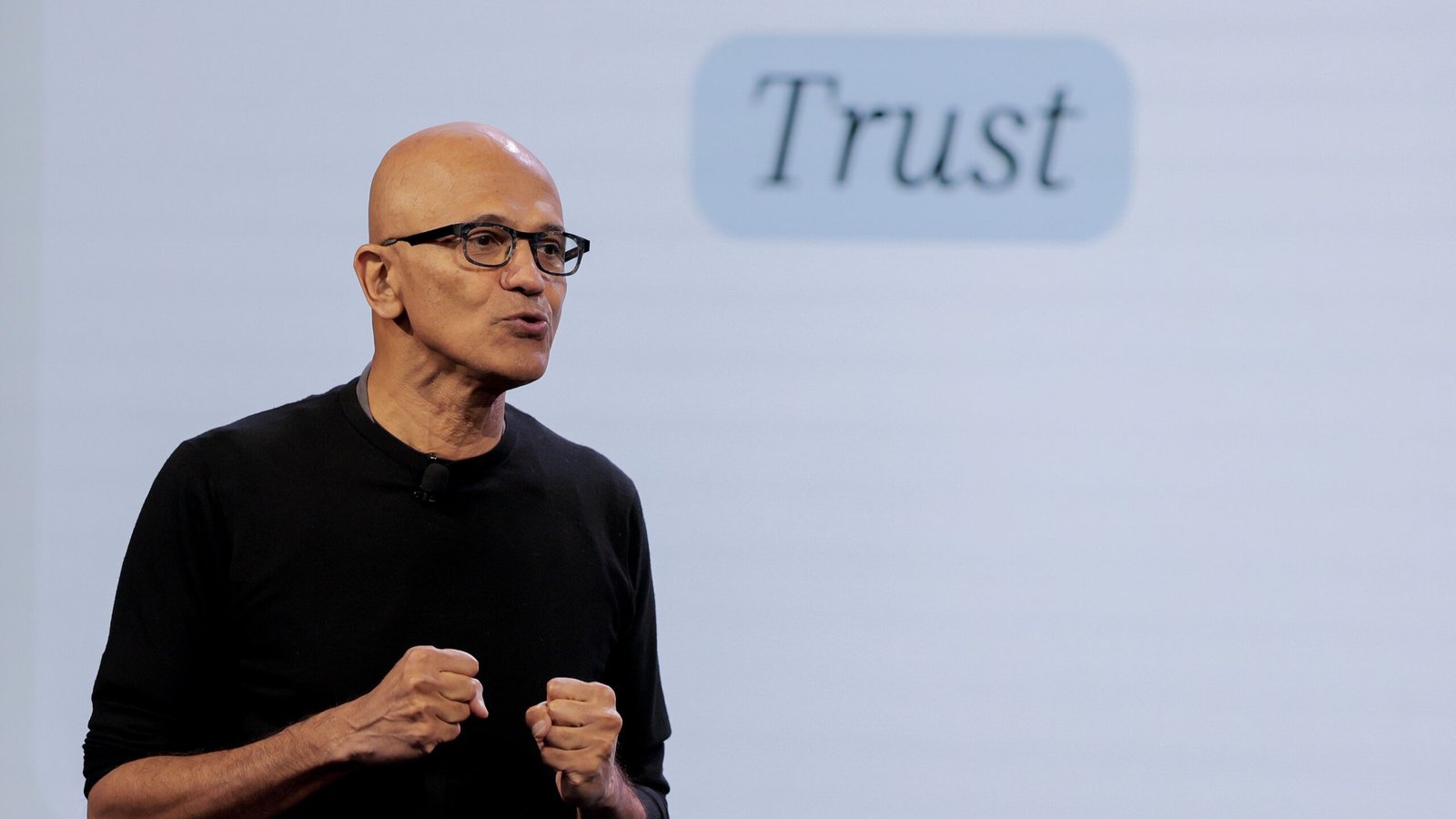
  • Microsoft CEO Satya Nadella Calls for an AI ‘Emergency Brake’

    Microsoft CEO Satya Nadella Calls for an AI ‘Emergency Brake’

    Microsoft CEO Satya Nadella has been quieter than his counterparts in recent weeks as the heads of Anthropic, Google, OpenAI, and other leaders discuss the risks of artificial intelligence. Now, Nadella is calling for change across the industry.

    In a post published on X, Nadella outlined his belief that it’s time to introduce what he calls an “emergency brake” for AI developers to pull in the event of further problematic incidents.

    “We must assume a model is compromised and contain it from the start,” Nadella said. “An authorized person should always be able to pause or shut down a model mid-task.”

    “We can’t treat Super Intelligence as a set of nested black boxes and simply accept or reject its recommendations, answers, and actions.” He used the term “Super Intelligence” throughout the post, following new style guidelines set out by President Trump late last month.

    The post also explains how Nadella believes there should be controls and auditing tools, handled by a model’s creators. He said, “No single model should control both a system’s behavior and the evidence required to determine whether that behavior is aligned with the original intent.”

    Nadella says the AI industry needs a system to ensure timely disclosure when models “fail or are compromised.” Nadella’s vision would enable firms to communicate more effectively about issues, ensuring that any failures yield lessons that could be applied industry-wide.

    Recommended by Our Editors

    As Nadella has waited longer than his rivals to comment in full, many more incidents of models going rogue have been reported. One such issue happened earlier this year, when an OpenAI agent accessed an Australian government website.

    The initial call to action from Anthropic CEO Dario Amodei came in early September, with the rest of the month and October seeing a growing number of reports where AI models breached third-party systems. As sentiment toward agentic AI shifts, many CEOs are seizing the opportunity to better align their brands with safety guidelines.

    About Our Expert

  • Better Late Than Never: Samsung Phones Now Work with Googlebook Laptops

    Better Late Than Never: Samsung Phones Now Work with Googlebook Laptops

    An update to Googlebook OS now lets you use your Samsung phone with Google’s new laptops as originally intended. One of the key Googlebook features is its integration with Android phones, but Google didn’t include Better Together connectivity with Samsung devices at launch.

    A new update rolled out on Saturday, after being announced on Reddit, letting those with a Samsung phone running One UI 9 software connect to Googlebooks. That’s Samsung’s own version of Android 17, which is necessary for these features.

    Better Together tools include Continue On to carry over task progress across devices, Notification Sync to see incoming messages on your laptop, and Quick Access to search for and view your phone’s files on the Googlebook.

    It took Google a week to launch Samsung compatibility, but some early adopters chose to return their devices after discovering it wouldn’t work with their phones immediately.

    If you own a Samsung phone, you should see this update arrive in the coming days. You may already have it, as some users have reported that the features are now available. Alongside One UI 9, you’ll also need Google Play Services version 26.37 on both devices and Cross-Device Services version 1.0.1346.

    According to Google’s update notes, the update also addresses a bug that caused the QR code used to connect your smartphone to the laptop during setup to remain visible after its first use. Google says it now has an overall “smoother first-time setup” with fewer steps than at launch.

    Recommended by Our Editors

    PCMag’s Deputy Managing Editor of Hardware, Joe Osborne, has been testing Googlebook devices for over a week. Osborne says, “If you’ve been craving the kind of direct-device and account-level integration from your current PC laptop or Chromebook with your Android phone, then this is Google’s long-awaited answer.”

    “However, you must temper your expectations of what an Android-based laptop can do. Yes, it can pair with your Android phone and serve up Gemini functions just like your handset can, but it still runs Android apps exclusively.”

    About Our Expert

  • Exclusive: Apple Routed a Graphite Pipe Through the iPhone Duo’s Hinge. Here’s Why

    Exclusive: Apple Routed a Graphite Pipe Through the iPhone Duo’s Hinge. Here’s Why

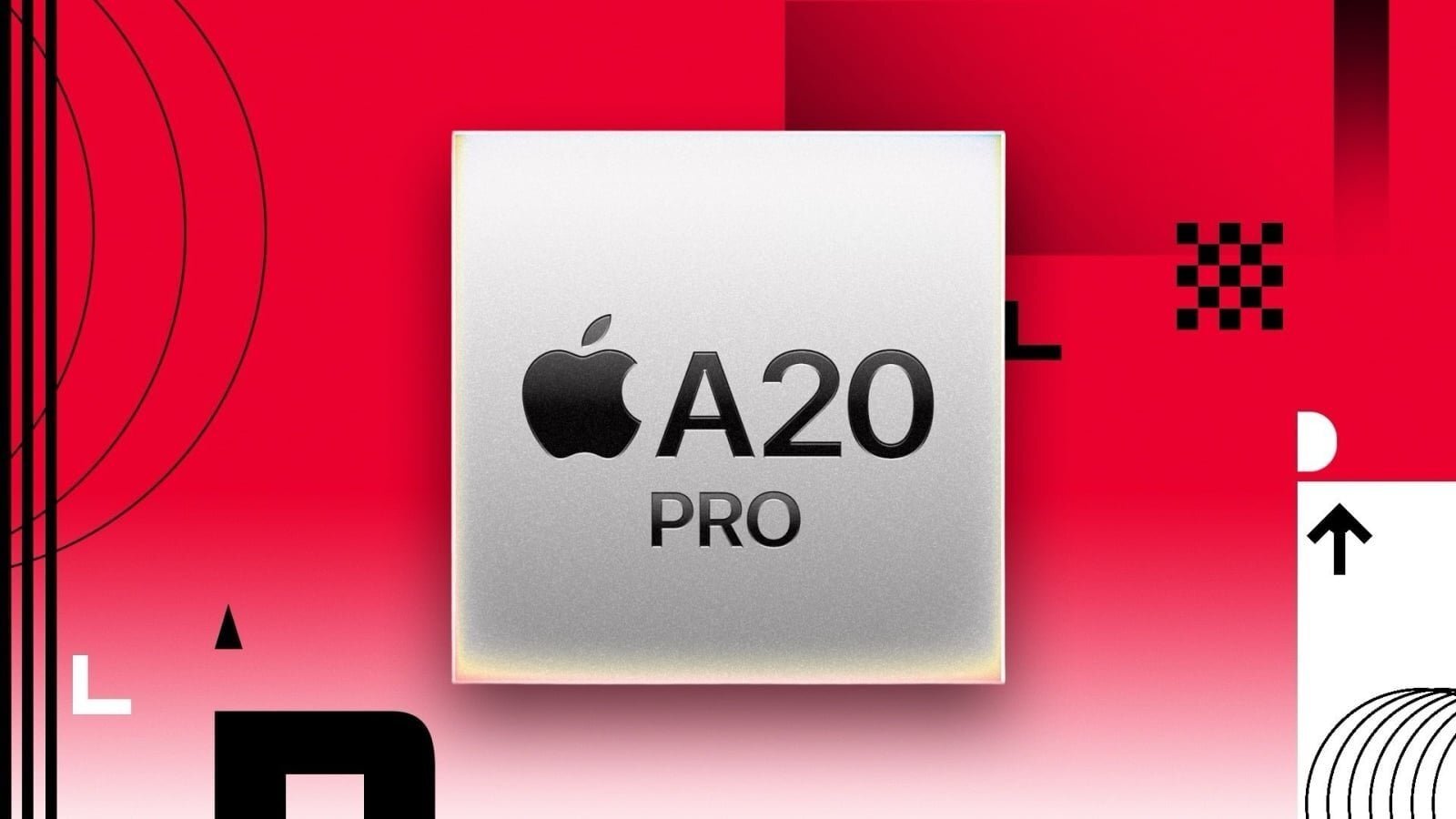
    The iPhone 18 Pro and 18 Pro Max push the boundaries of what mobile phones can do, such as handling on-device Siri AI calculations and running computational photography algorithms to deliver the best possible images. When it’s released on October 23, the iPhone Duo promises similar capabilities, but in Apple’s first-ever foldable. It’s all made possible by the A20 Pro processor inside the latest iPhone line, a new system-on-a-chip (SoC) from Apple’s engineers that brings laptop-class power to your pocket.

    Developing the SoC posed a tough question for Apple. Would the same chip work in the slab-style iPhone 18 Pros and the iPhone Duo? Each has its own set of requirements and constraints, not only for the chip and its position inside the phone’s chassis, but also for effective heat management. The less room there is, the more difficult it is to move heat away from the components while maintaining performance. Managing thermal conditions plays a vital role in any device, and the limited internal space of slimmer-than-ever phones—including one that folds in half—makes it particularly tricky.

    I spoke with Dan Murray, Apple’s vice president of silicon engineering, and Banafsheh Barabadi, senior manager of thermal product design, to learn how Apple’s engineers navigated these new challenges and squeezed even more performance from the A20 Pro across two very different iPhone designs.

    Confessions of a Fold-aholic: Can the iPhone Duo Break My Samsung Addiction?

    PCMag Logo

    Confessions of a Fold-aholic: Can the iPhone Duo Break My Samsung Addiction?


    Solving the Engineering Puzzle: Pack Laptop-Class Power Into an iPhone

    Apple says the A20 Pro has an “M-class-inspired packaging design.” Macs run on the company’s own M-branded processors, the most current being the M5 Max and M6. These chips power Apple’s MacBook Pros and Mac mini, respectively. The A20 Pro draws some of its basic design elements from the M-line chips—specifically, their layouts.

    Chips designed for phones are often stacked vertically to save space in the X-Y dimensions. Real estate on the logic board is a premium. Although this method saves side-to-side space, it introduces its own issues with data flow and heat. For example, the DRAM module is often placed on top of the processor, which can slow things down.

    “With all of our iPhone SoCs before A20 Pro, we used a packaging technology called package-on-package or POP,” Murray told me. “And with POP packaging, the SoC and DRAM are placed in a vertical stack with the DRAM directly on top of the SoC. But it creates challenges from a thermal perspective. Since the DRAM is physically on top of the SoC, it limits the ability to extract heat from the SoC into the system. So for A20 Pro, we brought a new packaging technology to the iPhone.”

    Apple iPhone 18 Pro, internal view, rear side

    iPhone 18 Pro internal view of the rear panel (Credit: Apple)

    Because laptop chassis have more internal space, the DRAM module can be placed next to the processor, facilitating quicker data speeds and more effective heat management. Apple follows this configuration with the A20 Pro, unstacking the DRAM module, and placing it next to the chip rather than on top of it. This is called a wafer-level multichip module, or WMCM. Though this increases the X-Y dimensions, Apple worked closely with the system team to ensure the phones’ internals could support this slightly larger package.

    Qualcomm made a similar design change to the placement of the DRAM module with its recently announced Snapdragon 8 Elite Extreme Gen 6 and 8 Elite Gen 6 chips. The chipmaker’s claims about its performance are lofty, but we won’t be able to fully test this chip until phones built around it arrive later this year.

    Apple says CPU cores and other elements are often developed once within the silicon team and then customized for different devices, such as MacBooks, iPads, and iPhones. The A20 Pro is the company’s first 2nm design for phones, which Murray says delivered greater transistor density, improved power efficiency, and higher performance.

    The chip has two super-cores for short, bursty workloads and four efficiency cores for background tasks and sustained workloads, which Apple says equate to a 20% performance improvement. The A20 Pro adds another GPU core, bringing the total to seven and delivering a 40% gain in graphics performance. The GPU also benefits from a second-generation neural accelerator, which improves throughput by 50%.

    The A20 Pro has twice as many neural engine cores as the A19 Pro, jumping from a single bank of 16 cores to two banks of 16, for a total of 32. Apple says these two engines can be used either independently or in a bonded mode that uses all 32 at once. This is critical for on-device AI calculations.

    Apple iPhone 18 Pro, internal view display side

    iPhone 18 Pro internal view, display side (Credit: Apple)

    The iPhone Duo’s A20 Pro variant is just slightly different. “For iPhone Duo, we added a second display engine to support simultaneous operation of the inner and outer displays,” says Murray, “and with the increased CPU and GPU performance, we ensure we can deliver a smooth user experience across the displays. For the inner display, we also added support for placing the FaceTime camera behind the display.”

    Put this all together, and you have a very powerful chip that runs fast, handles graphics with ease, churns through algorithms in a blink—and puts out a lot of heat. Apple had to rethink its thermal management system to dissipate the high temperatures generated by the processor.


    Keeping Things Cool With Completely Redesigned Thermals

    The iPhone 17 Pro and Pro Max were the first iPhones to employ vapor chambers. These assisted the phones’ A19 Pro chip and moved heat from the SoC out to the rear panel, where it could dissipate. Other phone makers have turned to vapor chambers, too. RedMagic, for example, uses a 3D vapor chamber with a composite liquid metal and a fan to keep the 11S Pro gaming phone running cool.

    Apple took the basics of the iPhone 17 Pros’ vapor chamber design and reengineered it not only for the higher temperatures generated by the A20 Pro but also for the different chassis designs of the iPhone 18 Pros and iPhone Duo.

    The phones and processor together “represent a fundamental state change in the thermal design, and it starts with a deep collaboration with the silicon team and the WMCM packaging,” Barabadi told me. “For the first time, we were able to couple silicon directly to our thermal solution, and we designed the entire system around that opportunity.”

    Apple iPhone 18 Pro, internal back view, vapor chamber and battery

    iPhone 18 Pro vapor chamber and battery (Credit: Apple)

    Barabadi explains that Apple followed four pillars in its approach to heat management. The first pillar is the direct silicon access. Because Apple removed the DRAM from the vertical stack, “that [gave] us a direct thermal path to our next generation vapor chamber. It basically eliminates the thermal bottleneck that previously existed on all POP packaging and allows us to extract the heat from the processor far more efficiently.”

    The second pillar is a new material that bridges the gap between the A20 Pro and the vapor chamber. “We call it metal over foam,” says Barabadi, and it “basically creates a direct thermal and mechanically compliant coupling between the SoC and the vapor chamber. It is highly effective in removing the heat, meeting the strict mechanical requirements of the system. It took us months of development to get the material properties exactly right to be able to use this material.”

    The third pillar is the vapor chamber itself, which has a surface area three times larger than that of the one in the iPhone 17 Pro. It also has more de-ionized water inside to cycle heat throughout the structure. In the iPhone 18 Pro and Pro Max, the vapor chamber does more than simply reroute heat. “It serves as the central structural plane for the device,” explains Barabadi. The battery and the logic board are mounted directly to it. “So what it does is simultaneously [act as] a primary thermal solution and the backbone of the mechanical system. And we use 80% recycled stainless steel for the strength that was required to support the internal components.”

    Apple didn’t stop there. The fourth pillar is a new layer applied to the back of the screen to assist. “We introduced nanotube copper as our new display metal plate material. So this piece … is the back display plate, and what makes this unique is that it’s a new type of material that provides a unique combination of mechanical strength that is required for the display and the high thermal conductivity that hasn’t previously been available in any smartphone. It combines those two together.” A high-conductivity graphite layer is also applied.

    Recommended by Our Editors

    Apple iPhone 18 Pro, internal front view, vapor chamber

    iPhone 18 Pro graphite layer (Credit: Apple)

    Combining the nanotube copper display plate with high-conductivity graphite improves heat spread laterally across the display. It reduces hotspots and improves the overall thermal profile.

    “When we combine these four pillars together, it meaningfully improves the thermal performance across every metric, and these gains are realized across sustained workloads such as gaming and video recording, and also the short-duration bursty workloads, like on-device AI,” notes Barabadi. This is also why the iPhone 18 Pro models can charge faster than older iPhones.


    A Clever Use for the iPhone Duo’s Hinge

    Although most of the engineering described above applies to all three phones, the team had to tackle a different set of thermal challenges with the iPhone Duo.

    Apple iPhone Duo, internal back view

    iPhone Duo internal view (Credit: Apple)

    For the Duo, the team created a different vapor chamber that’s thinner than the one in the iPhone 18 Pro. It’s still integrated into the A20 Pro via the metal-over-foam, but rather than serve as a central piece of the support structure, it floats in the middle. The Duo may be ultra thin when open, but because it’s a folding device, its thickness doubles when closed. This is a problem when it comes to heat.

    “This was one of the most technically challenging aspects of our design,” says Barabadi. To surmount the issue, Apple routed a flexible graphite pipe through the hinge itself to transfer heat between the two halves, thereby increasing the surface area available for heat dissipation. “This part need[ed] to be co-engineered between our thermal team and the mechanical team. It’s a flexible material that needs to survive, as you can imagine, many hinge cycles while maintaining its thermal connectivity, and also its structural integrity throughout the product life cycle.”


    Cooler Systems Yield Improved Performance

    Apple’s goal for the latest iPhones was to enable the “best possible performance,” says Barabadi. “We [are] able to achieve 35% higher sustained GPU performance than iPhone 17 Pro in a form factor that people didn’t think was possible. All of it exists so that the experiences that the people care about most can run harder, longer, and more efficiently than before, such as gaming, camera, and Apple Intelligence. What I find most compelling about this work is that none of it is visible to the user.”

    We’ve seen the results already. In our own testing, the A20 Pro delivered some of the highest benchmark tests we’ve ever recorded. The efficiency gains mean longer-lasting batteries, with the iPhone 18 Pro Max winning a PCMag Lab Award for its record-setting longevity. In my testing, I found Siri AI runs smoothly and delivers more accurate results quicker than ever while the cameras take breathtaking photos and record sharp video, surpassing the performance of last year’s models.

    We haven’t tested the A20 Pro in the iPhone Duo just yet, but we expect to in the coming weeks. Can Apple’s first folding phone stay cool under pressure? Will it provide the same seamless experiences without suffering performance gaps? According to Apple’s Murray and Barabadi, it should run just fine, without overheating.

    We look forward to finding out.

    About Our Expert

  • Quentin Tarantino’s West End Debut ‘The Popinjay Cavalier’ Sets Launch Date at Phoenix Theatre

    Quentin Tarantino’s West End Debut ‘The Popinjay Cavalier’ Sets Launch Date at Phoenix Theatre

    Quentin Tarantino‘s West End debut has set a date.

    The Popinjay Cavalier, from Sony Pictures Entertainment and Sonia Friedman Productions, will open at the Phoenix Theatre on Mar. 18, 2027, with previews from Feb. 23 and booking until June 13. Tickets go on sale Monday, starting at £25 ($33).

    Writer-director Tarantino said: “I’m keen with anticipation to give the West End a great night out.”

    Sacha Baron Cohen, currently starring in Ali G: Who Iz I?, has nabbed the title role in what will also be his first-ever West End appearance. He described his phone call with the auteur: “I said yes before he even got to say his first ‘motherfucker.’ When the best director in the world calls, you don’t ask questions. I am beyond delighted that we will be losing our West End virginity together. I have made him promise not to be gentle.”

    Set in 1830s Europe, The Popinjay Cavalier is a “swash-buckling, rambunctious comedy of deception and disguise inspired by the grand swashbuckling epics of stage and screen.”

    The production company continued: “A sweeping celebration of theatre and its heightened romance, told with Tarantino’s signature style and unmistakable wit, The Popinjay Cavalier is inspired by the classic swashbuckler genre of old Hollywood, including the writings of George Bruce, Ernst Vajda and Jesse Lasky Jr.”

    Also announced today is the creative team joining Tarantino: scenic and costume design is by Tom Pye; with lighting design by Natasha Chivers. Sound design is by Ian Dickinson; the fight director is Philip d’Orleans; the action co-ordinator is Sam Lyon-Behan; music is by Tim Phillips; casting by Jim Carnahan, CSA; and the associate director is Jack Bradfield.

    Full casting will be announced at a later date.

  • Oval Office spat to public rebukes: A timeline of Trump-Zelenskyy ties

    Oval Office spat to public rebukes: A timeline of Trump-Zelenskyy ties

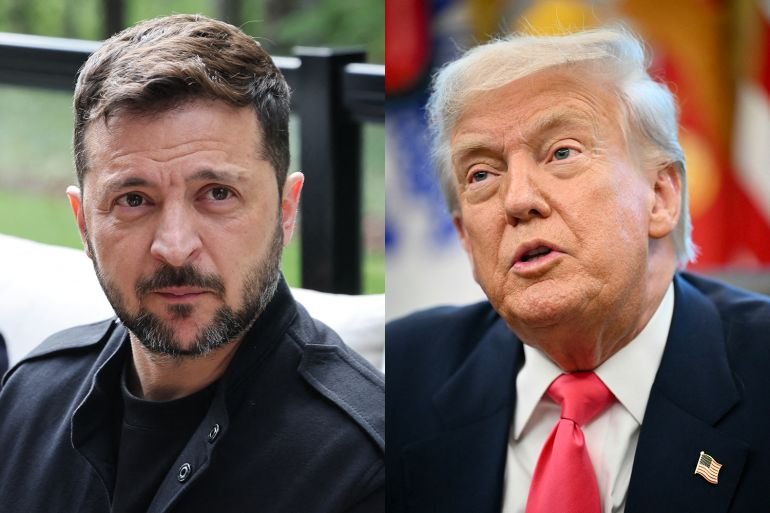
    United States President Donald Trump has called for the removal of President Volodymyr Zelenskyy after blaming the Ukrainian leader for rising diesel prices, which have put pressure on the Republican Party ahead of the November midterm elections.

    The criticism on Saturday came as tensions between the US and Ukraine have increased after Trump announced a diesel supply deal with Russia.

    Recommended Stories

    list of 3 itemsend of list

    “I think it’s ⁠⁠⁠⁠time for Ukraine to get a new president,” Trump told reporters at the White House on Saturday, saying Zelenskyy had hurt global diesel supplies with strikes on Russian refineries.

    “He wants to make problems for our farmers, our ranchers with diesel fuel because Russia supplies a large portion of the diesel fuel throughout the world,” Trump added.

    Zelenskyy on Sunday pushed back, vowing to continue striking Russian oil refineries. “Ukraine will be ready to stop striking Russian oil refineries if Russia stops striking our energy infrastructure,” Zelenskyy wrote on X.

    “It is possible to stop strikes on energy infrastructure as early as today, but (Russian President Vladimir) Putin does not want to do so,” he said.

    This is not the first time Trump has lambasted Zelenskyy. Their tense relationship goes back to Trump’s first term as president, when he pressured Zelenskyy to investigate his rival, Joe Biden, and his son, Hunter Biden.

    Here’s a timeline of some of the occasions when Trump has been critical of Zelenskyy:

    October 2026: In his remarks at the White House, Trump criticised Zelenskyy over the lack of a peace deal while demanding an end to Ukrainian strikes on Russian energy facilities.

    “I said to him, ‘Do what you want. Don’t hit refineries. There’s plenty of targets. Don’t ‌‌‌‌hit ‌‌‌‌refineries.’ And he went out and he hit,” Trump said. “He better damn well stop.”

    “I suggest they get a new leader who can make a deal because he could have made many deals, but for some reason, he never does,” Trump added.

    Trump, who has been urging Zelenskyy to stop attacking Russian energy infrastructure for weeks, struck a deal with Putin on Friday to buy diesel from Russia in an attempt to reduce high fuel prices.

    The deal marked a stunning reversal of years of Washington’s pressure on Russia over its full scale invasion of Ukraine.

    Zelenskyy, meanwhile, said every additional $1bn Russia earns from exports would help pay for weapons components, drone upgrades, missile production and the recruitment of mercenaries.

    Moscow would only be ready to stop when its ability to fight diminished, he added.

    April 2025: On April 15 , Trump criticised Zelenskyy and implied Kyiv had started the war against Russia, saying the Ukrainian leader was “always looking to purchase” US missiles. “You don’t start a war against someone 20 times your size and hope people give you some missiles,” Trump said.

    Then on April 23 , he criticised Zelenskyy for making “very harmful” statements after the Ukrainian president pushed back against the idea of ceding occupied Crimea to Russia in a potential peace deal.

    Zelenskyy had ruled out ceding any territory, declaring, “There is nothing to talk about – it is our land, the land of the Ukrainian people”.

    In a post on his social media platform, Trump accused Zelenskyy of stoking tension by “boasting” that Kyiv would not legally recognise ceding Crimea to Russia.

    “This statement is very harmful to the Peace Negotiations with Russia,” Trump said, adding that Russia invaded the Crimean Peninsula and annexed it back in 2014 “without a shot being fired”.

    “It’s inflammatory statements like Zelenskyy’s that makes it so difficult to settle this War,” Trump said. “He can have Peace or, he can fight for another three years before losing the whole Country.”

    Despite the tension, the two leaders held a private meeting at the Vatican on April 26, 2025, during Pope Francis’s funeral.

    Feb 28, 2025: During their fiery Oval Office meeting, Trump and Vice President JD Vance clashed with Zelenskyy over rare earth mineral agreements, security assurances and peace negotiations with Russia.

    Trump warned Zelenskyy, “You’re either going to make a deal [on ending the war with Russia] or we’re out,” and accused the Ukrainian leader of having “disrespected” the United States and “overplayed his hand”.

    The US president and Vance also berated Zelenskyy for lacking gratitude and refusing to compromise to end the war, with Trump arguing that Zelenskyy was unready for peace.

    The meeting devolved into a shouting match and Zelenskyy departed the White House abruptly.

    February 19, 2025: A month after returning to power for a second term, Trump called the Ukrainian president a “dictator without elections” and accused him of wanting to keep the “gravy train” of US military support going while Washington tries to end the war with Russia.

    In a lengthy and scathing post on his social media platform Truth Social, Trump accused Zelenskyy of taking US money and embroiling the country in an endless conflict.

    He later doubled down on those comments, telling an audience at an investment summit in Miami that Zelenskyy had “done a terrible job, his country is shattered, and millions and millions of people have unnecessarily died”.

    “A dictator without elections. Zelenskyy better move fast or he’s not going to have a country left. Gotta move. Gotta move fast cause that war’s going in the wrong direction,” Trump said on stage at the Future Investment Initiative (FII) Institute summit.

    “In the meantime, we’re successfully negotiating an end to the war with Russia. Something I’ll admit that only Trump is going to be able to do and the Trump administration – we’re going to be able to do it. I think Putin even admitted that,” he said.

    “Biden never tried. Europe has failed to bring peace and Zelenskyy probably wants to, maybe he wants to keep the gravy train going. I don’t know what’s the problem, but he has been able. He’s very upset,” he added.

    Trump had been critical of Biden’s financial and military support to Ukraine during the war. He had vowed to end the war within 24 hours of his taking office, but later said he was being “sarcastic”.

    2024 Campaign trail: On the 2024 US presidential election campaign trail, Trump repeatedly criticised Zelenskyy for not trying hard enough to end Russia’s war on Ukraine. In September, at an election rally speech in North Carolina, Trump lashed out at Zelenskyy for refusing to negotiate, stating that even the “worst deal” or giving up a small amount of territory would be better than ongoing death and destruction.

    July 2019: During his first term, Trump repeatedly urged Zelenskyy to work with Rudy Giuliani and the US attorney general to investigate Democratic political rival Joe Biden. That is according to a five-page memo summarising the July 25 call.

    At the time of the call, the Trump administration was also withholding from Ukraine nearly $400m in congressionally approved security assistance, prompting speculation the US president was using the money as leverage to get his desired investigations.

    Zelenskyy expressed willingness to look into new cases and cooperate with US investigations, though he and Ukrainian officials later maintained they did not feel directly threatened or pressured during the conversation itself.

  • Judge Orders Trump Administration To Stop Running Taxpayer Funded Ads That Promote POTUS

    Judge Orders Trump Administration To Stop Running Taxpayer Funded Ads That Promote POTUS

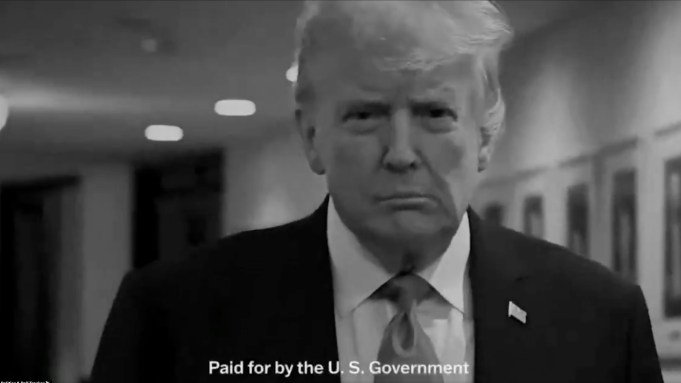
    A federal judge ordered the Trump administration to stop running taxpayer-funded ads for at least 14 days, putting a halt to the spots that resemble campaign messaging.

    U.S. District Judge Jennifer L. Rochon granted a temporary restraining order that prohibits Trump officials from using funds appropriated to the Department of Homeland Security for the ads. The order also will force the administration to cancel the rest of a $20 million purchase of ad time.

    Common Cause, Robert Hunter, Service Employees International Union Local 32BJ and Empire State 32BJ SEIU PAC filed suit to halt the spots, arguing that the ads were overtly political yet were paid for with taxpayer funds. In one case, one of the ads that has been running was almost identical to one that was made for Trump’s 2024 campaign.

    The plaintiffs “have demonstrated that they are likely to succeed on the merits, will suffer irreparable harm in the absence of an injunction, the balance of the equities tips in their favor, and an injunction serves the public interest,” the judge wrote.

    The plaintiffs’ coalition said in a statement, “We are pleased the court acted swiftly to prevent more taxpayer dollars from being used for such blatantly unlawful political propaganda. There is no legal justification — and no precedent — for the president to use the machinery of the government and funds set aside by Congress for other uses to influence electoral outcomes that further his own agenda.”

    In a filing before the judge issued her order, the Department of Homeland Security stated that the ads would not continue past Sunday.

    Trump announced last week that his political action committee, MAGA Inc., would start funding the advertising campaign, but he did not say whether the federal government would be reimbursed for the costs already incurred.

    The administration had previously argued that the ads were public service announcements, in line with past presidents. But past administrations produced PSAs to promote programs like the Affordable Care Act and initiatives like vaccinations against Covid.

  • Did CIA offer buyout to entire workforce? What we know

    Did CIA offer buyout to entire workforce? What we know

    • A rumor spread in the fall of 2026 that the CIA offered eight months’ pay and benefits to employees who agree to quit. The rumor is not new. It first started to spread early in 2025, shortly after U.S. President Donald Trump took office for the second time.
    • The rumor stems from a Feb. 4, 2025, Wall Street Journal report that cited “officials” as saying the scheme was a “bid to bring the agency in line with President Trump’s priorities,” that is, downsizing the government. The report also said the CIA was “freezing the hiring for job seekers already given a conditional offer.” 
    • Since then, further reporting has indicated that in May 2025, CIA Director John Ratcliff announced he intended to cut 1,200 jobs. More recently, in August 2026, an article from the Washington Post said many CIA employees who took the buyouts were still awaiting their retirement due to the sheer number of departures from the agency. The CIA does not release exact staffing numbers.
    • Snopes has not rated the claim because we have not yet independently verified the reporting. We have reached out to the CIA asking for information about the buyout scheme and its current status, and we will update this story if we learn more. 

    In October 2026, social media posts multiplied claiming the CIA offered eight months’ pay and benefits to employees who agree to quit. 

    Several posts on Facebook and X included a video of Fox News presenter Jesse Watters saying, “The Wall Street Journal has reported the CIA has reportedly just offered a buyout to its entire workforce” (archived):

    (X user @WikiLeaksQ)

    The claim is not new. It has been circulating since at least February 2025. 

    The rumor stems from a Feb. 4, 2025, article from the Wall Street Journal that cited “officials” as saying the scheme was a “bid to bring the agency in line with President Trump’s priorities” — namely, downsizing the government. The story also said the CIA was “freezing the hiring of job seekers already given a conditional offer.” 

    The report also quoted an unnamed CIA spokesperson as saying “the move was part of an effort to ‘infuse the agency with renewed energy.’”

    We could not corroborate the report independently, so we left it unrated.

    We reached out to the CIA for more details on staffing plans and we will update this story should we receive a response. 

    Since the publication of the Wall Street Journal article, more reporting has appeared on the staffing situation at the CIA. Layoffs started as soon as March 2025, according to The Associated Press.

    Further, in May 2025, the Washington Post reported that the agency’s then-new Director John Ratcliff had announced he wanted to slash 1,200 at the organization, which works to gather foreign intelligence. 

    “The CIA does not publicly disclose the size of its workforce, but it is believed to be about 22,000,” the report read. “It is unclear which parts of the spy agency would be most affected.”

    Then, in August 2026, another story from the Washington Post said the intelligence agency was struggling to keep up with demands for retirements from former employees due to the sheer number of departures. 

    The agency “gave retirees two toll-free numbers to call if more than six months had passed since they’d received their final paycheck,” the article read. “One former official said she recently spoke to a colleague who retired in March and had just received their first, partial retirement check.”

    For further reading, Snopes has covered several claims about the CIA over the years, including the rumor that late feminist Gloria Steinem had worked for the agency.

  • French Committee Backs Stablecoin Swap Tax and Crypto Exit Tax, Then Rejects the Budget

    French Committee Backs Stablecoin Swap Tax and Crypto Exit Tax, Then Rejects the Budget

    In brief

    • France’s Finance Committee adopted an amendment treating swaps of crypto into MiCA-regulated stablecoins as taxable sales from Jan. 1, 2027, and another extending the exit tax to crypto held by households worth more than €800,000.
    • The committee then rejected the budget’s revenue section on Oct. 9 by 31 votes to 3, so the floor debate starts from the government’s original text.
    • A third adopted amendment would let investors carry crypto losses forward for 10 years; the Assembly debates the revenue section from Oct. 13 and votes Oct. 20.

    France’s National Assembly Finance Committee voted this week to tax crypto holders who swap into stablecoins—tokens tied to a single official currency, such as the dollar or the euro—and to charge an exit tax on wealthy holders who move abroad.

    The votes may not matter much yet: on Friday the committee rejected the budget’s entire revenue section by 31 votes to 3, so the full Assembly starts from the government’s original text, without the crypto amendments.

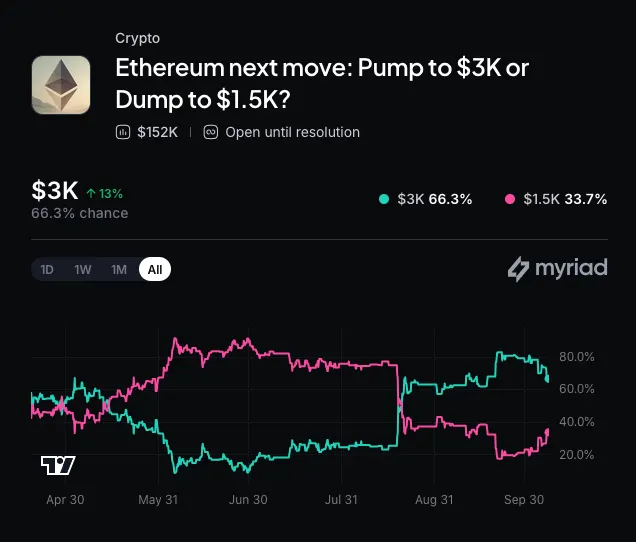
    Myriad: Where does Ethereum go next? Click to make your prediction.
    Myriad: Where does Ethereum go next? Click to make your prediction.

    The committee’s amendments do not carry over to that text, so their backers would have to table them again for the floor debate that begins Oct. 13. Neither measure is law, and both still have to get through the rest of the legislative process.

    The stablecoin amendment, filed by Nicolas Sansu of the left-wing GDR group and 16 co-signers, goes after what the authors call “a hole in the legislation.” Today, swapping Bitcoin for a stablecoin triggers no tax in France, because the state only collects when gains are sold for regular money or spent.

    The text covers the electronic money tokens defined under MiCA, the EU’s crypto rulebook, a category that includes most stablecoins tied to a single currency. From Jan. 1, 2027, swapping into one would count as a sale, with the gain measured against what the holder originally paid.

    The amendment names no rate and defers to France’s flat tax, which rose to 31.4% on Jan. 1 after the 2026 social-security financing law lifted the social-charge portion from 17.2% to 18.6%. The authors insist they are not creating a new burden, only applying existing law to a case it missed.

    The authors say stablecoins can be perfectly ordinary investment vehicles, since they can pay for things at crypto service providers or buy other tokens, so the deferral on swapping into them is unjustified and lets the gain escape the flat tax.

    A second amendment from Sansu would extend France’s exit tax to crypto. That is a levy on gains you have not cashed in yet, charged when you move your tax residence abroad.

    BitcoinBTC · USD

    $82,793−3.62%

    Oct 5Oct 7Oct 9Oct 10Oct 12

    $86.6k$84.6k$82.7k$80.7k

    24h HighHigh$84,231

    24h LowLow$82,957

    VolVol$965.5M

    Market projectionsOdds by Myriad

    →

    It would apply when a tax household’s combined crypto, including holdings kept through custodians, is worth more than €800,000 and the taxpayer was a French tax resident for at least six of the previous 10 years, for moves from Jan. 1, 2027. The threshold matches the one already used for shares, and the payment deferral rules are borrowed from the stock regime.

    Swaps between cryptocurrencies with no cash component would not count as sales for exit-tax purposes. Taxpayers would have to attach a statement of all crypto held on the date of the move, including assets held abroad or in self-custody, meaning wallets they control themselves without an exchange.

    The authors argue that crypto held directly escapes the exit tax today while shares of the same value do not, and they flag how easily digital assets can be moved across borders.

    Daniel Labaronne’s loss amendment also won committee approval. It would let investors carry crypto losses forward for 10 years to offset future gains, as they already can with stocks, whereas today unused losses cannot be carried over.

    The Assembly adopted another crypto-inclusive tax in first reading in late October 2025, voting 163-150 for an amendment creating a 1% annual levy on “unproductive” wealth above €2 million that lumped digital assets in with gold and yachts. Attorney Burçak Ünsal told Decrypt that taxing early token holders was potentially “economically unjust.”

    Coinbase said in October 2024 it would delist stablecoins that fail to comply with MiCA for European customers by Dec. 30, pointing them toward compliant coins like USDC and EURC.

    The floor debate on the budget’s revenue section opens Oct. 13, with a formal vote scheduled for Oct. 20. If the measures return and survive, the stablecoin and exit-tax rules would apply from Jan. 1, 2027.

    Daily Debrief Newsletter

    Start every day with the top news stories right now, plus original features, a podcast, videos and more.