An $XRP Ledger upgrade expected to activate Sept. 29 has been pushed back by at least 10 days after validator support briefly fell below the level required to turn it on.
The feature, called Batch, would let users submit up to eight transactions together. Its all-or-nothing option could let a buyer pay for a tokenized asset and receive it in one operation, preventing either side of the trade from completing alone.
RippleX’s head of engineering, Ayo Akinyele, previously told CoinDesk that projects were being built around Batch and that Ripple would share more about work with asset managers once the feature went live.
“Some projects are already being built with Batch in mind, so activation would allow that work to move closer to production,” he said. He did not name the partners or give launch dates.
The corrected upgrade, formally named BatchV1_1, regained support from 30 of 35 trusted validators on Sept. 25, according to the XRPL amendment dashboard. That started a fresh two-week countdown, putting its earliest activation at Oct. 9 around 14:46 UTC if support holds.
TikTok has settled and agreed to pay the US state of Alabama at least $100 million dollars days before a teen addiction trial was set to begin. TikTok is the latest social media giant to face legal challenges over its handling of teenage addiction concerns.
Israeli Prime Minister Benjamin Netanyahu said Hamas’ Oct. 7, 2023, attack on Israel “is equal to 40,000 innocent Americans slaughtered in less than 24 hours. That’s 16 times 9/11. Sixteen 9/11s that occurred not very far from here.”
Rating:
On Sept. 24, 2026, Israeli Prime Minister Benjamin Netanyahu addressed the United Nations General Assembly, where many delegates walked out at the beginning of his speech. Following his speech, many people online attributed various quotes to Netanyahu, with some claiming he said Hamas’ Oct. 7, 2023, attack on Israel, was equivalent to “sixteen 9/11s.”
According to numerous posts shared on Instagram (archived), X and Facebook, Netanyahu said the Oct. 7 attacks were “equal to 40,000 innocent Americans slaughtered in less than 24 hours. That’s 16 times 9/11 — 16 9/11s.”
The quote was correctly attributed to Netanyahu. He was comparing the number of Israeli casualties in the Oct. 7 attacks to 9/11 deaths relative to both countries’ populations.
During his speech, Netanyahu referred to the number of people killed in Hamas’ attack on Israel before drawing the comparison to the 9/11 terrorist attacks. He said (emphasis ours):
These Hamas monsters, they slaughtered Holocaust survivors. They burned babies alive in front of their parents. They beheaded our men. They brutally raped our women and then they murdered them.
Altogether, they slaughtered 1,200 Israelis that day.
I want to give you an idea of what this means for a country of 10 million. Proportionately, this is equal to 40,000 innocent Americans slaughtered in less than 24 hours. That’s 16 times 9/11. Sixteen 9/11s that occurred not very far from here.
Netanyahu said the above at the 11:28 mark in the video below:
New York City Mayor Zohran Mamdani did not address the 9/11 comparison, but accused Netanyahu of repeating “baseless lies meant to sanitize his genocide of Palestinians,” the New York Times reported.
As Netanyahu approached the stage for his speech, a mixture of boos and cheers erupted and many delegates staged a mass walkout. Netanyahu defended Israel’s attack on Iran and denied accusations of committing genocide in Gaza.
Palestinian President Mahmoud Abbas delivered a prerecorded speech as the United States denied him a visa to attend the UNGA. Abbas said Palestinians were living through one of the most dangerous periods in their history and that Israel was engaging in “killing, destruction, starvation, attempts at displacement, as well as a genocidal war that has created an unprecedented humanitarian catastrophe.” He called Israel’s actions a “malicious colonial scheme aimed at making the lives of Palestinians more difficult in their homeland and forcing them to leave it.”
Deng, Rae. “8 Rumors We’ve Investigated about Benjamin Netanyahu.” Snopes, 26 June 2025, https://www.snopes.com//collections/benjamin-netanyahu-rumors-collection/. Accessed 25 Sept. 2026.
“‘Do Not Allow Another Nakba’, Mahmoud Abbas Warns in UN Speech.” Middle East Eye, https://www.middleeasteye.net/news/do-not-allow-another-nakba-mahmoud-abbas-warns-unga-speech. Accessed 25 Sept. 2026.
“Israel’s Policies Threaten ‘Very Existence’ of Palestinians, Abbas Tells UN.” Al Jazeera, https://www.aljazeera.com/news/2026/9/24/israels-policies-threaten-very-existence-of-palestinians-abbas-tells-un. Accessed 25 Sept. 2026.
“LIVE: Israel PM Netanyahu Speech at UN General Assembly 2026 (Full) .” YouTube, Associated Press, 24 Sept. 2026, https://www.youtube.com/watch?v=yGGRNErktOs. Accessed 25 Sept. 2026.
“PM Netanyahu’s Speech at the United Nations General Assembly 2026.” Prime Minister’s Office Israel, 24 Sept. 2026, https://www.gov.il/en/pages/event-un240926. Accessed 25 Sept. 2026.
Stack, Liam. “Mamdani Accuses Netanyahu of Spreading ‘Baseless Lies’ After U.N. Speech.” The New York Times, 24 Sept. 2026, https://www.nytimes.com/2026/09/24/nyregion/netanyahu-mamdani-un-speech.html. Accessed 25 Sept. 2026.
“WATCH: Israeli Prime Minister Netanyahu Addresses 2026 UN General Assembly.” PBS, Sept. 24, 2026, https://www.pbs.org/newshour/world/watch-israeli-prime-minister-netanyahu-addresses-2026-un-general-assembly. Accessed 25 Sept. 2026.
There are so many factors that go into hunting for deals. Retailers operate on a complex calendar, algorithmically tuned to determine when people are looking to spend and how much cash they’ll part with. I have to constantly compare prices, correlate them with historical data, and make sure that every product I spotlight has been tested in the PC Labs for quality.
There’s just too much junk on the market for you to waste your time with. Every Friday, I sum up the week with five of the deepest discounts, and today’s a doozy: deals up to 46% on top-ranked TVs, earbuds, smartwatches, and more.
There are lots of smartwatches on the market, from ultra-budget wearables to luxe models like the Samsung Galaxy Watch 8 Classic. This is an ultra-premium unit with tons of cool features that dazzled us in our review, starting with the incredibly crisp and bright 3,000-nit Super AMOLED display, great biometric tracking that uses AI coaching to optimize your fitness and sleep health, and a stylish design with a rotating bezel and stainless steel frame. Pairing it with a Samsung phone unlocks even more cool features like gesture controls and advanced AI insights. The Now Bar on the display lets you lock frequently accessed information, like weather and news headlines, to the watch face. It’s also ultra-durable, with IP68 water and dust resistance. Amazon has it on sale for 25% off.
Woot has been one of our favorite places to get huge laptop discounts for a while now. If you don’t have a specific model in mind, it’s always worth checking for zany price drops like this 41% discount on Lenovo’s IdeaPad 5i. This two-in-one portable is a convertible with a 16-inch screen and all-day battery life, and component-wise, you’re getting a serious bargain, with a zippy Intel Core Ultra 5 processor running the show. We have a comprehensive review of this model, where we appreciated its comfortable keyboard (a Lenovo trademark), robust port selection, and subdued design with a combination of aluminum and plastic. We did note that, at 4.18 pounds, it felt a little heavy, but that’s a minor gripe, especially at this price.
Need a bigger TV to lure the friend group over during NFL season? Best Buy has you covered with a huge 46% discount on an 85-inch TCL QM6K screen that dazzles with color, smooth motion, and lots of useful features. We gave this one an “Excellent” rating in our review, pointing out that it was especially attractive for console gamers thanks to a 144-hertz refresh rate and low 7.5 millisecond input lag, as well as support for VRR and AMD FreeSync Premium Pro. Contrast is also a big selling point, with a mini-LED backlight delivering deep blacks and vivid highlights with minimal light bleed. The built-in Google TV platform is easy to use, and the set’s far-field microphone array lets you use hands-free controls if you lose the remote in the couch cushions.
We gave the DJI Osmo 6 camera an Editors’ Choice award in our review, with PCMag expert Jim Fisher (a man who has evaluated hundreds of cameras in his career) saying that it was “one of the best small video cameras for action sports, and its square format recording is ideal for content creators and vloggers.” With support for 16:9, 4:3, and 1:1 aspect ratios, it’s exceptionally versatile, and its image processor records in resolutions up to 8K30. Front and rear displays give you tons of control, and it’s as durable as you’d expect, with drop-resistant construction and waterproofing up to 65.6 feet. Battery life is also exceptional, running up to 112 minutes of recording on a single charge. Woot has an absolutely massive discount right now, so snag one before they sell out.
We believe that Apple’s AirPods 4 deliver the best active noise cancellation in an open-ear design to be found anywhere, and gave them an Editors’ Choice award in our review. AirPods are a known quantity right now, so I don’t have to sell you on their well-rounded sound profile, long battery life, and one-touch connection to iOS devices. This generation presents incremental improvements, including impressive adaptive audio features like Conversation Awareness, which drops the volume in your headphones when people are talking, as well as a new speaker in the charging case so you can ping it with Apple’s Find My tech. Best Buy has them on sale for 28% off right now.
More Earbuds Deals
*Deals are selected by our commerce team
Want to save even more money? Our deals page is the place for low prices on high tech.
About Our Expert
K. Thor Jensen
Contributing Writer
Experience
K. Thor Jensen is a writer and cartoonist living in the Pacific Northwest. He has contributed to dozens of prestigious outlets, including PCMag, Tested, Clickhole, and Newsweek. His second graphic novel, Cloud Stories, was released in 2017.
A rumor spread in September 2026 that U.S. President Donald Trump was set to save the country billions of dollars by invoking a supposedly “long-unenforced” law to deny certain immigrants entry into the country. According to the claim, Trump was enforcing a provision to bar access to anyone who is a “convict, lunatic, idiot, or any person unable to take care of themselves without becoming a public charge.”
The claim referred to the Immigration Act of 1882, which indeed prohibits certain immigrants from entering the country or obtaining green cards if federal authorities consider them to be a “public charge” based on their use of government benefits. That provision has existed since the act’s conception and includes the alleged phrasing about “convicts” and “lunatics” verbatim.
Trump was not invoking a “long-unenforced law,” but his administration in September 2026 announced it was changing how it interprets that “public charge” section of the Immigration Act of 1882 to further restrict who can enter the country or receive permanent residency. Previously, the government only considered cash assistance and long-term institutionalization as reasons a person could be denied under the public charge rule.
Under the Trump administratin’s new rule, which went into effect on Sept. 18, 2026, the Department of Homeland Security removed those previous guidelines and designated immigration officers to use their own judgment to determine who constitutes as a “public charge.”
DHS estimates the change will save federal and state governments $13.05 billion in benefit payments, though it’s unclear how, exactly, the agency came up with that number.
Immigration experts and some Trump critics say the department is not fairly considering the possible economic impact of people forgoing benefits out of fears of being deemed a “public charge” and thus denied certain legal immigration statuses.
A group of Democratic-led cities and states have filed two separate lawsuits challenging the rule. The courts haven’t yet made a decision in those cases, meaning it’s unclear if the rule will get overturned.
In sum, while the gist of the claim has some truth, the rumor misinterprets a September 2026 policy change by the Trump administration and misleadingly estimates possible savings when the real dollar amount is unknown.
A rumor spread in September 2026 that U.S. President Donald Trump was on track to save the United States billions of dollars by invoking a supposedly unenforced law to deny certain immigrants entry into the country.
Social media posts (archived) claimed that Trump was beginning to enforce the Immigration Act of 1882, which denies entry to anyone who is a “convict, lunatic, idiot, or any person unable to take care of themselves without becoming a public charge.” These posts alleged the enforcement measures were expected to kick 5.6 million migrants off government welfare programs and save the U.S. government $13 billion a year.
The claim was misleading for multiple reasons.
Trump was not “invoking a long-unenforced law.” Rather, his administration changed the government’s interpretation of the Immigration Act of 1882’s “public charge” language to further restrict which immigrants can enter the country or receive permanent residency. The new rule, which went into effect on Sept. 18, 2026, applies to immigrants based on their use of public benefits.
It’s true the Department of Homeland Security estimated the policy change will save federal and state governments $13.05 billion per year, supposedly affecting an estimated 1.3 million individuals, not 5.6 million. (It’s possible the “5.6 million” number in social media posts originated from a misreading of an analysis about the rule’s impact on Medicaid and the Children’s Health Insurance Program.)
However, the true impact of the rule is unknown.
Most noncitizens who do not have permanent resident status are not eligible for many federal assistance programs, which means the rule generally targets people seeking green cards for permanent residency.
Immigration and family policy experts fear the change could have far-reaching consequences for immigrant families and local communities. A group of Democratic-led cities and states have filed two separate lawsuits against the rule, arguing it will drive up administrative costs, change states’ funding for public benefits and pressure people into forgoing legal access to benefits.
We asked for the DHS’ response to those accusations, and we await a reply. Because the courts have not yet ruled in those cases as of this writing, it’s unclear if the administration’s interpretation of the Immigration Act of 1882 is lawful and the DHS can fully implement it.
Considering that major unknown, we did not put a rating on this claim.
Here’s what you should know.
The definition and history of ‘public charge’
The Immigration Act’s “public charge” rule only impacts a portion of immigrants attempting to enter the country using certain legal pathways.
According to U.S. Citizenship and Immigration Services, the rule largely doesn’t apply to immigrants who apply for green cards due to a humanitarian status like asylum. Meanwhile, it does apply to immigrants who are relatives of U.S. citizens, employed in the country and working with the American military, among others.
The U.S. government previously stated that immigrants in the latter groups can be denied entry or legal permanent residency based on certain guidelines to determine whether they are a “public charge” — a label based on people’s use of government assistance or the perceived possibility they’ll need it in the future.
When Congress first used the term “public charge” in the Immigration Act of 1882, many social safety net programs that exist today were not around, as Kunal Parker, a historian at the University of Miami School of Law, told NPR in 2019.
In turn, federal officials have reconsidered how to enforce and define the 1882 provision.
In 1999, a memo by the Department of Justice formally defined “public charge” as a person “primarily dependent on the government for subsistence,” as demonstrated by their use of public cash assistance, like Supplemental Security Income through Social Security, or long-term institutionalization at the government’s expense. (See Page 1, under “Definition of ‘Public Charge,’” in the memo.)
The memo stated: “Officers should not place any weight on the receipt of non-cash public benefits (other than institutionalization) or the receipt of cash benefits for purposes other than for income maintenance.”
That meant immigration officers could not consider benefits like Medicaid, food stamps and free or reduced school lunches as disqualifying factors for green cards (unless the person was in, or likely to need, a public institution for long-term care).
In 2019, the first Trump administration issued a new rule that redefined “public charge” to include immigrants who receive “one or more public benefits,” including some types of Medicaid, housing assistance and other non-cash benefits, “for more than 12 months” in total within any 36-month period.
The courts struck down that rule after a lengthy legal battle.
In 2022, former President Joe Biden issued a new policy that closely aligned with the 1999 memo’s definition of “public charge.”
Trump admin’s 2026 rule
In July 2026, the Trump administration announced its new rule that rescinded Biden’s 2022 guidelines. The new rule eliminated “public charge regulations in their entirety” to give “broad discretionary authority to officers,” as outlined by the government’s Federal Register.
“DHS is restoring the basic principle that immigrants must be able to support themselves,” DHS said in a statement on X. “We are reaffirming the requirement of self-reliance, protecting public resources, and ending policies that encouraged dependency on hard-working American taxpayers.”
In other words, the Trump administration removed the existing guidelines to determine whether someone is a “public charge” and instead told immigration officers to use their own judgment to determine who gets the label. Here’s an excerpt from the DHS rule:
While officers will not have a list of “excluded” benefits to consider, officers will have the authority and discretion to consider all circumstances surrounding receipt of any one or more public benefits and determine whether the alien is inadmissible as likely at any time to become a public charge taking into account the statutory factors and applicable precedent. The receipt of public benefits is but one consideration in the totality of the circumstances.
The Trump administration’s full July rule is available on the government’s Federal Register website. Under “Purpose of the Regulatory Action,” DHS states that officers may consider an immigrant’s use of “means-tested public benefits” (public benefits based on a person’s need for them); “any other individualized case-specific factors and circumstances,” and “any empirical data relevant to an alien’s self-sufficiency.”
“Using good judgment and discretion, officers will more accurately assess an alien’s likelihood at any time of becoming a public charge, in the totality of the circumstances, as Congress intended,” the rule says.
According to the DHS rule, officers will not consider benefits used by an applicant’s household members, including non-relative dependents. However, officers will consider the applicant’s “financial status” that led to a household member” needing to apply for or receive those benefits.”
The rule’s potential impact
Given how vague and open-ended the 2026 rule is, it’s difficult to estimate its future impact.
The $13 billion estimation in savings originated from the DHS rule in the Federal Register:
DHS estimates that the total reduction in transfer payments from the Federal and State governments could be approximately $13.05 billion annually due to disenrollment or forgone enrollment in public benefits programs by members of households that include aliens who may be receiving public benefits.
In other words, the $13 billion number is an estimate of how much money the government would no longer be handing out via public benefits, either due to people unenrolling or forgoing signing up all together.
It’s unclear how, exactly, the DHS calculated the estimated savings. We asked for the department to explain its math in our interview request for this story, and we will update this report if we hear back.
However, that prediction does not account for several factors, such as the economy’s loss in workers with fewer people being allowed to enter or live in the country.
A group of Democratic-led states, including California and New York, argued in a lawsuit filed Sept. 14 that the rule could harm local communities and economies (see Page 4):
States will lose federal funding due to disenrollment in state programs, and public agencies will face substantial administrative costs as they attempt to mitigate confusion and fear. As households forgo their legal access to benefits—such as preventative healthcare, nutritional assistance, and school lunch—public health, local economies, public education, and public safety will suffer. The [DHS rule] will increase the prevalence of disease, drive up the costs of medical care, and increase poverty.
On the same day, Democratic-led cities including New York City, Chicago and San Francisco, similarly filed a seperate lawsuit challenging what they described as the federal government’s attempt to deny green cards and visas to certain immigrants “without clear definitions or meaningful guardrails.”
In the Federal Register documentation, DHS said the rule could impact state and local economies but attempting to quantify that impact is challenging due to “limited data and uncertainty” regarding how people might react to the rule.
Opponents fear downstream effects
Immigration experts and some Trump critics worry the new rule could have far-reaching consequences for immigrant communities. For example, families with children who are citizens but have immigrant parents may suffer if the parents choose to forego benefits out of fear of running afoul to the “public charge” rule.
After the first Trump administration announced changing the provision in 2019, a survey from the Urban Institute, a research nonprofit, found that one in seven adults in immigrant families reported avoiding public benefit programs in 2018 “out of fear of risking future green card status.”
Other research at that time predicted additional challenges for families impacted by the rule, like limited economic mobility, as well as downstream job cuts and other negative impacts on the economy.
“The biggest impact of the first Trump administration’s public charge policy was to terrify families out of using public benefits they were eligible for, including for their U.S. citizen children, because they were afraid of falling afoul of the rule,” wrote Dara Lind of the American Immigration Council, a nonprofit advocating for immigrant rights.
“Even though the new [2026] policy isn’t the same as the old one, the fear of a new public-charge rule could be so powerful that it has the same effect,” Lind said in July.
In the Federal Register documentation, the DHS said the change “may negatively impact the health and education opportunities for children,” including those who are citizens. However, the agency believes that impact “is outweighed by compelling legal and policy reasons,” such as “better ensuring self-sufficiency.”
The vertical, whose first season debuted in late July, will return for a second season during the Sunday, Sept. 27 episode of Jimmy Fallon‘s late-night show following Sunday Night Football. Sponsored by the oral care company TheraBreath, the series has been positioned as late-night television’s first microdrama. (The Daily Show is also planning a different satire of the format.)
Who Billionaire? Me Billionaire season two will bring back stars Fallon, John Stamos, Kasey Esser, Rose Kelso and Delaney Rowe for some soapy, ultra-heightened drama. “Surprise guest stars” will also appear on the microdrama, according to The Tonight Show.
The first season began with two billionaire couples celebrating an engagement when a vengeful stranger (Stamos) interrupted their celebration. Per the late-night show, the second season will picks up as “Chaiston [played by Fallon] becomes increasingly unhinged, his best friend Brax (Kasey Esser) becomes suspicious that Prestina (Delaney Rowe) may be having an affair and it all ends with someone in a coma.”
The first bite-sized episode of the series will premiere on Sunday‘s broadcast and episodes one through six will subsequently be made available on Peacock and The Tonight Show’s social-media platforms. Another episode will premiere during Monday’s episode of The Tonight Show, followed by episodes seven through 12 each appearing on Peacock and other social media platforms.
The first season of Who Billionaire? Me Billionaire drew 27 million viewers, according to The Tonight Show.
Christopher Nolan is directing a standalone “Star Wars” movie about Darth Vader.
Rating:
Is Christopher Nolan directing a new standalone “Star Wars” film about the iconic villain Darth Vader? Did “Star Wars” creator George Lucas lobby Nolan to make the movie? Is actor Hayden Christensen set to put the Sith lord’s suit back on?
In late September 2026, social media users shared a rumor claiming Nolan planned to direct a film titled, “Star Wars: Darth Vader.” That movie, should Nolan lead the charge on creating it, would follow the resounding box office success of his summer epic, “The Odyssey.”
For example, on Sept. 23, an X user posted (archived) a Turkish-language message translating to English as follows, “Christopher Nolan, the director of the new Star Wars trilogy titled STAR WARS: DARTH VADER!” The post received millions of views.
(@cinemovieas via X)
A popular Instagram post also presented (archived) the image caption, “Christopher Nolan Set to Direct Standalone Darth Vader Film.”
In sum, we found no evidence that this rumor was true. While hopefulrumblings about Nolan one day directing a “Star Wars” film were notnew, a search of X indicated an account with “satire” and “parody” labels shared the earliest post promoting this claim.
That post (archived), appearing on the @ChaosCrave_ X account, described the fabricated idea for the movie as “an R-rated, dark-fantasy exploration of the Sith Lord’s peak Imperial era”:
George Lucas is reportedly lobbying for Christopher Nolan to direct a standalone STAR WARS: DARTH VADER film.
Hayden Christensen is reportedly attached to lead the project, marking his return to the suit for an R-rated, dark-fantasy exploration of the Sith Lord’s peak Imperial era.
The post displayed a slideshow including photos of Lucas, Nolan behind an IMAX camera and Christensen, as well as an image of the “Star Wars” logo.
(@ChaosCrave_ via X)
The @ChaosCrave_ user profile featured a disclaimer describing the account’s content as “parody” and “satirical news.”
In an X direct message, @ChaosCrave_ confirmed starting the rumor, saying, “Yes, I made it up completely by myself.” We also emailed representatives for Lucas and Nolan to ask about the claim and will update this article if we receive further information.
Days prior to the claim’s inception, on Sept. 19, Christensen addressed general rumors of reprising his role as Vader — with no mention of Nolan.
In an E! News red carpet interview during the opening night celebration for the new Lucas Museum of Narrative Art in Los Angeles, a reporter asked, “We’re hearing rumors of a solo Vader film. Are you interested? Like, what can you tell us?” Christensen answered, “Oh, I think those are just rumors.”
The reporter then asked, “If it were to come true though, would that be something that you’d be interested in down the line?” Christensen responded, “Of course, yeah. I would be thrilled to get to do that but right now those are just rumors.”
For further reading, we previously reported on whether Colin McGregor, the brother of young Obi-Wan Kenobi actor Ewan McGregor, truly used the call sign “Obi-Two” in the Royal Air Force.
“I made a living for 34 years second-guessing everything I see or hear, so you have to take that into consideration.”
That’s one of the first things that Guy Campanile, the famously exacting former managing editor of 60 Minutes and a 34-year veteran to CBS News, says to The Hollywood Reporter as he settles into an interview. At CBS News he was known for being ultra-frank even in a workplace that culturally encouraged vigorous debate as part of its story-honing process. (“It’s no secret at CBS News that I do not hold back. Many colleagues appreciated my directness. Some did not,” he wrote in an email to THR.)
So he urges THR to take that into account as he offers his thoughts on the 59th season of 60 Minutes so far. His critiques are less stinging than one might assume given his previous assessment of why he and colleagues were fired from the program in May (that they refused to be “accomplices in the destruction of the most prestigious news program on American television”). Overall, Campanile echoes what at least a couplecritics have said about the first episode of the 59th season: It didn’t seem much different than recent seasons of the program.
“We kept hearing about a notebook full of ideas that the new executive producer had, and the broadcast had been described as a melting ice cube and that changes had to happen,” he says, adding that 60 Minutes also increased its viewership nine percent in the previous season. “And the broadcast I’ve seen the first few weeks, in the broad strokes, in shape and form, not in content, does not look very different. So I’m trying to understand why it was all blown up.”
In May, Campanile’s time at CBS came to an abrupt end as he and multiple other staffers — including correspondents Sharyn Alfonsi, Cecilia Vega and senior program leaders Tanya Simon, Draggan Mihailovich and Matthew Polevoy — were ousted from the program. Correspondent Scott Pelley was also fired after a tense confrontation with an incoming leader about changes under CBS News editor-in-chief Bari Weiss.
The departures drew intense scrutiny as Weiss, who came up as an opinion journalist without traditional broadcast experience, was early in her tenure and some dismissed staffers alleged that under her leadership execs had attempted to interfere in their coverage for political reasons.
Guy Campanile is a 34-year CBS veteran and was managing editor of 60 Minutes.
Dave Kotinsky/Getty Images
Within this context, Campanile’s biggest critique surrounds the marquee segment of the premiere, an interview with one of the U.S. Air Force officers shot down in Iran and rescued in a daring mission by the U.S. military. The segment struck Campanile as a fitting curtain-raiser to the new season, but the report also raised questions for him. “Where I, as a viewer, got stuck is how do we have the Secretary of Defense and the Chairman of the Joint Chiefs of Staff in that story and not ask about the conduct, the arc and the status of the war?”
Campanile notes Secretary of Defense Pete Hegseth and Chairman of the Joint Chiefs of Staff Dan Caine, both interviewed in the piece, aren’t doing regular briefings on the status of the broadly unpopular war in Iran or many interviews with news outlets.
“That made me go, huh, because among some viewers, they may see that as, boy, I guess they didn’t want to ask about the war because they wanted to get this interview with the [officer],” says Campanile. (He says that, during his time at the programs, conditions were never set by subjects for interviews at 60 Minutes; correspondents could always ask what they wanted.)
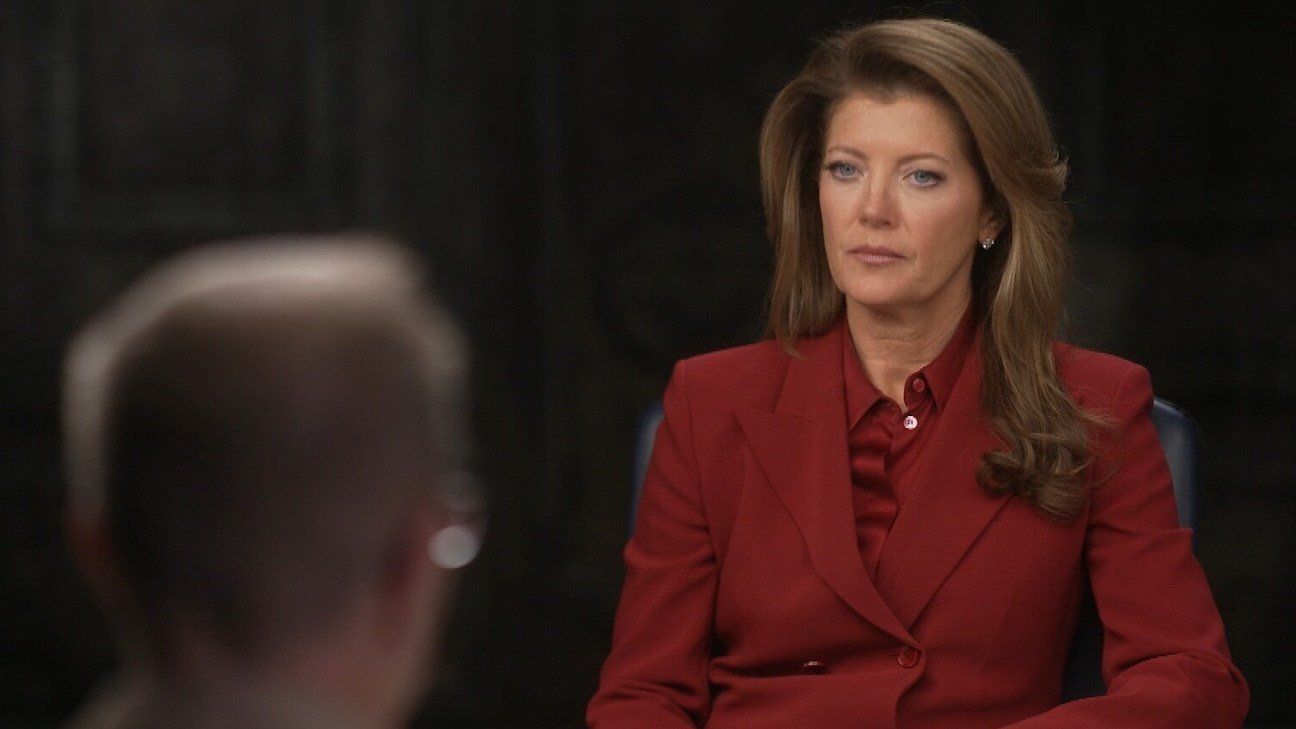
But CBS did air clips of correspondent Norah O’Donnell asking Hegseth what victory would look like in Iran and querying Caine on Iran’s missile capabilities on CBS Mornings. Her question to Caine about his concern over a munitions shortage also aired on Face the Nation — just not on 60 Minutes.
Another Campanile critique: In its second episode of the season, 60 Minutes aired the first TV interview with Patrick Clancy, the ex-husband of Lindsay Clancy, a Massachusetts mother who murdered her three children. Clancy’s trial over the summer, which ended in a mistrial, captured global media attention and sparked conversation around postpartum mental illness, making the interview a huge get for 60 Minutes.
But watching the segment, Campanile wondered what the larger purpose of the interview was. “I think it’s a high-interest story, just like the fighter pilot’s story was a high-interest story, but you have to bring more than just high interest, at least I believe that to be the case, because otherwise it feels a little tabloid-y,” he says. “And I don’t think that’s what people want from 60 Minutes. I just don’t. I think they want something more thoughtful.”
The changes taking place at 60 Minutes and CBS News at large are all the more consequential now that the owner that ushered them in — Paramount Skydance — has settled a lawsuit with 12 state attorneys general to merge with Warner Bros. Discovery. WBD owns CNN, which if the transaction goes through could soon also be owned by Paramount Skydance.
Campanile says he has “lots of concerns” about that prospect: “Chief among them is who is running this operation? Is it going to be Mark Thompson or is it going to be Bari Weiss?” He adds that it remains unclear to him how the editorial oversight board required by the settlement would work, given that specifics on the body haven’t been provided. “Much was made of the CBS News ombudsman. That guy’s been missing for a year,” Campanile says.
Campanile is continuing to work in journalism, having just launched a media consultancy, FFWD Media Mentor, tailored to early-career and student journalists. The consultancy is geared toward professionals who aren’t receiving much guidance on the job; participants will likely receive some of that no-nonsense feedback Campanile was known for at 60 Minutes.
When it comes to his former workplace, the former managing editor says he’s interested to see what the program does in the weeks ahead. “Maybe, maybe there is a secret sauce we didn’t understand, some kind of equation that we never contemplated,” he says of 60 Minutes. “And we’ll all find out together. The viewer has the final vote in all of this. I have said over and over again, you are what the scoreboard says you are… So let’s see where we are in April and March and May, and then the final verdict will come down.”
Swift broke the records following the midnight release of “The Life of a Showgirl: Encore,” which featured four new songs, including lead single “Patient Zero.” That song broke the record for the most-streamed song by a female artist in a day so far this year, while Swift herself had the most streams out of any female artist in a day in 2026.
Swift dropped “The Life of a Showgirl: Encore” after gradually rolling out the promise of new music, beginning with some Easter eggs in a “Law & Order: SVU” skit during the Emmys telecast. In character as a detective, she said, “I think what we’re going to be looking for is hiding in plain sight.” She then broke the fourth wall, looking directly at the camera and saying, “Saccharide. Aries. From the vineyard. North or south.” Swifties, of course, solved the puzzle relatively fast, noticing that the third letter of each word spelled out “encore.”
Then, this past Tuesday, she announced that she would be releasing her new single “Patient Zero” this week, rolling out three limited edition CDs of the single on her website. Just a day later, she revealed that she was actually dropping “The Life of a Showgirl: Encore” on Friday, offering fans four new songs including “Patient Zero,” “Cleveland!,” “Pink Clouding” and “Babylon.”
On social media, Swift explained why she wanted to add more to her 2025 album. “About a year ago, you guys did a truly unfathomable thing. Something that completely blew my mind… You gave ‘The Life of a Showgirl’ the biggest first week for an album in history,” she wrote. “I took a trip to Sweden to celebrate with Max and Shellback, my two collaborators on this album. Really we just wanted to reflect and take in how grateful we were for the moment we were in, but there was a studio there and we did what we do when we feel anything at all: We wrote more songs. I hope you love them, because they were born out of pure gratitude for your exuberance for and celebration of the album we made. ‘The Life of a Showgirl: The Encore’ including four new songs is out on Friday and available to pre-order and save now.”
Up next, Swift is set to debut the video for “Patient Zero” at this Sunday’s MTV VMAs, where she is also being honored with the inaugural Artist-Director Award. She previewed the clip on “CBS Mornings” on Thursday before sharing it on her social media accounts. The video, featuring cinematography by Oscar winner Emmanuel Lubezki, will star Swift alongside Dakota Johnson and Colin Farrell.