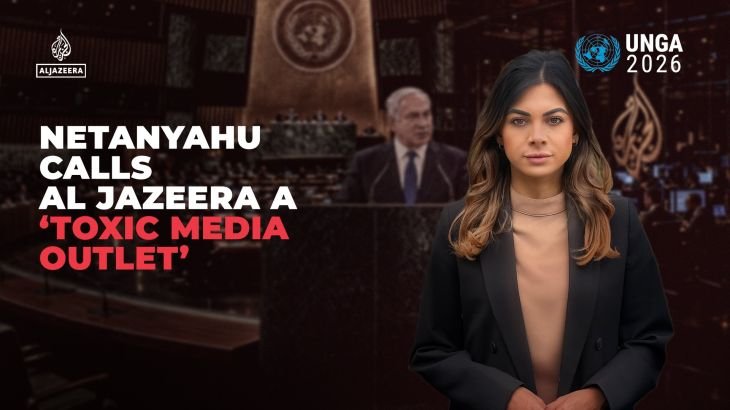
Israeli Prime Minister Benjamin Netanyahu called Al Jazeera a “toxic media outlet” and described the media as an “eighth front” in Israel’s war. But Israel has killed Palestinian journalists, shut down Al Jazeera’s operations and restricted media access to Gaza. Al Jazeera’s Noor Wazwaz explains.
US spot Litecoin exchange-traded fund reserves reached 175,000 $LTC, driven by a 39,000 $LTC inflow into Canary Capital’s LTCC fund.
Futures contract open interest across the network rose to $670 million in September 2026, adding $140 million within a 48-hour window.
Litecoin logged an intraday gain of 16.35%, testing the $75 technical resistance zone with a relative strength index sitting at 81 points.
The digital asset market took a significant stride this Friday, September 25, as Litecoin ETF holdings reached an all-time high fueled by institutional demand and speculative activity.
Record in Exchange-Traded Funds and Divergence from Derivatives
Accumulated balances across US-operating spot exchange-traded funds touched a historic high of 175,000 $LTC, according to metrics from analytics firm Glassnode. This benchmark followed a net inflow of 39,000 $LTC into the LTCC investment vehicle managed by Canary Capital, marking its largest single capital injection to date.
The monetary value of this institutional inflow equals $2.8 million over recent sessions. However, comparative market analytics point out that this spot institutional demand still represents modest volume relative to the leverage deployed across parallel markets.
Open interest in Litecoin futures contracts expanded by $270 million over the span of a week, reaching $670 million according to Coinglass records. The report’s technical evaluation indicates that the asset’s recent appreciation primarily stems from leveraged speculation rather than direct spot market accumulation.
Metrics denominated in $LTC units grew by 25% over seven days. Glassnode data suggests traders opened new synthetic positions rather than merely reflecting collateral valuation adjustments on existing holdings.
This expansion in open interest places the metric near its annual peak of $690 million recorded in January 2026. Historical records highlight that on that occasion, the price of $LTC experienced a subsequent retreat from $80 down to around $53 over the following weeks.
Technical Performance and Resistance Levels
The daily price chart showed a 16.35% climb, clearing the 50% Fibonacci retracement at $62.09 and the 61.8% retracement at $67.47 in a single session. Price action directly tested the $75 technical hurdle, which aligns with the 78.6% retracement level where the asset met rejection in late January.
The advance eclipsed the May peak near $60, establishing the first higher high following the early-year consolidation phase. Technical chart analysis from TradingView highlights that this structure extends a series of higher lows in play since June, when the asset touched a bottom of $41.
The Relative Strength Index (RSI) posted a reading of 81 points on the daily timeframe. According to technical market reports, this overbought condition shows no immediate bearish divergences, though the elevated reading signals the potential for a stabilization phase or temporary cooldown.
Market analysis suggests a sustained daily close above the $75 threshold could pave the way toward $80 and ultimately toward the early-year high of $84.89.
Should profit-taking emerge, analysts identify initial operational support at $67.47, with a deeper defensive range between $60 and $62. Meanwhile, confirmed daily closes below $56.70 would compromise the continuation of the current bullish impulse.
Traders are closely watching the weekly candle close scheduled for Sunday, September 27, 2026, which will determine whether the asset successfully defends the $75 band or if mounting derivatives liquidations trigger a correction toward previous support zones.
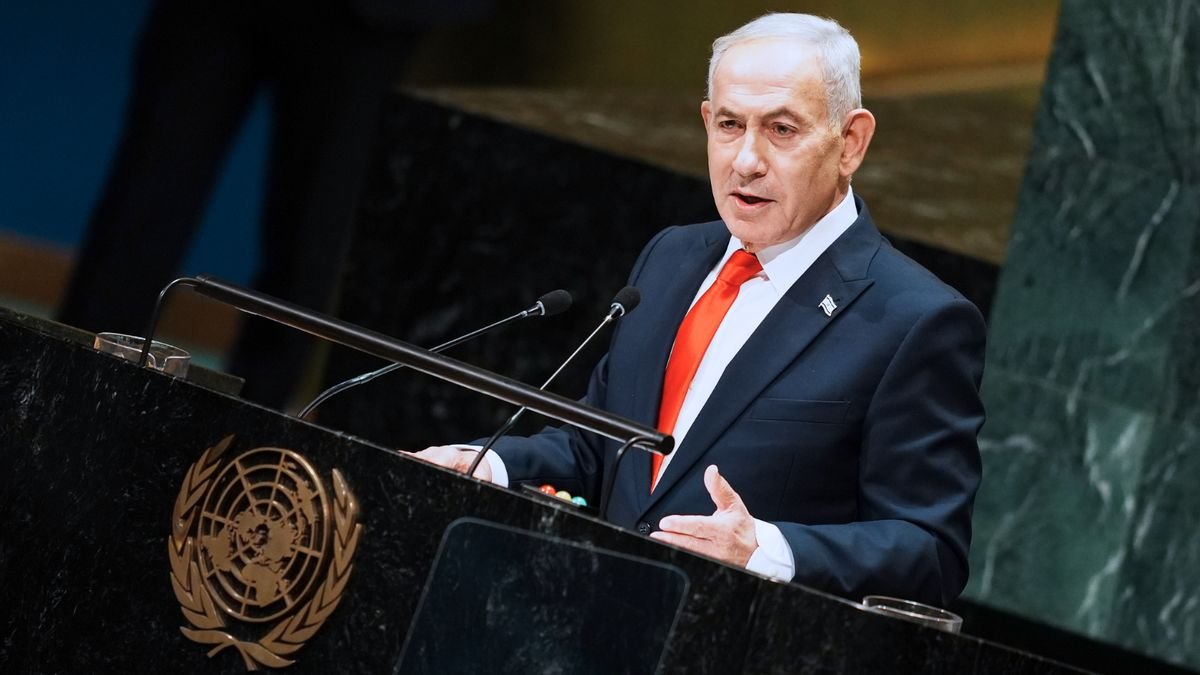
Following Israeli Prime Minister Benjamin Netanyahu’s speech at the United Nations General Assembly on Sept. 24, 2026, social media users shared a clip purportedly showing him saying “America deserved 9/11” as he shook his finger in the air.
The clip was authentic, meaning it wasn’t generated with artificial intelligence or digitally altered.
A longer video of Netanyahu’s speech, however, showed he was not expressing his personal belief but rather quoting the left-leaning influencer Hasan Piker. Piker truly made that statement during a live stream in 2019.
Several userson X made the claim (archived), expressing disbelief using a supposed video clip of the speech of Netanyahu saying “America deserved 9/11” as he shook his finger in the air.
While the clip was authentic, meaning not generated with artificial intelligence or digitally altered, it omits critical context from Netanyahu’s full remarks. He was not expressing his personal belief when he said those words. A longer video showed he was quoting Hasan Piker, a left-leaning influencer, who did say “America deserved 9/11” during a livestream in 2019. We’ve left this claim unrated to account for those nuances.
At the 27:10 mark in the video, Netanyahu addressed New York Mayor Zohran Mamdani, saying Mamdani was antisemitic and he and Piker were friends. As he did so, he quoted Piker (emphasis ours):
So to all those that are spreading these lies about my country and about our brave soldiers, whether they sit in this hall or in the office of the antisemitic mayor of New York, I say this: Shame on you. Shame on you for distorting the facts. Shame on you for inverting victim and aggressor. Shame on you for spitting in the face of truth.
Mr. Mamdani, since you were elected mayor of this city, many Jews no longer feel safe in New York. They talk to me. They tell me, “This isn’t the city we remember. It changed so quickly.”
Now it’s no wonder. You praise criminals convicted of supporting Hamas. You count as friends people like Hasan Piker, who said “America deserved 9/11. America deserved 9/11.” Some friends you have.
You invite into your home a Palestinian journalist who filmed Hamas terrorists beating and torturing Israeli hostages, and later admitted that he refused to publish the videos in order to protect, you guessed it, the terrorists. Your wife liked a post praising the Oct. 7 massacre. She liked another post saying Tel Aviv shouldn’t exist.
It is true that Piker said these words in August 2019 while live-streaming on Twitch:
“America deserved 9/11, dude,” he said. “F*** it. I’m saying it.”
For further reading, this is not the first time Snopes has investigated claims attributing this quote to someone other than Piker. In August 2026, we found U.S. Senate candidate Abdul El-Sayed, a Michigan Democrat, hadn’t expressed the belief that the U.S. deserved 9/11.
The U.S. was the only opposing nation when the United Nations passed a resolution by a vote of 37-1 to promote women’s equality.
Rating:
What’s True
The U.S. was the only nation to vote against the U.N. Commission on the Status of Women’s agreed conclusions during the commission’s 70th session in March 2026. Thirty-seven nations voted in favor of the agreed conclusions.
What’s False
Agreed conclusions are recommendations for member states to work towards. They are not the same as U.N. resolutions. Also, while the claim circulated widely during the September 2026 81st session of the U.N. General Assembly, the vote in question occurred during a different session months earlier.
In September 2026, as delegations gathered for the 81st session of the United Nations General Assembly in New York City, a claim (archived) circulated online that the U.S. was the only opposing nation when the U.N. passed a resolution by a vote of 37-1 to promote women’s equality.
One Facebook user who shared the claim wrote, “The UN passed a resolution by a vote of 37-1 promoting women’s equality. The one opposing vote… the United States. Remember this.”
The claim also circulated on X (archived) and Threads (archived). Snopes readers contacted us, asking if the claim was true.
The claim was mostly true, but posts were misleading in two important ways. First, the vote in question did not take place in September 2026 but months earlier, in March. Second, the vote in question was not a resolution but a different type of procedure called an agreed conclusion.
In March 2026, the U.S. was the only opposing party in a 37-1 vote to adopt the U.N. Commission on the Status of Women’s agreed conclusions for its 70th session.
The CSW exists to promote “gender equality, the rights and the empowerment of women.” The U.S. opposed its agreed conclusions, meaning recommendations for member states to work towards, that sought to ensure and strengthen access to justice for women and girls.
Agreed conclusions are not the same as U.N. resolutions, which are “formal expressions of the opinion or will of UN organs.” The CSW also adopts resolutions in a separate process from agreed conclusions.
What the US voted against
The agreed conclusions for the CSW’s 70th session were titled, “Ensuring and strengthening access to justice for all women and girls, including by promoting inclusive and equitable legal systems, eliminating discriminatory laws, policies and practices, and addressing structural barriers.”
The document “urged” governments and other bodies to take a series of actions to “strengthen access to justice for all women and girls by 2030, while recognizing the specific needs of women and girls” (Page 3).
The document included broad, wide-ranging recommendations, such as (Page 3):
(b) Take all measures necessary to ensure that every woman and girl can seek and obtain an effective remedy from competent, independent and impartial justice institutions when their rights are violated, without discrimination of any kind;
It also included more specific obligations, such as (Page 6):
(r) Ensure universal access to sexual and reproductive health and reproductive rights as agreed in accordance with the Programme of Action of the International Conference on Population and Development and the Beijing Platform for Action and the outcome documents of their review conferences;
According to the U.N.’s live coverage of the March 9 discussion and vote on the agreed conclusions, the U.S. delegation voted against the document in part because of its language about access to sexual and reproductive health.
U.N. Ambassador Dan Negrea said at the time that his delegation could not support a text that included:
… ambiguous language promoting gender ideology, vague unqualified commitments to sexual and reproductive health that can be interpreted as implying abortion rights, censorship language or broad language on regulation of AI.
Two months before the 70th session of the CSW, in January 2026, U.S. President Donald Trump withdrew the U.S. from U.N. Women, the CSW’s parent entity, through an executive order.
Negrea noted this withdrawal during the CSW session, saying that the U.S. thought U.N. Women “engaged in recklessly promoting gender ideology and abortion.”
The U.N. reported that the agreed conclusions passed by 37-1. The U.S. was the only opposing vote and six countries abstained.
Later on in the CSW session, the U.S. did vote against a resolution, titled, “Women, the girl child and HIV and AIDS” that called upon governments to “intensify efforts to reduce the particularly high levels of HIV infection among women and girls” (Page 4).
Forty-three nations voted in favor of the resolution and the U.S. was the only nation to vote against it. The U.N. representative for the U.S. reportedly voted against the resolution due to concerns about “terms and formulations relating to sexual and reproductive health.”
For further reading, Snopes has previously reported on other claims about the United Nations.
Sources
‘Commission on the Status of Women’. UN Women – Headquarters, https://www.unwomen.org/en/how-we-work/commission-on-the-status-of-women. Accessed 25 Sept. 2026.
Dag Hammarskjöld Library. Research Guides: About UN Documents: Resolutions & Decisions. Research guide. United Nations. Dag Hammarskjöld Library, https://research.un.org/en/docs/resolutions. Accessed 25 Sept. 2026.
‘Ensuring and Strengthening Access to Justice for All Women and Girls, Including by Promoting Inclusive and Equitable Legal Systems, Eliminating Discriminatory Laws, Policies and Practices, and Addressing Structural Barriers’. United Nations Economic and Social Council , 8 Mar. 2026, https://docs.un.org/en/E/CN.6/2026/L.2.
LIVE Blog – 70th Session of the Commission on the Status of Women | UN Meetings Coverage and Press Releases. 19 Mar. 2026, https://press.un.org/en/csw70.
‘Outcomes’. UN Women – Headquarters, https://www.unwomen.org/en/csw/outcomes. Accessed 25 Sept. 2026.
Presidential Memoranda. ‘Withdrawing the United States from International Organizations, Conventions, and Treaties That Are Contrary to the Interests of the United States’. The White House, 7 Jan. 2026, https://www.whitehouse.gov/presidential-actions/2026/01/withdrawing-the-united-states-from-international-organizations-conventions-and-treaties-that-are-contrary-to-the-interests-of-the-united-states/.
‘Women, the Girl Child and HIV and AIDS ‘. United Nations Economic and Social Council, 11 Mar. 2026, https://docs.un.org/en/E/CN.6/2026/L.3.
TL;DR: Get three years of Surfshark VPN for $67.19 with code SAVE20 through September 30. The Starter Plan covers unlimited devices, encrypted browsing, IP masking, tracker blocking, and access to 3,200+ servers across 100 countries.
Being online means constantly dealing with things you can’t see—trackers following your activity, unfamiliar public networks, and websites that restrict what you can access based on your location. You can’t control every part of the internet, but you can have more control over your own connection.
Surfshark VPN Starter Plan gives you an encrypted connection, IP address masking, and privacy tools designed to make everyday browsing more private. The three-year subscription is currently $67.19 with promo code SAVE20 (MSRP $430).
Surfshark supports unlimited devices and simultaneous connections, so one subscription can cover your computer, phone, tablet, and other compatible devices. You also get access to 3,200+ servers across 100 countries, plus features such as CleanWeb, a kill switch, MultiHop, private DNS, and multiple VPN protocols.
If you want a single VPN subscription for your devices, browsing, and travel, get three years of Surfshark VPN for $67.19 with code SAVE20 until September 30.
Prices subject to change. PCMag editors select and review products independently. If you buy through StackSocial affiliate links, we may earn commissions, which help support our testing.
About Our Expert
StackCommerce Team (Sponsored)
Experience
Products featured in these stories are selected by our partners at StackCommerce. If you buy something through links on our site, PCMag may earn an affiliate commission.
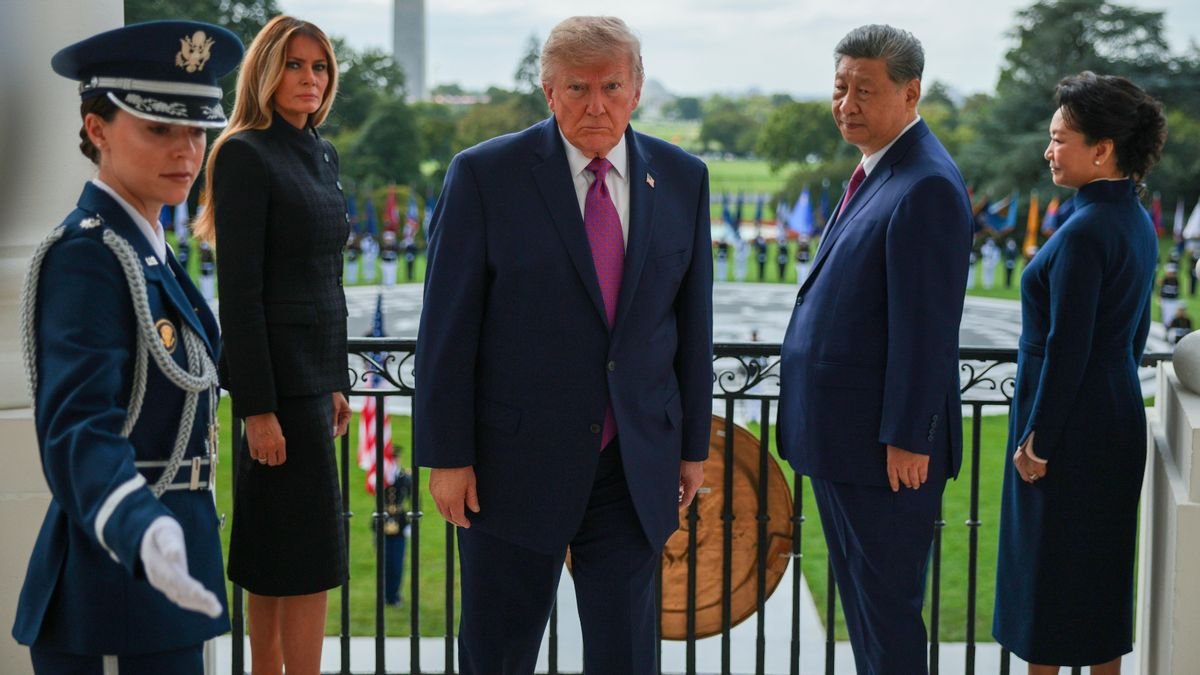
A photograph taken in September 2026 authentically shows U.S. President Donald Trump and first lady Melania Trump staring at the camera and frowning.
Rating:
In September 2026, some people on social media shared an image that appeared to show U.S. President Donald Trump and first lady Melania Trump frowning as they stared into the camera lens.
For example, one X post (archived) said of the image, “For just a moment, the world saw their true nature. This is a real photo.”
The image is authentic, though cropped. The original photo, which includes Chinese President Xi Jinping and first lady Peng Liyuan during their state visit to the U.S., was taken on Sept. 24, 2026 by Getty photographer Chip Somodevilla. We were unable to find any verifiable information as to why the Trumps were frowning at that moment.
The caption of Somodevilla’s photo reads:
A military aide, U.S. first lady Melania Trump, U.S. President Donald Trump, President of China Xi Jinping, and first lady of China Peng Liyuan depart a balcony after watching a Silent Drill Platoon Review at the White House on September 24, 2026 in Washington, DC. President Trump is hosting President Xi for a three-day state visit to Washington, DC where the leaders are expected to discuss trade practices, artificial intelligence and furthering ‘strategic stability’ between their countries.
An almost identical photo taken by Reuters photographer Evan Vucci is featured on Reuters Connect, Reuters’ licensable photo repository. That caption is less specific than the Getty caption, instead reading, “President Trump, first lady Melania Trump and Chinese President Xi Jinping after watching a military demonstration from a balcony of the White House in Washington, September 24.”
Reuters Connect also offers two other, more zoomed-out versions of the same photo. These versions photo match Somodevilla’s Getty photo by including Jinping’s wife, Peng Liyuan, on the far right of the same balcony.
The four can be seen watching the referenced military demonstration in another Reuters photo.
The Associated Press’ own photo repository has photos from just before and about the same time as the Getty and Reuters photos were taken. One shows Melania Trump still looking at Jinping, while the other has both Trumps looking just past the camera, similar to the Reuters photo.
Somodevilla apparently shot another photo a couple of seconds after his first one. In that photo, the Trumps’ frowns are less pronounced than in the photo that spread on social media.
In luxury fashion, creative directors used to get years to put their stamp on a house. Lately, they’re lucky to get a few seasons.
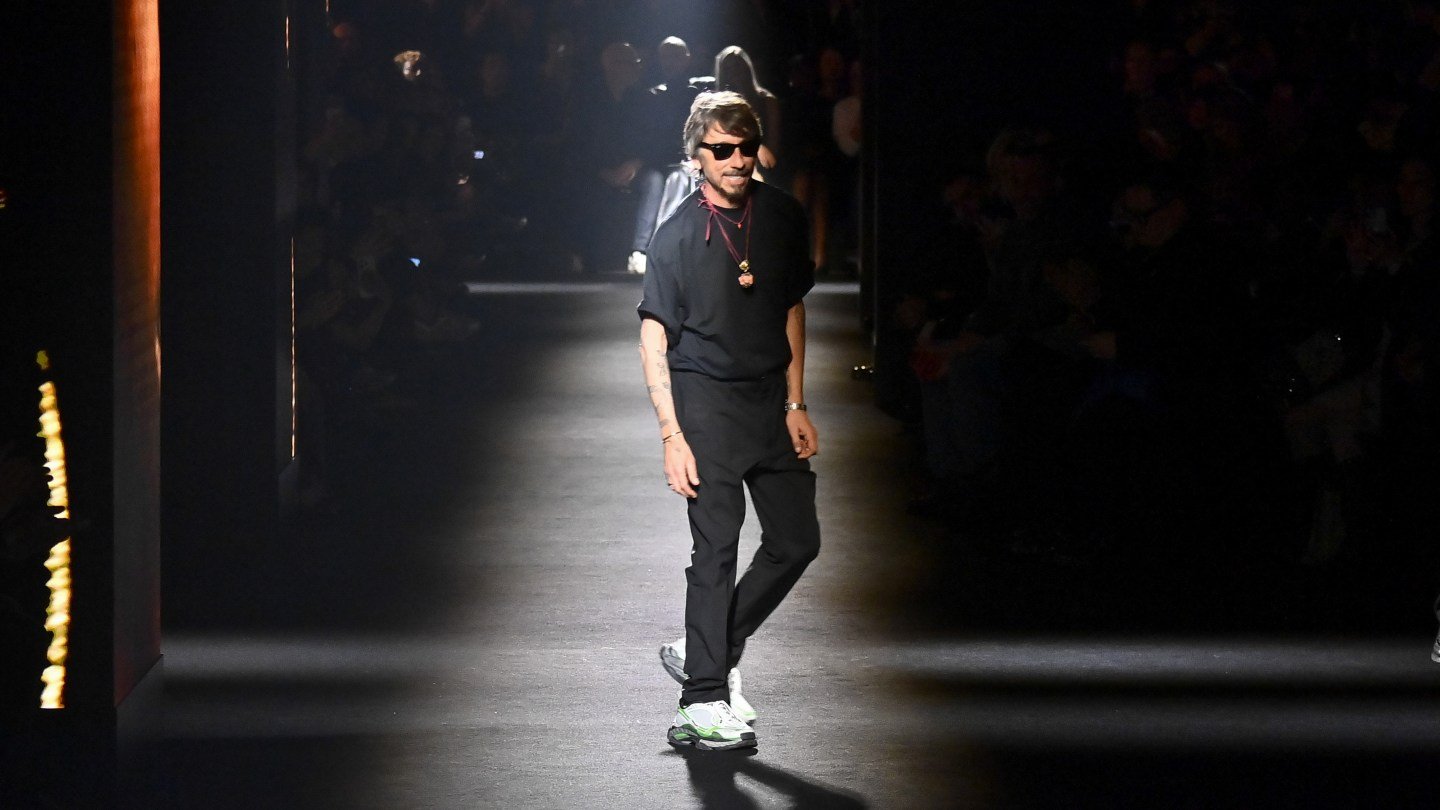
The latest possible casualty is Pierpaolo Piccioli, the acclaimed designer who took over Balenciaga only last year. Multiple industry sources say Piccioli is expected to leave the Kering-owned house following his spring/summer 2027 show in Paris on Oct. 1. Neither Balenciaga nor Kering has announced his departure.
If the reports prove true, Piccioli’s remarkably short tenure would be another sign of how unforgiving the luxury business has become. With sales soft across much of the sector, fashion’s biggest conglomerates have been cycling through celebrated designers, hiring them to reinvent major brands and looking quickly for another solution when the numbers disappoint.
What used to be a career-defining appointment has started to look more like a very expensive game of musical chairs.
Piccioli knows the game well. He spent 16 years at Valentino alongside Maria Grazia Chiuri, then ran the house solo after Chiuri left for Dior in 2016. He departed Valentino in 2024 amid industry speculation about slowing sales. Alessandro Michele, himself out at Gucci after that brand stumbled, later took Piccioli’s old job. Demna left Balenciaga for Gucci. Piccioli then replaced Demna at Balenciaga.
His hiring represented a dramatic reset. Demna had turned Balenciaga into a dark, ironic, almost post-punk phenomenon beloved by Kardashians and other fashion-forward celebrities. Piccioli steered it back toward the elegance and femininity associated with Cristóbal Balenciaga — bright color, ruffles, silk and taffeta replacing much of the black, oversized vocabulary of the Demna years.
Piccioli came to Balenciaga with considerable Hollywood currency. During his Valentino years, he dressed Anne Hathaway, Elle Fanning, Zendaya, Florence Pugh, Lady Gaga and Cate Blanchett, among others. His menswear could be just as memorable: Pedro Pascal’s 2023 Met Gala look, pairing black shorts with a sweeping red coat, showed Piccioli could do irreverence as easily as classical couture.
But the luxury slump has made even marquee names vulnerable. Gucci parted ways with Michele as its sales weakened. Valentino, now under Michele, has faced its own commercial pressures. Kering, parent company of Gucci, Balenciaga and Saint Laurent, has been under particular scrutiny as it tries to revive some of its biggest brands.
And another chair may soon be empty. Anthony Vaccarello is widely rumored to be leaving Saint Laurent after a decade at the house, though in his case industry talk has it that the decision is his and that he wants to spend more time producing films.
That would set off yet another round of speculation over who goes where next.
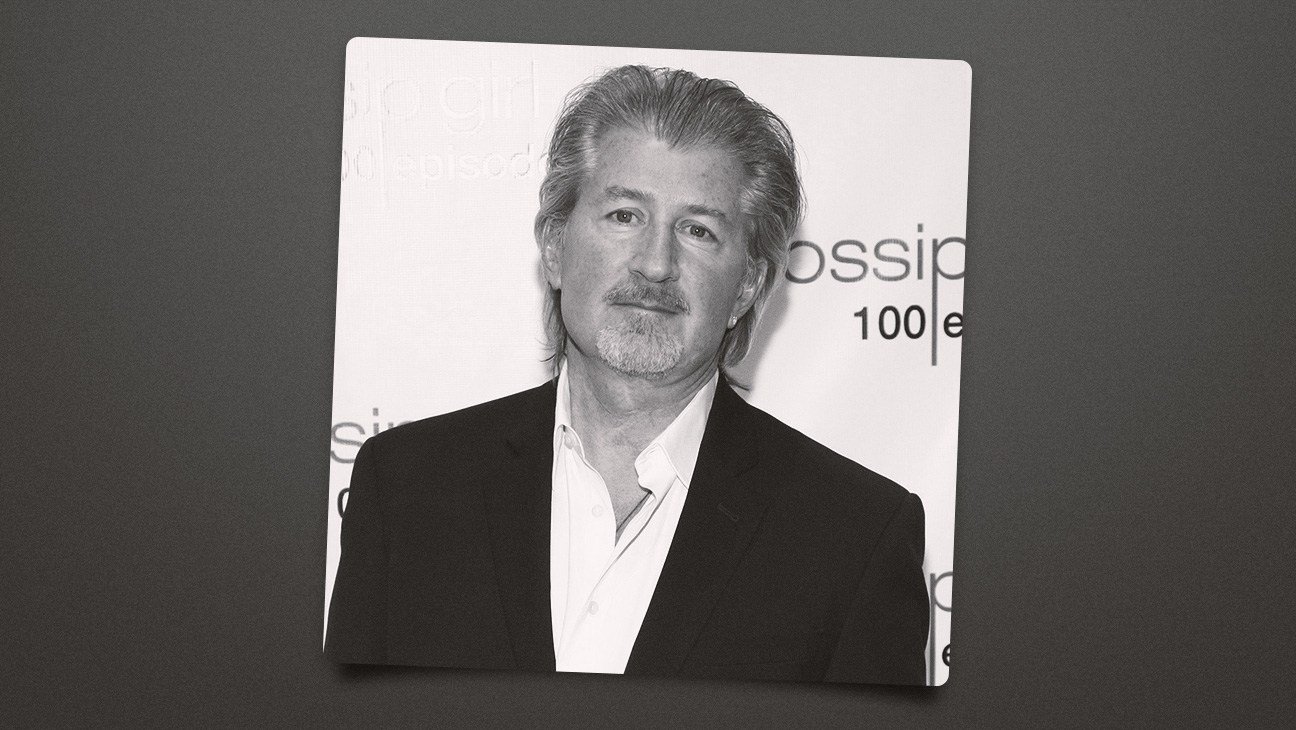
Mark Piznarski, the much sought-after pilot director who helmed the first episodes of series including Gossip Girl, Veronica Mars and Everwood, has died. He was 71.
Piznarski’s name was listed in an “In Memoriam” section in the latest DGA Monthly issue, and a spokesperson for the guild said that he died April 4. The Hollywood Reporter reached out to his daughter, Lauren, who said the family did not want to participate in an obituary.
A teen-drama specialist who started out on My So-Called Life, Piznarski helmed 14 episodes of The CW’s Gossip Girl across all six of its seasons, including the 2007 pilot; the shocking 100th episode, “G.G.,” which premiered during season five in January 2012; and the series finale, “New York, I Love You XOXO,” which bowed in December 2012.
In 2004, he directed the first two installments of the Kristin Bell-starring Veronica Mars, created by Rob Thomas for UPN, and Christopher Lowell’s character on the show, Stosh “Piz” Piznarski, is named for him.
He also helmed the pilots of ABC’s Relativity in 1996; the WB’s Everwood in 2002; Fox’s Still Life in 2003; USA’s In Plain Sight and The CW spinoff 90210 (developed by Thomas) in 2008; and ABC Family’s The Lying Game in 2011.
For the big screen, he called the shots on the romantic drama Here on Earth (2000), starring Chris Klein, Leelee Sobieski and Josh Hartnett, and the coming-of-age tale Looking for Sunday (2006), starring Michael Weston and Katharine Towne (he co-wrote that as well).
Born on July 7, 1954, Piznarski attended Downers Grove South High School in Illinois and the University of Northern Colorado, then spent a couple years at Columbia College in Chicago, which helped him land an assistant-director gig on Edward Zwick’s About Last Night (1986), filmed in the Windy City.
In 1994, he made it to network television by helming four episodes of the only season of ABC’s acclaimed My So-Called Life, executive produced by Zwick for his Bedford Falls Co. Up next, he directed and executive produced on the only season of Relativity, created by Jason Katims.
Piznarski guided six episodes of ABC’s NYPD Blue from 1995-2003 and five installments of NBC’s American Dreams from 2003-05 and worked with Katims again on NBC’s Friday Night Lights in 2006 and CBS’ Pure Genius in 2016.
Piznarski also helmed the 1999 NBC miniseries The 60s; telefilms including 2010’s Sundays at Tiffany’s, starring Alyssa Milano; and episodes of Once and Again, Crisis, Madam Secretary, the Thomas-created iZombie and, for his last credit, Riverdale in 2018.
Peace of mind is something easy to pay for, especially as we approach some of the biggest savings events of the year. But you don’t have to wait for Amazon’s Prime Big Deal Days or even Black Friday to snag some security camera discounts.
No, seriously—don’t. Not when you can score two Blink Outdoor 4 security cameras for a shocking 65% off right now. It’s hard to say no to a wireless setup and two years of battery, but it’s even harder to say no to an $85 price drop. It’s the lowest we’ve ever seen this bundle go (according to price-checker CamelCamelCamel).
Blink Outdoor 4 Wireless Security Camera
2-cam system, 2-year battery, 1080p HD day and infrared night live view, 2-way talk
Because this bundle comes with two cameras, you’re basically only paying $22.50 per camera, as opposed to the $65 per camera you’d pay at the normal price. That’s a steal in and of itself, but the stakes get even sweeter the more you look at the specs. They’re completely wire-free, making for a stupidly easy installation, and run on batteries that last up to two years.
The cameras capture footage around your home in crisp 1080p HD during the day, and infrared vision at night so you don’t miss a frame in the darkness. And if a person is out there delivering a package or something less innocent, you can communicate with them via two-way audio without leaving the comfort of the couch.
But you can’t always be staring at the live feed, can you? Nope, which is why Blink has handy enhanced motion and person detection if you pay for an optional Blink Subscription Plan. You’ll receive a free 30-day trial of that plan with your purchase, and if you continue, you’ll enjoy secure cloud storage for all your clips (plus even smarter person detection). However, if you don’t want to tack on the plan, you can store locally on the camera with a Sync Module XR and a MicroSD card, or with a Sync Module 2 and a USB flash drive, all of which are sold separately.
Recommended by Our Editors
When we reviewed the Blink Outdoor 4 camera, PCMag expert John R. Delaney gave it an “Excellent” rating. He especially loved its easy, wire-free installation, sharp 1080p video, and easy Amazon Alexa and IFTTT integration. While some features have a pesky paywall, it’s a spectacular outdoor security camera, and at this price point, the two-cam bundle is practically highway robbery.
Tom Holland has found his dance partners. Margaret Qualley and Sabrina Carpenter are joining the star in his Fred Astaire movie from Sony.
Qualley will play Adele Astaire, Fred’s older sister and Broadway partner. Carpenter will play Ginger Rogers, the frequent film co-star of Fred Astaire.
Paddington filmmaker Paul King is directing the project, which comes after Holland’s big summer as the star of Spider-Man: Brand New Day and The Odyssey.
“I am thrilled and honored to have been entrusted with telling the story of Fred Astaire and his original dance partner — his big sister Adele — to the big screen,” said King in a statement. “Fred left a timeless legacy of dance on film — most famously in his collaborations with Ginger Rogers — while Adele’s work has been lost to history; indeed, no footage of her dancing survives. The cinematic challenge of bringing to life these icons of the twentieth century is one that I could not imagine without Tom Holland, Margaret Qualley and Sabrina Carpenter by my side.”
Amy Pascal and Rachel O’Connor produce, along with Holland on behalf of Billy17. Ben Holden and Josh Hyams produce for Lightbulb Pictures. Steven Levenson and King penned the script based on the book The Astaires: Fred & Adele by Kathleen Riley.
Qualley earned a Golden Globe and Critics Choice nomination for The Substance, and an Emmy nomination for FX’s Fosse/Verdon, as well as Emmy, Golden Globe, Actor and Critics Choice nominations her Netflix limited series The Maid. She is repped by CAA, Anonymous Content and Sloane and Offer.
Carpenter is one of the biggest names in music, with two Grammys and millions of records sold. On the acting side, she has appeared in Work It and The Hate U Give. She is repped by Paradigm, Foundation Media Partners, Volara Management, Perlman Management Group and Goodman Genow.