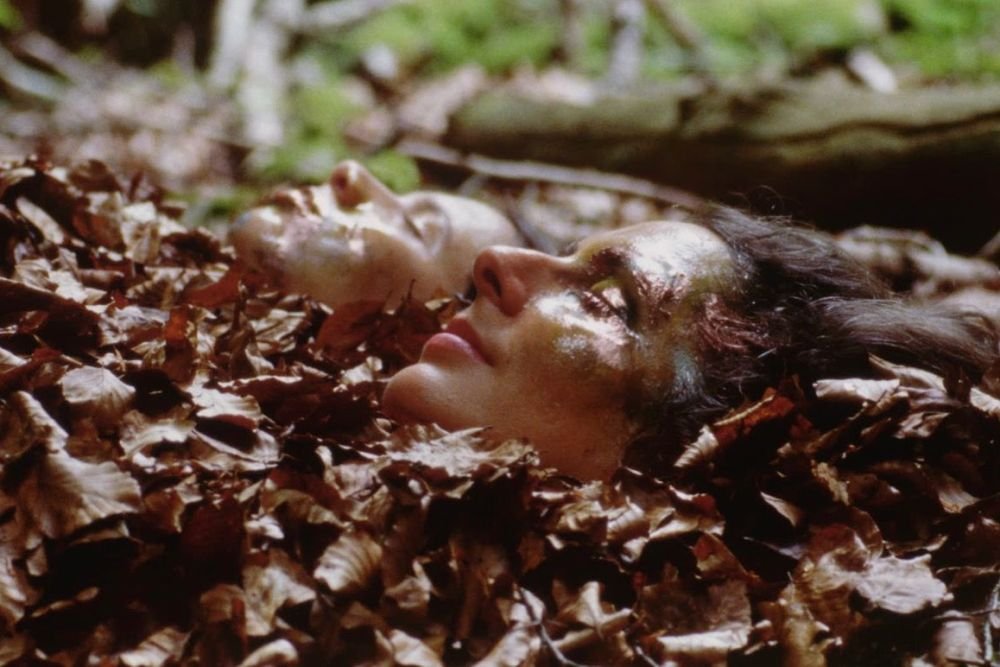
Mecas returns to Las Palmas this year with a lineup that reinforces its preference for auteur-driven projects moving across fiction, nonfiction and hybrid terrain.
Held at the Las Palmas de Gran Canaria International Film Festival, the ninth edition brings together 14 titles from Europe, Africa and Latin America, split between eight projects in Cine Casi Hecho and six in Terrero Lab. MECAS stands for Mercado del Cine Casi Hecho — literally, a market for almost-finished films.
A New Selection Logic
The main change this year is in how Mecas selected its projects. Rather than running through a standard open call, the platform invited directors and producers who had taken part over the previous five editions to submit new work and recommend other projects they felt belonged there. According to the organizers, that approach yielded more than 70 submissions for Cine Casi Hecho.
“It was not exactly a direct-invitation model,” says Lorena Morín, director of Mecas. The invitation, she explains, went to filmmakers who already knew the platform and, in some cases, had become part of what she calls the “Mecas family.”
“We want to leave behind formulas that felt fresh in their moment but are now being repeated in many work-in-progress spaces,” says Morín. “We wanted to dare to launch ideas that may be less orthodox for a film market, but that excites us and reinforces the energy we want this event to transmit.”
What emerges is a platform less interested in scale than in sharpening its own profile.
Mecas continues to define itself as a space for films “without commercial vocation,” whose structure includes a €8,000 ($9,359) award for almost-finished projects and a €5,000 ($5,850) prize for films in development and the ISLA MECAS distinction for Canary Islands-linked work.
“We are a ‘non-market market,’” says Morín.
Projects Across Borders
This year’s Cine Casi Hecho lineup moves between hybrid forms, personal stories and more overtly political propositions, from “Las Antigüedades,” “To the Future” and “La Belleza” to titles like “La Cuestión Criminal” and “Karl Marx, Luanda.”
The official selection also underlines a strong analogue thread. Several projects are shot wholly or partly on 16mm, including “Las Antigüedades,” “La Belleza,” “Point and Shoot” and “Leandro Flores.” Three titles arrive as first features: “Point and Shoot,” “Karl Marx, Luanda” and “Leandro Flores.”
“Mecas is looking for a cinema that escapes labels and industry pressures,” Morín says.
She adds that the team became increasingly aware that growth can reduce the room to experiment. That led, in her words, to a decision to “shake ourselves up” and move away from what she sees as standard market behavior.
The reset also shapes the balance of filmmakers in the 2026 lineup. Mecas includes directors with established international trajectories, notably Paz Fábrega and Nele Wohlatz, while also making room for newer voices and debut features. Fábrega’s “Agua fría de mar” won a Tiger Award at Rotterdam, while Wohlatz broke through with “The Future Perfect,” which won Locarno’s prize for best first feature.
“The auteurs with trajectories who bring projects to us make a lot of sense in Mecas,” says Morín. “They are always looking for new ways to represent themselves, from honesty and without artifice.”
At the same time, she says the team was not trying to impose a preset ratio between established names and newer ones. “We let ourselves be guided by what moved us most from within,” says Morín. “The selection turned out this way very organically.”
That same internal logic appears in how she describes the projects themselves. “The projects reflect what Mecas embraces,” says Morín. “A cinema committed to the radicality of the gesture.” She points to films that challenge established forms and singles out “La Cuestión Criminal” as a project that, from fiction, proposes an alternative reality to what might otherwise have been approached through documentary.
Latin America has a particularly strong presence in that frame. Argentina, Colombia, Costa Rica, Uruguay and Brazil are all represented in this year’s edition, and Morín argues that the region’s cinema continues to search for new forms of political engagement despite difficult production conditions. It is visible across both the almost-finished selection and Terrero Lab. For example, “Omágua Kambeba” arrives after winning two awards at Brasil CineMundi in 2025.
On the local side, Terrero Lab remains Mecas’ clearest link to the Canary Islands production base. Conceived as an acceleration space for author-led projects tied to the islands, it again combines local work with invited projects arriving through Galicia’s Terra Lab and CineMundi. This year’s identified titles also include “La Mala Gent” and “Rua Barcelona.”
Across the market itself, the April 29 Encuentro de Coproducción Isla Mecas is designed to connect Canary Islands producers and service companies with international firms, while the wider program will host meetings with distributors, sales agents, producers and festival programmers linked to TIFF, Cinéma du Réel, New York Film Festival, Rotterdam, L’Alternativa, Göteborg and Festival dei Popoli.
What follows is a closer look at the projects taking part in MECAS 2026.
Cine Casi Hecho

“The Spoon” (“Der Löffel,” Nele Wohlatz, Germany)
A young Taiwanese woman arrives at an alternative agricultural project in rural northern Germany and discovers a swastika engraved on her spoon. From there, the film unfolds through a series of episodes shaped by displacement, awkward encounters and the frictions of contemporary Germany. Wohlatz previously broke out with “The Future Perfect,” which won Locarno’s prize for best first feature.
“Karl Marx, Luanda” (Kiluanji Kia Henda, Angola)
In his first feature, Kiluanji Kia Henda imagines the return of Marxism to Angola through public debate, urban interventions and personal stories. The project brings together satire and documentary to move across memory, ideology and political contradiction. Kia Henda is a Luanda-based artist whose work spans photography, video and performance.
“La Belleza” (Marina Lameiro, Spain)
Blurring documentary and fiction, the film follows five figures bound by precariousness, desire and shared vulnerability. Through conversations, everyday gestures and speculative fabulation, it looks for forms of community and tenderness. Lameiro previously directed “Young & Beautiful.”
“La Cuestión Criminal” (Matías Ítalo Scarvaci, Argentina-Chile)
An actor, Marcelo Subiotto, and a group of citizens are secretly brought together to form a parallel jury deliberating alongside the official jury in a real criminal case. As the two processes move toward different verdicts, the film turns judgment itself into the center of the story. Scarvaci’s project “Hijas” won the Cine Casi Hecho prize in Las Palmas in 2024.
“Las Antigüedades” (Manque La Banca, Argentina)
Set between La Plata and Berlin, the film begins with the sale of a family home after the death of a grandmother and opens into a search for the director’s missing trans sister. Family memory, migration and absence drive the project’s movement between places and generations. Produced by Argentina’s Pionera Cine and Un Puma, whose credits include “Esquí” and “El auge del humano 3.”
“Leandro Flores” (Mateo Kesselman, Spain-Argentina)
This first feature explores death and vulnerability through the memories of a close-knit group of teenagers trying to absorb the loss of a charismatic friend. Rather than centering a single protagonist, the film builds from shared grief and collective remembrance. It previously passed through Gijón’s lab Semilleru and Galicia’s Ventura development program.
“Point and Shoot” (Antonia Hollman, Colombia)
Hollman’s first feature starts from a stark premise: “This is a film about the past. Everything has to die.” The project centers on memory, disappearance and ending.
“To the Future” (“Al futuro,” Paz Fábrega, Costa Rica-Spain-Uruguay)
Caught between childcare, financial pressure and creative impulse, a filmmaker turns the camera toward her own life and that of her children. The film moves across documentary and fiction as it asks how creativity survives motherhood and whether it can be passed on. Fábrega, backed here by Temporal Films, La Mayor and Edna Cinema, previously won a Tiger Award at Rotterdam for “Agua fría de mar.”
Terrero Lab
“La Mala Gent” (Amat Vallmajor del Pozo, Spain)
Set in a Barcelona shaped by housing crisis, the film follows a delivery worker on the verge of eviction who must find her missing flatmate-landlord after she is abducted by a criminal group tied to the city’s property market. The premise brings together urban precariousness, conspiracy and genre mechanics. It is Vallmajor del Pozo’s second feature, after “Misión a Marte.”
“Omágua Kambeba” (Adanilo, Brazil)
Spanning 1542, 1988 and 2023, the film follows three generations of the Kambeba people resisting the long consequences of European invasion and dispossession. Its contemporary thread centers on Inha Kambeba as she represents Brazil in the World Archery Games. The project won two awards at Brazil CineMundi in 2025, including the Mecas prize.
“Rua Barcelona” (Ángela Andrada, Spain)
Set in A Coruña during the 2012 economic crisis, the film follows a 52-year-old woman whose routine is disrupted by the return of her niece from Australia after a family death. Grief opens the way to a reckoning with place, stasis and deferred desire. Andrada won the 2023 SGAE Julio Alejandro Screenwriting Prize for “Adeus, Berta,” co-written with Fernando Tato.
Leave a Reply