With just four weeks until the midterm elections, MS NOW anchors are taking their shows to key battleground states of Maine, Ohio, Georgia, Texas and Michigan.
Psaki’s The Briefing will air at 9 p.m. ET on Tuesday from Portland, Maine, where Sen. Susan Collins (R-ME) is facing former state senator Troy Jackson, a Democrat.
On Oct. 13, The 11th Hour with Ali Velshi will air at 11 p.m. ET from Columbus Ohio, as Velshi, the network’s chief data reporter, speaks to voters at The Ohio State University.
Chris Hayes will take All In to Atlanta, GA on Oct. 14, with the 8 pm. ET show focusing the Senate and gubernatorial contests.
The Moment with Katy Tur will originate from Austin, TX at 2 p.m. ET on Oct. 20, with a facos on the hotly contested race between State Rep. James Talarico and state Attorney General Ken Paxton.
On Oct. 27, State of Play with Peter Alexander, airing at 11 a.m. ET, will be in Detroit, MI, in a state with a close race between Abdul El-Sayed and former Rep. Mike Rogers.
Chris Jansing, chief political reporter, and Shawna Thomas, political director, will conttribute on-the-ground reporting along with Nnamdi Egwuonwu, Will McDuffie and Josh Einiger.
Student groups call for the abolition of Greek life and punitive action in wake of fraternity assault allegations.
Published On 5 Oct 20265 Oct 2026
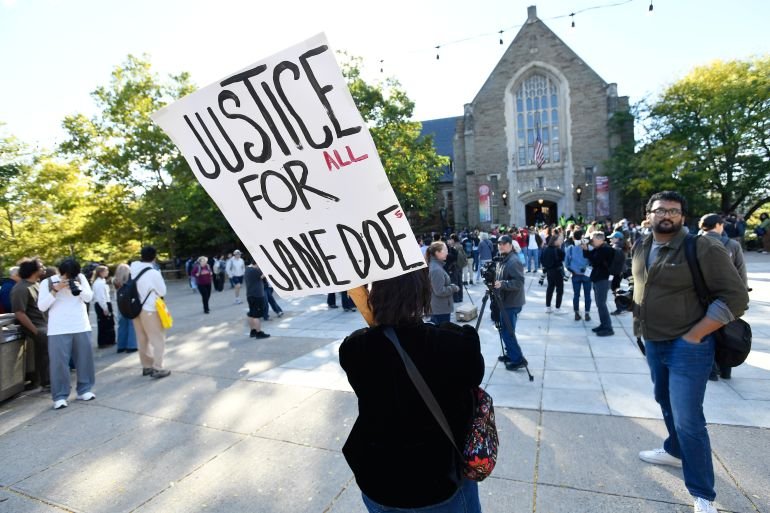
Protesters in the United States have shattered a glass door at Cornell University’s main administrative headquarters and spray-painted messages on the building’s walls as backlash continues following allegations about a 2024 gang rape at a local fraternity.
In the early hours of Monday, the glass panes on an entrance door for the building, Day Hall, were smashed, leaving shards strewn across the floor.
Recommended Stories
list of 3 itemsend of list
Activists, outraged at the school’s handling of the case, also graffitied nearby walls with slogans like “At Cornell rapists are protected protesters are expelled” and “Smash the patriarchy”.
The predawn incident came ahead of a rally demanding “justice for survivors” by student groups on Monday.
Cornell spokesperson Kyle Kimball said Monday that the university was investigating the vandalism.
“We understand the frustration and strong emotions being expressed across our community,” Kimball said. “Those concerns deserve to be heard, but damaging property is not the answer.”
Cornell, a prominent Ivy League university in the state of New York, has been at the centre of a national firestorm over sexual violence on US campuses, after an anonymous student, Jane Doe, filed a civil lawsuit last month alleging a gang rape at the fraternity Chi Phi.
Her complaint accuses seven former students of perpetrating “heinous criminal sexual acts” against her during a fraternity party on the night of October 19, 2024, after she says she was pressured to drink and take the drug ketamine.
The fraternity, Cornell University and others are named as co-defendants in the suit. Lawyers for two of the former students have rejected claims that they participated in sexual assault.
The case has elicited outcry over how sexual assault is handled on campuses across the country.
At Monday’s demonstration, students demanded an overhaul of the university’s sexual assault complaint process, the termination of certain school officials and stricter disciplinary action against alleged abusers.
In a statement to the student news outlet The Cornell Daily Sun, student organisers wrote that they were calling for the “abolition” of the Interfraternity Council system on campus and the “expulsion/revocation of degrees for all Chi Phi members involved in the rape”.
They also demanded that Cornell’s Office of Student Conduct and Community Standards be replaced by a “democratic disciplinary system”. Monday’s protest, they added, was designed to draw attention to the systemic failures that allow sexual violence to occur.
“We wanted to ensure that Day Hall, the centre of Cornell’s administrative function, was not able to continue business as usual,” the students told the campus paper.
The alleged crime at the fraternity, they wrote, was part of a “rampant pattern of sexual assault perpetrated by members of Greek life at Cornell University and hundreds of other academic institutions throughout the country”.
Under pressure by New York Governor Kathy Hochul and Attorney General Letitia James, the university announced this week it would be appointing a law firm to conduct an independent internal review of how it initially handled the case.
A transcript, obtained by US media, shows that although no charges were filed, Doe told campus police at the time that she could “say with 100% confidence I was raped”.
Her lawsuit also alleges that Cornell “afforded” the accused fraternity members “the opportunity to mitigate their conduct by submitting essays” to the school. Two were later expelled, and another two were suspended.
Hispanic voters are twice as likely to favour Democratic Party over Trump’s Republican Party in the November elections.
Published On 5 Oct 20265 Oct 2026
A new poll from the news agency Reuters and the research firm Ipsos has found that United States President Donald Trump’s approval rating remains at a record low as the midterm elections approach in November.
The six-day survey, completed on Monday, found that just 32 percent of US voters approve of the job Trump is doing as president.
Recommended Stories
list of 3 itemsend of list
While that low rate has held steady since September, the latest Reuters-Ipsos poll suggests his support among Latino voters is continuing to slide.
Trump’s approval rating shrunk this month to 24 percent among Hispanic voters, its lowest point in either of his two terms in office.
The Republican leader had previously made substantial inroads with that constituency.
The Pew Research Center estimated that Trump and his Democratic rival, Kamala Harris, were within three percentage points of each other in the 2024 presidential race, earning 48 percent and 51 percent of the Hispanic vote, respectively.
That rate marked a significant jump for Trump over the 2020 election, when he only earned 36 percent of the Hispanic vote.
Experts have credited the boost in Hispanic support with helping Trump win the 2024 race. His 2020 bid, by contrast, ended in defeat to Democrat Joe Biden.
The Monday poll found that Trump’s gains among Hispanics have largely evaporated.
About 52 percent plan to vote for the Democrats in the November midterms, compared to 26 percent for Republicans.
The upcoming midterm is largely viewed as a referendum on Trump’s second term and will decide whether the Republicans maintain their majorities in the US House of Representatives and the Senate.
Democrats have seized on Trump’s low approval ratings, hoping to translate frustration with the president into voter momentum for their party.
A Democratic majority in one or both houses of Congress would place substantial constraints on Trump’s agenda for the remainder of his time in office.
But Trump has also faced rumblings from within his Republican Party as the November 3 midterms approach.
One Republican incumbent, Representative Maria Elvira Salazar of Florida, released a campaign advertisement last month that addressed Trump directly, saying, “The same Hispanics who helped you get to the White House in 2024 feel betrayed today.”
She cited Trump’s hardline immigration crackdown as a source of tension. “Some of your immigration enforcement efforts have gone too far,” she said, pointing to the detention and deportation of immigrants with no criminal record.
Experts have also warned that the president’s shrinking popularity, driven in part by concerns about the cost of living and his decision to launch a war on Iran, could weigh down Republican candidates in key races across the country.
Still, Trump has continued to express confidence about the prospects of his Republican Party in the upcoming midterms.
He has also defended his decision to place himself at the centre of the Republican election campaign strategy. Trump recently launched a 32-day blitz of cross-country rallies ahead of the November 3 midterms.
“Just so you understand, they all want me to go,” Trump said, denying that some Republicans would prefer he keep his distance. “They all want me to go campaign.”
The US had largely eliminated measles by 2000 but has seen several outbreaks amid declining vaccination rates.
Published On 6 Oct 20266 Oct 2026
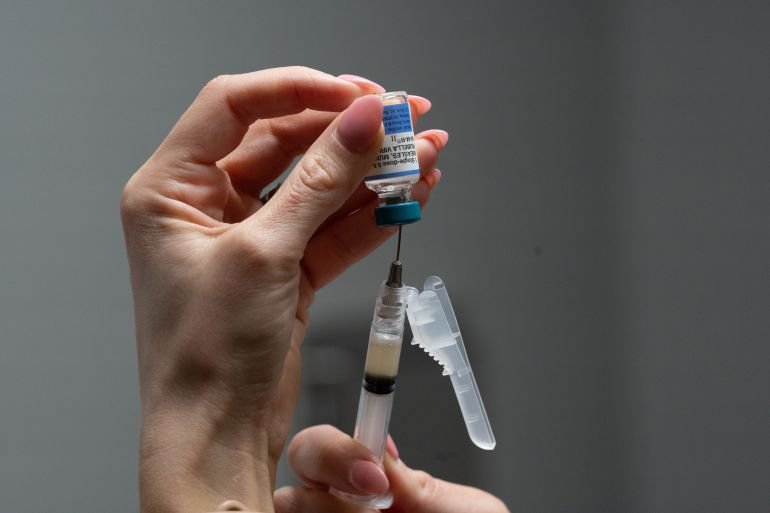
New York state has declared a disaster emergency over an outbreak of measles, as cases of the disease that had once been all but eliminated in the United States continue to rise.
New York Governor Kathy Hochul said on Monday that she was temporarily expanding the ability of health professionals to administer measles-mumps-rubella (MMR) vaccines.
Recommended Stories
list of 3 itemsend of list
“No one should get seriously ill or die from a vaccine-preventable disease,” Hochul said in a statement, adding that New York has recorded 108 cases of measles this year, as of October 3. The declaration will remain in effect through November 4.
Hochul’s announcement marks the first such declaration since measles cases began to tick up in 2025. She said that seven cases were recorded in New York City and 101 elsewhere in the state.
Hochul’s declaration says 92 cases have been recorded since July 15 in a handful of rural communities with insufficient vaccination rates.
Officials in neighbouring Pennsylvania also announced that the state has surpassed 1,000 measles cases this year, the largest outbreak in the US in the last three decades. Outbreaks have also been recorded in Texas, Utah, Ohio and South Carolina.
Health experts attribute the resurgence to a decline in vaccination rates below the 95 percent rate they say is necessary to prevent outbreaks.
Critics say the decline has been spurred by an anti-vaccination movement that has surged in popularity and gained advocates inside the administration of President Donald Trump, including Health and Human Services Secretary Robert F Kennedy Jr.
The US had eliminated the domestic spread of measles by 2000, with the last outbreak of more than 1,000 cases occurring over several years in New York City in the early 1990s.
International officials from the Pan American Health Organization (PAHO) are set to meet in November to determine whether the US and Mexico will retain their measles-free status, or whether the public health designations will be updated.
“PAHO reiterates the importance of maintaining high and homogeneous vaccination coverage, strengthening epidemiological surveillance, and ensuring timely outbreak response, as essential pillars to halt transmission and sustain measles elimination in the countries of the Americas,” the organisation said in a previous statement.
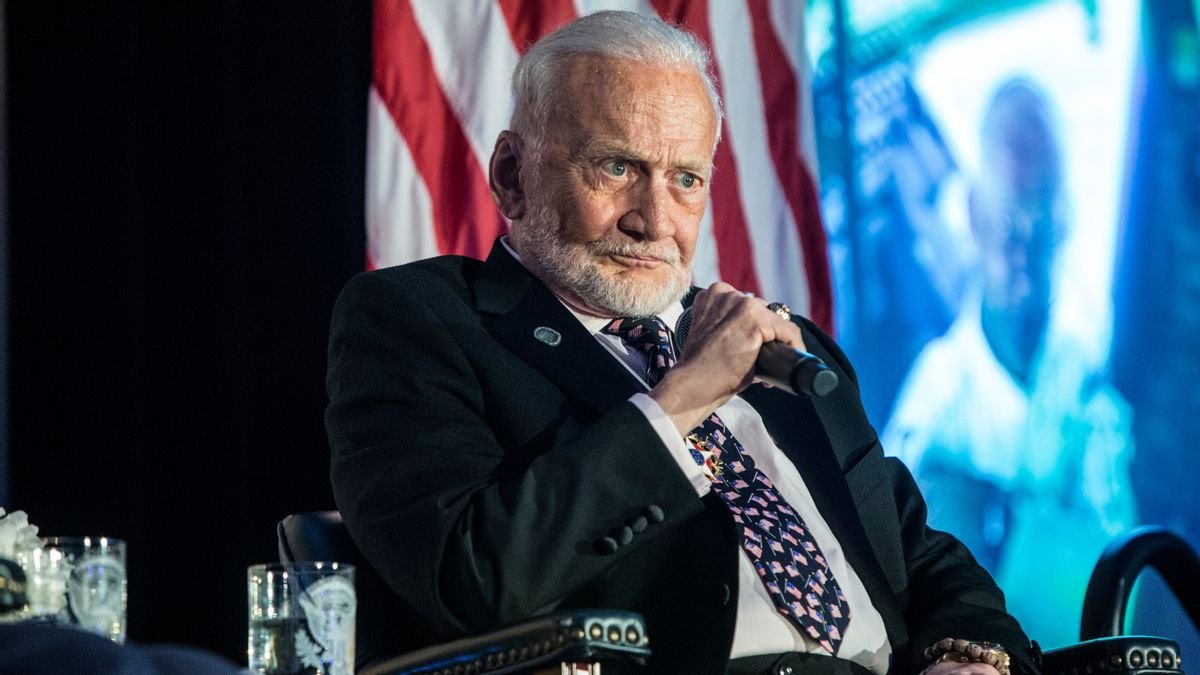
Apollo 11 astronaut Buzz Aldrin once said in an interview, “The moon is not what you think.”
Rating:
Throughout 2025 and 2026, YouTube channels posted videos online (archived) claiming that Buzz Aldrin, one of the first two astronauts to land on the moon, broke down in tears during an interview and said, “The moon is not what you think.”
Snopes could not find evidence that Aldrin ever said this in any interview he has ever participated in. Therefore, we’ve rated this claim as an incorrect attribution.
We reached out to Aldrin through his website’s inquiry form to ask if he has ever said such a quote, or anything akin to it. We’ll update this story if we receive a reply.
Searches for the “The moon is not what you think” quote and Aldrin’s name on Google, DuckDuckGo, Bing and Yahoo did not find any videos or transcripts of the interview in which Aldrin supposedly said the quote, or the full interview in writing. The searches did not reveal any credible news reports that quoted Aldrin saying these words. Considering one YouTube video claims Aldrin said the moon quote in interviews and another referred to the quote as Aldrin’s “famous warning,” it’s unlikely that there’d be no credible references to this quote outside of these YouTube videos.
Each of the four videos linked above tells a different story, and three of the four center the story around the moon quote Aldrin allegedly said. The fourth video, despite having a title about Aldrin apparently saying “The moon is not what you think,” is not about Aldrin. That video focuses on Michael Collins, another astronaut on the Apollo 11 mission alongside Neil Armstrong and Aldrin, and does not even include the quote “The moon is not what you think.”
The three videos that actually focus on Aldrin use the same commonplace artificial intelligence-generated voice for narration. In fact, two of these videos include YouTube’s “AI” label just under the videos’ titles.
The narrator, instead of Aldrin himself, says the quote in all three videos. None of the videos use footage from the interview in which Aldrin supposedly said it, even though one of the videos claims the interview took place in a television studio. One of the other videos changes Aldrin’s quote to “You are mistaken about the moon” in the middle of the video.
Each video assigns a different meaning to the quote in its conclusion. One video says Aldrin’s apparent quote was referring to the moon as the beginning of humanity’s exploration. Another video refers to the quote as a reference to the moon’s earthly origins. The third video suggests the quote means that no amount of data or knowledge of the moon can replicate the experience of being on the moon itself.
A search for the quote itself does show it has been used as a title for YouTube videos and social media posts. Snopes could not find any evidence the quote has ever been associated with Aldrin or any other astronaut.
This claim may have originated with an older video also narrated by an AI voice. A 2023 YouTube video titled “Apollo Astronaut Breaks In Tears: ‘The Moon Is NOT What You Think!‘” (archived) focuses on Michael Collins. The quote “The moon is not what you think” does not appear anywhere in the actual contents of the video.
None of the channels that posted the videos included publicly available contact information on their YouTube channels.
For further reading, we’ve previously collected 15 of our fact checks related to the moon.
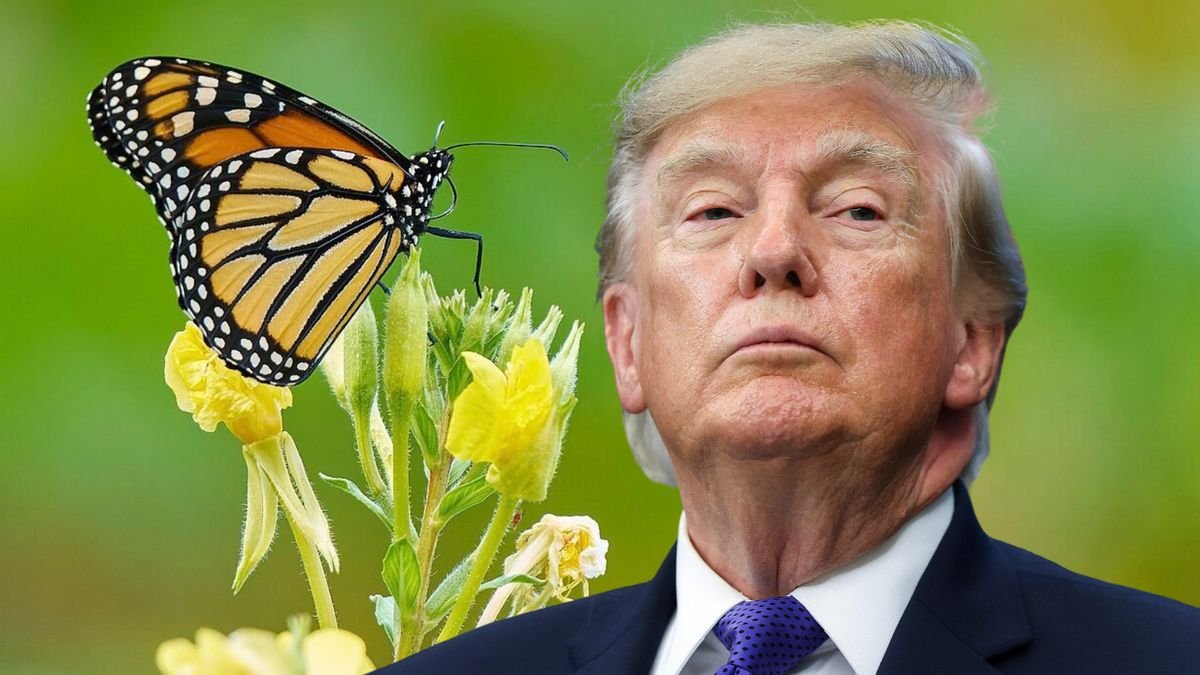
In 2026, U.S. President Donald Trump’s administration denied protections under the Endangered Species Act to monarch butterflies until 2030.
Rating:
A rumor spread online in fall 2026 that U.S. President Donald Trump’s administration had formally denied protections for monarch butterflies under the Endangered Species Act until 2030.
This rumor originates from a September 2026 settlement between conservation groups and the Fish and Wildlife Service over the federal agency’s failure to finalize a policy proposal that would have protected monarch butterflies under the act.
In December 2024, under then-President Joe Biden’s administration, Fish and Wildlife formally proposed such a rule. Under the act, proposed rules must be finalized within one year. Thus, Trump’s administration was supposed to make a decision by December 2025. It did not, which resulted in the lawsuit.
The settlement specifies that the Trump administration must finalize the proposal to protect monarch butterflies by June 2030, meaning the administration could technically issue a decision anytime before 2030. However, the Center for Biological Diversity, one of the plaintiffs in the lawsuit, said Fish and Wildlife “asserted that they do not have the resources to issue the final listing before the agreed upon date because of budget and workload.”
Given that we cannot predict the future, we have rated this claim as a mixture of truth and undetermined information.
In fall 2026, a rumor spread online that U.S. President Donald Trump’s administration had formally denied protections for monarch butterflies under the Endangered Species Act until 2030.
In other words, posts claimed that the government had refused to designate monarch butterflies as an at-risk species deserving of specific protections under federal law — and that the government would not consider the issue again until 2030.
The claim is largely true, although it omits a few details. On Sept. 30, 2026, the Fish and Wildlife Service reached a settlement with conservation groups, including the Center for Biological Diversity, over a delay on the federal agency’s decision as to whether monarch butterflies should be protected under the Endangered Species Act.
The settlement requires Fish and Wildlife to issue a final decision by June 6, 2030. Technically, that means Fish and Wildlife could issue a decision anytime before that deadline. However, Center for Biological Diversity spokesperson Tierra Curry said Fish and Wildlife “asserted that they do not have the resources to issue the final listing before the agreed upon date because of budget and workload.”
We reached out to Fish and Wildlife to confirm whether this is true and await a response.
It’s also worth noting that Trump is due to leave office in January 2029, so it’s possible that a future administration may prioritize making a decision on monarch butterfly protections before 2030.
Because we can’t predict what the future holds, we have rated this claim as a mixture of truth and undetermined information.
Monarch butterfly conservation
Fish and Wildlife estimates that, by 2080, the probability of extinction for eastern monarchs ranges from 56% to 74% and for western monarchs the probability for extinction is greater than 95%. Threats to the species include loss of habitat, exposure to insecticides and the effects of climate change, the agency said on its monarch butterfly conservation page.
The Endangered Species Act allows the federal government to designate imperiled species as threatened or endangered. Each designation comes with its own protections and resources for conservation.
For more on the Trump administration’s changes to the Endangered Species Act, see our explainer.
Background on conservation efforts
Conservation groups have fought to bring monarch butterflies and their habitats under Endangered Species Act protections since at least 2014, when three groups and a monarch scientist named Lincoln Brower filed a formal petition with the Fish and Wildlife Service.
In December 2020, under the first Trump administration, Fish and Wildlife announced that protection for monarch butterflies was “warranted but precluded by work on higher-priority listing actions.”
Fish and Wildlife’s news release on the decision said 161 species were listed as higher priorities for formal protections under the Endangered Species Act ahead of the monarch butterfly.
“With this decision, the monarch becomes a candidate for listing under the Endangered Species Act (ESA), and its status will be reviewed each year until it is no longer a candidate,” then news release said.
Under former President Joe Biden’s administration in December 2024, Fish and Wildlife proposed an official rule that would have designated the monarch butterfly as a protected species under the Endangered Species Act:
We, the U.S. Fish and Wildlife Service (Service), propose to list the monarch butterfly (Danaus plexippus), the iconic orange and black butterfly, as a threatened species and designate critical habitat under the Endangered Species Act of 1973, as amended (Act). We propose to list the monarch butterfly as a threatened species with protective regulations.
Under the Endangered Species Act, Fish and Wildlife is supposed to publish its final decision within one year of publication of a proposed rule, which would put the rule into effect and thus, in this case, officially list the monarch butterfly as an endangered species worthy of protection.
Trump took office January 2025. His administration did not meet that one-year deadline, which prompted the lawsuit from the Center for Biological Diversity and the Center for Food Safety.
What the settlement says
The settlement does not prevent the Trump administration from making a decision before 2030. Here’s what it says on Page 2:
On or before June 6, 2030, the Service shall submit to the Office of the Federal Register for publication a final listing determination for the Monarch Butterfly, pursuant to the ESA, 16 U.S.C. § 1533(b)(6).
Curry, the Center for Biological Diversity spokesperson, said in an email that, in effect, the settlement meant the denial of current protections would end in 2030 with a final listing. The Center for Biological Diversity’s news release about the settlement called it a “bittersweet move for conservation groups.”
In other words, it’s not as if the Trump administration withdrew the proposal to protect monarch butterflies — rather, the settlement means Fish and Wildlife has until 2030 to make a decision on whether to finalize protections for the species.
There are also additional ways, per the settlement, that the deadline to make a decision could be extended. For example, if the government were to shut down due to a lapse in funding before 2030, the deadline would be extended for the number of days the shutdown occurred (see Page 2).
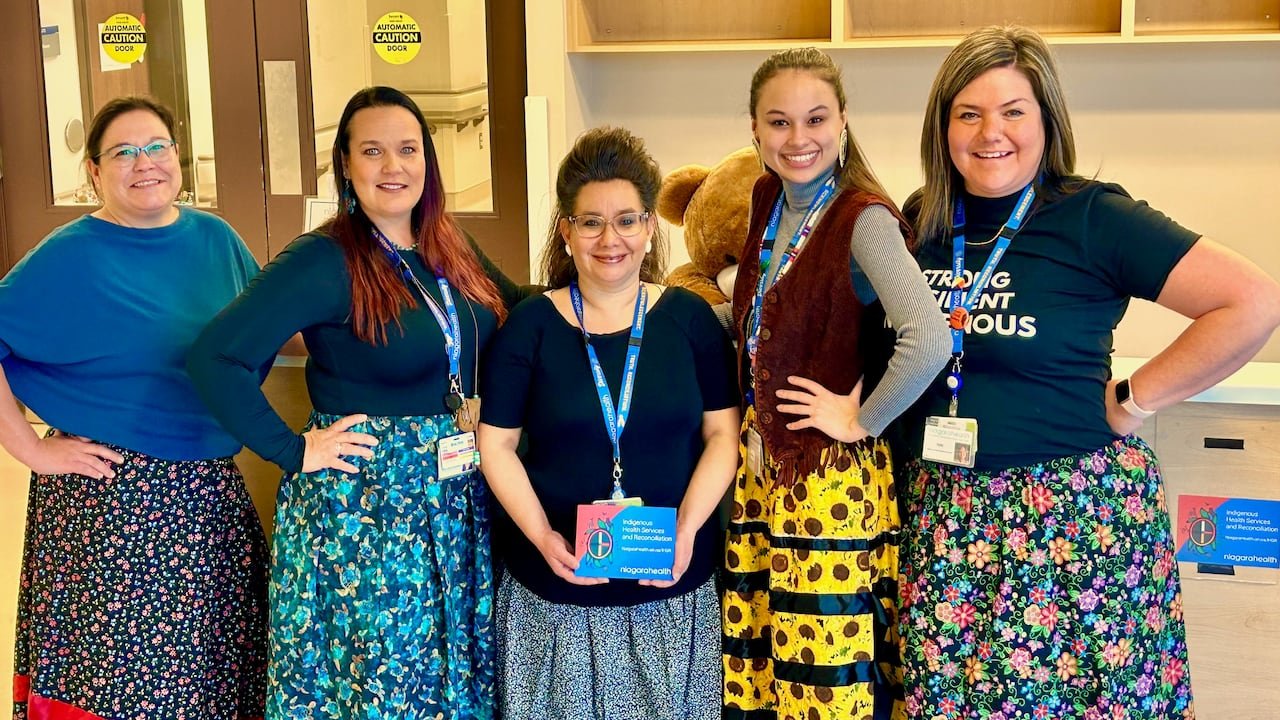
An Indigenous health leader in Niagara is hoping that a deep-seated fear that many Indigenous people feel in hospital is something that is being chipped away.
Charity Beland, who is a member of Six Nations of the Grand River, Mohawk, Turtle Clan, is the manager of Indigenous Health Services and Reconciliation at Niagara Health, which operates three hospitals and two urgent care centres. There, she leads a team who make it their mission to create hospital settings where Indigenous people feel safe and valued.
The ongoing efforts by Niagara Health to improve Indigenous patients’ experience has earned the acknowledgment of a major Indigenous umbrella group in Ontario, with the caveat that there is still a long road ahead to regain trust.
It was the death of Heather Winterstein in 2021 at Niagara Health’s hospital in St. Catharines — now known as the Marotta Family Hospital — that led the hospital system to embark on a process of self-examination on the experience of Indigenous patients.
At the coroner’s inquest into her death earlier this year, testimony revealed that Winterstein, 24, sought care for extreme pain on two consecutive days but ended up collapsing after languishing for hours in the emergency department waiting room.
The inquest jury ruled she died from septic shock due to sepsis with delayed treatment, caused by a bacterial infection.
Testimony at the inquest suggested treatment decisions by some hospital medical staff may have been influenced by Winterstein’s Indigenous background, her history of substance use and anxiety.
Ingrained racism a reality, expert says
Suzanne Shoush, a family physician who examines the experiences of Indigenous people trying to access care, testified at the inquest that bias in the healthcare system, where fewer than one per cent of doctors are Indigenous, makes many Indigenous people fearful of seeking care.
For generations, many Indigenous people have felt a sense of dread if they had to seek treatment for a medical condition at a Canadian hospital, where they often came face-to-face with anti-Indigenous bias or outright discrimination, says Shoush.
Shoush, Indigenous faculty lead at the University of Toronto’s department of family and community medicine, said that ingrained racism contributes to shorter lifespans, increased chance of preventable death and longer wait times for Indigenous people.
She stressed that cultural safety training must apply to everyone working in a hospital, from security and housekeeping staff, to top management and board members.
After Winterstein’s death, Niagara Health conducted an internal review and initiated an independent, third-party emergency department review that resulted in recommendations such as instilling cultural safety throughout Niagara Health’s staff, physicians and volunteers; promoting an Indigenous patient navigator team; seeking out Indigenous representation for governance; working on recruiting and retaining Indigenous employees, doctors and volunteers; and creating a separate Indigenous space for reflection and gatherings.
Niagara Health accepted all the recommendations.
In 2024, Niagara Health launched its first Indigenous health services plan to improve hospital services and experiences for Indigenous patients and their families.
The plan includes initiatives designed to improve access to healthcare services, enhance cultural safety, promote traditional healing practices within the hospital, strengthen relations with Indigenous groups, outline strategies for recruiting and retaining Indigenous healthcare professionals, and provide education and training for staff on cultural safety.
Among the initiatives launched by Niagara Health is allowing smudging ceremonies on hospital sites. (Niagara Health)
Some of the initiatives launched by Niagara Health include:
Installing Indigenous artwork at all its sites.
Allowing smudging ceremonies, which any patient or family member identifying as Indigenous can request. At the Marotta hospital, ceremonies can take place in patients’ rooms.
Opening of an Indigenous community room, the Gathering of Good Minds, at the Marotta hospital.
Launching specialized training focused on cultural sensitivity and awareness.
Planning an Indigenous healing centre at the new South Niagara hospital under construction in Niagara Falls. The hospital will also have an Indigenous healing garden.
Cultural sensitivity and awareness training
Beland said cultural sensitivity and awareness training began with top leadership, and has moved on to front line staff. The training is mandatory.
“Last I checked, I think we were at 77 per cent completion,” she said. “For a large organization we’ve had really, really good buy-in.”
Sean Longboat, chief executive officer of the Ontario Federation of Indigenous Friendship Centres, acknowledged the efforts of Niagara Health.
“We are encouraged to see the direction Niagara Health has taken to advance Indigenous health equity within their network system,” he said in a statement to CBC News. “Other hospital systems can and should learn from Niagara Health’s efforts.”
Other hospital systems can and should learn from Niagara Health’s efforts.– Sean Longboat, chief executive officer of the Ontario Federation of Indigenous Friendship Centres
But, “it will take time to regain Indigenous people’s trust, especially after losing a treasured family and community member like Heather Winterstein,” Longboat said.
Trust can only be repaired through sustained action and allowing Indigenous people to exert their autonomy and self-determination in the design and delivery of health services, he said.
“More importantly, trust can only be regained when Indigenous people directly see the benefits of these initiatives on their lives and in their community.”
In 2025, Niagara Health entered a formal partnership with the Indigenous Primary Health Care Council to develop joint initiatives aimed at improving Indigenous health outcomes and addressing healthcare inequities. It was the first agreement of its kind with a hospital system, Niagara Health said.
The health council works with Indigenous primary healthcare organizations across Ontario to promote the health and well-being of First Nations, Inuit and Métis communities.
“This partnership is an important step towards creating a healthcare system that is responsive and respectful of Indigenous needs,” Caroline Lidstone-Jones, CEO of the health council, said last year.
Beland said it’s important not to shy away from using terms such as racism and discrimination when describing the Indigenous experience in hospitals, as uncomfortable as that may be.
“If we don’t use the words and we don’t use the language… then we’re doing the work a disservice,” she said.
Niagara Health now allows smudging ceremonies at its hospitals including the Marotta Family Hospital in St. Catharines, and has opened an Indigenous community room at the Marotta facility as part of other changes. (Diona Macalinga/CBC)
Beland said it’s “been really inspiring and surprising” to see a major hospital system commit to and follow through on efforts to policies aimed at improving the Indigenous experience.
“Our driving force is really making sure that the approaches we’re taking and initiatives that we’re moving forward are based on what the community identifies as important to them,” she said.
Coroner’s recommendations
The coroner’s inquest jury made 68 recommendations, most of which target Niagara Health alone or in conjunction with other agencies.
Longboat said the inquest recommendations provide a “roadmap for meaningful change” that other hospital systems should take seriously, and said discrimination and anti-Indigenous racism must be confronted head-on.
Longboat said the provincial government, which plays a key role in accountability mechanisms that govern healthcare, must commit to holding itself to a higher standard to ensure the healthcare system cares for everyone living in Ontario.
“We cannot have another death like Heather Winterstein’s.”
Niagara Health president and CEO Lynn Guerriero, who testified at the inquest that discrimination and biases are ingrained in the healthcare system in Ontario and Canada, said in a statement to CBC News in April that Niagara Health will move forward in a “careful and deliberate way” to implement the recommendations.
“We know that systemic racism exists in healthcare, and addressing it is essential to improving safety, trust and outcomes for Indigenous patients and their families,” she said.
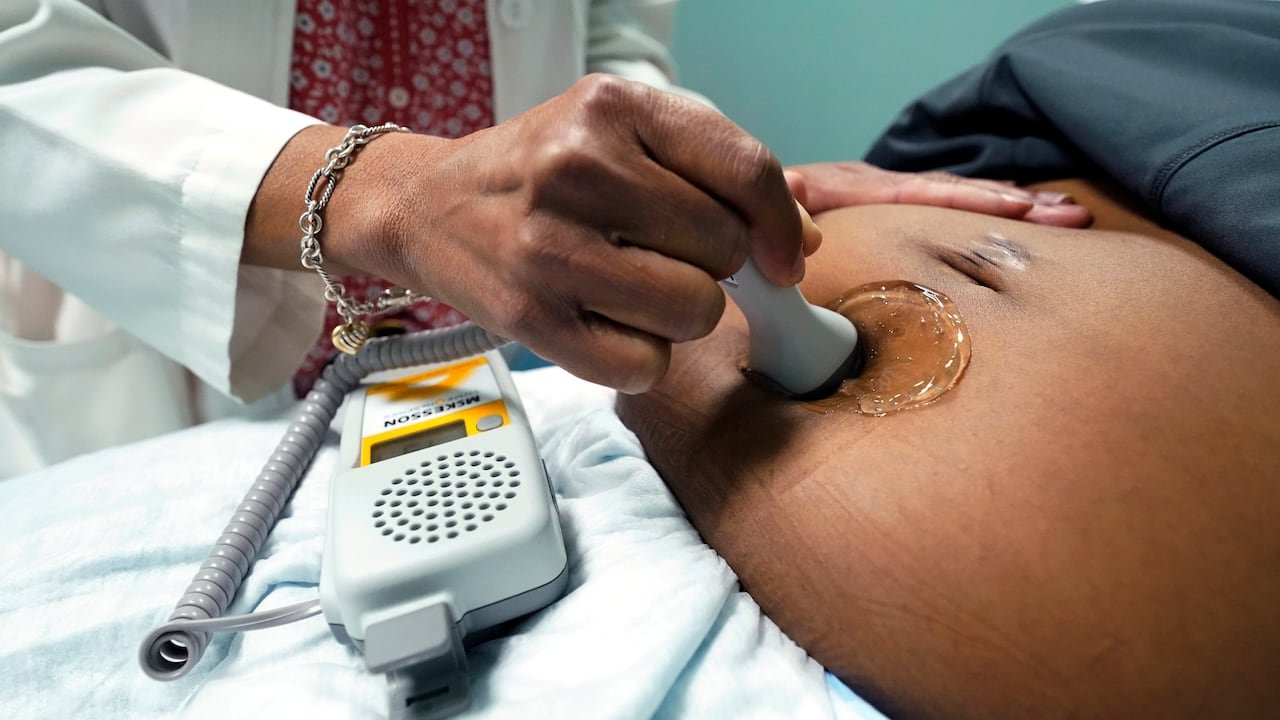
The most comprehensive study yet of maternal health in Canada has found Black Canadians face a much higher risk of serious complications during pregnancy, labour, delivery and postpartum than white people — underlining the urgent need for better data tracking and tools to eliminate systemic anti-Black racism in our health-care system, researchers and advocates say.
The research, published Monday in the Canadian Medical Association Journal (CMAJ), looked at more than 108,000 in-hospital deliveries to Black people, and more than 1.3 million in-hospital deliveries to white people across the country between 2012 and 2023.
Researchers found that severe maternal morbidity, encompassing complications such as pre-eclampsia, hemorrhage and sepsis, occurred at a rate of 47.8 out of 1,000 live births for a Black parent compared to 27.7 out of 1,000 live births for a white parent.
Even when researchers accounted for other factors like age, immigration status or other health conditions, Black people still had a 66 per cent higher chance of experiencing these potentially life-threatening complications.
The data lines up with what advocates have been saying for years — that Black women have their pain dismissed and routinely face barriers when navigating maternal care.
“It’s huge to finally have this, you know, so-called proof and evidence that we’ve been told that we need to have in order to really prioritize Black communities and reproductive health,” said Cheyenne Scarlett, co-founder of the Black Birth Project, a non-profit aimed at improving reproductive outcomes for Black people in Canada.
Cheyenne Scarlett told CBC News that she’s experienced first-hand the cracks in Canada’s maternal care. (Gina Ayanna)
She told CBC News that she has first-hand experience with the cracks in Canada’s maternal care: She once went to the ER with an ectopic pregnancy, and says she was sent home without receiving proper treatment.
“This report is not at all shocking to me,” she said.
‘Less equitable outcomes’
Official data shows Black women in the U.S. are three times more likely to die in pregnancy or childbirth than white women. They are twice as likely in the U.K., while a 2021 study from The Lancet found that Black women had a 43 per cent higher risk of miscarriage.
But similar long-term demographic data has been lacking in Canada until now, despite years of calls for it.
“As Canadians … we’ve been able to distance ourselves from the very real reality of the fact that although universal health care is so important, it still doesn’t mean universal access for everyone,” Giulia Muraca, associate professor of obstetrics and gynecology at McMaster University, told CBC News.
The higher rates of complications for Black people persisted when researchers controlled for conditions that occur in different rates in Black and white populations, such as sickle cell disease, with authors noting in the study that the consistent disparity “suggests broader structural influences on maternal health.”
WATCH | Advocates fight for better data in 2021:
Calls for more data about health risks to Black women in pregnancy
Black women in Canada face more risks in pregnancy compared to other demographics, but there’s little data in this country compared to the U.S. and U.K. on what is causing the inequities.
And while a higher income correlated with an improvement in maternal outcome for white parents, the study found that rates of severe complications increased for Black parents along with their income — an example of a “diminishing returns” phenomenon, Muraca suggested, in which those who experience structural marginalization don’t receive the same advantages of an increased income.
The study didn’t look at causes, but its authors stress that these differences don’t stem from race itself.
“Being Black is not the cause of these differences,” Muraca said. The evidence that Black patients are experiencing “less equitable outcomes,” she said, should prompt us to start examining “inequities in access … differences in communication, in escalation of care, in differences in treatment, for example.
“These are things that we can start to now collect routine data on and hold institutions accountable for.”
‘We are dying’
The struggles Black people face in Canada just trying to access health care is something that community organizations have been studying independently for years.
“So me, as a Black woman, when I go into the hospital, when I’m in front of a practitioner, how are they responding to me?” Kearie Daniel, executive director and founder of the Black Women’s Institute for Health, said. “Are they going to see my pain the same way that they’re seeing someone else’s?”
A national survey released by the Black Women’s Institute for Health in 2025 looked at the experiences of nearly 2,000 Black women and girls with Canada’s health-care system. It found that 42 per cent avoid seeking medical care because they were afraid of how they might be treated.
When it came to maternal care, some women reported fearing their children might be taken from them after staff summoned social workers with no justification, Daniel said. Others dealt with miscarriages at home rather than risk poor treatment at the hospital. Many reported their pain was ignored.
Kearie Daniel, seen here speaking at an event as executive director of the Black Women’s Institute for Health, says it’s imperative to track race-based data to make sure interventions to improve health outcomes are actually working. (The Black Women’s Institute for Health)
“They’re giving birth in the emergency bathroom, in the waiting room, they are being turned away,” Daniel said.
She said during her own pregnancy, her mother kept stressing she needed to dress well when going to the hospital, concerned that she wouldn’t be taken seriously.
“Having to go into a system that really isn’t seeing your full humanity when you’re depending on them to do so for your survival and the survival of your baby is just so — ‘demoralizing’ is not the right word. It’s not a heavy enough word to really articulate just how excruciating it is.”
WATCH | Ancestral Hands Midwives opens its doors in this 2024 video:
Scarborough facility offers prenatal and postpartum midwifery care for Black families
Ancestral Hands Midwives is a new facility in Scarborough that offers prenatal and postpartum midwifery care for Black families. CBC’s Shannon Martin spoke to the team behind the organization to learn more about how they’re striving for better accessibility, education and empowerment around Black maternal health.
Government action needed: advocates
Research has shown that Black people in Canada often suffer higher risks of negative health outcomes, including with breast cancer and during the COVID-19 pandemic. Enduring disparities have their roots in historical injustices that shaped modern medicine, according to a recent report in the Canadian Ethnic Studies journal.
To ensure equitable maternity care, what’s needed now, Daniel said, is real action from governments and health-care organizations.
A crowd gathers for a talk during Black Maternal Health Week in April 2026. (Black Maternal Health Collective Canada)
Better staff training is important, but it must be paired with the tracking of race-based data along with other socioeconomic differences, she said, to monitor if interventions are actually improving health outcomes for Black people.
Although some regions began tracking race-based health data after the pandemic, it’s still fractured across the country.
“There has to be accountability,” Daniel said. “We are dying as a result of not having that.”
WATCH | Documentary digs into the need for race-based data:
Canada’s health-care system also needs to work with community organizations to create truly informed care, advocates say.
Althea Jones founded Ancestral Hands Midwives in 2024, meant to help Black people get better pregnancy care. She said it’s frustrating to have to prove what community members have known for years, but she’s still hopeful this study might lead to more funding for interdisciplinary, Black-led care.
“I think people need care that reflects them,” she said. “They need to be seen and heard.”
Althea Jones, founder and executive director of Ancestral Hands Midwives, says it’s time for real action to be taken to improve Black maternal care. (Gina Ayanna)
Jenelle Ambrose Dash, chair of the Black Maternal Health Collective Canada, echoed the call. Every April, her organization runs Black Maternal Health Week in Toronto, bringing together groups like Ancestral Hands to share research and educate others.
She added that there needs to be more funding for health care in general, noting that the current “overwhelmed” system only exacerbates inequity.
When she heard about the CMAJ study, she saw her own story — a previous traumatic experience with pre-eclampsia — reflected in the data. She’s determined to ensure that no Black parent has to go through what she did.
Jenelle Ambrose Dash, seen here with her husband, Gevon, helps run a Black Maternal Health Week every April to spread awareness. (Jenelle Ambrose Dash)
“There are real people behind the numbers,” she said.
“I hope that something will be done coming out of this study. We’re well past the point of awareness. We are looking for accountability now.”
Mexico has asked the United States for evidence of a cross-border shooting that allegedly targeted US security personnel.
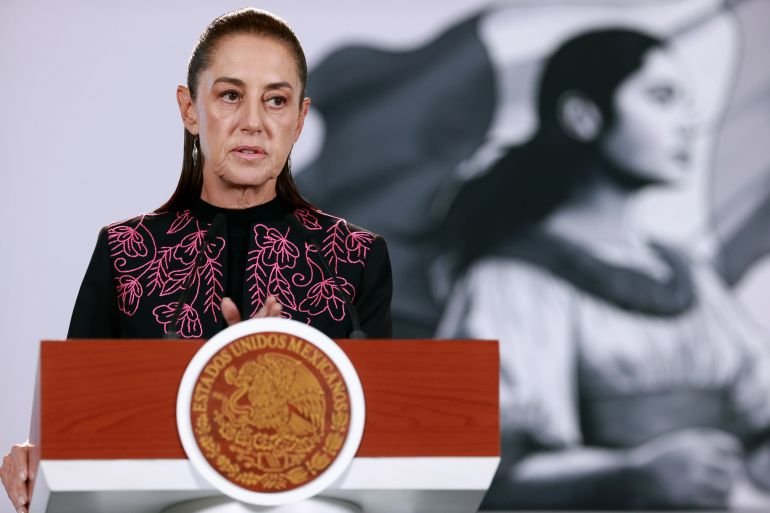
In her daily news conference on Monday, Mexican President Claudia Sheinbaum explained that the US had reported “shots from the Mexican border”.
Recommended Stories
list of 3 itemsend of list
“We asked for all the evidence because we have no evidence,” Sheinbaum said. She added that Mexico’s National Guard, Army and Navy had not detected any shots being fired from Mexican territory towards the US.
Sheinbaum made her remarks a day after the US Ambassador to Mexico Ronald Johnson wrote on the social media platform X about the shooting, which allegedly took place in Texas across from the Mexican state of Tamaulipas in late September.
Johnson said the targets were members of the US Coast Guard, and that the threat would be “swiftly addressed”.
“The U.S. Embassy in Mexico is helping coordinate with Mexican forces deploying to the border area where U.S. Coast Guardsmen were fired upon,” Johnson wrote.
“Together, we intend to patrol both sides of our shared border, protect our communities, and make it more difficult for criminal and terrorist organizations to operate.”
Some 500 US troops, along with helicopters, drones and anti-drone equipment, have been sent to the border since the alleged shooting.
Mexico has sent its own deployment in the border area, as part of a joint operation called Operation Mirror between the two countries to secure the frontier.
In Monday’s news conference, Sheinbaum confirmed that the Mexican deployment was designed “to forestall any issues” that may arise.
During their time working together, Johnson and Sheinbaum have repeatedly been at odds over questions of border security and national sovereignty.
A former US Army Green Beret who later served in the Central Intelligence Agency (CIA), Johnson has served as ambassador to Mexico since May 2025, under US President Donald Trump.
Since returning to office for a second term, Trump has sought to increase US influence over Latin America, as part of a policy informally dubbed the Donroe Doctrine — a twist on the 19th-century Monroe Doctrine.
His administration has also taken a more active role in the region’s security, on the premise of combatting narcotics trafficking and criminal organisations.
Trump has repeatedly said he may carry out military strikes inside Mexico to attack the cartels he said are “running Mexico”, framing their presence as a threat to US security. Sheinbaum, however, has warned that such an operation would violate her country’s sovereignty.
Mexico’s tensions with the Trump administration have strained relations with Johnson. Sheinbaum has accused the ambassador of overstepping diplomatic norms, while Johnson has sought to push the Mexican government to cooperate with Trump’s demands.
In June, Johnson criticised Sheinbaum’s government on social media for turning the “fight against cartels” into a “political dispute”.
Sheinbaum responded the next day with a warning for Johnson, saying, “Ambassadors must respect the internal political affairs of their countries.”
Law enforcement agencies in the US and Mexico have long cooperated in counter-narcotics operations, but Trump’s militaristic approach has created friction with left-wing governments including Mexico.
On Monday, Sheinbaum took issue with Johnson for announcing the opening of an international police academy in the central state of Queretaro without her government’s knowledge.
“How can a groundbreaking ceremony take place with a US ambassador and a Mexican governor, but not with the federal security cabinet?” she said.
Under the Mexican constitution, the federal government must approve the activities of foreign forces on Mexican soil.
But that law was tested earlier this year, when two CIA agents were reportedly killed in an April car accident in the northern Mexican state of Chihuahua, alongside members of the state’s law enforcement.
What the CIA agents were doing in Chihuahua remains unclear. Reports emerged that the CIA agents may have been participating in a state-led raid on a local drug lab without federal authorisation.
One state official publicly denied that report, saying the agents were conducting an unrelated training on drone usage.
Sheinbaum said neither she nor her cabinet were informed of any CIA activities, and her government pledged to investigate the incident.
English Premier League viewership up 20 percent among young Americans following World Cup, Nielsen Sports data shows.
Published On 5 Oct 20265 Oct 2026
The Premier League has struck a chord with young Americans after the US cohosted this year’s World Cup, with viewership for the English top-flight up 20 percent among 18-34-year-olds so far this season, shows data from Nielsen Sports released on Monday.
US broadcasters NBC and the USA Network have attracted an average of half a million viewers for Premier League games so far this season – a 3 percent increase as the sport’s popularity has grown.
Recommended Stories
list of 4 itemsend of list
“The World Cup served as a powerful catalyst, expanding the Premier League’s footprint across a far broader demographic in the US,” said Jon Stainer, global GM at Nielsen Sports.
“Our data shows that fandom is not only reaching record highs but it is also expanding rapidly among younger, diverse audiences and carrying over into major domestic and international leagues.”
Just over one million Americans watched Tottenham Hotspur’s 2-0 home defeat by Newcastle United on August 29, the Premier League’s most-watched match in the US this season so far.
Spurs have been involved in three of the six most-watched Premier League games in the US this season, as their 3-0 loss at Brentford and 0-0 home draw with Everton also made the list.
Major League Soccer also benefitted from the growing exposure in the lead-up to the World Cup, with interest soaring 23 percent among 16-34 year olds.
Interest in the World Cup peaked at 87 million fans in July, with female supporters accounting for 44 percent of the total fanbase, according to Nielsen Fan Insights, which collects data from half-hour online surveys with a sample size of 3,000 in the US.