Category: News

  • Kenya records 1st Ebola death after man travels between several countries

    Kenyan health officials confirmed on Tuesday the country’s first Ebola death as an outbreak in the nearby Democratic Republic of the Congo (DRC) continues to spread.

    The person was a Kenyan man who had been living in the DRC for the last seven years, Aden Duale, Kenya’s cabinet secretary of health, said in a press conference.

    The Ministry of Health told ABC News the patient was 40 years old and traveled from Buta, a city in the northwestern DRC.

    Duale said the patient fell ill about a month ago and was treated in several hospitals while in the DRC. He traveled from the DRC to Kampala, the capital of neighboring Uganda, by road, then boarded a Jambo Jet flight, arriving in Kenyan capital Nairobi last Saturday, Oct. 3.

    The patient underwent a public health screening at Jomo Kenyatta International Airport and was taken by a friend to Nairobi Hospital, where he was isolated and later transferred to the East Wing Isolation Facility.

    Duale said the patient had symptoms including fever, chills, fatigue, weakness, muscle pain, sore throat and painful swallowing. Doctors collected a sample from the patient, which was positive for Ebola and specifically Bundibugyo virus, a rare variant of Ebola behind the current DRC outbreak for which there are no vaccines and no treatments.

    Kenya Health minister Aden Duale speaks to journalists as he announces the first case of Ebola virus in Kenya, Nairobi, Oct. 6, 2026.

    Andrew Kasuku/AP Photo

    Dr. Patrick Amoth, director general for health in Kenya’s Ministry of Health, said during the briefing that officials believe the patient knew he was ill and reached out to friends and relatives to transport him from the airport to the hospital directly.

    “It is potentially possible that some of the medications that he was taking could be able to mask some of the symptoms and therefore give a false positive screening, meaning you could pass through the [airport screening system] because you have taken a medicine, say for example to lower your temperature,” Amoth said. “We believe that he knew that he was unwell.”

    Duale said the patient was given supportive treatment but passed away on Monday evening.

    “We take this opportunity to pass our sincere condolences to the family and friends of the departed. Arrangement for safe and dignified burial of the deceased are ongoing, and the burial is planned for later today in line with the Ebola safe and dignified public health protocols,” Duale said.

    Duale said that 28 contacts of the patient, including family members and healthcare workers who attended to him, have been identified. Health officials are attempting to contact 23 more passengers and four crew members who were on the flight with the patient, and arrangements for quarantine among those at risk have been prepared.

    “I wish to assure the public not to panic as all systems are in place to mitigate the spread of the disease,” Duale said. “The public is urged to continue with the frequent hand washing or use of alcoholic hand [wipes] and avoid close contact with sick people coming from countries reporting active transmission of Ebola disease.”

    Amoth said Kenyan health officials are collaborating with immediate neighbors and partners including the neighboring country of Uganda, as well as the WHO.

    “You [are not] able to put a wall between Uganda and [the DRC], between Kenya and Uganda, to prevent the entry of a pathogen,” he said. “Therefore, we continue to maintain a heightened state of alert, and what is important for us is to be able to pick [up] the disease when it arrives within our borders, and ensure that we prevent community transmission.”

    People walk outside the Nairobi Hospital where the first Ebola patient had been admitted before he died in Nairobi, Kenya, October 6, 2026.

    Monicah Mwangi/Reuters

    Irene Bosire, Kenya deputy director of programs for the humanitarian nonprofit International Rescue Committee, said in a statement that with confirmation of the first imported Ebola case in Kenya, focus has shifted from preparedness to response.

    “The IRC is working closely with national and county governments, following Kenya’s Ebola preparedness and response plan,” Bosire said. “We are supporting screening activities to track the disease, trace people who have been in contact with the patient to stop it spreading, share clear information with communities, and provide supplies to prevent infection.”

    As of Oct. 3, 8,854 cases of Ebola and 4,114 deaths have been confirmed, according to the Congo Ministry of Health, with 824 patients in isolation.

    The case fatality rate currently stands at 48.2% while contact tracing has improved since the summer to 73.8%, the ministry noted.
  • Russian officials say no cases of plague in city where lab technician died

    Russian officials say no cases of plague in city where lab technician died

    Text to Speech Icon

    Listen to this article

    Estimated 4 minutes

    The audio version of this article is generated by AI-based technology. Mispronunciations can occur. We are working with our partners to continually review and improve the results.

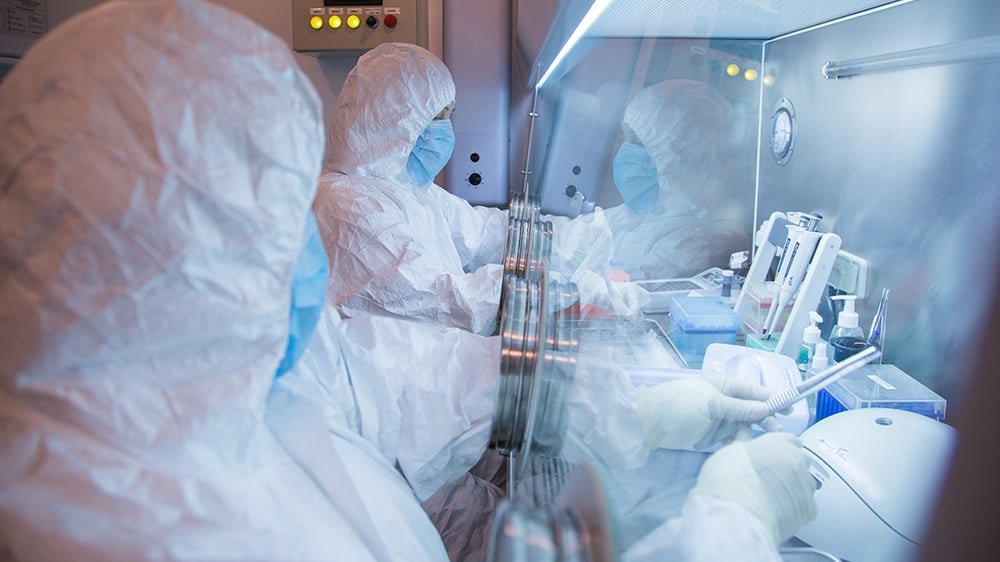
    The World Health Organization (WHO) says Russian authorities told it that no cases ‌of plague had been detected among anyone who had come into contact with a Siberian plague institute laboratory worker who died last week.

    In a statement to CBC News, the WHO said Russia had informed the agency on Tuesday that the woman’s illness appeared to be a “typical acute respiratory viral infection,” but that “no case of plague has been recorded in Irkutsk, either in her or in anyone else.”

    Authorities in Irkutsk previously said the 28-year-old woman, identified in Russian media as Darya Shipilova, died on Friday from pneumonia of an as-yet unestablished origin, leading to speculation she had been infected with pneumonic plague — a virulent form of the bacteria-borne illness.

    Shipilova was reported to be a technician at the Irkutsk Anti-Plague Research Institute of Siberia and Far East.

    The WHO said it had requested further information from Russian authorities about which pneumonia-causing pathogen is believed to have led to the woman’s death.

    Rospotrebnadzor, the Russian government’s public health and consumer watchdog, also said in a statement that no infectious diseases ​had been reported among the staff of the same plague research institute in Irkutsk over the past 10 days and that extensive testing had found no microorganisms in the deceased woman’s body linked to her ​work.

    “A comprehensive set of anti-epidemic measures was immediately organized and implemented in full in accordance with public health ⁠legislation,” the watchdog said.

    “This included ⁠identifying the widest possible circle of individuals who had been in ‌contact with the patient and arranging for them to be placed under medical observation in hospital with daily laboratory tests.”

    It said the results had revealed two cases of COVID-19 and two cases of rhinovirus infection, but that no pathogens causing other infectious diseases had been detected.

    “None of the contacts showed any changes in their state of health ⁠associated with infectious disease.”

    Locals not phased by plague rumours

    Elena Sofina, deputy head of the Shelekhov district near Irkutsk, where a local hospital was placed under quarantine, said what she called a “dangerous diagnosis” had not been confirmed.

    She added that 60 per cent of those placed under quarantine as a precaution had already ‌been released. Local media said around 200 people had previously been quarantined.

    Locals in the town said their lives had ​barely been disrupted, although they said some people in shops had initially worn surgical face masks as a precaution.

    A resident who gave ​her name only as Anna said ⁠the situation was calm and that people had been prepared for restrictions to be introduced, but that life had gone on pretty much as usual.

    “Everyone had face masks at home and wore them for no more than 24 hours,” she told Reuters.

    Denis, another resident, said news of the lab worker’s death had been widely discussed in the town and that the local hospital had temporarily stopped doing diagnostic tests but ⁠had since resumed normal business.

    A satellite image of a complex of buildings with clay red rooftops, surrounded by paved roads and other houses and buildings.

    A May 2025 satellite image shows the Anti-Plague Institute of Siberia and the Far East in Irkutsk, Russia, where 28-year-old Darya Shipilova before her death last week. According to Russian officials, Shiplova died from pneumonia of an as-yet unestablished origin, prompting authorities to quarantine about 200 people and causing public health fears on social media. (Google/Airbus/Handout/Reuters)

    Kremlin thanks Trump for offer to help

    Kremlin spokesman Dmitry Peskov expressed appreciation for an offer of help on Monday from Trump, although without making clear if Moscow planned to accept it.

    “It’s always good when mutual assistance is offered,” Peskov told reporters.

    Trump on Monday described the situation as a “big problem for Russia.” ​U.S. Secretary of State Marco Rubio said on Tuesday it was incumbent on Moscow to share more information.

    Health Canada told CBC News it is also monitoring the situation, though it sees no risk to Canada at this time.

    WATCH | Questions, concern surround death of Russian anti-plague lab technician:

    What we know about the suspected plague death in Russia

    Two-hundred people have been placed under medical observation in Siberia, Russia, after a laboratory worker died after a reported accident at a plague research facility. The World Health Organization says the public health risk remains low.

  • ABC Tells Judge That Donald Trump’s Regulatory Threats Continue To Chill Its Speech, But Network Faces Jurisdictional Hurdle In FCC Lawsuit

    ABC Tells Judge That Donald Trump’s Regulatory Threats Continue To Chill Its Speech, But Network Faces Jurisdictional Hurdle In FCC Lawsuit

    UPDATED: A federal judge heard arguments Tuesday in ABC‘s First Amendment lawsuit against the FCC, pressing a government attorney for details on why the agency took the dramatic step of calling in the network’s broadcast licenses for early renewal last spring.

    U.S. District Judge Loren AliKahn did not issue a ruling after a two-hour hearing in D.C. federal court, but she did ask that the government submit additional briefing on what other options it had besides ordering eight ABC owned stations to submit for early renewals.

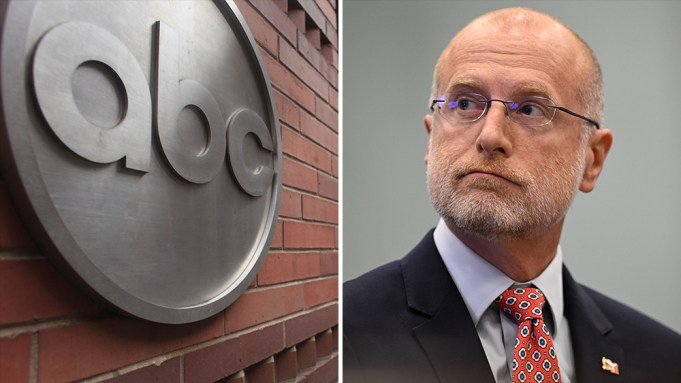
    The network sued the agency in August after the latter issued the order. The highly unusual action came after Donald Trump urged the FCC to revoke the network’s licenses, along with calls for Jimmy Kimmel to be fired, complaints about its news coverage and warnings from the president’s FCC chairman Brendan Carr.

    During the hearing, ABC’s attorney, Beth Wilkinson, told the judge that urgent action is needed because the regulatory threats have chilled the network’s speech. She said that their editorial decisions “are being affected right now” in coverage of the midterm elections “that the American public has a right to hear about.”

    “We are watching everything we do,” Wilkinson said. She pointed to Trump’s call for the network to lose its broadcast licenses for not airing his primetime speech in July, noting that it “brings out anger in the administration and retaliation from the agency.”

    At one point, Wilkinson compared ABC’s situation to the French Revolution, with people forced on a guillotine, wondering if anything will come down. Losing broadcast licenses, she said, is akin to a “death penalty” for stations.

    Amid a flurry of FCC investigations of the networks under Carr, ABC’s lawsuit is the first major media challenge to those regulatory threats since Trump returned to office.

    The FCC is seeking to dismiss the lawsuit, arguing, among other things, that its early renewal order was tied to an investigation of Disney’s diversity, equity and inclusion practices.

    A large portion of Tuesday’s hearing was devoted to a critical jurisdictional question the network must overcome first. The agency’s lawyers contend that the network first had to exhaust administrative remedies before bringing the litigation, and that such a challenge has to be brought before the D.C. Circuit, not the district court.

    Asst. U.S. Attorney Dimitar P. Georgiev, representing the FCC, told the judge that ABC is “a regulated entity being subjected to regulatory inquiry by its regulatory.” He said that after the FCC’s media bureau issued its order for early licenses renewals, ABC could have appealed to the full commission and, if it got an adverse ruling, could have taken their claim to the D.C. Circuit.

    Alllowing the case to proceed in district court, he said, “would allow them to sidestep the path that Congress” designated.

    “Even if you find there is a valid First Amendment claim, there is nothing unique about requiring a regulated entity to go through the administrative processes before seeking judicial review,” he told the judge.

    Wilkinson countered that what was at issue was that the network has to go through the early renewal process at all, characterizing it as an act of retaliation that is ripe for district court review.

    While the network could have appealed the FCC’s order to the full commission, she noted, federal statute allows for the commission to just deny the appeal or hold it. That would further delay to the process, which in and of itself is chilling the network’s speech, she said.

    “We should never have to be in this process because it is only been initiated to retaliate against us,” Wilkinson said.

    In responding to the judge’s question of how ABC has changed editorial decisions, Wilkinson pointed to the decision by The View to forgo clips of political candidates on its “Hot Topics” segment this cycle, out of concern it will invoke FCC scrutiny because of the equal time rule. The agency launched an investigation in February after the show featured Texas U.S. Senate candidate James Talarico. The rule requires broadcasters to provide comparable time to rivals when they feature qualified candidates, but ABC has contended that The View has long fallen under an exemption for news programming.

    Wilkinson also said that when the president delivered his speech in July, the network did not air it but did decide to stream it on ABC News Live. “They did that because they thought the president would be angry” if they did not run the speech at all, she said. As it turned out, Trump lashed out at the network and NBC anyway for forgoing the broadcast.

    Georgiev said that there was “no reason to believe” that the early renewal order prompted changes to ABC’s editorial decisions, arguing that the networks’ invocation of The View in their briefs does not connect it to license renewals.

    The judge did not say which way she was leaning. She gave the government until Friday to file additional briefing on the FCC’s DEI investigation and other options the agency had to resolving a discovery dispute with the network. Wilkinson said that the FCC was making a “pretextual” excuse for taking such an unusual step, when the real reason was the punish the network for its speech. The order came right after Trump called for Kimmel to be fired, she noted.

    AliKhan also pressed Georgiev on comments made by Carr after Trump’s July speech. The FCC chairman told reporters that month that ABC’s decision not to air the primetime address on its broadcast network was likely to come up in the early renewal proceeding. She asked whether that undermined the contention that the early renewal order was about DEI, not newsroom and content decisions.

    “The statements are the statements,” Georgiev said, characterizing Carr’s comments as “awkward.” But he added that once an early renewal proceeding is launched, the FCC takes public comments that can be on a variety of issues for and against the licenses, and that the agency has an obligation to review them.

  • Donald Trump Weighs In On New Skydance: “They’re Terrific People, And It’s Going To Be A Great Company”

    Donald Trump Weighs In On New Skydance: “They’re Terrific People, And It’s Going To Be A Great Company”

    President Donald Trump commented on Skydance‘s acquisition of Warner Bros. Discovery, completed on Tuesday, by apparently showering praised on its CEO David Ellison and his father Larry.

    “It’s going to be a great company,” Trump told reporters when asked about the deal. “They’re terrific people, and it’s going to be a great company.”

    Trump’s ties to the Ellisons was an ongoing point of interest in the saga of the $110 billion merger.

    Some Democrats contended that the Justice Department greenlit the deal for political reasons, while warning that the Ellisons would steer CNN news coverage in a direction friendlier for the president. When Netflix and Paramount were vying for Warner Bros., Trump had said that he would be involved in the regulatory approval process, before later indicating that he would not.

    RELATED: A List Of Major Warner Bros. & Paramount Franchises, Film & TV Titles Coming Together At New Skydance

    Trump and the elder Ellison are longtime allies; in March, Trump put him on the President’s Council of Advisors on Science and Technology with other tech-forward execs including Meta founder and CEO Mark Zuckerberg, venture capitalist Marc Andreessen and Nvidia CEO Jensen Huang.

    David Ellison, meanwhile, attended the president’s State of the Union address as a guest of Sen. Lindsey Graham (R-SC). Ellison held a dinner in honor of the Trump White House and the network’s correspondents in advance of last spring’s White House Correspondents’ Dinner, and the Skydance CEO was a guest of the recent White House State Dinner for China’s President Xi Jinping.

    RELATED: Skydance CEOs Pressed On Layoffs & Donald Trump Interference As They Outline Future At Town Hall

    On Tuesday, the first day of the new company, Ellison told a town hall that CNN would have “complete editorial independence,” and, in a conversation with Anderson Cooper, said that he would shield the network from Trump’s interference and criticism. Ellison also said that he supported CNN’s challenge of Trump’s ban on the outlet from the White House grounds.

    Skydance’s settlement of a lawsuit brought by state attorneys general requires that it establish an independent review board to oversee CNN and CBS News, including establishing a set of standards and principles.

    RELATED: Skydance Bumps Pay, Extends Contracts For Top Execs; New Bonuses For WBD Brass

    RELATED: Skydance Shares Fall In New York Stock Exchange Debut Amid Debt Debate

    RELATED: Skydance Credit Rating Cut By Fitch Citing Heavy Debt Load, Integration, Execution Risk

  • Ontario’s medical regulator looking to clamp down on prescribing safer supply drugs

    Ontario’s medical regulator looking to clamp down on prescribing safer supply drugs

    Text to Speech Icon

    Listen to this article

    Estimated 5 minutes

    The audio version of this article is generated by AI-based technology. Mispronunciations can occur. We are working with our partners to continually review and improve the results.

    Ontario’s medical regulator is proposing sweeping changes to prescribing safer supply drugs, The Canadian Press has learned.

    The College of Physicians and Surgeons of Ontario is looking to clamp down on the practice and is set to hold a board of directors meeting next week to decide on the proposed changes.

    Safer supply refers to prescribing medications as an alternative to opioids obtained on the streets to those who are at high risk of overdose.

    The most common form of safer supply is hydromorphone, a powerful opioid often prescribed for pain but significantly less potent than fentanyl and its derivatives that dominate the illicit drug supply chain. Fentanyl is often found laced with other drugs such as benzodiazepines, a depressant, and xylazine, often used to tranquilize animals. 

    One change the regulator has proposed in a document tucked away on its website is that “physicians must only prescribe safer supply medications in conjunction with opioid agonist therapy.” The therapy uses medications such as methadone to treat opioid addiction.

    The college is also proposing an eight-week time limit for physicians to prescribe safer supply, and mandating that it be consumed in front of health-care professionals. 

    The regulator previously made changes to its drug prescription policy in May that mandated physicians to perform an in-person assessment before prescribing narcotics for safer supply, as well as making it mandatory for doctors to offer opioid agonist therapy before prescribing safer supply drugs and perform follow-ups every three months.

    The rationale behind the new proposed changes centres largely on diversion of patients’ prescription pills to the black market.

    “The proposed amendments build on targeted changes introduced in May and respond to ongoing concerns about the diversion of safer supply medication and the resulting risks to patients and communities,” Mickey Cirak, spokesperson for the College of Physicians and Surgeons of Ontario, wrote in an email.

    “In response, the college has proposed amendments intended to strengthen oversight of safer supply prescribing and enhance safeguards related to physician prescribing practices, consistent with its role as Ontario’s medical regulator.”

    WATCH | Fifth Estate dives into Canada’s opioid crisis:

    Canada’s opioid crisis has led to the deaths of tens of thousands of people, costing the health and justice systems billions. Many health providers say there were solutions that could have helped. We reveal how politics got in the way.

    Health minister supports changes

    The college said it has consulted with a broad range of people and organizations, including physicians, municipalities and health-care partners, as well as the office of Ontario’s chief medical officer of health, Dr. Kieran Moore.

    Moore’s office did not respond to a request for comment or an interview. Moore has never granted The Canadian Press an interview about the province’s opioids crisis, despite more than a dozen requests since he took the role in 2021.

    The College of Physicians and Surgeons said the initiative to change safer-supply prescription rules is its own and did not come from the provincial government.

    WATCH | Ontario ends funding for supervised drug consumption sites:

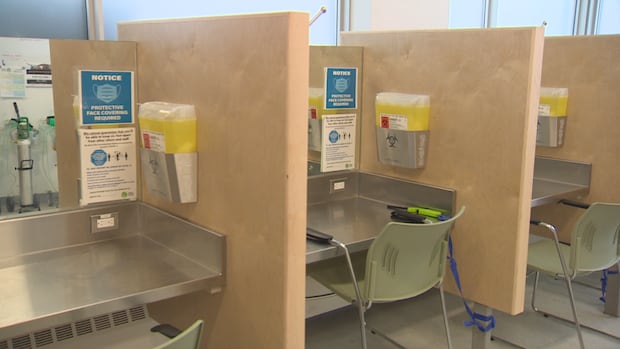
    Moss Park drug consumption sites to close as Ontario ends funding

    Two supervised drug consumption sites in Moss Park received letters on Friday from the Ontario Ministry of Health saying that their provincial funding will end in 90 days. CBC’s Ali Chiasson spoke to advocates who are concerned this could lead to more open drug use in the area.

    Cirak said the college also received feedback from doctors with expertise in addiction medicine.

    The proposal has the support of Health Minister Sylvia Jones.

    “Our government does not and will never support the distribution of illegal drugs, including the illicit use of hydromorphone masked as ‘safer supply,’” said Satnam Grewal, a spokesperson for Jones.

    “We welcome any action from Ontario’s 27 regulatory colleges who set standards and obligations for health-care professionals, including the College of Physicians and Surgeons of Ontario, to crack down on the predatory prescribing of addictive drugs.”

    Changes ‘dangerous’: harm reduction worker

    Ontario has moved to an abstinence-based model under Premier Doug Ford in its approach to the ongoing opioid crisis. The province closed provincially funded supervised consumption sites and passed a law banning them within 200 metres of schools and daycares. 

    The province has since opened 29 homelessness and addiction recovery treatment hubs, which the government calls HART hubs. It has spent more than $500 million on that plan, which offers primary and mental health care, addiction services and peer supports. 

    Word of the proposed changes has reached some people who depend on safer supply, said Lorraine Lam, an organizer with the Shelter and Housing Justice Network and a longtime harm reduction worker. 

    WATCH | ‘HART’ hubs replace supervised drug consumption sites:

    Ontario opens homelessness and addiction hubs, replacing consumption sites

    After passing a law closing numerous supervised consumption sites, the province opened nine of its HART hubs on Tuesday. But critics say Ontario’s new approach is off to a bumpy start. Shawn Jeffords explains.

    “The changes are really dangerous and very destabilizing,” Lam said. 

    “People are really, really scared and people are really, really anxious and very angry.”

    She said some people using safer supply got jobs or returned to school and she’s worried what will happen to them when they’re cut off.

    “The reality is people who are on safe supply are going to be de-prescribed really, really quickly, which will increase the chances of people turning to the street unregulated supply, which will then therefore increase the risk of overdoses and deaths,” Lam said.

    The college’s board of directors is set to meet on Oct. 13, when it is expected to vote on the proposed changes.

  • Kenya confirms 1st Ebola case imported from Congo

    Kenya confirms 1st Ebola case imported from Congo

    Text to Speech Icon

    Listen to this article

    Estimated 4 minutes

    The audio version of this article is generated by AI-based technology. Mispronunciations can occur. We are working with our partners to continually review and improve the results.

    Kenyan authorities on Tuesday confirmed the country’s first imported Ebola case from Congo, making Kenya the latest country affected by the fast-moving outbreak.

    Health Minister Aden Duale said a Kenyan citizen who arrived in the country on Saturday from Congo, via its neighbour Uganda, had been isolated and treated at Nairobi Hospital, where he tested positive for the Ebola virus and died late Monday.

    Ebola is highly contagious and spreads in the human population through contact with bodily fluids such as vomit, blood or semen, and with contaminated surfaces and materials, such as bedding and clothing.

    The current outbreak was declared in mid-May, months after it had been spreading in a remote part of eastern Congo. At least 8,400 cases have been recorded, including more than 4,000 deaths, according to government data, making it the fastest-growing outbreak of the disease in history.

    Kenya had never had an outbreak of Ebola, according to the Kenya Medical Research Institute. Dozens of contacts have either been identified or are being traced.

    Duale said Kenya was well-prepared to respond to Ebola cases, having trained nearly 5,000 health workers across the country on prevention and management.

    Kenya is the fourth country to record an Ebola case in the current outbreak.

    Tracing of flight passengers begin

    Uganda has recorded 20 cases and France one. Before Kenya reported its case, there had been no active cases outside Congo since Uganda declared its outbreak over in late August.

    Health authorities in Kenya have placed the country’s border points on high alert and are monitoring for possible additional cases.

    Kenya's Minister of Health, Aden Duale, holds a press conference announcing the first case of Ebola in the country, in Nairobi, Kenya, October 6, 2026.

    Kenya’s Health Minister Aden Duale holds a news conference in Nairobi on Tuesday, announcing the first case of Ebola in the country. (Monicah Mwangi/Reuters)

    Duale said 28 contacts, including family members and health workers who cared for the patient, had been identified. Another 23 passengers who travelled on the same flight from Uganda were being traced.

    He said the patient had been living in Congo for the past seven years and fell ill about a month ago. He was treated at various hospitals before travelling by road to Kampala, where he boarded a flight to Nairobi, arriving on Saturday afternoon.

    The contacts will remain in isolation for 21 days and will be released after testing negative for the virus, the Health Ministry’s director, Patrick Amoth, said.

    WATCH | Congo’s record Ebola outbreak :

    Ebola outbreak now deadliest in Congo’s history

    The Ebola outbreak in the Democratic Republic of Congo is officially the deadliest in the country’s history, and health officials worry the crisis will only get worse when children return to school.

    The patient’s relatives later took him in a private vehicle to Nairobi Hospital, where he was immediately isolated. He will be buried within 24 hours in accordance with recommended public safety protocols.

    The minister said Kenya had tested 267 samples at five laboratories across the country since May before this first case was detected.

    Congo’s outbreaks ‘like fighting a megafire’

    In Congo, where the outbreak has spread to seven provinces, conditions are difficult. Responders have faced attacks on health teams, misinformation about the virus, a failure by locals to report symptoms and rebel violence that has limited access to treatment centres.

    While cases have slowed in Ituri province, the epicentre, the outbreak is spreading in emerging hot spots in North Kivu and South Kivu provinces.

    “It is like fighting a megafire. Multiple outbreaks are developing at the same time, with varying intensity and in different locations,” Stephanie Hoffmann, with Doctors Without Borders, said in a statement. 

    The World Health Organization has warned this could surpass the deadliest Ebola outbreak in history, which erupted more than a decade ago and killed some 11,000 people in West Africa.

  • Attorney General announces record number of cases to strip US citizenship

    Attorney General announces record number of cases to strip US citizenship

    The United States Department of Justice has filed 40 new cases seeking to strip naturalised Americans of their citizenship over alleged crimes they have committed.

    In a statement on Monday, federal prosecutors said they were targeting individuals accused of “serious offenses”, including money laundering, child sexual abuse, visa fraud and tax evasion.

    Recommended Stories

    list of 3 itemsend of list

    The statement touted the 40 cases as the largest volume of denaturalisation petitions submitted in such a short period under President Donald Trump. The petitions were filed from late August through early October.

    “Today’s announcement marks the largest denaturalization effort in modern history,” said Attorney General Todd Blanche.

    “Under President Trump’s leadership, the Department of Justice will continue to employ the denaturalization process to maintain our national security and protect the American people.”

    The 40 citizens targeted in Monday’s announcement include people from a range of countries, including Mexico, Pakistan, China and Sierra Leone.

    They are accused of concealing criminal acts and other facts about themselves as they sought to obtain citizenship. Their criminal convictions largely came after they took their oaths of citizenship.

    Two people on the list are also accused of engaging in espionage on behalf of China. Committing these crimes before they became citizens, the Department of Justice alleges, meant these individuals lacked “good moral character” and should have been denied citizenship.

    Expanded use of denaturalisation law

    The laws to denaturalise US citizens have been used for decades, but historically, they have been reserved for serious crimes.

    After World War II, for instance, the US government moved to denaturalise dozens of citizens accused of concealing involvement in the Holocaust or engaging in war crimes.

    Notable cases include that of Emma Goldman, a Lithuanian-born anarchist and women’s rights activist who was jailed in 1917 for her antiwar activities, before being denaturalised and deported to the Soviet Union.

    But the practice has become much less frequent since the end of the Cold War.

    Top officials in the Trump administration, however, have sought to expand denaturalisation as part of a push to conduct the largest deportation operation in US history.

    Under US law, prosecutors can ask courts to strip citizenship from those born outside the country if they wilfully concealed a “material fact” during their citizenship application that would have otherwise disqualified them.

    But Trump’s efforts to widen denaturalisation proceedings have received pushback from human rights groups, which argue they could leave people stateless.

    Critics have also warned that Trump has sought to leverage denaturalisation against specific groups he perceives to be political rivals or enemies.

    Last year, for instance, the Trump administration indicated it would seek to denaturalise large numbers of Somali Americans after allegations emerged in Minnesota of daycare fraud involving the Somali diaspora.

    “Send them back from where they came, Somalia, perhaps the worst, and most corrupt, country on earth,” Trump wrote at the time.

    Members of Trump’s Republican Party, notably Representative Andy Ogles, have also floated the possibility of yanking citizenship from New York City Mayor Zohran Mamdani, who was born in Uganda. Trump himself has falsely suggested Mamdani may be in the country illegally.

    At one point, Trump even floated the idea of withdrawing citizenship from tech entrepreneur Elon Musk, a close ally and adviser to his second administration, after the two men had a falling-out in 2025.

    Trump has also pushed to do away with birthright citizenship, which is granted to virtually all children born in the US. The few exceptions include the babies of diplomats and foreign military forces.

    Birthright citizenship is protected under the US Constitution and cannot be taken away the way naturalised citizenship can.

    In June, the US Supreme Court struck down Trump’s efforts to dismantle birthright citizenship, but legal battles continue after the president issued a second executive order also seeking to restrict how birthright citizenship is applied.

  • US President says taxpayers will no longer fund TV ads praising him

    US President says taxpayers will no longer fund TV ads praising him

    Move comes after ethics experts criticised three nationally broadcast ads and called for independent investigations.

    United States President Donald Trump has said he will stop using taxpayer funds for television advertisements featuring him after widespread criticism of the campaign-style spots.

    In a post on his social media site on Monday, Trump defended the advertisements, which cost at least $1.5m in federal funds and were aired ahead of the US November midterm elections.

    Recommended Stories

    list of 4 itemsend of list

    Trump said he considered the advertisements to be “a positive promotion for our Great U.S.A.”, but that they would no longer be funded by taxpayers but by either him or his MAGA PAC,

    MAGA Inc. is Trump’s political war chest and had amassed more than $400m by the end of July.

    The announcement came as ethics experts and lawmakers from both ⁠parties have criticised the three nationally broadcast advertisements and called for independent investigations.

    The advertisements have run during football games as recently as Sunday and during other programming.

    One features Trump declaring that “America will never be a communist country”, ⁠while a chorus repeats the words “love me”. Another combines ⁠images of Mount Rushmore with footage of Trump praising a “golden age of America”.

    The advertisements end with a disclaimer saying they were paid for by the US government.

    Democratic lawmakers said last month that the White House transferred $20m in Homeland Security Department funds to air ⁠the advertisements, including one that closely resembles a 2024 Trump ⁠campaign ad, and sought independent probes.

    California Attorney General Rob Bonta on Monday called ‌for an independent investigation, calling it a “staggering misuse of public funding and breach of public trust” after the calls for a probe.

    Federal Communications Commission Chair Brendan Carr, a ‌Republican ‌named to his position by Trump, last week said the advertisements were appropriate and rejected a request to investigate them.

  • Secessionist party wins Quebec election in Canada

    Secessionist party wins Quebec election in Canada

    Parti Quebecois returns to power, promising a third referendum on Quebec’s independence from Canada.

    The secessionist Parti Quebecois has won the most seats in Quebec’s election and will form the next government in the predominantly French-speaking Canadian province, according to media reports.

    The result on Monday revives the question of whether the province should leave Canada, testing Prime Minister Mark Carney’s message of national unity.

    Recommended Stories

    list of 2 itemsend of list

    Paul St-Pierre Plamondon, the party’s leader, is set to become premier.

    During the campaign, he promised a third referendum on leaving Canada during his first term, although he said he would wait until US President Donald Trump leaves office in January 2029.

    It was not yet clear whether the party had reached the 64 seats needed for a majority in the 127-seat National Assembly.

    If it falls short, it would lead a minority government and need support from opposition lawmakers to pass major legislation and survive confidence votes.

    The Parti Quebecois, or PQ, last governed the province from 2012 to 2014.

    Monday’s victory marks a sharp recovery for the PQ, which won just three seats in the 2022 provincial election.

    Its return also ends eight years in power for the Coalition Avenir Quebec, or CAQ, a centre-right Quebec nationalist party that does not support independence.

    Daniel Beland, a political science professor at McGill University in Montreal, told The Associated Press news agency that the victory reflects Quebec’s multiparty system, where support is divided among several parties, rather than a surge in secessionist sentiment.

    Support for independence remains at about 30 percent, low by historical standards, he said.

    Still, Beland said a secessionist government in Quebec represents a new national-unity challenge for Carney, particularly with another independence-related vote approaching in Alberta.

    “Seeing that a pro-independence party won in Quebec barely two weeks before an independence-related referendum takes place in Alberta might suggest to the Trump administration that national unity remains a major issue in Canada despite the popularity of Mark Carney,” Beland said.

    Quebec held two previous referendums on independence, in 1980 and 1995, and voters rejected secession both times.

    The second vote was decided by a narrow margin, but there has been no further referendum in the three decades since.

  • MS NOW Hosts To Anchor From Key Battleground States In Final Month Before Midterms

    MS NOW Hosts To Anchor From Key Battleground States In Final Month Before Midterms

    With just four weeks until the midterm elections, MS NOW anchors are taking their shows to key battleground states of Maine, Ohio, Georgia, Texas and Michigan.

    Jen Psaki, Ali Velshi, Chris Hayes, Katy Tur and Peter Alexander will originate their shows live from a different state throughout the month, in what the network is calling the Road to the Midterms.

    Psaki’s The Briefing will air at 9 p.m. ET on Tuesday from Portland, Maine, where Sen. Susan Collins (R-ME) is facing former state senator Troy Jackson, a Democrat.

    On Oct. 13, The 11th Hour with Ali Velshi will air at 11 p.m. ET from Columbus Ohio, as Velshi, the network’s chief data reporter, speaks to voters at The Ohio State University.

    Chris Hayes will take All In to Atlanta, GA on Oct. 14, with the 8 pm. ET show focusing the Senate and gubernatorial contests.

    The Moment with Katy Tur will originate from Austin, TX at 2 p.m. ET on Oct. 20, with a facos on the hotly contested race between State Rep. James Talarico and state Attorney General Ken Paxton.

    On Oct. 27, State of Play with Peter Alexander, airing at 11 a.m. ET, will be in Detroit, MI, in a state with a close race between Abdul El-Sayed and former Rep. Mike Rogers.

    Chris Jansing, chief political reporter, and Shawna Thomas, political director, will conttribute on-the-ground reporting along with Nnamdi Egwuonwu, Will McDuffie and Josh Einiger.