The families of two missing men from the Caribbean country of Trinidad and Tobago have marked the one-year anniversary of their disappearance by calling for accountability from the United States.
Since September last year, the US military has undertaken a campaign of attacking small boats in the Caribbean Sea and eastern Pacific Ocean, on the basis that they were transporting “narco-terrorists”.
On Wednesday, the families of Chad Joseph and Rishi Samaroo issued a statement remembering the two men, who they said were killed in one of the US boat strikes on October 14, 2025.
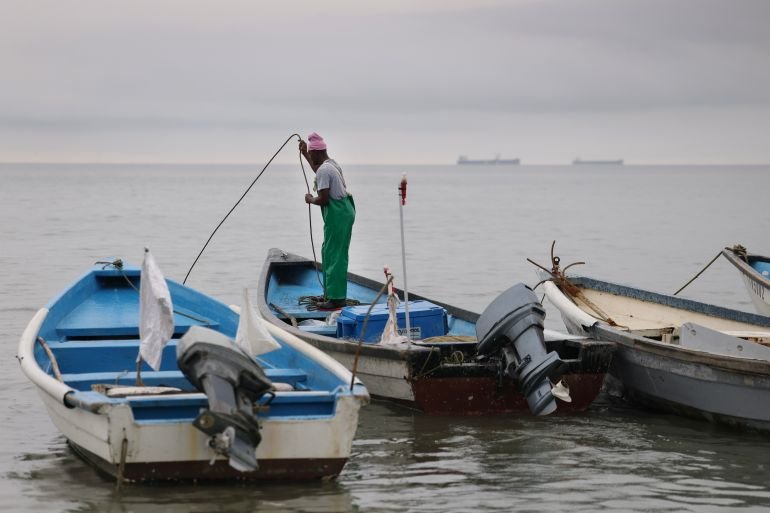
The families are currently pursuing a wrongful death lawsuit in the state of Massachusetts, supported by the American Civil Liberties Union (ACLU). They have argued that Joseph and Samaroo were fishermen and farm workers, not drug-traffickers.
“The last year has been devastating without Chad in our lives. Chad was the heart of our family. He was loving, generous and caring and always there for us. We all miss him terribly,” said Joseph’s mother, Lenore Burnley.
“A year later, we are still grieving and seeking justice for his death. We will always mourn losing Chad but hope that this lawsuit will be a step towards justice for him and the family.”
Four other people were killed in the attack on October 14, 2025, when a missile struck a vessel returning to Trinidad and Tobago from nearby Venezuela.
The families have said Samaroo and Joseph had been working in Venezuela to support their families.
Both men called their families two days before embarking on the trip home to the islands. They were never heard from again.
The boat strike campaign, launched under US President Donald Trump, has killed at least 239 people since September 2025.
But the US government has provided little evidence to prove its claims that those on board were trafficking drugs. It has also not publicly identified the victims.
In several cases — from Colombia to Ecuador to Trinidad and Tobago — relatives have stepped forward to say that their loved ones were among those killed, and that they were fishermen with no connection to the drug trade.
Separately, the family of Colombian fisherman Alejandro Carranza has filed a complaint with the Inter-American Commission on Human Rights, accusing the Trump administration of violating his right to life when it allegedly bombed his boat on September 15, 2025.
Samaroo and Joseph’s lawsuit was filed in January and is being heard by a US federal court in the city of Boston, Massachusetts.
“Not a day goes by when our family doesn’t think about our brother Rishi,” said Sallycar Korasingh, Samaroo’s youngest sister.
“Rishi was a good person, loved by his family and community. The last year without him in our lives has been heartbreaking. My brother and family deserve justice. We will continue fighting for answers and the accountability we deserve.”
Legal scholars have noted that, even if those killed were involved in criminal activity, the strikes would still amount to extrajudicial killings.
Under international law, it is generally illegal to use military force for civilian law enforcement. Drug trafficking is not considered an act of war, but rather a civilian crime.
“For a year now, our clients have had to live without their loved ones and without justice in the name of President Trump’s lawless killing campaign,” said Jeff Stein, staff attorney with ACLU’s National Security Project.
The group is representing the families in their lawsuit, along with the Center for Constitutional Rights.
“These illegal strikes at sea have devastated countless families, terrified communities, and made us all less safe,” Stein said. “We won’t stop fighting for accountability. We urge leaders in both Congress and the executive branch to finally end this illegal campaign before anyone else is killed.”
Ukrainian officials have accused SpaceX of throttling Starlink satellite services, disrupting its ability to carry out military operations and leaving Kyiv vulnerable to deadly attacks.
An adviser to President Volodymyr Zelenskyy said that without warning, services had been limited for terminals travelling over 100mph overnight on Wednesday – effectively limiting Ukraine’s ability to launch drones, which use satellite internet to pilot the craft.
Recommended Stories
list of 4 itemsend of list
Elon Musk, the CEO of SpaceX, which operates Starlink and its military version, Starshield, has since claimed on X that the United States government and military control all Starshield speeds.
“Any limits on speed or usage are decided by the US military and ultimately [President of the United States],” wrote Musk, a major US defence contractor and former top adviser to US President Donald Trump, after receiving criticism for the disruptions.
The White House has not confirmed or denied Musk’s assertion. The Pentagon did not immediately respond to Al Jazeera’s request for comment.
Writing on Telegram, Ukrainian defence technology adviser Serhii Beskrestnov said Ukraine was “deprived of one of the few chances to defend itself from Shahed drones”.
He added that frontline logistics and long-distance missions were also disrupted.
Asked about the restriction on the military version of Starlink, Zelenskyy told Piers Morgan Uncensored it was “a big mistake” that “will bring a lot of human losses”.
US Senator Jeanne Shaheen, a member of the armed services and foreign relations committees, wrote on X: “These restrictions on Ukraine’s access to Starshield must stop immediately. Lives are at stake.
“The Pentagon is also required to notify Congress if it pauses or downgrades intelligence sharing with Ukraine. If that happens, Secretary of War [Pete Hegseth] must provide that immediately.”
The suggestion that Musk’s company had throttled Starlink services drew the ire of Poland, which pays for Ukrainian Starlink subscriptions on Kyiv’s behalf.
“Hey Elon Musk, big man, are you playing politics with your products again?” wrote Radoslaw Sikorski, Poland’s foreign minister. “As your European customers, we are watching you.”
The “big man” gibe refers to a public dispute on social media between Musk, Sikorski and United States Secretary of State Marco Rubio in 2025, when the SpaceX boss told Sikorski to “be quiet, small man” on his X platform.
Starlink is a sensitive topic between Sikorski and Musk. The two previously clashed over the technology after the trillionaire said Ukraine’s “entire frontline could collapse” if he switched off Starlink.
Following the dispute in 2025, Musk said “no matter how much I disagree with the Ukraine policy, Starlink will never turn off its terminals.”
At the time he added, “We would never do such a thing or use it as a bargaining chip.”
‘Cannot be a coincidence’
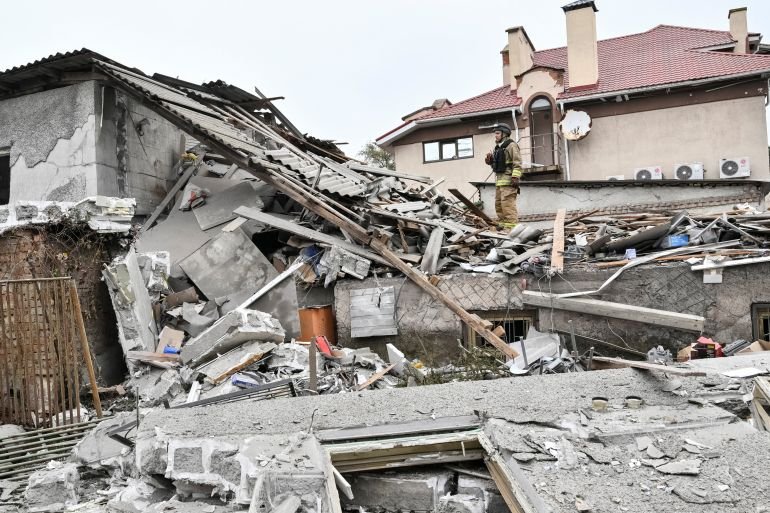
The slowdown comes after Russian ballistic missiles struck Kyiv for the second night in a row, killing at least nine people and damaging electricity and heating infrastructure. Zelenskyy said Ukraine did not receive its usual warnings from Western allies for a second day, without specifying which partners.
Sources have told Reuters and other media that the US has threatened to cut off intelligence for early warning of missile strikes on Ukraine, pressing Kyiv to suspend attacks on Russian oil refineries.
Trump said on Tuesday the US has not stopped sharing intelligence.
Beskrestnov warned that the slowdown “cannot be a coincidence” after Trump struck a deal with President Vladimir Putin to import Russian diesel – despite international sanctions to isolate Moscow.
Speaking to AFP, another Ukrainian official accused Washington of throttling Starlink and helping Russia.
On Saturday, Trump suggested Zelenskyy had not done enough to end the war with Russia, blaming him for high diesel prices in the US.
Last week, Trump lifted sanctions on Russian diesel under pressure to curb fuel prices that have soared since the US war with Iran began as the midterms rapidly approach. He told Kyiv to stop attacking Russian refineries and urged Ukrainians to replace Zelenskyy.
“It’s painful when President Trump chooses one side, not our side,” Zelenskyy said in the interview with Morgan.
The Ukrainian leader explained he was fine with Trump being in the middle between Ukraine and Russia, but “if you are in the middle, you have to stay in the middle.”
Jorge Rodriguez has been removed from OFAC’s sanctions list in latest US push for oil control and bilateral diplomacy.
Published On 14 Oct 202614 Oct 2026
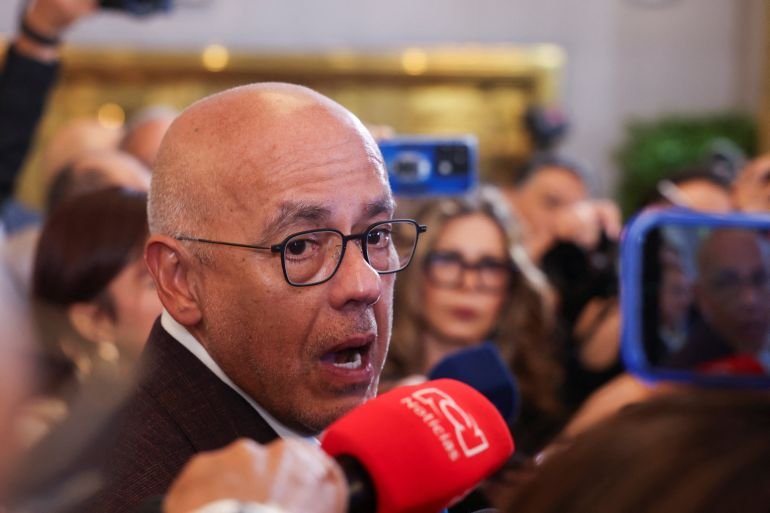
The United States Department of the Treasury has lifted sanctions on the head of Venezuela’s National Assembly, Jorge Rodriguez, brother of the country’s interim President, Delcy Rodriguez.
The move by US Treasury’s Office of Foreign Assets Control (OFAC) comes amid major US-Venezuela energy pacts and other talks with the Latin American country’s government.
Recommended Stories
list of 3 itemsend of list
The delisting notice was posted on the federal agency’s website on Wednesday, officially removing Jorge Rodriguez’s name from OFAC’s Specially Designated Nationals (SDN) blacklist.
The top lawmaker in the country, Jorge Rodriguez has held the position of National Assembly president since 2021. He was reappointed in January, weeks after the abduction of former President Nicolas Maduro by the US government. He served as vice president under Venezuela’s late President Hugo Chavez, among other posts.
Jorge and Delcy Rodriguez had been sanctioned under US President Donald Trump’s first administration due to their ministerial roles under Maduro, who now faces several federal charges, including a sweeping superseding indictment adding torture to his other alleged crimes.
In 2018, the State Department said that Jorge Rodriguez was given prominent government positions by Maduro “to help him maintain power and solidify his authoritarian rule”.
A source familiar with the matter told Al Jazeera that the decision to lift sanctions on Jorge Rodriguez is part of Washington’s wider diplomatic recognition of the interim Venezuelan government, and Trump’s three-phase plan for Venezuela’s stabilisation and political transition.
During a press briefing at the US State Department on Friday, Secretary of State Marco Rubio told reporters that the next round of negotiations on Venezuela’s future was scheduled to begin on Wednesday. He also urged all Venezuelan opposition factions to join US-backed political talks with the interim president.
Earlier this year, the US Treasury dropped sanctions against Delcy Rodriguez and later lifted the restrictions on Venezuela’s central bank and its state-owned national airline, signalling Washington’s pivot from economic warfare to backroom bargaining. She has largely complied with Trump’s demands for Caracas to open up its energy industry to American companies.
As interim president, Delcy Rodriguez has promised to hold elections – including in her recent remarks at the United Nations General Assembly – but no firm date has been set. Opposition leader and Nobel Peace Prize winner Maria Corina Machado has demanded they take place by July.
Jorge Rodriguez has shepherded several major reforms through the ruling party-controlled legislature since his sister took power, including a law that facilitated the entry of more foreign oil companies, a similar law for the mining sector and an effort to allow private investment for the country’s battered power grid.
Since Maduro’s ouster, Caracas and Washington have cut a deal giving the US access to 17 Venezuelan oil fields, while international energy firms have separately committed to expanding projects in the Latin American country. In August, Trump announced a plan to secure direct US access to a large share of Venezuela’s vast oil to refill the US Strategic Petroleum Reserve.
Gianni Infantino faces the football leaders who want him gone on Thursday in his first meeting with FIFA’s top brass since his plan to sell a stake in FIFA tournaments, including the World Cup, collapsed.
Infantino has faced calls to resign from the leaders of three regional football confederations – UEFA (Europe), AFC (Asia) and CONCACAF (North and Central America and the Caribbean) – and their representatives will be present in Zurich for a FIFA Council meeting.
Recommended Stories
list of 4 itemsend of list
They will be joined by their counterparts from Africa, South America and Oceania.
Under the plan, Infantino proposed selling a minority stake in a FIFA commercial subsidiary to private investors, with a company launched by Joshua Kushner, the brother of Donald Trump’s son-in-law Jared Kushner, identified as the proposed lead investor.
The 37-member council will also address FIFA’s governance, with some of the sport’s most powerful figures determined to limit Infantino’s powers if they cannot force him out of office.
Infantino, 56, will stand for re-election in March 2027, with a November 18 deadline looming for potential candidates to submit their nominations.
Last week, former Switzerland and Tottenham Hotspur defender Ramon Vega announced that he intended to stand, but he has not confirmed whether he has the backing of the five national associations required to enter the race.
The FFE plan exposed a split in world football, with Aleksander Ceferin, Salman Al Khalifa and Victor Montagliani – the presidents respectively of UEFA, AFC and CONCACAF – saying it was time for a change at the top of FIFA.
However, Infantino has been canvassing support as he bids to remain in power and received a standing ovation when he met African football leaders last week in Cape Verde.
He is also expected to be backed by South America at next year’s election in Rabat, Morocco. Despite the AFC’s criticism of his leadership, many countries within Asia, including a bloc of Arab nations, have offered their support.
FIFA Peace Prize to Trump in spotlight
People familiar with the matter told the Reuters news agency that although the chances of finding someone to replace Infantino were remote, his opponents were determined to leave him more isolated and curb his powers.
In addition to reviewing FFE, council members are expected to discuss FIFA’s financial reserves and how much money it can release to member associations, as well as its disciplinary procedures, governance framework and Peace Prize, which was controversially awarded to US President Donald Trump last year.
Last month, UEFA and CONCACAF called on FIFA to release $10m to each of its 211 member associations, countering Infantino’s FFE proposal under which associations could receive $20m in development funding and potentially access a further $20m.
Emanuel Medeiros, founder and Global CEO of Sport Integrity Global Alliance, a pressure group for better governance in sport, said FIFA needed to have a “frank discussion” in Zurich.
“The eyes of the world are on them,” he said. “The world of football expects to see a council that takes this unique opportunity to establish a genuinely independent, comprehensive and transparent governance review … We certainly wish to see a new impetus, a new dynamic.”
However, lawyer and politician Miguel Maduro, who was chairman of the FIFA Governance Committee in 2016 before being sacked by Infantino, said he would be surprised if anything meaningful came of Thursday’s meeting.
“They may announce the setting up of a working group or even an independent review of FIFA governance, but the credibility of either exercise will be very limited in the light of FIFA’s track record,” he said.
“Such an exercise, if not genuinely independent and enforceable, might be more of the same: a window dressing exercise simply aimed at reducing public pressure and to state they have now addressed whatever problems they had.”
FIFA to offer members $6.35bn development fund windfall
FIFA is also planning to set up a $6.35bn development fund for the next four years, the AFP news agency learned Wednesday from a source close to the matter.
The plan is due to be approved at its Council meeting on Thursday.
To finance this development fund for the 2026-2030 period, which would allow money to be distributed to FIFA’s 211 federations as well as to the regional confederations, it would draw in part on its financial reserves after a commercially successful 2026 World Cup.
The plan, first revealed by The Associated Press, would allow for the payment of $25m to each of its 211 member federations.
This is far more than the $10m called for by two of Infantino’s chief critics, Aleksander Ceferin, the boss of the European confederation UEFA, and Victor Montagliani, the head of CONCACAF, the confederation of North and Central America and the Caribbean.
Thursday’s gathering is the first such meeting since April 28, and comes amid a crisis in the governance of world football, following Infantino’s announcement earlier this year of his desire to open FIFA’s premium competitions, such as the World Cup, to private investors.
That plan was ultimately abandoned in the face of widespread criticism from the football world, with a rebellion led by UEFA, CONCACAF, and the Asian Football Confederation (AFC).
At the end of September, Infantino launched a consultation process with the federations to reform how the global body operates, announcing that the first proposals could be examined as early as Thursday’s meeting.
The 56-year-old, who has headed FIFA since 2016, is running for re-election in March 2027.
His opponents have so far failed to agree on a candidate.
Ceferin has chosen to stand for a new term at the helm of UEFA and, according to several media outlets, Montagliani is expected to do the same at CONCACAF.
The deadline for submitting candidacies is November 18.
But after just three weeks with their “perfectly healthy” baby, the new parents were plunged into their worst nightmare. At their home on Nova Scotia’s South Shore, Lupine suddenly turned ill, and her parents took her to the nearby regional hospital. Doctors ordered that she be sent to Halifax’s children’s hospital, where she was taken into intensive care.
Five days later, she was gone.
A picture of Lupine Genest follows her dad’s bicycle as he travels around Nova Scotia’s highways and trails. (Paul Poirier/CBC)
Lupine was infected by Group B Streptococcus, or GBS, which led to sepsis and meningitis. GBS is a common bacterium that many adults carry without symptoms, but it causes life-threatening illness in babies.
Pregnant women are often screened for GBS, and if they test positive, they’re given a preventative round of antibiotics during labour. The antibiotics can protect newborns during the first week of life, but not beyond. For cases that begin later in infancy, such as Lupine’s, there is no means of prevention — yet.
Now, as Lupine would be turning six months old, Wedge and Genest are touring around Nova Scotia on their bicycles — working through their grief, raising money for the hospital that tried to save her, and spreading the word about a vaccine that’s in development.
“It’s a rare thing, what happened to Lupine, but I think when it happens to you, it doesn’t really matter that it’s rare and you just want something to change,” said Wedge.
“A cure,” added Genest.
A vaccine on the horizon
What makes GBS so dangerous is that it escalates very quickly, said Dr. Joanne Langley, pediatric infectious disease specialist at the IWK Health Centre — the children’s hospital where Lupine was treated.
“By the time you get the baby to care and start care, the baby has often become very unwell. And so even our best treatment will not catch up, in some cases.
“Preventing this disease is the best strategy,” she said.
Dr. Joanne Langley is an infectious disease specialist at the IWK Health Centre and investigator at the Canadian Center for Vaccinology. (Galen McRae/CBC)
Researchers have been trying to develop a vaccine against GBS since the 1970s, but Langley said no attempt has advanced as far as the current one, by Pfizer. Depending on how the current trial progresses, and on regulatory approvals, she said the vaccine could be widely available in the next few years.
“This will be just an overwhelming advance in the care of women and babies,” said Langley.
The World Health Organization says GBS causes about 150,000 stillbirths and infant deaths globally, each year, and vaccines could prevent more than 50 per cent of infant GBS cases. GBS can also lead to preterm birth, and a vaccine may lower that risk, too, according to the WHO.
Wedge and Genest say their baby girl, Lupine, was perfectly healthy for the first three weeks of her life. Then she suddenly turned severely ill. (Martha Wedge/Submitted)
In addition to preventing illness and death, Langley said the vaccine could also reduce the use of antibiotics in pregnant women who screen positive.
“That’s a good thing, because the normal bacteria that mom has on her skin and her vagina are all healthy and part of the newborn’s eventual microbiome,” she said.
Pfizer is testing the vaccine at more than 200 locations across the globe, including four in Canada.
Wedge said it feels like serendipity that the clinical trial started in Nova Scotia shortly after Lupine’s death.
“The more I learn about GBS, the more passionate I feel about making sure something is done to hopefully prevent other families from going through what we went through,” she said.
Alexandre Genest and Carly Wedge stand by their bicycles at Summerville Beach Provincial Park, N.S., in early October 2026. (Jake Foley/Submitted)
As she and Genest cycle along Nova Scotia’s rural roads and trails, they’re pulling a small trailer displaying Lupine’s picture, and sharing their journey on social media.
They said it’s been healing, talking to people about their daughter. At the same time, they’re trying to get people interested in the vaccine; they want to see the clinical trial get all the participants it needs. Locally, investigators are aiming to enroll 30 people.
“We’re trying to get the word out to as many people who might be interested as possible, to help them push the science forward,” said Wedge.
Langley said because of the newness of the vaccine, the risks are unknown. The current study is specifically meant to test its safety.
Langley said investigators have not seen any serious events associated with the shot, so far. She said another trial may be needed to test the vaccine’s efficacy in preventing disease.
The United States is preparing to receive its first shipment of Belarusian potash in four years, as President Donald Trump seeks cheaper fertiliser for American farmers amid rising costs linked to the Iran war and a trade dispute with Canada.
A 30,000-tonne shipment of potash is expected to arrive at the Port of New Orleans on Wednesday, according to data from Kpler. The shipment follows Washington’s decision to lift sanctions on major Belarusian potash producers in March, opening an avenue for trade to resume.
Recommended Stories
list of 3 itemsend of list
Although this shipment from Belarus accounts for only a fraction of the 5.6 million tonnes of potash the US imported last year, it signals a tentative opening of relations between Washington and Minsk.
Trump has said the US is working on a larger agreement to buy Belarusian fertiliser at prices substantially below what it pays Canada, its dominant supplier. But analysts have questioned whether Belarus can compete with Canadian producers on price and expand exports enough to significantly change the US market.
What is potash and why does the US need it?
Potash is a potassium-rich mineral that is a primary fertiliser element. Potassium, an essential plant nutrient, has no substitutes, and potash is widely used in agriculture, including in the cultivation of corn and soybeans.
The US depends heavily on imports to meet its potash needs. Canada accounts for almost 80 percent of US potash imports, according to the US Geological Survey’s 2026 Mineral Commodity Summaries. Russia accounts for 12 percent, the second-largest share of US potash imports.
That reliance has made fertiliser supply an economic and political concern, particularly as farmers face rising production costs. In recent months, US farmers have reported higher fuel and fertiliser costs, putting pressure on already tight profit margins.
Trump has reportedly been concerned that financial strain may cost Republicans some of the US farmer vote in this year’s midterms. In 2024, Trump won 78 percent of the vote in farming-dependent counties. At an agriculture roundtable in Wisconsin in June, Trump promised fertiliser prices would “go way down” as the US emerged from the Iran conflict.
Disruptions to shipping through the Strait of Hormuz have added to pressure on global fertiliser markets, particularly for nitrogen-based products. Potash, however, is less directly exposed to the crisis, with the US relying heavily on supplies from Canada.
Trump has argued that buying Belarusian potash could reduce those costs. An additional supplier could also give US buyers more options in a market dominated by Canadian imports.
For farmers, the immediate benefits remain uncertain. Fertiliser is one of several major expenses facing agricultural businesses, alongside diesel fuel and machinery. Even a reduction in potash prices would not necessarily offset increases elsewhere.
The Nutrien Cory potash mine, which produces potash products used in agriculture, near Saskatoon, Saskatchewan, Canada, on April 20, 2025 [Todd Korol/Reuters]
Can Belarus offer cheaper fertiliser?
In September, Trump boasted on social media about striking a potential potash deal with Belarus.
“The United States is working on a massive Deal with respect to the purchase of Potash from Belarus,” Trump said in the post. “The pricing would be for substantially less than we are currently paying to Canada, very good news for our Farmers and Ranchers.”
Trump promoted Belarusian potash as a less expensive alternative to Canadian supplies, but the economics of delivering it to American buyers complicates that plan.
Belarus is landlocked, and EU restrictions are affecting its export routes, forcing potash shipments to take a more circuitous path through Russia. The incoming cargo was loaded at the Russian port of Bronka near St Petersburg, according to reporting by the Financial Times.
Those logistical challenges could raise transportation costs and make Belarusian supplies less competitive, even if the product itself is cheaper.
The scale of the exports also matters. A single shipment shows that trade between the US and Belarus has resumed, but it does not mean Belarus can replace a substantial share of Canadian potash or drive down prices across the US market.
However, access to an alternative supplier could give Washington greater leverage in negotiations with Canadian producers, potentially helping US buyers secure more competitive potash prices.
Could Belarus replace Canada as the main potash supplier in the US?
Relations between the US and Canada have been strained since Trump’s second term began, when he unleashed a volley of tariffs on most trading partners, including Canada. His administration initially imposed a 25 percent tariff on many Canadian imports in March 2025, including potash, but reduced that to 10 percent following pushback from agricultural groups and lawmakers. Potash that meets the requirements of the USMCA trade agreement – the trade deal between the US, Mexico and Canada – is exempted. Most Canadian potash imports qualify under the USMCA and remain duty-free.
Trump has maintained that Washington would continue buying from Canada, even as Belarus offered to sell potash at a lower price.
But the viability of Belarus as a major supplier remains unlikely. In September, Belarusian President Alexander Lukashenko said the country could not supply large volumes of potash fertiliser to the US.
“Even if we wanted to supply [potash] to other, Western markets, we simply do not have those volumes – everything is contracted,” Lukashenko said.
Whether this October shipment becomes part of a much larger deal will depend on the ability to sustain exports and the durability of the diplomatic opening between Washington and Minsk.
Why did the US impose sanctions on Belarus, and why are they being lifted?
The planned shipment marks a significant step in the restoration of trade between Washington and Minsk, which have spent years being at odds over Belarus’s human rights record and its support for Russia’s war against Ukraine.
The US, under former Democratic President Joe Biden, imposed increased sanctions on Belarus in 2021 after Lukashenko’s authoritarian government cracked down on mass protests against its disputed 2020 presidential election. Belarus has also faced Western sanctions for allowing Russian forces to use its territory in the 2022 invasion of Ukraine.
Belarusian opposition supporters gather for a protest rally in front of the government building at Independence Square in Minsk, Belarus, on August 18, 2020 [Dmitri Lovetsky/AP]
But since Trump returned to the White House in 2025, his administration has pursued direct negotiations with Lukashenko. Those talks have led to the release of political prisoners in exchange for lifting US sanctions, creating a pathway towards renewed economic ties.
In March, Belarus released 250 political prisoners under a US-brokered agreement. Washington subsequently lifted sanctions on major Belarusian potash producers and eased restrictions on several financial institutions. In September, US special envoy John Coale announced a further agreement under which Belarus would release 25 prisoners in exchange for sanctions relief.
The rapprochement has opened the door to proposals for deeper commercial cooperation.
On September 29, Lukashenko said he had agreed with Russian President Vladimir Putin that Russian state-controlled energy company Gazprom would participate in a project to build a nitrogen fertiliser plant in Belarus. He proposed inviting the US to join the project using American technology, according to the Reuters news agency.
Before this agreement, exiled Belarusian opposition leader Sviatlana Tsikhanouskaya said that a deal with Lukashenko comes with risks.
“Our position is that it is not time to trade with the regime while all the income from potash goes to repression, goes to support of the Russian war machine,” Tsikhanouskaya told AFP in September.
The proposal has not established that Washington will participate in the project. But alongside Trump’s stated interest in buying Belarusian potash, it illustrates how Minsk is seeking to turn improved political relations into broader commercial opportunities.
United States federal agents have arrested a Saudi national and charged him with planting a hidden audio recording device in a conference room at the California offices of OpenAI, where he was working as an engineer.
Abdulrahman Alfozan, 35, had been working at the AI company since July 2025, the US Department of Justice said in a statement on Tuesday.
Recommended Stories
list of 2 itemsend of list
OpenAI discovered the device plugged into a USB port behind a television in an executive conference room at one of its San Francisco buildings on September 30, according to a criminal complaint filed by the Federal Bureau of Investigation (FBI).
Following the discovery, the company placed a camera in the room, which captured Alfozan entering last week and checking behind the television where the listening device had been installed, the FBI alleges.
The case highlights growing security concerns around sensitive AI research as companies and governments compete for the best talent and technology with the potential to alter regional economic and strategic dynamics.
Who is Abdulrahman Alfozan and what is he charged with?
Alfozan has been a legal permanent resident of the US since September 2020.
According to a LinkedIn profile in his name, he studied at the Massachusetts Institute of Technology (MIT) and the University of California, Berkeley. He previously worked at Meta and Microsoft, it said.
Before he joined OpenAI, he was a venture partner at Raed Ventures, headquartered in Riyadh in Saudi Arabia, which invested “in seed and early-stage startups in Saudi Arabia and MENA”.
Al Jazeera could not independently verify the details mentioned in this LinkedIn profile.
Alfozan made his first court appearance on Tuesday on a charge of “using or endeavouring to use an electronic, mechanical, or other device to intercept oral communications”.
It was not immediately clear if he has legal representation. He is expected to return to court on October 19.
If convicted, Alfozan faces up to five years in prison, a $250,000 fine, and three years of supervised release.
What happened at OpenAI?
The FBI says a thumb-sized device with a microphone, and which could connect to a camera, had been concealed in toilet paper and placed behind a television set in the conference room. It was installed around September 28, the FBI said. Its stored data was encrypted and inaccessible. Investigators later found a similar device in Alfozan’s personal bag.
In a post on X, OpenAI said it had evidence that the employee intended to place other listening devices throughout sensitive areas of its offices to secretly record meetings.
“At this time, we have no indications of this individual inappropriately accessing or exfiltrating model weights, source code, or customer data. The employee was terminated,” the company said.
The FBI complaint also alleges that Alfozan used an AI productivity tool to make multiple inquiries about the company’s building addresses, meeting rooms, meeting-room capacities and calendars, despite not having the authority to access these spaces or participate in meetings there.
“This alleged attempt by a Saudi national to steal sensitive communications from OpenAI was taken extremely seriously. Theft of intellectual property involving cutting-edge super intelligence technology poses a serious threat to our national security,” Attorney General Todd Blanche said in a statement on X.
A device, which the US Justice Department says is a hidden audio recording device installed in an OpenAI executive conference room by Saudi national Abdulrahman Alfozan [File: US Department of Justice handout/Reuters]
Hasn’t OpenAI been accused of helping to spy on civilians?
In an X post by OpenAI explaining how its own systems were used to trap Alfozan, the company said: “Our security program is designed to protect against a wide range of threat actors, from insider risks to cybercriminals to nation states, and this case is an example of how AI can help address these sophisticated security threats.”
But AI technology is used not only to catch spying, but conversely, to engage in it as well.
In February 2025, an investigation by The Associated Press found that US tech giants had enabled Israel to track and kill people in Gaza and Lebanon through AI and computing services. The AP reported that the Israeli military had bought advanced AI tools from tech companies including OpenAI, the maker of ChatGPT, through Microsoft’s Azure cloud platform, to assist with surveillance.
OpenAI denies having a relationship with the Israeli military. But OpenAI also faced criticism when it signed a deal with the US Department of Defense in February this year to supply its technology to the US military for use in classified settings, including intelligence gathering. OpenAI’s competitor, Anthropic, refused to sign the same deal unless the Pentagon barred mass surveillance of Americans.
There have been several incidents in which OpenAI models have gone “rogue” by independently breaking out of a testing environment and then hacking into other organisations and even government sites, leading to calls for stronger regulations against unchecked AI surveillance.
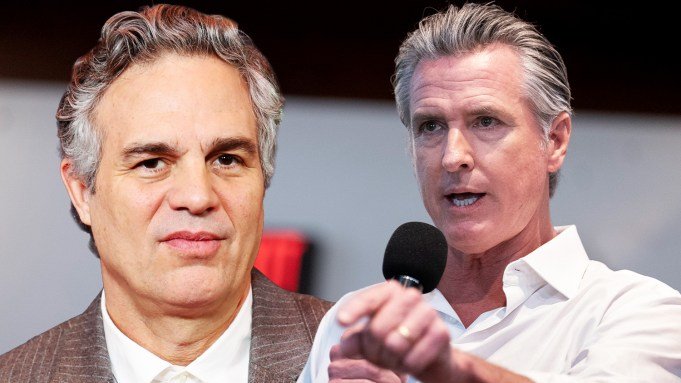
Gavin Newsom and Mark Ruffalo haven’t patched things up since David Ellison’s contentious mega-bucks Paramount and Warner Bros Discovery merger was approved and completed earlier this month. The deep rift between the once pals could end up haunting the outgoing California governor as Newsom ponders a much-anticipated bid for the White House in 2028.
“Ruffalo has a gained lot of sway with (Democratic) party activists fighting the Ellisons,” a Hollywood political operative tells Deadline Wednesday as theTaskactor launched another missive against the potential candidate. “Targeting Newsom as a billionaire friendly candidate will hurt him with the base, make him (look) out of touch.”
A week after the Ellison and Ynon Kreiz-run Skydance officially became one of the town’s biggest players, the increasingly influential Ruffalo took to social media today to lambaste the proudly centrist Newsom.
Bristling at the term-limited Governor’s resistance to the popular Proposition 40, the so-called billionaire tax that is on next month’s ballot, the Marvel vet wrote: “Once again. Just like the Paramount Merger Gavin Newsom does what he always does. Sells out the working class people for the billionaires again and again. Not only that but endorses a bill that will make it impossible to tax the wealthy at all.”
Once again. Just like the Paramount Merger Gavin Newsom does what he always does. Sells out the working class people for the billionaires again and again. Not only that but endorses a bill that will make it impossible to tax the wealthy at all.https://t.co/YCLE9ZrYnJ
As well as being against the progressive-backed Prop 40, Newsom came out recently for Proposition 42. Also on the midterms ballot, the measure backed by Google co-founder Sergey Brin and a group of other anti-Prop 40 California tycoons aims to “ban any new state tax” on personal property. On the chance Prop 40 passes, Prop 42 also effectively neuters the other measure by preventing any new retroactive tax, as 40 does.
The stance has seen Newsom, who warns the passage of Prop 40 could see an exodus of the super rich from California, mocked and dismissed by fellow Democrats.
In a video that went viral online, high-profile progressive Rep. Ro Khanna (D-CA) insisted pleasing deep-pocketed donors and tech lords was “the only reason” Newsom was against Prop 40. “You can’t be anti-Trump and then do the bidding of Trump donors,” Khanna said, taking a swipe at Newsom’s attention- getting trolling of the former Apprentice host.
“Mamdani has shown us, Trump’s return, the wars …things have changed,” an industry insider who has been a long-time donor to Democrats nationally and regionally asserts with a name drop of the Democratic Socialists of America NYC Mayor. “The Clinton playbook of 1992 won’t work in 2028. Democrats have been radicalized. They want real change, like Republicans in 2016.”
Newsom has not formally unveiled if he is running for President, saying he will make a decision after the midterms. However, from his Trump bashing, trips to key primary states and attempts to make sure Kamala Harris doesn’t enter the race, the governor has made it pretty clear what’s next for him.
The Governor’s office did not respond today to Deadline’s request for comment on Ruffalo’s remarks.
Ruffalo raged against the Para-WBD merger over the last year, and was one of the loudest voices up to final days before a settlement was reached in state Attorneys General antitrust suit against the Ellisons.
After the settlement was made public, Rufallo called the Trump approved merger a “bad deal for this country.” In the process, Ruffalo accused of being antisemitic in response by some, and defended by other A-listers. Still, in one of the surest signs of how transactional the industry is, the Emmy winner will be back on the now Skydance-owned HBO in 2027 for a second season of the acclaimed crime drama Task.
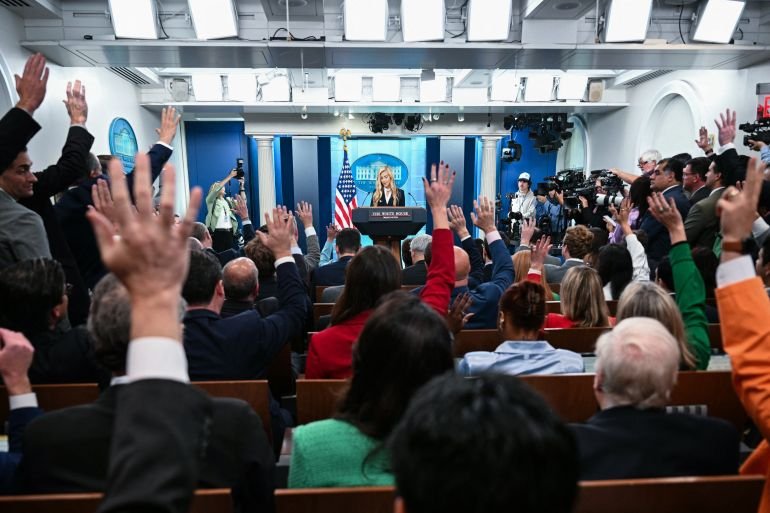
CNN, MS Now and Politico can continue to access White House as judge maintains Trump’s ban likely illegal.
Published On 14 Oct 202614 Oct 2026
A federal judge has extended access to several media organisations that United States President Donald Trump had sought to ban from the White House.
US District Judge Timothy Kelly said Trump likely broke the law in banning journalists from CNN, MS Now and Politico from attending White House briefings.
Recommended Stories
list of 3 itemsend of list
The decision, published late Tuesday, expands on an emergency order issued by Kelly on September 24 that temporarily reinstated access to organisations. It said Trump likely discriminated against the news organisations based on their viewpoints, in violation of the First Amendment of the US Constitution.
He wrote that Trump’s “announcement of the ban and later remarks explaining the reason for it make this a straightforward conclusion: President Trump likely banned Plaintiffs from the White House because he believes that their reporting is generally inaccurate and biased against him”.
In announcing the ban, Trump had said the organisations “shouldn’t be able to constantly write or report FICTION and LIES when they’re covering the President of the United States”.
The Department of Justice subsequently said the reporters’ White House passes were revoked on national security grounds.
In his ruling, Kelly rejected the claim.
“First, there is no evidence in the record that President Trump made the decision to revoke Plaintiffs’ hard passes on national security grounds from the get-go, nor at any time has he directly stated that national security was the reason for his decision,” he wrote.
The latest order stands until Kelly, who was appointed by Trump during the president’s first term, makes a final determination in the case, or until an appeals court steps in.
Trump has long been a critic of legacy US media and has previously sought to restrict access to certain organisations.
He has also lodged rhetorical attacks on individual reporters both in person and on social media, while launching an array of lawsuits against media companies.
Speaking during an October 8 hearing, Theodore Boutrous, a lawyer for the three banned organisations, said Trump was seeking to “coerce better coverage”.
The Freedom of the Press Foundation was among the groups cheering the latest court ruling.
“But this fight is far from over,” senior adviser for advocacy Caitlin Vogus said in a statement.
“We have every reason to expect the administration will appeal Kelly’s latest order and also continue to prevent CNN and Politico from participating in pool coverage of the president,” she said. “Trump must not be allowed to trample on fundamental First Amendment protections by handpicking his press corps or turning pool duties into a reward for favorable coverage.”
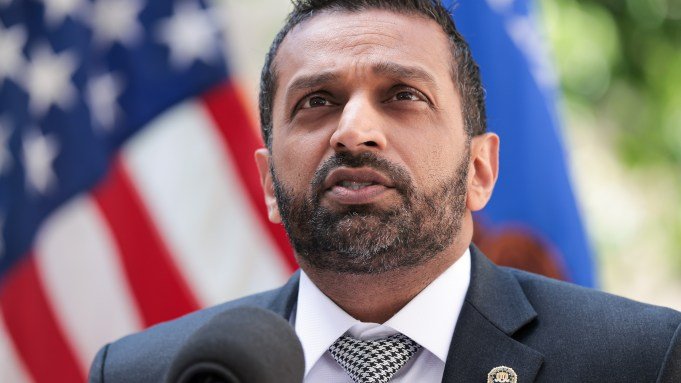
FBI Director Kash Patel called on MS NOW to apologize to the agency after an erroneous report that he had landed in Russia.
Citing two unnamed sources, the network’s Ken Dilanian reported during Peter Alexander’s show in the 11 a.m. ET hour that Patel had landed in the country for a meeting.
The FBI’s Rapid Response account pushed back, posting video of Patel at Liberty University in Virginia.
Two hours later, during Alicia Menendez’s show in the 1 p.m. ET hour, Dilanian appeared on air again to say that he was correcting the report.
“We’ve since learned that Patel did not, in fact, land in Russia today and remains in the U.S. The FBI did not answer our questions when we asked them about it,” he said.
Dilanian noted that there already had been reports that a Patel meeting in Russia was planned. Those reports raised “serious concerns, including among Democratic lawmakers who had urged Patel to call off the meeting which, according to published reports, was supposed to be happening today. But we do know now that he has not already landed in Russia, as we reported earlier. The timing of any potential trip remains unclear. Again, we regret this error, and we are transparent about when we make errors.”
Patel posted on X that MS NOW owes “an apology to this FBI, the men and women of law enforcement, and to the American people.” But he also focused on a separate MS NOW report that the FBI under his leadership had brought thousands fewer criminal cases than previous administration, despite Patel’s claims.
MS NOW just reported I had “landed in Russia” for meetings with the FSB. The same outlet constantly tells lies about this FBI and law enforcement’s historic achievements in safeguarding the American people.
The results speak for themselves: • 53,969+ violent crime arrests (up…
Dilanian defended that reporting, writing on X, “There has been a lot of commentary about this story. But no one at the FBI or anywhere else has disputed the DOJ data showing FBI criminal referrals down 15%. That’s thousands fewer criminal cases under @FBIDirectorKash, @dbongino and @FBIDDRaia than during the same period in the Biden Administration.”
An MS NOW spokesperson referred to Dilanian’s on air correction.