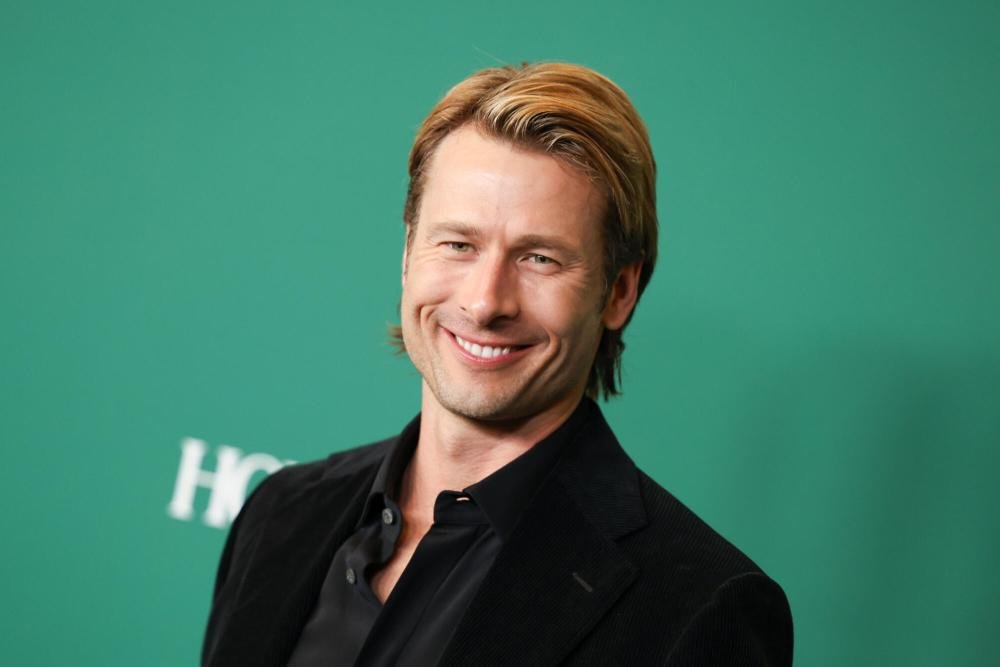
Comedian, actor, and entertainer Bill Bellamy will be presented with the Icon Award at the 2026 Whats Funny Comedy Festival, recognizing his decades of excellence and impact on stand-up comedy and entertainment.
The Whats Funny Comedy Festival was co-founded by Knowledge Beckom and Lil Rel Howery (“Get Out,” “Rel,” “Vacation Friends 2”) with the mission to spotlight Black and Brown comedians and make Chicago the “next great home of comedy discovery.”
The festival’s upcoming third edition will be held September 19-26 at venues throughout Chicago, including Comedy Bar, Laugh Factory, Bellagio 223, ETA Theater, and Wax Vinyl Bar. More than 50 comedians from 20 cities will perform in showcases, including Cousin Tiera, Correy Bell, Eva Evans, Rich Thomas, Shang and Chris ‘CP’ Powell, host of the latest reboot of BET’s “Comic View.”
On Sept. 21, Bellamy will receive the Icon Award during the inaugural Whats Funny Today Show Chicago Comedy Legends ceremony. Bellamy will be honored alongside 15 Chicago comedians whose careers helped shape the city’s comedy legacy. The celebration will conclude with a live taping of the “Whats Funny Today Show” podcast featuring Bellamy and special guests.
Another one of the week’s marquee events will be the live taping of Howery’s next stand-up comedy special on Sept. 20; his previous special, “Rel Talk,” was filmed during the inaugural Whats Funny Comedy Festival and released on Tubi last year. Howery will also lead a master class, sharing insights from his journey through stand-up, television and film.
“The Whats Funny Comedy Festival was created to celebrate the incredible legacy of Black comedy while creating meaningful opportunities for today’s comedians to learn, perform, and build lasting careers,” Beckom, the festival’s co-founder and executive director, said in a statement. “Every year we strive to elevate the experience for audiences and performers alike, and 2026 will be our biggest and most impactful festival yet.”
For the full schedule, tickets and additional information, visit the Whats Funny Comedy Festival website.
Singapore’s Silver Media Group has signed a memorandum of understanding with Indonesian boxing legend Chris John to develop “Dragon’s Dojo,” a mobile-first vertical animated series drawing on Indonesian folklore.
The project marks the first chapter of the ASERYA Asian Mythology Franchise.
The venture unites Silver Media Group with Chris John, longtime Indonesian TV executive Harun Kurniawan and Koollab Studios as co-production partners.
“Dragon’s Dojo” launches the ASERYA Universe, an interconnected Asian mythology franchise spanning animation, comics, games and merchandise. The universe pairs real-world figures with young protagonists, folklore and mythical beings drawn from across the continent, with the goal of introducing Asian stories to global audiences.
The story follows ancient creatures appearing in the modern world, prompting heroes from different countries to confront a rising darkness threatening the region. In “Dragon’s Dojo,” Chris John takes on an animated alter ego, cast as the head instructor and mentor at the show’s namesake martial arts academy, which works with young people facing hardship. As creatures from Indonesian mythology emerge to threaten his students’ community, Chris and his pupils find their fight extends beyond monsters to their own inner struggles.
The series is designed as a multi-platform franchise with potential extensions into comics, games and merchandise.
Chan Gin Kai, founder and CEO of Silver Media Group, said Asia holds some of the richest histories, cultures and mythologies in the world, but many of these stories remain little known outside their home countries.
“With ASERYA, we want to build an interconnected universe where these stories can come alive for a new generation of audiences,” Chan said. “‘Dragon’s Dojo’ is the beginning of that journey in Indonesia, combining the legacy of a true champion in Chris John with the power of mythology, action and values-driven storytelling. As we open the door to a wider universe of stories from across Asia, we hope to share this rich heritage with the world.”
Chris John said martial arts involves more than learning how to fight, teaching discipline, respect, courage and how to face life’s challenges. “Throughout my career, boxing has taught me that the greatest victories are not only achieved in the ring, but also in overcoming the challenges we face every day,” he said. “‘Dragon’s Dojo’ brings these values into an exciting adventure where young people can discover their strength, purpose and the courage to find their own path while experiencing the richness of Indonesian mythology.”
Kurniawan said Indonesia has extraordinary stories, legends and cultural heritage passed down through generations. “‘Dragon’s Dojo’ gives us an opportunity to bring these elements into a contemporary format and introduce them to audiences around the world,” he said. “We are creating something that is proudly Indonesian while being part of a much larger Asian storytelling universe.”
Koollab Studios co-founder Oliver Guse said the future of entertainment will be shaped by the collaboration between human creativity, technology and new approaches to storytelling. “At Koollab Studios, we believe innovation should empower creators to tell bigger and more ambitious stories while preserving the authenticity and emotional heart that make them meaningful,” Guse said. “‘Dragon’s Dojo’ represents an exciting opportunity to combine creative vision with new production possibilities, bringing Indonesia’s rich culture and mythology to audiences around the world.”
“Dragon’s Dojo” is in development, with production and release details to be announced.
Silver Media Group, founded by Golden Horse Award-winning producer Chan Gin Kai, manages a portfolio of more than 1,500 intellectual property assets spanning film, animation, games and graphic novels. The company has partnered with a fund manager licensed by the Monetary Authority of Singapore to establish the Silver Media Fund, an institutional-grade media investment vehicle focused on developing and financing scalable IP.
Koollab Studios was co-founded by Guse, who has spent three decades working in animation production, and focuses on production workflows built around emerging technologies.
The BFI London Film Festival has announced that two of the U.K.’s most acclaimed producers will lead the industry program at its upcoming 70th edition.
Pippa Harris, who produced “Hamnet,” “1917” and is currently working on “The Beatles” biopics, and James Wilson, who produced “The Zone of Interest,” “The Voice of Hind Rajab” and “Under the Skin,” are set to take part in their own spotlight conversations as part of the LFF’s industry forum.
Harris and Wilson will, according to the festival, discuss their careers, current projects and navigating the international film and TV market in a rapidly changing landscape.
“This year our industry programme puts a spotlight on producers and the vital role they play in shepherding artistic visions from their earliest stages through to the screen,” said BFI London Film Festival director Kristy Matheson. “I’m delighted that industry colleagues will have the opportunity to hear from Pippa Harris and James Wilson – two esteemed producers whose unique creative careers have given us some of the most memorable and critically acclaimed films of recent years.”
Harris is best-known for her longstanding partnership with Sam Mendes, with whom she co-founded Neal Street Productions. Alongside Oscar and BAFTA winners “Hamnet” and “1917,” her film credits including “Revolutionary Road,” “Jarhead” and recent family feature “The Magic Faraway Tree,” while on TV her productions include “Call the Midwife,” “Penny Dreadful” and “Britannia.”
Wilson, meanwhile, has an ongoing collaboration with director Jonathan Glazer, with whom he’s worked on both the Oscar and BAFTA-winning “The Zone of Interest” and “Under the Skin.” Last year, he produced Kaouther Ben Hania’s Oscar-nominated “The Voice of Hind Rajab,” while his other credits include Lynne Ramsay’s “You Were Never Really Here,” Aneil Karia’s “Hamlet” and “20,000 Days on Earth,” directed by Iain Forsyth and Jane Pollard.
The full LFF industry forum programme will be announced mid- September. The festival runs Oct 7-18.
Two of the U.K.’s most successful producers will have individual Spotlight Conversations at the 70th BFI London Film Festival‘s Industry Forum this October.
Neal Street Productions co-founder Pippa Harris (The Beatles, Hamnet, 1917) and indie producer James Wilson (The Zone of Interest, The Voice of Hind Rajab) are set to discuss their careers, current projects and navigating the international film and TV market in a rapidly changing landscape.
The LFF Industry Forum welcomes industry delegates from all over the world for a program of “thought-provoking conversations with some of the most exciting practitioners working in the screen industries and networking events with professionals from all over the world.” The full lineup will be announced in mid-September.
Harris will take a deep dive into her work on the hugely ambitious and much-anticipated quartet The Beatles films, directed by her Neal Street co-founder Sam Mendes, and discuss the challenges of development, production and her relationship with talent across her career. A prolific British film producer, her credits include the Oscar, Golden Golden Globe and BAFTA-winning Hamnet and 1917, Oscar and BAFTA-nominated Revolutionary Road, as well as Jarhead and The Magic Faraway Tree, Call the Midwife, Penny Dreadful and more.
Wilson is one of the U.K.’s most successful independent producers. He has worked for three decades in the business — for Fox Searchlight Pictures and Film4 before heading up his own company in the 2000s — and will speak during his Spotlight Conversation about the bold creative collaborations that have shaped his career so far. He has worked on the Oscar and BAFTA-winning The Zone of Interest and Under the Skin from Jonathan Glazer, as well as Lynne Ramsay’s You Were Never Really Here, Kaouther Ben Hania’s The Voice of Hind Rajab and Aneil Karaia’s Hamlet.
“This year our industry programme puts a spotlight on producers and the vital role they play in shepherding artistic visions from their earliest stages through to the screen,” said Kristy Matheson, BFI London Film Festival Director. “I’m delighted that industry colleagues will have the opportunity to hear from Pippa Harris and James Wilson — two esteemed producers whose unique creative careers have given us some of the most memorable and critically acclaimed films of recent years.”
Attendance of international industry professional delegates to the LFF has doubled over the last five years. The 70th BFI London Film Festival, running Oct. 7-18, is set to open with Andrew Scott and Olivia Colman’s Elsinore, and close with Jesse Eisenberg’s musical-comedy The Debut.
In a year without Glastonbury, music lovers have turned to other festivals in the U.K. and Europe to fill the void. There’s Primavera Sound in Barcelona, with its proximity to the beach and genre-diverse lineup, or Reading and Leeds in England for those who want a true camping experience with a rock-focused flair. But look a little further north and you’ll find a hidden gem that’s capturing the attention of both festivalgoers and artists around the world: Øyafestivalen in Oslo, Norway.
Compared to a juggernaut festival like Glasto — known for its sprawling grounds, mandatory camping and rowdy atmosphere — Øya, which kicks off on Wednesday, delivers a more intimate experience. The capacity is about 10 times less (with 22,000 people expected to attend each day this year), it’s held in Tøyen Park in the middle of Oslo and there’s a certain Scandinavian politeness that seems to keep people from getting completely off their faces. But over the past decade or so, Øya has consistently delivered huge headliners and some of the best, most varied lineup curation on the festival scene, booking everyone from Blur to Kendrick Lamar to Charli xcx.
This year’s four-day lineup is headlined by the Cure, Nick Cave and the Bad Seeds, Sombr and homegrown artist Dagny, but also includes Geese, Wilco, Lily Allen, Clipse, Blood Orange and Tomora (the collaboration between Chemical Brothers’ Tom Rowlands and Norwegian singer Aurora). There’s truly something for everyone, and its relatively small capacity, lack of huge crowds and overall peaceful vibe make it possible to actually see the artist you’re watching.
“Everybody can book a big headliner and put on a big show, but it’s the details and taking care of everything — being really nerdy on where you put the toilets and the bars and the sound bleed between the stages — all these things are very important,” says Claes Olsen, who co-founded the festival in 1999 and serves as its booking manager. “That’s what makes it unique.”
It’s such an enjoyable experience for artists and attendees alike that many of them — like the Cure, Nick Cave, Wilco and Blood Orange this year — are repeat bookings. As its profile has grown worldwide, Olsen says artist requests to play the festival have increased as well. Nowadays, Øya books its lineup up to 17 months in advance.
“We’re getting tons [of requests] every day,” Olsen says. “So as a booker, one of the most important jobs we actually do is to say no to people, which is not that fun. It’s hard. But of course, we also have to reach out a lot.”
Something Olsen is particularly proud of is that the Cure — who previously headlined the fest in 2019 — asked to come back before the band plans to retire in 2029. “We got an email from the agent for the Cure saying that Robert Smith wanted to play Øya before they stopped being the Cure,” he says. “I’ve been a fan since I was a teenager, so that was pretty amazing.”
Robert Smith from the Cure at Øya Fest in 2019.
Redferns
But it’s not just about attracting acts from the U.K. and U.S. for Øya — the festival puts a huge emphasis on local Norwegian artists, mixing them in throughout each day so it’s “not just them playing first and hoping somebody shows up,” Olsen says. And, the headlining spot on Saturday, the final day of the festival, always goes to a homegrown artist. This year, it’s dance-pop singer Dagny (pictured above), who hails from the city of Tromsø and broke through with hits like “Somebody” and “Drink About.”
For Dagny, headlining Øya has always been a dream, ever since she first played on a small stage at the festival a decade ago. “It’s kind of my Madison Square Garden, if you know what I mean,” she says. “Øya is one of those festivals where I feel like people are so open to music and to just being present, right there and then in the crowd. It’s really one of my favorites.”
She just released her third album, “Dancefloor Erotica,” which leans more into electro-pop and marks a real creative milestone in her career. “I feel weirdly out of my comfort zone, but at the same time I feel like I’m where I want to be,” Dagny says. “We have such a different energy now playing this record — it’s a bit darker, it’s a bit heavier, a bit more danceable.”
Another priority for Øya is gender parity, with the festival committing to a roughly even split between male and female performers. This year, Saturday’s main stage lineup is only women, headlined by Dagny but also including Lily Allen, Irish breakout CMAT and U.S. singer Hannah Cohen.
“Øya is real proof that [gender parity] doesn’t have to be a problem because they’re probably the biggest Norwegian festival and they always seem to get a pretty even balance,” Dagny says. “Not only am I the headliner on that stage with lots of female artists that day, but I think I’m also something like the fifth or sixth female artist to headline that slot in the last few years.”
This was of the utmost importance to U.K.-based feminist band Girl Group — four out of five members of which hail from Oslo — who are playing Øya for the first time. Having formed at the Liverpool Institute for the Performing Arts in response to the male-dominated culture they experienced, Girl Group only works with women and nonbinary people, from the music-making process down to their videos and photography.
“They care a lot about the environment and feminism, and they try to make active choices for society, not just the festival itself,” Girl Group’s Mia Halvorsen says of Øya. “For us, being on a lineup with all the women we really value feels very special and meaningful. And obviously, our project is very political and very feminist, so it feels good to be seeing a bit more of that in festivals.”
Girl Group
Serskaten
In addition to its gender split pledge, Øya is a leader in festival sustainability, prioritizing waste management, stopping the use of fuel generators in 2008, and only serving meat-free food since 2024. Last year, the fest added human rights to this initiative, and is once again partnering with Amnesty International to fundraise for medical aid in Palestine.
“Working with Amnesty has helped us a lot to educate ourselves on the whole human rights situation, not only in Palestine but other places in the world as well,” Olsen says. “That work is super important going forward.”
As Øya has grown on the global stage, Norway as a whole has been experiencing a bit of a cultural moment. From Joachim Trier’s “Sentimental Value” bringing the country its first international feature Oscar earlier this year to their football team making it to the World Cup semi-finals, Norway’s profile is rapidly rising.
“It’s good to see Norwegian people charming the world a bit,” Olsen says. “It’s been really hard groundwork for the last 10 years, so I hope that continues.”
Dagny has not only observed an uptick in Norwegian artists being recognized internationally, but also on a local scale. “Music in the mother tongue has completely gone up,” she says. “I think after COVID, it’s pretty much just been Norwegian music that has been happening in Norway, with a few exceptions. Seeing how many Norwegian artists are doing so great, it’s helping to raise everyone’s bar of where we’re going to be at.”
Having lived in the U.K. for nearly a decade before moving back to Oslo before the pandemic, Dagny also believes that Norway’s environment contributes to her creative output. “Norway is thankfully a small and peaceful place, and sometimes what you need to be creative is time and space and quiet,” she says. “I think there is maybe something to the fact that I didn’t write an album until I moved back to Norway.”
Girl Group, who are currently based in Liverpool, have come to a similar realization — though for them, the artistic freedom they feel in Norway can be traced back to the way the country is run.
“We are a socialist country, we pay taxes, we have good education,” says Girl Group’s Katya Birkeland. “When you have good education, you get good directors, people who get to do acting, people who get to spend their time practicing football — you get people who get to do what they love.”
Adds member Maria Tollisen, “I think you need to be privileged and have a bit of financial safety and stability in order to be able to do art.”
Beyond just spotlighting homegrown acts, Øya also serves as a bit of a reunion for the local scene. “If you’re in a certain music scene in Oslo, it’s almost impossible to not have met a lot of [the acts],” Dagny says, mentioning that she’s looking forward to catching up-and-coming artist Ary and Tomora at the festival.
Girl Group also mentions Ary as a must-see artist, as well as the band Three40Four and singer-songwriters Elia and Ea Othilde. “One of my childhood best friends is a dancer for [Ary] now and I’ve not seen her for ages,” Birkeland says. “I can’t wait!”
FIFA president Gianni Infantino appears to have snatched defeat from the jaws of victory.
A month after the final of 2026 World Cup, which earned FIFA a record $15 billion in revenues, Infantino is fighting to keep his job. His controversial plan to sell off a stake in the World Cup to a group of private investors led by Joshua Kushner, the brother of President Trump’s son-in-law Jared Kushner, sparked a global backlash that shows no signs of abetting. The past week, soccer legends, sports authorities and even world leaders have called for Infantino to resign.
“Infantino must go,” wrote Portuguese soccer legend Luis Figo in an op-ed for the Daily Mail. “The Infantino era is over,” added Javier Tebas, president of Italy’s La Liga, an interview with French newspaper Le Monde. “It should be fatal,” said Canadian Prime Minister Mark Carney, on Infantino’s misstep with the sell-off plans. “Certainly I don’t have confidence in Mr. Infantino.”
The pile on has continued despite Infantino dropping his plan, officially ditching the proposal on July 31. The deal would have seen FIFA, a 96-year-old nonprofit, spin off its commercial interests into a new division, FIFA Forward Enterprise (FFE). Kushner’s private equity group Thrive Capital would then buy a 21 percent stake in FFE for $4.2 billion. FIFA had argued the arrangement would raise billions to fund global sports development.
European soccer body UEFA called it an attempt to sell “the soul” of soccer and threatened to boycott future FIFA tournaments if the deal went through. The Asian Football Confederation and CONCACAF, which represents national organizations in North America, Central America and the Caribbean. also rejected the proposal.
FIFA quickly backed down. UEFA has not. Last week it said its boycott is still in place. The group reiterated its position that it has “lost confidence in Gianni Infantino’s presidency.” UEFA’s boycott will be tested at FIFA’s Under-20 Women’s World Cup, which kicks off in Poland Sept. 5.
On Friday, Norwegian soccer association directly called for Infantino to resign. “The trust is now gone for us,” Norwegian Football Federation president, Lise Klaveness, told The Guardian. “There is no way back for Infantino.”
Adding to the pile on was a report on Friday that a female employee alleged to have been in a relationship with Infantino when he was general secretary at UEFA, received a six-figure “departure payment.” UEFA confirmed the payment but FIFA said the allegations of inappropriate conduct by Infantino are “categorically untrue” and “defamatory,” adding that “no employee at UEFA and FIFA has ever raised a complaint regarding Mr Infantino’s behavior because there never was an incident where he was involved.”
FIFA on Saturday fired back at Infantino’s critics, accusing them of trying, “through allegation, insinuation or misinformation” to undermine “FIFA’s established democratic processes” by trying to oust Infantino before presidential elections next March.
UEFA is reportedly seeking support from other soccer confederations to call an emergency FIFA Congress to trigger a vote of no confidence in the president. UEFA, with 55 members, easily meets the threshold of 43 votes to call an emergency meeting. To topple Infantino, however, would require a majority of FIFA members, or 106 of the 211 national associations. The Confederation of African Football and South American confederation CONMEBOL have both publicly announced their backing for Infantino. Last week, Mexico broke with North American confederation CONCACAF to support FIFA’s beleaguered president.
The pressure is mounting on Gianni Infantino, but there is still time on the clock for him to turn this defeat back into a win.
Open Doors, the Locarno Film Festival’s Locarno Pro-organized co-production platform and talent development program for filmmakers from regions where artistic expression is at risk, has wrapped up its 24th edition, its second with a focus on the African continent. And on Monday, its winners were unveiled.
Following a three-year cycle dedicated to Latin America and the Caribbean, the program’s current focus is on voices from Africa through its Projects, Producers, and Directors programs. It provides training, mentoring, and networking opportunities.
Open Doors Grant A total of CHF 50,000 sponsored by visions sud est (with the support of the Swiss Agency for Development and Cooperation), the City of Bellinzona, and the Open Doors initiative.
CHF 20’000 to A Vineyard for A Lobster by Talemwa Pius, produced by Emmanuel Gashumba (Gripmagic Uganda Limited), Uganda.
Synopsis: “The equatorial village of Rukumba has endured months of drought when suddenly snow falls overnight, an impossible event blanketing the land in white. Kamuturaki (48), a failed trader once mocked for selling winter jackets under the blazing sun, becomes an overnight success. Byeitaka (40), a disgraced preacher, declares the snow divine and sells melted snowflakes as holy water to frightened followers. Kagoro (38), the timid chairman, watches his authority erode as the village reorganizes itself around the miracle. When British envoys arrive promising support for Rukumba’s independence from Uganda in exchange for access to the snow for scientific research, the village committee embraces the deal as progress. As competing ambitions take hold across the village, tensions rise and unrest erupts, forcing Ugandan military forces to intervene. By the time the snowfall melts, Rukumba is no longer a community but a collection of competing interests, each convinced the miracle belongs to them.”
CHF 20’000 Accept My Plea for Burial by Mohammed Sheikh, produced by Kadir Harbi (Aleel Films), Somalia/Djibouti .
Synopsis: “In a remote Somali pastoral village, two 12-year-old boys, Waasuge and Warmooge, spend their days herding goats and playing games. Their playful rivalry turns tragic when Warmooge dies after falling into a steep dry riverbed during a game. No one sees exactly what happened, and the only witness, a mentally unstable man, gives conflicting accounts that deepen the uncertainty. As the village gathers, grief hardens into accusation. Warmooge’s mother, Saluugla, refuses to bury her son without justice, believing burial without accountability would erase his death. The elder, Alamagan, attempts to resolve the conflict through customary law and religious counsel, but the absence of truth fractures the community. Rituals are performed, oaths proposed and broken, and tensions escalate as the unburied body decays. Despite Waasuge’s age and the lack of evidence, the village demands resolution. Understanding what the adults cannot admit, Waasuge makes a choice that ends the conflict.”
CHF10’000 Too Much Music by Aseye Fiagbe, produced by Aseye Fiagbe (Aseye Fiagbe Creative Studio), Ghana.
Synopsis: “Too Much Music is a feature documentary about Kiki Gyan, a Ghanaian keyboard prodigy who rose to international fame as a teenager with Afro-rock pioneers Osibisa. As his musical contributions expanded without recognition, tensions around credit and ownership led him to leave the band and pursue a solo career across London, Lagos and New York, shaping African disco and funk in the process. Over time, the same system that profited from his brilliance proved indifferent to his vulnerability, and his life became reduced to a singular narrative of addiction and demise. Through archival material and testimonies from family and collaborators, the film reconstructs the forces that shaped his journey and asks how artists are remembered, who controls their stories, and what is lost when brilliance is reframed as failure.”
CNC Development Grant The CNC development prize is an incentive for the development of a project for the value of 8,000 euros.
Chapa 100 by Ique Langa, produced by Lara Sousa (Kulunga Filmes), Mozambique.
Synopsis: “In the busy streets of Maputo, 80-year-old flower vendor Sitóe offers brief moments of beauty to strangers passing through the city’s crowded “chapas”, the local minibuses that carry thousands of people every day. One morning, he meets Valentina, a vegetable seller in her seventies, and a simple flower sparks a quiet romance. Together, they dream of owning a small piece of land where flowers and vegetables can grow side by side. When a thief steals Valentina’s rented wig, Sitóe runs after him and is struck by a speeding chapa. The city moves on, but Sitóe does not. His spirit becomes tied to the very minibus that killed him, traveling through Maputo day after day among passengers carrying their hopes, grief, and exhaustion. Flowers slowly begin to bloom inside the vehicle, subtle signs of his lingering presence. One day, Valentina boards the chapa carrying the flower Sitóe once gave her. Surrounded by the quiet traces of his spirit, she feels his love beside her once again.”
Jury statement: “By awarding the CNC grant to the fiction project Chapa 100, directed by Ique Langa, the jury aims to support the development of a work imbued with genuine sensitivity and poetry. The jury was particularly moved by the film’s portrayal of a love story between two elderly characters – a rare theme in cinema – set against the vibrant backdrop of Maputo. Furthermore, the project’s artistic potential is reinforced by the director and producer’s strong commitment to establishing a robust international distribution strategy that would match the film’s universal appeal.”
ARTEKino International Award Providing an incentive for the development of a project for the value of 6,000 euros.
The Ones With the Tempered Flowers by Neema Ngelime, produced by Ivy Kiru (LBx Africa), Tanzania/Kenya.
Synopsis: “For Neema, being a woman has always meant a script: school, marriage, babies. When a doctor tells filmmaker Neema having children might be hard, she doesn’t expect it to confuse her. Those expectations wound her. Raised in a multi-religious home, her identity was forged by questions of what is haram and what would please Jesus. All Neema cared about was which hell she’d end up in. To her, the older women in her family are a mystery beyond work and family. Their lives feel prophetic to her own. Her sister and her try to rewrite their scripts through tarot. Her father taught her that anything is possible. Now he reminds her of her fate. She stages performances with her family, reenacting fragments of their lives. They believe these are fictions. But they’re memories, repurposed, hidden truths surfacing through play. This is the story of a woman studying her body’s relationship to self, society, and the political weight placed on women’s bodies in Tanzania, challenging duty masked as love.”
Jury statement: “ARTEKino aims to support emergent contemporary cinema through the ArteKino International Award and the ARTEKino festival. ARTE has decided to reward a young director, whose project is a performative essay and a personal journey that explores the expectations placed on women by family, society and tradition. This is the story of a woman studying her body’s relationship to self, society and the political weight placed on women’s bodies in her country.”
Sørfond Award The prize consists of the participation at the Sørfond Pitching Forum at the Films From the South festival for one of the Open Doors Projects, which will be held in November this year in Norway.
The Ones With the Tempered Flowers by Neema Ngelime, produced by Ivy Kiru (LBx Africa), Tanzania/Kenya .
EAVE Award Together with the Film Fund Luxembourg, professional training organization EAVE will offer a scholarship for the EAVE Marketing Workshop worth EUR 4,000.
Tabakalera-San Sebastian Film Festival Residency Award The prize consists of a residency in Tabakalera and taking part in the industry activities of the San Sebastian Film Festival, given in collaboration with the International Culture Center Tabakalera and San Sebastian Film Festival.
I Live in V.I., by Ugochukwu Azuya, produced by Olubunmi Ogunsola (ENSEMBLE), Nigeria
Jury statement: “We wanted to highlight the following project because it follows a great story that is set and represents a unique and specific spot of its country and has the power to connect with universal concerns like displacement, class struggle and housing and labor pressures. It is also a project that could benefit from the platform of our festival so that it can open new ways of collaboration, and searching partnerships that allow the film to strenghten and fulfill its necessities. And also: because we believe that every each of us carries a little Florence that tries to make its way in a varied and complex world, we want to welcome the team behind I Live in V.I., so that its producer Olubunmi Ogunsola can come to San Sebastian and make it through with their amazing project.”
Rotterdam Lab Award In collaboration with IFFR Pro, a participant from the Open Doors Producers will have the chance to take part in the training workshop Rotterdam Lab in January 2027, together with a delegation of more than 70 emerging international producers.
Adja Mariam Mahre Soro(Studio KÄ), Ivory Coast
Jury statement: “For her highly professional approach to her work as a producer and entrepreneur, and for the integrity and commitment she has demonstrated in building and developing her company. Her dedication to strengthening the local ecosystem through training initiatives and international collaborations is equally remarkable. She is now ready to build meaningful collaborations and co-productions across the continent and throughout Europe.”
Organisation Internationale de la Francophonie (OIF) A consultancy prize to one selected feature film or series project directed by a national of an OIF Member State within the French-speaking Global South, produced or co-produced by a production company based in one of those same Member States.
Sarah, by Pocas Pascoal, Angola
Jury statement: “A film of revolution and independance, based on a moment in life of a revolutionary and independent woman, one of the first Black female filmmakers: Sarah Maldoror. Sarah by Pocas Pascoal is very promising narratively and visually and it will give space to a beautiful, multilingual, coproduction between several countries from Africa and Europe.”
AFP Critics Prize Presented by African Film Press (AFP) LLC, a cross-regional publishing alliance covering the African film, television, and digital media markets. The AFP Critics Prize comprises a USD 500 cash award, a certificate, and ongoing editorial coverage of the recipient and their future work across AFP’s three founding publications: Akoroko, Sinema Focus, and What Kept Me Up.
Submergido, by Ariel Añez, produced by Joseph Mata, co-produced by Ariel Añez (Maochas Filmes), Mozambique
Jury statement: “Sad and poignant yet ultimately hopeful, it offers a moving and incisive exploration of the human cost of conflict, especially for those whose loved ones are directly involved in war.”
Ugandan Talemwa Pius’ striking magic realist fable “A Vineyard for a Lobster” and “Accept My Plea for a Burial,” a Somalia set critique of ancient custom, emerged triumphant at Locarno’s 2026 Open Doors, winning its two biggest cash prizes.
Neither prize comes as a surprise.
Picturing a miraculous snowfall in a drought-ridden Ugandan village, in “A Vineyard for a Lobster,” Pius cleverly spins a political fable of broader collective breakdown, as characters – a desperate trader, a disgraced priest and a reluctant chairman – react to the miracle in self-serving ways rather than thinking about any common good. As their ambitions escalate, the village threatens to fall apart. From Kampala-based Gripmagic, “in the film, an impossible snowfall in a Ugandan village becomes a political allegory, echoing colonial intrusion,” Pius told Variety.
A €20,000 cash prize was also granted by Open Doors to “Accept My Plea for Burial” (“Baryo Aas Iga Gudoon”), by Mohammed Sheikh a Djibouti, Somalia and Qatar. It kicks in when Warmooge, 12, falls to his death while playing with Waasuge, a fellow goatherd. The village elder fails to resolve the case via customary law and religious counsel. Minnesota-based U.S.-Somali filmmaker Sheik’s follow-up to “Barni,” screening at Locarno, this is “a morally complex story where there is no clear truth, told through a rarely seen Somali cultural framework,” Sheikh told Variety.
Aseye Fiagbe’s “Too Much Music,” a rehabilitating music doc bio of Kiki Gyan, a Ghanaian keyboard prodigy, took in the same prize. Notably, however, Open Doors prizes announced Aug. 10 at Locarno Pro, the industry zone of Switzerland’s Locarno Film festival, were spread pretty evenly, every single titles among its six project focus walking off with some kind of compensation.
That prize sweep took in a development grant from France’s CNC national film board for “Chapa 100,” an endearing advanced age love story from Mozambique’s Ique Langa, who impressed with his Rotterdam main competition entry “The Prophet.”
An ArteKino International Award and a Sørfond Award went to “Tempered Flowers,” a diary-like essay, Tanzania’s Ngelime told Variety. It will use constructed archives, cinema verité performances with her family and stop motion to explore, respectively, Neema’s 1990s childhood, today and imagined future.
An EAVE Award was won by Burkina Faso’s Mamounata Nikiema at Pilumpiku Production, a prestigious documentary producer behind multiple doc-features, such as “Djeliya, Memory of Mandingo,” an ambitious, five-county co-pro.
“Exploring the lost hope of the Nigerian dream,” “I Live in V.I.,” a social class satire by Ugochukwu Azuya set on Nigeria’s luxurious Victoria Island, won a Tabakalera-San Sebastian residency. The high-energy Adja Soro at the Ivory Coast’s animation-focused Studio KÄ scored an invitation to the Rotterdam Lab.
[This story contains MAJOR spoilers from the House of the Dragon season three finale.]
“Do not trust the queen. Aegon has returned. His dragon lives. Your unborn child is a hostage, a prize by which she can hold power over her enemies. She will never release you.”
These end up being among the final words Queen Helaena Targaryen ever hears. In the House of the Dragon season three finale, a newly ousted Mysaria (Sonoya Mizuno) issues her stark warning to the recently imprisoned Helaena (Phia Saban), who internalizes that information and weaponizes it: first, by way of speaking ugly truths about Rhaenyra (Emma D’Arcy) right to her face, and then, finally, by way of an open Red Keep window. Just as King Tommen once plummeted from that very same location in Game of Thrones, so too now has Helaena fallen. The season ends with Rhaenyra coming upon Helaena’s vacant quarters, while Team Green’s queen herself lies on the ground below, impaled on spikes.
It’s a haunting image, perhaps appropriately so, given Helaena as a character who knows a thing or two about nightmares and dreams. It’s also a hinge upon which much of the rest of House of the Dragon will turn, according to the folks behind the scenes. In a press event held ahead of the season finale, D’Arcy spoke about Helaena’s death and what it means for the show’s future: “Helaena is sort of the moral heart of the show, I think. She’s maybe the only character who has a proximity to power, but remains kind of uncontaminated. And so, I think her death sort of condemns Rhaenyra to the path she’s chosen. I think there’s sort of no way back after that.”
If there’s a way back, it exists somewhere far beyond the fallen Helaena. Below, Phia Saban chats with The Hollywood Reporter about building out the dream-seeing queen’s final chapter.
***
How much did you know about Helaena’s fate in advance?
When I got the job, I spent a lot of time Googling and searching the Wikis, so I’ve always known this was coming. Plus, there are so many fans out there in the world, and I know so many people who knew and would make a point to tell me about what was going to happen to me.
When it’s a show this big with a character fate this crucial, is it pretty much impossible to avoid that kind of spoiler on your end?
Totally. It was never an option not to know. I’m just happy I made it three seasons!
You’ve had a lot of time to think about her death, then. What are some of your first thoughts when you think about the character, now that her arc ends in this way?
Objectively, it’s very sad. The story is sad. I love Helaena. I feel for Helaena. I try to find hope, by thinking she felt as though she had been killed already in many ways, but… it’s very sad. But for me? Kind of a bucket list thing: I got to die on TV! (Laughs.) I got to do the thing where you keep your eyes open… everyone wants to do that!
How was that experience?
The prosthetics were amazing. It made me want to do a thing where I’m entirely in prosthetics. It was so genius, getting to work on that. You really work with the most talented people on House of the Dragon. I could go through every department right now and tell you all about them, but the people I had never really worked with much before were the prosthetics people, and it was amazing. I sat there while they created my neck, which had this incredible spike, and they painted it on me in a way that was so lifelike. It was so fun.
What went into crafting the force-feeding scene?
It involved a few weeks of what we’d call “gruel meetings.” I would try all these different slops, and they would say, “Choose the one you want to get force-fed.” The one we picked, it was a dal, low spice level. It was okay!
Before that goes down, literally, you have one final scene with Emma. What do you remember about it?
I really loved it, because it came from a conversation I had with executive producers [Ryan Condal and Sara Hess] about it. I felt a lot of ownership over Helaena and have loved building that character. And I felt it was important to get across some of the things that I had always had as Helaena mantras in my mind in that moment. And I felt like that was the justice for Helaena. So we spoke a lot about Joan of Arc, and this idea that there’s more to life than not being dead. I found it really delicious that Helaena could be like, “There are things in the world that you’ll never know how beautiful they are, and they’re not even beautiful.” And that’s truly what she wants to get back to: having a relationship with the world and not being kept and silenced and used.
That links up with the scene in the courtyard, when Helaena looks out at all the birds in cages being taken away.
Is there a shot of her holding something in her hand? If there isn’t, what might be some context is that when we shot that scene, I was holding a dead caterpillar. To me, that moment became more about her relationship with nature, mourning her freedom and how strongly she feels for her creatures — and exactly as you say, how it strikes her that to see something that won’t live and fly again. I think to me, that’s what that was about, but they might’ve done some clever editing and just not got me holding it.
What was your last day on set like?
I saw Fabien talk about this, and I wonder how much it’s clever scheduling from the team, but the last thing I shot was my death shot. I was on a soundstage surrounded by spikes feeling pretty proud of myself in my prosthetics, trying to keep my eyes open with the whole team. And then Ryan came out and he said some nice things and lots of lovely people were there. And yeah, it was really amazing. It’s very hard in the moment to take in the finality of it. This is something I’ve been working on, and a character I’ve been caring for, for five years now. But there is joy in this. There’s pride and there’s excitement. It will probably hit me once I see the full episode and it’s out there, or perhaps when they all get back to work without me.
***
House of the Dragon season three is now streaming on HBO Max; read THR‘s finale coverage.
Tedde Moore, an actress who is best known as playing young Ralphie Parker’s teacher in A Christmas Story, has died. She was 79.
Moore died Wednesday in Huntsville, Ontario, according to a post on her Facebook page. A cause of death was not given.
“On Wednesday August 5th under sunny skies overlooking Fairy Lake, Tedde passed away surrounded by family physically and spiritually in her beloved Huntsville Muskoka,” the post reads. “Her bravery in this choice was almost overwhelming, beyond beautiful and also difficult. Forever the teacher, she had a quote for every occasion and a special way of touching the lives and hearts of everyone she met. Her magic and love will be remembered by all she took under her generous and welcoming wings.”
Moore played Miss Shields in the 1983 Christmas classic opposite Peter Billingsley. She memorably gives Ralphie a bad grade on his paper about wanting the Red Ryder BB gun for Christmas and also has to deal with Flick (Scott Schwartz)’s getting his tongue stuck on a ice-cold flagpole. Moore was nominated for a Genie Award, presented by the Academy of Canadian Cinema and Television, for best performance by an actress in a supporting role. She reprised her role for 1994’s My Summer Story, which, like A Christmas Story, was based on Jean Shepherd’s semi-autobiographical stories.
Her other TV appearances include spots on Friday the 13th: The Series, RoboCop: Prime Directives, Odyssey 5 and This Is Wonderland.
Moore played Mrs. Claus in the 2011 TV movie Mistletoe Over Manhattan and also portrayed Nanny Shaw in the miniseries The Kennedys that same year. According to iMDB.com, her final credit was the 2017 TV movie Magical Christmas Ornaments.
Born April 11, 1947, Moore was the daughter of Darwina Faessler Moore and actor Mavor Moore, best known for playing the title role in a Canadian radio drama adaptation of Nero Wolfe in 1982. Her grandmother was Canadian theater pioneer Dora Mavor Moore.
She attended the Royal Academy of Dramatic Art in London, graduating in 1967 with the Principal’s Medal of Honor. After graduating, she starred opposite Christopher Walken in the Stratford Festival production of A Midsummer Night’s Dream.
In 2009, Moore was diagnosed with multiple sclerosis.
Moore had two children with Canadian film and television director Donald Shebib, who directed many documentaries, including 1970’sGoin’ Down the Road and 1973’s Between Friends. Their children are daughter Suzanna, a child actor (Are You Afraid of the Dark?) turned teacher, and Noah, a child actor (Goosebumps) turned Grammy-winning music producer, also known as “40,” who is a frequent collaborator of Drake’s. 40, who produced the Drake hits “Hold On, We’re Going Home,” “One Dance,” “God’s Plan,” “Toosie Slide” and “Take Care,” was diagnosed with multiple sclerosis in 2007, two years before his mother.
Moore has another daughter, Zoë, from a previous relationship with actor Patrick Christopher Carter, and raised a foster daughter, Chaunce Drury.