Category: Entertainment

  • Versant Posts Lower Second Quarter Revenues and Profits After Comcast Spinoff

    Versant Posts Lower Second Quarter Revenues and Profits After Comcast Spinoff

    Versant, the cable TV-focused spinoff from NBCUniversal that runs CNBC, MS NOW, USA, Golf Channel and other assets, reported lower second earnings on lower revenue and public company costs from its Comcast separation.

    Now solo Versant reported revenue for the quarter to June 30 at $1.64 billion, down 3.8 percent from $1.7 billion in the same period of 2025. In that revenue mix, linear distribution was down 6.3 percent to $954 million, as Versant continues to rely on a declining pay TV business.

    Advertising revenue at $423 million was down just under 1 percent from the year-earlier period when ad revenue dropped 13 percent. Platforms revenue grew 0.8 percent to $212 million, and content licensing revenue was unchanged at $43 million.

    Net income attributable to Versant was down 30 percent at $211 million due to lower overall revenues and one-time costs following the separation from Comcast, including higher tax expenses after the divestiture of SportsEngine. The adjusted EBITDA fell 9 percent to $624 million.

    Versant, as it looks to diversify away from traditional pay TV channels to focus more on streaming TV platforms and digital business lines, said it was raising both revenues and EBITDA guidance for the second half of the year. The full-year outlook for 2026 will see total revenue of between $6.2 billion and $6.45 billion, while the adjusted EBITDA will come in between $1.9 billion and $2.05 billion.

    “Versant’s brands once again demonstrated strength, durability and scale, reaching more than 120 million viewers each month during the quarter while reinforcing our leadership across news, sports and entertainment,” said Mark Lazarus, Versant CEO, said in a statement ahead of a morning analyst call to also include CFO and COO Anand Kini.  

  • Warner Bros. Discovery Q2 Profit Slumps on NBA Ads, Movie Schedule, Write-Downs

    Warner Bros. Discovery Q2 Profit Slumps on NBA Ads, Movie Schedule, Write-Downs

    Warner Bros. Discovery has a great story to tell about its streaming business –if only its other operations didn’t get in the way.

    The parent of HBO, TNT and the Warner Bros. movie studio said net income in the second quarter fell significantly as growth at its new-tech streaming operations was more than offset by the continued erosion of its cable-TV networks and a weaker studio lineup than in the year-earlier period. TV ad sales fell 22% due to Warner’s loss of NBA games after the 2025 season, and TV distribution revenue fell due in part to a 10% decrease in the number of subscribers to its networks.

    Total revenue fell 11% to $8.7 billion, compared with $9.8 billion in the year-earlier period. Net income attributable to the company fell to $149 million from $1.58 billion, partially the result of $1.1 billion of pre-tax acquisition-related amortization of intangibles, content fair value step-up, and restructuring expenses.

    Warner is in a difficult spot. It needs to continue to manage its operations even though it has agreed to be purchased by Paramount Skydance. While the proposed deal has won approval in multiple countries, it has been held up in federal court by a coalition of 12 attorneys general who are making the case that the combination of the two media companies would create an entity that would be in violation of antitrust law in areas such as movie production and the operation of cable television properties. The case will not come to trial until next year.

    Even so, Warner had some bright spots to show off. Streaming revenue rose above $3 billion for the first time, thanks to an increase of 10% that was aided by expansion of HBO Max in various markets around the globe. In a move that counters conditions at its TV networks, Warner said advertising and distribution revenue increased noticeably at its streaming venues, with distribution fees up 11% and ad revenue up 8%.

    Revenue at the company’s studios was off 39% to $2.3 billion thanks to comparisons with the year-earlier period, which benefitted from the release of films such as “A Minecraft Movie,” “Sinners,” and “Final Destination Bloodlines.”

  • Versant Sees Q2 Profit Fall on Revenue Declines, Despite Ad-Sales Improvements

    Versant Sees Q2 Profit Fall on Revenue Declines, Despite Ad-Sales Improvements

    Versant Media said second-quarter net income fell by 30% as the new media company continued its efforts to add non-traditional assets to lend ballast to its linear media operations.

    The owner of MS NOW, CNBC and USA said net income fell to $211 million from $302 million in the year-earlier quarter, a decline of $91 million. The company cited lower revenue, the costs of operating as a public company, interest expense following its separation from Comcast, and increased tax expense tied mostly to the divestiture of SportsEngine, an online sports management software company that was sold in May.

    Versant, spun off from Comcast earlier this year, is focused on generating new revenue from digital and direct to consumer operations. In recent weeks, it has expanded Fandango into a broader consumer entertainment platform, and made progress on new subscription projects at both CNBC and MS NOW. “Together, we believe these initiatives build on the foundation of our portfolio, deepen consumer engagement, and position Versant for long-term growth,” said Mark Lazarus, the company’s CEO.

    Revenue in the second quarter fell 3.8% to $1.64 billion. Distribution fees fell 6.3% in the second quarter, largely due to subscriber declines. Ad revenue was off 0.6%, compared with a decline of 13% in the year-earlier quarter, reflecting improvements in ratings at some of its networks. Revenue from platforms, which include many of Versant’s direct to consumer businesses, rose 0.8%, due to higher revenue at Fandango and GolfNow.

    Versant said it was confident in its near-term future, raising revenue and cash-flow projections for the second half of the year.

  • A$AP Rocky Gives Update on Rihanna’s Next Album: “She Cooking”

    It seems Rihanna is at “work, work, work, work, work, work” on her next album.

    With fans incredibly hungry for another album from the Grammy winner, especially since it’s been a decade since she released her last studio project, 2016’s Anti, her longtime partner, A$AP Rocky, is offering a little status update.

    During a recent interview on The Jason Lee Show, the rapper was asked by host Jason Lee, “Are you the reason why we don’t have an album?” He was referencing the long-running joke among fans that the delay in new music was due to her relationship with Rocky, their growing family (they share three children) and Rihanna’s many business ventures.

    However, Rocky shut down those claims. “Nah,” he replied. “She in the studio right now. Yeah, I said it. Sorry, babe.”

    He added, “Bro, she working. She cooking, no funny shit. Damn, I’mma get in trouble for this. Her fans are going to kill me.”

    When Rihanna’s Anti dropped in 2016, it became a hit, spending two weeks atop the Billboard 200 chart. It also included her fan-favorite songs “Work,” “Needed Me,” “Love on the Brain” and “Desperado.”

    Though she hasn’t released an official album since then, she has put out a few standalone singles tied to film soundtracks, including “Lift Me Up” and “Born Again” for Black Panther: Wakanda Forever and “Friend of Mine” for Smurfs.

    When Rihanna was previously asked for an update on her next album, dubbed R9, she told Entertainment Tonight in 2024 that while she’s “starting over,” she also doesn’t “want to neglect the songs that I have, so I actually want to go back and listen to stuff with new ears, with my new perspective and then see what applies and what I’m still in love with.”

    That same year, she also told Interview magazine that her “brain is working backward right now” regarding her next musical endeavor. “I usually have the music first, and the music leads me into all of these visual opportunities, and now I’m having all of these visuals,” she added.

    Elsewhere on The Jason Lee Show, Rocky was also asked if fans could expect a “double album of y’all both together on every song” in the future.

    “Nope,” the rapper quickly replied. “I would hate Rocky and Rihanna if they both did that. That’s trash. Nobody wants to hear us together, bro.”

    Rocky explained that he believes their separate sounds wouldn’t make sense together because “I make subversive weird ass indie rap,” adding that “the music that I make is for a niche demographic of people who actually get this shit.”

  • Locarno Honoree Sigurjón Sighvatsson on AI, Netflix and Why Cannes “Doesn’t Know What It Is Anymore”

    Locarno Honoree Sigurjón Sighvatsson on AI, Netflix and Why Cannes “Doesn’t Know What It Is Anymore”

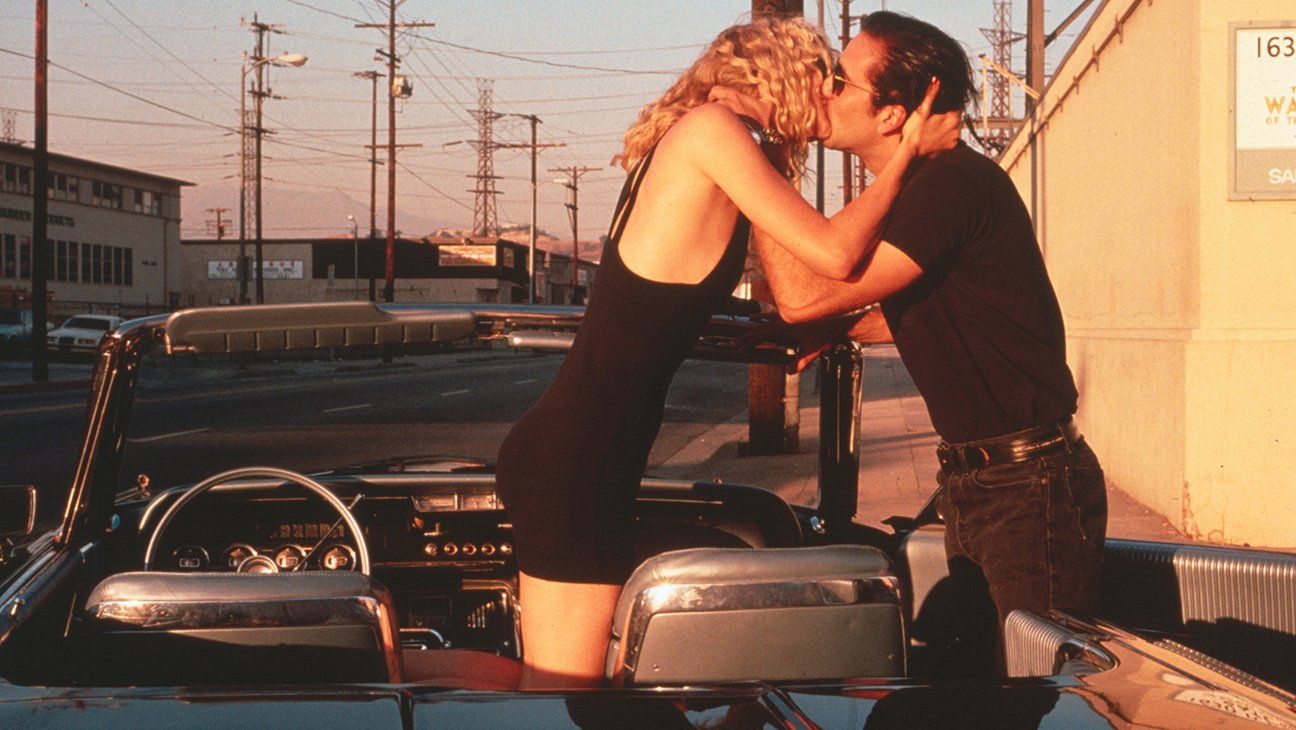
    Iceland-born, U.S.-based producer Sigurjón “Joni” Sighvatsson has the kind of résumé that speaks for itself: David Lynch‘s Cannes Palme d’Or winner Wild at Heart, Julian Schnabel’s Basquiat, Kathryn Bigelow’s The Weight of Water, plus music videos and series including Twin Peaks and Beverly Hills, 90210.

    This week, the Palomar Pictures principal — who co-founded Propaganda Films in 1986 — returns to the 79th edition of the Locarno Film Festival to receive the Raimondo Rezzonico Award in the Piazza Grande on Thursday evening. The honor is named for the man who served as Locarno’s president from 1981 to 1999.

    Ahead of his trip to Switzerland, Sighvatsson spoke with THR about his excitement over returning to Locarno, his read on the festival circuit at large, and why he believes his work doesn’t belong in the “closed system” he says Netflix has built.

    Sighvatsson has visited Locarno before and remains a fan, largely thanks to its more adventurous, less predictable curation. “The festival is not just focused on what is in the competition,” he says. “Everything has changed. When Wild at Heart won in Cannes [in 1990], that was a big platform for that kind of unusual film to get. Now, we don’t know really what Cannes is anymore. What are they catering to? What is their vision? It is a very different festival from Locarno.”

    Unlike the bigger festivals, he adds, Locarno “never had this incredible focus on just getting stars, or just a competition, or just this.” That flexibility, he argues, will serve it well: “I love Locarno. I think some of the other festivals have become prisoners of their own success, and with the business changing, they have changed. I think festivals like Locarno, which are smaller and have a slightly lower profile and different approaches to film, will do better.”

    AI’s Impact On the Industry

    With AI a hot topic of debate in Hollywood and beyond, what is the producer’s reading on the technology’s likely impact on the film industry? “I think AI actually will help in many ways, but I don’t really see AI movies changing things because in the end, movies are about people and they’re about stories,” Sighvatsson tells THR. “I see it working for some projects. For the new The Odyssey, Christopher Nolan was not using AI for a reason — because he doesn’t want to make people feel it’s AI. I heard the new [live-action] Moana, the Disney film, feels just like an AI film, even though it’s using real characters [and CGI].”

    His bottom line: “I think it’s a double-edged sword, but AI will help. It’s like any very powerful tool, for example, the atom bomb. It’s all about how you use it, or if you use it at all. And I think a lot of filmmakers will opt not to use AI because they don’t need to. But others will use it. Will it change the course of cinema? No. I think it will change television more.”

    On Netflix and the “Closed System”

    Sighvatsson isn’t optimistic about television’s current state, largely because of streaming — and he draws a sharp line between films and what Netflix produces. “There are things that Netflix calls films. I don’t call them films,” he says. “I call them Netflix films. That’s very different than a film.”

    He elaborates: “Most of the things that Netflix does don’t have a very deep meaning, and they are not supposed to. You still need a lot of skill to make those big Netflix films, but they don’t really expect them to have a long life, and they are shown only within a closed system. It’s the Netflix system, so Netflix is just making something for a closed system, whereas everything that I’ve made, even music videos, is for an open system that anybody can access.”

    The distinction, he says, comes down to distribution: “The difference is that Netflix doesn’t even sell any of its product to anybody else but Netflix. So they’ve created the language that fits this box that is called the Netflix box, and they’re very successful, including with some of the animation and some of the children’s content. And even though Netflix is changing, it doesn’t change the fact that a Netflix film fits only in a Netflix box. It wouldn’t fit in an Imax theater, for example. … And when you’re producing for such masses, you automatically demand less complexity.”

    Given all that, don’t expect a Sighvatsson-produced Netflix title anytime soon. “I don’t think so,” he says. “I don’t think it’s my thing. I don’t think I’m in the Netflix universe.”

    Still, he gives the streamer credit where it’s due. “I think it’s great that other people [create content for] it. That’s fantastic, and Netflix has changed the business,” he says. “What I think Netflix has done well is give people in other countries an opportunity to make material in different languages, in different cultures. That, I think, is the greatest contribution Netflix has made.”

  • Soft Ad Market, World Cup Competition Hit Germany’s ProSiebenSat.1 Results

    Soft Ad Market, World Cup Competition Hit Germany’s ProSiebenSat.1 Results

    ProSiebenSat.1 posted lower first-half revenue as Germany‘s weak television advertising market and competition from broadcasters carrying the World Cup weighed on its entertainment business.

    The German commercial broadcaster, which is controlled by the Berlusconi family’s MediaForEurope (MFE) group, reported first-half revenue of €1.54 billion ($1.77 billion) on Thursday, down 9 per cent from a year earlier. On an organic basis, excluding portfolio changes and currency effects, revenue declined 2 per cent. Second-quarter revenue fell 8.5 per cent to €768 million ($881 million).

    The company said advertising revenue continued to be affected by a slowdown in the German TV market, the ongoing shift of ad spending to digital platforms and competition from broadcasters airing major sporting events, particularly the World Cup. Entertainment revenue fell 6 per cent in the first half to €952 million ($1.09 billion), with linear TV advertising down 9 per cent.

    Digital advertising remained a bright spot. Digital & Smart advertising revenue rose 6 per cent, driven by ProSieben’s streaming service Joyn, content distribution on third-party platforms and the group’s audio business. Advertising-supported streaming revenue at Joyn increased 8 per cent in the first half, while subscription revenue climbed 20 per cent.

    Despite the revenue decline, earnings improved sharply as the company cut costs and continued a broader restructuring. First-half EBITDA rose by €152 million ($174 million) to €124 million ($142 million), compared with a loss of €28 million ($32 million) a year earlier. Programming expenses fell to €404 million ($464 million) from €496 million ($570 million), while personnel costs declined to €299 million ($343 million) from €416 million ($478 million), reflecting restructuring measures, asset sales and lower content costs.

    ProSiebenSat.1 has also continued to slim down its portfolio. Since the start of the year, the company has sold six non-core businesses, including Studio71 U.S., as it focuses on its German-speaking entertainment operations.

    The company is also betting big on Joyn. Last month the streaming service announced a deal with ZDF to add on-demand programming from the German public broadcaster. ProSieben is also developing a shared streaming technology platform with MediaForEurope, for use across the group’s European markets. MFE pan-European network of commercial broadcasters also includes Italy’s Mediaset and Telecinco in Spain.

    ProSiebenSat.1 reaffirmed its full-year outlook, maintaining its forecast for slight organic revenue growth and a significant increase in EBITDA, while cautioning that visibility in Germany’s advertising market remains limited.

  • Regal Cinemas CEO Is Now Team Ellison, Too

    Regal Cinemas CEO Is Now Team Ellison, Too

    What do the CEOs of AMC Theatres and Regal Cinemas have in common? Both have been enticed to back David Ellison’s $111 billion quest to merge Paramount and Warner Bros. Discovery.

    Regal chief Eduardo Acuna was the latest to go public with his blessing on Wednesday. The endorsement from the leader of a major exhibitor is notable given that the lawsuit filed by 12 states against Paramount to halt the deal is being waged as an antitrust battle on the turf of the fragile theatrical marketplace. If the theater owners themselves aren’t worried about Paramount’s undue influence on the landscape, well, then why should the states? At least, that may be the logic of Team Ellison.

    The states’ logic is quite different. In a lawsuit led by California attorney general Rob Bonta, their argument goes that the merged studios will have undue influence over the supply of product to movie theaters. “Movie theatres rely on competition between Paramount and Warner Bros,” stated the complaint filed July 13. “Through this competition, theatres incentivize creativity and quality, and they secure competitive prices and terms for themselves and for audiences.”

    The states argue that a merged WarnerMount will control 30 percent of movies that have earned $100 million-plus at the box office and have been bowed in 3,000 theaters for wide release. The case against Paramount is also backed by Cinema United, the lobbying group that represents movie theater owners and chains, including Regal and AMC.

    “The ramifications of further movie studio consolidation will be significant and lasting, not just in Hollywood, but on Main Streets across this nation where local movie theaters serve as cultural and financial cornerstones for communities of all sizes,” Cinema United’s top exec, Michael O’Leary, said when the states filed suit in July.

    Paramount CEO Ellison has pledged to ramp up production of features and release a combined 30 movies a year theatrically with 45-day theatrical windows. Regal CEO Acuna made reference to these promises in his statement (in full below), noting, “I believe David is sincere in making these commitments.”

    Regal, the Knoxville-based division of exhibitor Cineworld that emerged from bankruptcy in 2023, is the second-largest circuit in the U.S. behind AMC Theatres. Adam Aron, who has led AMC for the last decade, was a relatively early backer of the Paramount-Warner Bros., making comments supporting Ellison’s bid at CinemaCon early this year.

    Sean Gamble, the CEO of Cinemark, the third largest chain stateside, hasn’t been as explicit as Aron or Acuna but appeared to express support for Paramount and Warners over a suitor that would be less theatrically-minded, like Netflix.

    Paramount’s legal team has argued that the high-stakes court battle should take place in November of this year but a judge disagreed and set the trial for March 2027. That sets up a long waiting game, which may be why the battle in the court of public opinion is only heating up. In recent days superagent Ari Emanuel, Aron and Ellison himself have all penned op-eds explaining the Paramount side of the logic for a merger. On the opposing side, another star-studded letter led by Benedict Cumberbatch, Alan Cumming and Benedict Wong argued against the merits of the deal.

    Regal CEO Acuna’s full statement is below:

    This year has been an important one for our industry. Attendance is up, younger audiences are coming out in numbers we haven’t seen in years, and the upcoming release schedule looks just as strong. While there is real momentum, we need a thriving studio system to ensure that the industry has a platform from which to grow.

    This is why, after much consideration, we believe it’s time for Paramount Skydance’s acquisition of Warner Bros. Discovery to move forward. I’ve spoken directly with Skydance Paramount CEO David Ellison and his team about what a combined company would mean for exhibition, and he has made some specific commitments: at least 30 theatrical films a year, a protected theatrical window with 45 days for TVOD and 90 days for SVOD for a minimum of three years, and a $30 billion annual investment in media content. I believe David is sincere in making these commitments, and he has offered to execute a consent decree to the State AGs to that effect. These are tangible and important commitments that will benefit the industry and which can be measured. 

    A long fight in court that extends into spring or summer doesn’t put more films in theaters, and is not beneficial to studios, filmmakers, the guests who go to the movies, or theater businesses like Regal and the people who work for them. It just creates more uncertainty and distraction that could be damaging to our industry as we build on our current success. It is time for all parties to sit down and work out how to formalize these commitments. With these measures in place, we believe that Paramount can be an effective steward of these studios that mean an enormous amount to people who love movies.

  • Regal Cinemas CEO Eduardo Acuna Backs Paramount-Warner Bros. Merger, Says Antitrust Trial ‘Creates More Uncertainty and Distraction’

    Regal Cinemas CEO Eduardo Acuna Backs Paramount-Warner Bros. Merger, Says Antitrust Trial ‘Creates More Uncertainty and Distraction’

    Regal Cinemas CEO Eduardo Acuna released a statement on Wednesday evening in support of the looming Paramount-Warner Bros. merger.

    “This year has been an important one for our industry. Attendance is up, younger audiences are coming out in numbers we haven’t seen in years, and the upcoming release schedule looks just as strong,” Acuna wrote. “While there is real momentum, we need a thriving studio system to ensure that the industry has a platform from which to grow.”

    “This is why, after much consideration, we believe it’s time for Paramount Skydance’s acquisition of Warner Bros. Discovery to move forward,” Acuna continued. The CEO explained that he spoke to Paramount-Skydance CEO David Ellison, who has made “some specific commitments” to ensure the theater business continues to thrive. Those commitments include, “At least 30 theatrical films a year, a protected theatrical window with 45 days for TVOD and 90 days for SVOD for a minimum of three years, and a $30 billion annual investment in media content.”

    “A long fight in court that extends into spring or summer doesn’t put more films in theaters, and is not beneficial to studios, filmmakers, the guests who go to the movies, or theater businesses like Regal and the people who work for them,” Acuna added. “It just creates more uncertainty and distraction that could be damaging to our industry as we build on our current success.”

    Regal’s backing comes a week after AMC Theatres CEO Adam Aron published an op-ed in Variety explaining his own reasons for supporting the deal. With the addition of Regal, Ellison now has the country’s two largest theater chains on his side, which will prove to be key allies as he prepares for a March 2027 antitrust showdown against California attorney general Rob Bonta and his coalition of 11 other state AGs.

    The development is a blow to the states’ lawsuit, which was filed on July 13. It alleges that the $111 billion merger violates the Clayton Act by diminishing competition in three key markets: wide-release theatrical distribution, “top-grossing” theatrical distribution and basic cable licensing. The suit also claims the wallets of theater owners and consumers will be hurt if Paramount and Warner Bros. are allowed to merge. However, with AMC and Regal now in the Ellison camp, it will most likely be extremely difficult for Bonta and his team to prove that the exhibition will suffer in a post-merger industry.

    Acuna and Aron also appear to be at odds with Cinema United, the exhibition industry trade group, and its head, Michael O’Leary, who have come out swinging against the sale of Warner Bros. to Paramount. Last week, O’Leary reaffirmed the group’s opposition in a letter to its members, writing, “this transaction will result in fewer movies, higher costs for you and your patrons, and ultimately, fewer theatres. The promises of support for theatrical being made in the media are high-level and unenforceable and as such do nothing to alleviate the harms.”

    On Tuesday, Judge Araceli Martinez-Olguin issued a ruling that the antitrust trial will last 12 days, running from March 2, 2027, to March 19. In a July 31 motion, Paramount requested the judge schedule the trial in November, while the states and the Writers Guild of America, who are also suing to stop the merger, requested the trial take place in March. Paramount wants this deal done as soon as possible, considering that it has to pay a “ticking fee” to Warner Bros. Discovery of $7 million for every day past Oct. 1 that the deal remains in limbo.

    Ellison published an op-ed in the New York Times on Tuesday, in which he wrote that the real reason the state AGs want these deals blocked is that he will control CNN if he’s allowed to scoop up Warner Bros.

    “I believe this fight is not really about market share,” Ellison wrote in the essay. “I believe a plainer worry sits beneath the briefs and the news releases: the news. The issue is whether I can be trusted as a steward of Warner’s CNN.” Ellison, reasserting his promise of an independent and fair CNN, added, “When it comes to our news operations, I do not aspire to lead these companies to bend their newsrooms to my views. I believe that news should be based on facts and truth.”

    Deadline was the first to report Acuna’s statement backing the merger.

  • ‘The Shards’ Star Igby Rigney on Wooing Ryan Murphy, Never Meeting Bret Easton Ellis and Not Worrying About Sex Scenes: ‘It’s Like Doing a Dance Under a Microscope’

    ‘The Shards’ Star Igby Rigney on Wooing Ryan Murphy, Never Meeting Bret Easton Ellis and Not Worrying About Sex Scenes: ‘It’s Like Doing a Dance Under a Microscope’

    Igby Rigney is exhausted. 

    It’s a day before “The Shards” launches, and he’s just gotten back from Berlin, the final stop of a global press tour that also took him to New York and London. When the series debuts on FX on Aug. 5, he’ll be celebrating at the official launch party at a roller rink in Los Angeles. 

    Right now, during this brief moment of calm, he’s home in L.A. and resting with his cat, Plusha, who meows throughout our Zoom interview. “I feel like a Bond villain,” he says, petting the animal in his lap.

    Rigney plays Bret in “The Shards,” Ryan Murphy’s adaptation of Bret Easton Ellis’ 2023 autofiction opus that follows the author in his high school years. Bret navigates teenage social politics, the drug-fueled excesses of 1980s Los Angeles and his closeted homosexuality, all while a serial killer stalks the Valley and picks off his classmates in an increasingly gruesome fashion.

    The series marks the first time the 26-year-old actor headlines a major project. “They asked if I wanted to see the reviews when they come in. I guess they’ll put them in a packet,” Rigney says. “I was like, ‘Oh man, do I? I don’t know.’ I think I said, ‘Yes, I’ll take the packet, but I can’t promise to read all of them.’”

    Ryan Murphy said at the New York premiere that about 500 actors auditioned for “The Shards.” What was your audition process like?

    Yeah, I got the sides in my inbox, and I was super excited because they asked me to come in person to a studio in L.A. for the initial read. That’s very special, because so many times you don’t even get into the room with people until chemistry reads. I was over the moon to be doing it the old-fashioned way — getting to go in, meet the casting director and build a tape together with someone who knows exactly what they’re looking for.

    We had a ton of fun in the room. Ryan saw that tape, and asked me to come to New York. That’s where I met [future co-stars] Graham [Campbell] and Hayes [Warner] at that initial callback with Ryan. I came in, and Ryan asked, “Have you read the book?” I was like, “No… I haven’t.” I think I gave a reasonable answer: I was so enamored by the sides he’d written, and I knew this was ultimately going to be an adaptation, so I wanted to focus on the material at hand for the audition. He said, “Great, that was awesome. I’d love to see you again, but go read the book. You must read the book before I see you next.”

    So I did. I actually listened to the audiobook, which is read by Bret. Then I came back in and did a chem read with Graham and a chem read with Homer [Gere]. Ryan encouraged us to play. He approached it much more like an acting class or an acting exercise. It didn’t feel like a typical audition or a judgmental process. It wasn’t, “Are you good enough to play this part?” It was more, “Let’s play around, figure this out, and see how all of this feels.” Luckily, it all went well.

    Your narration is a big part of the show. How did you craft the character’s voice, and did you base it on Bret’s reading of the audiobook?

    I wanted to use it as a reference, because it’s so interesting how people speak and what they choose to emphasize — where you can hear excitement and patterns like that. I found an interview with Bret in his early 20s, which was the closest I could find to what he would have sounded like in high school. I listened to that a bunch, and I worked with Ryan to make sure it wasn’t distracting, and that it was all in service of telling the story.

    Did you meet with Bret at any point? Has he been involved in your crafting of the character?

    No. I mean, he’s been involved with the crafting of the character, but he’s been working with Ryan primarily. I’ve never gotten to meet him.

    Would it have been helpful to meet Bret, do you think? Or was it beneficial to have that distance?

    I don’t know, just because I haven’t had that interaction. Just being able to focus on the scripts and lean on Ryan and what he was hoping to bring to life has maybe led to more clarity and was less overwhelming for me. I didn’t have access to Bret and I don’t have access to whatever information I could have potentially learned from that, so I could just let that piece go and really focus on what Ryan was giving us on the day.

    It’s interesting, because your part is both a real person and a fictional character.

    That’s what’s so interesting about the book: So much of it is told with the phrase “I remember.” I remember I was driving on the Pacific Coast Highway. It’s almost like a motif in the text. I remember this, and I remember that. It’s all in retrospect, which is interesting to play. There’s a potential unreliable narrator element to it. Naturally, he is remembering a time that was very long ago, and we’re bringing that time period to life in the present.

    What was it like to film on location in L.A.? Sadly, that’s a rare thing these days.

    It was so cool. It was insane to be listening to the book, driving the streets that he’s talking about — also commuting in L.A. for me was a first. I know the routes through the hills now way more intimately than I ever thought I would. It certainly made me feel like I finally do live here now. I can confidently navigate the city without a map — not that that’s ever a good idea, because you never know where traffic is going to show up. But L.A. is almost a character in the book, and I think the show is such a beautiful visual love letter to the city.

    There’s even a supposed secret shortcut to the Valley…

    It exists, I think.

    Say more.

    If Terry Schaffer has access to it, then it must be a real thing. No, I love the L.A.-specific Easter eggs, and the shot of Cielo Drive, and the references to the history of the city. There is so much myth that surrounds Los Angeles, and that’s what makes it feel so alive to be here — both in reality and in the show. It’s an almost mythical place. There’s an unreliable history about Los Angeles. Will we ever know if a lot of those tropes and references are true?

    Speaking of unreliability, so much of the book takes place in Bret’s head, and it’s unclear whether he is inventing certain things or actually seeing them. Plus, as you said, he’s recalling these events from decades later. How did you convey that unreliable factor on-screen, and how did you think about that while playing the part?

    The way we bring that unreliability to life on screen is in the interactions between Bret and Robert. Some of those interactions happen only between them, with no witnesses. When they’re described to the group of friends by each character [after the fact], the descriptions are always different. We’re not sure who is lying and who is being truthful.

    The story requires a psychosexual relationship between Bret and Robert. How did you create that chemistry with Homer Gere?

    That was something Ryan helped us with in the chemistry read. He encouraged us to play with the dynamics and find the buttons we could push on each other. What created a physical response, and how could I surprise Homer and try to throw him off in a scene? We played this interesting game of tennis. But also, Homer and I love each other so much, and we’ve spent so much time together. The chemistry is real, because we’re trying to push each other’s buttons, but there is this underlying smile of, “Man, you’re really good at this, and I love doing this with you.” Those were some of my favorite scenes to film.

    What were the most challenging scenes to film?

    A big challenge actually came from how close we all got in real life. Bret has an interesting role in the friend group as this observer. He’s more connected to the world at large, and he’s starting to become isolated from his friends even though he cares deeply about them. He’s aware of all these happenings outside of their purview, and the more he tries to build a connection and reach out about the things that concern him, the less his friends want to entertain those conversations.

    The isolation was hard to play because we’d be in a scene together as a group of friends. As actors, we’re all friends and having the time of our lives, and I had to lock into this thing of “nobody is listening to me.” I’m remembering passages of voiceover in my head while everybody else is having a conversation around me, and I’m trying not to smile and join this group of lovely people that I adore spending time with.

    You could have gone Method, but then that would have been a more miserable experience.

    I know. That definitely would have made some things easier, but then I would have missed out on so much!

    Your character, at least in the book, has quite a bit of sex. Was that something you thought about when auditioning? Did it make you nervous?

    I definitely thought about it, but it wasn’t something I was very worried about. I wanted to make sure that I could pull it off in a way that was good for the screen and good for whatever aesthetic values Ryan had for the story. But I didn’t have any nerves about that. Obviously, we’re living in the time of intimacy coordinators, so all of it is carefully choreographed and specified and monitored. It’s like doing a dance under a microscope. It’s not a big cause for concern for me.

    There’s been a huge press blitz for “The Shards.” Over the past couple weeks you’ve been in New York, London, Berlin and Los Angeles. How does it feel to be No. 1 on the call sheet for a show like this?

    I’ve had so many people, as they would say in “Lord of the Rings,” share the load with me. Ryan did a very special thing in creating this super tight cast. Everybody made us feel welcome and protected on set, and we had a little summer camp experience. It’s more unnerving that this experience I shared with a group of people I love is now being presented to the world. That’s a crazy trip. But I didn’t feel a ton of weight because everybody around me was so amazing. With the press tour, sometimes I felt a little bad because we were having so much fun with each other that maybe some of the questions weren’t given a satisfactory answer.

    This interview has been edited and condensed.
  • Judge Dismisses Lawsuit From Paramount Streaming Subscribers Seeking to Block Warner Bros. Merger

    Judge Dismisses Lawsuit From Paramount Streaming Subscribers Seeking to Block Warner Bros. Merger

    A federal judge on Wednesday dismissed a lawsuit from a group of consumers looking to challenge the $111 billion merger between Paramount and Warner Bros.

    Judge Araceli Martínez-Olguín wrote that the plaintiffs — three current Paramount+ subscribers and two prospective subscribers — presented a lack of standing in their suit. She also ruled that the plaintiffs failed to establish “cognizable” economic fallout that would invoke antitrust regulation. However, she has allowed plaintiffs to revise their complaint and refile.

    “The Complaint contains a boilerplate assertion of competitive harms, such as ‘lower quality and variety’ and ‘decreased consumer choice,’ but it fails to allege any facts to plausibly show how those claimed harms have materialized or would materialize,” she wrote. She later added, “Plaintiffs’ standing theory amounts to little more than the assertion that they are consumers who watch television and go to the movies, and therefore a merger between Entertainment companies would injure them.”

    Judge Martínez-Olguín will also preside over the antitrust cases from a group of 12 state attorneys general and the Writers Guild of America, which both claim the Paramount-Warner Bros. merger will do irreparable harm to the entertainment industry. Those cases are set for trial on March 2, 2027.

    Paramount-Skydance CEO David Ellison recently published an op-ed in The New York Times, in which he wrote that the reason the state AGs want the merger blocked is not because of consolidation, but because he will control CNN if he’s allowed to scoop up Warner Bros. Ellison’s ties to President Donald Trump, a long time critic of CNN, and the recent troubles with “60 Minutes” have made some in Hollywood nervous about the future of the historic news network.

    “I believe this fight is not really about market share,” Ellison wrote. “I believe a plainer worry sits beneath the briefs and the news releases: the news. The issue is whether I can be trusted as a steward of Warner’s CNN.” Ellison, reasserting his goal of an independent CNN, added, “When it comes to our news operations, I do not aspire to lead these companies to bend their newsrooms to my views. I believe that news should be based on facts and truth.”