Category: Entertainment

  • ‘Decision to Leave’ Cinematographer Kim Ji-yong on Chasing Natural Light for Lee Chang-dong’s ‘Possible Love’: ‘This Is the One Where We Worried, Debated and Planned the Most’

    ‘Decision to Leave’ Cinematographer Kim Ji-yong on Chasing Natural Light for Lee Chang-dong’s ‘Possible Love’: ‘This Is the One Where We Worried, Debated and Planned the Most’

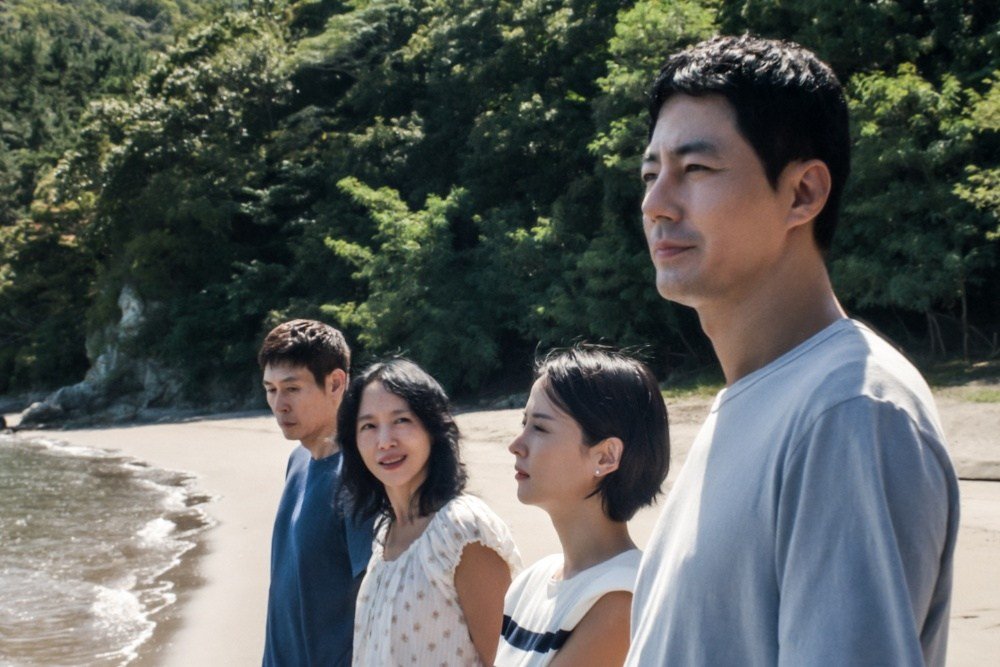
    When Kim Ji-yong read the script for “Possible Love,” its emotional climax, set in a still forest by the beach, had no wind in it. Korean summer storms on location changed that.

    The cinematographer behind “Decision to Leave” and “Squid Game” Season 2 asked director Lee Chang-dong to change the scene’s setup, a choice that ended with crew members shaking the trees with ropes.

    Delivering a masterclass titled “Cinematography of Possible Love: Quiet, Yet Deeper” at Netflix’s Creative Asia program during the Busan International Film Festival (BIFF), Kim detailed how he and Lee built the film’s look around natural light, and how much preparation that choice required.

    “Possible Love,” Lee’s first film in eight years, won the Silver Lion Grand Jury Prize at Venice last month and is South Korea’s submission for the international feature Oscar. It screens in BIFF’s Icons section ahead of its Netflix launch on Nov. 6. The drama follows two married couples from opposite ends of the economic ladder: Mi-ok (Jeon Do-yeon) and her laid-off husband Ho-seok (Sul Kyung-gu), and documentary filmmaker Ye-ji (Cho Yeo-jeong) and her husband Sang-woo (Zo In-sung).

    For all the film’s naturalism, almost nothing in it was left to chance, not even the weather on the day of the climax.

    The team prepared for every windy day announced by Lee’s favorite weather YouTube channel. “And every time, the director would say, ‘There is such a thing as a film ghost,’” Kim told the audience. “But that ghost only appears and helps once we have prepared thoroughly past 100% and put in all our effort.”

    The ghost never showed up. Instead, everyone on set except the five or six crew members needed to shoot went into the woods, tied ropes, hung onto them and shook the trees. “The film ghost did not appear. But our staff ghosts on set created this,” Kim said, calling it one of the most memorable moments of his more than 20 years in film.

    That tension between the natural and the constructed ran through the lighting too. “Ultimately, the balance was centered on supporting natural light, using film fixtures only to assist,” Kim said. In day scenes, film lights were only used where natural light fell short; at night, the team relied as much as possible on existing streetlights and lamps.

    That meant designing around the locations. Lee found the site of rich husband Sang-woo’s vacation home on a real estate YouTube channel, and the team built the house during two months of pre-production, down to the direction and size of every window. “To create that kind of result requires an enormous amount of calculation, planning and preparation,” Kim said. “Compared to any film I’ve worked on, this is the one where we worried, debated and planned the most to make it appear that way.”

    Kim’s credits also include effects-heavy productions such as “Ashfall.” “Being human, a certain style inevitably emerges,” he said. “For this project, I wanted to strip those away.”

    “Possible Love” was shot handheld with a single camera, except for two dialogue scenes. “If it’s too close, it feels exaggerated, and if it’s too far, it feels like we are cropping, cutting up the frame and peeping in,” Kim said of the camera’s distance from the characters.

    With Ye-ji’s documentary at the heart of the story, separating her footage from Lee’s film was another question. “Is making that distinction really necessary?” Kim said. “So we decided not to set it in stone.”

    “I wanted to blur that boundary,” he said of the shots from the documentary team’s cameras and his own, which become harder to tell apart as the film goes on. “The reason is hard to explain in words, but it was an intuitive sense that it felt right.”

    As for the forest, Kim hasn’t given up on the film ghost. “If I get another chance to work with the director in the future, I hope we can definitely meet it then,” he said.
  • Netflix Romance ‘Love Untangled’ Director Namkoong Sun on Netflix Freedom and the Funding and Distribution Gap in Korean Indie Film

    Netflix Romance ‘Love Untangled’ Director Namkoong Sun on Netflix Freedom and the Funding and Distribution Gap in Korean Indie Film

    Namkoong Sun, director of Netflix’s Korean romance “Love Untangled,” said her first commercial feature felt little different from her independent films once cameras rolled, apart from the scale. The freedom, she added, came with weight.

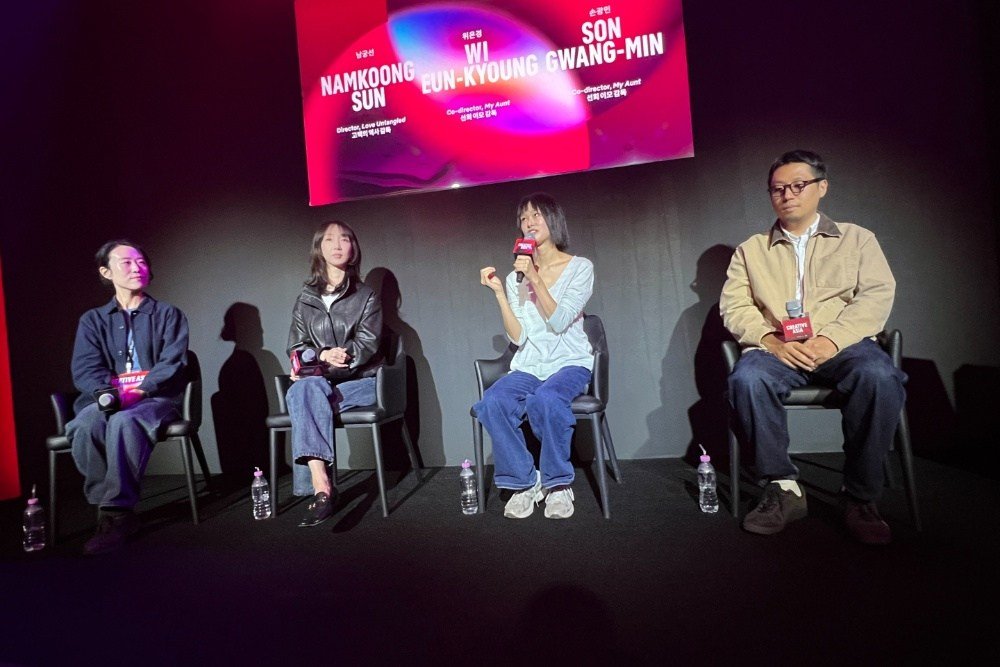
    Namkoong was speaking at “New Voices in Film,” an industry panel staged by the Busan International Film Festival and Netflix as part of Creative Asia, alongside Ryu Eun-jung and Song Kwang-min, the married co-directors of the short “My Aunt.”

    Namkoong’s first two features, “Ten Months” and “Time to Be Strong,” were independent titles released in theaters. She joined “Love Untangled” when the project and screenplay were already in place, coming on at the adaptation stage, and said the offer landed just as she wanted to find joy again after two films about thorny social problems. A little over a year passed between opening the production office and release.

    “Once we went into production, it was a system where we could focus only on the film,” Namkoong said. “There may be upsides and downsides to that. I didn’t want to imagine what would happen if I failed to take responsibility within that freedom. But because that freedom was there, there were definitely things I was able to bring to it.”

    Netflix staff sat in on meetings and worked inside the team throughout, she said, and the changes to the script were her own, made in service of what she saw as the film’s theme of happiness. The story is set in 1990s Busan, and with a modest budget for a period piece, the production recreated the Gwangan Bridge under construction to give the film a sense of place.

    Her message to younger directors was that a director always carries responsibility for the story, “but within a space where creative freedom is guaranteed, I think you have to take that responsibility really seriously.”

    Namkoong said she missed crying and laughing with audiences and cast in theaters, a ritual a streaming release doesn’t allow. “Once it was out on Netflix, people all over the world were watching it at the same time. On Twitter, Instagram, all kinds of social media, everyone flocked in and enjoyed it together, me included,” she said. “Small, sweet romance films don’t make up a big share of the Korean audience. But I was getting messages from people in Brazil and friends in Poland and Colombia saying the film was popular there.”

    The film reached No. 1 in many countries and stayed in the global top 10 for more than six weeks, she said, even though it was made in Korean and is “really just a Busan story, a very local story.”

    Her earlier releases had harder luck with timing. “Ten Months” premiered in the first year of the pandemic, with festivals shut and cinemas at half capacity. The press screening for “Time to Be Strong” took place on the day martial law was declared in Korea. “We did all the press, went home excited, and then that happened that night, so our news disappeared,” Namkoong said.

    “My Aunt” is a 24-minute short. It follows a dog groomer looking after an abandoned dog over the course of one day, when the niece she raised 10 years earlier turns up at her door. It won three prizes at this year’s Mise-en-scène Short Film Festival, where Namkoong served on the jury. It is streaming on Netflix in Korea until December as part of the platform’s showcase of the festival’s prizewinners.

    Ryu, who also plays the lead, drew on her own childhood, when she was raised by her fifth aunt, who later took in an abandoned dog. She had no plans to act in it but, having worked as an actor before, took the role herself and asked Song, her husband, to co-direct. Song handled directing on set, the pair shared storyboarding in pre-production, and Ryu led post-production. A previous collaboration had involved shouting matches over the phone, both recalled. This time, both said, speaking to each other without a filter built trust.

    Song said he had first felt torn about a Netflix release, given what cinemas offer in image texture and sound, but came to see it as a stroke of luck. On a film-rating app, his previous film drew responses from about 15 people. “My Aunt” has been logged by 7,000 to 8,000 viewers, with more than 1,000 comments.

    Namkoong, who was once a Mise-en-scène breakout herself, described the festival as a launchpad for the next generation of Korean directors. “These days, unlike in the past, anyone can upload their film to YouTube. You can screen it anywhere, really,” she said. “But what we do is pick out films and say, these are films that are more like real cinema, these are the films we’d like people to see, and put them on a list somewhere. When that came together with Netflix, the impact became huge.”

    Asked by an audience member to name the single biggest challenge facing Korean independent filmmakers, the three directors answered in turn.

    “The difficulty in the independent film world, then and now, is raising the budget. But more than that, the biggest challenge is not knowing in advance where a film will go after it’s made,” Namkoong said. “Even when a film is shown at a festival, you can’t tell whether it will get a release, because of what a release costs and various other things. We manage somehow to get it made, but there isn’t the infrastructure, like theatrical infrastructure, to show it.”

    Ryu said cost was her main worry with “My Aunt” too. “Independent film is film made independently of capital, so it has to be made with the individual creator’s own money,” she said, noting that platforms for indie film, and interest in it, remain limited. Song, who has always paid for his films himself, named capital as the biggest hurdle but said he had no other complaints. “Shooting films is so much fun. I loved it.”

    All three are now writing screenplays for their next projects. Namkoong said she hopes to make a film set in present-day Busan, drawn to the city’s two sides. “It’s a city and also the sea, a tourist spot and also a place where people live,” she said.

  • Magic: The Gathering Reveals New ‘Darkhold Destiny’ Marvel Set, ‘Avengers: Doomsday’ Theater-Only Card Giveaway

    Magic: The Gathering Reveals New ‘Darkhold Destiny’ Marvel Set, ‘Avengers: Doomsday’ Theater-Only Card Giveaway

    Magic: The Gathering has unveiled its next Marvel-themed set and announced a special collaboration with the upcoming theatrical release of “Avengers: Doomsday.”

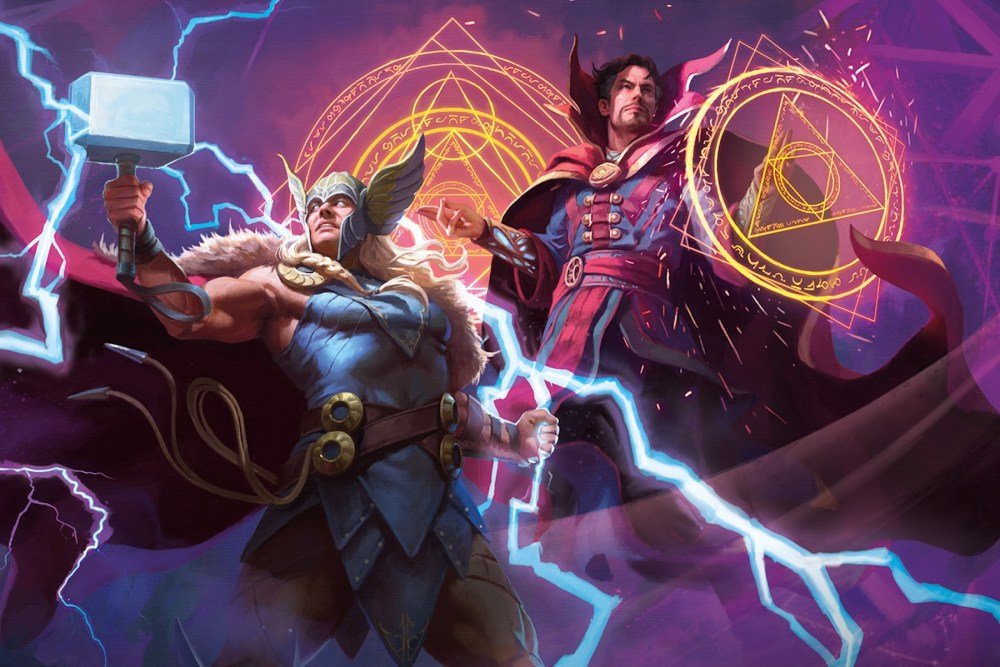
    Titled “Darkhold Destiny,” the set is focused on “the mystical, the mythical and the mighty” magical characters from the Marvel universe, including Doctor Strange, Thor, Hela and Dormammu. The collection, which marks the third “Universes Beyond” collaboration in Magic and Marvel’s multiyear deal, will include a brand-new storyline set in the Marvel Universe and an original character created by the team.

    The “Darkhold Destiny” Magic set will release April 7, 2027 and debut alongside a new Marvel comic book that showcases the story.

    “This is a new kind of Universes Beyond set,” reads the description from Hasbro’s Wizards of the Coast, the makers of Magic: The Gathering. “By taking the core elements players love about Magic: The Gathering, the team thoughtfully and strategically expressed those design intentions through the Marvel Universe. The narrative unfolds across nearly 30 dimensions and is centered around four main characters — Doctor Strange, Thor, Hela and Dormammu.”

    The news was revealed during Magic’s New York Comic Con panel Friday, where Wizards also announced that fans who see “Avengers: Doomsday” opening weekend in Infinity Vision at Regal Cinemas will receive an exclusive Magic: The Gathering card featuring Doctor Doom.

    Additionally, two more Marvel-Magic team-ups were promoted during the panel: a special release called “Doomsdrop” and a new Secret Lair kit titled “Marvel’s History of Heroes.”

    The Doomsdrop is inspired by the Marvel comics and is a multi-drop collection that will “predominantly feature Doctor Doom, although fans should expect other special guests from the Marvel Universe,” according to Wizards.

    “Secret Lair Countdown Kit: Marvel’s History of Heroes” is a collection of 30 cards “that bring the storied past of Marvel to life.” That limited-edition drop will launch Nov. 2 at 9 a.m. PT and is priced at $199.99.

    Per Wizards, “The release features illustrations crafted by over 30 artists celebrating iconic moments from Marvel’s comic history — from the transformation of the Fantastic Four in space via cosmic rays, to the first appearance of Iron Man with Ho Yinsen, to Jean Grey’s transformation into the fiery Phoenix.”

    See below for a first look at cards from the new “Darkhold Destiny” Magic: The Gathering set.

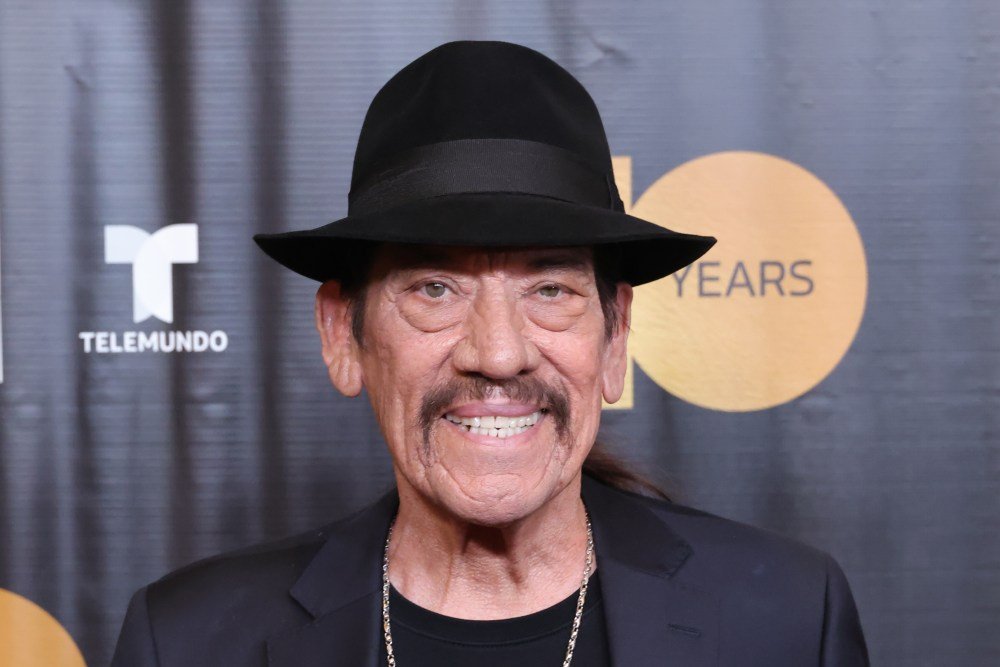
  • Danny Trejo Speaks Out About His Role in Daily Wire ‘Pawn Shop’ Movie: ‘I Am Not Pro-ICE. I Am Pro-Immigrant.’

    Danny Trejo Speaks Out About His Role in Daily Wire ‘Pawn Shop’ Movie: ‘I Am Not Pro-ICE. I Am Pro-Immigrant.’

    Danny Trejo has issued his first statement since facing backlash for starring in the pro-ICE Daily Wire movie “Pawn Shop” from Ben Shapiro‘s production company.

    “I am a proud Mexican who has always been and will always be a supporter of my community. I am also obviously pro-immigrant. I am not pro-ICE,” the “Spy Kids” actor told TMZ.

    “I know where I come from and I know our struggles,” he added, “I am an actor. My job is to tell a story.” TMZ reported that Trejo had told people on set that he was attracted to the role because it was a positive depiction of a Latino who is also a veteran.

    The production was shut down in Livingston, Montana last Saturday when locals complained about the production’s impact on the Livingston food bank and improper warnings about hazardous stunts. Production resumed Monday, with political commentator Shapiro slamming the shutdown as “content discrimination” and “a violation of the First Amendment.”

    One scene that was captured on video by TMZ appeared to recreate the fatal ICE shooting of Renee Good. Harvey Keitel co-stars as a fellow veteran hired by Trejo’s character to work at the pawn shop.

    The logline for the film reads: “When a Minneapolis riot forces a young ICE officer to complete a high-stakes arrest alone after his partner is killed, he is hunted through the streets by a furious mob intent on freeing the prisoner and punishing anyone who still upholds the law. Barricaded inside a neighborhood pawn shop with a hard-edged Hispanic veteran and the man’s progressive college-age grandson, ordinary men must choose between the rule of law and the chaos that wants to burn it all down in a modern siege of honor and defiance.”

    Trejo’s rep confirmed his statements but had no further comment.

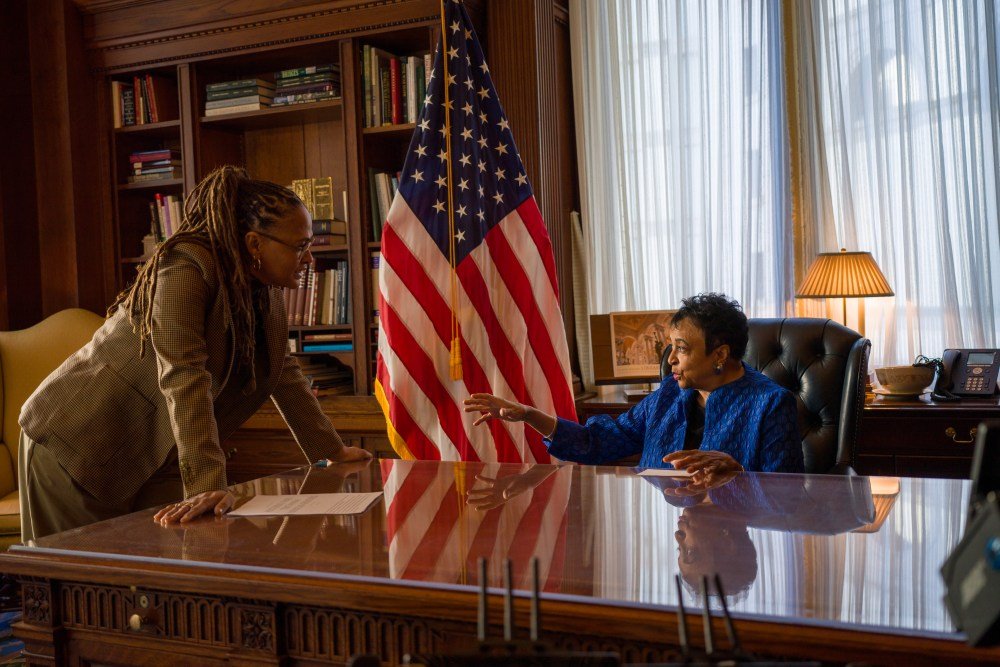
  • ‘14th’ Review: Ava DuVernay’s Powerful Sequel to ‘13th’ Turns a Constitutional Amendment into Living History

    ‘14th’ Review: Ava DuVernay’s Powerful Sequel to ‘13th’ Turns a Constitutional Amendment into Living History

    It’s rare to see a dramatic feature filmmaker move into the realm of documentary with the craftmanship and authority and insightful power summoned by Ava DuVernay. “13th,” the documentary she made back in 2016, was a revelation — it told the lacerating story of how the 13th Amendment to the Constitution, which abolished slavery, was a revolutionary act of law that, at the same time, opened the door to the way that numerous dimensions of slavery would be perpetuated in America under different names and tactics. The film was despairing and inspiring in equal measure; it cleansed you with the truth.

    Tonight, the New York Film Festival presented the premiere of “14th,” a documentary follow-up in which DuVernay sets her sights on the 14th Amendment, a Constitutional addendum, ratified in 1868, that was so monumental — it guarantees equal protection under the law, but also encompasses five intricate sections that deal with issues from insurrection to due process — that one observer calls it “a Constitution in and of itself,” and another hails it as “the everything bagel of democracy.”

    “14th,” I’m pleased to report, exerts the same kind of historical/topical force that “13th” did. DuVernay, while she works in an extremely accessible and mainstream way, has a singular gift for making the nuances of history come alive. “14th” is steeped in history, but it’s not a dry lecture. Instead, DuVernay cuts through the dusty complacency with which we tend to regard the Constitution (just hearing that word can make you feel like you’re back in school) and shows you that the Constitution is a living, breathing document, one that we fail to heed at our peril. Which is more or less what’s happening today.

    A potent movie about history almost has to surprise you. It needs to show you that what you think you know isn’t the half of it. “14th” kicks off with the cutting insight that the three amendments to the Constitution that were passed in the aftermath of the Civil War — the 13th, 14th, and 15th Amendments — represented nothing less than a restart of American life and society. Yet we don’t necessarily talk about them that way. Everyone knows who “the framers” of the Constitution were (Hamilton, Jefferson, Franklin), but “14th” argues that the period just after the cataclysm of the Civil War had its own framers, who were nearly as significant. Thaddeus Stevens, a member of the House of Representatives who was part of the Radical Republican faction of the 1860s, is a figure who, according to one of the film’s observers, “created the world we live in today.”

    With the abolition of slavery, four million people who were formerly enslaved were suddenly added to the fabric of American society. How would that work? DuVernay tell the story of Reconstruction through fresh eyes, and part of the power of her chronicle is that she doesn’t stint on the joy and liberation that were part of it. Black Americans, who were now citizens, formed communities and industries, they became newspaper editors and law enforcers, as well as politicians (there were 1,000 newly elected Black representatives). But it’s more than that. The point is made that Black people, for the first time in American life, could create a fully realized dream of who they wanted to be as individuals. But this would not work unless their citizenship was enshrined. That’s the first thing the 14th Amendment did. It guaranteed equal protection under the law, and it established birthright citizenship for all people born in the United States — a radical idea, one designed to apply to both the children of former enslaved people and the children of immigrants, because what that represented was a stepping up of the rejection of the European aristocratic system (i.e., citizenship by legacy) that had first been overthrown by the American Revolution. Birthright citizenship continued what the original Constitution started.

    In recent years, it’s become a stylistic tic in documentaries to keep the talking heads offscreen, letting their words simply flow on the soundtrack without interrupting the images. DuVernay is having none of that. She has assembled an extraordinary roster of scholars, politicians, and commentators, led by the Civil Rights attorney Sherrilyn Ifill, who becomes the film’s oratorical star. We see the speakers and absorb the play of their personalities, as they describe, with a big-picture yet highly personalized passion, how the law of the land actually played out in the creation of the second America that rose from the ashes of the Civil War. DuVernay makes history organic by capturing how the very texture of people’s lives was changed by the law. And she’ll go wherever she needs to illustrate that, even to comedy clips from George Carlin and the great Paul Mooney, who does a bit about the happiness of white people when they were slave owners that must be seen to be believed. (His bit isn’t really about the slave era; it’s about today.)

    As the film captures, the rise of the new Black citizenry during Reconstruction was rapid. For one thing, Black Americans did not waste time or spirit on vengeance. But the fall was every bit as rapid, as a culture of systematized violence and murder rose up in the South to try to stuff the genie of emancipation back in the bottle. The Ku Klux Klan was one half of it. The other half is captured in DuVernay’s fascinating portrait of the Lost Cause — the culture of defiance and regret and literal whitewashing that came to represent the Southern consciousness of what life had been before the Civil War. Slavery itself, the obscene horror and inhumanity of it, was washed out of the collective memory, and the Civil War was recast as “the war of Northern aggression.”

    What remained were totems and symbols that were somehow infused with nobility. The film traces the history of the Confederate flag as signifier, showing us how rock stars from Tom Petty to ZZ Top used it as a badass backdrop, and spotlighting how the flag was imprinted on the roof of the General Lee, the orange 1969 Dodge Charger driven by the heroes of “The Dukes of Hazzard.” This was one of the most popular TV shows of its time (it debuted in 1979, just as Jimmy Carter’s presidency was winding down), and it was basically using the semiotics of the Civil War — of those who went to war to maintain slavery — as a signifier of cool.

    This consciousness extended to the erecting of Confederate monuments in public squares, a movement so widespread — there were 2,629 such monuments built across the South — that it became larger than the sum of its parts. The message to Black citizens, according to one the film’s observers, was, “You matter so little that we’ll celebrate the people who wanted to enslave you.” The film looks at what the movement to remove those monuments, notably the statue of Robert E. Lee that stood in the capital of Virginia (the former capital of the Confederacy), was really about and what it entailed. It’s all part of how the Lost Cause myth became what the film calls “the greatest lie in American history.”

    But what does that have to do with the 14th Amendment? DuVernay is getting to that. The true subject of the movie is the power of law, and the erosion of law. The dehumanization of Black people represented by the persistence of Confederate iconography in mainstream culture became an underground signifier of the precariousness of the freedoms enshrined by the 14th Amendment. The rise of the Klan, who took their cross-burning imagery from “The Birth of a Nation” (1915), wasn’t simply a matter of domestic terrorism. It was an attempt “to overthrow biracial democracy.” Between the Civil War and World War II, there were 4,400 lynchings. So entrenched was the backlash against Reconstruction, which was institutionalized with Jim Crow (a system of “law” that was really a culture of fascist violence), that it wasn’t until Brown vs. Board of Education, in 1954, that the might of the 14th Amendment began to reassert itself.

    Documentaries tend to lessen in impact when they catch up to recent events, but as “14th” moves into the current era something remarkable happens: The film’s themes of racial oppression begin to mutate into themes of generalized oppression. The section of the 14th Amendment that deals with “insurrection” could not be more explicit. It states that anyone who has been responsible for fomenting an insurrection against the United States government cannot run for public office. This means that Donald Trump, after the unambiguous insurrection of Jan. 6, should not have been allowed to run for president in 2024. In that sense, he trampled on the Constitution simply by being re-elected, and the trashing of the 14th Amendment continued unabated. Birthright citizenship? Ignored. Due process? Out the window with ICE.

    The degree to which the United States has been in the ugly thick of a Constitutional crisis since the beginning of 2025 has been persistently understated by the media. But Ava DuVernay states it with meticulous boldness. I don’t agree with her attempt to posit DEI as a Constitutional issue on the level of the Voting Rights Act. (The film itself acknowledges that the DEI movement, whatever one’s opinion of it, represented nothing so much as a “cultural shift.”) But where she shows us the big picture is in capturing how the freedoms of the 14th Amendment have been under siege, and how this may be nothing less than the ritual growing pains — the built-in trauma — of American democracy. Advance, backlash, conflict spilling over into violence…and then re-advance. That’s the rhythm, the moral and spiritual roller-coaster of perfecting our imperfect union. “14th” makes you see that we’re in the heat of the backlash now. But it also lets you feel that a re-advance is waiting in the wings.

  • Marcello Hernández gets real about his Cuban-Dominican roots

    Marcello Hernández gets real about his Cuban-Dominican roots

    Marcello Hernández has never been shy about turning his Cuban and Dominican upbringing into comedy. But during a new appearance on Amy Poehler’s Good Hang podcast, the Saturday Night Live star went beyond the punchlines, opening up about the cultural differences inside his own family, his mother’s complicated relationship with Cuba, and why performing comedy in Spanish has become especially meaningful to him.

    The episode, released October 6, features Poehler sitting down with Hernández for a wide-ranging conversation about his Miami childhood, soccer, comedy, SNL, and his Latino identity. Fellow SNL cast member Sarah Sherman also appears in the episode.

    Being raised by a Cuban mother and Dominican father gave him a front-row seat to two Caribbean cultures that share plenty of similarities© GC Images
    Being raised by a Cuban mother and Dominican father gave him a front-row seat to two Caribbean cultures that share plenty of similarities

    For Hernández, being raised by a Cuban mother and Dominican father gave him a front-row seat to two Caribbean cultures that share plenty of similarities but have distinct personalities of their own.

    Marcello Hernández Explains Cuban and Dominican Cultural Differences

    Poehler brought up Hernández’s background directly, telling him she loves hearing him discuss the differences between his mother’s Cuban culture and his father’s Dominican culture.

    You may also like

    Continue reading

    Hernández started with something familiar. “The food is pretty much the same,” Hernández said before explaining that Cuban culture is more closely associated with salsa, while in the Dominican Republic, “they do merengue and bachata.”

    He then demonstrated how the rhythms of the two cultures extend beyond music and into language.

    Hernández explained that Cuban and Dominican Spanish can sound noticeably different, with Dominican Spanish coming across as “a little higher and faster.” He slipped between the accents during the conversation, giving Poehler a demonstration of the linguistic differences he grew up hearing.

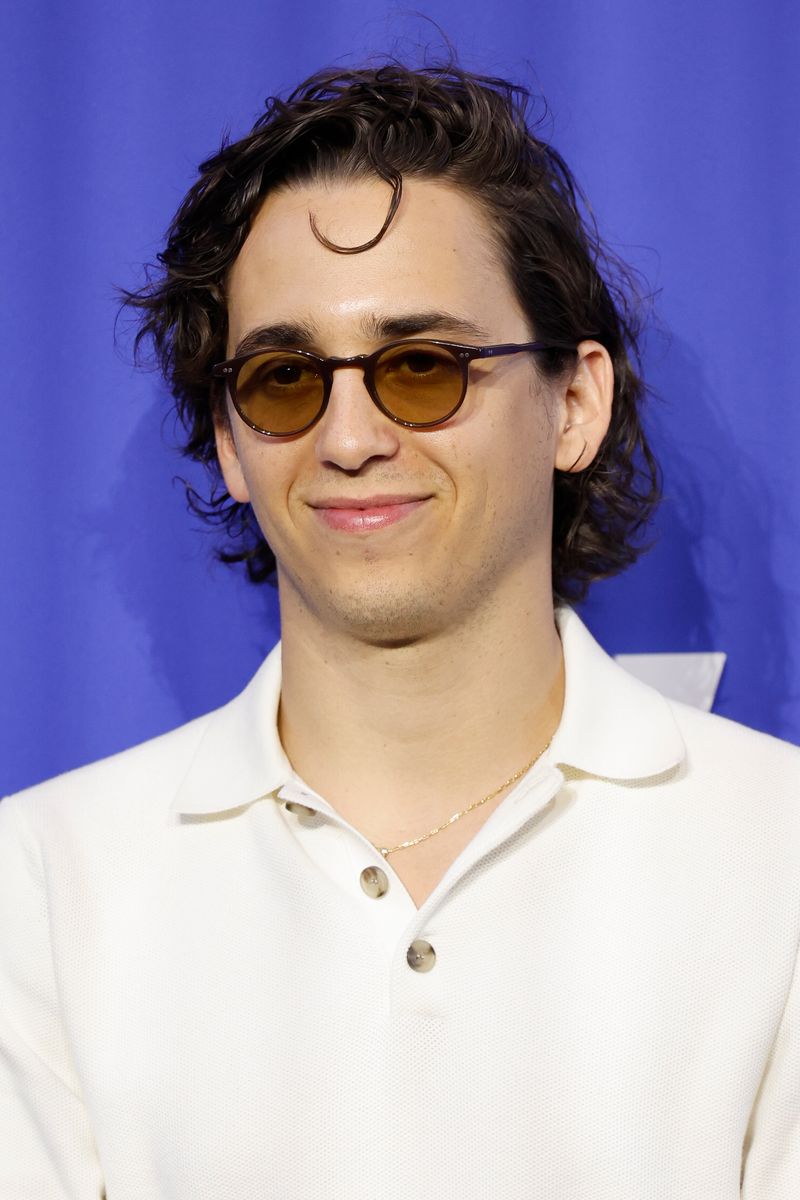
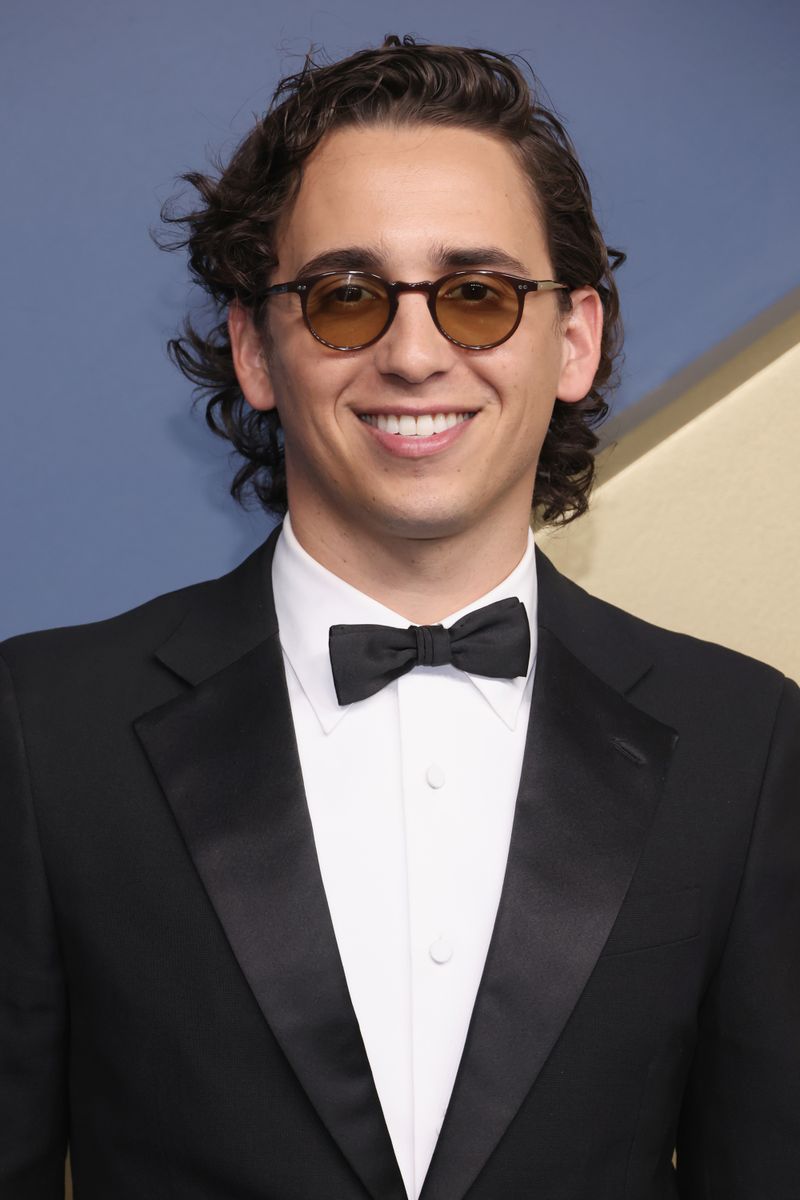
    Marcello Hernandez attends the 78th Primetime Emmy Awards at Peacock Theater on September 14, 2026© WireImage
    Marcello Hernandez attends the 78th Primetime Emmy Awards at Peacock Theater on September 14, 2026

    Marcello Hernández Opens Up About His Cuban Mom

    The conversation became more personal when Hernández discussed his mother’s experience leaving Cuba and eventually building a life in the United States. “My mom came from Cuba and it was difficult because they took her stuff,” Hernández told Poehler, referring to his mother’s experiences surrounding Cuba’s communist government.

    According to Hernández, those experiences shaped the way his mother viewed her identity after coming to America. “When she came to America, she really leaned in to being American,” he explained. At one point, he recalled, she even talked about changing the family’s last name to Smith.

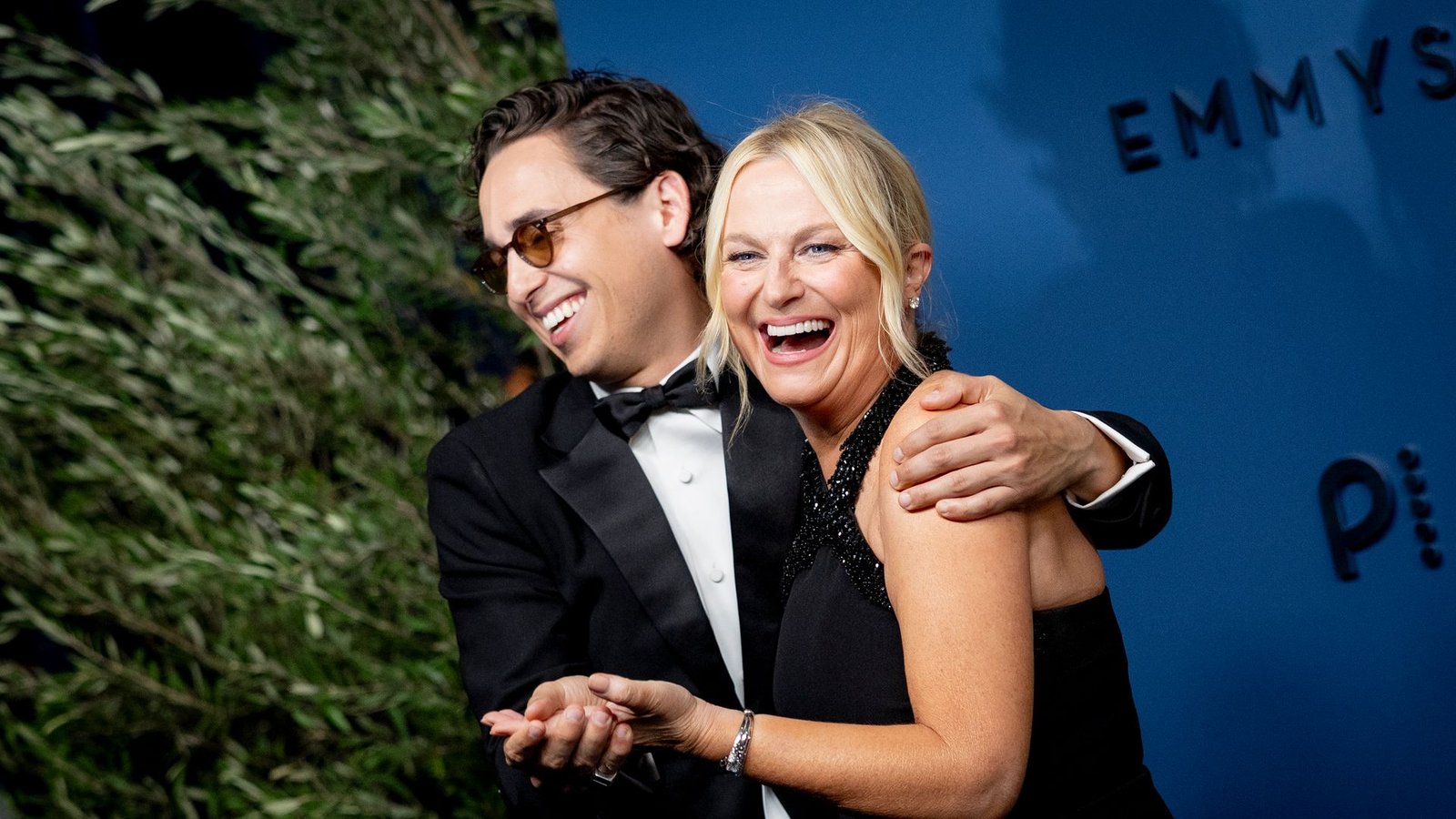
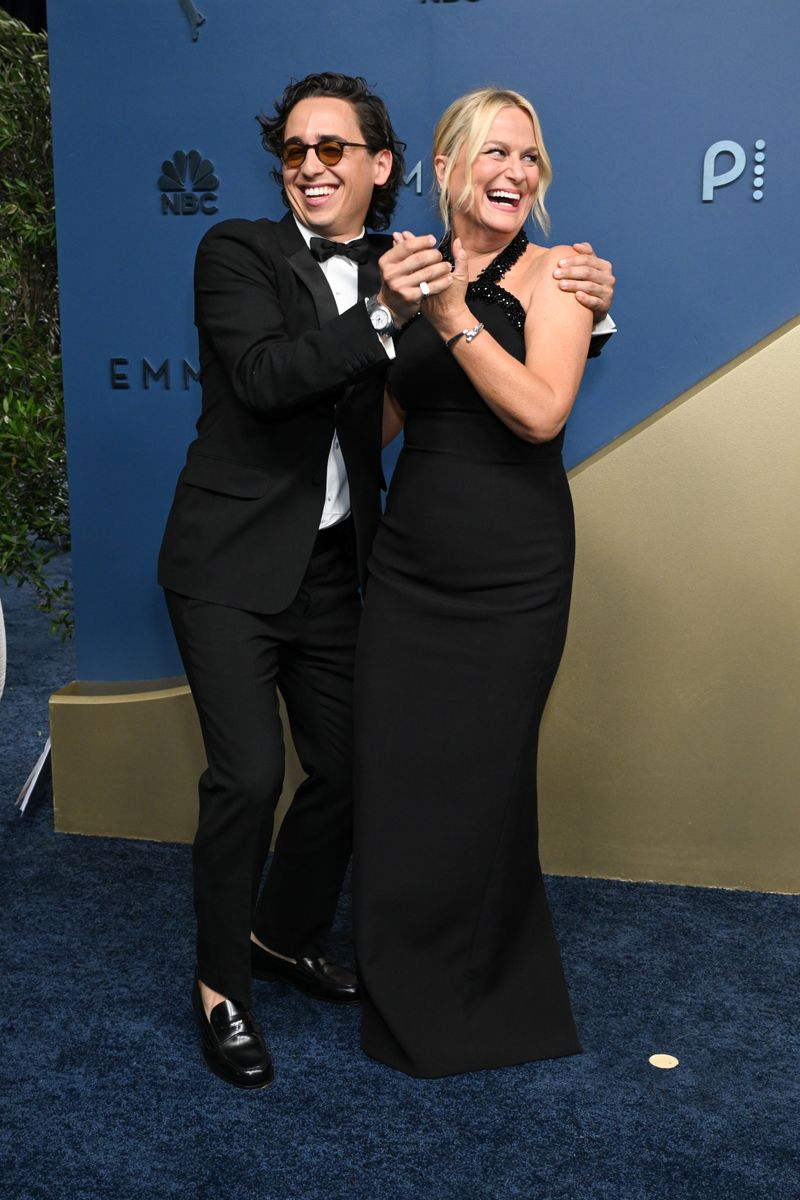
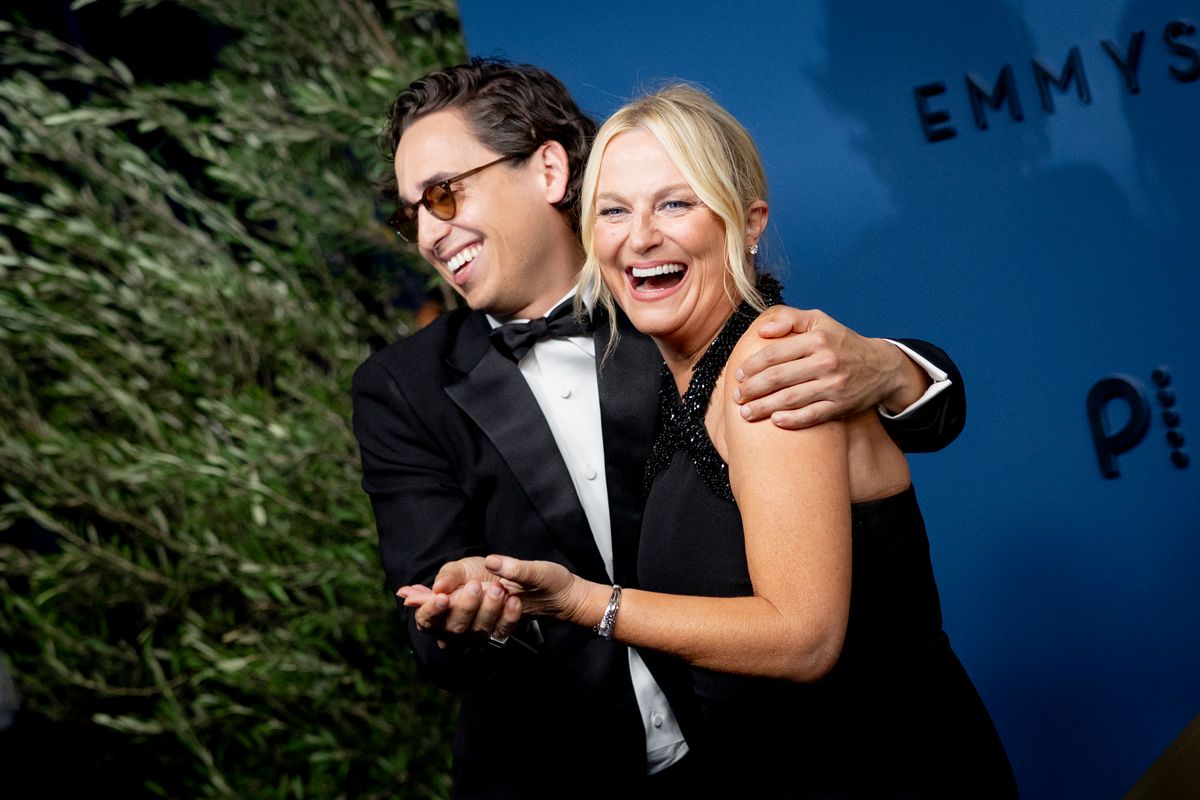
    Marcello Hernandez and Amy Poehler at the 78th Emmy Awards © Variety via Getty Images
    Marcello Hernandez and Amy Poehler at the 78th Emmy Awards

    Hernández said his mother wanted to distance herself from what she had experienced in Cuba and embrace her new country. “She was so, like, sad and embarrassed of what happened in Cuba that she wanted to be fully American,” he said.
    It is a revealing detail because Hernández’s career now puts his Latino heritage front and center. His comedy frequently embraces the accents, personalities, and experiences that shaped his childhood, even as his mother’s generation once felt pressure to assimilate.

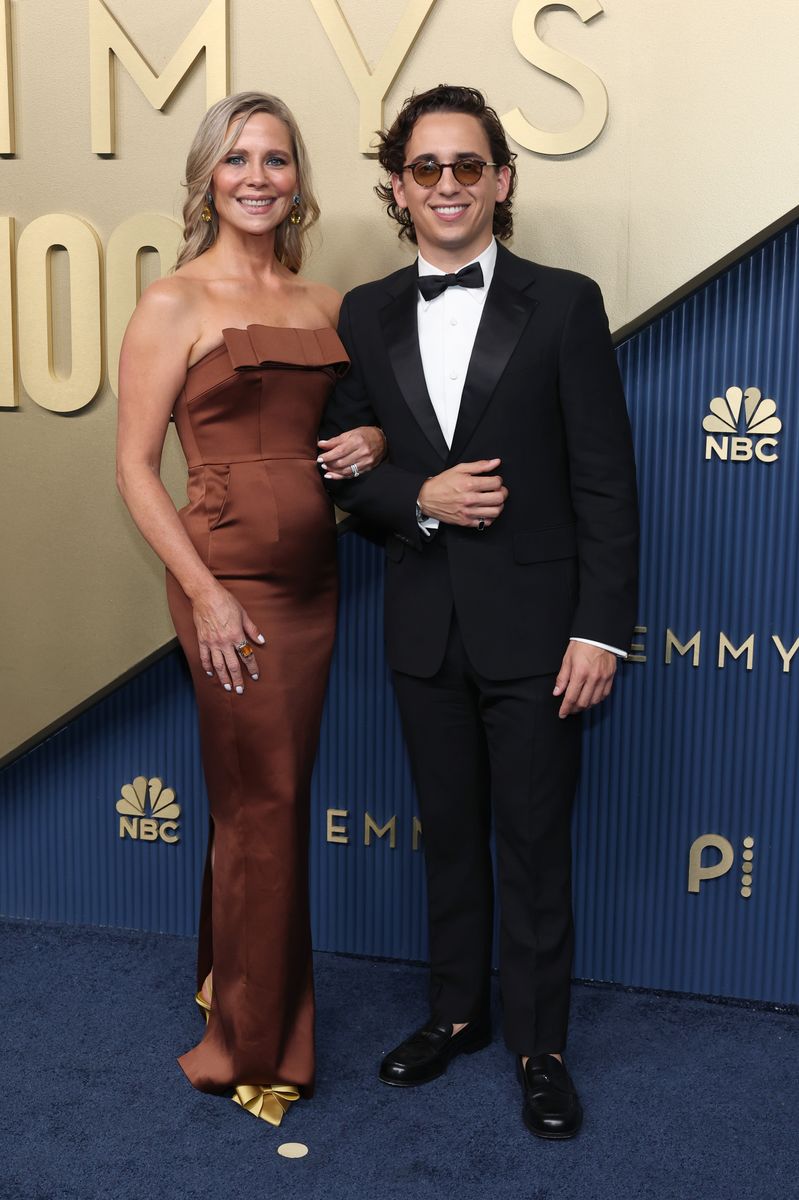
    She has joined him in the past on the red carpet© Getty
    She has joined him in the past on the red carpet

    How Marcello Hernández’s Family Inspired His Comedy

    Hernández’s Cuban-Dominican background has been part of his comedy since his earliest days on Saturday Night Live.

    During his first “Weekend Update” appearance in 2022, Hernández introduced himself with a joke that quickly established exactly where he came from: “My mom is from Cuba. And my dad is from the Dominican Republic. So obviously, they’re divorced.”

    SNL Adds New Latinx Cast Member© Mary Ellen Matthews/NBC
    Cuban and Dominican descent actor Marcello Hernandez joins the cast of ‘Saturday Night Live’

    Since then, family and Latino identity have remained recurring themes in his comedy. His protective Latina mother sketch with Pedro Pascal drew from a dynamic Hernández knew well, and his mother has repeatedly been cited as an influence on his work.

    Hernández has previously said that his Cuban and Dominican roots are inseparable from his material. “I definitely feel very connected to my Cuban and my Dominican roots,” he said in an earlier interview, adding that being from Miami is “a huge part of my comedy.”

    Marcello Hernández Loves Performing Comedy in Spanish

    One of the most interesting parts of Hernández’s Good Hang conversation came when Poehler asked whether he believes he is funnier in Spanish. His answer was immediate: “Yeah.”

    “I’m fast in Spanish,” Hernández explained, revealing that he has also been performing stand-up in Spanish and doing some touring in the language. “And it is so fun.”

    There may even be some disagreement over which version of Hernández is funniest. “My family, my girlfriend, my dad, they think that I’m better in Spanish,” he said.

    Hernández also spoke about the evolving world of Spanish-language stand-up, pointing to a new generation of comedians working in the space while acknowledging the performers who came before them.

    He described the contrast between traditional Spanish-language comedy, which could involve longer stories or political characters, and the fast, observational style familiar to American stand-up audiences. Bringing that punchier approach into an all-Spanish room can feel fresh, he suggested.

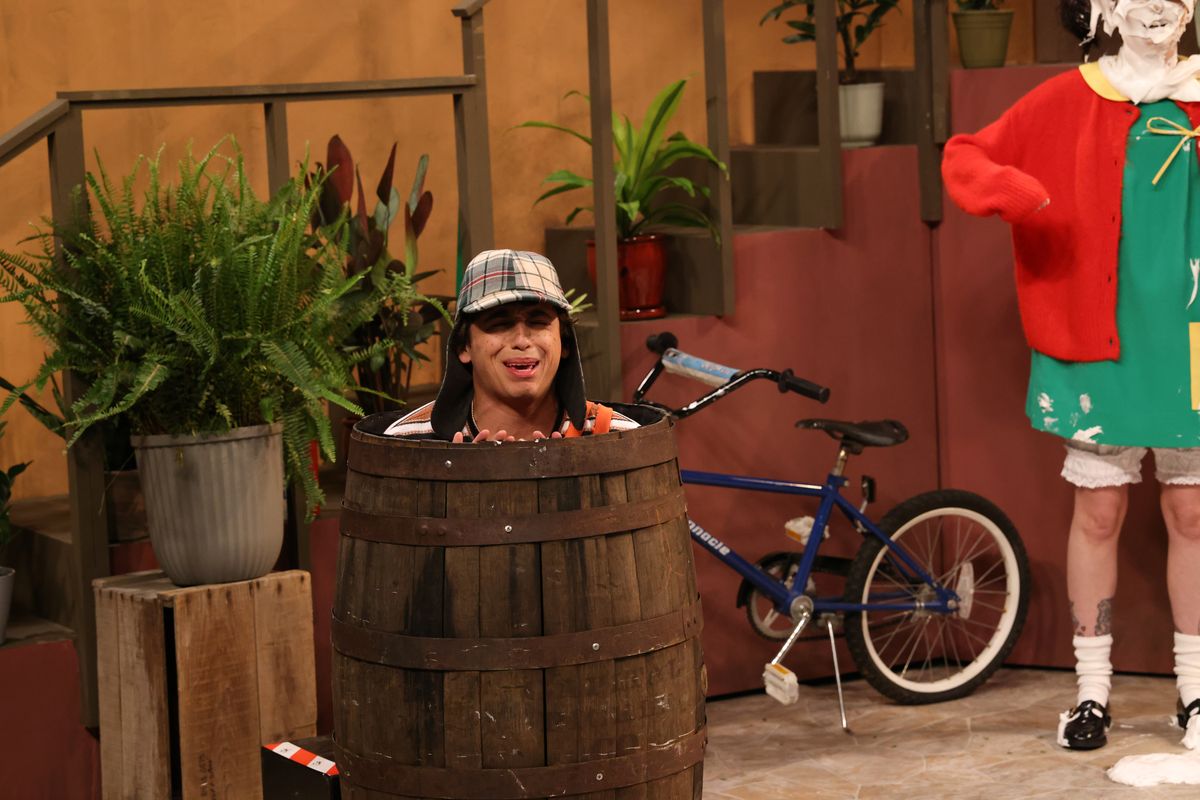
    Marcello Hernandez during the "El Chavo Del Ocho" sketch.© Will Heath/NBC via Getty Images
    Marcello Hernandez during the “El Chavo Del Ocho” sketch.

    For Hernández, however, performing in Spanish is about more than getting laughs. “When I’m, like, doing a Spanish set with all Hispanic people and we’re all laughing,” Hernández said, “it feels very powerful.”

    He specifically connected that feeling to the current climate for Latino communities, saying that gathering in a room where everyone can laugh and express themselves in Spanish carries extra weight.

    Amy Poehler and Marcello Hernández Talk Latino Representation

    Poehler also praised the current SNL cast for bringing different voices and experiences to the show, describing that variety as important to keeping the long-running sketch series reflective of its time.

    That prompted Hernández to sum up the moment with a simple declaration: “Latinos are having a moment.”

    Marcello Hernandez and Amy Poehler© WireImage
    Marcello Hernandez and Amy Poehler

    “We’re having a moment,” he added. “Let us have a moment.”

    The Miami-born comedian joined Saturday Night Live in 2022 and quickly became known for bringing bilingual humor and distinctly Latino characters into some of the show’s most memorable sketches. His comedy draws heavily from growing up with a Cuban mother, a Dominican father and the particular cultural mix of Miami.

  • Travis Barker reveals surgery after mysterious hospital photos with Kourtney Kardashian and Alabama Barker

    Travis Barker reveals surgery after mysterious hospital photos with Kourtney Kardashian and Alabama Barker

    Travis Barker had fans wondering what was going on after sharing photos from a hospital bed this week, offering no explanation. All fans knew was that he had two important women in his life by his side. 

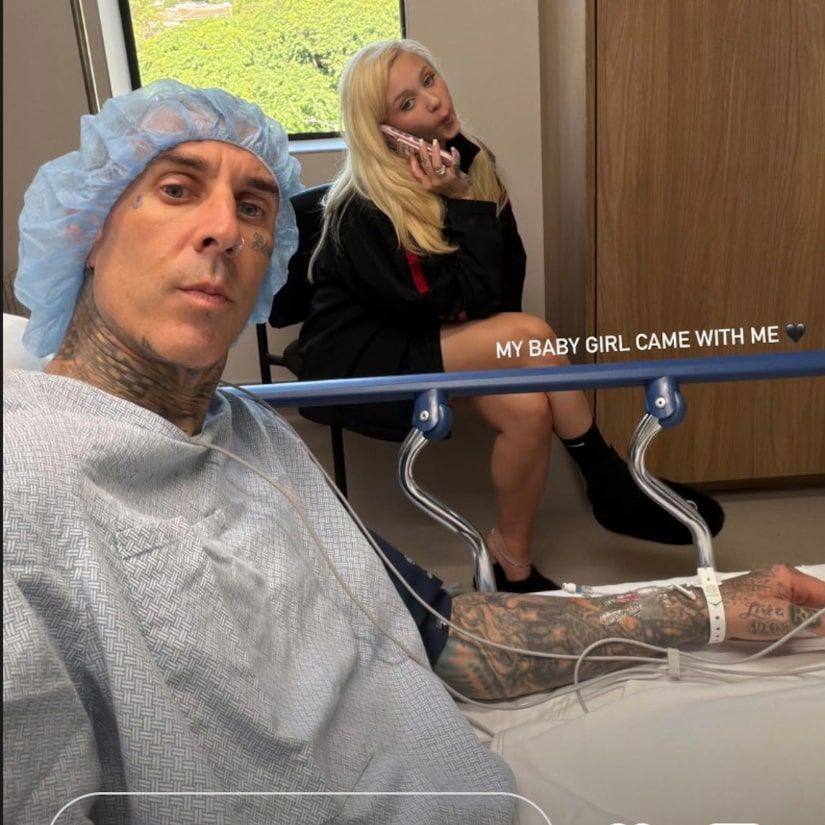
    Alabama made sure to support her dad© @travisbarker
    Alabama made sure to support her dad

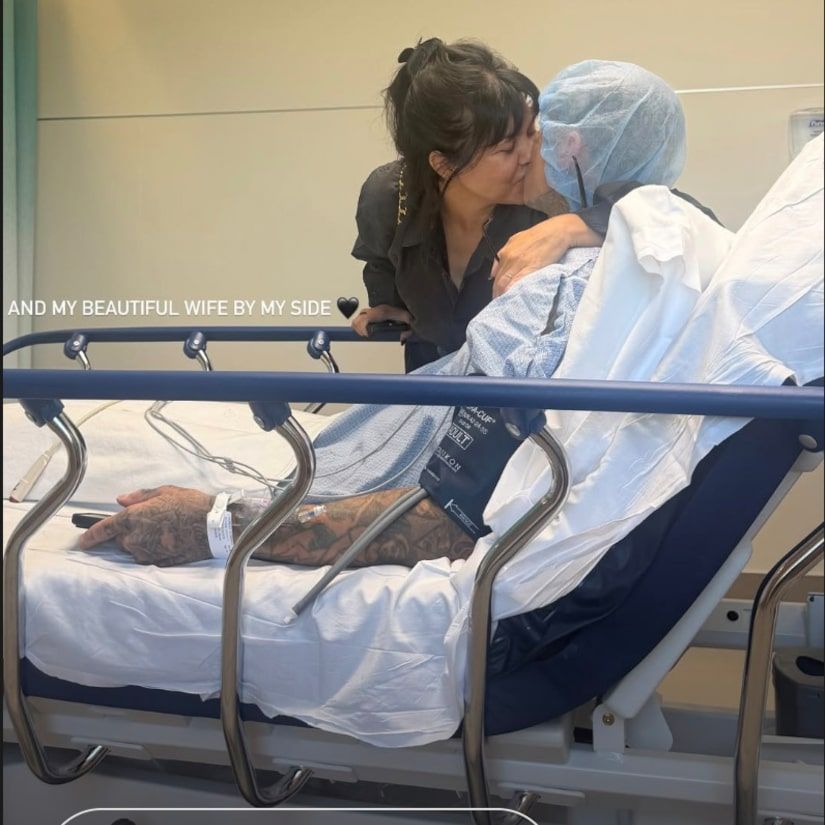
    On Tuesday, October 6, the Blink-182 drummer posted two photos to his Instagram Stories showing him in a hospital gown and surgical cap. In one, his daughter Alabama Barker sat beside him, with Travis writing, “MY BABY GIRL CAME WITH ME.”

    Alabama is one of the two children Barker shares with his ex-wife Shanna Moakler, along with their son Landon. 

    Kourtney was by side bedside© @travisbarker
    Kourtney was by side bedside

     In another, his wife, Kourtney Kardashian, leaned over to kiss him as he lay on the hospital bed. “AND MY BEAUTIFUL WIFE BY MY SIDE,” he wrote.

    There was no explanation for why he was in the hospital, what procedure he was having, or whether something serious had happened.

     The photos naturally left fans wondering what was going on, especially since Barker appeared to be preparing for some kind of procedure. After the surgery, he let fans know it was nothing super major. 

    You may also like

    Continue reading

    Why he needed surgery

    The drummer couldn't help but quip about Kourtney's smiles© @travisbarker
    The drummer couldn’t help but quip about Kourtney’s smiles

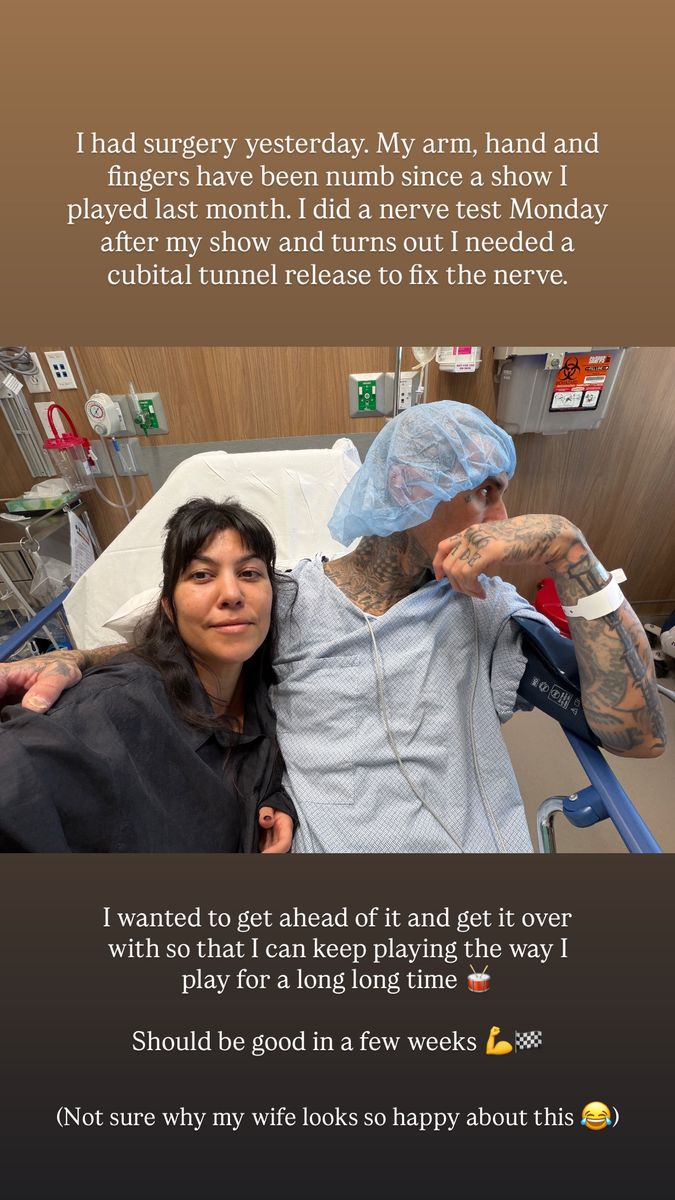
    On Wednesday, October 7, Barker revealed that he had undergone surgery after dealing with numbness in his arm, hand, and fingers.

    “I had surgery yesterday,” he wrote on Instagram Stories. “My arm, hand and fingers have been numb since a show I played last month.”

    Barker said he underwent a nerve test Monday after his show and learned that he needed a cubital tunnel release to fix the nerve.

    Cubital tunnel syndrome involves compression or irritation of the ulnar nerve around the elbow and can cause numbness or tingling in the hand and fingers, per Mayo Clinic.

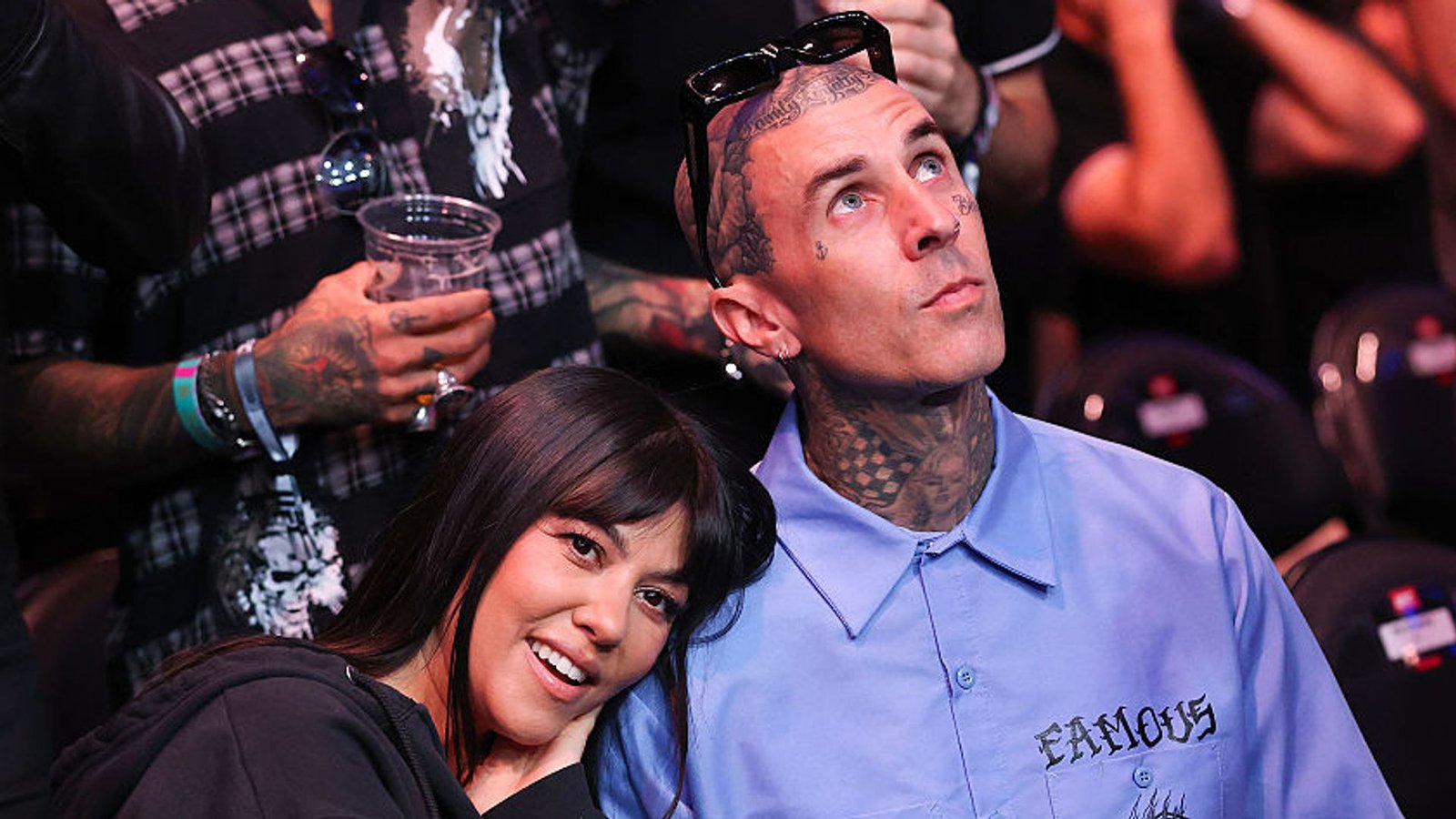
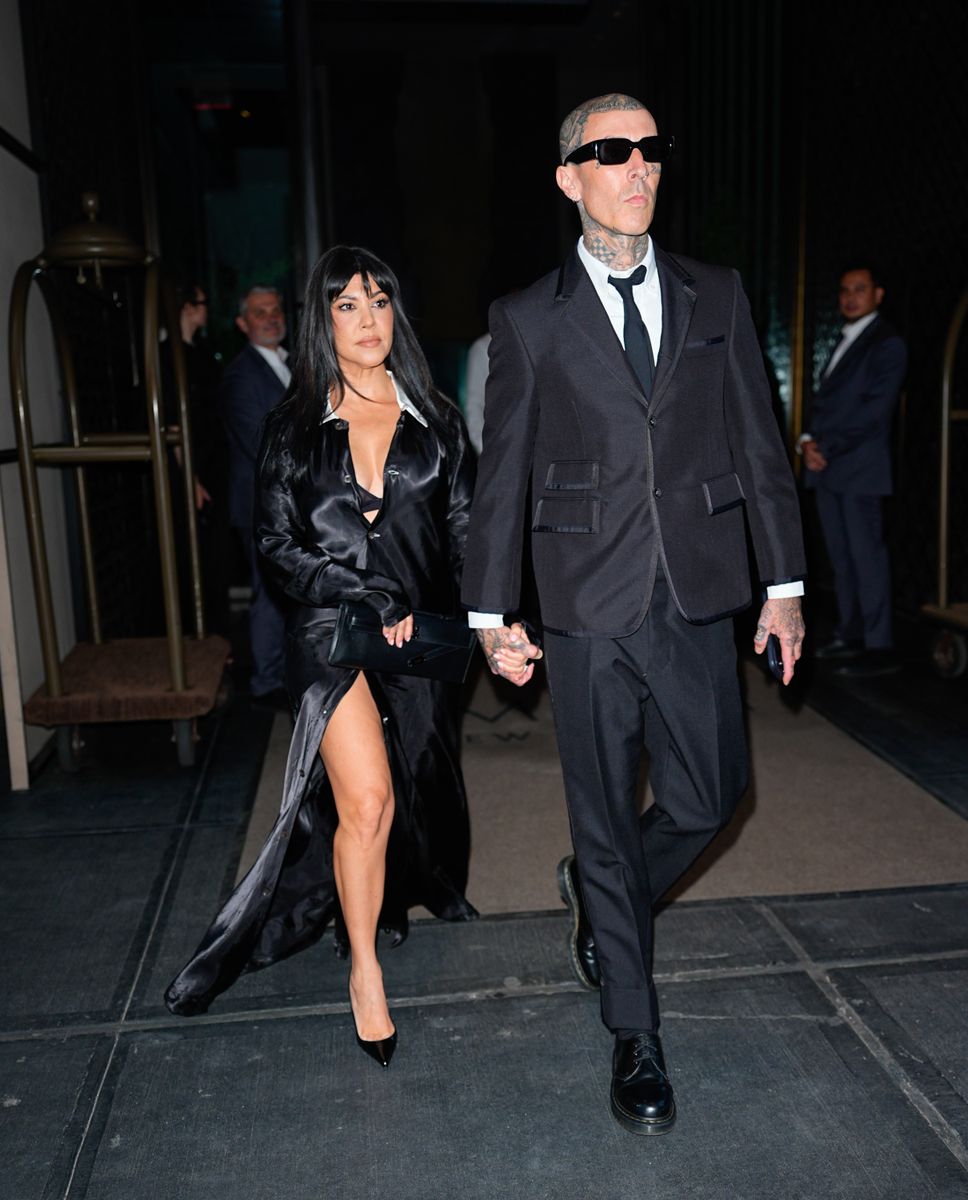
    Kourtney Kardashian and Travis Barker are seen on June 13, 2026 in New York City© XNY/Star Max
    Kourtney and Travis are every bit a power couple

    Kardashian and Barker have gone through plenty of highs and lows together. And while she’s clearly a supportive wife, Barker couldn’t resist making a joke about her expression. “Not sure why my wife looks so happy about this,” he wrote over the photo of Kourtney smiling beside him.

    The couple has been there for each other through serious personal and health challenges. In 2023, she underwent emergency fetal surgery while pregnant with the couple’s son Rocky.

    He credited Kourtney for helping him get through his fear of flying© GC Images
    He credited Kourtney for helping him get through his fear of flying

    More recently, Barker opened up about how falling in love with Kourtney helped him confront some of the trauma he carried after surviving a 2008 plane crash. He credited their relationship with giving him hope and helping him eventually overcome his fear of flying. 

    Barker’s history with his hands 

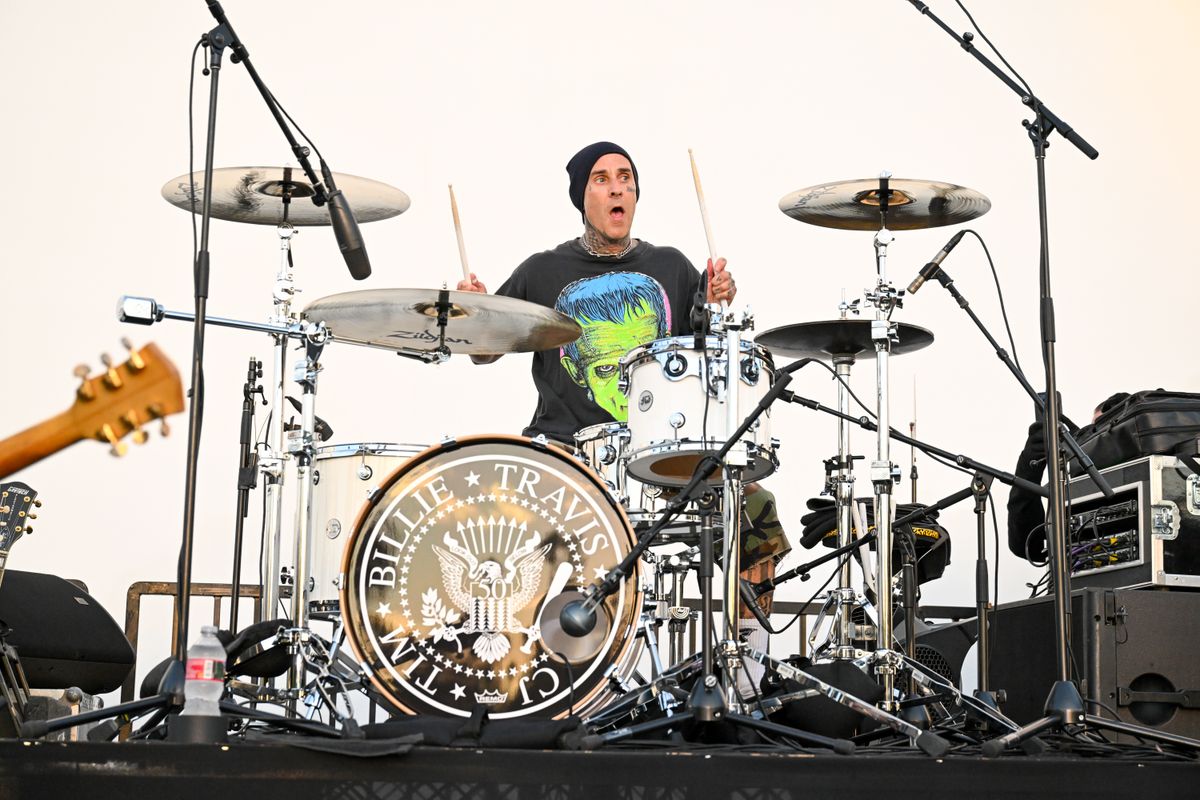
    Barker hasn’t said that years of drumming caused his condition, but the issue is particularly notable for someone whose career depends on his hands.

    The drummer has already learned the hard way that keeping his body healthy is part of keeping his career going.

    Travis has spent decades using his hands doing what he loves© Getty
    Travis has spent decades using his hands doing what he loves

    In 2023, he injured his left ring finger during Blink-182 rehearsals, dislocating it and tearing the ligaments. The injury required surgery and forced the band to postpone the beginning of its reunion tour. 

    At the time, Barker explained why having the procedure was ultimately necessary. “It was a hard decision to make, but ultimately I couldn’t continue to play the drums without it,” he said after the surgery. 

    More than three years later, he’s once again making sure an injury doesn’t keep him from doing what he loves. “I wanted to get ahead of it and get it over with so that I can keep playing the way I play for a long, long time,” Barker wrote, offering a timeline for his recovery, “Should be good in a few weeks.”

    He’s no stranger to the long road back

    Barker is used to having to recover, going through the worst experience in 2008© The State
    Barker is used to having to recover, going through the worst experience in 2008

    Barker’s decision to deal with the problem now also fits into a much bigger part of his story –  recovery.

    The drummer survived a devastating 2008 plane crash that killed four people and left him with severe burns. He underwent numerous surgeries and spent years dealing with the physical and emotional aftermath.

    He’s also faced other serious health issues over the years, including a 2022 hospitalization for severe pancreatitis. 

    But even through those setbacks, Barker has continued performing, touring, and pushing his body to keep up with the life he’s built around music.

  • Demi Moore almost lost ‘St. Elmo’s Fire’ role to Madonna when she was dealing with addiction

    Demi Moore almost lost ‘St. Elmo’s Fire’ role to Madonna when she was dealing with addiction

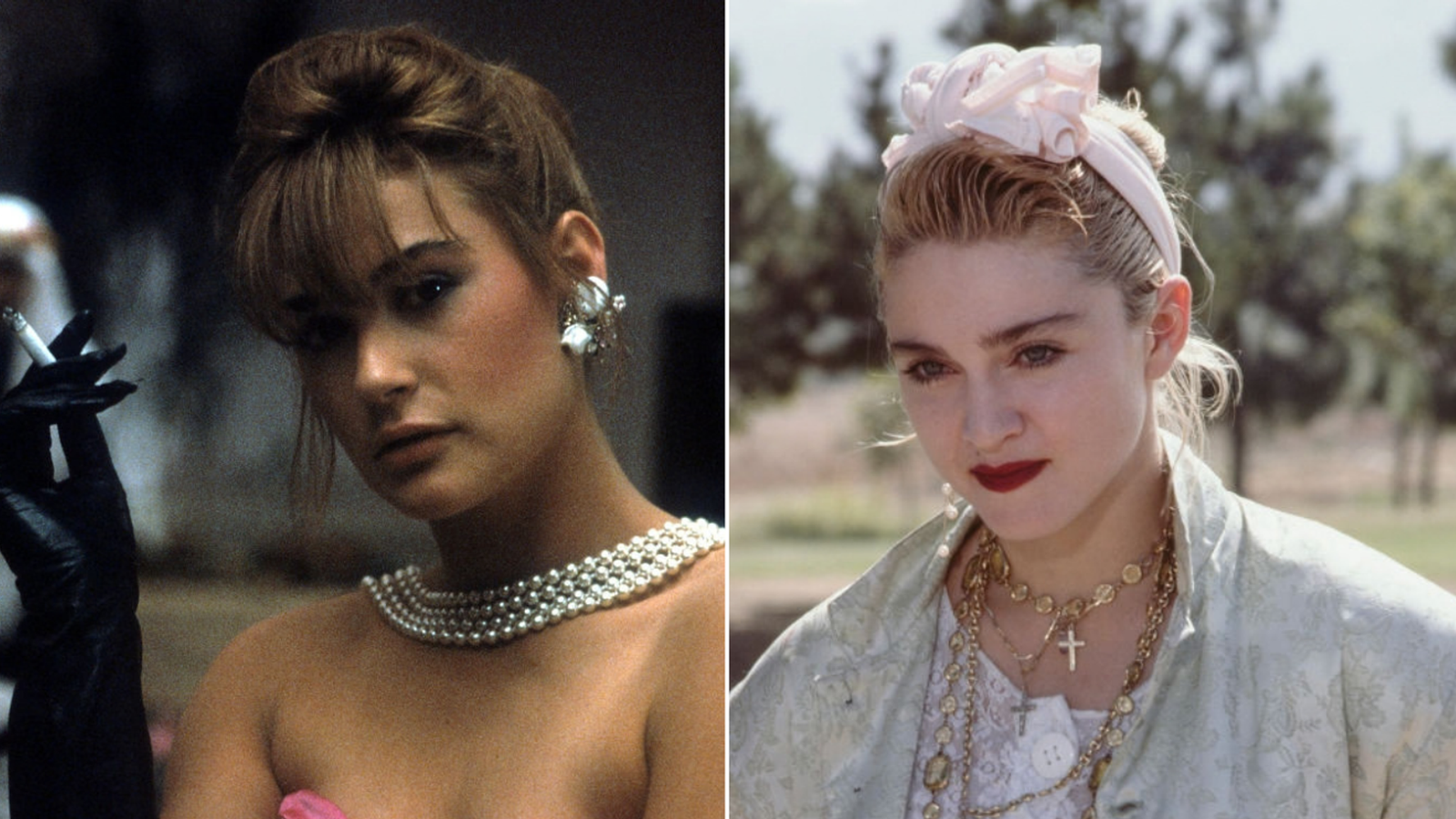
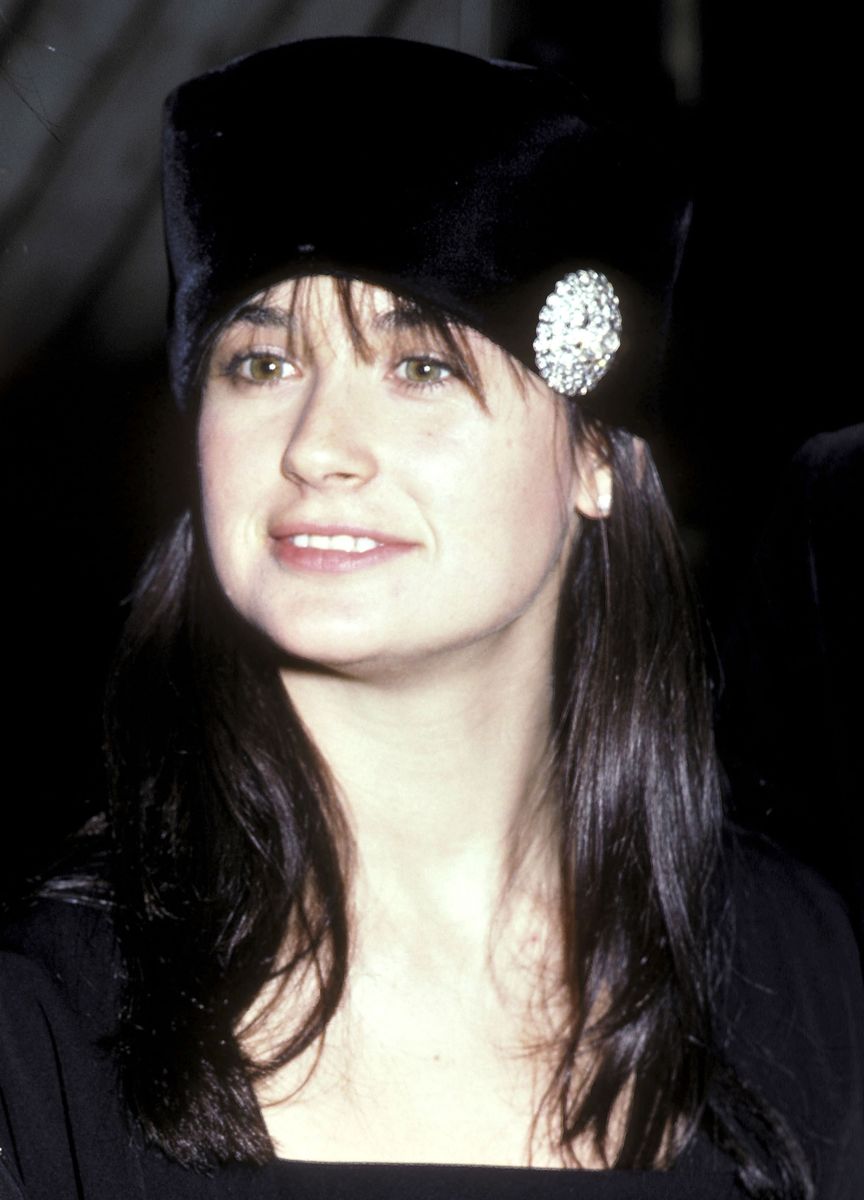
    Demi Moore could have had a very different role in St. Elmo’s Fire – or no role at all. The Oscar-nominated actress was almost fired from the 1985 film just days before production began after showing up drunk and high to a costume fitting. According to one of the film’s co-writers, director Joel Schumacher was already considering replacing her with Madonna.

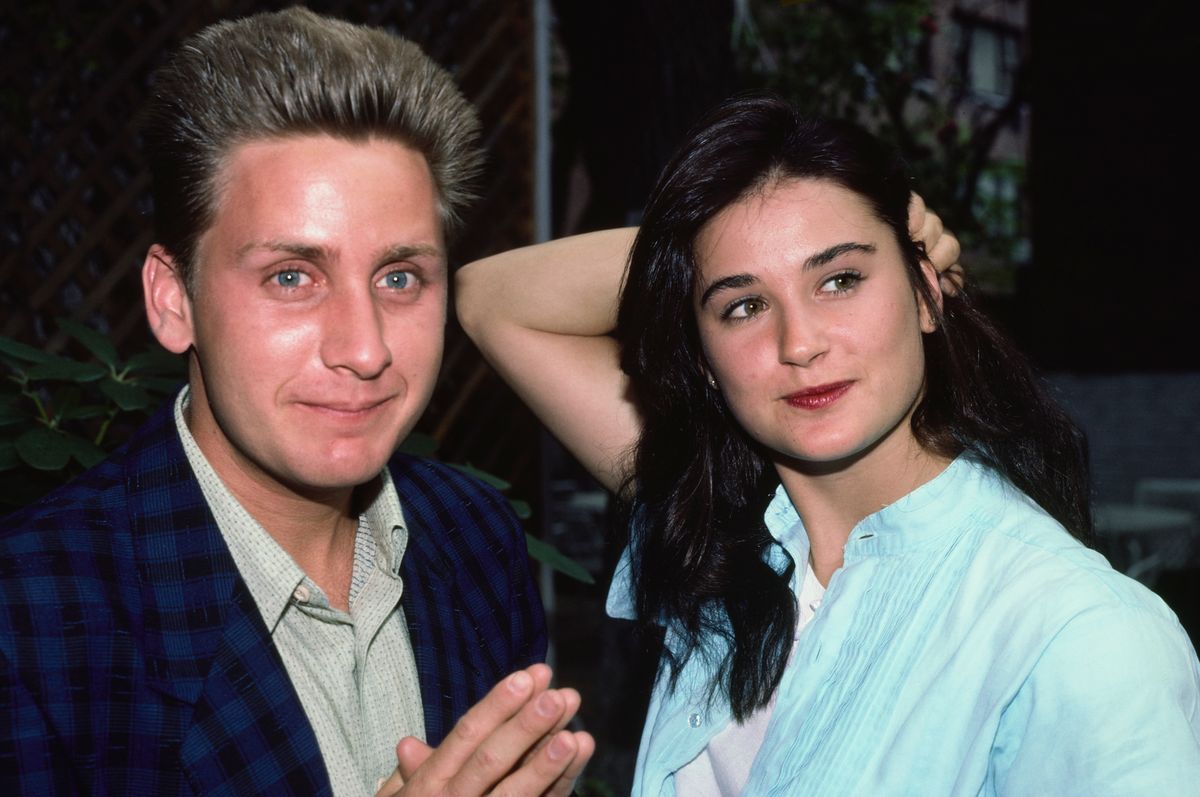
    Emilio Estevez and Demi Moore pictured during a promotional event for 'St Elmo's Fire' in New York, 1985. © Getty
    Emilio Estevez and Demi Moore pictured during a promotional event for ‘St Elmo’s Fire’ in New York, 1985.

    Carl Kurlander, who co-wrote the coming-of-age drama, shared the behind-the-scenes drama during an appearance on Reality Life with Kate Casey.  The role in question was Jules, a young woman whose glamorous exterior hides a serious cocaine problem.

     At the time, Moore was just 22 and still trying to find her footing in Hollywood, and according to Kurlander, she came close to losing it. Moore later admitted she was dealing with a cocaine addiction, adding another layer of irony to the role. “Demi was truly living the life of Jules when we met her,” Kurlander said. 

    Moore allegedly showed up to a fitting drunk and high, and costume designer Susan Becker understandably went narc mode and alerted Schumacher. The fitting took place about 10 days to two weeks before filming, so he had to make a quick decision. 

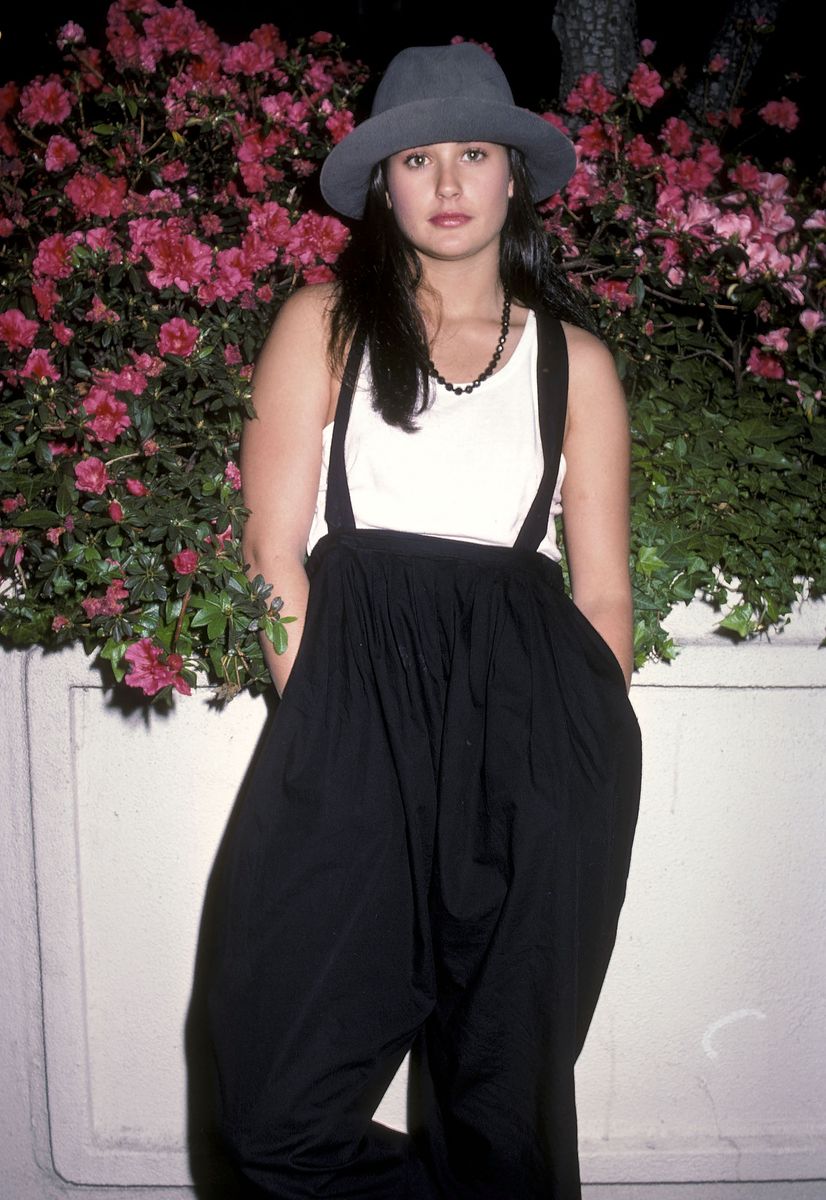
    Demi Moore in 1984© Getty
    Demi Moore in 1984

    Schumacher had dealt with addiction himself, so he met with Moore alongside producer Lauren Shuler Donner. The director did not sugarcoat anything: “Joel told me that he told her, ‘Go kill yourself on someone else’s movie,’” Kurlander said.

    You may also like

    Continue reading

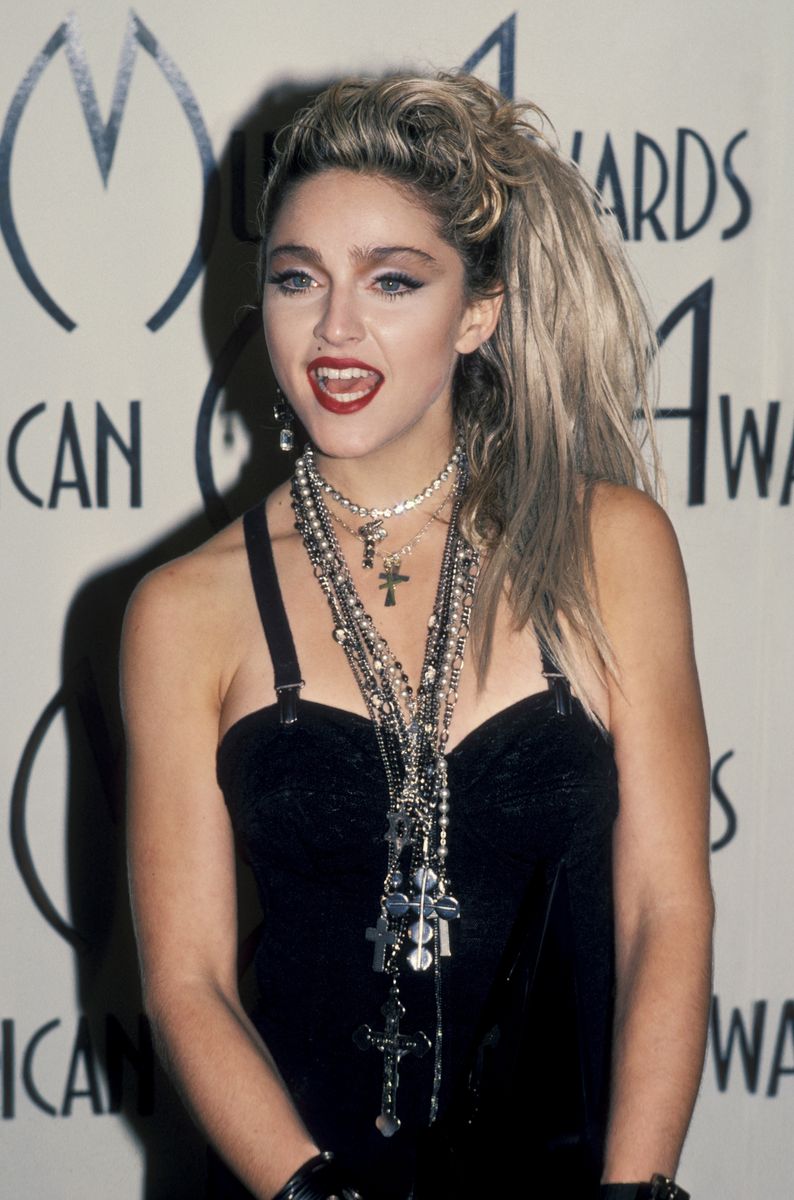
    Madonna in 1985© Getty
    Madonna in 1985

    Shuler Donner helped give Moore another chance and worked with Schumacher on a plan that would allow the actress to stay if she could get sober before filming. “Lauren Shuler Donner, God bless her, worked out a plan with Joel, saying, ‘Look, if you can clean yourself up in 10 days, you can be in this movie,’” Kurlander recalled.

    Schumacher wasn’t totally confident she would get her act together, and he had already met Madonna. At the time, he saw something special in the future pop superstar. “Joel had met Madonna. And he came back, and he said, ‘This girl is going to be the biggest star in the world. I could just feel it,’” Kurlander recalled. “And Joel was all ready to offer the part to Madonna.”

    But Moore locked in and attended Alcoholics Anonymous meetings, and they even paid for her to have a sober companion throughout the shoot. By the time the cast sat down for the table read, Kurlander could see that something had changed. “She clearly had more than just cleaned up,” he said.

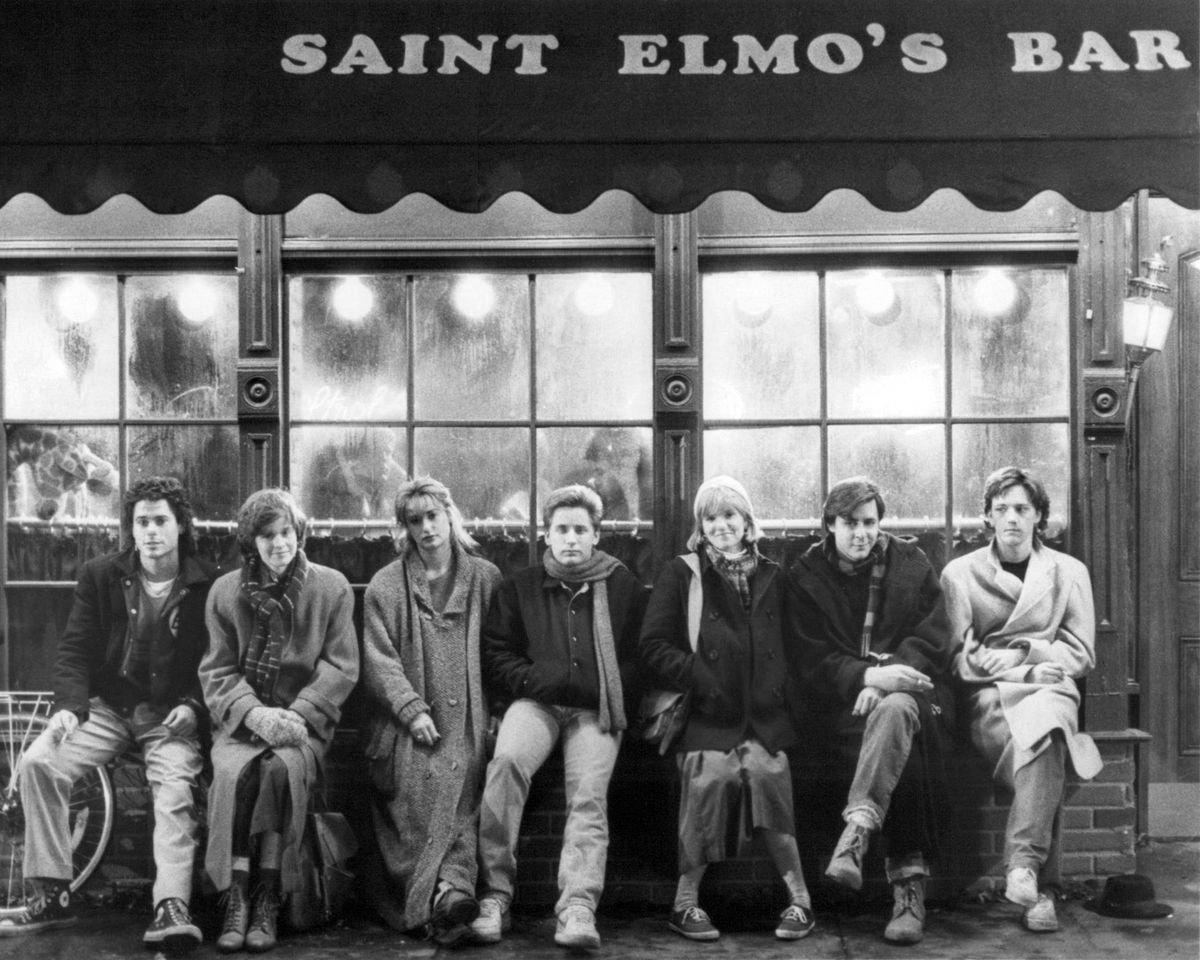
    The cast of 'St. Elmo's Fire', directed by Joel Schumacher, 1985. Left to right: Rob Lowe, Ally Sheedy, Demi Moore, Emilio Estevez, Mare Winningham, Judd Nelson, and Andrew McCarthy. © Getty
    The cast of ‘St. Elmo’s Fire’, directed by Joel Schumacher, 1985. Left to right: Rob Lowe, Ally Sheedy, Demi Moore, Emilio Estevez, Mare Winningham, Judd Nelson, and Andrew McCarthy.

    Moore has been open about just how difficult that period of her life was. In her 2019 memoir, Inside Out, she wrote about how her cocaine use had escalated into a dependency by the mid-1980s. But the fear of losing the film unlocked something inside of her. 

    The film would become one of the defining titles associated with the Brat Pack, with Moore starring alongside Rob Lowe, Emilio Estevez, Ally Sheedy, Judd Nelson and Andrew McCarthy.

    She reflected on that mindset in McCarthy’s 2024 documentary Brats, which revisited the actors and cultural impact of the era. “I was so fearful of failing, fearful of losing, and so desperate to fit in, belong,” Moore said. “My need to please was definitely on high alert.”

    She also made it clear that she understood Schumacher and the production could have moved on without her. “They could have easily just found someone else,” Moore said in the documentary. “Because it’s not like I had any box-office draw. You know, we were all just beginning. I didn’t have anything to really warrant him sticking by me.”

    At the time St. Elmo’s Fire came along, Moore was still a relative newcomer compared with some of her co-stars. She had spent two years on General Hospital and appeared in films including Blame It on Rio. A July 1985 Los Angeles Times profile described Jules as her biggest movie role to date.

    Demi in 1986© Getty
    Demi in 1986

    In Inside Out, Moore admitted that saving her career was a bigger motivator than getting sober for herself. “If I’d had to give up the movie and go through the program to get sober for myself, I doubt I would have done it,” she wrote. “I just didn’t value myself enough for that.”

    “But with the film at stake, and this enormous support from Craig Baumgarten, Joel Schumacher, and his colleagues, who I didn’t want to let down, I had something much bigger than me to fight for. And so I did,” she continued. 

    Moore went on to maintain her sobriety for nearly two decades before experiencing a relapse in 2012. She later sought treatment again and has continued to speak candidly about her relationship with drugs and alcohol.

    Demi Moore is now the sober Oscar winning queen we know and love © Getty
    Demi Moore is now the sober Oscar winning queen we know and love

    During a 2025 appearance on WTF with Marc Maron, Moore explained why she initially resisted entering treatment. Because her mother struggled with alcoholism, she had convinced herself that a program focused on alcohol did not apply to her own drug use.

    “I was like, ‘No, no. You don’t understand. That’s my mother. I’m a drug addict,’” she recalled.

    Moore has also spoken about how recovery changed the way she handles difficult emotions. In an interview with The New York Times, she reflected on what happens when someone tries to numb themselves rather than confront what they are feeling.

    “I think what I know now is when you’re numbing yourself out, your discernment for things isn’t the same,” she said. “Drugs and alcohol just aren’t a right fit for me,” she added.

  • Margherita Ferrari on Working With Paolo Sorrentino on Directorial Debut ‘Föa — Once Upon a Future’: ‘He Helped Me Pursue and Protect My Vision’

    Margherita Ferrari on Working With Paolo Sorrentino on Directorial Debut ‘Föa — Once Upon a Future’: ‘He Helped Me Pursue and Protect My Vision’

    Debuting Italian director Margherita Ferrari is at the Busan International Film Festival with “Föa – Once Upon a Future,” an innovative coming-of-age drama that also marks Paolo Sorrentino‘s debut as a producer.

    Set in Genoa during the tragic days in July 2001 when the G8 summit led to deathly clashes between protesters and police, “Once Upon a Future” tells the story of Nicole, an 18-year-old girl who is eight months pregnant and takes three protesters into her home. Using a fable-like tone, the film provides a fresh perspective on the G8 violence that became a watershed moment in the anti-globalization movement.

    “’Föa’ begins with a wound that history never quite managed to close,” Sorrentino said in a statement to Variety. “Margherita Ferrari turns the memory of Genoa into something intimate and dreamlike, where the past quietly returns to question the future.”

    “Föa – Once Upon a Future,” which stars emerging talents Gaia Ravina, Clara Tramontano, Iker Urgoiti and Gabriele Falsetta, was co-produced by Sorrentino′s production company Numero 10, with The Apartment and PiperFilm. PiperPlay is handling international sales.

    “At a time when imagination needs to be protected, supporting new authors and their singular visions feels more important than ever,” Sorrentino continued. “I am particularly proud that Numero 10 begins this journey with a film told through such a powerful female gaze — a story that reminds us that even after the future seems to have disappeared, it may still be waiting for us.”

    The film started as Ferrari’s graduation short at Rome’s Centro Sperimentale film school, after which she had the opportunity to pitch the expanded project to Sorrentino. Below, Ferrari speaks to Variety about what sparked “Once Upon a Future” creatively and its fortuitous production journey.

    How did the “Föa – Once Upon a Future” story germinate?

    On July 20, 2001, I was only 4. I remember the windows and the typical green shutters of our living room in Genoa had to be closed because outside there was smoke and noise. So, even though it was summer and sweltering inside, we had to barricade ourselves in, staying in the dark. Shut away. That image came back to me during the pandemic. I had sought out that same feeling — of solitude, isolation and even powerlessness — while something much bigger than me and all of us, something powerfully collective, was happening outside. On a more personal level, I’ve always felt a certain disillusionment regarding the limits of my own power; how little impact I can actually have on the world or on contemporary reality. It’s a feeling that hits me every time I speak about this subject.

    Tell me more.

    I know I’m not just talking about me. I see this reflected in so many of my peers, and perhaps in people in general, who are experiencing the world as it is today. So there is that, combined with the lingering wound of those days and all the traces they left behind. Speaking as someone from Genoa, I felt a desire to tell a story that, even though it’s set in 2001, is really about the future and about today. How do you do that? Usually, fairy tales are set in the distant past. Yet they’re actually meant to speak to the present. So, that’s more or less how it all came about.

    Starting with the title, “Föa – Once Upon a Future,” this film is a fable of sorts. Talk to me about this narrative choice, which is unusual in dealing with historical fact.

    The Genoese term “Föa” actually means “story,” in the sense of a made-up story, a little tale or a fable. That aspect interested us [myself and my co-writers] partly because we wanted to blend history with a capital H, the kind you study in books, with a fictional tale about a character who doesn’t exist. It also suggests that to tell the truth about reality, you somehow need invention and metaphors, and therefore cinema and fables too. We also wanted to approach this historical event from a more emotional, dreamlike perspective, focusing on the almost unconscious traces that were left within us by those days. This applies even to those, like us, who experienced the aftermath of the Genoa G8 events. In a way, we always felt like we were inside Nicole’s womb, so to speak. The child Nicole is carrying in the film would be 25 or 26 years old today. In a sense, he has been carrying the same question we have, which is: “What will the future awaiting us actually be like?”

    I’d like to add that I hope this film offers more than just the questions that are raised by those events. I hope it allows the audience to imagine that things might turn out a bit better. It’s like in fairy tales, I always envisioned a moment of relief at the end, a breath of fresh air that leaves room for that possibility.

    What was it like to have Paolo Sorrentino as your producer?

    Paolo was very involved during both the initial writing phase and the editing process. But not on set. He treaded lightly in that phase. He just stopped by once to say hello. I tried to get him involved, but he didn’t want to. Basically, he was very keen on not being intrusive and to respect the boundaries of the set. I view that gesture as an act of great tenderness on his part. Even though I’ve always loved getting his advice, it never scared me, I find Paolo to be very patient. I think he had often already thought out certain solutions before we did. But he waited for me, or for me and the editor, to get there on our own, to reach the direction in which the film needed to go. He helped me pursue and protect my vision all the way to the end, while supporting my work as a director through every single phase. It was a beautiful creative process from the start. It also helped me grow, helped me bring the film to the screen and become the person I am today. That’s more or less how it went.

    Courtesy PiperPlay

  • Gromit Speaks: Martin Freeman to Voice Beloved but Mute Dog in Audiobook Edition of Autobiography

    Gromit Speaks: Martin Freeman to Voice Beloved but Mute Dog in Audiobook Edition of Autobiography

    He’s been one half of one of the most cherished on-screen duos in history, yet has famously never spoken a word. That is, up until now.

    Gromit, the whip-smart and eye-rolling four-legged friend to cheese-loving inventor Wallace across numerous stop-motion classics from Aardman Animation and “Wallace & Gromit” creator Nick Park, is getting his first autobiography and, with it, an audiobook.

    In step Martin Freeman, who will narrate “Grand: The Autobiography of Gromit, as Told to Nick Park,” a book in which, according to the description, Gromit “finally breaks his silence.”

    “When you create a character who has no voice, and whose facial expressions are everything, what do you do when your publisher reminds you there’ll be an audiobook? Who could possibly be the voice of a character everyone feels they know, but nobody’s actually heard?” said Park, winner of four Oscars, including three for Wallace & Gromit films “The Wrong Trousers,” “A Close Shave” and “The Curse of the Were-Rabbit.”

    “The more I thought about it, the more I realised Martin Freeman was the obvious choice really. I was genuinely thrilled and honoured when he said yes.”

    Recording took place earlier this month at Penguin Studios, with both “Grand: The Autobiography of Gromit” and the audiobook now due for release Oct. 22.

    But Park, having previously stated that Freeman was “the voice” of Gromit, in almost the same breath attempted to (doggy) walk back the de-muting of his plasticine hound.

    “Martin is not doing a Gromit ‘voice’ as such,” he said. “He’s reading Gromit’s story as Gromit put it; his inner thoughts, his candid insights and endless witticisms, bringing to them his usual colour, thoughtfulness and wry humour.” now from all major audiobook retailers.