Category: Entertainment

  • AI-Native Studios Can Create Original IP While Traditional Studios Keep Their Edge, VFX Veteran Hong Jae Cheol Says at Busan

    AI-Native Studios Can Create Original IP While Traditional Studios Keep Their Edge, VFX Veteran Hong Jae Cheol Says at Busan

    Small, AI-native companies running automated pipelines can develop their own intellectual property, while traditional studios hold on to their advantages in established franchises, production infrastructure, talent and distribution, according to VFX veteran Hong Jae Cheol.

    Hong, a producer-director at Viscode who began his career at Industrial Light & Magic and worked on films including “Iron Man,” “Transformers” and “Pirates of the Caribbean,” laid out that vision at the InnoAsia AI Creators Camp, held Sunday at the Busan International Film Festival‘s Asian Contents & Film Market in Busan. “We are moving from using AI to generate individual images toward using AI as part of a complete production workflow,” he said.

    AI is changing the production model, Hong argued, while traditional visual effects remain essential to making generated material usable on screen. He framed the future as a hybrid, and a partnership between AI and human creativity, rather than a wholesale replacement of existing studios.

    Hong contrasted a conventional live-action and VFX process, involving 3D assets, animation, rendering and compositing, with an AI-assisted approach. In the latter, actors perform on a controlled set; AI generates environments and visual elements; and VFX artists handle tracking, integration and finishing. He also outlined current AI applications across VFX, animation and filmmaking, including rotoscoping, cleanup, previs, character design, camera tests and environment creation.

    Mark Wachholz, chief creative director of Berlin-based Dreamkite Studios, whose AI films “The Cinema That Never Was” and “Céremony” have won top prizes at AI film festivals, approached the shift from the creative side. He described AI co-creation as an invitation to give up some control and allow for surprise, framing the process as “exploring instead of controlling” and “finding instead of knowing.” He also argued that new tools require new ways of thinking, rather than simply applying old methods to new technology.

    Director Ahn Jaehong of Climax Studio, who turned to AI filmmaking after arm injuries ended his work behind the camera, brought the discussion back to directing and production. He mapped a workflow from prompts and camera information to scene context, shot lists, storyboards, character and prop sheets, locations and keyframes. The sequence reinforced a point shared by the speakers: AI can assist across multiple stages, but filmmakers still need to shape the story, visual design and final result.

    Hong summed up the distinction: “AI is just a tool; film is a sequence.” The discussion centered on how that tool might become part of a connected filmmaking process, with human direction and VFX expertise still determining how its images fit together.
  • Globo and Banijay’s Endemol Shine Brasil Pact to Forge Global Entertainment IP Powerhouse (EXCLUSIVE)

    Globo and Banijay’s Endemol Shine Brasil Pact to Forge Global Entertainment IP Powerhouse (EXCLUSIVE)

    Brazilian media behemoth Globo and Endemol Shine Brasil, part of Banijay Latin America, have forged a non-scripted IP strategic partnership to develop and produce a next generation of franchises from Brazil, with the aim of jointly crafting original IP with global appeal, as well as of course local relevance.

    The ambitious pact will further the partners’ previous collaborative efforts, which has produced the likes of such mega hits as “Big Brother Brasil,” “No Limite” (“Survivor”),” “The Masked Singer,” “Dança dos Famosos” (“Dance of the Famous”) and “The Wall,” among others. Both companies will have a hefty presence at Mipcom.

    Globo’s proven ability to create and produce Brazilian content that reaches and engages more than 70 million people daily, combined with Endemol Shine Brasil’s knowhow and access to the global reach of parent company Banijay Entertainment, makes this a formidable pairing.

    Said Nani Freitas, CEO of Endemol Shine Brasil: “Our partnership with Globo goes back many years, all the way to Endemol’s arrival in Brazil. The combination of our expertise creates a highly powerful environment for developing culture-defining entertainment. That is why it is especially meaningful to take another step forward in this relationship and join forces in the creation of new entertainment formats from the very beginning of the development process, with the potential to connect audiences far beyond our market.”

    Amauri Soares, Executive Director of Globo Studios, concurred: “Globo has been expanding investments in creative development hubs, connecting our talent with strategic partners to accelerate the creation of original formats. By bringing together Globo’s creativity with the international expertise of Endemol Shine Brasil and Banijay Entertainment, we are taking another step toward transforming our studios into a hub for developing Brazilian intellectual properties with global reach.”

    Under the agreement, Globo will have priority rights to exploit the new formats across its channels and platforms, while Endemol Shine Brasil will spearhead international expansion through Banijay Entertainment’s worldwide network of more than 170 labels across 25 territories, opening a direct route to international markets.

    “Everyone knows launching new original programming in our markets is no easy task, which makes this partnership all the more significant. I’m very excited and proud Endemol Shine Brasil has possibility to do exactly that with a major player like Globo. I can’t thank Amauri enough for this great opportunity to collaborate,” said Laurens Drillich, CEO, Banijay Latin America.

    Endemol Shine Brasil has been aggressively expanding its production footprint across traditional, digital and vertical microdramas.

    In April, it teamed up with ReelShort on the Brazilian version of the microdrama platform’s biggest hit, “Married at First Sight.” It also formed a partnership with A Fábrica, a Banijay Americas company, to create a slate of vertical-format microdramas.

    Its new docu-reality series “Underground City” (“Cidade Subterrânea”), an original format it created, which delves into São Paulo’s subway system, premiered on GNT and Globo’s streaming platform, Globoplay, and also aired on TV Globo’s Fantástico.

    Mipcom runs over Oct. 10-15.

  • ‘SNL U.K.’ Cold Open Sees Reunion Between Prince William and Kate and Prince Harry and Meghan (With Some Help From Former Prince Andrew): ‘They Must Want Us to Be Royals Again!’

    ‘SNL U.K.’ Cold Open Sees Reunion Between Prince William and Kate and Prince Harry and Meghan (With Some Help From Former Prince Andrew): ‘They Must Want Us to Be Royals Again!’

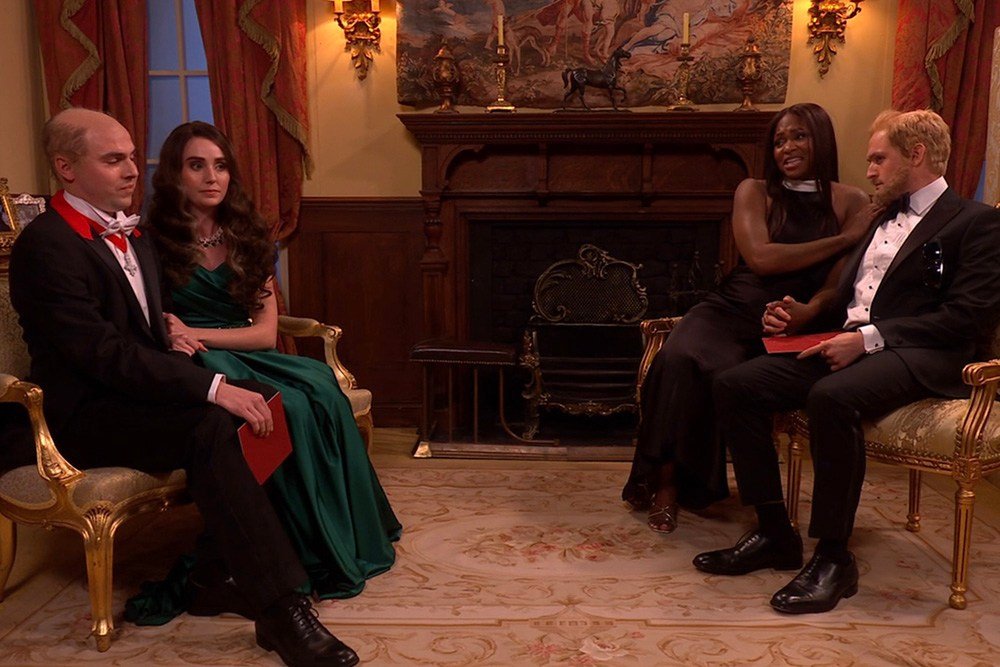
    “SNL U.K.” once again skewered the royal family in this week’s cold open, showing a contentious reunion between Prince William and Kate and Prince Harry and Meghan at Sandringham Estate.

    “This place brings back so many memories,” Ayoade Bamgboye as Meghan said to Prince Harry (Jack Shep). “Look, this is where your grandpa asked if I was related to Beyoncé.”

    “Classic. And this is where he asked if I was related to him! But still, I can only wonder who sent us this mysterious invite,” Shep as Prince Harry said, holding up a red envelope.

    “It’s your family, H,” Bamgboye’s Meghan said. “They must want us to be royals again! I’ll bet we won them over with my famous brownie recipe: it’s brownie and oven.”

    Then, Prince William (Freddie Meredith) and Kate (Annabel Marlow) appeared, also with a red envelope in hand. “Well, well, well. If it isn’t Prince Ginger Pubes,” Meredith as Prince William said.

    “Oh look, William! It’s the woman from ‘Suits,’” Marlow’s Kate added, gesturing to Meghan.

    “Jokes on you, she’s not on ‘Suits’ anymore. She doesn’t do anything anymore!” Shep as Prince Harry replied.

    King Charles (Larry Dean) and Queen Camilla (Emma Sidi) then entered the room, with Charles saying: “Oh boys, I’m so happy to see you back together. I can’t wait to tell mummy once I’ve died!”

    However, it’s soon revealed that they didn’t send the invitation either. Preceded by an evil laugh, former prince Andrew Mountbatten-Windsor (George Fouracres) — whose title was stripped due to his links with Jeffrey Epstein — appears and discloses that it was him that brought the family together.

    “Didn’t you hear the good news? The search warrants were unlawful! That means it doesn’t count. I’m innocent!” Fouracres as Andrew exclaimed.

    “Listen, Andrew —” Dean as Charles began.

    “That’s Prince Andrew to you!” Fouracres’ Andrew fired back.

    “No, it isn’t. Andrew, enough is enough,” Dean’s Charles replied. “You’re arrogant, you’re entitled, you represent an outdated institution founded on centuries of war, tax evasion and slavery. And that’s all great! But you’ve also been accused of terrible things, and that’s where I draw the line.”

    However, they all decide to put their differences aside for one drink, with Dean’s Charles saying: “Very well, Andrew. We can have one drink together. And that’s it. Except for the million pounds I’ll give you for the rest of your life.”

    Saturday’s episode of “SNL U.K.” was hosted by Danny Dyer with musical guest Sasha Keable.

  • ‘Between Two Lovers’ Review: Nanako Hirose’s Contentious Family Drama Examines an Ill-Fated Throuple

    ‘Between Two Lovers’ Review: Nanako Hirose’s Contentious Family Drama Examines an Ill-Fated Throuple

    The sophomore feature from Hirokazu Kore-eda protégé Nanako Hirose, “Between Two Lovers” tackles a variety of potential hot-button issues, from polyamorous relationships to same-sex parenting, in its contemporary Japanese setting. The film stars Masami Nagasawa as a free-spirited children’s author who invites her doting husband and secret girlfriend to enter into a three-way relationship of convenience, when both partners simultaneously express their desire to start a family. But what begins as a bold and daring attempt to broach progressive issues in a notoriously conservative society ultimately loses its nerve, acquiescing to a number of eyebrow-raising narrative compromises.

    Internationally recognizable talent both above and below the line should ensure that “Between Two Lovers” travels far beyond its debut in Competition at the Busan Film Festival, but more progressive audiences may be left frustrated by where Hirose leaves them.

    Uta (Nagasawa) has built a comfortable life for herself and her husband Morio (Tasuku Emoto), thanks to the popularity of her “Little Miss Mushroom” series of picture books. While her work regularly brings her into close proximity with children, Uta has little interest in starting a family of her own. Conversely, Morio is desperate to have kids, but any effort to discuss the topic with his wife is quickly dismissed.

    Little does he know, Uta has also been involved in a passionate six-year affair with her female editor, Junna (Shizuka Ishibashi), and happily flits back and forth between her two homes, beds, and lovers. Junna is eager to become a mother, although several legal barriers prevent her from accessing sperm donations or fertility treatment. She also wants Uta to accept her sexuality and get a divorce, so that they can live together openly.

    Everything comes to a head when Morio invites Junna over for dinner, under the misapprehension that he is extending an olive branch to the colleague who demands so much of his wife’s time. The compounding frustrations of this situation, fueled by too much alcohol, finally expose Uta’s double life. However, desperate to enjoy all the benefits of her unconventional and self-serving situation, without shouldering any of the blame, Uta proposes that Morio be the donor for Junna’s child, and that all three of them move in together.

    Hirose, who also writes and edits, has constructed a brilliantly volatile scenario, vulnerable to any number of potentially explosive and destructive dramatic developments. Disappointingly, her screenplay proceeds to unfold in a procession of frustrating get-outs and compromises, repeatedly choosing the least interesting or challenging direction to take this would-be throuple. The archaic legal restrictions restricting same-sex couples or unmarried women, for example, are acknowledged and adhered to, rather than being openly challenged or criticized.

    The film certainly expresses an interest in the shifting dynamics of this unconventional unit, especially once Junna does fall pregnant and moves into the family home. Morio, already a tender and delicate soul, becomes increasingly protective of the woman carrying his child. At the same time, Junna finds herself sliding into a more conventional role, at once maternal but also spousal. The ever-precocious Uta, meanwhile, feels more and more ostracized within the group, as the supposedly idyllic threesome she conceived to feed her own compulsive nature relegates her to a sulking adolescent. For good or ill, the film also refrains from forcing Uta to ever clarify her sexuality or choose one partner over the other.

    With the influence of Kore-eda on full display, Hirose raises several legitimate questions about what constitutes a real family, as well as the perceived role of women in society and the guardrails that continue to exist so as to limit and enforce these outdated expectations. While it could be argued that the very fact “Between Two Lovers” addresses these issues at all, and does so this explicitly, is already a bold stride in the right direction, much of that intention is undone in how they are resolved and acquiesced to on screen.

    Performances across the board are strong, even if the characterizations themselves are more difficult to embrace. Uta is frustratingly selfish and naive, but Nagasawa willfully throws herself into the role, in a manner that makes her unlikable to a degree we have rarely seen her. Ishibashi makes for a resilient and empathetic Junna, even as her character inevitably bears the brunt of much of the film’s divisive moralizing, while Emoto’s Morio is a quivering wreck of fragility and good intentions.

    Technical contributions are polished, with particular kudos to Ryo Sugimoto’s production design, which creates a pair of equally warm, yet subtly contrasting, living spaces in the married couple’s suburban home and the women’s more illicit love nest, deftly reflecting Uta’s dual existence. HIMI’s score is also employed sparingly yet effectively, but these aesthetic elements fade quickly from memory, overshadowed by the film’s more contentious narrative choices.

  • ‘Midday Meal’ Review: Touching Iranian Drama Charts a Teacher’s Desperate Acts to Provide for His School

    ‘Midday Meal’ Review: Touching Iranian Drama Charts a Teacher’s Desperate Acts to Provide for His School

    “Midday Meal” isn’t necessarily about the art of cooking, but it is in part about the rituals of food, rituals which become more precious with scarcity. But more than that, the new film from director Majid Majidi — best known for his 1997 drama “Children of Heaven”, the first Iranian production ever nominated for the Best International Feature Oscar — is about the right to have food, a punishing struggle to find and provide it in the absence of governmental care.

    Set in the Iranian village of Goorankesh, housed in an incredibly arid and seemingly inhospitable region, the film follows schoolteacher Davoud Soulan (Mohammad Rahimi), whose job lies on precarious foundations. His livelihood is mostly privately funded — though his salary is from the ministry of education, he’s only a contractor — and his benefactor has passed away. Worse still, the dead man’s heirs don’t wish to continue the investment that allows him to provide lunches for his students. This pause in food supply imperils the entire school due to a domino effect: With no lunch, the kids will stop showing up, which would shut the school down after an estimated two weeks.

    The teacher accepts the semi-transactional nature of his relationship with his students: It’s hard to fault a child for being hungry, and it’s difficult not to be moved by the desperate measures that Soulan takes to keep his school open. He lives in the building to save on rent (which then goes to food), and moonlights smuggling and selling fuel to keep the school running. (Here, smuggling is a pastime than many engage in, children included.)

    But it’s not so simple as Soulan choosing and continuing to do the right thing. His determination to keep the school open comes with some moral compromises — and this is what makes “Midday Meal” more interesting, and more fraught, than expected.

    The conflict between pragmatism and generosity begins at a small scale and incrementally escalates. At first, it’s seen in Soulan’s hesitation at accepting children from other villages to his class — then in his rage at his mother for feeding guests at the potential expense of the children’s meals. Between Rahimi’s performance and Majidi’s patient exploration of his reactions, it comes off as very human rather than as an idealistic cipher for how the director wishes the world was. Desperation shifts Soulan’s actions into more dubious territory, especially as one character even calls into question how much of what he does is charity and how much is pursuit of a guaranteed salary.

    Either way, Rahimi balances the character’s clear vulnerability with just enough ambiguity about his plans for the school, accentuated through Majidi’s restrained and naturalistic approach. The director’s deliberate obfuscation of Soulan’s immediate intentions — beyond his desire to keep the school open — make for a fascinating character study. Rahimi plays him as a mostly sincere but deeply conflicted man, and most importantly a desperate one, capable of some rather unexpected deceptions. One of these is effectively kept hidden from scene to scene, especially once a sick old man falls into Soulan’s care.

    At one point, Soulan points out that the crime of fuel-smuggling is minor compared to the barons profiting off the very same — and shouldn’t the motivation, the practical outcome of the act, count for something? Majidi tests the limits of this sentiment throughout “Midday Meal,” often to great effect. The film starts from a point of frustration about a lack of governmental care, and a community falling apart from the stressors of being left with no support. The few encounters with representatives of the law are exasperating — an officer chastises Soulan for being a bad role model for his students — though not necessarily cut and dried. Meanwhile, a member of the education department treats his organization and financing with suspicion, despite having already left him to his own devices.

    This is where the anger of “Midday Meal” comes in, an innate frustration at how so many institutions continually fail to make the simplest decision in the world: to provide for people. Majidi’s matter-of-fact style of shooting underlines the cold reality that Soulan tries to navigate, and strips away any semblance of potential didacticism. For every good deed he does, there’s an underside of pragmatism to it, which can seem a little ruthless.

    But some good deeds do seem to come back around, in moments of grace that keep “Midday Meal” from being a punishingly bleak affair. Despite his seeming sternness and the board’s outright negligence, the inspector sees Soulan’s charity and decides to help how he can — even if the scene of the inspection itself is incredibly stressful. In a film that, at the outset, seems like it could be open-and-shut in terms of moral simplicity, there are ultimately no easy answers.

  • Rosalía Performs an Entire Number En Pointe on ‘SNL,’ Then Cools Off With a Nice Shower

    Rosalía Performs an Entire Number En Pointe on ‘SNL,’ Then Cools Off With a Nice Shower

    To the question of whether Rosalía would be dancing during her “Saturday Night Live” appearance or not, that depends on how you’re looking at it. The acclaimed singer stood in place, perfectly still, during her first number, “Reliquia” — but appeared to be standing en pointe for the entire four-minute performance.

    For her second “SNL” number, “Magnolias,” Rosalía didn’t assume such a difficult position, but the equally gorgeous performance had a different set of physical demands, as an in-studio rain shower erupted midway through the song, dampening her hair and face and turning her white dress clingy and sheer.

    On social media, viewers immediately marveled at Rosalía’s ability to deliver her usual powerful vocals during the first song while striking the pose — and some wondered if she was somehow being propped up through unseen means. Fans who have seen her balletic prowess on display on her global “Lux” tour testified to her ability to pull off something that athletic without resorting to artificial measures. She was joined at the very end of “Reliquia” by a dozen dancers, who lined up on either side of her as a strobe effect took over.

    In her subsequent singin’-in-the-rain performance of “Magnolias,” the singer’s undergarments became visible as her dress got more drenched. But viewers had already seen Rosalía in them minutes earlier, at the conclusion of her one appearance in a comedy sketch. The skit had the singer appearing in a thought bubble and and encouraging host Shane Gillis to abandon his gravely ill mother’s bedside to go to a Jelly Roll concert at Las Vegas’ Sphere.

  • Sci-Fi Thriller ‘Overstake’ Gets Generative AI Rebuild, Boarded by Cappu Films at Busan Market (EXCLUSIVE)

    Sci-Fi Thriller ‘Overstake’ Gets Generative AI Rebuild, Boarded by Cappu Films at Busan Market (EXCLUSIVE)

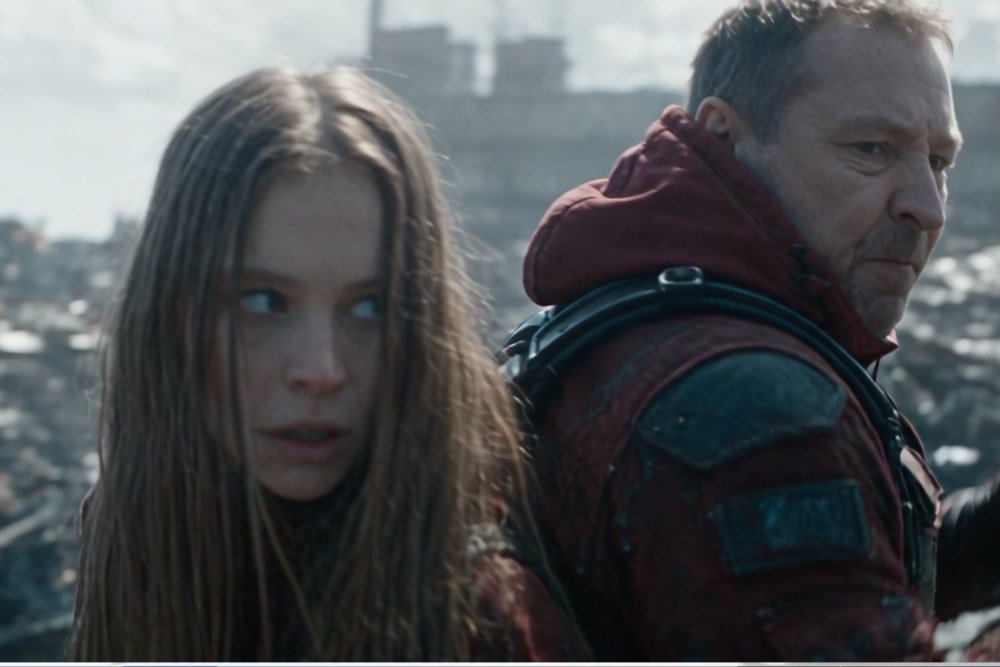
    Hong Kong’s Cappu Films has signed on as worldwide sales agent for “Overstake,” a sci-fi action thriller from writer-director Stas Mareev that pairs a live-action shoot with settings being rebuilt through generative AI.

    The sales company is introducing the title to buyers at the Busan International Film Festival’s Asian Contents & Film Market.

    In the film, a wounded veteran joins a deadly betting game for a life-changing payout: he has two hours to cross an industrial city and keep his ex-wife alive, while strangers get offers on their phones to save him or stop him in his tracks. The game’s organizers turn the pair’s fight for survival into a show. The cast includes Konstantin Adaev, Vika Tokareva, Oleg Chernov, Konstantin Sidikhin, Denis Starkov and Sergey Russkin.

    “‘Overstake’ is a chance to return to a film I already directed and rebuild its world at a scale that was impossible for us before,” Mareev said. “The performances and story remain the foundation, while generative AI allows me to rethink the environments, action and visual language without losing the human core of the film.”

    “We’ve handled international sales for many films in this genre, and sci-fi and action are particular strengths for Cappu,” said Janice Woo of Cappu Films. “We were impressed by Stas’s promo and look forward to introducing the film to our distribution partners in Busan.”

    The AI work is still in progress, so buyers in Busan will see a promo along with a handful of finished sequences.

    Cappu’s Busan lineup also features “Banr”; “Fox Hunt”; “Ephemera,” Shan Jiang’s Tribeca title; WWII spy series “Operation Doolittle,” told across nine episodes; martial arts film “Lion Fist”; Joy Hopwood’s dramedy “Her Last Laugh,” from Australia; and “Zombie Plane,” an action comedy toplined by Vanilla Ice, Sophie Monk and Chuck Norris.

  • Pete Hegseth Is Unhinged in ‘SNL’ Cold Open Mocking Christa Pike’s Botched Execution and RFK Jr.

    Pete Hegseth Is Unhinged in ‘SNL’ Cold Open Mocking Christa Pike’s Botched Execution and RFK Jr.

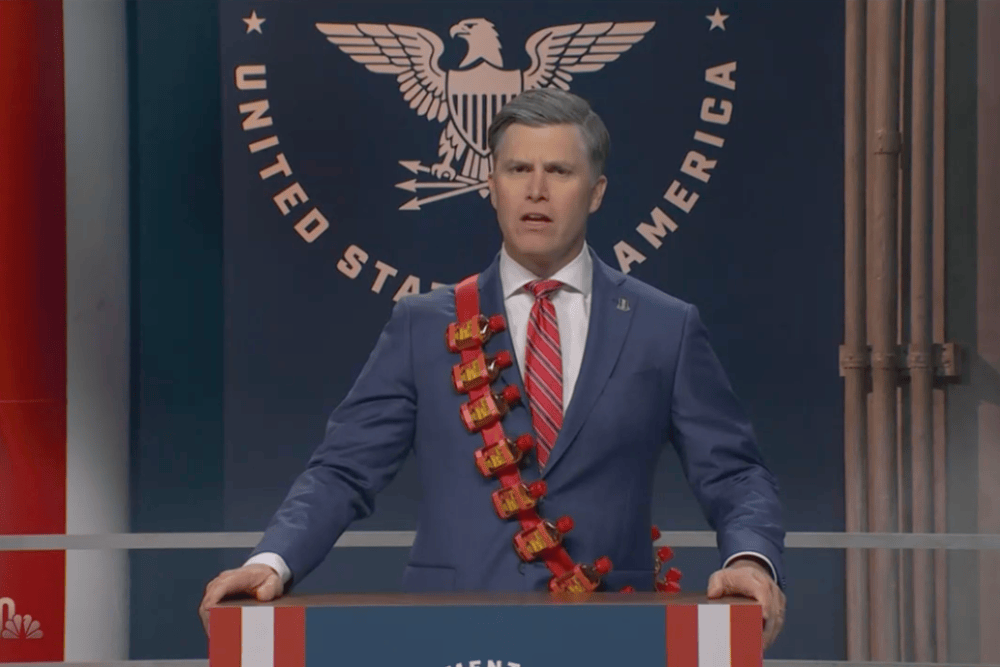
    Colin Jost returned as an especially rowdy Pete Hegseth in this week’s “Saturday Night Live” cold open, welcoming home sailors aboard the USS Abraham Lincoln after nearly a year at sea.

    The Oct. 10 sketch opened with an introduction to the ship’s returning crew, who were told that before reuniting with their families, they would first have to hear from “the guy who put you on the boat in the first place.”

    Enter Jost’s Hegseth, sporting an ammunition belt stocked with miniature bottles of Fireball Cinnamon Whisky, “the only alcohol designed to taste better on the way back up.”

    “How are you sailors doing tonight?” Hegseth asked the crew.

    “We’re bad,” they responded.

    “I heard awesome,” he shot back.

    The sketch took aim at reports of deteriorating conditions aboard the aircraft carrier, including plumbing issues and mental-health struggles among the crew during their extended deployment.

    “I couldn’t be more proud of you. Only eight of you attempted suicide. Two of you since I started talking,” Jost’s Hegseth remarked. “You executed over 3,000 combat missions and you did it with zero casualties, zero flight mishaps and zero working toilets.”

    He then honored one particularly brave sailor who managed to hold his bladder for 300 days rather than complain about the broken bathrooms. When the sailor asked if he could finally relieve himself, Hegseth directed him to a Starbucks three blocks away.

    Jost’s Hegseth also caught the sailors up on some of the Trump administration’s latest activities on land, including plans for a televised execution in December. “Public executions are back, kind of like ‘Scrubs,’” he announced, adding that if the prisoner survives the firing squad, he’ll have to fight Jake Paul.

    He then proudly unveiled the Department of War’s new eagle logo, which has drawn comparisons to Nazi imagery.

    “Sorry, is that a Nazi eagle?” one sailor asked.

    “It’s an American eagle with a Nazi vibe, okay?” Hegseth replied.

    The sketch then brought out James Austin Johnson as RFK Jr. to deliver an equally questionable update on the country’s health.

    “I’m happy to report that America is healthier than ever,” Johnson’s Kennedy began, in the Secretary of Health’s signature croaked voice. “That’s why I would officially like to rename cold and flu season to cold and flu and listeria and measles and trench brain season.”

    He also addressed recent meat recalls, assuring Americans that catfish, pony and cricket remain “valuable proteins” before revealing that the recalled products had been tested on the sailors themselves.

    “The research you provided on Operation Hell Cruise will be vital for years to come,” he declared.

    Hegseth wrapped up his welcome-home speech with a musical tribute to the sailors, quoting Linkin Park’s “In the End.”

    “You tried so hard and got so far, but in the end it doesn’t even matter,” he sang, before thanking the crew for being willing to go down with the ship — even if it breaks his “personal rule of never going down on anyone.”

    The cold open comes just two days after the real USS Abraham Lincoln returned to San Diego following a 322-day deployment supporting the U.S. war with Iran. The aircraft carrier spent more than 260 consecutive days at sea without a port call, with reports of supply shortages, broken plumbing and eight suicide attempts among its crew.

    Jost also appeared as Hegseth in last week’s cold open, which saw the defense secretary chugging Tom Holland’s non-alcoholic Bero beer while joining a cast of Republican officials attempting to drum up excitement ahead of the November midterm elections.

    This week’s episode is hosted by Shane Gillis, marking his third time hosting the NBC sketch comedy series since being fired as a cast member in 2019 over resurfaced racist and homophobic remarks. Rosalía will serve as musical guest.

  • Shane Gillis Bombs ‘SNL’ Monologue (Again): ‘You’re Either Gay or You’re Hitler’

    Shane Gillis Bombs ‘SNL’ Monologue (Again): ‘You’re Either Gay or You’re Hitler’

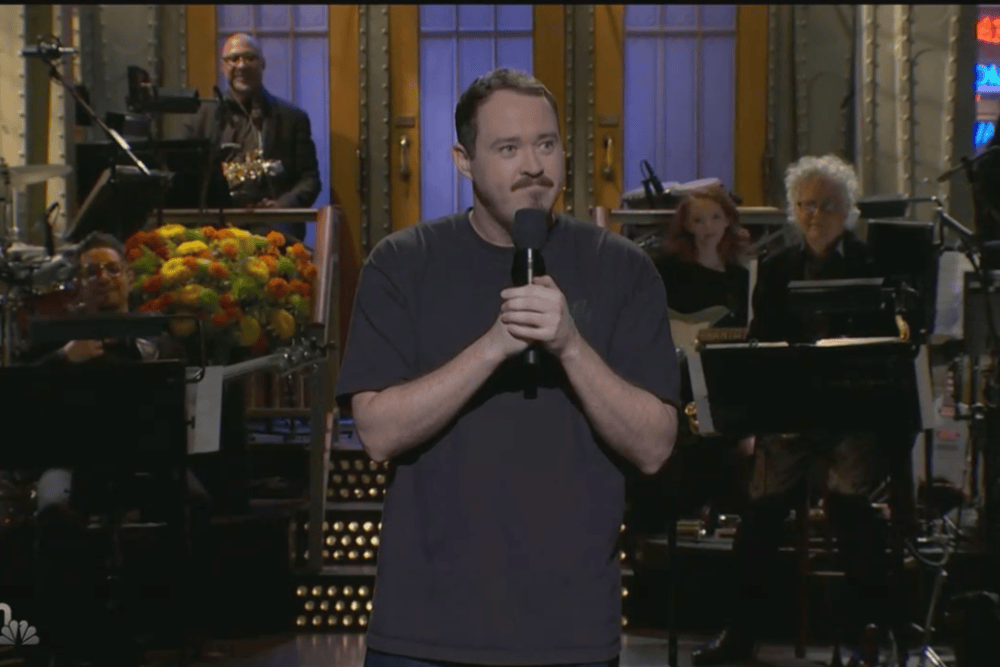
    Shane Gillis returned to host “Saturday Night Live” for the third time since his 2019 firing, emerging in a matching black T-shirt and pants for a meandering monologue about needing to lose weight and being miserable (and trying to be unthreatening to women) while hiking.

    “I tried to go to a public gym. Going to the public gym as a fat guy, especially in New York, is a nightmare, dude,” he opined. “It’s just the hottest gay guys you’ve ever seen. They’re jacked and they look at me, like, ‘Yeah, right.’ ‘I know, dude.’”

    “Also, I haven’t been to the gym in so long I didn’t know women just dress like whores now?” he cracked to groans from the in-studio audience. “Look, I’m sorry, there’s no other way to describe [it]. Have you seen it? I’ve seen it. You’ve seen the shorts? They’re those neon, like, artificial vape-colored [shorts], and the wrinkles go around the cheeks and all combine at the butthole. And don’t look! You’re not allowed to look. For real, don’t look, because they are filming. I’m in the background of ten TikToks right now [grinning].”

    There was more, of course. Gillis riffed on his “two big, fat-bitch sisters” who would heckle him by saying “the meanest things,” like calling him “bitch hips,” and poked fun at how his receding hairline is starting to make him resemble a certain fascist leader.

    “I’ll tell you the thing that I’m really bothered by is: I’ve balded directly into an Adolf Hitler haircut,” he joked. “And it’s not good. Because I give a lot of speeches and the front falls down a lot, and there’s no way to adjust it without looking exactly like [Hitler]. It’s the only way. I’m not going to [brush it to the side], that’s gay. That’s it: You’re either gay or you’re Hitler, and isn’t that where we’re at as a country?” There were few laughs, and then it abruptly ended. Gillis has shown considerable comedy chops in his stand-up specials and hosting the ESPYs, but nailing an “SNL” monologue seems to be elusive for him.

    Gillis, 38, has had a very rocky “SNL” journey.

    Back in Sept. 2019, he was announced as one of the sketch-comedy show’s newest cast members, alongside Chloe Fineman and Bowen Yang. He was fired five days later after clips resurfaced from Gillis’s podcast where he mocked Asians and used anti-gay slurs — which looked even worse given that Yang had just made history as the first “SNL” cast member of full Asian descent (and third openly-gay male cast member ever). Gillis subsequently made a name for himself sans “SNL” with a popular podcast, two stand-up specials, creating and starring in the Netflix series “Tires” and a role in the upcoming biopic “Madden.”

    “SNL” creator Lorne Michaels would later admit that he was forced to give Gillis the boot against his wishes by NBC brass, telling The Wall Street Journal, “That was very strong from the people in charge. And obviously I was not on that side, but I understood it.” And since then, it seems that Michaels has been on a mission to make good with Gillis, offering him the role of Donald Trump for “SNL’s” 50th season (Gillis turned it down) as well as allowing him to host the show three times. While Gillis bombed his monologue during his first hosting stint in 2024, later blaming the Gen Z crowd for not getting his Civil War jokes, he’s since impressed with popular sketches like “CouplaBeers.”

  • ‘SNL’ Host Shane Gillis Drops Accidental ‘F-Bomb’ During Dr. Seuss Sketch

    ‘SNL’ Host Shane Gillis Drops Accidental ‘F-Bomb’ During Dr. Seuss Sketch

    Shane Gillis accidentally dropped an F-bomb during a Dr. Seuss-inspired sketch during his “SNL” hosting stint.

    The comedian was playing Zackary, an aggressively protective son who interrupts a reading of “Green Eggs and Ham” to defend his elderly father from the relentless questioning of Sam-I-Am. When Andrew Dismukes’ character repeatedly pressures his dad to try the titular dish, Gillis steps in to put an end to the interrogation.

    “He doesn’t f—–g like them!” Gillis blurted out, apparently going off-script.

    The slip didn’t go unnoticed by Mikey Day’s Lorax, who later worked the blunder into the sketch. During a heated argument with his son, he kicked Zackary out of the house, declaring, “You’re a loser and you said a bad word!”

    “Yes, I did,” Gillis responded, acknowledging the mishap.

    The on-air slip adds another chapter to Gillis’ complicated history with “SNL.” The comedian was famously hired as a featured player in 2019 before being fired days later when podcast clips resurfaced featuring racist and homophobic remarks. He eventually returned to Studio 8H as a host in Feb. 2024, joking about his dismissal in his opening monologue.

    “I was fired from this show a while ago. But, you know, don’t look that up, please,” he told the audience at the time. He returned for a second hosting stint in March 2025, making Saturday’s episode his third time leading the NBC sketch comedy series.

    The Dr. Seuss sketch began innocently enough, with Dismukes reciting the familiar rhymes of “Green Eggs and Ham” before Gillis’ character intervened to question his intentions.

    “What’s the end game? Why do you want him to eat that stuff?” Zackary demanded. “Is this a money thing? My dad is older, gets confused.”

    The exchange quickly spiraled into a full-blown family feud, with Zackary accusing his father of being susceptible to scams, including a previous incident in which he sent $9,000 worth of Target gift cards to someone in Mumbai. His father fired back by mocking Zackary’s career at Jimmy John’s, which his son insists on referring to by the more sophisticated-sounding “James Jonathon.”

    Things got even more personal when Zackary brings up his parents’ failed marriage, revealing that his mother left his father for the Lorax.

    “Have you seen the Lorax? Two feet tall and his whole face is a mustache,” Gillis says. “And right now that dirty hippie is railing your wife.”

    The sketch eventually returns to its original premise, with the father finally agreeing to try the green eggs and ham — only for Sam-I-Am to reveal that Zackary’s suspicions were justified all along.

    “Yes, I’m happy to comply, just send five grand in Walmart gift cards to my friends in Dubai,” Dismukes’ character said.

    “I told you he was a scammer,” Zackary declared.

    Gillis hosted the Oct. 10 episode alongside musical guest Rosalía.