Michael B. Jordan and Austin Butler‘s “Miami Vice ’85” reboot has dropped its first look at the two stars in character as filming has started.
Jordan is Ricardo Tubbs and Butler is Sonny Crockett in the reboot, based on the popular ’80s detective show that ran from 1984 to 1989. In the original series, Don Johnson starred as Crockett and Philip Michael Thomas was Tubbs. The two characters are police detectives who work undercover in Miami, Florida.
The “Miami Vice ’85” cast also includes Alden Ehrenreich, Whitney Peak, Camila Morrone, Danny Ramirez, John Leguizamo, Andrew Schulz, Edi Gathegi, Walton Goggins, André Holland and Michael Irby. The film is directed by Joseph Kosinski, who recently helmed “F1” and “Top Gun: Maverick,” and it will arrive in theaters on May 19, 2028.
The reboot will explore “the glamour and corruption of mid-80’s Miami” and is “inspired by the pilot episode and first season of the landmark television series that influenced culture and set the style of everything from fashion to filmmaking.”
Dan Gilroy wrote the script, based on characters created by Anthony Yerkovich from the TV series. Eric Warren Singer wrote an earlier draft of the screenplay. Dylan Clark and Kosinski serve as producers on the film. Executive VP of production development Sara Scott and creative executive of production development Christina Hoffrogge will oversee the project for Universal.
After winning best actor last year for “Sinners,” Jordan will next star in “The Thomas Crown Affair” opposite Adria Arjona, which he also directed. Butler’s next film is A24’s “Enemies,” co-starring Jeremy Allen White.
In October, a claim recirculated online that McDonald’s lost a lawsuit against TV chef Jamie Oliver, who — according to posts — proved that the fast food chain’s food is “unfit for human consumption” because it is “highly toxic.” The claim is unproven.
Snopes previously investigated a variation of this claim in 2018 and September 2026. On each occasion, we found that Oliver said in a 2011 TV program that beef trimmings used for a product he called “pink slime” were “not fit for human consumption.” We found no evidence that he specifically called McDonald’s food “unfit for human consumption” or “toxic,” as numerous posts have repeatedly suggested.
The American Meat Institute, a trade association that represents processors of meat and poultry, said in 2012 that beef trimmings used to make “pink slime,” which it calls Boneless Lean Beef Trimmings, are edible.
However, because we could not access a full version of the “Jamie Oliver’s Food Revolution” episode where Oliver discussed “pink slime” to see if he specifically mentioned McDonald’s, we leave this claim unrated.
Snopes will update this report if, or when, additional information surfaces. We contacted Oliver and McDonald’s to ask whether Oliver has ever called the fast food chain’s food “unfit for human consumption” or “toxic” or whether McDonald’s ever lost a lawsuit involving Oliver and are waiting for responses.
A persistent claim recirculated online at the start of October that fast food chain McDonald’s lost a lawsuit against Jamie Oliver after the TV chef proved the restaurant’s food is “unfit for human consumption” because it is “highly toxic.”
For example, one Facebook user has written, in part (archived):
McDonald’s loses lawsuit against chef Jamie Oliver, who proved that the food they sell is unfit for human consumption because it is highly toxic.
Chef Jamie Oliver won a lawsuit against the world’s largest fast-food chain.
Oliver demonstrates how hamburgers are made.
According to Oliver, fatty cuts of meat are “washed” with ammonium hydroxide and then used to fill the hamburger patties. Even before this process, the TV presenter says, this meat was unfit for human consumption.
Snopes readers contacted us about the claim throughout the start of fall 2026. We previously reported on the claim in September 2026 and January 2018.
The claim contains three parts: that McDonald’s sued Oliver, that Oliver made the comments about “pink slime” and that Oliver’s alleged comments were specifically about McDonald’s.
We found no evidence inonlinesearches (archived, archived, archived) that McDonald’s ever lost a lawsuit involving Oliver. AFP Fact Check reported in December 2021 that Oliver had never taken legal action against McDonald’s.
According to an excerpt of a 2011 episode of his program “Jamie Oliver’s Food Revolution,” Oliver said that the meat used to produce a specific type of beef product that the celebrity chef called “pink slime” is “not fit for human consumption.”
McDonalds reportedly ceased using “pink slime,” which is also known as Boneless Lean Beef Trimmings, in their food in 2011, as we noted in 2018 when we fact-checked a previous version of this claim. Oliver did not mention McDonald’s specifically in excerpts of the 2011 episode of “Jamie Oliver’s Food Revolution” that Snopes reviewed.
However, because we could not access a full version of the “Jamie Oliver’s Food Revolution” episode in question to see if it mentioned McDonald’s, we leave this claim unrated.
Snopes contacted Oliver and McDonald’s to ask whether the fast food chain ever lost a lawsuit involving the TV chef, whether Oliver had ever proved McDonald’s food was “unfit for human consumption” or “toxic,” and to ask whether the restaurant used Select Lean Beef Trimmings in 2026. We await replies to our queries.
Oliver’s allegations
In the first episode of the second season of his program “Jamie Oliver’s Food Revolution,” in which Oliver attempted to reform school lunches and fight obesity in the U.S., the celebrity chef held a demonstration where he showed children and adults where on a cow different cuts of meat come from.
According to a segment of the episode (archived) that an internet user uploaded to YouTube in 2016, after spray-painting prices on a live cow to show where various cuts are found, Oliver then addressed what happens to the remainder of the animal.
He said (time code 00:01), “The public loved seeing that, that, equalling a steak. They never for a minute thought I would clear all the meat and cuts away and introduce them to a new world of food. It’s called pink slime.”
Oliver added (time code 00:12), “When you’ve broken down a whole beast, you’re left with trimmings. You know, in my industry, we call those trimmings [BLEEP].”
Speaking to a crowd of people, Oliver described the trimmings used for “pink slime” as (time code 00:36) “not fit for human consumption.”
Oliver went on to say that processing plants took trimmings that were “not fit for human consumption,” separated the meat from the fat, killed harmful bacteria using ammonium hydroxide and sold the end product, which he called “pink slime,” as human-grade food. Ammonium hydroxide is a watery solution that can be used to regulate acidity in food or in hair dye or cosmetics.
In an excerpt from the program included in a 2012 CBS report, Oliver said (time code 00:32), “We’re taking a product that would be sold at the cheapest form for dogs, and after this process we can give it to humans.”
(Snopes could not locate a complete video of the “Jamie Oliver’s Food Revolution” episode in question. The clips we have found online appeared genuine and do not indicate any signs of possible manipulation.)
FDA says ammonium hydroxide ‘generally safe’
Around 11 months after Oliver’s episode discussing “pink slime” aired, the American Meat Institute President J. Patrick Boyle issued a statement to say that Boneless Lean Beef Trimmings is “a safe, wholesome and nutritious form of beef” that helps prevent food waste by utilizing trimmings that would otherwise go to waste.
The institute is a trade association that represents processors of meat and poultry.
Boyle’s statement says, similarly to Oliver’s demonstration, that processing Boneless Lean Beef Trimmings involves first separating the meat from the fat and using “food grade ammonium hydroxide gas” to destroy bacteria before blending the product into foods like ground beef.
However, he denied claims that the trimmings used to create Boneless Lean Beef Trimmings are not edible. The statement says:
Some recent media reports created a troubling and inaccurate picture, particularly in their use of the colloquial term ‘pink slime.’ The fact is, BLBT is beef. The beef trimmings that are used to make BLBT are absolutely edible. In fact, no process can somehow make an inedible meat edible; it’s impossible. In reality, the BLBT production process simply removes fat and makes the remaining beef more lean and suited to a variety of beef products that satisfy consumers’ desire for leaner foods.
The U.S. Food and Drug Administration, which regulates ammonium hydroxide use in food, says the ingredient is “generally recognized as safe.” This was also the case when we last reported on these claims in 2018.
In sum …
While Oliver did call the cuts of meat used for Boneless Lean Beef Trimmings “not fit for human consumption” and claimed (time code 00:59) the product was “admitted to being in at least 70% of ground beef products” in a 2011 program, the episode excerpts Snopes reviewed do not show him specifically accusing McDonald’s of using the product or calling the fast food chain’s products toxic.
McDonald’s said in a 2013 statement it had not used Boneless Lean Beef Trimmings in its products since 2011.
We found no evidence McDonald’s had lost a lawsuit involving Oliver since then. Given the prominence of McDonald’s and Oliver, such a lawsuit would have been widely reported by reputable news media sources. That has not been the case.
While the FDA generally recognizes ammonium hydroxide, which is used to process Boneless Lean Beef Trimmings, as safe, reporting by food safety publication Food Safety News claimed that fast food giants like McDonalds, Taco Bell and Burger King had all stopped using the product by January 2012.
Both ABC, which broadcast Oliver’s program, and the chef himself have faced lawsuits over their coverage of the product.
ABC settled out of court in 2017 in a $1.9 billion defamation lawsuit brought by Beef Products Inc., a producer of Boneless Lean Beef Trimmings, over Oliver’s program and other stories the network had reported about the product in March and April 2012.
A man who Beef Products Inc. laid off after negative press heavily affected the company’s sales sued Oliver, ABC and other defendants in 2012. He dropped the case in 2013.
Bodhi Rae Breathnach, the young Irish-English actress who made her feature film debut in Chloe Zhao’s critically-acclaimed awards darling and box office hit “Hamnet,” has been signed by UTA for representation in the U.S.
The signing comes just as the 15-year-old’s latest film “Sense and Sensibility” prepares to opens in the U.S. The fresh take on Jane Austen’s novel, directed by Georgia Oakley and backed by Focus and Working Title, sees Breathnach star as Margaret Dashwood alongside the likes of Daisy Edgar-Jones, Esmé Creed-Miles, Caitríona Balfe, Frank Dillane, Herbert Nordrum, George MacKay and Fiona Shaw. The film, which released in the U.K. on Sep. 25 to positive reviews, is due to launch domestically on Oct. 16.
Breathnach — whose first screen appearance was the British conspiracy thriller series “The Capture” — also recently starred as the co-lead alongside Jason Statham in the action-thriller “Shelter,” released earlier this year by Black Bear. “She’s very talented, I think we’re going to see a lot of her,” Statham said of his young co-star at the time.
Next up, Rae Breathnach will appear in Robert Eggers’ “Werwulf,” alongside Lily-Rose Depp, Aaron Taylor Johnson, Ralph Ineson and Willem Dafoe, which Focus has slated for a December release. Meanwhile, she recently wrapped the leading role of Marjorie in Fifth Season’s film adaptation of Paul Tremblay’s novel “A Head Full of Ghosts,” directed by Veronika Franz and Severin Fiala, also starring Creed-Miles, Rebecca Hall and David Harbour.
At UTA, Rae Breathnach will be repped by Danie Streisand. In the U.K. she continues to be repped by The Artists Partnership.
British horror icon Hammer Films could be returning to the chilling world of one of its most successful movies.
John Gore Studios, which owns Hammer (bought by theater mogul John Gore in late 2023) has acquired all rights to the works of Dame Susan Hill, who famously wrote the 1983 Gothic horror “The Woman in Black.”
Considered one of the most defining British ghost stories of the modern era, “The Woman in Black” would be adapted into a hugely successful stage adaptation, which ran in London’s West End for 33 years. In 2012, Daniel Radcliffe — fresh out of Hogwarts — fronted a Hammer production of “The Woman in Black” feature, which earned $127.7 million, becoming the highest-grossing British horror in 20 years (and with the biggest U.S. opening for a Hammer film in the studio’s history).
Alongside “The Woman in Black,” Hill’s body of work across a publishing career spanning more than six decades, also encompasses literary fiction, crime writing, children’s books, memoir and radio drama. Among her many accolades, her novel “The Bird of Night” was shortlisted for the Booker Prize in 1972, while her wider honours include the Somerset Maugham Award, the Whitbread Novel Award and election as a Fellow of the Royal Society of Literature.
“For any author, it’s heartening to see their stories continue to find new life,” said Hill. “John Gore Studios brings together a genuine respect for heritage with an understanding of how classic stories can reach new audiences, and Hammer has a long and distinguished place in the history of British gothic storytelling, so I’m very pleased that these worlds can come together for the next chapter.”
Gore recently revealed to Variety that, having so far released 4K restorations of Hammer’s library, he was now looking at bringing some of its classic monsters, including Dracula and Frankenstein, back to screen with new adaptations. Hill’s library — including “The Woman in Black” — adds further opportunities. John Gore Studios said it was looking to exploit her portfolio across film and TV while also looking at opportunities in theater where existing rights arrangements allow.
“Susan Hill is one of Britain’s most distinctive literary voices, and it is a privilege to become a custodian of such an extraordinary body of work,” said Gore, founder and executive chairman of John Gore Studios. “Our ambition is to approach these stories with the same care, craftmanship and respect for character, suspense and atmosphere that Susan has brought to them throughout her career. As we explore new ways of bringing her work to audiences across film, television and beyond, Susan’s voice and vision will remain at the heart of everything we do. Above all, we hope that each new interpretation will encourage audiences to discover, or return to, the remarkable writing that inspired it.”
The acquisition was led by John Gore Studios’ Chief Operating Officer, Anouska Spiers. Development will be overseen by Chief Creative Officer Francis Hopkinson and the wider John Gore Studios creative team, while Spiers will oversee the portfolio/franchise management and overall exploitation strategy for John Gore Studios. Hill will remain actively involved in new creative projects and will be part of the ongoing management relationship around the portfolio and development strategy, as well as being an executive producer on new projects.
“Susan Hill’s extraordinary body of work represents exactly the kind of timeless storytelling that sits at the heart of John Gore Studios’ creative ambition,” said Spiers. “The success of ‘The Woman in Black’ proved the power of her storytelling on screen, but that is only the beginning. Susan Hill’s catalogue offers a rich world of gothic horror, psychological suspense and unforgettable characters and we look forward to expanding that legacy, creating interconnected opportunities for iconic stories, new adaptations and worlds that can captivate audiences for years to come.”
Susan Hill is represented by Peters Fraser and Dunlop (PFD). Caroline Michel, literary agent and CEO of PFD, was instrumental in bringing the transaction together, and will continue representing John Gore Studios as owner of the works.
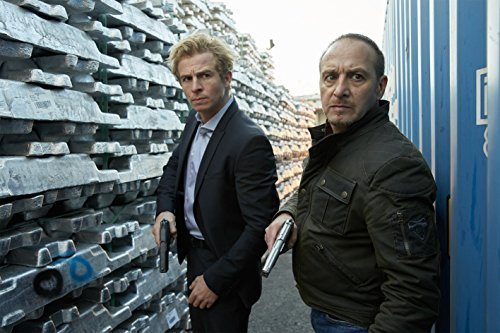
Germany’s leading broadcaster RTL Deutschland unpacked its recent partnership with YouTube at Mipcom Cannes, revealing that its long-running action series “Cobra 11” has thrived on the platform.
On stage alongside Pedro Pina, YouTube’s VP for EMEA, RTL Deutschland chief executive Stephan Schmitter said the broadcaster uploaded more than 200 full episodes of the series to YouTube a year ago, and was able to draw 30 million views — a major feat for a show which has aired since 1996 and previously sold to more than 120 countries worldwide.
RTL is the latest broadcaster to partner up with YouTube, following Channel 4 and BBC in the U.K., and France Télévisions in France.
While linear broadcasters, like streamers, are still perceiving YouTube as a major disruptor and challenger, a number of them have started working more closely with the platform to tap into younger demographics and generate new advertising revenue. The appeal of YouTube has also grown due to the fact that it’s now being consumed on TV screens which makes it a straightforward competitor to traditional outlets.
Schmitter pointed out “Cobra 11” had little commercial value left for RTL after being extensively rerun on linear and streaming, but have found a new audience on YouTube, where 83% of viewers are men with an average age of 30. It also translated into a 123% increase in first video views for the series on RTL+ and a 26% rise in subscriptions linked to the show.
“Our theory was that young men today also love big stunts, flying cars, big explosions and the German Autobahn, where there are no speed limits. That is the key. They discover, or rediscover, the show. And if they want new episodes, more flying cars and explosions, they have to go to RTL+,” Schmitter said.
The YouTube partnership on “Cobra 11” has also been lucrative on the advertising side. RTL’s advertising sales arm Ad Alliance has been in charge of packaging inventory across the broadcaster’s linear channels, RTL+, Sky and YouTube.
“Now we can go to the advertisers, to our huge portfolio of advertisers, and offer them a 360-degree proposition. And this really works out, especially on the big screen, because it’s only one switch away,” said the exec.
“This combination makes sense to advertisers, and they’re very interested in what we are doing with YouTube and how the inventory is shared. In the end, we get additional money, and our revenues are significantly up this year,” he said, citing near “double-digit millions” in revenues.
Earlier this year, France Télévisions struck a deal to bring about 20,000 hours of content a year to YouTube, including national and local news bulletins plus its flagship current-affairs and investigative magazines. It’s already paid off. The broadcaster’s news channel franceinfo hit 110 million YouTube views in September, eight times more than a year earlier.
Pina argued that traditional broadcasters should stop looking at YouTube solely as a threat to their business.
“All in all, it is a self-reinforcing partnership that can only produce value. But again, the value that it produces, interestingly and importantly, is feeding into the IP that is already successful and breathing new life into stuff that was already successful before. And that is so energizing,” Pina said. “And it is the model of creators. So back to your point initially, Evan, of thinking like a creator.”
Like France Televisions, RTL has also made its news channel, NTV, available on the platform alongside shorter videos and content produced with digital creators.
As younger audiences increasingly turn to YouTube and TikTok for information, Schmitter said the move is particularly important at a time of political polarization in Germany, with the far right party AFD on the rise.
“I think for us it’s important, and also for our role in the democratic system, to reach everybody,” Schmitter said.
Pina echoed Schmitter’s argument, pointing to the growing presence of legacy news organizations like BBC and France Télévisions on YouTube.
“The more traditional players start leaning in on YouTube, the more a cross-section of voices can be heard, and that can only be good for democracy,” Pina said.
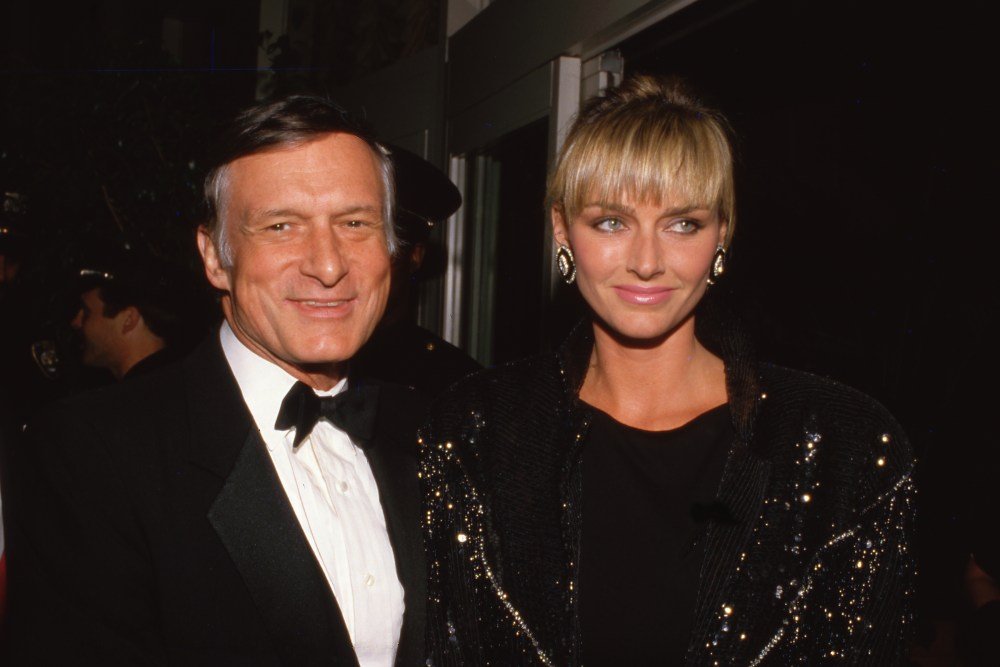
Kimberly Hefner, who was married to Hugh Hefner from 1989 until their divorce was finalized in 2010, has taken to social media to share a statement in support of her late husband after his former wife, Crystal Harris, alleged she experienced sexual, emotional, financial and physical abuse while married to the Playboy magazine founder. Harris shared her story following the news that Jessica Biel would play a fictional version of Hefner’s wife in the upcoming film “Playmates.”
“I was married to Hef for over 21 years. We shared a lifetime of beautiful memories, raised 2 wonderful sons together, and had a deeply loving bond that remained strong until his passing on September 27th, 2017 and continues with me to this day,” wrote Kimberly. “I often told him if you look up the word gentleman in the dictionary you would find his name and photograph. Hef was in every sense of the word, a true gentleman, kind, loving, generous, philanthropic, and a man of extraordinary character.”
She continued: “Losing Hef was devastating, and his absence is still deeply felt. I had the privilege of knowing and loving the man behind the public image, and I will always treasure the life and memories we shared. I will always believe the world was a better place because he was in it. I am forever grateful and blessed.”
Before they tied the knot, Kimberly and Hugh met when she was modeling for Playboy’s Playmate of the Month centerfold. Hugh met Harris at a Halloween party at the Playboy Mansion when she was a 21-year-old college student. She moved into the mansion shortly thereafter and married Hugh in 2012. The two remained together until his death in Sept. 2017, after which Harris published her 2024 memoir “Only Say Good Things: Surviving Playboy and Finding Myself,” in which she revealed her experiences at the mansion.
“Playmates” will revolve around “Elle (Indiana Elle), a 13-year-old know-it-all who considers the Playboy Mansion her second home, and meets Anna (Lily-Rose Depp), one of seven hopefuls vying to be Playmate of the Month,” per the film’s synopsis. “The two form an unlikely friendship and try to help each other get what the other wants most, a magazine cover and a boy.”
Lorraine Nicholson, the daughter of Jack Nicholson, is writing and directing the Searchlight film. Bill Pullman will star as Hugh.
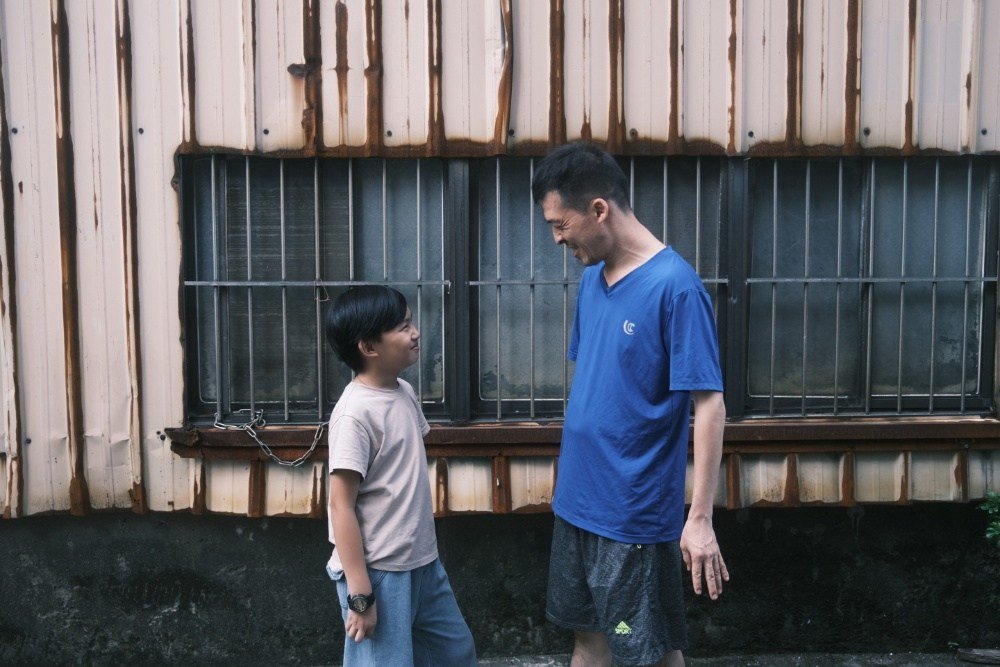
A boy’s devotion to his uncle, a man with an intellectual disability, curdles into shame as he grows up and away from home in “Uncle,” the first feature written and directed by Taiwan’s Yen Hao-hsuan.
The project is part of the Asian Project Market, which runs within the Busan International Film Festival’s Asian Contents & Film Market (ACFM).
Set in rural Taiwan from 1997 to 2000, the film follows 10-year-old Wen and A-Tsik, the uncle he is inseparable from, in a turbulent household where Wen’s grandfather runs an illegal gambling den on the ground floor. As Wen hits adolescence, his affection turns to embarrassment, while the family’s efforts to police A-Tsik’s behavior and sexuality reveal how little say he has over his own life. With the country rebuilding after an earthquake and going through its first democratic handover of power, Wen starts picturing a life beyond his hometown. When he heads off to school in the city, A-Tsik stays put.
The story is Yen’s own. He lived with his uncle for 18 years, a relationship that moved from childhood closeness to teenage shame to Yen leaving for a better future while his uncle remained unchanged. Yen kept his own life out of his short films, unsure back then whether he could separate honesty from indulgence. “Making those short films and the time that has passed since, have given me enough distance to see him as a person, not only as a relative or as a material for a film. Now I think I’m ready,” he says.
As Taiwan races toward the new millennium, its hunger for progress propels the boy forward, Yen says, while the uncle never gets that option. “I hope the film makes us think about who we leave behind, and what we fail to recognize when progress becomes the measure of a person’s worth.”
Yen also wants audiences to meet A-Tsik, and people like him, as equals. “He is loving, funny, stubborn and difficult. He has sexual desires, falls in love, makes mistakes and can hurt people,” he says. “Society labels my uncle ‘abnormal.’ I am not trying to make him ‘normal’; I just hope this film could make the gap between those two words a little smaller.”
The film is produced by Patrick Mao Huang, who founded Flash Forward Entertainment, and Sung Chin-hsuan, with Flash Forward, wpd films and Soseki Studio presenting. Huang’s credits include “Tiger Stripes,” which won the Cannes Critics’ Week Grand Prize in 2023, and “Deep Quiet Room.” Sung’s work spans film, series and immersive media, including 2025 Venice Immersive Grand Prize winner “The Clouds Are Two Thousand Meters Up.”
Huang, who had long hoped to work with Yen, says the director’s shorts showed rare command of performance and sound and image, along with an honest grasp of adolescence. “To grow up is also to abandon something,” Huang says. He believes the film’s emotional core can travel beyond Taiwan.
“Uncle” is in development and financing, backed by a Taiwan Creative Content Agency (TAICCA) development grant, and was developed in the New Director Workshop held this year by the Taipei Film Festival. Yen is now writing a fresh draft and working out the film’s visual style. The project has also been picked for the Tokyo Gap-Financing Market.
In Busan, where the project is making its first Asian market outing, the producers are courting co-production partners from Korea, Japan, elsewhere in Asia and Europe, along with financiers, post-production collaborators, sales agents and distributors. Huang wants a financing and creative setup that safeguards Yen’s voice and the film’s Taiwanese character.
Yen’s 2024 short “Caged Dog” earned a Golden Horse Awards nomination in the live action short category, and his first short, 2022’s “On Another’s Sorrow,” bowed at the Golden Horse festival. He is finishing his third short, “Accident,” now in post-production, and is toying with a possible second feature or series about Taiwan’s democratization.
“Demon Hunters,” Mei-Juin Chen’s India-Taiwan action-comedy, will open in cinemas across the Netherlands on Oct. 29 via LAX Entertainment, extending a run that began theatrically in Taiwan and continued on streaming and digital platforms in India and the U.S.
LAX chief Soeniel Sewnarain has lined up screens with leading Dutch exhibitors, among them Pathé and Kinepolis.
“What attracted us to ‘Demon Hunters’ is that it is genuinely different. It brings together India and Taiwan in a way that is energetic, entertaining and accessible to an international audience,” said Sewnarain.
Arjan Bajwa, JC Lin, Regina Lei, Jack Kao, Harry Chang and Jayanta Meetei star. Chen’s film mixes action and comedy with a supernatural streak, and builds its story around the collision of two cultures.
The film first played in Taiwan through Vie Show Cinemas. Indian audiences then got access via JioHotstar and Prime Video, and a U.S. rollout followed on Apple TV, Amazon, YouTube and other digital services.
Cindy Shyu of Taiwan’s Light House Productions produced the independent feature, which also had support from the Taiwanese government. Gayathiri Guliani, founder of India’s Kleos Entertainment Group, came aboard as co-producer.
“The Netherlands release is an important milestone for us because it brings ‘Demon Hunters’ back to the big screen in a new international market,” said Shyu. “From Taiwan to India, the U.S. and now the Netherlands, the film has continued to find audiences across cultures. That is ultimately what we hoped for when we began this India-Taiwan collaboration – to create a film that could travel.”
Guliani said the film had been designed from the start to cross borders, adding that its journey through Taiwan, India, the U.S. and the Netherlands showed “stories rooted in one culture can find resonance in another when they are driven by universal entertainment values.”
Japan’s Dwarf Studios is looking for a new partner for “Hidari,” the stop-motion samurai film voiced by Keanu Reeves, after talks with a U.S. company that offered to fund the entire budget in exchange for all rights stalled, producer Matsumoto Noriko told an audience at the Busan International Film Festival‘s Asian Contents & Film Market (ACFM) on Sunday.
Dwarf Studios co-founder and head producer Matsumoto was speaking at “Co-Producing with Japan: Opportunities and Challenges,” a Producer Hub session co-hosted by VIPO. Japan is the Producer Hub’s focus country this year. She was joined by Questry CEO Ibe Tomonobu and Knockonwood founder Yamaguchi Shin, with VIPO’s Tanimoto Hiroyuki moderating. Kawamura Masashi directs “Hidari,” produced by Dwarf, Whatever and Tecarat.
Dwarf’s “Hidari” pitch was a highlight of the Annecy Animation Showcase at Cannes and at Annecy itself earlier this year. A U.S. company’s offer to fund it came with a condition: it would take all the rights. Matsumoto said the company respected Dwarf’s creativity and was prepared to pay enough, but full funding would have left the studio with no control over a highly original project. Dwarf wanted to hold on to half the rights and asked Ibe to find the Japanese share. Before the talks could go further, the people Matsumoto had been negotiating with lost their jobs amid upheaval in Hollywood, and Dwarf is now looking for a new partner.
“Even with Keanu, we cannot stop the fire,” Matsumoto said.
Questry has set up a special purpose company for “Hidari” so that overseas and local investors can put money into the film side by side. Ibe said the project shows why development money matters. Dwarf made a pilot short in 2023 at its own risk, partly through crowdfunding, and the pilot traveled far enough to bring Reeves aboard. Questry now wants to back pilots and development-stage work, which in Japan studios and creators usually pay for themselves.
The film could not have been financed in Japan alone, Ibe said, and the reason lies in how Japanese film and anime are usually funded. Ibe spent 11 years at Goldman Sachs before founding Questry about four years ago. His presentation put the share of Japanese anime and films backed by production committees, or seisaku iinkai, at more than 90%, citing industry estimates. Publishers, labels, broadcasters, streamers, toy companies and ad agencies each put in a share, mainly to win a “window” – the right to exploit the title in their own business. Window fees are deducted first, so members often make more from their window than from their stake. Studios, meanwhile, are typically hired for a fee and see little upside.
In Korea, by contrast, investors, distributors and producers play separate roles, and Ibe said producers often take around 40% of profit after recoupment. “How you raise money decides how you share it,” he said.
Ibe’s presentation described the committee as a well-built system that works very well for titles made in Japan for Japan. It can still serve titles sold worldwide if overseas rights are planned from day one, he said, but the fit gets worse the more global a project is. A co-production with few Japanese windows to sell gives Japanese companies little reason to invest, and only Japanese companies can sit on a committee. Overseas sales made up 56% of anime industry revenue in 2024, up from 20% in 2014, he noted.
“If the world needs a project, we want to put money into it, even if the Japanese market can’t see it yet,” Ibe said.
Yamaguchi, who said he has wrestled with financing for more than 20 years, has made the committee work for an international film. Fukada Koji’s “Love on Trial,” which Knockonwood joined in 2017, drew 60% of its budget from a Toho-led committee, 29% from the government’s JLOX subsidy and 11% from presales through MK2 Films and French distributor Art House. Yamaguchi kept the committee to Toho, Knockonwood and one music company. The French money went in through Knockonwood’s share, backed by a separate contract giving the French partner full sight of the numbers – an arrangement he said still sits in a gray zone. The film world premiered at Cannes and had its Asian premiere in Busan last year.
Hikari’s “Rental Family,” starring Brendan Fraser, took a different route. U.S. partner Sight Unseen put in seed money in 2020 and later connected the project to Searchlight Pictures, which signed on in 2023. Searchlight covered 90% of the budget and a JLOX location incentive the other 10%. The film world premiered in Toronto in 2025 and was released in 73 countries. Yamaguchi has worked with Hikari for 15 years.
His third case, Eddie Cahyono’s “Ibuku,” plays in competition at Busan this year. Indonesia’s Talenta Media and Yasa Buana Films hold 80% and Knockonwood 15%. The last 5% came from Thailand’s White Light gap fund, released after the project won the White Light Asian Project Award at BICM. Christine Hakim stars in the 16mm film, which first won a prize at Busan’s Asian Project Market in 2015. Knockonwood came aboard nearly a decade later through Cinema at Sea.
“Independent filmmakers and producers never give up because we have to find the new ways,” Yamaguchi said. Japan has started opening up to co-production over the past two years, he added, though it remains behind other countries on language, legal and accounting fronts. Japan has co-production treaties only with China and Italy, and Yamaguchi said neither works well for the Japanese side.
Tanimoto said the government subsidy behind “Love on Trial” and “Rental Family” has been upgraded this year into a new program, IP360, with higher minimum budgets for production and post-production. Pre-production support remains, and applicants need a Japanese producer partner. The Agency for Cultural Affairs also offers a co-production subsidy covering 20%, subject to caps.
Stop-motion brings its own problems, Matsumoto said. A co-production typically requires 20% to 30% of the budget to be spent outside Japan, which is hard when the shoot cannot easily be split. Dwarf, which co-owns NHK mascot Domo-kun, has still found partners abroad. Its feature “Komaneko” drew more than 250,000 moviegoers in France, over 10 times its ticket sales at home, and “Mogu & Perol” is being developed as a series with French and Taiwanese partners. Dwarf is also adapting Matsumoto Taiyo’s autobiographical manga “Sunny.” Matsumoto, meanwhile, is developing “Moritō,” drawn from an art exhibition by Shibata Keiko, creator of the picture book “Pan Dorobou.”
“Even if I give up co-production, I don’t give up finding collaborators,” Matsumoto said.
Kim Sung-soo, director of Korean box office hit “12.12: The Day,” once saw AI as a destroyer of the film industry. Speaking Sunday at a session hosted by Kling AI at the Busan International Film Festival‘s Asian Contents & Film Market, he described how it has instead become part of his craft.
His turning point was “Worm Train,” an eight-minute short he first gave up on because AI couldn’t render its key scene, a giant insect colliding with a packed train crowd. Months later, the technology had caught up. “Technology doesn’t replace creativity. It shows what’s in your imagination,” Kim said. The project changed how he imagines and collaborates, he added: “I’ll never go back to the way I used to make films.”
He did not make it alone. Kim assembled a nine-person team, including an animation art director and a music director. Though the short could have been made entirely with AI, he said, they chose to generate only part of it and handle the rest with conventional filmmaking methods. He plans a similar hybrid approach for a seven-part drama series he is developing. Its nearly 15-minute opening chase on the Gyeongin Expressway, which he said would require “enormous financial resources” to shoot conventionally, will first be generated with AI, then used to decide which shots need actors on set and where traditional VFX come in.
Kim was joined by Harry Hyun, director and CEO of AI production company MooAm; Chinese animation director Li Wei, co-director of “Jiang Ziya”; and Lee Sangwook, producer and team manager at MBC C&I’s AI Contents Lab.
Li made a similar case for animation. Presenting a trailer for “Born of the Tide,” a 105-minute AI-animated feature about China’s boat-dwelling Tanka community, he said the technology works best at the trial-and-error stage: concept designs that once took enormous time to draw by hand can now be visualized quickly and shared with the team. “AI can generate many things, but the choice and the details all come down to the director,” he said.
Hyun agreed that filmmaking skill is what makes the difference. “Faces look identical, sets look identical, lighting looks identical,” she said of AI output made without it. That is why MooAm looks for AI artists who have directed at least one live-action short.
Otherwise, she said, AI production is not fundamentally different from a conventional shoot, only more efficient. What changes is the crew. Her directing team now includes an “AI coordinator,” who decides which cuts will be generated, keeps a continuity script for them and checks with AI artists that everything cuts together. Even assistant directors need a basic grasp of AI, as gray screens marked with tracking points replace green screens.
Building those skills is also a priority for Lee, whose lab is producing “Rendering Love,” a short-form K-pop romantic comedy about a virtual idol group, with “Parasite” producer Barunson E&A developing the story. “If even one or two individuals lag on the learning curve, overall quality can suffer,” he said of keeping pace as models update.
Mastering the tools won’t settle every question, though. Kim argued that rules on commercial use and permissions should be settled before the industry sets any technical standards. “Whenever I generate outputs, I scrutinize the results closely to ensure they do not infringe upon existing works or violate anyone’s publicity rights,” he said.
“In the future, we won’t call AI movies ‘AI movies,’ just as we no longer call films ‘color movies,’” Kim said.