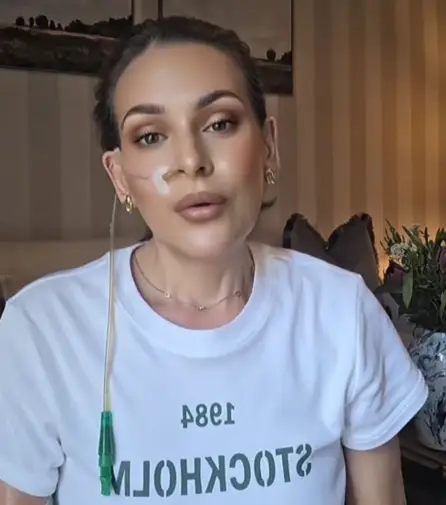
A Scottish influencer whose cancer was initially misdiagnosed as IBS has passed away at the age of 41.
Glasgow-based content creator Danielle Quinn had been open about documenting her experience with Stage 3 low-grade serous carcinoma, a rare form of ovarian cancer, after being diagnosed with the disease in December 2022.
Danielle had then documented her journey with cancer on her social media accounts, explaining that she had to have as many as 10 organs removed in an attempt to battle the illness.
Danielle’s death was confirmed yesterday by her partner Ryan, who shared the following tribute to her Instagram page.
“I’m absolutely heartbroken to tell you that my beautiful D went to sleep for the final time at 00:15 this morning,” he wrote, adding that Danielle had passed away ‘peacefully and as gracefully as ever’ in his arms.
The influencer previously confirmed that she’d been moved to end-of-life care (Instagram/@_danielle_quinn)
“Behind everything she shared was simply my girl. My best friend, my little love and the woman I was so incredibly lucky to love and be loved by,” he continued.
“I watched her face things no one should ever have to, yet somehow she still found reasons to smile, laugh and care for those around her. Even in her final days, she remained unapologetically D. I couldn’t be prouder of her.
“I’m utterly devastated. We had so much more living, laughing and loving to do, and I’d give anything for more time. But I’ll forever treasure the life we shared and the privilege of her love.”
Danielle’s passing comes just weeks after she shared the heartbreaking update that she was moving to end-of-life care after it became apparent there was no further medical treatment available.
She was later moved into hospice care in order to receive end-of-life treatment, with one of her last Instagram posts explaining that she’d decided to stop receiving Total Parenteral Nutrition (TPN), a feeding method which delivers essential nutrients directly to the bloodstream.
What is serous carcinoma?
According to ovarian cancer charity Ovacome, low-grade serous ovarian cancer (LGSOC) is a rare and invasive form of cancer which grows slowly on tissue in the abdomen. It is most common in women between the ages of 40 and 60.
Symptoms include pain, bloating and difficulty eating. Changes to the body’s bowel and urinary functions also occur as pelvic and abdominal organs become affected by the cancer.
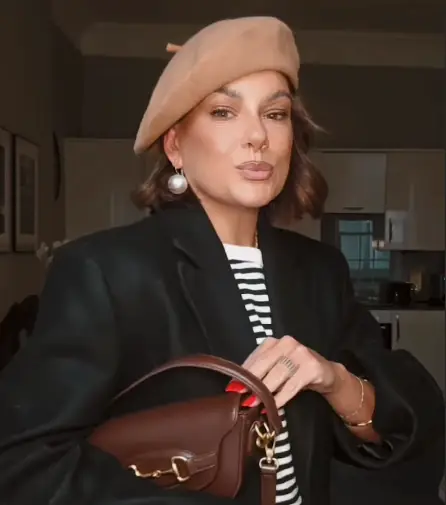
Danielle had built a following sharing lifestyle and fashion content alongside updates about her cancer (Instagram/@_danielle_quinn)
After being diagnosed in 2022, Danielle underwent both hormone therapy and chemotherapy to combat the disease. She also had a seven-hour operation which removed 10 of her organs after it was discovered the cancerous cells had spread across her abdomen, with surgeons cutting out her womb, cervix, fallopian tubes, ovaries, spleen, part of her bowel, part of her diaphragm and her omentum.
She had initially responded to treatment but was later informed by doctors that her cancer had returned in October 2024.
In 2025, Danielle made a TikTok account dedicated to her cancer experience, documenting how cancer treatment and a surgical menopause had changed her life and relationships.
When Kim Ji-yong read the script for “Possible Love,” its emotional climax, set in a still forest by the beach, had no wind in it. Korean summer storms on location changed that.
The cinematographer behind “Decision to Leave” and “Squid Game” Season 2 asked director Lee Chang-dong to change the scene’s setup, a choice that ended with crew members shaking the trees with ropes.
Delivering a masterclass titled “Cinematography of Possible Love: Quiet, Yet Deeper” at Netflix’s Creative Asia program during the Busan International Film Festival (BIFF), Kim detailed how he and Lee built the film’s look around natural light, and how much preparation that choice required.
“Possible Love,” Lee’s first film in eight years, won the Silver Lion Grand Jury Prize at Venice last month and is South Korea’s submission for the international feature Oscar. It screens in BIFF’s Icons section ahead of its Netflix launch on Nov. 6. The drama follows two married couples from opposite ends of the economic ladder: Mi-ok (Jeon Do-yeon) and her laid-off husband Ho-seok (Sul Kyung-gu), and documentary filmmaker Ye-ji (Cho Yeo-jeong) and her husband Sang-woo (Zo In-sung).
For all the film’s naturalism, almost nothing in it was left to chance, not even the weather on the day of the climax.
The team prepared for every windy day announced by Lee’s favorite weather YouTube channel. “And every time, the director would say, ‘There is such a thing as a film ghost,’” Kim told the audience. “But that ghost only appears and helps once we have prepared thoroughly past 100% and put in all our effort.”
The ghost never showed up. Instead, everyone on set except the five or six crew members needed to shoot went into the woods, tied ropes, hung onto them and shook the trees. “The film ghost did not appear. But our staff ghosts on set created this,” Kim said, calling it one of the most memorable moments of his more than 20 years in film.
That tension between the natural and the constructed ran through the lighting too. “Ultimately, the balance was centered on supporting natural light, using film fixtures only to assist,” Kim said. In day scenes, film lights were only used where natural light fell short; at night, the team relied as much as possible on existing streetlights and lamps.
That meant designing around the locations. Lee found the site of rich husband Sang-woo’s vacation home on a real estate YouTube channel, and the team built the house during two months of pre-production, down to the direction and size of every window. “To create that kind of result requires an enormous amount of calculation, planning and preparation,” Kim said. “Compared to any film I’ve worked on, this is the one where we worried, debated and planned the most to make it appear that way.”
Kim’s credits also include effects-heavy productions such as “Ashfall.” “Being human, a certain style inevitably emerges,” he said. “For this project, I wanted to strip those away.”
“Possible Love” was shot handheld with a single camera, except for two dialogue scenes. “If it’s too close, it feels exaggerated, and if it’s too far, it feels like we are cropping, cutting up the frame and peeping in,” Kim said of the camera’s distance from the characters.
With Ye-ji’s documentary at the heart of the story, separating her footage from Lee’s film was another question. “Is making that distinction really necessary?” Kim said. “So we decided not to set it in stone.”
“I wanted to blur that boundary,” he said of the shots from the documentary team’s cameras and his own, which become harder to tell apart as the film goes on. “The reason is hard to explain in words, but it was an intuitive sense that it felt right.”
As for the forest, Kim hasn’t given up on the film ghost. “If I get another chance to work with the director in the future, I hope we can definitely meet it then,” he said.
One of the most striking aspects of the incident is that the modified devices were able to pass Ledger’s official Genuine Check test. This is because the attackers were able to install additional hardware without altering the device’s original security chip. While Ledger’s verification system can check the authenticity of the security chip, it cannot detect all physical modifications made to the device.
Related NewsAllegations of a Massive Hack at One of the Largest Crypto Wallets—A Substantial Amount Stolen, CZ Issues a Warning
According to one theory, the attackers had been collecting users’ recovery words for a long time through compromised devices. However, instead of carrying out the attack immediately, they waited to empty numerous wallets simultaneously.
It is speculated that after Karpelès’ warning, which garnered approximately 90,000 views, the attackers may have realized their activities had been exposed and taken action. According to this scenario, the attackers quickly began transferring assets from the wallets they had compromised after their operation was revealed.
However, a direct link between Karpelès’ statement and the subsequent large-scale wallet robberies has not yet been confirmed. It is also unknown whether the spyware in question was responsible for all the attacks.
Initial findings suggest a supply chain attack involving the physical alteration of devices before they reach users, rather than a vulnerability in Ledger’s cryptographic security system.
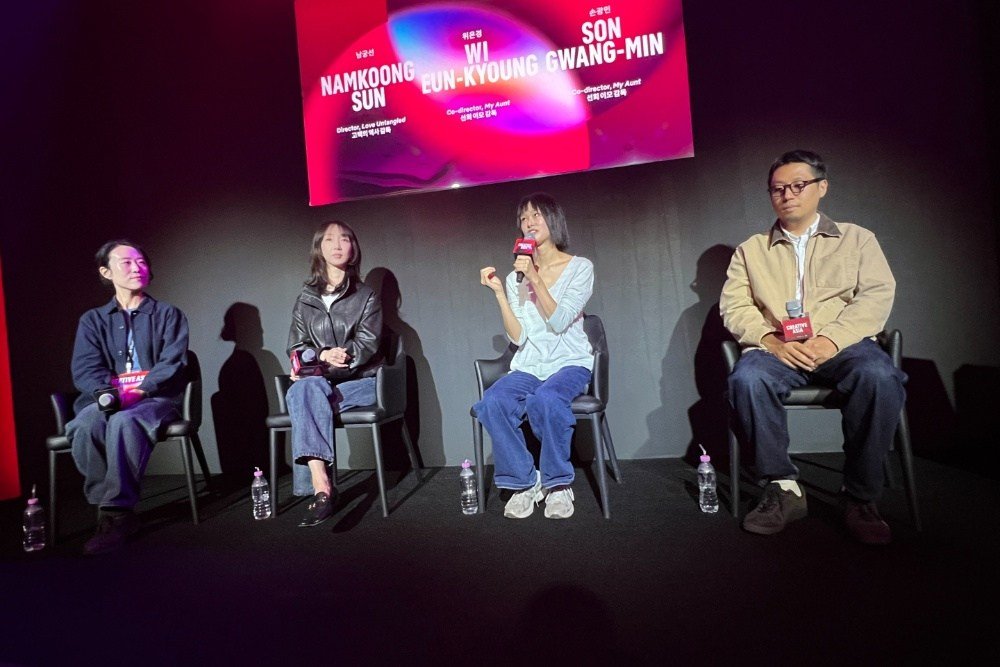
Namkoong Sun, director of Netflix’s Korean romance “Love Untangled,” said her first commercial feature felt little different from her independent films once cameras rolled, apart from the scale. The freedom, she added, came with weight.
Namkoong was speaking at “New Voices in Film,” an industry panel staged by the Busan International Film Festival and Netflix as part of Creative Asia, alongside Ryu Eun-jung and Song Kwang-min, the married co-directors of the short “My Aunt.”
Namkoong’s first two features, “Ten Months” and “Time to Be Strong,” were independent titles released in theaters. She joined “Love Untangled” when the project and screenplay were already in place, coming on at the adaptation stage, and said the offer landed just as she wanted to find joy again after two films about thorny social problems. A little over a year passed between opening the production office and release.
“Once we went into production, it was a system where we could focus only on the film,” Namkoong said. “There may be upsides and downsides to that. I didn’t want to imagine what would happen if I failed to take responsibility within that freedom. But because that freedom was there, there were definitely things I was able to bring to it.”
Netflix staff sat in on meetings and worked inside the team throughout, she said, and the changes to the script were her own, made in service of what she saw as the film’s theme of happiness. The story is set in 1990s Busan, and with a modest budget for a period piece, the production recreated the Gwangan Bridge under construction to give the film a sense of place.
Her message to younger directors was that a director always carries responsibility for the story, “but within a space where creative freedom is guaranteed, I think you have to take that responsibility really seriously.”
Namkoong said she missed crying and laughing with audiences and cast in theaters, a ritual a streaming release doesn’t allow. “Once it was out on Netflix, people all over the world were watching it at the same time. On Twitter, Instagram, all kinds of social media, everyone flocked in and enjoyed it together, me included,” she said. “Small, sweet romance films don’t make up a big share of the Korean audience. But I was getting messages from people in Brazil and friends in Poland and Colombia saying the film was popular there.”
The film reached No. 1 in many countries and stayed in the global top 10 for more than six weeks, she said, even though it was made in Korean and is “really just a Busan story, a very local story.”
Her earlier releases had harder luck with timing. “Ten Months” premiered in the first year of the pandemic, with festivals shut and cinemas at half capacity. The press screening for “Time to Be Strong” took place on the day martial law was declared in Korea. “We did all the press, went home excited, and then that happened that night, so our news disappeared,” Namkoong said.
“My Aunt” is a 24-minute short. It follows a dog groomer looking after an abandoned dog over the course of one day, when the niece she raised 10 years earlier turns up at her door. It won three prizes at this year’s Mise-en-scène Short Film Festival, where Namkoong served on the jury. It is streaming on Netflix in Korea until December as part of the platform’s showcase of the festival’s prizewinners.
Ryu, who also plays the lead, drew on her own childhood, when she was raised by her fifth aunt, who later took in an abandoned dog. She had no plans to act in it but, having worked as an actor before, took the role herself and asked Song, her husband, to co-direct. Song handled directing on set, the pair shared storyboarding in pre-production, and Ryu led post-production. A previous collaboration had involved shouting matches over the phone, both recalled. This time, both said, speaking to each other without a filter built trust.
Song said he had first felt torn about a Netflix release, given what cinemas offer in image texture and sound, but came to see it as a stroke of luck. On a film-rating app, his previous film drew responses from about 15 people. “My Aunt” has been logged by 7,000 to 8,000 viewers, with more than 1,000 comments.
Namkoong, who was once a Mise-en-scène breakout herself, described the festival as a launchpad for the next generation of Korean directors. “These days, unlike in the past, anyone can upload their film to YouTube. You can screen it anywhere, really,” she said. “But what we do is pick out films and say, these are films that are more like real cinema, these are the films we’d like people to see, and put them on a list somewhere. When that came together with Netflix, the impact became huge.”
Asked by an audience member to name the single biggest challenge facing Korean independent filmmakers, the three directors answered in turn.
“The difficulty in the independent film world, then and now, is raising the budget. But more than that, the biggest challenge is not knowing in advance where a film will go after it’s made,” Namkoong said. “Even when a film is shown at a festival, you can’t tell whether it will get a release, because of what a release costs and various other things. We manage somehow to get it made, but there isn’t the infrastructure, like theatrical infrastructure, to show it.”
Ryu said cost was her main worry with “My Aunt” too. “Independent film is film made independently of capital, so it has to be made with the individual creator’s own money,” she said, noting that platforms for indie film, and interest in it, remain limited. Song, who has always paid for his films himself, named capital as the biggest hurdle but said he had no other complaints. “Shooting films is so much fun. I loved it.”
All three are now writing screenplays for their next projects. Namkoong said she hopes to make a film set in present-day Busan, drawn to the city’s two sides. “It’s a city and also the sea, a tourist spot and also a place where people live,” she said.
“People were keenly aware, like me, they were bulled up because it was ‘go’ time,” Connors said. “We were going to go to that $250,000 to $300,000, $400,000 level using previous cycles.”
Instead, the market turned against them.
“The movement was obviously not onchain data. I mean, it was all derivatives,” he said. “So paper bitcoin again is alive and well and governs the near term.” The lesson, he argues, is that bitcoin’s price can be driven as much by leveraged bets as by demand for the asset itself.
That hasn’t changed much in the past year. Perpetual futures, which allow traders to bet on price moves without owning bitcoin, remain a major part of crypto trading. Exchanges also have strong financial incentives to keep offering leveraged products. Still, traders may be better equipped to navigate the risks.
“The data is getting better at defining what the market structure is,” Connors argued, pointing to improved visibility into order books and positioning. “More information means greater certainty, less volatility.”
Chris Sullivan, co-founder of Hyperion Decimus, said traders can take steps to protect themselves from the kind of losses seen last October.
His advice starts with avoiding leverage and keeping a close eye on open interest, funding rates and market sentiment. Open interest tracks the number of outstanding derivatives contracts, while funding rates reflect the cost of holding positions in perpetual futures. Together, they can help traders spot when the market is leaning too far in one direction.
Zacharia had traded at an implied probability of about 1% in the days before the news, the Journal reported. The Kalshi spokeswoman confirmed that the company was probing trades predicting her selection but declined to comment further. An investigation is not a finding that any trader used inside information.
Settlement Is Not Withdrawal
Kalshi’s exchange rulebook separates settlement from access to funds. Rule 6.4 permits withdrawal requests to be suspended or denied when Kalshi or its clearinghouse determines that the funds are relevant to a pending investigation.
The exchange’s published insider-trading policy says accounts flagged for potential insider trading are frozen, preventing withdrawals until an investigation is completed. That is its general policy; whether particular accounts in the press secretary investigation face those restrictions remains unclear. Its rulebook also allows fines, recovery of profits and suspension or revocation of trading privileges following disciplinary proceedings or settlements.
The inquiry follows earlier scrutiny of political betting on the platform. In June, The Defiant covered reported DOJ and Commodity Futures Trading Commission investigations into George Santos’s Kalshi trades, citing NPR.
The CFTC’s February enforcement advisory described earlier Kalshi disciplinary cases involving a political candidate trading on his own candidacy and a YouTube editor trading contracts tied to videos. The agency said exchanges have an independent duty to maintain audit trails, conduct surveillance and enforce trading rules, while the CFTC retains authority to investigate and prosecute violations on those exchanges.
A screenshot authentically shows an X post from Elon Musk that says: “No one needs to worry about Democrats winning the midterm elections. I have a plan.”
Rating:
For more than a year, social media users have spread a purported screenshot of an X post by Elon Musk that says: “No one needs to worry about Democrats winning the midterm elections. I have a plan.”
The alleged screenshot circulated on platforms such as X and Reddit. Snopes readers contacted us to investigate the screenshot’s legitimacy.
However, a search of Musk’s X account found no evidence that this post exists. Furthermore, we found no screenshots of the post that included a timestamp or additional details indicating it was authentic, indicating that Musk did not share this X post and then delete it. If the screenshot circulating online were indeed authentic, there would be additional examples of the post through other users’ varying screenshots.
Similarly, a search of an independent archive for Musk statements returned no relevant results. Searches on Google, DuckDuckGo and Yahoo also revealed no evidence that reputable news outlets have covered this supposed statement.
As such, we have rated this screenshot as fake.
The earliest version of the fake X post that we found was posted in August 2025, from Threads user @powermacuser12.
That post claimed Musk “rigged the vote tabulation computers in the swing states to ensure Trump won the 2024 election, & he’s obviously planning on cheating again in the midterm elections.”
“He should be hauled into jail by the FBI for his post below,” powermacuser said, in reference to the fake screenshot.
We reached out to the Threads user to ask more about where they obtained the screenshot and await a response.
Snopes previously found no evidence Musk rigged the election in favor of Trump via his Starlink satellite network. In fact, most election systems are a closed network, making connection to Starlink impossible.
For years, a rumor has circulated that Donald Trump’s 2020 presidential campaign paid for hotels, flights and other expenses to help people who stormed the U.S. Capitol on Jan. 6, 2021. For instance, a meme alleges a “new document drop” shows the “Trump campaign paid for travel, hotels, expenses and organizing efforts to bring outside radical organizers” to Washington, D.C.
The claim gained traction after former Special Counsel Jack Smith, who led the investigation into Trump’s efforts to overturn the results of the 2020 presidential election, testified before the Senate Judiciary Committee in recent weeks.
The claim draws on authentic, unsealed records that Smith assembled about Jan. 6, but makes an unsubstantiated assertion about the Trump campaign covering people’s expenses. It also mischaracterizes the documents as being new.
Smith’s documents detail a $3 million proposed budget for the rally and how those funds were distributed among various political advocacy organizations that are not legally required to disclose their donors. These groups did not work directly for, or with, the Trump campaign, but they supported either his candidacy or other Republican candidates running for lower offices.
Congressional records show that one person in particular — Julie Fancelli, heiress to the Publix supermarket chain — provided the $3 million for the rally’s organization.
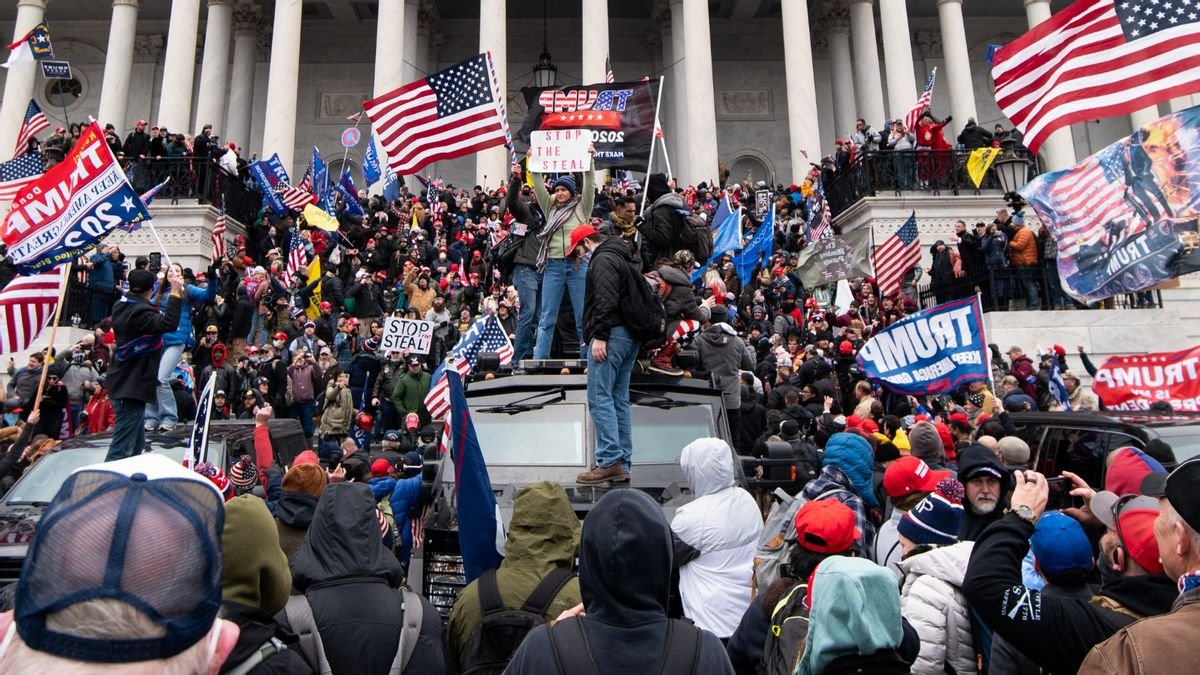
The political conditions that led to the Jan. 6, 2021, attack on the U.S. Capitol will be studied for decades. The extent to which President Donald Trump influenced the violent attempt to stop Congress’ certification of the 2020 presidential election remains a major question.
Some critics of the president not only allege he incited the attack with false claims of election fraud, but that his campaign paid for the travel and lodging expenses of the people who stormed the Capitol while they were in Washington, D.C.
One Facebook post claimed, “Jack Smiths new document drop shows that the Trump Campaign PAID for travel, hotels, expenses and organizing efforts to bring outside radical organizers” to Washington, D.C., on Jan. 6 (archived):
(Democrats, Republicans and Independents for Democracy)
Trump headlined the rally at the Ellipse, a park near the White House, that preceded the attack on the Capitol. At the end of his speech, he asked those present to march to the Capitol. “We’re going to the Capitol,” he said. Violence began at the Capitol shortly after Trump finished speaking.
The claim that Trump’s campaign funded the rally draws on authentic, unsealed records that Smith assembled about Jan. 6. However, Snopes found no evidence that his official campaign covered attendees’ expenses or organization costs of that rally.
In addition, the documents Smith compiled are not new. A judge’s order unsealed them in 2024.
One of these documents indicates several independent political advocacy groups received money to organize the so-called “Save America” rally.
Congressional documents reveal that the financial backing for the event came from one person in particular — Julie Fancelli, heiress to the Publix supermarket chain.
To learn more about the financing, we reached out to Fancelli, Caroline Wren — a Republican fundraiser who helped Fancelli distribute money for the Jan. 6 rally — and some political advocacy groups that received money for the event. We also reached out to the White House asking about Trump’s involvement in the day’s organization. We will update this report if we receive responses.
Smith’s documents outline Jan. 6 rally expenses
In October 2024, U.S. District Judge Tanya Chutkan issued an order unsealing 1,889 pages of documents Smith had assembled about what happened on Jan. 6. (Chutkan was set to decide which allegations against Trump could still be prosecuted after a U.S. Supreme Court decision granted presidents broad immunity from criminal prosecution for official actions while in office.)
Smith compiled the documents through his investigation into the matter. Notably, some of these documents had been subpoenaed directly from the participants as part of a congressional investigation, as shown below.
According to the documents Smith submitted, planners of the rally that preceded the Capitol attack proposed a $3 million budget for expenses.
The donations used to cover various expenses were funneled through multiple political advocacy organizations, including Turning Point Action, Save the U.S. Senate PAC, Tea Party Express, the Rule of Law Defense Fund RAGA — the advocacy arm of Republican Attorneys General Association (Page 305 of the PDF) — Women for America First and Bluebonnet Fundraising, Wren’s fundraising company.
(Trump, Appendix 4, Page 305, via Jack Smith)
Turning Point Action, Save the U.S. Senate PAC, Tea Party Express, Rule of Law Defense Fund RAGA and Women for America First are all section 501(c)4 organizations, also known as “dark money” groups, or political advocacy organizations that are not legally required to disclose their donors. These groups did not directly work for, or coordinate with, Trump’s official 2020 presidential campaign, but they supported either his candidacy or other Republican candidates running for lower offices.
Save the U.S. Senate PAC and Women for America First are no longer active. We reached out to Turning Point Action, Tea Party Express and the Rule of Defense Fund RAGA seeking details about their roles in the rally but did not receive responses by the time of publication.
The files included the same list of expenses (Page 317) with certain amounts lowered. This copy included handwritten notes, such as “we pay our own way.” The amended budget totaled $2.4 million:
(Trump, Appendix 4, Page 317, via Jack Smith)
As we outline below, congressional testimonies revealed how the amounts were amended.
The name of someone who supposedly received $200,000 to “assist with his organization efforts” was redacted in both budget tables.
Both budgets indicated that some money was earmarked for speaker fees and travel, “crowd building and busing,” and hotels and private flights for a group whose name was redacted. The claim may have originated from these details. The Trump campaign is not listed in this budget.
Republican operative’s testimony aligns with Smith’s budget info
In December 2021, Dustin Stockton, a Republican operative who was involved in the preparation for the “Save America” rally, testified in Congress that Wren told him the night before, on Jan. 5, that she raised $3 million for the event. This testimony aligns with the budget documentation in Smith’s files.
According to Stockton’s account, Wren “parked” the money at “Republican Governors Association, TPUSA, Tea Party Express.” (TPUSA refers to Turning Point USA, the nonprofit 501(c)3 sister organization to Turning Point Action.) Describing his exchange with Wren, Stockton testified (Pages 96-99 of the PDF):
But she tells me a lot of stuff. So she tells me that she raised —
[…]
And Caroline [Wren] told me that she raised the $3 million, and that she parked the money with the Republican Governors Association, TPUSA, and Tea Party Express. And I actually clarified with her, because, like, I assumed she meant Tea Party Patriots, but she clarified that it was Tea Party Express, which seemed interesting because both Amy [Kremer, former chairperson of Tea Party Express] and I have our political roots there.
(The budget tables unsealed in Smith’s documents did not list the “Republican Governors Association,” but the Republican Attorneys General Association, which works to elect Republicans as attorneys general across the country and “has been incredibly supportive of President Trump’s legal efforts” to overturn voting results in the 2020 election, according to Page 305 of Smith’s document. Stockton clarified with Snopes he meant the latter in his testimony.)
Stockton told Snopes via email he helped fundraise for Jan. 6 on behalf of Kremer and her daughter Kylie Kremer, a leader of Women for America First at the time and someone who spoke at the “Save America” rally.
“I helped the Kremers raise a lot of money for all the D.C. events and bus tours that included January 6,” Stockton said. “It was in the millions of dollars total but I have no idea how much would have been for the event at the Ellipse.”
Wren names Publix heiress Julie Fancelli as donor
In a Dec. 17, 2021, deposition with Congress, Wren said she fundraised specifically for the “Save America” rally, which she called the “Million MAGA March.”
She said donations from Fancelli, the heiress to Publix, were distributed to several groups tasked with organizing the rally (starting on Page 46 in the PDF), including Turning Point Action, Save the U.S. Senate PAC, Tea Party Express (which Wren suggested because the organization had experience with bussing protesters to designed locations), Rule of Law Defense Fund RAGA and Women for America First.
In her testimony, Wren discussed the amounts Fancelli committed to the various organizations listed in the two versions of the budget presented among Smith’s documents, including $1 million for Turning Point Action (Page 49), $50,000 for Bluebonnet Fundraising LLC (Wren’s company) and $300,000 for Women for America First (Page 51).
Wren also explains how the amounts were amended. The annotated copy of the budget on Page 317 of Smith’s documents reflected several of those changes.
Fancellideposed, pleads the Fifth
On Feb. 18, 2022, the congressional January 6 Committee deposed Fancelli. While she invoked her Fifth Amendment right against self-incrimination, the 132-page transcript mentioned evidence that corroborated Wren’s claims.
The evidence came from Fancelli, whose records the committee subpoenaed for the investigation.
The evidence, which included text messages and emails read by the interrogators, indicated Fancelli was prepared to donate as much as $3 million toward the rally. She received the proposed budget via email and her accountant helped her amend it. The evidence also suggested she did not expect the rally to turn into a violent attack on the Capitol.
The committee’s final report said her financial support made the rally possible.
On Pages 24 and 25 of the PDF, the interrogator read a text exchange between Wren and Taylor Budowich, a then-Republican operative who served as White House deputy chief of staff between January and September 2025:
(…) on Saturday, December 26th, which is the date that Ms. Wren was at your home, Ms. Wren texts, “I’m at Julie Fancelli’s.” “Guess what the budget is she just gave me for our bus project?” “You won’t guess.” “$3 million … ”
And Mr. Budowich responds with several “lol”s and says, “probably could do it for 3.”
And then Ms. Wren responds, “we can use some for save the us senate.” “I’ll call you when I leave here.” And then turning to the next page, she says, “she wanted to just wire me the 3 mill lol.”
And Mr. Budowich responds, “rich people are so odd.”
At one point (Pages 40-41), an interrogator quotes language from a budget plan regarding funding for RAGA’s “legal efforts to fight the election fraud around the country.” Because this language appeared in one of Smith’s unsealed documents, it suggests Fancelli received that same version.
Fancelli’s deposition also gives clues about discrepancies between the budget in Smith’s documents and her actual donations. On Page 40, the interrogator reads from an email sent by Marianne Parsons, Fancelli’s accountant, as part of an ongoing conversation about the proposed budget:
And next it says the “Rule of Law Defense Fund- we are cutting that by $50,000 … please trim how many or how much each attorney general gets for expenses and other expenditures.”
In our email to RAGA, we inquired about the presence of any attorneys general at the rally.
None of this evidence suggests Fancelli wanted or expected the rally to turn into an attack on the Capitol. On Page 89 of her deposition, the interrogator read a text message she had written:
Ms. Fancelli, if I could clarify, on Wednesday, January 6th, at 1:50 p.m., when you asked, “What is really happening?!”, presumably, with the question mark and exclamation mark, it’s possible that you had seen things on the news that indicated that something might be going wrong at the Capitol, and you were trying to check with somebody who was actually there and present.
Jan. 6 committee’s report on Fancelli’s role
The congessional committee’s final report, published in late 2022, summarized Fancelli’s role in the events of that day:
Fancelli worked with Wren to create a multimillion-dollar budget to convene as many supporters of President Trump as possible To ensure that Fancelli’s dollars made maximum impact, Wren contacted some of the major players who were rallying supporters for January 6th. Wren emailed Kylie Kremer and exchanged texts with [Alex] Jones and [Cindy] Chafian. Fancelli’s goal was clear: she wanted to spend $3 million to “get as many people there as possible.” The resulting budget allocated $500,000 to a busing program and a centralized ad campaign by the Tea Party Express to promote the event. Another $500,000 went to assisting WFAF [Women for America First] and Jones in their organizational efforts.
(Conspiracy theorist Alex Jones’ podcast inspired Fancelli to support the movement. Jones spoke at the rally. Cindy Chafian was one of the organizers of the rally.)
Fancelli did not respond to our queries as of this writing.
Fancelli has donated money to Republican candidates since at least 2016, according to data from the Federal Election Commission. For example, in 2016, she gave money to Secretary of State’s Marco Rubio’s presidential bid and to the campaign of former Rep. Carlos Curbelo, a Republican from Florida. The Miami New Times reported Fancelli donated to a pro-Trump“dark money” group in 2019, though we did not find evidence of those donations on the FEC website.
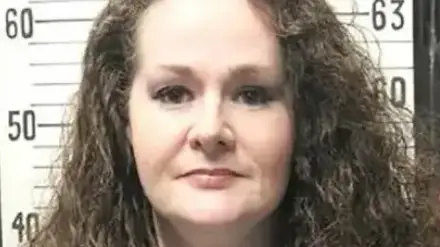
Could Christa Pike’s hair colour have played a role in her botched execution?
Just a week after the state of Tennessee bungled Pike’s lethal injection, 46-year-old Jamaal Howard was put to death in Texas.
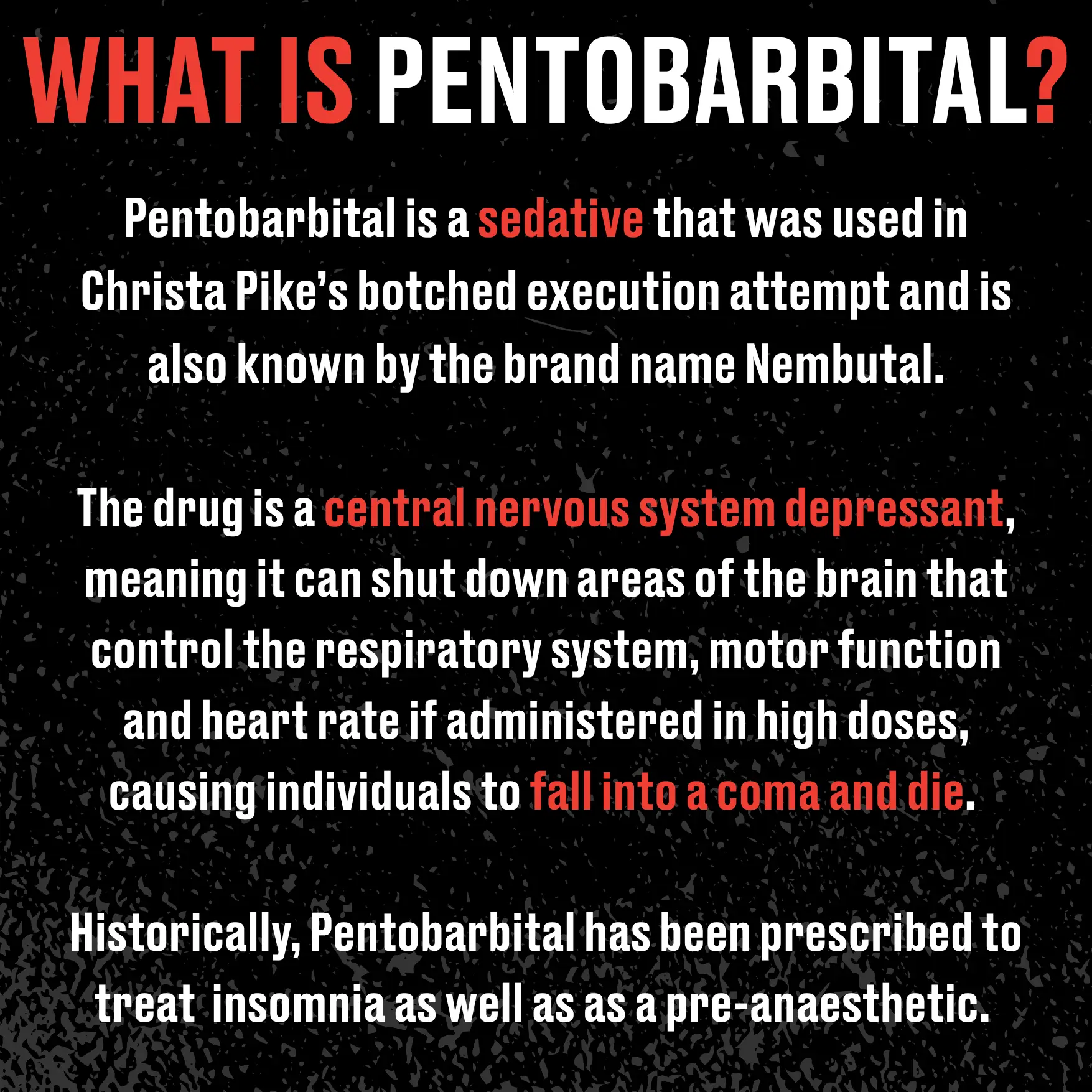
Both executions used the same drug, a powerful sedative known as pentobarbital, with just 30 seconds elapsing between the moment Howard was injected and him ceasing to move.
However, in Pike’s case, she was still alive over an hour after being given two doses of the drug, with reporters and witnesses in attendance recalling hearing the 50-year-old killer talking, breathing and snoring during the process.
While Pike isn’t the first inmate on death row in Tennessee to undergo a failed lethal injection – Tony Carruthers’ was granted a one-year reprieve after staff failed to find a vein – she is the only person to still be alive after being injected with two fatal doses of pentobarbital.
And one medical expert has suggested that Pike’s hair colour could’ve played a role in how her body reacted to the drug.
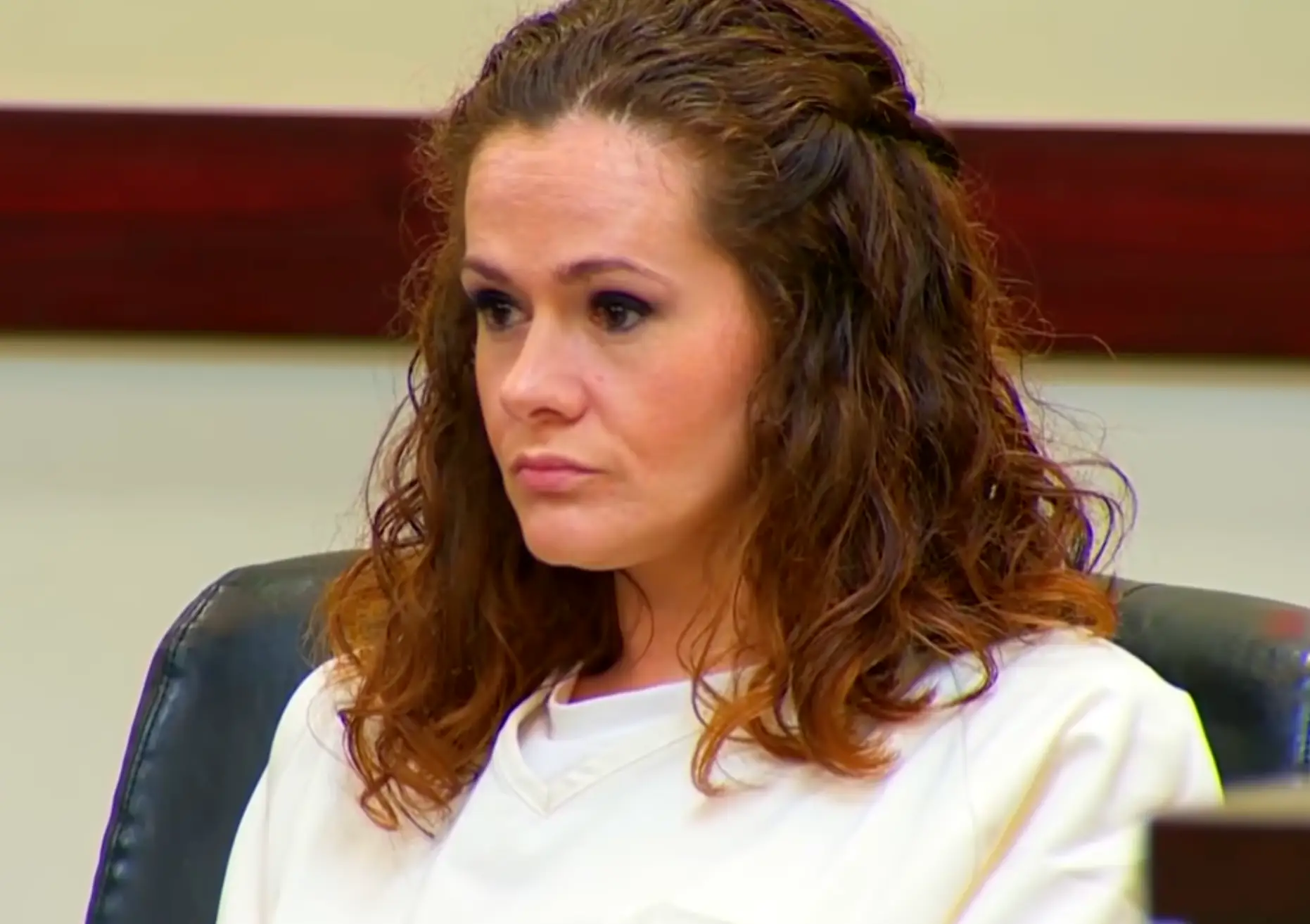
As a natural redhead, Christa Pike will likely have the mutated MC1R gene (YouTube/Inside Edition)
Speaking to LADbible about the differences between Pike and Howard’s executions, Dr Elisha Peterson, a board-certified anesthesiologist in the US, noted that Pike is a natural redhead – and this may have influenced how the medication reacted with her system.
Research has revealed that the overwhelming majority of people with natural red hair have mutations to the MC1R gene, which has also been associated with an increased tolerance to anaesthesia.
“Redhead patients require more medication to fall asleep and stay asleep,” Peterson explained, adding that the MC1R gene makes ‘certain receptors in the nervous system more resistant to anaesthetic medications’.
Peterson went on to explain that while pentobarbitol is not used in operating theatres, it does have similar properties to propofol, a commonly used form of general anaesthetic, which redheads can require more of to induce sedation.
“The problem with the protocol,” Peterson said of state executions, “Is that it does not allow for any variability in the dosing given her physiology.”
(LADbible)
Peterson also referenced the ongoing suggestion that the pentobarbital injected into Pike went into the soft tissues in her arm rather than the bloodstream.
While an investigation is still ongoing into what exactly caused Pike’s execution to fail, various medical experts and her legal team have all suggested a punctured vein or injection into the soft tissue as the most likely scenario for her surviving, pointing to her complaints that a vein in her arm felt like it was ‘about to bust’ and claims that seven needles were used when finding a vein.
In contrast to Pike, Peterson added that Howard’s execution seemed to go as planned, meaning the whole dose of pentobarbital entered his circulatory system.
What happened to Christa Pike after the lethal injection?
While the state of Tennessee has put a temporary pause on all executions, pending an investigation into Pike’s case, concerns have been raised over potential long-term health complications.
A punctured vein may also have impacted the amount of pentobarbital in her system (Getty Stock Images)