Zacharia had traded at an implied probability of about 1% in the days before the news, the Journal reported. The Kalshi spokeswoman confirmed that the company was probing trades predicting her selection but declined to comment further. An investigation is not a finding that any trader used inside information.
Settlement Is Not Withdrawal
Kalshi’s exchange rulebook separates settlement from access to funds. Rule 6.4 permits withdrawal requests to be suspended or denied when Kalshi or its clearinghouse determines that the funds are relevant to a pending investigation.
The exchange’s published insider-trading policy says accounts flagged for potential insider trading are frozen, preventing withdrawals until an investigation is completed. That is its general policy; whether particular accounts in the press secretary investigation face those restrictions remains unclear. Its rulebook also allows fines, recovery of profits and suspension or revocation of trading privileges following disciplinary proceedings or settlements.
The inquiry follows earlier scrutiny of political betting on the platform. In June, The Defiant covered reported DOJ and Commodity Futures Trading Commission investigations into George Santos’s Kalshi trades, citing NPR.
The CFTC’s February enforcement advisory described earlier Kalshi disciplinary cases involving a political candidate trading on his own candidacy and a YouTube editor trading contracts tied to videos. The agency said exchanges have an independent duty to maintain audit trails, conduct surveillance and enforce trading rules, while the CFTC retains authority to investigate and prosecute violations on those exchanges.
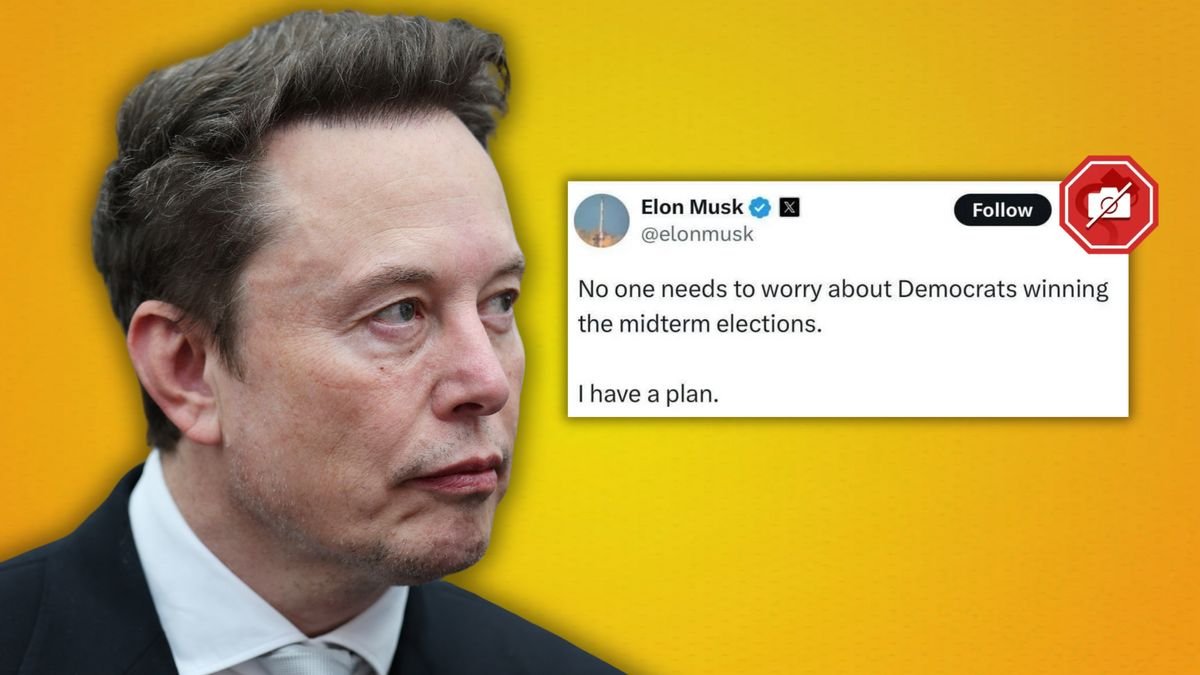
A screenshot authentically shows an X post from Elon Musk that says: “No one needs to worry about Democrats winning the midterm elections. I have a plan.”
Rating:
For more than a year, social media users have spread a purported screenshot of an X post by Elon Musk that says: “No one needs to worry about Democrats winning the midterm elections. I have a plan.”
The alleged screenshot circulated on platforms such as X and Reddit. Snopes readers contacted us to investigate the screenshot’s legitimacy.
However, a search of Musk’s X account found no evidence that this post exists. Furthermore, we found no screenshots of the post that included a timestamp or additional details indicating it was authentic, indicating that Musk did not share this X post and then delete it. If the screenshot circulating online were indeed authentic, there would be additional examples of the post through other users’ varying screenshots.
Similarly, a search of an independent archive for Musk statements returned no relevant results. Searches on Google, DuckDuckGo and Yahoo also revealed no evidence that reputable news outlets have covered this supposed statement.
As such, we have rated this screenshot as fake.
The earliest version of the fake X post that we found was posted in August 2025, from Threads user @powermacuser12.
That post claimed Musk “rigged the vote tabulation computers in the swing states to ensure Trump won the 2024 election, & he’s obviously planning on cheating again in the midterm elections.”
“He should be hauled into jail by the FBI for his post below,” powermacuser said, in reference to the fake screenshot.
We reached out to the Threads user to ask more about where they obtained the screenshot and await a response.
Snopes previously found no evidence Musk rigged the election in favor of Trump via his Starlink satellite network. In fact, most election systems are a closed network, making connection to Starlink impossible.
For years, a rumor has circulated that Donald Trump’s 2020 presidential campaign paid for hotels, flights and other expenses to help people who stormed the U.S. Capitol on Jan. 6, 2021. For instance, a meme alleges a “new document drop” shows the “Trump campaign paid for travel, hotels, expenses and organizing efforts to bring outside radical organizers” to Washington, D.C.
The claim gained traction after former Special Counsel Jack Smith, who led the investigation into Trump’s efforts to overturn the results of the 2020 presidential election, testified before the Senate Judiciary Committee in recent weeks.
The claim draws on authentic, unsealed records that Smith assembled about Jan. 6, but makes an unsubstantiated assertion about the Trump campaign covering people’s expenses. It also mischaracterizes the documents as being new.
Smith’s documents detail a $3 million proposed budget for the rally and how those funds were distributed among various political advocacy organizations that are not legally required to disclose their donors. These groups did not work directly for, or with, the Trump campaign, but they supported either his candidacy or other Republican candidates running for lower offices.
Congressional records show that one person in particular — Julie Fancelli, heiress to the Publix supermarket chain — provided the $3 million for the rally’s organization.
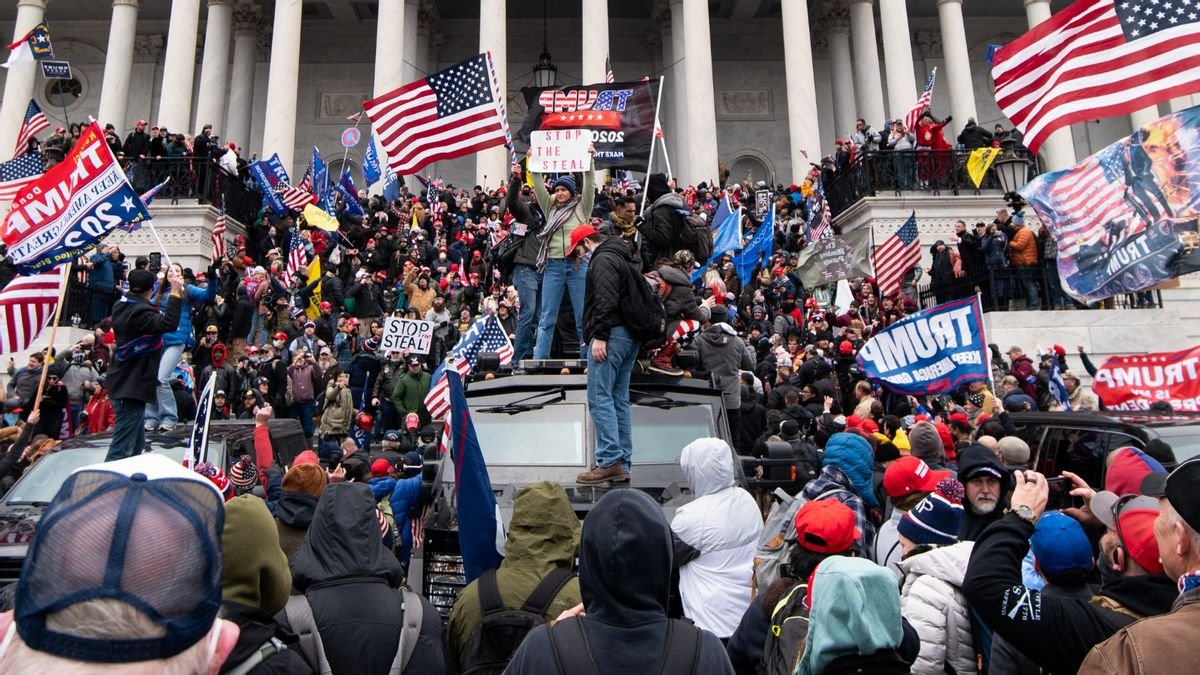
The political conditions that led to the Jan. 6, 2021, attack on the U.S. Capitol will be studied for decades. The extent to which President Donald Trump influenced the violent attempt to stop Congress’ certification of the 2020 presidential election remains a major question.
Some critics of the president not only allege he incited the attack with false claims of election fraud, but that his campaign paid for the travel and lodging expenses of the people who stormed the Capitol while they were in Washington, D.C.
One Facebook post claimed, “Jack Smiths new document drop shows that the Trump Campaign PAID for travel, hotels, expenses and organizing efforts to bring outside radical organizers” to Washington, D.C., on Jan. 6 (archived):
(Democrats, Republicans and Independents for Democracy)
Trump headlined the rally at the Ellipse, a park near the White House, that preceded the attack on the Capitol. At the end of his speech, he asked those present to march to the Capitol. “We’re going to the Capitol,” he said. Violence began at the Capitol shortly after Trump finished speaking.
The claim that Trump’s campaign funded the rally draws on authentic, unsealed records that Smith assembled about Jan. 6. However, Snopes found no evidence that his official campaign covered attendees’ expenses or organization costs of that rally.
In addition, the documents Smith compiled are not new. A judge’s order unsealed them in 2024.
One of these documents indicates several independent political advocacy groups received money to organize the so-called “Save America” rally.
Congressional documents reveal that the financial backing for the event came from one person in particular — Julie Fancelli, heiress to the Publix supermarket chain.
To learn more about the financing, we reached out to Fancelli, Caroline Wren — a Republican fundraiser who helped Fancelli distribute money for the Jan. 6 rally — and some political advocacy groups that received money for the event. We also reached out to the White House asking about Trump’s involvement in the day’s organization. We will update this report if we receive responses.
Smith’s documents outline Jan. 6 rally expenses
In October 2024, U.S. District Judge Tanya Chutkan issued an order unsealing 1,889 pages of documents Smith had assembled about what happened on Jan. 6. (Chutkan was set to decide which allegations against Trump could still be prosecuted after a U.S. Supreme Court decision granted presidents broad immunity from criminal prosecution for official actions while in office.)
Smith compiled the documents through his investigation into the matter. Notably, some of these documents had been subpoenaed directly from the participants as part of a congressional investigation, as shown below.
According to the documents Smith submitted, planners of the rally that preceded the Capitol attack proposed a $3 million budget for expenses.
The donations used to cover various expenses were funneled through multiple political advocacy organizations, including Turning Point Action, Save the U.S. Senate PAC, Tea Party Express, the Rule of Law Defense Fund RAGA — the advocacy arm of Republican Attorneys General Association (Page 305 of the PDF) — Women for America First and Bluebonnet Fundraising, Wren’s fundraising company.
(Trump, Appendix 4, Page 305, via Jack Smith)
Turning Point Action, Save the U.S. Senate PAC, Tea Party Express, Rule of Law Defense Fund RAGA and Women for America First are all section 501(c)4 organizations, also known as “dark money” groups, or political advocacy organizations that are not legally required to disclose their donors. These groups did not directly work for, or coordinate with, Trump’s official 2020 presidential campaign, but they supported either his candidacy or other Republican candidates running for lower offices.
Save the U.S. Senate PAC and Women for America First are no longer active. We reached out to Turning Point Action, Tea Party Express and the Rule of Defense Fund RAGA seeking details about their roles in the rally but did not receive responses by the time of publication.
The files included the same list of expenses (Page 317) with certain amounts lowered. This copy included handwritten notes, such as “we pay our own way.” The amended budget totaled $2.4 million:
(Trump, Appendix 4, Page 317, via Jack Smith)
As we outline below, congressional testimonies revealed how the amounts were amended.
The name of someone who supposedly received $200,000 to “assist with his organization efforts” was redacted in both budget tables.
Both budgets indicated that some money was earmarked for speaker fees and travel, “crowd building and busing,” and hotels and private flights for a group whose name was redacted. The claim may have originated from these details. The Trump campaign is not listed in this budget.
Republican operative’s testimony aligns with Smith’s budget info
In December 2021, Dustin Stockton, a Republican operative who was involved in the preparation for the “Save America” rally, testified in Congress that Wren told him the night before, on Jan. 5, that she raised $3 million for the event. This testimony aligns with the budget documentation in Smith’s files.
According to Stockton’s account, Wren “parked” the money at “Republican Governors Association, TPUSA, Tea Party Express.” (TPUSA refers to Turning Point USA, the nonprofit 501(c)3 sister organization to Turning Point Action.) Describing his exchange with Wren, Stockton testified (Pages 96-99 of the PDF):
But she tells me a lot of stuff. So she tells me that she raised —
[…]
And Caroline [Wren] told me that she raised the $3 million, and that she parked the money with the Republican Governors Association, TPUSA, and Tea Party Express. And I actually clarified with her, because, like, I assumed she meant Tea Party Patriots, but she clarified that it was Tea Party Express, which seemed interesting because both Amy [Kremer, former chairperson of Tea Party Express] and I have our political roots there.
(The budget tables unsealed in Smith’s documents did not list the “Republican Governors Association,” but the Republican Attorneys General Association, which works to elect Republicans as attorneys general across the country and “has been incredibly supportive of President Trump’s legal efforts” to overturn voting results in the 2020 election, according to Page 305 of Smith’s document. Stockton clarified with Snopes he meant the latter in his testimony.)
Stockton told Snopes via email he helped fundraise for Jan. 6 on behalf of Kremer and her daughter Kylie Kremer, a leader of Women for America First at the time and someone who spoke at the “Save America” rally.
“I helped the Kremers raise a lot of money for all the D.C. events and bus tours that included January 6,” Stockton said. “It was in the millions of dollars total but I have no idea how much would have been for the event at the Ellipse.”
Wren names Publix heiress Julie Fancelli as donor
In a Dec. 17, 2021, deposition with Congress, Wren said she fundraised specifically for the “Save America” rally, which she called the “Million MAGA March.”
She said donations from Fancelli, the heiress to Publix, were distributed to several groups tasked with organizing the rally (starting on Page 46 in the PDF), including Turning Point Action, Save the U.S. Senate PAC, Tea Party Express (which Wren suggested because the organization had experience with bussing protesters to designed locations), Rule of Law Defense Fund RAGA and Women for America First.
In her testimony, Wren discussed the amounts Fancelli committed to the various organizations listed in the two versions of the budget presented among Smith’s documents, including $1 million for Turning Point Action (Page 49), $50,000 for Bluebonnet Fundraising LLC (Wren’s company) and $300,000 for Women for America First (Page 51).
Wren also explains how the amounts were amended. The annotated copy of the budget on Page 317 of Smith’s documents reflected several of those changes.
Fancellideposed, pleads the Fifth
On Feb. 18, 2022, the congressional January 6 Committee deposed Fancelli. While she invoked her Fifth Amendment right against self-incrimination, the 132-page transcript mentioned evidence that corroborated Wren’s claims.
The evidence came from Fancelli, whose records the committee subpoenaed for the investigation.
The evidence, which included text messages and emails read by the interrogators, indicated Fancelli was prepared to donate as much as $3 million toward the rally. She received the proposed budget via email and her accountant helped her amend it. The evidence also suggested she did not expect the rally to turn into a violent attack on the Capitol.
The committee’s final report said her financial support made the rally possible.
On Pages 24 and 25 of the PDF, the interrogator read a text exchange between Wren and Taylor Budowich, a then-Republican operative who served as White House deputy chief of staff between January and September 2025:
(…) on Saturday, December 26th, which is the date that Ms. Wren was at your home, Ms. Wren texts, “I’m at Julie Fancelli’s.” “Guess what the budget is she just gave me for our bus project?” “You won’t guess.” “$3 million … ”
And Mr. Budowich responds with several “lol”s and says, “probably could do it for 3.”
And then Ms. Wren responds, “we can use some for save the us senate.” “I’ll call you when I leave here.” And then turning to the next page, she says, “she wanted to just wire me the 3 mill lol.”
And Mr. Budowich responds, “rich people are so odd.”
At one point (Pages 40-41), an interrogator quotes language from a budget plan regarding funding for RAGA’s “legal efforts to fight the election fraud around the country.” Because this language appeared in one of Smith’s unsealed documents, it suggests Fancelli received that same version.
Fancelli’s deposition also gives clues about discrepancies between the budget in Smith’s documents and her actual donations. On Page 40, the interrogator reads from an email sent by Marianne Parsons, Fancelli’s accountant, as part of an ongoing conversation about the proposed budget:
And next it says the “Rule of Law Defense Fund- we are cutting that by $50,000 … please trim how many or how much each attorney general gets for expenses and other expenditures.”
In our email to RAGA, we inquired about the presence of any attorneys general at the rally.
None of this evidence suggests Fancelli wanted or expected the rally to turn into an attack on the Capitol. On Page 89 of her deposition, the interrogator read a text message she had written:
Ms. Fancelli, if I could clarify, on Wednesday, January 6th, at 1:50 p.m., when you asked, “What is really happening?!”, presumably, with the question mark and exclamation mark, it’s possible that you had seen things on the news that indicated that something might be going wrong at the Capitol, and you were trying to check with somebody who was actually there and present.
Jan. 6 committee’s report on Fancelli’s role
The congessional committee’s final report, published in late 2022, summarized Fancelli’s role in the events of that day:
Fancelli worked with Wren to create a multimillion-dollar budget to convene as many supporters of President Trump as possible To ensure that Fancelli’s dollars made maximum impact, Wren contacted some of the major players who were rallying supporters for January 6th. Wren emailed Kylie Kremer and exchanged texts with [Alex] Jones and [Cindy] Chafian. Fancelli’s goal was clear: she wanted to spend $3 million to “get as many people there as possible.” The resulting budget allocated $500,000 to a busing program and a centralized ad campaign by the Tea Party Express to promote the event. Another $500,000 went to assisting WFAF [Women for America First] and Jones in their organizational efforts.
(Conspiracy theorist Alex Jones’ podcast inspired Fancelli to support the movement. Jones spoke at the rally. Cindy Chafian was one of the organizers of the rally.)
Fancelli did not respond to our queries as of this writing.
Fancelli has donated money to Republican candidates since at least 2016, according to data from the Federal Election Commission. For example, in 2016, she gave money to Secretary of State’s Marco Rubio’s presidential bid and to the campaign of former Rep. Carlos Curbelo, a Republican from Florida. The Miami New Times reported Fancelli donated to a pro-Trump“dark money” group in 2019, though we did not find evidence of those donations on the FEC website.
Could Christa Pike’s hair colour have played a role in her botched execution?
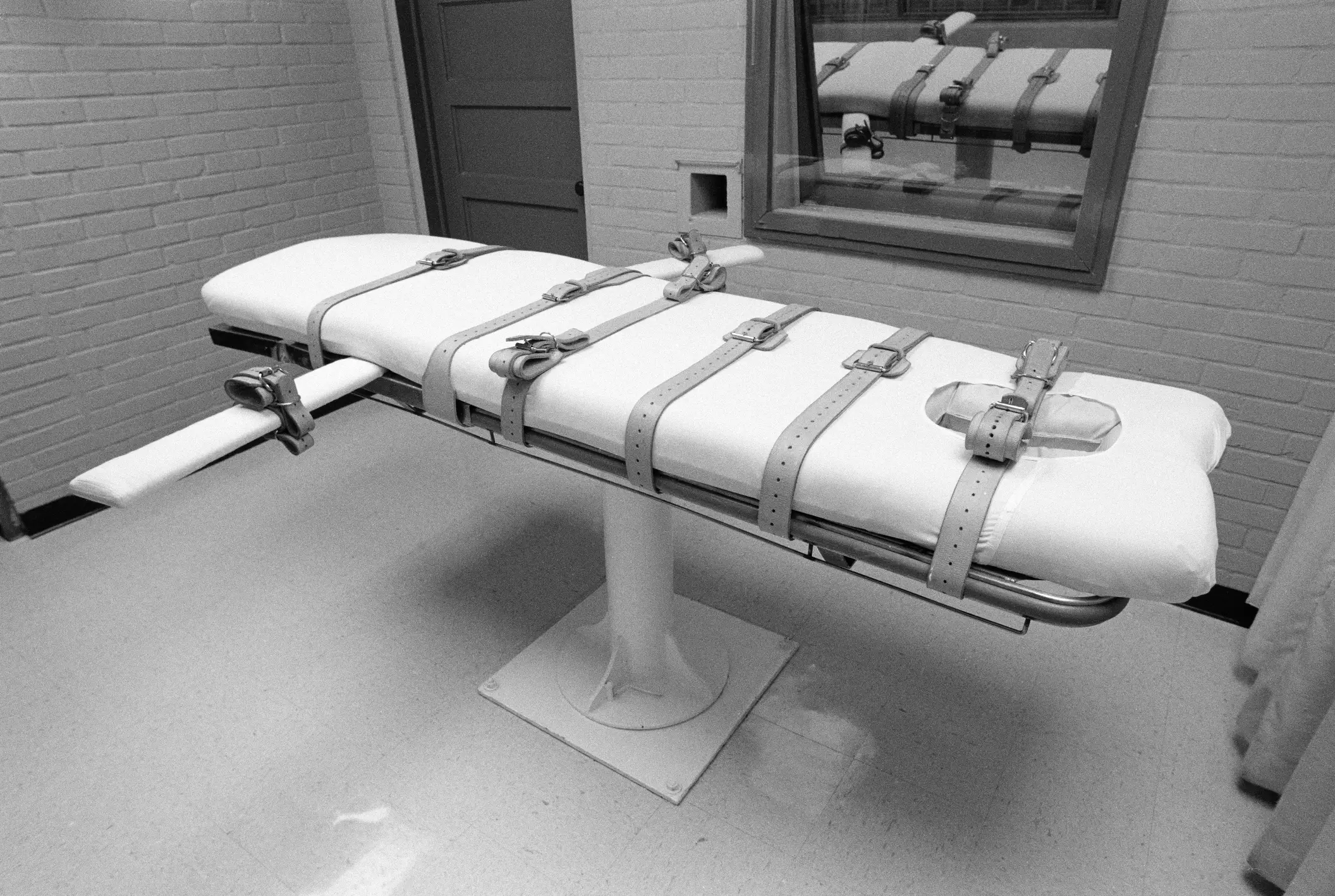
Just a week after the state of Tennessee bungled Pike’s lethal injection, 46-year-old Jamaal Howard was put to death in Texas.
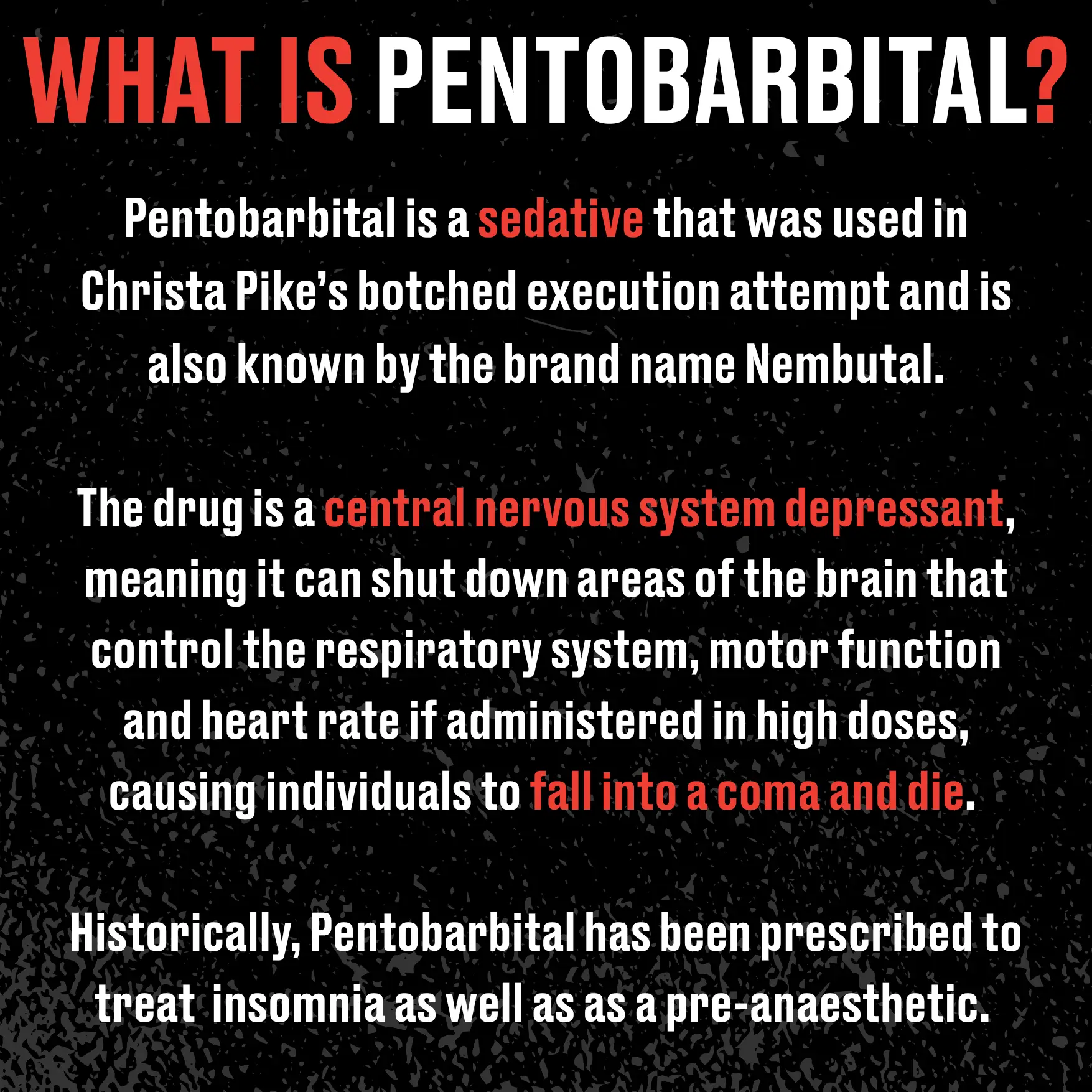
Both executions used the same drug, a powerful sedative known as pentobarbital, with just 30 seconds elapsing between the moment Howard was injected and him ceasing to move.
However, in Pike’s case, she was still alive over an hour after being given two doses of the drug, with reporters and witnesses in attendance recalling hearing the 50-year-old killer talking, breathing and snoring during the process.
While Pike isn’t the first inmate on death row in Tennessee to undergo a failed lethal injection – Tony Carruthers’ was granted a one-year reprieve after staff failed to find a vein – she is the only person to still be alive after being injected with two fatal doses of pentobarbital.
And one medical expert has suggested that Pike’s hair colour could’ve played a role in how her body reacted to the drug.
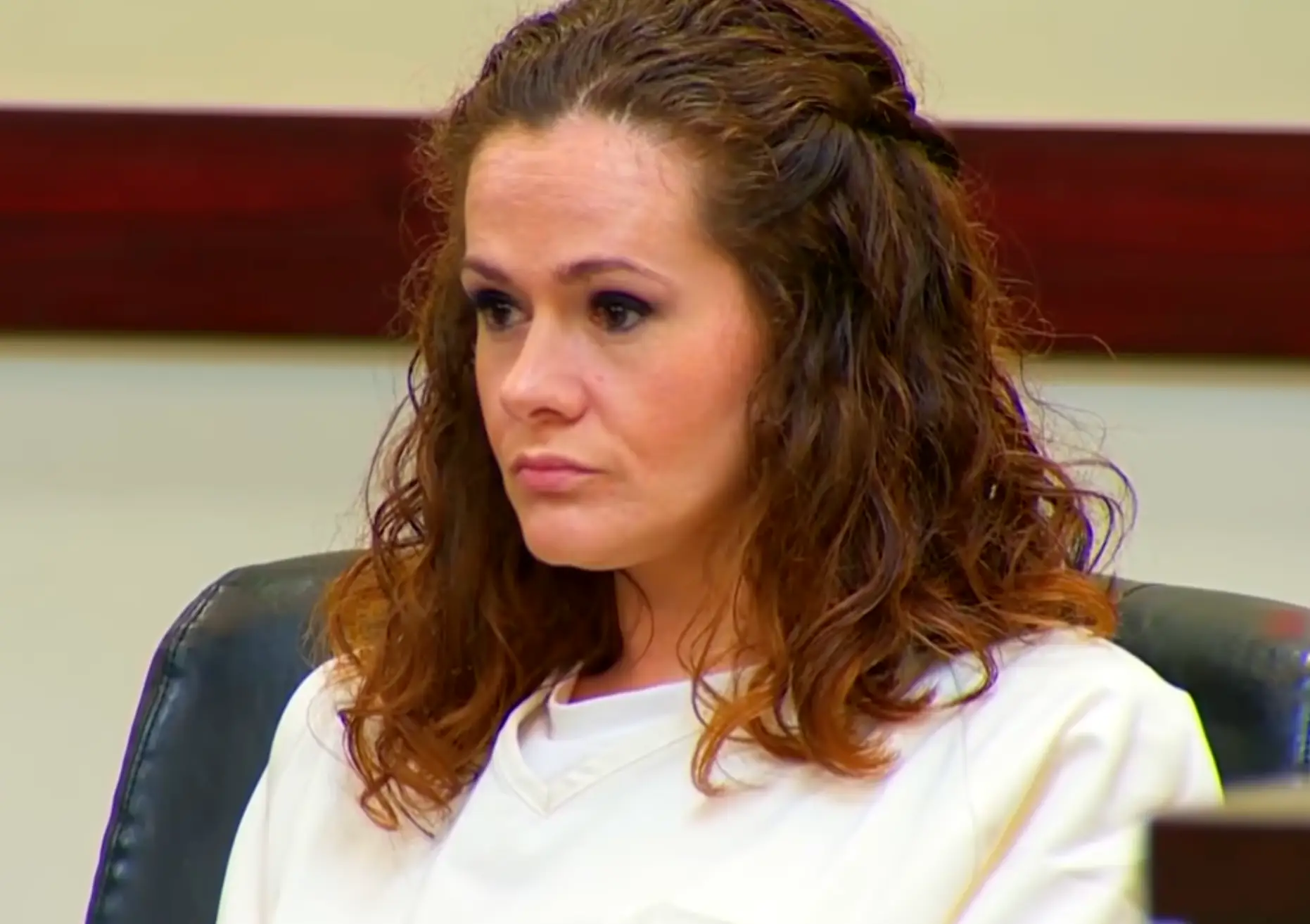
As a natural redhead, Christa Pike will likely have the mutated MC1R gene (YouTube/Inside Edition)
Speaking to LADbible about the differences between Pike and Howard’s executions, Dr Elisha Peterson, a board-certified anesthesiologist in the US, noted that Pike is a natural redhead – and this may have influenced how the medication reacted with her system.
Research has revealed that the overwhelming majority of people with natural red hair have mutations to the MC1R gene, which has also been associated with an increased tolerance to anaesthesia.
“Redhead patients require more medication to fall asleep and stay asleep,” Peterson explained, adding that the MC1R gene makes ‘certain receptors in the nervous system more resistant to anaesthetic medications’.
Peterson went on to explain that while pentobarbitol is not used in operating theatres, it does have similar properties to propofol, a commonly used form of general anaesthetic, which redheads can require more of to induce sedation.
“The problem with the protocol,” Peterson said of state executions, “Is that it does not allow for any variability in the dosing given her physiology.”
(LADbible)
Peterson also referenced the ongoing suggestion that the pentobarbital injected into Pike went into the soft tissues in her arm rather than the bloodstream.
While an investigation is still ongoing into what exactly caused Pike’s execution to fail, various medical experts and her legal team have all suggested a punctured vein or injection into the soft tissue as the most likely scenario for her surviving, pointing to her complaints that a vein in her arm felt like it was ‘about to bust’ and claims that seven needles were used when finding a vein.
In contrast to Pike, Peterson added that Howard’s execution seemed to go as planned, meaning the whole dose of pentobarbital entered his circulatory system.
What happened to Christa Pike after the lethal injection?
While the state of Tennessee has put a temporary pause on all executions, pending an investigation into Pike’s case, concerns have been raised over potential long-term health complications.
A punctured vein may also have impacted the amount of pentobarbital in her system (Getty Stock Images)
The UK has sanctioned three crypto exchanges, two payment platforms and one individual it suspects of helping Russia circumvent financial sanctions.
The targets include Xeltox Enterprises, the Canadian company the UK says owns Cryptomus, and a Kyrgyz payment firm owned by the country’s Ministry of Finance.
The 38-designation package also hit Russian oil producers Zarubezhneft and INK Capital, and 12 more shadow fleet tankers.
The UK has sanctioned three crypto exchanges and two payment platforms that it suspects Russia is using to circumvent financial sanctions, the Foreign, Commonwealth & Development Officesaid Thursday.
The targets include Xeltox Enterprises, a Vancouver-registered company designated through its ownership of Cryptomus and activities “linked to and continued via” Heleket, according to the UK’ssanctions notice. Kyrgyz firms TokenSpot and Tsunami Payments, which share an office tower in Bishkek, were also designated.
Putin’s war depends on money, oil revenues and the networks that help sustain them.
Today, the UK is imposing 38 new sanctions to disrupt those networks.
The message is simple: if you help Russia fund or equip this war, you will face the consequences. pic.twitter.com/bCMq37dKPa
— Foreign, Commonwealth & Development Office (@FCDOGovUK) October 8, 2026
So was Processing KG, the operator of payment service VexPay, whose parent company is Kyrgyzstan’s Ministry of Finance, according to the notice. Its director, Ulan Bukabaev, was sanctioned alongside it.
Two of the targets processed and facilitated transactions with the A7 network, the government said, without specifying which.
Beyond asset freezes, the four companies face internet services sanctions, which require social media platforms, internet providers and app stores to take reasonable steps to stop UK users accessing their sites and apps.
The UK describes A7 as a Kremlin-backed “illicit finance network” used to circumvent sanctions on Russia’s financial sector. The network claimed to have moved more than $90 billion last year, roughly half of Russia’s annual military spending, according to the government.
The crypto designations are part of a 38-target package that also includes Russian oil companies Zarubezhneft and INK Capital. UK sanctions now cover more than 90% of Russia’s oil production capacity, the government said.
The package adds 12 shadow fleet tankers, bringing the number sanctioned to more than 600, and 17 entities and individuals involved in supplying goods critical to Russia’s missile and drone production.
The UK, the U.S. and the EU have sanctioned a string of crypto businesses as part of their Russia sanctions packages over the past few years. In May, the UKsanctioned Justin Sun’s HTX and other crypto firms, accusing HTX of providing financial services to A7. The EUnamed HTX in its own Russia sanctions two months later.
The U.S. has sincedesignated the A7 network as a transnational criminal organization, and the EU hasmoved toward a ban on all crypto transactions with Russian entities.
A UKoperation targeting Russian sanctions evasion has also led to 128 arrests and seizures of crypto and cash.
In May, Kyrgyzstanordered 50 companies to cease activity after state agencies flagged them for sanctions risks.
Daily Debrief Newsletter
Start every day with the top news stories right now, plus original features, a podcast, videos and more.
This article contains paid shopping links. LADbible Group receives a small payment if you click on these links or make a purchase through them.
It’s been 30 years since the famous cold open phone call in Scream, an iconic horror movie that spawned some incredible memorabilia.
One of those pieces of merch includes the original bleeding Scream mask which was released roughly a year after the 1996 movie.
Ghostface is still one of the most recognisable Halloween costumes on the high street come October, with plenty of fans agreeing that the mask “went platinum” during their childhoods.
An X user named AuxGod sparked fans’ memories after posting a long lost image of the mask that pumped fake blood from a heart-shaped pump.
Shortlist of the best Halloween masks for 2026:
The white face of the mask which appears covered in red liquid, oozes when the wearer squeezes the hidden pump filled with fake blood, tucked away under a costume.
It wasn’t actually featured in any of the movies, because of course special effects exist.
One person replied after seeing the image: “Core memory unlocked cause I completely forgot I had one of these lmao.”
Another added: “My brother had that mask. you could feel the blood pump through the face it was cold.”
“Core memory; this + the knife with the liquid blood inside,” said one Scream fan of their tried and tested costume.
Bonus round: Test your Scream movie knowledge (answers at the bottom of the page)
How many Scream movies are there?
Who made the Scream films?
Who is Ghostface?
Where did the Ghostface mask come from?
It wasn’t fun and games for everyone though as one fan recalled: “I had one of these back in the day. That b***h just leaked everywhere and stained everything I was wearing.”
If you want a faithful take on the classic Ghostface look, the official Scream bleeding mask is still available from Menkind for £20, or unofficially at Amazon for £13.99. And don’t forget to pick up a black cloak to complete the iconic killer’s get-up.
If you haven’t spent the past year planning your Halloween costume, or your super niche hasn’t panned out, there’s still time to pick out something gorier for a party, with plenty of options at every budget and with enough time for delivery.
How many Scream movies are there? Seven: Scream (1996), Scream 2 (1997), Scream 3 (2000), Scream 4 (2011), Scream (2022), Scream VI (2023), Scream 7 (2026)
Who made the Scream films? The franchise was created by Kevin Williamson. Horror legend Wes Craven directed the first four films, he died in 2015. Matt Bettinelli-Olpin and Tyler Gillett directed the 2022 and 2023 films, and Williamson made his franchise directorial debut with Scream 7.
Who is Ghostface? Ghostface is every killer in the movie, (spoiler alert!) S1 Billy Loomis and Stu Macher, S2 Nancy Loomis and Mickey Altieri, S3 and the only single killer Roman Bridger, S4 Jill Roberts and Charlie Walker, S5 Richie Kirsch and Amber Freeman, S6 fake-out killer Jason Carvey, Detective Wayne Bailey, Quinn Bailey, Ethan Bailey, and S7 Jessica Bowden, Marco Davis, Karl Gibbs.
Where did the Ghostface mask come from? It wasn’t technically made for the film. Novelty company Fun World designed it in 1991 as part of a Halloween range called Fantastic Faces, and it was originally known as the “Peanut-Eyed Ghost”. The designer was Brigitte Sleiertin. The filmmakers came across the mask while scouting locations, and a deal was struck to use it. Fun World owns the mask design and the Ghostface name.
Featured Image Credit: Getty Images Thomas Cooper / Contributor
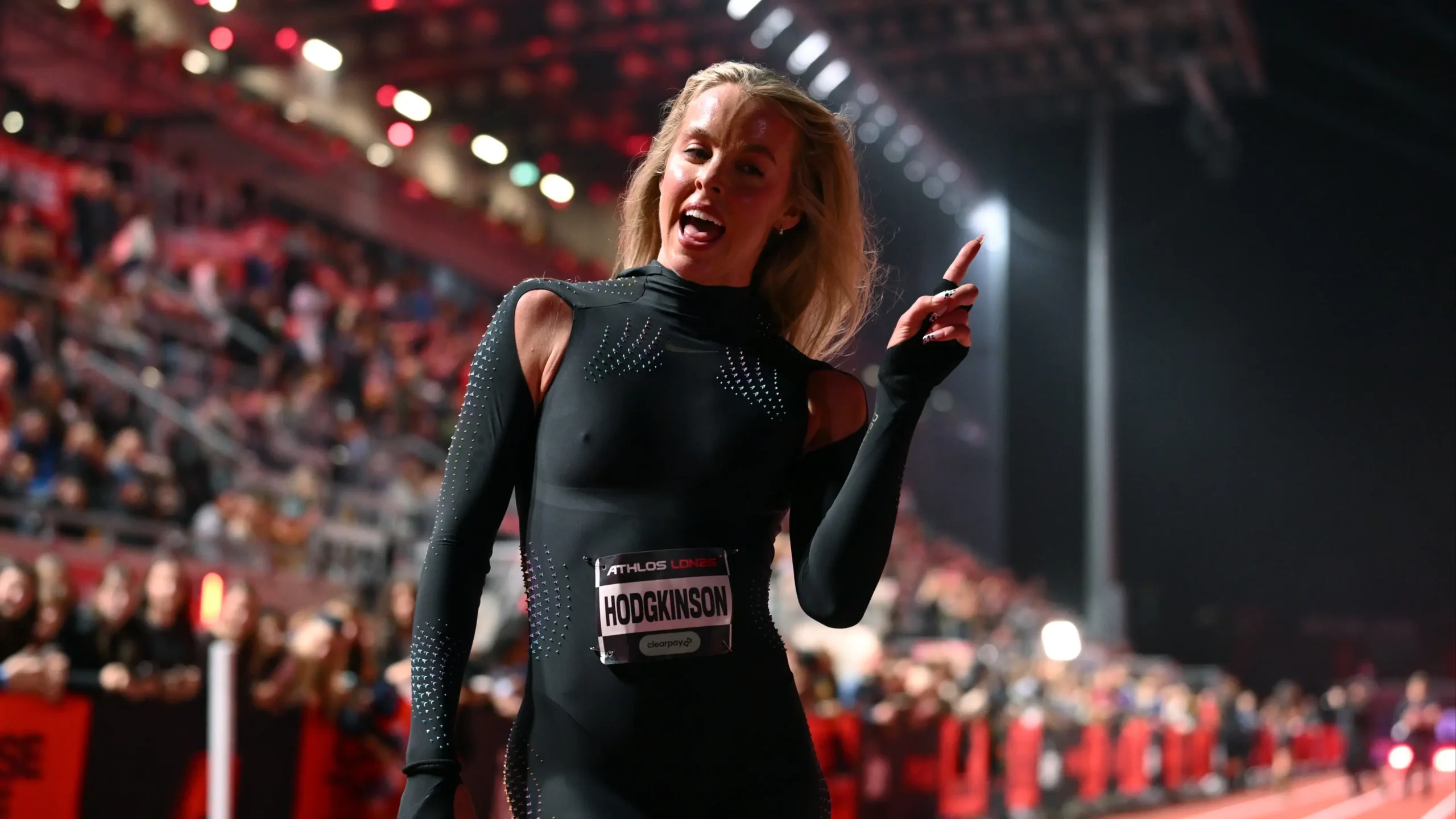
Keely Hodgkinson’s team have insisted that the distinctive catsuit she recently donned does have benefits after Hodgkinson was barred from wearing it at the Olympics in 2028.
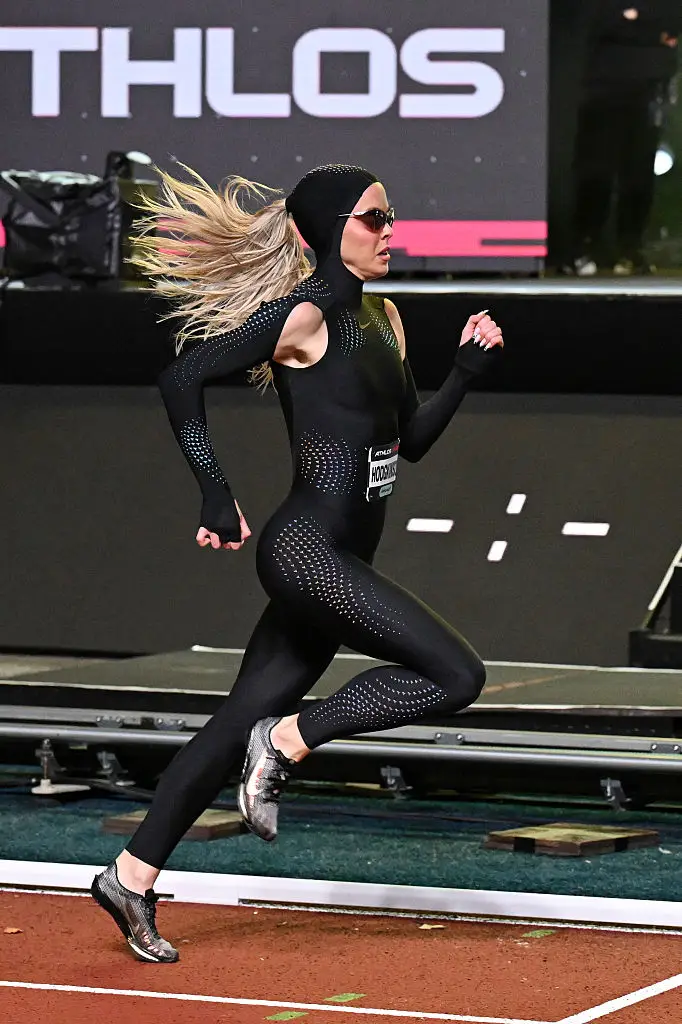
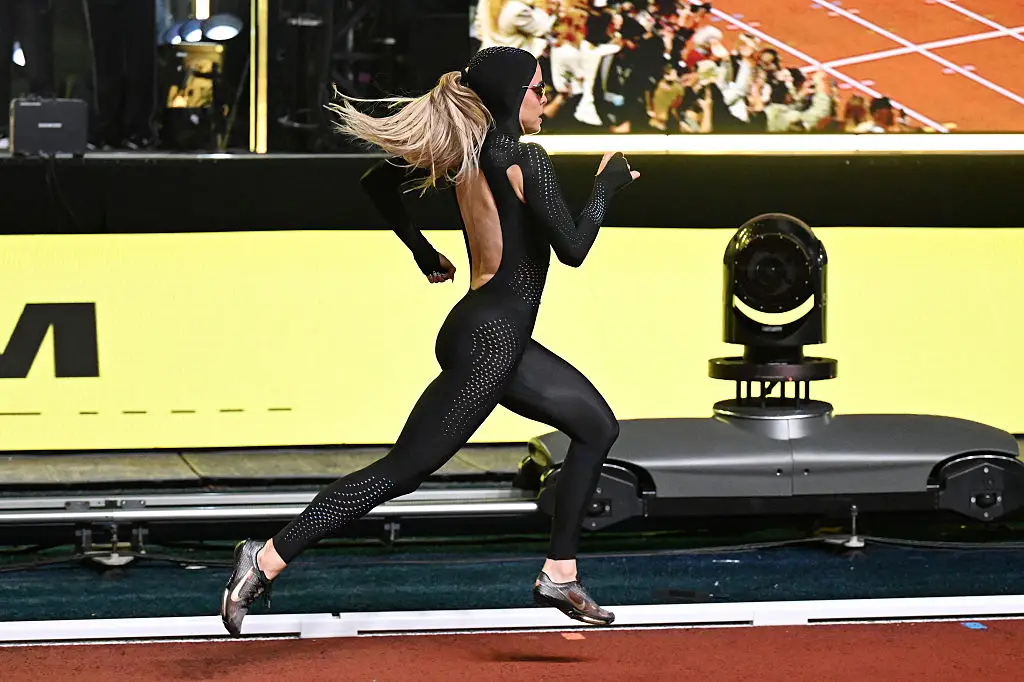
The unusual garment is skin tight, partially backless, and also has a wetsuit-style hood that goes over the athlete’s head, which is described as a ‘sleek speed hood’ and even has a special hole cut out of it at the back for her ponytail.
All in all it looks more like something you might expect to see in a 1970s science fiction film rather than on the competitive field in 2026.
Nonetheless, it is claimed that the specially designed suit may just give her a competitive edge over rivals in the mid distance running, something which Hodgkinson’s team have insisted after she was barred from wearing it at the Olympics, though for different reasons.
Speaking to Athletics Weekly her coach Jenny Meadows said that the garment helps Hodgkinson with her performance, saying that she had been able to run in it after suffering from an injury when she fell badly prior to the Prefontaine Classic, The Sun reports.
Hodgkinson wearing the catsuit in the ATHLOS London 2026 (Kate Green/Athlos/Getty Images)
“She could hardly walk because her knees were so swollen,” said Meadows. “She was in a really, really bad way. And she was very tearful all day.
“By the end of the day, she got on an anti-gravity treadmill at the Center and she put the speed suit on. She said it helped her to be able to move.”
She added: “Without the speed suit, she couldn’t bend and flex her knee because of the inflammation.”
Hodgkinson’s coach went on to say that the athlete, who is the sixth-fastest woman in history, had told her that the suit had helped a lot.
“She was literally like: ‘Guys in this speed suit, I can run’,” said Meadows. “Keely gives genuine feedback and the speed suit helped her run that day.
“She says it feels like she’s not wearing anything. She says: ‘Honestly, it feels just so light. I can flow’.”
However, Hodgkinson will not be able to wear the ‘Zero-Distraction Speed Suit’ when she competes for Team GB in Los Angeles for the 2028 Olympics, though not because of concerns around an unfair advantage, but due to conflicting sponsorship deals.
Hodgkinson’s coach said she thought the suit helped her performance (Kate Green/Athlos/Getty Images)
The British Olympic Association has a sponsorship deal with Adidas, and the catwoman-like speed suit is made by Nike, a business competitor.
Nonetheless, Meadows, who is herself a world championship silver medallist in the 800 metres, has said that the suit really does make a statement, and that her initial reaction when she first saw the suit was a little sceptical.
“My initial reaction was like: ‘Oh, you’ve got to be brave to wear that’,” she said, while her husband and fellow coach Trevor Painter had a different reaction.
“Trevor was kind of like: ‘Yeah, you look Catwoman. Go for it. It’s so you’,” she recalled.
“You’ve got to think: Is it faster or is it just a gimmick?” said Meadows. “You’ve actually got to walk out in front of an audience the first time and you’ve got to win in that thing. It’s a statement piece.”
Bitcoin has dropped 4.1% this week, after U.S. spot BTC ETFs shed $484.9 million Wednesday.
The slide comes in October, which is historically a green month for the leading cryptocurrency.
Experts warn that Bitcoin could continue to stoop, testing support levels as low as $72,000.
Bitcoin has been in the red since October started, a month historically green for the leading cryptocurrency—often referred to as “Uptober.” Experts warn not to treat October as a reliable bottom for Bitcoin, and predict there could be more bleeding ahead.
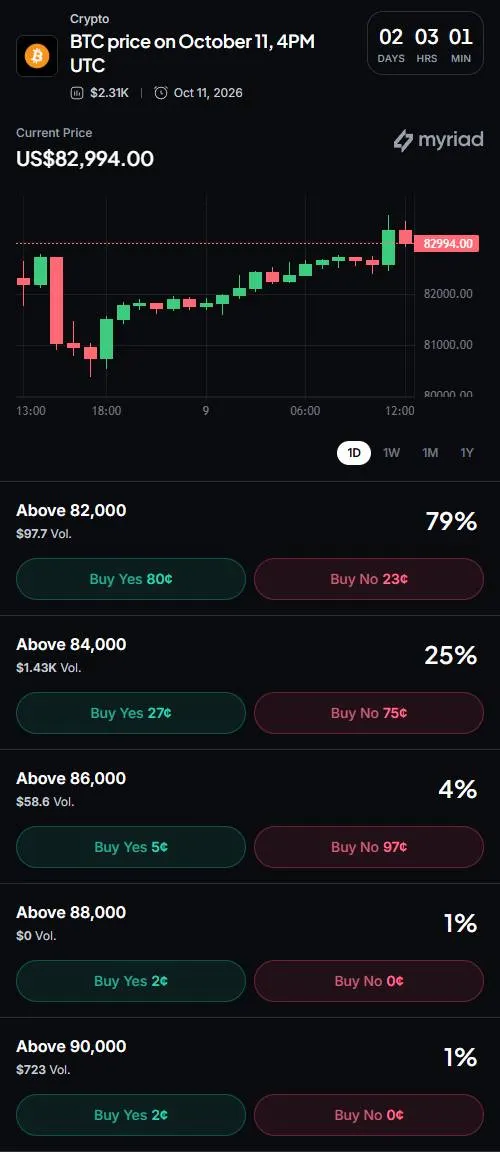
Per CoinGecko data, Bitcoin hit lows of $80,427 in the past week, and is currently trading at just under $83,000, down 4.1% over the past seven days. On Myriad, a prediction market owned by Decrypt‘s parent company Dastan, users put a 79% chance on Bitcoin ending the week above $82,000, and just a 28% chance of it topping $84,000.
“From a market-structure perspective, the $83,000 region remains an interesting level,” Luke Deans, Senior Research Associate at Bitwise Europe, told Decrypt. “This area combines the average ETF cost basis with the prior technical higher-high threshold and has been tested repeatedly over recent weeks.”
Myriad: BTC price on October 11, 4PM UTC. Click to make your prediction.
Where is support?
Bitcoin fell below $83,000 early on Thursday morning and is currently attempting to recover. Deans said the reaction to this will be “informative,” as if it struggles to recover, then lower structural support targets should be considered.
Ananda Banerjee, Founder and Principal Quantitative Researcher at analysis firm Charlie Quant Lab, told Decrypt that he sees strongest support at $77,000. This is according to on-chain metrics, he said, which show a notable cluster of the Bitcoin supply was bought at this level. Deans agrees that the average acquisition price of active investors, or the True Market Mean, is near $77,000.
BitcoinBTC · USD
$82,656−2.34%
Oct 3Oct 4Oct 6Oct 8Oct 10
$86.7k$84.7k$82.7k$80.7k
24h HighHigh$83,398
24h LowLow$81,857
VolVol$1.0B
Market projectionsOdds by Myriad
→
However, Deans also sees lower support at $74,000 with the Short-Term Holder Cost Basis, which represents the average acquisition price of newer market participants. The 200-day moving average also sits at $72,000, which he said provides an independent technical reference alongside the on-chain measures.
“Through this lens, Bitcoin could fall materially from current levels and still remain within what we would consider a constructive risk-on structure,” Deans told Decrypt. “A move into the $72,000 to $77,000 region would represent a strong retest of the broader transition zone.”
If that area is successfully defended, he said, then a range which previously acted as resistance for Bitcoin movements will be turned into support—which would be a positive signal. That said, failing to defend that zone could “impair current market structure.”
Still, Bitcoin tested a move above $87,000 at the start of the week, albeit unsuccessfully. The failure was driven “mainly by futures positioning rather than spot demand,” Bitfinex analysts told Decrypt. “Spot demand remains the missing piece,” they added, noting that U.S. spot Bitcoin ETFs took in $241.1 million in the week of September 28 to October 2, against $2.39 billion the week before. “The average ETF investor is back at breakeven for the first time since January, a level at which inflows have historically been slow,” they said.
Can-Luca Köymen, Investment Strategist at Sygnum Bank, also told Decrypt that low spot volume is stunting Bitcoin’s price action.
Bitfinex analysts believe that Bitcoin’s consolidation range is between $84,000 and its yearly open of $87,722. The analysts said that September CPI on October 14 could put an end to that range, alongside ETF flows picking up.
Bitcoin ETFs lost $484.9 million on Wednesday, the worst single-day outflow since June 25, according to Decrypt’s ETF tracker. BlackRock’s IBIT took the biggest hit at $207.7 million, with Fidelity’s FBTC next at $105.1 million. Experts believe this needs to reverse for a successful Uptober—but with the funds shedding a further $244 million Thursday, the direction of travel is still downwards.
Is Uptober cancelled?
So, is Uptober over? Most experts that Decrypt spoke to were hesitant to declare Uptober cancelled over a single week of red action. Still, they warned against basing investment decisions based on a hyped up month rather than fundamentals.
“Historical evidence supports October strength,” Jake Kennis, Senior Research Analyst at Nansen, told Decrypt. “Bitcoin has posted a median October return of roughly 14% since 2013, with 10 of the past 13 Octobers finishing positive.”
“But ultimately liquidity, positioning, macro conditions, and underlying demand are more important drivers than any specific date,” he added.
Daily Debrief Newsletter
Start every day with the top news stories right now, plus original features, a podcast, videos and more.
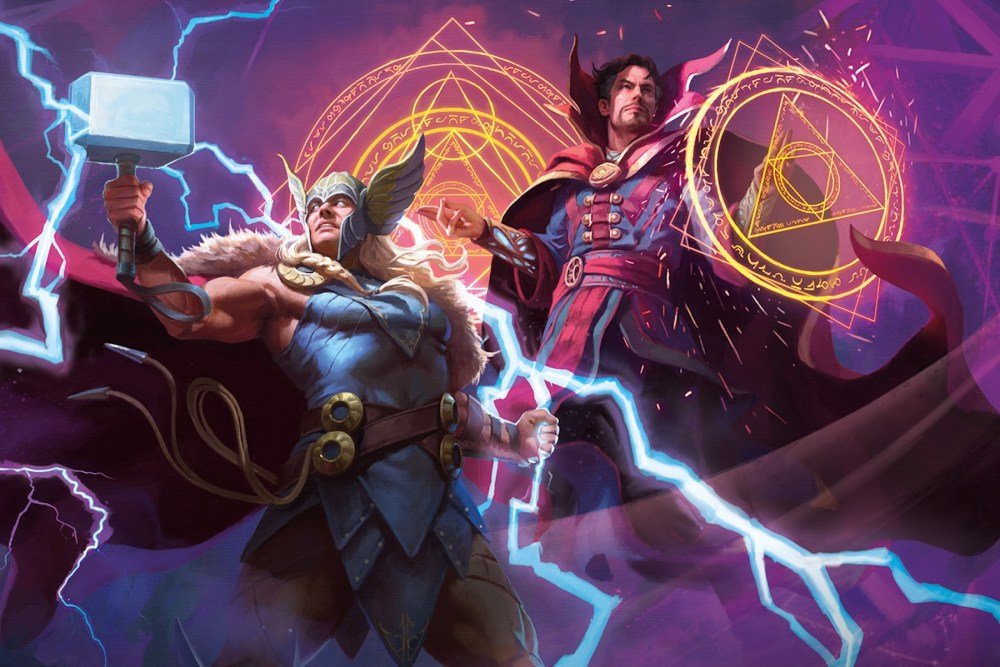
Titled “Darkhold Destiny,” the set is focused on “the mystical, the mythical and the mighty” magical characters from the Marvel universe, including Doctor Strange, Thor, Hela and Dormammu. The collection, which marks the third “Universes Beyond” collaboration in Magic and Marvel’s multiyear deal, will include a brand-new storyline set in the Marvel Universe and an original character created by the team.
The “Darkhold Destiny” Magic set will release April 7, 2027 and debut alongside a new Marvel comic book that showcases the story.
“This is a new kind of Universes Beyond set,” reads the description from Hasbro’s Wizards of the Coast, the makers of Magic: The Gathering. “By taking the core elements players love about Magic: The Gathering, the team thoughtfully and strategically expressed those design intentions through the Marvel Universe. The narrative unfolds across nearly 30 dimensions and is centered around four main characters — Doctor Strange, Thor, Hela and Dormammu.”
The news was revealed during Magic’s New York Comic Con panel Friday, where Wizards also announced that fans who see “Avengers: Doomsday” opening weekend in Infinity Vision at Regal Cinemas will receive an exclusive Magic: The Gathering card featuring Doctor Doom.
Additionally, two more Marvel-Magic team-ups were promoted during the panel: a special release called “Doomsdrop” and a new Secret Lair kit titled “Marvel’s History of Heroes.”
The Doomsdrop is inspired by the Marvel comics and is a multi-drop collection that will “predominantly feature Doctor Doom, although fans should expect other special guests from the Marvel Universe,” according to Wizards.
“Secret Lair Countdown Kit: Marvel’s History of Heroes” is a collection of 30 cards “that bring the storied past of Marvel to life.” That limited-edition drop will launch Nov. 2 at 9 a.m. PT and is priced at $199.99.
Per Wizards, “The release features illustrations crafted by over 30 artists celebrating iconic moments from Marvel’s comic history — from the transformation of the Fantastic Four in space via cosmic rays, to the first appearance of Iron Man with Ho Yinsen, to Jean Grey’s transformation into the fiery Phoenix.”
See below for a first look at cards from the new “Darkhold Destiny” Magic: The Gathering set.