Author: rb809rb

  • NBC News, MS NOW Tamp Down Party Spirit After White House Correspondents’ Dinner Chaos

    WASHINGTON — Mentalist Oz Pearlman was supposed to dazzle an audience of hundreds on Saturday night here with mind tricks in a well-lit hotel ballroom. Instead he found himself doing his act for a small handful of media executives in a darkened underground event space close to midnight.

    MS NOW had planned to host a festive soirée in the site of an old subterranean trolley station in the heart of the nation’s capital, part of the usual proceedings following the annual White House Correspondents’ Dinner. This year was going to be more auspicious — until horror struck just hours earlier: Authorities are still investigating an incident in which a man was able to get close to a space in the Washington Hilton where President Donald Trump was to attend — and deliver pointed remarks — to an assemblage of journalists, news executives, media honchos and government officials at a celebration of journalism that is woven into the social calendar of this city devoted to the federal government.

    President Trump and attendees were unharmed, but many were shaken by an outburst of gunshots and the reminder that political violence seems more prone to break out in the U.S. than at any other time in recent memory.

    With that in mind, media organizations backing traditional after-parties worked on the fly to change their purpose.

    “While tonight’s event won’t be what we originally intended, we still think it is important to provide a space for friends and colleagues to be together,” MS NOW said in a dispatch emailed to guests for a party that was meant to serve as an elaborate debut of sorts: The news outlet is no longer part of NBC News, and is now a flagship outlet of Versant Media, spun off from NBCUniversal earlier this year.

    Meanwhile, NBC News opted to continue with a long-held after-event, deciding that attendees could use a place to gather, convene and process.

    After the gunshots, it couldn’t be bacchanal as usual. NBC News anchor Tom Llamas broke into regular programming on NBC with a special report, and many of the news organization’s top executives quietly left the main gathering at the residence of France’s Ambassador to the United States, according to a person familiar with the matter, to watch their team’s effort in a makeshift monitor room.

    The tone of both parties was subdued. Each felt designed to accommodate a larger crowd that might not feel comfortable enough to attend. And shuttling back and forth between the two events became onerous: Washington police closed down parts of Connecticut Avenue, a main artery in the city, making a direct route between the events impassable.

    Still, people needed to talk — about what they saw and heard, about the reasons why it happened, and about how things could have been much worse.

    At the MS NOW gathering, Pearlman performed his feats for Versant Media CEO Mark Lazarus and CNBC President KC Sullivan, among others. Still, some of the hoopla was dialed down, though a series of projections on the wall that described ties to the First Amendment were underscored by the events of the evening.

    NBC News, meanwhile, played host to journalists and staffers, including anchors and correspondents such as Lester Holt, Christine Romans and Joanna Stern. Executives including Cesar Conde, chairman of the company’s news operations, and Rebecca Blumenstein, president of editorial for NBC News, were also working to navigate the evening.

    In the streets of Washington, word of the alarming development spread through discussions with rideshare drivers and in the overheard comments of tuxedoed attendees who blurted out comments in smartphone conversations while walking away from the original site of the dinner.

    President Trump said Saturday evening that he hoped to reconvene the dinner within 30 days’ time. In various conversations, partygoers seemed uncertain the dinner could be reconstituted in such a short period of time.

    Even a mentalist like Pearlman, after all, can’t make people forget what transpired.

  • MiCA’s not enough: Bybit CEO says firms need other licenses to turn a profit in Europe

    MiCA’s not enough: Bybit CEO says firms need other licenses to turn a profit in Europe

    Snagging a Markets in Crypto Assets (MiCA) license to operate in Europe is great, but, alone, it won’t be enough to turn a profit, according to Ben Zhou, the CEO of Bybit, one of the largest cryptocurrency trading platforms.

    MiCA doesn’t cover the full range of products, such as derivatives and tokenized assets, needed to be profitable, Zhou said in an interview. For those, companies also need a MiFID II (Markets in Financial Instruments Directive) license and an Electronic Money Institution (EMI) license.

    “With the current MiCA framework, you can only do fiat-to-crypto, crypto-to-crypto,” Zhou said. “There are many elements of a profitable business you cannot do, so even as a MiCA holder — unless you’re Kraken or BItpanda or Bitvivo, who are already making money because they have multiple licenses.”

    Even Bybit, the world’s second-largest cryptocurrency exchange by trading volume, is some way off from breaking even in Europe, Zhou said. That timeline depends on when the firm acquires the other licenses it needs.

    “We don’t make money under the current MiCA license. But we’re able to afford it because we’re a big entity. For us, it’s a long-term investment,” Zhou said. “It could be five years away, but I think that is a bit long. I would assume we are probably going to be profitable within two years.”

    Market consolidation is coming

    A MiCA license issued by one country allows a crypto-asset service provider to operate across the European Economic Area (EEA): all 27 members of the European Union, as well as Norway, Iceland and Liechtenstein.

    Now is a critical juncture for many small to medium-sized crypto companies in Europe, because the MiCA grandfathering period closes at the end of June. That means firms must have obtained MiCA authorization to operate across the region by July 1 — a cut-off point that is widely expected to be the death knell for many smaller crypto firms.

    “There’s going to be market consolidation,” Zhou said. “That’s why these guys are shutting down. Because even if they know they could afford MiCA, they’re like, ‘WTF, I need [MiFID, EMI] to make money, and I need to make a whole lot of investment in compliance infrastructure to be able to be profitable?’”

    MiCA itself is undergoing change, with some country regulators calling for tighter, more centralized control and granting increased oversight to bodies such as the European Securities and Markets Authority (ESMA). And when it comes to structured products, ESMA recently reminded crypto firms offering perpetual futures that some of these products may fall outside the rules.

    Zhou said Bybit chose a stringent regulator in Austria’s FMA, a decision he said will pay dividends down the line. Each country interprets MiCA differently, he said: “Some countries interpret it as a way to attract new business; some want heavy regulation. So you actually have different levels of strictness.”

    As for bringing ESMA into the mix, Bybit is neutral, Zhou said.

    “There are talks about a more level playing field,” he said. “But there could be disadvantages. Because when you have a local regulator they are easy to get to. If we have any issues, we just send an email and go to FMA in Vienna. But if everyone’s in Paris, then you have to line up. There are more CASPs, increased bureaucracy, decreased efficiency.”

  • Washington shooting: What we know so far

    Washington shooting: What we know so far

    United States President Donald Trump has been rushed out of the White House correspondents dinner at a hotel in Washington, DC, after a gunman fired shots and tried to breach security.

    The president, first lady Melania Trump, Vice President JD Vance and Trump’s cabinet members were unharmed in the shooting at the Washington Hilton hotel.

    Recommended Stories

    list of 3 itemsend of list

    A Secret Service agent was hit but was protected by a bullet-resistant vest. Trump said he was in “great shape”.

    The White House said the suspect, identified as 31-year-old Cole Tomas Allen from California, is in custody. Trump said he was heavily armed and appeared to be acting alone.

    The White House correspondents dinner will be rescheduled in 30 days, he said.

    Here’s what to know about the shooting and the suspect:

    What happened to Trump?

    The president was to speak at the White House Correspondents’ Association ‌dinner at the Washington Hilton on Saturday night.

    The dinner is an annual event at which journalists who cover the White House celebrate the First Amendment of the US Constitution, which ensures the freedom of speech and the press, and raise money for journalism scholarships. The president and other US leaders also generally attend.

    But the gala was interrupted by the sound of gunfire, and Secret Service agents rushed the president out of the room and the hotel.

    A man armed with a shotgun had fired at a Secret Service agent, an FBI official told the Reuters news agency. The agent was hit but in an area ⁠covered by protective gear and was unharmed, the official said.

    US Secret Service spokesperson Anthony Guglielmi later told reporters that the officer had been released from hospital.

    Reporting from Washington, DC, Al Jazeera’s Chris Sheridan said everyone was eating and socialising at the dinner and suddenly shots were heard.

    “I thought it sounded like it came from behind where we were sitting, but it was quite loud. It was an echo. Quite a loud boom of at least five shots, which resonated throughout the ballroom just outside where we were,” he said.

    Al Jazeera’s Alan Fisher also described unusual events at the White House, where the president addressed the media, who all arrived straight from the dinner.

    “We don’t often get the president stepping from an assassination attempt, which is what it appears like on the face of it now, into the briefing room to give the media an update with everyone in their finest clothes,” he reported from Washington, DC.

    The Hilton hotel is no stranger to assassination attempts after John Hinckley Jr’s attempted assassination of President Ronald Reagan there in 1981. That event is perhaps what the hotel is most famous for and not the annual White House correspondents dinner.

    Fisher said Trump seemed quite taken aback by the shooting.

    “He himself initially had thought a tray had been dropped or it was gunfire, and the Secret Service agent spirited him out of the hall along with the first lady and other members of the cabinet,” he said.

    He noted that Trump had made it clear that he wanted to continue the event, but the Secret Service wouldn’t allow it.

    Is Trump safe?

    All US federal officials, including Trump, have been declared safe.

    About an hour after Trump was rushed from the event, he posted on his Truth Social platform that a “shooter had been apprehended”.

    “Quite an evening in DC, Secret Service and Law Enforcement did a fantastic job,” Trump wrote.

    Trump said he had been asked to leave the dinner and said it will be rescheduled.

    “The First Lady, plus the Vice President, and all Cabinet members, are in perfect condition,” he said. “I have spoken with all the representatives in charge of the event, and we will be rescheduling within 30 days.”

    Addressing reporters a short time later, Trump lauded the bravery of the Secret Service agent who he said “was shot from very close distance with a very powerful gun, and the vest did the job”.

    “I just spoke to the officer, and he’s doing great. He’s in great shape. He is in very high spirits, and we told him we love him and respect him,” he said.

    Who is the suspected gunman?

    The New York Times and CBS News identified the suspect as Cole Tomas Allen.

    Washington, DC, interim Police Chief Jeffery Carroll told reporters the suspect was armed with a shotgun, a handgun and multiple knives. Carroll added that he has been taken to a local hospital to be evaluated but it was too soon to say what his motivation was.

    Based on preliminary information, Carroll said the suspect was believed to have been a guest at the hotel.

    Reporting from Washington, DC, Al Jazeera’s Richard Gaisford said authorities have not released the name of the suspect in custody but various news reports have identified him.

    “It appears this was gleaned from the information he gave when he checked in to the Washington Hilton before this event. He had a room at the hotel and is being named as Cole Tomas Allen from a place called Torrance in California. He is 31 years old,” he said.

    “We saw that video of him rushing that police line, in effect to try and get into the ballroom, where, of course, Donald Trump was sat close to his wife, Melania, and other members of the cabinet and all of the members of the press who were gathered for the White House correspondents dinner there,” he added.

    Gaisford noted that in some of the pictures, the gunman is almost half-naked because he was stripped by police to ensure he wasn’t carrying any form of explosive device.

    Trump described him as a “sick” man.

    “The man has been captured. They go into his apartment. I guess he lives in California, and he’s a sick person, a very sick person. And we don’t want things like this to happen,” the US president told reporters.

    He added that the events were traumatic for the first lady and the response from law enforcement agencies was “really incredible”.

    “We’re going to reschedule. We’re gonna do it again. We’re not gonna let anybody take over our society. We’re not gonna cancel things out.”

    Todd Blanche, acting attorney general, told journalists that the investigation is ongoing.

    “I expect you will see charges filed shortly. The charges should be self-evident, given the conduct, but as you’ll hear, there will be multiple charges surrounding the shooting, the possession of firearms and anything else that we can get on this guy,” Blanche said.

    Has Trump been attacked in the past?

    Trump has faced numerous assassination attempts and death threats throughout his years as president and as a presidential candidate.

    The closest call came in July 2024 at a campaign rally in Butler, Pennsylvania, where a gunman got onto a nearby rooftop with a direct line of sight to then-candidate Trump as he spoke on stage. A bystander was killed, and Trump was wounded in the ear. Agents shot dead the suspect, 20-year-old Thomas Crooks, at the scene.

    Two months later, an armed man hid near Trump’s West Palm Beach golf course in Florida with the intent to kill him, according to officials. Prosecutors said Ryan Routh methodically plotted to kill Trump for weeks before aiming a rifle through the shrubbery as the president played golf. A Secret Service agent spotted Routh before he was able to open fire, and he was soon arrested nearby. Routh was found guilty last year of attempting to kill the president and was sentenced to life in prison in February.

    Also in February, a 21-year-old man, Austin Tucker Martin, was shot dead after entering Trump’s Mar-a-Lago resort in Florida with a shotgun, but the president was not there.

  • Timeline: Trump assassination attempts and security incidents

    Timeline: Trump assassination attempts and security incidents

    The incident at the White House Correspondent’s Dinner is only one of a series of security-related events involving Trump since 2024.

    Donald Trump and top White House officials were evacuated from an annual media gala event after an armed man stormed the lobby and opened fire.

    The suspect was arrested at the White House Correspondents’ Dinner on Saturday night at the Washington Hilton hotel and taken into custody. US media identified him as 31-year-old Cole Tomas Allen from Torrance in California.

    Recommended Stories

    list of 3 itemsend of list

    Acting Attorney General Todd Blanche said charges would be filed shortly. It was not clear if the suspect was planning to target Trump.

    The US president has been involved in various security-related incidents, including assassination attempts during his presidency and election campaigns.

    Here is a timeline:

    July 2024 – Trump shot at Pennsylvania rally

    The US president was injured in a shooting at a campaign rally in Butler County on 14 July 2024, three months before he was elected president for a second term.

    While Trump spoke to the crowd, at least five gunshots were heard around 6:15pm (22:15 GMT). He dropped down, while multiple US Secret Service agents rushed onto the stage to shield him.

    Several minutes later, he was helped to his feet by the agents and escorted offstage to his motorcade, with blood visible on his right ear and smeared across his face.

    MILWAUKEE, WISCONSIN - JULY 13: People watch television news at a bar in Milwaukee displaying images from a campaign rally for former U.S. President Donald Trump where he was apparently injured on July 13, 2024 in Milwaukee, Wisconsin. Details are unclear, but Secret Service quickly ushered Trump away while speaking at the Pennsylvania rally. Spencer Platt/Getty Images/AFP (Photo by SPENCER PLATT / GETTY IMAGES NORTH AMERICA / Getty Images via AFP)
    A bar in Milwaukee shows TV news coverage of the Trump shooting in July 2024 [File: Spencer Platt/Getty Images via AFP]

    The Secret Service shot and killed the suspect within seconds of the gunfire. Before being taken away, he appeared to pump his fists and yell “Fight!” towards the crowd.

    The Federal Bureau of Investigation (FBI) later named the gunman as 20-year-old Thomas Matthew Crooks of Bethel Park, Pennsylvania.

    September 2024 – Second assassination attempt

    On September 15, Trump was at his West Palm Springs resort in Florida when the incident occurred at about 2pm local time (18:00 GMT).

    According to local media reports, Trump was moving between holes five and six at his golf course with his friend and now envoy Steve Witkoff when gunshots were heard. The course was quickly locked down.

    Officials said a Secret Service agent spotted a gun barrel in some bushes near the edge of the course. Multiple officers fired at least four rounds at him. It was unclear if the suspect fired back at the agents.

    The suspect was identified as 58-year-old Ryan Wesley Routh.

    Prosecutors said Routh had stayed in South Florida for about a month, and mobile phone records placed him in the vicinity of the golf course and Trump’s Mar-a-Lago estate.

    In February, Routh was sentenced to life in prison after being convicted of plotting to kill Trump.

    September 2025 – Off-duty policeman infiltrates Trump’s security team

    Melvin Eng, an officer with the New York Police Department (NYPD), turned up at the Ryder Cup golf tournament at Bethpage Black Course in New York, armed and in full tactical gear, pretending to be part of Trump’s security detail, US media reported.

    It was later discovered that Eng was on sick leave, had no official assignment to be part of the president’s detail and no assigned role at the event.

    The incident reportedly led to Eng’s suspension, pending further investigation by the NYPD.

    February 2026 – Gunman killed after crashing security perimeter at Trump home

    A man carrying a gas can and shotgun was fatally shot by Secret Service agents after crashing his vehicle into the security perimeter of Trump’s Mar-a-Lago resort in Florida.

    The president was in Washington at the time. Police identified the attacker as 21-year-old Austin Tucker Martin from North Carolina. His family had reported him missing and it is not clear what his motive was.

  • NBC News, MS NOW Tamp Down Party Spirit After White House Correspondents Dinner Chaos

    WASHINGTON — Mentalist Oz Pearlman was supposed to dazzle an audience of hundreds on Saturday night here with mind tricks in a well-lit hotel ballroom. Instead he found himself doing his act for a small handful of media executives in a darkened underground event space close to midnight.

    MS NOW had planned to host a festive soirée in the site of an old subterranean trolley station in the heart of the nation’s capital, part of the usual proceedings following the annual White House Correspondents Dinner. This year was going to be more auspicious — until horror struck just hours earlier: Authorities are still investigating an incident in which a man was able to get close to a space in the Washington Hilton where President Donald Trump was to attend — and deliver pointed remarks — to an assemblage of journalists, news executives, media honchos and government officials at a celebration of journalism that is woven into the social calendar of this city devoted to the federal government.

    President Trump and attendees were unharmed, but many were shaken by an outburst of shots and the reminder that political violence seems more prone to break out in the U.S. than at any other time in recent memory.

    With that in mind, media organizations backing traditional after-parties worked on the fly to change their purpose.

    “While tonight’s event won’t be what we originally intended, we still think it is important to provide a space for friends and colleagues to be together,” MS NOW said in a dispatch emailed to guests for a party that was meant to serve as an elaborate debut of sorts: The news outlet is no longer part of NBC News, and is now a flagship outlet of Versant Media, spun off from NBCUniversal earlier this year.

    Meanwhile, NBC News opted to continue with a long-held after-event, deciding that attendees could use a place to gather, convene and process.

    After the gunshots, it couldn’t be bacchanal as usual. NBC News anchor Tom Llamas broke into regular programming on NBC with a special report, and many of the news organization’s top executives quietly left the main gathering at the residence of France’s Ambassador to the United States, according

    to a person familiar with the matter, to watch their team’s effort in a makeshift monitor room.

    The tone of both parties was subdued. Each felt designed to accommodate a larger crowd that might not feel comfortable enough to attend. And shuttling back and forth between the two events became onerous: Washington police closed down parts of Connecticut Avenue, a main artery in the city, making a direct route between the events impassable.

    Still, people needed to talk — about what they saw and heard, about the reasons why it happened, and about how things could have been much worse.

    At the MS NOW gathering, Pearlman performed his feats for Versant Media CEO Mark Lazarus and CNBC President KC Sullivan, among others. Still, some of the hoopla was dialed down, though a series of projections on the wall that described ties to the First Amendment were underscored by the events of the evening.

    NBC News, meanwhile, played host to journalists and staffers, including anchors and correspondents such as Lester Holt, Christine Romans and Joanna Stern. Executives including Cesar Conde, chairman of the company’s news operations, and Rebecca Blumenstein, president of editorial for NBC News, were also working to navigate the evening.

    In the streets of Washington, word of the alarming development spread through discussions with rideshare drivers and in the overheard comments of tuxedoed attendees who blurted out comments in smartphone conversations while walking away from the original site of the dinner.

    President Trump said Saturday evening that he hoped to reconvene the dinner within 30 days’ time. In various conversations, party-goers seemed uncertain the dinner could be reconstituted in such a short period of time.

    Even a mentalist like Pearlman, after all, can’t make people forget what transpired.

  • Coinbase’s John D’Agostino says crypto platform stands alone as industry’s full-service prime broker

    Coinbase’s John D’Agostino says crypto platform stands alone as industry’s full-service prime broker

    Coinbase (COIN) has quietly crossed a threshold that Wall Street would recognize immediately: it has become, by its own definition, the only full-service prime brokerage in crypto.

    John D’Agostino, head of strategy at Coinbase Institutional, said the definition of a prime broker still follows a familiar Wall Street checklist: trading, custody, financing, derivatives and cross-margining. In crypto, he added, there’s an extra layer, staking. “If you can do all of those at scale, you’re a prime,” he said.

    In equities and fixed income, only a handful of firms, Goldman Sachs (GS), Morgan Stanley (MS) and Bank of America (BAC), truly qualify as full-service primes, D’Agostino said. Smaller brokers can support funds, but they don’t offer the full stack. “A $100 million hedge fund isn’t getting everything from the top tier. They’re piecing it together,” he said. “The big primes do everything.”

    Crypto, until recently, worked the same way, just more fragmented. Funds stitched together custody from one provider, derivatives from another, financing elsewhere. “You can synthetically replicate a prime by patching services together,” D’Agostino said. “But Coinbase is the only one doing all of it natively.”

    Coinbase is the largest U.S.-based cryptocurrency exchange and a major provider of infrastructure for institutional investors, offering trading, custody and financing services through its Coinbase Institutional unit.

    Its flagship platform, Coinbase Prime, bundles these functions into a single system, allowing hedge funds and asset managers to trade, store and finance digital assets under one roof. Prime holds over $350 billion in assets under custody, about 12% of the total crypto market cap, and serves as custodian for more than 80% of U.S. bitcoin and ether ETF assets.

    The firm has become a key bridge between traditional finance and crypto markets, serving as custodian for a significant share of U.S. bitcoin and ether (ETH) exchange-traded fund (ETF) assets and operating under a growing regulatory framework, including oversight from New York regulators

    Crypto prime brokers provide institutional clients with a bundled suite of services designed to mirror traditional offerings in markets like equities and FX. They help funds manage counterparty risk and access liquidity across fragmented venues. Prominent players include Coinbase Prime, Galaxy Digital (GLXY), FalconX and Anchorage Digital.

    Cross-margining

    The final piece fell into place in March with the rollout of cross-margining between spot and derivatives positions, allowing market makers and institutional traders to reduce capital requirements by as much as 10% to 20%. “That was the last pillar,” D’Agostino said. “Now we’re a prime by any standard, substitute crypto for any asset class.”

    Coinbase’s institutional platform processes roughly $236 billion in quarterly trading volume and supports more than 470 assets across 20-plus blockchains.

    Beyond trading and custody, Coinbase runs a $1 billion lending book and what D’Agostino describes as the industry’s largest listed derivatives footprint through its Deribit integration. Its staking business spans 10 to 20 tokens at institutional scale, including dedicated products through Coinbase Asset Management.

    “Those are the core components. There are firms doing well in custody, others in derivatives, others in lending,” he said. “No one is solving all of those problems in one place.”

    That gap has persisted in part because of crypto’s relative size. At roughly 3% to 5% of global equities and fixed income markets, it remains too small for major banks to fully commit.

    D’Agostino instead expects banks and incumbents to partner. “Buy, build or rent,” he said. “Banks will rent. It’s cheaper and smarter to rent the best brand than build a so-so version.”

    Longer term, that calculus could change if crypto grows to 20% or 30% of global markets. “Then you’ll see full-scale competition,” D’Agostino said. “But that’s years away.”

    For now, the bigger threat isn’t Wall Street, it’s startups. “I’m less concerned about JPMorgan than I am about the next Brian Armstrong,” he added.

    Read more: Coinbase, Bybit said to be working together on tokenization, custody and distribution of U.S. stocks

  • Cold War in the Crypto World: Justin Sun Will Not Attend Donald Trump’s Memecoin Event—Here’s Why

    Cold War in the Crypto World: Justin Sun Will Not Attend Donald Trump’s Memecoin Event—Here’s Why

    A memecoin-themed event hosted by US President Donald Trump at his Mar-a-Lago club in Florida has made headlines due to a noteworthy development.

    Crypto entrepreneur Justin Sun, who was expected to be one of the event’s biggest attendees, did not make the appearance.

    According to sources who attended the event, Sun’s absence, particularly given his position as one of the largest investors in the TRUMP token, was considered a surprise. Sun had played an active role and made a notable appearance at a similar event last year. However, the situation changed this year.

    Related News Chief Economist of a Major Chinese Company: “In Bitcoin, Institutional Investors Have Become the Landlords, While Retail Investors Have Become the Tenants”

    Behind this development lies a notable legal process. It has been revealed that Justin Sun recently filed a lawsuit against the Trump family’s cryptocurrency startup, World Liberty. This indicates significant tension between the parties, and another noteworthy detail is that Sun’s previous fraud case with US regulators was settled last month.

    On the other hand, behind-the-scenes information regarding the event revealed some details about the organization’s structure. It was noted that a significant portion of the attendees came from Asia, and that a large part of the approximately 200-person invited group expected to have one-on-one meetings with Donald Trump. However, it was stated that only the holders of the 29 largest tokens would be able to closely observe the president’s speech.

    *This is not investment advice.

  • 4 takeaways: Shai Gilgeous-Alexander dominates Thunder-Suns Game 3 & OKC nears sweep

    The Oklahoma City Thunder defeat the Phoenix Suns, 121-109, to take a 3-0 series lead.

    • Download the NBA App

    The Oklahoma City Thunder are one one of the most dominant, two-year runs in NBA history, and the dominance continued with a 121-109 victory in Game 3 of their first round series with the Phoenix Suns on Saturday afternoon.

    The Thunder were without Jalen Williams, who suffered a hamstring strain three days earlier. But Shai Gilgeous-Alexander didn’t need much help.

    The reigning MVP scored a career-playoff-high 42 points, shooting an amazing 15-for-18 from the field and 11-for-12 from the free throw line, adding eight assists. The Thunder continue to score efficiently against what was a top-10 defense in the regular season, and Gilgeous-Alexander’s performance was just the seventh 40-point playoff game in NBA history where the player had a true shooting percentage over 90%.

    Playing at home for the first time, the Suns led by nine points late in the first quarter. But the Thunder closed the period on an 18-4 run and were in control most of the way after that.

    Here are some notes, numbers and film as the champs improved to 11-0 in first-round games over the last three years:


    1. Gilgeous-Alexander is too much from mid-range

    Even when he won the Kia MVP award last season, Gilgeous-Alexander wasn’t as good of a mid-range shooter as he was this year, when he shot an incredible 197-for-359 (54.9%) between the paint and the 3-point line. That was the fourth-best mark for a player with at least 300 mid-range attempts in the 29 seasons for which we have shot-location data; the only three better ones are held by Kevin Durant.

    On Saturday, Gilgeous-Alexander was 6-for-7 from mid-range, and his best work was done over the last six minutes of the second quarter, when the Thunder took full control of Game 3.

    Collin Gillespie has been Gilgeous-Alexander’s primary defender for most of this series, but he was getting the business. So the Suns actually assigned starting center Oso Ighodaro to the MVP for a stretch late in the second.

    Gilgeous-Alexander proceeded to target Devin Booker in the pick-and-roll, getting to his mid-range pull-up:

    Shai Gilgeous-Alexander pull-up jumper vs. Devin Booker

    On the next possession, he rejected a screen, beat Ighodaro off the dribble, and drew a foul on Booker. Then, attacking Booker again, he got an open 3 for Jaylin Williams.

    Grayson Allen made his series debut on Saturday and was not spared. Gilgeous-Alexander attacked him to generate a layup for Alex Caruso and to get to another mid-range pull-up:

    Shai Gilgeous-Alexander pull-up jumper vs. Grayson Allen

    Finally, the Suns sent a double-team at Gilgeous-Alexander in the middle of the floor. The result was an open corner 3 for Caruso.

    Again, the Suns ranked ninth defensively, and the Thunder have scored at least 120 points per 100 possessions in all three games of this series. Overall, they’ve scored 10.9 per 100 more than Phoenix allowed in the regular season.


    2. Thunder handle the pressure

    The biggest strength of the Suns’ defense was forcing turnovers. They ranked third in opponent turnover rate, forcing 16.5 per 100 possessions, having seen the biggest jump (by a wide margin) from last season.

    But now they’re facing the team that has committed the fewest turnovers per 100 possessions in each of the last two seasons. And the Thunder have been even better at taking care of the ball in this series.

    Over the three games, the champs have committed just 8.9 turnovers per 100 possessions, what would be tied for the third-lowest rate for any team in any playoff series in the 30 years for which we have play-by-play data. They’ve taken their opponents’ biggest strength and turned it into a major weakness.

    According to tracking data, the Suns rank fourth in these playoffs in average pick-up distance, so they’re applying pressure. But it’s not working on the Thunder, who had just two live-ball turnovers in Game 3 on Saturday.

    Shooting is the most important thing in this game, but you there are other ways to boost your efficiency and the Thunder have done it by taking care of the ball.


    3. Best bench in basketball

    It was a little bit of a surprise that Ajay Mitchell started in place of Jalen Williams on Saturday, given that Cason Wallace started 42 more games than Mitchell (58-16) in the regular season. Mitchell was the Thunder’s second leading scorer (15 points) in Game 3, but shot just 5-for-20, forcing some tough shots along the way.

    The Thunder’s new starting lineup had played just 37 total minutes (over seven games) together in the regular season and was outscored by four points on Saturday. But the champs outscored the Suns by 16 points with at least one reserve on the floor.

    Even without Williams to run the second-unit offense, the Thunder outscored the Suns by two points (20-18) in Gilgeous-Alexander’s 10 minutes on the bench. The shooting wasn’t great (8-for-22, including 1-for-7 from 3-point range), but they didn’t commit any turnovers when the MVP sat.

    They used the same five-man unit (Mitchell, Wallace, Jared McCain, Chet Holmgren and Isaiah Hartenstein) for those entire 10 minutes. Mitchell scored seven of his 15 points and McCain scored all of his seven in those no-SGA minutes, with a couple of SGA-esque buckets included.

    The Thunder have had the league’s No. 1 bench in each of the last two seasons, and though their versatility is a little compromised with the absence of Williams, they’re never dependent on the success of any particular lineup. Still, it will be interesting to see if Mitchell remains the starter going forward.


    4. Booker still can’t get going

    Dillon Brooks (33 points) and Jalen Green (26) were again the Suns’ leading scorers on Saturday, and that’s by the Thunder’s design. The league’s No. 1 defense has made Devin Booker its No. 1 priority, making sure he plays in a crowd and has a hard time finding open shots.

    For this entire series, Booker’s best looks at the basket have come in transition or after offensive rebounds.

    When he’s used a ball-screen, he hasn’t seen any kind of advantage for himself:

    Wall of Thunder defenders facing Devin Booker

    The Suns have bee able to leverage the attention on Booker to get good shots for his teammates. Early in the third quarter on Saturday, there was no weak-side help on an Ighodaro roll to the rim, because Dort stayed attached to Booker in the corner:

    Jalen Green assist to Oso Ighodaro

    But the Suns haven’t been able to find enough of those kinds of openings to keep up with the Thunder. And at 20.3 points per game, this is the lowest-scoring playoff series of Booker’s career. His true shooting percentage of 55.1% would be his third worst mark of the 10 series that he’s played in.

    The Suns first chance to avoid a sweep is Game 4 on Monday (9:30 ET, Peacock).

    * * *

    John Schuhmann has covered the NBA for more than 20 years. You can e-mail him here, find his archive here and follow him on Bluesky.

  • Wim Wenders Presents Yakusho Koji With Far East Film Festival’s Golden Mulberry, Describes Shooting ‘Perfect Days’ With the Discipline of a Documentary

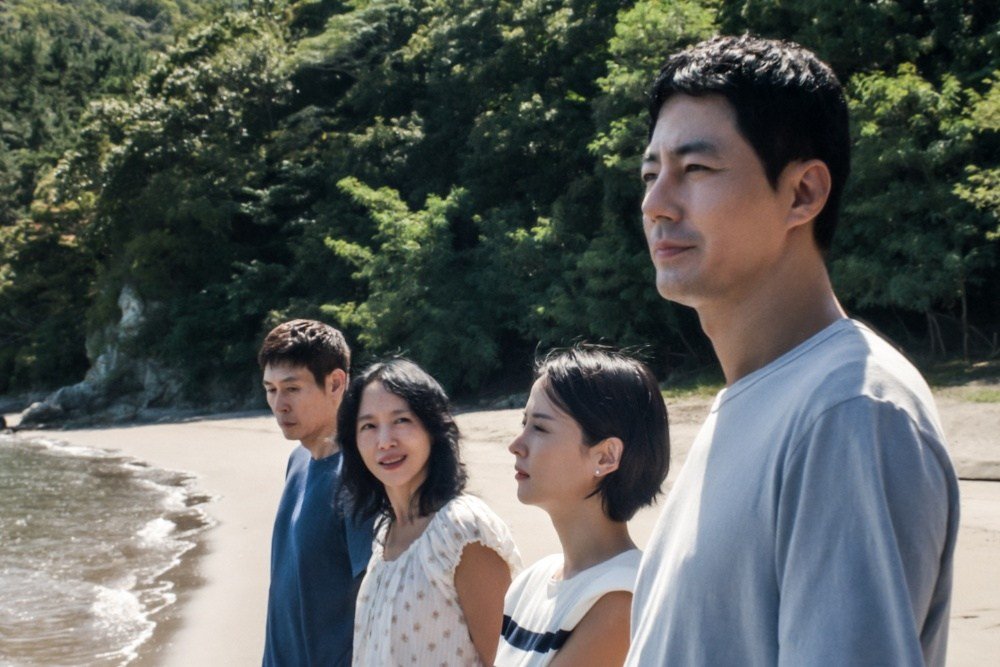
    Wim Wenders traveled to Udine to personally present Yakusho Koji with the Golden Mulberry Award for Lifetime Achievement at the 28th Far East Film Festival on Saturday, using the occasion to describe how their collaboration on “Perfect Days” quietly abandoned the conventions of fiction filmmaking.

    Wenders, who cast Yakusho as the taciturn Tokyo toilet cleaner Hirayama in the 2023 Cannes prize-winner, told the assembled audience he would not have made the journey for anyone else. He then traced a turning point that came on the third day of shooting.

    “He had transcended the part,” Wenders said, explaining that what Yakusho showed him in early rehearsals had already exceeded what the script envisioned. He asked the actor whether they could proceed directly to camera without rehearsing – unconventional on a fiction film – and Yakusho agreed.

    From that point, Wenders said, he found himself applying documentary discipline to a scripted story. “He was so much Hirayama that I didn’t dare do a second shot. Like if you do a documentary, you don’t say to the people, ‘Come again, we need to do one more shot.’ You shoot a documentary – that’s the rule – and what you shoot is the truth.”

    “I don’t even know if this has ever been done in the history of cinema – to shoot fiction as if it was documentary,” Wenders added. “And you allowed me to do that. This prize cannot even express what an actor you are.”

    “Perfect Days” was co-written by Wenders and Takasaki Takuma, who was present at the ceremony. The film earned Yakusho the best actor prize at Cannes.

    Accepting the award, Yakusho reflected on nearly five decades in the profession. “This is my 48th year as an actor,” he said, expressing gratitude to his family, friends, and the filmmakers and audiences around the world who had shaped his career.

    “My encounter with director Wim Wenders taught me the possibilities of cinema and was, for me, an especially significant event,” he added, before thanking the festival for creating the occasion.

    The Golden Mulberry is the highest honor awarded by the Far East Film Festival, held annually in Udine with a focus on popular Asian cinema. The tribute program accompanying Yakusho’s award comprised seven films personally approved by the actor, with the festival noting that his participation marked a highlight in the event’s 28-year history.

    Yakusho, 70, has been a defining presence in Japanese cinema for four decades, working across crime thrillers, historical epics, and international co-productions. His long collaboration with director Kurosawa Kiyoshi – encompassing films including “Cure” and “Doppelganger” – is among the most sustained actor-director partnerships in contemporary Japanese film. He has also appeared in Itami Juzo’s “Tampopo,” Imamura Shohei’s Palme d’Or-winning “The Eel,” Suo Masayuki’s “Shall We Dance,” and Miike Takashi’s “13 Assassins,” among many others.

  • Australia Makes Its Debut at EAVE’s Ties That Bind Co-Production Program

    Australia is sending its first-ever delegation to Ties That Bind, EAVE‘s flagship European-Asian co-production training program, with two Asian Australian filmmakers joining the initiative’s annual session in Udine, Italy, where it runs alongside the Far East Film Festival and Focus Asia through April 30.

    Industry development specialist Sheree Ramage shepherded the delegation to Udine, bringing filmmakers Ana Tiwary and Katrina Irawati Graham – both of whom work under the banner of indiVisual films – international – into the fold. The pair are developing a slate of projects spanning co-productions between Australia and Indonesia, Myanmar, South Korea, Nepal, France and Germany.

    Active for more than 15 years, Ties That Bind is a specialized initiative from EAVE (European Audiovisual Entrepreneurs), a producer training organization focused on European-Asian co-production. The program has placed alumni at Cannes, Berlinale, Venice and Locarno, among other major festivals. This year’s Udine edition gathers 15 participants across project and career tracks for sessions with prominent buyers, financiers and co-production partners from both regions. Tiwary and Graham will shadow European and Asian teams through the program’s full schedule of industry meetings and events.

    “More than one third of Australians are first or second generation migrants,” Ramage said. “We are geographically interconnected with Asia and have powerful historic ties to Europe. It makes sense that we strengthen and reflect what is already there. On top of this, Australia has a range of excellent co-production treaties and incentives that invite international collaboration. Through Ties That Bind, we are creating pathways for more Australian filmmakers to make their mark in world cinema.”

    The Australian participation is backed by Screen Australia and Screen Queensland.