Author: rb809rb

  • Worldcoin sellers lead across 16 exchanges – How much lower can WLD go?

    Worldcoin sellers lead across 16 exchanges – How much lower can WLD go?

    Worldcoin [$WLD] declined 11% in the past day, extending its 30-day loss to 14%.

    The decline could deepen as whales dominated market activity and the on-chain structure remained weak.

    Are Worldcoin whales driving the decline?

    Source: CoinGlass

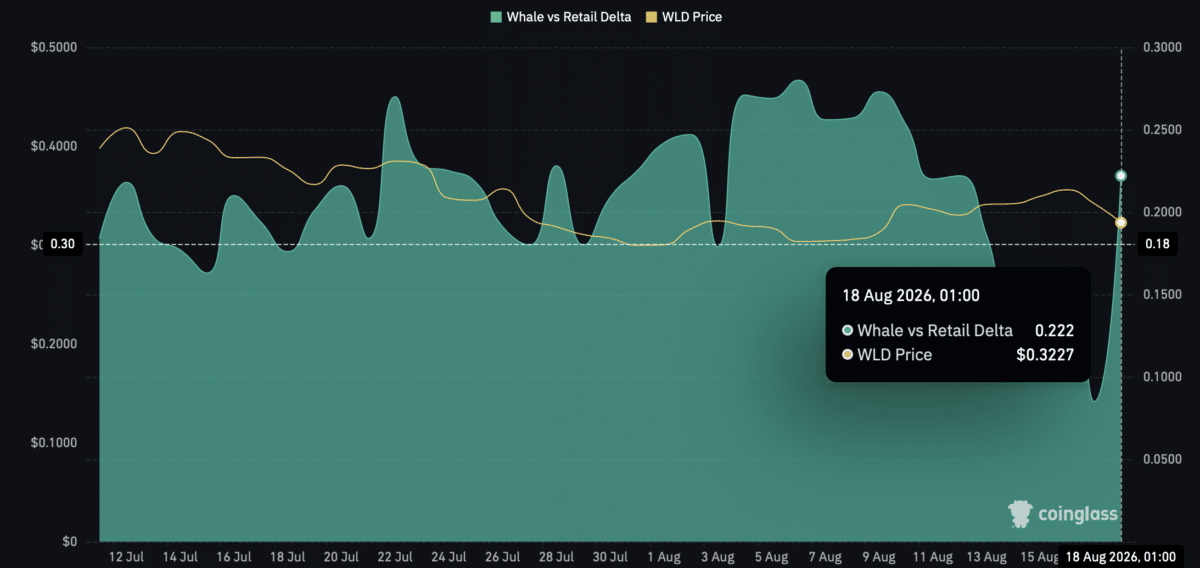
    Whale dominance surged as Worldcoin continued to struggle. Whales are large holders whose buying or selling can materially influence a crypto token’s price.

    CoinGlass’ Whale Retail Delta showed that whale dominance spiked to 0.222. At the same time, the Funding Rate turned significantly bearish at -0.0389%.

    $WLD’s Open Interest also fell by $28.57 million to $278.38 million.

    Together, these metrics showed bearish positioning alongside declining derivatives exposure. If this pressure continues, $WLD could erase its accumulated 90-day gain of approximately 35%.

    Why are $WLD sellers dominating?

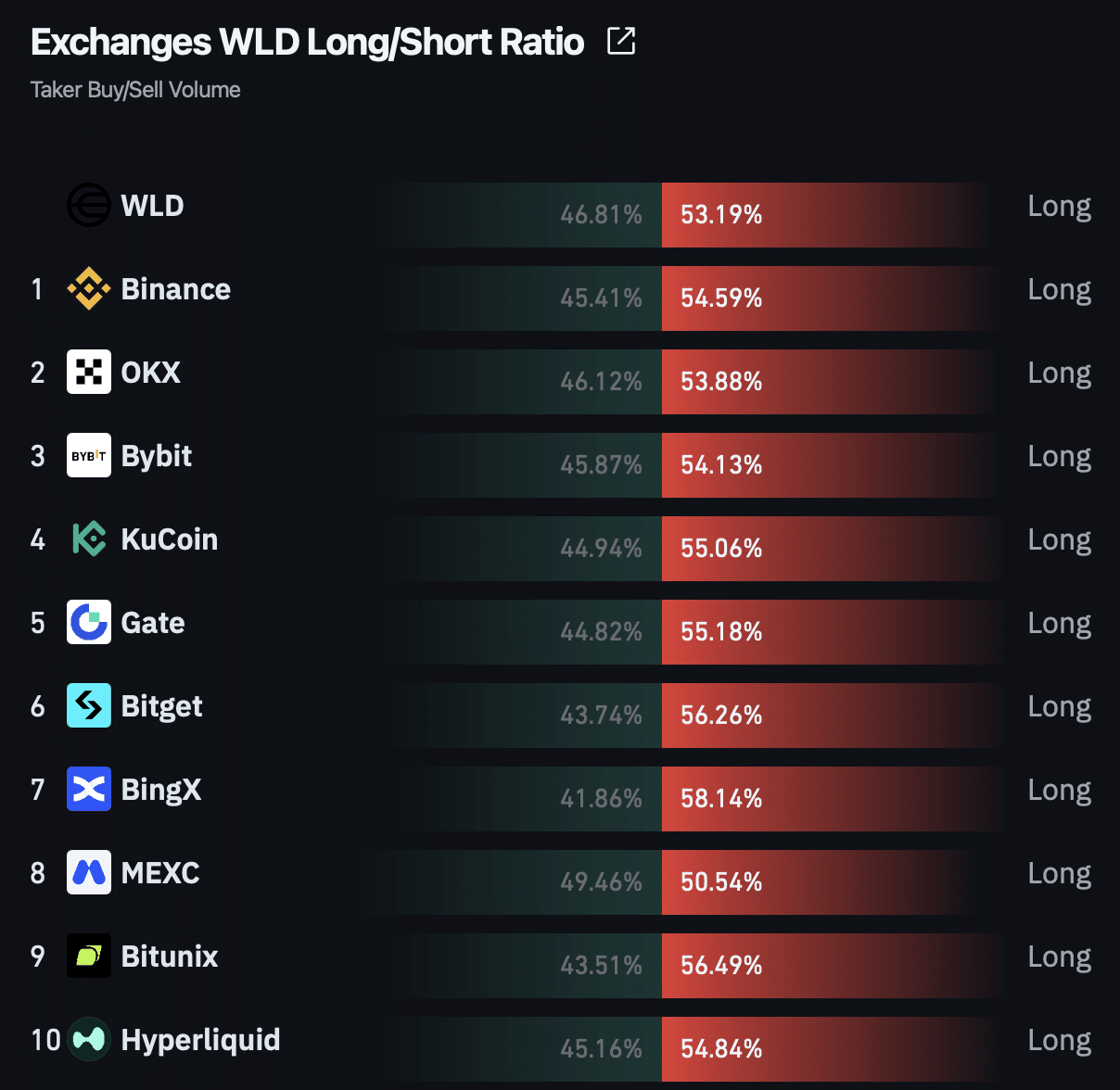
    Sellers dominated most $WLD perpetual trading volume across centralized and decentralized exchanges.

    CoinGlass’ Long/Short Ratio showed that sell-side activity represented 53% of $WLD’s trading volume. Sell-side volume led on 16 of the 18 exchanges trading $WLD, representing nearly 89% of those venues.

    Source: CoinGlass

    Binance, OKX, and MEXC recorded a combined $310.05 million in Volume. Sellers controlled at least 53% of the Volume across each exchange.

    More broadly, $WLD’s total Perpetual Volume reached $473.83 million after rising 4.36%.

    Rising Volume alongside falling prices suggested that sellers were gaining momentum. Further Volume growth during another decline could signal deeper losses from $WLD’s current price.

    Why is World Chain activity slowing?

    On-chain activity also remained limited, reducing $WLD’s chances of a notable recovery.

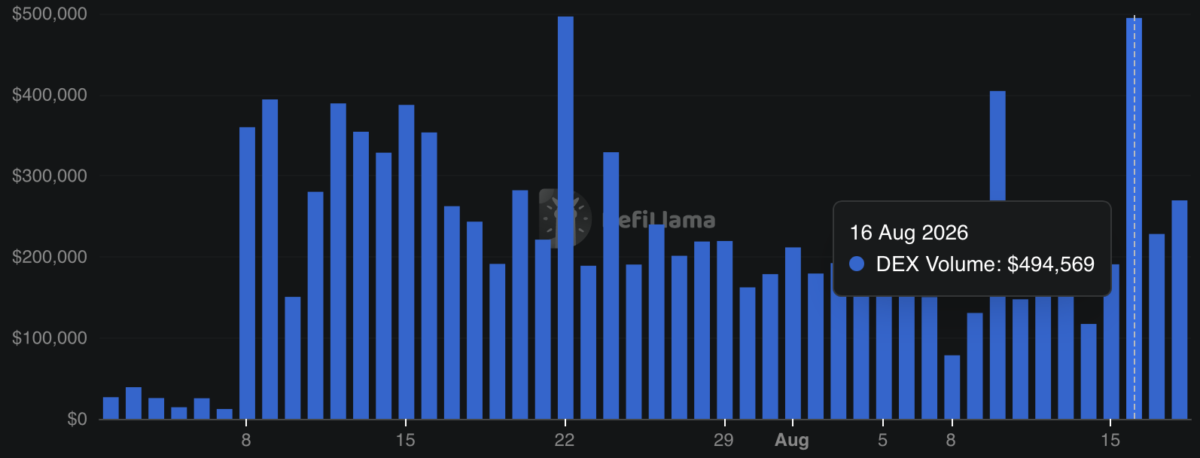
    World Chain recorded declining DEX Volume across its decentralized exchanges. DEX Volume fell from approximately $494,000 on the 16th of August to $243,000 at the latest reading.

    Source: DeFiLlama

    Declining DEX Volume pointed to weaker on-chain demand.

    World Chain also generated only $573 in Fees during the past 24 hours, adding little economic activity. For now, bearish derivatives positioning and limited on-chain activity suggested weak demand for $WLD. This combination could weigh further on its price while sellers remain in control.


    Final Summary

    • Worldcoin fell 11% daily and extended its 30-day decline to 14%.
    • Whale Retail Delta climbed to 0.222 as whale influence increased.
  • Multicoin moves $10 million in HYPE to Coinbase Prime, stirring selloff fears

    Multicoin moves $10 million in HYPE to Coinbase Prime, stirring selloff fears

    On August 18, Onchain Lens, which tracks blockchain transactions, reported that Multicoin Capital had moved about 172,710 $HYPE (about $10.15 million) to Coinbase Prime, a destination that has often been associated with selling by traders.

    Given that $HYPE is currently among the top 10 crypto tokens, the action by one of its major institutional backers is likely to attract attention far beyond Hyperliquid users.

    This is important as $HYPE’s market cap is almost $13 billion and is currently priced at about $58.59, as per DefiLlama. Given that market cap, the token movements are far from taking place independently. Major transfers to exchanges can quickly shape traders’ perceptions of imminent risks across the market.

    A transfer that still leaves Multicoin heavily exposed

    When viewed relative to Multicoin’s current holdings, the $10.15 million transfer is actually rather insignificant. Onchain Lens estimates that the fund has approximately 2.16 million $HYPE left, currently valued at around $126.63 million. To put it differently, the Coinbase Prime transfer actually seems to be a trim rather than an exit.

    Coinbase Prime is the institutional platform of Coinbase, which provides services such as custody, execution, and funding for the institution’s clients. It also serves as a facility through which institutions sell large amounts of their positions using the regulated market. Onchain Lens classified this transfer as “likely to sell”, thus alerting the trading community.

    Why the crypto market reads exchange inflows as a warning

    This anxiety isn’t without some recent background. $HYPE is trading well below its June high of $76.87 according to DefiLlama; meanwhile, open interest is at almost $11.8 billion. This creates a large number of leveraged positions, which can amplify any sudden downward movements.

    Traders consider the transfer of tokens to exchanges to be a sign of supply entering the market. With $HYPE’s liquidity still smaller than that of big cryptocurrencies, even an experienced trader may find the order book hard to manage. After a summer of observing the movement of tokens from Hyperliquid’s biggest holders, any other Multicoin transfer keeps the market on alert.

    Multicoin has insisted it is not selling

    Multicoin previously opposed similar rumors. For example, in the latter part of July, after Multicoin and Paradigm unstaked a total of $291 million worth of $HYPE tokens, causing the price of $HYPE tokens to fall below $60, the co-founder of Multicoin, Tushar Jain, issued a statement saying, “We did not unstake to sell,” and stated that the unstaking had occurred solely for privacy and wallet rotation purposes, as reported by Cryptopolitan.

    At that time, on-chain specialists at Markets Alpha confirmed this reason, showing that the tokens were moved to custody instead of going to exchanges. The recent transfer is important due to the change in destination: Coinbase Prime has a more direct path to settlement. This does not prove that the tokens have been sold, but it explains why a $10 million movement is on the front pages.

    What still underpins $HYPE

    The negative evaluation also needs to be considered alongside Hyperliquid’s fundamental figures. In its valuation report for June, Multicoin noted that the platform earned approximately $873 million in revenue on trading volume of about $2.9 trillion in 2025, which accounts for over 59% of open interest in the DeFi perpetual markets.

    $HYPE’s token economics are another part of the bull case. Roughly 99% of protocol revenue is directed toward $HYPE buybacks, with the purchased tokens subsequently burned. Multicoin argued in the same report that $HYPE could reach around $319 by 2028.

    The transfer of $10.15 million does not conclusively resolve the debate between fundamentals and prevailing short-term selling pressure. However, given that Multicoin continues to hold more than $100 million in $HYPE, major events involving Multicoin’s $HYPE wallets are bound to have a significant impact on market movements.

  • Five Standout Claims In ABC’s First Amendment Lawsuit Against The FCC

    Five Standout Claims In ABC’s First Amendment Lawsuit Against The FCC

    ABC has been pushing back on FCC for several months now, but on Tuesday, it filed a First Amendment lawsuit, claiming that the agency’s regulatory actions and investigations were part of a Trump administration effort to punish it for its speech.

    The lawsuit goes through a narrative of Donald Trump‘s attacks on the network, including his calls for the revocation of FCC licenses. In fact, the third paragraph of the ABC complaint features a screenshot of a Trump Truth Social post in which he calls for licenses to be terminated because of “100% negative” coverage on newscasts and late-night shows.

    The central part of the lawsuit is the FCC’s order that ABC’s eight owned broadcast stations file for early license renewal, a very unusual regulatory demand, given that the first of the licenses wasn’t set to expire until 2028. While the FCC tied its order to an ongoing investigation of the network’s diversity, equity and inclusion practices, ABC lawyers noted that it came just after Trump blasted Jimmy Kimmel over jokes on his show.

    The FCC issued a statement on the ABC lawsuit. with a spokesperson saying, “All broadcasters have a legal obligation to operate in the public interest—even Disney.  The FCC has been examining claims that Disney engaged in illegal DEI discrimination for over a year.  Disney is obviously very concerned about the FCC’s proceeding, as evidenced by their ongoing campaign of disinformation as well as their decision to ask a court to stop the FCC from further pursuing matters.”

    ABC, however, contended that the consequences of the Trump administration’s actions go beyond ABC. The network stated in the lawsuit, “If the Administration gets its way, the message to every media company in the country will be unmistakable: tell only the stories the Administration deems favorable, or face the coercive machinery of the federal government. In such a world, the press could in no way be described as free.”

    Here are five of the standout claims that ABC made in its lawsuit to try to bolster its point:

    FCC “confirmed the connection” to Trump’s threats: A challenge to ABC’s First Amendment claim will be in proving that there is a causal link to the president’s remarks and FCC action.

    Among other things, the network noted the timing of the FCC’s order for early license renewals, coming a day after Trump called on ABC to fire Kimmel over a comment he made about First Lady Melania Trump.

    But the network also cited a more recent example they claimed “confirmed the connection” between the White House and the FCC. In July, Trump gave a primetime address, but ABC and NBC decided not to broadcast it, amid concerns that the president would use the platform to make unfounded claims about election rigging.

    The network’s legal team wrote, “ABC was aware that the President wanted the address to be broadcast live, and considered the risk of resulting Administration retaliation. ABC ultimately decided to livestream the speech on ABC News Live, which it ordinarily would not have done.”

    Trump was aware of the decisions to bypass the address, and during the speech called for ABC and NBC to lose their licenses. ABC noted in the lawsuit that after the Trump threat, the FCC “promptly confirmed the connection: following the President’s demand, the Chairman stated that the Commission would consider ABC’s decision not to broadcast the July 16 address as part of its review of the Stations’ renewal applications.”

    Returning Kimmel to the air invited “further reprisal from the administration”: Few incidents involving the FCC drew the level of attention than what happened last September, when ABC put Kimmel on suspension amid furor among one of his jokes about the reaction to the assassination of Charlie Kirk.

    As noted in the ABC lawsuit, FCC Chairman Brendan Carr warned the network’s stations that “we can do this the easy way or the hard way.” “These companies can find ways to take action on Kimmel, or there is going to be additional work for the FCC ahead,” he said on Benny Johnson’s podcast.

    Hours later, ABC suspended Kimmel. In the lawsuit, its legal team said that the network was exercising its editorial judgment in suspending the late-night host, but they also noted that the president “celebrated” the decision, writing on Truth Social, “Congratulations to ABC for finally having the courage to do what had to be done.” The lawsuit also noted Carr’s comment to a reporter about the Kimmel suspension: an animated image of two characters from The Office celebrating.

    Then, the network’s legal team wrote, ABC made the decision to return Mr. Kimmel to the air “with full awareness that doing so was likely to invite further reprisal from the Administration.”

    They added, “The reprisal was swift to manifest: the following day, the President posted on Truth Social: ‘I can’t believe ABC Fake News gave Jimmy Kimmel his job back. . . . I think we’re going to test ABC out on this. Let’s see how we do.’”

    Carr later insisted that his comments were not a threat. “What I’ve been clear about is that if you look at the full context, not only what I said, but what the companies themselves have said about their decision. It was a business decision,” he told reporters after the incident.

    Brendan Carr takes Trump’s social media posts “as his directives”: While the lawsuit runs through a gallery of Trump’s attacks on ABC and other networks, it also cites numerous comments made by the FCC chairman.

    The ABC lawsuit cites this as further evidence that Carr is taking cues from Trump. The network claimed that Carr “takes the president’s social media posts as his directives.”

    The network’s legal team wrote, “First, replying to a post by the President expressing frustration at news coverage of the Iran conflict, the Chairman warned that stations airing ‘fake news’ had ‘a chance now to correct course before their license renewals come up,’ explaining that ‘they will lose their licenses if they do not.’”

    “Similarly, when the President called for NBC to fire late-night television host Seth Meyers, the Chairman reposted the President’s post to his official X account, thereby throwing the weight of NBC’s chief regulator in support of the President’s attempt to influence NBC’s editorial discretion.”

    Carr has defended his comments, often citing the obligation of broadcasters to uphold a public interest standard. But Anna Gomez, the sole Democrat on the commission, has said that the FCC has been using an “undefined” concept as a “roving mandate to police speech.”

    The FCC demanded records of political donations from The View hosts and ABC News personnel. According to the lawsuit, as part of the FCC’s investigation into The View, the agency’s Media Bureau made an extensive list of demands last month for information from the network’s Houston station. The investigation is into whether The View much comply with the FCC’s equal time rule, which requires that broadcasters who feature political candidates as guests must offer comparable time to rivals, if requested.

    Per the lawsuit, the FCC issued a letter of inquiry last month directing the station to “produce all internal communications among The View’s booking staff, its segment producers, its Executive Producer, and its on-air co-hosts discussing any candidate over a two-year period, together with the messages that two named co- hosts had sent to the program’s Executive Producer about a single booking decision.” The FCC also demanded the disclosure of political donations of employees and co-hosts, including a list of every donation over the past four years and the date of each, according to the suit.

    According to ABC, the Media Bureau issued another inquiry two weeks later that “demanded the standards and policies in place across all ABC programs relating to ‘journalistic integrity, newsworthiness, fairness, impartiality, objectivity, partisanship, [and] bias,’ as well as the political donations of on-air talent and producers, naming Good Morning America, This Week with George Stephanopoulos, and ABC World News Tonight with David Muir.”

    The network’s legal team argued that that Communications Act’s equal time provisions do not include a provision that “permits the government to demand a journalist’s or on-air anchor’s messages to her producer, to inventory her political contributions, or to audit the editorial standards of an entire news division.”

    The targeting of The View already has forced the show to avoid political candidate guests. ABC is asking for immediate action from the court, including a temporary restraining order to prohibit the FCC from taking any further moves in its early license renewal proceedings.

    The network’s legal team emphasized the urgency of the situation by citing instances where editorial decisions are being impacted. They noted that The View has not booked a political candidate since February, when U.S. Senate candidate James Talarico’s appearance triggered the agency’s investigation. The show also has passed on clips to air during the Hot Topics segment on The View and the cold open of the program, out of concern of triggering the equal time requirement, per the lawsuit.

    Carr has denied that he is censoring the program, and merely enforcing a rule on the books that doesn’t prevent the show from featuring candidates, albeit they would be on the hook to offer equal time. ABC, however, argued that The View falls under an exemption for bonafide news programming, and that the FCC affirmed as much in 2002.

    The network’s legal team argued, “Since the Bureau’s inquiry began, Plaintiffs must now evaluate any invitation to a political candidate for its potential consequences, including whether it might later be cited by the Commission as a basis for non-renewal in the Stations’ impending license renewal process.”

  • ‘A Breed Apart’ Director Recalls Hayden Panettiere’s “Dark” Energy on Set: “She Was Not OK”

    ‘A Breed Apart’ Director Recalls Hayden Panettiere’s “Dark” Energy on Set: “She Was Not OK”

    In the wake of Hayden Panettiere’s death, the director of one of her last films is opening up about his experience with her on set, saying the “energy in her room was pretty dark” at the time.

    The actress, who worked with Griff Furst on his 2025 film A Breed Apart, died on Sunday at age 36 at an apartment complex in Greenville, South Carolina.

    “I had met Hayden about 10 years before that and I knew that she was insanely talented, so when she signed on to do this picture that we were shooting, I was psyched,” Furst began in a video recently posted on Instagram. “I really wanted to work with her.”

    He then recalled realizing “something was off” with Panettiere while filming, making a point to mention the actress’s on-again, off-again boyfriend Brian Hickerson’s presence when he would visit the A Breed Apart set.

    “So I’m on set, and I get word from the movie’s security team who picked her up from the airport that something was off,” Furst continued. “I didn’t think much about it, and so I left set and I walked over to greet her and her boyfriend Brian. He opened the door. Hayden was incredibly sweet and gracious and excited to work, but she was not OK.”

    “I’m not going to get into the details of why that was, but having worked on over 100 movies and seeing just about everything, it was pretty clear that she wasn’t okay and the energy in her room was pretty dark,” the director added.

    Amid the investigation into Panettiere’s death, a police report said Hickerson and his brother were at the scene when the actress was pronounced dead by authorities. The Greenville County Coroner’s Office said that her cause and manner of death remain pending further investigation, and that there were no obvious signs of trauma. However, officials were reportedly heard discussing an “overdose” and “cardiac arrest” on the 911 call at the time of her death.

    Panettiere had been open about her struggles with alcohol and opioid addiction, further detailing her experiences in her memoir, This Is Me: A Reckoning, released earlier this year. In the book, she also detailed physical abuse by Hickerson.

    The actress’ mother, Lesley Vogel, also recently broke her silence on her daughter’s death, criticizing Hickerson, saying, “This person in her life that we have been trying to get rid of for quite some time was with her at her death and that was Brian Hickerson.”

    In Furst’s Instagram video, the director added that he “believed she was getting better” and that he and Panettiere “talked about doing another picture together recently, which is what makes this shitty news hit even harder.”

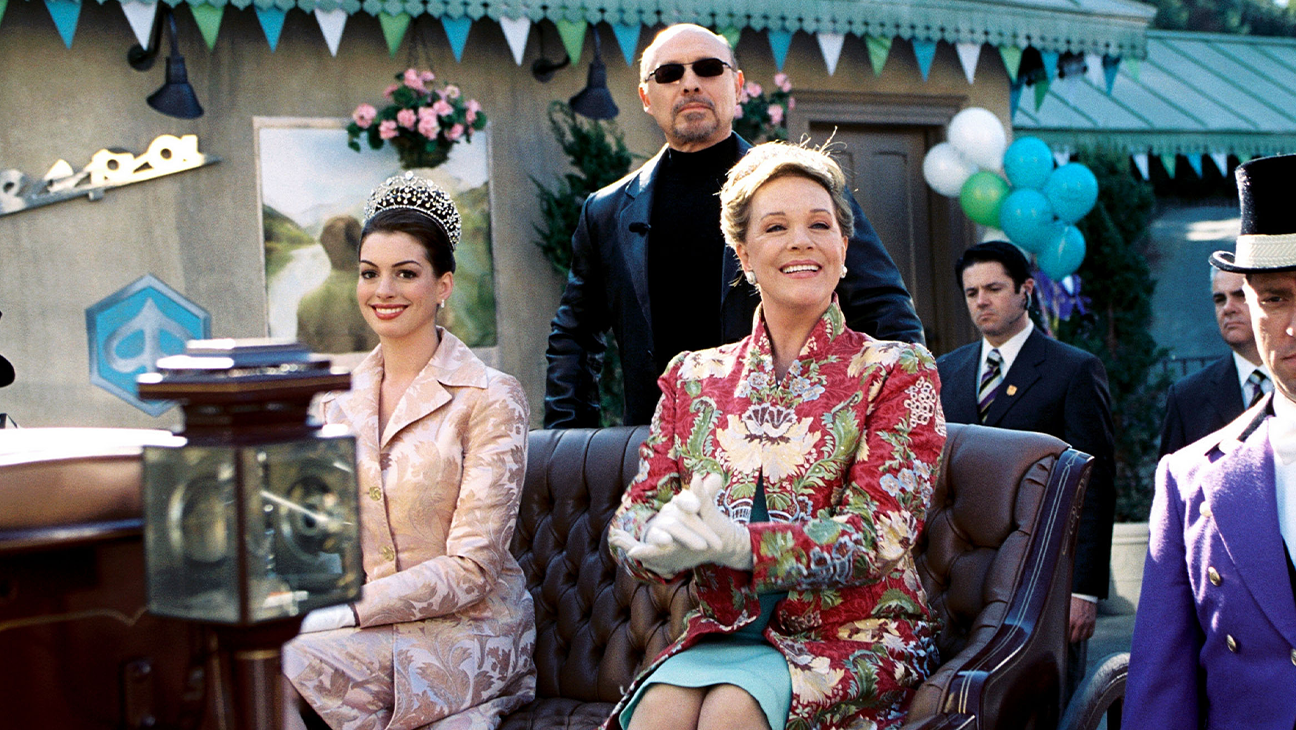
  • Anne Hathaway “Pushed Really Hard” Trying to Get Julie Andrews to Return for ‘Princess Diaries 3’

    Anne Hathaway “Pushed Really Hard” Trying to Get Julie Andrews to Return for ‘Princess Diaries 3’

    Anne Hathaway is revealing that she “did push really hard” trying to get Julie Andrews to reprise her role as Queen Clarisse Renaldi in the upcoming third Princess Diaries installment.

    During a recent interview with Entertainment Tonight after receiving her Disney Legends Honor at the D23 Expo, the Oscar winner reacted to Andrews saying she doesn’t “think I should be a part of” Princess Diaries 3.

    “First of all, I just want to say if she has a change of heart, we’re down,” Hathaway said. “Just anything, really. But we also want to be respectful. Like, for goodness sakes, if anybody has contributed to the world of entertainment and to our collective joy, it’s her. Whatever she wants, we completely understand.”

    However, The Odyssey actress added, “We did push really hard to see if she would want to do it.”

    During an interview with The Hollywood Reporter earlier this month, Andrews explained why she doesn’t see herself stepping into Queen Clarisse Renaldi’s shoes again. “I think the absolute truth is that I think I’m really past all that now,” The Sound of Music star confessed. “I’m not completely retired, but it’s a different kind of work that I do these days — [writing] books, and I do a lot of recording of podcasts and voiceovers. But truly, I don’t think I should be a part of it.”

    While details surrounding Princess Diaries 3 are being kept under wraps, the movie is set to be a continuation of the film series, which centers on Mia Thermopolis (Hathaway), who finds out that she is the heir apparent to the throne of Genovia. At the end of the second installment, The Princess Diaries 2: Royal Engagement, Mia is crowned the queen of Genovia single after Parliament abolishes the law requiring that a queen be married first. However, she also finally gets together with Nicholas Devereaux (Chris Pine) after calling off her wedding to Andrew Jacoby (Callum Blue).

    Hathaway also told ET that she just wants the third installment “to be fun” for those who have been fans since the original film released in 2001.

    “I want the women who were six when the first one came out — a lot of whom are now mothers themselves, maybe even with six-year-olds — I want them to feel like they’re bringing their children to something that mattered to them, a core memory for them, something that was a part of their heart and their lives,” she said. “And that means doing it justice. And that means taking the time that it takes to really build it right. That’s a lot of pressure, but I feel like this is a great team.”

    Adele Lim has been tapped to direct the feature, with Flora Greeson writing the script. Aadrita Mukerji had written an earlier draft of the screenplay before the production team pivoted in a different direction.

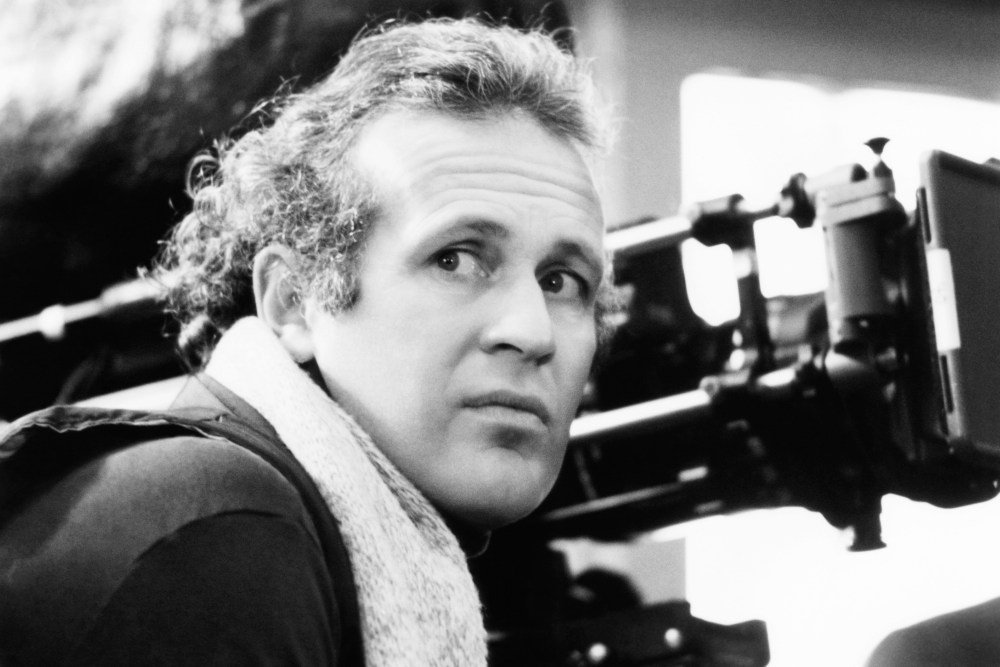
  • John Irvin, Director of ‘Hamburger Hill,’ ‘Tinker Tailor Soldier Spy,’ Dies at 86

    John Irvin, Director of ‘Hamburger Hill,’ ‘Tinker Tailor Soldier Spy,’ Dies at 86

    John Irvin, the British director of “Hamburger Hill,” the “Tinker Tailor Soldier Spy” miniseries and 1981’s “Ghost Story,” died Aug. 11. He was 86. 

    His producers confirmed he died at the home of his sister-in-law in the U.K. 

    The award-winning director’s career spanned several decades, each punctuated by a different focus. By the end of his career, Irvin had amassed over 30 films and three BAFTA nominations, with notable credits including “Turtle Diary,” “A Month By the Lake,” “City of Industry” and “Widow’s Peak.” 

    His 1987 Vietnam film “Hamburger Hill,” which starred Don Cheadle, Dylan McDermott, Michael Boatman, Steven Weber and Courtney B. Vance, is seen as one of the most realistic depictions of that war.

    Irvin, along with his twin brother David, was born in Newcastle upon Tyne, Northumberland on May 7, 1940. He graduated from the London Film School in the late 1950s.

    In the 1960s, he created numerous documentaries, including his 1967 short “Mafia No!,” about Italian social activist Danilo Dolci, which was nominated for a BAFTA Award for Best Short Film. Many of these documentaries were created for his own company Mithras Films, the BBC and ITV. 

    “When I did my documentaries, I would have dealings with the security services from time to time but that was MI6 not MI5,” Irvin said of his time shooting a documentary on the North Yemen War. “When I came back from Yemen, where I shot a documentary on the Civil War I was debriefed. There wasn’t much I could tell them, but I was never part of that world or paid. I was far too left-wing, for a start, but was anti-apartheid, anti-war, anti-nuclear. They were probably well aware of my leftwing activities, so I was certainly not involved in any hanky-panky.”

    In the ’70s, he shifted to television shows and made-for-TV-films. One of the most notable was the BBC miniseries adaptation of John le Carré’s “Tinker Tailor Soldier Spy,” which was nominated for a BAFTA Award for Best Drama Series and a Primetime Emmy Award for Outstanding Limited Series. After working with him, Alec Guinness wrote about Irvin that he “admired a director with balls behind the camera!” 

    By the 1980s and 1990s, he was fully immersed in Hollywood directing big names like Patrick Swayze (“Next of Kin”), Arnold Schwarzenegger (“Raw Deal”) and Uma Thurman 1991’s (“Robin Hood”). 

    “Not many filmmakers directed both Fred Astaire and Patrick Swayze,” Roel Haanen wrote in a 2021 interview. “Or followed up a tender, thoughtful film written by Harold Pinter with an Arnold Schwarzenegger action flick. But John did …”

    After his work with Hollywood, he shifted back to indie films in Europe including “Shiner” starring Michael Caine and “The Boys and Girl from County Clare” starring Andrea Corr and Colm Meaney.

    Most recently, he worked with producer Claire Evan’s on “Mandela’s Gun,” and at the time of his death was working on a new edit of the political thriller.

    In 1970, Irvin married Sophie (née Litchfield) who died of cancer in 1991. Together, John and Sophie had three children; Emilie, Luke, and Amy Irvin, who survive him, and two grandchildren, Finn and Isla Irvin. 

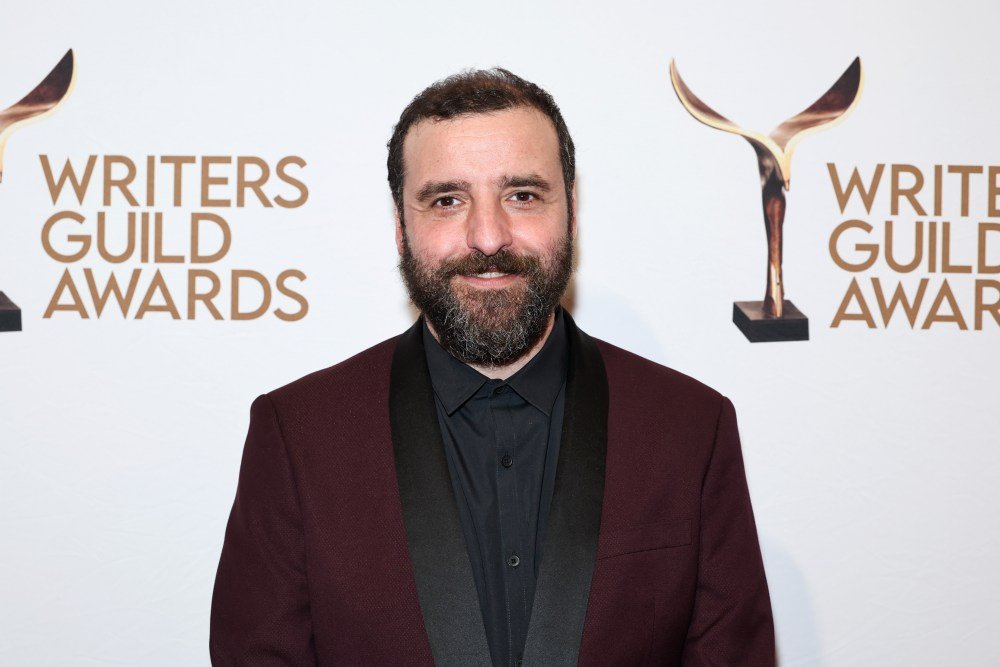
  • ‘Supergirl’ Star David Krumholtz Posts and Deletes Plans to Retire From Acting: ‘And Now, New Life’

    ‘Supergirl’ Star David Krumholtz Posts and Deletes Plans to Retire From Acting: ‘And Now, New Life’

    David Krumholtz, who played Kor-El in this year’s “Supergirl” and appeared in “Oppenheimer” and “The Studio,” said on Threads Monday that he’s done with acting and ready to start a “new life.”

    However, he later deleted the posts that spoke of his frustration with getting jobs in Hollywood, leading fans to speculate whether he is truly ready to turn in his SAG/AFTRA card.

    Krumholtz, who also starred in “Addams Family Values,” wrote, “I kinda sorta put my acting career on hold the other day. It’s been something I’ve been petrified to do for years. Specifically, the fear was that I’d go broke and not be able to handle being out of the game.”

    The post said he “sent the definitive email” that would put his career on hold for now. “A huge wave of relief washed over me. Not sure what I’m going to do for money instead, or how I’m going to do it, but I just removed a humongous burden, one that I truly didn’t fathom the weight of until it was gone. Frustrated, fed up, fried,” he wrote.

    It’s not the first time he has been ready to hang it up, however. Seth Rogen told a story on the “Diary of a CEO” podcast about how Krumholtz, a longtime friend, once told him he was going to quit acting and move to Riverside and start selling BMWs.

    Krumholtz went on to add in his post, “It became clear to me this year, that if I were to continue fighting for parts (what I used to call ‘auditioning’), I’d be doing so for roles that exploit my talent and reputation for a drastically diminishing return. Exploitative art isn’t art. And artists deserve a fair pay percentage for work that assists their employers in making profits. I came up in a time where movie studios and TV networks, no matter how big, were still mom & pop store entities.”

    Reps for Krumholtz did not immediately respond to a request for comment.

    Credits for Krumholtz, who has appeared in more than 100 film and TV projects, include “10 Things I Hate About You,” “Freaks and Geeks,” “ER,” “The Trouble with Normal,” “The Santa Clause 2,” “Harold & Kumar Go to White Castle,” “Ray,” “Tenacious D in the Pick of Destiny,” “Superbad,” “Walk Hard: The Dewey Cox Story,” “Numb3rs,” “Raising Hope,” “Childrens Hostpital,” “This Is the End,” “Key and Peele,” “The League,” “The Good Wife,” “The Deuce,” “Springsteen: Deliver Me From Nowhere,” “Forelock” and “The Rookie.”

  • Shifting $576M of forced sales off public order books saved Hyperliquid from a systemic crash

    Shifting $576M of forced sales off public order books saved Hyperliquid from a systemic crash

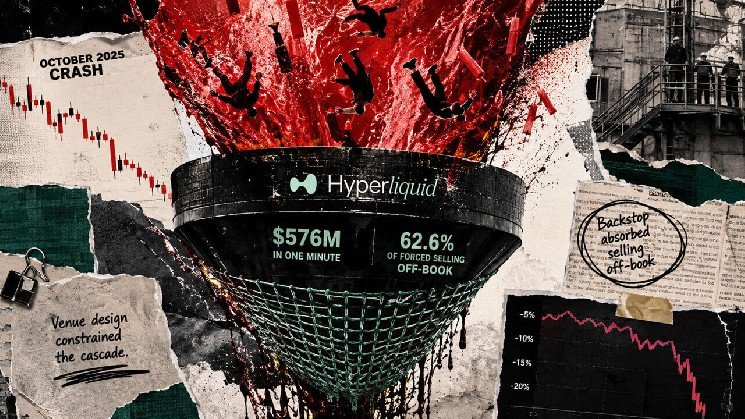
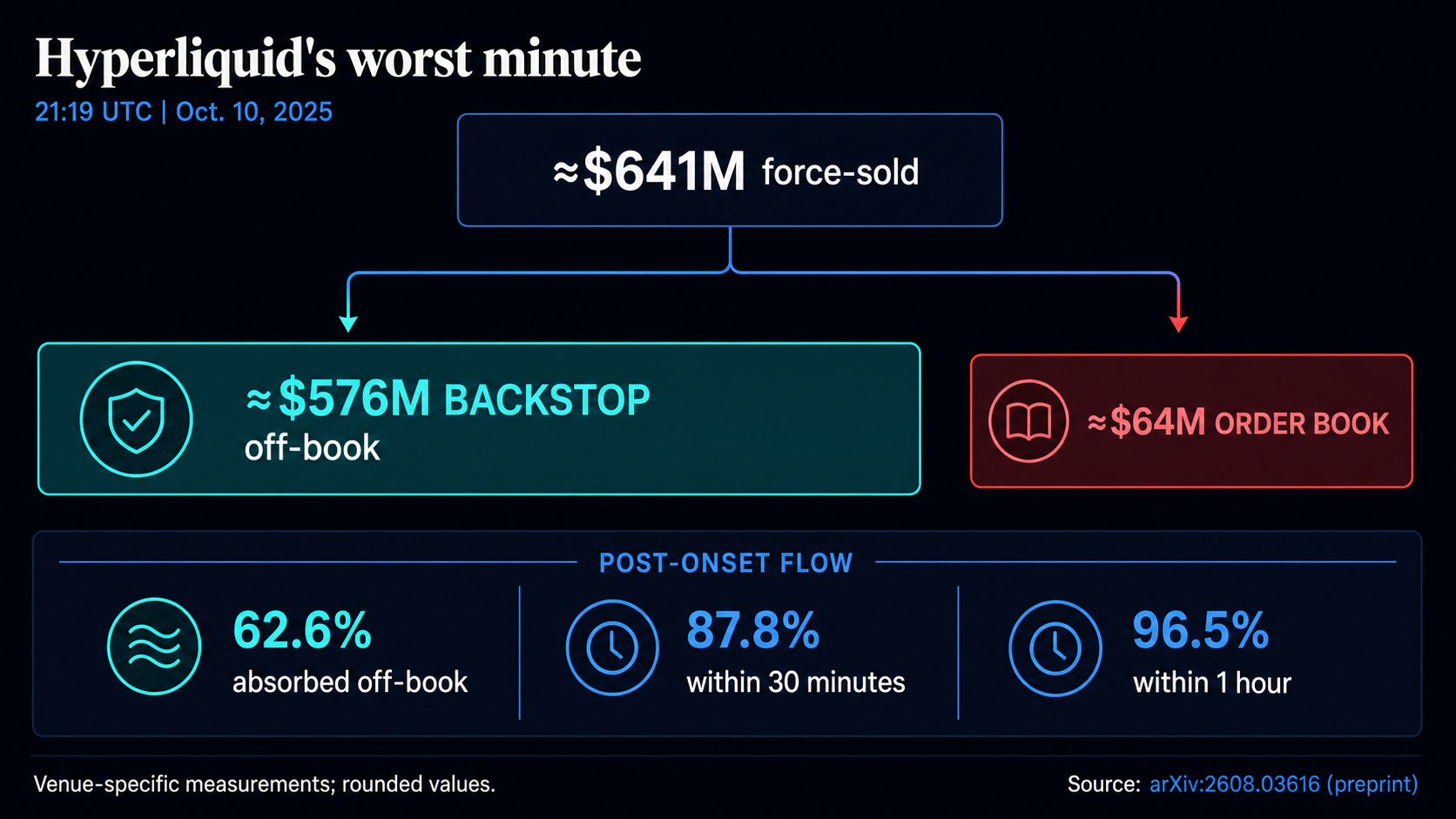
    Hyperliquid, an on-chain perpetual futures venue, sent most of the forced selling in the worst minute of the October 2025 crypto crash to the Hyperliquid backstop rather than its public order book, according to a new research preprint.

    About $641 million was force-sold on Hyperliquid at 21:19 UTC on Oct. 10, the paper found. Roughly $576 million went to the Hyperliquid backstop, while about $64 million reached the order book.

    The split is relevant because a thinning public order book can push prices lower and force more leveraged positions to close. The Hyperliquid backstop can interrupt that feedback by absorbing orders inside the venue. The preprint has not completed peer review, and its direct measurement covers Hyperliquid rather than the wider market.

    Hyperliquid’s liquidation rules first try to close a position through market orders. Under specified conditions, a liquidator vault can take over the position instead. That vault is a component strategy within the Hyperliquidity Provider (HLP) protocol vault.

    The study found that the backstop absorbed 62.6% of forced-sale value off-book after onset. The event was also highly compressed: 87.8% of forced selling after onset occurred within 30 minutes and 96.5% within one hour.

    The paper tracked $733 million of book-directed forced-sale value across its 15.7-hour post-onset window, including $644 million during the initial nucleation phase. It reported the 62.6% backstop share as a separate off-book series, so the figures describe different parts of its measurement rather than a single combined liquidation total.

    How the Hyperliquid backstop damped liquidation feedback

    The paper modeled the cascade with a branching ratio, or the average number of additional liquidations associated with each forced sale. A ratio approaching 1 would indicate a self-sustaining chain inside the venue.

    Hyperliquid’s structural estimate remained below 0.2 in every measured regime. It reached 0.195 during nucleation and eased to 0.140 at the peak, while a separate amplification calculation implied a ratio of 0.122.

    The authors interpret the Hyperliquid backstop as damping feedback inside the venue at the climax. The finding applies only within the venue; shared prices across exchanges may still have amplified liquidations across the broader market.

    The study places the Hyperliquid backstop in the context of seven major Bitcoin perpetual futures cascades from 2022 through 2025. Its Part I companion, previously covered by CryptoSlate, found no event-invariant early-warning variable across those episodes. Part II shifts from warning signals to the mechanism operating during a cascade.

    Hyperliquid’s fill-log archive begins on May 25, 2025, making the October 2025 event the paper’s only in-flight case study. The authors frame higher realized branching on venues without a comparable backstop as a hypothesis for future cross-venue testing.

  • ‘It has to pass’: Andrew Cuomo warns U.S. is falling behind on crypto rules

    ‘It has to pass’: Andrew Cuomo warns U.S. is falling behind on crypto rules

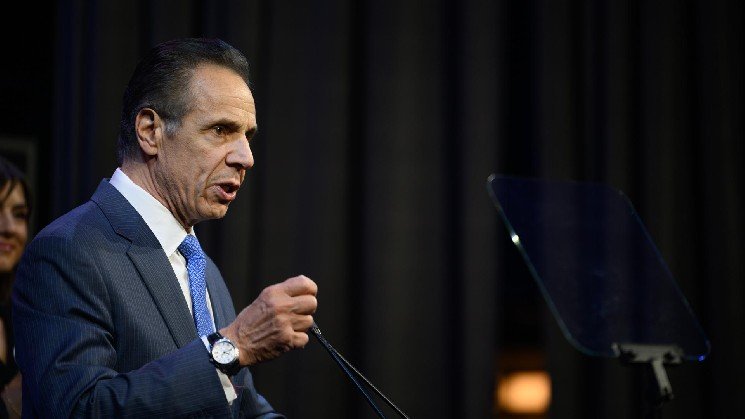
    Cuomo said years of uncertainty have made it harder for companies to build products in the U.S. while knowing where regulators will draw the line. “You have to know the rules of the game if you want a company to comply,” he said. “What’s fair and what’s foul?”

    He contrasted the U.S. with Europe, where the European Union has implemented a bloc-wide crypto framework. Without federal legislation, Cuomo said, the U.S. risks losing business and investment to markets where the rules are clearer.

    Getting a bill through Congress will require compromise, he said. Cuomo pushed back on attempts to blame either Democrats or Republicans for the holdup and said disagreements over ethics provisions and other parts of the bill should not sink it.

    If Congress doesn’t act, regulators will be left to fill the gap, Cuomo said. That could mean rules change each time political power shifts in Washington, making long-term planning harder for crypto and financial firms.

    Cuomo has a direct stake in how those rules develop. He is leading a joint venture between crypto exchange OKX and Intercontinental Exchange, the owner of the New York Stock Exchange. The venture is building infrastructure to connect crypto with traditional financial markets.

  • Inside the Fake Celebrity Podcast Scam Fooling Hollywood

    Inside the Fake Celebrity Podcast Scam Fooling Hollywood

    When Seth Rudetsky received an invitation to appear on Nikki Glaser’s podcast, he had no particular reason to think it wasn’t real.

    Rudetsky, the Broadway performer and SiriusXM host, gets asked to do podcasts all the time. Better yet, this one was offering him between $4,000 and $5,000 to appear. “Oh my God, they’re actually paying for a podcast,” he remembers thinking. A Glaser fan, Rudetsky quickly said yes.

    The invitation also seemed to know an awful lot about him. It mentioned his Broadway cruise and his work with Sara Bareilles — the kind of details that suggested somebody had actually done their homework.

    “All these specific things about my career,” Rudetsky recalls. “I’m like, oh my God, they totally know my work.”

    But they did not.

    Rudetsky had stumbled into an increasingly sophisticated scam in which fraudsters impersonate famous podcasters and their representatives, using flattering, highly personalized invitations — most likely composed by AI — to lure prospective guests into handing over money, login credentials or control of social media accounts.

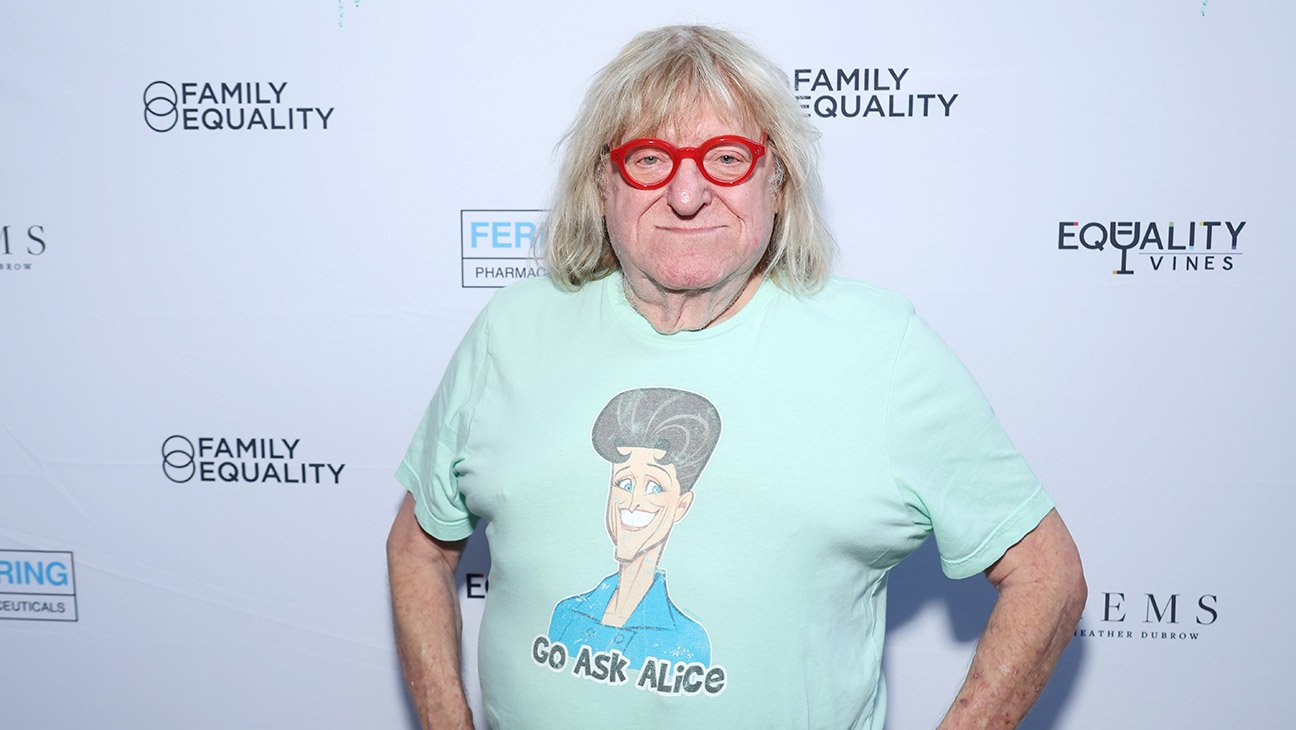
    And he is not the only recognizable Hollywood figure who fell for it. Bruce Vilanch believed Terry Gross wanted him on Fresh Air. There is no indication yet if the two scams are connected, but the pattern follows similar AI-assisted scams reported on recently by THR.

    “It was so articulate and so like her,” the veteran comedy writer and performer tells The Hollywood Reporter of an email he believed came from Gross. The correspondence that followed was equally persuasive, laying out the subjects the person identifying themselves as Gross intended to discuss with him, demonstrating what appeared to be deep, actual knowledge of Vilanch’s work.

    “I thought, ‘Well, this must really be Terry,’” Vilanch recalls.

    There were, of course, red flags, in retrospect at least. Vilanch knew Fresh Air was an NPR production with an entire organization behind it, yet Gross seemed to be personally handling the booking. He decided perhaps she was simply “a maverick.”

    Then “Gross” asked him for money. The explanation was tailored to the moment: NPR was a nonprofit, they explained, but the government had cut funding and the organization needed help. Vilanch found the request strange, but by then the correspondence had established enough credibility that he decided to contribute.

    “It felt real,” he says. So he sent the money.

    But the scammers didn’t disappear after getting his money. They continued preparing him for his Fresh Air appearance, sending more questions and ultimately scheduling the interview. When the appointed day arrived, Vilanch clicked the link. Three windows appeared on his screen: himself, one labeled NPR and a third containing a man.

    “Hello, this is Mike,” the man told him. “I will be conducting the interview.”

    Vilanch stared at him in disbelief.

    “No, you won’t,” he replied. “I’m talking to Terry or I’m talking to nobody.”

    The man explained that Gross was conducting another interview. Vilanch’s skepticism finally overwhelmed his willingness to believe. He waited about 15 minutes, then left. He sent one last message to his supposed host: “Whoever you are, I hope you enjoy the paltry sum that I sent.”

    Vilanch then contacted WHYY, the Philadelphia public-radio station that produces Fresh Air, to warn them someone was impersonating Gross. To his surprise, they already knew.

    Vilanch says the station asked him not to immediately post publicly about the scam and told him others had reported similar impersonations. He subsequently spoke with a WHYY media executive and turned over his entire email chain.

    For Rudetsky, the scam had a different objective.

    After accepting the supposed Glaser invitation, he was asked to join her “manager” on Zoom for a technical setup involving Facebook Live. The man’s camera was off. He had a British accent but told Rudetsky he was in Pakistan. Even his email address struck Rudetsky and a colleague as suspiciously literal, something resembling “NikkiGlasersManager [at] Gmail.”

    Yet each compounding oddity was just plausible enough to ignore. Eventually the “manager” began guiding Rudetsky through Facebook permissions. Administrative control of Rudetsky’s page still belonged to a marketing company he’d worked with years earlier, so Rudetsky brought its representative into the process.

    Later that night, Rudetsky tried to log into Facebook. He couldn’t. At first he blamed the marketing rep. Then, lying in bed around midnight, Rudetsky suddenly wondered whether something more sinister had happened. He Googled a combination of words: podcast, scam, celebrity, Facebook. Immediately, he says, he found an article describing essentially what had just happened to him.

    “Oh my God, oh my God,” he remembers thinking.

    Suddenly the oddities made sense: the email address, the manager overseas, the turned-off camera, the elaborate Facebook instructions. Rudetsky eventually regained control of his page. He says his former marketing company was also compromised, although Rudetsky doesn’t know precisely what the scammers accessed or what damage they caused.

    Both Rudetsky and Vilanch were left wondering how people who considered themselves reasonably savvy had been taken in. And both kept returning to the same thing: the extraordinary specificity of the approaches.

    “I know why I fell for it too, because I’m so old. I don’t think about AI,” Rudetsky says.

    The supposed Glaser representatives knew about his Broadway cruise and his work with Bareilles. To Rudetsky, those details functioned almost like authentication.

    “Wow,” he remembers thinking. “Nikki Glaser loves my Broadway cruise.”

    Vilanch experienced much the same thing. The correspondence didn’t merely imitate the mechanics of a booking request. It seemed to imitate Terry Gross’ voice itself, including the preparation and literacy he associated with her.

    “They went above and beyond what they had to do to nail me,” he says. Then he reconsidered how much “work” might actually have been required. “Now I feel less bad because they could probably AI themselves into all of the work that I thought they had done.”

    There appears to be no indication the scammer or scammers behind this web of deception are anywhere close to slowing down. In fact, Rudetsky’s experience did not even end with Nikki Glaser.

    Not long afterward, another invitation arrived, this time supposedly from Amy Poehler’s podcast. Rudetsky actually knows Poehler, so this time he employed the most reliable authentication technology available: He asked Amy Poehler. No, she replied, she hadn’t invited him onto her podcast.

    Rudetsky says the fraudulent invitations continue to arrive. These days he sometimes entertains himself by engaging the scammers to see how far they’ll go, despite being warned that even replying may simply confirm that his email address belongs to an active target.

    After one supposed Poehler representative contacted him, Rudetsky eventually announced that he’d reported the scam. The response was remarkably cool: “Noted. We’ll see what happens next.”

    Vilanch mostly remembers the embarrassment of realizing he’d been taken. “You just feel bad because you feel like a schmuck and because you’ve been duped,” he says.

    Hearing of Rudetsky’s own troubles made him feel a little better.

    “They picked on two nice Jewish boys,” Vilanch says, “who give people the benefit of the doubt.”