Bill Rasmussen set out to create a local sports channel in his home state of Connecticut. Instead, he changed the global television landscape.
Rasmussen, the founder of ESPN (Entertainment and Sports Programming Network) died following a lengthy illness on Tuesday. He was 93. When asked about the legacy of his long-ago boss, Bob Ley, SportsCenter‘s first full-time anchor, opened with a very recent anecdote to describe the last 47 years of sports media: “The Lakers wouldn’t be worth $12 billion rather for Bill Rasmussen,” Ley told The Hollywood Reporter.
Talk about a full-circle moment. Rasmussen was a pioneer of the satellite television delivery system when he launched ESPN in 1979 — it was just last week when the former CEO (twice!) of ESPN’s current parent company, Disney, purchased the Los Angeles Lakers for a record-shattering sum. (OK, so Bob Iger had some financial help.) It was Rasmussen and ESPN that brought the nation the “Showtime” Lakers, also born in ’79. There are very few coincidences. At the time, Iger was a low-level ABC Sports executive; Disney would not own ABC (much less ESPN) for another 16 years.
How early was Rasmussen’s big bet? ESPN went live nine months ahead of CNN, the first 24/7 news channel. Ted Turner was the Cable Cowboy, but Bill Rasmussen’s cart was before his horse.
On Sept. 7, 1979, ESPN went live with a total reach of 1.4 million U.S. homes. In 2010, the cable channel reached 111 million.
Ultimately, Rasmussen would not be with his baby all that long — he’d leave ESPN in 1980 — but boy did he bring it into this world through some serious labor. Rasmussen literally carried the earliest days of ESPN on his personal credits cards — fortunately, he was such a charmer that ESPN went from Rasmussen’s Visa to literal oil money.
Ley describes Rasmussen as “an ebullient guy,” a “positive thinker,” and a “salesman” who “owned the room.” It was Rasmussen’s idea that intrigued Getty Oil; his personality secured its crucial investment.
“He stood that company up,” Ley, who very much also stood the company up, said. Rasmussen “blew air into it like a campfire.”
Rasmussen, who would return to his entrepreneurial roots, lived the American Dream when there still was one. So it is fitting that in 2010, the lone flagpole on ESPN’s sprawling Bristol, Connecticut campus that flies the American flag was dedicated to its founder, which Rasmussen was “so, so proud of,” Ley said.
ESPN today does not look much like the ESPN of Rasmussen’s day. Hell, it barely resembles the ESPN of Ley’s day (Ley retired in 2019, the same year Rasmussen revealed a Parkinson’s Disease diagnosis). Today, satellite television barely exists — even cable is antiquated. You cannot stop progress, and the result is a $29.99-per-month ESPN streaming app. (Some might not call that “progress.”)
But look closely enough and you can still see Rasmussen’s fingerprints on all of it.
“His concept was an acorn, and now the forest of the sports culture is the flower of that,” Ley said.
The SEC proposed exemptions allowing crypto projects to raise up to $5 million over four years or $75 million annually without full securities registration.
The proposal includes a safe harbor that could allow a crypto asset to separate from the investment contract through which it was sold.
The SEC moved forward with the proposal days after canceling a meeting on the framework amid reported pressure from Wall Street and the White House.
The Securities and Exchange Commission proposed new rules Tuesday that would let crypto projects raise funds without requiring full securities registration, abruptly changing course after calling off a meeting late last week in which the Commission was expected to introduce the measures.
Under “Regulation Crypto Assets,” a startup exemption would allow digital token offerings of up to $5 million over four years. A second exemption would allow token issuers to raise up to $75 million every 12 months if they provide financial statements and ongoing reports.
Both would require disclosures, while federal antifraud and antimanipulation rules would still apply.
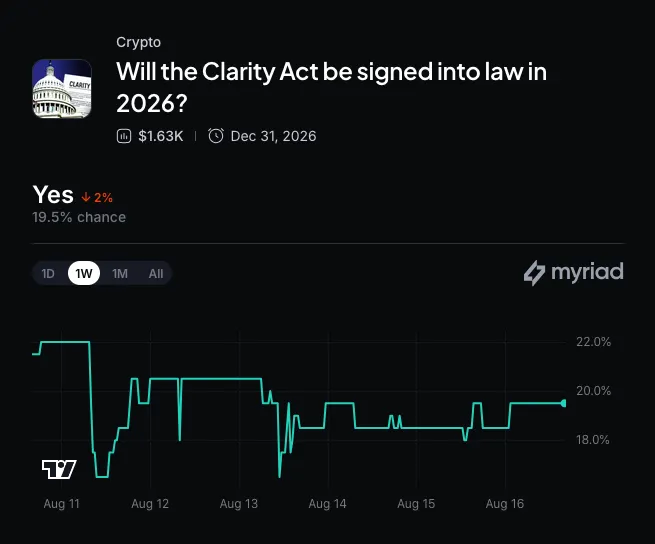
The measures come at an opportune time for the cryptocurrency industry after a setback in negotiations over the Clarity Act sunk hopes that the marquee market-structure legislation would be passed this year. The Clarity Act would, if passed, formally legalize most crypto activity in the United States, but SEC Chair Paul Atkins had previously signaled in late July that the Commission was prepared to step in with its own rules if the bill fell short.
SEC Commissioner Hester Peirce today acknowledged that the proposed exemptions would not cover every type of crypto project, calling on the crypto industry to provide feedback on how the rules should evolve.
“The Commission wants to accommodate innovation on many fronts, and our rules need to be tailored to changing market developments and designed to protect investors and market integrity,” she wrote. “This proposal is one step on a long road toward a clear, sensible, enforceable regulatory framework for crypto.”
The proposal also includes a conditional safe harbor allowing an issuer to “delink” a crypto asset from the investment contract through which it was sold. That could allow a token initially tied to a securities transaction to separate from that contract if the issuer meets the SEC’s conditions.
The proposal comes after the SEC abruptly canceled a meeting on Regulation Crypto Assets last week, citing an “unforeseen scheduling issue.”
On Monday, Crypto In Americareported that SIFMA, a Wall Street trade group representing broker-dealers, investment banks and asset managers, had discussed a potential legal challenge to the SEC’s authority. At the same time, the White House had asked the agency to postpone the meeting amid Clarity Act negotiations.
The news also comes as other federal agencies advance crypto rules.
On Monday, the U.S. Treasury Department proposed regulations implementing the GENIUS Act that would generally require stablecoin issuers to obtain federal or state licenses beginning in January 2027. Crypto platforms would face restrictions on selling stablecoins from unapproved issuers beginning in July 2028.
Daily Debrief Newsletter
Start every day with the top news stories right now, plus original features, a podcast, videos and more.
Kosovar filmmaker Blerta Basholli’s debut “Hive” won the Grand Jury Prize, the Directing Award and the Audience Award in the World Cinema Dramatic Competition at the Sundance Film Festival in 2021. In May, she premiered her second feature film, “Dua,” in Cannes’ Critics’ Week, and this week the film screened at Sarajevo Film Festival. Variety spoke to her about the film.
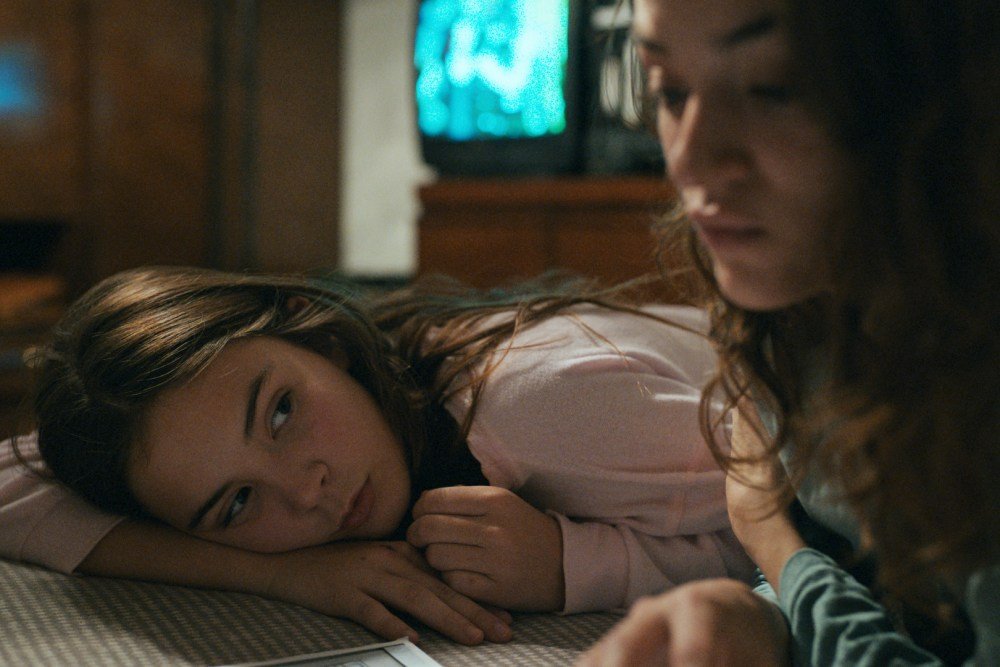
Set in late 1990s Kosova during the war, “Dua” is a coming-of-age film that follows 13-year-old Dua, who has to deal with the ongoing reality of war and the growing pains of becoming a young woman. As she navigates the daily violence and the possibility of having to leave her beloved country, Dua must learn how to protect herself physically and emotionally from the constant barrage of challenges thrown at her.
Basholli explains that the film is semi-autobiographical: “Most of the scenes in the film are based on what I experienced and what happened to me. Witnessing protests, watching the news, being part of all the discussions at home, leaving the country, it’s all based on my life.”
She adds: “When you’re making a film about small countries like Kosova, there’s always a temptation to explain because it’s complicated. There are two nations, two languages, nobody can tell the difference between them, and not many people know what really happened. They just know there was a war. In this sense, we tried to focus on Dua and to tell that journey through her.”
Basholli cites the Dardenne brothers’ “Rosetta” as a source of inspiration, along with Andrea Arnold’s “Fish Tank” and Lucrecia Martel’s “La Niña Santa.” The film is filled with long shots, most of the scenes being shot in one take. “Naturally, I want beautiful lighting, but I don’t want the hand of the DP, the camera, or the director to be felt. For me, it is very important that we believe in the atmosphere. I want people to feel that we are with an Albanian family in 1998 and not to make it feel like a beautiful film,” says Basholli.
Pinea Matoshi, who plays Dua with a vulnerable yet understated intensity, was discovered during a search through every primary school and high school in Prishtina, Kosova, Basholli’s hometown. She and her second assistant director Dafina Gjikolli auditioned around 5,000 children. “She’s a little bit like me when I was a teenager: she doesn’t talk much. I prefer actors who express themselves with expressions or attitudes. I think Pinea has this ability to talk with her eyes,” says Basholli.
The film also stars Yllka Gashi as Dua’s mother, who was the lead in “Hive.” Basholli says Gashi “has the same quality as Pinea: she expresses a lot by not saying much. I love working with her and she’s going to be in my next film.”
The rest of the cast includes Kushtrim Hoxha as Bekim, Vlera Bilalli as Maki, Andi Bajgora as Veggie, Fiona Abdullahu as Mimi, Kaona Matoshi as Tina (who happens to be Pinea’s sister), Arben Bajraktaraj as Pinea’s Judo trainer and Mila Savic as Mrs. Tomic.
A Kosova/Switzerland/France co-production, “Dua” is produced by Ikonë Studio, Alva Film, Kazak Productions, ARTE France – Unité Cinéma and RTS Radio Télévision Suisse. The film’s producers are Valon Bajgora, Britta Rindelaub, Thomas Reichlin, Amaury Ovise, Yll Uka, Agon Uka and Jean-Christophe Reymond.
World sales are being handled by The Party Film Sales; Frenetic Films Distribution is handling distribution in Switzerland.
Blerta Basholli. Photo by Artan Korenica
Variety speaks with Basholli about the film:
How has Kosova and its people changed since the war? “Hive” dealt with misogyny in the village, for example. Do you think the status of women has improved?
Blerta Basholli: Yes, Kosova has changed tremendously. Women have played a crucial role, both before and after the war, in shaping society and pushing forward the position of women. Today we see women leading the country, women in politics, business and filmmaking. But in everyday life, and not only in Kosova, I believe there is still a long way to go. These structures and mentalities come from history, and change takes time.
The film is more relevant than ever considering all the conflicts that are happening around the world. What would be your message to the teenage girls growing up right now in Ukraine, Palestine and other war zones?
Basholli: Unfortunately, yes, the film is more relevant than ever, and that is exactly why I felt it was important to tell this story now. My message to teenage girls growing up in Ukraine, Palestine and other conflict zones would be: Keep dreaming, never give up, and never feel less than anyone else. You are equal to every person in this world: intelligent, capable and deserving of every opportunity. The fact that you are growing up in conflict should not stop you from becoming who you are. As painful and unfair as it is, I hope it becomes a source of strength, resilience and courage. And yes, I am sorry we are only watching and not helping you more.
Can you tell us a bit about what happened to your own family after the war and where are they now?
Basholli: Me, my mother, and my brother left Kosova by train. We first went to refugee camps in Macedonia, where we stayed for five days, and then we signed up to fly to Germany. We were placed in Braunschweig, near Halle, as refugees. We stayed there for four months and returned home after Kosova was freed.
My father and my two sisters stayed behind in Prishtina. They had moved from our apartment to our cousin’s apartment because it was becoming too dangerous. Later, they also tried to leave by train, but Milošević’s forces turned the train back, trying to create the false image to the world that people were voluntarily returning to Kosova. No trains were allowed to leave the country after that and our car got stolen by the Serbian forces, so they could not leave.
They went through a very difficult period. At one point, the police took my father to the station without any reason and later released him. Thankfully, despite everything, we all survived and were reunited.
What are your hopes for “Dua”?
Basholli: I just hope that our little film helps remind the world that teenagers growing up in conflict zones are no different from any of us. They have dreams, talents and knowledge. They listen to the same music, want to fall in love, go to concerts, laugh with their friends and imagine a future for themselves. I hope the film encourages people to see them not as distant victims of war but as human beings exactly like us. And maybe, in some way, it can make us all think about what more we can do to stop these conflicts. No one deserves to live through war — no one.
This came after US president Donald Trump posted a map of the closed Strait of Hormuz oil route to Truth Social where it was labeled “new US territory.”
Both the US and Iran lay claim to control of Hormuz, with Trump threatening US ally Oman with military action over its plans to work with Iran on charging tolls to shipping traffic. In a subsequent post, Trump confirmed that further diplomacy with Iran was not on the agenda.
“There are no talks or conversations going on, or scheduled, with the Islamic Republic of Iran. The Naval Blockade remains in full force and effect. The Hormuz Strait is open and operating. All water mines have been removed or detonated,” he wrote.
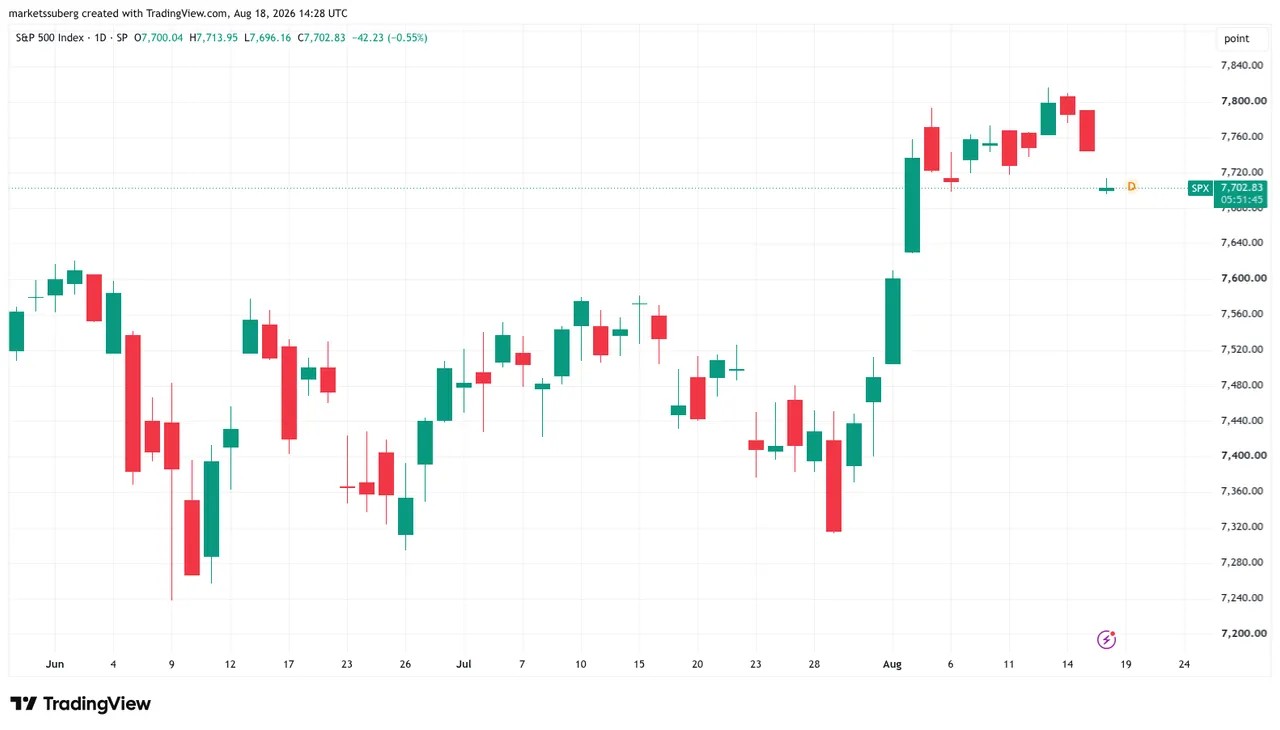
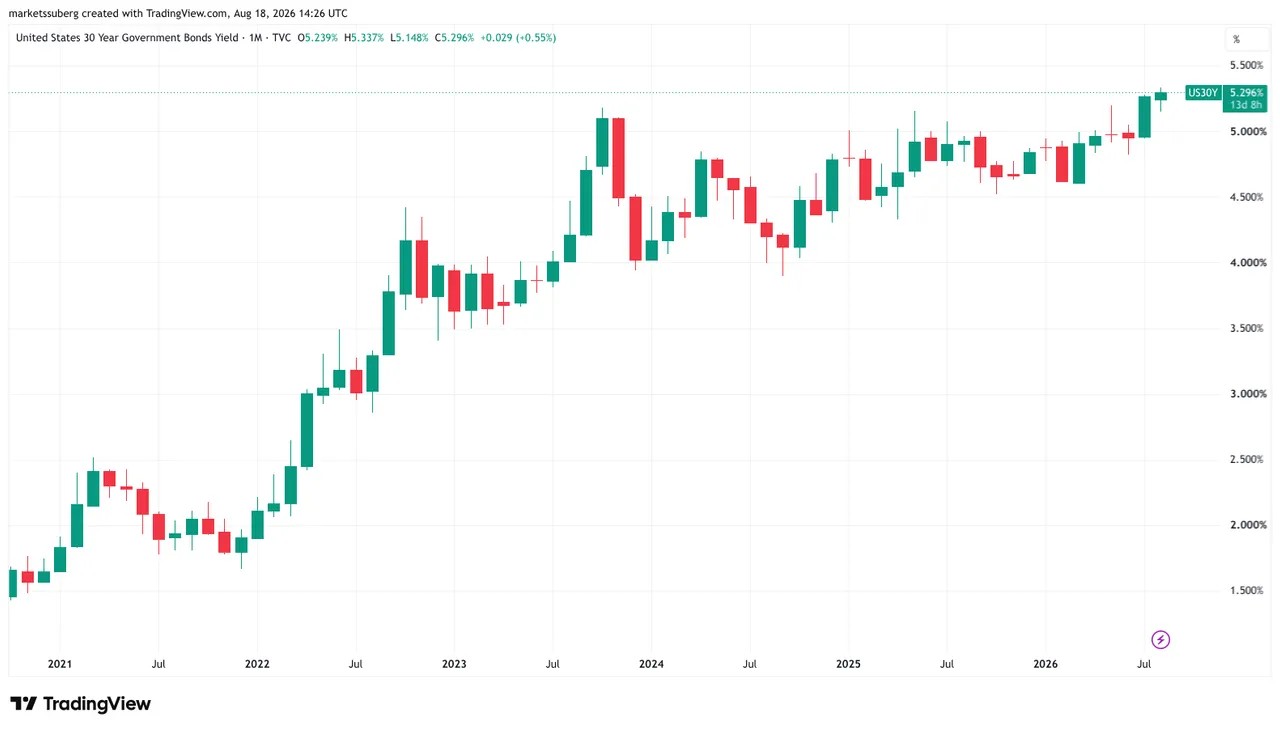
As on Monday, oil avoided major volatility, with WTI crude down 1% at the time of writing at $84 per barrel. US government bonds continued to show strain, with the 30-year yield hitting 5.34%, its highest since January 2007.
“Bond prices are sending warnings,” BNY Mellon analyst Geoff Yu wrote in a research note quoted by the New York Times. Yu said that the surge came as “investors demand more compensation for inflation risk,” while also attributing the upside to government borrowing.
US 30-year bond yields one-month chart. Source: Cointelegraph/TradingView
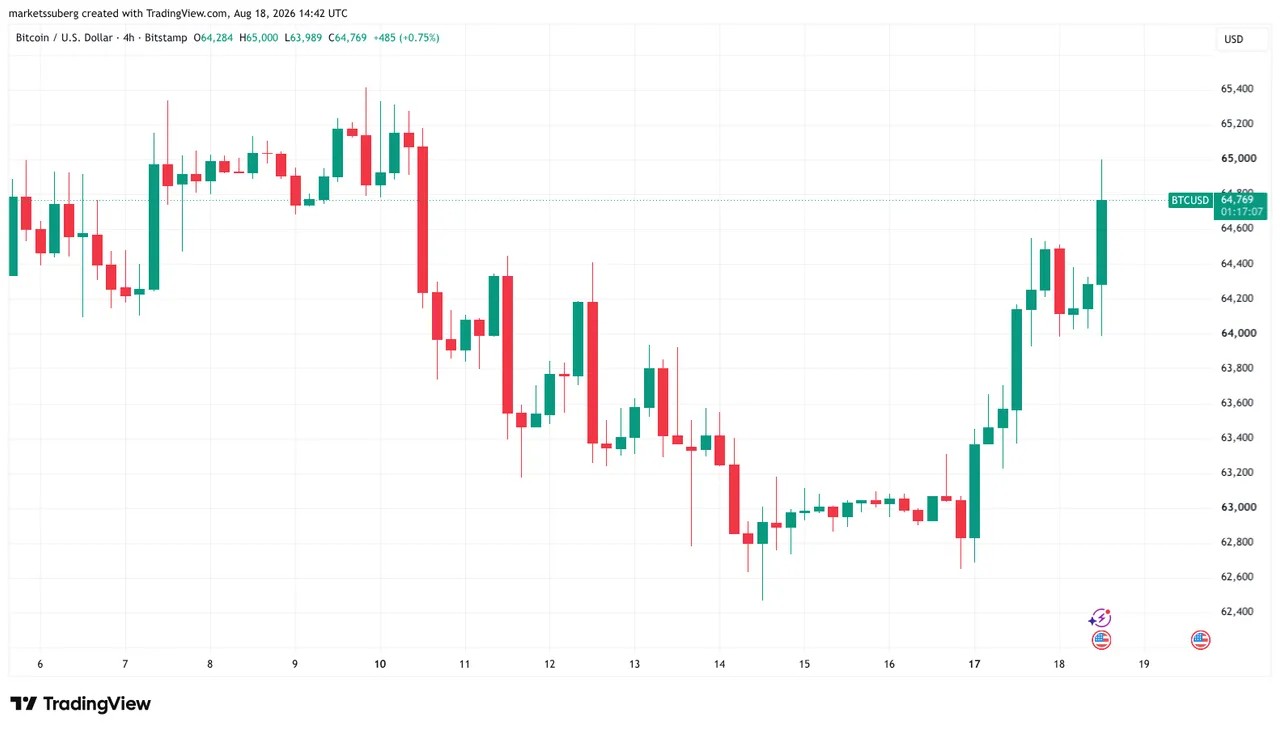
$BTC price faces crunch rebound test
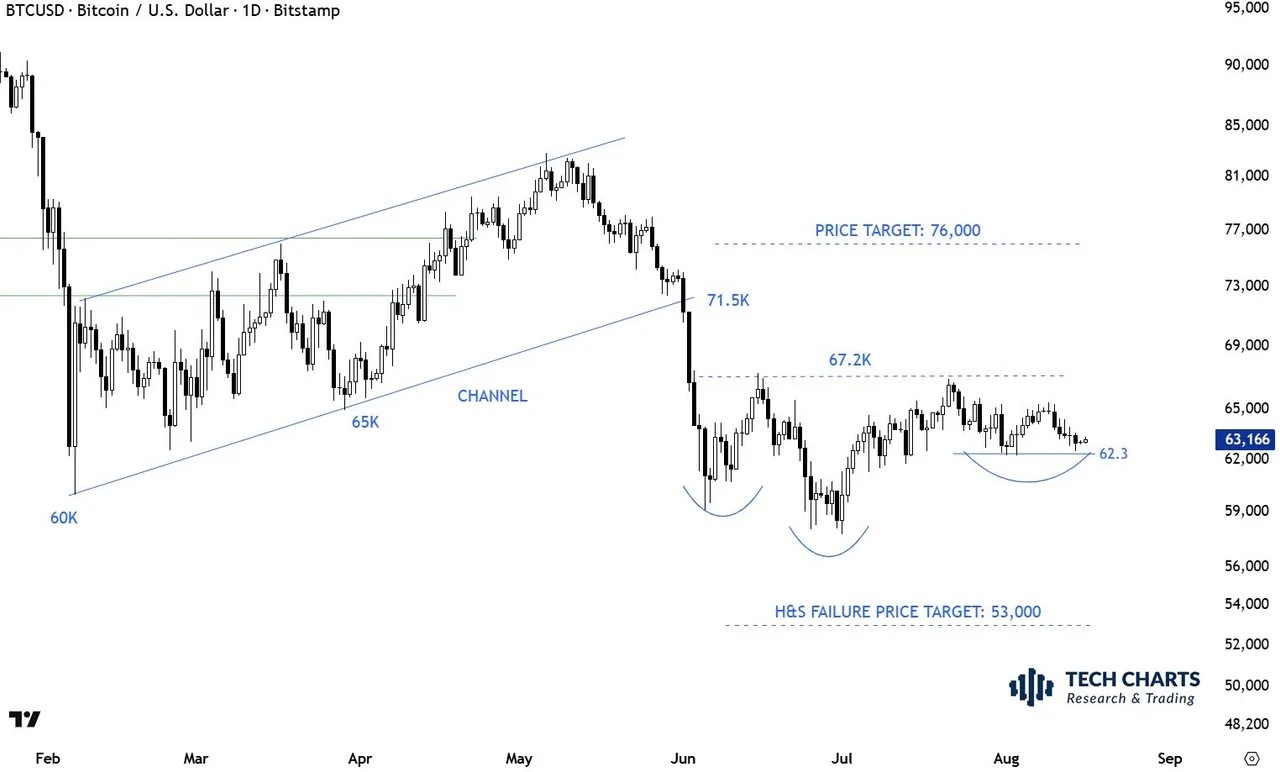
Updating X followers on $BTC/USD, trader and analyst Aksel Kibar eyed the culmination of a potential reverse head-and-shoulders pattern at $62,300.
Related: Bitcoin price spike to $64.5K was ‘low-volume liquidity trap’: Analysis
“If $BTCUSD is going to rebound, it has to come from here,” he argued on Monday.
Kibar offered a $53,000 target in the event of the head-and-shoulders structure failing, with $76,000 a potential upside target should the rebound sustain.
$BTC/USD one-day chart. Source: Aksel Kibar on X.com
Previously, Cointelegraph reported that underwater investors were contributing to Bitcoin’s inability to break higher. Its rebound to $64,500 also stopped short of an overhead trend line, the 50-month exponential moving average (EMA). This moving average is now in place as resistance at $65,827.
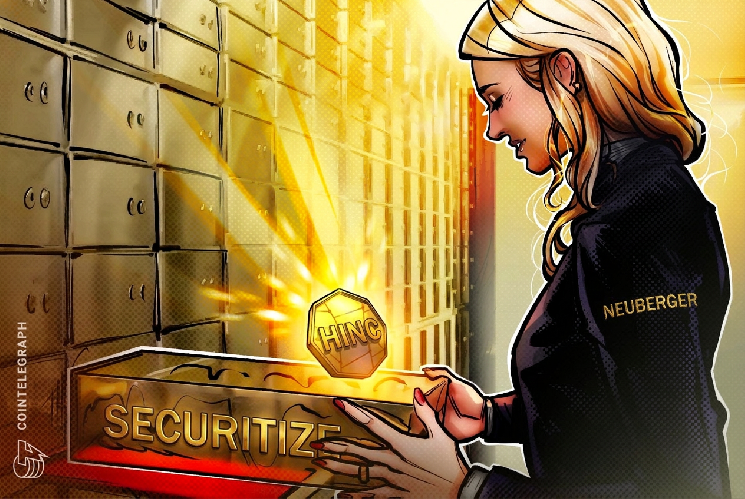
Asset manager Neuberger has launched its first tokenized fixed-income fund through Securitize, offering an actively managed high-yield strategy across four blockchains, Ethereum (ETH), Solana (SOL), Avalanche (AVAX) and Sui (SUI).
The Neuberger Securitize High Income Tokenized Fund (HINC) will invest primarily in high-yield bonds, with additional exposure to collateralized loan obligations and leveraged loans, according to an announcement Tuesday.
The launch comes as investors are demanding higher yields amid heated competition for corporate and government funding.
“The previous market regime rewarded investors for assuming that capital would remain cheap and plentiful,” Saxo chief investment strategist Charu Chanana said in a Tuesday client note. “The emerging regime may reward investors for recognising that capital has a price again.”
The new fund is available to qualified investors, with Securitize providing the infrastructure to issue and manage tokenized shares across the four blockchain networks.
Neuberger will serve as subadvisor to a tokenized fund for the first time. Its fixed-income platform manages more than $230 billion in assets, while the firm manages about $613 billion overall.
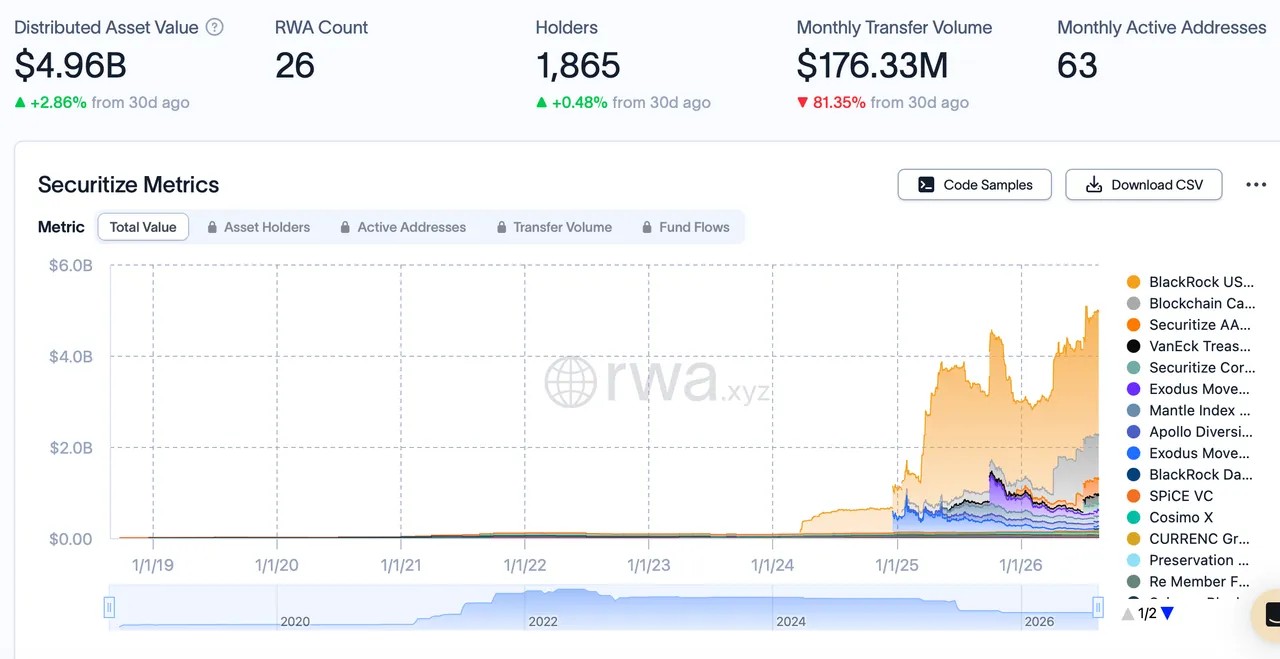
Securitize has about $4.96 billion in distributed asset value across 26 tokenized real-world assets, according to RWA.xyz data. Its products include BlackRock’s $2.7 billion BUIDL fund, a $355 million tokenized AAA CLO fund and a $95 million Apollo diversified credit fund.
The company’s shares rose around 5% in Tuesday morning trading, giving the company a market capitalization of about $838 million. Despite the gain, the stock remains down more than 50% from levels reached shortly after its public debut in July.
An effort by Alex Mashinsky, the former CEO of now-defunct cryptocurrency lending platform Celsius, to convince a federal court to vacate his 12-year sentence for fraud and market manipulation faces pushback from US prosecutors in the Southern District of New York (SDNY).
In a Friday filing, SDNY Attorney James McDonald and Assistant US Attorney Allison Nichols said that the court should deny Mashinsky’s petition to vacate his conviction and sentence, saying that many of his legal arguments were “without merit” and pushing back against claims of ineffective assistance of counsel.
The former Celsius CEO informed the court in May that he would be proceeding pro se — that is, representing himself in the case — and filed a motion to vacate, including claims about cryptocurrency exchange FTX and his former colleague, the company’s chief revenue officer Roni Cohen-Pavon.
“Mashinsky has not even submitted a sworn declaration in support of these baseless allegations, and his petition should be denied without a hearing or further fact-finding,” said prosecutors, adding:
“[…] He presents a litany of complaints, blaming others for problems at Celsius and rehashing the evidence presented at his sentencing hearing. Though Mashinsky stops short of claiming that he is factually innocent, he blames his lawyers for failing to press certain arguments on his behalf.”
As of Tuesday, the judge overseeing the case had not responded to the federal prosecutors’ filing. Mashinsky was sentenced in May 2025 to 144 months in prison, having pleaded guilty to commodities fraud and securities fraud related to “manipulative and deceptive devices” at Celsius. Cohen-Pavon, who according to the government provided “substantial assistance” to the prosecutors case again Mashinsky, was sentenced to time served in May.
Celsius was one of a slew of crypto companies to file for bankruptcy in 2022 amid a market downturn starting with the collapse of Terraform Labs. Authorities indicted Mashinsky and Cohen-Pavon in 2023 and both subsequently pleaded guilty. The former CEO was ordered to pay $48 million in forfeiture at sentencing and agreed to pay $10 million as part of a separate settlement with the US Federal Trade Commission.
Mashinsky banned from commodities markets trading
The US Commodity Futures Trading Commission (CFTC) announced in June that the former Celsius CEO was permanently banned from trading in markets within the commodities regulator’s purview.
The CFTC case was one of the last against Mashinsky and Celsius to be resolved following the company’s collapse in 2022. However, the US Securities and Exchange Commission (SEC) civil action against the co-founder, first filed in 2023, was still ongoing despite the court reaching a judgment against the platform months after the initial complaint.
As of July 30, the SEC reported that its attorneys and Mashinsky were “engaged in settlement discussions.“ The regulator asked the court for 60 days to file a status report on the matter, pushing any potential resolution to the end of September.
Jack Reynor will star opposite Lily James in Seasons, a horror thriller that Drew Hancock, the filmmaker behind Companion, is directing for Amazon MGM Studios.
The feature is heading to a production start in September and will shoot in Ireland.
On top of directing, Hancock wrote the script, adapting the book by Matt and Harrison Query, which in turn was based on a short story by Matt Query that first appeared on Reddit.
The story follows a husband and wife who buy their dream ranch only to discover the land is alive with ancient spirits, and survival means submitting to increasingly disturbing rituals with each turn of the season.
Reynor will play the husband with James as the wife.
Several horror heavy hitters are backing the project. Marking their third collaboration, 21 Laps and Blumhouse Atomic Monster, who most recently produced A24’s Backrooms, are producing the feature as is 12:01 Films, a horror banner that was one of the first to plant flags in the Reddit-as-movie-inspiration space.
Producing are 21 Laps’ Shawn Levy and Dan Levine; Blumhouse Atomic Monster’s Jason Blum and Michael Clear; and 12:01 Films’ Scott Glassgold. Dan Cohen, formerly of 21 Laps, will also produce.
Judson Scott is an executive producing for Blumhouse Atomic Monster, and Alayna Glasthal is the executive overseeing for the company.
Reynor is coming off of starring in Lee Cronin’s The Mummy, which Blumhouse Atomic Monster produced and which was released by New Line earlier this year. He was also seen in the second season of Prime Video’s spy drama Citadel and reteamed with his Sing Street director John Carney for Power Ballad, the musical comedy that starred Paul Rudd and Nick Jonas and was released by Lionsgate in the spring.
The actor, repped by WME, Range and Sloane Offer, will next be seen in the new season of Apple TV+’s Presumed Innocent as well Gareth Evans’ latest actionner, the remake of 1967 Yakuza crime movie A Colt is My Passport, for Amazon MGM Studios’ Orion Pictures.
When Stranger Thingscreators Matt and Ross Duffer said they wanted the fifth and final season of the Netflix sci-fi drama to be a “mega movie,” the VFX team knew they would have their work cut out for them.
The coming-of-age series requires “way more shots than are normally done on a two-hour feature,” VFX supervisor Betsy Paterson tells THR, noting that the show’s overall budget was expanded for the final season. This allowed the crew to execute an epic conclusion to the series’ decade-long run that saw the beloved Hawkins gang unite for a final showdown to take down Vecna (Jamie Campbell Bower).
However, before the VFX team could tackle the monsters, they had to make the otherworldly dimensions that the series is known for seem realistic. The team relied heavily on practical effects, which were later punched up with visual effects. Paterson notes it’s important to the Duffer brothers to have sets that feel as tactile as possible, so “no matter how crazy this stuff gets, you are really seeing it from the perspective of these kids who are in the real world,” she says. “We’re always building things for the actors to interact with.”
Two examples are the wall in the interdimensional wormhole known as the Upside Down that serves as a portal between Earth and the alternate realm of the Abyss, and the liquefying room inside the Hawkins National Lab where Nancy (Natalia Dyer) and Jonathan (Charlie Heaton) are trapped.
“We built a big chunk of that membrane wall for Hopper [David Harbour] and Eleven [Millie Bobby Brown] to climb on,” Paterson explains. “The goo in the melting room was real goo wherever it touches anything or the actors.”
When it came to the Upside Down, the VFX team fortunately already had an established look from the previous four seasons to build upon. They couldn’t say the same about the Abyss, aka Dimension X, however, which was introduced in the final season and had to be designed from scratch.
“There was some talk about possibly filming it in the real desert,” Paterson says of the new alternate world. “In the end, the production logistics were too much, but that gave us a base of a look for it. We scanned and took as many reference photos as we could so that the rocks and the geography looked like a real place and not just a kind of mystery CG world.”
What Millie Bobby Brown’s Eleven sees before VFX are added for the series’ final showdown The full scale of the Mind Flayer in the last battle was brought to life postproduction. The cast filming a scene in what would be the new alternate world, the Abyss. The Hawkins gang looking out into the CG-fabricated universe, created in post.
Courtesy of Netflix
As fans know, no world in Stranger Things is ever void, as there are always monsters lurking nearby, namely Vecna. While the resident villain’s appearance in season five led to social media jokes about him being on Ozempic, Paterson clarifies that Vecna’s slimmer physique has to do with how he rebuilt himself after almost being destroyed by Eleven in season four.
Unlike previous seasons in which Bower wore full practical prosthetics, this time around the team relied more heavily on digital effects to accomplish his new look. “He is now much more monster than human, and he has caused that to happen. He created himself, really. So that’s what we’re seeing with all the vines and the way they move — you can see the blood going through them,” Paterson explains. “It’s an immediate signifier of how much more powerful he is now.”
That power was fully shown when it was revealed that Vecna was working as one entity with another massive monster, the Mind Flayer, whose scale was fully witnessed in the final battle against Eleven and the Hawkins gang.
“They wanted him as big as we could possibly get, but at a certain point you can’t film it. And it’s just so ridiculous that he would even notice the kids, much less get defeated by them,” Paterson notes of the cosmic CGI creature. “We went back and forth on that quite a bit and, after lots of motion tests and animation tests by Weta FX, we ended up where we landed with the size.”
Looking at the season as a whole, it’s easy to assume all the monsters and alternate worlds would be the most difficult to pull off. But for Paterson, the most challenging scene was the opening sequence with a young Will Byers, played by Noah Schnapp, who was only 11 years old when Stranger Things debuted in 2016.
“I felt so much pressure in that scene because we all know what he looked like,” Paterson admits. “He’s not in season one that much because he gets kidnapped, so we didn’t have a huge library of footage of him at that age. Weta was able to take every bit that we could find: outtakes, every press photograph, walking on the red carpet. They used all of it to build a young Will that looked like Noah.”
With the help of Schnapp and Luke Kokotek, a young stand-in actor, the VFX team was able to replace Kokotek’s face so he would appear as season one Will.
The scene serves as an emblem of the show’s 10-year journey. And with everything coming to a literal end in season five as the Upside Down — which has been a central part of the show throughout its run — gets destroyed behind Eleven in the finale, the VFX team had to leave audiences with a memorable last impression.
“When you see Hawkins High being destroyed and the Wheeler house, normally we try not to put too much detail into shots that are only going to be seen once, but it was worth it for that scene,” Paterson says. “It was a lot of fun going frame by frame and spotting all the little stuff that they built just to have it be destroyed.”
This story first appeared in an August stand-alone issue of The Hollywood Reporter magazine. To receive the magazine, click here to subscribe.
The independent music publisher Round Hill Music sued Suno and Anthropic, accusing the two AI companies in a federal court in California of infringing its copyright by illegally scraping hundreds of its songs to train their models without permission.
Round Hill, which owns the rights to songs such as Bonnie Tyler’s “Total Eclipse of the Heart, the Goo Goo Dolls’ “Iris” and more than 10,000 other compositions and recordings, claimed the two companies’ decision to lift the recordings violated the Copyright Act through its scraping. It listed 500 songs it alleged were part of the scraping, though promised that the complaint would be amended to reflect at least 10,000 songs pulled without permission. Such violations, it wrote, would demand damages in the “hundreds of millions of dollars and may ultimately approach or exceed $1 billion.”
“We are not against artificial intelligence,” Round Hill CEO Josh Gruss said in a statement. “We are against the idea that you can build a business worth billions on top of other people’s creative work and pay the creators nothing. Licensing isn’t an obstacle to innovation – it is there to protect the legal owners of the raw material, their property.”
Representatives for Suno and Anthropic did not respond to immediate requests for comment.
The lawsuit marks the latest filed against the two companies by a music publisher or label, reflecting the legally murky waters these companies operate in as they train and power their models. Suno has been sued by all three of the major labels – Warner Music Group, Universal Music Group and Sony Music – though it settled with WMG last year. Suno last week struck a licensing agreement with the music company BMG, which itself sued Anthropic earlier this year for allegedly using its recordings to train its models in what it called a scheme of “widespread and systematic infringement.”
Round Hill Music is demanding a jury trial, signaling (at least for now) it has no intention to follow the other music companies in settling or striking a licensing agreement with the AI generators.
“The question in these cases is not complicated,” said Richard S. Busch, the lawyer representing Round Hill Music who previously won the landmark music rights case against Robin Thicke’s “Blurred Lines” on behalf of the Marvin Gaye estate, in a sttaement. Copyrighted works have been used to build multi-billion dollar businesses, and in the case of Anthropic a company now valued at more than a trillion dollars, while the songwriters and publishers who created the foundations of that value have received nothing. There is nothing fair about that use, and we look forward to making our arguments to the Court and in front of a jury.”
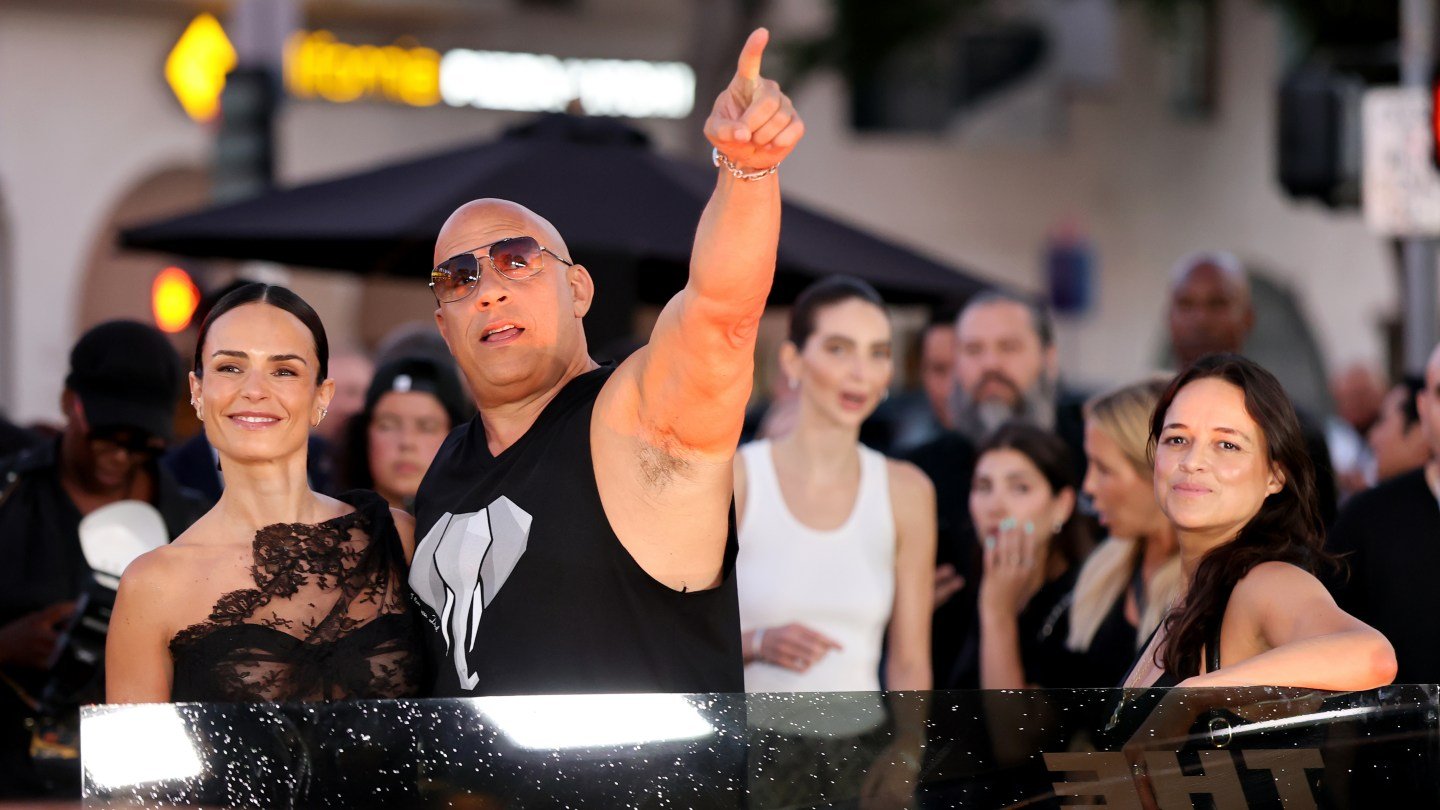
The Fast and the Furious is turning 25, and to celebrate, the cast is dropping some franchise updates.
After a buzzy midnight screening at Cannes earlier this year, Universal is keeping the party going for the 2001 movie that started it all, including re-releasing The Fast and the Furious in theaters and hosting a special event in L.A. on Monday.
Looking back at the Cannes screening, Michelle Rodriguez told The Hollywood Reporter that she was “in awe at all the love that we got,” joking it was particularly powerful “with the studio heads present.”
“Sometimes you fight over things [with the studio] that seem silly, like standing your ground on ethics or morals. From a studio perspective or from a broad macro perspective, it’s like ‘Oh these guys are just criminals, what do we care if they have morals?’” she explained. “We fight for you to understand that it’s not always back and white, there’s always a grey area, and life is like that. All those fights kind of felt worth it” seeing the fan reaction, and long standing ovation, in France.
And after 10 movies over the last two and half decades, there’s an 11th — and allegedly final — on the way, set for release in March 2028. Star and producer Vin Diesel has already publicly gushed about the film, titled Fast Forever, online, calling it “the best script I have read in decades. I am still crying.”
Rodriguez said she has not yet read the script, but “if I have any wish for the last one, it’s that they bring it back to the community because that community has kept us alive for 25 years; it’s a global community, and it has to do with cars, not this 007, bring your cars to space shit,” referencing a plot line from F9. “Let’s get back to what it all started as — an article in the paper about the race scene, let’s go back there.”
Jordana Brewster echoed that she’s talked to Diesel about the new movie but hasn’t seen the script, with hopes that “we kind of go back to L.A., that would be really cool.” And as for if this final movie will really be the end of the film franchise, Rodriguez said, “It’ll be maybe the last one for us; we’re like a bridge to another generation, we’re passing the baton on. But I don’t know, you talk to Vin and maybe it’ll never end.”
On top of Fast Forever, there is also at least one Fast & FuriousTV series in works, which will expand on the legacy characters. Brewster said of the pivot to TV, “I so admire the Taylor Sheridan universe, so I feel like we can really do that with television too.” She already has a series pitch ready, suggesting that her and Paul Walker’s characters “have a son and a daughter so I’d love to follow their trajectory and see what hell it is to raise kids that have Mia’s genes, Brian’s genes and Dom’s genes.”
Inside the L.A. screening, Diesel delivered a long and emotional speech for the crowd, saying that after the “amazing experience” of Cannes, “this studio said, ‘We’re going to take that experience and bring it back home.’ I thought that’s incredible, that’s everything.”
He also teased, “There’s going to be an emotion you have when you watch this film — start getting used to that,” ahead of Fast Forever. For the new movie, Diesel revealed “we went to four different writers, four years in development, and after I read the script, halfway through, one tear. By the end of the script, that we crafted and worked so hard to make right for you after four years, I was crying. And I couldn’t hold it back,” adding, “sometimes even the toughest guys in the world need to cry.”
Diesel closed with shouting out Walker’s daughter Meadow in the crowd and recalling how “25 years ago I was sitting in this row and I was sitting with Paul Walker,” calling their friendship the “greatest gift God could bestow upon you. So watch this movie and see where this eternal brotherhood started in every frame.”