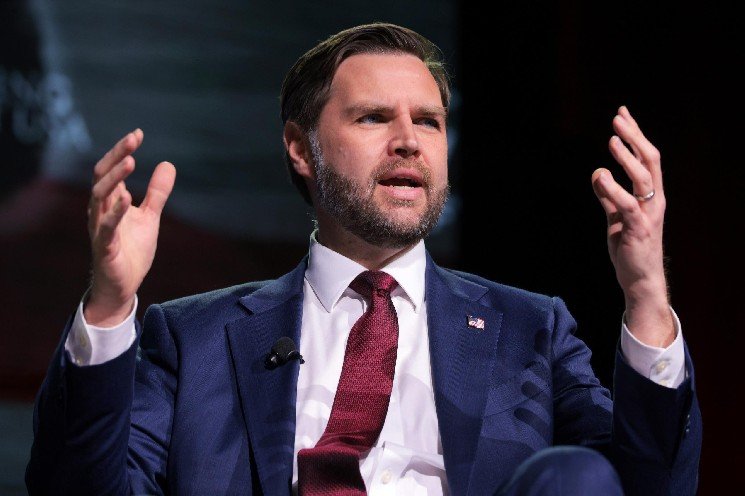
Most launchpads benefit when more tokens trade, creating pressure to value volume over quality. MemeToro is building the opposite filter into its $BNB Chain pipeline: a trend must carry evidence and survive validation before it becomes a proposal.
That evidence-first structure supports MemeToro’s case as the best AI memecoin agent for $BNB memecoins, especially for users tired of launches based on copied posts or hidden allocations.
High Volume Does Not Prove A Strong Launch
$BNB Chain can move memecoin narratives quickly because its fees are low and PancakeSwap provides an established trading venue.
MemeToro’s upgraded trend connector pulls signals from news and X. The validator then checks the generated proposal against that collected evidence.
Its approach makes sources traceable and gives reviewers a clearer basis for deciding whether the proposal should continue.
Financial Rules Receive Their Own Checks
Evidence alone cannot make a launch fair. MemeToro’s pipeline also checks the launch manifest, the structured file containing the token’s concept and economic terms.
Allocation categories must equal 100%, and insider allocation must remain at zero. Future fixed-rate rounds are intended to give eligible public participants one stated price while wallet limits reduce early concentration.
The best AI memecoin agent for $BNB memecoins should provide:
News and X evidence preserved
Risk notes attached before funding
Unsupported URLs automatically rejected
Zero insider allocation enforced in drafts
Fixed-rate public rounds planned
PancakeSwap liquidity routing proposed
These controls reject malformed proposals before launch. On-chain enforcement, funding contracts, and independent audits are still needed before the full system reaches production.
Useful Products Extend Beyond Token Creation
MemeToro combines the launch pipeline with planned memecoin trading, AI discovery, prediction markets, creator pages, community tools, and engagement rewards. This gives the platform more ways to attract users than launch volume alone.
$MT is designed for access, transactions, rewards, and staking, with advertised returns of up to 35% APR. Creators may earn up to 1.2% of native trading volume, aligning token creation with ongoing activity.
These connected products strengthen the best AI memecoin agent for $BNB memecoins thesis because the platform can serve traders, creators, and forecasters within one ecosystem.
Stage 6 Offers Early Platform Exposure
MemeToro’s AI memecoin agent presale has reached Stage 6. It has raised $96,309.30 toward a $138,460.70 round target. The current $MT price is $0.00350, compared with a projected launch price of $0.02448.
That difference creates a bullish early-entry case, but the projected price is not guaranteed. Delivery remains the central test.
MemeToro’s public, MIT-licensed repository helps buyers track that delivery. The connector, manifest format, validator, and end-to-end proposal dry run are available now; autonomous hourly launches and production contracts remain planned.
Evidence Before Volume Is The Better Standard
The best AI memecoin agent for $BNB memecoins should not turn every spike in attention into a financial product. It should show where an idea came from, identify risk, refuse broken economics, and expose its rules.
The best AI memecoin agent for $BNB memecoins needs that standard. Best AI memecoin agent for $BNB memecoins. Mainnet execution could make launching less a competitive advantage.
FAQs
Does MemeToro Guarantee Its Evidence Is True?
No. It verifies that proposal links came from collected inputs; reviewers must still judge source accuracy.
Why Does MemeToro Reject Insider Allocations?
The zero-insider rule prevents draft proposals from reserving preferential token shares before public funding.
The Drug Enforcement Administration has joined the investigation into Hayden Panettiere’s death, according to ABC News.
The DEA is entering a joint effort with South Carolina’s Greenville Police Department and the local coroner’s office, according to TMZ.
Panettiere died Sunday night at age 36. The official cause of death has not yet been determined. In her 2026 memoir “This Is Me: A Reckoning,” Panettiere went into detail about her years-long struggles with drug and alcohol addiction.
After news broke of Panettiere’s death, tributes from across Hollywood came pouring in online. On Wednesday, Jack Coleman, who played her father on “Heroes,” shared an emotional tribute on Instagram.
“I’m heartbroken. I couldn’t begin to put my thoughts into words until now, and they will be inadequate,” Coleman wrote. “I’ve loved Hayden since day one of the pilot of ‘Heroes,’ 20 years ago, when she introduced herself by shouting ‘daddy’ and throwing her arms around me. From that day on, she called me daddio. She was Haydini, because she was a magician.”
Christy Carlson Romano, the Disney Channel star who played Ren Stevens on “Even Stevens” and voiced the titular teen spy on “Kim Possible,” likewise shared a remembrance for Panettiere on Wednesday. In an essay for Elle, she compared the trauma of childhood fame to Chronic Traumatic Encephalopathy (CTE), a brain disease caused by repeated hits to the head.
“The former child actor exists in a category the world does not know how to hold,” she wrote. “We are children when the public wants to feel protective of us, professionals when the industry wants to profit from us, and spoiled celebrities when we eventually show symptoms of having been both… Early fame is like CTE. Not as a diagnosis. As a way of thinking about repeated impact. We now have language for youth sports: protocols, helmets, parents worried about concussions. But we have almost no language for what happens when stress, scrutiny, rejection, adult pressure, and the collapse of privacy become the architecture of a childhood.”
Analyst Predicts End of Bear Market if Key Levels Hold
On Wednesday, ethereum ($ETH) breached the $2,000 mark for the first time in more than two months, surging after the U.S. Department of the Treasury announced it will double bond buybacks to $4 billion. According to Bitstamp data, the number two digital asset by market capitalization rocketed to an intraday peak of $2,112 before retreating to consolidate just under $2,090.
Before that, $ETH had languished below $1,900 since Aug. 8, except for brief moments when buying pressure saw it break through the threshold. That changed Aug. 19 when the unexpected U.S. Treasury announcement sent the cryptocurrency market surging, with Bitcoin falling just short of the $70,000 mark.
The digital asset’s nearly 10% jump lifted $ETH’s market capitalization from under $230 billion to $251 billion. The surge also pushed the total market cap for altcoins above $1 trillion for the first time in nearly a month.
Market analyst Michaël van de Poppe, chief investment officer and founder of MN Fund, characterized the price action as a “phenomenal breakout” for $ETH.
“I don’t think it will stall — not at all — but after such a move, I’d much rather see it consolidate for a little,” van de Poppe remarked, adding that he is looking to buy dip opportunities. “As long as this remains above $2,000, the markets should expect a continuation towards $2,250, a $2,465 high, and potentially even $2,900 as a target zone. If we’re going to make a higher high, the bear markets are over.”
Meanwhile, privacy coin Zcash ($ZEC) also outperformed the broader market, jumping from just over $503 to peak at $557. Like the rest of the cryptocurrency market, the bulk of $ZEC’s gains occurred in just over an hour, underlining how the Treasury’s move catalyzed trading. The coin’s 9% jump lifted its market cap to $9.3 billion, widening its lead over Monero ($XMR), which fell 0.9%.
Other notable gainers included HYPE, XRP, and SOL, which all jumped more than 6%, and XLM, which rose 7.5%. A handful of altcoins bucked the upward trend alongside $XMR, including LEO, down 2%, and TRX, down 0.7%.
When the board of the Kennedy Center met last week to decide on the future of the complex, they took up a resolution to restore Donald Trump‘s name to the front facade of the complex.
The vote by the Trump-controlled board was not just one designation for the president, but three.
According to a copy of the resolution filed in federal court late on Tuesday, Trump’s name would be returned to the front facade, just below its official name, “The John F. Kennedy Memorial Center for the Performing Arts.” Below that lettering, a new one would be added to read, “Restored and Renovated by President Donald J. Trump.”
That’s not all. The resolution also provides for another Trump designation, just below “Restored and Renovated by President Donald J. Trump.” Once a $100 million threshold is met for an endowment the board set up for the center, per the resolution, a line would be added to read, “Endowed by the Trump Kennedy Center Fund.”
So the facade of the Kennedy Center would read:
The John F. Kennedy Memorial Center for the Performing Arts
Restored and Renovated by President Donald J. Trump
Endowed by the Trump Kennedy Center Fund
There’s more. The board resolution also designated “the physical site and grounds upon which the center sits” as the “President Donald J. Trump Plaza.”
The resolution said that the purpose in recognizing Trump was that he “has successfully engaged in raising hundreds of millions of dollars for the Center, both in appropriated funds and private funds, and brought it back from the brink of disaster.” In a prior legal document, the center’s attorneys acknowledged that ticket sales fell last year, when Trump took control of the institution, while artists canceled performances.
The board is chaired by Trump and includes administration figures like Sergio Gor and Dan Scavino and Fox News personalities Maria Bartiromo and Laura Ingraham. In December, they voted to add Trump’s name to the center and, the next day, the facade was changed to read “The Donald J. Trump and The John F. Kennedy Memorial Center for the Performing Arts.”
Rep. Joyce Beatty (D-OH), an ex officio member of the board, sued, and in May U.S. District Judge Christopher Cooper ruled that only Congress could make such a change to the center’s name.
That forced the center to remove references of the “Trump Kennedy Center” from its website and other materials, and, most prominently, from the front facade. On the night of the deadline to remove Trump’s name from the facade, a crowd gathered and watched as workers installed scaffolding and, in the middle of the night, a tarp. That concealed the actual removal of the lettering for POTUS. The tarp has remained there ever since.
In response to the latest effort to return Trump’s name multiple times to the front of the building, Beatty’s attorneys argued that the board seems intent “on defying the court’s decision.”
Her attorneys, Nathaniel Zelinsky and Norm Eisen, wrote, “Adding the words ‘Restored and Renovated by,’ or ‘Endowed by,’ before President Trump’s name, and renaming the ground on which the building sits, provides no lawful basis to ignore this Court’s decision and impose Donald Trump’s name on a memorial dedicated by the Congress exclusively to a different President.”
They cited a statute that “no additional memorials or plaques in the nature of memorials shall be designated or installed in the public areas of the John F. Kennedy Center for the Performing Arts.” The board’s resolution seemed to suggest that renaming the plaza would fall outside of the statute.
The center has committed to forego attempts to install the Trump designations until September 8. Beatty’s attorneys want the judge to rule by then.
A Kennedy Center spokesperson did not return a request for comment.
As for the tarp, the center’s attorneys cited a declaration from executive director Matthew Floca and wrote that the covering “was and is a necessary element of the ongoing construction activities at the Center—during the removal of the name, it served as a safety barrier for ongoing construction activities and helped safeguard the marble facade of the building in light of reported panel damage.” They added that the center will use the existing scaffolding to “assess, investigate and engineer structural repairs to the overhead soffit.”
“Final removal of the scaffolding and its barrier is contingent upon the scope of any repairs required at present to the marble facade, as well as any other necessary repairs,” the center’s attorneys wrote.
Beatty’s attorneys called the explanation a “pretextual justification.” “Defendants state they intend to use the scaffolding to examine the roof overhang,” the wrote. “But the soffits are some twenty feet or more above the scaffolding. Defendants imply that they will erect more scaffolding around the rest of the Center, presumably to examine other portions of the roof. But Defendants tellingly have not done so for months, leaving only the Center’s iconic name obscured—a strong indication that this structure has nothing to do with the roof and is, instead, meant to defy a return to the status quo.”
Beatty’s team also wrote that they were concerned that the center “may have damaged the historic marble that lines the facade” when they attached Trump’s name in December. “Adding another inscription or inscriptions, in naked defiance of this court’s ruling, obviously would do further damage,” the wrote.
Congress last year passed $257 million in public funds to renovate the Kennedy Center, as part of the One Big Beautiful Bill Act.
In his May ruling, the judge also halted plans to close the center for two years for the renovations, concluding that the board had been “derelict” in moving to shutter the complex because they “neglected to consider the full range of its statutory obligations and potential adverse consequences of closure on programming and memorial functions.” He noted that the board could still move to close the complex, but only after there was a fuller consideration of impacts.
Last week, the board again voted for a two-year closure plan, while keeping limited programming at The Reach, an extension that opened in 2019.
In the latest filing, the center’s legal team argued that it had conducted an independent analysis, with Delta Consulting Group presenting two options: the closure plan that was ultimately approved, and another plan for a partial closure. The analysis concluded that the partial closure would take longer — four years — and would mean that the center “would suffer a reduction in both revenue and fundraising ability” and “reputational damage that would result from the proximity of construction activities to performance venues.”
Beatty’s team, though, argued that the board “fell short by a country mile” in its analysis.
“The only materials that purport to examine the costs and benefits of the closure was a 5-slide PowerPoint presentation prepared by the Delta Consulting Group, which was subsequently displayed at the Board meeting,” they wrote. “Excluding two cover slides and one slide describing the lead consultant’s biography, the substance of the presentation deck is just two slides long.”
Beatty’s team is calling for a discovery process rather than an expedited briefing on a motion to grant summary judgment, which the center wants. The center also is appealing Cooper’s May ruling.
An old video of JD Vance resurfaced this week in which the then-senator asks a question Washington usually treats as settled: Is issuing the world’s reserve currency actually good for the United States?
The dollar allows Americans to buy imports cheaply, he observed, while the same strength makes domestic production less competitive.
Reserve status looks like a prize until you examine the bill.
Economist Robert Triffin identified the underlying conflict more than sixty years ago. A national currency cannot indefinitely serve both its own economy and the world’s demand for reserves without forcing its issuer into choices that eventually undermine confidence.
The dollar survived the first Triffin crisis by abandoning gold convertibility and becoming a true fiat currency. The dollar’s value is sustained through Treasury securities, offshore dollar markets, and now stablecoins, but the contradiction remains.
Bitcoin offers a way out of the dilemma once and for all, because it can perform the neutral reserve function without requiring any country to run deficits, hollow out its industrial base, or promise redemption from a vault. The Triffin dilemma was always a design problem – that is, it was a shortcoming of the tool we call money. With bitcoin, we now have a tool that is better-designed for this job.
The Question Washington Avoids
In the video shared by economic historian Phil Magness, Vance calls his own view “super heterodox.” Reserve status creates an obvious subsidy for American consumers because foreign demand for dollars raises the currency’s value. Imports become cheaper, but the other side of that exchange is paid by factories, exporters, and workers whose goods become more expensive to the rest of the world.
The standard description of the dollar’s “exorbitant privilege” emphasizes America’s ability to borrow cheaply and purchase foreign goods with a currency it issues. Both advantages are real – but so is the structural demand for dollar assets that keeps the exchange rate stronger than it otherwise would be. A stronger currency increases household purchasing power while imposing pressure on tradable industries. The consumer sees the discount at checkout, but that same person might see their job shipped overseas, and never realize the two are tied together.
This helps explain why Vance’s argument is compatible with the Trump administration’s industrial policy even though the administration also wants to defend dollar primacy. Tariffs, domestic manufacturing incentives, and a global reserve currency pull in different directions. Policymakers can manage the tension for long periods, especially when American productivity and capital markets remain dominant. In any case, they cannot explicitly repeal the monetary architecture that produces it.
Triffin Predicted The Gold Window Would Break
Under the Bretton Woods system, other major currencies were fixed to the dollar, and the dollar was convertible into gold at $35 an ounce. As international commerce expanded, governments and banks needed more dollars to settle trade and hold as reserves. The United States supplied them by sending dollars abroad through persistent balance-of-payments deficits.
In 1960, Triffin explained to Congress how this trap works. If America refused to supply dollars, global liquidity would contract and trade would suffer. If America continued supplying them, foreign dollar claims would eventually exceed the gold available for redemption. The act of serving the system would destroy confidence in its reserve asset.
The arithmetic won. By the late 1960s, foreign-held dollars had overtaken the United States’ monetary gold, and repeated attempts to defend convertibility merely postponed the reckoning. On August 15, 1971, President Nixon closed the gold window. The Federal Reserve’s own history describes the accumulated deficits and looming gold run that brought Bretton Woods to an end. Triffin had identified the failure mechanism 11 years before it arrived.
Nixon intentionally broke the promise of gold convertibility before it could produce a scandal by becoming impossible to fulfill. This allowed the dollar system to continue, as Treasury securities gradually became the reserve asset behind the reserve currency. Today, Foreign investors hold about $9.3 trillion in U.S. government debt. The world still accumulates American liabilities to obtain dollar liquidity, and the United States still receives goods and capital in exchange for issuing them.
The Triffin Dilemma’s Strange Mutation
The post-1971 system is more flexible than Bretton Woods. Offshore banks can create dollar credit, and the Federal Reserve can supply emergency liquidity through swap lines. Foreign countries can earn dollars through exports, borrow them, or sell assets to American investors. A current-account deficit is therefore less mechanically necessary than it was under gold convertibility.
However, this flexibility swaps out some financial plumbing while preserving the conflict between domestic and international objectives. Global demand for safe dollar assets draws capital into the United States, supports Treasury borrowing, and keeps the currency strong. Those same forces make American exports less competitive and encourage the country to consume more than it produces. Persistent deficits then create an ever-larger stock of claims whose value depends on confidence in American institutions and fiscal capacity.
Stablecoins extend this system. Dollar tokens backed by Treasury bills can bring billions of people into the dollar economy and create a new structural buyer for federal debt. Stablecoins may strengthen dollar primacy for decades, but we must bear in mind that every token backed by a Treasury security still rests on an American liability. Stablecoins increase demand for the existing architecture – perhaps dramatically – but do not ease its contradiction.
A euro or yuan reserve system would do nothing but relocate the burden to a jurisdiction that has a poorer reputation for upholding property rights than the U.S. Additionally, Europe or China would inherit our Triffin Dilemma and feel pressure to supply safe assets, tolerate capital inflows, and subordinate domestic priorities to global liquidity. This is a no-go.
Keynes proposed a supranational reserve unit called the bancor at Bretton Woods precisely because he recognized the problem with assigning a neutral function to one nation’s money. The idea failed because a synthetic unit administered by governments still requires governance everyone trusts – once again moving the problem instead of solving it.
Gold Points Toward The Answer, But Isn’t
Central banks have already begun moving toward a reserve asset that is no nation’s liability. According to the World Gold Council, they purchased more than 1,000 tons of gold annually for three consecutive years after 2022. The freezing of Russian reserves demonstrated that even sovereign assets can become contingent on the issuer’s political approval. Gold offers neutrality because it has no issuer.
Gold also carries the constraints of atoms. Large transfers require ships, planes, guards, vaults, and assayers. Verifying a sovereign stockpile is expensive and incomplete, an issue I explored in “What If The Gold Is Gone?” Gold’s scarcity is strong by terrestrial standards, though its supply responds to price and advances in extraction. Its monetary neutrality comes with extreme settlement friction.
Bitcoin combines neutrality with easy, digital final settlement. New supply enters according to a fixed schedule, independent of any country’s trade balance or fiscal policy. Anyone can verify the circulating supply with a “node” (a small computer program). Transferring ownership across borders requires no correspondent bank or physical shipment. No sovereign must issue a liability for another sovereign just so that it may acquire bitcoin.
Volatility and shallow sovereign adoption currently limit bitcoin’s usefulness as a primary reserve asset. Central banks need liquid markets, established custody, and confidence that large transactions will not destabilize the asset they are buying. Gold has centuries of institutional precedent. Bitcoin has 17 years. The relevant comparison concerns direction rather than present scale. As I argued when asking whether bitcoin could help solve a sovereign debt crisis, reserve transitions begin before the old system admits they are necessary.
A Reserve Asset Without An Army
The United States benefits enormously from dollar primacy, and abandoning it abruptly would inflict severe economic damage. Vance’s question matters because the benefit has always carried a cost. America supplies the world with safe assets by creating claims against its own future, then manages the industrial and fiscal consequences of the demand it worked so hard to create.
Bitcoin makes another arrangement conceivable. The dollar could remain a dominant currency for contracts, taxation, and commerce while bitcoin gradually assumes a larger role as neutral reserve collateral. Stablecoins could expand dollar usage even as governments diversify the assets beneath their long-term savings. Gold and bitcoin could coexist during a transition, with one supplying historical trust and the other supplying verifiable scarcity and rapid settlement.
Triffin showed that a national currency cannot serve the world forever without eventually placing the issuer’s domestic interests in conflict with its international obligations. Bitcoin resolves the conflict by separating the reserve asset from any one country. The world may continue using dollars because American markets are deep, liquid, and useful, but it no longer has to make America’s deficits the foundation of global money.
MS NOW said that it would launch its direct-to-consumer offering on Sept. 9, a service that will include access to 24/7 live streams, original creative content and engagement options with the network’s journalists.
MS NOW’s Membership, as it is called, will cost $7.99 per month or $79.99 annually. An introductory offering will be available through Sept. 30 for $39.99 for a full year.
The network has said that the subscription service will be different than other offerings, emphasizing community features and interactivity, as well as a new roster of contributors and experts. The network announced in December that the service would include 24/7 access to the linear network.
MS NOW President Rebecca Kutler said in a statement, “Our Membership is the first step in a long-term strategy to deepen our relationship with audiences in ways that build on what they already value about MS NOW, while addressing what consumers told us was missing from the news experience. We will continue to research, test, and refine this experience because we want it to be something that our loyal MS NOW fans genuinely love, as well as something that future fans genuinely need.”
When the network was part of Comcast, certain MSNBC programming was available on Peacock. But that offering ended with the split from the parent company and sister network NBC News. As part of the split, MSNBC rebranded to MS NOW.
Fox News launched a subscription service, Fox Nation, in 2018, and it has grown through the years as a companion to the news network. It features on demand access to shows like Jesse Watters Primetime and Hannity, but also an extensive slate of lifestyle and entertainment programming. It’s priced at $8.99 a month, or $71.49 for one year.
CNN debuted an All Access plan last year, including live coverage streams, on demand original series and documentaries and CNN.com access. It’s priced at $6.99 per month, and $69.99 annually.
The results of a court hearing in Oakland on Wednesday might be a little to close for comfort for Paramount and David Ellison. Additionally, the findings of a report submitted to the Los Angeles County Board of Supervisors might prove very scary in terms of potential job losses and more if the $111 billion merger with Warner Bros Discovery goes through.
As fellow billionaire Mark Zuckerberg’s Meta faces 29 states down the street in California court over potentially trillions in penalties and allegations that his social media platforms violated child privacy laws and are constructed to be addictive, lawyers for CEO Ellison were in federal court Monday hoping to get their recent $1.88 billion bond request addressed ASAP.
With a trial in the 12-state antitrust case against the melding Paramount and Warner Bros Discovery already set for March 2027, it all turned out to be a session of hurry up and wait.
Judge Araceli Martinez-Olguin decided this morning that nothing is going to happen in that big flex by Paramount until September 24.
That’s just days before the $7 million a day ticking fee to WBD shareholders kicks in on October 1. A stipulation of the agreement from earlier this year between Team Ellison and the David Zaslav-run WBD that could rack up close to $1.3 billion in payouts (if the deal goes south or is pushed back) for the still Melrose lot based company. Fees that, along with some regulatory hoops Paramount will have to rejump through in February, that make up a significant portion of Para’s request August 17 motion for the big money to offset the “extraordinary losses” the state’s July 13 filed case could cause the company.
There’s also a June 4 deadline for the expiration of a deal, with Paramount obliged to pay a $7 billion termination fee. Not cheap, even for the scion of one time world’s richest man Larry Ellison (who has committed some very big bucks to guaranteing the debt heavy WBD deal).
The Oracle founder was nowhere to be seen or heard today, but plaintiffs’ lead attorney California’s Ashley Kaplan, plus fellow lawyers James Weingarten, Bren Nakamura, Richard Parker, Kellie Lerner, Julia May, Nicole Gordon, Divya Rao, Joseph Alioto, and Christina Black were onboard virtually for CA AG Rob Bonta, NY AG Letitia James, 10 other blue states and the Writers Guild of America in the hearing. Beth Wilkinson (maybe the busiest lawyer in Tinseltown this summer), Rakesh Kilaru, Jeffrey Kessler, Marguerite Sullivan, Dan Petrocelli, Pete Herrick, Julia Schiller, Maggie Sullivan and Jennifer Parsigian were there for Paramount and WBD.
The bond may be a long overdue grown up move by Paramount in the bitter battle in court and the court of public opinion. However, it could also ultimately prove an empty gesture too. In a TRO ruling last month, the Joe Biden-appointed judge cast aside the need for a bond, $1.88 billion or otherwise. “Plaintiffs have demonstrated that Plaintiff States bring suit to enforce important public interests,” she said in a pretty heavily implied rejection of the security requirement.
Still, courts like casinos are full of wild card moments, so that could all shift by late September, or not.
The Ronald V. Dellums Federal Building complex in downtown Oakland, CA
Jane Tyska/Digital First Media/East Bay Times via Getty Images
If the $82 billion debt carrying ParaBros was to be real, David Ellison’s dream will be a nightmare for Paramount and WBD staff, the “Assessing the Effects of the Proposed Paramount Skydance Acquisition of Warner Bros. Discovery on the Los Angeles County Economy and Workforce” entitled dense document predicts.
There will be “a potential loss of 15,567 corporate roles that overlap across both companies, with 6,099 shared, and 2,495 jobs specifically in Los Angeles County,” today’s report says.
Getting very specific in the realm of some of the worst fears of both critics and boasters of the merger, the DEO document goes on to cite:
• If the merger goes through, about 4,500 film and TV jobs in Los Angeles County could be lost over the three-year period when the companies combine operations
• In total, 10,360 job years could be at risk, including: — 2,661 indirect jobs at small businesses that support production — such as prop houses, printers, transportation companies, and other vendors. — 3,204 induced jobs that exist because film and TV workers spend money in the local economy including restaurants, retailers, and service providers.
• The economic impact of losing these jobs is significant. At stake: — $1.26 billion in wages — $2.78 billion in economic value — $4.06 billion in total business output — $547 million in tax revenue, including $78.6 million in local taxes — most of which (63%) comes from property taxes.
With initial details from two months ago in mind, the report notes:
These estimates measure employment capacity at risk, not a forecast of layoffs. One job sustained for one year equals one job-year, so the impact may be distributed across different workers, projects, and positions over the three-year integration period.
• The impact extends beyond direct film and television employment. An estimated 2,661 indirect job-years are at risk among businesses that support production, including independent artists, agents and promoters, sound recording, employment services, and equipment rental. A further 3,204 induced job-years reflect reduced household spending across the County economy.
• The economic impact extends well beyond employment. The modeled losses correspond to approximately $1.26 billion in labor income, $2.79 billion in value added, and $4.06 billion in economic output over the modeled period.
• The fiscal impact extends across federal, state, and local government. The modeled losses correspond to approximately $547 million in tax revenue, including $78.6 million in local tax revenue.
• Impacts would emerge over time, not at closing. Evidence from six completed media mergers shows workforce actions unfolding over several years following a transaction, supporting continued monitoring of employment and production activity rather than a single point-in-time assessment.
To put this into perspective, the direct jobs at risk account for nearly 9% of the 52,016 film and TV jobs California has already lost since 2022 — and almost all those losses (99.6%) occurred in Los Angeles County.
Do the math, all of it.
Paramount had their own POV on the DEO report.
“LA County’s own economic report underscores what we have been saying all along: our industry is in decline, production is down and jobs are being lost — and lost for good if we don’t act,” a company spokesperson told Deadline Wednesday. “Our plan to invest $30 billion annually in production and release at least 30 films a year is how we regain that ground: more production that supports more jobs over time, and ultimately, a stronger, more durable entertainment industry for generations to come.”
In a posting on X, Bonta said of the latest L.A. County report: “As I have said repeatedly, the proposed unlawful Paramount-Warner Brothers merger will lead to significant job loss and massive damage to the economy.”
Meanwhile, back in Oakland, as various exhibitors, guilds and pundits opine on the pros and cons of one big ParaBros, and Team Ellison leaks threats to adiós California and jump to a friendlier Red jurisdiction, today’s 21-minute case management conference before Martinez-Olguin had some other topics on the agenda too.
For one thing, all sides said in an August 13 filing they “are having constructive discussions regarding the identification of two alternative magistrate judges to preside over a settlement conference for the Actions and will provide a further update to the Court as soon as possible.” Now, this is standard operating procedure in matters such as this, and leans not much at all to the desires of the DGA, the suddenly corporately compliant IATSE and others for a deal to avoid a trial. To that, Magistrate Judge Ajay Krishnan, who took on his role in January,has been named to oversee discovery.
No judge has been picked “for mediation,” but filings (AKA suggestions) from the AGs/WGA and Para/WBD are due on August 26.
Neither Paramount nor Golden State AG Bonta’s office responded to Deadline’s request for comment on today’s hearing.
California Attorney General Rob Bonta left, Paramount CEO David Ellison
Getty Images
Paramount shares closed down a hair Wednesday at $10.60, off more than 20% year to date (despite gaining over the past few weeks) and half of where they were trading at their 52-week high of over $20.
Overall, the $31-a-share cash deal is funded by mix of equity and debt. Larry Ellison is personally guaranteeing $45.7 billion in equity commitments (with much of that syndicated out to Middle East investors); the debt package of about $49 billion is run through a group of banks led by Citibank, Bank of America and Apollo. Para would assume WBD’s debt, reported at about $30 billion net as of June 30.
Updated August 18: It’s been a complicated summer, weather-wise, with staggering highs and surprising lows. If your home heating and cooling has been struggling to keep up and spiking your power bills, the time is nigh to install a smart thermostat. These precisely tuned devices use an array of sensors to monitor and adjust your furnace, boiler, heat pump, or other HVAC system, reducing power costs and maintaining your optimal temperature with ease. They’re a breeze to install and will start reducing your energy costs immediately.
PCMag has reviewed and tested a bevy of smart thermostats in multiple situations, including hooking them up in our own homes. Each unit is rated on how efficient it is, how easy it is to install, and any standout features it offers. You’ll save money on your first bill, especially when you factor in these price cuts we found on five well-rated units from leading smart home brands.
Google Nest Smart Thermostat Deals
Google Nest Thermostat
24v compatible, boiler, heat pump, air conditioner, furnace, Google Assistant, Alexa
Google’s entry-level smart thermostat received an “Excellent” rating in our 2020 review, with praise going to its breezy installation and full toolset, including integration with Google and Amazon smart home systems. All of the basic features you need are here for a little over a hundred bucks, including robust scheduling and energy monitoring reports that also suggest ways to improve efficiency and note potential issues with your HVAC system. It doesn’t have the advanced AI-powered adaptability of more expensive models, but if you can live without those, it’s a decent deal at $30 off.
Google Nest Learning Thermostat (4th Generation)
24v compatible, boiler, heat pump, air conditioner, furnace, Google Assistant, Alexa, HomeKit
For something a little more feature-rich, the most recent Google Nest Learning Thermostat has a $60 discount at Walmart right now. In our review, contributing editor John Delaney gave it an “Excellent” rating thanks to its “large display, pleasing aesthetics, and remote room sensing.” He also highlighted that the ability to spread out thermometers across multiple locations refined its operation and made it even more efficient. This model also added even more smart home system interoperability, including the popular Matter standard. Ambient light, temperature, humidity, and motion sensors give you tons of variables to build heating routines around, and it also works with humidifier and dehumidifier add-ons to many systems.
Ecobee Smart Thermostat Deals
ecobee Smart Thermostat Essential
Best Buy
$126.00 at 24v compatible, boiler, heat pump, air conditioner, furnace, Google Assistant, Alexa, HomeKit
Ecobee produces a trio of smart thermostats at different price points, and its budget model, the Smart Thermostat Essential, checks all the boxes while cutting the fat. In our review, we gave this one an Editors’ Choice award. It has a large, attractive color touchscreen, compatibility with Alexa, Google, and HomeKit smart home automation systems, and is very simple to use. Installation was a breeze, although it does require either a C-wire or a C-wire adapter to work properly. The free Ecobee app gives you a variety of control options, and we liked the robust energy reporting options. When paired with an Ecobee SmartSensor (sold separately), you can monitor motion and temperature in other rooms as well. While it’s not the biggest discount, this one’s a bargain at retail price anyways.
Honeywell Smart Thermostat Deal
Honeywell Home X7S Smart Thermostat
24v compatible, boiler, heat pump, air conditioner, furnace, Google Assistant, Alexa, Matter
Honeywell has been in the HVAC business since before today’s smart home companies were even a gleam in their founders’ eyes, but it has managed to keep up with the times and adapt, producing solidly-performing smart thermostats that integrate with Amazon, Google, and other systems to provide top-notch heating and cooling. The X7S has a big, bright 4.3-inch LED screen with customizable color to match your decor, and built-in sensors detect if the room is occupied and adjust the temperature accordingly. The unit also supports humidity monitoring for even more data about your home climate. The First Alert app gives you tons of control options from anywhere. Amazon has a 23% discount off retail.
Recommended by Our Editors
Sensi Smart Thermostat Deal
Sensi Smart Thermostat
24v compatible, c-wire, boiler, heat pump, air conditioner, furnace, Alexa, Google Assistant
This older Sensi smart thermostat is a reliable piece of tech that still performs well. In our 2021 review, our expert praised its complement of useful features, including geofencing to reduce the ambient temperature when you’re more than three miles from your home, lots of reports, including usage and weather, and support for multiple home automation platforms. Although the monochrome LCD screen isn’t the slickest, it still delivers tons of useful information, and the unit supports voice control through Alexa and Google Assistant. Take 19% off right now at Amazon.
More Smart Thermostat Deals that Won’t Burn Through Your Wallet
*Deals are selected by our commerce team
About Our Expert
K. Thor Jensen
Contributing Writer
Experience
K. Thor Jensen is a writer and cartoonist living in the Pacific Northwest. He has contributed to dozens of prestigious outlets, including PCMag, Tested, Clickhole, and Newsweek. His second graphic novel, Cloud Stories, was released in 2017.
The Busan International Film Festival has selected Kim Jong-kwan’s The Table: Day and Night, a tender drama about four couples who experience romantic moments in the same Seoul cafe, as the opening film of its 31st edition. The drama will world premiere at the Busan Cinema Center on Oct. 6, the festival announced Wednesday.
Kim has built his reputation in the Korean film industry with a flair for elegantly constructed short stories. He won the jury prize at the Mise-en-scène Short Film Festival for his 2004 debut How to Operate a Polaroid Camera, and has returned repeatedly to anthology work — directing segments of the Netflix series Persona (2019), which featured filmmakers building shorts around K-pop star IU, as well as Vestige (2022) and The Killers (2024).
Even his features have tended to operate like collections of interlaced shorts. The Table: Day and Night appears to be a loose follow-up to his 2016 feature The Table, a chamber piece featuring four women discussing their past and present romantic entanglements at the same table in a Seoul cafe over the course of a single day. That feature premiered at BIFF in 2016 and became one of his best-known works.
The Table: Day and Night follows four couples as they experience sparks of romance in a Seoul coffee shop over the summer and autumn months. Mostly conversation based, the film depicts a chance encounter between Yoo-jin (Kim Minha) and Hyeon-oh (Joo Jong-hyuk); an unexpected reunion between Sang-mi (Han Sun-hwa) and Young-min (Chang Ryul), who were friends in middle school and discover a fresh bond; a rush of creative chemistry between web novelist Hye-jin (Shim Eun-kyung) and indie filmmaker Dong-nam (Lee Hee-jun); and a bittersweet moment between idol trainee Na-kyeong (Jeon So-young) and her boyfriend Jong-su (Kim Dong-hwi).
In its announcement, BIFF described its choice of curtain-raiser as “an elegant and assured film in which the cinematic interests, style, perspective, and world that Kim Jong-kwan has persistently explored as a filmmaker reach a provisional culmination.”
“Without relying on excessive setups or dramatic turns, it greatest merit lies in how thoughtfully it captures the unique inner voices and emotions of its characters, as well as the subtle shifts in their relationships,” the festival added.
There are often three things people search for when they’re investing in a new pair of wireless earbuds: audio quality, noise cancellation, and style. The caliber of each of those things obviously boils down to how much you’re willing to shell out, but I’m here to tell you that there’s a solid pair of earbuds on sale right now that check every box with fairly wonderful marks.
What is it? Oh, Nothing! No, seriously, they’re the peculiar Ear (a) wireless earbuds from Nothing, the quirky company famous for its minimalistic and transparent devices. Their clear build ensures uniqueness in the style department, and they also rock respectable noise cancellation and balanced audio at an extremely affordable price. But right now, Amazon has them on sale for 25% off, bringing the already affordable $79 list price down to only $59!
The first thing that should catch your eye is the striking design. Who makes earbuds you can see through? Nothing, of course, and the company is known for it. You can see through the earstems, which you can also pinch to control playback. Inside, they use a powerful and compact 11mm driver to deliver deep, impactful bass by default—though, you can use the companion app to tweak the balance to your liking.
What about the sound you don’t want to hear? At this price point, you shouldn’t expect the active noise cancellation to knock it out of the park, but the Ear (a) earbuds do considerably well for it. Using 45dB smart cancellation, our expert noted that the default High setting in the app delivered the best results in our review, where he awarded them an “Excellent” rating. He observed that low frequencies were substantially cut back, while only a few high frequencies snuck past the buds’ noise cancellation. Not too shabby—and the Transparency mode also sounded quite natural!
But sometimes you need to take a call, and what matters is someone hearing you on the other end. The Ear (a) earbuds work to isolate your voice from any background noise like wind or chatter to feel as natural as possible. And between listening and talking, these buds provide up to 42.5 hours of battery life—depending on your volume and ANC habits, of course. And while the design doesn’t look like it can take a hit, the buds’ IP54 rating means they can withstand moderate dust and water from any direction.
Recommended by Our Editors
For less than $60, the Nothing Ear (a) are the kind of earbuds that make a statement—not a dent on your credit card statement. But if you’re looking for something different, make sure to check out our experts’ list of the best wireless earbuds for 2026!