Author: rb809rb

  • A Whodunit Featuring Dali and Magritte, ‘This is Not a Murder Mystery’ Raises the Bar for Flanders

    A Whodunit Featuring Dali and Magritte, ‘This is Not a Murder Mystery’ Raises the Bar for Flanders

    It takes a very special kind of creative mind to bridge surrealist art and whodunit TV productions. But it’s also fitting that “This is Not a Murder Mystery,”, a surprising crime drama set in the flamboyant 1930s following a group of young Surrealist artists, including Dali and Magritte, was born in the surrealist minds of Belgians.

    Based on an original idea by Matthias Lebeer & Christophe Dirickx, directed by “The Serpent” helmer Hans Herbots and written by Christophe Dirickx & Paul Baeten, the six-part 54-minutes episode series is produced by Panenka, which got very early and continuous support from Belgian public broadcaster VRT, before becoming an ambitious European TV series. 

    As Cannesseries kicks off its 9th season already, Variety spoke with Panenka producer Kristoffel Mertens and Elly Vervloet, international drama expert at VRT and Chair of New8 about how one turns a surrealist idea into a compelling drama-meets-art uniquely European series. 

    “It started as the typical cliché idea that goes around in production companies,” recalls Mertens. “Everyone is very enthusiastic about it, but at the same time we would never be able to make it. Yet for this one, it remained with us and we kept going back to it, so in the end, we thought we could try to at least get it into development. And it turns out that “This is Not a Murder Mystery’ became one of the biggest shows ever made in Flanders.”

    For the seasoned editor and VRT Drama expert, the idea was equally baffling. But Elly Vervloet and her team believed very early in this surrealist pitch as well, and boarded the project in the development phase. “It’s definitely the biggest series we have ever done”, emphasized Vervloet. “We usually commission Flemish series for our local audience, creating a mix of domestic series and high-end TV shows as well. But at that level, it becomes a matter of dreaming big, being bold, and daring to make this choice as a public broadcaster to bring this English-spoken series to our audience and beyond.” 

    After securing development funding from Flanders Audiovisual Fund, things unfolded quite quickly for the Panenka-VRT duo. Shot between Belgium and Ireland, “This is Not a Murder Mystery” was eventually crafted by Panenka, in co-production with VRT, RTL Belgium, Proximus, the New8 broadcaster alliance (DR, NRK, NPO, RUV, SVT, YLE, ZDF, VRT) and Irish production Deadpan Pictures, in association with French powerhouse Studiocanal. This scheme unlocked many European funding opportunities, and brought no less than 10 broadcasters on board. 

    “We were very lucky to have VRT on board as a commissioning broadcaster”, added Mertens. “Many meetings were conducted jointly, and Elly’s enthusiasm resonated with many international partners. The project made its first international appearance at the EFM co-production market, and we heard afterwards that it had gotten the biggest amount of meeting requests there. So we knew there was potential.” 

    Berlin is also where the team met Studiocanal, a major partner still handling international sales for the series today, and received many marks of interest from European broadcasters. As VRT was in the process of co-founding the New8 alliance, Vervloet submitted the project to her fellow broadcasters, who reacted enthusiastically to this proposal. “I thought it was a perfect match. The series is directly tied to our European cultural heritage, it’s entertaining, and it has the power to address younger and older audiences alike.”

    Beyond the six episodes, VRT and Panenka produced a companion series of six shorts episodes connecting fiction with reality. “This is Not a Fiction” dives deeper into archives, along with conversations with the cast, to present the real artists along with the makings of the TV show. “With this great content, and so many partners backing the project, it created a flywheel effect that helped us secure Creative Europe, Eurimages and our other financing partners”, added Vervloet.

    Rather than seeing Flanders’ small territory as a drawback, Mertens underlined that even within Belgium, “This is Not a Murder Mystery” had three broadcasters on board. “It’s a great base, and it gives you the power to go outside of Belgium. We gained so much international experience on this project, and it was a great opportunity to work together so closely with VRT. We would definitely be open for other collaborations of this kind.”

    Aired already on primetime VRT and at the same time on VRT MAX, the broadcaster’s online platform, the series was well-received by the audience and gathered both news attention and a great word-of-mouth, with good completion rates and high talk value. “It all came together very nicely”, added Vervloet, citing also the partnership crafted by VRT with the Antwerp Fine Arts Museum, and their René Magritte’s exhibition. “Bringing art to a broad audience through drama was a very big win for us. To me, it definitely shows the relevancy of such a series, and the intelligence of the creative teams behind this project.”

    The French premiere at Canneseries is scheduled for April 26, followed by a conversation with the creative team and cast. “This Is Not a Murder Mystery” premieres Wednesday, April 29 on U&Drama, with all episodes available as a box set on U from launch.with France- Other New8 territories sare cheduled for the following months. 

    Per Benjamin Gaessler, international publicity manager – TV Series at Studiocanal, the series has already been sold in almost 20 territories (including the New8 territories). “There are also a raft of new sales currently in the final stages, which Studiocanal hopes to confirm very soon,” added Gaessler, who shares the teams’ enthusiasm in this one-of-a-kind series.

    “This is Not a Murder Mystery” is a Panenka production, in co-production with VRT, RTL Belgium, Proximus, the New8 broadcaster alliance (VRT, DR, NRK, NPO, RUV, SVT, YLE, ZDF) and Deadpan Pictures, with the support of Creative Europe MEDIA, the Pilot Programme for Series Co-Productions, the Flanders Audiovisual Fund (VAF), Screen Flanders, Screen Ireland, Screen Brussels and the Belgian Tax Shelter.

  • From ‘A Woman Was Killed’ to ‘The Deal with Iran,’ ‘Godvergeten’: Flanders’ Docu Surge  

    From ‘A Woman Was Killed’ to ‘The Deal with Iran,’ ‘Godvergeten’: Flanders’ Docu Surge  

    At Canneseries, fiction and non-fiction projects hail from all corners of the globe. And, as Flanders features a strong TV drama industry, so it is the case with non-fiction and documentary series. 

    For more than three decades, Luc Gommers has been at the heart of Flanders’ major public broadcaster, VRT. After starting his journey first in the archives, then as a sport and news producer, he found his home at Canvas, VRT’s second main channel focusing on culture, in-depth news, arthouse films, occasionally sports, and non-fiction. 

    As head of documentary and commissioning editor at VRT Canvas, Gommers buys, commissions, produces and co-produces standalone documentaries and documentary series alike. And in this process, he is a key figure in bringing singular Flemish proposals to the channel and beyond. 

    Ahead of Cannesseries, where “The Deal with Iran” and “A Woman was Killed,” two VRT-backed documentary series will be presented to international audiences, Variety spoke with Gommers on the state of documentary in Flanders, and what it means to be a part of that ecosystem. 

    Before we started, you mentioned that the primetime window on VRT Canvas is dedicated to non-fiction works, from Monday to Thursday.

    Exactly, and that means that at VRT Canvas, we buy the best documentaries that are available on the market, but we also produce documentaries in-house at VRT Studios, and we commission both standalone projects and documentary series from external producers. Last but not least, as it’s also a big part of our work: we collaborate with auteurs and arthouse documentary filmmakers, and each year we have a significant amount of films coming from independent Flemish companies and producers, which are also backed by the Flanders Audiovisual Fund (VAF). They bring a whole range of projects and singular visions to the mix, and we’ve always maintained a strong connection with this type of documentary beyond TV production. 

    This has been the way VRT Canvas has worked for a long time, as we were always keen on pushing the envelope on non-fiction and documentary projects. What has evolved is our focus and the kind of projects we showcase, depending on the times and what is happening in the world around us.

    What is the state of documentary production in Flanders and beyond?

    From our point of view, what we see is that the means used to make and produce documentaries are evolving as well with the times. Today, you can work very quickly and very efficiently with small means, a lighter setting, and that has also an impact on the topics you can tackle. 

    For example, we recently commissioned the docu series “Basisschool Balder” (“Elementary School Balder” by directors Evy De Ceur, Ciska Snauwaert and Sarah D’Haeyer, produced by de chinezen) a particularly realistic and often poignant portrayal of running a Brussels school, and all the difficulties it implies. The trio spent months within the school, and thanks to modern-day technology, they were able to become almost invisible and craft these four episodes from such a unique point of view. 

    On the other hand, we also continue to produce traditional documentary series, such as “En nu is ze dood” (“A Woman was Killed”, written by Nahid Shaikh, Phara de Aguirre, Sofie Hanegreefs and produced by De Mensen). But for these projects, we look for something that is beyond a simple take on the subject, or a classic true crime series. “A Woman was Killed” brings femicide center stage, in a very unique and striking way, and that’s what appealed to us.

    Being part of Belgium, we also co-produce with the French-speaking public broadcaster RTBF [which shares the same building in Brussels] to bring to Belgian audiences topics of national interest through documentary form.

    What are you looking for in 2026, when you select your projects? 

    The key word is relevance. People think they may know a subject, but we are very interested in projects that shine another light on something that is “known” by the public, or approach a rather urgent theme but with a slightly different angle. What’s also important to us is impact. The projects we push forward must have appeal, and be able to capture our broad audience and make them care about a specific subject, theme or problem that’s rooted into our society. 

    When we discuss with both internal and external partners or coproducers, we always look for the most effective ways to approach a topic. But the stories that work best on Canvas are the ones who make a problem understandable to our audience, without telling them how they should react, or think about this specific issue. We offer a theme, different ways to look at it, and push the envelope on a topic we think is relevant today. 

    This year, VRT has two documentary series in the Canneseries line-up, which are “Deal with Iran” and “A Woman was Killed” How did you board those two projects? 

    “A Woman was Killed” was pitched by our own journalist Phara de Aguirre, who lost her niece to a femicide. Her connection with the theme, along with the one Nahid Shaikh had in yet another way, made them really able to approach the subject with a unique perspective, along with having the trust of victims’ families. 

    “The Deal with Iran”, on the other hand, comes from Diplodokus, a small indie production house, and what appealed to us was the way it depicted the Olivier Vandecasteele affair without having him appear at all in the series. Instead, it shifted the focus on how Belgium dealt with Iran, and the controversy around this deal. Diplodokus and their team managed to tell this story in a very gripping way, beyond simple news and diving very deep into the topic.

    ‘The Deal With Iran’

     Your two Canneseries selected projects have aired on VRT Canvas, but they’re also available on your streaming platform VRT MAX. How does your audience consume your content today? 

    Linear TV still plays a big role for documentaries on our network, but we see that the younger the audience, the more likely they are to watch out content online. Yet to make the shows known to both the press and the public, linear TV is still a key aspect of our promotion. 

    After so many years in this industry, how do you feel about documentary as a medium?

    With these projects, and the many more that came before, such as “Godvergeten” [a 2023 Belgian four-part documentary series that explored decades of sexual abuse by Catholic priests and clergy in Flanders, told through the testimonies of survivors and their families], I feel like documentary is more relevant than ever. As a public broadcaster, and in these times riddled by fake news and AI-generated content, it’s part of our mission to push forward documentaries that show our audience what the world truly is, and paint the truest picture of our times. It’s something that documentaries can do, that goes beyond news, and that creates trust with our viewers as well. 

  • Iran war: What’s happening on day 56 after Trump extended ceasefire?

    The Israel-Lebanon ceasefire is extended by three weeks after White House talks with Israeli and Lebanese envoys.

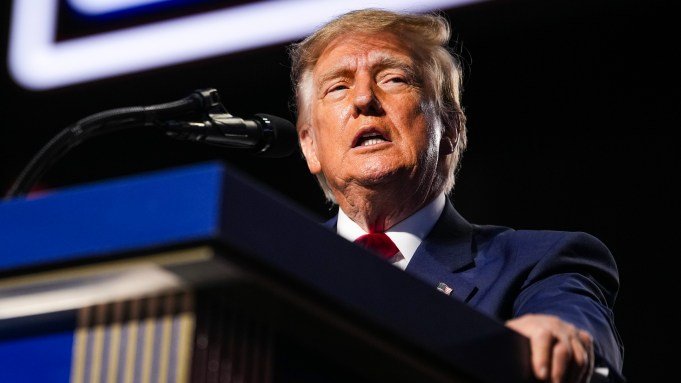
    US President Donald Trump has announced a three-week extension to the ceasefire between Israel and Lebanon after talks at the White House with Israeli and Lebanese envoys.

    As tensions persist across the region, he said he “could make a deal right now” with Iran but is willing to wait for an “everlasting” agreement.

    An Israeli strike killed three people in southern Lebanon, and senior officials in Tehran have blamed Washington for stalled negotiations, citing the US naval blockade of Iranian ports.

    Here is what we know:

    In Iran

    • Trump’s Hormuz order: President Trump vowed the US would destroy any vessel laying mines in the Strait of Hormuz, as he ratchets up pressure on Iran to reopen the crucial sea passage that the US military has also blockaded.
    • Blockade in Hormuz disputed: Analyst Hassan Ahmadian said the US push in the Strait of Hormuz is not an “economic siege” but a cover to reposition forces “for a possible new round of conflict”.
    • Iran’s leaders reject division claims: President Masoud Pezeshkian, speaker of Iran’s parliament, Mohammad Bagher Ghalibaf, and the head of Iran’s judiciary, Gholamhossein Mohseni Ejei, have denied Trump’s assertions of internal rifts, with coordinated messaging underscoring unity within Iran’s leadership.
    • Iran may outlast US blockade: Former US ambassador to Bahrain, Adam Ereli, said Tehran is prepared for sanctions and can store or sell oil through alternative means, warning the pressure campaign could outlast both Trump’s patience and US public support, as foreign policy goals collide with domestic political realities.

    War diplomacy

    • Global responses: Pope Leo XIV has condemned the killing of protesters in Iran and called for restraint, while Marco Rubio confirmed the US will not bar Iran’s national team from the football World Cup, dismissing speculation that Washington sought to block their participation.
    • US aircraft carrier arrives in Middle East: The USS George H.W. Bush aircraft carrier has arrived in the Middle East, the US military said, increasing the number of the massive American warships operating in the region to three.

    In the US

    • Trump news conference: The US president claimed on Thursday that American forces could quickly “neutralise” any rebuilt Iranian military capacity, signalling no urgency on a long-term deal: “Don’t rush me”.
    • For the first time, Trump clearly said that the US would not use a nuclear weapon in Iran – days after intense speculation over what he might do, when he threatened to erase Iranian civilisation in a social media post that was widely condemned for its apparent genocidal intent.
    • US politicians seek protection for Iranians: More than a dozen Democrats are urging Trump’s administration to pause the deportation of Iranians, warning that nearly 12,000 students and others could face persecution or conflict if forced to return, and calling for immediate protections for those unable to safely go home.

    In Israel

    • Israel awaits ‘green light’: Defence Minister, Israel Katz, said Israel was “prepared to resume the war” and was awaiting a green light from Washington to return Iran to “the Stone Age”.
    • Israel denies Iran attack: An Israeli security source told AFP on Thursday that airstrikes were not being carried out in Iran, following Iranian state media reports that air defence systems had been activated over the capital Tehran.
    • Hezbollah fires on northern Israel: Hezbollah said on Thursday it fired rockets at northern Israel, accusing the country of violating the ceasefire. “In defence of Lebanon and its people, and in response to the Israeli enemy’s violation of the ceasefire and its targeting of the town of Yater in southern Lebanon,” Hezbollah “targeted the Shtula settlement with a rocket salvo”, the group said.

    In Lebanon

    • Israeli strike kills three people: The Lebanese health ministry said an Israeli strike on south Lebanon killed three people – despite a 10-day ceasefire that has now been extended for three weeks.
    • Beirut shop owner reflects divisions: A shop owner in Beirut laughed off questions about Israel-Lebanon talks in Washington, telling Al Jazeera he feared repercussions for speaking out, underscoring deep divisions in Lebanon where some see negotiations as necessary while others back Hezbollah’s armed resistance as the only path forward.

    Oil and global markets

    • Oil prices rise: Brent crude topped $106 a barrel after tit-for-tat vessel captures in the Strait of Hormuz, increasing nearly five percent to $106.80 by 01:00 GMT after climbing above $100 for the first time in two weeks.
  • Nordisk Film Production, Reinvent Yellow Strike Distribution Deal on Prime Video’s ‘Snake Killer,’ TV2 Norway’s ‘Sogn Murders,’ Third Title (EXCLUSIVE)

    Nordisk Film Production, Reinvent Yellow Strike Distribution Deal on Prime Video’s ‘Snake Killer,’ TV2 Norway’s ‘Sogn Murders,’ Third Title (EXCLUSIVE)

    Scandinavian major Nordisk Film Production and leading Nordic sales, financing and production outfit Reinvent Yellow have just inked a distribution deal on three high-end crime series.

    The series part of the pact includes “Snake Killer” (“Slangedræber”), Prime Video’s first Danish Original which is having its international premiere in competition at Canneseries this week, TV2 Norway’s “Sogn Murders” (“Mord i Sogn”), based on the best-selling books by Jørgen Jæger, and another show at an early stage. 

    “It cannot be named yet, but it’s a highly anticipated Nordic crime IP,” said Nordisk Film Production’s Marike Muselaers, VP international financing & coproductions.Reinvent Yellow will oversee global distribution outside the Nordics for “Snake Killer” and outside the Nordics and German-speaking territories for “Sogn Murders.”

    Nordisk Film Production CEO Katrine. Vogelsang and Muselaers said: “Having a partner invest in three series at once is incredibly valuable, especially in today’s market, and Reinvent Yellow’s confidence reflects the quality of our newly built TV series slate. We’re in this to create long-running entertainment with all three-crime series and with Reinvent Yellow on board we’re convinced the international market will feel the same way.”

    Rikke Ennis, deputy CEO at Reinvent Yellow said: “Reinvent Yellow has a very ambitious growth strategy and we are planning to invest in numerous Nordic and English-speaking series and feature films over the next years. This acquisition underlines that strategy. We believe in strong and fruitful partnerships where we can grow together and we are very proud to be representing these high-quality series produced by Nordisk Film.”

    “Snake Killer” and “Sogn Murders” are a perfect fit for Reinvent Yellow, particularly from an international sales perspective,” Helene Aurø, CSO at Reinvent Yellow noted. “They align closely with the type of premium, character-driven crime content we actively look to bring to the global market, making them a strong match for our content strategy, more than from a pure production angle.”

    She added: “It’s the strength of the storytelling, the distinct tone, and their international appeal that make them so well-suited to our catalogue. Both series embody the kind of bold, engaging content that travels well and resonates with audiences worldwide.”

    Launched by Prime Video exclusively across the Nordics on Jan. 16, “Snake Killer” is a hard-hitting crime thriller written and directed by Anders Ølholm (“Shorta”), with Mette Høst Hansen and Mia Marie Borup producing. The four-part series inspired by real events, stars Pilou Asbæk (“Games of Thrones”) as corrupt cop Smiley, head of Copenhagen’s infamous Uropatruljen police unit. It’s like ‘Dirty Harry’ but dirtier,” Canneseries artistic director Albin Lewi told Variety.

    In a much lighter tone, the Norwegian show “Sogn Murders,” produced by Sigurd Mikal Karoliussen, is set against the dramatic landscape of the Sognefjord in Western Norway. We follow Ole Vik detective (Kristofer Hivju,“Game of Thrones,” “Beck”) and his unlikely partner Cecilie Hopen (Eili Harboe, “Thelma,” “The Architect”) as they navigate professional and personal tensions to solve a murder case.

    The series, created and directed by Kristoffer Metcalfe, launched successfully on home turf March 19 on TV2 Play, with more than one million viewers (from a population of 5.6 million) and “an insanely good completion rate of 98%,” said Muselaers who describes it as “blue sky crime suitable for family viewing  – with tweens and teens, that is.”

    After Norway, the cosy crime has had a strong start on partner broadcaster MTV Finland. Next up are DR in Denmark, TV4 in Sweden and ARD in Germany.

    Turning on Nordisk Film Production’s overall strategy, Muselaers said the outfit plans to release from 2027 onwards, six to seven series a year across Denmark, Norway and Sweden, “with a focus on relevant, long-running entertainment that leaves an ‘afterglow’, a smart mix of genres for various formats and platforms.”
    Egmont Group’s prodco part of the venerable 120 year-old Nordisk Film also looks favourably at Denmark’s new 25% tax rebates on local spend, to renew its international co-production strategy via minority co-pro bets.

    “Co-productions go both ways for us. We want to drive the local market and aim to be a stable international partner,” added Muselaers, citing Nordisk Films’ Short Cut 360 LED virtual stage and post-production facilities at the group’s heard-quarters in Valby, as unique adds-on to attract international partners.

  • Canneseries Buzz Title ‘The Deal With Iran’:  A Deep Dive Into Realities of Hostage Diplomacy

    Canneseries Buzz Title ‘The Deal With Iran’: A Deep Dive Into Realities of Hostage Diplomacy

    Reality more often than not surpasses fiction: It is yet again the case with “The Deal with Iran”, a three-part Belgian docuseries by Lennart and Maarten Stuyck, shedding light on the little known Belgian-led investigation that thwarted a bomb plot against the People’s Mojahedin Organization of Iran, and the deadly game of hostage diplomacy that followed leading to the liberation of a Belgian humanitarian worker, after 15 months of arbitrary imprisonment. 

    Produced by Belgian documentary production company Diplodokus and with VRT Canvas as main Belgian broadcaster, “The Deal with Iran” makes its international premiere at Canneseries on April 28. This “thrilling and remarkably realistic dive into the complexities of global geopolitics,” according to Canneseries artistic direction team, series  one of the many high-quality documentary series produced and commissioned by VRT, Flanders’ public broadcaster. 

    “The story had been on our running list of possible ideas for some time,”say director Lennart Stuyck and writer Maarten Stuyck about their gripping plunge into the deadly game of hostage diplomacy. 

    “We were intrigued by the notion of an Iranian ‘sleeper cell’ operating in Belgium. But on its own, we felt the story was too small to carry an entire series.” It was only years later, when their Belgian compatriot Olivier Vandecasteele was arrested (or, according to the authors, kidnapped) in Tehran, that the Stuycks realized this was a story they had to tell.

    While Lennart has a background in fiction, Maarten studied journalism and history. Combining these different experiences with their mutual family background and shared goals, they have been making documentary series together for almost 10 years. “We love starting our filmmaking process from a small ‘fait divers’: a seemingly minor story that, if you dig deep enough, opens a door into something much bigger and reveals how the world works on a level people rarely think about. Like a matryoshka doll that keeps revealing new layers.”

    For “The Deal with Iran,” the spark was Olivier Vandecasteele’s imprisonment, which made Belgian headlines for months. “It was still unfolding as we worked,” remember the duo. “That was a difficult thing to navigate in the beginning, but it was also a gift that we could follow part of the story in real time.” 

    But documentaries are more than just news. And the duo were always aiming for something beyond the Vandecasteele’s case, even if they knew many people would be reluctant to watch a series about Iran. “So we approached it as a thriller, an espionage story to pull viewers in, and only then lead them toward the geopolitical layer they might otherwise be less curious about.” 

    Lennart Stuyck, series’ director, expanded on how he conceived this retelling in terms of visual style: “For the first episode especially, I drew inspiration from 1970s espionage films, which is why we used so many zooms. We also tried to stay as close to “real” footage as possible: a lot of shaky handheld camerawork, and even cellphone shots when they suited the moment.” 

    Text from archives and photographs also played a heavy part in crafting the visual look and feel of this “Deal with Iran.” A choice that felt both powerful and coherent for the duo who were able to view and photograph the original courtroom files and use original audio recordings, among other key archives. “It was incredible, and it gives a sense of realness to the series, which given the subject matter was essential to us. We didn’t want people to be able to dismiss what we made — so the more proof we could put on screen, the better.”

    Their approach to sound and music followed the same logic, as the Stuyck brothers wanted the series to feel as seamless as possible. “So people wouldn’t be able to turn it off once they started watching. Our beautiful score was composed by Raf Keunen, with whom we’ve worked several times. I think he created something that is creepy and gripping, intense when it needs to be, but also emotional where the story calls for it.”

    When asked if they themselves were ever concerned about their own exposure, Lennart admits that he always felt the Iranian regime wouldn’t be particularly interested in a couple of Belgian guys making a series about this story. “Ignorance is bliss”, he said, “and we’ve had some wonderful responses and reviews, from both a cinematic and a journalistic angle, so we couldn’t be happier. Of course, we’d love to see the series travel far and wide, and the selection at Canneseries is the cherry on top right now”. 

    With Iran being on the world stage even more today, this story of hostage diplomacy and diplomatic terrorism remains as relevant as ever. And being able to tell it through documentary was key to the duo, who didn’t envision it in any other medium. “Documentary is a way to tell exciting stories that shed light on aspects of our reality that are sometimes hard to capture in fiction”, concludes Lennart Stuyck. “It’s a cliché, but: this story really is better than fiction. And in a dramatized series, it would be almost impossible to believe.” 

    “The Deal with Iran” is a Diplodokus production, backed by VRT Canvas as main broadcaster. Espresso media handles international sales.

  • Morgan Stanley is positioning itself as the reserve manager for the stablecoin industry

    Morgan Stanley is positioning itself as the reserve manager for the stablecoin industry

    Investment banking giant Morgan Stanley has made a quiet by significant move into stablecoins, expanding its footprint in the digital assets industry.

    The firm’s investment management arm, MSIM, has announced the launch of the Stablecoin Reserves Portfolio – a government money market fund designed for issuers of stablecoins who need a regulated, safe place to store the reserves backing their tokenized versions of fiat currencies.

    Here is the simple version of what the fund is designed to do.

    When a company issues a stablecoin – a digital token pegged to the U.S. dollar or other fiat currencies – it must hold real dollars in reserve to back every token created. Think of it like a guarantee: for every blockchain-based dollar issued, a real dollar must exist somewhere safe and accessible. Morgan Stanley’s new fund is that place.

    The fund (MSNXX) invests only in the safest and most liquid instruments, such as the U.S. Treasury bills, which are short-term loans to the U.S. government. The yield on these is widely considered the closest thing to a risk-free return. It also invests in repurchase agreements, or repos, which are overnight loans backed by those same government securities. Both instruments are designed to preserve capital.

    The fund targets a $1 net asset value, meaning every dollar put into the fund is worth exactly the same when taken out, helping bypass price fluctuations. That is different from routine funds, where the value of your investment rises and falls daily. Further, the fund offers daily liquidity, meaning investors can withdraw their money on any business day without a waiting period or penalty.

    “We are pleased to deliver a new investment solution to the marketplace that seeks to address the needs of stablecoin issuers,” Fred McMullen, co-head of global liquidity, Morgan Stanley Investment Management, said in the press release.

    “The significant increase in stablecoin issuers as well as the growing number of assets held in stablecoins represents an evolving portion of the marketplace that is ripe for future growth,” he added.

    Stablecoins have seen their market capitalization grow multiple-fold in recent years, reaching $316 billion, with dollar-pegged tokens such as Tether and USDC making up the bulk of the total. While initially used primarily to facilitate crypto trading, stablecoins have gradually expanded into real-world use cases, including remittances and cross-border capital transfers.

    The sector therefore stands out as perhaps the only one with a clear real-world use case, while the broader market remains largely speculative.

    Why now?

    Morgan Stanley’s new fund comes as the GENUIS ACT – the Guiding and Establishing National Innovation for U.S. Stablecoins Act – is currently moving through Congress. If passed, it would legally require stablecoin issuers to back their tokens with high-quality liquid assets such as Treasury bills and cash-like instruments. And these will have to be held in regulated vehicles.

    The fund is therefore positioned to capture reserve management business before it becomes mandatory.

    Part of a bigger push

    Morgan Stanley Investment Management recently launched the Morgan Stanley Bitcoin Trust (MSBT), a cryptocurrency ETP designed to track bitcoin, with BNY Mellon providing custody and fund administration services.

    It also introduced tokenized DAP Class shares of its Institutional Liquidity Funds Treasury Securities Portfolio in partnership with BNY, enabling blockchain-based mirrored records. At the same time, BNY retains the official books and records.

    “We have actively engaged across the industry to develop the ability to offer digital asset related liquidity solutions,” said McMullen. “While still in the early stages, these recent product launches signify our commitment to develop relevant, timely solutions that may address evolving investor needs in an increasingly digital marketplace.”

  • Will the Bitcoin Price Continue to Go Up in the Coming Days, or Will the Rally Lose Momentum?

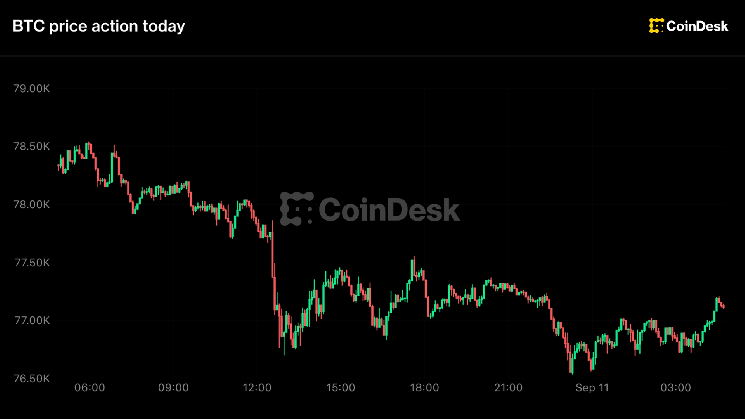
    As signs of recovery gain strength in the Bitcoin market, analysts are drawing attention to a critical resistance level. According to experts, the most important threshold for $BTC in the short term is the $80,000 level, while buying activity by whales and ETF investors supports the market’s upward potential.

    As the Bitcoin price has gradually risen in recent days, approaching the $80,000 level, a noticeable improvement in the market structure is being observed. However, analysts emphasize that it is not yet clear whether this rise will be permanent and that investor confidence continues to be tested. Recent data shows net inflows of over $11.8 million into spot Bitcoin ETFs, marking the sixth consecutive day of positive flow. On the same day, spot Ethereum ETFs saw inflows of approximately $43.4 million, continuing a nine-day uninterrupted inflow streak.

    Related News Following Recent Developments, JPMorgan Chase Released a Hot Crypto Report: “If This Continues, Institutional Investor Interest Will Remain Limited”

    According to the on-chain analysis platform Glassnode, Bitcoin has achieved a significant technical breakout, surpassing the “true market average” of $78,100 for the first time since mid-January. However, the fact that short-term investors’ cost basis is at $80,100 makes this region a strong resistance. According to the analysis, if the price reaches $80,000, more than 54% of investors who bought recently will be in profit. Such levels historically coincide with points where upward momentum has waned. Furthermore, it is noted that profits realized by short-term investors have reached $4.4 million on an hourly basis, approximately three times the $1.5 million level seen at local peaks earlier in the year.

    Bitfinex analysts, however, paint a stronger picture in the medium term. They note that wallets holding more than 1,000 $BTC have accumulated a total of 270,000 $BTC in the last 30 days, the largest monthly increase since 2013. The fact that Bitcoin reserves on exchanges have fallen to their lowest level in seven years during the same period suggests that selling pressure may remain limited.

    In the derivatives markets, a cautious outlook prevails. According to Glassnode data, funding rates for perpetual contracts remain in negative territory, suggesting that a strengthening spot demand could lead to a squeeze in short positions, potentially pushing prices upwards. On the other hand, the decline in implied volatility in the options market indicates that investors are not expecting aggressive price movements in the short term.

    Nexo analyst Iliya Kalchev notes that the current rally is driven by spot demand rather than leverage, and states that for Bitcoin to sustainably surpass new highs, a clear improvement in geopolitical developments related to Iran or a general easing of financial conditions is needed. In this context, the $80,000 level stands out as a critical threshold, both technically and psychologically, that will determine the market’s direction.

    *This is not investment advice.

  • Martha Stewart Expands Her Empire With First-Ever Kitchen Appliance Line

    Martha Stewart Expands Her Empire With First-Ever Kitchen Appliance Line

    If you purchase an independently reviewed product or service through a link on our website, The Hollywood Reporter may receive an affiliate commission.

    While Martha Stewart‘s extensive product line spans cookware, dishware, furniture, clothing, bedding and beyond, the author and entrepreneur has somehow never designed her own kitchen appliances — until now. Available to shop exclusively on Amazon, the 14-piece Kitchen Electrics collection introduces countertop cooking appliances — think air fryers, slow cookers, griddles and toasters — plus mixers, blenders, coffee and spice grinders, food processors and electric kettles, all ranging in price from $39.99 to $299.

    12-in-1 (bake, broil, roast, air fry, etc.).

    The April 2026 category launch comes just weeks ahead of Stewart’s latest book release, The Martha Way: Essential Principles for Mastering Home and Living, available for pre-order now ($24.50 $37.50) with an official release date of May 5. The Martha Way will join Stewart’s collection of 100-plus works, including the long-awaited reissue of her debut book Entertaining ($23.03 $50), reprinted in November 2025 for the first time in 43 years.

    Related Stories

    Back to the kitchen appliance launch, in classic Martha Stewart fashion, each piece prioritizes both function and design. The collection’s color palette is neutral and warm, with inventory offered in four colorways: Linen White, Caviar Gray, Sky Blue and Honeydew Green. Divided into three categories — Countertop Cooking, Mix & Blend and Breakfast & Brunch — the drop includes the following 14 pieces:

    Countertop Cooking

    Stovetop and oven safe.

    Mix & Blend

    Three speeds, five presets, auto-clean function, dishwasher safe.

    Breakfast & Brunch

    12” x 22”.

    Related: Disney Adds Official Winnie the Pooh Cookbook to Lineup of 100th Anniversary Collectibles

  • Saints draft Arizona State receiver Jordyn Tyson, brother of Cavaliers’ Jaylon Tyson

    Saints draft Arizona State receiver Jordyn Tyson, brother of Cavaliers’ Jaylon Tyson

    James Harden and Jordyn Tyson attend the game between Arizona State and the Arizona Wildcats in January.

    METAIRIE, La. (AP) — The New Orleans Saints selected Arizona State receiver Jordyn Tyson with the eighth pick in the NFL draft on Thursday night, adding a potential playmaker to a position group that could use one.

    “I’m ready to hit the ground running right now,” Tyson said. “I keep getting better. I just want to continue on that track. Work works.”

    The 6-foot-2, 203-pound Tyson — whose brother, Jaylon Tyson, plays in the NBA with Cleveland — was the second receiver drafted behind Ohio State’s Carnell Tate, who went fourth overall to Tennessee.

    The 21-year-old receiver said his name was called in the draft around the same time he he saw his brother hit a 3-pointer in Cleveland’s 126-104 Game 3 playoff loss against Toronto.

    Now, Tyson joins a Saints receiver corps that was headlined by four-year veteran Chris Olave in 2025, but had little depth behind him after Rashid Shaheed was traded to eventual Super Bowl champion Seattle.

    “This is a great add to that group,” Saints coach Kellen Moore said, highlighting Tyson’s ability to make plays on deep balls as a wideout, as well as his ability to play as a slot receiver.

    Tyson said he met Olave during a pre-draft visit to New Orleans and bonded well with him.

    “It’s going to be amazing to take pressure off each other, make our jobs easier,” Tyson said. “I feel like us, (covered) one on one — shoot — it’s going to get ugly.”

    The Saints entered the draft with their most apparent needs at receiver, edge rusher and defensive back.

    Last season, Tyson played in nine games at Arizona State, catching 61 passes for 711 yards and eight touchdowns in a campaign shortened by a hamstring injuries in both legs.

    He had his best season statistically in 2024, catching 75 passes for 1,101 yards and 10 TDs.

    But more than his statistics, it was Tyson’s knack for making clutch plays and the knowledge of football he exhibited in meetings with staff in New Orleans is what sold the Saints on him.

    “You felt the football junkie in him,” Moore said. “He’s got a really smart head to him as far as football acumen and awareness about what’s going on in this league.”

    Tyson’s injury history also includes torn knee ligaments — requiring reconstructive surgery — when he played at Colorado in 2022. He played in just three games in 2023 with Arizona State because of a broken collar bone.

    But he dismissed concerns about his health going forward, and said his recent training with former NFL receiver Hines Ward, a receivers coach at Arizona State, has helped him learn how to maintain his body like a pro football player should.

    “I’m going to give myself the best opportunity to stay on the field and be as healthy as possible,” Tyson said. “I’m going to do everything in the weight room, do everything with nutrition, I’m going to have a chef. I’m going to get a massage on the same day every week.”

    Moore didn’t sound too concerned, either.

    “Guys are going to go through things they have to navigate,” Moore said. “He battled through it and that’s a credit to him. … This guy’s a really tough football player. He’s battled some things — and that’s a positive.”

  • Dogecoin (DOGE) Turns Attractive—Bulls Aim Key Upside Break And Gains

    Dogecoin (DOGE) Turns Attractive—Bulls Aim Key Upside Break And Gains

    Dogecoin corrected some gains from the $0.0985 zone against the US Dollar. $DOGE is now holding the $0.0950 support and might aim for a fresh upside.

    • $DOGE price started a fresh downside correction below $0.0965.
    • The price is trading above the $0.0950 level and the 100-hourly simple moving average.
    • There is a bullish trend line forming with support at $0.0955 on the hourly chart of the $DOGE/USD pair (data source from Kraken).
    • The price could aim for a fresh increase if it remains stable above $0.0950.

    Dogecoin Price Holds Support

    Dogecoin price started a downside correction after it failed to surpass $0.0985, like Bitcoin and Ethereum. $DOGE declined below the $0.0980 and $0.0970 levels.

    There was a move below the 50% Fib retracement level of the upward move from the $0.0936 swing low to the $0.0985 high. The price even spiked below $0.0955 before the bulls appeared. Dogecoin price is now trading above the $0.0950 level and the 100-hourly simple moving average. Besides, there is a bullish trend line forming with support at $0.0955 on the hourly chart of the $DOGE/USD pair.

    Immediate resistance on the upside is near the $0.0980 level. The first major resistance for the bulls could be near the $0.0985 level. The next major resistance is near the $0.10 level.

    Source: DOGEUSD on TradingView.com

    A close above the $0.10 resistance might send the price toward $0.1120. Any more gains might send the price toward $0.1150. The next major stop for the bulls might be $0.120.

    Downside In $DOGE?

    If $DOGE’s price fails to climb above the $0.0980 level, it could continue to move down. Initial support on the downside is near the $0.0955 level and the trend line. It is close to the 61.8% Fib retracement level of the upward move from the $0.0936 swing low to the $0.0985 high.

    The next major support is near the $0.0950 level. The main support sits at $0.0920. If there is a downside break below the $0.0920 support, the price could decline further. In the stated case, the price might slide toward the $0.0880 level. Any more losses might call for a test of $0.0850.

    Technical Indicators

    Hourly MACD – The MACD for $DOGE/USD is now gaining momentum in the bullish zone.

    Hourly RSI (Relative Strength Index) – The RSI for $DOGE/USD is now above the 50 level.

    Major Support Levels – $0.0950 and $0.0920.

    Major Resistance Levels – $0.0980 and $0.0985.