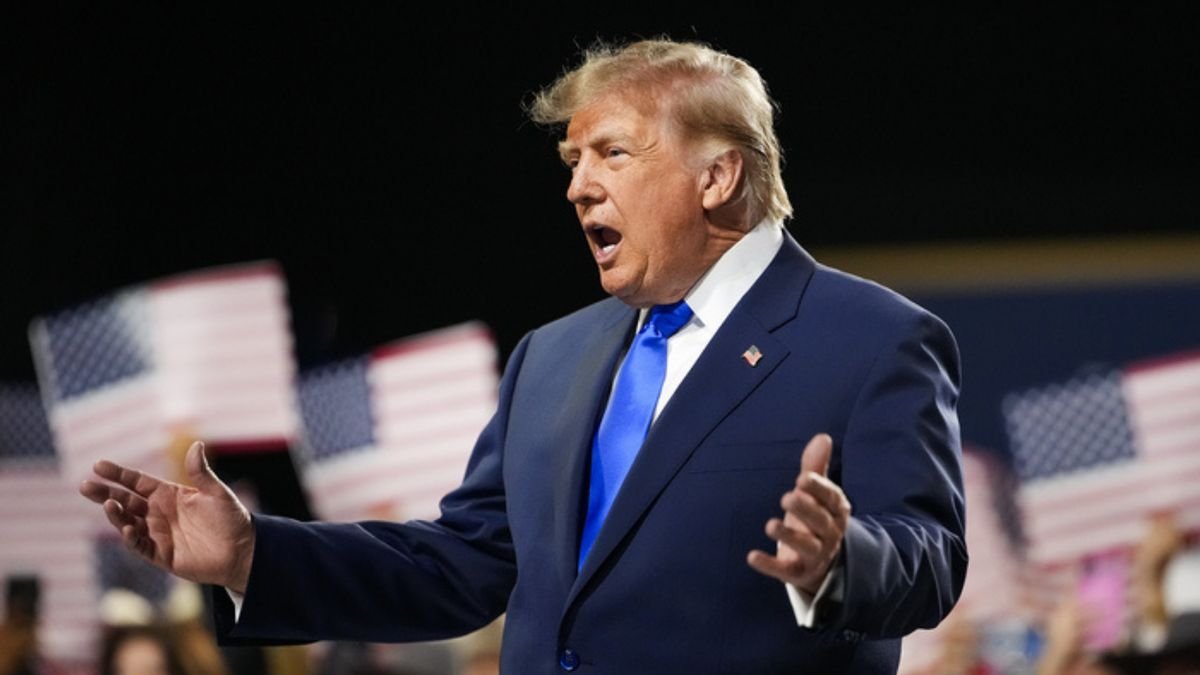
U.S. President Donald Trump has promised $5,000 to every American adult if the Republicans win majority control of the Senate and House of Representatives in the 2026 midterm elections.
Rating:
Context
Trump has floated similar ideas before that have not led anywhere as of this writing. Furthermore, the president cannot unilaterally give Americans government money without congressional approval, nor is it clear how he would pay the approximately $1.2 trillion cost.
As the 2026 midterm election season kicked off, social media users claimed U.S. President Donald Trump said he would give every American adult $5,000 if Republicans win majority control of the government.
The claimspreadonX and Reddit. Many of the posts included clips of Trump appearing to make such a promise. Other posts suggested that such a promise would amount to bribery.
Trump did, in fact, make this pledge during the Sept. 9 Republican National Committee midterm convention in Dallas, Texas, with the added condition that Americans would have to spend the money in the United States. As such, we have rated this claim as true.
Shortly after Trump’s comments, Vice President JD Vance suggested in a Fox News interview that U.S. tariff revenue could pay for the so-called “Trump dividend” (see 5:50). However, credible estimates suggest the United States hasn’t made anywhere near enough through tariffs to cover such a dividend.
While Congress signed off on one-time cash payments to Americans under the first Trump administration amid the COVID-19 pandemic, the president has floated similar ideas during his second term that have not materialized as of this writing. For example, he said he “loved” the idea of paying Americans a percentage of any money saved by the short-lived Department of Government Efficiency, or DOGE. The president also said on Truth Social in November 2025 that he would pay a “dividend of at least $2,000” to “everyone.”
Multiple readers asked us if the “Trump dividend” counted as bribing people to vote, or paying for votes, which is illegal under federal law. Vance defended the dividend idea against such allegations during his Fox News interview (see 5:28).
“The president is saying, if you keep it going, to the American people — if you keep us in power and allow us to continue to do these things, then you will share in some of the benefit of this incredible wealth that we are creating in the United States of America,” he said at 6:25.
Defenders of the proposal may also say that the dividend is akin to politicians’ promises to cut taxes or offer varying benefits if they win. Without more details about how this proposal would actually work in practice, it’s impossible to say if a court would consider it bribery. Legal experts are reportedly skeptical that the pledge itself was illegal.
In an emailed statement, the White House did not answer any of our questions requesting additional details about the dividend idea. Instead, spokesperson David Ingle said:
The doomers and naysayers have consistently doubted President Trump: when he pledged to create the historic Trump Accounts, lowered prescription prices with Most Favored Nations, secured the border with no crossings, cleaned up our streets, ended taxes on tips, grew real wages, renegotiated broken trade deals, and reshored key manufacturing back to the United States. President Trump has consistently proven his doubters wrong, drawing a clear contrast with the Democrats’ record of historic inflation, unfettered illegal immigration, skyrocketing crime, and weakness on the world stage. With the continued support of the American people, President Trump will keep delivering real results.
Trump’s promise
Trump’s full speech at the Republican National Committee midterm convention is widely available online through reputable news outlets such as The Associated Press.
Here’s what he said about cash payments, starting at 57:10:
If the Republicans win the House of Representatives and the United States Senate — both of them — because of our economic —tremendous economic success, like, in history, we’ve never had anything like what’s happening. But because of our tremendous strength and success, economically, I will issue a dividend to every adult citizen in the United States of America for $5,000. Very much like a successful company will do a cash distribution to its shareholders, or like last year, when I gave our great members of the military $1,776.
[…]
But the only condition on the payment of this dividend that we’re going to be making — so it’s $5,000 to every adult. The only caveat I have is that the dividend we’re making must be spent in the United States of America. We don’t want you going to Canada to spend the money. We don’t want you going to China, to Germany. You gotta spend the
In other words, if the Republicans win — if you win — we might not win. The reason the Democrats don’t do that, is because they don’t do tariffs. They don’t take in money. All they know is poverty and how to ruin our country, but we’re making a fortune. So, if the Republicans win, you win with us and you get $5,000. It will be called the ‘Trump dividend.’
If you hadn’t already, add the military-industrial complex to the growing list of parties concerned by the potential for people wearing smart glasses to engage in clandestine recording.
Bastille Networks, a startup specializing in wireless intrusion detection, announced Thursday what it called “first-of-its-kind software” to spot smart glasses at customer sites. The San Diego-based firm pitches this new solution, available to companies that already subscribe to its monitoring services, as going well beyond indie apps like Nearby Glasses and the cleverly named Zuckoff that scan for Bluetooth Low Energy signals from smart glasses.
“Those other ones will tell you whether there are glasses within Bluetooth range of your phone,” Bastille CEO Chris Risley said in an interview on Thursday. “What we do is tell you within two to three meters where it is.”
Risley said Bastille has neither received nor sought help from such smart-glass developers as Meta in developing its glasses-tracking tools. He added that Bastille’s systems, designed to look for rogue devices by sniffing across Bluetooth, Wi-Fi, and cellular frequencies, also provide an audit trail. “We tell you the history of that device–when did it show up?” Risley said. “Has it ever been here before?”
Bastille charges “hundreds of thousands” of dollars and up for its installations for national-security, military, and private-sector clients to spot Flipper Zero-like hacking tools as well as misplaced personal devices. “We’ve been in those facilities for years, and people know we’re in there,” Risley said. “And we detect new devices every day being brought in.”
He added, “Everybody’s going to tell you they brought it in by accident.”
Recommended by Our Editors
A video on the company’s site depicts a more menacing scenario: someone masquerading as a job candidate hands over a phone at a security checkpoint but keeps his connected glasses on during a lengthy tour of the premises, allowing him to walk away with a trove of confidential footage. That raises a question: Do sensitive installations not already check for smart glasses? Shouldn’t they? “There’s just not sufficient awareness,” Risley said.
Rob Pegoraro writes about interesting problems and possibilities in computers, gadgets, apps, services, telecom, and other things that beep or blink. He’s covered such developments as the evolution of the cell phone from 1G to 5G, the fall and rise of Apple, Google’s growth from obscure Yahoo rival to verb status, and the transformation of social media from CompuServe forums to Facebook’s billions of users. Pegoraro has met most of the founders of the internet and once received a single-word email reply from Steve Jobs.
When The Hollywood Reporter first caught up with writer-director Zach Cregger in the lead-up to Barbarian’s 2022 release, he detailed the struggles he faced in getting the inventive horror movie off the ground. The film was part of a larger effort to reboot his career after, by his own admission, he wasn’t particularly proud of his previous co-directorial work in the 2010s comedy space.
Since then, Cregger has gone on one of the most charmed runs of any filmmaker in town. He followed Barbarian’s critically acclaimed, highly profitable release with Weapons, another well-regarded genre film that grossed $270 million against a $38 million budget and featured an Oscar-winning performance from Amy Madigan as Aunt Gladys. A prequel about Madigan’s character is now deep into development.
Like Weapons, Cregger’s current film, Resident Evil, and his upcoming Steven Spielberg-produced sci-fi picture, The Flood, were each the subject of furious bidding wars. That kind of demand cements a remarkable career turnaround for a filmmaker who had to scratch and claw to get Barbarian financed just five years ago. But it’s also a subject that Cregger is reluctant to dwell on, given how “here today, gone today” the entertainment industry can be.
“If there’s one thing that is the law of Hollywood, it’s that what goes up must come down,” Cregger tells THR in support of Resident Evil’s Sept. 18 theatrical release. “These things are very, very temporary, and while it’s very, very flattering, I don’t have any illusions that this is my permanent place. I am not Martin Scorsese. I am just me.”
During his professional whirlwind the last handful of years, Cregger often decompresses with video games, and the Resident Evil franchise, particularly Resident Evil 4, has been one of his go-tos. Thus, when it came time to pitch his take on a Resident Evil movie, he aimed to capture his love of the gameplay experience on the big screen. And instead of adapting an existing game narrative, he chose to tell a new, original story about a medical courier named Bryan (played by Cregger’s Weapons actor, Austin Abrams), whose attempt to deliver precious, time-sensitive cargo to Raccoon City General Hospital collides with the franchise’s inciting T-virus outbreak.
Similar to The Odyssey and Lanterns’ brain trusts, Cregger has received no shortage of guff from the Resident Evil faithful for utilizing artistic license in his adaptation. He knew that this type of criticism is part and parcel with major IP, but he’s said elsewhere that he “underestimated” just how much appetite there is for legacy character stories, particularly one involving Leon S. Kennedy. The backlash has even prompted Cregger to previously say that Resident Evil will be the first and last franchise he tackles.
“I cannot be worried about whether I am pleasing enough of every spectrum of fandom. If I tried to please everybody, I’d end up pleasing nobody. That much is obvious,” Cregger says. “I just have to be okay with people voicing their opinion. I’m a grown-up. When I took this on, I understood what I was walking into. So it would be weird for me to act surprised or bent out of shape that the thing that was obviously going to happen is now happening.”
Barbarian and Weapons both succeeded in their masterful ability to strike a balance between horror and comedy without allowing either element to detract from the other. However, test screenings for Resident Evil made Cregger aware that the ratio was more lopsided than expected.
“I learned that people really liked the movie, but they thought it was too funny. So over the course of my testing, I stripped out as much of the jokes as possible,” Cregger shares. “I then found that not only did the audience enjoy the movie more, but I also liked the movie a lot more. A little bit of humor goes a long way in a horror movie, and there’s not a single joke I took out of this movie that I miss.”
Below, during a conversation with THR, Cregger also discusses the personal reasons why Resident Evil was his most challenging shoot yet, before teasing the impactful ending that has been highly protected thus far.
***
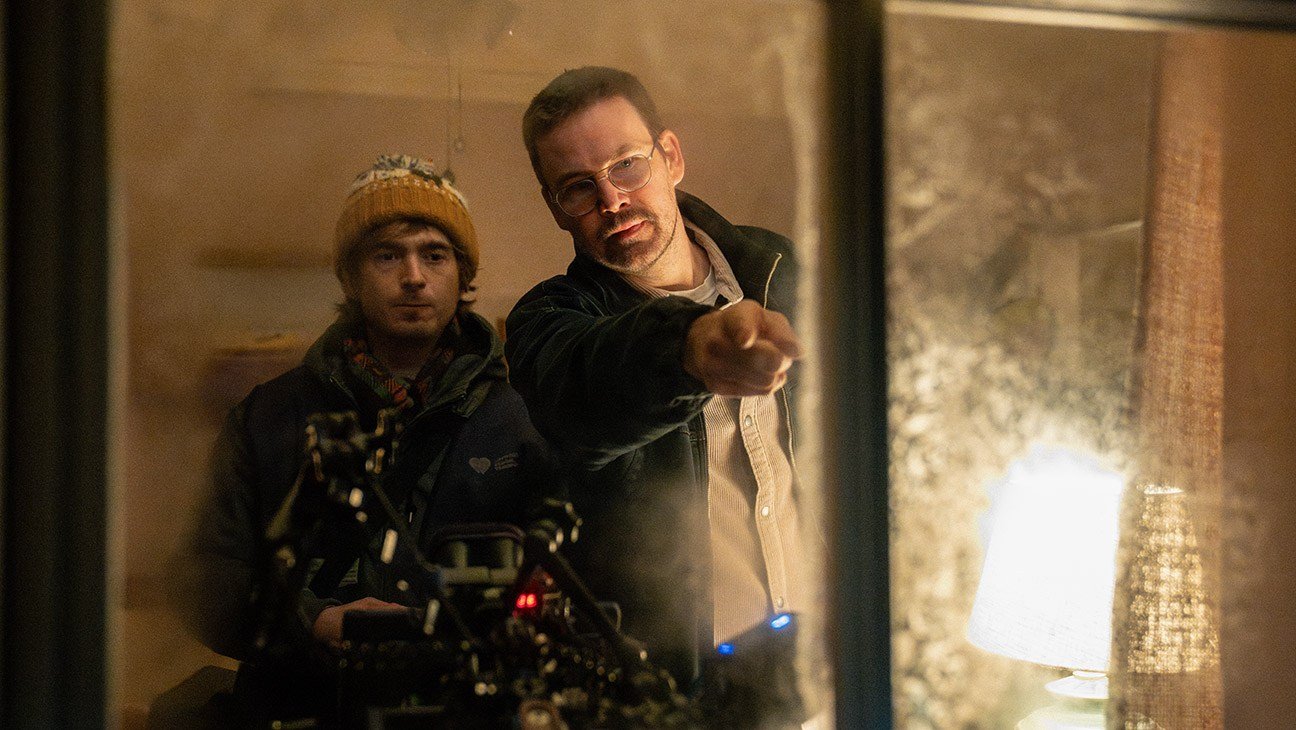
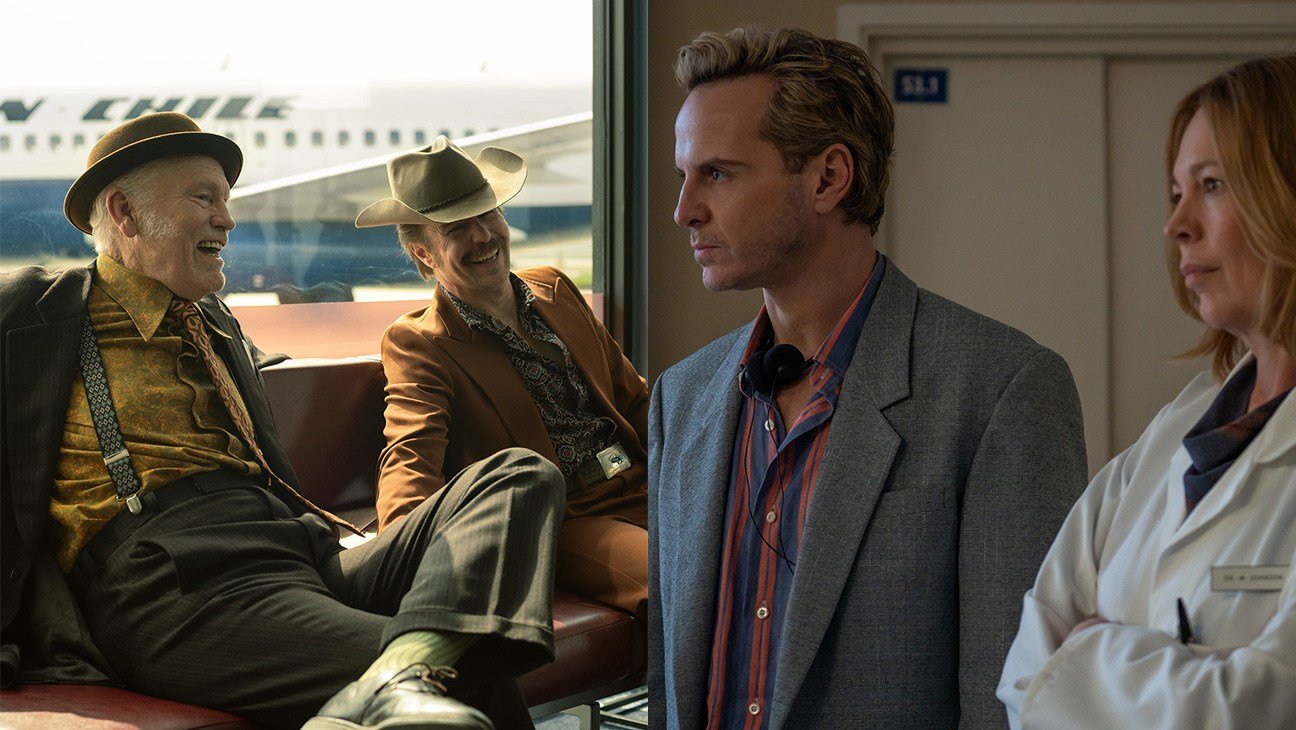
Director Zach Cregger (right) on the set of Resident Evil
Dušan Martinček/Sony Pictures
I know I just introduced myself, but I have to point out that it’s Brian with an i, the proper spelling of the name Brian.
I like that you’re starting there. My assistant’s name is Zac with just a c, and I can’t wrap my head around it, man.
That’s unacceptable.
Yeah, I think so.
You remain the belle of the ball. Every week, it seems like there’s a new bidding war involving you and massive sums of money. You’ve also written and directed an Oscar-winning role. And, most notably of course, THR just named you the top genre filmmaker working today. How do you not let all this go to your head?
I don’t know, man. I try not to put too much brain power into it. If there’s one thing that is the law of Hollywood, it’s that what goes up must come down. These things are very, very temporary, and while it’s very, very flattering, I don’t have any illusions that this is my permanent place. I am not Martin Scorsese. I am just me. It’s a fickle industry. and it would be foolish to think of it any other way. So I’m honored, but I have to only give it so much attention.
That being said, I’ve also felt a great deal of sympathy for you this year.
(Laughs.)
You, Christopher Nolan and the Lanterns team have all endured an extraordinary amount of bellyaching over the creative license you’ve taken with your respective adaptations. This isn’t anything new, but why do you think it feels particularly extreme this year?
I can’t speak to what the other guys are going through, but in this case, there are different kinds of Resident Evil fans. There are fans like me who love the experience of playing the games and think there’s never been a movie that has represented what it feels like to play ResidentEvil. That’s how I categorize myself as a fan.
Then there are fans of the games who specifically love the lore and the characters and the nitty-gritty details of the backstory. But my movie is not spending a lot of currency on those things. I’m not putting any of the legacy characters into this movie. So if that is what you love about these games, then you’re going to feel a certain way about it. Here comes yet another Hollywood movie, and they’re once again not doing Leon and all the characters I was hoping they were going to do.
I understand that perspective, but at the same time, I can’t let that affect my output. I have to make the best version of this movie that I’m capable of making and devote myself entirely to it. I cannot be worried about whether I am pleasing enough of every spectrum of fandom. If I tried to please everybody, I’d end up pleasing nobody. That much is obvious.
I just have to be okay with people voicing their opinion. I’m a grown-up. When I took this on, I understood what I was walking into. So it would be weird for me to act surprised or bent out of shape that the thing that was obviously going to happen is now happening.
I don’t know about you, but the pandemic reset my priorities. Seeing how fragile this house of cards is — the industry and country alike — I just can’t imagine ever getting worked up over details like you deciding to have snowy streets instead of rainy streets.
When I read the news and see the insane things that the people in power are doing in this country, it is honestly terrifying. That makes me really put things in perspective when somebody is mad at me for the weather in my ResidentEvil movie. I’m like, Alright, dude. Let’s just adjust our priorities a little bit.
Austin Abrams stars as Bryan in Zach Cregger’s Resident Evil
Dušan Martinček/Sony Pictures
People also took issue with you using iPhones?
Yeah, because it’s set in 2026. I’m sorry I’m not making a period piece. I’m taking a liberty.
When you listen to a cover of a well-known song, you want to hear the band or artist’s spin on the material. Nobody criticized Johnny Cash for turning Nine Inch Nails’ “Hurt” into a gothic country ballad. So I just don’t understand why movies or series are expected to be carbon copies of their source material.
That’s an excellent point — and well made.
Thanks, Zach.
(Laughs.) No, thank you. This is a really fun interview for me.
Your relationship with Brian Duffield, who also spells his first name correctly, is largely built around sharing memes together.
That’s not accurate. (Laughs.)
I was just making a Siren Head joke.
Got it!
Have you guys had a chance to discuss who made Austin Abrams suffer the most last year?
Wow, great question. We have not had that conversation yet, but I would love to get Austin in a room with me and Brian. I would have him tally up the points because I think we both gave him a real run for his money.
You previously said that a falling blood bag nearly killed Austin on the Resident Evil set, so I wonder if Brian has his own death-defying moment on the Whalefall set.
I don’t know if he does or doesn’t. After I started telling that story about how Austin almost got killed by a blood bag, I very quickly was like, I don’t feel great about that. I’m not stoked that somebody who worked on my movie was in harm’s way. But also, he wasn’t. He was in line. It was just a little too close for comfort, and we’re being a little dramatic. But I’m glad he’s fine. I’m glad he was unscathed. I’ll just leave it at that.
Austin Abrams stars in Zach Cregger’s Resident Evil
Courtesy of Sony Pictures
Austin’s character, Bryan with a y …
Now I see what we’re doing here! I’m just now realizing “Brian with an i” was aimed at me. (Laughs.)
Yes, you set Bryan up to have questionable morals, but then he does something to help someone else that quickly reversed my initial impression of him.
Yeah, he’s a rascal, but he’s a good person.
Austin does a type of, dare I say, feminine scream in certain moments.
(Laughs.) Yes, he does.
Did you hear it one day and urge him to double down on it?
I never urged him. He was in the zone and doing it. I probably laughed really loud, and laughter is the way Austin and I communicate a lot of the time. So I probably encouraged him in that way. But it’s such a wonderful aspect of his character. There is no machismo here. He is just a dude who is embarrassingly panicking his way through the apocalypse, and I think that’s great.
His character works for Lightfoot Medical Transport. What is Lightfoot a reference to, if anything?
We just had to put something on his vest. We were in prep, and they were like, “Come up with five different medical courier company names so we can see if one of them passes legal.” So I wrote a handful of names, and I’m sure it was in a moment of like, “What do I have to do? Really? Fine. Blah, blah, blah, blah, blah.” Then they came back and were like, “Lightfoot is legal.” And I was like, “Great, put it on the vest.” There was no more thought to it than that.
What about the picture of Bryan’s girlfriend Michelle on his iPhone? Is that a random Czech actor?
No, that’s one of Austin’s friends. Austin was like, “Could it be her?” And I was like, “Yeah!”
The film is often shot in the style of third-person gameplay. Admittedly, when I first heard you were going for a gamer POV, I worried that Resident might be another HardcoreHenry. While technically impressive, I thought that movie’s first-person perspective limited the narrative. That’s not the case here, but did you have any rules for when you’d break your gameplay approach?
No rules. I went moment by moment, and I tried to pick the angle that is going to honor the moment. That is the beginning and the end of my concern. I tend to think that the third-person perspective that the games utilize is wildly effective, and so that ended up being the movie’s predominant visual language. The movie is stronger for it. But it’s only inspired by the games; there wasn’t any sort of rule. So I jumped from third person to first person to objective all the time, and it’s a blend. It’s a moment-by-moment thing. You saw the first half hour, so did it feel gimmicky?
Not at all. It felt thoughtful and considered.
That’s good to hear. And that’s how it is for the rest of the movie. It lives in that ratio for the duration. I remember seeing the trailer for Doom, and there was a first-person-shooter shot. And I remember thinking, Dude, I wish they did that for the whole movie. That would be so cool. And I also remember when HardcoreHenry came out and being like, If they pulled this off, that would be so cool.
But when it was time for me to make ResidentEvil, there was never even a consideration that I would be adherent to a video game style all the way through. I just knew that I would be failing in many, many moments. So I’m still hoping for a movie that does [third-person for the entirety], but I’m not the guy to do it.
I love when horror movies light a number of fuses that could detonate at any moment, and you’ve done that here with various elements, such as the hour timer on the package.
I agree with you. It’s Hitchcock’s bomb-under-the-table analogy. So I was like, Let’s put a lot of bombs under the table and let’s show all of them. It can only help.
A couple guys named Bill Hader and David Fincher gave you great notes throughout Weapons. Did they contribute to this one?
Dave has been making his own movie, and so we have not had the same idea exchange. Bill read the script, and while he was very complimentary, he was also in the throes of making his own movie. So we didn’t work on anything together. This one has been more straightforward.
No one new entered your orbit with some brilliant piece of advice?
I would love that, but no.
Since I’ve only seen Resident’s first 30 minutes, can you describe the last 30 minutes in a word?
In a word, bigger. But I want to say so much more. I also think it’s surprising. I love the ending, and I’m very excited for people to see the ending. It’s so hard for me not to talk about it. The ending packs a punch. I’m really proud of it.
Will it make sense why the studio is withholding the ending as long as possible?
(Cregger responds without hesitation.) Yes.
On the Weapons set, the few days devoted to the kids tearing Gladys apart also tore you apart. You felt like you’d lost control of the wheel. Did you avoid that feeling on Resident?
Yes, I did. However, on this one, I had pneumonia for the first half, and I had Campylobacter jejuni for the back half. So I was very, very ill for the whole production, and everything felt so barely in control because my body was failing me. But I had wonderful, talented department heads, and I had a single actor who is one of the most can-do, positive people I’ve ever met. I was spoiled by the people around me.
What was hard about this one wasn’t the chaos of the children, but the chaos of the weather and being nocturnal for however many months. We froze our asses off in the north of the Czech Republic. And when you walk in snow, you’ve walked in snow, so how are we going to do take two [without seeing those previous footprints]? Those sorts of things were a whole new flavor of crazy-making, but that’s every movie. Every movie that’s ever been made is kind of crazy-making. So at this point, I just have to say it goes with the territory.
Director Zach Cregger on the set of Resident Evil
Dušan Martinček/Sony Pictures
What did you learn and apply from test screenings?
I learned that people really liked the movie, but they thought it was too funny. So over the course of my testing, I stripped out as much of the jokes as possible. I then found that not only did the audience enjoy the movie more, but I also liked the movie a lot more. A little bit of humor goes a long way in a horror movie, and there’s not a single joke I took out of this movie that I miss. So that perspective was really helpful.
I thought the first 30 minutes had an optimal ratio of laughs to scares.
There you go. That’s a testimony to the effectiveness of the feedback.
Between Shay Hatten co-writing Resident Evil and Zach Shields writing the Aunt Gladys prequel, is this your way of shortening the turnaround time between movies? Or is it your way of saying you can’t do it all anymore?
I can’t do it all myself. I’m already starting on my next movie [The Flood], and my workload has to be somewhat reasonable so I can devote the appropriate amount of energy to one thing at a time. And I love those guys. They’re talented writers. I’m picking people that I think are up to the task. So, as much as I would love to just go off and be nothing but a writer, I want to be the director. I want to make the movies, and that’s just incredibly time-consuming.
Was there a specific tipping point when you realized this?
Yeah, there was. I was going into production on a movie, and I had an outstanding script assignment. I’m not going to name it, but it’s a script I’m not going to make. So I found myself in a situation where I was not doing a good job on this script, and it was stressing me out. I was already prepping a movie, which is exhausting and totally overwhelming, and then I would come home and feel like I was alsobehind on my homework. So I was like, This is a way to burn out. This is not a way to do good work, and I’m going to make both things worse if I continue this way. I have to recognize the limits of my abilities and my time.
The Flood is your next film, and you’ve described it as the “last film of this chapter of your life.”
Yes.
Are you suggesting that you’re leaving genre right after THR named you the top genre filmmaker working today?
(Laughs.) No, I’m not suggesting that. I’m just saying that Weapons, Resident Evil and Flood came out of a single burst. I wrote these three scripts after Barbarian in one kind of prolonged chapter of my life. I love them all. And by the time I finish making Flood, years will have passed since I wrote those scripts. So I will be a different person when I sit down to write whatever is going to come next.
Henchman is a DC-related script of yours that you wrote before Barbarian. Is there still no action on that?
No, none. Believe me, I love Henchman. My love of that script persists, but there’s been no action.
Well, congratulations on the best short film of the year. I can’t wait to see the feature adaptation soon.
Thank you, Brian with an i.
*** Resident Evil opens September 18 in movie theaters nationwide.
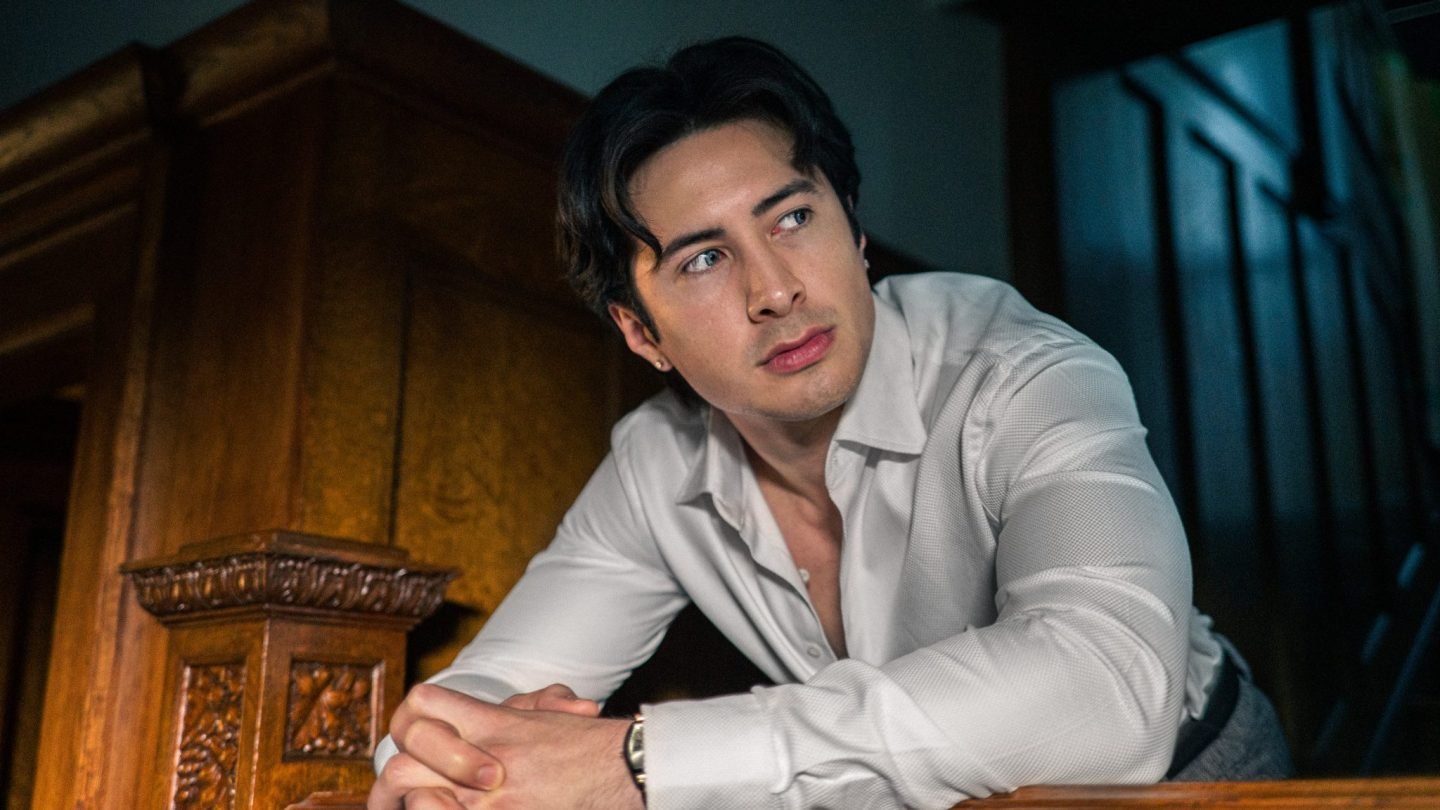
The Heated Rivalry breakout is set to take on the roles of both Henry and Logan in the half-hour mystery thriller, the Canadian streamer said on social media Thursday. “Seeing double? You should be,” the post read, adding a side-eye emoji. “Hudson Williams takes on TWO roles in #YAGA. Meet Henry and Logan. Coming this October on @cravecanada.”
Yaga, which is set to air on AMC+ in the U.S., stars Carrie-Anne Moss, Noah Reid, Clark Backo and Williams. The show premiered its first look and teaser this summer at a San Diego Comic-Con panel. It premieres in October.
Yaga is based on the play by Sandler, who serves as the show’s writer and showrunner, and reimagines the myth of Baba Yaga in a coastal town. Crave dubbed the series “not your grandmother’s Baba Yaga” in a recent Instagram post.
The show follows private investigator Rapp, played by Reid, as he heads to a small coastal town to investigate the disappearance of Henry Park, played by Williams, the young heir to a powerful fishery. The show’s synopsis reads, “[Rapp] finds himself at odds with an apprehensive local detective, Carson (Backo), a charismatic university professor with a taste for younger men, Katherine (Moss) and a labyrinth of enigmatic suspects, secret lives and ancient magic.”
Sadler said in an initial release that the series has evolved from “myth to stage” to her first greenlit series, “reclaiming the wicked witch and reshaping her as an incendiary feminist antihero for our time.” She continued, “It reflects the kind of storytelling I love: propulsive, accessible, dark, funny and unapologetically bold.”
Sheila McCarthy, Megan Follows, Ezra Franky, Patrick Gilmore, Katharine Isabelle and Hiro Kanagawa also star in the series, along with Emilija Baranac, Georgia Acken, Anisa Harris and Sam Krochmal.
Yaga is produced by Front Street Pictures and Blink49 Studios. Mackenzie Donaldson, Andrew Miller and Moss serve as executive producers, and Charles Cooper serves as a producer. Sandler is showrunning the series, with David Frazee and Rachel Talalay directing.
So much so that Daniels once wanted Carell to play his dad Aaron in a biopic he wrote about him almost 20 years ago.
“He’s a very colorful person and he actually was in the Olympics in 1968, and I wrote a movie for Steve to play him, like on spec during the writers strike of 2008,” Daniels told me at his Hollywood Walk of Fame star unveiling on Thursday morning. (Writers were allowed to write uncommissioned spec scripts during the 2008 strike.)
What was his sport?
“He had a very rare sport. That’s how he was able to do it,” Daniels explained. “It was the demonstration sport of Mexico, basically like jai alai but with paddles and so he managed to wrangle his way in with some friends.”
The elder Daniels competed as an amateur athlete in the 1968 Summer Olympics in Mexico City.
“The Office” creator Greg Daniels reveals Steve Carell almost played his dad in a biopic Daniels wrote nearly 20 years ago:
“He’s a very colorful person and he actually was in the Olympics in 1968, and I wrote a movie for Steve to play him, like on spec during the writers… pic.twitter.com/BrEQsBC3Rx
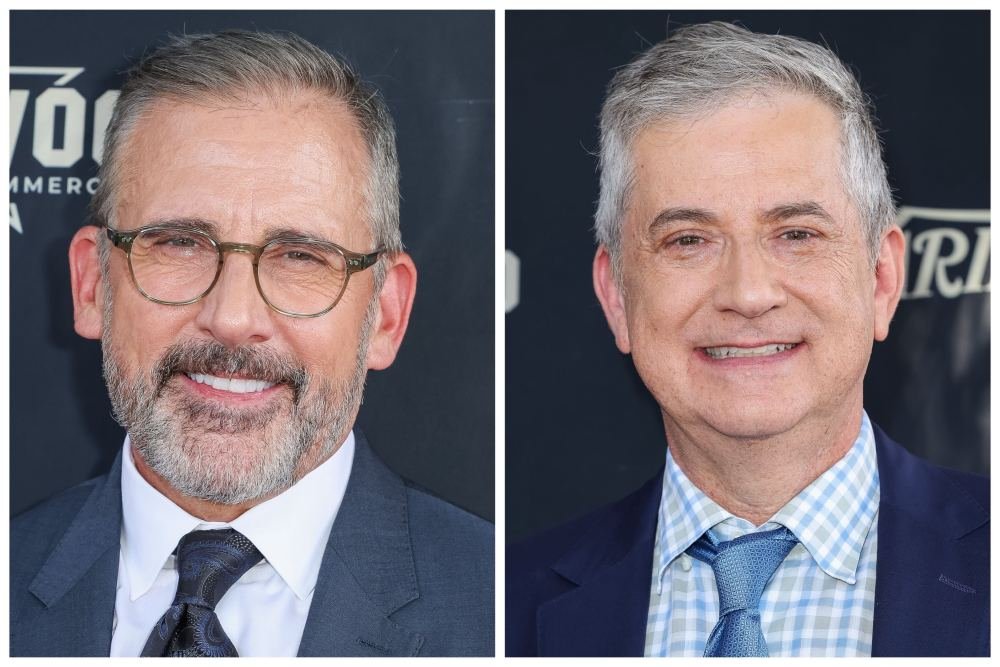
Carell, along with Conan O’Brien, spoke at the star unveiling. “Everyone told me not to do ‘The Office,’” Carell said. “[They said] it will not work. The original is too good. It is a waste of time. And mostly, it is just going to stink. And then a crazy thing happened. It didn’t stink because of Greg Daniels.”
During our chat, Daniels put the kibosh on fans’ hopes for any sort of “Office” revival or reboot. “I don’t think we need to find out what all the characters are doing so much because of the way the show ended,” he said. “It seemed like people liked the ending and you’re just sort of risking a lot to open it up again.”
“The Office” creator Greg Daniels doesn’t think the show should get a reboot.
“We don’t need to find out what all the characters are doing… It seemed like people liked the ending, and you’re just risking a lot by opening it up again.”
Peter Berg is directing the show opens for all four of Netflix‘s NFL gameday livestreams this season — and for the first one, debuting Thursday, he drafted Kyle Chandler, star of the “Friday Night Lights” TV series, for an assist on the play.
Berg directed the 2004 movie “Friday Night Lights,” about a high school football team in Texas, and Chandler portrayed Coach Taylor in the TV series adaptation that first aired on NBC.
The first of Berg’s NFL pregame teasers debuts Sept. 10 during Netflix’s broadcast from Melbourne, Australia, featuring the Los Angeles Rams vs. the San Francisco 49ers (coverage begins at 3:30 p.m. PT). He’ll also direct openers for Netflix’s other NFL gamedays (Green Bay Packers vs. Rams on Thanksgiving Eve; Packers vs. Chicago Bears and Buffalo Bills vs. Denver Broncos on Christmas Day; and a Week 18 game on Jan. 9, 2027, with the teams TBA).
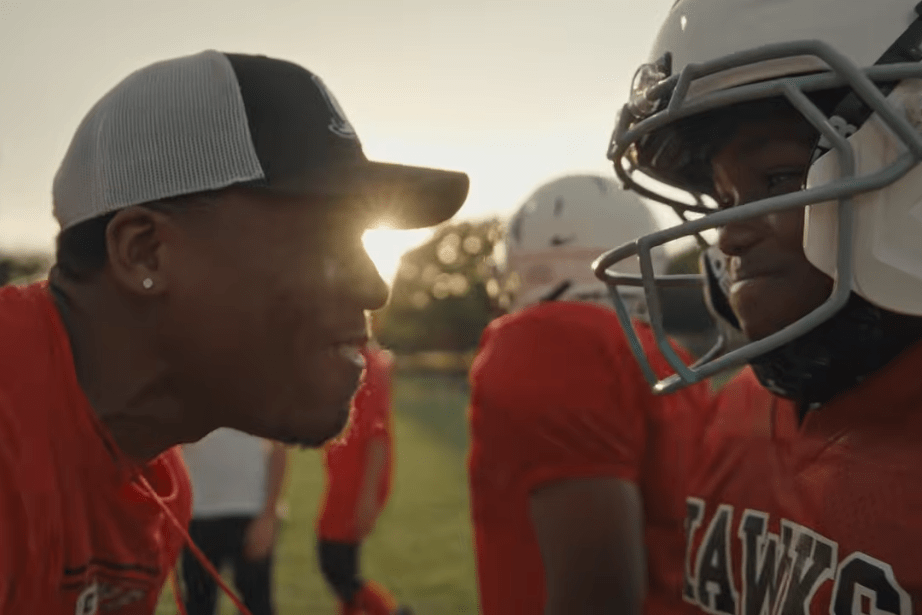
Berg’s Sept. 10 opener, “For the Love of Football,” runs 2 minutes and intercuts scenes of kids’ football teams (and their coaches) with footage from NFL games — giving it an overt “Friday Night Lights” vibe.
“And so it begins. Right here, right now. Today,” Chandler says at the beginning of the clip. “You are going to win. You’ll use your eyes to win. Your eyes will show you the truth. You’ll recognize it whether you like it or not.”
Later, Chandler says in the voiceover, “You’ll play with your eyes clear and your heart full. If you can do that and then do it again and again, I assure you, you cannot lose… Clear eyes, full hearts. Can’t lose.”
Apart from the NFL gameday teasers, Berg was already in business with Netflix. He directed, wrote and produced the movie “The Mosquito Bowl,” bowing in theaters on Oct. 30 ahead of its Nov. 25 release on Netflix. The sports drama is based on the bestselling novel of the same name by Pulitzer Prize winner Buzz Bissinger, based on the true story of four top American top college football stars who set aside their fame to enlist in the Marines following the attack on Pearl Harbor during World War II.
Watch Berg’s “For the Love of Football,” which opens the Rams-49ers game on Sept. 10:
A notable transfer of 1,000 Bitcoin, valued at approximately $77 million, was reported to have moved from an unknown wallet to Robinhood. This significant event, highlighted by the commentator @whale_alert, raises questions about the potential implications for institutional interest in the cryptocurrency sector. As trading platforms like Robinhood continue to expand their services, this transfer could signal shifting dynamics in market participation.
The Story So Far
The transfer of 1,000 Bitcoin to Robinhood comes at a time when the broader cryptocurrency market is experiencing mixed signals. Institutional interest appears to be growing, with platforms like Robinhood enhancing their crypto offerings amidst increasing user demand. This transaction could be viewed as a sign of confidence in Bitcoin, especially as traders assess the potential for liquidity and market movements following such large transfers. The implications of this transfer may resonate across trading platforms as observers seek to gauge institutional sentiment and its effect on price dynamics.
Key Takeaways
The transfer involved 1,000 Bitcoin valued at approximately $77 million. It was recorded moving from an unknown wallet to Robinhood. The transaction could indicate increased institutional engagement in the crypto market. Analysts are monitoring the market for potential impacts from such transfers. This event reinforces the importance of liquidity in trading platforms.
What the Data Shows
Currently, Bitcoin is not showing active price movement, as trading volumes remain stagnant. However, the significant transfer could lead to increased attention from institutional investors, potentially influencing future price action. Observers are keeping a close watch on how this transfer interacts with existing market conditions, especially given the lack of notable trading activity in the past 24 hours.
Robinhood is a well-known trading platform that has recently expanded its cryptocurrency offerings, allowing users to buy, sell, and hold various digital assets, including Bitcoin. The platform’s involvement in such a significant transaction places it at the forefront of crypto adoption, appealing to both retail and institutional investors seeking to engage with digital currencies.
The Road Ahead
Traders should watch for potential price fluctuations as the market absorbs the news of the Bitcoin transfer to Robinhood. Increased institutional interest may lead to heightened volatility, especially if similar transactions occur in the near future. Observers should keep an eye on trading volumes and market sentiment as indicators of how this transfer affects broader crypto dynamics.
This article is for informational purposes only and should not be considered financial advice.
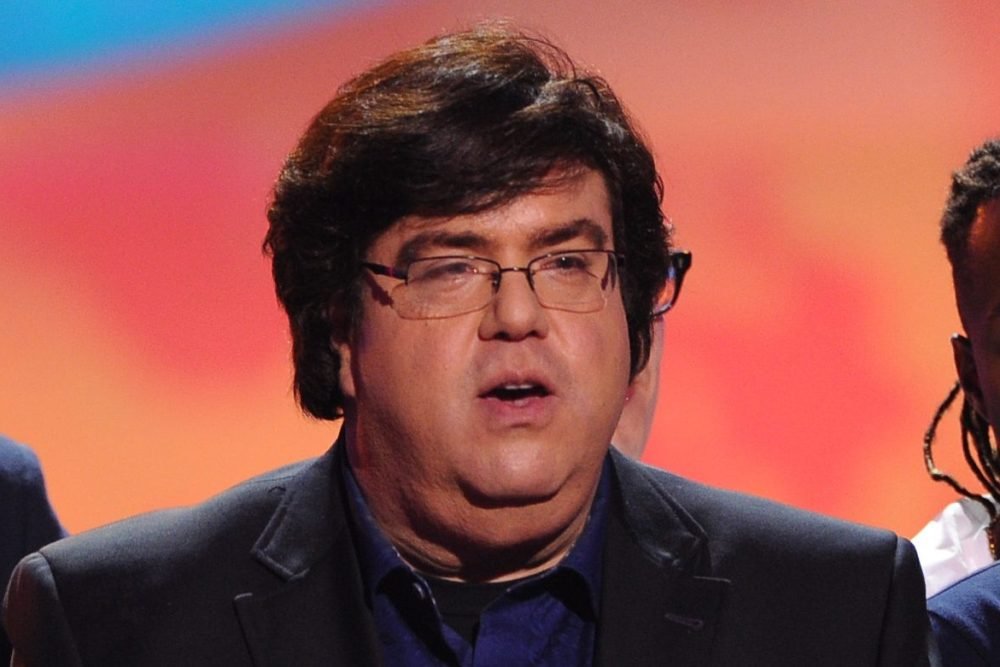
The producers of the documentary series “Quiet on Set” have prevailed in a lawsuit brought by former Nickelodeon showrunner Dan Schneider, who claimed that the show implied that he was a child sex abuser.
Schneider sued for defamation in 2024, alleging that the series had falsely portrayed him as being responsible for or having facilitated sex abuse committed by others. He won the first round in court, as a judge found enough merit in the claims to deny the defendants’ motion to throw out the case.
But the defendants — Warner Bros. Discovery, Sony and producers Mary Robertson and Emma Schwartz — filed an appeal, and on Thursday a three-judge panel ruled unanimously in their favor. The judges found that while the show does depict Schneider as a bad boss, it does not cross the line to a defamatory implication of child sex abuse.
“The documentary clearly distinguishes between the lamentable conduct that its participants attribute to Schneider — gender discrimination, harassment, toxic workplace behavior, and inappropriate sexual innuendo — and the child sexual abuse explicitly attributed to three named individuals, two of whom are discussed at length,” wrote Judge Melanie Ochoa, for the panel. “‘Quiet on Set’ also affirmatively states that Schneider’s employer investigated his conduct and, while it confirmed some inappropriate behavior, it found no evidence of child sexual abuse. Schneider’s attempt to find an alternative meaning than what is expressly stated in the documentary is unavailing.”
Schneider was responsible for creating a series of hit shows on Nickelodeon, including “The Amanda Show,” “Drake & Josh,” “Zoey 101,” “iCarly,” and “Victorious.” Amid allegations of abusive conduct, Nickelodeon cut ties with him in 2018.
The series, “Quiet on Set: The Dark Side of Kids TV,” ran on Investigation Discovery in March 2024. Schneider posted a video apology shortly afterward, saying he was “embarrassed” by his past behaviors.
In the lawsuit, Schneider’s attorneys argued that while the show did not come out and directly accuse Schneider of sex abuse, it did juxtapose accusations of “inappropriate behavior” with pictures of Schneider with his arm around child actresses.
The show also delved into the cases of Brian Peck, a dialogue coach who was arrested for child sex abuse, and Jason Michael Handy, a production assistant who was also accused of sending an explicit photo to a child actress.
Schneider argued that he had nothing to do with those cases, and that the series created a false impression by linking him to them.
But the panel ruled that it could not go along with that argument, given that “the only such abuse discussed is explicitly attributed to named perpetrators and the documentary expressly states that an investigation into Schneider found no evidence of abuse.”
The defendants prevailed under California’s anti-SLAPP statute, which allows an early mechanism to strike lawsuits intended to stifle speech on matters of public interest.
Gerry Silver, Schneider’s attorney, said in a statement he was disappointed in the result.
“We are disappointed by the Court’s decision to reverse the Superior Court’s well-reasoned anti-SLAPP ruling, and we are evaluating our options for further review and appeal,” Silver said. “However, we are pleased that the Court acknowledged that the makers of ‘Quiet on Set’ presented absolutely no evidence that Dan was sexually abusive towards any of his cast members and agreed that any such allegation is provably false.”
$FARTCOIN price decline accelerated after more than 6.5 million tokens reportedly hit centralized exchange hot wallets within 24 hours.
Notably, the transfers followed a price rejection around the $0.181 level, where sellers disrupted the memecoin’s previous recovery attempt.
Reportedly, around 957,090 $FARTCOIN valued at nearly $164,800 were transferred from Coinbase Prime Custody into Coinbase Hot Wallet.
Additionally, another 3.48 million tokens, worth over $600,000, also reportedly entered Gate.io through three coordinated transfers.
Specifically, the transactions included 1.733 million $FARTCOIN from CGbHc and another 932,700 tokens from a different depositor.
Wintermute also moved around 824,000 $FARTCOIN toward Gate.io, amplifying the potential exchange-side supply pressure.
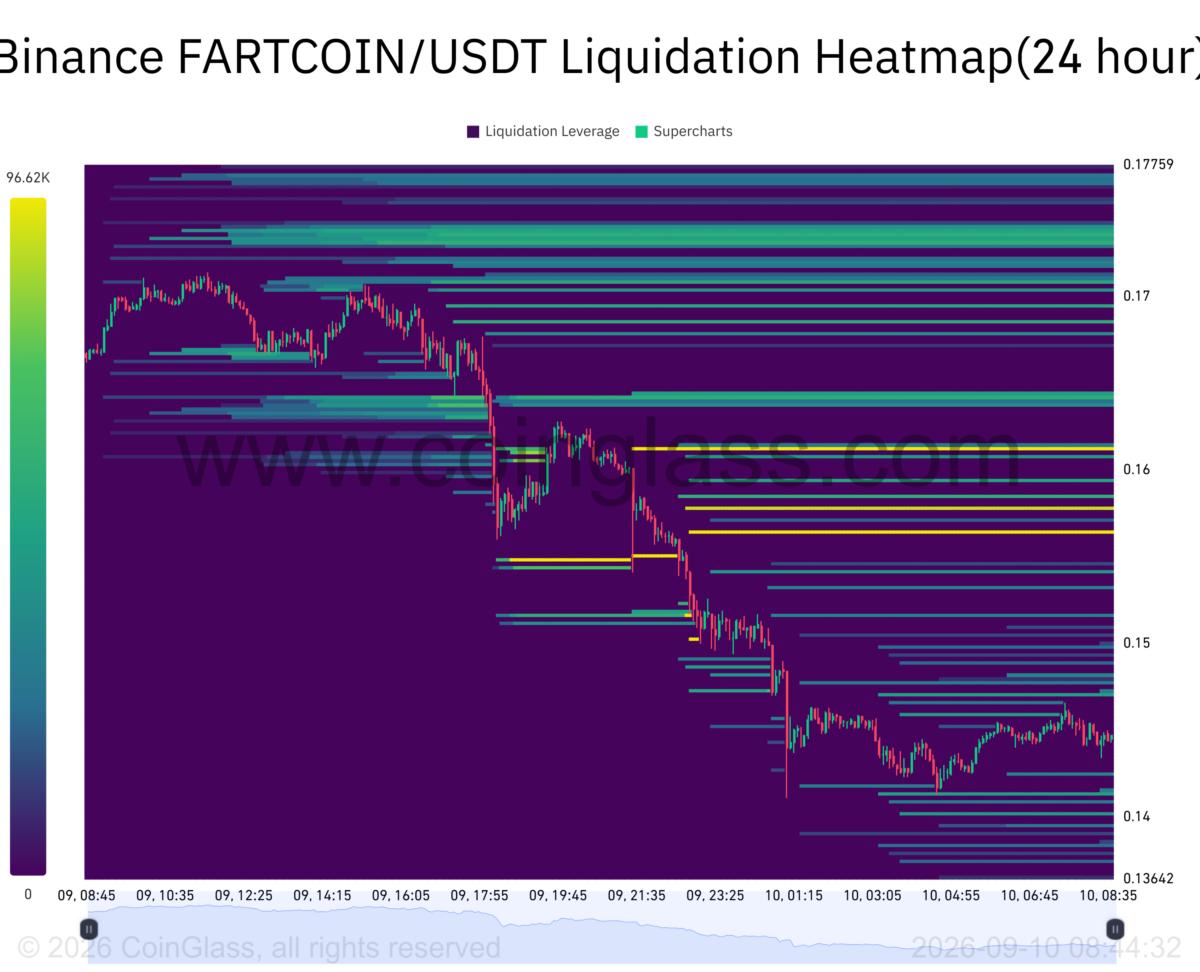
Meanwhile, trading volume climbed 22.13% to $23.87 million as $FARTCOIN fell 20% toward $0.144 in 24 hours. The decline therefore placed $FARTCOIN among the top losers in the memecoins sector, highlighting stronger selling pressure across its market.
Fresh inflows reinforce exchange supply pressure
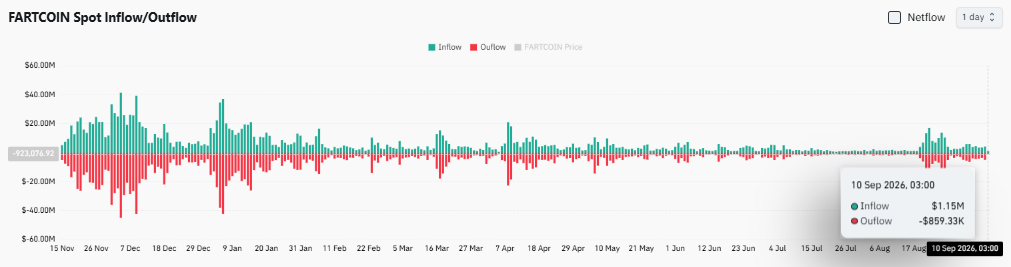
The exchange spot flows added another bearish indicator while the large token transfers already challenged $FARTCOIN’s ability to stabilize.
At the time of writing, the memecoin had recorded around $1.15 million in inflows versus $859,330 in outflows.
Clearly, the inflows exceeded the outflows, producing positive netflow and hence increasing the tokens available across the tracked exchanges.
Notably, several earlier periods reflected considerably larger flows, yet the recent imbalance came at a time of heightened selling pressure.
This timing reinforced the significance of the exchange supply as $FARTCOIN pushed towards its key technical support area.
Continued positive netflows could preserve the supply pressure as fresh exchange deposits continue exceeding withdrawals.
Stronger outflows, on the other hand, could reduce the available supply and improve conditions necessary for buyers to defend support.
Source: CoinGlass
$FARTCOIN reaches its crucial order block
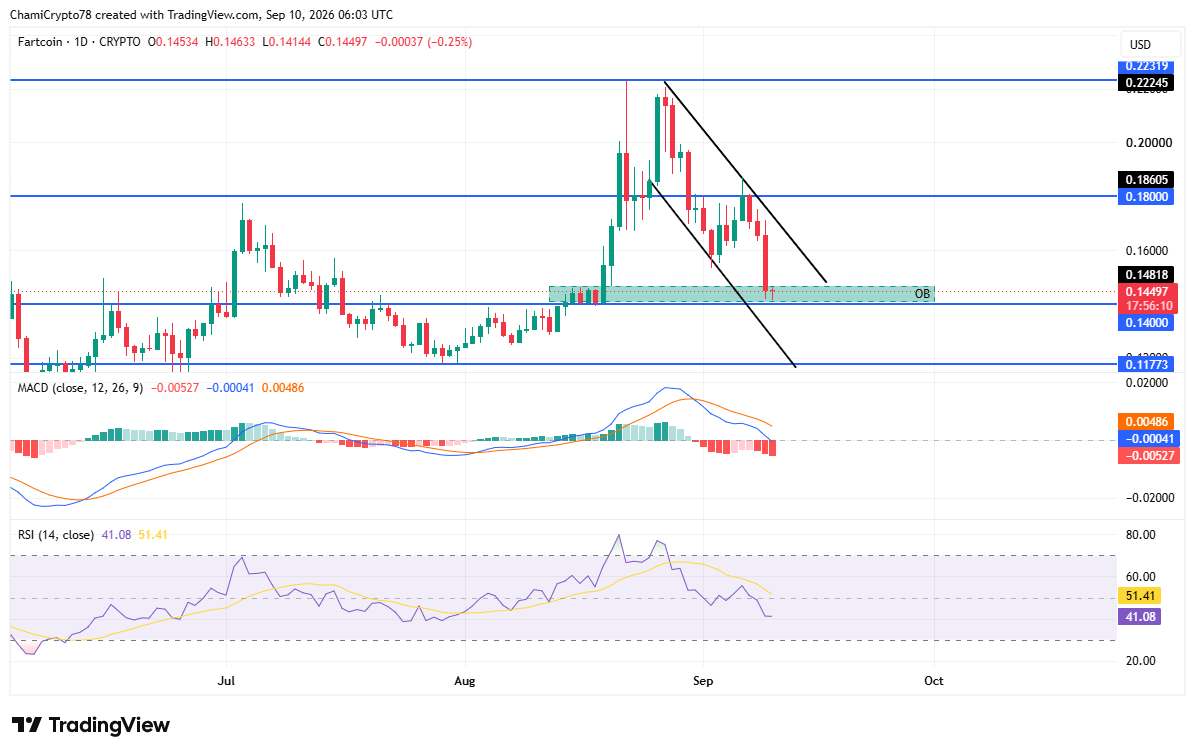
The token’s decline pushed price towards the $0.14497 zone, placing it directly inside the order block above the $0.140 support level.
On the daily timeframe chart, the zone had previously supported a consolidation before August’s price expansion. Hence the defense of the zone is very important for the broader technical structure.
However, $FARTCOIN price remained within a descending channel structure after a pullback from the $0.22319 resistance region.
Additionally, selling strength also persisted as the MACD indicator stayed bearish, with its histogram in the negative territory at -0.00527.
The RSI also declined towards 41.08 and remained below its 51.41 moving average, reflecting a weaker buying pressure.
Notably, the RSI had not hit the oversold conditions, leaving sellers with a room to extend the correction deeper.
However, holding the order block could support a reversal toward the upper boundary of the descending channel. Consequently, a structure breakout could then likely reopen the path to $0.180 resistance zone.
Failure, however, below the $0.140 support would instead weaken the order block and expose $0.11773 lower support.