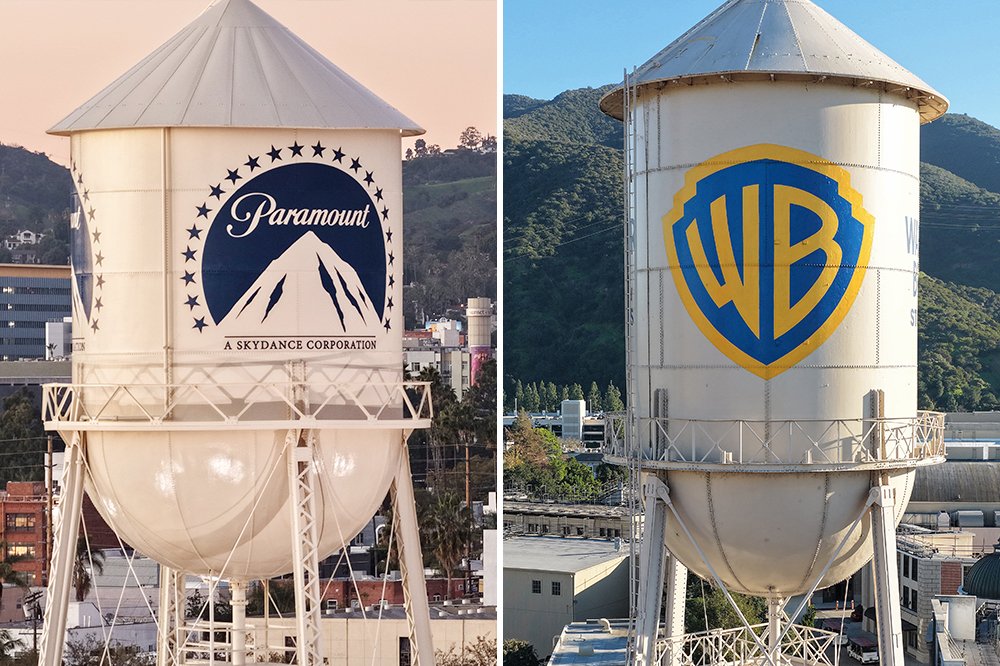
A court will hold a two-day settlement conference in the Paramount-Warner Bros. antitrust case in late October.
The conference is a standard part of civil procedure and does not indicate whether a deal is in the offing. A magistrate judge, Thomas Hixson, has been tasked with overseeing the settlement discussions and to determine whether it will be possible to avoid a trial, which is scheduled for next March in Oakland.
Paramount has been pushing for a deal with California Attorney General Rob Bonta, and has been hoping to get it done before Oct. 1. That’s the date that it will begin paying a $7 million daily “ticking fee” to Warner Bros. shareholders.
Bonta, in turn, has said he is open to a settlement but only if it includes “robust structural remedies” — that is, presumably, spinning off a significant chunk of the combined assets.
California and 11 other states allege that the $111 billion merger will illegally reduce competition in the theatrical and basic cable markets, and Bonta has been looking for terms that would address concerns in both markets.
Bonta’s office was set to have settlement discussions with Paramount on Aug. 24, but Bonta canceled the talks the night before, accusing Paramount of leaking details to the press. Paramount denied it, and has since been somewhat quieter about exerting pressure on Bonta to make a deal.
At a scheduling conference on Friday, the parties were ordered to submit dates by next Tuesday that will work for in-person discussions at the end of October.
A settlement could come through the court-supervised process or outside of it. So setting the court settlement conference for late October does not foreclose the possibility of an earlier deal.
Paramount has entered into a stipulation agreeing not to close the transaction until after the trial, which is set for March 2. However, the company subsequently asked a court to require the plaintiffs to put up a $1.88 billion bond to cover the costs of a delay in case the deal is approved.
A hearing on that request is set for Sept. 24. The states have argued that Paramount is seeking to renege the agreement it made to hold off on closing with no bond.
India’s Maharashtra state has begun preparing policies to tokenize up to 50% of selected electricity transmission assets to finance new power lines and solar energy storage facilities.
Maharashtra considers tokens tied to power revenue
Praveen Pardeshi, chief economic adviser to Maharashtra Chief Minister Devendra Fadnavis and CEO of the Maharashtra Institution for Transformation, outlined the plan at The Box Launch, an invitation-only event held at the World Trade Center in Mumbai.
Real estate tokenization company RealX and MST Blockchain hosted the event, where Pardeshi described how Maharashtra could use digital tokens to raise money against revenue-producing state assets without selling the assets outright.
Under one possible structure, the state could tokenize 40% to 50% of an electricity transmission line. Investors who purchase the tokens would then receive a share of the income earned by Maharashtra State Electricity Transmission Company, commonly known as Maharashtra Transco.
Pardeshi said Maharashtra could direct the capital raised through token sales toward additional transmission lines. Funding could also support storage centers designed to hold solar power until electricity demand rises.
Rather than transferring full control of the infrastructure to private owners, the proposed model would allow investors to take part in the income generated by a defined portion of a public asset. Pardeshi described tokenization as a financing tool that could open public infrastructure development to more citizens.
Detailed terms have not been disclosed, including which transmission assets could enter the program, how token holders would receive revenue, who could invest, or which blockchain network would record ownership. The state has also not announced the size or timing of a possible token sale.
Limited grid capacity leaves solar power unused
Maharashtra’s interest in new financing stems partly from a mismatch between its solar power output and transmission capacity, according to Pardeshi.
The state produces more solar electricity than it can use during certain periods, yet its grid cannot always move the power to areas where demand exists. Without enough transmission lines and storage, low-cost electricity generated during surplus hours may not be available when consumption reaches its daily peak.
Pardeshi said electricity can be traded for as little as two paise per unit on the power exchange when supply exceeds demand. During peak hours, however, distribution companies may have to purchase power at rates ranging from 16 rupees to 18 rupees per unit.
Energy storage facilities could hold part of the daytime solar surplus and release it later, while new lines could carry electricity from generation sites to consumption centers. Maharashtra plans to use proceeds from any infrastructure tokenization program for both types of projects, based on the model presented at the event.
Token holders would rely on the revenue rights and legal protections attached to each asset rather than owning the entire physical transmission line. The final structure would therefore need to define how income is calculated, distributed, and recorded, as well as what rights investors would have if revenue falls below expectations.
Liquidity would present another consideration for any tradable version of the tokens. As crypto.news reported in September, the value of tokenized real-world assets had reached $34.6 billion, but only $3.79 billion was being used within protocols, leaving about 89% of the issued value inactive.
Falcon Finance chief RWA officer Artem Tolkachev said in the report that low utilization should be assessed against an asset’s intended use. A token designed primarily to distribute yield may still serve its purpose without frequent trading, while an asset created for use as collateral would face a different test.
DELTA Act would set rules for property tokenization
Alongside its power infrastructure proposal, Maharashtra is drafting the Maharashtra Digital and Land Token Asset Trading Act, known as the DELTA Act.
If enacted, the proposed law would make Maharashtra the first Indian state to adopt legislation specifically covering blockchain-based property tokenization, according to details presented at The Box Launch. The available information does not provide a legislative timetable or state whether a draft has reached the Maharashtra legislature.
Pardeshi used Mumbai’s Express Towers commercial building to explain how property tokenization could operate. The building was tokenized through a real estate investment trust structure, dividing an interest in the property into smaller investment units.
A June 2026 explainer described real-world asset tokenization as the process of representing rights to an off-chain asset through tokens recorded on a blockchain. Depending on the legal structure, a token may represent ownership, income rights, debt, or another contractual claim.
In Maharashtra’s proposed infrastructure model, the legal connection between a token and Maharashtra Transco’s revenue would be central. Blockchain records alone would not determine whether investors hold enforceable claims; those rights would depend on the state’s legislation, offering documents and contractual framework.
Pardeshi also rejected the idea that tokenizing a portion of a government asset automatically amounts to privatization. Under the model he presented, the state would continue creating and operating public infrastructure while token buyers would participate financially in the asset’s revenue.
U.S. rules show why token rights matter
For American investors, any access to Maharashtra-linked tokens would depend on the eventual offering terms and applicable U.S. securities rules. No plan has been announced to market the proposed tokens in the United States or make them available through U.S.-registered platforms.
Recent disputes involving stock tokens show why the legal rights attached to a digital asset matter. Robinhood’s conflict with AMC Entertainment raised questions over third-party tokens linked to publicly traded shares, including whether buyers receive the same rights as shareholders in the underlying company.
Robinhood’s tokenized stock products cited in the September report were offered through an offshore unit and were unavailable to U.S. users. AMC CEO Adam Aron objected to an AMC-linked product created without the company’s approval, while Robinhood said the tokens followed the value of the underlying shares through a custodial structure.
Maharashtra’s proposal differs in form because the state is considering a direct financing arrangement tied to public infrastructure revenue. Pardeshi’s presentation indicates that Maharashtra would establish the model through state policy and the proposed DELTA Act, though the final investor protections, eligibility requirements, trading rules and revenue-distribution process remain subject to the legislation and any later offering documents.
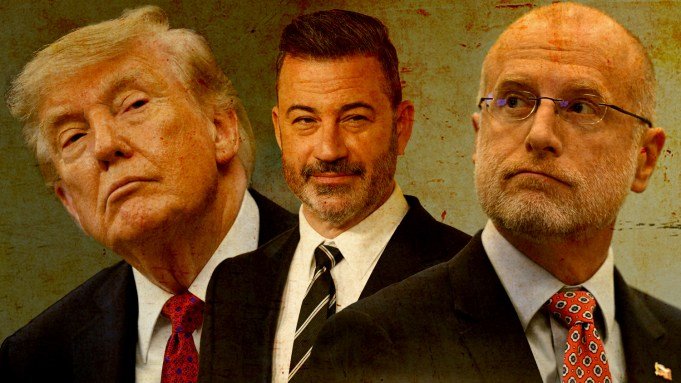
In the latest twist in the Jimmy Kimmel–James Talarico interview drama, the White House is now accusing the ABC late-night host and his network of spinning a fake tale of federal strong-arming.
Put another way, Team Trump insists there was never pressure put on Kimmel and ABC from the Trump administration to scuttle an interview with the poll-topping Texas Democrat and Senate hopeful.
“Jimmy Kimmel is play-acting — as he often does — to create a false narrative about this administration’s policies,” Assistant White House Press Secretary Davis Ingle said Thursday.
“Chairman Carr has not threatened him regarding interviewing James Talarico, or any other candidate.,” Ingle added of Carr, the FCC chairman, just before the second night of Donald Trump‘s GOP midterm convention aka pageant reconvenes. “Any media outlet blindly amplifying Kimmel’s egocentric delusion should insist on proof. Of which they will find none.”
ABC parent company Disney had no comment on the response from the White House when contacted by Deadline. The lack of response is unsurprising given that the company is the midst of an escalating legal and regulatory First Amendment clash with the FCC over station license renewals and charges of political thumbs on the scale.
Wednesday’s Jimmy Kimmel Live! monologue had some distinct déjà vu of what Stephen Colbert went through on CBS last year with Talarico, who is looking to flip the Lone Star state for the Dems for the first time in decades. The L.A.-based Kimmel revealed that an on-air sit-down with Talarico would not air on ABC tonight.
After naming off various political candidates including Trump, who Kimmel has talked to over the years, the Live! host put federal regulatory enforcement under the spotlight. “[The] FCC has threatened me, threatened our show, threatened our network, ABC, our affiliates, our local stations, based on simple, traditional editorial decisions,” Kimmel said. “Guest bookings, it would seem, they don’t like.”
“And so, out of consideration for our local stations, especially our ABC affiliates in Texas who would have to deal with this nonsense, my interview tomorrow with James Talarico will not air on television,” he stated. “It will be posted on YouTube instead.”
James Talarico
Brandon Bell/Getty Images
Interestingly, Talarico, who is in Los Angeles today and Friday for a series of deep-pocket Hollywood fundraisers, was not officially listed as a guest on Kimmel before the host made his announcement. In a separate interview with MS NOW’s Symone Sanders Townsend today on The Weeknight, Talarico called the Kimmel situation the “most dangerous form of cancel culture.” With the knowledge that much of the consumption of late-night shows actually happens online anyway, the candidate went on to say: “I’m still hopeful that we can have this interview on the air. So we’ll see what happens tonight.”
Between Trump in Texas and Talarico in California, we certainly will.
At the same time, with the wounds still fresh from Disney’s sudden sidelining of Kimmel for almost a week a year ago over affiliate fallout from a remark he made about the tragic assassination of conservative activist Charlie Kirk, there is a tendency for some to get lost in the weeds of this. There is also a tendency for some to start shouting about equal-time rules without a read of the fine print.
The equal time rule requires broadcasters that feature political candidates offer comparable airtime to rivals — if it is requested. Daytime and late-night talks shows have long operated under the assumption that they fell under an exemption for news and news interview programming. But in January, Carr issued guidance suggesting that such talk shows may not be free from the rule.
The equal time rule also is often misunderstood. It applies to political candidates in a certain cycle. So, for instance, Ted Cruz’s appearance on The View this week makes no difference because he’s not up for reelection this midterm.
Carr has argued that nothing is preventing late-night or daytime talk shows from featuring a political candidate as a guest. They just have to be prepared to offer time to rivals as well.
As ABC pushes back on Carr’s investigation of The View, the network’s argument is one of selective enforcement as the FCC chairman has not singled out other broadcasters, like conservative talk radio. The network has also pointed to a 2002 letter from the FCC confirming the show’s exemption from the equal time rule. The network also has characterized the equal time rule as unworkable, given that its stations may be on the hook not just for major party candidates but also third-party rivals.
Again, let’s see what happens tonight.
Worth noting that when the now axed Colbert’s interview with Talarico was shifted over to YouTube, it got a huge number of views and the candidate raised more than $2.5 million in just over 24 hours. That might be history worth repeating itself for the Texas Democrat, false narrative or not.
Grayscale Research Head Zach Pandl stated that Zcash ($ZEC) mining offers significantly higher profitability compared to Bitcoin mining under current market conditions, and that mining activity on the Zcash network has increased by more than 2.5 times since the beginning of the year.
The analysis published by Pandl states that Zcash uses a Proof-of-Work (PoW) consensus mechanism similar to Bitcoin, but also offers additional privacy features. It also notes that the strong performance of the $ZEC price has significantly improved the mining economy.
The Bitcoin network is significantly larger than Zcash in terms of scale. According to Grayscale data, the total daily reward distributed to Bitcoin miners is approximately $35 million, while for Zcash it is around $2 million. However, considering the amount of capital and energy used for mining, Zcash is said to offer a higher return.
According to Grayscale’s estimates, Zcash miners earn approximately twice the daily income per piece of mining equipment used compared to Bitcoin miners. In terms of energy consumption, the revenue generated per megawatt-hour (MWh) of Zcash mining is about four times that of Bitcoin. However, it was noted that the equipment used for Bitcoin and Zcash mining is not interchangeable due to the different algorithms employed.
Some industry data suggests that Zcash mining can yield higher returns per MWh than even certain AI and high-performance computing (HPC) cloud services.
Increased profitability in mining has also accelerated the influx of new processing power into the Zcash network. According to standard hashrate measurements, mining activity on the Zcash network increased by more than 2.5 times by 2026.
Grayscale believes this development could create a positive cycle for Zcash. The rise in $ZEC price increases mining activity, while the increased hashrate strengthens the network’s security. A more secure network, in turn, is seen as boosting investor confidence, which in turn can support the $ZEC price.
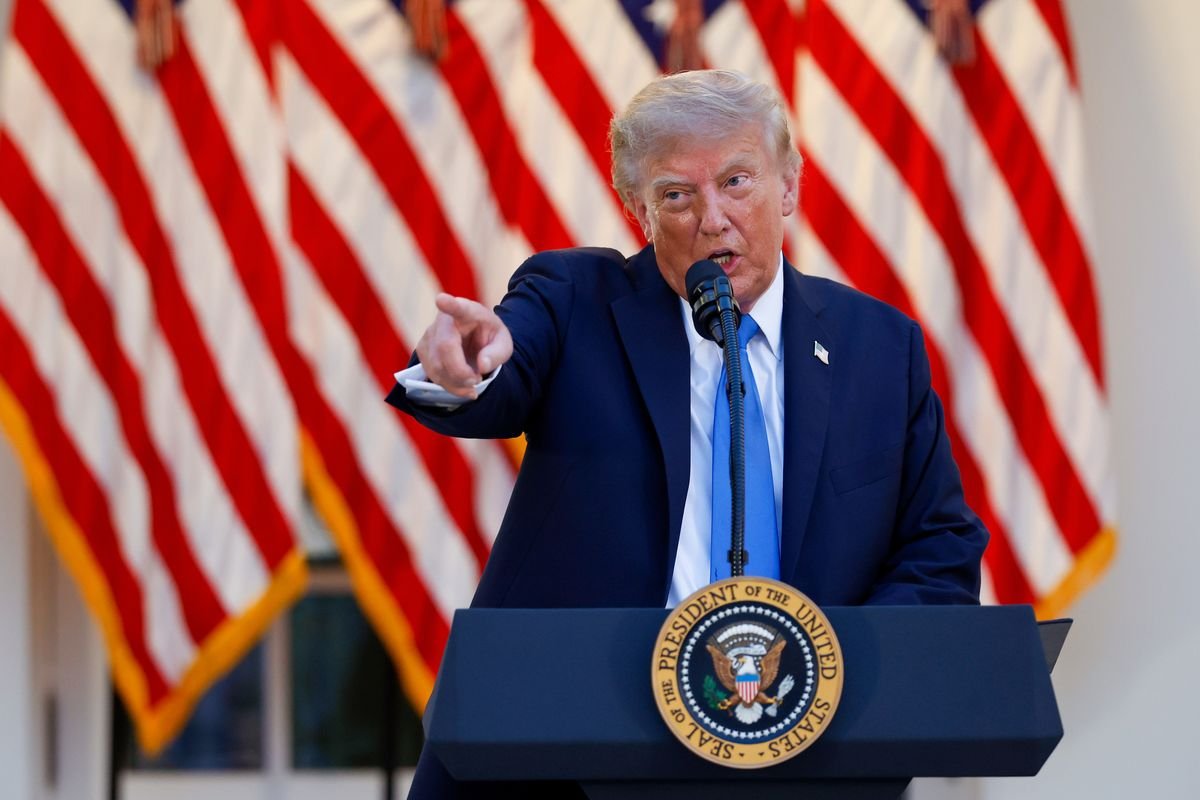
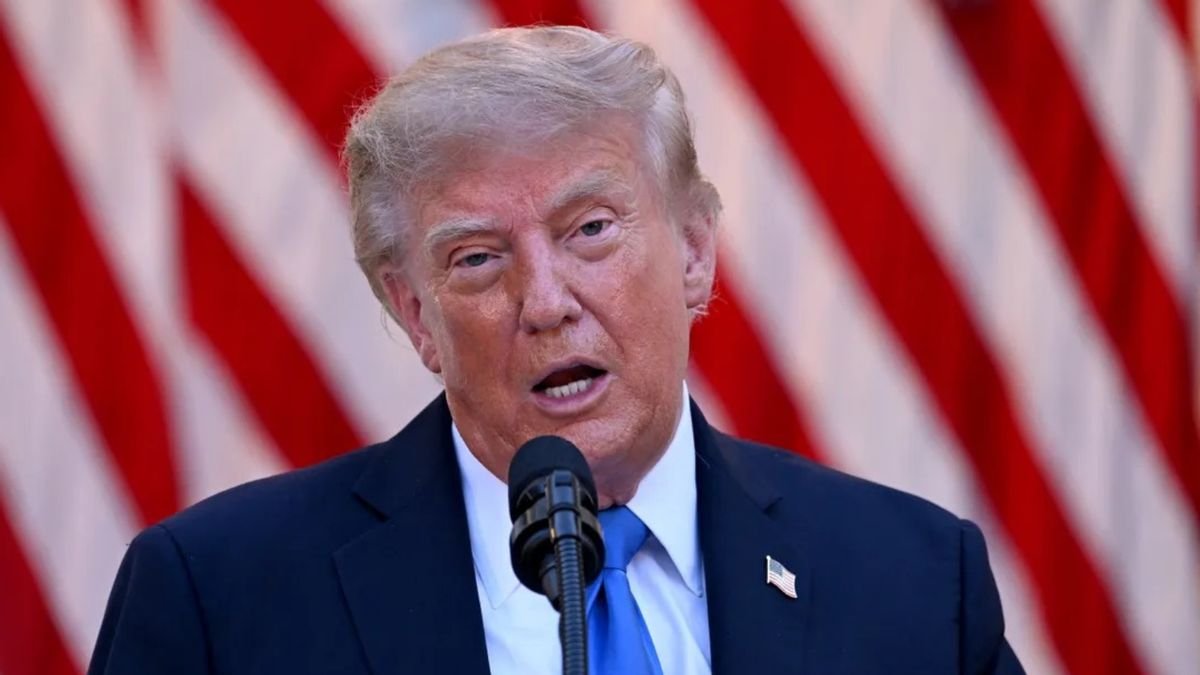
On Sept. 8, 2026, U.S. President Donald Trump said in a speech that he helped save victims of the 1912 sinking of the RMS Titanic.
Rating:
A rumor that U.S. President Donald Trump claimed in a speech he had saved victims of the 1912 sinking of the RMS Titanic is spreading online.
According to socialmediapostssharingthe claim, Trump said he “saved more people than anybody,” told the ship’s captain to “turn left,” and that “nobody knows icebergs better than [him].” This is despite the fact, of course, that Trump was born in 1946, meaning he was not alive in 1912 when the ship famously sank.
Some readers contacted us to ask whether Trump really said this.
We found that Trump made no such assertion, and the rumor is false.
To investigate the rumor’s legitimacy, we first used search engines such as DuckDuckGo, Google and Yahoo. If Trump truly had mentioned assisting rescuers on the Titanic in a speech, journalists with reputable news outlets, such as The Associated Press or Reuters, would have widely reported on it, and those search inquiries would have uncovered such evidence.
That was not the case. We did not find any credible reporting suggesting that Trump had mentioned the Titanic during a recent speech.
Snopes traced the claim as far back as an X post made on the afternoon of Sept. 8, but could not definitively confirm that post as the rumor’s origin. However, it neatly aligned with a speech Trump gave earlier that day at a tribute event for the Sept. 11, 2001, attacks, in which he repeated a long-standing claim that he participated in relief efforts. A transcript of that speech included no mention of the Titanic.
Given the timing of those remarks, we concluded that Trump’s words about 9/11 in that speech served as inspiration for the fictitious rumor, which we suspect was intended as satirical. However, the earliest account we found that shared the claim did not indicate that in its post. Snopes contacted the X user to confirm our suspicions, but had not heard back by publication.
For further reading, we also investigated whether there was any evidence two firefighters helped Trump escape a building in danger of collapsing after 9/11, as he claimed in the same Sept. 8 speech.
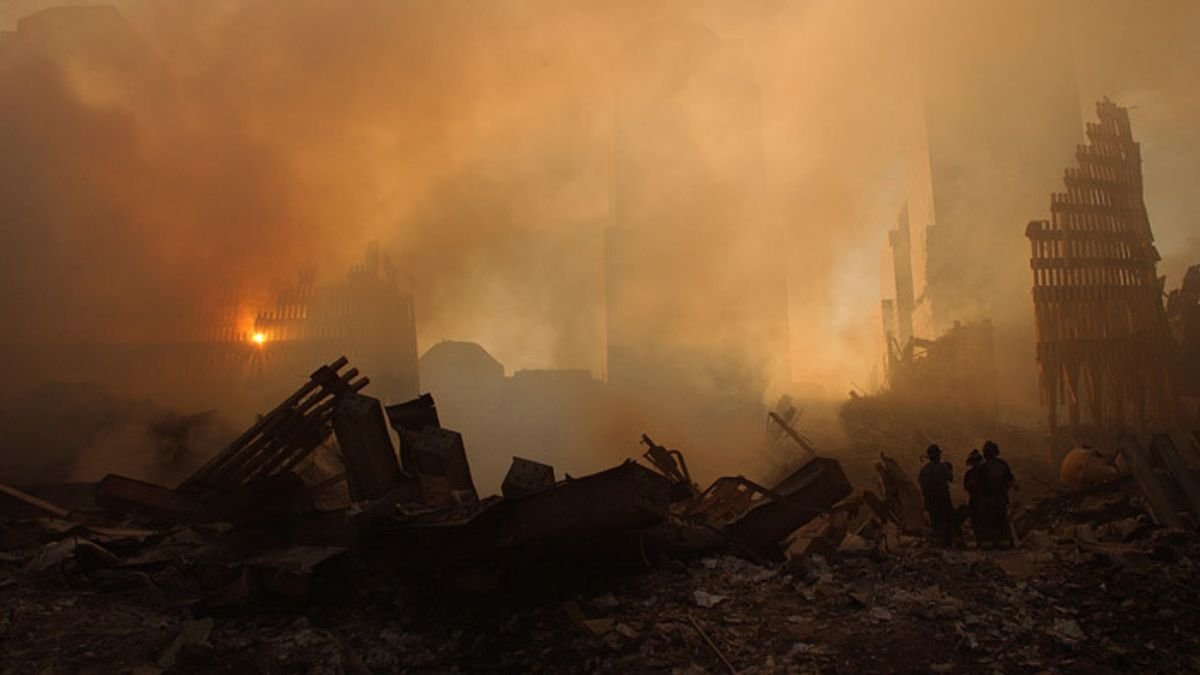
Since the days immediately following the Sept. 11, 2001, attacks, U.S. President Donald Trump, a native of New York City, has made numerous claims about what he saw that day and his involvement in the recovery efforts.
One such claim Trump has repeatedly made is his assertion that he was at Ground Zero within days of 9/11 and that he sent workers to the recovery effort at the site of the World Trade Center.
In September 2026, multiple X users debated the veracity of the claim. For example, one user (archived) wrote, “There’s no proof Trump sent a large group of construction workers to Ground Zero.”
Other popular (archived) posts (archived) said there was no evidence Trump, himself, went to Ground Zero and helped with recovery efforts.
Another X post (archived) alternatively claimed, “President Trump is dropping VIDEO PROOF for every Fake News outlet lying to millions that he was nowhere near Ground Zero after 9/11.”
(X)
Many Snopes readers searched the site to find out if Trump’s claims were true.
A couple of days after the Sept. 11 attacks, Trump told multiple news media outlets that he sent at least 100 workers to Ground Zero to help pull people and bodies out of the rubble, with 125 to 150 more on the way. However, Snopes has never been able to identify any public evidence that crews he hired helped in the immediate recovery of the 9/11 attacks. Since we cannot independently confirm with certainty whether Trump had crews on site somewhere, we are leaving this claim unrated.
Footage of interviews Trump conducted in the immediate days after 9/11 placed him within blocks of Ground Zero. Trump said in those interviews that he visited Ground Zero to encourage the workers he said he brought to assist with clearing rubble at the site. It was not possible to find evidence showing Trump helped clear the pile of debris at Ground Zero, as some posts disputed.
In a phone call with a local news media station immediately after the planes crashed into the Twin Towers, Trump said he watched the towers fall from the window of one of his buildings.
Trump’s September 2026 remarks
On Sept. 8, 2026, in a post on Truth Social (archived), Trump continued to maintain that he was at Ground Zero with construction workers after 9/11, clarifying that it was “obviously not on the same day as the collapse, but shortly thereafter”:
The Failing New York Magazine wrote a story that I wasn’t down at the World Trade Center after the Tragedy of September 11th, because nobody saw me there. Well, I don’t think I would be the first thing on anyone’s mind but, I was there, obviously not on the same day as the collapse, but shortly thereafter, with a large group of Construction Workers.
He then added he “was there as soon as the Law allowed.”
The president was referencing a New York Magazine article disputing his comments about where he was on the day of, and the days following, the attacks.
Trump also made this claim (archived) in a Fox News interview two days prior, in which he added the additional context that he was constructing a new building in New York City. This is the reason, according to Trump at a 9/11 anniversary event on Sept. 8, why he had workers who he could bring to the rubble of the World Trade Center:
I was building a big building in New York and I took the whole crew down there right after this happened and they had no hesitation. Everybody went down with me. We went down as a big group of people. It wasn’t too much we could do, I’ll be honest.
What Trump told the media in 2001
Trump spoke to the media multiple times a few days after 9/11. On Sept. 13, he told a German news channel, that he had more than 100 men down at the site of the World Trade Center and more than 125 on their way. According to the German-speaking reporter, the interview was conducted a few blocks from Ground Zero.
That same day, NBC News interviewed Trump at what appeared to be the same location as his interview with the German news channel. Trump said he had “hundreds of men inside working right now” and was bringing down another 125.
PBS has a recording of another Trump interview from Sept. 13, in which Trump said he had 100 workers helping to dig people and bodies out of the rubble at the World Trade Center, with another 100 to 150 workers “coming.” He told PBS that those workers were “digging out” at the site.
In another interview from that day, Trump told reporters his workers had been at Ground Zero “for about a day and a half.” He said they were men from his company and that a couple had gotten hurt while working at the site. He also said he was just down at Ground Zero and was there to support them.
The evidence
When Snopes first researched this claim in 2018, we spoke to Richard Alles, a retired deputy chief with the New York City Fire Department, who later served as director of 9/11 community affairs for the law firm Barasch McGarry Salzman and Penson. Alles said that in all his time he spent at Ground Zero as a New York City Fire Department battalion chief, starting 20 minutes after the buildings collapsed, he never saw a large group of workers whom Trump had hired at the site assisting with search and rescue efforts. “This is the first I’m hearing of it,” Alles said via phone call. “There would have been no need for that. Between police, fire and the construction crews, we had it all covered.”
Alles added that the construction crews he saw at Ground Zero helping rescue workers were from the trade unions and were not hired by Trump.
John Feal, founder of the 9/11 first responder health advocacy nonprofit the FealGood Foundation, told Snopes at the time that he responded to Ground Zero on Sept. 12, 2001, as a construction demolitions expert and that he didn’t see evidence of hundreds of workers hired by Trump at the site.
The Trump Organization was building in New York City in 2001, according to the Skyscraper Center database on skyscrapers. In fact, it finished a series of residential buildings in the city at Trump Place between 1998 and 2004. He was also building the Trump World Tower residential building near the United Nations Headquarters that year.
However, it was not possible to find verifiable information about how many people, either directly employed by Trump or contracted to work on one of the Trump Organization’s projects, were working on these buildings and in New York City at the time.
A New York Times fact-check from July 2019 referenced Timothy O’Brien, the author of “TrumpNation: The Art of Being the Donald,” who reportedly said the Trump Organization numbered “a little bit over a dozen people” at the time of the attacks, making it impossible to send as many workers to the relief effort as Trump claimed.
Neither the White House nor the Trump Organization responded to Snopes’ requests for corroborating evidence in 2018. This lack of response is consistent with past attempts by Politifact, The Washington Post, The New York Times and Politifact again to reach out to the White House and/or the Trump Organization to corroborate evidence of Trump’s claims.
Snopes contacted the Trump Organization by email to request evidence that its workers or contractors assisted in recovery efforts following the attacks on the World Trade Center. We will update this article if and when we receive a reply.
The claim that Donald Trump was rescued by firefighters in or around the United States Steel Building (also known as One Liberty Plaza) after 9/11 in Manhattan is unproven.
According to some versions of the claim, Trump said firefighters pulled him from the rubble at Ground Zero. That was a misrepresentation of his actual words.
The rumor stems from a speech Trump made on Sept. 8, 2026, while commemorating the 25th anniversary of 9/11. In it, he said the United States Steel Building was “creaking” a lot and “we thought it was going to fall down” when two firefighters “grabbed [him] under the arms” and got him out of there.
Video interviews of Trump place him a few blocks from the World Trade Center in lower Manhattan in the days following the attack. However, there is no concrete evidence that Trump was inside or around One Liberty Plaza and no firefighters have come forward to corroborate his account. We also know that the building itself was not in danger of collapse in the days after 9/11, despite rumors at the time.
We reached out to the White House, which did not respond to questions about Trump’s whereabouts and actions in the wake of 9/11. A spokesperson called the speculation from the media a “disgrace.”
In 2026, the U.S. marked the 25th anniversary of the attacks of Sept. 11, 2001. As U.S. President Donald Trump commemorated the occasion in a speech on Sept. 8, he claimed that he was rescued by firefighters in New York City just after the attack.
Snopes readers asked us to confirm if Trump was indeed rescued by firefighters from the possible collapse of the United States Steel Building, a historic name for the building now known asOne Liberty Plaza.
Other readers claimed Trump said firefighters pulled “him from the rubble at 9/11.”
Posts sharing versions of the rumor appeared on platforms including Facebook and X.
Someposts incorrectly claimed Trump said the firefighters pulled him from the rubble at Ground Zero. That was a misrepresentation or misunderstanding of what Trump actually said.
On Sept. 8, 2026, Trump recounted his purported rescue by two firefighters during a speech (emphasis ours):
I was building a big building in New York, and I took the whole crew down there right after this happened.
And they were — they had no hesitation. Everybody went down with me; we went down as a big group of people. Wasn’t too much we could do, I’ll be honest. It was raw; nobody had seen anything like it ever. We had other buildings — the United States Steel Building was creaking, really creaking, and we thought it was going to fall down. The truth is, it creaked a lot; it creaked, it still creaks, but it never came down. And I’ll never forget two firemen — we thought it was coming down on top of us and two firemen, big, strong guys — and I’m not the smallest guy in the world. They grabbed me under the arms, said got to get out of here, and they literally lifted me up. This is not easy to do, I’m big.
They lifted me up and they started running with me. I said fellas, I can run myself. But they were amazing, but they thought it was coming down; it didn’t come down, US steel.
Trump made several claims in this part of the speech: first, he said he “took the whole crew down” to Ground Zero to help after the attack. Second, he claimed that the “United States Steel Building was creaking” and in danger of collapsing on him. Third, he claimed he was saved by two firefighters.
We investigated Trump’s claim that he went to Ground Zero with a group of workers immediately after the 9/11 attacks in a separate article and found no public records to support it, though we cannot rule out that it happened.
We have no evidence to support Trump’s claim that he was rescued by two firefighters at One Liberty Plaza, though television interviews place him in the vicinity in the aftermath of 9/11. As such, we leave this claim unrated until more information becomes available.
We reached out to the White House to ask about Trump’s location after the attack, the identity of the firefighters and more. The White House did not answer our questions and sent us the following statement from spokesperson Davis Ingle over email:
President Trump spent the morning yesterday paying tribute to the heroic first responders who laid down their lives in service to others in the September 11th attacks and honoring their incredible families. The President was relaying his experience of a city reeling immediately after and in the days and weeks after the horrific attacks – and the fact that the failing legacy media is using this to try to attack him is a disgrace and yet another reason why Americans’ trust in the media is at an all-time low.
Below, we address the claims Trump made about being at One Liberty Plaza and his alleged rescue by firefighters.
Was Trump at One Liberty Plaza?
There is video evidence that Trump was near Ground Zero in the days after the attack, but we found no proof that he was actually inside the nearby One Liberty Plaza. Trump’s remarks are not clear about where he was standing when the building was supposedly creaking.
The White House did not respond to our request for photo or video evidence of Trump’s proximity to One Liberty Plaza specifically.
Trump’s claim that the building was in danger of collapse was incorrect. Right after the attack, many reportedly expressed concerns that the building would collapse, but officials at the Department of Buildings debunked the claims. According to an October 2001 New York Times report, the building remained structurally sound even on Sept. 12:
”There are no structural concerns with this building,” said Ilyse Fink, the director of communications for the city’s Department of Buildings, reinforcing a message she has delivered almost daily since Sept. 12. ”It is not and was not in danger of collapse. The building is structurally sound.”
Did firefighters save Trump from a potential building collapse?
Given that we do not know exactly where Trump was around One Liberty Plaza, and that we know the building was never in danger of collapse, it is not clear which building and which firefighters Trump was referring to in his Sept. 8 speech.
The White House also did not respond to our question about the identity of the firefighters. Without any firefighters corroborating Trump’s account, this claim remains unproven.
In sum, while we know Trump was in the vicinity of Ground Zero in the days after the attack, we do not have evidence that he was in One Liberty Plaza, nor that he was rescued by firefighters. We also know that the building was not in danger of collapse. Trump did not mention other buildings in his remarks.
Snopes has fact-checked many of Trump’sclaims in the aftermath of 9/11.
When Naomi Watts arrived at the 26th Toronto International Film Festival 25 years ago to promote Mulholland Drive, she had every reason to relax in expectation of a warm reception for the film. It had already had its world premiere at Cannes, where Lynch was named best director and THR critic Kirk Honeycutt wrote of Watts and co-star Laura Herring: “About two-thirds of the way through, Lynch turns the story upside down with the two actresses playing either different characters or, perhaps, their real personalities. Their two performances are … remarkable — so multi-faceted and contradictory.”
Still, Watts, who played a young actress new to Los Angeles as well as her mysterious doppelgänger, insisted she wasn’t letting the acclaim go to her head during her visit to Toronto. Speaking with the New York Times, she said, “If there are two words that are most overused in Hollywood, they are ‘Get ready.’ I’ve heard that three times now, first after I made Tank Girl in 1995, then after I did some television stuff, and now with Mulholland Drive. Everybody is coming up saying: ‘Get ready. Your life is about to change.’ … I’m not going to get too excited until it really happens.” She continued, “What this year has done is to put me in a position where I have some freedom of choice and some good projects to choose from. I don’t need to get ready. … I’ve been ready.’’
If her dual role in Mulholland Drive was an early indication of Watts’ range, that talent will be further underscored at this year’s festival, where she’s starring in two very different films. In Ben Shirinian’s period thriller The Housewife, she’ll appear as a very proper New York City woman whose husband may be a Nazi in hiding. And in Cody Fern’s family drama Closing Night, she’ll be seen as an emotionally fragile woman dealing with her movie-star sister, played by Sarah Paulson.
You deserve a spectacular movie night and to be able to wind down by watching your favorite shows and genres. What if you could do that on the go? The Samsung Freestyle+ portable smart projector does just that, letting you turn any space into a home theater. Over at Best Buy, it’s on sale for 21% off, bringing the price down from $1199.99 to $949.99.
You can also get the Shokz OpenDots One earbuds for 30% off, and the JBL Grip portable speaker for $30 less. It’s finally Friday and what better time than now to hop on these deals to enjoy the start of your upcoming weekend?
This smart projector can beam out a screen up to 100 inches, and its AI Optiscreen technology ensures that the image looks straight and clear, no matter what surface it’s projected onto. It can project up to 430 ISO lumens, delivering bold and contrasting colors.. Along with HDR10+ support, whatever show or movie you watch, and whichever game you play will be optimized and enhanced for picture quality. You can install your favorite streaming apps like Netflix and Disney+, as well as stream games via the cloud thanks to Gaming Hub. Wherever you go, you’ll always have a wealth of entertainment options.
More Portable Projector Deals
*Deals are selected by our commerce team
Shokz OpenDots One Earbuds
Shokz OpenDots One Earbuds
33 feet wireless range, IP68 waterproof rating, 10-hour battery life
These open-ear earbuds clip onto your ears while still allowing you to take in your surroundings. They feature a nickel-titanium plate and soft silicone grip so that they stay secure even through intensive physical activity like workouts and running. You won’t even notice that they’re on thanks to their lightweight design, weighing in at 6.5g per earbud. Despite their small size, the audio certainly packs a big punch. They have enhanced Bassphere dual-driver technology that ensures your sound will be clear and pristine. They last for up to 10 hours on a single charge, with an additional 30 with the charging case. And a 10-minute quick charge restores up to two hours of listening time, so they’re always ready when you are.
Our expert Christian de Looper awarded a similar model an “Excellent” rating. In our in-depth review, he said, “The Shokz OpenRun Pro 2 bone conduction headphones are best in class for runners and cyclists who need to remain aware of their surroundings while working out.”
This portable wireless speaker is perfect to take on the go thanks to its design and rugged structure. It’s rated IP68, meaning that it’s waterproof and dustproof, being able to withstand the elements. Plus, it can take an accidental drop up to one meter. With AI Sound Boost, JBL’s signature Pro Sound is amplified and cleaned up for a bigger sound with less distortion. There’s a back panel with ambient lighting that matches your playlist’s mood. So if you’re ever at a party, you’ll be sure to liven up the atmosphere! The Auracast feature also lets you connect multiple speakers for an even bigger sound. And this speaker is made out of post-consumer recycled plastic, so if you’re environmentally conscious, then this speaker is definitely one to keep on your list.
Recommended by Our Editors
Our expert Christian de Looper awarded it a “Good” rating. In our in-depth review, he said, “The JBL Grip portable Bluetooth speaker has a tough, waterproof design, all-day battery life, and is easy to bring with you just about everywhere, but its audio response is merely adequate.”
More Speaker Deals
*Deals are selected by our commerce team
Be sure to also check out our other Best Buy deals and other amazing new tech deals as they come in.
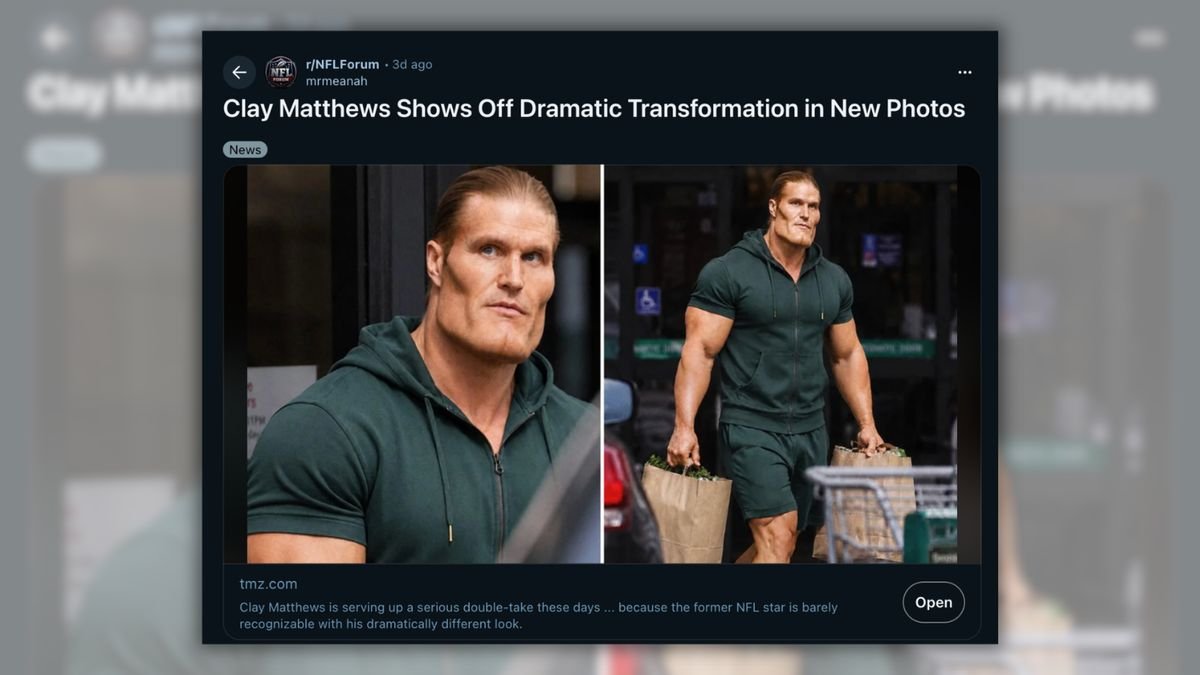
Photos published in early September 2026 authentically show former NFL linebacker Clay Matthews after extensive plastic surgery.
Rating:
Context
It is unclear whether TMZ’s photos of Matthews with an enlarged chin and jawline and bulging muscles are authentic, meaning not generated or edited using artificial intelligence software. However, Matthews later told the outlet his look in the pictures was a result of prosthetics for an ad campaign, not plastic surgery.
In early September 2026, alleged photos circulated online purportedly showing former NFL linebacker Clay Matthews after extensive plastic surgery.
One X user who shared the images, which showed Matthews with an enlarged chin and jawline, bulging arm and leg muscles and loading bags into a car, wrote (archived): “TRENDING: Packers legend Clay Matthews was spotted out grabbing groceries, looking VERY different after getting some work done. An absolutely shocking transformation.”
It is unclear whether TMZ’s images of Matthews are authentic, meaning not generated or edited using artificial intelligence software. Pangram, a highlyregarded artificial intelligence detector, determined that severalimages from TMZ’s gallery were “fully AI.” Such tools are fallible though and should not be entirely relied upon for answers to media’s authenticity.
Regardless, TMZ’s images do not show Matthews after plastic surgery. Therefore, we rate this claim false.
The outlet reported on Sept. 9, 2026 (archived), that Matthews had prosthetics fitted for an ad campaign for a sports betting platform that created the look seen in TMZ’s pictures. That sports betting platform sponsored that TMZ article. It was not possible to independently confirm whether the outlet’s images of Matthews were staged as part of the platform’s advertising campaign. Snopes contacted TMZ to ask about the authenticity of its images and await a reply.
The TMZ article features a video of Matthews saying it took four hours to fit the prosthetics, which another video (archived) posted to the former Green Bay Packers linebacker’s Facebook page shows also included his calves. The sports betting platform Matthews advertised for when he wore the prosthetics also posted a video on X (archived) that shows them being fitted to the former NFL star’s face.
Given that Matthews did wear the prosthetics in question, it is likely that TMZ’s images of him are authentic.
The prosthetics’ cartoonishly enlarged jawline and muscles played on the “looksmaxxing” trend that the Merriam-Webster dictionary defines as “efforts, sometimes extreme, young men take to look more attractive.”
For further reading, Snopes has previously investigated a number of other rumors about the NFL.
Pandell, Lexi. ‘Pangram Has Emerged as the Gold Standard of AI Detection. Should You Trust It?’ Wired, 2 Sept. 2026. www.wired.com, https://www.wired.com/story/pangram-has-emerged-as-the-gold-standard-of-ai-detection/.
Pohl, Makenzie. ‘Pangram Review: Is It the Best AI Detector in 2026?’ Siege Media, 3 Sept. 2026, https://www.siegemedia.com/creation/pangram-review.
Staff, T. M. Z. ‘Clay Matthews Shows Off Dramatic Transformation in New Photos’. TMZ, 8 Sept. 2026, https://www.tmz.com/2026/09/08/clay-matthews-dramatic-new-look-transformation/.
T. M. Z. Staff. ‘Clay Matthews Reveals the Truth Behind His Looksmaxxing Transformation’. TMZ, 9 Sept. 2026, https://www.tmz.com/2026/09/09/clay-matthews-explains-his-new-look/.