Author: rb809rb

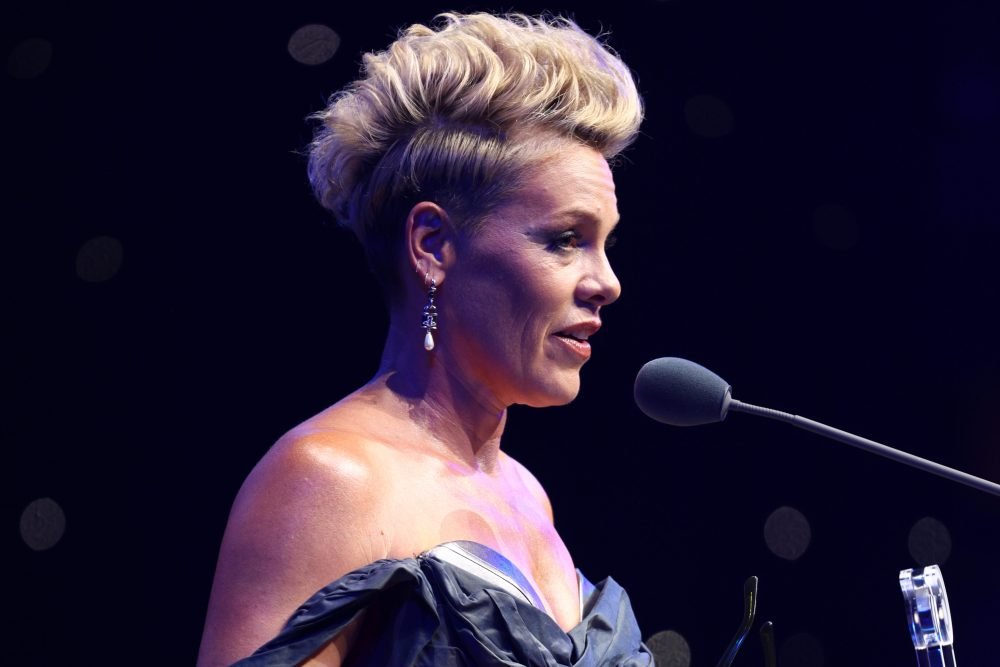
  • Pink Explains Slamming Macklemore’s Pro-Palestine Performances, Acknowledges Heavy Backlash: ‘I’m Standing Up for My Own People, and I Thought I Knew How Lonely That Would Be. It’s Lonelier Than That’

    Pink Explains Slamming Macklemore’s Pro-Palestine Performances, Acknowledges Heavy Backlash: ‘I’m Standing Up for My Own People, and I Thought I Knew How Lonely That Would Be. It’s Lonelier Than That’

    Pink had fallen silent in the face of backlash from many quarters following her reposting a call for Macklemore to be dropped from the Ed Sheeran tour in the wake of his nightly pro-Palestinian songs and statements. Now she has spoken up about the controversy and her part in it in a big way, with a 1,300-word social media post that has her exploring why she repeated the sentiments asking Sheeran to drop Macklemore, why his statements alarmed her as a Jewish woman, and how it has felt “lonely” facing an onslaught of criticism this week.

    The singer noted that she may have been a typical “cheap and fast” social media user when she first reposted the anti-Macklemore meme, rather than speaking up in her own words, which she is now belatedly doing. “A repost isn’t a statement, and a meme isn’t a spine,” she argued, saying that she would “rather be disagreed with for what I actually said than hated for what anybody else wrote, so let me say it.”

    Pink noted how her feelings about Macklemore have evolved, from support for him when “I was in the room at the Grammys in 2014 when Macklemore rapped ‘Same Love’ and 33 couples, gay and straight, got married to it, and I cheered, no questions asked.” Then, she pointed out an antisemitic costume the rapper wore a short time later, for which he subsequently issued a mea culpa. “Macklemore put on a hooked nose, a black beard and a bowl cut, performed in it, and called it a ‘random costume.’ Every Jew I know knew exactly what it was. The same love, it turned out, had a guest list, and we weren’t on it. But he apologized, and I let it go, because that’s what we do. We let it go.” Nonetheless, she suggested, his wearing of the costume informed how his statements might be received in years to come.

    The singer said that “last weekend he stood in front of a stadium full of music-loving families, with violent images from a war on the screens, dedicated a song to the movement of his choice, and then took the mic to tell all of the Jews in the stadium that it wasn’t about them.” She added: “You don’t get to decide that for us.”

    Her current position, as she explained it in her post: “Of course I don’t speak for Israel, or for any government. I never have. What I said in October 2023 is still exactly what I believe: Hamas is a terrorist organization. Palestinians deserve a future that honors their humanity and their aspirations. Protecting innocent life comes first, everywhere, and nobody should ever celebrate the death of a child. Anybody’s child. I’ve spent a decade as a UNICEF ambassador for kids who didn’t choose the country or the war they were born into, and I have grieved every one of them, on both sides of that fence. I didn’t do it from behind a screen; I went to those children and held them. I’m not going to litigate a complex war in an Instagram caption, and I’m not going to recite anybody’s slogan to earn back a follower.”

    The singer declared that her response earlier this week was prompted not by Macklemore saying “Free Palestine,” but by his statements on stage — in response to the backlash he was facing from some quarters — that his statements were aimed at Israel, not all Jews.

    “That’s what prompted my repost. Not ‘Free Palestine,’ and not anyone’s right to say it. I have never asked for another artist to be silenced and I’m not asking now. I don’t need anyone fired, and I don’t need a refund. What I need is to be able to say, as a Jewish mom, ‘that scared me, and it scared people I love,”’without being told our fear is just propaganda, and without being told I’m somehow cool with genocide because I noticed?”

    Pink pointed to some of the causes she has supported over the years that have drawn fire, mostly from the right wing. “I have stood up for other people’s people my whole career, and I know exactly what it costs. And now I’m standing up for my own people, and I thought I knew going in how lonely that would be. And it’s lonelier than that. But I’m doing it anyway.”

    She added, “Something has changed in this country, and I can read it in my own comments. ‘From the river to the sea.’ ‘Zionist,’ spat like it’s a slur, by people who couldn’t tell you the details of what I believe, because I hadn’t told them yet. I wasn’t asked. I was told. I don’t think most of them hate Jews. I think somebody handed them a story where the Jew who won’t apologize for existing must be the villain, and they’ve been putting words in my mouth ever since.”

    On her Instagram post, Pink divided her lengthy statement into two parts, the first half of it coming in the post itself and the second in the comments. But the second half is no longer visible. An hour or so after posting, as pro and con responses accumulated from fans and detractors, she opted to switch off commenting for that post. Unfortunately for her ability to explain herself, cutting off comments meant she also eliminated her own comment that contained the crux of her explanation. But you can read it all below, including the part she inadvertently deleted.

    Before Pink or her social administrator cut off comments on her post, the responses were sharply divided, with mostly hostile or disappointed comments appearing at the top of the replies, followed by many supportive ones echoing her “Shana tova” sign-off further down. Among the negative replies, before all were blocked: “A repost is a statement. Just saying. (esp w 11M followers).” “Said all this to say nothing at all. This was truly not on my bingo card. Doubling down is insane as well.” “I grew up respecting your rebellion against things that were wrong in the world.  But now you seem to have switched to supporting those very same people that cause the pain to children and women. I hope that is how you want to be remembered.”

    And a sampling of the positive replies: “This was beautiful. And not trite. And not prepared by AI or a publicist. This was an authentic monologue and I appreciate so much how strong you are. And I’m proud to have you in my same tribe.” “I wish all other Jewish celebrities were as brave as you. We love you.”

    In his most recent comments addressing the controversy, Macklemore said, “To all of my Jewish brothers and sisters: criticism of Israel, criticism of apartheid, being against genocide in no way is a criticism of you. My message is for peace; love for all human beings to be treated with dignity, respect, and equality…. So I say free Palestine, I say free Lebanon, I say free Cuba, I say free Congo, free Sudan, I say free all people in America living in fear of this terrorist organization, ICE. None of us will be free until we are all free.”

    Pink’s statement, in full:

    I’ve been quiet in my own words for a week, which you know isn’t like me. So here they are.

    Last Sunday I reposted somebody else’s post about Macklemore’s set at Ed Sheeran’s show. It said things in words I didn’t write, and I wouldn’t have chosen all of them. Then the comments came, and I did what I do when I’m hurt, which is post snarky memes and act like I’m fine. That’s on me. A repost isn’t a statement, and a meme isn’t a spine. Social media makes all of us cheap and fast, and we all know it. But I’d rather be disagreed with for what I actually said than hated for what anybody else wrote, so let me say it.

    I was born a Jew. I didn’t pick it, and I’ve never hidden it. And this week a whole lot of people decided what I believe without asking me, without checking a single thing I’ve ever said or done, because a repost and the word “Jew” were apparently enough to fill in the rest. But let me fill it in… myself.

    Of course I don’t speak for Israel, or for any government. I never have. What I said in October 2023 is still exactly what I believe: Hamas is a terrorist organization. Palestinians deserve a future that honors their humanity and their aspirations. Protecting innocent life comes first, everywhere, and nobody should ever celebrate the death of a child. Anybody’s child. I’ve spent a decade as a UNICEF ambassador for kids who didn’t choose the country or the war they were born into, and I have grieved every one of them, on both sides of that fence. I didn’t do it from behind a screen; I went to those children and held them. I’m not going to litigate a complex war in an Instagram caption, and I’m not going to recite anybody’s slogan to earn back a follower.

    Here’s what I was reacting to. I was in the room at the Grammys in 2014 when Macklemore rapped “Same Love” and thirty-three couples, gay and straight, got married to it, and I cheered, no questions asked. Four months later Macklemore put on a hooked nose, a black beard and a bowl cut, performed in it, and called it a “random costume.” Every Jew I know knew exactly what it was. The same love, it turned out, had a guest list, and we weren’t on it. But he apologized, and I let it go, because that’s what we do. We let it go. Then last weekend he stood in front of a stadium full of music-loving families, with violent images from a war on the screens, dedicated a song to the movement of his choice, and then took the mic to tell all of the Jews in the stadium that it wasn’t about them.

    You don’t get to decide that for us.

    That’s what prompted my repost. Not “Free Palestine,” and not anyone’s right to say it. I have never asked for another artist to be silenced and I’m not asking now. I don’t need anyone fired, and I don’t need a refund. What I need is to be able to say, as a Jewish mom, “that scared me, and it scared people I love,” without being told our fear is just propaganda, and without being told I’m somehow cool with genocide because I noticed?

    And please don’t talk to me like I’ve never stood up for my beliefs when it was unpopular. In the middle of the Gulf War in 2006 I put out a song called “Dear Mr. President” and sang it every night on tour while my country was in a war I didn’t support, and I took the hate for it, and I sang it anyway because my sharp criticism was of a government, not this flawed country I love and who my dad fought for. I stood with gay kids before it was fashionable and with trans kids now, when it isn’t, and with their families, and I handed out the books that got banned, and you know I got called every name there is, and I’d do all of it again tomorrow. I have stood up for other people’s people my whole career, and I know exactly what it costs.

    And now I’m standing up for my own people, and I thought I knew going in how lonely that would be. And it’s lonelier than that. But I’m doing it anyway.

    Something has changed in this country, and I can read it in my own comments. “From the river to the sea.” “Zionist,” spat like it’s a slur, by people who couldn’t tell you the details of what I believe, because I hadn’t told them yet. I wasn’t asked. I was told. I don’t think most of them hate Jews. I think somebody handed them a story where the Jew who won’t apologize for existing must be the villain, and they’ve been putting words in my mouth ever since.

    But I’ve been portrayed as the villain before. I can take it. I just won’t take it quietly, and I’m not going to teach my kids to.

    So, to the ones who are furious with me: you don’t have to agree with me. You never did. That’s been our unspoken agreement for twenty-five years, and it still stands, and so do I. You don’t have to agree with one thing Israel’s government does to not want the Jewish family two rows down from you to be scared or targeted at a concert. That’s the only thing I’m asking anybody for. To the ones who are frightened this week, Jewish or Muslim or Palestinian or Israeli or just tired of all of it: I see you. And if anybody wants to really know what I think, just ask me. I’m right here. I’ve never been hard to find. And I’ll keep speaking out, in my own words.

    It’s Friday. For working people who have more to worry about than pop stars and pile-ons, it’s the end of a hard week. It’s also the 25th anniversary of September 11th, and my prayers are with the innocent souls we lost that morning. And at sundown, for Jews, it’s Rosh Hashanah, our New Year.

    Now I’m going to go make dinner for my kids, light the candles, dip some apples in honey, pour a glass of wine and be full of gratitude. That’s my tradition. It also happens to be a Jewish one.

    Shana tova.

  • XRP Pushes Deeper Into Traditional Finance as ETF Demand and Derivatives Access Expand

    XRP Pushes Deeper Into Traditional Finance as ETF Demand and Derivatives Access Expand

    $XRP is becoming increasingly embedded in regulated financial markets, with new developments spanning ETF flows, derivatives infrastructure and institutional ownership. Canadian-listed $XRP ETF options are now explicitly covered by a framework allowing their offer and sale in the United States, while federal rules continue to place $XRP alongside Bitcoin, Ether and Solana for certain exchange-listed investment products.

    The expansion comes as U.S. spot $XRP ETFs show unusually resilient demand. $XRP funds attracted fresh capital on September 8 even as Bitcoin, Ethereum and Solana ETFs recorded outflows, adding to a longer run of institutional accumulation. At the same time, comments from Ripple CTO emeritus David Schwartz have revived discussion over just how large $XRP could eventually become if adoption continues to accelerate.

    $XRP ETF Options Gain a Clearer Route Into the U.S.

    A Canadian Derivatives Clearing Corporation filing has put $XRP alongside some of the largest cryptocurrencies in another corner of regulated finance. The document lists options on the Evolve $XRP ETF and Purpose $XRP ETF among Montréal Exchange contracts covered by CDCC’s Form S-20 registration for offer and sale in the United States.

    The development does not mean that new $XRP options have launched directly on a U.S. exchange. The contracts remain listed in Canada and are cleared through CDCC. Instead, the filing establishes a regulated cross-border structure through which eligible U.S. market participants can access options tied to Canadian $XRP ETFs.

    That distinction matters because $XRP is gradually gaining exposure across several layers of traditional market infrastructure rather than relying primarily on offshore crypto derivatives. Earlier 2026 SEC exhibits had already included options on the Evolve and Purpose $XRP ETFs, so the latest filing reinforces an existing regulatory pathway rather than representing an entirely new approval.

    $XRP is also being grouped with larger digital assets elsewhere in federal market rules. A separate Federal Register filing identifies Bitcoin, Ether, Solana and $XRP as assets currently qualifying under generic listing standards for commodity-based trust shares.

    The classification should not be interpreted as a blanket determination of $XRP’s status in every regulatory context. For investment-product infrastructure, however, it shows $XRP increasingly appearing beside BTC, ETH and SOL when exchanges and regulators establish rules for listed crypto products.

    Institutional $XRP Trading Is Moving Beyond Spot ETFs

    The cross-border options development adds to an institutional derivatives market that has already expanded rapidly. CME $XRP futures and options generated approximately $13 billion in notional volume during the first quarter of 2026, while cumulative $XRP futures volume later surpassed $62 billion.

    Those figures point to a broader shift in how professional investors can gain $XRP exposure. Spot ETFs provide direct investment access, while futures and options give institutions tools to hedge positions, express directional views and manage risk without relying exclusively on crypto-native exchanges.

    This infrastructure can also make $XRP more practical for larger portfolios. Institutional investors typically require liquid derivatives and regulated custody or investment vehicles before committing significant capital to an asset. $XRP’s growing presence across ETFs, futures and options therefore matters even when individual product launches do not immediately affect its price.

    For readers following the latest $XRP news, the trend has become increasingly consistent: $XRP is gaining more of the market infrastructure that previously developed around Bitcoin and Ethereum.

    $XRP ETFs Defy Broader Crypto Fund Outflows

    Recent ETF flows provide another indication that investor interest is holding up. U.S. spot $XRP ETFs recorded $1.55 million in net inflows on September 8, while the other major crypto ETF categories experienced withdrawals.

    $XRP ETFs stood apart from the broader crypto market with positive net inflows on September 8. Source: SoSoValue

    Bitcoin ETFs recorded approximately $46.65 million in outflows, Ethereum funds lost around $24.29 million and Solana products posted roughly $668,000 in withdrawals. The $1.55 million entering $XRP products was relatively small by itself, but the direction of flows separated $XRP from the rest of the major crypto ETF market during the session.

    That divergence follows a stronger accumulation trend. $XRP ETFs previously recorded an 11-session inflow streak that brought approximately $170 million into the products, while their strongest week of 2026 generated $110.49 million in new capital. Cumulative inflows had reached roughly $1.66 billion to $1.68 billion around the beginning of September.

    Institutional ownership has also become more visible. Goldman Sachs emerged as the largest disclosed $XRP ETF holder at approximately $87.4 million, while firms including Jane Street and Millennium Management have also appeared among significant reported holders.

    One trading session does not establish a permanent rotation from Bitcoin or Ethereum into $XRP, particularly because the Bitcoin ETF market remains substantially larger. The persistence of $XRP inflows is nevertheless becoming more notable because demand has continued through periods when broader crypto investment products have struggled to attract capital.

    $XRP Price Strengthens Alongside ETF Demand

    The latest positive ETF flows have also coincided with an improvement in $XRP’s market price. $XRP traded around $1.43 on September 9, gaining approximately 2.7% over 24 hours and 7.4% over seven days, while daily trading volume stood near $2.87 billion.

    That relationship has not always been straightforward. Earlier periods of record $XRP ETF inflows occurred alongside declining prices and pressure from rising Treasury yields, showing that institutional fund demand alone is not sufficient to determine short-term market direction.

    The latest period presents a more supportive combination. ETF flows have returned to positive territory while $XRP itself has moved higher, potentially giving investors a clearer indication that institutional buying and spot-market demand are working in the same direction.

    Ownership concentration remains another factor worth monitoring as institutional participation increases. Data on the biggest $XRP holders provides additional context on how the token’s supply is distributed across major addresses as the investor base evolves.

    David Schwartz Revives the $XRP-Bitcoin Flippening Debate

    The growth of regulated $XRP products has arrived at the same time that David Schwartz has revived one of the cryptocurrency’s most ambitious long-term debates. The Ripple CTO emeritus recently said he believes $XRP could eventually overtake Bitcoin by market capitalization.

    Schwartz’s argument was not based on Bitcoin collapsing. Instead, he suggested that the overall digital asset market could become much larger, allowing both cryptocurrencies to appreciate while $XRP grows faster because of the $XRP Ledger’s functionality and speed.

    The current numbers show how ambitious that scenario remains. Bitcoin’s market capitalization stands at approximately $1.58 trillion compared with roughly $88.9 billion for $XRP, making Bitcoin about 17.7 times larger.

    With approximately 62.74 billion $XRP circulating, matching Bitcoin’s current market capitalization would require a price near $25.10 per $XRP, assuming Bitcoin’s valuation remained unchanged. That calculation is not a price target. Any increase in Bitcoin’s market capitalization would raise the $XRP price required to overtake it.

    The gap also looks considerably wider than it did during $XRP’s previous peak relative to Bitcoin. On January 1, 2018, $XRP was the world’s second-largest cryptocurrency, with a market capitalization of approximately $92.6 billion compared with Bitcoin’s $229.1 billion. $XRP was worth roughly 40% as much as Bitcoin at that point, versus only about 5.6% today.

    $XRP’s Institutional Case Is Getting Stronger, but the Gap With Bitcoin Remains Huge

    The flippening discussion remains highly speculative, but the institutional developments behind it are more concrete. $XRP now has growing spot ETF demand, an expanding CME derivatives market and Canadian ETF options operating within a regulated cross-border framework.

    The key question is whether those developments translate into sustained capital inflows rather than simply more ways to trade the asset. $XRP’s recent ability to attract ETF money while competing crypto funds experience withdrawals provides an encouraging signal, but closing the enormous valuation gap with Bitcoin would require adoption on a dramatically larger scale.

    For now, the more significant development is not whether $XRP can overtake Bitcoin. It is that $XRP continues to move closer to the regulated market structure already surrounding the industry’s largest digital assets, giving both institutional and traditional investors more ways to gain exposure than at any earlier point in its history.

  • Ocean Way Festival Featuring Killers, Olivia Dean and Jack White Is Canceled, as Santa Monica Blames Beach Damage From Hurricane Forces

    Ocean Way Festival Featuring Killers, Olivia Dean and Jack White Is Canceled, as Santa Monica Blames Beach Damage From Hurricane Forces

    Ocean Way is going away, at least for a year. Goldenvoice‘s inaugural Ocean Way Festival, which was scheduled to take place on the beach in Santa Monica Sept. 26-27, has been called off, with city officials saying the culprit is erosion along the shore caused by recent hurricane-level forces off the coast.

    “Due to the impacts of Hurricane Marie, the City of Santa Monica has canceled the inaugural Ocean Way festival,” organizers of the festival said in a statement emailed to ticketholders through AXS. “Storm surf and runoff has caused significant beach erosion and the festival can no longer be safely held as planned. Plans are already underway to bring the festival back to Santa Monica in 2027.”

    The statement sent to ticketholders further said that refunds for passes, which had been sold in a range from $249 to $2,250, will be processed automatically in the next 5-7 business days.

    The two-day festival was hoping to draw up to 45,000 to the beach each day. Single-day passes were being sold along with two-day entry, and the lineup seemed designed to possibly draw a somewhat different audience each day, with rock acts like the Killers, Jack White and Sublime topping the bill on Saturday and a more eclectic lineup headed by Olivia Dean, Khruangbin and Durand Jones & the Indications on Sunday.

    In a statement given to the Los Angeles Times, Santa Monica City Council member Dan Hall said, ““I am deeply saddened that severe weather and beach conditions have forced the City and Goldenvoice to make this difficult decision. However, the safety of festival-goers, our residents and the Pier must remain our priority… With Hurricane Marie also causing sinkholes in Malibu and triggering home evacuations in Long Beach due to rising surf, the rapid erosion of the beach near the Sandbox event space over the past few days is deeply concerning. The city is working rapidly to keep the Pico storm drain and shoreline repaired and ready for upcoming weather…. While we are all disappointed, I remain optimistic about bringing Ocean Way back next summer.”

    First-time beach-based festivals seem to be having a hard time of it in SoCal this year, with the inaugural LA Jazz Festival — which had a key stage set for Dockweiler Beach — having been canceled at the last minute, although the reasons given for that one had to do with finances and prep. At least anyone who wants to hear music with an ocean breeze still has an option for Eddie Vedder’s annual Ohana Fest. It takes place alongside the beach in Orange County’s Dana Point Sept. 25-27 — and, obviously, it no longer has Ocean Way as competition the same weekend.

    Variety published an interview in July with Goldenvoice producer Nic Adler, son of the legendary Lou Adler, about the desire to bring music back in a big way to Santa Monica, which has hosted few big rock or pop shows since the historic Santa Monica Civic Auditorium fell into disuse.

    Said Adler then, “Really where it stems from is that Santa Monica is kind of having its own revitalization moment or realignment plan, turning toward events, culture, arts and music to get people to come to the city. Santa Monica is an interesting place because it’s almost like an underdog city a little bit, in our backyard. We all know Santa Monica’s there, but I think they want to make sure that those memories stick.”

    He noted, “This was a little bit like, ‘OK, we’re in Santa Monica, we’re on the beach, the sun’s setting — of course I wanna hear Khruangbin.’ The lineup took some inspiration from the location, and I’d probably say that’s not an everyday for Goldenvoice.”

  • Ethereum Targets October 6 for Glamsterdam Sepolia Fork

    Ethereum Targets October 6 for Glamsterdam Sepolia Fork

    Ethereum developers have tentatively scheduled the Glamsterdam upgrade for Ethereum’s Sepolia testnet on October 6 at 13:53 UTC, even as private devnet testing continues to uncover bugs.

    The date gives developers a path toward a December mainnet release, but it remains conditional on whether the next testing phase can produce a stable network.

    Glamsterdam Date Depends on Devnet Testing

    Protocol specialist Christine D. Kim noted in her latest newsletter that developers agreed to the October 6 Sepolia date while acknowledging several caveats, the biggest of which is that Glamsterdam has yet to run successfully on a stable private devnet.

    Glamsterdam-Devnet-9 launched on September 1 with 1,000 validator nodes, making it the largest devnet of its kind by node count so far. But the network is not finalizing, meaning too few validators are correctly proposing and attesting to the chain head.

    Ethereum Foundation (EF) developer operations engineer Stefan Starflinger said the size of the network exposed problems, noting it “showed that there are still quite a few edge cases and issues” left to address. He added that the previous devnet, Devnet-8, had an even more serious flaw, a bug that could freeze the entire network if a validator proposed a block sharing its parent’s hash.

    Separately, EF researcher Maria Silva flagged a bug tied to EIP-8037, the State Creation Gas Cost Increase, which will require every execution-layer client to update its code.

    Because of those fixes, another devnet is coming, and as of this week, the one to watch is Devnet-11, not 10 as originally planned. Parithosh Jayanti, the Ethereum Foundation developer operations engineer who chaired the call, said that if the new devnet fails again, “we’d have to take it case by case” on whether October 6 still works.

    Hoodi and Mainnet Dates Remain Uncertain

    Developers have also held off on setting a date for Hoodi, Ethereum’s second public testnet in the rollout, with Enrico del Fante of Consensys arguing that waiting a few more weeks before committing to Hoodi would be sensible given the problems found on Devnet-9.

    The uncertainty extends to the main network. Developers still hope that the upgrade can reach Ethereum mainnet before the end of 2026, but the Sepolia date does not make the outcome more certain, especially since client implementations are not yet considered ready for mainnet.

    As CryptoPotato reported previously, Ethereum’s broader roadmap has penciled in Glamsterdam’s mainnet activation for December 2026, ahead of a separate push toward quantum-resistant infrastructure targeted for 2029.

    That plan, tied to the Hegotá upgrade that follows Glamsterdam, points to Ethereum shipping major changes roughly twice a year, a pace it kept last December when Fusaka activated on schedule.

  • Somber tributes as US marks the 25th anniversary of September 11 attacks

    Somber tributes as US marks the 25th anniversary of September 11 attacks

    Families are remembering the loved ones they lost in the September 11, 2001 attacks on the US. Events across the country are marking the 25th anniversary of the attacks that killed nearly 3,000 people.

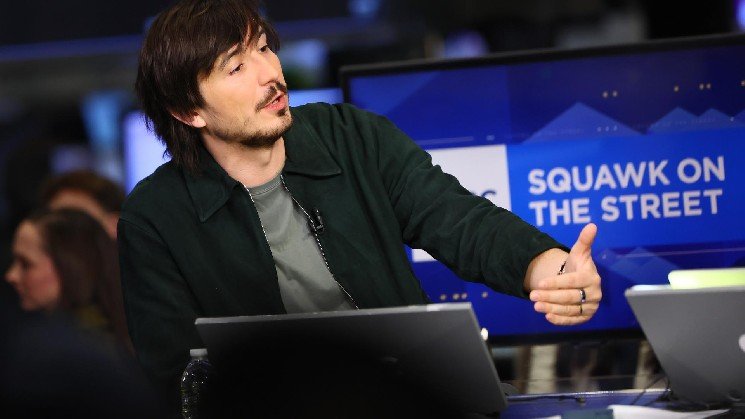
  • Robinhood CEO says companies shouldn’t get veto over stock tokens in AMC feud

    Robinhood CEO says companies shouldn’t get veto over stock tokens in AMC feud

    “If it creates a separate financial instrument that holds or references freely transferable shares without changing the issuer’s rights, obligations, or authoritative shareholder record, issuer consent should not be required,” Tenev wrote.

    That distinction is where AMC’s Aron and Tenev disagree.

    Aron has called Robinhood’s product a “fictitious synthetic equity market” and argued that it could weaken AMC’s ability to raise capital, confuse investors about their rights and create a market bearing AMC’s name without the company’s consent.

    Tenev, on the other hand, argued existing markets already allow similar arrangements. Options, unsponsored American depositary receipts and structured products can reference public shares without giving the underlying company control over the product.

    He drew a line at products that alter the shares themselves. If a token changes shareholder rights, replaces a company’s official stock ledger or creates new obligations for the issuer or its transfer agent, Tenev said the company should have a say.

    “If a product purports to change the rights attached to the underlying shares, replaces the company’s official stock ledger, or imposes new obligations on the company or its transfer agent, the issuer should be involved,” he wrote.

    The disagreement matters beyond AMC and Robinhood. Firms are testing several ways to put stock exposure on blockchains, from synthetic products to conventional shares held by custodians and issuer-backed shares recorded directly onchain.

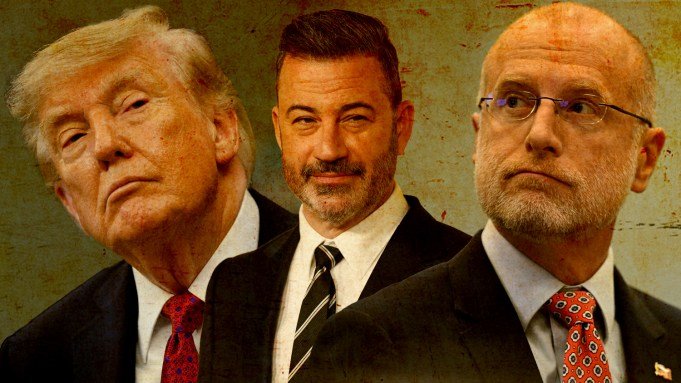
  • Jimmy Kimmel “Play-Acting” Over James Talarico Interview & FCC Threats, White House Claims

    Jimmy Kimmel “Play-Acting” Over James Talarico Interview & FCC Threats, White House Claims

    In the latest twist in the Jimmy Kimmel–James Talarico interview drama, the White House is now accusing the ABC late-night host and his network of spinning a fake tale of federal strong-arming.

    Put another way, Team Trump insists there was never pressure put on Kimmel and ABC from the Trump administration to scuttle an interview with the poll-topping Texas Democrat and Senate hopeful.

    “Jimmy Kimmel is play-acting — as he often does — to create a false narrative about this administration’s policies,” Assistant White House Press Secretary Davis Ingle said Thursday.

    “Chairman Carr has not threatened him regarding interviewing James Talarico, or any other candidate.,” Ingle added of Carr, the FCC chairman, just before the second night of Donald Trump‘s GOP midterm convention aka pageant reconvenes. “Any media outlet blindly amplifying Kimmel’s egocentric delusion should insist on proof. Of which they will find none.”

    ABC parent company Disney had no comment on the response from the White House when contacted by Deadline. The lack of response is unsurprising given that the company is the midst of an escalating legal and regulatory First Amendment clash with the FCC over station license renewals and charges of political thumbs on the scale.

    Jimmy Kimmel

    ‘Jimmy Kimmel Live!‘

    ABC/YouTube

    Wednesday’s Jimmy Kimmel Live! monologue had some distinct déjà vu of what Stephen Colbert went through on CBS last year with Talarico, who is looking to flip the Lone Star state for the Dems for the first time in decades. The L.A.-based Kimmel revealed that an on-air sit-down with Talarico would not air on ABC tonight.

    After naming off various political candidates including Trump, who Kimmel has talked to over the years, the Live! host put federal regulatory enforcement under the spotlight. “[The] FCC has threatened me, threatened our show, threatened our network, ABC, our affiliates, our local stations, based on simple, traditional editorial decisions,” Kimmel said. “Guest bookings, it would seem, they don’t like.”

    “And so, out of consideration for our local stations, especially our ABC affiliates in Texas who would have to deal with this nonsense, my interview tomorrow with James Talarico will not air on television,” he stated. “It will be posted on YouTube instead.”

    James Talarico

    James Talarico

    Brandon Bell/Getty Images

    Interestingly, Talarico, who is in Los Angeles today and Friday for a series of deep-pocket Hollywood fundraisers, was not officially listed as a guest on Kimmel before the host made his announcement. In a separate interview with MS NOW’s Symone Sanders Townsend today on The Weeknight, Talarico called the Kimmel situation the “most dangerous form of cancel culture.” With the knowledge that much of the consumption of late-night shows actually happens online anyway, the candidate went on to say: “I’m still hopeful that we can have this interview on the air. So we’ll see what happens tonight.”

    Between Trump in Texas and Talarico in California, we certainly will.

    At the same time, with the wounds still fresh from Disney’s sudden sidelining of Kimmel for almost a week a year ago over affiliate fallout from a remark he made about the tragic assassination of conservative activist Charlie Kirk, there is a tendency for some to get lost in the weeds of this. There is also a tendency for some to start shouting about equal-time rules without a read of the fine print.

    The equal time rule requires broadcasters that feature political candidates offer comparable airtime to rivals — if it is requested. Daytime and late-night talks shows have long operated under the assumption that they fell under an exemption for news and news interview programming. But in January, Carr issued guidance suggesting that such talk shows may not be free from the rule.

    The equal time rule also is often misunderstood. It applies to political candidates in a certain cycle. So, for instance, Ted Cruz’s appearance on The View this week makes no difference because he’s not up for reelection this midterm.

    Carr has argued that nothing is preventing late-night or daytime talk shows from featuring a political candidate as a guest. They just have to be prepared to offer time to rivals as well.

    As ABC pushes back on Carr’s investigation of The View, the network’s argument is one of selective enforcement as the FCC chairman has not singled out other broadcasters, like conservative talk radio. The network has also pointed to a 2002 letter from the FCC confirming the show’s exemption from the equal time rule. The network also has characterized the equal time rule as unworkable, given that its stations may be on the hook not just for major party candidates but also third-party rivals.

    Again, let’s see what happens tonight.

    Worth noting that when the now axed Colbert’s interview with Talarico was shifted over to YouTube, it got a huge number of views and the candidate raised more than $2.5 million in just over 24 hours. That might be history worth repeating itself for the Texas Democrat, false narrative or not.

  • After Taylor Frankie Paul’s ‘Bachelorette’ Scandal, ‘The Secret Lives of Mormon Wives’ Just Isn’t Fun Anymore

    After Taylor Frankie Paul’s ‘Bachelorette’ Scandal, ‘The Secret Lives of Mormon Wives’ Just Isn’t Fun Anymore

    SPOILER WARNING: The following story contains plot details from Season 5 of “The Secret Lives of Mormon Wives.”

    From its very first moments, “The Secret Lives of Mormon Wives” has been inextricable from the toxic entanglement between #MomTok influencer Taylor Frankie Paul and her on-again, off-again boyfriend Dakota Mortensen. Two years ago, the show began with a violent encounter between the pair as captured on police officers’ body cameras. (The incident resulted in Paul’s arrest and subsequent guilty plea for aggravated assault.) Then, earlier this year, a planned season of “The Bachelorette” starring Paul — a bit of crossover corporate synergy between ABC and “Mormon Wives” streamer Hulu, both owned by Disney — was canceled after more graphic, harrowing footage of the same fight was leaked to TMZ.

    Paul’s new venture may have been scuttled, but her flagship star vehicle remains intact. This week, “Mormon Wives” returned for an abridged Season 5, almost entirely filmed before production went on hiatus in March amid Paul’s public relations furor. The new information revealed in the five episodes is minimal. We learn the eventual winner of the final rose on the unaired “Bachelorette” season, making it even less likely the competition will ever see the light of day. We also learn how irrelevant the victor’s identity is, because Paul slept with Mortensen again the very night she returned from filming. Paul and Mortensen, by her own admission, have “an addiction” to one another and their toxic relationship. Most pairings formed during the “Bachelor” franchise don’t last; Paul’s was doomed before it even began.

    But watching Season 5, something else becomes clear: “Mormon Wives” itself has a seemingly unbreakable dependence on the Paul-Mortensen saga, a tragedy that’s at once the show’s driving force and its greatest liability. What has already incurred a quite literal cost to ABC is now exacting a more metaphorical toll on the hit reality show, which is being swallowed whole by its most volatile element. In the season’s closing minutes, cast member Mikayla Matthews expresses her amazement that the friend group known as #MomTok has mutated from a source of “empowerment” into something much darker. Yet viewers have watched this process unfold in almost real time, making it anything but mysterious. Paul and Mortensen can’t quit each other, “Mormon Wives” can’t quit Paul — and the ensuing tragedy has turned what was once an addictive work of pop sociology into a grim spectacle that’s the opposite of fun. 

    Season 5 makes some token attempts at milking other sources of intrigue, like a half-hearted conflict between “Dancing With the Stars” alumni Jennifer Affleck and Whitney Leavitt or Jessi Draper’s recovery from what she characterizes as excessive plastic surgery. Paul and Mortensen are nevertheless inescapable — partly because the exes are trapped in an endless cycle, and partly because their dynamic is echoed in so many other pairs within the cast. No one sinks to the same depths as Mortensen, who claims to have sent Paul a sex tape of himself with another woman and, it’s strongly implied, likely weaponized the TMZ footage in retaliation for Paul drawing a boundary. In context, however, the couple comes off less like an exception and more like a tone-setter for a larger study in cautionary romantic tales.

    Affleck’s husband Zak, arguably the show’s secondary antagonist, complains about his wife wanting to pose for Sports Illustrated even as her fame allows him to drop out of medical school and drive a CyberTruck. Miranda Hope’s ex-husband Chase McWhorter, fresh off a DUI, clearly yearns to be on camera and is duly rewarded for his confrontational stunts. Layla Taylor dates McWhorter’s brother Mason, showering him with gifts and vacations while he’s unable to return the favor.

    “Mormon Wives” has always held interest for how the cast’s lucrative internet fame — which predates, though is accelerated by, the show — inverts the traditional gender dynamics instilled by their religion. But five seasons in, that fascination has curdled into discomfort. “Mormon Wives” isn’t just depicting unhealthy partnerships; in many cases, it’s exacerbating them, creating a perverse incentive for malcontents like McWhorter to stick around in return for exposure that’s still conditional on the women in their lives. In some cases, this tension exists among the women themselves: Paul has the most followers of anyone in the cast, and Draper expresses concern fans will inevitably take her side against her well-meaning friends.

    Unlike the stars of “The Real Housewives of Salt Lake City,” the other reality smash set in the same area, the “Mormon Wives” are much younger and remain more entrenched in the Mormon community. Where Housewives like Heather Gay have proudly emancipated themselves from their marriages and the social expectations that came with them, the “Mormon Wives” feel like they’re still mired in the worst heterosexuality has to offer. (Though Layla Taylor has recently shared that she’s now dating a woman.) Paul and Mortensen, who she often refers to as her “baby daddy,” are in some ways far from traditional matrimony. They’re still stuck performing their dysfunction in public — a process that’s gone on so long it feels irresponsible to keep centering. But if “Mormon Wives” isn’t about terrible men exploiting women, what is it about? That’s one question among many for an upcoming spinoff set in Orange County to answer.

    The only way to win this game, it seems, is not to play. Following her Broadway debut as Roxie Hart in “Chicago,” Leavitt announced her plans to leave the cast after Season 5.  But even before her official exit, Leavitt already feels physically and emotionally distant. Well-spoken and level-headed, she’s almost unrecognizable from the volatile villain she came off as in Season 1. She’s also barely willing to engage with Affleck, whose issues with Leavitt have the subtext of Affleck’s less successful music career. (I have little faith the flamingo-inspired single “Pink Back” will be Affleck’s breakout.) Whatever issues Affleck claims to have with Leavitt’s behavior, she seems more jealous that Leavitt was able to leverage her talents into an escape hatch, leaving Affleck to share such dire sentiments as “I feel like Zak doesn’t understand me.” The “Mormon Wives” may have a sincere belief in religious concepts like Heaven, but for now, the show feels more like purgatory.

  • The Treasury Secretary is whipping votes for a bill priced at 10%

    The Treasury Secretary is whipping votes for a bill priced at 10%

    Tuesday at 2:15 in the afternoon, the Senate holds a procedural vote that decides whether America gets crypto market structure law in this Congress.

    Look at who wants it. The Treasury Secretary has publicly told the Senate to pass it. The President worked senators directly at a White House meeting with Ripple’s CEO, Coinbase’s CEO and the SEC chairman in the room. The Majority Leader filed cloture before the August recess instead of quietly letting the bill rot on the calendar. Brian Armstrong says flatly that it passes.

    Now look at the count. Sixty votes. Republicans have fifty-three. At least two of those are expected to vote no anyway.

    Galaxy Digital has tracked this bill all year and just cut its odds of 2026 passage to around 10%. In May they had it at 75%. Prediction markets put enactment in the low teens.

    So the most senior economic officials in the country are whipping votes for something the people pricing it give roughly a one-in-ten shot. That gap is the story, and it is worth understanding before Tuesday instead of reading about it afterwards.

    What Bessent actually said

    The content is unremarkable. Who said it is not.

    Bessent stated that the Senate should pass the CLARITY Act, framing it around regulatory certainty for digital asset markets and the competitive position of the United States. He has made related arguments through the year, including remarks tying stablecoin growth to demand for Treasury securities, and the administration has treated digital asset policy as a priority since the executive order issued in January 2025 that our executive orders page traces.

    A sitting Treasury Secretary publicly whipping votes for a specific bill is not routine. Treasury Secretaries comment on fiscal policy, on debt management, on international financial conditions. Advocating for the passage of a particular piece of market structure legislation, by name, days before a procedural vote, places the department’s institutional weight behind an outcome in a way that is closer to legislative affairs than to economic stewardship.

    JUST IN: The CLARITY Act is facing growing doubts ahead of a Senate vote on September 15

    Former prosecutor Renato Mariotti said support has crumbled after talks with legislators and staff https://t.co/NFsjGXWGUB pic.twitter.com/qJE1ZhTunx

    — crypto.news (@cryptodotnews) September 9, 2026

    That is a signal about how much the administration wants this, and it is not by itself a signal about whether it will happen. Those are different things and the coverage has tended to merge them.

    The vote that is actually happening

    “The Senate votes on CLARITY” is doing a lot of work in most headlines. What happens Tuesday is narrower.

    Thune filed cloture on August 8, immediately before the chamber left for recess. The vote scheduled for 2:15 p.m. Eastern on Tuesday is cloture on the motion to proceed to H.R. 3633. That is not a vote on the bill. It is a vote on whether to begin debating the bill.

    Cloture on a motion to proceed requires sixty votes. If it succeeds, the Senate enters debate with an amendment process ahead of it, and a second cloture vote would eventually be needed to end debate on the bill itself. If it fails, the motion is defeated and leadership must decide whether to try again, restructure the bill, or move on.

    The mechanism matters for reading Tuesday’s result. A failed cloture vote is not a rejection of market structure legislation on its merits; it is a determination that sixty senators are not yet willing to start. Our page on cloture covers why this threshold shapes every piece of crypto legislation, and our CLARITY Act status page tracks where the bill has reached.

    Why the odds are so low

    Seventy-five to ten is a big move, and Galaxy has no reason to talk down crypto legislation. Four things got them there.

    The ethics provision never closed. The dispute over restricting federal officials from issuing or sponsoring digital assets consumed the negotiation. Republicans released text in July assigning sole enforcement to the Justice Department with a 2029 sunset, and Democrats rejected it the same day, with the objection centred on enforcement design and not on the prohibition itself. Our close read of that provision examines the three design choices at issue. No replacement has emerged publicly.

    Seven votes have not materialised. Republicans hold 53 seats and at least two Republican defections have been expected, which raises the Democratic requirement above seven in practice. The Senate Banking Committee advanced the bill 15-9 with only two Democrats in favour, which was the first clear evidence that assembling a crossover coalition would be hard.

    JUST IN: Fidelity does not expect the CLARITY Act to advance on Sept. 15

    The asset manager is calling the Senate vote unlikely to move the bill forward https://t.co/NFsjGXXeK9 pic.twitter.com/uk9wj7r1PU

    — crypto.news (@cryptodotnews) September 10, 2026

    The calendar compressed. The chamber returns for a limited window before the October recess, with appropriations deadlines competing for floor time and members increasingly oriented toward November. Complex financial legislation historically struggles in that environment.

    And opposition broadened beyond the ethics fight. New York’s attorney general came out publicly against the bill on preemption grounds, arguing it would undermine state and municipal authority to prosecute cryptocurrency fraud. That objection travels across party lines and is structurally harder to negotiate away than an enforcement clause, because preemption runs through the bill’s jurisdictional architecture instead of sitting in one title.

    What moved in the other direction

    Two things genuinely got better, and ignoring them would be dishonest.

    The Sheriffs’ Association dropped its opposition on September 3, moving to a neutral position after negotiating amendments to the bill’s illicit finance provisions. Law enforcement opposition to a financial bill is a specific and durable obstacle, because it gives members from both parties a non-partisan reason to vote no. Removing it removes an argument instead of adding a vote, and that is still meaningful.

    The White House engaged directly. The President met senators alongside Ripple’s chief executive, Coinbase’s chief executive, and the SEC chairman. Presidential attention does not produce votes on its own, and it does determine whether an administration spends capital on floor time, amendment negotiation, and the retail politics of persuading individual members.

    And leadership filed cloture instead of letting the bill die quietly. Thune had the option of leaving H.R. 3633 on the calendar untouched. Filing before recess forced a scheduled vote and created a deadline, which is what leaders do when they want a bill moved instead of buried.

    Set against the vote count, none of this changes the arithmetic. It changes the probability that the arithmetic gets worked on.

    Why this is harder than the stablecoin bill

    The obvious retort to all of this is that crypto legislation already passed once. The $GENIUS Act was signed in July 2025. If the Senate could do stablecoins, why not market structure?

    Because they are not the same kind of bill, and the differences all run the wrong way.

    Stablecoins had a constituency that wanted regulating. Circle and Paxos had spent years asking for a federal framework, because a licence is worth more than ambiguity when your product is a dollar and your customers are institutions. Market structure has a constituency that wants classification resolved in a specific direction, which is a different thing and a harder sell.

    Stablecoins had banks partly onside. The yield prohibition was written into the statute precisely because the banking lobby wanted it, which converted a potential opponent into a participant. Market structure has the banking industry watching for exactly the loophole the American Bankers Association is now pressing senators to close, and has state prosecutors objecting on preemption.

    Stablecoins were one product. The Act defines a payment stablecoin, names who may issue it, and says what backs it. Market structure has to classify every digital asset, split jurisdiction between two agencies, create registration regimes for exchanges, brokers, dealers and custodians, and write a developer shield. More surface means more objections.

    And stablecoins did not touch the President’s family business. That is the entire ethics fight in one sentence, and it is why a provision that occupies a handful of pages has consumed a year of negotiation over a bill running more than six hundred.

    The lesson from $GENIUS was never that crypto legislation passes. It was that narrow, single-product legislation with a cooperative industry and a neutralised opposition can pass. CLARITY is none of those things, which is a better explanation for the ten percent than anything about the calendar.

    Reading the gap

    So why push this hard on a one-in-ten? Three answers, and they can all be true at once.

    The odds could be wrong. Prediction markets and research desks price public information. Vote counts are private until they are not, and a leadership office that files cloture usually has a better read on its own conference than an outside observer does. Thune’s willingness to schedule the vote is itself evidence, though his own public framing before the recess was notably unenthusiastic.

    The push could be about the next attempt. A failed cloture vote with visible administration support creates a record: named senators who declined, an identifiable obstacle, and a case to make in November and in the next Congress. The industry’s political operation, which our examination of its spending documented, is built to run exactly that play. Losing a vote you have publicly fought for is more useful politically than never holding it.

    Or the push could be the point. An administration that has made digital asset policy a priority benefits from being seen to fight for it whether or not it wins. Constituencies notice effort, and effort is cheaper than success.

    The distinguishing evidence arrives Tuesday. If cloture clears with votes to spare, the odds were wrong and the private count was better than the public one. If it fails narrowly, the push was real and insufficient. If it fails badly, the exercise was about the record.

    What the industry’s own position tells you

    Watch what the industry does this week, not what it says.

    Coinbase’s chief executive has said the bill will pass. The Ripple and Coinbase leadership attended the White House meeting. The industry’s super PAC network entered this cycle with a war chest measured in the hundreds of millions, and our audit of that spending documented crypto contributions reaching a substantial share of all corporate election spending. That is an operation built to produce exactly this vote.

    Two years of that effort has produced one enacted statute, the stablecoin law, and a market structure bill that has not cleared a procedural motion. That is not nothing, and it is considerably less than the spending implied.

    LATEST: Thune confirms CLARITY Act pushback to September

    The Senate will revisit the crypto legislation after the summer break https://t.co/NFsjGXXeK9 pic.twitter.com/d1iCLct49M

    — crypto.news (@cryptodotnews) August 7, 2026

    What the sector does over the next five days is the more informative signal than what it says. Public confidence costs nothing. Whether the political operation spends on targeted advertising in the states of undecided senators, whether individual firms make direct approaches, and whether any concession on the ethics provision is publicly floated are all observable and all expensive. An industry that believes a vote is winnable spends into it. An industry that has concluded a vote is lost preserves capital for November.

    There is also a structural bind worth naming. A rider or a quiet insertion into a larger vehicle passes without a recorded roll call, which is procedurally attractive and politically useless to an operation whose theory of influence rests on the threat of a funded primary challenge. Accountability requires named votes. So the sector has a reason to want this vote held even if it loses, which complicates any reading of its public optimism as a forecast.

    The honest summary is that industry confidence is not evidence about the vote count, and treating it as such has been the most common error in coverage of this bill all year.

    What Tuesday determines

    Four outcomes. The coverage will treat them as two.

    Cloture succeeds comfortably. The bill enters debate with an amendment process ahead, and the compressed calendar becomes the binding constraint instead of the vote count. Passage in this Congress becomes plausible without becoming likely, because a second cloture vote and House concurrence both remain.

    Cloture succeeds narrowly. Same procedural position, weaker footing for the amendment fight, and every subsequent vote becomes a renegotiation.

    Cloture fails narrowly. Leadership can refile. The gap becomes a target list, and the ethics provision becomes the explicit price of the missing votes.

    Cloture fails badly. Market structure legislation moves to the next Congress, and everything governing digital asset classification in the United States continues to rest on the joint SEC-CFTC interpretive release from March 2026, which is agency policy revocable by a future commission. Our SEC page covers why that impermanence is the entire argument for the statute.

    What is actually in the bill nobody is voting on yet

    Lost in the vote-count arithmetic is that the thing the Senate might start debating on Tuesday is a specific 616-page text with specific contents, and most people arguing about its odds have not read what it does.

    Classification. It defines digital commodities and separates them from securities, replacing case-by-case determination under the investment contract test with statutory categories. A grandfather provision would deem tokens anchoring exchange-traded products at the start of 2026 to be non-securities by operation of law, which resolves status instantly for the assets underlying every listed spot product.

    Jurisdiction. Spot trading in digital commodities moves to the CFTC. The SEC keeps digital assets that are securities. Our CFTC page covers what the agency already governs and what it would inherit.

    Registration regimes. New categories for digital commodity exchanges, brokers, dealers and custodians, each needing years of agency rulemaking before they function. Provisional registration lets existing firms operate during the build.

    A developer shield. Non-custodial software developers excluded from money transmitter treatment under the Bank Secrecy Act, operating by definitional exclusion, with no rulemaking needed.

    And preemption. Federal jurisdiction displacing conflicting state regimes for covered assets and intermediaries, which is the provision New York’s attorney general is objecting to and which is structurally harder to negotiate than the ethics title.

    Two things follow. The grandfather clause and the developer shield take effect on enactment, so passage delivers something immediately. The registration regimes do not, and on the evidence of the stablecoin statute, whose implementing agencies missed their one-year rulemaking deadline this July, the useful parts arrive somewhere around 2028 or 2029.

    Which is worth holding in mind on Tuesday. A cloture vote that succeeds does not produce a functioning market structure framework. It produces the beginning of a process that has historically run long.

    The seven senators

    Nobody has published the list, so here is how to build it yourself, because the names are more informative than any odds estimate.

    Start with the two Democrats who voted the bill out of the Banking Committee. That 15-9 markup is the only recorded evidence of Democratic willingness to advance this text, and both have since expressed reservations about the version that emerged from the merge. Assume they are gettable and not guaranteed.

    Add the seven Democrats who were negotiating on the ethics provision through the summer and then issued a joint statement rejecting the July text. That group is the target list, by definition: they were at the table, which means they wanted a deal, and they walked, which means the deal on offer was not one. They are also the reason the ethics title is the price, not a side issue.

    Subtract the Democrats who have never been in the room. Members who opposed the stablecoin bill, who have been publicly critical of the administration’s digital asset posture, or who represent states where the attorney general has come out against preemption are not persuadable on a floor vote five days out.

    On the Republican side, subtract the libertarian objections and the members who have voted against expanding federal regulatory authority as a matter of course. Two defections has been the working assumption all year, and nobody has publicly revised it.

    Run that arithmetic and the coalition has to come almost entirely from the group that walked away in July. Which is why every serious read of Tuesday reduces to a single question: has anyone moved on enforcement of the ethics provision, and the answer as of this writing is that nothing has been announced.

    If a hybrid mechanism surfaces before Tuesday, with the Justice Department primary and some independent or state backstop, the odds are wrong. If the vote arrives with the July text unchanged, the odds are approximately right.

    What a failure actually costs

    Assume cloture fails. What breaks, and what does not?

    Nothing breaks immediately. Markets operate today under the joint SEC-CFTC interpretive release from March 2026, which names sixteen digital assets as digital commodities and places staking, mining and airdrops outside securities law. Exchanges list, funds launch, institutions custody. None of that stops.

    The impermanence stays. That interpretive release is agency policy, not statute. A future commission can withdraw it by vote, and commissioners serve at presidential pleasure. Every firm making a decade-long infrastructure commitment is building on something a change of administration can unwind, which is the entire argument for legislating and the reason the industry keeps spending on it.

    Newer assets stay stuck. The sixteen named assets have clarity. The seventeenth does not, and without the self-certification path the bill would create, there is no process for getting it. That is a growth constraint rather than an operating one, and it compounds.

    The state patchwork survives. No preemption means the licensing map stays as it is, which our legality page documents, and the prediction market litigation across a dozen states keeps running on the current framework.

    And the calendar gets much worse. A failed vote in September means the next window is a lame duck session, then a new Congress in January 2027 with a composition set by the November midterms. Analysts have warned that missing 2026 could push market structure legislation out by years, and the base rate for a bill that has to be reintroduced and re-marked-up in a new Congress is not encouraging.

    The honest summary is that failure is expensive in a slow, compounding way rather than a dramatic one. Nothing collapses. The industry simply continues operating on borrowed permission, which it has done for two years and can presumably do for two more.

    What to watch

    The roll call itself, not the result. Which Democrats vote yes is the list that determines whether a second attempt is viable and what it would cost.

    Whether any ethics compromise surfaces before Tuesday. A hybrid enforcement mechanism, with the Justice Department primary and some independent or state-level backstop, is the visible landing zone. Its appearance in the next five days would be the strongest possible signal that the count is closer than the odds suggest.

    Republican defections. Two have been expected. A third raises the Democratic requirement to eight and changes the arithmetic materially.

    Whether Galaxy or the prediction markets move before the vote. Both reprice continuously. A sharp move upward in the final days would indicate that information is reaching the market that has not reached the press.

    What leadership says immediately after. Refile, restructure, or move on. That statement determines whether this is a setback or an ending.

    Disclaimer: This article is for information and educational purposes only and does not constitute financial, investment, or legal advice. It describes pending legislation and a scheduled procedural vote whose outcome is unknown, and probability estimates cited are third-party assessments that change continuously. Nothing here predicts any legislative result. Information is accurate as of September 10, 2026.

    What did the Treasury Secretary say about the CLARITY Act?

    Scott Bessent publicly called on the Senate to pass the Digital Asset Market Clarity Act as the chamber returned from its August recess, framing it around regulatory certainty and American competitiveness. A sitting Treasury Secretary advocating by name for a specific market structure bill days before a procedural vote is unusual and places the department’s institutional weight behind the outcome.

    What exactly is the Senate voting on September 15?

    Cloture on the motion to proceed to H.R. 3633, scheduled for 2:15 p.m. Eastern. That is a vote on whether to begin debating the bill, not on the bill itself. It requires sixty votes. If it succeeds, the Senate enters debate with an amendment process ahead and a further cloture vote eventually needed to end debate.

    How many votes does it need?

    Sixty. Republicans hold 53 seats, so at least seven Democrats must cross, and in practice more, because at least two Republican defections have been expected. The Senate Banking Committee advanced the bill 15-9 with only two Democrats in favour, which was the first indication that a crossover coalition would be difficult to assemble.

    Why are the odds of passage so low?

    Galaxy Digital cut its estimate to roughly 10% from about 75% in May, and prediction markets have priced enactment in the low teens. Four factors: the ethics provision dispute never closed, the seven Democratic votes have not publicly materialised, the calendar compressed against appropriations deadlines and the midterms, and opposition broadened to include preemption objections from state law enforcement.

    What is the ethics provision fight about?

    Restricting federal officials, including the President, from issuing or sponsoring digital assets while in office. Republicans released text in July assigning sole enforcement to the Justice Department with a 2029 sunset, and Democrats rejected it the same day, objecting to the enforcement design and not to the prohibition. No public replacement has emerged.

    Has anything improved for the bill?

    Yes. The National Sheriffs’ Association dropped its opposition on September 3, moving to neutral after negotiating amendments to the illicit finance provisions, which removes a non-partisan reason for members to vote no. The White House engaged directly with senators, and leadership filed cloture before recess instead of letting the bill lapse.

    What happens if the vote fails?

    Leadership decides whether to refile, restructure, or move on, and that statement is the most informative thing that follows. If market structure legislation slips to the next Congress, digital asset classification in the United States continues to rest on the joint SEC-CFTC interpretive release from March 2026, which is agency policy that a future commission can withdraw by vote.

    Does the administration’s support mean it will pass?

    Not on its own. Political support and vote counts are different things, and the gap between them is the subject of this piece. Presidential and Treasury engagement determines whether capital gets spent on persuading individual members; it does not determine whether sixty senators are willing to proceed. Tuesday’s roll call is the evidence. This is educational analysis, not investment advice.

  • ‘Back to Buenos Aires’ Review: Marco Bechis’ Return to the Screen Covers Similar Ground to Earlier Works but is Only Fitfully Effective

    ‘Back to Buenos Aires’ Review: Marco Bechis’ Return to the Screen Covers Similar Ground to Earlier Works but is Only Fitfully Effective

    The return of Marco Bechis to filmmaking after 10 years is a welcome surprise, and the terrain he covers in “Back to Buenos Aires” is a familiar one for the veteran Chilean-Italian director who himself was caught up in the nightmare of Argentina’s military dictatorship. Set in the present, with frequent flashbacks, the film tells the story of an Italian doctor involved in Argentina’s resistance in the 1970s who reluctantly goes back to the country to give testimony about his three-plus years in the Garage Olimpo concentration camp. Stylistically looking like an uneasy hybrid between horror and film noir, Bechis’ return fails to satisfy on multiple levels, including the emotional one, though there are a few memorable scenes and the crux of the tale is potent.

    It’s no coincidence, of course, that the prison where Mariano Guerra (Adriano Giannini) was held, Garage Olimpo, is also the name of Bechis’ 1999 film. “Back to Buenos Aires,” however, is a very different movie, less visceral and more hallucinogenic, but also less gripping. It’s a film that tries to come to terms with survival guilt, avoiding pat judgments but hinting rather too strongly at the possibility of redemption through confession. Pervaded by silences that mirror the decades of silence that allowed war criminals to walk among us, the story unfolds through a back-and-forth of past and present, keeping pace with the revelations and Mariano’s increasingly fraught state.

    Multiple messages on Mariano’s answering machine in Italy ask him to return to Buenos Aires to testify, but he keeps ignoring them, incapable of coming to grips with his Argentine past. The pressure is building, making him more and more edgy, until he finally agrees to go — cue a stunning sequence of shots filmed from his plane seat. Once landed, he and other witnesses pile into a van, but recognition doesn’t lead to conversation, which Mariano avoids at all costs. (One can’t help compare the loquacious Iranian survivors in “It Was Just an Accident” with the nearly mute Argentines here.) Housed in what looks like an old-fashioned congress center, the group take meals together but barely talk, for doing so would force them to revisit the trauma of the past as well as confront their own actions while in prison.

    Even before we know the details, it’s clear that Mariano’s resistance to testifying springs from the shame of collaboration. That guilt, eating away at him for decades, comes boiling to the surface when he’s visited by Evelyn (Veronica Gerez, in a poorly written role), the daughter of a woman who disappeared during the dictatorship. He rejects her request for information about her mother, though not convincingly since his nerves are so shot he can barely avoid trembling. Even when the lawyer (Marcelo Chaparro) for those testifying has him look through photos to see if he can identify some of the people who ran Garage Olimpo, he feebly claims not to recognize anyone.

    Bechis plays with the claustrophobia of the congress center as well as the courthouse, both locations lit with a deadening flatness that contrasts sharply with the few outdoor scenes, especially when Mariano spies a short, balding man leaving the courthouse and, in great agitation, follows him to the hospital where he works. It comes as no great surprise that Dr. K (Adrian Fondari), as he was known in Garage Olimpo, was Mariano’s chief tormentor, the man who wore down his will to such a degree that he became a passive collaborator when so many other prisoners were killed.

    Bechis accompanies these scenes with flashbacks to when medical student Mariano (Eduardo Hoy) was working for the Resistance together with Muneca (Olivia Nuss), whose daughter Evelyn is the woman in the present putting pressure on him to reveal what he knows about her mother’s disappearance. The scene where Muneca is taken away is one of the most effective in the film, especially when it melds past and present. This shift between the two time periods creates an effective dialogue as we learn what actually happened in the prison, less graphically represented than in “Garage Olimpo” but still conveying the brutality inside.

    Back in the present, the testimony of Amalia Mendez (Ana Celentano), her dignity unbowed as she recounts the sexual assaults she endured, helps to center the film at a moment when it really requires a strong, articulate voice. Mariano is just too shaky, his trauma too much on the surface, making us question how he ever remained a functional doctor. Multiple elements in “Back to Buenos Aires” don’t quite come together, starting with the peculiar mise-en-scène, which evokes horror movies — empty dully lit corridors, eerie silences, isolated characters — and film noir with shadows cast by old-fashioned blinds and lots of cigarettes. Flashback sequences are inevitably given a very brown tone, since no evocation of the 1970s would be considered believable unless brown predominates.