Author: rb809rb

  • 18 rumors about mail-in ballots, examined

    18 rumors about mail-in ballots, examined

    Deng, Rae. “Why SAVE America Act Could Change How You Vote If It Passes US Senate.” Snopes, 19 Mar. 2026, https://www.snopes.com//tracker/senate-vote-save-america-act/.

    Evon, Dan. “Has President Trump Ever Voted by Mail?” Snopes, 21 May 2020, https://www.snopes.com//fact-check/trump-ever-voted-by-mail/.

    Izzo, Jack. “There’s Still No Evidence of Systematic Voter Fraud in the 2020 Election.” Snopes, 27 June 2024, https://www.snopes.com//collections/no-systematic-voter-fraud-2020/.

    Kasprak, Alex. “Were 10M Mail-In Ballots ‘Lost’ During California’s 2022 Midterms?” Snopes, 20 Jan. 2023, https://www.snopes.com//fact-check/pilf-california-mail-in-ballots-2022/.

    Lee, Jessica. “Do Mail-In Ballots Increase Risk of Voter Fraud?” Snopes, 26 May 2020, https://www.snopes.com//fact-check/mail-in-ballot-voter-fraud/.

    Rankin, Sarah. “Midterm Mail Ballots Start to Go to Voters as Litigation over Trump’s Order Creates Uncertainty.” Associated Press , 4 Sept. 2026, https://apnews.com/article/mail-voting-ballots-trump-north-carolina-36353407257c253179dec1eaa1254f61.

    “Trump Casts Florida Mail Ballot as He Pushes Congress to Severely Limit That Voting Option.” AP News, 24 Mar. 2026, https://apnews.com/article/donald-trump-vote-by-mail-bd52fd205f4484237d5b77d2e7319350.

  • Sydney Sweeney Faces Backlash for Sexualized Novig Ad: “Exactly Why Women in Sports Aren’t Taken Seriously”

    Sydney Sweeney Faces Backlash for Sexualized Novig Ad: “Exactly Why Women in Sports Aren’t Taken Seriously”

    More than a year after her American Eagle ad controversy, Sydney Sweeney is facing backlash for another campaign: her sexualized promotion for sports trading app Novig.

    The Euphoria actress partnered up with Novig on Wednesday to support the new platform, which launched last month. She not only starred in the ad but also joined Novig as a strategic partner and equity holder.

    Novig’s “platform combines the mechanics of modern financial exchanges with a sports-first experience, creating a more efficient and transparent way for fans to trade on sports outcomes,” per a release. It’s also dubbed “the only prediction market to maintain a 21+ age requirement,” which the brand argues “[sets] a higher standard for responsible participation as the category continues to grow.”

    Some users are arguing Sweeney’s ad for the age-restricted platform could have used an R-rated rating as well. “I couldn’t believe when that ad came on the tv. I had my 2 children in the living room I had to yell at them to look away from the TV. I don’t understand WHY they would need to create such a [vulgar] ad,” a TikTok user commented on a post made by Marissa Womack, manager of game day promotions and programming for minor league baseball team the Harrisburg Senators.

    Others took to Sweeney’s Instagram comments, including one user who called out Instagram’s inconsistencies with taking down potentially sexualized content. “Love how @instagram allows for stuff like this but the moment I post something in a bikini , the post is removed,” they wrote, while another added, “22.4 million views but not even 1 million likes… why? Because this is not what we want for our sports ads. ESPECIALLY when kids like and follow sports as well.”

    Other descriptors for the ad in the Anyone But You star’s comments include “disgusting,” “pathetic,” “sad” and “inappropriate.”

    The Hollywood Reporter reached out to reps for Novig and Sweeney for comment but did not hear back by the time of publication.

    Womack explained her frustration with the ad in her TikTok video, calling out the representation of women in the sports industry. “This [criticism] isn’t about me being jealous or insecure of [Sweeney]. … it’s about the fact that this is already a male-dominated field where we are constantly having to prove why we belong. it’s about having passions and joy working in this industry and when the only representation is sexualization, you see less and less young women wanting to pursue this industry!”

    The campaign, in Sweeney’s own words, “was about embracing a fun idea.” She added in a statement, “The concept is simple: cut through the noise and put the focus entirely on sports. The campaign brings that idea to life with confidence, humor and a playful edge.”

    The only “sports” that are featured in the ad, however, are different balls and uniforms placed provocatively on top of Sweeney’s mostly naked body. One TikTok user directly criticized the sexualization of the actress in the ad in the comments of a video shared by Sam Tirelli, a studio/field director for a Maryland-based sports network: “There is 0 reason to have somebody naked just saying sports over and over again. You can make amazing ads and content without constantly having women be sexualized.”

    Many users also slammed the ad for being “exactly why women in sports aren’t taken seriously,” one TikToker argued. They also called out the notion that “they probably knew it was going to be controversial too,” with The Housemaid star being known to spark controversy through brand advertisements.

    Most prominently, her viral 2025 American Eagle jeans ad caused widespread backlash, partly due to a piece of the advert where Sweeney said, “Genes are passed down from parents to offspring, often determining traits like hair color, personality and even eye color. My jeans are blue.” 

    Some people argued that the campaign tagline “Sydney Sweeney Has Great Jeans” was a play on the term “great jeans” versus “great genes” and claimed the ad promoted eugenics. The ad garnered so much online backlash at the time that it prompted American Eagle to respond, releasing a statement that read in part, “Sydney Sweeney Has Great Jeans is and always was about the jeans. Her jeans. Her story.”

    Sweeney has addressed the controversy numerous times, saying that “the reaction definitely was a surprise.” She later commented on the cultural conversation that arose with the American Eagle ad, with a Cosmopolitan interviewer asking her about being labeled “MAGA Barbie,” as she’s repeatedly said she does not want to address her personal politics.

    “I’ve never been here to talk about politics. I’ve always been here to make art, so this is just not a conversation I want to be at the forefront of,” Sweeney said. When asked in the same interview if she sees herself confirming her political beliefs in the future, she said, “No.” Sweeney added, “I’m not a political person. I’m in the arts. I’m not here to speak on politics. That’s not an area I’ve ever even imagined getting into. It’s not why I became who I am. I became an actor because I like to tell stories, but I don’t believe in hate in any form.”

    Sweeney also made sure to note that politics were not to be bet on when trading on Novig. “No betting on wars or deaths, and no politics,” she said, before a clip of her from behind and masking her breast with only her hand was shown, as she adds, “Just you, your takes and sports.”

    A mini logline provided in a press release for the Novig ad reads, “Ahead of football season, Sydney Sweeney is putting the focus exactly where it belongs, on ‘Just Sports.’” However, that “focus” is now anywhere but sports and instead back onto another conversation-starting ad led by the two-time Emmy nominee.

  • Why Nasdaq surveillance cannot settle the fight over 24/7 tokenized markets

    Why Nasdaq surveillance cannot settle the fight over 24/7 tokenized markets

    Nasdaq’s agreement to invest $100 million in Payward, Kraken’s parent company, adds a planned surveillance rollout to a push into tokenized and always-on markets. One day earlier, Citadel Securities asked U.S. regulators to keep products tied to public companies, including equity-linked event contracts and perpetual derivatives, inside the Securities and Exchange Commission’s perimeter.

    Together, the two moves expose the gate facing always-on markets. The disputed products use public-company shares, prices or reported financial metrics as reference points. Their legal classification shapes the listing path, market access and investor protections. Nasdaq’s technology could help Payward monitor trading across crypto, equities, tokenized equities, futures and options, but it cannot decide what a product is under federal law.

    Nasdaq said Sept. 10 that its venture arm had agreed to invest $100 million in Payward. The announcement describes an agreement to invest, not a completed transaction.

    The companies also announced that Payward would adopt Nasdaq surveillance across its portfolio of trading venues. Nasdaq’s investor release names crypto, equities, tokenized equities, futures and options as the covered asset classes.

    That is broad venue coverage, but the disclosed implementation detail is thin. Nasdaq gave no deployment date and did not say whether Payward’s system would combine trading on its venues with order and trade data from the underlying U.S. cash-equity market.

    Citadel’s concern is that misconduct can cross venue boundaries. Its filing describes how a trader with material nonpublic information could profit through an equity-linked derivative before an issuer announcement, or use a derivative in a strategy involving the price of the underlying security.

    In its Sept. 9 comment letter, Citadel argued that effective oversight therefore requires regulators to surveil an equity-linked product together with activity in the underlying cash equity. That is Citadel’s policy position, not a decision by either the SEC or Commodity Futures Trading Commission. Yet it identifies a test the Nasdaq-Payward announcement does not answer: whether multi-asset monitoring also means cross-market access to the securities data needed to spot manipulation and insider trading.

    Classification still controls the route to market

    Surveillance can strengthen a venue’s case that it can operate an orderly market. It cannot decide whether an equity-linked instrument is a security, security-based swap, swap or futures contract.

    The procedural stakes are concrete. Regulatory routes differ. Under CFTC Regulation 40.2, a designated contract market may list a product without prior Commission approval after filing a written self-certification by the preceding business day. The venue must certify compliance with the Commodity Exchange Act and applicable rules. Regulation 40.3 provides a separate voluntary approval route.

    The SEC does not use one uniform track for every exchange filing, but recent equity-linked proposals show the contrast between routes. A July 10 Cboe notice described binary options tied to issuer key performance indicators as a proposed rule change. An Aug. 24 MEMX notice similarly described proposed securities event contracts tied to financial metrics reported by issuers.

    At the same time, a CFTC product filing page listed a QCEX KPI Contract as certified on June 18. Another CFTC page for organization code COIN listed US500, Tech100, Defense10, China10 and AI10 index perpetual-style futures as certified.

    Those pages establish certification status, not trading volume, launch dates or availability to a particular customer group. The official record therefore supports a narrower statement than claims that equity perpetuals are already broadly trading in the United States: multiple equity-index products have been certified, while the cited pages do not prove their live commercial status.

    On May 29, 2026, the CFTC took a historical, bitcoin-specific step when it approved KalshiEX’s bitcoin-referencing BTCPERP under Regulation 40.3. Its companion policy statement called for case-by-case review of perpetuals tied to asset classes outside that order. That past bitcoin approval did not settle how equity-linked perpetuals should be classified.

    Citadel’s filing argues that the SEC perimeter brings more than an approval process. It points to best execution, order handling and front-running rules, execution-quality disclosure, fair access, venue transparency and coordinated trading halts. For equity-linked perpetuals, it separately cites market-access controls and the risk of automatic deleveraging during volatile periods.

    Those are the practical stakes for users. Two contracts can provide exposure to a similar corporate outcome while offering different disclosure, execution and surveillance arrangements. A faster listing route can widen access, but it can also create uncertainty over which protections apply and which regulator has the data and authority to investigate misconduct spanning the derivative and the underlying stock.

    On March 18, 2026, the SEC approved Nasdaq’s rule change for eligible securities to trade in tokenized form during a Depository Trust Company pilot.

    Under that model, a tokenized share must be fungible with its traditional counterpart, carry the same CUSIP and symbol, provide the same shareholder rights, and trade on the same order book with the same execution priority. Market surveillance for the tokenized and traditional forms would rely on the same underlying data available to Nasdaq and FINRA.

    That March 18 approval did not equal a launch. The order says the framework becomes effective only after DTC establishes the required infrastructure and post-trade settlement services. Nasdaq must then give members at least 30 calendar days’ notice before tokenized trading begins.

    Nasdaq separately expects its work with Payward on Nasdaq Equity Tokens, or NETs, to launch in the second quarter of 2027. That is a forward-looking target. The sources do not establish that the Payward rollout and the DTC-pilot model have identical operating conditions.

    The SEC’s Sept. 17 roundtable will bring these questions closer together without resolving them by itself. The published agenda covers exchange and broker readiness, overnight surveillance, closing-price processes, clearance and settlement, investor protection, system resiliency, market-data continuity and expected liquidity.

    The event concerns preparations for 24-hour trading in conventional market infrastructure, with a later panel looking toward possible future expansion to 24×7 trading. It is a public discussion, not a rulemaking decision. That distinction prevents a debate about longer US equity sessions from being collapsed into the separate question of tokenized equities and perpetual derivatives that may trade continuously.

    The regulatory test is not a choice between surveillance and law. Venues will need both. Nasdaq’s technology could help Payward show that always-on markets are observable across its own stack. Citadel’s argument is that equity-linked oversight must also reach the underlying securities market and fit the statutory boundary between the SEC and CFTC.

    Until those pieces align, the fastest token rail will not necessarily deliver the broadest U.S. access. The products that reach users with durable liquidity may be the ones that combine continuous monitoring, cross-market data, operational resilience and a classification regulators can defend.

  • Courteney Cox Says She Decided to Direct ‘Evil Genius’ After Chance Encounter at the Beverly Hills Hotel: “I Made a Lot of Deals There”

    Courteney Cox Says She Decided to Direct ‘Evil Genius’ After Chance Encounter at the Beverly Hills Hotel: “I Made a Lot of Deals There”

    Fans may have the Beverly Hills Hotel to thank for Courteney Cox’s newest project. 

    The Friends alum revealed that she was approached about directing Evil Genius, her first feature film as a director in 12 years, after accidentally running into Barbara Schroeder, who directed the Netflix documentary of the same name, at the iconic hotel in Beverly Hills. 

    “I was at the Beverly Hills Hotel sitting at the counter; my favorite spot in the corner. I saw [Schroeder], and I was like, ‘Oh my God, I love Evil Genius. You did such a great job,’” Cox said at The Hollywood Reporter’s Studio at 1 Hotel during TIFF, presented by sponsor Canada Goose. “She said, ‘It’s available to direct.’ She goes, ‘You should run with it.’ We had a good relationship before. … I made a lot of deals there [at the Beverly Hills Hotel], and made a lot of money there. It’s just interesting.”

    Cox jokingly added that those deals were always “at the counter”: “I can’t get inside the poker room.” 

    Cox’s chance encounter sparked the idea to direct, but it took years to get Evil Genius off the ground. The Scream star told THR that the film was in development for “eight years” through the COVID-19 lockdown and the 2023 WGA and SAG-AFTRA strikes before going into production in 2025.

    Despite facing significant obstacles, Cox “couldn’t let [the story] go because I loved it.”

    The film, which stars Patricia Arquette, David Harbour, Michael Chernus, Garret Dillahunt and Danielle Macdonald, follows the true crime story of the 2003 “pizza bomber” case that resulted in the death of Brian Wells. 

    “We got these two amazing actors,” Cox said, referencing Arquette and Harbour, who also visited THR’s studio on Friday. “I knew there was a story beneath the headlines that was really emotional and touching and terrifying and all of the things, and I’ve got the best actors to play the parts.” 

    Cox was joined by her daughter, Coco, and Arquette’s daughter, Harlow, who both have small parts in the film. The Shining Vale actor told THR that Coco loves to perform. 

    “Coco, she’s got a little scene in the movie, and Harlow, Patricia’s daughter, is young Marge,” Cox said. “Coco’s really sweet, too. … Coco loves acting so much that she was so happy to be there. It’s amazing.” 

    “She’s been studying since she was so little, and doing shows and plays,” Arquette added of Coco. “She’s the only one… well, her and David, who did a lot of musical theater, and all of this. She just finished her first other movie. So, it’s very exciting. They’re fifth-generation actresses, our little daughters.” 

    Evil Genius premieres at TIFF on Saturday, Sept. 12. 

  • Jimmy Kimmel’s Pulled TV Interview With James Talarico Hits 5 Million Views in 24 Hours on YouTube

    Jimmy Kimmel’s Pulled TV Interview With James Talarico Hits 5 Million Views in 24 Hours on YouTube

    Jimmy Kimmel‘s pulled TV interview with James Talarico, the Texan Democrat running for the U.S. Senate, has crossed 5 million views in the 24 hours since it was posted to YouTube.

    It was revealed during Wednesday night’s episode of “Jimmy Kimmel Live!” that the interview would not air on his ABC show because of threats from Donald Trump’s FCC against the network’s affiliate stations. “Out of consideration for our local stations, especially our ABC affiliates in Texas who would have to deal with this nonsense, my interview tomorrow with James Talarico will not air on television,” Kimmel said on air. “It will be posted on YouTube instead. It will not be on TV.”

    This, of course, is not Kimmel’s first conflict with the FCC. Chairman Brendan Carr’s threatened ABC after the host’s comments about the assassination of Charlie Kirk in 2025, and the network later suspended him for nearly a week.

    Talarico is no stranger to FCC feuds either. In February, the agency told “The Late Show With Stephen Colbert” that it couldn’t broadcast an interview with him. The segment was posted to the show’s YouTube Channel instead, where it reached more than 9 million views.

    The pulled TV interview between Kimmel and Talarico started with the late night host asking the Texas senate candidate why Trump and the FCC are so scared of him. Talarico responded: “Well, they’re worried that we’re going to win this race in Texas. But we are the underdogs until the last vote is counted. We’re not just going up against the most corrupt politician in Texas. We’re going up against this entire corrupt system.”

    Watch the full 20-minute interview in the video below.

  • Sorry, Caleb Hearon Is Not Your Clown in ‘Trash Mountain’ Grief Dramedy

    Sorry, Caleb Hearon Is Not Your Clown in ‘Trash Mountain’ Grief Dramedy

    Comedy helped Caleb Hearon process his own father’s unexpected death.

    So when the comic and actor co-wrote Trash Mountain with Ruby Caster, Hearon had to consider how much to lean into comedy as tears roll down his cheeks while starring alongside Zooey Deschenal in Kris Rey’s dramedy about love and grief.

    “No. If anything, I’m eager to prove that I’m not just a clown,” Hearon, the star of The Devil Wears Prada sequel and an HBO Max comedy special, told a Toronto Film Festival audience on Friday night after the world premiere of his comedic weepie.

    Caster told the Scotiabank audience she was wary with Hearon as a skilled comedian in writing the wrong joke that crossed a line between drawing laughter and tears around grief. That led Hearon to break the tension by joking: “You stepped across a lot of lines. And I want to talk about that, here, tonight.”

    In Trash Mountain, Hearon plays Gavin, a young gay Chicago man forced back home to rural Missouri after his hoarder father died. Once there, Gavin, who appears to have walked away from everyone he has ever loved in life, has an emotional reunion with his half-sister Abbi, played by Deschanel.

    “This was a really complicated guy, and he didn’t have a perfect son either,” Hearon said of his real-life father whose inspired character doesn’t appear onscreen in Trash Mountain. But the late father is ever-present as Gavin and Abbi pick through the detritus of his life and which grows in the front yard of his home as a mountain of rubbish to be hauled away.

    And as the siblings pick through mess their hoarder father left behind, one man’s trash becomes keepsakes that Gavin and Abbi must consider holding onto or leaving behind as junk. Deschanel decided after an early wardrobe call to bring one of the scarves her late grandfather wore before his death on set as a prop.

    “I have them in my closet, and every time I see them I think of my grandfather. These objects can be conduits for people that have passed,” Deschanel, best known for roles in All The Real Girls and The Good Girl, told the TIFF audience.

    Trash Mountain also stars Jackie Weaver, Jaboukie Young-White, Kyle Martin and Holmes, and Lilly Wachowski is among the executive producers. The Toronto Film Festival continues through to Sept. 20.

  • Paramount Argues States’ Antitrust Suit Will ‘Collapse Under Scrutiny’

    Paramount Argues States’ Antitrust Suit Will ‘Collapse Under Scrutiny’

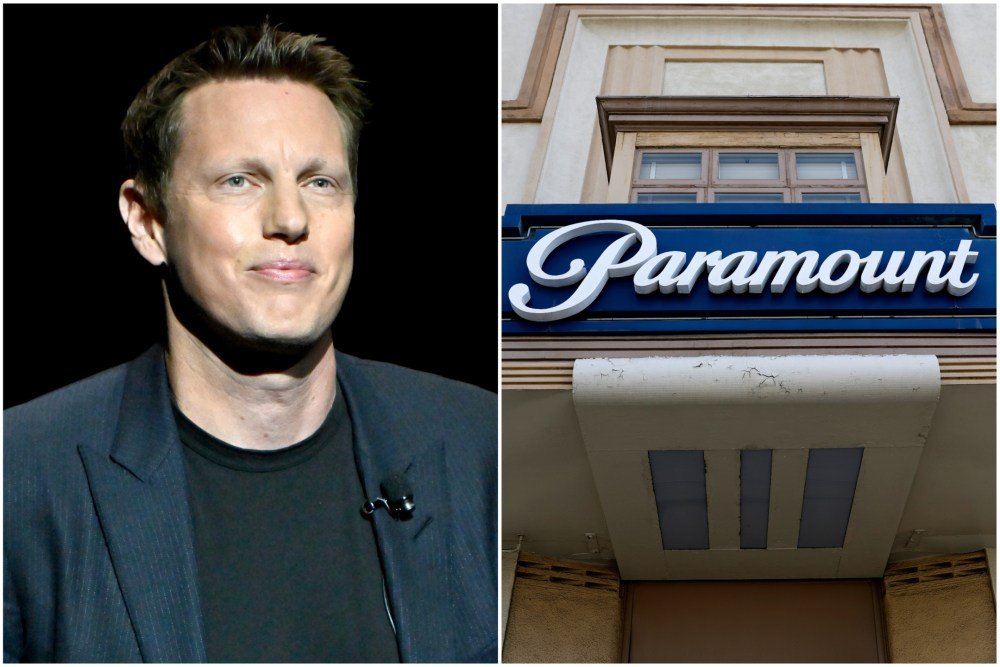
    Paramount’s lawyers filed a legal response to the states’ antitrust lawsuit against the Warner Bros. Discovery merger on Friday, sketching out arguments and defenses it may use at a trial next March.

    Among other defenses, Paramount’s lawyers said they may claim that the coalition of 12 states lacks the authority to regulate the merger, “which is vested in the U.S. Department of Justice.” However, states do have the authority to bring claims alleging harms caused by conduct violative of federal antitrust law.

    Paramount also noted that Cinema United, the trade group for theater chains, has called for a settlement.

    “Day by day, the weak case against this Merger gets even weaker,” the company argued, adding that it also plans to challenge the states’ market definitions. “Plaintiffs’ case amounts to a series of attempted shortcuts and assumptions that collapse under scrutiny.”

    California led the state coalition in suing to block the merger in July, arguing that the deal will create unlawful concentration in the basic cable market and in the wide-release and blockbuster theatrical markets. The DOJ had earlier approved the merger, issuing a memo laying out its reasoning for why the deal should be allowed to go forward.

    States typically work with the DOJ in antitrust cases, but under the Trump administration California and several others have often charted their own course.

    Paramount has repeatedly argued that the deal will be pro-competitive, and will result in more movies and TV shows.

    In its answer to the complaint, the company denied the states’ allegations — a requisite formality to establish a legal controversy. The company also added a few pages of argument, alleging that the states’ case ignores the broader context of an industry in rapid transition to streaming.

    “The way audiences consume content is changing rapidly. Streaming services now have greater viewership than movie theaters and cable television,” Paramount argues. “Plaintiffs’ case depends on ignoring this reality. It involves a series of gerrymandered markets based on cherry-picked data from the past. The alleged markets are not the product of sound economic analysis or current market realities. They have been invented for one purpose and one purpose only: to trigger a presumption — any presumption, no matter how weak — in the hopes the Court will look no further.”

    The Writers Guild of America has filed its own lawsuit arguing that the merger will reduce the marketplace for writers’ work. That case is set to be heard alongside the states’ challenge at trial on March 2, 2027.

    Paramount has agreed not to close the deal until a ruling is issued after the trial — though it is asking the court to require the plaintiffs to post a $1.88 billion bond as the price of continuing the litigation. A judge is set to hear arguments on that request on Sept. 24.

    Meanwhile, a court will hold a two-day settlement conference in the antitrust case with the parties in late October. That’s a standard part of civil procedure and does not indicate whether a deal is in the offing.

  • Gary Oldman Predicts HBO’s ‘Harry Potter’ Series Will Be ‘More Satisfying’ for Fans Than the Movies

    Gary Oldman Predicts HBO’s ‘Harry Potter’ Series Will Be ‘More Satisfying’ for Fans Than the Movies

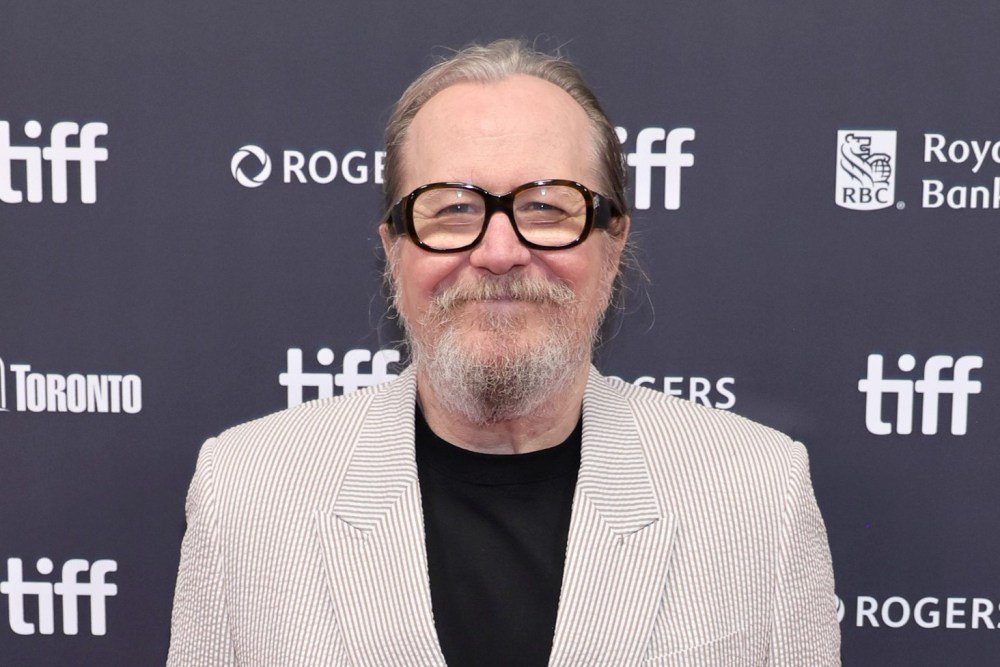
    Gary Oldman, who played Sirius Black in four “Harry Potter” movies, said he believes HBO’s forthcoming TV series adaptation set in the Wizarding World will be a bigger crowd-pleaser than the Warner Bros. films.

    That’s because the movies were significantly abridged from J.K. Rowling’s original books, whereas HBO’s “Harry Potter” is including far more of the source material, the British actor said in a recent interview with EW.

    “We had to cut a lot [for the ‘Harry Potter’ movies], and still we could only get the films down to, like, three hours,” Oldman said, adding that “a lot of character detail was sacrificed” in the process. “I believe [the HBO series is] gonna do it pretty much word-for-word, which I think, as a viewer, would be more satisfying.”

    Oldman has previously opined that Sirius Black, a character he loves, did not get enough screen time in the movies. “He wasn’t in it enough. He turned up and then he went through the veil,” Oldman told IndieWire in 2024. Oldman’s Black first appeared in 2004’s “Harry Potter and the Prisoner of Azkaban,” but he had only cameos in “Goblet of Fire” and “Deathly Hallows Part 2″ and a brief appearance in “Order of the Phoenix” before his character is killed off.

    That said, Oldman told EW he is “proud” and “grateful” to have been part of the “Harry Potter” films “because it is such a phenomenon, the like of which I don’t think you’re ever gonna see again.”

    “When you think of that initial cast, someone in the story who doesn’t get a lot of credit anymore is [director] Chris Columbus, who set the world up and cast it,” he said. “We were extraordinarily lucky to have those people come back again, and again, and again, and literally grow into those roles.”

    Oldman will next appear in Season 6 of Apple TV’s “Slow Horses,” which premieres Sept. 16.

    Season 1 of HBO’s “Harry Potter” TV show has wrapped and will premiere on HBO and HBO Max on Dec. 25. The second season, which will be based on the second book in Rowling’s beloved fantasy series, is currently in pre-production at Leavesden Studios outside London.

    HBO has not announced casting for the role of Sirius Black in the series to this point. The cast of HBO’s “Harry Potter” series includes Dominic McLaughlin in the title role alongside Arabella Stanton as Hermione Granger and Alastair Stout as Ron Weasley; John Lithgow as Albus Dumbledore; Janet McTeer as Minerva McGonagall; Paapa Essiedu as Severus Snape; Nick Frost as Rubeus Hagrid; Rory Wilmot as Neville Longbottom; and Lox Pratt as Draco Malfoy.

    Meanwhile, Oldman once said that his performance as Sirius Black in the movies was “mediocre,” but he later clarified that he didn’t mean to “disparage anyone out there who are fans of ‘Harry Potter’ and the films and the character who I think is much beloved.”

    “What I meant by that is, as any artist or any actor or painter, you are always hypercritical of your own work,” he told Variety in 2024. “If you’re not, and you’re satisfied with what you’re doing, that would be death to me. If I watched a performance of myself and thought, ‘My God, I’m fantastic in this,’ that would be a sad day.”

  • Ethereum’s Binance reserves hit a 3 month low – Can ETH reclaim $2.5K?

    Ethereum’s Binance reserves hit a 3 month low – Can ETH reclaim $2.5K?

    Ethereum has started consolidating near $2,470 after its August recovery, as falling exchange reserves reveal an increasingly tight liquidity supply structure.

    Reportedly, the supply structure shifted as fewer tokens remained readily available on Binance.

    According to CryptoQuant, the Binance $ETH reserves had fallen to approximately 3.74 million $ETH, marking their lowest level in three months.

    The decline reflected a broader reduction in exchange-held Ethereum. The total reserves across the major exchanges recently hit a multi-year low of approximately 14.88 million $ETH.

    The lower reserves limited the $ETH immediately available for trading, reducing potential selling pressure.

    However, falling reserves alone did not necessarily indicate stronger demand, but this supply shift coincided with record Ethereum staking participation.

    Roughly 43.1 million $ETH was staked, which represented 35.9% of circulating supply. The rising staking additionally limited the portion of $ETH readily available for trading as well.

    These developments together pointed toward an increasingly constrained liquid supply outlook.

    Source: CryptoQuant

    How the tightening supply could reshape $ETH price direction

    The tightening liquid supply could become more significant and influential in case the spot demand strengthens.

    The fewer readily available tokens meant the bulls could face limited exchange-side supply pressure. Consequently, this imbalance could make Ethereum highly sensitive to sustained buying pressure.

    However, the supply tightening does not guarantee higher prices without sufficient demand.

    Therefore, continued exchange exits could reinforce this structure by keeping immediately tradable $ETH constrained. Persistent inflows could instead increase potential selling availability.

    Ultimately, $ETH’s next price directional move depends partly on whether demand expands alongside the declining liquid supply.

    Binance top traders maintained their long bias

    The derivatives positioning continued supporting the bulls as Binance top traders preserved a clear long-side bias.

    According to CoinGlass data, the long accounts represented 59.05%, versus 40.95% holding short positions. This resulted in a Long/Short Ratio of 1.44, showing a stronger bullish positioning among the Binance top traders.

    Additionally, the Ethereum Open Interest remained elevated at around $33.73 billion. This largely stable Open Interest suggests leveraged participation remained significant as $ETH consolidated within its current range.

    Together with the long-side dominance, this shows that traders retained a bullish exposure without a reduction in derivatives participation.

    However, the concentrated long positioning could trigger a liquidation risk in case $ETH loses its current support.

    But for now, the derivatives positioning remains supportive as $ETH attempts to build strength for another resistance attempt.

    Source: CoinGlass

    Cooling RSI and bearish Parabolic SAR tested $ETH’s recovery

    At the time of analysis, Ethereum [$ETH] traded around $2,473, inside its consolidation range after August’s rapid price advance.

    The token continued holding above the $2,372 support, as repeated attempts stalled around $2,540 resistance area.

    The RSI indicator retreated to approximately 60.5 after previously hitting the overbought territory. This suggested that buying strength had moderated without pushing RSI into the bearish territory.

    The Parabolic SAR meanwhile remained above the current price, maintaining a short-term bearish pressure within the consolidation.

    Holding above the $2,372 support would keep the broader price structure intact despite these cooling indicator conditions.

    A successful breakout above the $2,540 area could likely reopen the path for another upside expansion.

    Source: TradingView

    Final Summary

    • Binance reserves fell as record staking reduced Ethereum’s immediately available liquid supply.
    • Long-heavy derivatives positioning favored buyers, but $ETH still needed to clear $2,540.
  • Jimmy Kimmel “Play-Acting” Over James Talarico Interview & FCC Threats, White House Claims

    Jimmy Kimmel “Play-Acting” Over James Talarico Interview & FCC Threats, White House Claims

    In the latest twist in the Jimmy Kimmel–James Talarico interview drama, the White House is now accusing the ABC late-night host and his network of spinning a fake tale of federal strong-arming.

    Put another way, Team Trump insists there was never pressure put on Kimmel and ABC from the Trump administration to scuttle an interview with the poll-topping Texas Democrat and Senate hopeful.

    “Jimmy Kimmel is play-acting — as he often does — to create a false narrative about this administration’s policies,” Assistant White House Press Secretary Davis Ingle said Thursday.

    “Chairman Carr has not threatened him regarding interviewing James Talarico, or any other candidate.,” Ingle added of Carr, the FCC chairman, just before the second night of Donald Trump‘s GOP midterm convention aka pageant reconvenes. “Any media outlet blindly amplifying Kimmel’s egocentric delusion should insist on proof. Of which they will find none.”

    ABC parent company Disney had no comment on the response from the White House when contacted by Deadline. The lack of response is unsurprising given that the company is the midst of an escalating legal and regulatory First Amendment clash with the FCC over station license renewals and charges of political thumbs on the scale.

    Jimmy Kimmel

    ‘Jimmy Kimmel Live!‘

    ABC/YouTube

    Wednesday’s Jimmy Kimmel Live! monologue had some distinct déjà vu of what Stephen Colbert went through on CBS last year with Talarico, who is looking to flip the Lone Star state for the Dems for the first time in decades. The L.A.-based Kimmel revealed that an on-air sit-down with Talarico would not air on ABC tonight.

    After naming off various political candidates including Trump, who Kimmel has talked to over the years, the Live! host put federal regulatory enforcement under the spotlight. “[The] FCC has threatened me, threatened our show, threatened our network, ABC, our affiliates, our local stations, based on simple, traditional editorial decisions,” Kimmel said. “Guest bookings, it would seem, they don’t like.”

    “And so, out of consideration for our local stations, especially our ABC affiliates in Texas who would have to deal with this nonsense, my interview tomorrow with James Talarico will not air on television,” he stated. “It will be posted on YouTube instead.”

    James Talarico

    James Talarico

    Brandon Bell/Getty Images

    Interestingly, Talarico, who is in Los Angeles today and Friday for a series of deep-pocket Hollywood fundraisers, was not officially listed as a guest on Kimmel before the host made his announcement. In a separate interview with MS NOW’s Symone Sanders Townsend today on The Weeknight, Talarico called the Kimmel situation the “most dangerous form of cancel culture.” With the knowledge that much of the consumption of late-night shows actually happens online anyway, the candidate went on to say: “I’m still hopeful that we can have this interview on the air. So we’ll see what happens tonight.”

    Between Trump in Texas and Talarico in California, we certainly will.

    At the same time, with the wounds still fresh from Disney’s sudden sidelining of Kimmel for almost a week a year ago over affiliate fallout from a remark he made about the tragic assassination of conservative activist Charlie Kirk, there is a tendency for some to get lost in the weeds of this. There is also a tendency for some to start shouting about equal-time rules without a read of the fine print.

    The equal time rule requires broadcasters that feature political candidates offer comparable airtime to rivals — if it is requested. Daytime and late-night talks shows have long operated under the assumption that they fell under an exemption for news and news interview programming. But in January, Carr issued guidance suggesting that such talk shows may not be free from the rule.

    The equal time rule also is often misunderstood. It applies to political candidates in a certain cycle. So, for instance, Ted Cruz’s appearance on The View this week makes no difference because he’s not up for reelection this midterm.

    Carr has argued that nothing is preventing late-night or daytime talk shows from featuring a political candidate as a guest. They just have to be prepared to offer time to rivals as well.

    As ABC pushes back on Carr’s investigation of The View, the network’s argument is one of selective enforcement as the FCC chairman has not singled out other broadcasters, like conservative talk radio. The network has also pointed to a 2002 letter from the FCC confirming the show’s exemption from the equal time rule. The network also has characterized the equal time rule as unworkable, given that its stations may be on the hook not just for major party candidates but also third-party rivals.

    Again, let’s see what happens tonight.

    Worth noting that when the now axed Colbert’s interview with Talarico was shifted over to YouTube, it got a huge number of views and the candidate raised more than $2.5 million in just over 24 hours. That might be history worth repeating itself for the Texas Democrat, false narrative or not.