In Jon Erwin’s telling, even the most advanced visual effects tools are no match for the physics of water.
The director of the film “Young Washington,” the historical drama releasing nationwide on Friday (July 3), needed to film a scene where a pre-Revolutionary War George Washington (William Franklyn-Miller) and his companion nearly drown in an icy river.
But icy rivers are, of course, cold — and subjecting actors or even stunt doubles to such conditions seemed too dangerous. Thus, Erwin relied on a combination of a 50-foot pool of water the crew built in Ireland, filmed close-ups of the actors, props of ice and a suite of generative AI tools to help create the scene, using the technology to help generate wider shots in the sequence.
“The actors were there, the raft was there, the water was there, but the water wasn’t cold,” Erwin told Variety in an interview. “It was a very small area that we were able to film it in, and we just mapped it to a much larger area, and I think that’s a great example of the use case of these tools to make something safer and more affordable in that scope to a project like this, and that way we didn’t have to leave Ireland.”
Erwin is one of a few Hollywood directors who have been vocal about their use of generative AI in their work. He has used it in shows for Amazon MGM Studios such as “House of David” and “The Old Stories: Moses.” Erwin also leads AI production company Innovative Dreams, a venture co-founded by his company, Wonder Project, and Luma AI that combines AI with traditional filmmaking.
“My view on the use of these tools is: Do everything you can for real, everything you possibly can, and then use these tools to amplify your vision and give you a bigger canvas,” Erwin said. “What I’ve learned is these tools are best used not when they replace fundamental aspects of filmmaking, but when they amplify and when they augment them.”
For a film like “Young Washington,” which Erwin called “a story about the American frontier,” Erwin wanted to fuse his desire to film a period piece with the tools he’s come to embrace, employing five AI artists along with an AI producer and crew member. About 100 shots in the film were augmented with AI, Erwin said, using a combination of platforms that aggregate AI tools such as Luma, Amazon’s Project Nara and Magnific. The uses included some AI-generated establishing shots and depicting the firing of physical cannons the crew rented.
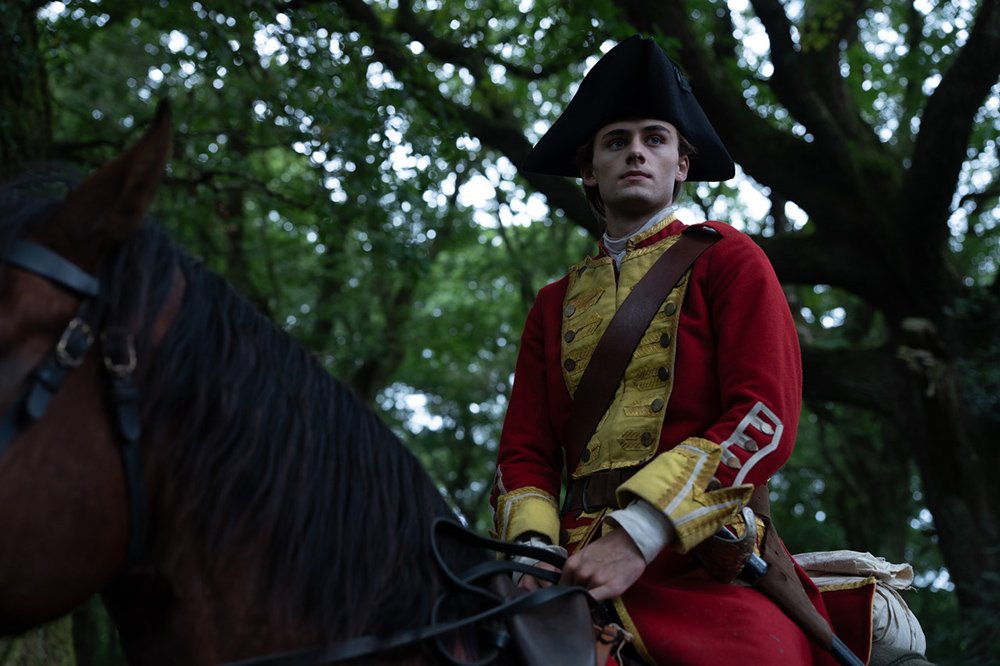
In one scene, the team used AI to turn two Wonder Project employees into British soldiers. It was a scene Erwin didn’t manage to capture during principal photography, but after filming the executives in street clothes, AI helped put them in period-accurate costumes and on horseback.
For cases like crowd duplication in wide shots, Erwin said he used classic VFX tools. “We had the good fortune of having enough extras on set, and then when we needed to kind of duplicate into wide shots, we relied on traditional methods,” he said.
Erwin’s “Young Washington” use cases illustrate how some in Hollywood have tried to position AI tools as extensions rather than replacements of the traditional filmmaking arsenal. Still, even such deployments have drawn scrutiny, with some on social media criticizing the film’s AI usage and deriding the movie’s quality. (“Young Washington” earned a 63% on Rotten Tomatoes, though Variety critic Owen Gleiberman called it “watchable in a stolid way, as if it were a ‘Masterpiece Theatre’ movie made by the Ted Turner Pictures of 20 years ago.”)
The criticism doesn’t seem to faze Erwin, who said some misidentified what was generated by AI versus what was created using more conventional visual effects. “You’re looking at traditional VFX,” he said. “Might not like it, you might not think those shots are good, but they’re how we’ve been doing visual type stuff for the last three decades,” he said.
Some of the buy-in appears to also come from the film’s cast, which includes Ben Kingsley, Andy Serkis and Mary-Louise Parker. Earning their trust with his use of AI includes “communicating in a transparent, honest way and helping them understand how the tools are used,” he said.
“Once they see, once you demonstrate the technology for them — I mean, I don’t want to speak for them, you have to ask them — but by and large, they love these tools, because a lot of times an actor is not able to have any agency into their digital performance,” Erwin said.
Erwin, 44, views the use of AI as the next frontier of filmmaking, akin to the transition from film to digital cameras. A native of Birmingham, Alabama, he found himself unable to get jobs on projects reliant on film cameras, so he tried to embrace the power of digital. AI is just the next wave in the industry’s technological growth, he argued, one he thinks will boost the number of projects Hollywood makes.
“I bled on the bleeding edge of every digital alternative zone,” he said. “A lot of people stopped at the cameras, but for me it was my way to compete. It was a democratizing event, so now I think we’re going to see scope and scale democratize the filmmakers everywhere. It might be disruptive, but I think it’s going to get us to a new birth of creativity and original voices in our industry.”
Watch a behind-the-scenes clip of the water sequence here:
Leave a Reply