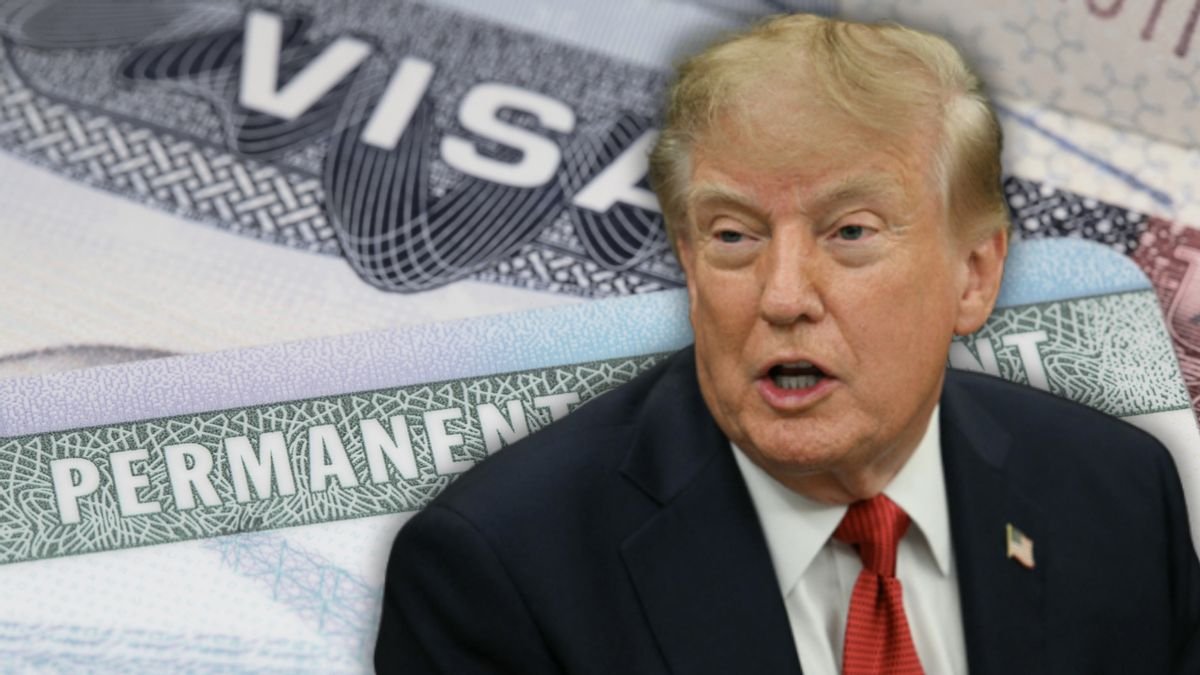
- A rumor spread in September 2026 that U.S. President Donald Trump was set to save the country billions of dollars by invoking a supposedly “long-unenforced” law to deny certain immigrants entry into the country. According to the claim, Trump was enforcing a provision to bar access to anyone who is a “convict, lunatic, idiot, or any person unable to take care of themselves without becoming a public charge.”
- The claim referred to the Immigration Act of 1882, which indeed prohibits certain immigrants from entering the country or obtaining green cards if federal authorities consider them to be a “public charge” based on their use of government benefits. That provision has existed since the act’s conception and includes the alleged phrasing about “convicts” and “lunatics” verbatim.
- Trump was not invoking a “long-unenforced law,” but his administration in September 2026 announced it was changing how it interprets that “public charge” section of the Immigration Act of 1882 to further restrict who can enter the country or receive permanent residency. Previously, the government only considered cash assistance and long-term institutionalization as reasons a person could be denied under the public charge rule.
- Under the Trump administratin’s new rule, which went into effect on Sept. 18, 2026, the Department of Homeland Security removed those previous guidelines and designated immigration officers to use their own judgment to determine who constitutes as a “public charge.”
- DHS estimates the change will save federal and state governments $13.05 billion in benefit payments, though it’s unclear how, exactly, the agency came up with that number.
- Immigration experts and some Trump critics say the department is not fairly considering the possible economic impact of people forgoing benefits out of fears of being deemed a “public charge” and thus denied certain legal immigration statuses.
- A group of Democratic-led cities and states have filed two separate lawsuits challenging the rule. The courts haven’t yet made a decision in those cases, meaning it’s unclear if the rule will get overturned.
- In sum, while the gist of the claim has some truth, the rumor misinterprets a September 2026 policy change by the Trump administration and misleadingly estimates possible savings when the real dollar amount is unknown.
A rumor spread in September 2026 that U.S. President Donald Trump was on track to save the United States billions of dollars by invoking a supposedly unenforced law to deny certain immigrants entry into the country.
Social media posts (archived) claimed that Trump was beginning to enforce the Immigration Act of 1882, which denies entry to anyone who is a “convict, lunatic, idiot, or any person unable to take care of themselves without becoming a public charge.” These posts alleged the enforcement measures were expected to kick 5.6 million migrants off government welfare programs and save the U.S. government $13 billion a year.

The claim was misleading for multiple reasons.
Trump was not “invoking a long-unenforced law.” Rather, his administration changed the government’s interpretation
It’s true the Department of Homeland Security estimated the policy change will save federal and state governments $13.05 billion per year, supposedly affecting an estimated
Most noncitizens who do not have permanent resident status are not eligible for many
Immigration and family policy experts fear the change could have far-reaching consequences for immigrant families and local communities.
We asked for the DHS’ response to those accusations, and we await a reply. Because the courts have not yet ruled in those cases as of this writing, it’s unclear if the administration’s interpretation of the Immigration Act of 1882 is lawful and the DHS can fully implement it.
Considering that major unknown, we did not put a rating on this claim.
Here’s what you should know.
The definition and history of ‘public charge’
The Immigration Act’s “public charge” rule only impacts a portion of immigrants attempting to enter the country
According to U.S. Citizenship and Immigration Services, the rule largely doesn’t apply to immigrants who apply for green cards due to a humanitarian status like asylum. Meanwhile, it does apply to immigrants who are relatives of U.S. citizens, employed in the country and working with the American military, among others.
The U.S. government
When Congress first used the term “public charge” in the Immigration Act of 1882, many social safety net programs that exist today were not around, as Kunal Parker, a historian at the University of Miami School of Law, told NPR in 2019.
In turn, federal officials have reconsidered how to enforce and define the 1882 provision.
In 1999, a memo by the Department of Justice formally defined “public charge” as a person “primarily dependent on the government for subsistence,” as demonstrated by their use of public cash assistance, like Supplemental Security Income through Social Security, or long-term institutionalization at the government’s expense. (See Page 1, under “Definition of ‘Public Charge,’” in the memo.)
The memo stated: “Officers should not place any weight on the receipt of non-cash public benefits (other than institutionalization) or the receipt of cash benefits for purposes other than for income maintenance.”
That meant immigration officers could not consider benefits like Medicaid, food stamps and free or reduced school lunches as disqualifying factors for green cards (unless the person was in, or likely to need, a public institution for long-term care).
In 2019, the first Trump administration issued a new rule that redefined “public charge” to include immigrants who receive “one or more public benefits,” including some types of Medicaid, housing assistance and other non-cash benefits, “for more than 12 months” in total within any 36-month period.
The courts struck down that rule after a lengthy legal battle.
In 2022, former President Joe Biden issued a new policy that closely aligned with the 1999 memo’s definition of “public charge.”
Trump admin’s 2026 rule
In July 2026, the Trump administration announced its new rule that rescinded Biden’s 2022 guidelines. The new rule eliminated “public charge regulations in their entirety” to give “broad discretionary authority to officers,” as outlined by the government’s Federal Register.
“DHS is restoring the basic principle that immigrants must be able to support themselves,” DHS said in a statement on X. “We are reaffirming the requirement of self-reliance, protecting public resources, and ending policies that encouraged dependency on hard-working American taxpayers.”
In other words, the Trump administration removed the existing guidelines to determine whether someone is a “public charge” and instead told
While officers will not have a list of “excluded” benefits to consider, officers will have the authority and discretion to consider all circumstances surrounding receipt of any one or more public benefits and determine whether the alien is inadmissible as likely at any time to become a public charge taking into account the statutory factors and applicable precedent. The receipt of public benefits is but one consideration in the totality of the circumstances.
The Trump administration’s full July rule is available on the government’s Federal Register website. Under “Purpose of the Regulatory Action,” DHS states that officers may consider an immigrant’s use of “means-tested
“Using good judgment and discretion, officers will more accurately assess an alien’s likelihood at any time of becoming a public charge, in the totality of the circumstances, as Congress intended,” the rule says.
According to the DHS rule, officers will not consider benefits used by an applicant’s
The rule’s potential impact
Given how vague and open-ended the 2026 rule is, it’s difficult to estimate its future impact.
The $13 billion estimation in savings originated from the DHS rule in the Federal Register:
DHS estimates that the total reduction in transfer payments from the Federal and State governments could be approximately $13.05 billion annually due to disenrollment or forgone enrollment in public benefits programs by members of households that include aliens who may be receiving public benefits.
In other words, the $13 billion number is an estimate of how much
It’s unclear how, exactly, the DHS calculated the estimated savings. We asked for the department to explain its math in our interview request for this story, and we will update this report if we hear back.
However, that prediction does not account for several factors, such as the economy’s loss in workers with fewer people being allowed to enter or live in the country.
A group of Democratic-led states, including California and New York, argued in a lawsuit filed Sept. 14 that the rule could harm local communities and economies (see Page 4):
States will lose federal funding due to disenrollment in state programs, and public agencies will face substantial administrative costs as they attempt to mitigate confusion and fear. As households forgo their legal access to benefits—such as preventative healthcare, nutritional assistance, and school lunch—public health, local economies, public education, and public safety will suffer. The [DHS rule] will increase the prevalence of disease, drive up the costs of medical care, and increase poverty.
In the Federal Register documentation, DHS said the rule could impact state and local economies but attempting to quantify that impact is challenging due to “limited data and uncertainty” regarding how people might react to the rule.
Opponents fear downstream effects
Immigration experts and some Trump critics worry the new rule could have far-reaching consequences for immigrant communities. For example, families with children who are citizens but have immigrant parents may suffer if the parents choose to forego benefits out of fear of running afoul to the “public charge” rule.
After the first Trump administration announced changing the provision in 2019, a survey from the Urban Institute, a research nonprofit, found that one in seven adults in immigrant families reported avoiding public benefit programs in 2018 “out of fear of risking future green card status.”
Other research at that time predicted additional challenges for families impacted by the rule, like limited economic mobility, as well as downstream job cuts and other negative impacts on the economy.
“The biggest impact of the first Trump administration’s public charge policy was to terrify families out of using public benefits they were eligible for, including for their U.S. citizen children, because they were afraid of falling afoul of the rule,”
“Even though the new [2026] policy isn’t the same as the old one, the fear of a new public-charge rule could be so powerful that it has the same effect,” Lind said in July.
Leave a Reply