Tag: Snopes News

  • Did Trump not renew Biden-era funding for air traffic control upgrades?

    Did Trump not renew Biden-era funding for air traffic control upgrades?

    Claim:

    Former U.S. President Joe Biden allocated $25 billion in five years to upgrade airport infrastructure through the Bipartisan Infrastructure Law, but U.S. President Donald Trump froze some of it, transferred some of it for other purposes and failed to renew the funding.

    Rating:

    Mixture

    What’s True

    The Infrastructure Investment and Jobs Act of 2021 allocated $25 billion in funding over five years to the Federal Aviation Administration for upgrades to airport systems, including $5 billion dedicated to upgrading air traffic control. When Trump took office in 2025, he signed an executive order temporarily freezing all active grants, including some for airport upgrades, until they could be reviewed further.

    What’s False

    Most of the grants frozen when Trump took office were reinstated a few months later, and most of the money allocated through the act over the five years was spent. Under Trump, Congress — which funds the government — allocated an additional $12 billion for air traffic control system upgrades as part of the 2025 “Big Beautiful Bill.” In 2026, Congress included a provision carrying over approximately $368 million in IIJA funding (which would have expired that year) for future airport infrastructure projects.

    What’s Undetermined

    Snopes did not find evidence conclusively proving or disproving that Trump’s administration had reallocated some of the funding dedicated to ATC upgrades for other purposes. It’s also unclear how much, if any, of the funding allocated for ATC upgrades was canceled by the Trump administration.

    On Nov. 13, the Federal Aviation Administration ordered a ground stop of all U.S. flights out of an abundance of caution because of technological issues that affected communications between air traffic controllers and airplanes around the country. 

    Following the ground stop, Transportation Secretary Sean Duffy called for Congress to dedicate $50 billion in funding for air traffic control system upgrades to prevent a similar outage from ever happening again.

    Meanwhile, posts on social media (and at least one U.S. representative-elect) blamed the ground stop on U.S. President Donald Trump. 

    According to the posts, former President Joe Biden secured $25 billion in funding over five years to upgrade airport infrastructure as part of the Infrastructure Investment and Jobs Act (also called the Bipartisan Infrastructure Bill or Bipartisan Infrastructure Law). When Trump took office in 2025, though, he allegedly froze the grants, reallocated the funding to other areas and declined to renew the funding. 

    The claim is a mixture of true and false information. 

    First, it’s important to mention that Congress, not the president, controls the country’s finances. While the president submits a proposed budget to Congress each year, that proposal is only a suggestion. Congress does not have to (and generally does not) match the proposed budget. As a caveat, it is true that Trump has attempted to gain more direct control over the country’s finances by using executive orders and by refusing to disburse some of the earmarked funds. 

    What’s true

    The Infrastructure Investment and Jobs Act, signed into law by Biden in November 2021, did allocate $25 billion in funding over five years for airport infrastructure upgrades, and $5 billion of that funding was dedicated specifically for air traffic control (PDF Page 987). 

    When Trump took office in 2025, he signed an executive order freezing disbursements of IIJA grants until they could be reviewed, and some of those grants were later canceled. 

    Finally, because Congress, not the president, sets the budget, the claim is correct that Trump did not renew the $25 billion in funding for airport infrastructure. The FAA allocated most of the grant money under the IIJA over the course of the five years. However, Congress did extend approximately $368 million of unallocated funding (PDF Page 167) for future airport infrastructure projects in 2026 because the funds would have expired that year.

    What’s false

    However, Trump’s executive order did not permanently freeze the grants, and many were reinstated in the following months. According to a July 2026 report from the nonpartisan Government Accountability Office, a large majority of the FAA’s grants did not conflict with the stated purposes of the executive order, and were quickly reinstated. Of the 276 grants reviewed in further detail, the Department of Transportation canceled 62 of them. (It was unclear how many of those 62 grants, if any, were issued for air traffic control upgrades.) 

    Furthermore, while the claim is correct in stating that Congress did not reinstate the $25 billion in funding for aviation infrastructure, it fails to mention that in 2025, under the Trump administration, Congress did provide around $12.5 billion in funding to the FAA to upgrade air traffic control systems (PDF Page 61).

    Tracking government spending

    In order to examine the funding allocated for airport upgrades, Snopes examined the federal government’s USAspending database. We filtered specifically for funding related to the IIJA, then performed multiple searches that filtered grants in finer detail. Although though the government publicized its allocation of $5 billion for ATC upgrades through the IIJA, actually locating those grants was quite difficult, for several reasons. 

    First, the description of each grant comes from individual applications, and the language of those descriptions is not standardized. As a result, individual grants may have described air traffic control upgrades in several different ways, and our searches may not have captured all of them.

    Next, the government classifies all of its funding in immense detail using a system called Assistance Listing codes, and it changed the coding for IIJA funding for airport upgrades in 2025. Prior to 2025, all airport upgrades funded by the IIJA were listed under code 20.106, titled “Airport Improvement Program, Infrastructure Investment and Jobs Act Programs, and COVID-19 Airports Programs.” In 2025, however, that code was discontinued in favor of three separate codes: 20.116 for the Airport Improvement Program, 20.117 for Airport Infrastructure Grants and 20.118 for the Airport Terminal Program. 

    It was unclear exactly which of these new codes covered air traffic control upgrades, if any. Snopes contacted the FAA team responsible for managing these grants to learn more about their structure and how they are differentiated, but did not receive a reply. 

    As a result of these factors, we chose to not estimate the amount of money the government actually spent on upgrading air traffic control infrastructure from the IIJA. But despite the confusing grant structure preventing us from taking full inventory, we were still able to determine that Trump’s grant freeze did have a tangible effect on the funding. The federal government’s fiscal year begins in October, and as the fiscal year progresses, the amount of funding allocated and obligated grows, peaking in August or September before resetting to zero and starting over. This pattern held true in all fiscal years except 2025, because of Trump’s executive order.

    In the 2025 fiscal year, funding was relatively nonexistent from October through December 2024, matching previous years. There was a spike in January 2025, perhaps because the Biden administration wanted to make the most of their limited remaining time in control of the government. After Trump signed executive orders calling for reviews on funding on his first day in office, Jan. 20, 2025, the granted amounts dropped to nearly nothing in February, March and April 2025. Funding was seemingly restored in May.

    Sources

    Airports AIP Finance Branch | Federal Aviation Administration. https://www.faa.gov/about/office_org/headquarters_offices/arp/offices/app/app500/app530. Accessed 25 Nov. 2026.

    Arrington, Jodey. An Act to Provide for Reconciliation Pursuant to Title II of H. Con. Res. 14. . H.R. 1, 4 July 2025, https://www.congress.gov/bill/119th-congress/house-bill/1/text.

    Beta.SAM.Gov | Sam Assistance 360. https://sam.gov/workspace/assistance/fal/3e48dd4ef38e4a4fb982aea3afe5e525/view. Accessed 25 Nov. 2026.

    Beta.SAM.Gov | Sam Assistance 360. https://sam.gov/workspace/assistance/fal/b8818651e3b646cc82314cd7ab4f2d34/view. Accessed 25 Nov. 2026.

    Cole, Tom. Consolidated Appropriations Act, 2026 . H.R.7148, 3 Feb. 2026, https://www.congress.gov/bill/119th-congress/house-bill/7148.

    DeFazio, Peter. Infrastructure Investment and Jobs Act . H.R.3684, 15 Nov. 2021, https://www.congress.gov/bill/117th-congress/house-bill/3684/text/pl.

    FAA Contract Tower Competitive Grant Program | Federal Aviation Administration. https://www.faa.gov/iija/airport-infrastructure/fct. Accessed 25 Nov. 2026.

    Federal Aviation Administration. “FAA BIPARTISAN INFRASTRUCTURE LAW FUNDING OVERVIEW.” https://www.faa.gov/sites/faa.gov/files/2022-02/BIL%20Industry%20Briefing%20Final.pdf.

    Infrastructure Investment and Jobs Act – Airport Terminals Program | Federal Aviation Administration. https://www.faa.gov/iija/airport-terminals. Accessed 25 Nov. 2026.

    Infrastructure Investment and Jobs Act (IIJA) Airport Infrastructure Grant Funding Amounts | Federal Aviation Administration. https://www.faa.gov/iija/iija-airport-infrastructure-grant-funding-amounts. Accessed 25 Nov. 2026.

    Mancini, Ryan. “Koh Blames Trump for Blocking Biden-Era Infrastructure, FAA Funding .” The Hill, 15 Nov. 2026, https://thehill.com/homenews/house/6221559-koh-blames-trump-faa-funding/.

    Nationwide Ground Stop: Questions and Answers | Federal Aviation Administration. https://www.faa.gov/newsroom/nationwide-ground-stop-questions-and-answers. Accessed 25 Nov. 2026.

    News, A. B. C. “Duffy Asked for $50B for Air Traffic Control after Ground Stop, a Marked Increase.” ABC News, https://abcnews.com/Politics/duffy-asked-50b-air-traffic-control-after-ground/story?id=138183456. Accessed 25 Nov. 2026.

    Orders, Executive. “Unleashing American Energy.” The White House, 21 Jan. 2025, https://www.whitehouse.gov/presidential-actions/2025/01/unleashing-american-energy/.

    SAM.Gov. https://sam.gov/fal/44d53bfc233d48d4b0462bd68374e6ad/view. Accessed 25 Nov. 2026.

    SAM.Gov. https://sam.gov/fal/ee386c581fb348c6a68be495a6f3a1c0/view. Accessed 25 Nov. 2026.

    Scalise, Steve. Rescissions Act of 2025 . H.R. 4, 24 July 2025, https://www.congress.gov/bill/119th-congress/house-bill/4/text.

    Shepardson, David. “Trump Official Seeks $50 Billion for Air Traffic Control after Outage.” Reuters, 13 Nov. 2026, https://www.reuters.com/legal/government/white-house-urges-congress-provide-301-billion-aviation-reform-2026-11-13/.

    Sit-Williams, Anne, and Elizabeth (Biza) Repko. Infrastructure Investment and Jobs Act and Inflation Reduction Act. GAO-26-108434, July 2026, https://www.gao.gov/assets/gao-26-108434.pdf.

    The Federal Budget Process | USAGov. https://www.usa.gov/federal-budget-process. Accessed 25 Nov. 2026.

  • Did Katie Miller say car seat mandates would ‘kill the birth rate’?

    Did Katie Miller say car seat mandates would ‘kill the birth rate’?

    Claim:

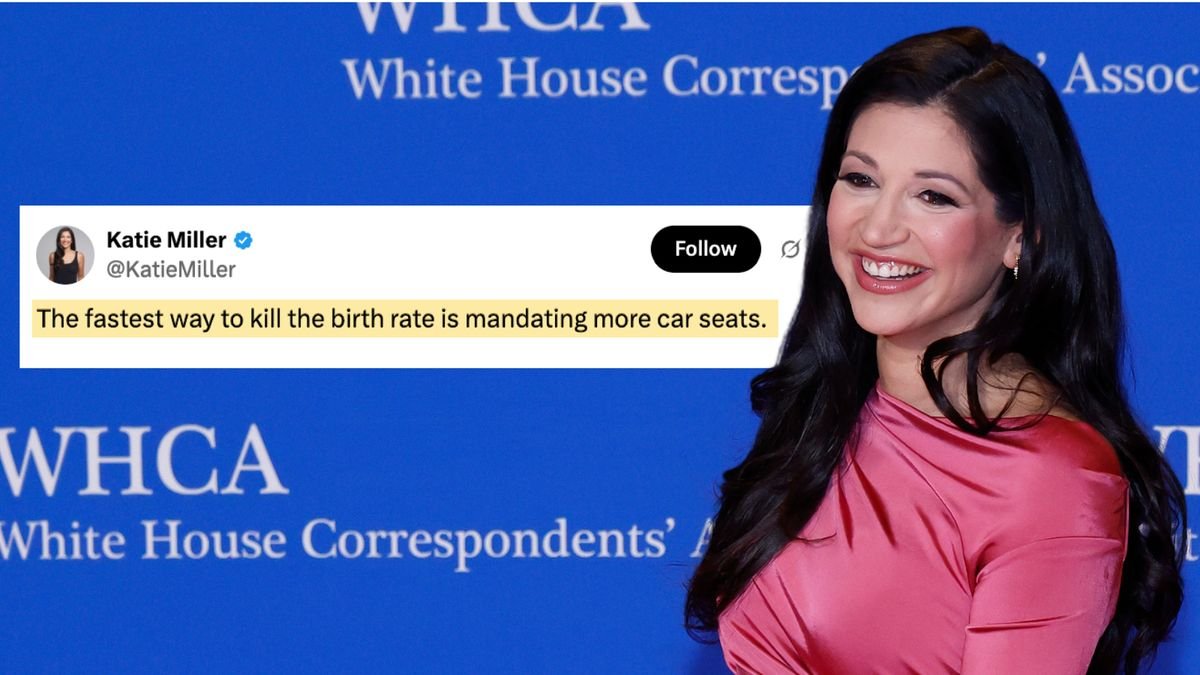
    In November, Katie Miller — the wife of Stephen Miller, the White House chief of staff — wrote on X, “The fastest way to kill the birth rate is mandating more car seats.”

    Rating:

    Correct Attribution

    In late November, social media users claimed conservative podcaster Katie Miller — the wife of White House Chief of Staff Stephen Miller — posted on social media that car seat mandates would “kill the birth rate.”

    For instance, one Facebook user claimed in a video (archived), “Katie Miller, the wife of Chief of Staff Stephen Miller, wants you to know that the fastest way to kill birth rates is mandating more car seats.”

    The video featured a purported screenshot of Miller’s X post. Similar claims spread on other social media platforms, including Instagram, Facebook and X. Snopes readers also searched our website to find out whether Miller actually made the statement.

    In short, the post was genuine. Miller published it on her X account on Nov. 25. As such, we rated the claim as correctly attributed. 

    While a 2024 study suggested that car seat mandates could discourage some families from having a third child, it did not establish that they were the “fastest way” to reduce birth rates.

    We reached out to Miller, the study’s authors and several experts on birth rates and fertility for comment and will update this article if we receive responses.

    What Miller wrote on X

    On Nov. 25, Miller made a post (archived) on her X account that began, “The fastest way to kill the birth rate is mandating more car seats.” 

    In the post, Miller argued that car seats made motherhood more complicated, citing the width of vehicles, car seat anchors and difficulties traveling with the seats. She also said car seats were a factor limiting the number of children she and her husband had.

    The post read in full:

    The fastest way to kill the birth rate is mandating more car seats.

    Car seats make motherhood significantly more complicated and difficult, from vehicle width and anchors to traveling with them.

    I’m not alone in saying that a limiting factor on the number of children we have is car seats.

    Miller was responding to an X post about new car seat requirements in California:

    California Gov. Gavin Newsom signed the legislation, known as Assembly Bill 435, in October 2025. Starting Jan. 1, 2027, children ages 8 through 15 will have to use a child restraint system unless they meet five criteria for wearing a seat belt safely. These include how children sit in the vehicle and how the seat belt fits across their bodies. The law does not require all children under 16 to use booster seats.

    Do car seat mandates affect birth rates?

    There is some research suggesting that car seat requirements can influence families’ decisions to have more children.

    A 2024 study titled “Car Seats as Contraception,” published in the Journal of Law and Economics, examined the relationship between car seat laws and birth rates in the U.S. (An earlier version of the paper was made available online in 2020.)

    The researchers, Jordan Nickerson and David Solomon, found that women with two children who were both legally required to use car seats were 0.73 percentage points less likely to have a third child in a given year. The effect was limited to households with access to a car and a male household member present. The researchers suggested that the difficulty of fitting three car seats in the back of many vehicles could explain this finding. They estimated that car seat mandates resulted in approximately 8,000 fewer births in the U.S. in 2017 and prevented 57 children from dying in car crashes that year.

    The study suggested that car seat mandates could discourage some families from having a third child. However, it did not establish how significant the effect of car seat mandates was compared with other factors affecting birth rates in the U.S. It also did not state that introducing more car seat mandates was the “fastest way to kill the birth rate,” as Miller claimed. Moreover, the study was published before California passed the new legislation and did not assess the potential effect the new requirements could have on birth rates in that context.

    Melissa Kearney, an economics professor at the University of Notre Dame who has discussed car seats and fertility rates on the “Freakonomics” podcast, reviewed the study before publication and told Snopes she considered its findings credible.

    Meanwhile, according to the Centers for Disease Control and Prevention, car seats reduce children’s risk of injury in crashes by 71% to 82%, compared with seat belts alone. Booster seats reduce the risk of serious injury by 45% among children ages 4 through 8.

    For further reading, we previously investigated whether Vice President JD Vance made a similar statement about car seats.

  • Did Texas ICE facility serve employee-only Thanksgiving dinner in front of detained families?

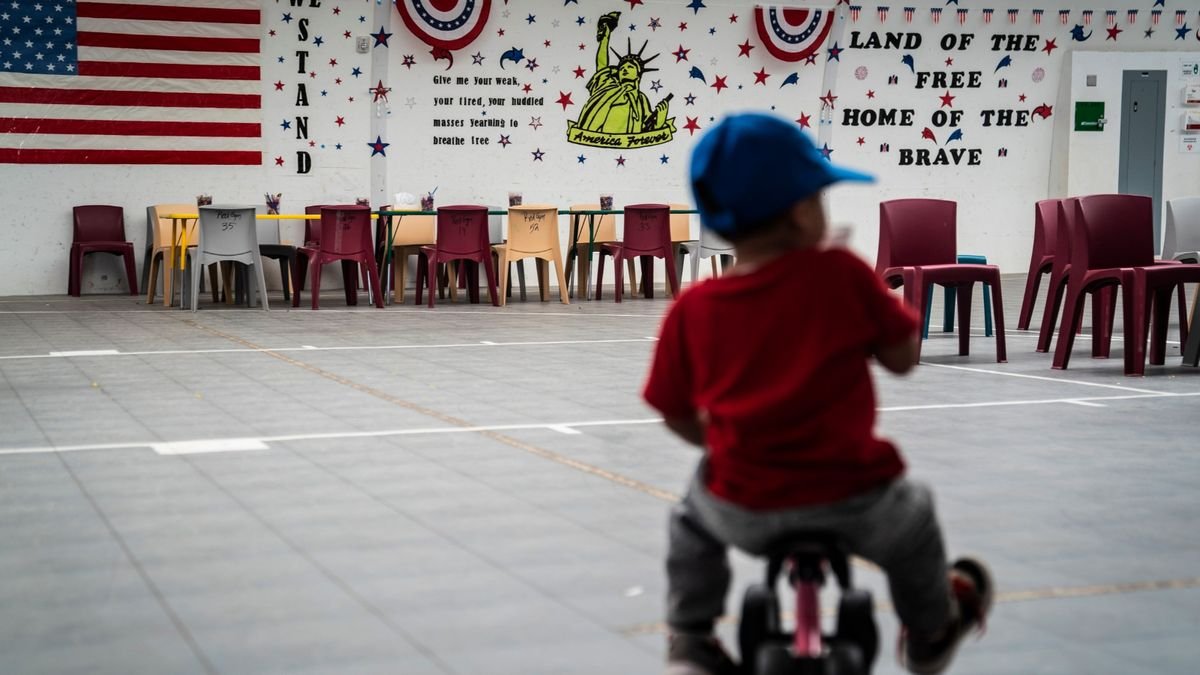
    Did Texas ICE facility serve employee-only Thanksgiving dinner in front of detained families?

    • The claim that staff at Dilley Immigration Processing Center in Texas served a Thanksgiving dinner in front of detained parents and children before packing the food away, claiming it was only for employees, is still under investigation.
    • The claim came from an NBC report from February that featured an account from a Russian couple held at Dilley Immigration Processing Center in Texas with their three children.
    • At the time of this writing, Snopes had no primary evidence, such as video surveillance from inside the processing center, to prove the couple’s claim to NBC. However, we also had no primary evidence that the incident they described did not take place. Therefore, we leave this claim unrated.
    • Spokespeople for the Department of Homeland Security and CoreCivic, which manages Dilley Immigration Processing Center, told Snopes via email on Nov. 27 that the claim was false, but did not provide any evidence to support this.
    • Snopes will update this report if, or when, additional information surfaces. We have contacted the Russian couple’s lawyer, who also shared the claim, and await a reply to our queries.

    Around Thanksgiving, a claim (archived) circulated online that staff at Dilley Immigration Processing Center in Texas served a Thanksgiving dinner in front of detained parents and children before packing the food away, claiming it was only for employees.

    Immigration and Customs Enforcement detains non-U.S. citizens at immigration processing centers like Dilley while resolving their immigration cases to “secure their presence for immigration proceedings or removal from the U.S.” The Texas Tribune reported in August that Dilley Immigration Processing Center was the only detention center for families in the U.S. 

    Aaron Parnas, who shares news headlines on social media, posted a video about the claim on TikTok with the caption, “NEWS: CHILDREN IN DETENTION CENTER WERE SHOWN THANKSGIVING MEAL, FORCED TO WATCH AS GUARDS PACKED IT AWAY.” 

    Claims also circulated on Facebook and X (archived, archived). Snopes readers contacted us about the claim.

    The claim came from an NBC report from February that featured an account from a Russian couple held at Dilley Immigration Processing Center in Texas with their three children. According to the children’s mother, named only as Oksana, families held at the center gathered for what they thought was “a Thanksgiving celebration” in November 2025 to find “turkey, sandwiches, pastries and pies” set out on tables. 

    However, Oksana said that when a parent asked when the celebration would start, staff told the people gathered that the food was only for staff and packed it away.

    At the time of this writing, Snopes had no primary evidence, such as video surveillance from inside the processing center, to prove Oksana’s claim to NBC. However, we also had no primary evidence that the incident Oksana described did not take place. Therefore, we leave this claim unrated.

    In an emailed statement to Snopes, a Department of Homeland Security spokesperson wrote:

    These claims are absolutely FALSE. Detained illegal aliens receive holiday meals in the dining halls with menus tailored to the occasion. Any staff potlucks occur in areas inaccessible to residents.

    A spokesperson for CoreCivic, which manages Dilley Immigration Processing Center as part of a contract with ICE, called the claim “patently false.” The spokesperson also said that staff offered people detained at Dilley holiday meals and activities, and that any separate staff meal would have happened in a separate area inaccessible to detainees. 

    We also contacted Elora Mukherjee, the director of the Immigrants’ Rights Clinic at Columbia Law School who NBC reported represented Oksana and her partner Nikita in seeking release from Dilley, to ask whether she had heard other accounts from families held at Dilley that corroborated Oksana’s account and await a reply. 

    Mukherjee repeated (time code 48:27) what appeared to be Oksana’s account of Thanksgiving 2025 at the center during a forum hosted by the Senate Judiciary Committee’s Democrats in March, the month after NBC’s report. We await replies to our queries.

    Declarations from Dilley paint damaging picture of child detainment

    Lawyers who sought to make the U.S. government adhere to the Flores Settlement, which sets minimum standards for the detainment of children, submitted dozens of sworn declarations from detained parents and children at Dilley to a federal judge starting in June 2025, three months after the Tribune reported the Trump administration would reopen the center.

    The Flores Settlement said children must be not be held for long periods of time in immigration prisons or detention facilities and should generally be released as quickly as possible. Courts have previously interpreted the legal limit for detention of a child under the Flores Settlement to be 20 days.

    Oksana and Nikita’s three children had reportedly been detained at Dilley for more than 120 days in February. Using data the government filed as part of its fight to end the Flores Settlement, the Tribune said in an August report that in February, when NBC reported on Oksana and Nikita’s family’s detention at Dilley, the average length of a child’s stay at the center was 47.5 days.

    We reviewed 21 declarations submitted on Dec. 8, 2025, shortly after the alleged Thanksgiving dinner at Dilley. However, the declarations were all dated before Thanksgiving 2025, which was on Nov. 27. We reviewed four declarations (N.V.S.M, C.R.G, N.G. and D.C.R.R.) given in November but before Thanksgiving in case the alleged employee-only dinner happened before actual Thanksgiving. None of the declarations we reviewed corroborated Oksana’s account.

    Lawyers filed more declarations in March 2026. We reviewed 33 declarations given between October 2025 and March. None mentioned Thanksgiving.

    The declarations we reviewed attested to the damaging physical and psychological effects of children’s detention at Dilley. Speaking to NBC, Oksana and Nikita complained of a lack of activities and education for their children and difficulties accessing basic needs like medicine or fresh food. The Texas Tribune also cited declarations that echoed these concerns.

    In February, after NBC published its report, the DHS refuted what Deputy Assistant Secretary Lauren Bis called “false claims about the ICE Dilley facility including that children are denied medical care and don’t have educational resources.” 

    It was unclear at the time of this writing whether Oksana, Nikita and their children remained in Dilley or another immigration processing center or whether U.S. authorities had deported or released them.

    For further reading, Snopes has previously investigated claims related to ICE and immigration enforcement.

    Sources

    Detention Facilities | ICE. 17 Sept. 2020, https://www.ice.gov/detention-facilities.

    DHS Sets the Record Straight About the ICE Dilley Facility, Debunks Falsehoods | Homeland Security. https://www.dhs.gov/news/2026/02/24/dhs-sets-record-straight-about-ice-dilley-facility-debunks-falsehoods. Accessed 27 Nov. 2026.

    Elora Mukherjee. https://www.law.columbia.edu/faculty/elora-mukherjee. Accessed 27 Nov. 2026.

    ‘”Even in Russia, They Don’t Treat Children like This”: A Family’s Nightmare in ICE Detention’. NBC News, 13 Feb. 2026, https://www.nbcnews.com/news/us-news/russian-family-ice-detention-dilley-texas-nightmare-immigration-rcna258377.

    ‘Flores Settlement | Landmark Protections for Immigrant Children’. CHRCL, https://www.centerforhumanrights.org/flores-settlement. Accessed 27 Nov. 2026.

    Ford, Uriel J. García, Alex Nguyen, Colleen DeGuzman, Alex. ‘Texas Detention Center Holding Kids beyond Court-Ordered Limit’. The Texas Tribune, 12 Aug. 2026, https://www.texastribune.org/2026/08/12/texas-immigration-ice-detention-children-dilley/.

    ‘ICE Juvenile Coordinator Annual Report – #1802, Att. #1 in Jenny L Flores v. Edwin Meese (C.D. Cal., 2:85-Cv-04544) – CourtListener.Com’. CourtListener, https://www.courtlistener.com/docket/4145012/1802/1/jenny-l-flores-v-edwin-meese/. Accessed 27 Nov. 2026.

    ‘Jenny L Flores v. Edwin Meese, 2:85-Cv-04544 – CourtListener.Com’. CourtListener, https://www.courtlistener.com/docket/4145012/jenny-l-flores-v-edwin-meese/. Accessed 27 Nov. 2026.

    Senate Judiciary Democrats. ‘The Kids Are Not Alright: How Mass Deportation Is Traumatizing Children’. YouTube, 17 Mar. 2026, https://www.youtube.com/live/2Zp4pVeF-ww?t=2907s.

    Serrano, Alejandro. ‘South Texas Immigration Detention Center to Reopen’. The Texas Tribune, 6 Mar. 2025, https://www.texastribune.org/2025/03/06/texas-dilley-immigration-detention-center-families-reopen/.

    “The “Flores Settlement” and Alien Families Apprehended at the U.S. Border: Frequently Asked Questions.” Congress.gov, Library of Congress, 27 November 2026, https://www.congress.gov/crs-product/R45297.

  • Don’t fall for these 16 fake giveaways, deals and other scams

    Don’t fall for these 16 fake giveaways, deals and other scams

    MrBeast Launched Casino App ‘The Beast Plinko’ with Endorsements from Andrew Tate and The Rock?

    Read More

  • Claim Mamdani will pay NYC residents to house people released from Rikers Island omits key context

    Claim Mamdani will pay NYC residents to house people released from Rikers Island omits key context

    Claim:

    New York City Mayor Zohran Mamdani will pay New York residents monthly stipends to house formerly incarcerated people from Rikers Island, including “killers and rapists.”

    Rating:

    Mostly False

    What’s True

    Mamdani is providing funding for an existing program that helps formerly incarcerated people resettle with their families and provides mental health support, among other resources. The program pays families up to $500 a month for a year to house and support the reentry of their family members released from incarceration.

    What’s False

    The program is for people who are already being released from Rikers or from prison and is not a way of ending incarceration early. While the eligibility criteria is still in its proposal stages, any domestic violence cases or cases with active protective orders are ineligible. This program, which has existed since 2021, places formerly incarcerated people with their families, not other New York residents. An independent study found in 2023 there was a high success rate and growing demand for the program.

    On Nov. 20, New York Mayor Zohran Mamdani announced the city’s plan to close its jail on Rikers Island. The plan includes building four outer-borough-based facilities to house incarcerated people and more therapeutic bed services. Critics of Mamdani’s plan claimed part of the effort would pay New Yorkers a monthly stipend to house formerly incarcerated people from Rikers Island. 

    The same day, former New York police officer John Chell made the claim to Fox News host Sean Hannity:

    CHELL: Let me tell you something that’s crazy. … One of the proposals is have civilians get paid by the city to house criminals. Let me say that again. Civilians to get hired … would you like a robber in your basement? 

    HANNITY: John, I mean, you can make money doing this. I mean, you know, adopt a prisoner. I think every liberal should. 

    CHELL: It’s great. So, you’re going to adopt a prisoner, but when you come home from a hard day’s work and your Samsung TV is gone, who are you going to blame? 

    A Facebook post claimed that under this initiative families would get paid $500 per month to house “killers and rapists”:

    The above claims are missing key information. The Mamdani administration plans to give more funds to and to expand the existing Kinship Reentry Program, which unites formerly incarcerated people with family and loved ones. The program is reportedly under demand and has a high success rate, with little available evidence that it has placed New Yorkers in unsafe situations with “killers and rapists.” It does not simply place strangers among New York residents. As such, we rate this claim as mostly false.

    We should note that Rikers is a jail and not a prison. A jail is used largely to house pretrial defendants — those who have not yet been convicted of a crime. As such, most people housed in Rikers — 86% according to Vera Institute, a progressive research and advocacy group — have not yet been convicted of a crime. 

    Snopes reached out to the Mamdani administration and the Osborne Association, which runs the reentry program, to learn more about who qualifies to participate. New York’s City Hall told us over email that the program is intended for people already returning home from incarceration at Rikers and is not a mechanism to secure release from custody. The city also said the program is intended to promote housing stability, support successful reentry and prevent formerly incarcerated people from entering the costly homeless shelter system.

    What is the Kinship Reentry Program? 

    Through this program, incarcerated people are housed with their family members or loved ones — not complete strangers, as people making the claim asserted. 

    Founded in 2021 by the Osborne Association, a nonprofit group focused on services for incarcerated people and their families, the Kinship Reentry Program supports formerly incarcerated people’s housing and reintegration with family members and loved ones. The program gives cash and additional services to families helping their loved ones resettle into society following incarceration. 

    According to a 2023 assessment by researchers at the University of Chicago, the program offered $500 monthly payments for one year to eligible families that “are trusted to deploy the funds at their own discretion, with a few restrictions: tobacco, alcohol, lottery tickets, and illegal substances, and the requirement to provide receipts.” 

    In addition to direct financial assistance, participating families receive financial management assistance, clinical and therapeutic services and peer support.

    Families also have a case manager checking in twice a month, tenant advocacy support with their landlords, referrals for other services, and financial literacy training.

    How does the program work within Mamdani’s ‘Close Rikers’ plan?

    According to Mamdani’s “Close Rikers Strategic Plan“, the administration would invest more money into the Kinship Reentry Program and expand the number of families who could participate in it. 

    The city told Snopes over email that the expansion does not increase the $500 monthly payment to participating households. Additional funding supported an expansion in the number of families served, program management and various clinical services.

    The plan document states: 

    Invest $3.55M in FY27 and $7.1M annually thereafter to expand the Kinship Reentry Housing Program from supporting 50 to 300 families. This program provides a stable home for people returning to community from Rikers or prison, including 100 people with diagnoses of serious mental illness, substance use disorder or other complex behavior health needs. It provides direct financial assistance, financial management services, clinical therapeutic support, peer navigation and other wraparound resources. 

    According to the “Close Rikers Strategic Plan,” the reentry program has served more than 250 families. Three in four families completed the full 12-month program; 90% reported better family relationships and 94% reported better financial stability. Only two of over 250 families had their loved ones return to incarceration during the program period.

    Is the program safe for New Yorkers?

    As noted above, the program supports people with mental illnesses and substance use disorder. We reached out to the Mamdani administration and Osborne Association to learn more about which formerly incarcerated people qualified for the program and what additional support family members receive. 

    The city told us over email that the administration was working with the program to finalize eligibility requirements. The program was specifically for people leaving Rikers within six months who faced housing instability and barriers to family reunification. 

    While the city’s proposed eligibility criteria did not include exclusions based on criminal charges, any domestic violence cases or cases with active protection orders would be ineligible. Families participating in the program would have to demonstrate financial need and voluntarily agree to house their returning family member without coercion. Families must also establish the person is legally permitted to reside in the home.

    Per City Hall, the participants must enroll in supportive services programs with their families and commit to a 12-month program with monthly check-ins and quarterly home visits. Participants would undergo pre-screenings, include assessing their medical needs, income, public benefits and outstanding arrears.

    The majority of the participants according to the University of Chicago’s 2023 study were women, and most families were people of color. The assessment found that participants in the program were enthusiastic about the support provided and demand for the program exceeded availability, leading to a waitlist.

    The claims by critics that such a program would bring “killers and rapists” into New York City neighborhoods, has little to no evidence given the success rate of the program. We also asked the Osborne Association for comment on the above criticisms and will update this post accordingly.

    For further reading, Snopes has covered numerous claims about Mamdani, including a rumor that he was “furious” about a Times Square billboard featuring Jesus Christ. 

  • Did Mamdani administration close migrant shelter where ICE sought names of residents?

    Did Mamdani administration close migrant shelter where ICE sought names of residents?

    Claim:

    One day before a federal court’s deadline to comply with a subpoena to provide the names of residents in the Bruckner migrant shelter in the Bronx to Immigration and Customs Enforcement, the city of New York notified the court that all the residents had moved out and the shelter was empty.

    Rating:

    True

    In November 2026, a claim (archived) circulated online that, instead of obeying a government subpoena to provide names of residents in a New York City migrant shelter to Immigration and Customs Enforcement, Mayor Zohran Mamdani moved the shelter residents out and told the government the shelter was empty.

    For example, one Threads user who shared the claim wrote:

    A federal judge ordered NYC to turn over the names of all the residents at the emergency migrant shelter by Nov 20. Instead of appealing the decision, Mamdani moved everyone who was at the migrant shelter to city ran shelters and responded on the 19th with “no residents are in the migrant shelter”. A CLASS ACT. He just doesn’t stop! 💙

    The claim also circulated on Facebook, X, Instagram (archived, archived). Snopes readers contacted us about the claim.

    The claim is true. The Mamdani administration and the previous Eric Adams administration have refused since at least October 2025 to comply with an ICE subpoena to provide the names and dates of birth of noncitizen residents at the Bruckner migrant shelter at 825 East 141st St. in the Bronx, a borough of New York City.

    A federal judge had ordered New York and the federal government to submit proposals for a “special master” who would pass the names of noncitizen residents with certain serious criminal histories from the city to ICE by Nov. 20.

    However, on Nov. 19, lawyers for the city wrote in a letter to the judge that the city had moved all the residents at Bruckner out of the shelter and sought to close it, which they argued rendered the case moot.

    At the time of this writing, ICE had not responded to New York’s Nov. 19 filing, though the filing suggests ICE disagreed that moving residents out of Bruckner meant the court could not enforce the subpoena. 

    We contacted New York City Hall and ICE for comment on the next steps of the case and await replies.

    Last-minute filing could change direction of year-long case

    The U.S. government initially submitted a petition in a New York district court in October 2025, asking it to order New York City to comply with an August subpoena that asked for the names and dates of birth of any residents at “the shelter located at 825 East 141st Street, Bronx, NY” who were not U.S. citizens and had criminal histories that involved “murder, manslaughter, rape, robbery, assault, grand larceny, burglary, or assault of a law enforcement officer.”

    In January 2026, the day after Mamdani took the oath of office, lawyers for the city wrote in a court filing that ICE’s petition amounted to an “improper fishing expedition” (Page 5) where agents cast a wide net looking for people who committed offenses under U.S. Title 8, which governs immigration, citizenship, visas and deportation.

    According to the city, ICE had issued the subpoena for the names of the shelter residents “in the hopes of finding evidence of law-breaking later” (Page 4), which the city’s lawyers called an “unreasonable and unlawful use of the administrative subpoena power” (Page 5).

    However, the court disagreed. On Nov. 6, Judge Lewis A. Kaplan wrote that the court had “no choice” but to order the city to comply with the subpoena because it had not shown that doing so would be “unduly burdensome” (Page 1).

    In the meantime, Kaplan wrote that ICE had agreed to “the appointment of a special master who will identify residents of the facility with certain serious criminal histories and provide only those names to the agency” (Page 2). Kaplan wrote that New York and ICE should confer and submit a proposal for how to appoint and pay the “special master” by Nov. 20.

    Lawyers for the city wrote in a letter to the judge the day before the Nov. 20 deadline that the city had moved the remaining residents (172 people as of Nov. 6) out of Bruckner. The lawyers for the city wrote, “In light of Bruckner’s closure today, there are zero current residents of Bruckner. Accordingly, there are no current Bruckner residents to identify, which makes this matter moot” (Page 2).

    The city’s lawyers wrote in the same letter that, “Counsel for the City is aware that the United States disagrees that the matter is moot and intends to submit an opposition to this letter” (Page 2).

    Bruckner’s closure ‘unrelated’ to subpoena litigation

    There is no evidence that Bruckner’s closure was in direct response to Kaplan’s decision to enforce the ICE subpoena for residents’ names. 

    The Threads post that spread the claim about Mamdani’s involvement in Bruckner’s closure appeared to suggest that Mamdani or his administration closed the site to circumvent or outsmart ICE’s subpoena. That appears to be speculation.

    Lawyers for the City of New York wrote on Nov. 19 that Bruckner “has long been scheduled to be closed by the end of this year” (Page 1) in accordance with an executive order from February 2026. In an attached declaration, Rudy S. Giuliani, the Executive Director of NYC Mayor’s Office of Housing Recovery, wrote, “The closure of Bruckner is unrelated to this litigation; it is pursuant to the Mayor of New York’s Emergency Executive Order 2” (Page 4).

    That executive order said the city would transition residents from Bruckner, the city’s last remaining “Humanitarian Emergency Response and Relief Center” into “standard Department of Social Services/Department of Homeless Services facilities” by the end of 2026 (Page 4). 

    Gothamist, a New York City news and culture website, reported on Nov. 19, citing city officials, that some Bruckner residents “had left and found housing or were staying with friends. Others were relocated within the city’s municipal shelter system.” That appeared to support the Threads post’s claim that the city moved people living in Bruckner to “city ran” shelters. Snopes contacted New York City Hall to confirm this statement and await a reply.

    For further reading, Snopes has previously reported on a claim related to the influx of migrants to New York City in 2024 that caused the creation of emergency shelters like Bruckner.

  • Why unproven claim KGB recruited Trump in 1987 continues circulating

    Why unproven claim KGB recruited Trump in 1987 continues circulating

    • For years, people have claimed without proof that U.S. President Donald Trump is a Russian asset. This theory is often connected to allegations that Trump was once recruited by the KGB, the Soviet Union’s intelligence agency.  
    • The 2021 book “American Kompromat” features an interview with a former spy who claimed the KGB recruited Trump in the late 1980s. Several years later, in February 2025, Alnur Mussayev, a former Soviet and Kazakh security official, claimed in a Facebook post that the KGB recruited Trump in 1987 and assigned him the code name “Krasnov.” 
    • Since then, an image supposedly showing Trump’s KGB file has circulated on social media. Reputable reporting indicated that document was actually a file on Trump from the Czechoslovak intelligence agency StB, which had been watching him ever since he married Ivana Trump, a Czechoslovak citizen, in 1977.
    • Mussayev’s post does not say whether he personally recruited Trump or simply knew about the recruitment, nor does it state whether Trump has ever actively participated in espionage or is just a potential asset.
    • Trump did visit Moscow in 1987. Given his high status in society, the KGB almost certainly knew about his trip. But there is no clear evidence suggesting the KGB successfully recruited Trump during that trip or at any other time.
    • Mussayev’s documented career path raises questions about his credibility as a source. Several biographies of him on Russian-language websites suggest that at the time the KGB supposedly recruited Trump, Mussayev was working in the Soviet Union’s Ministry of Internal Affairs, not the KGB. 
    • No credible evidence proving the rumor that Trump is a Russian intelligence asset has ever surfaced. The president has long denied any claims that he has worked for Russia.

    For years, people have claimed that Russian intelligence services recruited U.S. President Donald Trump as an asset in the late 1980s. 

    In February 2025, the rumor took a new turn. Alnur Mussayev, a former Soviet and Kazakh security official, claimed on Facebook that the KGB, the Soviet Union’s intelligence agency, recruited Trump as an asset and gave him the code name “Krasnov,” derived from a Russian word for “red.”

    The claim gained traction when news website The Daily Beast published a now-deleted story (archived) titled, “Former Intelligence Officer Claims KGB Recruited Trump,” using only Mussayev’s Facebook post as a source. The article described Mussayev’s allegations as “unfounded.” 

    The rumor has been widespread ever since then. 

    Snopes has fact-checked Mussayev’s allegation twice and found it to be unsubstantiated — that is, he has not provided tangible evidence supporting his claim and it is not supported by other credible sources. (We contacted Mussayev again for this story, but never heard back).

    But the rumor has continued to spread since Snopes published our articles. We regularly receive reader emails asking whether the story is true, including people asking whether an image shows an old KGB intelligence file featuring Trump’s photo. 

    (Facebook user Karen Rourke)

    This article revisits and updates our previous work, including a new section on the intelligence file. Reputable reporting indicates it was from the StB, Czechoslovakia’s intelligence agency, not the KGB. 

    In early 2019, Trump denied claims that he has worked for Russia. He has also repeatedly said that investigations into Russian interference in the 2016 election unfairly or illegally targeted him — often branding them part of the “Russia hoax,” as Snopes has previously reported.

    We also contacted the White House for comment on the matter. They called the rumor “absolutely insane” and said it had “no basis in reality.”

    Our findings — that the claim is unfounded due to a lack of evidence — remain the same. While the KGB certainly knew about Trump’s trip to Moscow in 1987, there is no evidence the agency actively recruited him on the visit. 

    The mislabeled intelligence file

    We identified the intelligence file’s true origin while researching the claim: a 2018 article in The Guardian detailing Czechoslovakia’s intelligence operations against Trump. According to the story, the state intelligence agency StB watched Trump for years following his 1977 marriage to Ivana, a Czechoslovak citizen. (It’s worth noting that the StB was known to collaborate with the Soviets.)

    That article, alongside one published in the Czech magazine Respekt at the same time, also happened to contain a much clearer view of the exact same intelligence file used in the social media posts. Both credited the image to the StB, with a watermark reading “Archiv Bezpecnostnich Slozek” That’s the Czech name of the Security Services Archive, a state-funded agency that maintains old StB records.

    Snopes contacted the archive with the goal of obtaining any files it has on Trump, but was informed that the files may only be viewed and copied in person at one of three locations in the Czech Republic. 

    However, even if we hadn’t been able to identify the file’s original source, there was still a large hint that it wasn’t KGB. The document is written in the Czech or Slovak Latin alphabet, not Russian Cyrillic.

    Mussayev’s allegations don’t line up with official records

    In Mussayev’s Feb. 20, 2025, Facebook post, he claims that in 1987, while he was was serving in the KGB’s Moscow-based Sixth Directorate, the agency recruited a “40-year-old businessman from the USA, Donald Trump, nicknamed ‘Krasnov.’” The Sixth Directorate’s purpose was to recruit businessmen from “capitalist countries,” according to Mussayev.

    Mussayev’s post does not specify whether Trump participated in any spying, only that he was recruited. In a post (archived) from July 18, 2018, he describes Trump’s relationship with Russian President Vladimir Putin as follows (translated from Russian to English with DeepL):

    Based on my experience working in the field for the KGB and the KNB, I can say with certainty that Trump falls into the category of people who are ideal candidates for recruitment. I have no doubt that Russia has compromising information on the U.S. president and that, for many years, the Kremlin has been promoting Trump for the presidency of the world’s leading superpower.

    Trump did visit Moscow in 1987 to look at possible locations for luxury hotels, as he noted in his book, “Trump: The Art of the Deal.” According to The Guardian and Politico, the KGB may have played a role in luring him there, though Snopes could not confirm that reporting. (Some of it may be sourced either directly or indirectly from the 2017 Steele Dossier — a private intelligence report containing allegations against Donald Trump that was published before he first entered the White House, which several reputable outlets have branded as “discredited“).

    But despite some circumstantial evidence behind Mussayev’s claim, biographies of him on several Russian-language websites (of unknown trustworthiness, we note) reveal a possible discrepancy in his credibility as a source.

    While Mussayev’s post says he worked in the Sixth Directorate of the KGB in 1987, those online biographies, including one from the Moscow State Institute of International Relations, placed him in Kazakh KGB counterintelligence from 1979 until 1986, when he moved to the Soviet Union’s Ministry of Internal Affairs.

    Given the covert nature of the KGB, it is possible the public timeline of Mussayev’s work history was fabricated by the agency as a cover. At face value, however, the short biographies suggest Mussayev’s claim may not be quite as reliable as he claims. 

    Furthermore, other sources say the First Chief Directorate, not the Sixth Directorate, was the KGB’s principal espionage arm. According to the journalist and author W. Thomas Smith Jr.’s book “Encyclopedia of the Central Intelligence Agency,” the Sixth Directorate was responsible for “enforcing financial and trade laws, as well as guarding against economic espionage,” in line with the counterintelligence descriptions present in the online biographies. Recruiting a foreign businessman as a KGB asset would therefore be, at best, only tangentially related to the Sixth Directorate’s mission, assuming Smith Jr.’s descriptions are accurate. 

    Other accusations against Trump

    Trump’s relatively pro-Russian positions compared with those of other U.S. presidents have led to past allegations that he is or was a Russian asset in some way.

    For instance, the Steele Dossier famously claimed Russia has incriminating tapes of Trump engaging in sexual activity with prostitutes in Moscow, among other scandalous accusations. In 2026, Mussayev echoed the claim that Trump was captured on tape and said Kazakhstan also has the footage, according to the Kyiv Post. The Ukrainian English-language newspaper cited an interview the former KGB official conducted with Ukrainian news station Espreso TV.

    However, as mentioned above, that dossier is widely regarded as discredited. CNN previously reported that the dossier’s main source, Igor Danchenko, was mainly relaying “rumor and speculation.” In 2022, Danchenko was acquitted of charges of lying to the FBI about the dossier’s sources. 

    In the 2021 book “American Kompromat,” journalist Craig Unger interviewed a former KGB spy, Yuri Shvets, who also alleged that Trump was compromised by Russia, as Snopes previously reported. The Guardian reported that Shvets had said Trump was “cultivated as a Russian asset over 40 years.”

    Shvets claimed Trump first appeared on the Russians’ radar in 1977, when he was the target of a spying operation — 10 years before the recruitment alleged by Mussayev took place. (That is also the year Trump married Ivana. The Czechoslovakians likely started their file on Trump around this time, according to The Guardian article featuring the image of Trump’s old StB file). 

    Shvets said the KGB later went on a “charm offensive” when Trump visited Moscow and St. Petersburg for the first time in 1987 — the same year Mussayev specified. Shvets told The Guardian that Trump proved so willing to spread anti-Western propaganda that there were celebrations in Moscow. It was not possible to uncover evidence corroborating these claims.

    Finally, the Mueller report documented the official findings of former Special Counsel Robert Mueller’s investigation into Russian efforts to interfere in the 2016 U.S. presidential election, as well as allegations of conspiracy or coordination between Trump’s presidential campaign and the Kremlin. That investigation — which found that the Russian government did interfere in the 2016 presidential election “in sweeping and systemic fashion” (Paragraph 2, PDF Page 9) and that there were “links” between Trump campaign officials and individuals with ties to the Russian government (Paragraph 6, PDF Page 9) — did not establish that members of the Trump campaign conspired or coordinated with the Russian government (Paragraph 1, PDF Page 10).

    Sources

    Christensen, Laerke. ‘Did Trump Accuse Biden of Being “Russian Agent” in Truth Social Post?’ Snopes, 18 May 2026, https://www.snopes.com//fact-check/trump-biden-russian-agent/.

    Cohen, Marshall. “The Steele Dossier: A Reckoning | CNN Politics.” CNN, 18 Nov. 2021, https://www.cnn.com/2021/11/18/politics/steele-dossier-reckoning/index.html.

    DeepL Translator | World’s Most Accurate Translator. https://www.deepl.com/en/translator. Accessed 9 Nov. 2026.

    “Donald Trump’s Russian Spy Connection: Social Media Explodes with ‘Evidence’ about #Krasnov. Is It Just Another Wild Conspiracy Theory?” The Economic Times, 23 Feb. 2025. The Economic Times – The Times of India, https://economictimes.indiatimes.com/magazines/panache/donald-trumps-russian-spy-connection-social-media-explodes-with-evidence-about-krasnov-is-it-just-another-wild-conspiracy-theory/articleshow/118504492.cms?from=mdr.

    “Fact Check: Was Donald Trump Recruited by the KGB as ‘Krasnov’?” Euronews, 13 Mar. 2025, https://www.euronews.com/2025/03/13/fact-checking-online-claims-that-donald-trump-was-recruited-by-the-kgb-as-krasnov.

    Former Intelligence Officer Alnur Mussayev Claims KGB Recruited Donald Trump Under Codename ‘Krasnov.’ 21 Feb. 2025, https://web.archive.org/web/20250221153932/https://www.thedailybeast.com/former-intelligence-officer-alnur-mussayev-claims-kgb-recruited-donald-trump-under-codename-krasnov/.

    Gorbachev, Alexey. ‘Discredited “Steele Dossier” Flags Important Lessons for Media’. Voice of America, 7 Dec. 2021, https://www.voanews.com/a/discredited-steele-dossier-flags-important-lessons-for-media/6342968.html.

    Harding, Luke. “Czechoslovakia Ramped up Spying on Trump in Late 1980s, Seeking US Intel.” The Guardian, 29 Oct. 2018. US News. The Guardian, https://www.theguardian.com/us-news/2018/oct/29/trump-czechoslovakia-communism-spying.

    Kazakh Ex-Security Chief’s False ‘Trump KGB Recruitment Story’ Gains Media Traction – The Times Of Central Asia. 24 Feb. 2025, https://timesca.com/kazakh-ex-security-chiefs-false-trump-kgb-recruitment-story-gains-media-traction/.

    Liles, Jordan. ‘Photo of Trump in Moscow Is Real, but Not from His First Visit in 1987’. Snopes, 23 Aug. 2026, https://www.snopes.com//fact-check/trump-moscow-visit-1987-photo/.

    Luczkiw, Stash. “‘Trump Recruited as Moscow Asset,’ Says Ex-KGB Spy Chief.” Kyiv Post, 22 Feb. 2025, https://www.kyivpost.com/post/47630.

    Muller, Robert. Report On The Investigation Into Russian Interference In The 2016 Presidential Election. U.S. Department of Justice, Mar. 2019, https://www.justice.gov/archives/sco/file/1373816/dl?inline=.

    No Label Defined. https://entities.oclc.org/worldcat/entity/E39PBJvCWC3XXtyfvww8DjpQMP.html. Accessed 24 Feb. 2025.

    Norris, Sian. ‘Trump, Russian Bribes, and Reform: What Really Happened?’ openDemocracy, 8 Oct. 2026, https://www.opendemocracy.net/trump-russia-asset-reform-farage-luke-harding-ukraine-war-putin-nathan-gill-bribes/.

    Palma, Bethania. “Did Ex-KGB Spy Say Russia Cultivated Trump as an ‘Asset’ for 40 Years?” Snopes, 2 Feb. 2021, https://www.snopes.com//fact-check/kgb-spy-russia/.

    Polantz, Katelyn. “How the FBI Attempted to Verify a Salacious Allegation in the Steele Dossier | CNN Politics.” CNN, 9 Dec. 2019, https://www.cnn.com/2019/12/09/politics/fbi-steele-dossier/index.html.

    Savage, Charlie. ‘Why the Discredited Dossier Does Not Undercut the Russia Investigation’. The New York Times, 1 Dec. 2026, https://www.nytimes.com/2021/12/01/us/trump-russia-investigation-dossier.html.

    Smith, David. “‘The Perfect Target’: Russia Cultivated Trump as Asset for 40 Years – Ex-KGB Spy.” The Guardian, 29 Jan. 2021. The Guardian, https://www.theguardian.com/us-news/2021/jan/29/trump-russia-asset-claims-former-kgb-spy-new-book.

    Smith, W. Thomas, and W. Thomas Smith. Encyclopedia of the Central Intelligence Agency. Infobase Publishing, 2003.

    “The Daily Beast Publishes, Then Deletes Story Alleging Trump Was Recruited by Soviet Spies.” Yahoo News, 22 Feb. 2025, https://www.yahoo.com/news/daily-beast-publishes-then-deletes-234051086.html.

    The Rest Is Politics. ‘Is Trump A Russian Asset?’ YouTube, 10 Sept. 2026, https://www.youtube.com/watch?v=Qg1AUwSKxvk.

    Trump-Russia Steele Dossier Source Acquitted of Lying to FBI. 18 Oct. 2022. www.bbc.com, https://www.bbc.com/news/world-us-canada-63305382.

    ‘Trump Denies Reports He Worked for Russia: “I Never Worked for Russia”‘. NBC News, https://www.nbcnews.com/nightly-news/video/trump-denies-reports-he-worked-for-russia-i-never-worked-for-russia-1425764419962. Accessed 9 Nov. 2026.

    ‘Trump-Russia Steele Dossier Source Acquitted of Lying to FBI’. BBC News, 18 Oct. 2022, https://www.bbc.co.uk/news/world-us-canada-63305382.

    ‘Trump’s Truth’. Trump’s Truth, https://www.trumpstruth.org/search. Accessed 9 Nov. 2026.

    Unger, Craig. American Kompromat: How the KGB Cultivated Donald Trump, and Related Tales of Sex, Greed, Power, and Treachery. Penguin, 2021.

    Web Page Template. https://academic.mu.edu/meissnerd/kgb.html. Accessed 24 Feb. 2025.

    “Who Is Alnur Mussayev? The Former USSR KGB Officer at the Center of Explosive Donald Trump ‘Russian Spy’ Allegations.” The Economic Times, 23 Feb. 2025. The Economic Times – The Times of India, https://economictimes.indiatimes.com/magazines/panache/who-is-alnur-mussayev-the-former-ussr-kgb-officer-at-the-center-of-explosive-donald-trump-russian-spy-allegations/articleshow/118489046.cms?from=mdr.

    “Мусаев, Альнур.” Lenta.RU, https://lenta.ru/lib/14190507/. Accessed 24 Feb. 2025.

    МУСАЕВ Альнур Альжапарович | ЦентрАзия. https://centrasia.org/person2.php?st=1130843514. Accessed 24 Feb. 2025.

  • Is there arsenic in Nerds, Snickers, other US candies? We asked experts

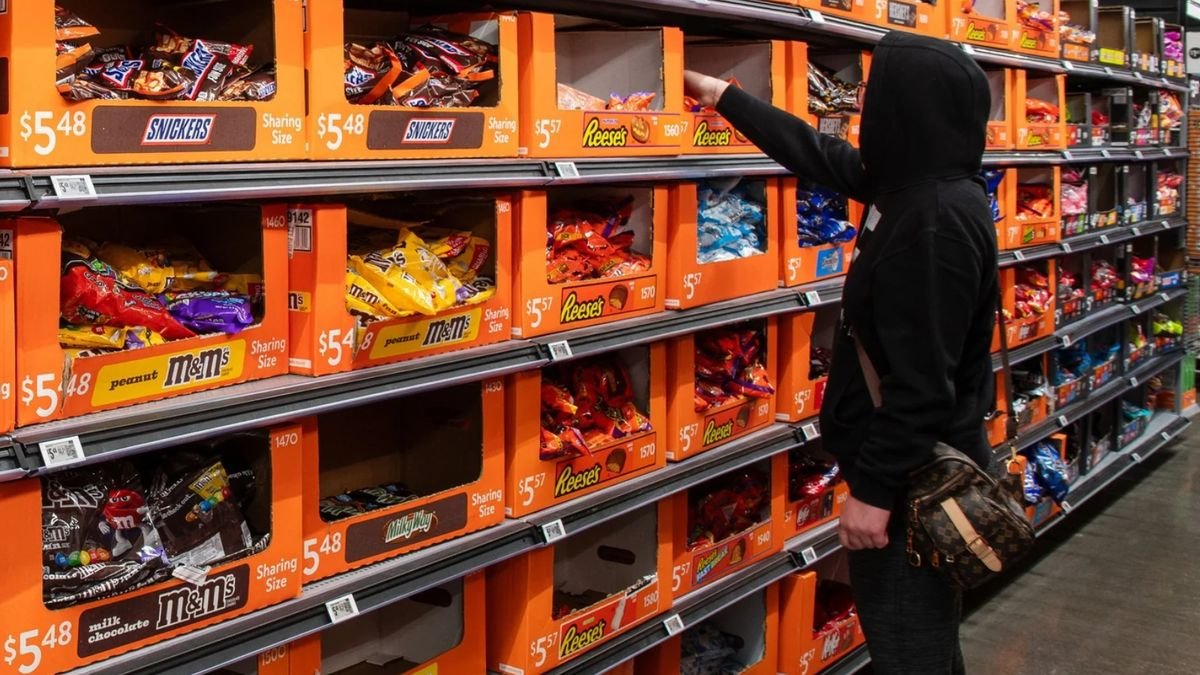
    Is there arsenic in Nerds, Snickers, other US candies? We asked experts

    • The claim that several popular candy products contain dangerous levels of arsenic — a semimetallic element that is a highly toxic carcinogen in its inorganic form — lacks sufficient evidence. 
    • The rumor stems from a January 2026 study the Florida Department of Health’s “Healthy Florida First” initiative conducted, which purportedly found that out of 46 popular candies, 28 contain dangerous levels of arsenic.
    • Snopes spoke with two arsenic experts, both of whom said the Florida study lacks critical information. One expert noted that the testing method Florida used is typically adopted when testing soil and water but not food, and cannot differentiate between very toxic arsenic (III), less toxic arsenic (V) and relatively nontoxic organic arsenicals. 
    • While a spokesperson for Healthy Florida First initially replied to our inquiries, they stopped responding when we posed more complex questions regarding their methodology and testing conditions.
    • The lack of information regarding testing methodology and conditions does not mean the study’s results are categorically false, but until further information about the test and its results is made accessible to the public, we cannot rate this claim.

    In January 2026, Florida first lady Casey DeSantis announced that the Florida Department of Health conducted a study purportedly finding that several popular candy products contain dangerous levels of arsenic. The department lists Nerds, Laffy Taffy, Hershey’s and Sour Patch Kids products, among others, as examples.

    Arsenic is a naturally-occurring, semimetallic element that can be found in soil, water, air, etc. In its organic, less dangerous form, arsenic is combined with carbon and commonly occurs in seafood. Inorganic arsenic, however, is carcinogenic and “has been recognized as a human poison since ancient times,” according to the Centers for Disease Control and Prevention.

    As Halloween approached in 2026, Florida’s “Healthy Florida First” findings resurfaced on social media.

    For example, one X user wrote, in part, “Florida’s Department of Health tested 46 popular candies and found 28 were laced with this POTENT CARCINOGEN.”

    As DeSantis said, Florida did conduct a study (archived) purportedly detecting arsenic in 28 out of 46 candy products, approximately 60% (the products tested belong to 10 brands). However, the findings lack critical information about testing conditions and methodology. While Healthy Florida First initially replied to our inquiries, a spokesperson for the initiative stopped responding when we posed more complex questions raised by an arsenic expert whom Snopes spoke to.

    Below, we look into Florida’s findings and break down expert opinions, as well as available primary evidence, regarding dangerous arsenic levels in candy.

    What did Florida’s study claim?

    The study by Healthy Florida First, an initiative DeSantis leads, identified 28 candy products purportedly containing dangerous levels of arsenic. It lists “approximate ‘safe’ consumption amounts per year, based on developmental age, where arsenic was detected.”

    While all products tested from Mondelêz International (the maker of Sour Patch Kids and other products) and Tootsie Roll Industries purportedly tested positive for dangerous levels of arsenic, other companies, such as Mars, Ferrara Candy Company, The Hershey Company and Smart Sweets had mixed results. Products tested from Yum Earth, UNREAL and Annie’s are categorized as “risk not identified.”

    The study then lists recommended consumption limits for children and adults per year for each product. 

    Snopes contacted the Florida Department of Health and DeSantis’ office seeking comment regarding online criticism that its method of testing, the “EPA Method 6010D,” tests for inorganic arsenic in things like soil, rather than food. The U.S. Environmental Protection Agency says its analytical test method “6010D” measures trace elements and metals, usually in soil and water.

    Isabella White, a spokesperson for the health department, said via email that the contracted study was conducted at a “certified laboratory that specializes in food, environmental, pharmaceutical, cosmetic, and forensic testing, as well as advanced analytical sciences.” Her statement continued:

    Samples were obtained from commonly used retail outlets, including both brick-and-mortar stores and online retailers, to reflect real-world consumer purchasing patterns. Samples were analyzed using EPA Method 6010D for the multi-elemental determination of metals in solid and liquid samples. The laboratory followed its established quality assurance plan to validate and verify all results. 

    The Department approached this evaluation conservatively to ensure the protection of children, identified as the most sensitive and susceptible population. Candy products were screened for arsenic and lead using consumption-based risk assessment models and minimal risk levels established by the Agency for Toxic Substances and Disease Registry (ATSDR) to estimate potential health risks associated with consumption. 

    The ATSDR, a subsidiary of U.S. Health and Human Services, stipulates a minimal risk limit of 0.0003 mg of arsenic per kilogram per day for one year or more (regarding oral exposure to inorganic arsenic).

    Experts push back, say study lacks critical information

    According to arsenic expert Barry Rosen, an emeritus professor of cellular and molecular medicine at Florida International University, the Florida study’s use of ICP-OES (Inductively Coupled Plasma Optical Emission Spectroscopy, or EPA Method 6010D), is not the optimum method for solids. Like the online criticism of the study, he also noted that the method is typically used for soil and water but not food, and cannot differentiate between very toxic arsenic (III), less toxic arsenic (V) and relatively nontoxic organic arsenicals, writing via email, “This is a major drawback to that method.”

    Rosen outlined several aspects of Florida’s study that lack sufficient information. For example, given that sugar and metals, such as aluminum, can interfere with arsenic test results, he questioned how the researchers digested the candy, how they removed solids, and whether sugar was present in the extracts.

    “Their methodology may not be sufficient to allow them to draw their conclusions, but I’d really need more information before deciding,” Rosen said.

    We shared several of Rosen’s follow-up questions regarding the study’s methodology with Healthy Florida First, at which point we ceased receiving responses.

    “Based on the publicly available information, I would treat Florida’s findings as preliminary and would not use them to set annual limits on how many pieces of candy people can eat,” wrote Yong Cai, another arsenic expert and professor at Florida International University’s department of chemistry and biochemistry. He did acknowledge it is “plausible that some candies contain measurable arsenic.”

    For an independent comparison, Cai pointed to a 2018-2020 study by the U.S. Food and Drug Administration that found up to 3.3 parts per billion (PPB) of total arsenic in three samples of plain milk chocolate bars. Cai noted, “Those samples represent a small category and do not independently verify Florida’s results for the specific products it tested.”

    Although Healthy Florida First does provide some contextual information for its findings, it does not make critical information available to the public, such as the assumed child body weight used for calculations and how its calculations accounted for exposure from other foods and drinking water. Healthy Florida First did not respond to multiple requests for further comment.

  • 15 shopping-related rumors just in time for Black Friday

    15 shopping-related rumors just in time for Black Friday

    Target removed kid’s Halloween costume from website amid backlash over blackface, minstrel imagery

    Read More

  • Is Islam the fastest growing religion in the US? We checked the data

    Is Islam the fastest growing religion in the US? We checked the data

    Claim:

    Islam is the fastest-growing religion per capita in the United States.

    Rating:

    False

    Context

    While Islam is the fastest-growing religion in the world, it is not the fastest-growing religion in the U.S. — Hinduism and the nonreligious population are both growing faster, according to the World Religion Database. In addition, the statistic of “fastest-growing religion” is rather dubious, because it’s much easier for a smaller population to grow at a high rate than a larger one (10 to 15 and 10,000 to 15,000 both represent a 50% growth rate, as an example).

    Back in 2004, Snopes published an article called “Allah or Jesus?” that fact-checked the authenticity of a copypasta detailing a conversation an unnamed narrator had with an imam about the beliefs of the Muslim faith, specifically on the topic of jihad and the idea that Muslims are commanded to kill all nonbelievers. We found that the post originated as an opinion piece published by Rick Mathes, a prison minister in Missouri, though a spokesperson for the Missouri Department of Corrections claimed the events in the story never happened. 

    More than 20 years later, the copypasta is still making rounds online, and like a game of telephone, small bits and pieces of information change from post to post. As early as 2005, a new sentence began to appear at the top of the story: “The Muslim religion is the fastest growing religion per capita in the United States, especially in the minority races.”

    This article is not an attempt to relitigate the legitimacy of the copypasta’s claims about Muslim beliefs. It is an attempt to review the claim that Islam is the fastest-growing religion in the United States, at the request of our readers. In recent years, the Pew Research Center, one of the best authorities on religious demographics, has published multiple reports claiming that Islam is the fastest-growing religion worldwide. According to a 2026 Associated Press story, Pew predicts the world will have more Muslims than Christians by 2035. 

    However, the demographics of the United States are vastly different than the demographics of the world as a whole. Snopes inspected the available demographic evidence for the U.S. and determined the claim is false, and that Hinduism and the nonreligious population are both growing faster than Islam. 

    How demographers track religion

    Statistics about religion in the U.S. are hard to come by. The Census Bureau, a reliable source on demographic information for most other topics, has never directly asked Americans about their religious beliefs in deference to the separation of church and state. In 1976, Congress even passed a law forbidding such a question from ever being included on the census. 

    As a result, the most-reliable statistics on the country’s religious makeup come from pollsters and academics. For our analysis, Snopes examined data from from three different places: Pew’s Religious Landscape Study, the Public Religion Research Institute’s American Values Atlas and Boston University’s World Religion Database. 

    Both the Religious Landscape Study and the American Values Atlas produced their estimates using surveys. Tens of thousands of randomly selected participants from across the country were asked about their religious affiliation, among many other questions, in an attempt to create a representative sample of the nation.

    Meanwhile, Dr. Gina Zurlo, a senior researcher and lecturer at Harvard Divinity School who is also the editor of the World Religion Database, told Snopes via email that the WRD’s estimates relied on both surveys and migration data, making statistical assumptions about people’s religions based on their reported ethnic identity. 

    How religions grow

    Three factors influence how the population of a religion changes at a national level:

    1. Birth and death rate
    2. Conversion in and conversion out
    3. Immigration and emigration

    Children are generally raised with the same religious practices as their parents, though they may choose to disaffiliate from that religion later. According to both Zurlo and Pew, birth and death rates are far and away the largest factor in tracking religious affiliation, and serve as the primary explanation for Pew’s prediction that there will be more Muslims than Christians worldwide by 2035. 

    Simply put, Muslims have more children than Christians on average (3.1 children per woman for Muslims compared with 2.5 for Christians). This is a result of large-scale demographic changes across the globe. Decades of statistics show that more-developed countries have lower birth rates, and many developed nations have large Christian majorities and small Muslim populations. While the number of Christians is still projected to grow over the coming decades because of Christian populations in areas with high fertility rates such as Sub-Saharan Africa, that population growth is offset by the low fertility rates in places such as Europe. 

    The other two factors are much less important at a worldwide scale, but they do play a role at the national level.

    While the religious conversion factor does include conversion between two different religions, the most common kind of religious conversion in the U.S. is, far and away, disaffiliation. Pew also predicts that by 2070, the U.S. will not be majority Christian. However, that’s not because the non-Christian religious population will skyrocket — it’s because more and more Americans will identify as agnostic, atheist or “nothing in particular.” Younger generations across Europe and America are consistently less religious than older ones. 

    Finally, the third factor reveals that this entire exercise is also a claim about immigration. The original text specifically suggests the Muslim population is growing faster in “the minority races” than it is among the majority white population (most immigrants to the U.S. are non-white, though the census classifies Middle Eastern and North African people as white).

    “In twenty years there will be enough Muslim voters in the U.S. to elect the President,” the copypasta concludes, suggesting the country needs to seriously consider whether Islam is compatible with American life. (The statistics we show further down reveal that the claim about voters is hard to rate, but generally false — the political influence of any given population grows as the population grows, and the U.S. Muslim population is around 2% or less of the entire population — not large enough to generate that level of political influence.) The rhetoric reminded us of the many false claims we’ve checked suggesting that Muslims in the U.S. are planning or enacting Shariah, or Islamic law, in the U.S., using the entire religion as a straw man in the process.

    The copypasta’s clear anti-Muslim stance makes its position clear — the author seems to want no Muslims in the U.S. for any reason — but it never explains why the Muslim population is seemingly growing. If large numbers of people were converting to Islam, the post surely would have mentioned it. Birth rates, meanwhile, would not increase the size of the Muslim population at the rate suggested by the claim. Therefore, the growth must be mainly from immigrants, another common target for straw man attacks.

    Zurlo said immigration is indeed the main contributing factor for the growth of the Muslim population in the U.S. (though it’s certainly not at the level suggested in the copypasta). According to Pew’s 2023-24 data, about 60% of Muslims in the U.S. are immigrants themselves, and another 20% have at least one parent born outside the country, compared with 44% and 15% of U.S. Muslims in 2007, respectively.

    The perils of working with small populations

    All in all, the population of Muslims in the United States remains relatively small. The surveys conducted by Pew and PRRI estimate that between 1% and 2% of the total adult population of the U.S. identifies as Muslim. The World Religion Database, which attempts to factor children into its estimates, found the same: between 1% and 2%. In total, that places the Muslim population of the U.S. as somewhere between 3 million and 6 million people. 

    However, this small population size comes with a large caveat when combined with the claim’s statistic of choice — “fastest growing religion per capita.” 

    As previously stated, much of the data on religion comes largely from surveys. When responsibly combined with other statistical modeling techniques, surveys are powerful tools that can produce highly accurate estimates across a large population. However, they also introduce a level of uncertainty and statistical variance to the data.

    If the population you’re trying to study is large, this level of uncertainty and variance doesn’t particularly affect your ability to draw conclusions. But if the population is quite small, problems emerge. Take the following, exaggerated example:

    Say a pollster conducts a survey of 1,000 Americans each year, asking each person what their favorite fruit is. In Year 1, 890 of those surveyed say apples and five say bananas. In Year 2, 900 say apples and 10 say bananas.

    Now, calculate the growth rates of these groups. The population of people who prefer apples grew at a rate just over 1%. The population of people who prefer bananas, meanwhile, grew at a skyrocketing rate of 100%.

    The problem lies in the magnitude of the numbers. It is much easier to go from two to three than it is to go from 10,000 to 15,000, but both represent a growth rate of 50%. 

    As a result, the statistic of “fastest-growing religion” is innately biased toward Islam and other religions that make up a small proportion of the U.S. population — Hinduism and Buddhism, for instance.

    Interpreting the data

    After a survey is conducted, firms such as Pew and PRRI must adjust their estimates based on any external factors and possible biases they couldn’t control in order to ensure their conclusions are accurate. However, their publicly available data included only raw figures from the survey, before the adjustment, so we could not fairly analyze and present them. As such, Snopes produced our main chart using the World Religion Database’s figures. 

    Because the percentage of Christians is so large when compared with everything else, we produced two charts: one including only religions practiced by at least 1% of the U.S. population and a second that included smaller minorities practiced by at least 0.1% of the population. 

    The steepness of the lines shows that Islam is not the fastest-growing religion in the U.S. Over two different time periods — from 2000 to 2025 and 2020 to 2025 — Hinduism, Jainism, Zoroastrianism, Chinese folk religions and all nonreligious designations grew faster, Snopes found.

    In 2000, the World Religion Database estimated there were around 3.42 million Muslims in the U.S., representing about 1.2% of the country’s population. The figure grew to an estimated 4.85 million Muslims (1.4% of the population) in 2020, then to an estimated 5.16 million, or 1.5% of the total population, in 2025. In other words, the U.S. Muslim population grew about 51% between 2000 and 2025, and 6.6% between 2020 and 2025.

    The Hindu population, meanwhile, grew from 1.18 million (0.4%) to 2.63 million (0.8%) to 3.15 million (0.9%) over the same time span, a 167% growth rate since 2000 and a 19% growth rate in the past five years. 

    The nonreligious population grew at roughly the same rate as the Hindu population, from an estimated 33.71 million people (12%) in 2000 to 73.26 million people (21.6%) in 2020 to 86.89 million (25%) in 2025. Between 2000 and 2025, that’s a 157% growth rate, and between 2020 and 2025, it’s 19% growth.

    We also produced two more charts specifically plotting the growth rates of the religions between 2000 and 2025 and between 2020 and 2025. The higher the bar, the larger the growth rate, and if the bar points down, the religious population shrank. Christianity was the only religion that grew over the 25-year period but shrank in the five-year period. 

    The trends generally agreed across sources. Pew’s statistics showed that while 78% of U.S. adults identified as Christian in 2007, just 62% did in 2024. Most of that loss was offset by the growth of the country’s nonreligious population (16% unaffiliated in 2007, 29% in 2024), with all non-Christian religions combined growing from 5% to 7%, mostly from Muslims and Hindus, who made up less than 1% of U.S. adults in 2007 but 1% of U.S. adults in 2024.

    PRRI’s survey also found the share of Christians is decreasing and the share of nonreligious people is increasing, from around 71% Christian and 21% nonreligious in 2013 to 66% Christian and 28% nonreligious in 2025. The population of all non-Christian religions, meanwhile, remained relatively stable from year to year, around 7% total, including the 1% that identifies as Muslim and 1% that identifies as Hindu.

    Sources

    Allah or Jesus. https://across.co.nz/AllahorJesus.html. Accessed 20 Nov. 2026.

    André, Fiona. “Islam Is the Fastest Growing Religion in the World, Pew Study Says.” NPR, 10 June 2025. Religion. NPR, https://www.npr.org/2025/06/10/nx-s1-5429168/islam-is-the-fastest-growing-religion-in-the-world-pew-study-says.

    Author, No. “America’s Changing Religious Landscape.” Pew Research Center, 12 May 2015, https://www.pewresearch.org/religion/2015/05/12/americas-changing-religious-landscape/.

    Budiman, Abby, et al. “Facts on U.S. Immigrants, 2018.” Pew Research Center, 20 Aug. 2020, https://www.pewresearch.org/race-and-ethnicity/2020/08/20/facts-on-u-s-immigrants/.

    Christensen, Laerke. “Texas Banned Shariah Law in December 2024? No, But 2017 Bill Was Described as ‘Anti-Islamic.’” Snopes, 1 Jan. 2025, https://www.snopes.com//fact-check/anti-shariah-law-texas/.

    Congressman Keith Self Sounds Alarm on Existential Threat of Sharia in America During Fiery House Floor Speech | Representative Keith Self. 19 Nov. 2025, http://keithself.house.gov/media/press-releases/congressman-keith-self-sounds-alarm-existential-threat-sharia-america-during.

    Diamant, Jeff, and Rebecca Leppert. “Why the U.S. Census Doesn’t Ask Americans about Their Religion.” Pew Research Center, 12 Apr. 2023, https://www.pewresearch.org/short-reads/2023/04/12/why-the-us-census-doesnt-ask-americans-about-their-religion/.

    Esq, Qasim Rashid. “Debunking a Viral Islamophobic Facebook Meme.” Substack newsletter. Islam Today, 5 Sept. 2025, https://islamtoday.substack.com/p/debunking-a-viral-islamophobic-facebook.

    Gina A. Zurlo, ed. World Religion Database (Brill, accessed November 2026).

    Hackett, Conrad, et al. “The Future of the Global Christian Population.” Pew Research Center, 18 Nov. 2026, https://www.pewresearch.org/religion/2026/11/18/the-future-of-the-global-christian-population/.

    ———. “The Future of World Religions: Population Growth Projections, 2020-2070.” Pew Research Center, 18 Nov. 2026, https://www.pewresearch.org/religion/2026/11/18/the-future-of-world-religions-population-growth-projections-2020-2070/.

    Ibrahim, Nur. “Video Shows Muslims in Dearborn Marching, but Not to Demand Shariah.” Snopes, 11 Nov. 2026, https://www.snopes.com//fact-check/muslims-marching-in-dearborn-michigan/.

    Liu, Joseph. “U.S. Religious Landscape Survey: Religious Affiliation.” Pew Research Center, 1 Feb. 2008, https://www.pewresearch.org/religion/2008/02/01/u-s-religious-landscape-survey-religious-affiliation/.

    Mikkelson, David. “Allah or Jesus?” Snopes, 13 Jan. 2004, https://www.snopes.com//fact-check/allah-or-jesus/.

    ———. “FACT CHECK: Did a Federal Judge Rule Three Items of Sharia Law Are Now Legal in Texas?” Snopes, 7 Jan. 2018, https://www.snopes.com//fact-check/shariah-law-legal-texas/.

    Ministry, Mission Gate Prison. “Mission Gate Ministry.” Mission Gate Ministry, https://missiongateministry.org/meet-our-staff. Accessed 20 Nov. 2026.

    “Muslims | Religious Landscape Study (RLS).” Pew Research Center, https://www.pewresearch.org/religious-landscape-study/religious-tradition/muslim/. Accessed 20 Nov. 2026.

    Smith, Gregory A., et al. “Methodology.” Pew Research Center, 26 Feb. 2025, https://www.pewresearch.org/religion/2025/02/26/religious-landscape-study-methodology/.

    Wang, Hansi Lo. “The U.S. Census Sees Middle Eastern and North African People as White. Many Don’t.” NPR, 17 Feb. 2022. National. NPR, https://www.npr.org/2022/02/17/1079181478/us-census-middle-eastern-white-north-african-mena.

    World Religion Database | Brill. https://www.worldreligiondatabase.org/. Accessed 20 Nov. 2026.

    Wormald, Benjamin. “U.S. Religious Landscape Survey: Religious Beliefs and Practices.” Pew Research Center, 1 June 2008, https://www.pewresearch.org/religion/2008/06/01/u-s-religious-landscape-survey-religious-beliefs-and-practices/.