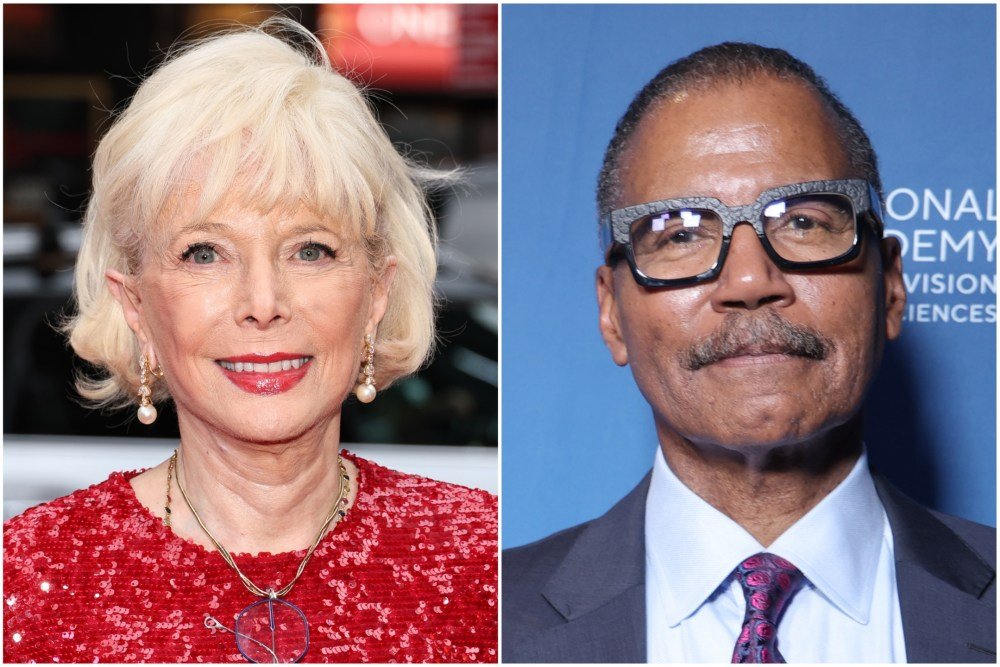
The future of “60 Minutes” could well hinge on two people with deep ties to CBS News’ past.
Many staffers and producers at the beleaguered newsmagazine are left wondering whether Lesley Stahl and Bill Whitaker, two CBS News veterans who have been with the news division now controlled by Paramount Skydance since 1971 and 1984, respectively, will stay with the show in the wake of a series of stunning ousters of its top ranks over the past week. Their decisions could play a big role in whether the program will be entirely hallowed out or have some ties to the elements that have brought viewers in for years.
The decision is an emotional one, says one person familiar with the business of CBS News: “I think they feel like if they leave, there’s nothing left of ’60.’”
There is certainly less. On Tuesday night, Scott Pelley, one of the program’s most recognizable correspondents, was ousted by Nick Bilton, installed last week as the show’s new executive editor by Bari Weiss, the CBS News Editor in Chief who is intent on overhauling the series. Bilton was outraged that Pelley questioned his credentials at a Monday meeting of the show’s staff, and angry that the correspondent would not take his calls or meet him in advance of that event. Bilton and Weiss felt Pelley had created an unsustainable working environment.
“Your antipathy to the future of the show has come through loud and clear,” Bilton said in a letter sent to Pelley Tuesday evening and reviewed by Variety. “And I have heard you. I therefore write on behalf of CBS News to inform you that your employment with CBS is terminated effective immediately.”
“Despite our attempts to engage with Scott Pelley and to find a way back, unfortunately we weren’t able to do so, and so we had to part ways,” Weiss said during a CBS News editorial meeting on Wednesday. We did not want that to happen, but that’s the path that he chose.”
CBS News executives and Bilton had reached out to all the remaining correspondents last week, according to a person familiar with the matter, and engaged with many. Pelley was not one of them. CBS News declined to make executives available for comment Wednesday morning.
In a statement issued Tuesday night, Pelley said he felt new management at CBS News and its parent company had weakened the newsmagazine “apparently to curry favor with the Trump administration, adding that he felt “incompetence and unprofessionalism in the new management have wreaked havoc” with the workings of the show.
Pelley’s exit will only increase focus on the correspondents left behind, say two people familiar with the program. Stahl, who joined “60 Minutes” in 1991, has made the show an integral part of her life, according to these people, who believe the choice to depart would be a difficult one for her. When Stahl began working on the program, legends like Mike Wallace and Morely Safer were still actively involved. She is on a year-to-year contract with the program, according to a person familiar with the matter.
Whitaker had in the recent past expressed a desire to stay with the show as well. Despite his many years at CBS News, working largely on the west coast, he remains sort of the “new guy” at “60,” having joined in 2014. Not too long ago, he was considered as a candidate to replace Jane Pauley at “CBS Sunday Morning,” according to two people familiar with the matter, after executives became concerned they would not be able to come to terms on a new contract.
Stahl and Whitaker did not respond immediately to queries seeking comment Wednesday, and Jon Wertheim, a “60 Minutes” correspondent who joined the show in 2017, could not be reached for comment earlier this week about his thoughts on recent changes at the program. Some staffers have interpreted their recent silence as a sign they may remain.
Both Stahl and Whitaker are journalism elders. Whitaker is 74 years old and Stahl is a decade older. But both evidence a younger spirit in interviews, with Whitaker taking on multiple assignments that can range from features to investigative pieces. One of Stahl’s producers, meanwhile, once dubbed her “Grandma Badass” after a trek she made in 2021 to find mountain primates in Rwanda.
“This is the truth: I’m not bored,” Stahl told Variety in 2021.
Many of the staffers at “60 Minutes” have worked on the program for years, even decades, and may also be reluctant to leave, says one of the people familiar with the workings of the series. These producers may also feel pressed to stay because they would be owed substantial severance or exit packages, rather than walking off when they might get less compensation.
There are also very few news vehicles that will give producers the same kind of role. “60 Minutes” doesn’t chase breaking news; it breaks its own, or it offers a take on the news cycle that no one else has. Or its operatives spend weeks getting a segment ready for air, and get to do more immersive reporting and exhaustive research that other news outlets would simply not allow, particularly in an era dominated by streaming and social media.
Even so, Stahl and Whitaker may never have more leverage than they do at this exact moment.
Leave a Reply