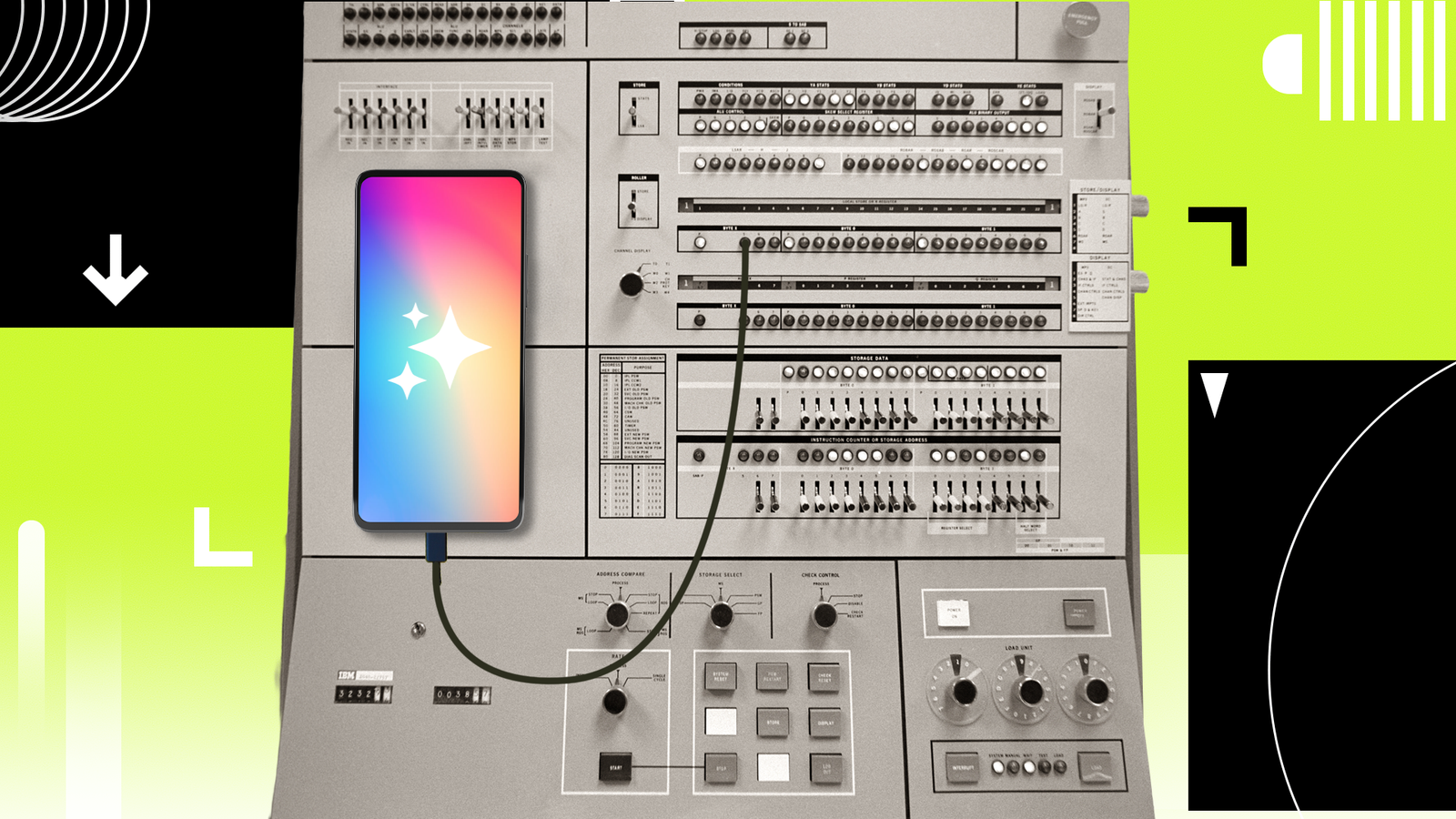
In recent tech keynotes, the narrative has shifted from camera lenses and titanium frames to AI and memory. If you want to unlock a magical world of on-device AI, the latest reasoning goes, upgrading to an iPhone 18 Pro or a Pixel 11 with 12GB of RAM is no longer really an option but a necessity. The marketing implies that by packing more silicon and memory into our pockets, we’re now buying autonomous supercomputers, each equipped with a potent Large Language Model (LLM) capable of thinking for itself.
On-Device AI Isn’t What It Seems
It’s clever marketing fluff, though. No matter how much RAM your smartphone has, neither Apple nor Google has ever promised 100% cloud-free, exclusively on-device AI. Instead, Silicon Valley obfuscates the truth—that all devices silently hand off execution to remote data centers the moment a task requires more sophisticated reasoning.
But really, the marketing serves as a smokescreen to the harsh architectural reality that a 12GB phone chip simply gets you in the door these days. Compact, 3-billion-parameter models crammed into your phone’s memory are just lightweight utility tools. They’re adept at local text cleanups, but unequipped for complex thinking.
We have essentially doubled back to the computer architecture of the 1960s through the 1980s, a period dominated by the mainframe and the so-called “dumb terminal.” Back then, the machine on a worker’s desk had no real computational brain of its own; it was merely a screen and a keyboard used to input commands and view results processed by a massive computer humming in a distant server room. In recent decades, the personal computer and smartphone revolutions were celebrated because they killed that dependency, transforming the desktops on our desks and the devices in our pockets into independent powerhouses.
In a bizarrely ironic twist, generative AI has reverted us back to a computing system from 50 years ago.

(Credit: PCMag / Apple)
The Invisible Cloud Tether
To see this regression in action, consider a mundane, real-world task. Imagine asking your phone to read a flight itinerary email thread, cross-reference your calendar for conflicts, and book a dinner reservation at a well-rated restaurant near your terminal upon arrival. This is precisely the kind of seamless, agentic scenario tech companies pitch to justify their latest hardware upgrade cycles.
But make that request, and your cutting-edge phone chip hits a technical wall. A local model can handle a text rewrite or summarize a note while offline, but it lacks the cognitive architecture and processing capacity for multi-step, chain-of-thought reasoning. Agentic workflows require an AI to open an email, parse an itinerary, query an external maps system, scan live web data, and execute a third-party booking simultaneously.
To process all those active data streams locally at once, the active memory cache (KV cache) would spike. If your phone’s chip tried to crunch that reasoning layer exclusively on-device, it would blow past strict mobile thermal thresholds. This spike would force the operating system’s internal management tools to terminate the app to prevent your screen from freezing and your battery from overheating.
Instead, an automatic handoff occurs behind the scenes to bypass this limitation. The moment a prompt crosses this unseen cognitive threshold, Android and iOS silently package your personal request and route it over the internet to multibillion-parameter models on remote servers such as Apple’s Private Cloud Compute or Google’s Gemini Cloud. The phone’s user interface hides this transition. It doesn’t display an error code, request permission, or even show a loading bar. It simply stops thinking locally and becomes a middleman to a much more powerful brain.
Recommended by Our Editors

(Credit: Apple)
The Architectural Regression
Shifting the architecture in this way fundamentally reframes what it means to own technology in the AI era. We are shelling out top dollar for perceived digital sovereignty. In return, we receive a conditional subscription to a remote brain. It is a profound bait-and-switch built on a lack of transparency. Casual consumers are buying upgraded flagships under the impression they are securing additional computational power, unaware that this extra compute relies on a stable internet connection.
If the most advanced capabilities of our personal property hinge on a constant link to a paywalled external network, we are no longer purchasing computers; we are renting access.
This structural dependency poses a significant risk of functional obsolescence for the modern user. If you lose your 5G connection on a cross-country flight, find yourself in a subterranean subway station, or travel to a remote area with spotty cell service, the very agentic features that supposedly justified your premium upgrade vanish. Cut from its tether to the server farm, the multi-core Neural Engines, upgraded RAM, and bleeding-edge chips fall silent. The supercomputer in your pocket becomes just a normal device, without all the features and functions it was priced to offer.
In this scenario, you’re left with the 21st-century equivalent of an over-engineered dumb terminal. The fancy features hide the fact that you’re paying for a pocket-sized display to someone else’s computer.
About Our Expert

Gabriel Zamora
Senior Writer, Software
Experience
In 2014, I began my career at PCMag as a freelancer. That blossomed into a full-time position in 2021, and I now review email marketing apps, mobile operating systems, web hosting services, streaming music platforms, and video games as a senior writer. I’m a graduate of Hunter College, a hard-core gamer, and an Apple enthusiast.
Leave a Reply