Tag: Entertainment – Variety

  • ‘A Talent for Murder’ Director Anton Corbijn Praises Helen Mirren’s Performance as Controversial Author Patricia Highsmith: ‘She’s a Great Jerk!’

    ‘A Talent for Murder’ Director Anton Corbijn Praises Helen Mirren’s Performance as Controversial Author Patricia Highsmith: ‘She’s a Great Jerk!’

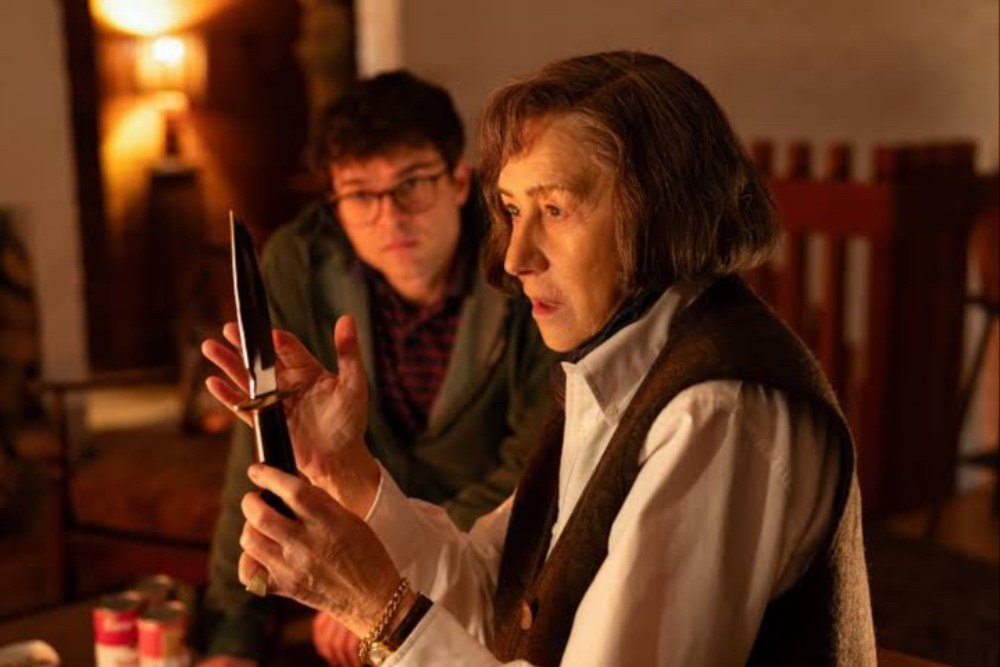
    In “A Talent for Murder,” director Anton Corbijn takes a closer look at writer Patricia Highsmith.

    Known for creating everyone’s favorite psychopath Tom Ripley, Highsmith – played by Helen Mirren – became a controversial figure because of her antisemitic and misanthropic statements.

    “By all accounts, she was much worse than what we show in the film. You don’t want her to be completely unlikable. It’s difficult when you don’t actually know the person and base everything on hearsay, but she was a very difficult woman. Also to herself,” he tells Variety.

    He enjoyed seeing Mirren, now in her 80s, fully embrace the role of someone who can be, well, a jerk.

    “She’s a great jerk! I think it’s healthy. It’s never too late to be a bitch. I’m referring to our Highsmith, of course. Luckily, she only killed fictional characters.”

    In the film, previously known as “Switzerland” after Joanna Murray-Smith’s play it’s based on – “I thought it would conjure too many images of cows and mountains,” Corbijn says – Highsmith is joined in her Swiss refuge by a young man, Edward (Alden Ehrenreich), who tries to persuade her to write another novel about Ripley.

    They don’t exactly bring out the best in each other. Quite the opposite.

    “They’re testing how bad people can be and how far they can go. Unfortunately, it’s always further than you’d like to think. Sometimes it has to do with generational trauma that manifests itself, or with human curiosity that leads to certain behaviors. I think it happens quite often: People get curious, and they go too far. That might be the case with Ripley, too.”

    Ripley is evil, but he doesn’t look it. In “The American Friend,” “The Talented Mr. Ripley” or Netflix’s show “Ripley,” he knows how to charm his victims. That’s his superpower.

    “When evil is obvious, it’s not interesting because you know it’s coming. That’s his strength, and I think that’s the strength of the film. You don’t know if you should like them or not,” notes Corbijn.

    “I love how Alden can change in very minimal ways. He can be this nerdy guy, and then he can be a mean killer with cold eyes. We got really lucky with this cast.”

    While the film emphasizes that the portrayal of Highsmith is “entirely fictional,” this is not the first time that Corbijn has taken on a real-life protagonist. “Control,” about Joy Division’s singer Ian Curtis, was his directorial breakthrough.

    “I knew the guy, so I think it’s a very truthful film. With ‘Life,’ I didn’t know James Dean. He died the same year when I was born, so we never got to meet,” he laughs.

    “You just fill in the gaps. But even Helen said that there’s something more mysterious about playing real-life characters than the ones you make up. It’s more complex and more interesting.”

    Mirren famously portrayed Elizabeth II in “The Queen” and former Israeli Prime Minister Golda Meir in “Golda.”

    “It can be so powerful, too. Now, when I think of Ian, I think of Sam Riley in the film. I’m so much more familiar with him than with the real Ian Curtis!”

    Corbijn first gained prominence as a photographer and music video director, working with the likes of Depeche Mode and U2. However, looking at what’s happening in the music and film industry, he can’t help but worry.

    “I get very depressed thinking about A.I. replacing so much in cinema, but it’s the same with music. Take ABBA concerts with their ‘avatars’. Is everything really replaceable? It’s dangerous because we all prefer comfort over substance, and that will be our downfall. Needless to say, there’s no A.I. in my film.”

    He adds: “I’m really worried about the immediate future because things are changing way too fast. I think we will respond badly to it. And too late.”

    He says he feels “quite pessimistic about the world.” He’s not the only one, which might explain why Ripley keeps on returning.

    “It’s as if he returns when the world aligns with his thinking, which is terrible. Maybe people are more accepting of murder today?”
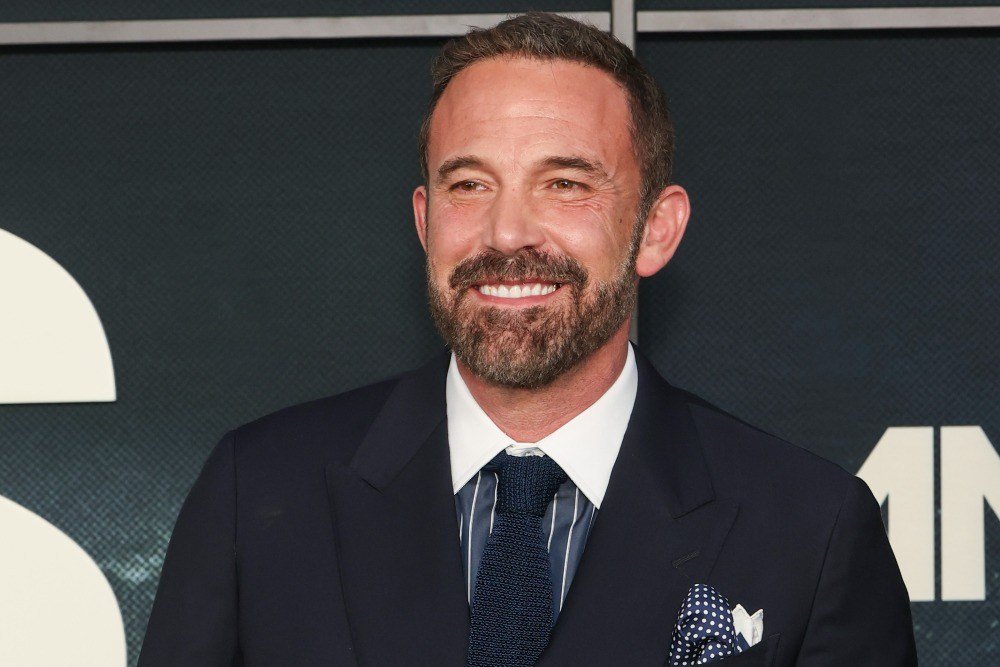
  • Ben Affleck’s ‘Animals’ Cast Wants Him to Run for Office: ‘Maybe They Hate Me’

    Ben Affleck’s ‘Animals’ Cast Wants Him to Run for Office: ‘Maybe They Hate Me’

    Ben Affleck plays a Brentwood businessman running for Los Angeles mayor in the new thriller “Animals.”

    The Oscar winner, who directed and co-wrote the film, is also a longtime political activist who has supported the presidential campaigns of Barack Obama, Hillary Clinton, Joe Biden and Kamala Harris.

    Now, his “Animals” cast would like him to run for elected office.

    “Maybe they hate me,” Affleck cracked at the “Animals” premiere on Wednesday night in Los Angeles.

    Kerry Washington co-stars as Affleck’s wife in the movie. “We keep telling him that he should, but he doesn’t want to,” she told me. “You know, we’re in a place in our politics right now where anything is possible, but I would hope that the people who are running for office want to be there and he has been very explicit in saying that he doesn’t want to run for office.”

    Luis Gerardo Méndez plays an undocumented Mexican immigrant in the film who finds himself unexpectedly — and dangerously — thrust into the mayoral hopeful’s life. “I would definitely vote for him,” Méndez said. “Go Ben Affleck! He’s smart and sexy — that’s all you need.”

    Affleck, however, isn’t announcing a candidacy anytime soon.

    “We don’t ask the question of what are your qualifications to hold public office any longer,” the Oscar winner said. “It’s, ‘You wanna join the circus? Who’s the biggest carny?’ I think that there is a whatever side of the aisle you’re on, one of the interesting things that people can agree on is a collective disappointment with the way that American politics has trended.”

    Affleck continued, “There’s nobody alive now who thinks, hey, we’re really doing it right and things are going great and I love this political system. And that’s a problem.”

    Being in office, Affleck says, is no longer about serving the people.

    “It’s just about money, raising money, it’s just about playing a sort of adolescent game of who can make fun of the other person better or be more reductive and stupid about something rather than actually trying to talk about the issues,” he said. “I think the thing that’s missing from politics, frankly, is you have to lead. You can’t just scare people. You can’t just hector them. You can’t lecture them. You can’t guilt them into it. You’ve got to inspire them. Otherwise they don’t want to vote for you.”

    And then he added, “Selfishly, I just see what a difficult grind of a job it is and I’d rather make movies about it.”

    Animals will be released on Netflix and in select theaters on Oct. 9.

  • ‘Cameron Winter at Carnegie Hall’ Review: Paul Thomas Anderson Directs a Rapturous Solo Concert Movie Built Around the Songs — and Haunting Sound — of Cameron Winter

    ‘Cameron Winter at Carnegie Hall’ Review: Paul Thomas Anderson Directs a Rapturous Solo Concert Movie Built Around the Songs — and Haunting Sound — of Cameron Winter

    You want a concert movie to sound great, and plenty of them do. But I don’t think I’ve encountered a concert film that casts the precise kind of sonorous spell that “Cameron Winter at Carnegie Hall” does. Directed by Paul Thomas Anderson, the movie, which had its premiere tonight at the New York Film Festival, is a record of the solo performance that Cameron Winter gave in front of a packed audience at Carnegie Hall on Dec. 11, 2025. The movie in only 75 minutes long, and it consists entirely of Winter seated at a Steinway grand piano, singing his gorgeous meditative trance tunes, but I swear you’ve never heard a sound quite like this.

    The slow rolling piano echoes through the hall like a rhapsody from the deep. The sound is rich, lustrous, bottom-heavy, grand. And that voice! Winter sings in a low baritone (and occasionally a high one) of astonishing power, the notes hanging there in a suspended quaver so bold it’s hypnotic. At different moments, he’ll remind you of a great many other singers. At times he’s a low-octave Thom Yorke, his lost-in-the-haze midnight rapture is like Tom Waits minus the gravel, and there are strong echoes of early Springsteen — the plaintive bard of “Incident on 57th Street” — in his soaring vocal caress, and the wide vibrato of it. The concert may remind you, at times, of John Cale’s great 1992 live album “Fragments of a Rainy Season.” But the artist the Cameron Winter of “Cameron Winter at Carnegie Hall” is most magically reminiscent of is Bob Dylan — the Dylan who let the words pour out of him in a blissful torrent, and sang them as if possessed. Winter, like Dylan, isn’t just singing. He’s crafting pop songs that add up to an incantation, a rhapsody, a prayer.

    At the start of the concert, Winter, very tall, in a black shirt and pants, with shaggy greasy unkempt indie hair (with his thick eyebrows and doleful countenance, he suggests a solemn version of Nicolas Cage in “Leaving Las Vegas”), lopes onstage and stands in front of the piano, introducing himself with what looks like a slight bow, though it’s so reticent it might just be a hipster stoop. Winter, of course, is the frontman of Geese, the indie-band-of-the-moment who, on the tuneful/tuneless scale, reside somewhere between Wilco and Arcade Fire. Geese are okay, but they’ve been overpraised. Winter’s 2024 solo record, “Heavy Metal,” is much more compelling; it gives voice to the meditative soul inside the noise rocker. “Cameron Winter at Carnegie Hall” is a showcase for that Cameron Winter, the chanteuse of sadness and faith.

    The piano is poised at a slight angle on the bare Carnegie stage, but basically Winter has his back to the audience. It’s not a hostile gesture; it’s a sign of how much he wants the music to dominate. But a movie is a whole other thing, and Paul Thomas Anderson, directing his second music-performance film (after “Junun,” a 2015 Jonny Greenwood-goes-to-India trifle), has crafted a visually spellbinding movie that’s never showy or grandiose. He frames the piano on the stage from different angles, and he brings us up close to Cameron Winter and right into his emotional orbit. There are stage-eye-view shots of the audience (the four balconies of Carnegie Hall separated by three rows of light), and the whole movie is suffused with an orange-yellow glow, as if all of Carnegie were lit by candlelight. It’s a classical sunset church vibe, and it matches Winter’s music, which is all about mystery and heartbreak, which he sings of with a beauty that makes it inseparable from joy.

    I could sit here and pretend that I know what Cameron Winter’s lyrics mean, but the truth is they’re often the kind of suggestive poetry that’s diminished by being overanalyzed. The meaning resides in how he sings them, his passion ringing out like a deep dark bell, with shades of accusation and awe running through the performance. He hooks you from the opening number, “It All Fell in the River” (which I think is about the catharsis of tears), he carries you through “If You Turn Back Now” (a relationship drama that finds room for an inquisition on the devil), and he makes you feel the emasculated belittlement of “$0,” but also the stirring declaration that “God is actually real.” The movie culminates in a performance of “Take It With You” (“I found a keepsake of you by the window in the kitchen, babe,/Take it with you when you leave”) that channels the scalded romanticism of Dylan at his most majestic.

    Cameron Winter’s solo songs are often beautiful, but most of them move at the same slow tempo, and they don’t have a verse-chorus conventionality. “Cameron Winter at Carnegie Hall” has the feel of a slow-motion song cycle, like Leonard Cohen’s first album. The movie might have been a touch lugubrious were it not for that voice of Winter’s, which is a miraculous instrument: indie in a low-slung operatic way. In “Cameron Winter at Carnegie Hall,” he’s possessed by the music he’s singing, so lost in it that you hope he’s never found.

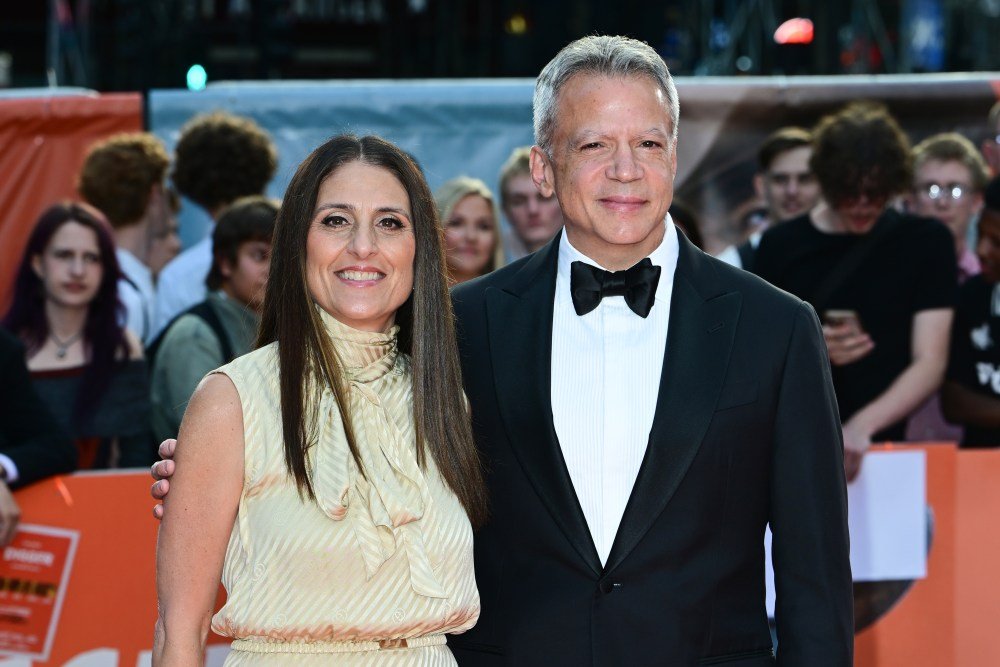
  • Michael De Luca and Pamela Abdy to Depart at Warner Bros. Following Paramount Close

    Michael De Luca and Pamela Abdy to Depart at Warner Bros. Following Paramount Close

    Michael De Luca and Pamela Abdy‘s term as chiefs of Warner Bros. is coming to an end.

    Multiple sources told Variety that De Luca and Abdy will not be part of David Ellison’s management team after the merger between Paramount Skydance and Warner Bros. Discovery closes. The landmark $110 billion pact is expected to be finalized on Oct. 6.

    Paramount film heads Dana Goldberg and Josh Greenstein are reported to oversee both movie studios, which will each release 30 movies a year, per the provisions of the deal. It’s unclear if De Luca and Abdy will remain for a transitionary period.

    The news comes almost one year to the date when WBD CEO and president David Zaslav announced De Luca and Abdy’s contracts were being renewed at the studio, following the massive box office successes of Ryan Coogler’s “Sinners,” “A Minecraft Movie” and “Weapons.” Then, Warner Bros. tied the all-time studio record with 11 Academy Awards from an industry-leading 30 nominations, including a best picture win for Paul Thomas Anderson’s “One Battle After Another.”

    Ellison is keeping his new leadership structure close to the vest, and despite Cindy Holland’s exit as head of streaming for Paramount+, the company has yet to confirm Casey Bloys will ascend to the top streaming job in the new combined structure. However, it is known that Ellison tapped former Mattel CEO Ynon Kriez to serve as co-CEO, overseeing day-to-day operations and integration of the combined businesses.

    Puck first reported news of the executives’ impending exit. Paramount and Warner Bros. did not immediately return a request for comment.

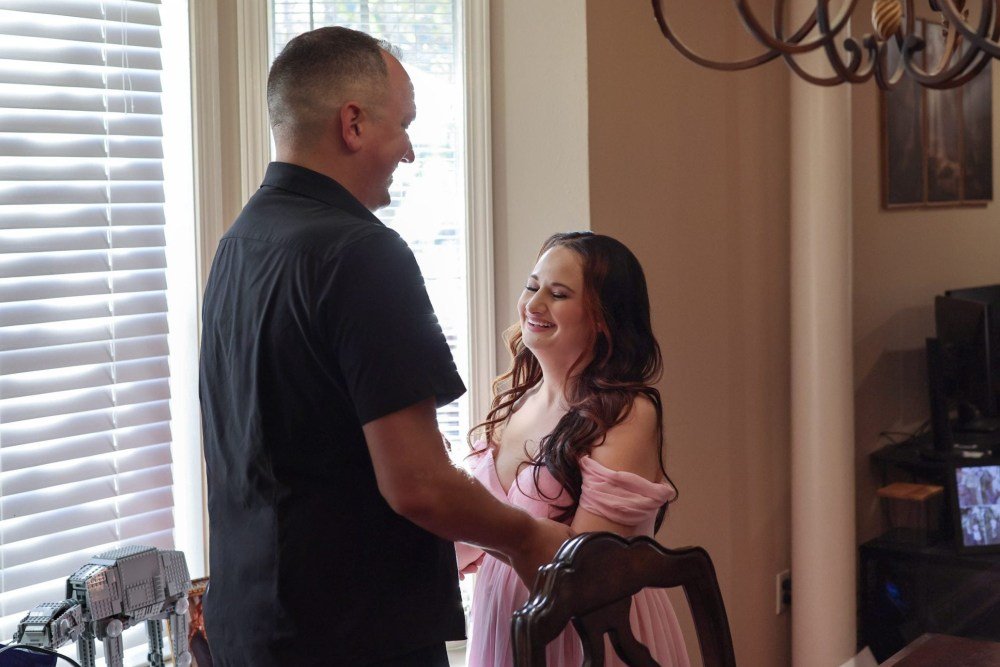
  • Ken Urker, Gypsy-Rose Blanchard’s Partner, Dies at 34

    Ken Urker, Gypsy-Rose Blanchard’s Partner, Dies at 34

    Ken Urker, the partner of Gypsy-Rose Blanchard and father of their child, was found dead Thursday in Raceland, Louisiana. He was 34.

    Captain Brennan Matherne of the Lafourche Parish Sheriff’s Department said in a statement to Variety, “We responded to a residence at 107 Double H Drive, Lot 4, in Raceland today after receiving a call at 6:15 p.m. Kenan Urker, 34, was found dead upon arrival. At this time, we are continuing the death investigation.”

    A source close to the family told People magazine that he was discovered unresponsive by a family member inside a home on his 34th birthday.

    Urker appeared on the reality series “Gypsy Rose: Life After Lockup,” which ran for two seasons on Lifetime. Variety‘s review of the series noted, “The limelight can certainly feel glorious following a lifetime in the shadows, but it’s also a very precarious and often unsustainable place to be.”

    Blanchard and Urker first got together through a penpal program when she was in prison for her role in the murder of her mother Dee Dee Blanchard. After they broke off their engagement, Blanchard married and divorced Ryan Anderson. After reconciling in 2024, Urker and Blanchard had a baby girl, Aurora, in December 2024.

    After alleging that her mother abused her for many years, Blanchard pleaded guilty to second degree murder of her mother in 2015 while her boyfriend Nicholas Godejohn was sentenced to life in prison for first degree murder. She served eight and a half years in prison.

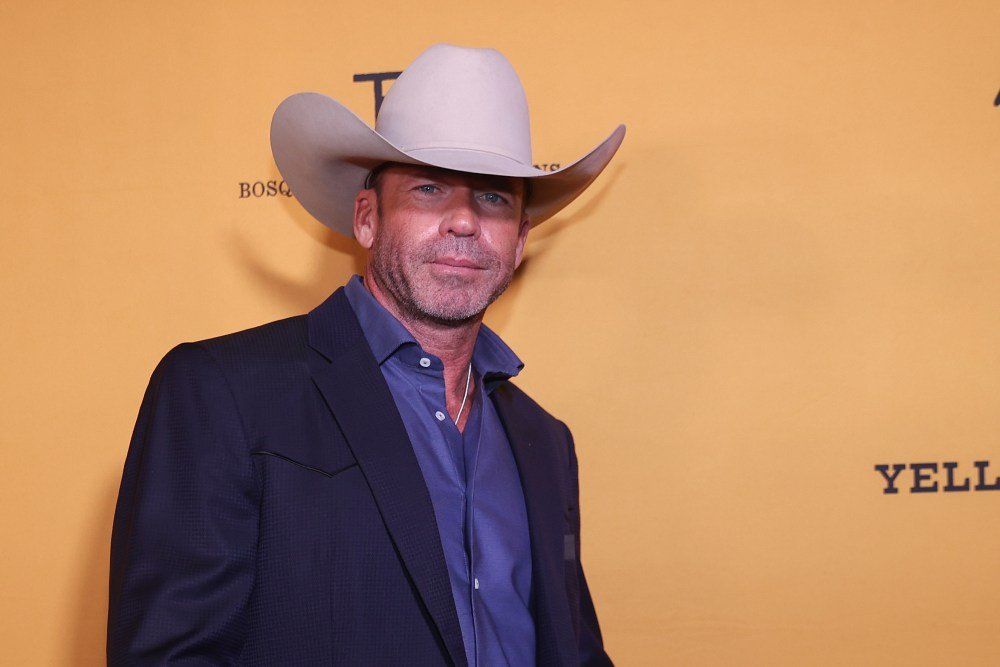
  • Donna Langley Says the Key to Stealing Taylor Sheridan Away From Paramount Was a Better Film Deal: ‘I Saw an Opportunity’

    Donna Langley Says the Key to Stealing Taylor Sheridan Away From Paramount Was a Better Film Deal: ‘I Saw an Opportunity’

    NBCUniversal Entertainment chair Donna Langley managed to snag “Yellowstone” creator Taylor Sheridan away from Paramount after a decade at the studio. How did she do it? By putting an emphasis on the film of his lucrative long-term TV and film pact.

    Langley said her pursuit of Sheridan began after she “saw an opportunity” created by “disruption and instability” at Paramount. While never explicitly mentioning it, she was most likely referring to the turbulent yearlong merger process between Paramount Skydance and Warner Bros. News of Sheridan’s deal broke in late October of 2025, only months before David Ellison emerged victorious over Netflix in the battle for WB.

    “There’s just a moment to kind of look around the marketplace and see if there’s a competitive advantage,” Langley said during her interview at Bloomberg’s Screentime event on Thursday afternoon. “But really, where I started talking to Taylor was about film, because I knew that he had a film deal at Paramount, but it was a first-look deal. Didn’t have as many teeth to it as his television deal. That’s how it started, and then we just got to talking and one thing led to another.”

    The film component of Sheridan’s NBCUniversal deal is expected to take effect in 2026, while the TV component will follow after he fulfills his contractual obligations to Paramount in 2028.

    Sheridan broke out as a scribe for the big screen, writing films like “Sicario,” “Hell or High Water” and “Wind River.” But in more recent years, Sheridan has built a TV empire at Paramount, starting with “Yellowstone” in 2018. The Western drama has spawned a universe of spinoffs, including “1923,” “The Madison” and “Dutton Ranch.” He also created “Lioness,” “Marshals,” “Landman” and “Mayor of Kingstown.”

    Sheridan is returning to his cinema roots soon. He wrote the scripts for Paramount’s upcoming “Call of Duty Movie” and “Sicario 3.”

  • Oscars: Pakistan Selects Documentary ‘Hanging by a Wire’ for International Feature Race (EXCLUSIVE)

    Oscars: Pakistan Selects Documentary ‘Hanging by a Wire’ for International Feature Race (EXCLUSIVE)

    Mohammed Ali Naqvi’s documentary thriller “Hanging by a Wire” has been selected as Pakistan‘s submission for the international feature film Oscar at the 99th Academy Awards, marking the first time a documentary has represented the country in the category.

    The Pakistan Academy Selection Committee made the selection, calling it a historic milestone for Pakistani documentary filmmaking. The announcement was issued by Sana Zahra Jafri, deputy chair of the committee.

    “Hanging by a Wire” is directed by Naqvi and written and produced by Naqvi and Bilal Sami. The film revisits the August 2023 cable car emergency in Battagram, in northern Pakistan, in which eight passengers, including six schoolboys on their way to school, were left suspended roughly 900 feet above a ravine after a cable snapped. The resulting rescue effort was followed live across Pakistan and internationally.

    The film draws on footage from witnesses, testimony from survivors and staged reenactments involving people who took part in the rescue to build its account.

    “Hanging by a Wire” debuted at the 2026 Sundance Film Festival, in the World Cinema Documentary Competition lineup, before going on to play the Tribeca Festival.

    The film is produced by EverWonder Studio, Universal Pictures Content Group, Mindhouse Productions and 64th Street Media. Dogwoof holds theatrical distribution rights in the U.K., with Abramorama handling U.S. theatrical release. The film is set for a streaming release on Paramount+ on Oct. 28.

    The pick brings the Battagram rescue story into the International Feature Film Oscar race as Pakistan’s representative for this awards cycle.

    Pakistan has submitted 13 films in the category since 1959 without a nomination, with Saim Sadiq’s “Joyland’ marking its only shortlist appearance, in 2022.

  • After ‘I Swear’ Scores 7 BAFTA Scotland Nods, Tourette’s Campaigner John Davidson to Watch Ceremony From ‘Separate’ Area Within Venue Following N-Word Controversy

    More than six months after the British Academy faced one of its biggest controversies in years after the N-word was shouted out during the BAFTA Film awards ceremony, BAFTA has had to revisit the moment as it contends with the upcoming BAFTA Scotland awards.

    The incident — which came to significantly overshadow the 2026 awards ceremony on Feb. 22 — saw John Davidson, the Tourette syndrome activist and inspiration for the film “I Swear,” involuntarily shout the racial slur while Michael B. Jordan and Delroy Lindo were on stage to present the first award of the evening.

    “I Swear” has now been nominated for seven BAFTA Scotland awards, considered the most in the awards’ history. Following the nominations announcement on Thursday, a letter to members from chair Sara Putt and CEO Jane Millichip, confirmed that major considerations had been undertaken to allow Davidson to attend the upcoming ceremony on Nov. 15 in Glasgow.

    BAFTA said that there had been consultations with organizations such as Tourettes Action and Tourette Scotland and with Davidson. “Following those conversations and our wider risk assessment, we have made adjustments to enable John to attend in the way he has suggested to us, which is to watch the ceremony via video link from a separate relaxed space within the venue together with his family and friends,” it said.

    An independent review ordered by BAFTA in the wake of the incident concluded that that there were a “number of structural weaknesses in BAFTA’s planning, escalation procedures and crisis coordination arrangements,” but found no evidence of “malicious intent” or “institutional racism.”

    The letter to members sent Thursday highlighted this and said the British Academy had since “worked extensively and consulted widely” to learn from what happened and the “racial harm experienced by our community” and to make its awards as “inclusive and as safe as possible.”

    See the full letter below.

    As the BAFTA Awards season is now underway, with the Cymru Awards set to take place on Sunday, quickly followed by the Scotland Awards in November, we wanted to take this opportunity to update you on the work BAFTA has undertaken since the Film Awards earlier this year.

    The independent review commissioned by the Board in March identified specific areas for improvement. Since then, the BAFTA team has worked extensively and consulted widely on best practice to learn from what happened in February and the racial harm experienced by our community, and to make our Awards events as inclusive and as safe as possible.

    We have strengthened and centralised our safeguarding, risk assessment and compliance processes, creating a more connected, intersectional and cross-organisational approach to live event planning. We have also simplified communication and escalation routes so concerns can reach the right people quickly, and strengthened briefings for everyone working with us, including hosts, presenters and citation readers.

    With all our guests in mind, we have sought independent advice on inclusion and accessibility best practice from a range of experts. There is no ‘one size fits all’ approach and adjustments should always be tailored, so our planning will aim to better understand individual requirements and consider how this can be supported alongside the safety and dignity of everyone attending. Where adjustments are possible, we will work closely with individuals, supported by experienced access coordinators, to accommodate them.

    We recognise that rebuilding trust requires more than changing processes. The review also challenged us to strengthen BAFTA’s cultural understanding and capability. We have engaged with organisations and experts with experience across race, disability, inclusion and international cultural context and we are developing further training for our staff. This work continues.

    For the upcoming BAFTA Scotland Awards, for which I Swear has received seven nominations, we have worked with both safeguarding and inclusion experts to consider the arrangements necessary to enable John Davidson MBE, whose life inspired I Swear and who is an Executive Producer of the film, to participate in the safest way possible for all.

    We have consulted organisations including Tourettes Action and Tourette Scotland and, most importantly, we have been speaking directly to John. Following those conversations and our wider risk assessment, we have made adjustments to enable John to attend in the way he has suggested to us, which is to watch the ceremony via video link from a separate relaxed space within the venue together with his family and friends.

    John has Tourette Syndrome and experiences coprolalia, a type of vocal tic involving the involuntary expression of socially inappropriate words or phrases. These vocalisations, like all tics, are neurological in origin, occur outside of the individual’s control, and do not reflect a person’s views, beliefs, character or intentions.

    At the same time, we know that involuntary vocal tics involving words relating to race, religion, sexuality or other protected characteristics can cause distress and harm to others, and it is BAFTA’s responsibility to plan for and mitigate any such impact on our guests.

    We take this very seriously. These changes reflect a broader principle we are embedding in our Awards planning: listening to people about their needs, preparing carefully, and creating an environment in which everyone is treated with dignity and respect.

    We know that no live event can be entirely risk-free. We will continue to test our processes, review how they operate in practice and be accountable for improving them. We will do everything we can to make sure every guest feels safe, welcome, and included at our Awards.

    Thank you to the members, committees, advisers, community organisations and external experts who have challenged us, shared their experience and helped us improve.

    With best wishes

    Sara and Jane

  • Grup Mediapro Companies Bet on Big Ideas, Local Voices and Cross Border Muscle

    Spain’s independent production scene is leaning into a familiar playbook — strong creators, distinctive local stories and plenty of hustle — while looking for new ways to make those stories travel.

    At the 6th Iberseries & Platino Industria confab in Madrid, executives from Imagina (Imagina becomes the new corporate name of Grup Mediapro from Jan. 1, 2027) companies Globomedia, 100 Balas, Big Bang Media, Cimarrón Cine and El Terrat laid out strategies that, despite their different slates, share a common thread: don’t chase scale for scale’s sake. Build projects around talent, stay nimble and find the right production model for each story.

    Globomedia’s entertainment slate remains closely tied to comedy, a genre that director general Maria Jose Rodríguez said is embedded in the company’s DNA. The company has been behind influential Spanish TV titles including “Sé lo que hicisteis” and “Caiga quien caiga” — shows that, she argued, helped reshape the country’s television landscape.

    “Comedy is the best tool we have to entertain, generate critical thinking and connect with one another,” Rodríguez said.

    For 100 Balas, real-life stories and creator-driven fiction are at the heart of the strategy. Director General Alejandro Flórez described the company as “a production company with stories, with origins and with authors,” pointing to real cases, investigations and creators capable of building their own worlds.

    The producer is behind scripted thriller “Death in Llanes,” based on the murder of Spanish politician Javier Ardines, and documentary series “Expediente Linares,” about the alleged paranormal phenomena surrounding Madrid’s Palacio de Linares. On the fiction side, titles including “Celeste,” “Su Majestad” and “Yakarta” reflect the company’s focus on projects with strong creative identities.

    “At a time when the audiovisual offering is broader than ever, the real differentiator continues to be the stories and those capable of telling them in a unique way,” Flórez said. “It’s not about producing more content. It’s about producing content that leaves a mark.”

    The company is also betting on the second season of “Celeste,” created by Diego San José and starring the ever-popular Carmen Machi, who was honored with the prestigious National Film Prize at San Sebastian Festival, as a tax inspector who delves again into tax evasions, money and powerful interests.

    On international expansion, Flórez said: “We don’t make series thinking about traveling,” he said. “You shouldn’t be afraid of being local.” For Flórez, a distinctly Spanish voice can be precisely what gives a series international legs.

    At Big Bang Media, meanwhile, live television remains a major part of the DNA. General manager Carmen González pointed to “Malas Lenguas,” which has evolved across RTVE’s La 2 and La 1, different time slots and different presenting teams.

    “It’s a typical example in television,” González said of the show’s ability to move between channels and audiences while retaining its identity.

    The producer is also pushing deeper into fiction. “Ser o no ser,” made for RTVE Play, ran for two seasons and targeted younger audiences, while “Pérdida” has expanded internationally via Atresplayer. Big Bang is now developing projects with bestselling author María Dueñas and “La Dama de la Cartuja,” a period drama based on Inma Aguilera’s novel.

    “We’re looking for creators who have a lot to say, as well as literary titles that we believe can make an important leap to the screen,” González said.

    Across the Atlantic-facing Spanish-language market, Cimarrón Cine is taking the borderless approach a step further. CEO-co-founder Santiago López likened the company to Uruguay’s cimarrón dogs, a breed shaped by generations of mixing and adaptation.

    “Cimarrón is also a mixture,” López said. “We started as a mix of two countries and are now a mix of five countries, of very different formats and projects, but above all of very different people.”

    That mix is increasingly feeding original development. López said that five years ago, roughly one in five projects was created in-house; today it is one in three, with the company aiming for one in two.

    Its model is deliberately cross-border. Cimarrón has taken Spanish format “El Conquistador del Fin del Mundo” to Mexico and the U.S., shot it in the Dominican Republic and completed work in the Southern Cone. It has also adapted Argentine novel “Cometierra” across Mexico and Uruguay.

    “There is no territory that thinks while the others simply execute,” López said. “We try not to make the stories smaller. We make the project possible so that the story can be possible.”

    Creative director Andrés Gelós summed up the philosophy in more colorful terms: after spending decades as a “lone wolf,” he now sees Cimarrón as a creative “pack.”

    Finally, El Terrat is using almost four decades of comedy and entertainment experience to make a bigger fiction play. General manager Agustín Esteve acknowledged that the company remains best known for entertainment but said its ambition is clear: “Our goal for some time now has been to also be recognized for fiction.”

    Its latest feature, “5 minutos más,” produced with Ikiru for Movistar Plus, premiered at San Sebastián, where Javier Cámara won the Silver Shell for supporting actor. The Berto Romero-scripted film, directed by Javier Ruiz Caldera, mixes comedy, thriller and apocalyptic elements.

    “We struggled for a long time to define what genre this film belongs to,” Esteve said. “But however you define it, it’s a film with a broad audience.”

    El Terrat is also developing Season 2 of “Otro Mundo” for Movistar Plus+ and “Amadas” for 3Cat, while expanding its documentary work with “SerYo,” centered on actor Sergio Peris-Mencheta’s experience during cancer treatment, directed by Marta Solaz, Verónica Díaz Pérez and Peris-Mencheta and the Emmy International-nominated docu ‘Temps Mort,’ co-produced with 3Cat.

    Across all five companies, the message was remarkably consistent: the market may be crowded, budgets may be tight and production increasingly complicated, but distinctive voices still matter.

    For Esteve, the formula comes down to “talent, irreverence, risk, passion, honesty and play” — plus one decidedly unglamorous ingredient: “the desire to work, because without work none of this is possible.”

  • Ballet Star Tiler Peck to Make London West End Debut in Susan Stroman’s ‘Little Dancer’ (EXCLUSIVE)

    New York City Ballet principal dancer Tiler Peck will make her West End debut in “Little Dancer,” the Lynn Ahrens and Stephen Flaherty musical about the girl who posed for Edgar Degas’ famous sculpture.

    It opens at London’s Theatre Royal Haymarket on Feb. 15, 2027. Susan Stroman directs and choreographs the limited run, which will close on March 27.

    The musical follows Marie van Goethem, a poor 14-year-old who wanted to become a great dancer and ended up as the model for Degas’ iconic sculpture. It’s set in Belle Époque Paris. The show previously sold out runs in Washington, D.C., and Seattle, as well as a 2025 concert performance at London’s Theatre Royal Drury Lane.

    Julian Ovenden (“High Society,” “Downton Abbey”) will play Degas. Laura Pitt-Pulford (“Standing at the Sky’s Edge,” “Seven Brides for Seven Brothers”) plays the adult Marie, and Josefina Gabrielle (“Chicago,” “Les Misérables”) plays Martine. All three have been Olivier nominees.

    “Many people know of the ‘Little Dancer’ sculpture, but few know much about the girl, the muse, who inspired it,” Peck said. “This show is about two determined artists willing to do anything for their craft, and it reveals a whole new side to Degas’ masterpiece.”

    Stroman has won five Tony Awards and two Oliviers, and her credits include “The Producers,” “Crazy for You,” “Contact” and “Oklahoma!” Ahrens, who writes the book and lyrics, and composer Flaherty are also Tony and Olivier winners. Their credits include “Ragtime,” “Anastasia” and “Once on This Island.”

    “Just as Degas was inspired by Marie, Marie inspired me,” Stroman said. “She wanted to be a great dancer, and inadvertently, through art, became the most famous dancer in the world.”

    Ovenden is going back to the Haymarket for the production. He said Ahrens and Flaherty had written “a deeply moving show about art, ambition and the lives of artists.” He added: “I also feel incredibly lucky to be surrounded by such extraordinary women at the very top of their game – Susan Stroman, Tiler Peck, Laura Pitt-Pulford and Josefina Gabrielle.”

    Peck was recently named NYCB’s first Choreographic Associate, the first woman to hold a choreographic title in the company’s history. She won an Emmy for the PBS “Great Performances” documentary “Tiler Peck: Suspending Time.” She also received an Olivier nomination for “Turn It Out With Tiler Peck and Friends.” On screen, she choreographed for “John Wick: Chapter 3 – Parabellum” and appeared in Netflix’s “Tiny Pretty Things” and Prime Video’s “Étoile.” She is currently scheduled to dance every performance through March 20.

    The design team includes Tony winners Beowulf Boritt (sets), Ken Billington (lighting), William Ivey Long (costumes) and Kai Harada (sound). Orchestrations are by Doug Besterman and Larry Hochman. Sam Davis handles music supervision and dance arrangements, and Jill Green Casting handles casting.

    Anita Waxman is lead producer, with Jana Shea, Patricia R. Klausner/Sharon A. Carr, Emily Blavatnik and Danny Cohen. Iwan Lewis is U.K. executive producer, and Short Street Productions is general manager.

    “We’ve always had big ambitions for this beautiful show, and London is just the beginning,” Waxman said. “We can’t wait to take ‘Little Dancer’ to the world.”