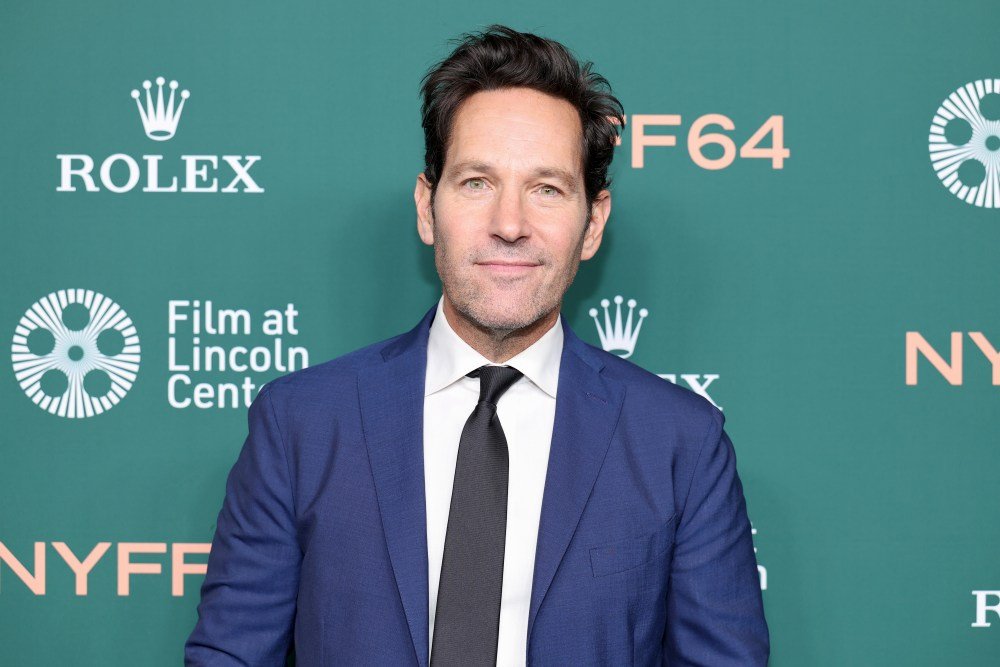
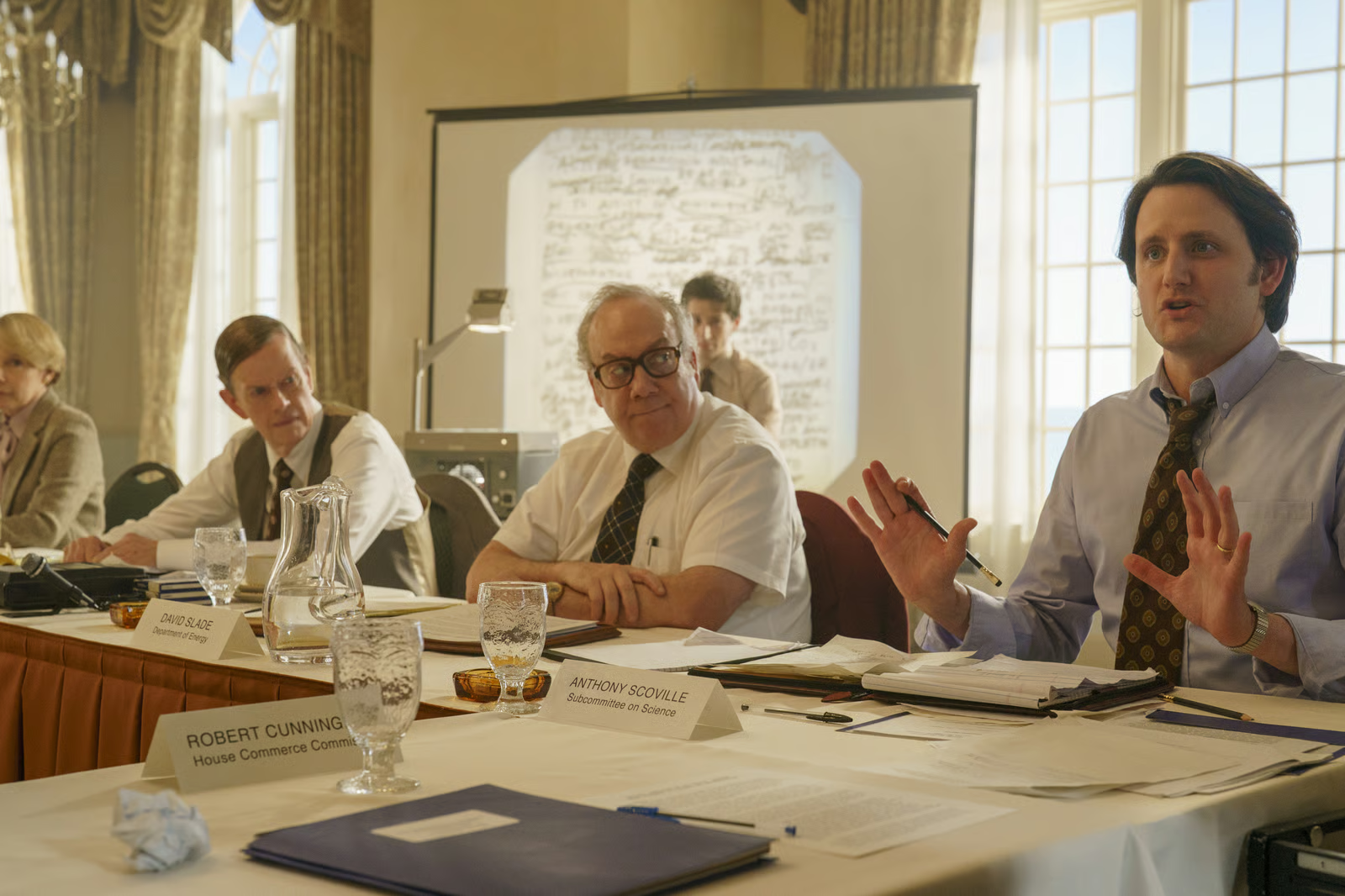
Paul Rudd plays the moderator of the first-ever meeting dedicated to solving America’s climate crisis in “A Statement,” the latest film from Oscar-winning director Tom McCarthy. Set at a Florida beachside resort in 1980, the film follows 20 experts who spend a weekend in a conference room and — analogous to “12 Angry Men” — hash out their differences over how to draft a statement to Congress about the effects of carbon dioxide emissions on the climate.
Rudd found himself more connected to the sprawling ensemble cast, which includes Paul Giamatti, Tatiana Maslany and John Turturro, by leaving his smartphone in his trailer, a practice he claims he’s now followed for some time.
“I don’t go to sets with a phone. I haven’t done that for a while now,” he told Variety Saturday evening during the film’s world premiere at the New York Film Festival. “It’s important to put it down. Anytime. They’re horrible things. I’m addicted to it like everybody else. They’re facilitating our own destruction.”
Rudd revealed that McCarthy enforced a “very strict no phones policy” on the set of “A Statement,” which he found brought his castmates closer together and made filming feel more like a play.
“The world has changed since cell phones have existed. We don’t look at each other or talk to each other quite the same way,” Rudd said. “Now, [with the phone ban], we were forced to really spend time with each other and talk. Working on a movie set in 1980, we’re dressed in a certain kind of way. It felt like, ‘Oh, yeah. I remember this. This feels like it used to feel when people sat around and spoke to one another.’”
Amy Ryan, whose character delivers a sobering wake-up call to the group at the film’s climax, encouraged other filmmakers to follow McCarthy’s lead. The absence of notifications and doomscrolling, she said, “definitely made the work much more rich.”
“What happens is there’s a five-minute break and people are connected. ‘Hey, what are you doing? How’s your morning? What do you think of this scene?’” Ryan explained. “I equate it to like when you quit sugar. In three days, it’s out of your system. You don’t miss it! And hopefully, it becomes like a toy you’re gonna get sick of.”
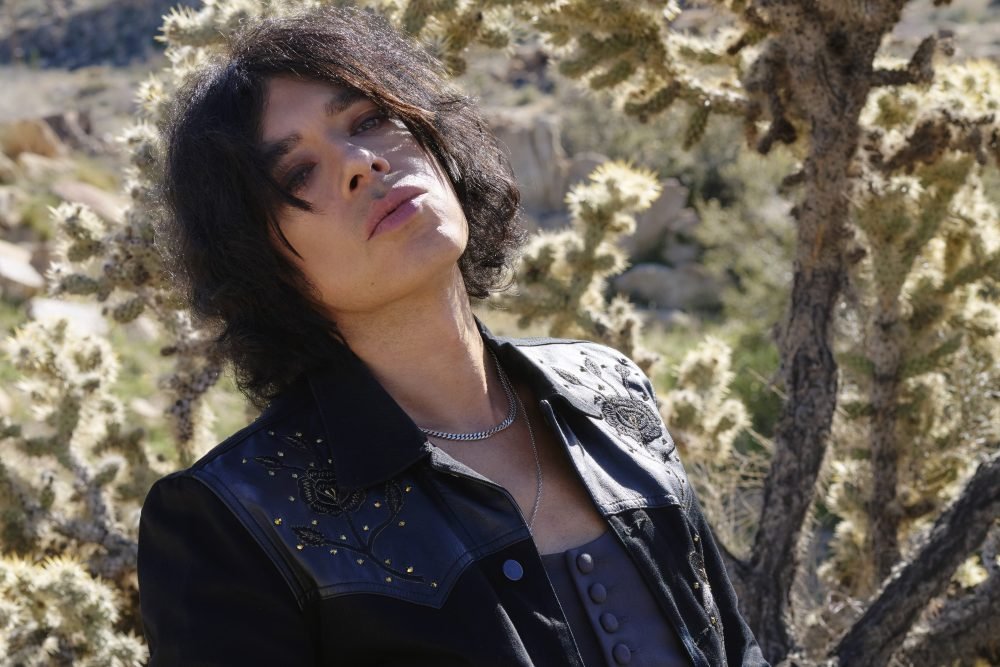
Lawrence Rothman has a lot of nerve, starting an album with a song called “The Meaning,” and then daring to ask some of the questions inherent in the big picture created by those two words — like, if not what is the meaning of life, then what is the meaning of music? (Of course, for a lot of musicians and music lovers, those two questions might as well be synonymous.) But thoughtfulness and intent are never far away from Rothman’s music, or at least hasn’t been since they made a shift about five years ago toward recording in Nashville and feeling the embrace of the Americana community, as opposed to drifting through a series of rock ‘n’ roll bands and personas in L.A. for a lot of years prior.
“The Meaning” kicks off Rothman’s new album, “Here Lives Love/Sawdust to Stardust,” which they consider the completion of a trilogy of Americana-rooted albums that tell the story of the singer’s life and career to date. (Rothman suggests the music being formulated for the next album actually has more of a jazz flavor, though they’re convinced that belongs as much in Americana as the acoustic singer/songwriter material being emphasized at present.)
During the recent AmericanaFest in Nashville, Variety sat down to talk with Rothman not just about wrapping up the fruitful trilogy with “Here Lives Love/Sawdust to Stardust” but about a rich and growing side career producing other artists, including Amanda Shires‘ 2025 confessional album “Nobody’s Girl” (and “Take It Like a Man” before it), Maggie Rose‘s vivacious “Half Moon” and Tift Merritt‘s comeback, “Sugar.” When Rothman begins the new album asking the most core question of them all, “Why am I breathing?,” any of these albums — the ones produced for others, and their own new one — offers a substantial and worthy enough answer.
To ask first about your production work: You work with a lot of great singer-songwriters, and there’s a lot of versatility in the types of sounds you get with different people. No one would mistake an Amanda Shires record for the Maggie Rose album you just had come out.
I don’t know if it’s the Gemini in me, but I’ve loved so many different types of music. my entire life. So to produce and to be able to add sounds, textures and treatments to things that are in a new style every month — because I produce something once a month — helps keep me alive, really, and eep my inspiration up. Amanda Shires makes poetic songs that are just these heartbreaking stories, done in a way that’s so classy, and like Leonard Cohen. It is such a great thing to immerse myself in, because I love sad music, and she definitely makes some beautifully sad songs. You can do that for a while and you’re in that zone, and then it’s great to be able to pop out and do something like Maggie Rose, where it’s more of a celebratory thing of being a mother and this new stage of her life, where it’s about a weird youthfulness in the energy a family gives back to you. T hat record feels very celebratory, and very different than the Tiff Merritt record I made earlier in the year, which was more of a look at the life of an artist, much like myself — what I’ve gone through and what she went through, in a heavy lyrical mode.
I’m a little Method when I produce. I have to feel like I’m in the band. As a sensitive artist yourself, when you’re with all these musicians and you’re getting Method with them, you can lose yourself in it and start to feel a bit like you’re taking on everybody’s trauma. So it’s nice to be able to go amongst these groups of musicians that I work with who telling their truths and spilling their drama and their sadness. They’re all such great people that when you leave those sessions, it’s almost like you’ve been acting in a film, crying and singing and laughing with them, and then at the end of it, you can walk away like yourself again. And I feel like all those artists that I work with, when they’re done, it’s like a clean reset. They got it out of them. I got it out of myself. It’s like a little bit of a demon that you dance with, when you’re producing things.
Lawrence Rothman
Mary Rozzi
How do you make yourself “part of the band”? Is that literally through playing an instrument as part of the sessions?
Like I said, I like to be immersive with it, and I don’t want to feel like I’m the producer behind the glass. I stand in the recording room, not the control room, when I’m producing. If a singer’s singing, I’m right next to them. Sometimes I’ll take my shirt off and dance. I’ll do whatever it takes to get it to have an energy. Because there’s something so clinical, almost like a doctor, about being behind a glass, and they’re in the distance — it just feels odd to me. So I’ve never been one to not just immerse myself physically in the room. If I’m not playing something, I’m tapping something or just getting people to get going.
You’ve talked with liking having women’s voices on your own albums…
I like to frame my voice. My voice is so low that a woman’s texture, or that range, always complements my voice well. So for this record, I have Amanda and Jillian Jacqueline and Katie Pruitt singing on some song, and I got to sing with Sarah Klang (as a duet on “A Fire Test”).
The artists we were just talking about you producing recently — Amanda, Maggie, Tift — are all women. Not that that would be solely your focus, but do you find you gravitate toward women artists more than others?
Yeah, I don’t look at it like that at all. I have to just love the music. And I’m not doing producing to become a millionaire of any sort. I’m doing it because I want to help this singer express what they’re doing in a way that feels like, are we pushing the envelope in some direction that’s forward? And with Americana music, funny enough, I think it’s the most forward-thinking music of any genre right now — because you can be R&B, you can be rock ‘n’ roll, singer-songwriter, folk, you can even be a little bit jazz, and it’s all accepted in the community of Americana. And I think the term Americana is being reinvented as different than what it started as. and now it’s the place for people who want to take all the styles that have sort of, I guess, begun in America or become more mainstream through American culture, and mashing them up to be something that’s uniquely its own.
I think some of the freshest and most exciting music I’ve heard in the last five years has come out of the Americana quote-unquote “scene.” So I find myself working and producing a lot of artists that are under that umbrella. But to me, they’re also all, like, either a rock ‘n’ roll artist or someone like Maggie Rose, who is like soul meets singer-songwriter. So when you’re asking me about, is it women, or… For me, I think right now it’s that it has to resonate in a way that’s pushing genre forward. And if we’re gonna still use use those genre terms like Americana, pop and alt rock, Americana is the place where I feel like you can kind of be anything. I wouldn’t be shocked if somebody put out a space-dance-country-folk record. You can kind of be anything in it and you’re welcomed into the party, as long as the thing that ties it together is the music’s played by real people. There’s great lyrics, whether it’s storytelling or more abstract. And I’m not anti-AI, but I feel like gives the identity to Americana music is that humans created it all. It’s the human touch music.
You have come to feel very comfortable in Americana, though it’s not at all where you started. And with your new album being pretty acoustic, you’re pretty in the pocket with that at the moment.
Yeah, the last three albums, I’ve pretty much focused on that, and that’s been the community that’s welcomed me, so it’s the one I want to identify myself with and support. But if I want to go make a jazz record for the next one, I’m gonna go make it. If it’s called jazz or Americana, I don’t really care. It’s come up a lot that it’s been hard to label what I do, and that’s fine with me. I love Beck, and Beck’s hard to label as well. David Bowie, I don’t even know what the label of that music would be, you know?. He started as a folk artist, and then was a rocker, and then was a pop star, and then was kind of an abstraction star.
Lawrence Rothman
Mary Rozzi
You met and talked with David Bowie, and he had an impact on your thinking about things,, right?
I met David Bowie early on when I was starting my solo career. I’d disbanded my band with my brothers called Living Things that we were doing for 13 years, and I was exhausted. I’d met David Bowie, and I had a song that I had just written called “Montauk Fling,” and I showed it to him. I said, “Hey, I think I’m starting this new chapter of my musical existence, and what do you think of this?” Because it was very different from what I’d done before. And he listened to it, and gave me some great advice. He was just like, “The chorus that you’re singing about there, and the verses, do you mean it?” And I’m like, “Well, yeah!” And he’s like, “But what’s the meaning of it?” So I had to explain it to him. And he’s like, “Well, I don’t think you hit the meaning of it. You need to be more direct.” And so I went back in and rewrote that chorus, and I was very direct. The chorus (ended up being) “Why do you want to fuck like strangers?” I got right to the meaning of what I was trying to say. But that was a really interesting exercise from such an icon, because I had never really looked at David Bowie’s lyrics as I do Leonard Cohen’s per se.
At that point he was about to do “Blackstar,” and when you listen to that record, it’s very much him, autobiographical. He’s about to die. And so I guess he was at a point of what is the meaning of all of what we’re doing in art? — and he was examining it in his own self with “Blackstar.” And I wrote that down in my journal at the time: “David Bowie says, ‘What’s the meaning of all of this?’” It led me to start writing this song called “Glory,” which was on my album “Good Morning America.” A lot of people responded well to it, so when I got to this new record, I wanted to keep exploring what Bowie had said with that. I started the record with the song “The Meaning,” because it’s like, what is the meaning of me putting out music, or any of us putting out music? It’s very ego-driven. As a musician, you’re out there playing rock star — or you’re not, and that’s also playing rock star. If it’s all performance, what is the meaning of doing any of it? With him, I felt like I got to a result of, like, the meaning of doing any of it is just to tell some kind of solid story that somebody can understand, that when they’re going through it, they can go, “That’s pulling me through this hard time.”
For Bowie with “Blackstar,” obviously that was cathartic to write about death because he was dying. With “The Meaning,” I wrote about, why am I putting this album out right now? Why am I doing this music? I’m doing it because it’s my primal scream. It’s my therapy.
You are calling this album, “Here Lies Love/Sawdust to Stardust,” the conclusion to a triology, which began for you with 2021’s “Good Morning, America” and had its middle part with 2024’s “The Plow That Broke the Plains,” which we previously discussed for Variety. Why do you think of them as a trilogy?
Henry Miller is one of my favorite writers of all time, and his his trilogy called “Sexus, Plexus and Nexus” was in my psyche my whole life. I thought, “One day I want to make a record that has the feeling of that, as far as telling a story across three pieces of work.” So when I went into the first record, “Good Morning America,” that was the clean slate. I said to myself, “I’m gonna do this trilogy now, starting with the South,” and it brought me to Nashville. I knew that I wanted to get back to letting songs and lyrics be the forefront of what I was doing as an artist; less so, production, because I had been doing records where I felt the production was kind of the centerpiece. I had gotten to a stage in my life where storytelling and the lyrics and presenting things that were the true me. At the beginning of my career, I was nine different people. I used prosthetics and I had nine different names and I performed different concerts as different alters, as I called them. I did that for seven years and it kind of just overtook my whole lifestyle. So at the top of that 2021 record, I wanted to get back to “this is what I’m going through” on the page with some chords behind it.
So the start of the trilogy was with that idea, and I connected with Lucinda Williams, who has been a huge influence on my life on every level. On that record, she sang with me on a song called “Decent Man,” and that brought me to Nashville. I’d come here as a kid to record, I fell back in love with the city and the scene, and then that record just sort of dictated where I was gonna go. I started writing more songs from that record that appeared on the last record, “The Plow That Broke the Plains,” and then a few of those songs I wrote during that period have appeared now on this one. I brought back some of the same collaborators throughout the three records. Katie Pruitt is on the first one, and now she’s on the last one with me. Amanda Shires is on all three. And Jason Isbell is on the last one and the new one. We wrote a song called “Nothing Like Shakespeare” together in the same three hours that we wrote a song off my last record called “Poster Child.”
Both of those songs, “Nothing Like Shakespeare” and “Poster Child,” sort of tell my origin story. “Poster Child” tells the story of what I went through as an artist at a young age, being signed at eight different major labels and getting dropped and getting signed again, and them sort of using my story as fodder for press and things like that, and how I felt like I got a little bit taken advantage of. “Nothing Like Shakespeare” is how I got to L.A. to get that first record deal. I lived with this girl who was the first love of my life, and we broke up when we got to L.A. In the lyric, I say, “I took the bus, she took the house,” because that’s what literally happened. I got a new record deal with a band with my brothers, and I’ll never forget the bus pulling up at our house, and I came out with everything I had, and it was done.
So, that’s the backstory with the trilogy situation. I hope one day people have the attention span to sit with it and listen from song one, which was “Thrash the West” on that first record in 2021, to the final song on this record, which is “Sawdust to Stardust.” Because basically that is the opening and the ending of this sort of filmic record that I’ve made that tells my complete adulthood story of the trials and tribulations I went through and how I got into music.
Is it a cathartic story, overall?
You know, it’s been a painful experience being in music, I’m not gonna lie. But it’s something that I can’t live without. Every time through the years that I’ve gone “I give up,” the next morning I wake up and I’m at the piano or guitar. My wife laughs at me about it because I give up, like, once a year. But I can’t get away from it. I’ve been on stage playing music since I was 8 years old; got my first record deal at 16. And it has more to do with the act of creation than it has to do with the fame or the fortune. I always say to my wife, “You can’t have a little hallelujah without a little hell.”
I’ve been on this journey a long time, and I’ve never gotten famous, and that’s never been my goal. There’s a lot of expectations you get from family members and things like that of like, “Why don’t I see you on late night TV?” Or “Why aren’t you over here on the radio?” That’s part of what I call the stress pool of making art, is the expectations of your audience, of your family, of your friends. For me, art’s always been about the act of creation. I don’t really care about who likes it or who doesn’t. There’s many people who only like my first album that I did, which was very indie pop, and all this newer singer-songwriter stuff, they don’t like. I lost probably thousands and thousands of fans, but I don’t care. It’s not why I’ve gotten into this. … When you’re in the mercy seat as a musician, and there’s all this expectation, regardless if you’re famous or not famous, but you always have a fan base. And I just find I have to stay true to myself, and with that brings a lot of hell, you know?
I don’t think I can really write stories about other people. Unless it’s a friend of mine and I’m observing it, it has to be something connected to me. Those types of writers that can just kind of observe from afar and write about it, that to me is more like work, and I can do that for other people, because I write a lot for other people. But for me, when I’m writing my own songs, if there’s not some weight behind it that’s resonant with my real life, I feel like it’s empty words. So it’ll always be autobiographical, I think. But hopefully, next time, I’m thinking it’s gonna be happy. Maybe I’ll have my Bobby McFerrin moment, you know?
Going back to the song “The Meaning,” a press release said you were donating proceeds to the Trevor Project. Why that cause?
I’m doing a portion of my whole album for it, but for that one song, I’m giving the full. If let’s say it got synced in a movie or something — which is hopefully what will happen; Madi Diaz and I originally wrote it for a movie that got shelved — I’m giving the full fee to the Trevor Project. You know, growing up being torn apart to pieces daily, it’s part of why I moved to L.A., because it was a little bit more acceptable to just be yourself. So I feel like I want to support what they’re doing as much as I possibly can. I’m not a rich person, but, I do put out art, and I can afford to help in the way that I can help, which is through my art, basically. And I’ve had a lot of people reach out to me since (the song went online). It’s ticking the box where somebody will listen to it, they’re having a bad day, and it’s lifting them. So I felt like that’s an appropriate song for that cause, because a lot of those kids are really going through it, and the song mirrors that there’s hope, you know? I went through it, and I’m still here. And I’m glad I did. I found meaning in my existence of why I was a little bit different growing up than everybody else. That created who I am today, which is completely unique. Back in the day, people picking on my physical appearance used to kill me. Now I take all that and I just put it in a song. So that’s the meaning of me being a little bit odder than everybody else.
You look like a rock star now, but if that’s how you looked growing up, there are reasons to understand why that might not have been the popular thing. Missouri is not the rock star milieu.
It was a lot of shit. You know, my mom was always the type of person where it’s like, “Be you. You’re an individual. Be yourself.” And I could wear a dress; I could wear a cowboy hat and no shirt with cut-off jean shorts if I wanted. She didn’t give a shit. I could put makeup on, do whatever I wanted to do, so I was always super eccentric. Back then, the word everybody would use was “androgynous.” That was how I was defined in the ’90s growing up, is like, “Oh, that’s the androgynous kid.” Growing up in Missouri, and you get a lot of heat for being not an athlete or at least dressing like an athlete.
To ask about another song on the new album, “Worn Out Woman” — was that inspired by anyone in particular?
I’m glad you brought up that one. Nobody’s asked about that, and that’s one of my favorite ones. It’s about my wife (Floria Sigismondi, known as the writer-director of “The Runaways” and dozens of music videos going back to the early ’90s). She’s a director and photographer, and she’s been doing it professionally for about 35 years, and is highly successful at it. She actually grew up in a time when there were no women directors, and came to work with people from Bowie to Rihanna. As time went on, I could tell that the weight of misogyny in the business of film was hitting her hard. and one night she was in the process of making her upcoming movie and a lot of stuff was being thrown at her. Her mother was dying. I sat at the piano and started to come up with that, and I kept it in my back pocket. I got together with a great songwriter called Amy Wadge (known as the co-author of Ed Sheeran’s “Thinking Out Loud”), who came over to my house the next week. She was like, “Let me hear it,” and afterward, she was like, “I’m gonna cry. That’s me.” And so I said, “Well, let’s write that. Let’s finish that.”
Amy’s got a record coming out, too, and she’s about the same age as my wife. She was telling me the parallel story of how she’s been the head of the family, or the light bearer, and that’s the same with my wife. My wife grew up with her sister and her parents, and she was like the parent. And that, mixed with being a woman director in Hollywood, is intense. She ironically directed three episodes of “The Handmaid’s Tale.” And she did this thing for Sigur Rós where it was like gas masks and art sort of become reality. She was like, “I don’t know about that song. I don’t want that to become my reality, (that) I’m worn out.” I’m like, “No, no! We’re just doing the the primal scream. We’re just screaming out the bad vibes on it and now it’s gone. Now you’re not worn out…” I told her, “I think a lot of other women will feel similar and see themselves in it.” It’s a testimony.
About another new song, “A Word’s a Weapon” — was that prompted by contemporary discourse?
It’s a saying that I’ve said my whole life, actually. I would just be like, your words are weapons and they go cut through me like a knife. I don’t know why it never dawned on me to write it in a song. But the political state that we’re in right now is so loaded and so huge and so even sometimes even beyond my comprehension. The one thing I know for sure, especially in the United States of America, is that people can hurt each other, like on steroids, 10 times more, by the things that they say than actually pushing them down the stairs. It’s really hard sometimes to wash off what somebody said to you, because it cuts harder than a punch or a fall or even getting stabbed. It’s just something that really psychologically changes you. And the way Americans speak to each other is so rancid and vile. I’n this country, I think everybody just needs to wash their mouths off with soap and pick up some books and just relearn how to talk to one another.
If you see only one movie this year about a super-geek task force of scientists, academics, lawyers, activists, and bureaucrats who meet in a hotel conference room in St. Petersburg, Florida, in 1980 to hash out a manifesto about climate change, make that movie “A Statement” (at least, until a better one comes along). The conference I described really did take place. It was a mission dreamed up by the U.S. Congress. The issue of global warming was on the map, and the committee, gathering in Florida over a weekend for three days of meetings, was asked to devise a mission statement that would assess the dangers of climate change and make recommendations to Congress as to what, exactly, should be done about it.
“A Statement” was directed and co-written by Tom McCarthy, the sturdy carpenter of “Spotlight” and “Stillwater,” and it features some fine actors, like Paul Rudd, who plays the very diplomatic conference moderator, and Paul Giamatti, who plays a spiky Department of Energy official, and John Turturro, disarmingly elegant and funny as a professor of nuclear science at M.I.T., and Amy Ryan, as the quiet functionary who ultimately emerges as the conscience of the group.
The movie, as you’ve likely gathered, is not a tale of high-speed helicopter chases and daredevil heists. The conference — 20 men and women pontificating, arguing, strategizing, hashing out the truth — is the entire movie. “A Statement” is a film about conversation, so let me put my own prejudice forward: I’m utterly in favor of movies about conversation — humanistic legal showdowns like “12 Angry Men” (one of the greatest movies ever made), or a dinner-table dialogue like “My Dinner with Andre,” or “Before Sunrise” and its sequels, or the films of Eric Rohmer. I’m someone who actually thinks that talk is action (just ask any of my friends). And I love hearing issues argued over intelligently, which makes me the target audience for a movie like “A Statement.”
That said, I watched the film with seriously divided feelings. On paper, “A Statement” sounds like an interesting movie, but it’s at once talky and flat, grabby and meandering, impassioned and neutral. It wants to be a “firebrand” docudrama, yet I can’t imagine who the audience is going to be for it. My heartless prediction: next to no one. Not because the film is bad, but because it’s like an endless magazine article in movie form.
McCarthy and his co-screenwriters, Thomas Bidegain and Noé Debré, decided not to “dramatize” the conference. Instead, they dug the dialogue right out of the actual transcripts, presenting the conversations verbatim, which is on some level a daring choice. And McCarthy is certainly a skilled enough filmmaker to get the effect he was going for. In “A Statement,” he catches the sound and rhythm, the verbal wheel-spinning, the fuddy-duddy quibbling essence of that thing known as a strategic planning meeting.
For anyone, in any profession, who has attended such a meeting (i.e., just about anyone who has ever worked for a corporation or the government or a school system, or anyone who’s ever belonged to a guild or a union), that achievement may come off as a mixed blessing. Because the not-so-dirty secret of this kind of meeting is that while it can, at its best, get things done, the truth is that sitting there and listening to the endless jawboning and jockeying for position, the heel-digging stands followed by wilting compromise, the testy yet somehow bland infighting — all of it can be enough to make you want to curl up into a ball. In “A Statement,” what we’re really watching is the quintessence of a certain kind of middle-class American entropy.
To be fair, the mild fascination of “A Statement” is that we’re eavesdropping on 1980, seeing what people said and thought about climate change in that very different era. You might expect it all to sound well behind the curve. But the disquieting surprise of “A Statement” is that there’s no “Ah, if only they knew then what we know now!” factor. The movie is based, in part, on “Losing Earth: The Decade We Could Have Stopped Climate Change,” Nathaniel Rich’s 2019 book about the 1980s, and the central thesis of the book is that we knew it all then — or, at least, the most knowledgeable people did.
Early on, the Turturro character, Dr. David Rose, uses an overhead projector to present five slides that he’s prepared. They display graphs that chart where the carbon dioxide levels are heading and project what the damage to the environment will be. The facts are all clear (even though there’s some minor quarreling about them): the threats to the ozone layer, the primal danger of fossil fuels, the timetable of where it’s all heading.
Most of us didn’t start hearing about global warming until much later in the decade (Bill McKibben’s game-changing New York Review of Books article “Is the World Getting Hotter?” appeared in 1988), and the idea that a disparate collective like this one was fully onto it is news. So what are the people in the room arguing about? I actually wish they argued more. There’s a lot of hair-splitting, and given that the very nature of climate change is that it requires speculation, there’s a fundamental disagreement about how they should conceptualize the threat to the future. Should they say “Here’s what’s going to happen” or “Here’s what could happen”? (That’s a worthy conversation.) There are committee members who are protecting their turf, not wanting to offend the powers that be. (They include Jason Clarke as a colorfully corrupt blowhard.) But part of what we pick up on is that when it comes to the actual ideas, the voices on display aren’t really so far apart.
The two most colorful characters are Turturro’s puckish professor and Rafe Pomerance, who’s the president of Friends of the Earth. Pomerance was one of the first environmental activists to speak out on climate change, and Evan Peters, in a beard and longish hair, plays him as a fuming establishment hippie, all hyped up on everything he knows. During the meeting, he bides his time before speaking his mind, but his attitude is that the time for delaying is already gone — that the committee should advise Congress as boldly as possible.
It’s clear, at least to most of us, that he’s right: They should be sounding the alarm. Let Congress know how dire the situation is (or will be, if there’s a failure to act). But even if the committee members succeed in doing that (spoiler alert: they don’t), here’s a question: How should they advise Congress to take action? What, eactly, should be done?
Early on, there’s a moment that foreshadows what the real debate is (or should be). When Rafe, the token counterculture tree-hugger, is first introduced to the professor and learns that he’s a nuclear scientist, he makes a joke about calling him the “Big Bad Wolf.” The professor laughs it off. This is back in the era when the simple use of the word “nuclear” could make it sound like a dirty word. But, in fact, the professor is the one who truly understands what’s going on. Decades ahead of his time, he makes the point that renewables — at the time, principally solar energy — aren’t going to cut it. There’s no way that they can begin to replace fossil fuels. And guess what? They still can’t. If you want to stand up to the oil industry, only one source of energy that exists today has the potential to get us off fossil fuels, and that’s nuclear energy. And the professor comes right out and says it. (Don’t believe him? Watch the powerful Robert Stone documentary “Pandora’s Promise” or Oliver Stone’s “Nuclear Now.”)
But the professor is dismissed — by Rafe, and also by an officious lawyer (Tatiana Maslany) who’s allergic to the word “nuclear.” I was fascinated to see this subject come up in “A Statement.” Yet it gets dropped as quickly as it’s raised, and this raises a question: What is this movie really about? When you reach the surprise ending, the message seems to be that when it comes to climate change, we’ve become a society that’s a lot like Hamlet — able to talk, unable to act. And that’s a point well worth making.
But in a strange way, “A Statement” is an example of that very syndrome. On its modestly budgeted indie level, it’s yet another movie, like “Digger,” that seems to be about nothing so much as members of the Hollywood community signaling their concern. But if they’re really so concerned, why don’t they put aside the familiar tropes about climate change — the hand-wringing and the hectoring — and do something that’s really outside the box? “A Statement” catches a moment in time, and gives you an intriguing window into just how much was known at the time. Yet as a drama, the film is a bit like greenhouse gases. It traps you in a place that’s not bold enough to imagine solutions.
Tony Gilroy blasted the “tragic” nature of the Paramount-Warner Bros. merger at the world premiere of his new film, “Behemoth!” Produced on a $36 million budget, “Behemoth!” is representative of the mid-budget, adult-oriented drama that once sustained Hollywood’s theatrical business — and allowed filmmakers like Gilroy to make a name for themselves in the industry. He fears the impending merger (which David Ellison just announced would place both of the historic movie studios under a company named Skydance) threatens to dismantle the very “healthy and beautiful business” he has worked in for over three decades.
“People say the movie business is in trouble,” Gilroy told Variety Friday night at Alice Tully Hall. “You go around, you stand anywhere you want, what do people talk about? Did you see this? Did you see that? What episode are you on? The business is solid, and to destroy the architecture that made it so in the name of venture capital, it’s tragic.”
“Thank you for making [the festival] so elegant and glamorous, and for surrounding us with so many amazing films,” Gilroy told the crowd. “The way this is curated this year, this is a freakin’ lineup! Holy sh*t. And everybody knows it. When so many things go to shit in Hollywood, this is like a thank you. Thank you for letting us bring our soufflé to your groovy party.”
Gilroy also thanked Matt Greenfield and his partners at Searchlight Pictures, the indie studio owned by the Walt Disney Company, which also produced “Andor.”
“This is not an easy movie to greenlight, and it’s not an easy movie to sell,” he concluded. “But here we are. We’re here. We got here calmly, gracefully, no drama, and our joie de vivre intact.”
Tony Gilroy introduces his new film “Behemoth!” at its worldwide premiere at #NYFF:
“This is a hard movie to green light, and a hard movie to sell. And here we are.” pic.twitter.com/WeHLKyJ8Gc
Skydance has tentatively set Tuesday, Oct. 6, to close the merger, which will consolidate Hollywood’s traditional Big Five studios (Disney, Universal, Sony, Warner Bros. and Paramount) under just four corporate owners. While Ellison has maintained that Paramount and Warner Bros. will retain their separate studio identities under Skydance, industry figures — including “Behemoth!” producer Sanne Wohlenberg — fear the consolidation will make the “possibilities for a filmmaker alarmingly limited.”
“God, it’s certainly turbulent and uncertain times, isn’t it? It never seems to get any easier,” Wohlenberg said. “I do think you have to take a deep breath and keep believing that things will be circular and come back. When you look at history, there have been many, many bad times. Sadly, we are steering into one, which will make the competitive nature of the industry and possibilities for a filmmaker alarmingly limited. And it shouldn’t be like that. I think we will survive it and I hope for better times.”
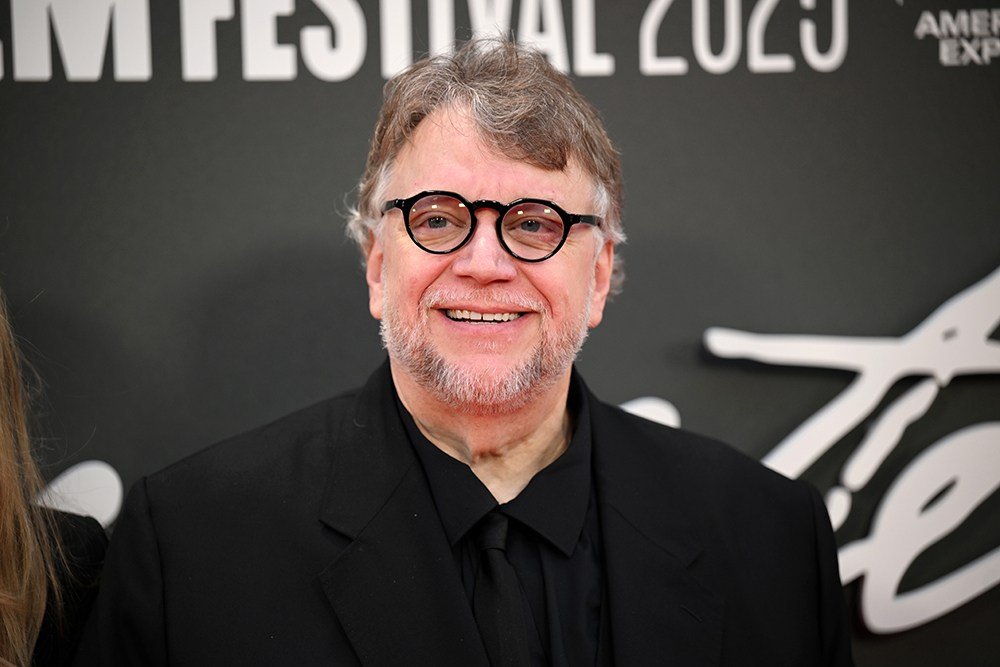
Del Toro took to X to call out naysayers of Alejandro G. Iñárritu’s film ahead of its Friday release. “Entirely Petty headline,” the director wrote in response to a review of Warner Bros.’ R-rated black comedy. “Love it or not. And yes, I do. The film delivers in scale, ambition and reach at a theatrical screen level. Daring, bold and cinematically complex. Decidedly a theatrical experience.”
Del Toro has also reposted others’ positive reviews, including one praising Tom Cruise’s performance as the film’s lead.
“Funny, I go into the platform and without even scrolling down, these are popping at the top of my timeline…” he wrote alongside the repost. “So… I will just keep posting them. Tune in or drop out—” In another repost, he wrote, “Dig or Die – c’mon!”
Funny, I go into the platform and without even scrolling down, these are popping at the top of my timeline… So… I will just keep posting them. Tune in or drop out- https://t.co/sEgiticKRa
Del Toro also compared the negative reviews of “Digger” to those of “The Big Lebowski,” “The King of Comedy,” and “The Counselor,” all of which drew scrutiny at release but later found appreciation with audiences.
I remember the review for BIG LEBOWSKI and KING OF COMEDY and a few more… to me (I know it is still not accepted) THE COUNSELOR and all the ones in your list. https://t.co/1dnvUdlzKj
“Digger” is currently at just 51% on Rotten Tomatoes. Variety’s chief film critic Owen Gleiberman said that, although the film feels like a comedy, it failed to actually be funny. “I’m not sure that ‘Digger’ is going to connect, because it’s so full of itself — so top-heavy with importance,” Gleiberman wrote in his review. “The movie cost north of $125 million to make, and that figure is not only too big to probably justify itself; it’s a testament to the arrogance of the filmmakers — to the assumption that we’ll turn out in droves for this ponderous absurdist lecture.”
The film generated just $3.4 million domestically at the box office on Friday following a slew of negative reviews and divided word of mouth ahead of its opening. The film is shaping up to be one of the year’s biggest flops, with estimates of just $7.5 million domestically in its opening weekend.
Cruise also took to X on Saturday in support of “Digger,” writing that he was “honored to have had the opportunity to create this film alongside such talented artists.”
DIGGER is officially in theaters and I am so honored to have had the opportunity to create this film alongside such talented artists. Thank you to the entire cast and crew for your dedication, hard work, and joy. The experience was truly unforgettable and I’m so proud of what we… pic.twitter.com/3YBblCnL3E
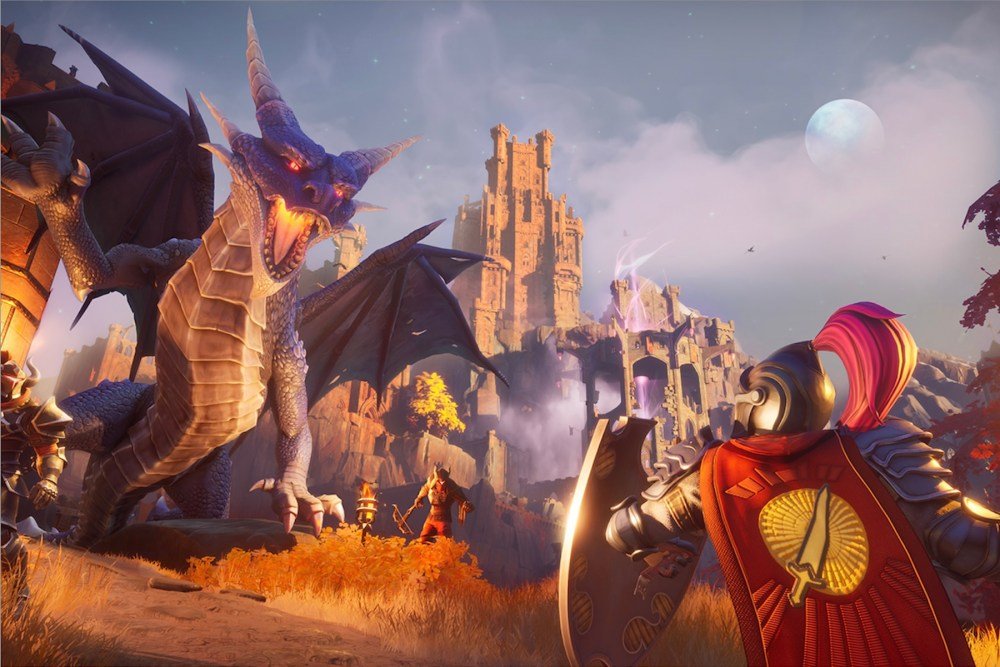
Lyrical Animation is developing a new animation series based on “RuneScape” in partnership with creator Charlie “MoistCr1TiKaL” White and game developer Jagex, the company’s CEO Jon Bellamy announced on stage at RuneFest in Birmingham, UK, on Saturday.
The project will bring the world of Gielinor to the screen, and marks a new step in Jagex’s ambition to expand the “RuneScape” world beyond the gaming ecosystem.
“For 25 years, our players have helped shape ‘RuneScape’s’ extraordinary world, its characters and its stories,” said Bellamy. “When we talk about the future of ‘RuneScape,’ we don’t just mean games. We see huge potential to bring Gielinor to life in new ways, both for the millions who already know and love it and for a whole new audience. It’s early days, but we’re excited to explore that potential with Charlie and the team at Lyrical Animation, and we wanted our players to be the first to know.”
Jagex first released “RuneScape” in 2001, and it has grown into a massively popular fantasy multiplayer online role-playing game. Through quests, combat, exploration and cooperative adventures, players can forge their own paths through the medieval fantasy world of Gielinor. The franchise now includes “RuneScape,” “Old School RuneScape” and “RuneScape Dragonwilds.”
White is a longtime member of the “RuneScape” community and has amassed more than 25 million followers across his channels and platforms. “I’ve been playing RuneScape for 22 years, and it’s one of my favorite IPs ever,” said White. “I’m so excited to be working with the team on this project.”
“RuneScape has such a unique storytelling voice, at once laugh-out-loud funny and effortlessly insightful,” said Daniel Dominguez, creative director of Lyrical Animation. “To be allowed to help bring that to life for its millions of fans alongside our dear friend Charlie again is a dream come true.”
Lyrical Animation will produce the project alongside White’s Meatier Productions. Development is in its early stages, and the company expects to reveal more details in 2027.
Not even a Tom Cruise-filled, all-stops-pulled press tour — including a GQ cover, a “New Heights” podcast appearance and a “Risky Business”-inspired jaunt down the “Jennifer Hudson Show” spirit tunnel — could keep “Digger” from flatlining at the box office.
Warner Bros.’ R-rated black comedy generated $3.4 million from 3,321 North American theaters on Friday following a slew of negative reviews and divided word of mouth. The film is shaping up to be one of the year’s biggest flops, with estimates of just $7.5 million domestically in its opening weekend. The film was greenlit at $125 million but ended up ballooning to $160 and $180 million after production ran long, according to knowledgeable sources. That’s a problem because the studio splits ticket sales with theater owners, meaning “Digger” is primed to lose many millions in its theatrical run.
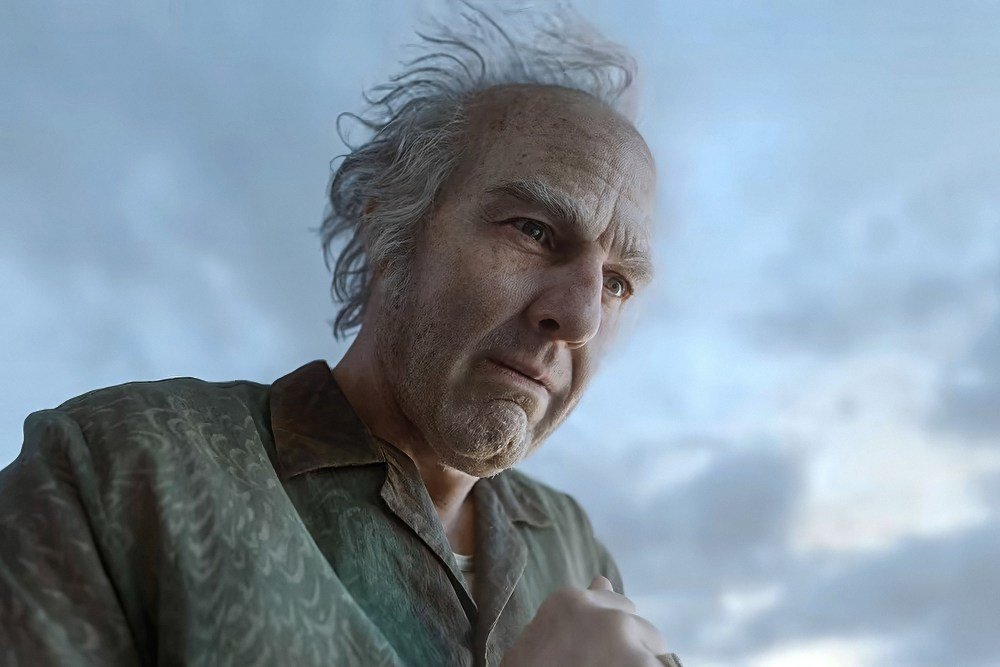
Directed by Academy Award winner Alejandro González Iñárritu, “Digger” stars Cruise as a powerful oil tycoon whose company sparks an ecological calamity. Despite Cruise’s enduring star power, having anchored recent blockbusters like the “Mission: Impossible” franchise and 2022’s sensation “Top Gun: Maverick,” “Digger” will wind up as the latest misfire for Warner Bros. This year, the studio has siphoned off a string of duds including Maggie Gyllenhaal’s punk rock “The Bride!” and DC’s comic book adaptation “Supergirl.”
With general audiences rejecting “Digger,” Amazon MGM’s psycho-thriller “Verity” took the top spot on Friday with $15.1 million from 3,510 North American theaters. The movie is expected to make $33.6 million domestically through the weekend.
Adapted from Colleen Hoover’s bestselling book of the same name, “Verity” centers around famed author Verity Crawford (Anne Hathaway), who gets badly injured in a car accident, leaving her husband (Josh Hartnett) to hire a struggling writer (Dakota Johnson) to finish the remaining books. Michael Showalter directed. It’s Hoover’s fourth novel to hit the big screen, following 2024’s “It Ends With Us” (Sony), 2025’s “Regretting You” (Paramount), and 2026’s “Reminders of Him” (Universal).
Zach Cregger’s zombie horror “Resident Evil” landed in second place on Friday, grossing $3.62 million. Starring Austin Abrams as a medical courier who must contend with a zombie outbreak while making a delivery to Raccoon City General Hospital, the Sony film looks to add $12 million by Sunday, bringing its domestic total to $124.395 million.
After “Digger’s” third-place finish, Paramount Pictures’ “The Heart of the Beast” followed with $3.15 million, bringing its cumulative gross to $38.39 million. The Brad Pitt-led adventure film was directed by David Ayer and stars the actor as a retired veteran who navigates a 58-mile trek to safety after he and his combat dog survive a plane crash in the Alaskan wilderness.
Finally, in fifth, was A24’s “Primetime.” The film grossed $2.49 million on Friday and should pull in another $7.5 million by Sunday. The film’s opening weekend registered as the third-best for A24 behind “Backrooms” ($81.4 million) and “Civil War” ($25.5 million), and the Robert Pattinson-led drama has pulled in $28.58 million domestically thus far.
“Primetime” chronicles Chris Hansen’s time as the host of Dateline NBC’s “To Catch a Predator.” While the film has received positive reviews and word of mouth since its debut at the Venice Film Festival earlier this month, the real-life Hansen has been less than complimentary ahead of the film’s release; after seeing the film, Hansen called it “so bizarre and so in-and-out of reality,” as well as “detached from reality.”
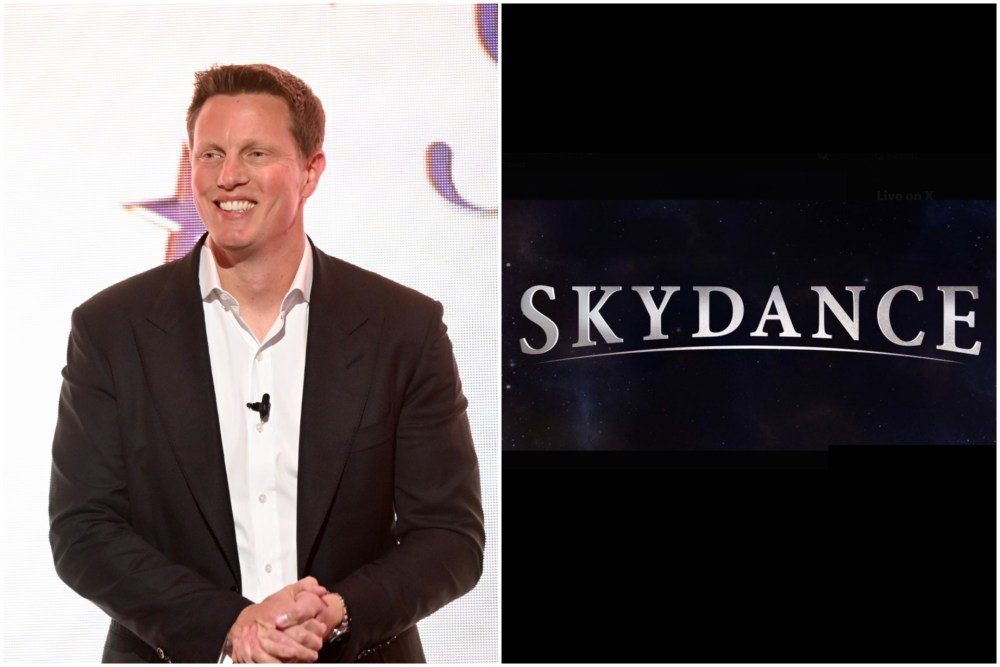
David Ellison has emerged victorious. And he’s boldly — or arrogantly, if you prefer — decided to name the entertainment giant that he’s bolted together Skydance Corp., nodding to the original name of his film production firm that has swallowed up two Hollywood studios over the past 14 months.
Defying skeptics and beating back opponents, Ellison has harpooned his white whale in buying Warner Bros. Discovery. Now he has to prove that the $111 billion mega-merger can become a profitable entertainment powerhouse, and not just a vessel that will get sucked under by a massive whirlpool of debt.
As the closing of the deal — set to occur Tuesday, Oct. 6 — became a certainty, entertainment industry insiders started to come to grips with the reality that the enlarged company is a new and unpredictable force in town. The deal has been polarizing for the creative community, with many boldface names going public in their opposition to the merger. The new leadership team that Skydance is assembling under the direction of Ellison and Ynon Kreiz, just recruited from Mattel to serve as co-CEO, has to navigate that dynamic. And they must do it while walking a tightrope on Wall Street to pay down debt and grow profits across film, linear TV and streaming.
“They need to move as quickly as possible to get the leverage down,” says Jawad Hussain, managing director at S&P Global. “The biggest hurdle and the biggest thing we’re going to be keeping our eye on is integration and execution.” Two years ago, Hussain says, Skydance Meida was a small company that turned out a few films a year. “Now it’s managing one of the largest media companies. It’s not necessarily an easy task.”
It’s all been a whirlwind. On the morning of Sept. 30, Ellison still didn’t know if it was a done deal.
He had spent more than a year in his relentless pursuit of acquiring Warner Bros. and HBO. The WBD board rejected his takeover offers eight times. David Zaslav, Warner Bros. Discovery’s boss, ghosted Ellison in December 2025 after Netflix clinched a deal for WB’s streaming and studios business. But Ellison didn’t surrender; he finally outbid Netflix in February, with a $31/share offer that was nearly 2.5 times the stock price before the M&A frenzy kicked off. It was an offer WBD couldn’t refuse.
Ellison and his legal team, headed by former DOJ official Makan Delrahim, predicted the proposed Paramount-WB combo would easily clear regulatory approvals. In June, Trump’s Justice Department rubber-stamped the pact without attaching any conditions. All told, regulators in 68 jurisdictions worldwide cleared the merger with minimal pushback.
The last barricade in Ellison’s way? An antitrust lawsuit brought by 12 Democratic state attorneys general, led by California’s Rob Bonta. Ellison believed the litigation was politically motivated, stoked by fears he would try to turn CNN into a Trump-friendly mouthpiece. (He has repeatedly promised a hands-off approach to CNN’s news coverage.) But the AGs pressed their case and a federal judge agreed that their arguments — that Paramount-Warner Bros. would wield undue power in theatrical and basic cable markets — had merit. A trial was scheduled to begin in March 2027.
Frustrated and incredulous, Ellison let it be known through press leaks in August that he would pull Paramount out of California if the state AGs didn’t let him close the WB deal. Paramount insiders continue to insist the notion of Ellison’s Golden State exit wasn’t a bluff or a threat. Bonta, seeming to realize he would gain no political capital by derailing or delaying the merger, relented. Paramount and the AGs announced a settlement of the suit on Sept. 21 — with a list of concessions so lenient that it surprised not only industry watchers but also employees at both companies.
Now all that was left was the judge’s approval of the settlement. Worryingly for Ellison, U.S. District Court Judge Araceli Martínez-Olguin at a Sept. 24 hearing had left the door open to a potential further third-party review of the settlement at the behest of Sen. Cory Booker (D-N.J.). The groups behind the #BlockTheMerger coalition, which had amassed more than 5,700 signatories from actors, filmmakers and industry workers opposed to the deal, filed a brief with the court urging Martínez-Olguín to reject the settlement.
The proposed consent decree, Martínez-Olguin wrote, reflects a “compromise that may leave some dissatisfaction for both sides and the public but a compromise that saves the risk, time and expense of litigating through trial.”
Boom! Teams at both companies swung into action to make the final preparations needed to close the deal. That evening, Paramount and WBD confirmed the merger’s expected closing date of Oct. 6, at which point Paramount’s common stock will move from Nasdaq to list on the New York Stock Exchange. The stock symbol will change from “PSKY” to “SKYD,” reflecting the Skydance corporate name.
Ellison is expected to lead a town hall meeting with employees next Tuesday, and Ellison and Kreiz are scheduled to host a virtual press briefing — along with the new Skydance’s executive leadership — at 7 p.m. ET on Oct. 6.
Coincidentally, on Sept. 30 Ellison had been sitting on his own bit of hot news: He was ready to announce that he recruited media vet Kreiz to be co-CEO at the combined Paramount-WBD. The merged entity’s businesses will jointly report to Ellison and Kreiz.
Word of Kreiz’s joining Paramount trickled out earlier in the day, but Ellison had already decided to wait until after market close to announce it. Paramount put the release on the wire at 1:06 p.m., a little over half an hour after the judge OK’d the antitrust settlement.
Ellison triumphantly sent Paramount employees a companywide email about Kreiz’s hiring, timestamped at 1:18 p.m., praising the exec as a “proven builder and operator.” Kreiz, during his eight years at Mattel, had helped cut costs through layoffs — and oversaw its first theatrical release, 2023 blockbuster “Barbie.” He swung the company to profitability, but revenue has stubbornly stayed flat the last four years. Ellison wrote in his email: “Together we are well positioned to integrate, operationalize and run the businesses as we build one of the most ambitious next-generation media companies in the industry’s history. Kreiz, as part of his compensation package, will receive $31.5 million in fully vested stock as a signing bonus with the merger close.
Then on Friday, Oct. 2, Ellison shared on X that the new corporation would be … Skydance. His post included a sizzle reel of the combined company’s biggest hits, leading off with a clip from “Titanic” — an inauspicious choice, perhaps, given how that infamous voyage turned out.
“Paramount and Warner Bros. shaped over a century of culture,” Ellison wrote. “By combining them, we aren’t rewriting history — we’re equipping these iconic studios with a more powerful engine. Together, we are Skydance: a creative-first home for bold, quality storytelling.”
Three years ago, Ellison was primarily known as a rich kid — scion of Oracle billionaire Larry Ellison, one of the world’s richest people — and a semi-successful movie producer, most notably with 2022’s “Top Gun: Maverick,” which turned in a boffo $1.5 billion at the box office. Now, having bagged Warner Bros., he can lay claim to being a titan in the business and no mere nepo baby.
“Ellison stared down the attorneys general and won. He stared down the unions and won,” says Prof. Erik Gordon of University of Michigan’s Ross School of Business. “You can’t see David Ellison as daddy’s boy anymore. He’s a formidable force in the industry.”
The Paramount-WBD merger is the biggest M&A deal in Hollywood history. It brings together two of Hollywood’s biggest movie studios, HBO Max and Paramount+ streaming services dand TV brands including CBS, CNN, MTV, TBS, Comedy Central, Food Network and more. The new company’s entertainment franchises span Harry Potter, Lord of the Rings, Game of Thrones and other HBO hits, the DC superhero universe, “Yellowstone,” “Mission: Impossible,” “Top Gun” and the Nickelodeon kids’ empire.
“We still have work to do before the deal closes, and nothing changes until it does,” Ellison told employees in his memo about Kreiz.
But even before the deal closed, the company’s new leadership was taking shape. Michael De Luca and Pamela Abdy, co-heads of Warner Bros. Motion Picture Group, will leave post-merger, sources told Variety. Paramount film heads Dana Goldberg and Josh Greenstein are in line to oversee both movie studios.
With the deal close, Zaslav is expected to depart — with a boatload of money. Zaslav stands to earn at least $550 million in stock and cash once the Paramount-WBD deal closes, including $34.2 million in cash severance payments, per the terms of his “golden parachute” package.
Skydance’s settlement-related obligations around theatrical film and the operation of its Paramount and Warner Bros. cable channels will undoubtedly have ripple effects in the marketplace that extend well beyond the U.S. Showbiz leaders in Europe have closely watched the transaction at a time when local-language production is at a peak thanks to the influence of Netflix, Amazon and Disney+. HBO has a growing international footprint that will be crucial to Skydance’s future growth.
Pierre-Antoine Capton, chairman of France’s Mediawan, says the broader film and TV business is in line for a bumpy few years amid the shakeout of what he calls “a period of intense consolidation” of media assets. Mediawan bought Peter Chernin’s North Road Company earlier this year. It’s also circling Lionsgate as a potential acquisition.
“Having spoken with David, I believe his vision is first and foremost an artistic, creative ambition,” Capton says of the Skydance merger. “He wants to build a more powerful group in order to invest in creation. It’s not only about making cuts. I believe in his commitment to cinema and to theatrical releases.” At the same time, “everywhere in the world we’re entering a much more difficult phase, where consolidation will be, in my view, one of the solutions to the economic problems we’re all going to face,” Capton says.
Ellison and Kreiz will also be under pressure to deliver a clear roadmap for generating bigger profits from its streaming pillars, HBO Max and Paramount+.
Casey Bloys, head of WBD’s HBO, is poised to assume oversight of the combined Paramount-Warner Bros. streaming business after Cindy Holland announced on Sept. 29 to staffers that she was stepping down from her role running Paramount+ and other direct-to-consumer businesses.
Holland’s resignation blindsided some senior managers at Paramount, who thought Ellison had hired her for the long haul. “We all thought we had the home-court advantage — that David was bringing all the new people at Paramount to have them be part of Warner Bros.,” a company insider says.
Paramount+ and HBO Max will together have more than 200 million subscribers. The newly merged Skydance can save money by consolidating its back-end streaming infrastructure. But “you don’t want to immediately combine the two streaming services because people won’t pay the sum of the two subscription prices,” says Prof. Sridhar Tayur of Carnegie Mellon University’s Tepper School of Business. For the foreseeable future, HBO Max and Paramount+ will continue as discrete brands.
Another area to watch: what Ellison does with CNN, which throws off operating cash that Skydance Corp. will need to bolster its finances. Ellison has held preliminary talks with CNN chief Mark Thompson about staying on after the merger, sources tell Variety. The prospect of Thompson continuing at the helm, at least for now, came as a relief to CNN personnel, who have been worried that Bari Weiss, the “anti-woke” media entrepreneur Ellison put in charge of CBS News, might extend her fiefdom to include the news cabler.
Under the settlement with the 12-state coalition, the merged Paramount-Warner Bros. will be subject to monitoring by a “news editorial independence board.” The board, which will include representatives from the states, will establish which will establish “guiding editorial and journalism principles” for CNN and CBS News. But critics have dismissed this as a toothless condition. One player displeased with this outcome was Connecticut Attorney General William Tong, who, although he signed off on the settlement, said afterward he had advocated for a full divestiture of CNN and CBS News.
Foes of ParaBros remain hopping mad. Actor Mark Ruffalo, one of the deal’s most strident critics, has vowed to continue the fight. “This merger will stifle creativity, weaken free speech and cost people their jobs — it is a bad deal for this country and should never have been approved,” he said in a social media post Sept. 30.
Ruffalo’s feud with Paramount got ugly. On Aug. 21, he posted a message warning about the dangers of the Paramount-WB merger and alleged Larry Ellison’s Oracle was complicit in “what we now have come to see as a genocide” by the Israeli government against Palestinians. Paramount responded forcefully. A company rep asserted the “antisemitic tropes” Ruffalo invoked “aren’t just wrong — they’re a bridge too far.” Ruffalo has been set to reprise his role as an FBI agent in a second season of HBO’s “Task” crime drama. It remains to be seen if Ellison will let bygones be bygones.
Apart from the shouting, the biggest burning questions about the new entity are about its financial condition.
How is Paramount buying Warner Bros. Discovery, which has a market cap that’s six times larger? Paramount is issuing billions in debt securities and securing new loans to help foot the bill. Larry Ellison is bankrolling the WBD merger to the tune of $46.7 billion in equity financing. Paramount also lined up about $24 billion in commitments from the sovereign wealth funds of Saudi Arabia, Qatar and the United Arab Emirates. In April, Paramount said the three Middle Eastern funds will own 38.5% of the combined entity, but that they will have no board seats or governance representation.
The new company will be controlled by the Ellison family alongside Gerry Cardinale, founder and managing partner of RedBird Capital Partners. Cardinale’s firm is also pitching in equity for the WBD deal, after funding Skydance’s Paramount Global takeover.
The new company’s net debt is estimated to be more than $80 billion. That staggering amount would translate into annual interest payments topping $6 billion. Add to that the fact that Paramount-WB, under the settlement with the AGs, is obligated to invest at least $300 million more on film production in the U.S. annually (above what the studios combined spent in 2025).
Paramount execs have told Wall Street they can achieve $6 billion in cost savings through the merger. But not everyone thinks there’s $6 billion in cost savings to be squeezed out without negative consequences. There are obvious areas of overlap in corporate functions like IT, marketing, procurement and legal. But a big risk in executing a media merger of this scale is cutting into bone — resulting in the loss of creative professionals who are essential to the enterprise, says Prof. Tammy Madsen, a professor of management at Santa Clara University’s Leavey School of Business.
“Creativity matters,” Madsen says. “If you are too aggressive in eliminating redundancies in the creative parts of the company, you could kill the value.”
Ellison, after the final clearance for the merger came through, wasn’t exactly popping the Champagne just yet. But he did, apparently, pop open some breakfast burritos.
On Oct. 1 — out of nowhere — employees on the Paramount Studios lot in L.A. and at the company’s offices Burbank were welcomed with buffet breakfasts: French toast, pancakes, egg burritos, shakes, berry bowls, chia pudding and more. One insider says it was the first time they had ever seen the company put out that kind of spread.
Perhaps it was more like a peace offering, coming before the pain of a first wave of layoffs at the new Skydance expected before the end of the year. The merger could result in the loss of some 4,500 film and TV jobs over three years in L.A. alone, according to a report issued by Los Angeles County in August. Insiders believe layoffs will continue with further rounds into 2027.
There’s no way around the fact that thousands of employees across the former Paramount and WBD are about to get pink-slipped. But Ellison is betting that through the crucible of consolidation, a stronger company will emerge. “We have big goals for Skydance,” he wrote in his post on X about the new name, “and we intend to pursue them with passion, imagination and a willingness to take smart risks.”
Marc Malkin, Michael Schneider, Cynthia Littleton, Elsa Keslassy, Matt Donnelly, Angelique Jackson, Brian Steinberg and Gene Maddaus contributed to this story.
Philanthropist Olga Rabinovich will receive the inaugural Prêmio Encontros (Encounters Award) at this year’s Encontro de Ideias Audiovisuais, the industry platform of the São Paulo International Film Festival. The award honors her enduring commitment to advancing Brazilian cinema and elevating the international profile of Brazilian film and talent through her work with Projeto Paradiso.
The Encounters Award was created to spotlight the transformative role of private investment in culture, bringing together private funders and the creative professionals behind audiovisual productions. The inaugural honor will be bestowed upon Rabinovich during the event’s opening gala ceremony on Oct. 14 and ahead of an in-conversation event with Neon president Jeff Deutchman.
Born in São Paulo, Rabinovich spent years volunteering in hospitals, working closely with terminally ill patients. In 2018, she founded the Olga Rabinovich Institute, launching Projeto Paradiso soon after. The initiative is dedicated to the advancement of the Brazilian audiovisual sector and grew out of her belief that “stories can change the world,” as well as a decision to invest in the people who create them and want to share them with audiences worldwide.
“Olga Rabinovich is the first recipient of the newly created Prêmio Encontros, because she was the inspiration behind the award,” said Renata de Almeida, director of the São Paulo International Film Festival. I first heard Olga’s name in early 2018, when Josephine Bourgois came to see me about someone from the private sector who wanted to create an institute dedicated to cinema. The Olga Rabinovich Institute was announced during the 42nd Mostra, bringing a breath of hope at a time that promised to be particularly difficult for Brazilian film and culture.”
“Eight years later, Projeto Paradiso, an initiative of the Olga Rabinovich Institute, has already made a major contribution to discovering and championing a new generation of talent, strengthening Brazil’s audiovisual sector as a whole,” continued the director. “Projeto Paradiso has an outstanding professional team, as its results clearly demonstrate. But the image that stays with me is of a meeting with Olga, climbing the winding stairs of our little building for a somewhat chaotic coffee in the festival’s office. Because, in the end, almost everything really does begin with an encounter.”
Projeto Paradiso offers a wide range of support to Brazilian screen professionals to maximize their presence on the global stage, supporting the development of stories through fellowships, residencies, workshops, and other training and international reach initiatives. The Paradiso Talent Network now comprises 278 Brazilian professionals.
The organization also helps connect Brazilian talent and projects with the international industry through a network of more than 250 partner institutions in Brazil and abroad, including the Hubert Bals Fund, La Fabrique Cinéma de l’Institut français, TorinoFilmLab, Film Independent and the Sundance Institute.
The initiative was recently behind buzzy festival titles such as Allan Deberton’s Berlinale-winning “Gugu’s World” and Grace Passô’s “Our Secret,” and boasts a talent network of 264 professionals, including Anita Rocha da Silveira (“Medusa”), Juliana Rojas (“Good Manners”) and Dira Paes (“Manas”).
In 2025 Projeto Paradiso teamed with the Embratur Brazilian Tourism Board to launch Screen Brasil, offering four Brazilian films a year in two calls – the latest of which closed Oct. 2 supporting their international distribution campaigns, submissions being made by the international sales agent holding the film’s commercial rights. Announced at Cannes Marché du Film this May, films backed to date take in Gabriel Mascaro’s “The Blue Trail,” Rafaela Camelo’s “The Nature of Invisible Things” and animated feature “Papaya.”
Projeto Paradiso’s relationship with the São Paulo International Film Festival dates back to 2018, when the philanthropy initiatve was launched during the festival’s 42nd edition. Since then, Projeto Paradiso has steadily expanded its presence at the festival.
Since 2023, it has presented the annual Paradiso Distribution Support Award, providing a distribution grant for the theatrical release of a fiction feature. In 2024, Projeto Paradiso was also one of the driving forces behind a new partnership with the Hubert Bals Fund (HBF), which led to the creation of HBF+Brazil following initial discussions at Encontro de Ideias.
The 50th edition of the São Paulo International Film Festival runs Oct. 15-29.
A festival launching Oct. 11 at Manhattan’s SVA Theatre is positioning itself as an answer to the flattened, stereotyped picture of Muslims Western media often traffics in. The New York Muslim Film Festival (NYMFF), billed as the city’s first for Muslim filmmakers, wants them telling their own stories.
Hassan Babar, the festival’s artistic director, said such stories should not merely serve as counter-narratives. “They should be the establishing paradigm,” Babar said.
The one-day event will screen 12 shorts from seven countries, with documentaries, dramas, comedies, animation and experimental pieces in the mix. Women make up a majority of the program’s directors.
“This festival exists because those stories deserve a stage in this city, not on the margins of someone else’s,” said Nawal Mubin, the festival’s co-founder and director.
The day will open with a reception for filmmakers and industry guests. Two blocks of six films each, running roughly an hour apiece, will precede the awards and the jury announcement.
Emmy winner Aasif Mandvi, a longtime “The Daily Show” correspondent who also starred in Paramount+ series “Evil,” sits on the six-member jury. He is joined by Arab-American writer-director Darine Hotait, founder of Cinephilia Productions, whose shorts have aired on HBO, AMC, SundanceTV and the BBC; Munir Atalla, head of production and acquisitions at Watermelon Pictures and a former Netflix creative executive; and producer Abubakar Khan, whose resume includes “The Glassworker,” Pakistan’s entry for the 2024 Oscars, and SXSW 2023 audience award winner “Mustache.”
Rounding out the panel are Lebanese-American filmmaker Sarah Mokh, a Sundance Feature Film Fellow who recently wrapped her first feature, “The Alchemy of Being Okay,” which Khan is producing, and Egyptian-American actor Abubakr Ali. Ali has roles coming up in Bassam Tariq’s “Your Mother Your Mother Your Mother,” opposite Mahershala Ali, and Sean Durkin’s A24 film “Deep Cuts,” and recently appeared in Kathryn Bigelow’s “A House of Dynamite.”
Streamer Watermelon+ is behind the festival’s Watermelon+ Discovery Award. Its winner, whether filmmaker or rights holder, will give the platform an exclusive license to show the film for a limited period. The Islamic Scholarship Fund, New York production and post house Lost in Space, and Aneesa Talks, which filmmaker Aneesa Khan founded to support South Asian and Muslim creatives, have also signed on as partners.
The program ranges widely in tone and subject. Justin Mashouf’s documentary “$17.74” follows a former gang member, behind bars since the 1980s, whose gesture of support for Gaza from inside prison set off a viral wave of solidarity. In Karim Emara’s Qatar-U.S. dramedy “Baba Is Melting,” a son phones his father, who is waiting in the car before Friday prayer in Doha, to challenge him over a hidden second marriage.
Zaid Ahmed Hassan’s “Ghusl” centers on a son whose dying father asks him to learn Islamic burial rites, while Basma Khalifa’s U.K. experimental piece “Henna” follows the henna plant’s life cycle alongside women from 16 African and SWANA countries. Sima Naseem’s Canada-Pakistan animation “My Friend in the Jingle Truck” combines stop-motion and 2D to tell of a Karachi girl who meets a magical bird.
In Alex Aljouni’s “Bukra,” a young Syrian refugee whose sweepstakes prize is a soccer ball rushes to collect it in time for one last match with her best friend before he is gone for good. One daring move reopens old rifts among three generations of Afghan women in Negine Jasmine Sekandari and Ayda Rojhantalab’s comedy “Haram Salami,” as they weigh who they are against what custom demands and what they want.
Maram Taibah’s Saudi fantasy “Malika” explores a girl’s bond with her grandmother, and the pull between wildness and the obedience expected of girls, through a magical-realist world spun from a child’s imagination. In Bilal Shams Khan’s Pakistani drama “Sabr O Shukar,” 10-year-old Akram learns about patience and gratitude while chasing his dream of a bicycle.
Imran J. Khan’s “The Boy With Dinosaur Head” pits a troubled boy who believes he is a dinosaur against a teacher set on pulling him back to reality, and their short encounter stays with both of them. Ilhan Abdullahi and Sherry Rashidan’s Canadian comedy “Unqualified” follows Warsan, the lone Muslim at her workplace, who is handed the job of spiritually cleansing a lunchroom said to be haunted and must clear out the spirits, armed with her faith and a string of misunderstandings, before she loses her job.
Lyna Tadount and Sofian Chouaib’s French drama “Ya Hanouni” centers on two parents vying to be their baby’s first word, until their lighthearted contest is cut short by an event that upends their lives.
Babar, a Toronto-based actor and producer, co-heads programming with Aneesa Khan, who also leads communications. Mubin, a New York director-producer, co-founded the festival with filmmaker and post-production specialist Giuseppe de Matteis. Both work at Lost in Space.