Tag: Entertainment – Variety

  • ‘Spider-Man: Brand New Day’ Sets Box Office Record With $72 Million in Previews, Beating ‘Avengers: Endgame’

    ‘Spider-Man: Brand New Day’ Sets Box Office Record With $72 Million in Previews, Beating ‘Avengers: Endgame’

    Spider-Man: Brand New Day” is already web-slinging its way to box office history.

    Tom Holland’s latest Spidey movie has made a record-breaking $72 million in previews, including Wednesday early access screenings, the most of any movie in history. The previous record was held by “Avengers: Endgame,” which made $60 million in Thursday previews on its way to the biggest opening weekend of all time.

    To compare the two historic superhero movies, “Avengers: Endgame” set the all-time opening weekend record with $357 million domestically and an eye-popping $1.2 billion globally. Sony and Marvel’s “Brand New Day” is aiming to make between $260 million and $280 million in its opening weekend, which would make it the second biggest launch of all time — behind “Endgame” and above “Spider-Man: No Way Home.” Some estimates even put the “Brand New Day” opening above $300 million, but Sony is playing it safe and offering a more conservative start of $190 million to $195 million.

    Only nine movies have opened to more than $200 million, with “Avengers: Endgame” netting over $300 million. The other films are “Spider-Man: No Way Home,” “Avengers: Infinity War,” “Star Wars: The Force Awakens,” “Star Wars: The Last Jedi,” “Deadpool & Wolverine,” “Jurassic World,” “The Avengers” and “Black Panther.”

    Internationally, “Spider-Man: Brand New Day” is estimated to add between $275 million to $300 million to its total, but it’s likely the tally will exceed expectations. Holland’s last adventure, which had the crossover star power of past Spidey actors Tobey Maguire and Andrew Garfield, opened to $327 million internationally and $587 million globally, going down as the third-best worldwide start in history.

    “Brand New Day” picks up four years after “No Way Home” ended, with the entire world forgetting that Peter Parker is Spider-Man. Holland’s hero is alone, without his girlfriend MJ (Zendaya) or best friend Ned (Jacob Batalon), and faces a mysterious new villain played by Sadie Sink. After newly married couple Holland and Zendaya just appeared together in this month’s blockbuster “The Odyssey,” they’ll likely be breaking records again with “Brand New Day.”

  • Gary Oldman, ‘Obsession’ Director Curry Barker and ‘Barbie’ Producer Robbie Brenner Among Toronto Market Speakers

    Gary Oldman, ‘Obsession’ Director Curry Barker and ‘Barbie’ Producer Robbie Brenner Among Toronto Market Speakers

    “Slow Horses” star Gary Oldman, “Obsession” director Curry Barker and “Barbie” producer Robbie Brenner are among the lineup of speakers at the Toronto Film Festival’s inaugural market, which runs Sept. 10-16.

    Other speakers at the event, known as TIFF: The Market, include “Obsession” star Inde Navarrette, director Lee Chang-dong, and producers Christine Vachon and Pamela Koffler. They will join Pam Abdy and Mike De Luca, the Warner Bros. Motion Picture Group’s co-chairs and CEOs, who were already announced.

    Charles Tremblay, head of TIFF: The Market, said, “The high caliber of speakers participating in our first market reflects the industry’s strong support for our vision and the intentional efforts we’re making to build on TIFF’s long-standing reputation as a welcoming space for creativity and commerce to co-exist.”

    The speakers will appear as part of the Visionaries and Dialogues programs, as follows:

    VISIONARIES PROGRAM
    Gary Oldman
    The festival said the talk would be “anchored in Oldman’s creative process” and would “celebrate an unparalleled career filled with varied and unforgettable characters,” including Jackson Lamb in the espionage drama “Slow Horses,” which is premiering its sixth season at the festival.

    Robbie Brenner
    A moderated discussion that highlights the career of the two-time Oscar-nominated producer (“Barbie,” “Dallas Buyers Club”), and president and chief content officer of Mattel Studios, who brings “The Housewife” to this year’s festival.

    Lee Chang-dong
    With his upcoming release, “Possible Love,” as a focal point, the conversation will highlight Lee Chang-dong’s work whose “naturalistic style as a novelist and playwright has influenced his filmmaking process and consistent desire to explore the human experience.” Lee Chang-dong will also be presented with the Ebert Director Tribute Award at this year’s festival.

    DIALOGUES
    Curry Barker, Inde Navarrette
    This discussion will center around the making of Focus Features’ breakout hit “Obsession,” and its journey to becoming one of the biggest box office successes of the year, after making its debut at TIFF last year.

    Christine Vachon, Pamela Koffler
    The founders of Killer Films will discuss the multi-faceted role of a producer and their approach to working with filmmakers.

    SPECIAL EVENT
    The Town With Matthew Belloni Live @ TIFF
    Belloni’s popular podcast “The Town,” part of Spotify’s The Ringer podcast network, will be live at TIFF: The Market with special guest Matthew Greenfield, president of Fox Searchlight Pictures.

    “Our Summit programming is designed to inspire creators, inform decision makers, and fuel healthy discussions around the ever-evolving screen industries,” said Geoff Macnaughton, VP, market programming and theatrical.

    Additional speakers and programming will be announced in the coming weeks.

  • LISTEN: Music Fans Shrug Off Ticket Price Hikes to Keep Summer Concert Business Humming

    LISTEN: Music Fans Shrug Off Ticket Price Hikes to Keep Summer Concert Business Humming

    The global live music business is chugging along through its busy summer season as strong as ever, defying even what has long been its biggest challenge: ticket-price sensitivity.

    Consumers consistently cite cost as the biggest barrier to attending concerts. But the percentage of respondents on Luminate‘s U.S. Music 360 survey who cite ticket prices as a deterrent has trended downward from 59% in the first quarter of 2024 to 53% in the same period two years later. The survey and Luminate’s latest special report, “Live Music 2026,” is the focus of this week’s episode of Variety podcast “Strictly Business.”

    “The concert industry really hasn’t seen too much of, if any, decline in demand,” says Luminate analyst Rob Steiner, author of the report. “That is not as much of a concern in the live music business, despite ticket prices going up overall on average.”

    Listen to the full podcast:

    But the success of the concert business doesn’t come without some areas of struggle, as evidenced by the outbreak of so-called “blue dot fever” earlier this summer. Some well-known artists like Meghan Trainor and Zayn Malik were forced to cancel portions of their tours due to apparent underwhelming audience demand. On the other hand, superstar Bad Bunny is raking it in on the world tour that he launched on the heels of his electrifying Super Bowl Halftime Show appearance in February.

    As Steiner sees it, while consumers are proving they are willing to pony up top dollar for live shows, they are also forced to make tough choices about who they can’t afford to see, which impacts performers who aren’t necessarily top-shelf draws.

    “Unless you are like a Taylor Swift or a Coldplay or Beyonce, you’re gonna have a lot harder of a time, I think, to get people to your shows because they aren’t able to afford going to every single show they want to go to,” he said. “Unfortunately, that greatly impacts the middle tier of artists that are too big for clubs, but too small for stadiums.”

    Steiner touches on a broad variety of issues impacting the concert business, including what separate Gen Z consumers from their older counterparts and the struggle of independent venues to keep up with attendance trends at bigger arenas and stadiums.

    “Strictly Business” is Variety’s weekly podcast featuring conversations with industry leaders about the business of media and entertainment. (Please click here to subscribe to our free newsletter.) New episodes debut every Wednesday and can be downloaded at Apple Podcasts, Amazon Music, Spotify, Google Play, SoundCloud and more.

    (Pictured: Bad Bunny)

  • Irish Indie Film ‘Lemonade,’ Starring Barry Keoghan, Reveals First Images and Plot Details (EXCLUSIVE)

    Irish Indie Film ‘Lemonade,’ Starring Barry Keoghan, Reveals First Images and Plot Details (EXCLUSIVE)

    Full details of an under-the-radar and low-budget Irish feature starring Barry Keoghan have been revealed alongside a couple of first look images from the film.

    “Lemonade,” written and directed by documentary filmmaker Kim Bartley in her narrative feature debut, was shot earlier this year in Dublin. Set amid Ireland’s care system, the film is described as a story about “first loves, second chances and the power of human connection.”

    The film follows teenager Danny, who after making a mistake that could derail his future, unexpectedly reconnects with Josh, a social worker who once tried to help him but whose own mistakes drove them apart. When their paths cross again, Josh becomes both mentor and mirror, guiding Danny on his journey to manhood- through first love and loves lost. Along the way Danny discovers that family is not always the one you are born into, but the one that believes in you when no one else will.

    Playing the lead role of Danny is rising Irish star Lewis Brophy, recently seen in acclaimed local feature and Berlinale prizewinner “Christy.” Keoghan, meanwhile, stars as Josh. The principal cast also includes Carla Tous, Eileen Walsh and Imelda May.

    Barry Keoghan as Josh in “Lemonade”

    Colm Hogan

    Producers on “Lemonade” are Rachel Lysaght and Farah Abushwesha, while exec producers include Bartley, Geraldine East, Niamh Fagan, Desmond Byrne, Lorcan Kavanagh, Peg Cafferty, Deepak Sikka, Mark Foligno and Sire Ramos. Keoghan also exec produces for his new producton company Wolfcub, which at this year’s Cannes saw its debut feature “Butterfly Jam” (starring Keoghan) open the Directors’ Fortnight competition.

    Speaking to Variety ahead of Cannes, Keoghan discussed “Lemonade,” describing it as having considerable parallels with his own upbringing as a foster child in Dublin. “There are moments in ‘Lemonade’ when I was like, this is too to-the-bone,” he said. “Honestly, it makes me emotional just chatting about it, but it’s beautiful.”

    Behind the camera on the feature, Colm Hogan served as cinematographer, Paul Mullen as editor, Tamara Conboy as production designer and Louise Stanton as costume designer. John Brennan, Daniel Bodsworth, Rob Hughes and Mark Langlay-Smith oversaw sound, while the original score was written by Siôn Trefor, Ioana Șelaru and Galia Arad.

    “Lemonade” is an Underground Films and Rocliffe Productions co-production, in association with Play House Studios and with the participation of Coimisiún na Meán. It was supported by Screen Ireland.

  • World Cup Boycott Backed by All 55 UEFA Countries as Asian, North and Central American, Caribbean Members Oppose FIFA Stake Sale

    World Cup Boycott Backed by All 55 UEFA Countries as Asian, North and Central American, Caribbean Members Oppose FIFA Stake Sale

    The Asian Football Confederation has joined the North, Central America and Caribbean football association and UEFA in opposition to FIFA president Gianni Infantino’s proposal to sell stakes in its competitions to private investors. On Thursday, all 55 UEFA member associations pledged to boycott FIFA soccer competitions if president Gianni Infantino’s proposal is approved.

    “The FIFA World Cup is the pinnacle of global football and derives its strength from the participation of all Confederations and the world’s leading football nations,” the AFC said in a statement on Friday, according to BBC Sport. “Any proposal that risks undermining the unity and universal character of the competition must be reconsidered.”

    Both the AFC and Concacaf stopped short of a boycott but made clear their disapproval of Infantino’s plan. The UEFA decision to boycott came out of an emergency meeting Thursday, days after FIFA announced the plans Tuesday. The first test of the stance arrives in October, when the Women’s World Cup play-offs are scheduled.

    UEFA said a statement after the meeting: “UEFA and its 55 member associations stand as one. We unanimously and unequivocally reject FIFA’s proposal to transfer ownership interests in the World Cup and other FIFA competitions to private investors.

    The World Cup cannot be treated as an investment product. It is one of football’s greatest sporting legacies. It has been built over generations by players, national teams and supporters across every continent. No part of it should ever be surrendered to private investors. The World Cup is not for sale.”

    The new company, FIFA Forward Enterprise, has been valued at about $20 billion. FIFA would seek to sell a roughly 20% stake in the entity. Among the potential investors is Thrive Eternal, led by Joshua Kushner, brother of Donald Trump’s son-in-law Jared, according to the Financial Times.

    Among the opponents of the plan are the sport’s governing bodies in North America and Europe.

    Concacaf, which runs soccer in North America, Central America and the Caribbean, said it was “deeply concerned by the lack of due process” when the plan was conceived. The federation said it was disappointed that the plan has been revealed “before any discussion with the relevant governance bodies and stakeholders has taken place.”

    UEFA, which runs the sport in Europe, said FIFA’s plan “crosses a line that [soccer’s] governing institutions should never cross.” It added, “The soul and governance of [soccer] are not assets to trade – especially with zero transparency as to who gains financially. None of us are the owners of [soccer]. It is not FIFA’s to sell.”

    UEFA is fast-tracking efforts to hold an emergency meeting of its member associations this week, sources told ESPN, to discuss plans, including a potential World Cup boycott.

    The FIFA plan is subject to ratification by its 211 national member associations. Concacaf represents 41 members, while UEFA has 55.

    Under the plan, funds raised from the sale of a stake in FIFA Forward Enterprise would be used in part to increase annual payments to members from $2 million a year to $5 million. Each would also receive a one-off payment of $20 million.

    FIFA president Gianni Infantino said in a statement, “Every FIFA member association should have an opportunity to seek a fair share of the available funding to shape its own future, deciding for itself rather than relying on others. This is about the democratization of [soccer] worldwide.”

    Among other opponents of the plan are U.K. prime minister Andy Burnham, who said, “The World Cup is not a product. It is the greatest competition in world sport, and it was never anyone’s to sell. Dress the deal up however you like. Once you have sold a piece of it, you have sold out.”

    Much of the opposition to FIFA’s plan is focusing on the role of Infantino, and his relationship with President Trump.

    Football Supporters Europe, which represents fans, said, “The World Cup is not for sale. Enough of this charade. [FIFA] member associations — and everyone who cares about the future of the game — must stand up to the man who wants to sell world [soccer].”

  • ‘Los Vampires’ Review: Dueling Draculas Spar in an Alluring if Unevenly Executed Flashback to Early-Talkie Hollywood

    The talkies’ arrival was a major hardship in many respects for the movie industry, as theater owners had to install expensive new equipment, and studios could no longer easily export fresh product to lucrative foreign markets. One solution weighed to the latter dilemma was making alternative versions of features in different languages. Universal took that idea farther than most in late 1930 by shooting “Dracula” twice on the same sets, with entirely different casts and directors. One was, of course, the legendary Tod Browning film with Bela Lugosi. The other, directed by George Melford (who’d guided Rudolph Valentino in his most famous role as “The Sheik”), had Spanish emigre Carlos Villarias as the caped bloodsucker. It was forgotten for decades until a 1990s restoration and revival led some latter-day viewers to pronounce it the better of the two.

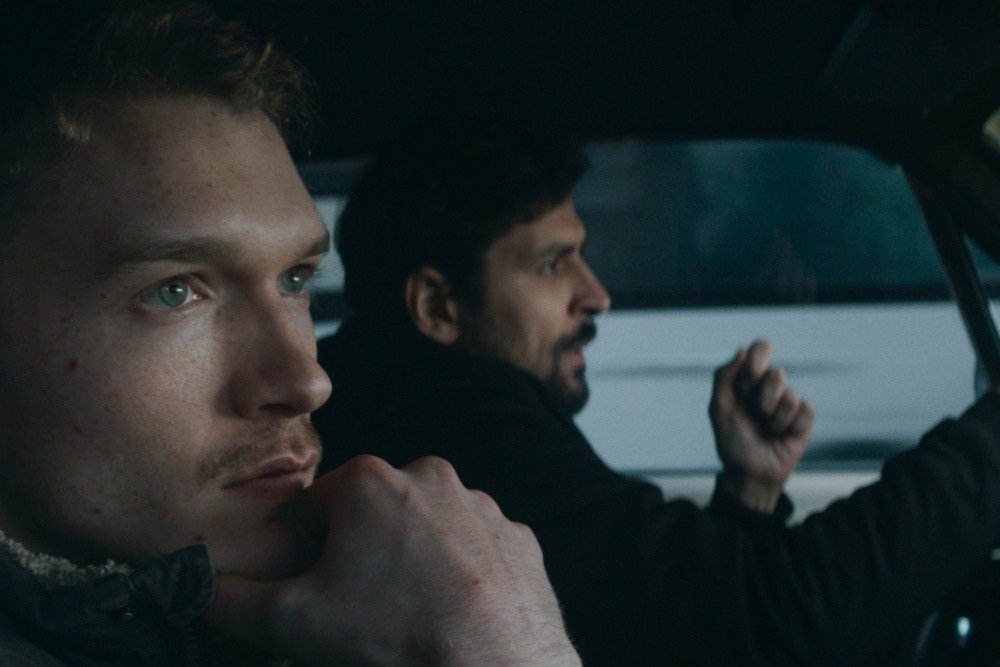
    That curious footnote to cinematic history has now inspired “Los Vampires,” the first directorial feature in decades from scenarist Craig Mitchell. Like the 2000 Willem Dafoe vehicle “Shadow of the Vampire,” this is a fiction spun from the reality of a fabled production shoot. Henry Ian Cusick and Thomas Kretschmann play fictionalized stand-ins for Villarias and Lugosi, as immigrant actors touchy about “sharing” a starring role that could be a huge break for both.

    In the somewhat convoluted progress of Mitchell’s script, their ego war is eventually eclipsed by fears there’s a genuine murderer on the loose — perhaps even an actual vampire. Not always very precisely balanced between horror, homage and mystery, this intriguing if unevenly realized construct will nonetheless lure genre fans and nostalgists alike with its imagined back chapter of golden-age Hollywood. 

    It starts with nervous Luis de Ossario (Cusik) arriving on the Universal soundstage, where he’s dismayed by a front-office representative’s command that he watch the dailies of English-language scenes shot during the day, then precisely mimic them in Spanish each night. Pride insists he ignore that directive — after all, he too has been a star, called the “Spanish Sheik” by fan mags. But it’s additionally irritating when he’s approached by Romanian thespian Kurt Orlov (Kretschmann), who’s essayed the Count to great success onstage, and likewise advised to imitate his every gesture and intonation. Refusing to do so, Luis stirs a rivalry and potentially endangers his own employment. 

    Still, the dual production goes on as planned. Anxiety heightened by the exhausting nocturnal schedule, Ossario is further rattled by glimpsing sexually explicit footage presumably shot as blackmail fodder. It involves Vianca Sugura (Daniela Couso), the beauteous albeit wholly inexperienced young woman hired as ingenue. Other unsettling revelations include word that the actress originally hired for that part was killed — a fate that later befalls others, including convent-raised Vianca’s protectress Sister Aubrey (Carol Abney). 

    There are additional, underdeveloped subplots. The intended enigmatic blurring between illusion, reality, the supernatural and sordid here too often just feels unfocused, with occasional detours into humor contributing to a wobbly tone. The best sequences seize upon the atmospheric potential of recreated studio-Gothic sets, though there’s surprisingly scant use of B&W film-within-the-film bits. Itself shot entirely on a soundstage, “Los Vampires” occasionally betrays budgetary limits in unconvincing period flavor, despite good work from production designer Ricardo Jattan and costumer Petra Larsen. 

    The lead actors do well enough on this slippery slope. Cusick and Kretschmann offer complementary chords of variable petulance and insecurity, as newcomer Cuoso ably negotiates her character’s shifting ambiguities. The supporting cast turns are competent if sometimes broad. If Mitchell’s resolution to his script’s dangling questions feels somewhat rote, a graceful epilogue leaps several decades forward to end matters on an interesting, unexpected note. 

    While the Lugosi “Dracula” was a huge hit, the Spanish version’s disappointing box office helped curtail future such endeavors in Hollywood, particularly since fast-evolving dubbing technology soon provided a cheaper alternative. Far from a mere copy of its English-language equivalent, however, Melford’s movie is considerably longer, with marked differences of dialogue, narrative sequence and costuming. Those who found Browning’s take too stagey have judged its doppelgänger more fluidly cinematic. Still, only one person became a celluloid legend from Universal’s gambit — and that person wasn’t Carlos Villarias, who outlived Lugosi by two decades yet never achieved anything like the same renown. 

  • ‘Black Zombie’ Review: An Engaging Doc on How the Flesh-Eating Hordes of Screen Fame Obscured Painful Real-Life History

    ‘Black Zombie’ Review: An Engaging Doc on How the Flesh-Eating Hordes of Screen Fame Obscured Painful Real-Life History

    In Hollywood’s original horror heyday of the 1930s and ’40s, it would have been hard to imagine another figure challenging the classic terror quartet of Dracula, Frankenstein monster, werewolf and mummy — let alone that the lowly zombie would ever become serious competition. Yet while those aforementioned creatures still get rehabilitated on a regular basis, they’re now greatly surpassed in popular visibility by a cannibal undead that didn’t even exist in the genre until more recent decades. 

    Maya Annik Bedward’s Canadian documentary “Black Zombie” explores that surprise evolution. But hers isn’t a genre fan’s focus so much as a cultural anthropologist’s eye, honing in on how the screen zombie has exploited and distorted the Haitian religious beliefs that provided its initial inspiration. Kino Lorber is opening the Canadian documentary in the U.S. on Sept. 11th; Raven Banner will release it on home turf the same date.

    Today zombie entertainment is so ubiquitous, it encompasses enormously expensive blockbusters (“World War Z”), big-screen franchises (like the “28 Days” films), an entire “Walking Dead” multimedia empire, comedies (“Shaun of the Dead” being the most famous) and myriad other expressions. Often involving animated corpses who are “fast-moving” — making their hunger for living flesh an even greater peril — these images break from the standard late-20th century convention of slow, shuffling if still bloodthirsty dullards, a template established by George A. Romero’s 1968 sleeper smash “Night of the Living Dead.”

    At neither speed, however, do they have much to do with the zombie’s prior, much-less-frequent pulp appearances. Those had roots in 1929’s bestselling “The Magic Island,” one of several questionable works of journalism by the writer, adventure and occult sensation-seeker William Seabrook. (His most credible tome was probably the subsequent “Asylum,” which detailed his institutional recovery from alcoholism.) He claimed to have seen laborers in the cane fields of Haiti who were seemingly in a trance, incapable of speaking. 

    The notion of zombies went back to that Caribbean nation’s days as a European colony, when huge numbers of largely African slaves were brutally disciplined and frequently worked to death by a white-settler minority. It was rumored that some got drugged or otherwise rendered “soul lost,” so they would toil without rest or protest. Thus within Haitian culture, zombies were victims, robbed of independent will by cruel masters.

    Seabrook’s primary focus was on Vodou aka voodoo rituals, which had long constituted an underground religious practice amongst populations outwardly accepting of Catholicism. But his mention of “zondis,” the dead supposedly revived via magic for cane harvesting, ignited the popular imagination. It soon got fictionalized as the post-“Dracula” Bela Lugosi vehicle “White Zombie” (1932), then in other films, notably the Val Lewton-produced “I Walked With a Zombie” a decade later. Their suspense arose not from anything that happened to or at the hands of zombie-fied “natives,” but the terror that such hypnosis might be used on Caucasian protagonists — especially pretty young ingenues. 

    Bedward elicits commentary from latter-day scholars, historians, and Vodou priests. They dissect how these representations reinforced superstitious racial stereotypes in a vintage “exotica” mode, one reprised at least as recently as Wes Craven’s 1988 “The Serpent and the Rainbow.” Those movies are seen as part of an ongoing disempowering of the Haitian peoples, who have been continually hobbled by occupiers, imposed foreign debts and political instability. The myth of witless, “savage” zombies only helped perpetuate the idea that Haitians cannot be trusted to control their own destiny.

    “Black Zombie” illustrates that point with an engaging mix of clips, interviews, old newsreel footage, brief animations and B&W staged sequences with Anderson Mojica as an 18th-century slave who’s first subsumed by, then overcomes his “zombie” state of passive toil. (It is suggested that depriving laborers of salt intake might have had such stupefying effects.) 

    Horror fans may be disappointed that the later waves of zombie cinema get rather fleeting address here, though we do hear from legendary gore FX maestro Tom Savini and the late Romero’s “Night of the Living Dead” co-writer John Russo. (The latter says their ultra-low-budget breakout settled for its hungry-ghoul gist only because they couldn’t afford the trappings of a science-fiction tale.) The whole cannibalism conceit has scant connection to Vodou lore, so it’s of little relevance to the director’s main thesis here. However, some of her experts do opine that the manic, devouring hordes of modern depiction discreetly amplify new paranoias: not just the “fear of Blacks” implicit in earlier zombie thrillers, but wealthy nations’ current panic over “invading” Third World immigrants, climate-change refugees, and so forth. Now, zombies simply “represent otherness,” as one observer puts it. 

    The authorities Bedward solicits intel from often speak reluctantly, having been burned before: They’re all too familiar with filmmakers feigning sincere interest, only to deliver yet another bloody screen cartoon of Haitian history and beliefs. While “Black Zombie” isn’t quite the genre “greatest hits” parade many viewers may be hoping for, it does provide a thought-provoking perspective — one that might add some depth to your next experience of undead cinema, however purely escapist.

  • ‘Spider-Man: Brand New Day’: Sadie Sink Is [SPOILER]. How Her Role Sets Up Marvel’s Next Reboot

    ‘Spider-Man: Brand New Day’: Sadie Sink Is [SPOILER]. How Her Role Sets Up Marvel’s Next Reboot

    SPOILER ALERT: This article contains major spoilers for “Spider-Man: Brand New Day,’ now playing in theaters.

    After months of speculation about who Sadie Sink is playing in “Spider-Man: Brand New Day,” the movie has finally hit theaters and Spidey fans can see for themselves which comic-book character she’s bringing to life

    As many people predicted, the red-headed “Stranger Things” star is in fact playing Jean Grey, one of the original members of the X-Men. We’ll no doubt be seeing her in the MCU’s planned “X-Men” movie, though no details on its cast or release have been announced.

    Sink’s identity is shrouded in mystery as “Brand New Day” begins, and her face isn’t revealed until roughly halfway through the film. Tom Holland’s Spider-Man begins investigating a new villain on the loose in New York City who has the power to possess bystanders’ bodies (as long as they’re less than 33 feet away). She uses her abilities to “jump” between between people’s minds and attempt to break into the headquarters for the Department of Damage Control. The organization, which is responsible for cleaning up the messes after superhero battles, has something that Jean wants locked inside a vault.

    After a failed break-in attempt using a possessed Scorpion (Michael Mando), Sink turns to a stronger, larger and greener wrecking ball to get inside of Damage Control: the Hulk. She takes control of Mark Ruffalo’s Bruce Banner and removes the inhibitor device that prevents him from turning into the Hulk. Spider-Man teams up with Jon Bernthal’s Punisher to take down the green giant and stop the him from destroying the Damage Control skyscraper entirely. Jean manages to break into the secret vault, but she’s tranquilized and apprehended by Tramell Tillman’s Damage Control CEO Bill Metzger.

    It’s here that Damage Control is revealed as the real villainous organization in the movie. Metzger and his team hold Jean hostage and run tests on her to understand how her psychic powers work. A flashback reveals that Jean had an older sister named Sara who could also possess people’s minds. One day in the park, Sara gets abducted by Damage Control officers, and she possesses Jean’s mind to run away and save her younger sister. When Jean is imprisoned, she realizes she’s locked in the same cell that was used to hold Sara, who had died while being tested on by Damage Control. Jean overpowers their restraints and creates a gigantic psychic bubble that freezes in place nearly everyone in New York City.

    Spider-Man is the only person who can overcome Jean’s psychic powers, and he’s able to reason with her to drop her vendetta against Damage Control. While Jean probes Spidey’s mind and lives through a tender memory he has of his late Aunt May (Marisa Tomei), Punisher is miles away lining up a sniper rifle to take out the mutant threat. As he fires the bullet, Spider-Man pushes Jean out of the way at the last second, but is hit by the gunshot himself. A devastated Punisher rescues Spider-Man and brings him to a hospital, where he eventually recovers; Jean had been using her powers to keep the hero alive, but she leaves before Spidey can say goodbye.

    In the final moments of the movie, Jean is seen riding a bus out of the city. Could she be heading upstate to the Xavier School for Gifted Youngsters? The famous mutant school is located in Westchester, and the fall foliage suggests school may be in session soon. There aren’t any references to the X-Men or other mutants in “Brand New Day,” but it seems clear that this isn’t the last we’ll see of Sink. It also seems like Damage Control may be morphed into a more evil corporation that’s anti-mutant in the future.

    The “Stranger Things” breakout star is the third actor to take on the famous telekinetic mutant in live-action. In Fox’s previous “X-Men” movies, Jean had been played by Famke Janssen in the original film trilogy Then in the prequel series, “Game of Thrones” star Sophie Turner had taken on a younger version of the mutant. 

    Now, it seems that Sink will be part of the next generation of X-Men in the MCU. We’ve seen several “X-Men” actors reprise their Fox roles, like Hugh Jackman as Wolverine, Ryan Reynolds as Deadpool, Patrick Stewart as Prof. Charles Xavier and Kelsey Grammer as Beast. In “Doomsday,” Stewart and Grammer will be joined by James Marsden as Cyclops, Ian McKellen as Magneto, Rebecca Romijn as Mystique, Alan Cumming as Nightcrawler and Channing Tatum as Gambit. After living in their own X-universe, the stars will be thrust into the MCU, joining forces with the Avengers and Fantastic Four to take on Robert Downey Jr.’s Doctor Doom. With Sink’s casting, it seems like the MCU is prepping a new, younger cast of X-Men to join their sprawling universe of heroes.

  • ‘Stuart Fails to Save the Universe’ Producers on Episode 2’s Surprise Kaley Cuoco Cameo As an Alternate Penny

    ‘Stuart Fails to Save the Universe’ Producers on Episode 2’s Surprise Kaley Cuoco Cameo As an Alternate Penny

    SPOILER ALERT: This story contains spoilers from “Stuart Fails to Save the Universe” Season 1 Episode 2, now streaming on HBO Max.

    “Stuart Fails to Save the Universe” Episode 2 was chock full of cameos and guest stars — but saved the biggest one, at least for “The Big Bang Theory” fans, until near the end of the episode: The return of Kaley Cuoco as Penny. But a very different Penny.

    In the episode, “Spoiler: Zack’s In This One,” Stuart (Kevin Sussman), Kripke (John Ross Bowie) and Bert (Brian Posehn) land in a much less apocalyptic Pasadena than the one they just escaped — and in this world, Kripke is no longer a vicious ruler (he plays off killing Raj in the previous world: “There are two possibilities. One, the world we were just in no longer exists. In which case I did not kill Raj. Two, that world and this world are part of an infinite number of worlds, in which case I killed one in an infinite number of Rajes. Mathematically, a rounding error.”)

    But in the happy-go-lucky, peaceful new universe they land in, things aren’t as cracked up as they seem: The characters all have a device planted on the back of their necks, sending them an electric shock whenever they argue or get angry. And for this crew, with Stuart and Kripke going at it, that’s a lot.

    colin remas brown

    Denise (Lauren Lapkus) didn’t make the trip through the wormhole with them, so Stuart goes looking for her — and finds her with her new beau, Gary (Tommy Walker). Meanwhile, hoping to find Sheldon and Leonard to get some answers, Kripke and Bert head to Caltech, where they find an extremely unhelpful receptionist (Riki Lindhome, who originally played Dr. Ramona Nowitzki on “The Big Bang Theory”).

    The receptionist angers Kripke and Bert so much that they are picked up by the police — along with Stuart, who had also been arrested. They’re sent to a reprogramming facility, where they watch a video hosted by Christine Baranski, playing herself. (On “The Big Bang Theory,” Baranski played Leonard’s mother, Dr. Beverly Hofstadter.)

    After thirty months of rehabilitation, the trio are finally released — and immediately kidnapped by a resistance group. That organization meets inside a warehouse, where we discover it’s led by. Penny (played by Cuoco). But this isn’t the Penny we remember from “The Big Bang Theory.” This one is a badass soldier/leader, who can’t stop slapping Stuart, Kripke and Bert. Denise is there too, as is Penny’s ex-boyfriend Zack (Brian Thomas Smith).

    “A big part of it was offering them a challenge to do something entirely different,” co-creator and executive producer Chuck Lorre says of bringing back some of the original “The Big Bang Theory” cast members in new versions of their characters. “As you’ve seen in Episode 2, Kaley’s not playing the server in the Cheesecake Factory. It’s still Penny, and now she’s a badass guerrilla leader. That was part of the design from the very beginning. In a multiverse environment, these characters could recur as themselves, but with an entirely different backstory.”

    On “The Big Bang Theory,” which ran from 2007 to 2019, Penny moves into an apartment next door to Leonard (Johnny Galecki) and Sheldon (Jim Parsons); as the series progressed, Penny and Leonard became a couple and eventually married.

    At the end of Episode 2 of “Stuart Fails,” Penny’s secret hideout is discovered by the authoritarian bots that control human emotions, and just in time Stuart, Denise, Kripke and Bert fire up the Leonard, Sheldon and Howard quantum interference device that takes them to another universe: And next episode, it looks like things get a little magic.

  • ‘Spider-Man: Brand New Day’ Credits Scene Explained: Will Tom Holland Return in ‘Avengers: Doomsday’ or ‘Secret Wars’?

    ‘Spider-Man: Brand New Day’ Credits Scene Explained: Will Tom Holland Return in ‘Avengers: Doomsday’ or ‘Secret Wars’?

    SPOILER ALERT: This article contains major spoilers for “Spider-Man: Brand New Day,” now playing in theaters.

    Where in the world is Spider-Man going next?

    After saving New York City in “Brand New Day,” Tom Holland‘s friendly neighborhood Spider-Man looks like he’s heading off-world once again. The post-credits scene in the latest Sony and Marvel movie revealed that the hero will return to the MCU and seems to be leaving Earth in his next appearance.

    First, like many fans have theorized for months, Sadie Sink is playing X-Men member Jean Grey in “Spider-Man: Brand New Day.” She’s the primary antagonist in the movie, though it’s later revealed that the Department of Damage Control kidnapped and killed her older sister Sara. Once he realizes the cause of Jean’s Damage Control crusade, Spider-Man convinces her to release the psychic bubble she creates that freezes nearly every New Yorker at the end of the movie. He also saves her from getting shot by Jon Bernthal’s Punisher and gets hit by the sniper rifle bullet himself. At the end of the movie, Spidey recuperates, and Jean heads out of town (and possibly to Xavier’s School for Gifted Youngsters upstate).

    In the final moments of the movie, Holland’s Peter Parker runs into his former best friend Ned (Jacob Batalon) at a cafe. Due to Doctor Strange’s spell at the end of “No Way Home,” the world has forgotten who Peter is, so Ned only recognizes the stranger after he crashed his house party earlier in the movie. With nothing to lose, Peter reintroduces himself to Ned and they perform their secret handshake without missing a beat. All of a sudden, Ned seems to regain his memories of Peter just as the film ends. Does that mean Zendaya’s MJ could also remember Peter? Could true love’s kiss actually reawaken her love for him?

    Earlier in the movie, it’s also revealed that Ned has created a Spidey-tracking app that he uses to follow the hero’s location. During the post-credits scene, the app reappears as it attempts to pinpoint where the wall-crawler is. However, the Spidey Tracker starts to zoom out so far that it’s clear Spider-Man isn’t in New York City or even on Earth. The app locates the hero out in space, and then the movie announces that “Spider-Man will return” — but it’s unclear when or how.

    Currently, Holland isn’t on the call sheet for the sprawling cast of “Avengers: Doomsday.” The team-up film brings together many of the A-listers on the Avengers, Fantastic Four, X-Men and Thunderbolts teams, but no Holland. However, that doesn’t count out a surprise appearance or cameo from the web-slinger, especially considering the entire MCU is coming together to battle Robert Downey Jr.’s evil mastermind Doctor Doom.

    If Holland doesn’t reappear in “Doomsday,” then the post-credits scene could point to a role in “Avengers: Secret Wars,” the follow-up scheduled for next year. If the movie follows the comic run of the same name, it could bring together every hero from across the MCU multiverse into one dimension called Battleworld. In the comics, Battleworld stitched together all the different worlds and plopped every hero and their variant into one new universe. If the MCU followed suit, that could be the reason the Avengers, Fantastic Four and X-Men are eventually able to share one universe. Could that also bring together past Spider-Man stars Tobey Maguire and Andrew Garfield, who crossed over into “No Way Home”? Fans will have to wait and see in “Secret Wars,” but that could be how Holland lands his next MCU appearance.