HBO’s upcoming DC Studios drama “Lanterns” got a new trailer for the Green Lantern-inspired mystery at San Diego Comic Con. The eight-episode series premieres on HBO on Aug. 16.
The show stars Kyle Chandler as Hal Jordan, a veteran Green Lantern, and Aaron Pierre as John Stewart, Jordan’s protege who is learning the ropes. The heroes have magical rings that allow them to create any object imaginable out of green light. They patrol the galaxy and keep peace as members of the Green Lantern Corps. In “Lanterns,” the two outer space cops get called into rural Nebraska for a mysterious murder, which may have connections to dangerous extraterrestrials.
The cast includes Kelly Macdonald, Laura Linney, Paula Patton, Garret Dillahunt, Poorna Jagannathan, Nicole Ari Parker, Jason Ritter, Sherman Augustus, Paul Ben-Victor and Ulrich Thomsen as the classic Green Lantern villain Sinestro. Nathan Fillion, who played Green Lantern member Guy Gardner in last year’s “Superman” and its upcoming sequel “Man of Tomorrow,” will be back in “Lanterns.”
The new trailer revealed the first look at Sinestro, who has a complicated past with Jordan. In the comics, Sinestro was a former Green Lantern and mentor figure to Jordan, but the red-skinned alien flips and becomes one of Jordan’s greatest villains. He later becomes a Yellow Lantern, an opposing space group who uses fear to power their magical rings. There’s also a cameo from Guy Gardner, plus it’s revealed that the murder mystery surrounds the Manhunters, a race of aliens who can shape-shift and look like anyone.
“Lanterns” is created by Tom King, Damon Lindelof and showrunner Chris Mundy. They also serve as executive producers alongside DC Studios co-CEOs James Gunn and Peter Safran. “Lanterns” joins “Creature Commandos” and “Peacemaker” as fellow shows in the rebooted DC Universe. Up next for the DCU is this fall’s body-horror movie “Clayface,” starring Tom Rhys Harries as the classic Batman villain.
The most-nominated network enters Phase 2 of the Emmy race with the year’s two most-nominated series, giving the platform a rare opportunity to capture television’s top drama and comedy prizes, and potentially make history across three major program categories.
“The Pitt,” the sophomore season of the breakout medical drama, leads all programs with 25 nominations. Close behind is “Hacks,” which earned 24 nominations, making it the most-nominated comedy series in Emmy history. The next closest is Apple TV’s horror-comedy “Widow’s Bay,” with 19.
It’s an uncommon achievement for a single network or platform to produce both the most-nominated drama and comedy series in the same year.
Apple TV accomplished the feat last year with “Severance” and “The Studio,” the latter of which became another comedy record-breaker. A year earlier, FX earned the distinction with “Shōgun” and “The Bear,” which at the time also became the most-nominated comedy series in Emmy history before ultimately losing the top comedy prize to Season 3 of “Hacks.”
And now, it is HBO Max’s turn.
The platform’s current dominance marks its first time leading both genres since 2017. (I misstated this distinction on this week’s episode of the Variety Awards Circuit Podcast.)
For HBO, however, this territory is familiar. The premium network led both drama and comedy nominations in consecutive years, in 2003 and 2004, with “The Sopranos,” “Six Feet Under” and “Sex and the City.” It repeated the feat during the latter half of the 2010s with “Game of Thrones,” “Westworld” and “Veep.”
Few programmers in Emmy history have consistently produced the leading drama and comedy contenders in the same ceremony. History, however, shows that nomination dominance does not always translate into Emmy glory.
Among the 18 instances in which a single network led the Emmy nominations in both drama and comedy, the series ultimately won only four times (22%).
Those successful double victories came twice for NBC with “Hill Street Blues” and “Cheers” in 1983 and 1984, again for NBC in 1987 with “L.A. Law” and “The Golden Girls,” and, finally, for HBO in 2016 with “Game of Thrones” and “Veep.”
Leading both genres reflects passion for programs for sure, but hardly guarantees a path to the big stage. Campaign strategy, momentum and voter sentiment during final-round voting will ultimately determine whether HBO Max can capitalize on its historic position and not fall to some of its closest competitors like Apple’s “Pluribus” in drama series and “Widow’s Bay” in comedy.
Notably, one statistic strongly favors another win for “The Pitt.”
The most-nominated program series of the Emmy year has won its corresponding top series category 41 times across 73 eligible ceremonies (56%).
Last year provided a rare exception when “Severance,” with 27 nominations, lost drama series to “The Pitt.” Before that upset, the most-nominated series had won its corresponding top category every year from 2015 through 2024.
“The Pitt” enters this part of the season not only with the largest nomination haul but also as the reigning champion after winning its debut season. Only four shows have won drama series for both their first and second seasons: “Hill Street Blues,” “Picket Fences,” “The West Wing” and “Mad Men.” Three of those four — except “Picket” — ultimately won at least four drama series Emmys overall.
(CBS’ “Mission: Impossible” and “The Defenders” also won the top drama prize in their first two seasons when the category carried different titles: “Outstanding Dramatic Series” and “Outstanding Program Achievement in the Field of Drama,” respectively.)
The stats suggest “Hacks” faces a slightly steeper climb.
While the series leads the comedy field in nominations and already owns the comedy series trophy for its third season, the most-nominated comedy has historically converted at a lower rate than its drama counterpart.
The most-nominated comedy series has won 25 out of 59 times in the current category format (or 42%). The frontrunner has been especially vulnerable in recent years, losing five of the past eight ceremonies, including 2023, when “The Bear” fell to “Hacks.”
Also worth noting: the last comedy series to win in non-consecutive years was “Everybody Loves Raymond,” which won for its seventh season in 2003 and again for its ninth and final season in 2005, with “Arrested Development” winning in between. Other comedies to accomplish the feat include “Murphy Brown,” “Cheers,” “All in the Family” and, in the category’s earliest years, “The Jack Benny Show.”
So, if HBO Max completes the coveted drama-comedy double, “The Pitt” appears to be the safer bet for a repeat victory, while “Hacks” will need to overcome some more historical statistics.
The streamer also has its sights set on an even rarer accomplishment.
In limited series, HBO Max’s “DTF St. Louis” earned 13 nominations, including directing, writing and supporting acting recognition for David Harbour, Jason Bateman, Richard Jenkins, Linda Cardellini and Joy Sunday. The network hopes to overtake Netflix’s “Beef,” which leads the limited series field with 16 nominations. The first iteration won this category.
“Beef” stars Oscar Isaac and Carey Mulligan appear well-positioned in the lead acting categories, while Harbour and Cardellini face a more crowded supporting field because of their co-stars nominated from the same series. Meanwhile, Charles Melton and Yuh-jung Youn enter their respective races without internal competition. That could be helpful down the road.
But here are some more numbers to consider. The limited series frontrunner has been the least reliable of the three major program categories. The most-nominated limited series has won 16 of 45 times (or 36%) — compared with 45% for drama and 42% for comedy.
Since 2021, the nomination leader for miniseries has lost four out of five times: “WandaVision” (2021), “Dahmer – Monster: The Jeffrey Dahmer Story” (2023), “True Detective: Night Country” (2024) and “The Penguin” (2025), which led with 23 nominations but lost to “Adolescence.” Only “The White Lotus” (2022) managed a victory.
The category has long produced “frontrunner” collapses, including HBO’s “Mildred Pierce” (20 nominations, 2011), which lost to “Downton Abbey,” and CBS’ “Lonesome Dove” (15 nominations, 1989), which fell to “War and Remembrance.”
Winning the top series prizes in drama, comedy and limited series in the same year remains one of the rarest accomplishments in Emmy history. It has happened only three times: HBO achieved the feat in 2015 with “Game of Thrones,” “Veep” and “Olive Kitteridge,” while NBC accomplished it twice, in 1996 with “ER,” “Frasier” and “Gulliver’s Travels,” and in 1987 with “L.A. Law,” “The Golden Girls” and “A Year in the Life.”
So in fairness, HBO has done it before. But can they do it again? That remains to be determined. But it is still early in Phase 2, and plenty can change before ballots are finalized.
Final-round voting runs Aug. 17-26 ahead of the Creative Arts Emmy Awards and Governors Gala on Sept. 5-6. The 78th Primetime Emmy Awards will air Sept. 14 on NBC.
Top series Leaderboard: “Widow’s Bay” (11); “The Pitt” (7); “The Apple Music Super Bowl LX Halftime Show Starring Bad Bunny” and “Beef” (6); “Love on the Spectrum” and “Wednesday” (4); “DTF St. Louis,” “Hacks,” “The Late Show With Stephen Colbert,” “A Knight of the Seven Kingdoms,” “Spider-Noir” and “Survivor” (3)
Top Networks Leaderboard: HBO Max (28); Netflix (25); Apple TV (16); NBC (9); ABC and Prime Video (7); CBS and Comedy Central (6); FX (5); Disney+ (3); National Geographic (2)
Jason Bateman and Harbour in “DTF St. Louis”
HBO
Drama Series: “The Pitt” (HBO Max) Comedy Series: “Widow’s Bay” (Apple TV) Limited or Anthology Series: “Beef” (Netflix) Outstanding Movie: “Remarkably Bright Creatures” (Netflix) Lead Actor (Drama): Noah Wyle, “The Pitt” (HBO Max) Lead Actor (Comedy): Matthew Rhys, “Widow’s Bay” (Apple TV) Lead Actor (Limited/Movie): Oscar Isaac, “Beef” (Netflix) Lead Actress (Drama): Rhea Seehorn, “Pluribus” (Apple TV) Lead Actress (Comedy): Jean Smart, “Hacks” (HBO Max) Lead Actress (Limited/Movie): Carey Mulligan, “Beef” (Netflix) Supporting Actor (Drama): Tom Pelphrey, “Task” (HBO Max) Supporting Actor (Comedy): Stephen Root, “Widow’s Bay” (Apple TV) Supporting Actor (Limited/Movie): David Harbour, “DTF St. Louis” (HBO Max) Supporting Actress (Drama): Katherine LaNasa, “The Pitt” (HBO Max) Supporting Actress (Comedy): Kate O’Flynn, “Widow’s Bay” (Apple TV) Supporting Actress (Limited/Movie): Constance Zimmer, “Love Story: John F. Kennedy Jr. and Carolyn Bessette” (FX) Guest Actor (Drama): Colman Domingo, “Euphoria” (HBO Max) Guest Actress (Drama): Brittany Allen, “The Pitt” (HBO Max) Guest Actor (Comedy): Rob Reiner, “The Bear” (FX) Guest Actress (Comedy): Betty Gilpin, “Widow’s Bay” (Apple TV) Variety Series: “The Daily Show” (Comedy Central), “Jimmy Kimmel Live!” (ABC), “Last Week Tonight with John Oliver” (HBO Max) and “The Late Show With Stephen Colbert” (CBS) Variety Special (Live): “The Apple Music Super Bowl LX Halftime Show Starring Bad Bunny” (NBC) Variety Special (Pre-Recorded): “The Muppet Show” (Disney+) Directing (Drama): Vince Gilligan, “Pluribus” (Apple TV) — “We Is Us” Directing (Comedy): Hiro Murai, “Widow’s Bay” (Apple TV) — “Welcome to Widow’s Bay!” Directing (Limited/Movie): Lee Sung Jin, “Beef” (Netflix) — “Oh, the Comfort, the Inexpressible Comfort” Directing (Documentary/Nonfiction): Mariska Hargitay, “My Mom Jayne: A Film by Mariska Hargitay” (HBO Max) Directing (Variety Series): Yvonne De Mare, “The Late Show With Stephen Colbert” (CBS) — “The Late Show with Stephen Colbert Series Finale” Directing (Variety Special): Hamish Hamilton, “The Apple Music Super Bowl LX Halftime Show Starring Bad Bunny” (NBC) Directing (Reality Program): Cian O’Clery, “Love on the Spectrum” (Netflix) — “Episode 1” Writing (Drama): “Task” (HBO Max) — “A Still Small Voice” by Brad Inglesby Writing (Comedy): “Hacks” (HBO Max) — “Hacks (Finale)” by Lucia Aniello, Paul W. Downs and Jen Statsky Writing (Limited/Movie): “DTF St. Louis” (HBO Max) by Steven Conrad Writing (Variety Series): “The Late Show With Stephen Colbert” (CBS) Writing (Variety Special): “The Muppet Show” (Disney+) by Albertina Rizzo, Gabe Liedman, Nedaa Sweiss, Kelly Younger and Andrew Williams Writing (Nonfiction): “The Daily Show Presents: Jordan Klepper Fingers the Pulse: Give the Man a Prize” (Comedy Central) Game Show: “Jeopardy!” (ABC) Host (Reality or Reality Competition): Jeff Probst, “Survivor” (CBS) Host (Game Show): Martin Short, “Match Game” (ABC) Competition Program: “Survivor” (CBS) Structured Reality Program: “Love is Blind” (Netflix) Unstructured Reality Program: “Love on the Spectrum” (Netflix) Documentary or Nonfiction Special: “My Mom Jayne: A Film by Mariska Hargitay” (HBO Max) Documentary or Nonfiction Series: “Sean Combs: The Reckoning” (Netflix) Hosted Nonfiction Series or Special: “My Next Guest Needs No Introduction With David Letterman” (Netflix) Exceptional Merit in Documentary Filmmaking: “The Librarians” (PBS) Animated Program: “South Park” (Comedy Central) — “Sermon on the ‘Mount”
The Paramount+ multi-cam comedy “Crutch” is done after just one season, Variety has learned.
The series, which starred Tracy Morgan in the title role, originally debuted on Paramount+ back in November 2025.
News of the series ending comes as little surprise, as it failed to find a significant audience upon its debut and considering Morgan’s commitment to other projects. Most notably, Morgan now stars in the NBC comedy “The Fall and Rise of Reggie Dinkins.” That show debuted on NBC in January 2026 and was renewed for a second season in May. In addition, cast options expired some time ago with many moving on to other projects.
With the cancellation, Paramount+ just one live-action comedy on its current slate, with that being the Australian import “Colin from Accounts.” The streamer is instead focused on its dramas like Taylor Sheridan’s “Landman” and “Yellowstone” spinoff “Dutton Ranch” as well as the British crime drama “MobLand” among others.
“Crutch” follows its titular character Francois “Frank” Crutchfield (Morgan), who goes by “Crutch,” who is described as “a brash, yet beloved Harlem shop owner who finds his world turned upside down when his highbrow son and free-spirited daughter move back into the Crutchfield family home.”
The series was set in the world of “The Neighborhood,” one of CBS’ original comedy series, with Morgan appearing in a crossover episode of that show the same day that “Crutch” debuted on Paramount+.
Additional cast members for “Crutch” included Jermaine Fowler, Kecia Lewis, Adrianna Mitchell, Adrian Martinez, Braxton Paul, and Finn Maloney.
“Crutch” hailed from Cedric The Entertainer and his production company, A Bird and a Bear Entertainment. The series is executive produced by Cedric The Entertainer and Eric C. Rhone and created by Owen Smith who served as executive producer and showrunner. Executive producers for “Crutch” included Aaron Kaplan for Kapital Entertainment, Wendi Trilling for TrillTV, Mike Mariano and, Morgan. The series was produced by CBS Studios and distributed by Paramount Global Content Distribution outside of Paramount+ markets.
As part of Genesis House and The Gotham Film & Media Institute’s inaugural shorts fellowship program, three emerging New York City-based filmmakers have been chosen to receive $10,000, including Shanice Brette (“Mumma”), Annie Ning (“The Only Man to Ever Exist”) and April Wen (“A Natural History”).
In addition to the stipend going toward finishing funds for their narrative shorts, the three chosen filmmakers will receive specialized one-on-one mentorship sessions, access to Genesis House programming and events, industry screenings and panels during Gotham Week, and networking opportunities with established filmmakers.
“These filmmakers embody the kind of bold creativity and fresh perspective that Genesis House was created to champion,” Genesis Motor North America’s chief operating officer Tedros Mengiste said in a statement. “Through this fellowship, we’re proud to support emerging storytellers at a pivotal moment in their creative journey while fostering a community where ambitious ideas, meaningful collaboration and new voices can thrive.”
This year’s mentors include “Dìdi” director Sean Wang, “All Dirt Roads Taste of Salt” director Raven Jackson, “Madeline’s Madeline” director Josephine Decker and Authentic Brands Group producer Matthew Gross.
“By pairing these emerging filmmakers with distinguished mentors, we’re providing additional resources at a pivotal moment in the filmmaking process,” Gotham Film & Media Institute’s executive producer Jeffrey Sharp added in a statement. “We’re proud to partner with Genesis House on an initiative that reflects our shared commitment to expanding opportunity and elevating distinctive voices in film and media.”
The fellowship recipients were celebrated at a cocktail event on July 22 at Genesis House in Manhattan.
The Argentine spin-off of Joe Begos’ alien horror pic “Jimmy and Stiggs” has found its cast and crew.
Argentina’s Agostina Palazzolo (“Ciclón), Agustina “Papry” Suásquita (Netflix’s “Envious”) and Maia Tarcic (“Letters to My Ex”) are poised to lead the main cast of “Burger Night: Luli, Magda & Lore.”
Meanwhile, Grupo Morbido’s Pablo Guisa Koestinger is boarding as a producer alongside executive producers Eli Roth, Begos and Meg Thomson.
“I am thrilled with the cast — these are women of extraordinary talent, true cinema lovers, brave and wild. They are going to surprise everyone. Each one understands her character perfectly and they all fell in love with the original material,” he said.
Filmed on 16mm over four years, largely inside Begos’ Los Angeles apartment, “Jimmy and Stiggs” follows estranged friends Jimmy—an unemployed filmmaker convinced aliens once abducted him—and Stiggs, his now-sober former collaborator, as they reunite to confront what they believe is an imminent extraterrestrial invasion.
More a reimagining than a remake, De Caro’s version follows new characters battling the same extraterrestrial threat in Argentina, taking Begos’ universe in a bold new direction.
Along with co-writer Matías Orta, he is joined by celebrated genre helmer-scribe Ramiro García Bogliano (“Penumbra”) as a creative producer; director of photography Mariano Suárez, best known for his work on Argentine horror hits “When Evil Lurks” and “Terrified”; production designer Catalina Oliva (“A Singular Crime”) and Federico Ricaldoni (“Rooms for Tourists”) as the local producer, working closely with Guisa and De Caro to anchor the production in Argentina.
“This project was born from two conversations and a cocktail — one with Eli [Roth] over a year ago, and one with Seba [Caro] a few months back. Both were talks between friends who love cinema. Then we presented the IP at the MorbidoGate Showcase and cocktail in Cannes, and today we are announcing the cast and I am boarding as producer. Films are made as a team, but for me genre cinema goes beyond that — it’s made as a family. And in this project, that couldn’t be more true,” said Guisa, who recently attended the Costa Rica Media Market to launch a new initiative supporting Latin American women filmmakers in the genre field, WomanInFan LatAm.
“I am proud to be part of a national project led by such talented women,” said Palazzolo, known to her 9.4 million TikTok followers as La Ardilla and who has also built a hefty presence in theater and radio.
For Suásquita, “Burger Night” marks her first venture into genre cinema. “I feel that genre cinema is the most creative and critical genre of our time. As an actress, this is a challenging project, full of adrenaline, that allows me to work for the first time in a different language — one that belongs to the genre, where limits shift and creativity expands.”
“Everyone grew up watching movies about aliens landing in the United States. But what happens when they land in Argentina? That, for me, is what makes this project most stimulating. Not just being part of a genre film, but participating in a creative challenge that is quite unusual for Argentine cinema,” said Tarcic who brings her varied experience as an actress, director, screenwriter, poet and writer to the project.
“Jimmy and Stiggs” premiered at Los Angeles’ Beyond Fest in 2024 before rolling out nationwide in U.S. theaters in August 2025 via The Horror Section, Roth’s newly launched genre banner.
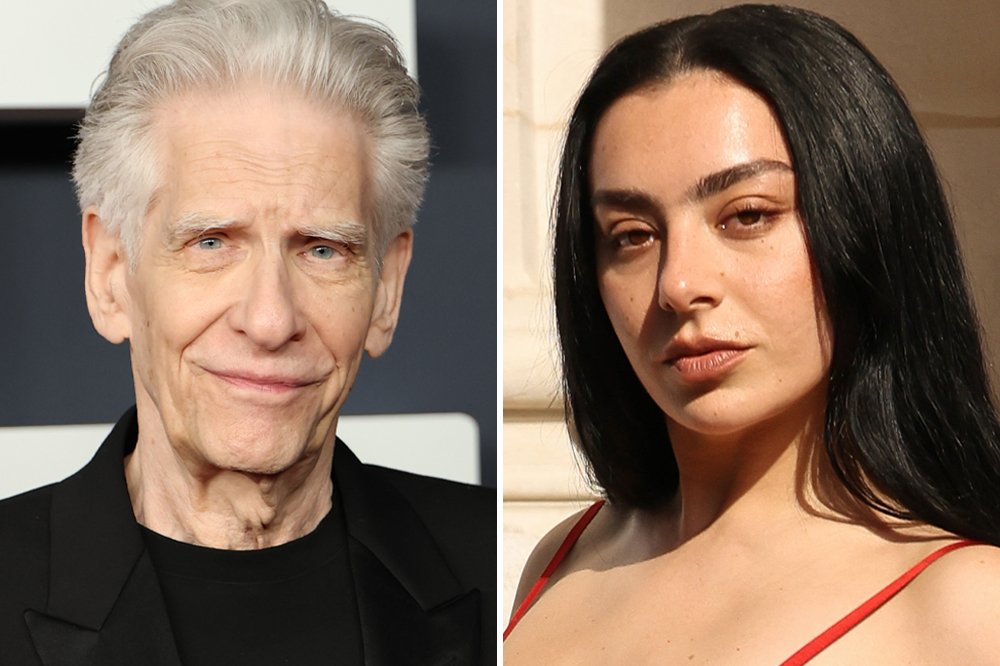
It’s no secret that Charli xcx is a cinephile, so it wasn’t a shock when the avant-garde pop star revealed that her latest album would feature iconic horror auteur David Cronenberg — especially considering its title is “Music, Fashion, Film.” But what is surprising is just how impactful his contribution is to the wider meaning of the record.
The 83-year-old “Crash” and “The Fly” director closes out the 11-track, 30-minute album with a spoken-word monologue on the second-half of final song “No One Lasts Forever.” Up until that point, Charli takes listeners on a ride through her biggest genre leap yet as distorted guitars and sparse production take the place of bright synths and autotune. It’s a far cry from the club-ready bangers of “Brat,” and in many ways a reaction to its massive success — there’s the tongue-in-cheek “Rock Music,” containing a declaration that the dancefloor is dead; the pounding “Camera,” in which she contemplates her burgeoning acting career; the vapid-but-in-an-ironic-way “Wink Wink,” where she insists “people can change.”
But it’s not just Charli’s sound that has taken a heavier turn. Between seemingly surface-level lyrics about going shopping and wishing she was a pop star in 2007, Charli attempts to answer hard questions about an artist’s purpose. Track six, “I’m Afraid,” gives a taste of this as she laments the pitfalls of public life: “All this pain makes me believe/ I’m a better artist now/ An excuse I tell myself to act selfishly.” Throughout the record, Charli is really contemplating her role as an artist and the motivations behind making art — and whether it even matters, because the world is probably ending and we’re all going to die anyway.
Nothing captures this existential question more than “No One Lasts Forever,” which starts off as one of the most upbeat songs on the record but soon ventures into deeper waters. “That’s why I’m not scared of anyone/ ‘Cause nothing’s gonna last forever/ But you need to discover that feeling/ Of the crushing highs and lows of ego,” she sings over synths a bit more reminiscent of her “Brat” era.
It’s also the longest track on the album, by far, at five minutes and 42 seconds. Cronenberg doesn’t come in until around the three-minute mark, where he casually speaks — as if directly to Charli — seemingly about a near-death experience.
“As I was laying there on the sidewalk, I did not think about art at all,” Cronenberg begins. “I thought about people, I thought about life, and that’s why I like being close to my house. Somehow, that was comforting even though it makes no sense, you know? But no, I wasn’t thinking about art. And I wasn’t thinking about art as endurance, as immortality. I mean, we could talk about immortal artists of various kinds, and it can turn out that, yes, some artists have created art that has really survived thousands of years, and that’s fantastic. But experientially, for them? They are dead, they are gone, they are not experiencing that.”
Cronenberg ends his part by saying, like a mentor giving advice to his student: “Hear me assuring you that oblivion is freedom. They are dead, they are gone, no one lasts forever.”
The last minute-and-a-half of the track consists of that last line repeated again and again, overlaying on itself. It’s a mantra delivered as an elder who’s been through it, reassuring Charli that whether or not her art survives isn’t the most important thing — after all, she won’t be around to know. As an extremely successful director, considered the originator of the entire body-horror genre, there are times when Cronenberg must have felt unstoppable. But he’s also experienced immeasurable grief, with his wife of 38 years, the film editor Carolyn Zeifman, dying in 2017 (something he explored in his most recent feature, “The Shrouds”). Beyond just his art, it’s his life experience that makes him credible to speak these words — and they bring all of us back down to earth.
Instead of just being a gimmicky feature to fulfill part of the album’s title, Cronenberg’s words get to the core theme of “Music, Fashion, Film.” More than a rejection of Charli’s mainstream success disguised as a reinvention, the record is proof that true artists are constantly changing, growing, refusing to fit into a singular box. But as important as the art may seem in the moment, ultimately, it’s not. Because nothing is forever. And, if you let it, knowing that can set you free.
When Lady Gaga first ascended to supernova celebrity, with the release of “The Fame” in 2008, there was a time when she kept her face hidden — under the elaborate masks she wore in videos, and even in interviews, for which she would also show up masked. It was a highly elaborate act of camouflage, but the ruse worked. She was only 22, yet she created an aura of mystery around herself, conjuring “Lady Gaga” as a larger-than-life character. (When you heard that she was really Stefani Germanotta from New York City, you would think: Really, who is that?)
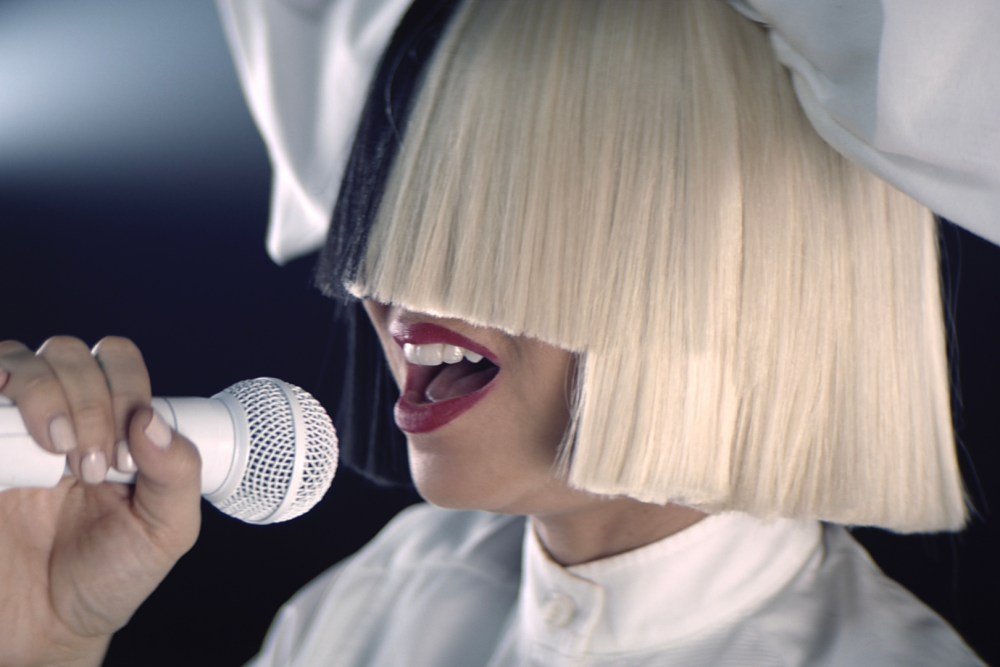
Sia, born in Australia 10 years before Lady Gaga, had a career that predated hers as well. But by the time Sia hit her solo stride in the late 2000s, she didn’t simply borrow from the Gaga mask playbook. She concealed her face to the point that the mystery became part of who she was. “Sia: Nostalgic for the Present,” which opens tomorrow and is showing in select theaters for a limited run, is a performance film that was originally created for Sia’s 2016 Nostalgic for the Present tour, and in the entire movie you never once see Sia’s face.
She’s right there in front of us, standing and singing on a platform at stage left, hidden under a half-blonde, half-black wig with bangs that hang down to her lips. There’s an oversize white bow on top of the wig, and she wears a white dress that resembles a nurse’s uniform from the early ’60s. Sia’s greatest songs, like “Unstoppable” and “Titanium” and “The Greatest,” are anthems of strength, power, fortitude, invincibility, and watching the movie it’s fascinating to behold how her facelessness feeds that quality. She’s an abstract figure, a pair of lips singing, and this creates the sensation that the power she’s singing about doesn’t emanate from her. She’s channeling a force larger than herself — the rising specter of feminine triumph. She’s merely the vessel.
I’m not entirely sure what the two-tone wig means (the duality of woman?), but everyone in the movie wears a version of it: the dancers, the actors (Kristen Wiig, Paul Dano, Ben Mendelsohn, Gaby Hoffman) who each appear in one dance video, as well as the choreographer, costume designer, and offstage crew members. They’re all wearing the wig, which looks like the fabled New York black-and-white cookie turned into a fashion emblem of talismanic power. “Sia: Nostalgic for the Present” is basically a 75-minute-long series of dance videos that were designed to be projected onstage during the tour, as the live performers mirrored the movements in the videos. The featured star is, of course, Maddie Ziegler, the whirling dervish of a child dancer who pranced and flung and gyrated her way through three celebrated Sia music videos; she was 14 when the Nostalgic for the Present tour unfolded.
This weekend, if you go to “Sia: Nostalgic for the Present,” what you’re seeing is a 10-year-old movie (and a promotional one at that), so it’s severely lacking in the shock of the new. There’s no getting around the fact that it’s a greatest-hits compendium. But though Sia’s last major hit was a decade ago, she had such an intuitive gift for crafting powerfully infectious pop songs that it’s hard to understand why she hit a wall. I think it might have had something to do with the mask/wig/hiding thing. Pop stars, especially the ones who have extended careers, are people who have a primal desire to put themselves out there. Whereas Sia clearly had a primal ambivalence about that. She was a camera-shy exhibitionist.
In “Nostalgic for the Present,” her voice is commanding, ringing out with those soul inflections that make her sound like Amy Winehouse if Winehouse were being produced by Giorgio Moroder. The dance performance that’s at the heart of the film is the sort of thing that felt transgressive back then, but now it looks like something out of a 2010s nostalgia reel. Maddie Ziegler, who was born in Pittsburgh and got her start on “Dance Moms,” flings her body around with a kind of airy gymnastic aggression, and she specializes in facial contortions meant to express the underlying ferocity of Sia’s music (and are sometimes just there as psycho flourishes to mess with the audience). Ziegler is like a mime crossed with Daryl Hannah in “Blade Runner,” but there’s also a touch of Sid Vicious to the way that she’ll mug and curl her lips like a teenage brat who’s gone off her meds.
The hits remain sublime. I retain a special adoration for “Chandelier,” a song of hedonistic assertion and underlying ambivalence that, for me, is filtered through its brilliant use as the centerpiece of the Broadway version of “Moulin Rouge!” I’m writing about Sia as if she had gone away, but as someone who loves her music, I see no reason on earth why she couldn’t now enjoy a comeback as ferocious as the one that Gaga had with “Abracadabra.” She wouldn’t even need to come out from behind the wig; that would play like gangbusters on the Grammys. But she’d have to rouse herself to do what she used to do: create a dance hook as shiny and fierce and glorious as titanium.
South Korean director Na Hong-Jin made his San Diego Comic-Con debut to preview his latest film, Neon’s alien action movie “Hope.”
Before the action auteur took the stage in Ballroom 20, a sizzle reel of his previous work — from his 2008 debut “The Chaser” to “The Yellow Sea” and “The Wailing,” all set to Ozzy Osbourne’s “Crazy Train” — played for the rapt audience.
“Hope,” Na said, “is a continuation in terms of the same metaphor and the same meaning, but in terms of the style and the thought and the content is completely different. Any assumptions you have about my premises and my previous work, I would advise them to completely abandon it before [this one].”
“Hope” is set in the remote village of Hope Harbor, where a mysterious creature has wreaked havoc. Police and local hunters set out to track the beast and find themselves hunted instead. But not all is as it seems.
The alien action movie stars Hoyeon, who broke out internationally thanks to her Emmy-nominated turn in Netflix’s “Squid Game.” Na said was one of the best decisions he made in bringing the film, a 10 year passion project, to the big screen.
Hwang Jung-min, who leads the international cast, recommended Hoyeon for the role of a tenacious police officer. “He said that if you meet her, you realize how special of a person she is,” Na said, explaining that he immediately set up a meeting. The director and star read the script while eating takeout and she quickly signed on for the role. “The funny thing is: Hwang Jung-min actually has never met her, or didn’t even know her very well.”
Hoyeon appeared in a special video message to introduce two clips that would play exclusively for the Comic-Con crowd. The first is a tense sequence where Hwang as he and a group of men shoot their way through the wreckage of their town — only to finally come face to face with the gigantic alien preying upon them. The second was an extended look at a chase scene where one character played by must leap from his horse into the police car — all while being chased down the highway by one of the fanged creatures. After the pulse-pounding clips ended, director Na revealed that these weren’t the most difficult scenes to shoot: That honor belongs to another chase scene with the characters fleeing through the forest on horseback.
Na also praised Hoeyon’s performance in another scene and shared she spent six months learning to drive a manual stick-shift car. “After six months, she reached a point where she could perform those drafts at very different, difficult angles too,” he said. “So she was driving the car and doing all the performance herself, and I think the word ‘difficult’ is not enough to describe what was going on in that scene. My DP and I almost died of anxiety just watching her.”
Speaking of dying, during the Q&A portion of the panel, Na teased that “90%” of the characters in the film might perish… but he won’t reveal who. The exchange got a roar of laughter from the crowd.
“Hope,” which also stars Michael Fassbender, Alicia Vikander, Taylor Russell and Cameron Britton, premiered in competition at this year’s Cannes Film Festival, where it electrified audiences. Neon hopes to replicate that same success when releasing the film in the U.S. on Sept. 9. In Cannes, Na revealed that he had plans for a sequel.
“I think you can readily imagine this sequel. And there’s a script that’s already been done that I’d like to shoot,” he said during his Cannes press conference. “So if I have the opportunity, I would indeed make a sequel if possible.”
Indonesian filmmaker and Visinema founder Angga Dwimas Sasongko is targeting the first quarter of 2027 for the release of “Queen of Malacca,” as the Southeast Asian fantasy epic moves through post-production and attracts interest from potential distribution partners in China, Thailand and other international markets.
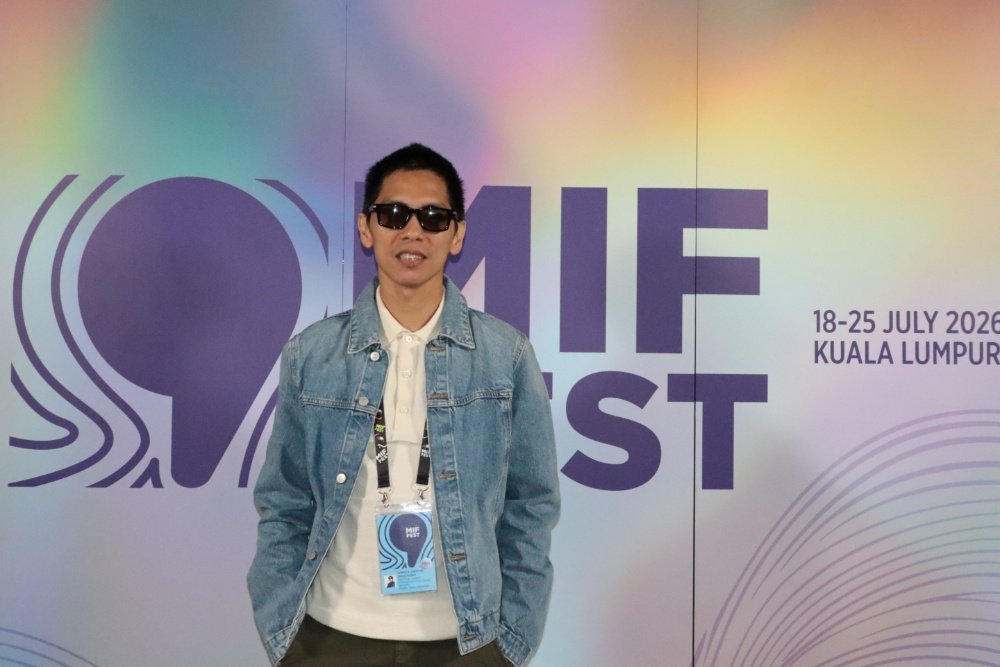
The project has drawn growing industry attention since Blue Finch Films boarded worldwide sales. “We are currently in discussions with potential distribution partners,” Sasongko tells Variety during the Malaysia International Film Festival (MIFFest) in Kuala Lumpur. “It will definitely become the next franchise for Visinema.”
“Queen of Malacca” marks Sasongko’s return to directing after a two-year break and is one of the most ambitious productions of his career. “I spent eight years building this fantasy world,” he says. “It combines Southeast Asian martial arts, supernatural elements and extensive visual effects. It’s like creating a universe – a mosaic of modern life inspired by regional mythology and traditions.”
More than a standalone feature, Sasongko sees “Queen of Malacca” as the cornerstone of Visinema’s strategy to develop locally rooted IP with international appeal.
Beyond “Queen of Malacca,” Visinema is preparing five films for release in 2027 while developing an animation pipeline extending through 2030. The slate includes a superhero action-comedy animated feature slated for 2028, a sequel to the family IP “Nussa” and a follow-up to its animated blockbuster “Jumbo,” one of Indonesia’s biggest box office hits of all time.
“For Visinema, international collaboration isn’t simply about securing more financing – it’s about expanding together,” Sasongko says. “Since 2018, we’ve generally limited external investment in our projects to below 40%, because we look at what strategic partners can contribute beyond capital.”
Those partners include media companies, foreign producers and distributors that can provide market access, industry expertise and long-term strategic value. Visinema is also looking to deepen relationships across mainland China, Thailand, Vietnam and the Philippines.
For Sasongko, creative ambition and commercial potential should go hand in hand. The goal, he says, is to build stories with a distinctive local identity while creating the partnerships and long-term IP needed to reach audiences across the region.
Great comedies are in short supply these days, but “72 Hours” offers a reminder that a crime subplot can quickly ruin even a potentially average one. Directed by Tim Story (“Barbershop,” “Ride Along”) and written by Jon Hurwitz and Hayden Schlossberg (the “Harold & Kumar” trilogy, “American Reunion”), this latter-day “Hangover” retread did not need to do anything but, you know, deliver laughs in order to tickle audiences’ funny bones. But even with a cast led by Kevin Hart and stacked with “Saturday Night Live” alums Marcello Hernández, Ben Marshall and Kam Patterson, this summertime confection from Netflix frantically — and disappointingly — throws everything at the wall in the hopes that something will stick.
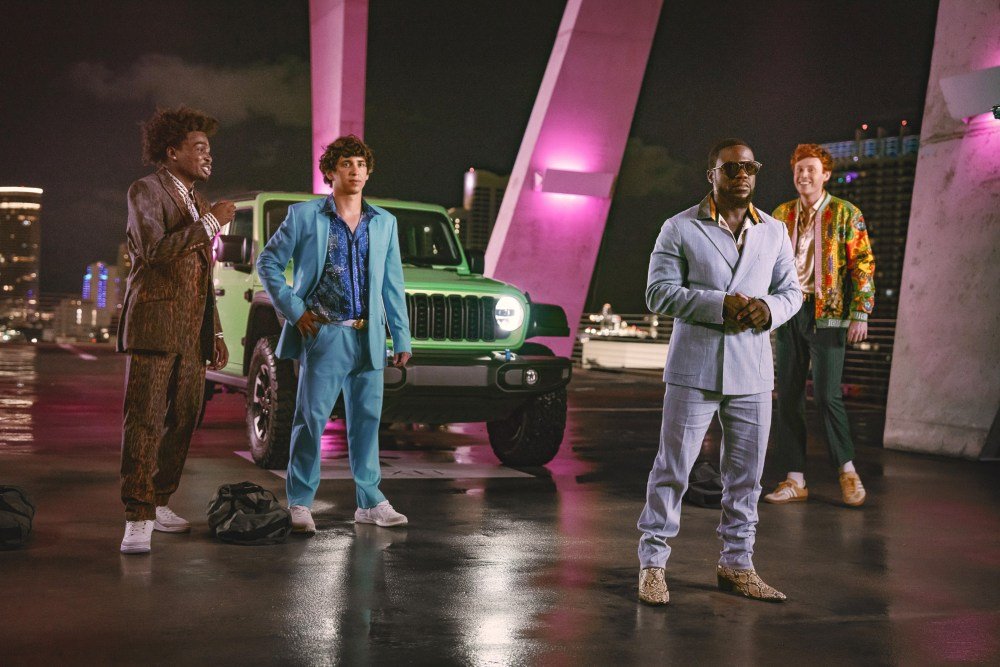
Hart plays Joe, a 40-year-old advertising executive who mistakenly gets added to a group text for the Miami bachelor party of Mason (Mason Gooding), which is being thrown by his twentysomething friends Nick (Hernández), Hunter (Marshall) and Freshman (Patterson). When his latest campaign for a vodka brand gets dismissed as “cringe” by a colleague, threatening an upcoming promotion, Joe persuades Mason and his pals to invite him to join them, in the hopes of acquiring more intimate knowledge of a younger generation of consumers.
The prospect of attending a raucous three-day party on South Beach comes as disappointing news to Joe’s girlfriend Jennifer (Teyana Taylor), who’s waiting for her own proposal. But even after renting a swagged-out Airbnb to ingratiate themselves with the group, Mason and especially Nick only reluctantly agree to let Joe join in on their activities. He fails early to win their confidence, but after they visit a yacht party, Joe is forced to consume cocaine, unleashing a Tony Montana-like alter ego whose flamboyant, destructive behavior runs them afoul of a mysterious drug lord convinced Joe is encroaching on his turf.
Whether as a true generational touchstone or just a laugh-inducing diversion every few years, remaking “The Hangover” in some capacity every few years is not just a welcome experience for a certain segment of the moviegoing audience, but probably a good business practice for studios. The problem with this idea, as “72 Hours” demonstrates, is that filmmakers feel the need to top their predecessors, or even themselves, with each attempt. As a consequence, it seems no longer possible tell the story of five guys having a couple of wild nights without introducing an escalating, even ridiculous series of events. (“The Hangover,” of course, also includes a crime subplot, but notwithstanding its status as the kickstarter of this subgenre, Todd Phillips at least knew to mine it for laughs instead of serious thrills.)
The premise here is actually pretty solid: what happens when a guy old enough to know better decides to participate in some young adult hijinks? Of course, Joe insists at one point that “40 is the new 20,” and culturally speaking that seems true these days, so maybe immaturity knows no age limit. Not to mention the fact that “Old School” tackled this concept successfully almost 25 years ago. But other than a handful of “unc” jokes and an unfortunate pre-gaming incident involving Pepto-Bismol, the movie elicits surprisingly little humor from the generational divide between Hart — who might be more convincing at 47, his actual age — and his younger counterparts. (That the bachelor and his friends are all around 30 further flattens the differences between them and Joe.) Instead, it’s his wallet that proves most valuable, both to the characters and the screenwriters, lubricating luxury and access when the scrappy twentysomethings can’t afford something.
In the meantime, the writers introduce Joe’s attempt to unlock the secret lives of young adults for his advertising campaign (evoking ulterior-motive movies like “How to Lose a Guy in 10 Days” and “27 Dresses”), a competing bachelorette party whose members are not what they seem (think Ilana Glazer in “The Night Before”), and of course, the mysterious drug lord who inexplicably rents out his mansion to anyone with a credit card, but carelessly fails to lock up his valuables. The script aims to mirror some character dynamics from the peerless “Bridesmaids” — in particular, the relationship between soon-to-be-married Mason and his stuck-in-the-past best friend Nick. But the film can’t decide whether it wants to actually give its cast substantive material to explore or assault them with vomit, cocaine and whale sperm (!) as a way to ensure the audience’s involvement.
Working under the watchful eye of his “Ride Along” director, Hart continues to maintain a likeable screen presence as the well-meaning but out-of-his-depth Joe, but doesn’t do himself (or his wildly inconsistent filmography) any favors with this project. Much of Hart’s appeal lies in his willingness to be the butt of the joke, and there are many here at his expense — thankfully not as many as usual targeting his diminutive stature. But what’s missing from his performance (perhaps beginning with the writing) is the palpable life experience that lends him an advantage when his young friends run into trouble. Clearly, Joe made enough bad decisions in his earlier days to create — and survive — “Ricardo Montana” as an alter ego, but as the film progresses, he seems less like an elder statesman than an old guy trying to live vicariously through his counterparts.
This is Hernández’ second movie role, and he seems poised to break out in the same way he did on “Saturday Night Live,” but even though he’s funny, there’s not enough of a character here for him to truly distinguish himself. Patterson, on the other hand, pops in a way he has seldom done on TV, and delivers a memorable performance as the group’s resident idiot. Meanwhile, recent Oscar nominee Taylor beams in from another movie with a grounded performance that this one doesn’t deserve. Additional supporting turns from other television stalwarts (“Better Call Saul” alum Michael Mando, “Severance” breakout Zach Cherry, “Veep” scene-stealer Kevin Dunn) hint at a better, less wacky odyssey left by the wayside.
Story’s body of work is not unlike Hart’s, in that every pretty good movie he’s made is significantly outnumbered by bad ones. His latest falls somewhere in the middle of that spectrum: It isn’t totally awful, but it strains to communicate how much fun the audience should be having instead of, well, just being fun. The irony of chasing “The Hangover” is that even Phillips seemed nonplussed by its success, or perhaps even resentful; perhaps that’s why he made a shameless copy with the second film and an antagonistic drama for the third. But not unlike a hangover itself, “72 Hours” is a movie that reminds you of the specter of the past; the problem is that it never delivers enough good times to make the painful aftermath worthwhile.