Tag: CRYPTOS FoxBusiness

  • Tron’s Justin Sun disputes Forbes wealth estimate as bride-price fight goes public

    Tron’s Justin Sun disputes Forbes wealth estimate as bride-price fight goes public

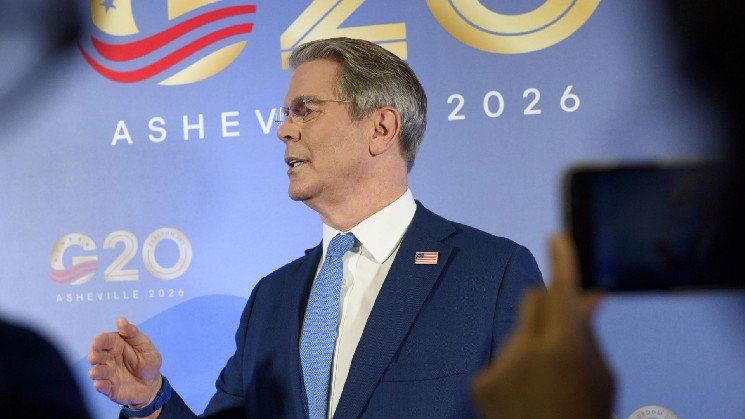
    Tron founder Justin Sun used X on September 1 to challenge how Bloomberg and Forbes value his crypto fortune.

    His response comes just days after his split from Chinese actress Jing Tian became a public fight over a bride price and a $50 million demand.

    How much is Justin Sun really worth?

    In a series of posts published on X today, Justin Sun, the founder of Tron, argued that his personal balance sheet is nobody’s business but also nothing to hide. How much he holds “has never been” the industry’s concern, he wrote, and he added that he would not use the figure to answer his critics.

    Sun then took aim at Bloomberg and Forbes, stating that they count his crypto holdings at only 20% to 30% of their value when tallying his net worth, because those assets are concentrated, volatile, and by the outlets’ standards, not “certain.”

    Sun said he understands that logic, but it is the outlet’s methodology, and not his problem.

    He wrote in a separate post that for 14 years, he has made the deliberate choice of keeping the bulk of his own assets in crypto. Forbes currently pegs the 36-year-old at $8.5 billion.

    Why is Justin Sun suing Jing Tian?

    Prior to the wealth posts, Sun published a lengthy account titled “My Girlfriend Jing Tian” on August 27. The post reportedly took him more than ten hours to write and was labeled “fictional.”

    In it, Sun said the couple had moved toward marriage. He said he transferred a 30 million yuan bride price, about $4.5 million, to Jing’s parents after proposing in January, and that the two had agreed to have a child through surrogacy. Sun alleged that shortly before Jing was due to undergo an egg retrieval, she demanded a further $50 million.

    At that stage, he turned to Anthropic’s Claude chatbot for advice and, acting on its recommendation, refused the money and ended the relationship. Sun is reportedly now suing the actress and her parents to recover the bride price.

    Which other drama is Justin Sun involved in?

    38-year-old Jing Tian, who is known for her roles in “From Vegas to Macau” and “Police Story 2013” and is followed by more than 26 million people on Weibo, rejected Sun’s account via the social media platform on August 28, insisting that she has not and will never sell her love.

    Jing added that she still believed in the law and would let time settle the matter.

    The episode blew up on Chinese social media and took over search results. Hashtags regarding the incident even trended on Weibo.

    Some users have mocked the fact that a chatbot played a role in ending a romance, while others have been criticizing Sun for airing medical, financial and personal details.

    In an interview with Sing Tao Headline, Sun also shared his doubt about the AI’s judgment, and like Jing, said he would leave the resolution to his lawyers and the courts.

    Meanwhile, Cryptopolitan has reported that World Liberty Financial, the Trump family’s DeFi project, filed a defamation countersuit against Sun in May, alleging that he was involved in a coordinated smear campaign and short-selling after he sued the company for freezing his tokens.

    Sun has called the WLFI suit a “meritless PR stunt,” but he also remains locked in a years-long fight with Hong Kong custodian First Digital Trust over TrueUSD reserves.

  • Firelight raises $8 million, expands beyond XRP as it aims to make DeFi less scary for fintechs

    Firelight raises $8 million, expands beyond XRP as it aims to make DeFi less scary for fintechs

    Firelight is also considering a broader universe of liquid assets that do not already generate substantial yield, CEO Anthony DeMartino told CoinDesk in an interview.

    “There’s a bunch of different assets that we’re considering,” DeMartino said. “Anything … that’s a solid asset, that has good liquidity to it, that doesn’t provide its own natural yield, will eventually be eligible to be posted as collateral.”

    Fintech money onchain

    Firelight is betting that the bigger opportunity lies beyond crypto-native traders as fintechs, neobanks and payments companies increasingly plug onchain yield products into their apps.

    The possibility of losing customer capital to an exploit can become a major obstacle when a product is ready to go live, DeMartino said. Firelight aims to provide a protection layer that makes that jump less daunting.

    “This isn’t built for degens,” he said. “This is built to bring the next wave of capital in. We want to be that protection layer to allow that adoption.”

    DeMartino said he expects more money currently sitting in bank accounts to migrate into fintech earn products powered by stablecoins, onchain vaults and wallets. Sentora itself has been working on bringing yield products to fintech applications, including payroll and remittance platforms, he said.

    The protection gap remains large. Roughly $80 billion is locked in DeFi, according to Firelight, while only a fraction of a percent is protected by onchain cover.

  • Bitcoin enters ‘Rektember’ as rate-hike risk combines with seasonality to threaten rally

    Bitcoin enters ‘Rektember’ as rate-hike risk combines with seasonality to threaten rally

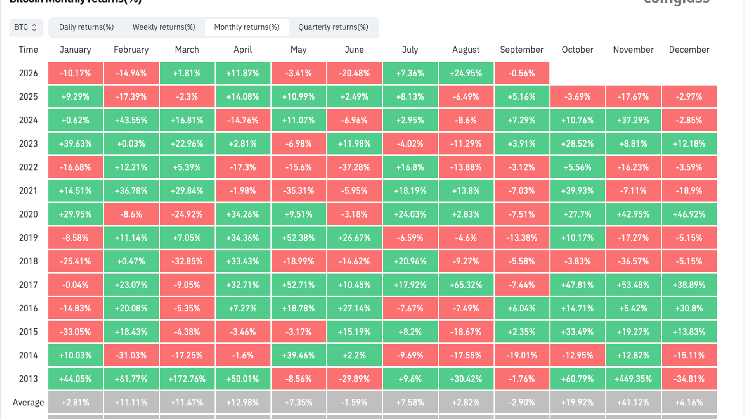
    Bitcoin has begun September slightly lower, falling 1% to below $78,000 as it enters what is commonly referred to as “Rektember.” Since 2013, September has been bitcoin’s worst-performing month on average, producing a loss of around 3% and only producing five positive monthly returns.

    However, the past three Septembers have all delivered gains, offering some encouragement to bitcoin bulls. After climbing 25% in August, BTC’s strongest month since November 2024, the market could be due for a period of consolidation, if not a correction.

    The macro backdrop also presents significant headwinds. Fed Chair Kevin Warsh’s hawkish Jackson Hole speech last Friday, which emphasized elevated inflation, has contributed to a global bond sell-off. Many sovereign yields have reached new cycle highs, with the U.S. 10-year Treasury yield rising to 4.784%.

    Markets are now pricing in a 66% probability of a 25-basis-point rate hike at the Fed’s Sept. 16 meeting, followed by another potential rate boost by the end of the year. That would take the federal funds target range to 4.00-4.25% by the close of 2026.

  • U.S. looks to influence Japan’s monetary policy. It couldn’t do that with bitcoin

    U.S. looks to influence Japan’s monetary policy. It couldn’t do that with bitcoin

    If Japan does increase rates and the yen rises quickly, cheap yen-funded bullish bets in stocks, bonds and even cryptocurrencies taken over the years can unwind. Foreigners who bought Japanese stocks on the back of a weak yen may sell. Japanese savers who sent money overseas as a hedge may bring it home. When those positions close, risk assets could be sold. Bitcoin suffered collateral damage in early August 2024, when a Bank of Japan rate increase drove the yen higher and spurred a wave of risk aversion.

    So while bitcoin’s long-term bull case looks as solid as ever, it still trades like a high-risk asset when traditional markets get squeezed by rate and currency shocks. Stay alert!

    Read more: For analysis of today’s activity in altcoins and derivatives, see Crypto Markets Today . For a comprehensive list of events this week, see CoinDesk’s “Crypto Week Ahead.”

    What’s trending

    • North Korean hackers are moving tens of millions on Hyperliquid as Trump pushes to onshore the crypto platform (CoinDesk): Blockchain data reviewed by CoinDesk appears to show wallets said to be tied to North Korea’s Lazarus Group sold more than $30 million in bitcoin on the platform in the last three weeks alone.
    • CME’s share of $XRP futures jumps as token rallies 40% in a week (CoinDesk): A growing share of $XRP futures trading is moving toward CME even as traders cut leveraged positions across crypto exchanges.
    • Global bond yields soar to multi-decade highs as Middle East turmoil reignites inflation fears (CNBC): Government bond yields jumped across major markets, with borrowing costs in Japan and the U.K. touching multi-decade highs, and U.S. Treasury yields surging.
    • Oil prices rise and stocks slide as Middle East violence flares, adding to uncertainty (AP): Oil prices jumped 2% and world shares fell Tuesday. Brent crude gained 2% to $92.35 per barrel. U.S. benchmark crude advanced 2.5% to $87.84 per barrel.
  • Bitcoin (BTC) at a Critical Junction After the Rally! Analysts Warn: The Continuation of the Rise Depends on These Two Events!

    Bitcoin surged 24% in August, recording its strongest monthly gain since November 2024, before stabilizing around $78,000 following this sharp rise.

    According to economists, high oil prices and rising US Treasury bond yields have limited further gains in $BTC. On the other hand, expectations for an interest rate hike in September have significantly increased following Federal Reserve Chairman Kevin Warsh’s speech in Jackson Hole.

    However, according to analysts, Bitcoin continues to hold onto critical support levels.

    Bitcoin Holds Critical Support!

    According to Bitfinex analysts, Bitcoin is holding onto its critical support level at $77,100 despite signals from the Fed indicating a more hawkish monetary policy.

    According to Bitfinex’s latest Alpha report, $BTC experienced a sharp pullback last week after rising to $81,500, following Federal Reserve Chairman Kevin Warsh’s remarks at Jackson Hole.

    However, despite this pullback, $BTC’s ability to hold above $77,100 indicates that the uptrend is not yet broken.

    Spot Buying is Also Behind Bitcoin’s Rise!

    Bitfinex analysts stated that the Bitcoin surge in August was not solely due to leveraged trading, but that actual spot market purchases also supported the rise.

    At this point, analysts stated that there was a total net inflow of $924.5 million into US spot Bitcoin ETFs during the week of August 24-28. Bitfinex added that liquidity concentrated in ETFs and stablecoins supports the uptrend in Bitcoin and the crypto market, but high inflation and expectations of future interest rate hikes could limit further gains.

    At this point, the US employment data to be released on September 4th and the inflation data to be released on September 11th will be critical in terms of expectations regarding the Fed’s interest rate decision in September.

    Can $BTC Hold Above $80,000?

    Although Bitcoin fell below $80,000 following Kevin Warsh’s hawkish speech at Jackson Hole, it is holding onto the $77,100 support level.

    However, questions remain about the sustainability of the price above $80,000. While Bitfinex notes that strong spot Bitcoin demand and a net inflow of $925 million into spot Bitcoin ETFs are supporting the market, some analysts are more cautious about the sustainability of the rally.

    At this point, Greeks.live analyst Adam noted that there had been large inflows into ETFs, but this strong inflow series ended with a $202 million outflow on August 28th. The analyst stated that the net outflows from ETFs in the last few days, and the possibility of these outflows becoming permanent, could make it difficult for $BTC to hold above $80,000.

    The analyst also discussed Strategy’s decision to resume $BTC purchases after a long hiatus. According to the analyst, Strategy’s Bitcoin purchases may support the price in the short term, but may not be enough to change the long-term trend on their own.

    Macro Risks Persist!

    Finally, the analyst noted that, as Bitfinex has also pointed out, the Fed’s hawkish stance and macroeconomic uncertainties are among the main risks for Bitcoin.

    According to the analyst, these factors are putting additional pressure on investor confidence and the $BTC price. At this point, the analyst believes it’s too early to talk about a new strong bull trend without a sustained move above $80,000 in Bitcoin. ETF flows and Fed policy will be decisive in determining the short-term direction.

    *This is not investment advice.

  • Robinhood Chain Sets a New Record in Decentralized Exchange (DEX) Transactions! Here Are the Details

    Robinhood Chain Sets a New Record in Decentralized Exchange (DEX) Transactions! Here Are the Details

    Robinhood Chain has set a new record in decentralized exchange (DEX) transactions. The network reached an all-time high in single-day DEX transaction volume, totaling $989 million. Total value locked (TVL) also hit a record high of $708 million, representing an increase of approximately 100% on a monthly basis.

    The stablecoin supply on Robinhood Chain also grew significantly during the same period. The amount of stablecoins on the chain reached approximately $770 million, a 47% increase compared to the previous month. Thus, the network experienced rapid expansion in terms of both liquidity and transaction volume.

    However, the growth on the network appears to be changing not only in terms of quantity but also in the structure of the projects used. While memecoin-focused transactions were prominent on Robinhood Chain in July, the rise of CASHCAT and its subsequent spot listing on Robinhood supported this trend.

    In August, investor interest shifted more towards utility and infrastructure-focused projects. One of the most notable examples of this was $PONS, a leading token launch platform on the blockchain. $PONS’s market capitalization increased from $20 million to over $200 million in August alone.

    LONG, another important launch platform of Robinhood Chain, pairs tokens, primarily memecoins, with tokenized shares. This structure stands out as one of Robinhood Chain’s key differentiating features.

    Artificial Inu (AI), launched on LONG, attracted attention due to its pairing with tokenized Nvidia stock (NVDA). AI’s market capitalization surged from $1.5 million on August 1st to a peak of $135 million on August 30th. Liquidity in the NVDA pool exceeded $3.3 million, more than three times that of the WETH pool.

    Memecoins paired with tokenized shares account for approximately a quarter of the total share-linked trading volume on Robinhood Chain.

    Benefit-oriented projects like Delta, UP, and NetNet also reinforced the growth trend in the ecosystem in August, increasing their valuations by approximately tenfold.

    *This is not investment advice.

  • Announcement for Users Participating in TPS Farming

    Announcement for Users Participating in TPS Farming

    The Crypto News team announces the official completion of the TPS farming program.

    August 31, 2026, marked the end of the final stage: TPS farming is now fully and permanently closed and will not be extended again. We would like to thank everyone who participated in the activity, completed tasks, discussed the news, shared opinions, and contributed to the growth of the Crypto News community.

    With the farming program now closed, the project has moved to the next stage: processing and analyzing the collected data. The team will need time to review the results carefully and prepare the next steps for using TPS.

    All bonuses accumulated by users are fully preserved. They will not expire or be lost now that the program has ended.

    Once the data processing stage is complete, we will publish detailed information explaining where, how, and under what conditions users will be able to use their accumulated TPS.

    Kudos to everyone who took part in the TPS farming program! We thank you all for grinding and staying with us. TPS will be converted soon. Cheers to everyone; you are great! 🙂

    Please follow updates in the Crypto News app and on our social media channels so you do not miss any important announcements.

  • NYSE owner Intercontinental Exchange taps tZERO for digital transfer agent infrastructure

    NYSE owner Intercontinental Exchange taps tZERO for digital transfer agent infrastructure

    Intercontinental Exchange, the global exchange operator that owns the New York Stock Exchange (NYSE), is backing tZERO as it builds out infrastructure for tokenized securities. The two companies have agreed to collaborate on ICE’s upcoming NYSE-affiliated Digital Trading Platform.

    Under the memorandum of understanding, tZERO will act as a premier design partner for digital transfer agent and broker-dealer infrastructure designed to support on-chain settlement. ICE will also participate in tZERO’s latest financing round and receive a license to the company’s blockchain patent portfolio for use on the platform and other potential applications.

    tZERO’s intellectual property includes 103 patents across 23 patent families covering the security-token lifecycle, including compliance-aware transfer mechanisms, upgradeable smart contracts, corporate-action processing and interoperability for broker-dealer identities.

    The companies will work on standards for digital transfer agents, tokenization agents and broker-dealer subscribers. If regulatory and technical requirements are met, tZERO is expected to receive approval as a digital transfer agent and subscriber to ICE’s platform.

    ICE and tZERO will also assess whether tokenized assets can be used as collateral at ICE clearing houses and other affiliates, adding a potential clearing and collateral-management application to their tokenization partnership.

    This is a developing story.

  • Ireland bars crypto from new tax-advantaged investment accounts

    Ireland bars crypto from new tax-advantaged investment accounts

    Ireland is preparing to exclude cryptocurrencies from new government-designed personal investment accounts due to launch in 2027, while allowing savers to invest in listed stocks, bonds and exchange-traded funds.

    The accounts would carry no tax below a threshold that has yet to be set. A low flat rate would apply annually to the average value above that threshold, including contributions, according to the government’s roadmap for retail investment.

    The tax rate, threshold and annual contribution limit are due to be announced in October’s Budget 2027.

    The product list follows the European Commission’s September 2025 recommendation for savings and investment accounts. The guidance calls on EU states to exclude highly risky and complex derivatives and crypto, except tokenized versions of financial instruments that would otherwise qualify.

    Cryptocurrencies and derivatives would be excluded as “highly complex and risky products.” Eligible investments would include listed stocks and bonds, instruments traded on regulated markets, retail investment funds including exchange-traded funds (ETFs), and insurance-based investment products.

    The existing deemed-disposal regime would not apply to investments held in the accounts. That rule treats certain investments as if they were sold every eight years and taxes unrealized gains at 38%.