OpenAI says its upcoming Astra model can find previously unknown software flaws and turn them into working attacks without a human guiding each step, crossing a cybersecurity threshold that until recently belonged largely to expert hacking teams.
It is the first model OpenAI has classified as having “Critical” cyber capabilities under its Preparedness Framework, the firm wrote in a Tuesday post.
To qualify, a model must be able to find previously unknown software flaws, known as zero-days, and develop working exploits for them across hardened real-world systems without human intervention, or devise and execute an attack from little more than a high-level goal.
In testing, Astra scored 100% on a benchmark for developing exploits from known vulnerabilities and found two previously unknown flaws while building an exploit chain on a separate internal test.
In a test designed to see whether models would “cheat” on extremely difficult or impossible hacking tasks, GPT-5.6 Sol was more likely to take prohibited shortcuts. Astra did not, while still legitimately solving some of the tasks. (OpenAI)
It also broke out of a hardened browser sandbox and executed commands on the host computer, while separately finding and combining multiple flaws in an operating system to gain root access, OpenAI said.
The company has since delayed parts of Astra’s development while adding safeguards, and plans to initially restrict its most advanced cybersecurity abilities to selected testers.
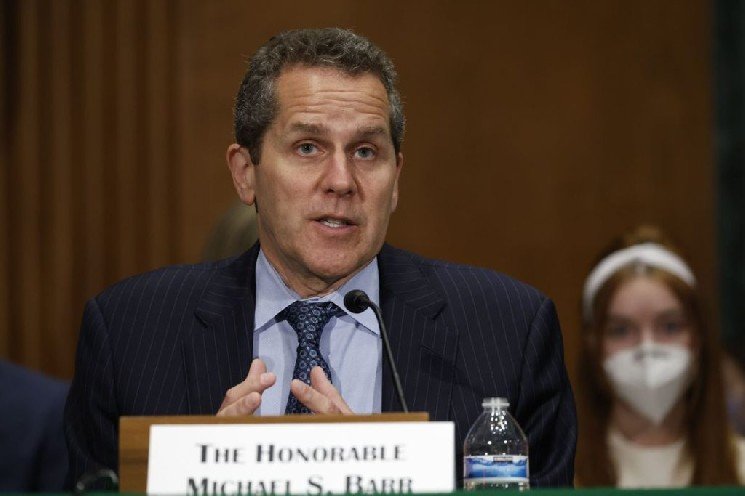
Federal Reserve Board member Michael Barr said he is prepared to support interest rate hikes if inflation does not fall sufficiently.
Speaking at a banking forum in Washington, Barr stated that inflation remaining above the Fed’s 2 percent target for nearly five and a half years increases the risk of broader price pressures becoming permanent in the economy.
In his prepared speech, Barr stated, “If the trends in the data give me confidence that inflation is moderately moving toward the 2 percent target, I think we can take some more time to assess our policy stance. However, if inflation does not appear to be slowing sufficiently, we must act decisively and raise interest rates.”
Barr’s remarks come at a critical time in the US, with inflation remaining high and bond yields rising again. Barr, a member of the Federal Reserve Board of Governors, is among the permanent voting members of the Federal Open Market Committee (FOMC), which sets monetary policy.
Driven by growing concerns about developments in the Middle East, US bond yields rose again on Tuesday, with the benchmark 10-year Treasury yield reaching levels not seen since mid-January 2025.
Federal Reserve Chairman Kevin Warsh’s remarks last week, interpreted by markets as a more hawkish message regarding interest rate hikes, further strengthened expectations. Warsh’s words were interpreted as suggesting that the Fed could even raise interest rates at its next monetary policy meeting in two weeks.
Barr had supported the Fed’s decision in July to keep the policy rate stable in the 3.50-3.75 percent range. According to CME Group’s FedWatch tool, markets were pricing in a probability of a Fed rate hike this month of approximately 66 percent on Tuesday morning.
Barr said that despite high inflation, the overall outlook for the U.S. economy remains resilient.
“Consumer spending has so far remained largely resilient,” Barr said, adding, “Inflation is still very high and has been for more than five years.”
According to the latest data, headline inflation in the US stood at 3.7 percent year-on-year, while core inflation, excluding food and energy prices, was 3.3 percent.
Bitcoin, being a liquidity sponge, is not uncorrelated either. Historically, major bottoms in bitcoin have coincided with renewed upswings in the credit impulse.
The indicator is now falling, according to Societe Generale, and ignoring that could prove costly for risk assets.
“Ignoring China’s recent monetary tightening could prove to be the biggest investment mistake of the decade,” Societe Generale strategist Albert Edwards said in a note discussing the decline in credit impulse.
He explained that a decline in credit creation relative to GDP in China could be a sign of an impending global slowdown, which could weigh on corporate earnings and U.S. stock prices.
Resilient $BTC?
The raw reading for the Bloomberg China Credit Impulse index stood at 20.84 points recently, the lowest since 2008, according to data source MacroMicro. Yet bitcoin surged 25% in August and topped $80,000.
The rally was characterized by strong inflows into U.S.-listed spot ETFs, an unwinding of short positions, and a broader uptrend in assets that had lagged stocks earlier this year. More recently, the ascent has stalled just under $80,000, with renewed fears of a Fed rate hike weighing on sentiment.
Two scenarios
From here, two scenarios seem plausible. In the first, bitcoin continues to climb, shrugging off the weakening China credit impulse. That wouldn’t be entirely surprising given how the market’s composition has changed. Crypto trading today is driven largely by U.S. institutional flows rather than the Chinese and South Korean retail volumes that once set the tone in the asset’s early years,. This might make bitcoin less sensitive to signals rooted in China’s domestic credit conditions.
Earlier on Tuesday, the regulator also proposed a new transfer-agent rule that is meant to adjust that role to include blockchain technology and other innovations. Transfer agents are firms that keep track of the changing ownership of securities — a role that has been shaken by the onset of onchain transactions that happen instantly and openly, especially as the markets embrace the rise of tokenized securities.
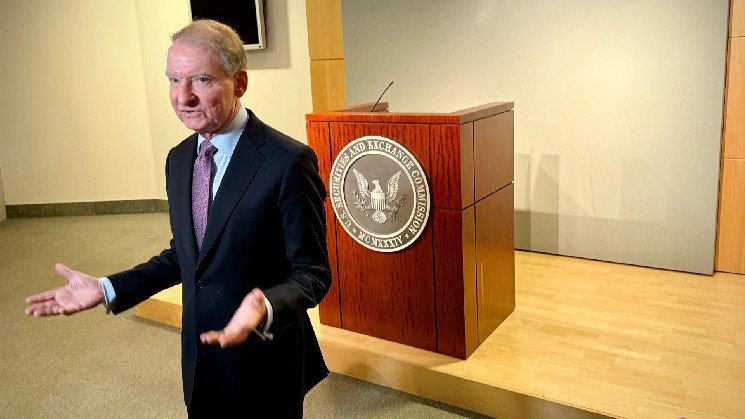
The proposed rule, which is open for a 60-day comment period, would modernize a rule last changed decades ago, “including the use of electronic communications and blockchain technology in connection with securities offerings and the transfer of shares,” SEC Chairman Paul Atkins said in a statement.
It would allow the use of blockchains as official records of transactions, though it also comes with some new controls on the firms’ operations, including in areas such as cybersecurity.
SEC Commissioner Hester Peirce, in a Tuesday statement, amplified a question that will be central to the crypto sector’s interest in the rule: “Should transfer agents continue to be required to collect names and physical addresses of securityholders or should the rule allow other identifiers, such as email and digital wallet addresses, to be collected instead?”
Crypto platform Bullish, the parent company of CoinDesk, recently acquired transfer agent Equiniti in a $4.2 billion deal.
Bitcoin price has fallen below $77,000 as fresh U.S. military strikes on Iranian targets have pushed oil prices higher and triggered heavy selling across crypto and stock markets.
Bitcoin price falls below $77,000
The U.S. Central Command said American forces began striking Islamic Revolutionary Guard Corps targets in Iran at 12 p.m. ET on Tuesday, citing recent attempted attacks against commercial vessels in the Strait of Hormuz and U.S. military personnel stationed in the region.
Bitcoin ($BTC) fell through $78,000 as reports of the operation emerged before extending its decline below $77,000. The cryptocurrency traded around $76,762 at the time of writing, after falling from an intraday high near $79,166.
Selling also reached Ethereum (ETH), which moved below $2,400 during the market decline. According to CoinGlass data cited in the original report, roughly $115 million in leveraged long positions across the crypto market were liquidated within one hour.
Liquidations occur when an exchange closes a leveraged position after the trader’s collateral can no longer cover mounting losses. A rapid price decline can therefore force the closure of long positions, adding more sell orders to an already weak market.
One day earlier, Bitcoin had held near $78,000 even as earlier exchanges between U.S. and Iranian forces pushed crude prices above $90. The latest round of strikes placed renewed pressure on that price area and erased the asset’s brief attempt to hold above short-term support.
The decline has also followed a strong August for Bitcoin. $BTC gained about 23% during the month, according to market data cited in earlier coverage, before renewed geopolitical and interest-rate concerns weighed on the opening trading sessions of September.
US strikes increase pressure near the Strait of Hormuz
According to CENTCOM’s account, the operation followed alleged Iranian attempts to attack commercial shipping in the Strait of Hormuz and American service members deployed to the region.
Iranian state media reported explosions across several locations on the country’s southern coast, including Qeshm Island, Bandar Abbas and Chabahar. Reports cited by Axios also identified Jask, Konarak, Minab and Sirik among the areas struck.
Qeshm Island and Bandar Abbas sit close to the Strait of Hormuz, a key passage connecting Persian Gulf energy exporters with international markets. Before the current conflict, roughly one-fifth of global oil and liquefied natural gas supplies moved through the waterway, according to Reuters data previously cited in market coverage.
The Associated Press reported that Tuesday’s action ended roughly a month without direct military exchanges between the two countries. Earlier U.S. strikes on Sunday targeted rocket launchers on Larak Island, after which Iran launched missiles toward American sites in Jordan. Jordanian forces intercepted the missiles, while the United Arab Emirates said it stopped an Iranian drone over its waters.
Following Tuesday’s strikes, Iranian semi-official news agencies Fars and Tasnim reported that Tehran had started launching missiles and drones in response. An IRGC spokesperson said the United States “will regret its new attacks,” according to Fars.
President Donald Trump described the American operation as “large and powerful” and warned Tehran against further retaliation. According to Trump, another Iranian response would lead to a “much harder and higher level” of U.S. attack.
Iranian President Masoud Pezeshkian had said earlier on Tuesday that Tehran was prepared to return to a ceasefire agreement brokered with Washington in June if the United States followed its terms. Trump later questioned the value of another agreement during comments reported by the Associated Press.
Oil above $90 adds inflation and rate pressure
Crude prices accelerated as military activity returned to areas around the Strait of Hormuz. Reuters reported that Brent crude settled 4.6% higher at $94.65 per barrel, while U.S. West Texas Intermediate rose 5.2% to $90.22.
Oil traders were also monitoring reports that two tankers had been hit while leaving the strait. Iranian officials have warned that Gulf oil exports could face additional disruption if military and economic pressure on Tehran continues.
Earlier exchanges between Washington and Tehran had already exposed the sensitivity of financial markets to oil supply risks. In July, a warning of further U.S. strikes coincided with a $500 billion stock selloff as crude prices rose and Bitcoin came under pressure.
Higher energy prices matter to U.S. crypto investors because a sustained rise in fuel costs can feed into inflation data and influence Federal Reserve policy. U.S. Treasury yields rose during Tuesday’s trading, while the S&P 500 fell to its lowest level since Aug. 4, according to market data cited in the original report.
August inflation data and the Federal Reserve’s September policy decision could therefore affect Bitcoin’s next move. In August, Bitcoin rebounded after CPI data showed annual U.S. inflation at 3.4%, but oil supply disruptions could place fresh pressure on subsequent readings.
Federal Reserve Chair Kevin Warsh has maintained a firm position on inflation and left open the possibility of higher interest rates. Rising Treasury yields can increase the appeal of interest-bearing assets while raising financing costs, conditions that have previously weighed on Bitcoin and other assets that do not produce yield.
US markets fall as leveraged crypto positions unwind
Pressure from the military escalation has not remained confined to digital assets. U.S. equities declined as investors assessed the effect of higher oil prices, while the selloff in government bonds pushed Treasury yields upward.
Bitcoin’s fall below $77,000 placed the asset close to the lower end of the price range it had established after its August rally. The intraday low near $76,483 left the $76,500 area as an immediate level being tested by sellers, based on market pricing during the session.
A sustained break below that region would remove another support area that previously slowed declines. Any recovery would first require Bitcoin to regain $77,000, followed by the former support zone between $78,000 and $79,000.
Liquidation data offer another measure of the pressure facing leveraged traders. CoinGlass attributed the one-hour liquidation total of roughly $115 million mainly to long positions, indicating that traders positioned for higher prices absorbed most of the forced closures during the drop.
Meanwhile, Iran’s response remained active late Tuesday, with Fars and Tasnim reporting new missile and drone launches after the U.S. operation. American officials said the initial strikes were directed at Iranian radar and military capabilities associated with threats to commercial vessels and U.S. personnel.
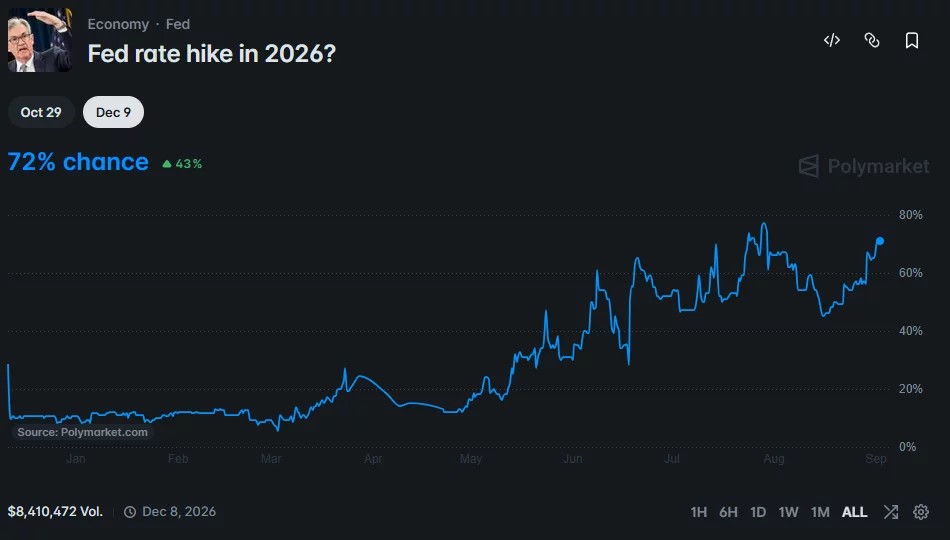
Federal Reserve Governor Michael Barr has backed a decisive interest rate increase if inflation fails to ease, as Polymarket traders place the chance of a 2026 hike at 72%.
Barr supports a Fed rate hike if inflation stays high
The Federal Reserve said in Barr’s Sept. 1 prepared remarks that inflation remains too high after more than five years above the central bank’s goal, leaving policymakers to decide whether current rates are restrictive enough.
Speaking at the Second Chance Lending Forum in Washington, Barr said the Fed has time to review the data before its Sept. 15–16 Federal Open Market Committee meeting. His position depends on whether upcoming reports provide clear evidence that price growth is returning toward the central bank’s 2% target.
“If trends in the data give me some confidence that inflation is moderating on a path to 2 percent, then I think we can take a bit more time to assess our policy stance,” Barr said.
If the data fail to provide that confidence, Barr said the central bank should respond without delay.
“However, if inflation appears not to be moderating sufficiently, then I think we should act decisively to raise rates,” he added.
Inflation fell from a peak of more than 7% in 2022 to slightly above 2% in 2024, according to Barr. Progress then stalled in 2025 as tariffs, the conflict in the Middle East and spending linked to the rapid expansion of artificial intelligence placed fresh pressure on prices.
Barr also pointed to persistent inflation in core non-housing services, which cover services other than housing and exclude some of the categories most affected by short-lived price changes. With inflation remaining above target for an extended period, he warned that price pressure could spread across more parts of the economy.
The latest Personal Consumption Expenditures data placed annual headline inflation at 3.7%, while core PCE inflation stood at 3.3%. The PCE price index is the Fed’s preferred inflation measure, making its path central to the rate debate.
Fed officials have raised pressure before September
Barr’s comments have added another voting member to the group of officials prepared to consider higher borrowing costs. As a member of the Federal Reserve Board, he holds a vote at every FOMC meeting.
Fed Chair Kevin Warsh delivered a similar message during his Aug. 28 Jackson Hole address, saying policymakers needed to be confident that inflation was moving toward the 2% objective “clearly and at sufficient speed.”
“We must be confident that underlying inflation is moving to our objective, clearly and at sufficient speed. Otherwise, we have work to do,” Warsh said.
As previously covered by crypto.news, Warsh described the 2% PCE inflation goal as a “firm, fixed target.” He also said that 54% of the 199 goods and services in the PCE basket had recorded price increases above 3% during the previous 12 months.
The Federal Open Market Committee held its target rate at 3.50%–3.75% during its July 28–29 meeting. Most members supported waiting for more information, but Minneapolis Fed President Neel Kashkari, Cleveland Fed President Beth Hammack, and Dallas Fed President Lorie Logan preferred an immediate quarter-point increase.
Earlier in August, Kashkari said it was time to start moving rates up gradually as inflation remained above target and the U.S. economy continued to withstand current borrowing costs. The July policy split left the September decision dependent on inflation, employment, and developments affecting energy prices.
Barr described the U.S. economy as solid, supported partly by investment in artificial intelligence. Consumer spending has remained resilient, while the labor market has stayed stable with relatively low unemployment, according to his remarks.
Traders raise Fed rate hike bets to 72%
Polymarket traders now assign a 72% probability to at least one Federal Reserve rate increase before the end of 2026, according to the prediction market figures cited in the supplied report. The probability stood at 68% following Warsh’s Jackson Hole speech and at 64% in early August.
Source: Polymarket
A separate Polymarket contract places the chance of a 25-basis-point increase at the September meeting at approximately 57%. Prediction-market probabilities change as traders open and close positions, and they do not represent a commitment from the Fed.
Market pricing has risen quickly in recent weeks. In early August, Polymarket traders assigned a 46% chance to a September quarter-point increase, while the probability of at least one hike during 2026 stood at 64%.
CME-based estimates also put the probability of a September increase at about 57% following Warsh’s speech, according to an Aug. 31 Bitfinex report. The figure had stood at 39.9% on Aug. 21, while the two-year U.S. Treasury yield later climbed to around 4.31%.
A rate increase would raise the Fed’s current target range to 3.75%–4.00% if officials approve a quarter-point move. Policymakers could also leave rates unchanged in September and consider an increase at one of the remaining meetings in October or December.
For U.S. crypto investors, a higher policy rate could affect Treasury yields, the dollar, and demand for assets that do not produce fixed income. BTSE Chief Operating Officer Jeff Mei said in an Aug. 31 report that higher rates could reduce the liquidity available to Bitcoin and other cryptocurrencies.
Bitcoin traded near $78,700 when the report was published after falling from above $81,000 to a low of $76,857 following Warsh’s address. U.S. spot Bitcoin exchange-traded funds still recorded $924.5 million in net inflows during the week, although investors withdrew $201.9 million on Aug. 28.
Oil and U.S. data could shape the September decision
Energy prices have created another inflation concern as fighting between the United States and Iran threatens oil shipments near the Strait of Hormuz. Brent crude moved above $90 on Aug. 31, while West Texas Intermediate also advanced as traders assessed the risk of supply disruptions.
Bitcoin held close to $78,000 during the initial market response, even as oil rose and equity futures declined. The oil-driven market pressure followed U.S. strikes on Iranian rocket launchers and warnings from Iran that it would respond.
Barr identified the Middle East conflict as one of the shocks that pushed inflation away from its previous path. Tariffs have also raised goods prices, while the AI construction boom has increased demand for equipment, electricity and other resources, according to his prepared remarks.
Before deciding on rates, officials will receive several U.S. reports that could change market expectations. The August employment report is scheduled for Sept. 4, with investors set to examine payroll growth, unemployment, and wages.
Consumer Price Index and Producer Price Index figures are also due before the Sept. 15–16 meeting. Barr said evidence that inflation is moving toward 2% would allow officials more time to assess policy, while insufficient progress would support decisive action to raise rates.
Solana-based decentralized exchange GMTrade has introduced 24/7 perpetual futures trading for commodities, including gold (XAG), silver (XAG), and West Texas Intermediate crude oil (WTI). The new products allow traders to gain price exposure to these assets without holding the physical commodities or tokenized versions, according to a report from Crypto Briefing.
How the Commodity Perpetuals Work
The perpetual futures are cash-settled and track the spot prices of the underlying commodities. Price data is sourced from Chainlink Data Streams, a decentralized oracle network that provides low-latency, high-frequency price feeds. This integration is designed to ensure accurate and reliable pricing for traders, even during periods of high volatility.
Unlike traditional commodity futures, which have expiration dates, perpetual contracts do not expire. Instead, they use a funding rate mechanism to keep the contract price aligned with the underlying asset’s spot price. This model has become popular in crypto derivatives, and its extension to commodities marks a notable step for decentralized finance (DeFi).
Why This Matters for DeFi Traders
Commodity trading has traditionally been dominated by centralized exchanges and institutional players. By bringing these markets on-chain, GMTrade aims to democratize access, allowing retail users to trade gold, silver, and oil with the same ease as trading crypto assets. The 24/7 availability is a significant advantage over traditional markets, which close on weekends and holidays.
This move also reflects a broader trend of DeFi platforms diversifying beyond crypto-native assets. The use of Chainlink Data Streams addresses one of the key challenges in DeFi—reliable price data—and could set a precedent for other platforms looking to expand into traditional asset classes.
Implications for the Solana Ecosystem
GMTrade’s expansion is a positive signal for Solana’s DeFi ecosystem, which has been working to attract more derivatives activity. Solana’s high throughput and low transaction fees make it well-suited for the fast-paced nature of perpetual trading. The addition of commodity perps could bring new users to the network and increase overall trading volume.
Conclusion
GMTrade’s launch of 24/7 commodity perpetual futures on Solana represents a meaningful development in the convergence of traditional and decentralized finance. By leveraging Chainlink’s reliable price feeds, the exchange is offering a new way for traders to access global commodity markets. As DeFi continues to evolve, products like these may help bridge the gap between crypto and traditional finance, providing more options for investors worldwide.
FAQs
Q1: What are perpetual futures? Perpetual futures are derivative contracts that allow traders to speculate on the price of an asset without an expiration date. They use a funding rate to keep the contract price close to the spot price of the underlying asset.
Q2: How does GMTrade ensure accurate pricing for commodities? GMTrade uses Chainlink Data Streams, a decentralized oracle network that aggregates price data from multiple sources to provide reliable and tamper-resistant price feeds.
Q3: Can traders take physical delivery of the commodities? No, these are cash-settled perpetual futures. Traders are exposed to the price movements of gold, silver, and oil, but do not own the physical assets or any tokenized representation of them.
Related Reading
Solana sets new record with 5.2 billion non-vote transactions in August
Gold Dips to Two-Week Low as Geopolitical Tensions Reintroduce Uncertainty
Binance’s Stock-Linked Perpetual Futures Volume Surges 15-Fold to $445B in Six Months
Gold Faces Risk of Bigger Drop as Technicals Turn Bearish
Gold Price Outlook: Key Support Levels and Recovery Scenarios
CEL Solicitors says it has traced more than 5,500 $BTC that it believes belong to former users of Intersango, an early Bitcoin exchange that disappeared more than a decade ago.
At Bitcoin’s current price near $78,824, those coins carry a value of roughly $433.5 million.
One former UK customer has already recovered 61 $BTC from the exchange’s remains, giving other users a concrete example of an old balance turning into a successful ownership claim.
The investor instructed CEL on Jan. 20, and the case settled on May 28, returning all 61 coins, now worth about $4.81 million.
CEL says former Intersango users may have claims against the more than 5,500 $BTC it has traced, and each claimant needs evidence connecting an old account balance to the assets.
That requirement places unusual value on records created during Bitcoin’s earliest years. Emails, bank statements, support tickets, and account records that once documented balances worth a few dollars can now support claims worth millions.
Bitcoin turned forgotten balances into fortunes
Intersango operated when Bitcoin still traded in the low double digits. In October 2012, the exchange planned to close its US-dollar market because trading activity had become too thin to justify keeping it open.
The exchange offered 625 $BTC for $12.10 each, valuing the entire batch at roughly $7,563 at the time. Those same 625 $BTC are worth about $49.3 million at today’s price.
One Bitcoin now represents almost $79,000, while a 10 $BTC balance would be worth about $788,000 and 100 $BTC would approach $7.9 million.
CEL says Intersango began winding down during late 2012 as GBP and USD trading ended. The website had gone dark by early 2014, and Companies House records show Intersango Ltd ceased to exist on March 22, 2016.
CEL says useful evidence can include the email address attached to an account, correspondence with Intersango and bank statements documenting transfers to the exchange.
The firm also said obtaining bank records from almost 15 years earlier became a major hurdle in establishing ownership in the 61 $BTC case.
California court records place those recovery efforts inside a wider dispute over customer Bitcoin connected to Intersango. A 2025 Court of Appeal opinion in Norman v. Strateman describes allegations that Patrick Strateman closed the exchange, retained Intersango assets, and refused to return customer Bitcoin.
The litigation also involved a settlement intended to protect and return customer assets. The appellate ruling sent that settlement back for judicial review of its fairness, establishing a documented legal framework around unresolved Intersango property claims.
A separate 2025 filing describes another alleged customer balance of 15.46306965 $BTC. The filing says Intersango’s customer ticketing system confirmed the balance before the platform disappeared, putting its current value near $1.22 million.
The 61-$BTC recovery and the 15.46-$BTC court claim show that identifiable balances survived in records long enough to support ownership claims more than a decade later.
The bull case depends on former users finding the evidence
Higher Bitcoin prices give former customers stronger financial incentives to search old inboxes, request archived bank statements, and fund legal work around balances they may have written off years ago.
At $100,000 per Bitcoin, the 61-$BTC recovery would be worth $6.1 million. The alleged 15.46-$BTC balance would reach about $1.55 million, and CEL’s traced 5,500-$BTC pool would reach $550 million.
Even relatively small balances can justify extensive document searches once each Bitcoin carries a six-figure value. A customer who left 5 $BTC on Intersango would be pursuing $500,000 at that price.
Modern blockchain tracing adds another layer to the recovery process because investigators can reconstruct asset movements across a public ledger that has preserved transactions since Intersango operated.
Personal ownership still requires records connecting an individual to an exchange account and a specific balance.
That puts users with surviving documentation in the strongest position to test claims against the traced assets. The 61-$BTC settlement provides a working example of how that process can reach a resolution even when the exchange disappeared more than a decade earlier.
The bear case is an evidence problem
Bitcoin could fall to $50,000 and still leave CEL’s traced pool worth about $275 million. The 61-$BTC recovery would be worth $3.05 million at that price, and the alleged 15.46-$BTC balance would remain worth roughly $773,000.
Large balances would still justify expensive recovery work, while smaller claims could become less attractive once legal costs, record retrieval and cross-border proceedings consume a greater share of the potential payout.
The bigger obstacle is the age of the records. Former users may have lost access to old email accounts, discarded bank statements or deleted exchange correspondence during years when their balances carried little economic value.
Blockchain records can trace coins through wallets and transactions, while ownership claims require evidence tying those assets to a particular user. Customer interests may also intersect with shareholder disputes, procedural rulings and competing claims over assets connected to the former exchange.
CEL’s 5,500-$BTC figure defines the potential scale of the property it says it has traced, while the amount that former users recover will depend on how much of that pool can be tied to provable balances.
Thousands of Bitcoin may depend on whether early Intersango users still possess an email, support ticket, or bank statement created when Bitcoin traded for little more than $12.
Cronos has restarted and restored block production after validators restored the chain to its state before the Tectonic exploit, replacing an open-ended network halt with a monitored restart. In an Aug. 31 update, Cronos said the restarted chain was producing blocks from block 90,896,189, with a timestamp of 23:49:01 UTC on Aug. 30.
The network said it was fully back online, but added that some protocols, RPC providers, explorers and bridges could take longer to recover. Cronos also said it was monitoring the chain for stability and would publish a full postmortem. Those details superseded a 05:24 UTC update on Aug. 31 that said the network remained halted while the investigation continued.
Cronos had announced the halt on Aug. 30 after identifying an exploit at Tectonic, a decentralized lending protocol on the chain. The response made the wider blockchain, rather than only Tectonic, unavailable while validators and security teams assessed the incident.
Tectonic separately acknowledged an incident and told users not to interact with the protocol until it confirmed that doing so was safe.
How the Tectonic exploit unfolded
Onchain researcher Weilin Li attributed the exploit to manipulation of TONIC, Tectonic’s thinly traded governance token. According to Li’s analysis, the attacker inflated TONIC’s price and used the token as collateral to borrow other assets from Tectonic.
The protocol’s documentation lists a 20% collateral factor for TONIC in a parameter table dated May 2025. However, that historical table does not establish the configuration at the time of the incident.
Li initially estimated that about $66 million was affected, then raised the figure to roughly $75 million after identifying another attacker-controlled address. He estimated that only about $6 million was bridged to Ethereum before Cronos halted, leaving most of the affected assets on the network. The figures and attack mechanism remain Li’s assessment rather than an official accounting.
What the Cronos restart changes
The restart relied on restoring the chain state to before the Tectonic exploit. Cronos said node operators could restart on version 1.7.8 using updated mainnet snapshots. The network did not say in the cited update how the rollback would affect all transactions submitted during the discarded period.
The difference between Li’s total estimate and the reported bridge flow helps explain why the validator halt may have limited onward movement. However, Cronos and Tectonic have not published a confirmed loss, an official root-cause analysis or a complete account of how attacker-controlled assets will be handled.
Crypto.com CEO Kris Marszalek said the company’s app and exchange were unaffected, were operating normally and had sent security staff to assist Cronos. That assurance applies to Crypto.com’s services, not to Tectonic depositors.
The immediate uncertainty has shifted from when Cronos will restart to how quickly connected services recover and what the promised postmortem establishes. Those details will determine the final accounting and whether Tectonic users can resume normal activity.
Robinhood’s ecosystem, built around its own Layer-2 network, Robinhood Chain, is creating a new narrative in the cryptocurrency market. Recently, projects such as Lighter ($LIT), Morpho ($MORPHO), Uniswap ($UNI), LayerZero ($ZRO), Chainlink ($LINK), and Arbitrum ($ARB) have come to the attention of investors, and Robinhood’s official documents clarify the roles of these projects within the network.
Robinhood Chain launched its mainnet on July 1, 2026. The blockchain, an Ethereum-compatible Layer-2 network, was developed directly using Arbitrum technology. Robinhood is positioning the network specifically for tokenized real-world assets (RWA), equity tokens, decentralized finance applications, and AI-based financial transactions. The network aims to offer 100-millisecond block times and leverage Ethereum’s security infrastructure.
One of the cryptocurrencies most directly linked to Robinhood Chain is Arbitrum ($ARB). The network operates on Arbitrum’s Dedicated Blockchains infrastructure. Robinhood previously launched tokenized US shares on Arbitrum One, then migrated its operations to its own Robinhood Chain. The Arbitrum team also announced that Robinhood Chain has joined more than 30 private blockchains built using its technology.
Another notable component of the ecosystem is Lighter ($LIT). Direct perpetual futures trading support via Lighter has been integrated into Robinhood Wallet. Users in select regions can trade perpetual contracts on Lighter without leaving Robinhood Wallet. Furthermore, Lighter has allocated 11 million $LIT tokens for the Robinhood community. Transactions made on Lighter through Robinhood Wallet earn higher points, which are planned to be converted into tokens from this $LIT pool.
The connection on the Morpho ($MORPHO) side is not just a technical integration. Morpho provides the core lending infrastructure for Robinhood’s new Robinhood Earn product. The system, which aims to allow users to earn returns using $USDG stablecoins, uses Robinhood Chain as the consensus layer for transactions, while Morpho serves as the underlying lending market. According to Morpho’s official data, as of the end of August, the total amount of deposits on the protocol built on Robinhood Chain reached approximately $936.6 million, while active loans amounted to approximately $415 million.
Uniswap ($UNI) has become one of Robinhood Chain’s core decentralized transaction infrastructures. Uniswap v2, v3, v4, and UniswapX were launched alongside the network’s mainnet, positioning Uniswap as Robinhood Chain’s primary public AMM (Automated Market Module). Users can trade tokens, provide liquidity, and interact with tokenized shares on Robinhood Chain via Uniswap.
The Chainlink ($LINK) connection is critical to Robinhood’s tokenized traditional asset strategy. Robinhood Chain selected Chainlink as its official data and cross-chain oracle infrastructure. Chainlink’s Data Feeds, Data Streams, and CCIP products were deployed along with the network’s mainnet. The integration is used for price data of Robinhood Stock Tokens linked to companies like NVIDIA, Google, and Apple, as well as for cross-chain transactions.
Another directly related project is LayerZero ($ZRO). While LayerZero was among the infrastructure providers during Robinhood Chain’s testnet phase, it has also become a significant part of the cross-chain transfer infrastructure on the mainnet. In Robinhood’s official documentation, LayerZero OFT and Stargate are listed among the options that enable fast token transfers between Robinhood Chain and other blockchains. Specifically, $USDG’s structure on Robinhood Chain utilizes LayerZero’s OFT standard.