Tag: Al Jazeera

  • Ex-OpenAI employee accused of planting device has Saudi backing: Prosecutor

    Ex-OpenAI employee accused of planting device has Saudi backing: Prosecutor

    US federal prosecutors allege the defendant was in frequent contact with unnamed member of royal family.

    An ex-OpenAI engineer accused of planting a recording device in an executive conference room at the AI company appears to have received considerable support from the Saudi government, United States prosecutors have said in a court filing.

    Federal prosecutors allege that the defendant, Abdulrahman Alfozan, 35, was in frequent communication with an unnamed member of the Saudi royal family and that a Saudi military official paid for a one-way plane ticket for Alfozan’s wife and young son to return to Saudi Arabia after his arrest, according to the court document, made public late on Sunday.

    Recommended Stories

    list of 4 itemsend of list

    Prosecutors made those allegations as they asked a federal judge to keep Alfozan in US custody to await trial, arguing he is a flight risk. Alfozan, a Saudi national and lawful permanent resident in the US, is scheduled to appear in federal court in San Francisco later on Monday.

    The case has highlighted security challenges around sensitive AI research as companies and governments compete fiercely for an edge in the transformational technology.

    “The defendant went to significant lengths to create customized, encrypted recording devices to secretly record highly sensitive meetings involving senior OpenAI personnel and executives, high-level business counterparts, and government officials, all while communicating with individuals of significance in Saudi Arabia and pursuing opportunities in — and making plans to travel to — Saudi Arabia,” prosecutors wrote in a detention memo.

    The Saudi government media office did not immediately respond to a request for comment. A lawyer for Alfozan did not immediately respond to a request for comment.

    The lawyer, William Pernik, previously asked for Alfozan to be released from custody, subject to conditions including location monitoring and surrendering his passport, and said Alfozan had spent the last 15 years in the US and had applied to become a citizen.

    The lawyer said a planned trip by Alfozan to Saudi Arabia this month was booked before he was under investigation and was for “family and immigration reasons”, according to a court filing.

    Investigation remains active

    US prosecutors charged Alfozan last week with using an electronic device to intercept oral communications. Alfozan plugged a recording device into the back of a television in an executive conference room at one of OpenAI’s San Francisco buildings, according to a criminal complaint.

    Meetings involving government officials took place in the conference room around the time the device was installed, according to the prosecutors’ detention memo.

    Prosecutors said the investigation remains active and additional charges could be brought against Alfozan.

    A member of the Saudi royal family sought to recruit Alfozan for an AI-focused role in Saudi Arabia, writing in one message, “Saudi needs you more then [sic] the US!” Alfozan replied, “100,” according to messages cited by prosecutors.

    Before his arrest, Alfozan was scheduled to fly to Riyadh during a planned two-month parental leave. His wife told investigators that she and their son planned to move permanently to Saudi Arabia and that Alfozan eventually intended to join them, according to prosecutors.

    In an Arabic-language interview on the Identity Capital podcast last month, Alfozan said that he visits Saudi Arabia three or four times a year, follows developments there and advises or mentors Saudi startups.

    He said meeting Prince Mohammed bin Salman, then deputy crown prince, during a 2016 gathering with young Saudi tech workers in Silicon Valley persuaded him to learn at a top tech company before bringing those skills back home.

    While Alfozan was working at Facebook, he and other Saudis in Silicon Valley formed a consulting initiative that linked Saudi public- and private-sector organisations with expertise in big data, the internet of things and machine learning.

    OpenAI previously said it discovered the device on September 30 and referred the matter to the FBI.

    Al Jazeera has reached out to the Saudi embassy for comment.
  • Florida issues arrest warrant for Cuban leader Raul Castro

    Florida issues arrest warrant for Cuban leader Raul Castro

    Florida, in the southeastern United States, has issued an arrest warrant for 95-year-old former Cuban leader Raul Castro.

    The move comes as US authorities step up pressure on the government in Havana.

    Recommended Stories

    list of 3 itemsend of list

    State Attorney General James Uthmeier said on Monday that the warrant was based on criminal charges over Castro’s alleged role in ordering two unarmed aircraft to be shot down in 1996.

    The aircraft were affiliated with Brothers to the Rescue, a Florida-based group that helps Cubans fleeing the country. Four people were killed in the attack.

    Castro faces state-level charges of conspiracy to commit first-degree murder in Florida.

    “Raul Castro ordered the murder of four Floridians in cold blood, and Florida will never stop pursuing accountability for that communist conspiracy,” Uthmeier wrote in a news release.

    He said the arrest warrant was necessary accountability for the lives lost. “Thirty years later, we are still fighting for justice for Carlos Costa, Pablo Morales, Mario de la Pena, and Armando Alejandre Jr.”

    The decision to shoot down the two small twin-engine planes has been the subject of renewed controversy over the last year, as Republican President Donald Trump seeks to oust Cuba’s communist leaders.

    The attack took place on February 24, 1996. US authorities say the planes were flying over international waters and received no warning before they were shot down.

    Cuban officials, meanwhile, have argued that previous Brothers to the Rescue flights had breached the country’s airspace, despite warnings to stay away.

    Castro, now 95 years old, was Cuba’s defence minister at the time of the attack. A key figure in the Communist Party of Cuba, he later became president of the island in 2008, replacing his brother, the late revolutionary leader Fidel Castro.

    Though he retired from the presidency in 2018, Raul Castro and his family remain powerful figures in Cuba’s government.

    Since the start of the year, the Trump administration has signalled it would like to see regime change in Cuba.

    To trigger such change, the administration has tightened US restrictions on the island, including by imposing a de facto energy blockade in January.

    By threatening steep tariffs against any country that supplies Cuba with oil, the US has effectively barred fuel exports to the country, according to experts.

    That, in turn, has caused deteriorating conditions on the island and strained the country’s already meagre power system, which relies heavily on fossil fuels. Only 40 percent of Cuba’s oil is produced domestically.

    Additional sanctions have been placed on Cuba’s economy, limiting its state-run industries.

    But in May, the Trump administration unveiled a superseding indictment also targeting Raul Castro for the 1996 plane downings.

    It charges Castro with federal crimes including conspiracy to kill US nationals, destroying aircraft and four counts of murder.

    The Trump administration issued a statement in support of Florida’s actions against Castro on Monday.

    “We’re committed to pursuing every lawful, prosecutable avenue to bring accountability, including parallel federal and state prosecutions,” US Attorney Jason Reding Quinones said.

    “Our historic federal indictment laid the groundwork, and James [Uthmeier] and his team have now taken the important step of bringing charges under Florida law.”

    Trump has previously used indictments to justify military operations targeting government leaders that are at odds with the US, including former Venezuelan President Nicolas Maduro.

  • Trump backs Netanyahu: Is the US planning a new Iran attack with Israel?

    Trump backs Netanyahu: Is the US planning a new Iran attack with Israel?

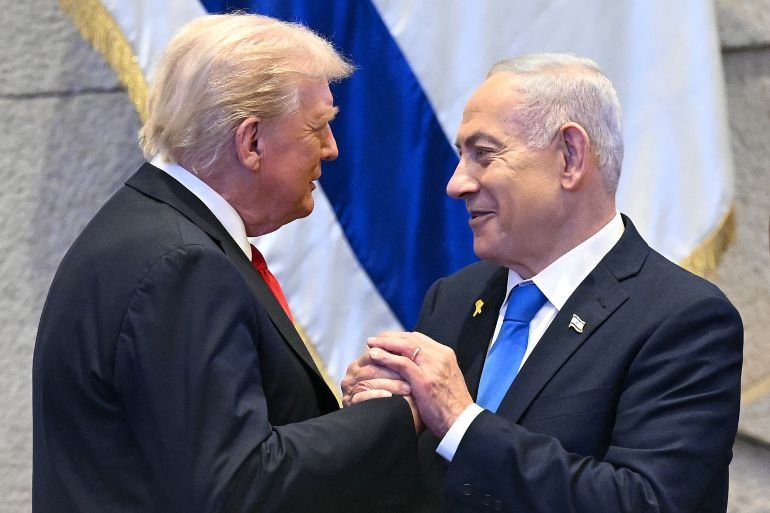
    United States President Donald Trump has announced his official endorsement of Israel’s Prime Minister Benjamin Netanyahu’s election campaign after previously refusing to endorse anyone.

    Trump posted on his Truth Social platform on Sunday that Netanyahu had been a “great warrior prime minister and an even greater partner for peace”, adding that Iran had been “systematically destroyed both militarily and financially, and unless they change their ways, rapidly, we will soon finish the job.”

    Recommended Stories

    list of 3 itemsend of list

    “If Israel has the wrong Leader, which would be anyone other than Bibi, America will have to do this work ourselves, and I am not inclined to do so,” Trump wrote.

    “Bibi Netanyahu has been Strong, Brave, and Brilliant in the face of tremendous opposition, including that coming from even Israel, itself. Despite all of that, he has endured and, in fact, he has thrived!”.

    The president added that normal men and women would have “wilted” under the pressure that Netanyahu was under, but the Israeli prime minister “got stronger”.

    “This is the kind of Partner that the United States of America is demanding of Israel, a Country for which it has done so much. Please let this Letter serve to represent my Complete and Total Endorsement of Bibi Netanyahu in his upcoming Race for Re-Election as Prime Minister of Israel. BIBI NETANYAHU WILL NEVER LET YOU DOWN!”, he added.

    The Israeli election will be on October 27 . According to Israeli news outlet Haaretz’s tracker, as of Sunday, the opposition alliance led by the Yashar party of Gadi Eisenkot is expected to win the most seats, at 52, with Netanyahu’s Likud party-led coalition taking 51 of the 120 seats in the Knesset.

    So far, no party is projected to secure an outright majority.

    But Trump’s endorsement comes after he had previously shied away from fully backing Netanyahu’s election campaign.

    Earlier this month, when asked twice by TIME magazine if Netanyahu should be given another term, Trump pivoted to his own popularity in Israel and Washington’s actions supporting Israel.

    When asked on Thursday by the right-wing US news outlet, Newsmax, if he was planning to get involved in the Israeli elections,  Trump said: “They’d like me to be. Yeah, they’d like me to be”.

    When asked whether he trusted Netanyahu, Trump replied, “I don’t trust anybody, honestly”.

    Still, Sanam Vakil, director of the Middle East North Africa programme at the British think tank Chatham House, explained that Trump’s endorsement of Netanyahu was “politically significant” because it comes after months of tension between the two leaders.

    “It allows Netanyahu to reinforce his claim that he is indispensable to Israel’s relationship with Washington,” Vakil told Al Jazeera.

    “However, its electoral impact should not be overstated. Israeli voters remain divided over Netanyahu’s leadership and the outcome of the Iran war. The endorsement may help consolidate his existing support, but it does not resolve the wider questions surrounding his record,” she added.

    Andreas Krieg, senior lecturer at the school of security studies at King’s College London, said that Trump’s endorsement was a “political gift” to Netanyahu, whose electoral campaign is struggling.

    But like Vakil, he cautioned against treating Trump’s endorsement as a game-changer.

    “Netanyahu’s problems are structural, involving fragmented right-wing parties, disillusioned ultra-Orthodox voters and the legacy of October 7. Trump may mobilise reluctant Likud voters, potentially worth a seat or two in a close contest, but he cannot manufacture the coalition majority Netanyahu currently lacks,” Krieg told Al Jazeera.

    What the endorsement means for the Iran war

    Much of Trump’s endorsement has been heavily focused on the Iran war, at a time when many analysts suggest the US president might be looking to restart attacks, either before or after the midterm elections in early November.

    The conflict, which began in February after the US and Israel launched attacks across Iran, is currently at a standstill.

    The Strait of Hormuz, which once transported 20 percent of global crude, was effectively shut by Iran after the war started. A US naval blockade of Iranian vessels followed, as each country struck ships passing through the waterway that they accused of not complying with its orders. Oil traffic last month through the strait picked up to pre-war levels as the US Navy shepherded an increasing number of tankers. But a spate of Iranian attacks on vessels early this month has again hit crude exports through Hormuz.

    On Monday morning, Brent crude futures stood at $107.57 a barrel, down slightly after reaching their highest since May 19 on Friday, when they briefly touched $110 a barrel.

    Last month, Iran presented a proposal to Washington to reopen the waterway within seven days, but negotiations failed after the US did not address Tehran’s seven conditions, which included the lifting of sanctions and the ending of its naval blockade.

    Foreign Minister Abbas Araghchi told Iranian media outlets on Sunday that the proposal remained on the table and, if Washington accepts Tehran’s conditions, the strait could reopen within six days, with talks resuming the following day.

    At the same time, Araghchi, in a post on X on Sunday night, accused Netanyahu of wanting to restart attacks on Iran with the US to “stay out of jail”.

    “Last time you wanted to ‘finish the job’, Iran emerged even stronger. Want to try your luck again? Be our guest. But be careful; we have unfinished jobs too,” he wrote.

    “Netanyahu is driving America into another war to stay out of jail, whatever the consequences for Israel – let alone POTUS,” he added.

    Krieg said Trump was prioritising the use of “coercive leverage” through his endorsement of Netanyahu but not necessarily “war over diplomacy”. 

    “The naval blockade is hurting Iran considerably and Washington believes time is working in its favour. Trump’s calculation is that Iran will eventually accept nuclear concessions and reopen Hormuz, without Washington having to offer significant concessions first,” he argued.

    “His endorsement reinforces the military threat underpinning that strategy. But it does not mean diplomacy is finished. Trump still wants a deal he can present as a victory. The danger is that Tehran increasingly believes it must escalate to improve its bargaining position.”

    What is next?

    Vakil explained that, while Trump’s declaration of support for Netanyahu had signalled renewed political alignment with Israel and left the door open for future joint military action, it also makes it “harder for Trump to distance himself from the war or portray the US as having been reluctantly drawn into it”.

    “He is explicitly taking ownership of the partnership and its military campaign against Iran. However, the endorsement does not necessarily mean that the two leaders have agreed on another operation, nor does it settle the question of who initially pushed hardest for war,” she said.

    Vakil added that for Tehran, the statement will reinforce the belief of Iranian leaders that there is “little meaningful distinction between US and Israeli objectives.”

    “At the same time, Trump’s suggestion that he is reluctant to confront Iran without Netanyahu could be interpreted as evidence of the limits of Washington’s appetite for another war.”

    Meanwhile, while Trump has said that he would not attack Iran before the November midterms, several US media outlets have reported that the Pentagon has drawn up plans to relaunch attacks before voters head to the polls.

    Last week, US news outlet Axios reported, citing both US and Israeli officials, that both Trump and Netanyahu had spoken about launching a major new operation against Iran ahead of the elections in both countries.

    For Krieg, the likelihood that the US and Israel launch an attack on Iran remains low, assuming there is no Iranian strike that forces a response.

    “The more dangerous window opens after November 3 [US midterms], when those electoral constraints disappear. Both militaries are preparing for that possibility. The greatest immediate risk is an uncontrolled escalation in Hormuz that forces Washington’s hand before either leader is politically ready,” he said.

  • Qatar warns global energy shockwaves from Iran war have yet to peak

    Qatar warns global energy shockwaves from Iran war have yet to peak

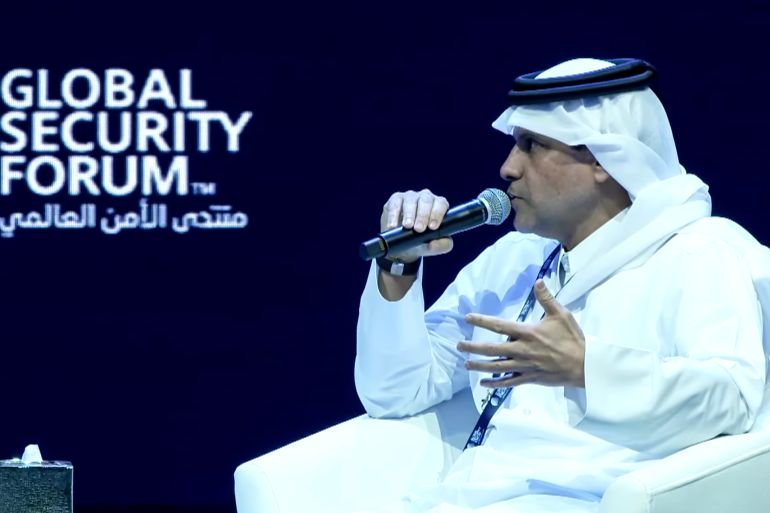
    Doha, Qatar — Qatar’s deputy prime minister has warned that global energy shockwaves from the US-Israel war on Iran have yet to reach their peak, raising concerns about further disruption to supplies, international trade and economic growth.

    Speaking at the Global Security Forum in Doha on Monday, Sheikh Saoud bin Abdulrahman Al Thani, who also serves as Minister of State for Defence Affairs, identified several threats facing Qatar and the wider Gulf, including risks to sovereignty and disruptions to energy supplies.

    Recommended Stories

    list of 3 itemsend of list

    “We haven’t reached the peak with respect to energy,” he said, warning of further repercussions “in the coming days and months”.

    His remarks come amid continued instability in the Strait of Hormuz – a vital waterway for global oil and liquefied natural gas (LNG) shipments – following the US-Israeli attacks on Iran on February 28, and Tehran’s retaliatory strikes across the region.

    Iranian strikes on Qatar’s Ras Laffan industrial complex in March damaged facilities, with repairs expected to take several years.

    “We were surprised,” Al Thani said when asked about the attack, adding that there had since been “a lot of discussion with Iran”.

    He said Qatar had drawn lessons from the strikes, “to make sure that all of our assets will be protected from any unexpected attack”.

    Al Thani also warned against imposing tolls on ships passing through the Strait of Hormuz.

    “Transit fees should not be applied,” he said, adding that uncertainty over the waterway would ultimately affect consumers worldwide.

    ‘We never stop our communication’

    Despite the attacks, Al Thani said Qatar continued to maintain contact with Tehran.

    “We never stop our communication,” he said, adding that the two countries remained in touch at different levels despite their disagreements.

    He described Qatar’s relationship with Iran before the attacks as one of trust, pointing to their shared offshore gasfield and longstanding economic interests.

    Al Thani expressed hope that mediation efforts involving Qatar, Pakistan and Oman would help produce an agreement between the United States, Iran and other parties, including Israel.

    He said a sustainable settlement would require broader regional dialogue involving Gulf Cooperation Council (GCC) countries, Pakistan and Turkiye, in consultation with international allies.

    “We need to build this on trust,” he added.

    Al Thani also suggested developing economic ties with Iran to prevent future conflicts, citing cooperation between France and Germany following decades of hostilities.

    “Iran is our neighbour. We need to find ways to live with them,” he said.

    US defence ties

    Al Thani also highlighted Qatar’s longstanding defence partnership with Washington, saying that “more than 90 percent” of attacks had been prevented through shared expertise and military capabilities developed over the past three to four decades.

    He said Qatar was continuing to develop Al Udeid airbase, which hosts US forces and military personnel from other partner countries.

    The base was itself targeted by Iran during the conflict, with Qatar reporting that it had shot down two Iranian warplanes during an attack in early March.

    Al Thani also announced plans for a new regional defence partnership, saying Qatar was prioritising several aspects including air defence, counter-drone measures and cybersecurity.

    “I’m happy to announce today also that soon we’re going to announce a new partnership,” he said, without naming the regional partners involved.

    The deputy prime minister stressed that Qatar’s mediation efforts did not diminish its commitment to defending its territory.

    “Mediation doesn’t mean that we should not be ready for any defensive action from our side,” he said.

  • Al Jazeera investigation challenges Israeli account of Heidi Levine attack

    Al Jazeera investigation challenges Israeli account of Heidi Levine attack

    An Al Jazeera investigation has challenged official Israeli narratives regarding an attack by settlers on Palestinian olive harvesters and an American photojournalist on Friday in Khirbet Abu Falah, northeast of Ramallah in the occupied West Bank.

    The investigation by Al Jazeera’s Data Journalism Unit used open-source verification and analysis of visual and geographic evidence.

    Official Israeli accounts of what happened differ: Prime Minister Benjamin Netanyahu’s office has questioned whether Israeli settlers were to blame at all, while the Israeli army has suggested that the military was engaged in addressing a confrontation between Palestinians and settlers at the time.

    But verified footage and mapped coordinates reveal a coordinated attack by masked settlers, with Israeli military vehicles passing by shortly before the incident, without intervening.

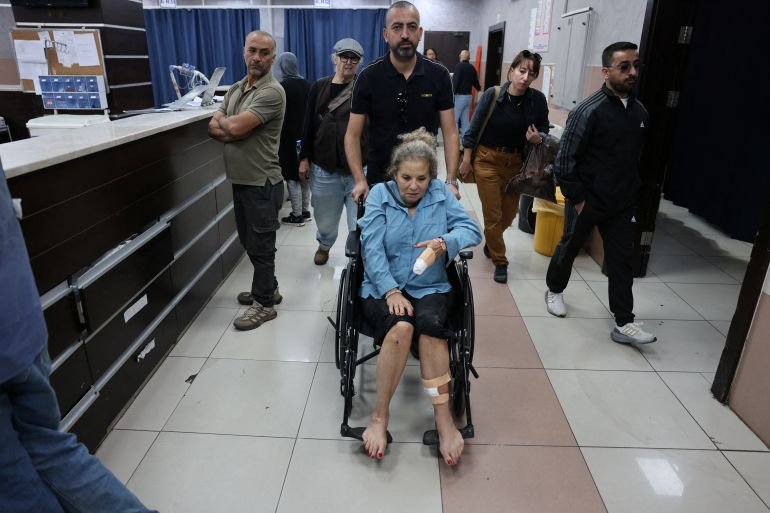
    The October 16 pogrom left veteran Washington Post photojournalist Heidi Levine, 63, with a broken rib, four fractured vertebrae, and wounds requiring hand surgery, despite wearing a clearly marked press vest.

    To establish the facts, the Data Journalism Unit monitored and analysed more than 20 videos and photos taken by journalists and witnesses on the ground. The team independently verified the footage, arranged it chronologically, communicated with local journalists, and mapped key locations.

    Geography of attack

    Geospatial analysis pinpoints the settler outpost where the attackers originated, the harvesting land, and the location of the assault on Levine.

    The attack on Levine was mapped at the coordinates 32°01’13.5″N 35°18’40.7″E. This site is approximately 455 metres southwest of an outpost on a hill near the Misholash settlement, and just 120 metres north of the land where Palestinians were picking olives.

    INTERACTIVE - Israeli settler attack map West Bank Heidi Levine-1792405524

    The unit also identified rooms traditionally used by Palestinians to store fertiliser and agricultural tools, and where farmers occasionally spend the night. These rooms are near the outpost, 430 and 500 metres northeast of the attack site. A local journalist, speaking on condition of anonymity due to security concerns, said that Palestinian owners can no longer enter these rooms, where settlers now stay and gather.

    The journalist explained that the outpost is located in Area B under the Oslo Accords, where the Palestinian Authority (PA) manages civil affairs and Israel retains security control. While only a few settlers typically reside in the outpost to “prove” their presence, during any incident, 50 to 100 settlers from other outposts gather there before descending on the fields.

    He noted that other settler tents on the adjacent mountain overlooking the village serve as additional gathering points to attack anyone harvesting olives.

    Chronological evidence

    Tracking the footage chronologically reveals a gradual escalation leading up to the attack.

    Movements began around 8am when a 4×4 vehicle carrying settlers headed towards the site, followed by six motorcycles moving towards the area opposite the harvesters. In a video posted shortly after 9am, about 30 settlers are seen gathering near the farmers.

    Al Jazeera correspondent Tharwat Shaqra, who was at the scene, said that Israeli military vehicles passed through the area, and after their passage, settlers headed towards the journalists and farmers, “as if it were a green light.” Independent Israeli journalist Oren Ziv noted that military jeeps made no attempt to stop the masked men.

    The settlers then set fire to the olive trees and advanced towards the harvesters, prompting village youths to respond by throwing stones.

    Footage subsequently documents the assault on Levine after she was knocked down. Her colleagues could only reach her after young Palestinians pushed the settlers back by throwing stones in their direction.

    American journalist Jasper Nathaniel, who helped pull her away, wrote on X: “The only reason I was able to get to Heidi is because Palestinian youth provided cover with stones facing settlers and soldiers with machine guns and tear gas.” He added that the army pursued the young Palestinians after the attack, not the settlers.

    During the same period, a video captured the sound of four gunshots followed by two more, which Tharwat Shaqra confirmed originated from the settlers.

    Israeli forces only appeared to be deployed at the attack site in later footage, with their vehicles stationed in the settlers’ area. Soldiers then shot local council member Abdel Jaber Obeid and intercepted the ambulance before his transfer to hospital, as the army continued firing tear gas at the olive harvesters.

    Conflicting Israeli claims

    The timeline and geographical data contradict the official Israeli narratives.

    The Israeli Prime Minister’s Office said that “the facts surrounding the confrontation near Abu Falah, during which Washington Post photojournalist Heidi Levine was allegedly assaulted, remain unclear and are under investigation”. It cited reports indicating “some 200 Arabs and far-left activists confronted approximately 40 Israeli youths”.

    However, footage and testimonies show that the settlers gathered, descended, and burned trees before the youths responded, and the assault on Levine is documented on video.

    Conversely, the army did not question the assault, acknowledging the injury of a foreign journalist. The Israeli military stated that forces were dispatched “following a report of a violent confrontation” and broke it up using “riot dispersal means”. It said soldiers “fired warning shots into the air and then fired toward a suspect who ran toward them, carrying a sharp object,” making no mention of the settlers or their gunfire.

    The Israeli military’s international spokesperson Ariella Mazor told The Washington Post that soldiers in the area were trying to disperse a large, violent crowd and did not see the assault on Levine.

    But evidence from videos and other testimony suggests that military vehicles in the area passed by the settlers without intervening and that Israeli forces eventually directed tear gas at Palestinians after the attack.

    Widespread condemnation

    The attack prompted widespread condemnation. United States Ambassador to Israel Mike Huckabee demanded that “those who attacked unarmed reporter should spend YRS in prison”.

    He said that “attacking a female photographer is despicable act of terror carried out by masked cowards”.

  • NFL’s Azeez Al-Shaair honours Palestinian children for fifth straight week

    NFL’s Azeez Al-Shaair honours Palestinian children for fifth straight week

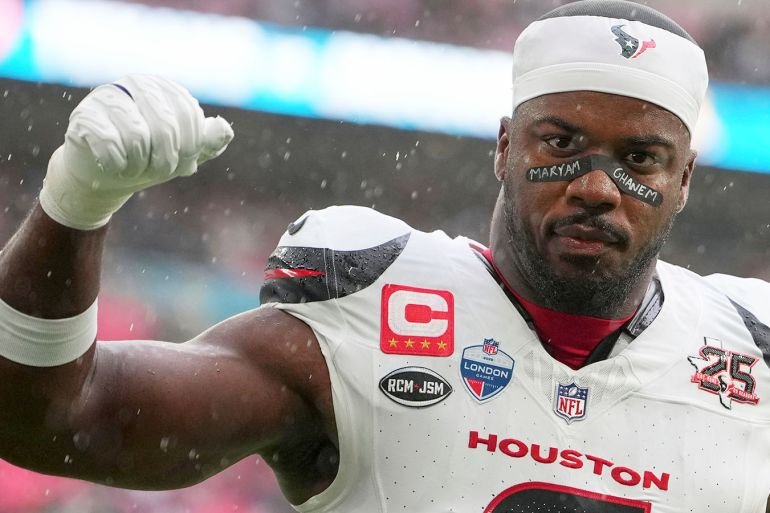
    Al-Shaair’s eyeblack carried the name of Maryam Ghanem, a girl in Gaza who was forced to watch her mother burn alive.

    American football player Azeez Al-Shaair has honoured a Palestinian child for the fifth consecutive week by writing the name of Maryam Ghanem, a girl who was orphaned in Gaza last week, on his eyeblack for his team’s latest National Football League game.

    Al-Shaair carried Ghanem’s name on the black tape across his nose during the Houston Texans’ fixture against the Jacksonville Jaguars at Wembley Stadium in London, United Kingdom, on Sunday.

    Ghanem is a two-and-a-half-year-old girl in Gaza who was forced to watch her mother burn alive after an Israeli strike hit their home in the Remal neighbourhood of Gaza City on Wednesday.

    [Screen grab/ instagram/a_train2_]
    [Screengrab/Instagram/a_train2_]

    Local journalists managed to rescue her after hearing her cries as flames engulfed her home in an apartment building that was struck early that morning. Ghanem was later identified as the sole survivor of her family.

    She was moved to hospital for treatment. “My hand hurts,” Ghanem said as she lay shell-shocked on a hospital bed, suffering from severe burns, and clutching her doll close to her.

    Maryam lost her father at the beginning of Israel’s genocidal war on Gaza and has now lost her mother as well.

    Israeli air strikes continue to pound Gaza regularly despite a United States-brokered “ceasefire” in the besieged Strip.

    Al-Shaair has used his social media accounts and his eyeblack, a tape worn by athletes to reduce glare, to bring attention to the killings of Palestinians in the three years of Israel’s genocidal war on Gaza.

    The 29-year-old has been fined and has reportedly been threatened with removal from games, but he remains undeterred.

    The Black American Muslim player began his current NFL season by wearing the name of Hind Rajab on September 13.

    The five-year-old girl was killed in Gaza after Israeli soldiers opened fire on her family’s stranded car on January 29, 2024.

    Houston Texans linebacker Azeez al-Shaair (0) warms-up before an NFL football game against Jacksonville Jaguars in London, Sunday, Oct. 18, 2026. (AP Photo/Kin Cheung)
    Azeez Al-Shaair has been honouring Palestinian children for five weeks [Kin Cheung/AP Photo]

    The NFL fined him $11,491 for breaching the league’s code of conduct on players’ clothing and equipment during a match against the Buffalo Bills.

    However, basketball player Kyrie Irving stepped in and offered to pay the fine for Al-Shaair, who later confirmed that he had been in touch with the nine-time NBA All-Star.

    Al-Shaair brushed off talk of the fine while speaking to reporters last week. “It’s bigger to me; what’s a life worth? Is a life worth $11,000? No, I think it’s priceless,” he said.

    He has continued to raise awareness about the slain children by wearing a name, or combination of names, every Sunday.

    Prominent American Muslim scholar Omar Suleiman has repeatedly voiced his support for Al-Shaair.

    “My brother, who went to Jordan to be with Palestinian refugees this summer, who spends time with Palestinian children with missing limbs in Houston, who is using every week of his Pro Bowl NFL career to honour a Palestinian child despite the fines,” Suleiman wrote about Al-Shaair in a social media post last month.

    “In the sports and entertainment arenas run by many of the same types of people who run government, choose to be like Azeez Al-Shaair, Kyrie, and Macklemore.”

    The NFL’s fine on Al-Shaair came at a time when Robert Kraft, owner of the Boston-based team, the New England Patriots, confirmed that he pressured pop star Ed Sheeran to drop rapper Macklemore from his tour of the US.

  • How a grass fire at a Canadian military base killed four soldiers

    How a grass fire at a Canadian military base killed four soldiers

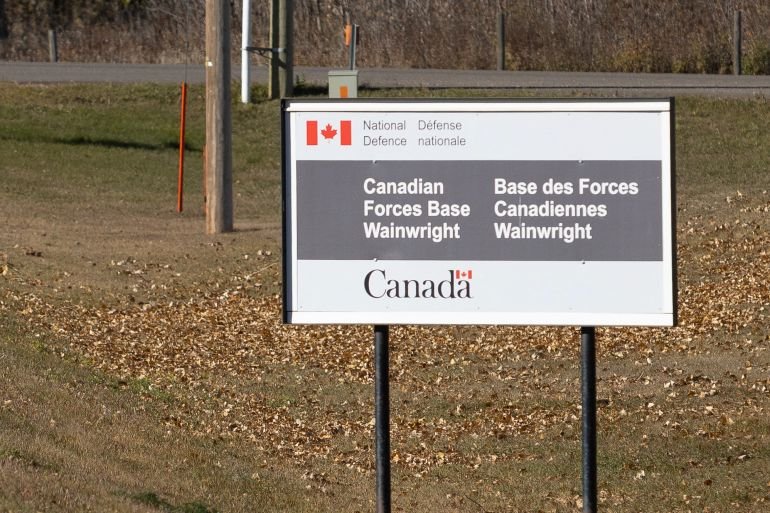
    On Saturday morning, Canadian military officials at a base in Alberta province observed a grass fire that appeared sufficiently contained, allowing soldiers to conduct live-fire combat training. Then, the officials say, the wind shifted.

    In less than a minute, Canadian soldiers went from training drills to being engulfed in flames, said Major-General Wade Rutland, describing the incident that killed four soldiers and injured 39 people, 19 of them critically.

    “The fire was a kilometre away when the wind shifted. That is not normal for a fire to move a kilometre in 36 seconds,” Rutland said at a news conference in Edmonton, the capital of Alberta, on Sunday.

    While the cause of the grass blaze remains unknown, Prime Minister Mark Carney described the incident as one of the worst peacetime tragedies for Canada’s military on domestic soil.

    So how did the grass fire spread so fast, and why is this base significant?

    Firefighers and emergency services close to Canadian Forces Base Wainwright in Wainwright, Alberta, Canada, on October 18, 2026.
    Firefighters and emergency services close to Canadian Forces Base Wainwright in Wainwright, Alberta, October 18, 2026 [AFP]

    What is a grass fire?

    A grass fire spreads through dry grass, weeds, shrubs and other low-growing vegetation. Unlike forest fires that burn through trees and woodland, grass fires spread across open fields, grasslands and plains.

    They can move exceptionally quickly because dry grass ignites easily and provides a continuous source of fuel, and wind can play a pivotal role in how the fire develops.

    Strong winds push flames rapidly across open terrain, change their direction with little warning, and carry burning embers ahead of the main fire, potentially igniting new fires.

    The uncertainty of winds makes grass fires difficult to predict and contain, particularly in dry conditions.

    They may burn for a shorter time than a forest fire, and while they are easier to contain, the speed at which they can spread in dry conditions can make them lethal.

    Grass fires can start naturally but can also be ignited by human activities, such as discarded cigarettes or equipment sparks.

    What happened at the base?

    The fire spread on Saturday afternoon during high-intensity combat training involving Charlie Company of the 3rd Battalion, Princess Patricia’s Canadian Light Infantry, at Canadian Forces Base Wainwright in Alberta, western Canada, about 210km (130 miles) southeast of Edmonton.

    The area lies in the prairies, a landscape of wide, open grasslands, rolling plains and scattered groves of trees. The base is also one of the Canadian Army’s largest training centres and a key facility for preparing troops for operational deployment.

    About 84 soldiers were split between a grenade range and an area where they practised attacks on simulated enemy positions. The fire swept into the second training area.

    Rutland said investigators would examine whether the wind drove the fire towards the soldiers or whether flames spread unseen through vegetation before suddenly overtaking them.

    Large areas of Alberta were hit by a windstorm, with gusts up to 100km/h (62mph). The winds toppled trees, sent signs flying and pushed flames beyond the base into surrounding rural areas.

    The fire also disrupted advance voting ahead of Monday’s referendum on whether Alberta should begin a process that could lead to independence from Canada.

    On Sunday, the Canadian media reported that the fire could have worsened after a gas facility was struck during a live firing exercise. However, the military later clarified that investigators do not believe any explosions were caused by oil or gas infrastructure.

    Firefighters continue to work close to Canadian Forces Base Wainwright in Wainwright, Alberta, Canada, on October 18, 2026.
    Firefighters continue to work close to Canadian Forces Base Wainwright, October 18, 2026 [AFP]

    Were there initial warnings?

    Global News, a Canadian publication, reported that an armed forces memo obtained by it noted the fire risk was assessed as low for the scheduled live-ammunition exercise, greenlighting soldiers to train.

    However, Environment Canada had issued a strong-wind warning earlier that day, forecasting gusts of up to 100km/h in parts of Alberta.

    The memo also noted that blazes jumped a fire guard and spread outside the base, forcing the evacuation of one family home.

    “During training, a grass fire ignited, and strong winds caused the fire to spread rapidly and shift direction; the fire shifted toward the personnel on the range and overtook their admin area,” the memo states.

    Global News reported that the memo warned that the situation was “fluid” and the casualty figures “may change over time with ongoing assessments” of status.

    Why is the base significant?

    The Wainwright base is one of the country’s largest and most used military facilities, especially for training soldiers. It spans 609sq km (235sq miles) and is home to 25 weapons ranges.

    During the final months of World War II and for several months in 1946, the base was used as an internment centre for German prisoners of war.

  • No ‘turmoil’ at the White House

    No ‘turmoil’ at the White House

    In the months leading up to the disastrous 2006 election, President George W Bush fired his press secretary, Scott McClellan, and withdrew the Supreme Court nomination of his close confidante, Harriet Miers.

    He waited until after the midterms, in which the Republicans lost control of the United States Congress, to fire Donald Rumsfeld as his secretary of defence, who had led the increasingly unpopular war against Iraq.

    History repeats itself imperfectly.

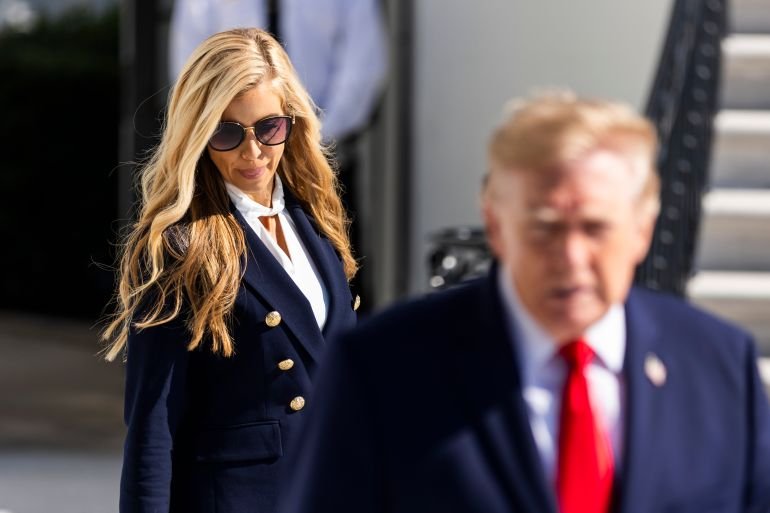
    Last week, President Donald Trump abruptly pulled the plug on Katie Zacharia after she had served just five short days as the White House spokesperson. Aside from her own dismissal, the biggest news Zacharia delivered was Kimberly Guilfoyle’s ouster from her position as the ambassador to Greece.

    It is rumoured that Secretary of War Pete Hegseth is now on the chopping block, especially after the president rejected his plans to livestream the execution of Nidal Hasan, a terrorist who shot 13 people at Fort Hood military base in 2009.

    Obviously, there are differences between the two presidencies.

    McClellan had been the press secretary for three years, not five days. Miers was not embroiled in scandal when her nomination was pulled. The media and the Senate just questioned her qualifications. And the war with Iran is not as bloody or as costly as the US invasion of Iraq turned out to be.

    But the second half of the second term of all US presidents can be rocky.

    In President Ronald Reagan’s second term, his press team dealt with the fallout of the Iran-Contra scandal. In President Bill Clinton’s second term, the Monica Lewinsky affair drove the news. President Richard Nixon faced impeachment in his second term. President Barack Obama had to deal with the scandal surrounding the Benghazi consulate attack in Libya throughout his second term, which also embroiled Secretary of State Hillary Clinton.

    Staff turmoil is also not unusual in the White House under any president, especially in the second term and especially when the voters are angry and the polls look dire.

    Every midterm election is a referendum on the president, and it is not uncommon for the president’s party to be punished at the ballot box. In fact, in 18 of the 20 midterms held over the past 80 years, the governing party has lost seats in Congress.

    The Trump administration is indeed facing troubles with the continuing US-Israel war on Iran and high energy prices. But a press secretary’s dismissal is hardly a sign of a serious crisis in the administration.

    It is unclear how Zacharia got the job. She did not work on Trump’s re-election campaign, and while she has done media appearances in the past, she is by no means a working journalist. She briefly served in the press shop of the Department of Homeland Security when Kristi Noem was secretary. But given Noem’s short-lived tenure, rocked by various controversies and her own dismissal in March, that was hardly a positive experience.

    Press reports have hinted that the president himself made the decision to hire Zacharia and that the White House chief of staff, Susie Wiles, was not an essential part of the process.

    Trump saw that there was a problem with Zacharia and moved swiftly to deal with it to cut his losses. He has demonstrated he is clearly in control and his administration is not “falling apart” or “in turmoil” as media headlines have declared.

    Not all presidents have moved as decisively as he has.

    President Joe Biden, for example, should have done the same thing with his last spokesperson, Karine Jean-Pierre. She was every bit as incompetent as Zacharia, but Biden allowed her to stay in the job for three years, about the same tenure as McClellan.

    Hopefully, Trump and his team will learn a valuable lesson about this sorry episode. Hiring incompetent people and putting them out for the press to destroy is not good for the White House, nor for the people they hire and are then forced to fire.

    Trump deserves credit for moving quickly to remove Zacharia before she became more of an embarrassment. He also deserves credit for firing Kimberly Guilfoyle, a personal friend, for her alleged corruption in Europe.

    But what the president really needs is a better process for hiring more competent people in the first place. Maybe next time he should check with his chief of staff first.

    The views expressed in this article are the author’s own and do not necessarily reflect Al Jazeera’s editorial stance.

  • Losing Cuba, the global trickster

    Losing Cuba, the global trickster

    Cuba is once again in the United States’s crosshairs. Washington’s operation in Venezuela at the start of the year is largely seen to have paved the way for a similar undertaking on the Caribbean island. Recent media reports have revealed US military activity nearby while US officials have repeatedly said they want “Cuba to be free”.

    When and how the US may strike is still unclear. But indications are that the Cuban Revolution may be nearing its end. That is reason enough to pause and reflect on the outsized role this nation of 10 million has played on the world stage.

    When thinking of the Cuban presence on the global geopolitical scene, the figure of Eshu, the most powerful spirit in Cuban Santeria comes to mind. Derived from the beliefs of the Yoruba people, Eshu is a divine messenger, the guardian of the crossroads and mediator between the past and the future.

    In stories, Eshu is often portrayed as a mischievous elder, one whose antics are used to teach humility and morality. As a character, Eshu is a classic trickster, an archetype commonplace to many traditions that functions to challenge established norms, subvert power structures and reveal hidden truths.

    It’s hard to imagine a more apt analogy for Cuba than Eshu, the trickster, foil to US hegemony. At its best, trickster Cuba forced an open debate on what kind of world we might aspire to and held the empire to account, at times even pushing the US towards its better angels, however begrudgingly. At its worst, it held up an uncomfortable mirror to US power.

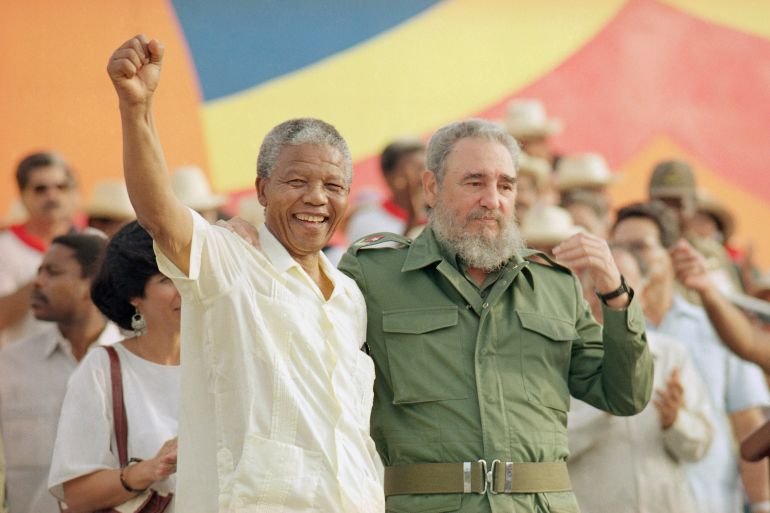
    It is a potent formula, one struck upon from the very earliest days of the revolution. In September 1960, just a year after taking Havana, Cuban leader Fidel Castro found himself visiting New York to address the United Nations General Assembly. Wary of his anti-imperialist rhetoric, a Cold War-obsessed US government put pressure on several prominent hotels to refuse service to Castro and his entourage. But the Cubans were not to be deterred. Instead, they went uptown to Harlem and found a place at the Hotel Theresa.

    Photographers and TV camera people flocked there. A media sensation ensued. And Castro used the opportunity to draw comparisons between the plight of the Cuban delegation and that of Black Americans being refused service in the segregated South.

    This landed like a bomb in the middle of the burgeoning civil rights movement. It was an awkward contrast, not just because of the optics but because of the location, not in the heart of Jim Crow, but in a liberal northern city, New York, the cradle of American civilisation. This was the first, but not the last time that Cuba, the trickster, would strike.

    In the following years, the revolutionary government developed its programme of Cuban Internationalism, which inevitably stood as a counter to US soft power efforts in the developing world through organisations like the Peace Corps and USAID.

    Cuba would send as many as  400,000 doctors, not to mention engineers, agricultural technicians and other professionals, to 164 countries across the world. This material solidarity garnered great affection for Cuba among many countries in the Global South, countries as disparate as Venezuela, South Africa and Vietnam, where characters like Castro and Che Guevara are as recognisable as national heroes like Simon Bolivar, Nelson Mandela and Ho Chi Minh. In these same countries, American leaders are remembered too, often in far less flattering terms.

    Other examples of Cuba’s trickster antics abound. Perhaps most notable is the Cuban armed forces’ sound military defeat of the Bay of Pigs invasion, which, while carried out by Cuban exiles, was supported and funded directly by the CIA.

    There is also the revolution’s support for the Palestinian liberation movement and the antiapartheid struggle even as the US provided diplomatic cover and military aid to Israel and the apartheid regime in South Africa.

    From 1975 to 1991, more than 300,000 Cuban soldiers fought alongside forces in Angola, eventually emerging victorious in a proxy conflict with the US. Operation Carlota, as it was called, would not only liberate Angola and neighbouring Namibia, but it would precipitate the downfall of South African apartheid as well. According to former South African President Nelson Mandela, Cuba’s intervention in Angola “destroyed the myth of the invincibility of the white oppressor”.

    Castro himself has carried the spirit of Eshu. The Cuban leader reportedly survived more than 600 assassination attempts and died of natural causes at the age of 90.

    And there are the many ways that Cuba has defied the “third world” label so often foisted upon it by beating the US in literacy rates, infant mortality and life expectancy at various points in its revolutionary history.

    But beyond all of this, there is the sheer fact of the revolution’s survival. For more than 60 years, the US has imposed a severe economic embargo against the island. The embargo – the world’s longest – has been intensified at various points, specifically after the fall of the Soviet Union as Cuba reeled from a profound economic crisis.

    Despite this regime of maximum pressure from the world’s largest superpower, the revolution nevertheless persevered through the crisis of the 1990s by diversifying  and liberalising the economy and by drawing upon its well-established programme of internationalism in the Global South. Not only that, but it managed a nationwide sustainable agricultural revolution in the process, a feat for any nation, but perhaps unsurprising for Cuba, given its trickster nature.

    But tricksters also work in unexpected, even contradictory ways. Despite these accomplishments, the denial of political rights and the repression of the freedoms of expression and assembly have been the Cuban Revolution’s greatest failings.

    Speech is not free in Cuba. Access to information and the internet is heavily restricted, and recent popular protests have been violently extinguished.

    Such dynamics have long been pointed to by detractors as evidence of Cuba’s inherent authoritarian nature. But in this regard, Cuba is not the US’s opposite, but rather its peer.

    The US in 2026 is a country facing its own rash of unfreedoms: comical levels of corruption; the erosion of democratic institutions; the embrace of AI and the panopticon surveillance it enables; continual attacks on free speech, voting rights and the media; extrajudicial killings of US citizens by masked agents of the state; and an increasingly monarchical presidency. All of which is to say nothing about the spectre of the infamous detention facility at Guantanamo Bay, still home to 15 detainees from the “global war on terror”, raised once more in relation to President Donald Trump’s brutal immigration crackdown.

    One cannot help but be struck by the ways that the Trump administration appears to emulate countries like Cuba or Russia or Iran that it rhetorically maligns.

    But in this way, Cuba carries on in its role as the foil to American power. In its repression, it reflects the creeping authoritarian inclinations that characterise the Trump administration. Tricksters, after all, are themselves morally ambiguous. And if the greatest flaw of the US has always been that it fails consistently to live up to its most laudable ideals, then in this sense, it is no different to Cuba and its revolution.

    With the US poised and ready and with the conditions in Cuba deteriorating rapidly, we may be witnessing the final days of the revolution. That begs the question: When the day comes that Eshu no longer guards the crossroads, what then? What becomes of the world when there is nothing but unquestioned empires and techno-feudal overlords? Without tricksters to confound their power, will we revert to the revanchist past or tumble into some kind of dystopian future?

    If and when the revolution finally falls, there will no doubt be cheering on the streets of Miami. But there will be tears elsewhere – tears not just for the revolution, but for the alternative that it represented, however flawed. Perhaps if the US had listened more or differently, they would have heard the lesson that Eshu was trying to teach.

    The views expressed in this article are the author’s own and do not necessarily reflect Al Jazeera’s editorial stance.

  • AI giant Anthropic commits 5% of shares to ‘public benefit’ fund

    AI giant Anthropic commits 5% of shares to ‘public benefit’ fund

    Claude creator says fund could used for donations to NGOs and ‘direct distributions to specific populations’.

    Anthropic has pledged to commit 5 percent of its shares to a new fund dedicated to the public good, with plans to increase the contribution as the artificial intelligence giant’s market value grows.

    The creator of the AI assistant Claude announced the new “Anthropic Public Benefit Fund” on Sunday as tech firms face intense scrutiny over the potential dangers posed by the frontier technology.

    Recommended Stories

    list of 4 itemsend of list

    In a blog post, Anthropic said it was committing 5 percent of company shares with immediate effect, subject to stockholder approval, with an additional 2 percent to be added “at the board’s discretion” for every 50 percent increase in the company’s value.

    “Because of the way the Fund is structured, the more Anthropic grows, the larger the share of the company that can be dedicated expressly to the public good,” the San Francisco-based firm said.

    “It is common practice for tech companies to offer escalating compensation awards to their executives. We are instead directing that equity to the public benefit.”

    Anthropic said the fund could be used to make donations to traditional nonprofits, as well as “direct distributions to specific populations”.

    It said labour market disruption due to AI could be among the causes addressed by the fund.

    “Anthropic has already committed $200 million to studying and addressing this issue, but given the pace of AI progress, bolder approaches may be needed,” the company said.

    “The Fund will have the versatility to pursue them.”

    Anthropic, officially registered as a “public benefit corporation” in the US state of Delaware, said the fund would not be used for lobbying or political donations, either in the United States or overseas.

    Founded in 2021 by former employees of ChatGPT creator OpenAI, Anthropic is preparing for what could be the largest public initial offering in history. It is expected to list on the US stock market before the end of 2026, with analysts forecasting a valuation exceeding $2 trillion.

    The company’s charter requires its leadership to balance shareholder returns with responsible AI development.

    The breakneck speed of AI development has prompted widespread anxiety about possible negative downstream effects on society, including the job market.

    In a report published last month, consulting firm McKinsey estimated that up to 11 million American workers may need to switch careers over the next decade due to AI-driven automation.