Tag: Al Jazeera

  • Russia’s war on Ukraine ‘must be brought to an end’, Zelenskyy says

    Russia’s war on Ukraine ‘must be brought to an end’, Zelenskyy says

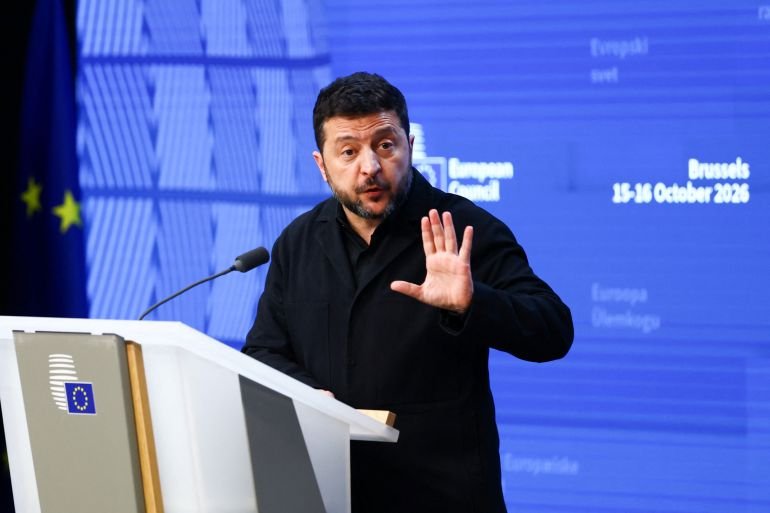
    Ukraine’s President Volodymyr Zelenskyy has said that the war with Russia “must be brought to an end” and that his country is preparing for the “next steps” of diplomacy to end the conflict.

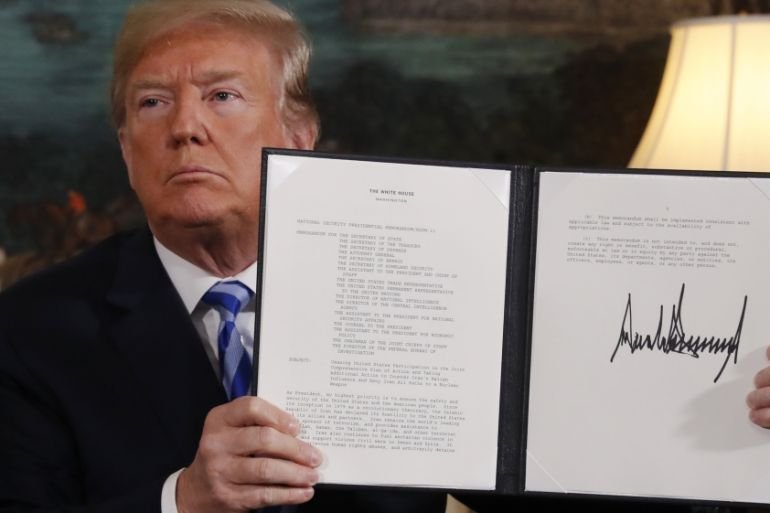
    The Ukrainian leader’s comments come amid a significant diplomatic fallout with US President Donald Trump, who on Friday night waived sanctions targeting Russia’s energy economy.

    Recommended Stories

    list of 3 itemsend of list

    In a Sunday social media post, Zelenskyy wrote that he had a “conversation with the American president’s envoys, Steve Witkoff and Jared Kushner”.

    He added that “a lot depends” on the US position, but it’s clear there are “many things that matter to all of us”.

    The Trump administration had already eased restrictions on Russian fuel imports on October 9, when it announced a deal for Russia to supply more than 300,000 metric tonnes of diesel to US and global markets in an effort to tackle soaring fuel prices

    The US Treasury temporarily authorised the imports despite existing sanctions, prompting criticism that the move could provide Moscow with revenue to sustain its war in Ukraine.

    Trump has also criticised recent Ukrainian strikes on Russian energy infrastructure as “a disgrace”.

    Nonetheless, Zelenskyy said his team is in “virtually nonstop communication” with their US counterparts and said a focus of dialogue is on the results of the talks in Florida and further steps.

    US wavers on Ukraine’s access to tech

    Zelenskyy also said he was “thankful” that the US had resumed intelligence sharing with Ukraine after a pause left the country particularly vulnerable to Russia’s regular ballistic missile attacks.

    “It was blocked for some period of time. And then it was deblocked by the American side,” Zelenskyy told NBC, adding: “Only [the] United States has this unique intelligence to tell our side when Russia uses ballistic missiles. And we didn’t get it during ballistic attacks during three days.”

    Kyiv has also reported restrictions on the speed of satellite service Starshield, a military-grade version of Elon Musk’s Starlink satellite connectivity network, provided to Ukraine by Musk’s company SpaceX.

    Ukraine said its relays were experiencing a limit on how fast receivers could travel while maintaining connectivity, making it almost impossible to intercept Russia’s upgraded jet-powered long-range drones.

    Musk had said any restrictions imposed on Starshield connectivity were the responsibility of the US government. The White House quickly rebuked that and in an NBC interview on Sunday, Treasury Secretary Scott Bessent called Zelenskyy “very reckless” for accusing the US of throttling connectivity.

    US Secretary of State Marco Rubio said on Sunday that Ukraine is currently blocked from Starshield, and that a request from Kyiv to access the system for attacks deep inside Russia is “under discussion”.

    US officials defend Russia waiver as Trump orders 60-day review

    Meanwhile, in the US, Trump has faced bipartisan pushback for his executive order on Friday night, waiving parts of the Lindsey Graham Sanctioning Russia and Iran Act of 2026.

    Trump had signed the act into law in September, in honour of the late Senator Graham, a close Republican ally.

    But his decision to ease sanctions and tariffs against Russia has prompted backlash even from within his own party. The penalties act was scheduled to take effect on Sunday.

    Over the weekend, Trump signalled he has yet to make a final decision on easing the sanctions against Russia.

    “My decision on Russia is a very simple one. I am in the process of negotiating Peace in the war between Russia and Ukraine, and don’t want to do anything that will drive, foolishly, Russia away from the bargaining table,” he wrote on Truth Social.

    He concluded his post with further criticism directed at Zelenskyy. “He doesn’t want to end this war, and probably never did,” Trump said of the Ukrainian leader.

    Secretary of State Marco Rubio said Saturday that Trump wanted up to 60 days to assess the economic consequences of imposing the sanctions and tariffs that were waived on Friday.

    Zelenskyy has warned, however, that the waiver could embolden Russian President Vladimir Putin and prolong the war.

    Rubio also defended the latest deal to import Russian diesel, saying “that diesel is going to be sold one way or the other”. He argued that the fundamental question was how much the US would secure for itself.

    In a series of Sunday morning media appearances, US Energy Secretary Chris Wright also backed the arrangement.

    Speaking to ABC, he called the deal a “carrot to try to end the war, not an economic lifeline” for Russia.

    “If Russia can bring additional diesel to the market and export it, it would benefit American consumers,” Wright told CNN. “He’s putting pressure that would both benefit American consumers and be a step forward for peace in the Russia-Ukraine war.”

    Long-range attacks continue

    Also on Sunday, Ukrainian media reported that Russian strikes killed two people in the western Volyn region, near the border with Poland, and injured at least five others across the country. Overnight attacks by Russia killed a woman and injured a six-year-old in the Zaporizhzhia region.

    On Saturday night and in the early hours of Sunday, Ukraine hit Russia’s second-largest city, St Petersburg, with a significant drone attack. It targeted a key oil refinery and depot, a warehouse of Russian online retailer Ozon and a data centre run by Russian social media company, VKontakte.

    At least one person was killed in the attack, which Russian state media said was the largest on the city since the start of the war in 2022.

    Smoke rises above the city following an air attack on the oil terminal in Saint Petersburg on October 18, 2026, amid the ongoing Russian-Ukrainian conflict.
    Smoke rises above an oil terminal in St Petersburg on Sunday following a Ukrainian attack [AFP]
  • Alberta independence referendum: Will separatists survive a loss?

    Alberta independence referendum: Will separatists survive a loss?

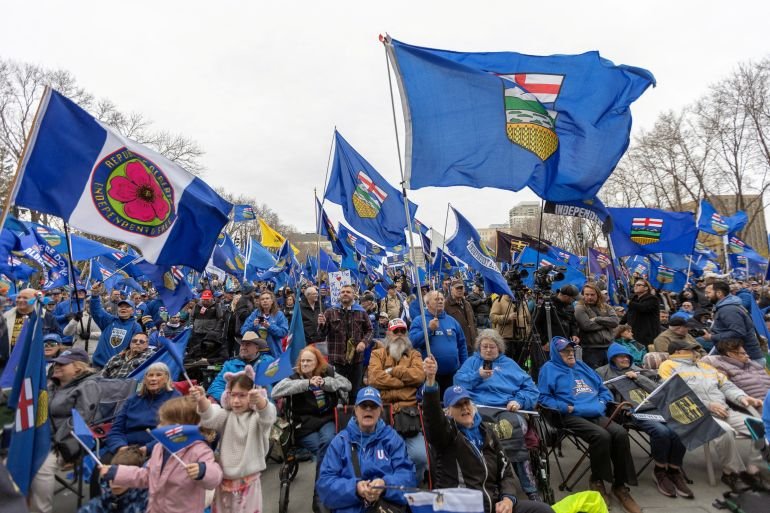
    Cory Morgan has spent more than 25 years fighting for Canada’s oil-rich province of Alberta to become an independent country. On Monday, Albertans will head to the polls to vote on the issue for the very first time. But even if the answer is no, Morgan said he’s in it for the long haul.

    “I would respect the will of the voters,” he told Al Jazeera. “If they’ve decided it’s not time to go that route yet, then so be it. But that doesn’t mean I’ll stop.”

    Recommended Stories

    list of 4 itemsend of list

    Morgan, the founder of the advocacy organisation Pathway to Independence, is among a group of longtime separatists who have managed to push what was once a fringe idea onto the ballot.

    Monday’s provincial referendum asks Alberta residents to weigh whether they would like to pursue a binding resolution in the future on the question of independence.

    Polls indicate the pro-independence side has little chance of succeeding, with four of five people in the province saying they want Alberta to remain a part of Canada. But Morgan’s focus is on the one in five who don’t.

    “That’s not a movement that’s leaving,” he said.

    What the referendum will mean for the separatist movement and for Canada as a whole, however, is a more complicated question.

    What exactly are Albertans voting on?

    Monday’s ballot gives Albertans two options: to remain part of Canada or begin the legal process for holding a future referendum on separation.

    A vote in favour of the second option doesn’t mean Alberta immediately becomes an independent country.

    Any province that tries to secede would first have to go through complex negotiations with the federal government in Ottawa, other provinces and Indigenous peoples who live in and around Alberta.

    Some separatist organisers have been using that distinction to encourage people to vote for the referendum — even if they don’t necessarily want independence.

    “Strategic separatists and their leaders have been using that ambiguity, that lower-bar threshold, to entice folks to vote not to leave, but rather to send Ottawa a message that Albertans need to be heard,” said Jared Wesley, a political science professor at the University of Alberta.

    He told Al Jazeera that the message may be resonating with some voters.

    Data collected by Viewpoint Alberta, a University of Alberta-based research initiative, suggests that two-thirds of voters who support the referendum say they’re doing so for strategic reasons, to send a message to Ottawa.

    These are people Morgan calls “reluctant separatists”, people who are “at the end of their rope” and simply want Ottawa to pay attention.

    But Prime Minister Mark Carney has warned Albertans against this strategy.

    “Don’t be fooled by the idea you can ‘send a message’ with your vote,” he told a pro-Canada rally in Calgary on Thursday. “This is not poker. A vote against Canada is a dangerous bluff that will lead to years of deep division and great uncertainty.”

    Canadian Prime Minister Mark Carney speaks at a rally hosted by Forever Canadian on Canadian Unity at the Edmonton Expo Center in Edmonton, Alberta, Canada on October 16, 2026.
    Canadian Prime Minister Mark Carney speaks at a rally hosted by the advocacy group Forever Canadian at the Edmonton Expo Center in Edmonton, Alberta, on Friday [AFP]

    What’s driving Alberta’s separatist movement?

    Monday’s referendum has been decades in the making. Separatists have long felt that Alberta, home to the world’s fourth-largest proven oil reserves, sends too much money to Ottawa, subsidising the rest of the country while receiving little in return.

    They also take issue with federal energy policies that they feel limit the potential of the province’s oil industry.

    For Morgan, the resentment stretches back to the 1980s when the National Energy Program was introduced by the government of Pierre Trudeau, former Prime Minister Justin Trudeau’s father.

    The policy used price controls, taxes and ownership rules to keep Canadian energy affordable while directing more of Alberta’s revenues to Ottawa.

    It has since become a central symbol of “Western alienation”, a term used to describe the sense of disenfranchisement felt among Canada’s westernmost provinces.

    Those tensions resurfaced decades later under Justin Trudeau, whose term began in 2015. His climate policies, including a national carbon tax and a limit on emissions, angered Alberta’s oil sector.

    “We’ve been fighting about the same things for 50 years,” said Morgan.

    Then came the COVID-19 pandemic. Experts say demonstrations against health restrictions mobilised a new generation of conservative activists, breathing new life into Alberta’s separatist movement.

    Trudeau ultimately resigned as Liberal Party leader and prime minister in 2025, amid sinking poll numbers. Carney was elected his replacement.

    Last year, under growing pressure from separatist groups, Alberta Premier Danielle Smith’s government made it easier to start referendums, helping bring the question of Alberta’s independence onto the political agenda.

    For Wesley, the moment is less about growing public support for independence and more about pressure from within Smith’s governing United Conservative Party, whose members show higher support for separation than Albertans generally.

    “We’re having a referendum because Danielle Smith wants us to have a referendum,” Wesley said. “She is looking to solve internal party matters by throwing a question to the broader public.”

    Though she called Monday’s referendum, Smith has said she opposes the independence effort, and on October 14, she announced she had voted against seceding.

    “In my view, now is not the time to give up hope in our country, not when we have fought so long and come so far,” Smith said in a social media video, explaining her vote.

    Alberta Premier Danielle Smith speaks at the Canada Strong and Free conference, days before a non-binding referendum on Alberta sovereignty, in Calgary, Alberta, Canada October 16, 2026. REUTERS/Ahmed Zakot
    Alberta Premier Danielle Smith speaks at the Canada Strong and Free conference in Calgary, Alberta, on Friday [Ahmed Zakot/Reuters]

    Could defeat make the movement stronger?

    Smith’s political gamble has drawn comparisons with the 2016 Brexit referendum in the United Kingdom, including from Carney.

    At the time, then-UK Prime Minister David Cameron called a vote over whether the country should leave the European Union, in hopes of settling a debate dividing his own Conservative Party.

    Voters ultimately chose to leave the bloc, triggering years of political unrest.

    But Ian Cooper, a political scientist who grew up in Alberta and now lives in Ireland, says a more useful comparison might be a different UK referendum in 1975, when British voters chose overwhelmingly to stay in what was then known as the European Economic Community.

    That vote, he said, did little to deter those who wanted the country out.

    “The activists who were in favour of Brexit — this is before anybody called it Brexit — they really played the long game,” he said. “It took them 25 years, but they finally achieved it.”

    Cooper suspects that, even if Alberta separation is roundly defeated, separatists could take a similar approach, pursuing the issue over the long term to gain prominence and support.

    “My impression is that they really are true believers, and it’s really ideologically driven,” he said.

    If Monday’s separatist vote fails, Morgan said separatists would need to take a hard look at why they had fallen short and work towards making a stronger case for independence in the future.

    He does not believe the underlying grievances can be resolved by working within the Canadian system or by electing a more sympathetic federal government.

    Carney, who grew up in Alberta, acknowledged at Thursday’s rally that “the frustrations that many Albertans have felt are real”. He added that Ottawa had made people in the province feel “like our resources weren’t our own”.

    The prime minister has tried, amid an ongoing trade war with the United States, to improve relations with Alberta, including through commitments to building a new pipeline to Canada’s west coast and major infrastructure projects.

    Morgan admits that, for those whose goal is simply to get more leverage in Ottawa, “it’s pretty clear the movement has been effective”.

    “We’ve seen more love from a federal prime minister in the last year than we’ve seen in the last 10,” Morgan said. “The problem though, when it comes to stubborn independence folks like me, is nothing has changed in the system.”

    Prime ministers come and go, he added. “We’re just one election away from another hostile one.”

    Separatist organizer Cory Morgan speaks to Alberta separatist supporters at a meeting by Let's Talk Alberta ahead of the October 19th Alberta referendum vote in Calgary, Alberta, Canada October 13, 2026. REUTERS/Todd Korol
    Separatist organiser Cory Morgan speaks to Alberta separatist supporters at a meeting by Let’s Talk Alberta in Calgary, Alberta, on October 13, 2026 [Todd Korol/Reuters]

    Why the other referendum questions matter

    But the referendum could also offer an opportunity to challenge the premise that Alberta’s grievances cannot be addressed within Canada.

    The independence question is just one of 10 on Monday’s ballot. Other proposals include restricting temporary residents’ access to healthcare and education, as well as allowing Alberta to choose its own judges.

    Smith has encouraged Albertans to vote in favour of the nine other proposals, arguing that they will give her more negotiating power in Ottawa.

    “Many Albertans I speak with tell me they want to send Ottawa a message, and I would suggest the best way to do that is to give us a strong mandate on the other nine questions,” she said on social media.

    If Albertans back those proposals but Ottawa refuses to make concessions, Cooper, the political scientist, said the movement would have fresh ammunition to argue that meaningful change within the current system is impossible.

    “Buried in the nine other questions are the seeds for a future referendum,” Cooper added.

    What could keep the movement alive?

    Not everyone agrees, however, on whether the separatists can emerge from the vote as a united force.

    Wesley explained that people have been drawn to the separatist cause for a variety of reasons.

    If there’s a sense that independence is not a realistic prospect, there may be little to keep that group of activists together, he said. They could turn their attention to other conservative issues, such as immigration.

    Other experts question whether Alberta’s separatist movement, which is united more by economic grievances than by a shared cultural identity, can endure the way Quebec’s has.

    Just two weeks ago, the largely French-speaking province elected the separatist Party Quebecois, which has promised a third referendum on independence after Trump leaves office.

    Morgan, however, argues that Alberta does have a distinct culture, shaped by generations of people who have moved to the province in search of prosperity.

    “The type of person drawn to do that is often an individualistic type of person,” he said. “They want the opportunity to go out and succeed or fail on their own.”

    “And that builds a kind of a distinct culture on its own, even if it’s not a long-built one, as you would see in a distinct area like Quebec with a linguistic difference or in another country.”

    Even if Albertans reject separation, he believes the movement has succeeded in forcing Ottawa to take the province’s frustrations more seriously.

    “Hopefully some people understand that eventually something has to give,” he said. “So whatever the results are … I do hope, at the very least, they’ve served as a wake-up call to a lot of people.”

  • Venezuela opposition renews support for Maria Corina Machado as leader

    Venezuela opposition renews support for Maria Corina Machado as leader

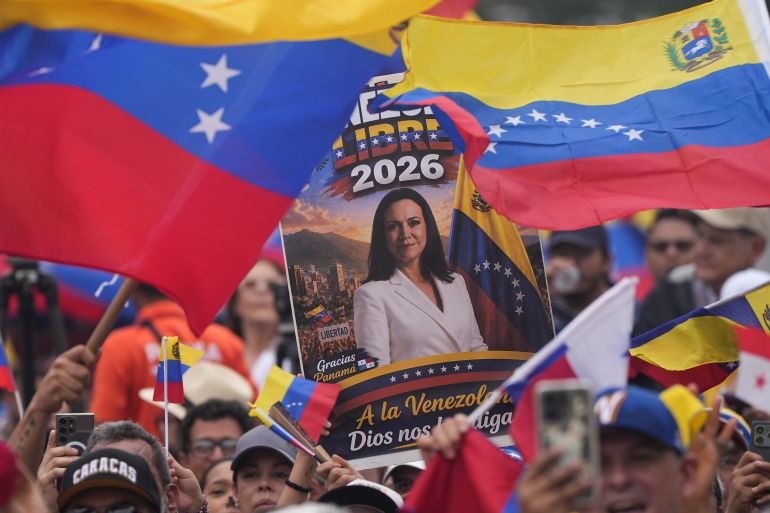
    An alliance of Venezuelan opposition parties has reaffirmed its commitment to exiled Nobel Peace Prize laureate Maria Corina Machado as its leader.

    On Sunday, members of the opposition’s Unitary Democratic Platform (PUD) agreed in a meeting in Caracas to “recognise and support the leadership of Maria Corina Machado”.

    Recommended Stories

    list of 3 itemsend of list

    The coalition also renewed its demand for free elections in Venezuela, following a series of contested presidential votes in 2024 and 2018.

    Sunday’s statement included 14 proposals for a democratic transition, including freedom for political parties, the release of all political prisoners and the safe return of those who went into exile.

    The announcement also increases pressure on authorities to allow Machado’s return. She has been living in exile since leaving Venezuela last December to receive her Nobel Prize.

    “The will of the Venezuelans must once again govern the destiny of our nation,” the opposition’s former presidential candidate Edmundo Gonzalez wrote on social media supporting the proposals.

    “We will not accept political prisoners, persecution or a governing power that disregards the mandate of its citizens. Living in freedom and under a genuine constitutional order is a legitimate demand of our society.”

    No election set

    Venezuela has yet to declare a date for a new presidential vote. Since January 3, the country has been led by interim President Delcy Rodriguez of the long-governing United Socialist Party of Venezuela (PSUV).

    PSUV leaders have been accused of carrying out human rights abuses against political dissidents, including arbitrary arrest, imprisonment and torture.

    Still, after the United States launched a military operation to abduct and jail former President Nicolas Maduro, the PSUV has remained in power with the support of the White House.

    US President Donald Trump has backed Rodriguez’s leadership, despite her having been Maduro’s vice president.

    His administration has maintained an active role in Venezuela, exerting control over its oil resources and pressuring the Rodriguez government for reforms.

    But critics point out that Trump has been reluctant to push Rodriguez for new elections, opting instead for a three-phase plan that focuses first on stabilising the country and economic recovery before pursuing a political transition.

    Machado, meanwhile, has told The Financial Times she would like to see Venezuela hold elections by July next year.

    “The US government and the Venezuelan people all agree ⁠⁠that the only way to make ⁠⁠this sustainable and ⁠⁠a real victory is to turn Venezuela into a stable democracy,” she told the newspaper earlier this month.

    A thwarted return

    Venezuelan authorities blocked Machado’s repeated attempts to return to the country, according to her party, Vente Venezuela.

    Machado has also reportedly attempted to petition the Trump administration for help re-entering Venezuela.

    Separately, she gifted Trump her Nobel Peace Prize in January, during a visit to Washington, DC. Media reports, however, have suggested friction between the Trump administration and Machado.

    In interviews with Reuters and Axios, US administration officials have anonymously expressed frustration with the opposition leader’s repeated efforts to return home, particularly after a pair of deadly earthquakes in Venezuela last July.

    Axios quoted one official as calling Machado’s push “political opportunism”.

    Machado, however, remains one of the most popular figures in Venezuela’s opposition.

    In October 2023, Machado won the opposition coalition’s presidential primary, but in January 2024, Venezuela’s courts blocked her from running in the upcoming race.

    The courts upheld a 15-year ban on her holding public office, reportedly due to her support of US sanctions against the Maduro government.

    Gonzalez ultimately replaced Machado as the opposition candidate in the 2024 race. Maduro claimed victory for a third term as Venezuela’s president in that election cycle, despite widespread criticism that the vote did not meet democratic standards.

    The opposition released vote tallies that appeared to show Gonzalez had won the race.

    The US had recognised Gonzalez as the country’s rightful president-elect and denied the legitimacy of Maduro’s election claims.

    Machado was previously removed from the National Assembly in 2014, due to her activism against the Venezuelan government.

    A third round of talks between the Rodriguez government and the opposition began in Venezuela this month.

    But instead of including Machado, the negotiations have involved members of the 2015 National Assembly, which was led by the opposition and dissolved under Maduro.

    Still, in a statement this month, the US State Department praised the talks as aiding the Venezuelan government’s reform.

    “Political reconciliation talks between the interim Venezuelan government and 2015 National Assembly representatives are producing tangible reforms in civil liberties and political rights, laying the groundwork for credible elections and a democratic transition,” the State Department said.

  • Is FIFA scrapping its peace prize after awarding it to US President Trump?

    Is FIFA scrapping its peace prize after awarding it to US President Trump?

    Remember the FIFA Peace Prize awarded to United States President Donald Trump six months before the World Cup? Well, it is now close to being scrapped, which would make the US president its first and only winner.

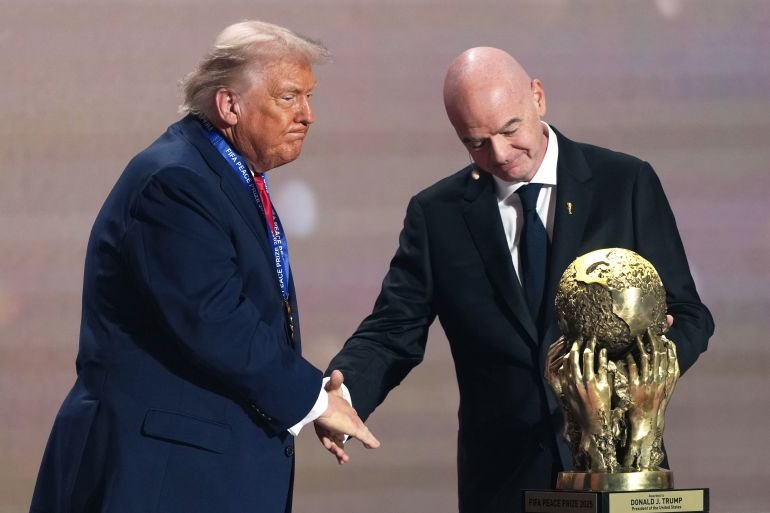
    Less than a year after FIFA President Gianni Infantino extolled Trump in the US capital while presenting the award at the World Cup 2026 draw, several members of the FIFA Council are questioning its merit and have demanded changes, including scrapping the award.

    Recommended Stories

    list of 3 itemsend of list

    The calls for scrutiny come at a time when Infantino faces ongoing criticism for his World Cup sell-off plan, which also led to calls for his removal from office.

    So what was the prize about, and why might it be scrapped? Here’s a look:

    What is the FIFA Peace Prize?

    On November 5, football’s global governing body announced a new annual award called the “FIFA Peace Prize – Football Unites the World”.

    FIFA said the award was created to “reward individuals who have taken exceptional and extraordinary actions for peace”.

    Why did Trump receive the FIFA Peace Prize?

    A month later, Trump became the first recipient of the award.

    The US leader had been heavily favoured to win the inaugural prize after failing to win the Nobel Peace Prize despite an aggressive campaign involving endorsements from other world leaders.

    Trump thanked FIFA and called the award “one of the great honours of my life”.

    He and Infantino are close allies, and the FIFA chief had made it clear that he thought Trump should have won the Nobel Peace Prize for his efforts to broker a ceasefire in Israel’s genocidal war on Gaza.

    “This is your prize. This is your peace prize,” Infantino said at the glitzy, celebrity-studded ceremony at Washington, DC’s Kennedy Center.

    Infantino has repeatedly spoken about football as a unifier for the world, but the prize is a departure from the federation’s traditional focus on sport.

    Critics pointed out that the recognition came less than 24 hours after the Trump administration carried out a deadly air strike in the Caribbean.

    Two months later, the US and Israel launched their war on Iran, assassinating Supreme Leader Ali Khamenei in Tehran and hitting nuclear and military sites around the country.

    The US-Israel war on Iran has gone on for months with Trump saying this week that he will not attack Iran again before the November 3 midterm elections in the US.

    Why might FIFA scrap the award?

    Several FIFA member nations demanded the discontinuation of the award during Thursday’s FIFA Council meeting in Zurich, Switzerland, according to reports in British media.

    Others called for the prize to no longer be handed out to politicians.

    As a result, FIFA’s 22-member Football Social Responsibility Committee was tasked with assessing the merits of the award. It is expected to make a recommendation before the next council meeting in Doha, Qatar, on December 16.

    Debbie Hewitt, a FIFA vice president and president of the English Football Association, told the media at the council briefing that the committee “will consider, first of all, how the peace prize came about, whether it should have come about, whether it should have been awarded in the way that it was, who made that decision and whether or not it should be taken out or whether it should be reformed”.

    What has FIFA said?

    Al Jazeera has reached out to FIFA for comment and was referred to Infantino’s statement on it: “For the FIFA Peace Prize, it was decided that the Football Social Responsibility Committee will be tasked to analyse it, provide a proposal, and also, there, a decision will be taken at the next FIFA Council meeting.”

    Has the FIFA Peace Prize faced opposition?

    Yes.

    In October, the Norwegian Football Association (NFF) made parallel filings with ⁠⁠FIFA committees in relation to three recent issues, one of which was related to the awarding of the FIFA Peace Prize.

    “The purpose is ⁠⁠to raise these issues formally with the appropriate bodies, to have them examined, relevant evidence obtained and accountability for the conclusions reached,” the NFF said in a statement.

    The NFF has repeatedly raised questions about the award, and in April, its president, Lise Klaveness, said FIFA should scrap its peace prize to avoid getting drawn into ⁠⁠politics.

    “We want to see it abolished. We don’t think it’s part of FIFA’s mandate to give such a prize. We think we have a Nobel institute that does that job independently already,” Klaveness said.

    Earlier, human rights group FairSquare filed a complaint with the FIFA Ethics Committee, accusing Infantino of breaching his duty of neutrality by supporting Trump.

    KATOWICE, POLAND - SEPTEMBER 5: The President of FIFA, Gianni Infantino watches the Poland vs Argentina FIFA U-20 Women's World Cup first-round match on September 5, 2026 in Katowice, Poland. (Photo by Omar Marques/Getty Images)
    Infantino has been under severe pressure since he announced a plan in July to open premium FIFA competitions, such as the World Cup, to private investors [Omar Marques/Getty Images]

    ‘Mockery’ of FIFA human rights policy

    The criticism of the award isn’t limited to football associations.

    In late April, Australia midfielder Jackson Irvine said football’s credibility as a force for good ⁠⁠has been undermined by FIFA, and he accused FIFA of making a mockery of its human rights policy.

    “As an organisation, you would have to say decisions like the one that we saw awarding ⁠⁠this peace prize makes a mockery of what they’re trying to do with the human rights charter and trying to use football as a global driving force for good and positive change in the world,” Irvine told the Reuters news agency in an interview.

    “Decisions like that feel like they just set us back in the perceived market of what football currently is, especially at the top level, where it’s becoming so disconnected from society and the grassroots of what the game actually is and means in our communities and in the world.”

    Craig Mokhiber, a former United Nations official who has campaigned to suspend Israel from world football over its genocidal war in Gaza, called the award to Trump a “truly shameful development”.

    Infantino has refused to take action against Israel, arguing that football “cannot solve geopolitical” issues.

    “Not satisfied with two years of FIFA complicity in genocide in Palestine, Infantino and his cronies have now invented a new ‘peace prize’ in order to curry favour with Donald Trump,” Mokhiber told Al Jazeera.

    He added that the award also aims to “obscure” Trump’s “disgraceful record” of support for Israel, his deadly strikes on vessels in the Caribbean Sea and “gross violations of human rights” inside the US.

    Growing pressure on Infantino

    The scrutiny around the FIFA Peace Prize follows the recent backlash Infantino has faced.

    Infantino has been under fire since his announcement in late July that he wanted to open FIFA’s premium competitions, such as the World Cup, to private investors.

    That plan was ultimately abandoned in the face of widespread criticism with a rebellion led by the European governing body UEFA, the Asian Football Confederation and CONCACAF, which runs the sport in North and Central America and the Caribbean.

    Infantino has headed FIFA since 2016 and is running for re-election in March despite calls for him to stand down in the wake of the $4.2bn plan to sell a 20 per cent commercial stake in the World Cup.

  • Trump endorses Netanyahu in Israeli legislative elections

    Trump endorses Netanyahu in Israeli legislative elections

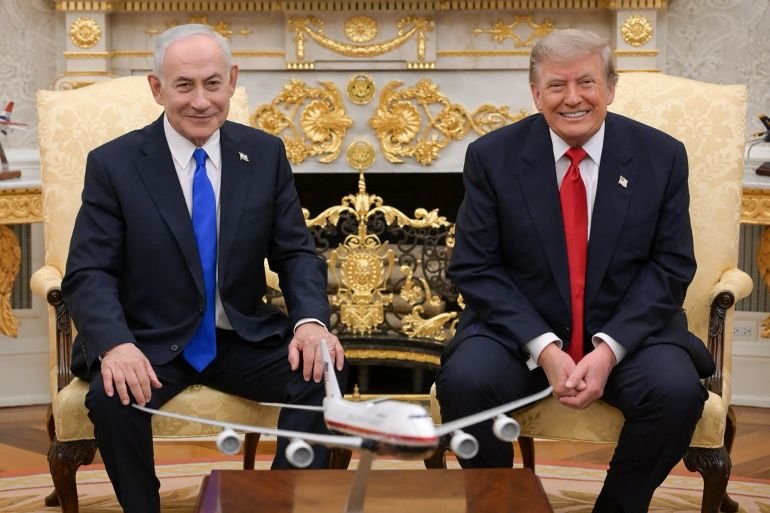
    United States President Donald Trump has issued an endorsement of Israel’s incumbent Prime Minister Benjamin Netanyahu, who is facing a close race in parliamentary elections scheduled for October 27.

    In a post on Truth Social on Sunday, Trump praised the Israeli leader for being an ally of the US in its war on Iran. He added that he was giving his “Complete and Total Endorsement” to Netanyahu.

    Recommended Stories

    list of 3 itemsend of list

    “BIBI NETANYAHU WILL NEVER LET YOU DOWN!” Trump wrote.

    The US president’s backing comes nine days before the Israeli election — and after speculation that it might not come at all.

    Trump had refused to endorse Netanyahu earlier this month, when asked repeatedly about the Israeli leader’s job performance in an interview with Time magazine.

    Instead, when pressed by his interviewer, Trump avoided the subject, shifting the focus instead to his own popularity or security in the Middle East.

    The two leaders have met more than a half dozen times since January 2025, but there have been reports of disagreements, including over the war against Iran and other conflicts.

    In June, Trump acknowledged calling Netanyahu “f***ing crazy” in a phone conversation where he expressed frustration about Israel’s attacks on Lebanon.

    Trump had reportedly asked Netanyahu not to take further action in Lebanon, in an apparent attempt to preserve a short-lived April ceasefire with Iran.

    The two leaders had jointly launched a war against Iran on February 28, but the conflict has cost Trump domestic support.

    The war has upended the global oil and gas supply, with no clear end in sight.

    A Pew Research Center poll found this month that roughly two-thirds of US voters disapprove of Trump’s handling of the war, which has driven up consumer fuel prices and raised concerns about draining military stockpiles.

    Trump’s Republican Party is facing a critical midterm election on November 3 that will decide whether it maintains control of the US Congress, as well as other key state and local offices.

    Experts have speculated that Trump’s prior reticence to endorse Netanyahu may have come from public perception that Israel may have coaxed the US into the war.

    Netanyahu’s Likud Party and its far-right coalition are also facing the prospect of losing the October contest to an opposition bloc led by Yashar party head Gadi Eisenkot.

    But despite reports of fraying relations, Trump told the news outlet Axios on Sunday that his endorsement of Netanyahu was never in doubt.

    “I was always going to do that. I just didn’t want to do it too soon,” Trump said in a short telephone interview to the publication, adding: “It is important that Israel has a person they can count on.”

    Axios said it questioned Trump about whether he could work with another Israeli leader other than Netanyahu. The US president answered evasively.

    “Maybe I will, maybe I won’t. Who wants to take the chance?” Trump replied.

    In his social media post announcing the endorsement, Trump also defended his and Netanyahu’s decision to initiate the war against Iran. The president argued it was only a matter of time before Iran would have attacked both the US and Israel.

    The war, Trump argued, had already left Iran “systematically destroyed, both Militarily and Financially, and unless they change their ways, rapidly, we will soon finish the job”.

    “If Israel has the wrong Leader, which would be anyone other than Bibi, America will have to do this work ourselves, and I am not inclined to do so,” Trump wrote.

    “Bibi Netanyahu has been Strong, Brave, and Brilliant in the face of tremendous opposition, including that coming from even Israel, itself.”

    In response to the post, Netanyahu posted a video on social media expressing gratitude to the US president.

    “I’m so honoured and humbled by your extraordinary endorsement,” Netanyahu said. “There’s never been a greater friend of Israel in the White House. That’s an understatement.”

    Netanyahu also praised Trump for not being “set back by internal criticism” about the war against Iran. He directed several of his comments to US voters, in an attempt to offer support for Trump’s Republican Party amid questions about the rising cost of living.

    “Let me say to the American people: If you are worried about today’s gas prices, think of what will happen if Iran gets nuclear weapons, something that Donald Trump and I will never allow,” Netanyahu said.

    “When that threat of that regime disappears, gas prices will go down, and how. But only under Trump. It’s not going to happen with those who want to accommodate and appease these tyrants.”

  • Rubio says Ukraine without access to Starshield, future ‘under discussion’

    Rubio says Ukraine without access to Starshield, future ‘under discussion’

    US secretary of state says Ukraine has requested access to military-grade version of Starlink for strikes deep inside Russia.

    United States Secretary of State Marco Rubio has said Starshield, the military-grade version of the Starlink satellite service, is currently unavailable to Ukraine, but a request from Kyiv to access the system for attacks deep inside Russia is “under discussion”.

    Speaking to reporters on Saturday, Rubio stressed Starshield’s distinction with Starlink, the internet service provided by Elon Musk’s SpaceX.

    Recommended Stories

    list of 3 itemsend of list

    “Starlink is a commercial product, okay? And so it’s regulated and handled as a commercial product. Starshield is a defence product, a military product,” said Rubio, in comments released by the Department of State.

    “They’ve asked for access to it in order to conduct deep strikes inside of Russia. They do not have access to it at this moment,” he added. “That’s under conversation.”

    Launched in 2022 and provided to the US government, Starshield is designed for military use as it allows for deeper encryption to process sensitive information. SpaceX says it is primarily used by US defence agencies and other “government partners”.

    Last week, Ukrainian officials said restrictions on Starlink terminals had slowed some drones on the battlefield, as Ukraine tries to hold back Russian forces in their nearly five-year war.

    In his comments at Joint Base Andrews in Maryland, Rubio also rejected Ukrainian President Volodymyr Zelenskyy’s suggestion that the reported disruption to Starlink services in Ukraine on Wednesday was deliberate.

    “Well, I don’t know what Zelenskyy said. I’m not sure Zelenskyy knows what he’s talking about, but it wasn’t deliberate. We have nothing to do with that,” Rubio said.

    Zelenskyy said on Saturday that the satellites are not tracking antennas on flying objects travelling faster than 161 kilometres per hour (100 miles per hour). This is affecting Ukrainian drones in their defence against Russian jet-powered drones and in their own medium-range attacks, he added.

    Rubio said the US had not ordered Starlink speeds to be reduced and that the service had reportedly been restored to its previous level.

    “No one at the White House ordered anyone to slow down internet or slow down speed so that certain drones couldn’t use it,” he said, calling the reports “categorically false”.

    The remarks came as US President Donald Trump drew criticism from Democrats and Republicans after waiving sanctions on Russia and countries that buy its oil and gas, days before the restrictions were due to take effect under a law he signed last month.

    Zelenskyy also criticised the sanctions waiver on Saturday, saying easing pressure on Russia would encourage further attacks.

    “Financial rewards for [President Vladimir] Putin – all of this only encourages him to keep attacking,” Zelenskyy posted on social media, urging the US to maintain pressure on Moscow.

  • Why Iran-US negotiations keep failing

    Why Iran-US negotiations keep failing

    Since the start of the war, there have been several negotiation initiatives between the United States and Iran. Only one – the memorandum of understanding signed in Islamabad on June 18 – was concluded, but it collapsed within days.

    While prevailing analyses tend to explain this failure through the details of the provisions, this article proceeds from a different premise: that the diplomatic stalemate between the two sides is shaped by a syndrome that has governed US-Iranian relations for years.

    In international relations, psychological syndromes can arise as a result of deep crises that leave their mark on political consciousness and memory, potentially obstructing efforts at rapprochement and negotiation between countries.

    In the case of Iran and the US, the syndrome is comprised of two complexes: the complex Washington developed as a result of the 1979 siege of the US embassy in Tehran and the complex Tehran developed as a result of historical US hostility and its withdrawal from the Iran nuclear deal in 2018.

    The roots of the rupture between the two countries go as far back as August 1953 when US and British intelligence agencies helped overthrow the nationalist government of Mohammad Mosaddegh after it nationalised the oil industry in 1951. Since then, a perception has become entrenched in Iranian consciousness: that Washington does not accept an independent government in Tehran and it is prepared to sabotage it if it goes against its interests.

    From this perspective, Washington’s decision to host Shah Reza Pahlavi, who had just been overthrown by his people, for medical treatment in October 1979 was read in revolutionary Tehran as a prelude to a second coup.

    Iranian students stormed the US embassy on November 4 that year and held 52 Americans for 444 days. Diplomatic relations between the two countries were severed and have not been restored to this day.

    While the incident is portrayed in the Iranian narrative as a defence of the revolution, in American consciousness, it established the image of Iran as a state that does not respect international norms, whose word cannot be relied upon and whose behaviour should not be rewarded.

    That is the embassy siege complex. It is not about the incident itself so much as the informal rule it produced in US decision-making: that Iran must concede first and its concession must be verified before it receives anything in return.

    The Iranian complex was shaped by this history as well, but it reached its peak in May 2018 when US President Donald Trump withdrew from the Joint Comprehensive Plan of Action (JCPOA) despite the International Atomic Energy Agency’s (IAEA’s) confirmation that Tehran was complying with it.

    Just two weeks later, US Secretary of State Mike Pompeo announced 12 demands for a new deal, only four of which were related to the nuclear file. Seven of them were related to Iran’s regional behaviour in Lebanon, Palestine, Iraq, Yemen, Syria, Afghanistan and the Gulf. In other words, Washington did not merely revoke an existing agreement; it also raised the ceiling of its conditions for any future agreement.

    The knot then deepened in June 2025 when the US took part in the Twelve-Day War and struck the nuclear facilities at Fordow, Natanz and Isfahan at a time when a new round of indirect negotiations was scheduled in Muscat. It then reached its furthest point with Washington’s participation alongside Israel in the current war.

    Accordingly, a conviction became entrenched in the Iranian consciousness that an American signature guarantees nothing, that any agreement can be overturned with a change of administration and indeed that negotiation itself may be a cover for war rather than an alternative to it.

    The informal rule this has produced in Iranian decision-making is that there will be no step taken before binding guarantees and no concession before pressure is lifted.

    Thus, the two complexes stand at opposite ends: The first requires Iranian action before an American quid pro quo while the second requires an American guarantee before Iranian action.

    A reading of the recent negotiation initiatives shows that every US initiative bears the imprint of the embassy siege complex. The 15-point plan put forward in March demanded the dismantling of the Natanz, Isfahan and Fordow facilities; an end to uranium enrichment; the suspension of Iran’s missile programme; and the abandonment of its allies in exchange for promises to lift sanctions later.

    The May draft by White House envoys Steve Witkoff and Jared Kushner linked the release of Iran’s frozen funds to the suspension of enrichment first. The American response in September also stipulated the freezing of enrichment and the entry of inspectors throughout the negotiation period.

    What remains constant in the American initiatives is that Iranian action precedes the quid pro quo and verification precedes trust.

    The imprint of the JCPOA withdrawal complex in the Iranian initiatives is also a constant. The five-point response in late March demanded guarantees that war would not be repeated. The 10 points put forward in April demanded a binding UN Security Council resolution shielding any agreement from being overturned. And the 14 points in May demanded a nonaggression pledge that includes Israel.

    Meanwhile, the seven-day plan proposed by Tehran last month stipulated the lifting of sanctions and the US naval blockade on Iran before the opening of the Strait of Hormuz on the sixth day and the start of nuclear negotiations on the seventh. What remains constant in the Iranian initiatives is that guarantees precede action and the lifting of pressure precedes Iranian concessions.

    All these initiatives were dialogue between two complexes with each side drafting its text to protect itself from a repetition of its historical experience with the other, rather than to meet the other halfway. This may explain why the gap in substance has narrowed, but the gap in trust has not.

    The Islamabad memorandum represents the exception that proves the rule as it was the closest moment to a settlement because it was formulated to reassure both sides over their core concerns. To reassure Washington, it stipulated the dilution of Iran’s stockpile of enriched uranium and made the lifting of sanctions and unfreezing of funds conditional on Iranian implementation.

    To reassure Tehran, it provided for an end to hostilities, respect for mutual sovereignty, a mechanism to monitor implementation and UN Security Council approval of the final agreement. Ballistic missiles were also entirely absent from the text.

    But this agreement did not hold. Tehran suspended its participation in the Geneva round of talks because of the absence of a ceasefire in Lebanon, which had been a consistent demand in every Iranian initiative since March. In the Iranian reading, Washington’s inability to rein in Israel confirmed that an American signature was not enough. The JCPOA withdrawal complex immediately kicked in, and the two sides returned to square one.

    By late September, the dispute appeared to have shifted definitively from substance to sequencing. Informed sources indicated that it now revolves around the order of steps rather than their content and the stated goal has become a return to an enhanced version of the June memorandum.

    Here the two complexes appear in their clearest form: Washington wants the Strait of Hormuz opened and enrichment frozen first because it does not trust Iran while Tehran wants the naval blockade lifted first because it does not trust the US.

    A comparison between Pompeo’s 2018 conditions and the June 2026 memorandum shows that US demands have retreated from redefining Iran’s regional role to focusing on the nuclear file and the Strait of Hormuz while Iranian demands have shifted from compensation to be paid by Washington to a conditional investment fund financed by other parties.

    In other words, the substantive gap between the two sides has narrowed considerably – something that would have been unimaginable eight years ago.

    However, the two complexes have not diminished; indeed, they may have deepened because of the war. Each complex feeds the other until together they have become a single syndrome, and diplomatic deadlock has turned from a passing condition into a stable structure.

    Accordingly, any new formula for sequencing the steps, however precise, will remain unable to break this deadlock unless it addresses both complexes at once – something that requires a third party capable of guaranteeing both the action and the reciprocal action simultaneously.

    The views expressed in this article are the author’s own and do not necessarily reflect Al Jazeera’s editorial stance.

  • There is no split in MAGA

    There is no split in MAGA

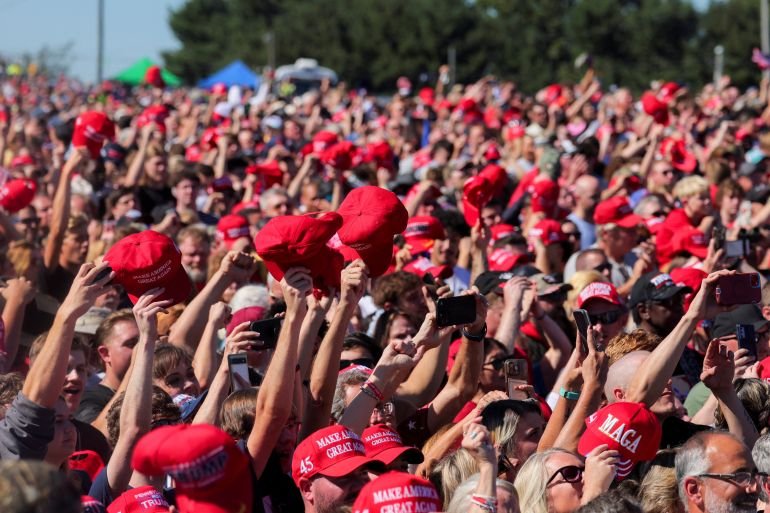
    As the midterm elections near, we are hearing a lot about a “split” within the Make America Great Again (MAGA) coalition, which got Donald Trump elected United States president in 2024. I understand the tragedy of MAGA a little differently: not as a split, but as a refusal by the best members of that coalition to abandon the solidarity we’ve formed between us.

    I had the privilege of helping bring this coalition together in 2024. It was a collection of groupings traditionally pitted against each other: social conservatives, pro-lifers, devout Christians, devout Muslims, devout Quakers, disaffected leftists, young first-time voters – all coming together behind a Republican candidacy.

    Together, we made history and delivered a moral mandate based on a humane concern for the human cost of unregulated borders, thoughtless warmongering overseas and the ruling-class politicking that had allowed a Jeffrey Epstein syndicate to go unpunished while the basic dignity of the “least of our brethren” went untended.

    In the campaign’s final stretch, I visited Syrian Christian churches in Pennsylvania and met Americans whose families had personally suffered the worst of what Washington’s foreign policy can do. In those communities, we talked about Gaza, peace and Trump’s promises.

    This miraculous, ragtag, all-American patchwork of people who supported Trump in 2024 truly became a people when they discovered their shared belief in the mission of electing a president who would break with the Washington establishment’s inhumane policies.

    Today, that coalition is remarkably intact. What is instead happening is that there is a concerted effort to redefine what MAGA is.

    In the weeks following the launch of the disastrous US-Israeli war on Iran, Trump announced “I am MAGA” and insisted on including in the brand the ideology of infamous neo-cons like Mark Levin.

    As a result, MAGA has now become a blunt instrument of the same war-hungry elites the original coalition aimed to depose. The brand is now on course to be destroyed this November. That, however, says nothing about the goodness and power of the movement that stood behind Trump in 2024.

    Perhaps one of the central factors that is driving this process of MAGA destruction is the decision to support, fund and protect Israel at any cost as it carries out a genocide in Gaza and various other atrocities in the Middle East.

    And Election Day 2026 will represent the first time the public’s moral indignation fully makes itself felt. But, bafflingly, that’s also the one matter that our most powerful politicians have made a point of doubling down on ahead of the midterms.

    Just a few days ago, The New York Times reported that David Milstein, senior adviser to US Ambassador to Israel Mike Huckabee and stepson of Levin, repeatedly suppressed or rewrote embassy reporting on Israeli violence against Palestinians in Gaza and the West Bank. Milstein allegedly even blocked reporting about the killings of Palestinian Americans by Israeli settlers and security forces. Nevertheless, he still retains his position.

    I write this as an American conservative and a Catholic. But at a time when Washington is spending America’s moral authority to shield Israel’s government from accountability while treating Palestinian lives as negotiable, both my deepest-held convictions and my patriotism require that I stand against some of the loudest self-proclaimed “patriots” and “conservative Christians”. Not because I now reject what they claim to represent, but because I still embrace it.

    An April survey by Pew Research found that 57 percent of Republicans and Republican-leaning independents aged 18 to 49 viewed Israel unfavourably. Young conservatives have watched the same harrowing footage of the Gaza genocide as everyone else. Today’s new self-proclaimed leaders of MAGA – a movement that taught the youth to distrust official narratives – cannot reasonably expect them to stop asking questions.

    Especially not when there are still plenty of prominent figures who have retained their integrity and still carry the original coalition’s banner.

    Trump’s former counterterrorism chief Joe Kent courageously resigned over the Iran war and publicly described the Israeli and lobbying pressure that helped bring it about. Former Director of National Intelligence Tulsi Gabbard bravely put on record that Iran was not building a nuclear weapon and had not rebuilt its enrichment capability since the 12-day war of 2025, undercutting the “imminent nuclear threat” claim used to justify the war this year.

    Former Congresswoman Marjorie Taylor Greene and Congressman Thomas Massie stood against the Gaza genocide and the Epstein cover-up. Trump and the donor-class backers of his newly adopted neo-con agenda pummelled them: Greene resigned, and Massie lost his primary after a multimillion-dollar campaign to unseat him. 

    Conservative activist Carrie Prejean Boller defended Christian opposition to Israel’s violence in Gaza and the bigoted ideology of Zionism. She paid a price, losing her seat on Trump’s Religious Liberty Commission, but proved herself a true leader in our movement.

    Conservative commentators Tucker Carlson and Alex Jones similarly used their influential platforms to stand up to Trump over the Iran war and against US backing of Israeli abuses of Palestinians.

    And consider the comedians and podcasters: Joe Rogan, Theo Von, Tim Dillon and others. Trump’s son Barron was credited with the brilliant idea of bringing his father’s campaign to their audiences in 2024. They graciously opened their platforms: Rogan endorsed Trump, Von interviewed him and Dillon hosted JD Vance after he became the vice presidential nominee.

    Now these same voices are condemning the bloodshed and broken promises. From Gaza, Lebanon and the West Bank to Iran, Trump has squandered their goodwill.

    These political and cultural leaders represent a preview of the future this coalition still has ahead of it. The candidates they eventually support – or themselves, if they run – will be easily recognisable to voters. And I and millions of others will be behind them.

    Browbeating the voters whose support the Trump administration betrayed will have exactly the consequences you would expect. The original MAGA coalition will destroy a Republican Party that embraces the policies the movement aimed to destroy all along. On Election Day, the coalition’s moral indignation will fully make itself felt.

    Don’t be misled by talk of a “split” in our movement. When the new “MAGA” falls, it will not be due to a disintegration of our coalition. It will be because our coalition is still going strong.

    And we have not yet begun to fight.

    The views expressed in this article are the author’s own and do not necessarily reflect Al Jazeera’s editorial stance.

  • Why Marco Rubio’s visit to Mumbai has ruffled feathers in India

    Why Marco Rubio’s visit to Mumbai has ruffled feathers in India

    United States Secretary of State Marco Rubio is to visit India in the coming week, but he will not set foot in the capital, New Delhi.

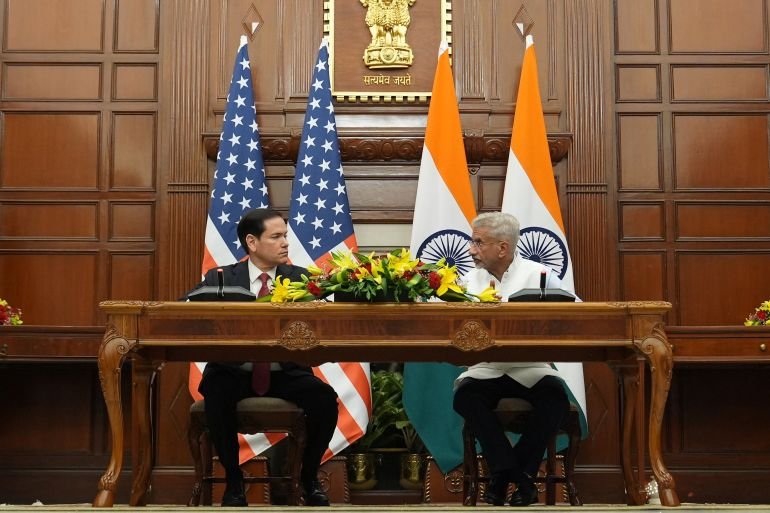
    Instead, on Monday, Rubio will hold talks with Indian External Affairs Minister Subrahmanyam Jaishankar in Mumbai, India’s financial hub, and then visit an oil refinery in Jamnagar in the western state of Gujarat, according to a statement from the US Department of State.

    Recommended Stories

    list of 4 itemsend of list

    His itinerary sparked a political storm after the US ambassador to India said Washington expected Jaishankar to travel to meet Rubio, prompting opposition leaders to accuse the government of allowing India’s top diplomat to be “summoned” on home soil.

    The spat comes as relations between the two countries are strained over trade, tariffs and India’s purchases of Russian oil.

    So why is Rubio avoiding New Delhi, and why has it caused such upset? Here’s what you need to know:

    What is Rubio doing in India?

    He plans to discuss trade, energy and investment.

    Rubio is arriving on Sunday from Samarkand, Uzbekistan, where he has been meeting with five Central Asian states at the C5+1 summit.

    In India, he is due to meet senior officials to discuss the US-India strategic partnership and energy cooperation and hold talks with business leaders, the State Department said.

    Indian Ministry of External Affairs spokesperson Randhir Jaiswal appeared to confirm the agenda, stating on Friday that the Mumbai talks would cover energy, trade and investment, defence, and critical and emerging technologies.

    In Jamnagar, Rubio is to visit the world’s largest single-site refinery, operated by billionaire Mukesh Ambani’s Reliance Industries, and attend a reception hosted by the Ambani family, according to The Hindu newspaper.

    Rubio and his wife, Jeanette Rubio, appear with Ambassador to India Sergio Gor, also the US special envoy for South and Central Asia, at the Taj Mahal in Agra, India, on May 25, 2026
    Rubio and his wife, Jeanette Rubio, appear with Ambassador to India Sergio Gor, also the US special envoy for South and Central Asia, at the Taj Mahal in Agra, India, on May 25, 2026 [Julia Demaree Nikhinson/Pool via Reuters]

    Why isn’t Rubio going to New Delhi?

    No official reason has been given.

    Rubio was in the Indian capital in May for a meeting of foreign ministers of countries in the Quad, a group consisting of the US, India, Japan and Australia.

    The State Department has framed his upcoming trip around energy and investment, and the second stop on Rubio’s India visit, Jamnagar, is one of the world’s most important energy hubs.

    The visit also comes as fuel prices bite in the US before next month’s midterm elections.

    Reliance, an energy, retail and telecommunications conglomerate, also sits at the centre of Washington’s wider oil diplomacy.

    Business Standard, an Indian financial daily, said the Jamnagar stop was significant because Reliance is the biggest buyer of Venezuelan crude oil besides the US at a time when Washington has been urging India to buy more.

    Since US forces seized Venezuelan President Nicolas Maduro in January and took essential control of the country’s oil industry, the US government has marketed Venezuelan oil to buyers abroad.

    Reliance is also investing in a new refinery in Texas, the first to be built in the US in 50 years, which Trump hailed as a $300bn deal when he announced it in March, Business Standard reported.

    Villagers sit in the lawns outside the Jamnagar Refinery run by the Indian business conglomerate Reliance Industries, in Jamnagar, India, Wednesday, April 9, 2025. (AP Photo/Manish Swarup)
    Villagers sit outside the Jamnagar refinery, run by the Indian business conglomerate Reliance Industries, in Jamnagar, India [File: Manish Swarup/AP]

    What did the US ambassador say, and why has it caused upset?

    Speaking at the Bloomberg New Economy Forum in New Delhi on Thursday, US Ambassador to India Sergio Gor said Rubio would meet Indian government officials in Mumbai, and Washington “expected” Jaishankar and others from New Delhi to travel there to see him.

    Earlier in the week, however, Jaiswal had not confirmed the trip or explained why Rubio was skipping New Delhi, telling reporters the Indian government would announce it “at the appropriate time”, The Hindu newspaper reported.

    Jairam Ramesh, a general secretary of the opposition Indian National Congress party, wrote on X that the ambassador’s statement was “quite extraordinary”.

    Rahul Gandhi, leader of the opposition in parliament’s lower house, also took to X to comment, writing on Friday that Rubio had “summoned his employee to Mumbai”.

    Congress MP Pawan Khera went further.

    “A foreign government summoning India’s External Affairs Minister on Indian soil is a new low, even by the Modi Government’s standards,” he wrote on X, referring to Prime Minister Narendra Modi.

    Why are US-India relations strained?

    Mainly because of Trump’s tariffs and Russian oil.

    In August last year after a round of trade talks broke down, the US hit most Indian goods with a 50 percent tariff. Under a framework the two sides agreed in February, that rate fell to 18 percent, however.

    Since then, negotiations have stalled.

    This month, Indian Finance Minister Nirmala Sitharaman said the talks had “plateaued”, according to The Hindu.

    On Thursday, Trade Minister Piyush Goyal said the “first tranche” of a deal was in its final stages but India would not sign until its exporters had an edge over rivals such as Bangladesh, Vietnam and Indonesia, according to the Reuters news agency.

    Other points of friction have emerged.

    Last week, US Labor Secretary Keith Sonderling announced that his department was suspending eight companies – including the Indian IT giants Infosys, Tata Consultancy Services, Wipro and HCL – from a labour certification scheme that is a key step for employers seeking green cards for their foreign staff.

    Sameer Lalwani, a senior fellow in the South Asia Program at the Carnegie Endowment for International Peace, wrote this week that Indian public opinion of the US has hit a record low, citing US engagement with Pakistan and the US-Israel war on Iran, which he said had pushed India back towards Russian oil.

    Despite that, he argued, defence and technology cooperation has quietly deepened, and bilateral trade grew by almost 12 percent in 2025 to nearly $240bn.

    In his view, “perceptions of the political relationship have deteriorated faster than its strategic foundations.”

    A sanctions law had threatened to make matters worse.

    Last month, Trump signed the Lindsey O Graham Sanctioning Russia and Iran Act, which could impose tariffs of up to 100 percent on goods from the five largest importers of Russian oil or gas.

    India, one of the world’s biggest buyers of Russian oil, had warned Washington that new tariffs could hurt bilateral ties. Trump signed an executive order seeking to waive the sanctions on Friday as he tries to ease high oil prices before the November 3 US elections.

  • WNBA Finals: Gabby Williams leads Valkyries to nervy Game 1 win over Dream

    WNBA Finals: Gabby Williams leads Valkyries to nervy Game 1 win over Dream

    Williams scored 26 points as the Golden State Valkyries came back to take the lead at home against the Atlanta Dream.

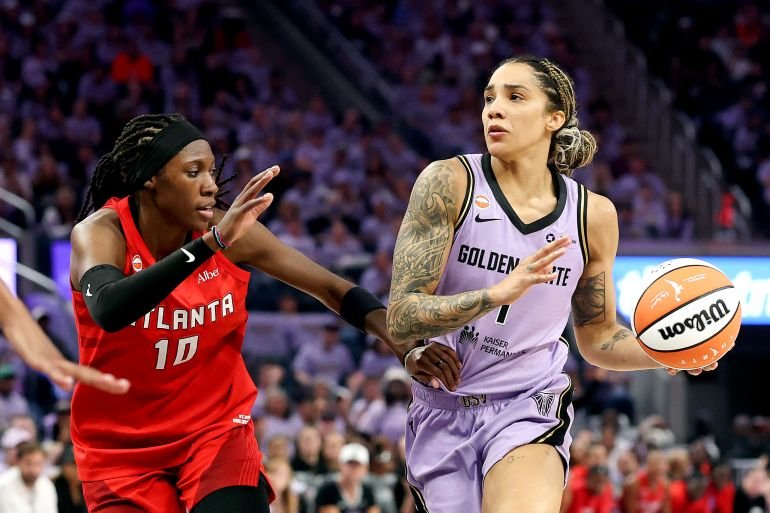
    Gabby Williams scored a game-high 26 points, including four key free throws in the final 78 seconds as the Golden State Valkyries held off the Atlanta Dream 68-64 in game one of the WNBA Finals.

    Williams, runner-up to Atlanta’s Angel Reese in Defensive Player of the Year voting, has emerged as an offensive force for the Valkyries in the playoffs and carried the scoring load on a tough shooting night for the hosts, who did not have another player score in double figures on Saturday.

    SAN FRANCISCO, CA - OCTOBER 17: Angel Reese #5 of the Atlanta Dream blocks the shot during the game against the Golden State Valkyries during Game One of the 2026 WNBA Finals on October 17, 2026 at Chase Center in San Francisco, California. NOTE TO USER: User expressly acknowledges and agrees that, by downloading and or using this photograph, user is consenting to the terms and conditions of Getty Images License Agreement. Mandatory Copyright Notice: Copyright 2026 NBAE Noah Graham/NBAE via Getty Images/AFP (Photo by Noah Graham / NBAE / Getty Images / Getty Images via AFP)
    Reese blocks the shot from Williams during the game [Noah Graham/Getty Images via AFP]

    The French star took some time to warm up, going scoreless in the first quarter as the Valkyries got off to a tentative start in front of a raucous crowd at Chase Center.

    “Once we all started having fun and the excitement got out, we started to kind of find our way,” Williams, who erupted for 16 points in the second quarter, said in an on-court interview.

    “There was a lid on that basket tonight, but that’s why we rely on our defence,” she said.

    Golden State trailed by one with 1 minute and 18 seconds remaining when Williams seized the rebound off a miss by Atlanta’s Allisha Gray and was fouled by Reese.

    Williams made both free throws to put the Valkyries up 65-64 and added another pair of free throws to seal the win with 4.1 seconds left.

    “It came down to getting stops and that’s been our bread-and-butter all ‌year,” noted Williams, whose team has allowed 335 fewer points than any other in the WNBA this season. “That’s why we harp on it so much, because we’ve built such great defensive habits.”

    Gray, the Dream’s leading scorer, returned after missing two games with a hand injury and scored 19 points, but she was scoreless in the fourth quarter, when Atlanta made just two of their 19 attempts from the floor.

    SAN FRANCISCO, CALIFORNIA - OCTOBER 17: Angel Reese #5 of the Atlanta Dream reacts after the 68-64 loss against the Golden State Valkyries in game one of the WNBA Finals at Chase Center on October 17, 2026 in San Francisco, California. NOTE TO USER: User expressly acknowledges and agrees that, by downloading and or using this photograph, User is consenting to the terms and conditions of the Getty Images License Agreement. Ezra Shaw/Getty Images/AFP (Photo by EZRA SHAW / GETTY IMAGES NORTH AMERICA / Getty Images via AFP)
    Angel Reese of the Atlanta Dream reacts after the 68-64 loss [Ezra Shaw/Getty Images via AFP]

    Reese added 14 points and 12 rebounds, and Rhyne Howard scored 12 for Atlanta.

    Atlanta scored just two in an overall eight-point fourth quarter, where Gray was scoreless over the final 10 minutes and Reese scored all of her 14 points in the first half.

    “I don’t think they really did anything,” Reese said. “Maybe that was just on me; I wasn’t aggressive enough with the ball and trying to get the ball and get to my spot. I’m definitely going to do a better job of that next game.”

    The Valkyries will host game two of the best-of-seven series on Monday.

    Both teams are chasing a first WNBA title. The Dream have come up empty in three prior trips to the Finals, most recently in 2013.

    The Valkyries, who last year became the first WNBA expansion franchise to reach the playoffs in their inaugural season, are now contending for the title in their second.

    Golden State Valkyries center Kiah Stokes, from left rear, celebrates with forward Cecilia Zandalasini, guard-forward Kaila Charles, guard Veronica Burton (22) and forward Gabby Williams (1) after Game 1 of the WNBA basketball finals against the Atlanta Dream, Saturday, Oct. 17, 2026, in San Francisco. (AP Photo/Jeff Chiu)
    Golden State Valkyries players celebrate at the end of game one [Jeff Chiu/AP Photo]